GAMIFICATION SYSTEMS
DEVELOPMENT
Gamification Systems Development: A Practical Guide Daniel Andrews
orcid.org/0000-0001-8347-0267
Copyright © Aston University 2017
The right of Daniel Andrews to be identified as the author of this work has been asserted in accordance with the Copyright, Designs and Patents Act 1988.
ISBN: 978-1-85449-423-8
DOI: http://doi.org/10.17036/PUBLICATIONS.ASTON.AC.UK.00000001
First published in 2017 by The Advanced Services Group, Aston Business School
Birmingham B4 7ET United Kingdom
This work was supported by EPSRC Grants Ref EP/K014064/1, EP/K014072/1, EP/K014080/1 ‘Transforming the adoption of Product -Service Systems through innovations in applied gaming technology’; a joint project with The Advanced Services Group, Aston Business School and the Advanced Manufacturing Research Centre, University of Sheffield.
Contents
1. Introduction... 4
1.1 What is gamification? ... 4
1.2 What is a game? ... 4
1.3 Gamification systems ... 6
1.4 What this workbook does ... 6
1.5 What this workbook does not do ... 7
1.6 Who is this workbook for? ... 7
1.7 How to use this workbook ... 7
2. Glossary of terms ... 8
2.1 Context ... 8
2.2 Form ... 8
2.3 Participants ... 8
2.4 Traits ... 8
2.5 Scenarios ... 9
2.6 Events ... 9
2.7 Stakeholders ... 9
3. Process ... 10
3.1 Overview ... 10
3.2 Stage 1: Scope ... 12
3.3 Stage 2: Research ... 18
3.4 Stage 3: Co-design ... 24
3.5 Stage 4: Co-creation... 32
4. Conclusion ... 40
5. Further reading ... 41
List of figures Figure 1: Simple schematic of a game activity ... 5
Figure 2: Simple schematic of a game ... 5
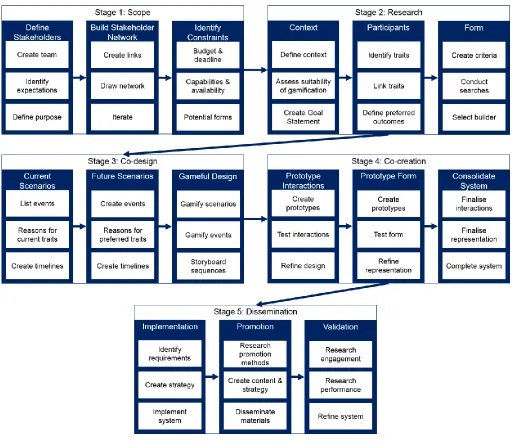
Figure 3: Schematic of the gamification process ... 11
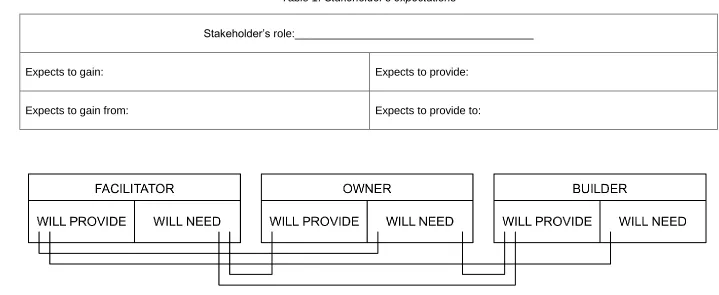
Figure 4: Potential layout for a simple stakeholder network ... 15
Figure 5: Diagram of project’s constraints ... 17
Figure 6: Diagram of the project’s requirements and constraints ... 23
Figure 7: Timeline of events in a current scenario ... 25
Figure 8: Timeline of events in a future scenario ... 27
Figure 9: Simple schematic of a gamified event ... 29
Figure 10: Simple schematic of a storyboard for a gamified scenario ... 31
List of tables Table 1: Stakeholder’s expectations ... 15
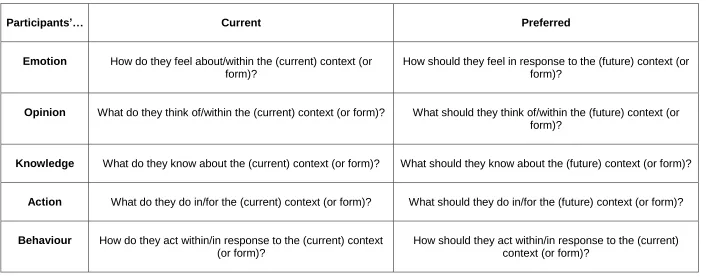
Table 2: Participants’ current and preferred traits in relation to the context and form ... 21
Table 3: Elements of the current scenarios ... 25
4
1. Introduction
This workbook is designed to guide the reader through the process of gamification. Gamification can have a range of purposes for the mutual benefit of various stakeholders. The outcome of using this workbook will be a gamification system that suits the purpose(s) for which, and stakeholders for whom, it has been considered.
Gamification has generated great interest from various researchers in a relatively brief period. The process given in this workbook is based on a selection of this research and related approaches. For insight into some of the research that has informed this process, please refer to Further reading at the end of the workbook.
1.1 What is gamification?
Gamification is the process of making something more game-like. This differs from making games in several respects:
1. Gamification does not involve creating a complete game (though the outcome of gamification may resemble one). 2. Gamification involves working with something pre-existing that
is not a game, or has not already been ‘gamified’.
3. Gamification should engage people with something for a purpose that is not solely to entertain or engage them. Proponents of gamification claim that it should make almost anything more fun and motivating than it would be otherwise.
1.2 What is a game?
Definitions of gamification often rely on an assumed understanding of games. In truth, games may be easy to identify, but they are difficult to define. Numerous attempts to define games exist, and none are entirely satisfactory.
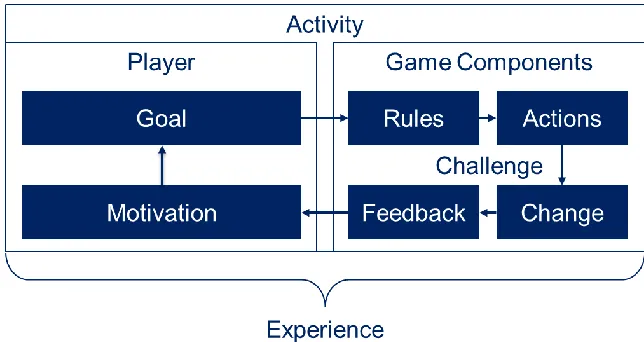
This workbook approaches games as systems. These systems contain sequences of activities, whichare formed of components. Some key components of games are as follows:
Goal(s): Something the player should aim to achieve, which the game encourages.
Actions: Things that the player can do to approach the goal(s). Rules: Determine the actions that the player can take and the
effect they will have in relation to the pursuit of the goal(s). Feedback: Information that informs the player of a change
resulting from their actions, which relates to progress towards, or regression from, the goal(s).
Challenge: Must be overcome to progress towards the goal(s). Motivation: Encourages the player to progress towards the
goal(s).
Figure 1 illustrates how these components form a game activity. The rules of the game determine the actions that can be taken. When a player participates in the game, her or his actionschange
Figure 1: Simple schematic of a game activity
6
These structures are not unique to games. There are two
fundamental principles of games that distinguish them from similar activities:
1. Games are designed to engage players through enjoyable experiences, with no required repercussions in the ‘real world’. 2. Games are played in spaces, tangible and/or conceptual, that
are distinct from the real world.
In a sense, games differ from real-world activities because players
perceive them to be different. This perception is fostered by assigning spaces for games to be played in, and associating their activities with enjoyable experiences.
These spaces can be anywhere or take any form. Common examples include board games, sports fields, or virtual online worlds. But the spaces can also be conceptual, as in the case of
alternate or augmented reality (AR) games, where players pretend that real-world spaces and events relate to the game they are playing. It could be said that gamification is closely associated with AR games, as both operate in relation to the real world.
1.3 Gamification systems
Broadly speaking, gamification systems are the outcomes of gamification. They contain components of games aligned with real-world purposes. The chief distinction between games and
gamification is that gamification systems are required to impact the real world in some way, as well as keep people engaged.
For the systems’ builders, this presents a significant challenge. Designers of games are highly skilled, and even the most successful games do not have universal appeal. Yet, creators of gamification systems are expected to provide appealing
experiences, while satisfying the real-world purposes for which the systems are considered.
The potential complexity of this challenge contradicts the apparent simplicity of many gamification systems. Some common
components associated with such systems are: Points: measures of progress.
Badges: tokens of achievement.
Leaderboards (or rankings): hierarchies of performance. These are feedback mechanisms in computer games, used to stir their players’ competitiveness. They are used in gamification because they are perceived to be a ‘quick fix’ for engaging people without employing laborious design processes. While demonstrably effective in some games, however, they have mixed results in other applications.
Gamification should not, therefore, be the arbitrary selection and implementation of game components in real-world applications. Nor should gamification involve laborious processes that are too
burdensome for its creators. To ensure gamification is both effective and efficient, a considered yet concise approach to designing and delivering a gamification system is needed.
1.4 What this workbook does
Gamification, like games, can take many different forms. Hopscotch in a playground and commercial videogames with multi-million pound budgets are both forms of games that look and feel
drastically different. Providing a concise process, which leads to an appropriate gamification system for the purpose in hand, is a challenge that this workbook aims to address.
7 and feel when people use it. Many approaches to gamification
neglect the complex requirements of the context, stakeholders and participants that will be involved. This workbook guides the reader through these considerations in a systematic fashion, leading towards an appropriate form of gamification.
Following this, the workbook guides the reader through a co-design and co-creation process that aims to be accessible for people with no prior knowledge or experience of game design. The creation of
scenarios is central to the approach used in the workbook. Scenarios are essentially stories that describe what happens in a real-world setting, and what should happen. The process
demonstrates how sequences of events in scenarios can be
translated into activities within a gamification system. The workbook then guides the creation of this system, before advising on the steps necessary to disseminate it and validate its operation.
1.5 What this workbook does not do
The workbook does not do the following:
List different forms gamification systems can take.
List different games or components of games that would be appropriate for different applications.
List a range of potential applications of gamification.
The position of this workbook is that providing the above may unduly influence the design of the gamification system. This could lead to a system based on previously identified gamification patterns, rather than the specific requirements of the project. Instead, the workbook provides a concise methodology for readers to identify whether gamification is an appropriate strategy for their project’s needs and, if so, to produce a system of gamification to satisfy the requirements of the project.
1.6 Who is this workbook for?
This guide is aimed at Facilitators and/or Project Managers that will be engaged in the creation of a specific gamification system from start to completion. This will require communication, organisation and research skills.
The process in this workbook describes engagement with
potentially disparate stakeholders, such as C-level managers, shop-floor workers, and game designers. Following the process will involve communicating with these stakeholders and facilitating their engagement with each other.
If the project involves the development of software, for example, then software developers may be working with people who have no prior experience of digital games. This could lead to assumptions being made about the outcomes of meetings and workshops, which differ between stakeholders. Therefore, it is important to accurately record and verify the communications between such stakeholders throughout the process.
1.7 How to use this workbook
The process in this workbook is presented as a series of two-page spreads. This process should be followed in the sequence
presented to ensure the gamification system is effective. It may be necessary to iterate through some of the tasks, and return to others as more details of the project emerge. The reader should become familiar with the process overall, prior to beginning the gamification project. In addition, the reader should study the Glossary of Terms, which follows, as this describes important concepts used
8
2. Glossary of terms
The following terms and concepts are important to the approach used in this workbook.
2.1 Context
Context is a broad term that refers to the purpose for which
gamification is being considered, and the circumstances in which it will be used. Essentially, it is the where and why of gamification. Context can relate to a physical or virtual environment, a process, subject, concept or idea, and any combination of these. The participants currently, and/or will, engage with the context, and gamification will facilitate the engagement between the participants and the context. The loose nature of this definition illustrates the range of potential applications of gamification.
To arrive at a concrete description of the context, the process in this workbook distinguishes between how people currently engage with the context,and how they should engage with it in the future
through gamification. In some cases, the current context may be different from the future context in which people will operate. The differences between the current and future contexts, and how people engage with them, will feed into the specification of the gamification system.
2.2 Form
Form is, essentially, the what of the gamification system. Games can take many different forms, and so can gamification. The examples of playgrounds and multi-million pound videogames mentioned in the Introduction use different levels of technology for the same purpose: to keep players entertained. The level of technology in a gamification system will need to engage people, while satisfying the requirements of the project.
In the workplace, gamification could be delivered within the same physical environment that people already engage in. Alternatively, a separate space, physical or virtual, could be assigned to the
system. Both are examples of different formsgamification can take. As the project progresses, the form of the gamification system will become apparent.
2.3 Participants
Where games have players, and software has users, gamification systems have participants. A participant is someone who will be engaging with the gamification system. The purpose of
implementing gamification must be associated with having an impact upon the participants, or gamification would not be a suitable approach.
2.4 Traits
The traits this workbook refers to are the characteristics of
participants. The gamification system should affect one or more of these traits in a positive way, benefitting both participants and other relevant parties. These traits are as follows:
Knowledge: What does/should the participant know about the context?
Opinion: What does/should the participant think of the context? Emotion: How does/should the participant feel about the
context?
Action:What does/should the participant do within/for the context?
9 Understanding the relationship between these traits and the context
will help determine the requirements and design of the gamification system.
2.5 Scenarios
Scenarios are stories that describe how the participants engage with the context. The structures of scenarios are used in the design of the gamification system.
The process in this workbook distinguishes between current and
future scenarios. These categories of scenarios correspond with what the participants currently do, and what they should do in relation to the context.
2.6 Events
Where games are made up of sequences of activities, scenarios consist of sequences of events. Events are things that happen as the participants engage with the context. An event could be something that the participants do, or something that happens to them, in the process of their engagement.
Events are the units that form the structure of scenarios. In the design of the gamification system, sequences of events are used to provide structure to the system, in the same way the structures of games are made up of sequences of activities.
2.7 Stakeholders
A gamification system will have several types of stakeholders. The most obvious stakeholders are those that benefit from the
gamification system having an impact upon the traits of the participants in relation to the context.
There are other stakeholders as well, who will bring with them requirements and constraints that will impact the project. It is important to consider the participants as stakeholders, as they will
10
3. Process
3.1 Overview
The process described in this workbook is divided into five stages, each containing three tasks (see Figure 3). The first two stages provide the foundation of information required to ensure the gamification system is functional and effective. The following three stages involve building and disseminating the system from this foundation.
Stage 1 is where the scope of the project is determined. This process involves identifying the team members in the project, and their individual expectations of what they will provide, what they will need, and what the project will deliver. These expectations are consolidated into a definition of a purpose for exploring
gamification. A network is then produced to facilitate communication between the stakeholders and ensure that their expectations of one another are consistent. Following this, the overall constraints in the project are identified, and the potential forms for the gamification system that are possible within these constraints are explored. Stage 2 involves in-depth research into the project. The first part of this process is to define the context in which gamification will be applied, and to ensure that gamification is a viable approach. Next, the participants that the gamification system will engage are
researched in terms of their current and preferred traits in relation to the context. This research into the context and participants is used to identify and select a builder for the gamification system.
Stage 3 is the co-design process, and involves all stakeholders in envisaging the gamification system. Scenarios of how the
participants currently operate are created to identify the reasons for their traits and to provide a foundational structure for the design. The stakeholders then create future scenarios based on these
structures, and envisage how the participants could interact with the context through gamification. These scenarios are refined through a process of ‘gameful’ design. This is where the stakeholders think of the sequences of events as if they were sequences within games, and create storyboards based on this process.
These designs inform the co-creation of Stage 4, in which the system is built. This involves iterative prototyping of the interactions within the gamification system and its form, until the stakeholders are confident that it is ready to be disseminated. Finally, the system is disseminated in Stage 5, which requires implementing
12
3.2 Stage 1: Scope
This stage formalises the scope of the project by considering the resources available and the possibilities they afford.
3.2.1
Define the stakeholders
The stakeholders form the team, and will define the purpose of the project, its requirements and constraints. They will also provide insight into the research, design and delivery of the gamification system throughout the project.
Create team
The following stakeholders should be identified as part of the core team. Note that team members can take on multiple roles,
depending on the size of the team and scale of the project. Facilitator: The person enabling the progression of the project
and collaboration between the stakeholders. This role involves extensive organisation and record-keeping skills. The project will be defined through communication amongst the stakeholders, which the facilitator will document and verify.
Owner: The person or group that ‘owns’ the gamification system,
and/or the problem/goal that the system should resolve. While all the stakeholders will be involved in defining the project, the expectations of the owner should take priority.
Specialist(s): The person or group that can provide insight into the context(s) and the participant(s) associated with the project. They are stakeholders because they should have a vested interest in satisfying the needs of the context and the
participants. It is possible for the owner and/or facilitator to also take on the role of specialist.
Evaluator: The person or group that can confirm whether the gamification system has fulfilled its purpose.
The above roles will need to engage with the project throughout, except for the evaluator, who will be called on at the very end of the project. There are at least two other stakeholders that will be
engaged during the project:
Participant(s):The people that will be using the gamification system (see Glossary of terms).
Builder: The person or group that is ultimately capable of, and responsible for, creating the gamification system.
It is possible to create a gamification system without involving the participants until Stage 5. However, it is recommended that the participants are involved in as much of the process as possible, as they will provide the most accurate and accessible insight into the responses the system will foster.
The capabilities of the builder will determine the form (see Glossary of terms) that the gamification system can take. One or more of the team members above may anticipate taking on the role of the builder. Alternatively, a builder will be identified and selected as the project progresses.
In any case, if a builder is assigned early in the project, there is a risk of the gamification system being governed by the form rather than the requirements of the project. On the other hand, without insight into the form early on, the team could develop expectations of gamification that are not feasible within the constraints of the project (see chapter 3.2.3).
13 that a builder is selected as part of the project no later than Stage 2
(see chapter 3.3.3).
Identify the stakeholders’ expectations
All stakeholders invest time, effort, and other resources in the project. They will expect a return on their investment. Answer Questions 1–3 below for each of the above roles. Begin with the facilitator, and then the owner. Arrange for specialists to answer on behalf of themselves and the participants.
1) What does the stakeholder expect to provide other stakeholders as part of their role (e.g., time, money, knowledge, a specific set of requirements and/or skills)?
2) What does the stakeholder expect to gain from other stakeholders as part of their role?
3) What does the stakeholder expect to gain from the project overall?
Next, the stakeholders should discuss the following questions. These refer to the process in this workbook, and the stakeholders should be made aware of what this process will involve at this point. Who will provide the research needed into the context,
participants and form of the gamification system? (see Glossary of terms)
Who will contribute to the co-design and co-creation of the gamification system, and how?
Who is responsible for the implementation, promotion, and validation of the system?
What are the budget and deadline for these activities, and the project overall?
Define purpose
The answer to Question 3 informs the purpose of the project. All the stakeholders’ responses should be considered in response to this question, though the owner’s should take priority.
Create a definition of the project’s purpose through these
14
3.2.2
Build the stakeholder network
This task involves building a simple network of how the
stakeholders’ roles relate to one another. The network helps the facilitator manage the overall project, but particularly
communication amongst the stakeholders and their expectations.
Create links
The links in a stakeholder network connect what the stakeholders need from, and provide to, one another, in order to complete the project. Refer to the stakeholders’ expectations identified in the previous task and create these links based on the responses to the questions asked. Use Table 1 to illustrate these expectations. For those that have yet to be engaged, such as the builder, other stakeholders should enter information related to their own
expectations of what these roles will require and provide.
Draw network
A visual arrangement of the relationships between the stakeholders should now be possible, based on their expectations of what they will receive from, and provide to, one another. Draw this network, using Figure 4 as a guide. Note any discrepancies between the expectations of different stakeholders.
Iterate
Table 1: Stakeholder’s expectations
Stakeholder’s role:_______________________________________
Expects to gain: Expects to provide:
Expects to gain from: Expects to provide to:
16
3.2.3
Identify constraints
The process described in this workbook involves co-creation
between the stakeholders. The stakeholders’ resources, capabilities and availability represent the project’s constraints, which set the limits of what is possible in the gamification system.
Figure 5 shows a map of the project’s constraints. This should be referred to in the following process. It should be used in
communications between the stakeholders, including those that may yet to be accessed, such as the builder.
Identify the project’s budget and deadline
The most obvious constraints in the project will be the budget and deadline, which the owner is likely to contribute. If there is any uncertainty about either the budget or deadline then this needs to be addressed before any further progress is made, as this will have a direct impact upon the form gamification can take.
If a very low-tech option is likely to be adopted, then there could be an assumption that the budget and/or deadline will have limited repercussions on the project. Even with the most basic forms, however, this is unlikely to be the case. There will be a value associated with the time and effort of the stakeholders, as well as the resources needed to create and disseminate the gamification system.
Determine the stakeholders’ capabilities and availability
The process described in this workbook is designed to be accessible by all stakeholders, regardless of their knowledge or skillset. The team will need to be available for the co-creation of the system during the project, and their availability should be recorded at this point. It will be important for the facilitator to identify how much time the stakeholders can give to the project, and align this with the activities described in the remainder of the workbook.
Next, the capabilities of the stakeholders should be determined. These are the knowledge, skills and/or resources that the
stakeholders can contribute during the research, design, creation and delivery of a gamification system. The form of the system will ultimately be affected by the skills of the team. Therefore, it is important to begin the process of recording the capabilities of the team at this point to identify potential forms gamification could take and/or the outstanding capabilities required.
Conduct preliminary research into potential forms
If a builder has yet to be identified, the constraints should be used to research potential forms of the gamification system. The team may have networks that can be accessed to explore possibilities, and internet searches could be conducted to identify potential builders. Prior knowledge or assumptions about gamification systems amongst the stakeholders should be used in this research to validate or clarify their expectations of what is possible.
Figure 5: Diagram of project’s constraints
Capabilities of stakeholders
Project
deadline
Availability of stakeholders
Project
18
3.3 Stage 2: Research
Research is now needed into the context(s) and participants, and the potential forms of gamification that would be appropriate for them. Some of this information has been acquired in Stage 1. Stage 2 involves building on this foundation of information by examining existing materials, and conducting in-depth discussions,
observations and searches.
3.3.1
Context
Potential contexts for gamification can be very broad (see Glossary of terms). Creating a definition of the context will inform the
requirements for the gamification system.
Define context
The context in which gamification will be applied can be defined in relation to how the participants will engage with it. The following questions should be used to guide this research:
1) What do/should the participants do in relation to the context? 2) How do/should the participants benefit from their engagement
with the context?
3) What is it about the responses to Questions 1 and 2 that is unique about this context?
Discuss this with the context specialists, participant specialists and other stakeholders. Correlate this information with materials that provide information related to the context, such as websites, and first-hand observations, if possible.
Assess suitability of gamification
Having defined the context, it is now possible to assess the suitability of gamification for the project. This is ascertained by asking the following questions:
Does the purpose of the project involve engaging people with a specific context?
Can the stakeholders envisage how this engagement can be achieved through a system of game-like activities that are challenging, but also motivating and enjoyable?
Can the stakeholders envisage how such a system will be beneficial to both the participants and stakeholders? If the answer to these questions is ‘Yes’, then gamification is a viable option. If the stakeholders are uncertain at this point, then ask these questions again at the end of this stage.
Create goal statement
By now there should be enough information to define a simple goal that relates the purpose of the project with the participants’
engagement with the context. Structure this statement as follows:
[The purpose] will be achieved by engaging [the participants] with [the context] through gamification.
20
3.3.2
Participants
The purpose of this task is to understand who will be using the gamification system, and what impact gamification should have.
Identify the participants’ traits
The traits of the participants (see Glossary of terms) should be discussed with the stakeholders. The participant specialists should lead these discussions, and the participants themselves should also be involved if they can be accessed at this point. The following questions should be discussed:
What do the participants know about the context?
What do the participants think of the context?
How do the participants feel about/within the context?
What do the participants do in relation to the context?
How do the participants act within/in response to the context?
If the participants do not currently engage with the context, the answers to these questions should reflect what the participants’ traits are in relation to an equivalent context that they currently engage with, and/or what their traits are in general. The purpose of the gamification system will be to engage the participants with the new context, and any information related to the participants’ existing traits will inform strategies for engaging them through gamification. As many answers to the above questions should be listed as possible.
Create links between traits
For each of the above traits, the following question should be asked:
What other trait does this have an impact upon?
This is because the chain of links between traits will be exploited in the gamification system. A simple chain could be…
Knowledge affects opinion and emotion, which in turn impact
actions and behaviours. Actions impact emotions, which can in turn affect opinion…
…And so on. Creating these links will help the stakeholders identify the source of the traits they want to affect.
Define preferred outcomes
The stakeholders’ interests in the project have provided data for the desired outcomes of using the gamification system. These should now be compared with the current traits of the participants. Discuss the outcomes of using the gamification system with the stakeholders in terms of the preferred traits of the participants. Broadly, there are one of three possible outcomes of gamification: 1. The participants change their traits in relation to the context they
currently engage with.
2. The participants maintain their traits when they engage with a
new context.
3. The participants change their traits when they engage with a
new context.
The preferred traits of the participants should be described
according to the changes in the traits and/or the context. Even if the preferred traits remain the same, it is important to complete this task to clarify the specification of the gamification system.
Table 2: Participants’ current and preferred traits in relation to the context and form
Participants’… Current Preferred
Emotion How do they feel about/within the (current) context (or form)?
How should they feel in response to the (future) context (or form)?
Opinion What do they think of/within the (current) context (or form)? What should they think of/within the (future) context (or form)?
Knowledge What do they know about the (current) context (or form)? What should they know about the (future) context (or form)?
Action What do they do in/for the (current) context (or form)? What should they do in/for the (future) context (or form)?
Behaviour How do they act within/in response to the (current) context (or form)?
22
3.3.3
Form
The form gamification will take is a key aspect of how the
gamification system will be delivered, and must be suitable for the purpose, the context and the participants.
Create criteria
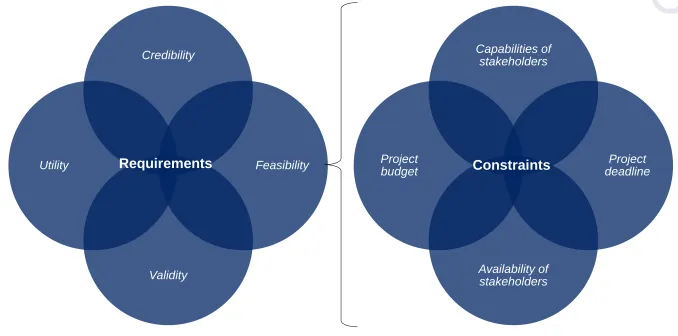
When exploring the form, the following requirements should be considered:
Validity: Is the form likely to satisfy the purpose?
Credibility: Is the form appropriate for the context, stakeholders and participants?
Utility: Is the form accessible to the participants? Will the participants understand and engage with it?
Feasibility: Can the form be employed within the project’s
constraints?
Assessing validity and credibility is particularly important in deciding the form of a gamification system. For example, a computer game could be considered a valid approach for the purpose in hand, but may not be deemed credible for the participants and context by the team. In this case, gamified software, reminiscent of systems the participants currently use, may provide a suitable compromise. The team should also consider the broader circumstances in which the gamification system will be used when considering its validity and credibility. There may be legal ramifications of the form being used if it relies upon data associated with the participants, for example. Context specialists and potential builders may be able to advise the team of these issues, though additional research may be required.
The stakeholders should use their knowledge and opinion of the context and participants to create the criteria of validity, credibility
and utility of the potential form. To help the stakeholders with this task, the questions related to the participants’ traits, shown in Table 2 previously, can be adapted for consideration of the form rather than the context.
When assessing the feasibility of the form, the stakeholders should refer to the constraints identified previously. Figure 6 illustrates how the project’s requirements and constraints relate to one another. If the builder and/or form have already been selected, and meet the above criteria, proceed to Stage 3.
Conduct searches
Using Figure 6 as a guide, summarise the research done so far into phrases or keywords. Use these in communications with the
project’s stakeholders, their networks, and when conducting internet searches, to identify potential builders.
Pay close attention to the context when conducting these searches, as this may require specific capabilities. For example, if the context is a virtual environment, then developers of online tools or games will be needed. Contact as many builders as possible within the constraints of the project. Identify, as a minimum, three potential builders that can contribute the form.
Select builder
From the pool of identified builders, discuss the options with the stakeholders, and select a builder based on the criteria. Ensure that the builder is familiar with the expectations of the stakeholders identified in Stage 1, and agrees to these expectations. If the builder requires adjustments to these expectations, or has
Figure 6: Diagram of the project’s requirements and constraints
Credibility
Feasibility
Validity
Utility
Capabilities of
stakeholders
Project
deadline
Availability of
stakeholders
Project
budget
24
3.4 Stage 3: Co-design
Co-design involves all the available stakeholders envisioning how the participants will engage with the gamification system, and how this system could lead to the preferred traits of the participants.
3.4.1
Current scenarios
The creation of current scenarios should reveal what currently
motivates, or demotivates, the participants in relation to the context. This will provide a structure and foundation of information that can be used in the design of the gamification system.
List events
The stakeholders should record any events that correspond with, and are relevant to, how the participants engage with the context. These events could be what the participants do, or what happens to them, during their engagement with the context.
If the participants do not currently engage with the context, then equivalent events should be envisaged based on the research conducted in chapter 3.3.2. The stakeholders should be
encouraged to consider why the participants do not engage with the context as required, and what happens instead. These equivalent events can be used to inform the structure of the future scenarios.
Identify reasons for the participants’ traits
The research into the participants and contexts conducted
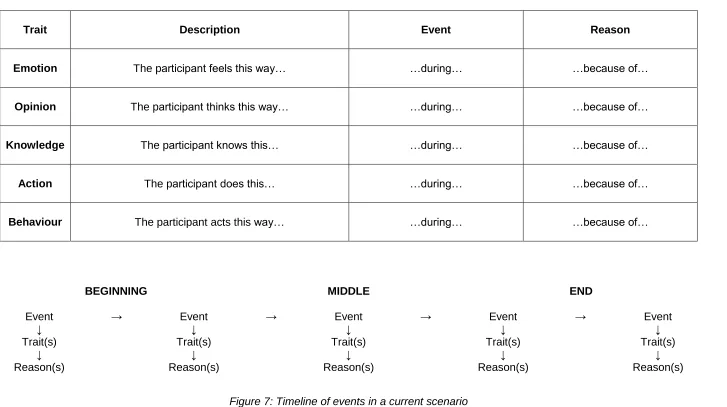
previously is now associated with these events. This alignment will be used to create explanations for the participants’ traits in relation to the context. The events and reasons should be mapped against the participants’ traits by using the following statement structure:
The participant feels/thinks/knows/does/acts [description of trait] during [event] because of [reason].
This is illustrated in Table 3. Use these statements to ensure that the correlation between the events and traits is understood by the stakeholders.
Some traits may have very little to do with the context per se, in that they could be associated with general characteristics of the
participants. Nevertheless, they should be recorded, as these reasons will still be considered in the gamification system’s design.
Create timelines
The stakeholders should form timelines of these events, ordered in the sequence in which they occur. These sequences are, in effect, the scenarios.
The number of scenarios should accommodate the range of events identified. The detail in these scenarios needs to be sufficient for there to be a logical connection between each event and trait in the sequence, and the reasons for these traits.
The stakeholders should consider the length and structure of the scenarios for translation into a coherent experience for the participants. To facilitate this, encourage the stakeholders to sequence the events so that each scenario has the following: 1. Beginning:Set of events that lead the participants into the
context.
2. Middle: Set of events that occur during the participants’
engagement with the context.
Table 3: Elements of the current scenarios
Trait Description Event Reason
Emotion The participant feels this way… …during… …because of… Opinion The participant thinks this way… …during… …because of…
Knowledge The participant knows this… …during… …because of…
Action The participant does this… …during… …because of… Behaviour The participant acts this way… …during… …because of…
BEGINNING MIDDLE END
Event → Event → Event → Event → Event
↓ ↓ ↓ ↓ ↓
Trait(s) Trait(s) Trait(s) Trait(s) Trait(s)
↓ ↓ ↓ ↓ ↓
Reason(s) Reason(s) Reason(s) Reason(s) Reason(s)
26
3.4.2
Future scenarios
The future scenarios create a vision for the team related to how the participants should engage with the context. This provides a
structure that will be exploited in the gamification system. The process of creating the future scenarios reflects the process for creating the current scenarios.
Create events
Using the events identified previously the stakeholders should create equivalent events for how the participants will engage with the context. This should be predominantly informed by knowledge of the context and form.
Explore reasons for the participants’ preferred traits
Using the reasons identified previously, the stakeholders should discuss the potential reasons for the preferred traits in relation to the implementation of the gamification system. Essentially, this means anticipating how the preferred traits could come about, in comparison with, or contrast to, the reasons for the current traits. During this process, the stakeholders should consider the research carried out in Stage 2 regarding the participants, the links between their traits, and the preferred outcomes.
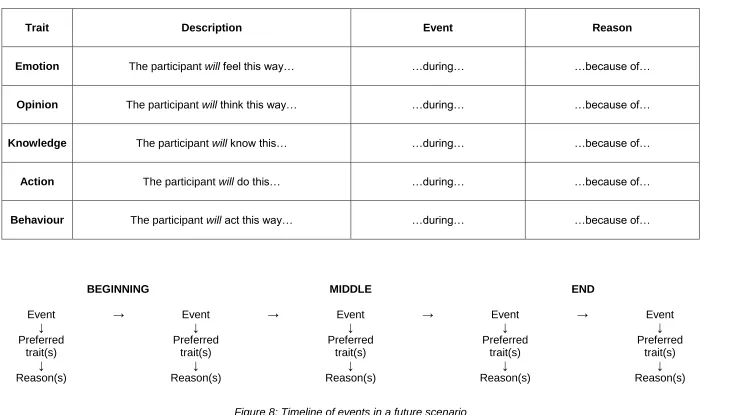
Table 4 illustrates how the events and reasons should be mapped against the participants’ traits. Use this to ensure that the
correlation between the events and traits is understood by the stakeholders.
Create timelines
Creating a timeline of these events will produce a scenario of how the participants should engage with the context through the gamification system. The timelines formed previously should be used as a reference to structure the future scenarios.
The stakeholders should create the number of scenarios
appropriate for the range of events created, and the possibilities afforded by the form of the gamification system. The detail in these scenarios needs to be sufficient for there to be a logical connection between each event and trait in the sequence. Use the structure of
beginning, middle, and end employed previously to frame these sequences.
Table 4: Elements of the future scenarios
Trait Description Event Reason
Emotion The participant will feel this way… …during… …because of…
Opinion The participant will think this way… …during… …because of…
Knowledge The participant will know this… …during… …because of…
Action The participant will do this… …during… …because of…
Behaviour The participant will act this way… …during… …because of…
BEGINNING MIDDLE END
Event → Event → Event → Event → Event
↓ ↓ ↓ ↓ ↓
Preferred trait(s)
Preferred trait(s)
Preferred trait(s)
Preferred trait(s)
Preferred trait(s)
↓ ↓ ↓ ↓ ↓
Reason(s) Reason(s) Reason(s) Reason(s) Reason(s)
28
3.4.3
‘Gameful’ design
By envisioning how the scenarios created previously can be made more ‘gameful’, an engaging design for the gamification system should be produced that fulfils the purpose of the project.
Gamify scenario
The stakeholders should now ‘gamify’ the scenario by thinking of it as if it were a game. All the stakeholders should be involved in this process. Those with the capability to build the gamification system may lead the discussions. Inevitably, the form of the system will impact the possibilities in the design.
For those stakeholders with experience of games, games design, or gamification, this will be more straightforward than for others. For those with limited experience, the first method for eliciting ideas should be to encourage the association of the future scenario(s) with any games with which the stakeholders have prior knowledge or experience.
Encourage the stakeholders to reflect on games they have played in the past, or at least know of, and create associations with the scenarios they have developed, no matter how tenuous. The stakeholders should be encouraged to collaborate and prompt one another during this process.
It is important not to lose sight of the ‘fun’ aspects of games in this process. If the stakeholders consider why certain games are fun, and how these games could relate to the future scenarios, then this will provide a foundation for creating an engaging gamification system.
Gamify events
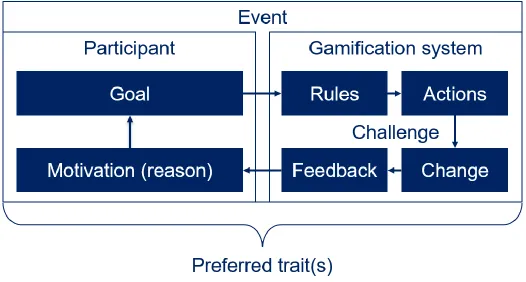
The stakeholders should now convert the events from the future scenarios into gamified events, or activities, within the gamification system. Following the description of game components in the
Introduction, components within gamified events can be described as follows:
Goal(s): Something the participant aims to achieve, which the system encourages.
Actions: What the participant can do to approach the goal(s). Rules: Specify the actions the participant can perform and the
effect they will have.
Feedback: Information that informs the participant of a change resulting from their actions.
Challenge: The perceived challenge of achieving the participant’s current goal(s).
Motivation: The encouragement the participant needs in order to progress.
During co-design, the stakeholders should consider how the events in the future scenarios can be turned into cycles of interactions consisting of the above components. The purpose of doing this is to make the participants’ existing or future operations within the context more engaging.
The key consideration here is that the system creates a goal and a
challenge that the participants find motivating. This motivation
should reflect the reasons for the participants’ preferred traits, identified previously. The rules in the system, and the actions that the participants can perform within the constraints of these rules, create the perceived challenge. When the participants interact with the system, they will receive feedback on the change that their
actions have resulted in. This informs the participants of their progression, which should motivate them towards their goal. In this way, and following the discussion of games in the
30
Storyboard sequence
There are many methods that could be used to record the design as it progresses. Storyboarding is an established practice
recommended by this workbook. Storyboarding involves using rudimentary drawings within boxes to represent a sequence of events, like a comic strip. For the purposes of designing the gamified sequence, use individual panels that can be arranged, added or removed as the design progresses.
The storyboard should be used to ensure a consistent experience for the participants. The stakeholders should refer to the
overarching scenarios from start to finish while arranging the experiences at the level of the gamified events. The scenarios should, in turn, be structured to accommodate these events. Iterating between the gamified events and the scenarios in this way will inform the overall structure of the gamification system. The broad associations with known games that have been identified by the stakeholders will facilitate this process, as the structures of these games can be used to guide the content of, and connections between, the events.
Every consideration possible should be taken into account during this task. Once the experience has been designed from beginning to end, it should be validated by the stakeholders and approved for co-creation. Note, however, that the design at this point is not necessarily final, as the process of co-creation will likely have an impact.
32
3.5 Stage 4: Co-creation
The co-creation stage is the culmination of the project’s work. By the end of the stage, a functional, final gamification system will be ready for dissemination.
3.5.1
Prototype interactions
By prototyping the interactions, the team will confirm whether they can replicate the preferred traits in the gamification system’s design. If not, then the reasons for this can be fed back into the design.
Create prototypes
Simple prototypes should be used to simulate interactions with the final gamification system. These prototypes should be created using basic materials, such as pen and paper, regardless of the form the gamification system will ultimately take.
The storyboards produced in the previous stage should be referred to when creating these prototypes. The requirement of these prototypes is that they accurately reflect the design of the system created in the previous stage.
The builder should lead this part of the process to ensure that the interactions with the prototypes accurately reflect those of the form of the system.
Test interactions
The participants, participant specialists, and/or other stakeholders on behalf of participants should interact with the low-fidelity prototypes. Depending on how many participants the system will accommodate, individuals or small groups should use the prototypes and be observed by the remaining stakeholders, particularly the builder. Detailed records should be kept, related to the traits that emerge from using these prototypes.
Refine design
If the responses to the system are inconsistent with the preferred traits, then the reasons should be fed back into the design. Records of interactions with the prototypes, and discussions amongst the participants and/or stakeholders, will provide this insight.
33
3.5.2
Prototype form
The form of the gamification system could have a significant impact upon how the participants will interact with it. While this has been considered throughout the process, prototypes will help resolve any previously unforeseen issues, prior to committing to the system’s creation and dissemination.
Create prototypes
Representations of the gamification system’s form should be produced by the builder. These representations must be at a level of detail needed to provide the stakeholders with an accurate impression of what the final gamification system will look and feel like. The team should return to the criteria in Stage 2 to assess the suitability of various styles or themes.
Test form
This part of the process is identical to that of testing the interactions previously. The participants and stakeholders should interact with the prototypes of the form. Depending on how many participants the system will accommodate, individuals or small groups should use the prototypes and be observed by the remaining stakeholders, particularly the builder. Detailed records should be kept, related to the traits that emerge from using these prototypes.
At this point, the team may encounter issues specifically related to the form that were not anticipated previously. For example,
prototyping software could reveal usability issues that were not exposed in paper prototypes. Resolving such issues may impact the design of the system significantly. Any modifications to the design should therefore be re-tested before continuing to develop the form.
Refine representation
34
3.5.3
Consolidate system
Consolidating the outcomes of prototyping the interactions and the form will ensure that the gamification system is ready for
dissemination. The description of this task is sparse, as it relates to specific outcomes of the previous tasks in the project.
Finalise interactions
The builder should complete the interactions of the gamification system, based on the outcomes of the preceding tasks in this stage. The remaining stakeholders (including the participants) should test these interactions to ensure that they are consistent with these outcomes.
Finalise representation
The builder should create the elements of the gamification system that correspond with its representation. The remaining stakeholders should be involved to approve the theme, style and content of these elements.
Complete system
36
3.6 Stage 5: Dissemination
The final stage involves implementing the gamification system within the context, and promoting this system to the participants. Broadly, there should be three phases of dissemination:
implementation, promotion and validation. The following descriptions provide general guidance, though the experience gained in the project thus far will govern the specifics of these tasks.
3.6.1
Implementation
The gamification system needs to be merged with the context to satisfy the purpose for which it was created. This is the process of implementation.
Identify requirements
Implementing gamification will depend on the requirements of the context, the participants, and the form of gamification. Many of these requirements will be understood by the team having followed the process described in this workbook.
Depending on the agreed expectations of the stakeholders, responsibility for implementation will rest with either the builder or another role. Whether passing the system to the core team, or implementing the system as part of the team, the builder should produce the specific requirements of the system for it to be
implemented. The remaining stakeholders, particularly the context specialists, should engage with the builder during this process. The emerging criteria for implementation based on these discussions should be recorded.
Create implementation strategy
The criteria for implementation should be used by the stakeholders to create a strategy and schedule for implementing the gamification system. Refer to the expectations of the stakeholders, as well as
their capabilities and availability, when producing this strategy. Create a schedule based on the analysis of these factors.
Implement system
37
3.6.2
Promotion
Promoting the gamification system will ensure that it is used by the participants. This will, in turn, enable the team to verify whether the system has fulfilled its purpose.
Research method(s) of promotion
Identifying appropriate methods for promoting the gamification system to the participants reflects the process of identifying the appropriate form of the system. The criteria of validity, credibility, utility and feasibility should be referred to when exploring these methods (see Stage 2).
The methods of promotion should be consistent with how the participants currently engage with the context, and how they will
engage with it. For example, if a workshop activity is to be gamified into online software, then the promotion for the gamification system should be disseminated both in workshops and online. If the
participants do not currently engage with the context, then use previous research into the participants to determine potential avenues for promoting the system.
Consider the requirements and constraints of the project, and create a list of potential methods of promotion in order of preference.
Create content and strategy
The stakeholders should now create the content to be disseminated in the promotion of the gamification system. When considering this content, the potential benefits of using the system for the
participants should be considered. These will be used to persuade the participants to engage.
Being candid about the mutually beneficial aspects of the system has the combined benefit of being ethical and providing an
opportunity to gain additional insight. If the participants are aware of
the designed benefits of using the system to both themselves and the other stakeholders, they may be more forthcoming about its general potential.
Once the content has been agreed, create a strategy for deploying this content via the methods identified. Refer to the expectations of the stakeholders, as well as their capabilities and availability, when producing this strategy. Create a schedule based on the analysis of these factors.
Disseminate promotional materials
38
3.6.3
Validation
Validation involves the evaluator ensuring that the gamification system has fulfilled its purpose. Once this is done, the project is complete.
Research participant engagement
The considerations for whether the participants have engaged with the system are:
The number of participants the gamification system is designed to engage.
The length of time the system is designed to run for. The number of participants that use the system during this
period. The number of these participants that are satisfied with the
system.
The potential methods of researching the participants’ engagement are vast, and could range from observations and surveys to
complex analytics embedded in software. The method(s) chosen, and how they are employed, should be consistent with the purpose of the gamification system, and will be determined by the
capabilities of stakeholders.
Research participants’ performance
The considerations for measuring the participants’ performance relate to the expectations of the system. Broadly, this involves identifying whether the goal has been achieved as defined in Stage 2. Specifically, this relates to the participants’ preferred traits. If any of these criteria have not been achieved, exploring the reasons for this will inform future projects and possible modifications to the current system.
Refine system
40
4. Conclusion
There is substantially more to gamification than the design of its system. The process of creating an appropriate gamification system involves a range of activities. This workbook has provided insight into these activities.
The case has been presented that conducting in-depth explorations into the requirements of the stakeholders, participants, and contexts is key to effective gamification. There is much to debate on the merits of various approaches to designing gamification systems. Many approaches focus on the identification and implementation of patterns and processes in games, which contrasts the approach used in this workbook. If the reader wishes to complement the activities in this workbook with these other approaches, they are able to do so.
However, experience suggests that this is not necessary when working with diverse stakeholders. The advantage of the approach in this workbook is that an appropriate design and form of
gamification emerges organically as the project progresses.
Research into different design patterns could result in a system that is governed by these designs, rather than the requirements of the project.
The project completed through this workbook could lead to further explorations into gamification. If this is the case, the reader is urged to complete the process in full during each project. The temptation may be to build each system based solely on the previous attempts. While this knowledge and experience is important, it should be used to complement the process, rather than compensate for it.
Though gamification may not be the panacea some would claim, it has significant potential to engage people with a range of contexts
41
5. Further reading
Agogué, M., Levillain, K. and Hooge, S. (2015) Gamification of Creativity: Exploring the Usefulness of Serious Games for Ideation. Creativity and Innovation Management, 24 (3): 415–429
Antin, J. (2012) Gamification is not a Dirty Word. Interactions, 19 (4): 14
Bittner, J.V. and Shipper, J. (2014) Motivational effects and age differences of gamification in product advertising. Journal of Consumer Marketing, 31 (5): 391–400
Brugha, R. and Varvasovszky, Z. (2000) Stakeholder analysis: a review. Health Policy and Planning, 15 (3): 239–246
Bryson, J.M. (2004) What to do when Stakeholders matter. Public Management Review, 6 (1): 21–53
Carroll, J.M. (1997) Scenario-Based Design. In Helander, M.G., Landauer, T.K. and Prabhu, P.V. (eds.) Workbook of Human-Computer Interaction. 2nd ed. Amsterdam: Elsevier. pp. 383–406
Carroll, J.M. (2000) Five Reasons for Scenario-Based Design. Interacting with Computers, 13: 43–60
Deterding, S. (2012) Gamification: Designing for Motivation. Interactions, 19 (4): 14–17
Deterding, S. (2015) The Lens of Intrinsic Skill Atoms: A Method for Gameful Design. Human–Computer Interaction, 30 (3–4): 294–335
Downes-Le Guin, T., Baker, R., Mechling, J., et al. (2012) Myths and realities of respondent engagement in online surveys. International Journal of Market Research, 54 (5): 613–633
Fuchs, M., Fizek, S., Ruffino, P., et al. (eds.) (2014) Rethinking Gamification. Lüneburg, Germany: Meson Press
Gudiksen, S. (2015) Business Model Design Games: Rules and Procedures to Challenge Assumptions and Elicit Surprises. Creativity and Innovation Management, 24 (2): 307–322
Hamari, J. (2013) Transforming homo economicus into homo ludens: A field experiment on gamification in a utilitarian peer-to-peer trading service. Electronic Commerce Research & Applications, 12 (4): 236–245
Hamari, J. (2017) Do badges increase user activity? A field experiment on the effects of gamification. Computers in Human Behavior, 71: 469–
478
42
Hamari, J. and Koivisto, J. (2015) “Working out for likes”: An empirical study on social influence in exercise gamification. Computers in Human Behavior, 50: 333–347
Hamari, J., Shernoff, D.J., Rowe, E., et al. (2016) Challenging games help students learn: An empirical study on engagement, flow and immersion in game-based learning. Computers in Human Behavior, 54: 170–179
Johansson-Sköldberg, U., Woodilla, J. and Çetinkaya, M. (2013) Design Thinking: Past, Present and Possible Futures. Creativity and Innovation Management, 22 (2): 121–146
Kapp, K.M. (2012) The Gamification of Learning and Instruction: Game-Based Methods and Strategies for Training and Education. San Francisco, CA: John Wiley & Sons
Karlsen, J.T. (2002) Project Stakeholder Management. Engineering Management Journal, 14 (4): 19–24
Keith, C. (2010) Agile Game Development with SCRUM. Boston: Addison Wesley
Koivisto, J. and Hamari, J. (2014) Demographic differences in perceived benefits from gamification. Computers in Human Behavior, 35: 179–
188
McGonigal, J. (2012) Reality is Broken: Why Games Make Us Better and How They Can Change the World. London: Vintage
Robinson, S. (2008a) Conceptual modelling for simulation Part I: definition and requirements. Journal of the Operational Research Society, 59 (3): 278–290
Robinson, S. (2008b) Conceptual modelling for simulation Part II: a framework for conceptual modelling. The Journal of the Operational Research Society, 59 (3): 291–304
Robson, K., Plangger, K., Kietzmann, J., et al. (2014) Understanding Gamification of Consumer Experiences. Advances in Consumer Research, 42: 352–356
Robson, K., Plangger, K., Kietzmann, J.H., et al. (2015) Is it all a game? Understanding the principles of gamification. Business Horizons, 58 (4): 411–420
Robson, K., Plangger, K., Kietzmann, J.H., et al. (2016) Game on: Engaging customers and employees through gamification. Business Horizons, 59 (1): 29–36
43 Rowley, T.J. (1997) Moving Beyond Dyadic Ties: A Network Theory of Stakeholder Influences. Academy of Management Review, 22 (4): 887–
910
Sanders, E.B.-N. and Stappers, P.J. (2008) Co-creation and the new landscapes of design. CoDesign, 4 (1): 5–18
Schell, J. (2008) The Art of Game Design: A Book of Lenses. Amsterdam; Boston: Elsevier/Morgan Kaufman
Seaborn, K. and Fels, D.I. (2015) Gamification in theory and action: A survey. International Journal of Human-Computer Studies, 74: 14–31
Walz, S.P. and Deterding, S. (eds.) (2014) The Gameful World: Approaches, Issues, Applications. Cambridge, Massachusetts: The MIT Press Werbach, K. and Hunter, D. (2012) For the Win: How Game Thinking Can Revolutionize Your Business. Philadelphia, Pa: Wharton Digital Press
van der Zee, D.-J., Holkenborg, B. and Robinson, S. (2012) Conceptual modeling for simulation-based serious gaming. Decision Support Systems, 54 (1): 33–45