RESEARCH ARTICLE
GENDER AND LOCUS OF CONTROL: A COMPARATIVE STUDY OF ADOLESCENT SUBSTANCE
ABUSE IN
AWKA METROPOLIS
*Emeka Anthony Nwankwo, Uche V. Okpalaeke, Samuel U. Ezeakabekwe
and Kwentoh O. Moneme
Department of Psychology, Chukwuemeka Odumegwu Ojukwu University, Igbariam, Anambra State
ARTICLE INFO ABSTRACT
The study explored gender and locus of control as a comparative study of adolescent substance abuse in Awka Metropolis. Total number of one hundred and fifty-three (153) secondary school students in Awka metropolis; served as participant for the study. 61 (39.9%) were females while 92 (60.1%) were boys. Simple random sampling technique was used to select the secondary schools and the participants. Their ages comprised 11 to 18 years with a mean age of 14.86 years and standard deviation of 2.28. Substance Craving Scale by Mazza (2004) and Levenson Multidimensional Locus of Control by Levenson (1973) were employed for data generation. Two by Two Factorial Designs and Two-way Analysis of Variance (ANOVA) statistic were adopted and three hypotheses were tested. The first hypothesis which stated there will be no significant difference between boys and girls on adolescent substance abuse in Awka metropolis and the second hypothesis which stated that there will be no significant difference between those that have external and internal locus of control on adolescent substance abuse in Awka metropolis were confirmed at p>.05. while the third hypothesis which stated that there will be no significant interaction effect between gender and locus of control on adolescent substance abuse in Awka metropolis was confirmed at p>.05. Implications and recommendations of the study were properly established in the study.
INTRODUCTION
Naturally, adolescence is a time of significant developmental transition which is considered to be second only to infancy in the magnitude of changes that occur (Hart & Carlo, 2005). Adolescents experience numerous developmental challenges at varying stage, including: increasing need for independence; evolving sexuality; transitioning through education and commencing employment; consolidating advanced cognitive abilities; and negotiating changing relationships with family, peers and broader social connections (Blum & Rinehart, 2008). The adolescent period is also marked by increased involvement in maladaptive behaviours that may predispose young people to poor long term outcomes. Many of these deviant behaviours are relatively transitory in nature and are resolved by the beginning of adulthood. However, there is increasing evidence of the significant level of emotional and behavioural difficulties such as depression, anxiety, conduct disorder, substance abuse, alcoholism and suicidal thoughts that are experienced by some Nigerian adolescents (Abdulkarim, Mokuolu & Adeniyi, 2005). Substance abuse which is the interest of this study is a rapidly growing global problem (Lakhanpal, Agnihotri, 2007; United Nations Office of Drugs and Crime, 2007; Abudu, 2008). The problem of substance abuse poses a significant threat to the social, health, economic fabrics of the families, society and the entire nations (Giade, 2012; Oshodi, Aina & Onajole, 2010).
*Corresponding author: Emeka Anthony Nwankwo,
Department of Psychology, Chukwuemeka Odumegwu Ojukwu University, Igbariam, Anambra State
Almost every country in the world is affected from one or more drug being abused by its citizens. The increased of drug abuse globally has brought problems such as increase in violence and crimes and diseases such as HIV/AIDS, collapse of the veins and collapse in the social structure (UNODC, 2007; Oshodi, Aina, & Onajole, 2010). The impact of drug abuse among Nigerian students has been a feature of a morally bankrupt, corrupt and wasted generation and loss of our societal values and ideals. The situation now appears to be such that no one can argue ignorance of what is happening (Abudu, 2008). “one cannot sit and pretend that he/she has not seen the menace of drug abuse among adolescents” (Hamisu, Ahmad & Lim, 2014). According to Giade, (2011), any nation being used by drug barons as a transit route has the potentials of becoming a substance abuse consumer’s country; substance abuse threatens the security of every nation, tearing apart the societies, spawning crime, spreading diseases such as AIDS, and killing youths and the future of the country”. Based on the above problems, the study will examine the impact of gender, parental socio-economic and locus of control on adolescents substance abuse in Awka metropolis.
Review of Related Literatures
Substance abuse which the adolescents could turn to, also known as drug abuse and substance use disorder is a patterned use of a drug in which the user consumes the substance in amounts or with methods which are harmful to themselves or others, and is a form of substance related behaviour disorder. Substance abuse also means harmful use of alcohol or other Article History:
Received 20th February, 2019
Received in revised form 24th March, 2019
Accepted 27th April, 2019
Published online 30th May, 2019
International Journal of Recent Advances in Multidisciplinary Research
Vol. 06, Issue 05, pp.4879-4884, May, 2019
Keywords:
drugs. It is a poorly adaptive behavior pattern, lasting more than one month, in which a person continues to use a substance after knowingly being harmed by it or uses it repeatedly in a hazardous situation. Abuse can lead to substance dependence (addition) which may be physiological or psychological, or both, and is likely to continue into adulthood (Papalia, Old & Feldman, 2001). Odianose (2009) commented that, drug abuse is the "arbitrary" over dependence or misuse of one particular drug with or without a prior medical prescription from qualified health practitioners. Substance abuse may also be defined as the “arbitrary” over dependence or miss-use of one particular drug with or without a prior medical diagnosis from qualified health practitioners (Lakhanpal, & Agnihotri, 2007). Oluremi (2012) stated that substance abuse is the harmful use of mind altering drugs. It added that the term usually refers to problem with illegal drugs, which also include harmful use of legal prescription drugs, Such as in self-medication. Majority of the Nigerian adolescents ignorantly or deliberately depend on one form of drug or the other for their various daily activities–social, educational, political, moral among others. Such drugs include: Tobacco, Indian hemp, cocaine, morphine, Heroine, Alcohol, ephedrine, Madras, Caffeine, Glue, Barbiturates, and Amphetamines. Other drug abused may include, Panadol, Benilyn, tramadol, codeine, Burukutu‟, or local beer, cigarette, solution, beer (Shehu, 2008). Moreover, the exact cause of substance abuse is not clear, with theories including: a genetic disposition; learned from others –or a habit which if addiction develops, manifests as a chronic debilitating disease. Because of these development, most parents and scholars are concerned about the way the adolescents behave, thus tend to be particular of their interactions.
Interestingly, Fatoye and Morakinyo (2002), noted that the most common substance abuse among adolescent in south Western Nigeria were salicylate analgesics ( 48.7 %) , stimulants ( 20.9 % ), antibiotics ( 16.6 % ) alcohol (13.4 % ), hypnotic sedatives ( 8.9 %) and tobacco ( 3.0 % ) They equally noted that the current and lifetime use of alcohol and tobacco was significantly more common among the males and among those in the rural school for the majority of the students, initiation into drug use started at a very early age ( under 14 years ) and from parental influenced Otieno and Ofulla (2009) showed in their study that majority students who were abusing drugs were aged between 16-18 years. They also indicated by the age of 15 years some of the respondents were already abusing drugs. Research indicates that adolescents in families with low levels of cohesion and communication (disengaged) are at a higher risk for developing conduct/behaviour disorders (maladaptive behaviour), substance abuse or behaviour problems (Prange, Greenbaum, Silver, Friedman, Kutash & Duchnowski, 2002). From observation of adolescents, it can be noticed that some of them are excessively aggressive towards others and are often restless, thus paying less attention to lessons, some show signs of neurosis and constantly exhibit the ability to exploit others due to lack of appropriate communication between them and their parents at home. Adolescent who constantly exhibit various forms of anti-social behaviour is regarded as maladaptive. These forms of behaviours inhibit a person’s ability to adjust to particular situations. A common type of maladaptive behaviour is turning to alcohol or drugs (substances) for refuge instead of working to address a challenge. Some other examples are murder, rape, robbery, theft and so on. Studies also that attempted to uncover the origins of the development of substance use behaviour
among adolescents found that family characteristics, and in particular, parental communication styles are being the strongest predictors of deviant behaviour (Fuller, 2000). Previous research discussed the influences of behavioural and emotional issues of parents and how these issues relate to their children. Research suggested that problem behaviour in adolescents has been identified in the early stages of their childhood (Van Der Geest & Biljeveld, 2011). Furthermore, children developing behaviour problems in school and their neighbourhoods seem to grow into adolescence with problem behaviours. These problem behaviors identified include: lack of respect, impulse control, poor self-esteem, masculinity development, and lack of social ties to community (Van Der Geest & Biljeveld, 2011). Additionally, these children that are continually experiencing emotional and behavioral problems seem to have a range of identified negative parental behaviours (i.e., domestic violence, being excessively drunk, drug abuse, and/or involvement with the justice system) (Dembo, 2007). Having discussed the key study variables, other variables include gender and locus of control.
Gender and Substance Abuse: Gender is generally conceived
as a set of characteristics or traits that are associated with a certain biological sex (male or female). In non-western countries, gender is not always conceived as binary, or strictly linked to biological sex. As a result, in some cultures there are third, fourth,fifthor "some" genders. The characteristics that generally define gender are referred to as masculine or feminine. According to some research, risk and protective factors are basically the same for girls and boys, and they function identically regardless of gender (Arthur, Hawkins, Pollard, Catalano & Baglioni, 2002; Bra¨nstro¨m, Sjo¨stro¨m & Andr´easson, 2007; El-Khouri, Sundell, & Strandberg, 2005), while other studies have indicated gender differences for several factors (Amaro, 2001; Stone, 2012). Evidence have shown that substance abuse is generally higher among boys than girls, and boys are usually overrepresented in substance abuse treatment (Andersson, 1993; Dembo & Muck 2009; Hsieh & Hollister, 2004; James, 2013; Opland, Winters, & Stinchfield, 1995; Richert, 2007; Shillington & Clapp, 2003; Stone, 2012). With regard to substance choice, researchers have found that boys are more likely to smoke cannabis, while girls use “harder” drugs, such as amphetamines and opiates, more often and more extensively (Brunelle, Tremblay, Blanchette-Martin,Gendron, & Tessier, 2014; Dean, McBride, McDonald, Connolly, & McDermott, 2010; Dembo & Muck, 2009; Kloos, 2009; Opland, 1995; Pedersen, 2009; Shane, Diamond, Mensinger, Shera, & Wintersteen, 2006; Shillington & Clapp, 2003; So¨derholm Carpelan, 1992; Thomas, 2003). Alcohol abuse appears to be more evenly divided between the sexes (Andersson, 1993; Opland, 1995; Rounds-Bryant, Kristiansen, Fairbank, & Hubbard, 1998). The age at onset of alcohol and cannabis use was 12 and 13 years, respectively, for both sexes (Pedersen, 2009; Opland, 1995).
frequently than do boys, which in turn typically manifests as an increase in mental health problems. Consequently, girls generally report more pervasive mental health problems than do boys (Grella & Joshi, 2003; Hawke, Jainchill, & De Leon, 2003; Hsieh & Hollister, 2004). With regard to various mental health problems associated with substance abuse, girls report a higher incidence of depression, anxiety, self-harm, suicidal ideation, and suicide attempts (Hodgin, 2014; Jacobsson, Richter, Tengstro¨m, & Borg, 2011; Pedersen, 2009; Richert, 2007; Toray, 1991), and have riskier sexual behaviour (Stevens, 2003). Boys report greater difficulties controlling violent behaviour (Hodgins, 2014; James, 2013).
Locus of Control and Substance Abuse: Additional variable
to consider in this study is locus of control: which refers to “the degree to which persons expect that a reinforcement or an outcome of their behaviour is contingent on their own behaviour or personal characteristics versus the degree to which persons expect that reinforcement is a function of chance, luck or fate, is under the control of powerful others, or is simply unpredictable” (Rotter, 1990). And it can be internal versus external control. Locus of control (LOC) has been report over the years as a major construct in individual’s life that play a major role in many aspects of human behavior such as self-control, socially adjustment, independence, expectancy, achievement motivation and success-orientation. It is seen as the degree to which individual believes that their behaviours are controlled by external or internal factors. The findings of Carrim, Basson, & Coetzee, (2006), Gizir&Aydin (2009), Tella, Tella, &Adeyinka, (2008) have shown that individuals with a high external locus of control believe that fate or chance determine the outcome of events while individuals with a high internal locus of control believe that the results of events are caused by their own actions and behaviour (Boone, van Olffen& van Witteloostuijn, 2005; Carrim, Basson, & Coetzee, 2006). People having internal orientations are more likely to be aware of and to use good health practices. Health is one of the many areas in which there has been a significant amount of interest in relating locus of control beliefs to a variety of relevant behaviours. The prevalence rates of alcohol, tobacco, and marijuana use typically increase over the adolescent years and reach a peak during late adolescence and early adulthood. Alcohol use is the most prevalent substance use behaviour among teens, and marijuana is the most prevalent illicit drug used (Adekeye, Adeusi, Chenube, Ahmadu & Sholarin, 2015). These rates of use are alarming in light of the many serious consequences of adolescent substance use in relation to locus of control, which include a range of health, social, psychological, and neurocognitive problems that can interfere with normative development (Newcomb & Locke, 2005). Based on the above deduction, this study will investigate the impact of gender, parental socio-economic status and locus of control on adolescent substance abuse in Awka metropolis.
EMPIRICAL REVIEW
Gender and Substance Abuse: Agu, Nwankwo, Obi,
Sydney-Agbor. And Mgbenkemdi (2013), investigated effect of
gender and locality on alcohol abuse among secondary school students. 130 adolescents males and females selected from urban (n=77) and rural (n=53) were used for the study. The participants were between 14-20 years with a mean age of 17 years. 15 items questionnaire designed to measure substance abuse was for data collection. 2 x 2 factorial design was adopted while 2 x 2 analysis of variance F-test was used for
data analysis. Findings revealed a significant influence of gender on substance abuse [F (1,126) = 11.8, p<.01]. A significant influence of locality was also observed on substance abuse [F (1,126) = 48.9 p<.01]. The study also showed a significant interaction effect of gender and locality on substance abuse among adolescents [F, (1,126) = 2565,
p<.01].
Locus of Control and Substance Abuse: Adekeye, Adeusi,
Chenube, Ahmadu and Sholarin (2015), examined assessment of alcohol and substance use among undergraduates in selected private Universities in Southwest Nigeria. Data from 574 students between ages 18 and 27 (n = 574, mean= 21.15 (+/- 1.8years) was collected from five tertiary institutions in Ado-Odo-Ota LGA, Nigeria. An adapted and validated version of the World Health Organization (WHO) questionnaire on drug use surveys and the multidimensional health locus of control (MHLC) which was designed to measure the degree to which an individual feels they are in control of their own health were employed for data collection. Data collected were analyzed using descriptive and inferential statistics. Three research hypotheses were raised and tested. Data collected were analyzed using descriptive and inferential statistics. The preliminary result shows that there is no significant difference in the health-related locus of control between substance users and non-users, and between heavy and occasional drinkers, but there exist significant differences based on gender.
Hypotheses
There will be no significant difference between boys and girls on adolescent substance abuse in Awka metropolis.
There will be no significant difference between those
that have external and internal locus of control on adolescent substance abuse in Awka metropolis.
There will be no significant interaction effect between gender and locus of control on adolescent substance abuse in Awka metropolis.
MATERIALS AND METHODS
Participants: A total number of one hundred and fifty-three
(153) secondary school students in Awka metropolis; served as participant for the study. 61 (39.9%) were females while 92 (60.1%) were boys. Simple random sampling technique was used to select the secondary schools and the participants. To select the schools, the researcher wrote, in different pieces of papers, the names of the schools he could remember. The papers were folded and put in a black bag. From the pool, four schools were picked. To select the students from the schools, the sampling technique used involved presenting blue and black pen and allowing the students to pick one. Those that picked blue were given the questionnaire to fill. The ages of the participants ranged from 11 to 18 years with a mean age of 14.86 years and standard deviation of 2.28.
Instruments: The instrument adopted for the study was
(2004), Winsteps estimation showed a mediocre person-reliability of .70 for the measure. The Cronbach’s alpha for the Substance craving scale was 0.93. And its use in this study was adopted through a reliability test using fifty-three students from secondary schools in Nnewi urban for the pilot test. And Crombach alpha reliability coefficient analysis of .70 was
confirmed. The second instrument is Levenson
Multidimensional Locus of Control (LMLC) Scales; a 24 items, Levenson (1973): designed to measures Internality, Powerful Others, and Chance. The scale has high reliability, with test-retest correlation value between .82 and .88 above. For its use in this study, using fifty-three students from secondary schools in Nnewi urban for the pilot study, a Cronbach’s alpha reliability coefficient of .73 was confirmed.
Procedures: The researcher selected four secondary schools
via simple sampling techniques (Igwebuike grammar school, Kenneth Dike comprehensive secondary school, Amaenyi Girls Secondary school, and Capital city secondary school) out of nineteen (19) government secondary schools in Awka south Local Government Area, Anambra. The researcher sought the permissions of the school principals to conduct the research. On the agreed date, the researcher went to the schools to conduct the research. The researcher, with the aid of some of the school teachers met the students in their schools during their free period. Before the administration of the instrument to the students, the researcher first obtained the attentions of the students through the help of the school teachers who were teaching the students. When the attentions of the students were obtained, the researcher did appropriate introduction before the questionnaires were administered to the students. On the whole 160 questionnaires were administered. Out of the total questionnaires administered, 153 were properly answered and as such were used in the study. And the process took the researcher 7 working days.
Design and Statistics: The study adopted Two by Two (2×2)
Factorial Design was adopted: Two-way Analysis of Variance (ANOVA) statistic was used to analyze the data.
RESULTS
The results were presented in the order in which the research hypotheses were tested.
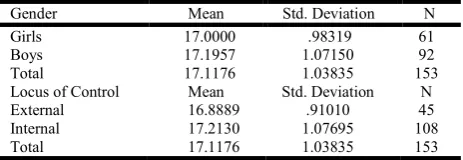
Table 1. Summary table of mean and standard deviation of studied variables
Dependent Variable: Adolescent Substance Abuse
Gender Mean Std. Deviation N Girls 17.0000 .98319 61 Boys 17.1957 1.07150 92 Total 17.1176 1.03835 153 Locus of Control Mean Std. Deviation N External 16.8889 .91010 45 Internal 17.2130 1.07695 108 Total 17.1176 1.03835 153
Interpretation: Based on the above tables, the first hypothesis
which stated there will be no significant difference between boys and girls on adolescent substance abuse in Awka metropolis was confirmed at (F1,141)=.663p>.05. Also the mean differences and standard deviation within the gender: M=17.00, SD= .98 (girls) and M=17.19, SD=1.07 (boys), N=153. This means that girls abuse substance more than boys.
The second hypothesis which stated that there will be no significant difference between those that have external and internal locus of control on adolescent substance abuse in Awka metropolis was confirmed at (F1,141)=3.000, p>.05. Also the mean differences and standard deviation within the locus of control: M=16.89, SD=.91 (external) and M=17.21, SD=1.08 (internal), N=153. This means that adolescent with external locus of control abuse substance more than those with internal locus of control. The fourth hypothesis which stated that there will be no significant interaction effect between gender and locus of control on adolescent substance abuse in Awka metropolis was confirmed at (F1,141)=.870, p>.05.
Table 2. Summary table of two-way Analysis of Variance of Gender, Parental Socio-Economic Status and Locus of Control on
Adolescent Substance Abuse
Dependent Variable: Adolescent Substance Abuse
Source Type III Sum of Squares
df Mean Square
F Sig.
Corrected Model 11.621 11 1.056 .978 .469 Gender .716 1 .716 .663 .417 Locus of Control 3.239 1 3.239 3.000 .085 Gender * Locus of Control .064 1 .064 .059 .809 Error 152.261 141 1.080
Total 44995.000 153
DISCUSSION AND CONCLUSION
Based on the findings, it is evident that none of the factors evaluated in this study displayed a significant impact on adolescent substance abuse. The first hypothesis which stated there will be no significant difference between boys and girls on adolescent substance abuse in Awka metropolis was confirmed. This finding also is in line with finding of Agu et al,. (2013), they investigated effect of gender and locality on alcohol abuse among secondary school students. Their Findings revealed a significant influence of gender on substance abuse. This implies that boys and girls abused substance at the same parameter, and that there is no difference between both sexes in relation to mental health problem they experience today. Also, perhaps this might be the reasons boys and girls of today engage in cultism and illicit behavioural which also affect their studies. The second hypothesis which stated that there will be no significant difference between those that have external and internal locus of control on adolescent substance abuse in Awka metropolis was confirmed. This is in line with the finding of Adekeye et al,. (2015), they examined
assessment of alcohol and substance use among
Implications of the Study: The result revealed that the outcome of the study will aid the forensic counsellors, counselling psychologists, and educational psychologists in counselling adolescent on how to eschew substance abuse, mainly when the impulse to do so is stimulated in them either by internal or external factor. More so, this study will widen the knowledge of adolescent and society at large, on the why, and what make people to abuse substance, even its consequences. More so, the study will set pace for future research in this area.
Recommendations: Establishment of mental health centre in
every community should be encouraged by the government or private Individuals in order to help alleviate drug addicts or those dependent on drugs by giving them advice on ways to reduce hazardous substance intake. Public campaign against substance abuse should be intensifying in order to have a substance and crime free society.
Conclusion: The rate of abuse of substances among
adolescents who represent the future of the nation is disturbing. The colossal cost to society and the influence on the fabric of society in the future can never be quantified. Effort should be made to address this challenge. Thus, this study concludes by establishing that gender and locus of control had no impact on adolescent substance abuse in Awka metropolis. Further, the study also establishes the implications and recommendations of the study.
REFERENCES
Abdulkarim, A.A, Mokuolu O.A & Adeniyi A. 2005. Drug use among adolescents in Ilorin, Nigeria. Trop. Doct; 35:225-8. Abudu, R. V. 2008. Young People and Drugs Abuse: Biennial
International Conference on alcohol, drugs and society in africa, Abuja, Nigeria. Between 23rd - 25th, 2008.
Adekeye, O. A., Adeusi, S. O., Chenube, O. O., Ahmadu, F. O. & Sholarin, M. A. 2015. Assessment of Alcohol and Substance Use among Undergraduates in Selected Private Universities in Southwest Nigeria. IOSR Journal of Humanities and
Social Science (IOSR-JHSS) Vol. 20 (3): 1-7.
Amaro, H., Blake, S. M., Schwartz, P. M., & Flinchbaugh, L. J. 2001. Developing theory based substance abuse prevention programs for young adolescent girls. Journal of Early
Adolescence, 21(3), 256–293.
Anderberg, M., & Dahlberg, M. 2016. Experiences of victimization among adolescents with substance abuse disorders in Sweden. Scandinavian Journal of Child and
Adolescent Psychiatry and Psychology, 4(3), 123–131.
Andersson, C. 1993. The children of Maria: Adolescent substance abusers, their families and schooling. Uppsala, Sweden: Uppsala University.
Arthur, M. W., Hawkins, J. D., Pollard, J. A., Catalano, R. F., & Baglioni, A. J. 2002. Measuring risk and protective factors for substance use, delinquency, and other adolescent problem behaviors: The Communities That Care Youth Survey.
Evaluation Review, 26(6), 575–601.
Blum, R. & Rinehart, P. 2008. Reducing the Risk: Connections that Make a Difference in the Lives of Youths. UK: Jessica Kingsley Publishers.
Blum, R.W., Beuhring, T., Shew, M.L., Bearinger, L.H., Sieving, R.E., and Resnick, M.D. 2000. The effects of race/ethnicity, income, and family structure on adolescent risk behaviors. American Journal of Public Health, 90(12), 1879–1884.
Boone, C., van Olffen, W., & van Witteloostuijn, A. 2005. Team locus of control composition and leadership structure
information and acquisition, and financial performance: A business study simulation. Academy of Management Journal,
48(5), 889-909.
Brunelle, N., Tremblay, J., Blanchette-Martin, N., Gendron, A., & Tessier, M. 2014. Relationship between drugs and delinquency in adolescence: Influence of gender and victimization experiences. Journal of Child & Adolescent
Substance Abuse, 23(1), 19–28.
Carrim, N. M. H., Basson, J., & Coetzee, M. 2006.The relationship between job satisfaction and locus of control in a South African call centre environment. South African
Journal of Labour Relations, 30(2), 66-81.
Collins, S.E., Malone, D.K., Clifasefi, S.L., et al. (2012). Project- based Housing First for chronically homeless individuals with alcohol problems: Within-subjects analyses of two year alcohol trajectories. American Journal of Public Health 102,511–519.
Danielsson, A. K., Wennberg, P., Tengstrom, A., and Romelsjo, A. 2010. Adolescent alcohol use trajectories: Predictors and subsequent problems. Addictive Behaviors, 35, 848-852. Del Boca, F. K. 2016. Addressing sex and gender inequities in
scientific research and publishing. Addiction, 111(8), 1323– 1325.
Dembo, R., & Muck, R. D. 2009. Adolescent outpatient treatment. In C. G. Leukefeld, T. P. Gullotta, & M. Staton-Tindall
(Eds.), Adolescent substance abuse: Evidence-based
approaches to prevention and treatment (pp. 97–117). New York, NY: Springer Science.
Dembo, R., Wareham, J., Poythress, N., Meyers, K., Cook, B., & Schmeidler, J. 2007. Continuities in problem behavior among high risk youth. Journal of Child & Adolescent Substance
Abuse, 16(4), 91–118.
El-Khouri, B. M., Sundell, K., & Strandberg, A. 2005. Riskfaktorer fo¨ r normbrytande beteenden: Skillnader mellan flickor och pojkar i tona°-ren [Risk factors related to antisocial behaviour: Differences between adolescent girls and boys]. Stockholm, Sweden: Research and Development, Stockholm City.
Fatoye, F. O. & Morakinyo, O. 2000. Substance use amongst secondary school student in rural and urban Communities in southwestern Nigeria. East African Medical Journal, 299-305.
Fuller, A. 2000. Raising Real People: Creating a Resilient Family.
Melbourne: ACER Giade, A. (2011, June 30). How
Nigeria‟s Latest Drug Abuse Defies Legislation. Daily Trust
NewsPaper. Retrieved from http://www. dailytrust.
com.ng/daily /old/index.php/ feature/ 42852-how-nigerias-latest-drug-abuse- defies-legislation.
Grella, C. E., & Joshi, V. 2003. Treatment processes and outcomes among adolescents with a history of abuse who are in drug treatment. Child Maltreatment, 8(1), 7–18.
Hamisu M., Ahmad T. O. & Lim H. L. 2014. Adolescents and Drugs Abuse in Nigeria. Journal of Biology, Agriculture and
Healthcare, Vol.4, No.1, 5-9.
Hart, D., & Carlo, G. 2005. Moral development in adolescence.
Journal of Research on Adolescence, 15(3), 223–233.
Hawke, J. M., Jainchill, N., & De Leon, G. 2003. Posttreatment victimization and violence among adolescents following residential drug treatment. Child Maltreatment, 8(1), 58–71. Hingson, R. W., Zha, W., Weitzman, E. R. 2009. Magnitude of
and trends in alcohol-related mortality and morbidity among U.S. college students ages 18-24, 1998–2005. Journal of
Studies on Alcohol & Drugs, S16, 12-20.
Hodgins, S., Lo¨venhag, S., Rehn, M., & Nilsson, K. W. 2014. A 5-year follow-up study of adolescents who sought treatment for substance misuse in Sweden. European Child &
Hsieh, S., & Hollister, C. D. 2004. Examining gender differences in adolescent substance abuse behaviour: Comparisons and implications for treatment. Journal of Child & Adolescent
Substance Abuse, 13(3), 53–70.
Huerta, M. C., & Borgonovi, F. 2010. Education, alcohol use and abuse among young adults in Britain. Social Science &
Medicine, 71, 143e151.
Jacobsson, J., Richter, C., Tengstro¨m, A., & Borg, S. 2011. Ungdomar och missbruk – kunskap och praktik. Rapport fo¨ r missbruksutredningen [Adolescents and substance abuse – research and practice. Report for the Swedish government’s national drug abuse inquiry]. Stockholm, Sweden: Stockholm Centre for Dependency Disorders.
James, P. D., Smyth, B. P., & Apantaku-Olajide, T. 2013. Substance use and psychiatric disorders in Irish adolescents: A cross-sectional study of patients attending substance abuse treatment service. Mental Health and Substance Use, 6(2), 124–132.
Kloos, A., Weller, R. A., Chan, R., & Weller, E. B. 2009. Gender differences in adolescent substance abuse. Current Psychiatry Reports, 11(2), 120–126.
Lakhanpal, P. & Agnihotri, A., K. 2007. Drug Abuse an International Problem: A short Review with Special reference to African Continent. Journal of Medicine and oxicology, 1(1), 1-11.
Miller, J. W., Naimi, T. S., Brewer, R. D., and Jones, S. E. 2007. Binge drinking and associated health risk behaviors among high school students. Pediatrics, 119, 76-85.
Newcomb, M. D., and Locke, T. 2005. Health, social, and psychological consequences of drug use and abuse. In: Sloboda, Z. (Ed.) Epidemiology of drug abuse (pp. 45-59). New York: Springer, 2005.
Oluremi, D. F. 2012. Drug Abuse among Nigerian Adolescents strategies for counselling. Journal of International Social
Research. 5(20), 342 – 347.
Opland, E. A., Winters, K. C., & Stinchfield, R. D. 1995. Examining gender differences in drug abusing adolescents. Psychology of Addictive Behaviors, 9(3), 167–175.
Oshodi, O. Y., Aina, O. F. & Onajole, A. T. 2010. Substance use among secondary school students in an urban setting in Nigeria: prevalence and associated factors. African journal of
psychiatry, 13(1), 52 – 57.
Otieno, A. O. & Ofulla, A. V. O. 2000. Drug abuse in Kisumu Town Western Kenya. African Journal of food Agriculture
Nutrition andDevelopment, 9(3), 846 – 858.
Papalia, D. E. Olds. S. W. & Feldman, R. D. 2000. Human
development (8th ed) Boston: McGraw Hill.
Pedersen, M. U., Vind, L., & Baekbøl, M. 2009. 13–17-a°rige piger der misbruger rusmidler, ogden behandling de tillbydes [13–17-year-old girls who are substance abusers, and the treatment they are offered]. Aarhus, Denmark: Center for Rusmiddelforskning, Aarhus Universitet.
Prange, M.E., Greenbaum, P.E., Silver, S.E., Friedman, R.M. Kutash, K., & Duchnowski, A.J. 2002. Family functioning and psychopathology among adolescents with severe
emotional disturbances. Journal of Abnormal Child
Psychology, 20 (1), 83-102.
Reinert, D. F., & Allen, J. P. 2007. The Alcohol Use Disorders Identification Test: An update of research findings. Alcoholism: Clinical and Experimental Research, 31(2), 185– 199.
Richert, T. 2007. Unga missbrukare i Stockholm, Go¨teborg och Malmo¨ – En deskriptiv och ja¨mfo¨rande studie av sex o¨ppenva°rdsmottagningar och deras beso¨kare [Young
substance abusers in Stockholm, Go¨ teborg, and Malmo¨: A descriptive and comparative study of six outpatient clinics and their visitors]. Stockholm, Sweden: Mobilisering mot narkotika.
Rotter, J. B. 1990. Internal versus external control of reinforcement: A case history of a variable. American Psychologist, 45(4), 489-493.
Rounds-Bryant, J. L., Kristiansen, P. L., Fairbank, J. A., & Hubbard, R. L. (1998). Substance use, mental disorders, abuse, and crime: Gender comparisons among a national sample of adolescent drug treatment clients. Journal of Child
& Adolescent Substance Abuse, 7(4), 19–34.
Shane, P., Diamond, G. S., Mensinger, J. L., Shera, D., & Wintersteen, M. B. 2006. Impact of victimization on substance abuse treatment outcomes for adolescents in outpatient and residential substance abuse treatment. The
American Journal on Addictions, 15(suppl. 1), 34–42.
Shehu, A.M. 2008. Trends in Drug Consumption among Adolescents in Sokoto. Epidemiology and Control of Substance Abuse in Nigeria – Sokoto.
So¨derholm Carpelan, K. 1992. Unga narkotikamissbrukare i en va°rdkedja – en studie av 208 ungdomar vid Maria ungdomsenhet i Stockholm [Young substance abusers in serial treatment: A study of 208 adolescents in the Maria youth clinic in Stockholm]. Stockholm, Sweden: Department for Social Work, Stockholm University.
Stevens, S. J., Murphy, B. S., & McKnight, K. 2003. Traumatic stress and gender differences in relationship to substance abuse, mental health, physical health, and HIV risk behavior in a sample of adolescents enrolled in drug treatment. Child Maltreatment, 8(1), 46–57.
Thomas, S. E., Deas, D., & Grindlinger, D. R. 2003. Gender differences in dependence symptoms and psychiatric severity in adolescents with substance use disorders. Journal of Child
& Adolescent Substance Abuse, 12(4), 19–34.
Toray, T., Coughlin, C., Vuchinich, S., & Patricelli, P. 1991. Gender differences associated with adolescent substance abuse: Comparisons and implications for treatment. Family Relations, 40(3), 338–344.
Townsend, L., Flisher, A. J., and King, G. 2007. A systematic review of the relationship between high school dropout and substance use. Clinical Child & Family Psychology Review,
10, 295-317.
United Nations Office on Drugs and Crime. 2007. Drug Abuse
and Drug Dependence Treatment Situation, in Nigeria.
According to UNODC data for the year 2007. Available at http://www.unodc.org/docs/treatment/CoPro/
Web_Nigeria.pdf.
Van Der Geest, V., & Bijleveld, C. 2011. Personal background and treatment characteristics associated with offender after residential treatment: A 13-year follow up in adolescents males. Psychology, Crime & Law, 14(2), 159–176.
Wikström, P.-O. H. 2006. Individuals, settings and acts of crime: situational mechanisms and the explanation of crime. In P.-O. H. Wikström, & R. J. Sampson (Eds.), The explanation of crime: Context, mechanisms and development. Cambridge: CUP.
Wikström, P.-O. H., & Butterworth, D. 2006. Adolescent crime: Individual differences and lifestyles. Cullompton: Willan Publishing.