Page 278 www.ijiras.com | Email: [email protected]
Generational Relay Theory
Dr. Matthias Oyigeya
Department of Psychiatry, Federal Medical Centre, Makurdi, Benue State, Nigeria
I. INTRODUCTION
The 4×100 meter athletic relay race has a starting point and a finish line. Each member of the team has a start point and a finish line. In the 4×100 meter athletic relay race, the starter would usually determine the pace and the eventual success of the race. The precision and timeliness of transfer of baton from one athlete to the next also determine the success of the race. The race may truncate as a result of an error in the course of the run, either because a team member falls down or the baton falls off due to error in the transfer.
This illustration may serve as an epigraph of what generational relay theory is all about.
Life race has a start point (Adam & Eve, in Genesis 1:26-27) but, in context, it is an endless race. It is a relay race too but again different in both context and content. It is a bidirectional race; the individual race from birth to death and generational race, from one generation to another. The number of the team members is not fixed but increases exponentially from one generation to the next. The ‗baton‘ that is transferred in this case is not empty but packed full with biological materials (genes and epigenes). The baton contents alter from one relay point to another. The speed and distance of the ‗run‘ from one generation to the next is partly dependent on the weight of the baton content; that is, the genetic and epigenetic loading. So far, life race has been quite successful, from two
Abstract: Human beings have been able to survive the several major extinction events and achieved perpetuity of existence because of strong adaptive capacity occasioned by exponential growth, as well as genetic and epigenetic generational relay (EGR). Animals such as Dinosaur, Mammoth, Dodo and a host of others have gone into extinction and more animals, such as Marine Iguana; Dugong; Bigeye tuna; Giant tortoise; and African elephant are listed to be at risk of becoming extinct but human beings perpetuate. Generational Relay Theory as advanced here discussed how humans have been able to achieve perpetuity of existence and how traits are passed from one generation to another, and the implications thereto. This paper established that each human being runs a bidirectional course of life; the individual course of life along curvilinear development curve from birth to death, and the ‘generational relay course of life’ to ensure perpetuity of human existence.It is also found that man’s lifestyles and the environments he interacts with in the course of life provoke development of novel traits due to epigenetic alterations that are passed on to future generations, which in turn determines the quality and integrity of the ‘substitute image’. Generational Relay theory has helped to explain some links between an individual and his generations yet unborn and his generations ago, and has highlighted new views about development of human health and disease; the main issue been that novel traits that develop along the course of life and relayed, explain in part, the genesis of disease and maladaptive behaviours in man. The relay theory has direct implications for understanding the etiology of physical and psychological disorders. Recent advances in therapeutic approaches based on epigenetic concept were highlighted. The paper also suggested future research directions in the intervention of the disorders. Public education on developmental plasticity is also recommended. The paper also discussed how cultural misconceptions about the ‘substitute image’ have placed a lot of burdens on marriages in parts of the world and suggests public education as a way forward to solving the problem.
Page 279 www.ijiras.com | Email: [email protected] (2) human beings at the start point, to 7.5 billion human beings
today (World Population Clock, 2017). The fact therefore is that Adam (male) and Eve (female) were the first human beings that existed and all humans whether primitive or civilized, have their origins from this source, implying that there is only one human race. However, as the offspring migrated to different environments and interacted with the environments, plastic responses occurred, giving rise to multiple phenotypic expressions as manifested in differential skin color; hair texture; jaw size; facial angle; cranial capacity; frontal lobe mass; brain mass; brain surface fissures; and body lice (Lopez, 2016). Irrespective of these differentials, the humans have a common destiny; each person runs a course of life and then dies, even though the quality and timing may differ from one to another. However, the man does not just die, he ‗lives‘ on by passing his baton (traits) on to his offspring.
II. THE RELAY PERSPECTIVE
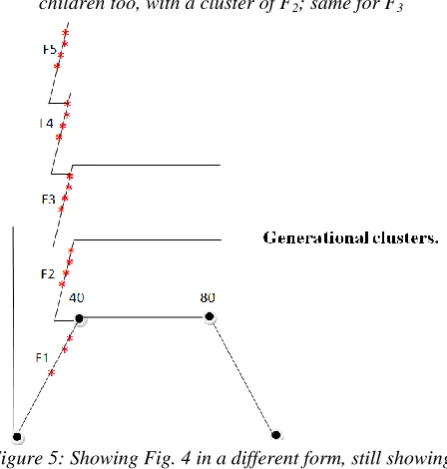
There are two perspectives to the course of life of human beings; the individual course of life and the generational relay course of life. The individual course of life perspective views an individual running his life race from birth to death along Curvilinear Development Curve, the curvilinear course of life (Oyigeya, 2016). This curve, used to describe the course of life of humans, is composed of three sections, each of which corresponds to a phase of development (as shown in Fig. 1): the growth phase (birth to 40 years); maturity phase (40-80 years); and decline phase (80-120 years). The generational course perspective, views man as a desperate being, with the intent to live forever. As a substitute to individual perpetuity, he relays his ‗image‘ in a form of an offspring which he leaves behind after he had died; an unconscious or conscious quest to perpetuate his existence. The relay occurs along curvilinear development curve, at a point of reproduction, herein called ‗Generational Relay Point‘ (GRP), and hereafter represented with ‗F‘. The GRP is a critical decision point. This decision point varies from individual to individual and from society to society and within societies. Figures 1-5 are series of curvilinear curves that explain the ideas of the Relay Theory. According to Curvilinear Development Theory (Oyigeya, 2016), at the age of 40years (the noon of life), growth stabilizes, spans through to 80 and then declines as shown in fig.1. Figures 1-5 are generated by the author to illustrate the concept of generational relay.
Figure 1: Curvilinear Development Curve (CDC) representing man at birth; 40 years; 80years and 120 years
(F0 curve/first curve). CDC represents individual course of life
which is finite
Figure 2: Curvilinear Development Curve showing first GRP (F1; red star, on F0 curve), and a second curve on the first,
generated by the first generation offspring (F1). F2 here
represents the first offspring of F1 but grandchild of F0
Figure 3: Curvilinear Development Curve showing first to
Page 280 www.ijiras.com | Email: [email protected]
Figure 4: Curvilinear Development Curve showing
generational clusters (marked red). The F0 parent with four
children, with a cluster of F1. The first offspring (F1) having 4
children too, with a cluster of F2; same for F3
Figure 5: Showing Fig. 4 in a different form, still showing multiple generational clusters
Humans reproduce by sexual reproduction method, involving female and male, then the couples called parents. A time comes in the life of man (generic for male and female), along the curvilinear Development curve when he feels the need to raise offspring that would take over from him, with the intent to ‗perpetuate‘ his existence. He chooses such an age that he has the resources to support the offspring, until he dips on his own curve. The parent in the reproduction process is hereafter referred to as F0. The F0 parent started and ran the first curve. The point at which the offspring is born is the GRP, which marks the beginning of a new curve, the second curve. The first generation offspring F1 starts and runs the second curve. He grows to give birth to another offspring (F2), the grandchild of F0, at a new GRP, who starts and runs the third curve, and the relay continues (as shown in Figs 2& 3). This process generates series of curvilinear curves, and this continues to infinity. The infinite series of curvilinear curve relay at strategic generational relay points creates the perpetuity status of human existence. During the period of a parent‘s (F0) life, a cluster of F1 may exist depending on the number of children the person has. Even if the individual has 20 children, they all belong to the same cluster, F1. The F1 in turn raises his own offspring, who are the grandchildren (F2) of F0, and another cluster is generated (as shown in Figs. 4&5). The multiplication of the clusters gives rise to exponential population growth that moved the human population on earth from two at the beginning of life to a total of 7.5billion today (World Population Clock, 2017).
Like Sigmoid Curve Theory (Krumenacher, 2014), those who lead the second curve are not the people who led the first curve; because at point F1 where the second curve begins, the parents (F0) that led the first curve continued on their curvilinear development curve, peak at curvilinear middle life, then decline and die. Therefore, for some times, new people have to coexist with the old until the second curve (F1) is
established with multiple offspring and sometimes, the third (F2), even fourth (F3) curve before the first curve dips. It is the continuing responsibility of the parents to keep the first curve going, long enough, to support the early stages of the second curve with its generational cluster. Clinging to the first curve and prolonging it without generating the second curve is risky for the relay. So, a man should marry early because the assumption that ‗I am still young, I have all the time‘, tend to lock man in his existing curve, and may inhibit his second curve thinking. Those that delay until they reach the peak of age, more often than not truncate their ‗perpetuities‘.
Man, in his attempt to reject his mortality status, lives behind his ‗blood to flow in the veins‘ of his offspring (‗substitute image‘), and this is passed on from one generation to another in a series of curvilinear curve relay. The consciousness of the supreme proclamation, otherwise called ‗supreme curse‘ that man will not live longer than 120 years, and the quest of man to symbolically live forever makes man to marry early to commence procreation. To satisfy the cultural norms, this is done after marriage. So most marriages take place early in life, usually as observed, in the mid-twenties, along the growth phase of curvilinear development curve (Oyigeya, 2016).
In many societies, as people want to procreate, they prefer male children because they believe that is the best way to achieve perpetuity of their existence. A wife that is unable to give birth to male child is put under pressure by the husband and her in-laws, ignorantly blaming the inability to give birth to male offspring on the woman. This has placed a lot of burden on women and had led to a lot of marriage break-ups with serious consequences. In some cases people give birth to too many children that they cannot cater for, all because the wife keeps giving birth to female offspring, and what the husband wants is the male child that may ‗perpetuate‘ his existence. All these are not necessary because the relay theory assumes that perpetual existence is symbolically achieved through transmitted genetic materials. These genetic materials are transmitted to both males and females; so it does not matter whether or not the sex of the child is male or female; the relay had occurred, and the symbolic perpetuity is achieved.
III. ADAPTATION ALONG THE CURVE OF LIFE
Page 281 www.ijiras.com | Email: [email protected] environment. How well a man is able to adapt to the changes
is determined by the integrity of his genetic and epigenetic inheritance.
According to Genetics Home Reference, (2017), a gene is the basic physical unit of heredity; a linear sequence of nucleotides along a segment of DNA that provides the coded instructions for synthesis of RNA, which, when translated into protein, leads to the expression of hereditary character. In humans, genes vary in size from a few hundred DNA bases to more than 2 million bases. The Human Genome Project has estimated that humans have between 20,000 and 25,000 genes. Every person has two copies of each gene, one inherited from each parent. Most genes are the same in all people, but a small number of genes (less than 1 percent of the total) are slightly different between people. Alleles are forms of the same gene with small differences in their sequence of DNA bases. These small differences contribute to each person‘s unique physical features (Genetics Home Reference, 2017). On the other hand, epigenetics literally means "above" or "on top of" genetics. It refers to external modifications to DNA that turn genes "on" or "off." These modifications do not change the DNA sequence but instead, they affect how cells "read" genes, that is, a change in phenotype without a change in genotype (Rettner, 2013). Epigenetics is the reason why a skin cell looks different from a brain cell or a muscle cell. All three cells contain the same DNA, but their genes are expressed differently (turned "on" or "off"), which creates the different cell types. Epigenetics is also defined as heritable changes in gene expression, that do not alter DNA sequence but are mitotically and transgenerationally inheritable. The main epigenetic mediators are histone modification, DNA methylation, and non-coding RNAs (Tang, & Ho, 2007).
For human adaptation to be enduring, it has to be both genetic and epigenetic. To survive the stresses of the environment, man keeps adjusting and re-adjusting his positions along the curve to remain alive. He manipulates the environment whenever or wherever it is possible, and when this is impossible, man changes environment, or cause a change in his ‗nature‘. According to Darwin‘s Origin of Species, as cited in quote investigator (2014), it is not the most intellectual of the species that survives; it is not the strongest that survives; but the species that survives is the one that is able best to adapt and adjust to the changing environment in which it finds itself. Throughout the course of life of an individual, he keeps learning to adapt and adjusting or manipulating his environment and the environment keeps remodeling him. This is akin to man re-inventing himself along the curve of life.
Man is always conscious of the domineering effects of externalities, and also of his mortal status which he has no control over. Therefore, he keeps adapting and shifting the point of relay along the curve as situations around him change. The continuous interaction of an individual with different environments keeps causing epigenetic alterations in the individual as revealed by studies (Tim & Metcalfe, 2014; Gluckman & Hanson, 2007; Lindahl, Lundberg, Palme, & Simeonova, 2016; Gluckman, Hanson, & Low, 2011; Moczek, Sultan, Foster, Ledón-Rettig, Dworkin, Nijhout, Abouheif, & Pfennig, 2011; Low,, Gluckman, & Hanson, 2012; Bateson, Barker, Clutton-Brock, Deb, 'Udine, Foley, Gluckman,
Godfrey, Kirkwood, Lahr, McNamara, Metcalfe, Monaghan, Spencer & Sultan, 2004; Denver, & Crespi, 2006; Kellermann, 2013; Yehuda, Daskalakis, Bierer, Bader Klengel, Holsboer, & Binder, 2016). These researchers, from their reviews of extant biomedical literatures confirmed that environmental factors, experienced even during the very earliest stages of life, have the potential to cause irreversible developmental changes, and that consequently, an individual can ‗acquire‘ any number of phenotypes, often with long-term consequences for performance. The implication is that, as individuals interact with the environment and they adapt physically by way of nurturing, at the gene level too, alterations occur, called epigenetic changes, and a ‗new nature‘ is created and this new nature can be transmitted to an offspring, who in turn passes it on to the next generation. This is stressed by Tim and Metcalfe, (2014) in their assertion that parents might assemble different ‗internal‘ and ‗external‘ cues, even from the earliest stages of life, to instruct their investment decisions in offspring. Putting it in another way, developmental epigenetics is believed to establish ―adaptive‖ phenotypes to meet the demands of the later-life environment, and the resulting phenotypes that match predicted later-life demands will promote health, while a high degree of mismatch will impede adaptability to later-life challenges and elevate disease risk (Tang, & Ho, 2007). It has been confirmed too that environmental effects experienced even before conception can be transmitted to subsequent generations, and there are growing evidence from natural systems for these cross-generational effects of early life conditions, showing that they can be generated by diverse environmental stressors, affect offspring in many ways, and can be transmitted directly or indirectly by both parental lines for several generations (Tim & Metcalfe, 2014). The implication of this is that, even though the male contribute nothing more than the sperm, the epigenetic marks are still transmitted through the sperm to the offspring. The epigenetic transmission may continue beyond the second generation and also include the grandchildren, great grandchildren and perhaps more (Kellermann, 2013). It has been demonstrated too that preconception parental trauma leads to epigenetic alterations that are subsequently transmitted to offspring (Yehuda, Daskalakis, Bierer , Bader Klengel, Holsboer, & Binder, 2016), and this provides insight into how severe psychophysiological trauma can have intergenerational effects. A typical example is the case of Holocaust and similar trauma where Kellermann, (2013) noted that descendants of Holocaust survivors and other war veterans have long-lasting epigenetic memory of the incidences and are said to have been probably marked epigenetically with a chemical coating upon their chromosomes, which would represent a kind of biological memory of what their parents experienced, and as a result, some suffer from a general vulnerability to stress.
Page 282 www.ijiras.com | Email: [email protected] classifications in the world, which include Caucasian,
mongoloid or Asian, Negroid or black and Australoid (Curt
Doolittle, 2016). However, it has been confirmed that these
physical attributes do not necessarily have a strong correlation with genetic variations (rather, they do with epigenetic variations), for all races share 99.99+% of the same genetic materials (Stormfront, 2012; Highfield, 2002; & banding, 2015) and belong to the same species - Homo sapiens.
IV. THE RELAY AND PUBLIC HEALTH IMPORTANCE
The interaction of individuals with the environment and consequent epigenetic alterations, gives rise to the concept of Developmental Plasticity; the ability of an organism to modify its development in response to environmental conditions, which might facilitate the evolution of novel traits (Tim & Metcalfe, 2014; Gluckman & Hanson, 2007; Lindahl, Lundberg, Palme, & Simeonova, 2016; Gluckman, Hanson, & Low, 2011; Moczek, Sultan, Foster, Ledón-Rettig, Dworkin, Nijhout, Abouheif, & Pfennig, 2011; Low,, Gluckman, & Hanson, 2012; Bateson, Barker, Clutton-Brock, Deb, 'Udine, Foley, Gluckman, Godfrey, Kirkwood, Lahr, McNamara, Metcalfe, Monaghan, Spencer & Sultan, 2004; Denver, & Crespi, 2006; and Tang, & Ho, 2007). This in turn, may make or mar later generations, depending on the adaptability or mal-adaptability potentials of subsequent generations. The ‗new nature‘ so created as a result of Fo parent interacting with his environment is transmitted to later generations of F1, F2, and so on, as the relay continues. During the process, both the ‗good‘ and the ‗bad‘ are transmitted and relayed. Based on the concept of Developmental Origins of Health and Disease (DOHaD), arising from the Theory of Developmental Plasticity, and widely consented to ((Bateson, Barker et al, 2004 ; Denver & Crespi, 2006; Gluckman & Hanson,2007; Moczek, Sultan et al, 2011; Gluckman et al, 2011; Low, et al 2012; Tim and Metcalfe, 2014; Lindahl, Lundberg, et al, (2016); Tang, & Ho, 2007), most human health problems today are suspected to have been acquired through the relay process. Rettner (2013) noted that scientists now think epigenetics can play a role in the development of some cancers. For instance, an epigenetic change that silences a tumor suppressor gene — such as a gene that keeps the growth of the cell in check — could lead to uncontrolled cellular growth. Also an epigenetic change that "turns off" genes that help repair damaged DNA, leading to an increase in DNA damage can increase cancer risk. Similarly, epigenetic changes have been linked to a host of other disorders including mental retardation associated disorders, immune disorders, neuropsychiatric disorders and paediatric disorders. Kellermann, (2013) also noted that descendants of Holocaust survivors and other war veterans have been observed too to suffer from debilitating anxiety and depression which reduce their ability to cope with stress and adversely impact their occupational and social function. The same goes for descendants of people who were sexually abused in their childhood; refugees; and torture victims. Tang, and Ho, (2007), assert that the rapid introduction of synthetic chemicals, medical interventions, environmental pollutants, and lifestyle choices, may result in conflict with the
programmed adaptive changes made during early development, and explain the alarming increases in some diseases.
Developmental Origins of Health and Disease (DOHaD), is gaining support with a rapidly emerging set of epidemiological, experimental and clinical data suggesting that developmental factors play a considerable role in determining individual disease risk later in life (Low, Gluckman, & Hanson, 2012, and Tang, & Ho, (2007). The knowledge of developmental plasticity is challenging the traditional medical model of disease causation and sees disease as the outcome of a mismatch between the processes of developmental plasticity and the environment in which the individual subsequently lives (Gluckman, & Hanson, 2007, and Tang, & Ho, 2007). This is further supported by the findings of Tim and Metcalfe, (2014), from their several longitudinal analyses of human populations that, conditions during an F0 mother's pregnancy could alter the birth characteristics and/or later-life health of her F2 grandchildren, and that such effects are not necessarily restricted to the maternal lineage nor first generation offspring, since decreased lifespan has been reported in men whose paternal grandfather experienced poor nutrition during childhood, and also that early life conditions (e.g. nutrition level, toxin exposure and stress) can affect subsequent generations even via the paternal lineage, indicating that the early life environment of males may lead to epigenetic alterations in sperm or male germ cells which are then transmitted to offspring.
Bringing the knowledge of developmental plasticity into the Relay Theory is therefore deemed to be of public health importance because people should be aware of the kind of traits they are likely going to develop as they interact with their environments, and also the likelihood of transmitting same to their yet unborn children. If a mother lived an impoverished life with poor nutrition before and during conception, the possibility of the offspring already been ‗tuned‘ to this level of life is very high, so exposing the offspring to an excessively, better nutritional level may not be of any advantage, rather, there is likelihood of the offspring developing nutritionally based metabolic disorder later in life; for rapid improvements in nutrition and other environmental conditions may have damaging effects on the health of those people whose parents and grandparents lived in impoverished conditions (Bateson, Barker, Clutton-Brock, Deb, 'Udine, Foley, Gluckman, Godfrey, Kirkwood, Lahr, McNamara, Metcalfe, Monaghan, Spencer & Sultan, 2004). Besides, there are now overwhelming epidemiological and prospective data of such early life events to the risk of heart and cardiovascular disease, type 2 diabetes, obesity, osteoporosis and life-long risk of ‗lifestyle‘ disease in later life, (Gluckman & Hanson, 2007). Lindahl, Lundberg, Palme, & Simeonova, (2016), also confirmed from their adoption studies that the health status of the biological grandparents affects health at birth of their grandchildren, in the sample of adoptees as well as the rest of the population studied.
Page 283 www.ijiras.com | Email: [email protected] (schizophrenia, debilitating anxiety and depression, phobias,
and post-traumatic stress disorder), various paediatric disorders, cancers, heart and cardiovascular disease, type 2 diabetes, obesity, osteoporosis and life-long risk of ‗lifestyle‘ disease in humans. Some of these disorders are said to be either familial or genetic, and are sometimes resistant to drug treatment with consequent relapses or non-remission. Since epigenetic inheritance is known to be responsible for some of these disease states, it is important to find ways of preventing the relay of the hazardous traits or reverse the effects of same and cause retention of beneficial ones. Nature tries to prevent some of these traits from passing to the next offspring by a process of reprogramming, but some still escape this erasure process. Using technology of epigenetic reprogramming, improvements in human health could be achieved and redirected from curative care to personalized, preventive medicine based, in part, on epigenetic markings (Tang, & Ho, 2007). Rivenbark, and colleagues employed a novel technology using artificial transcription factors (ATFs) to epigenetically target gene expression in cancer cells (Rivenbark, Stolzenburg, Beltran, Yuan, Rots, Strahl 2012). Similarly, Beltran and colleagues constructed Artificial Transcription Factors (ATFs) as novel therapeutic effectors able to bind 18-bp sites in the maspin promoter and reactivate
maspin expression in cell lines that harbor an epigenetically
silenced promoter (Beltran, Sun, Lizardi & Blancafort, 2008). Maspin is an acronym for Mammary serine protease inhibitor.
Mammary serine protease inhibitor (maspin) is an important
tumor suppressor gene whose expression is associated not only with tumor growth inhibition but also with decreased angiogenesis and metastasis (Beltran, Sun, Lizardi & Blancafort, 2008). These researchers caused a synergy between ATFs and methyltransferase inhibitor 5-aza-2′-deoxycytidine and the histone deacetylase inhibitor suberoylanilide hydroxamic acid to achieve a reactivation of endogenous maspin expression, and this combination inhibited tumor cell proliferation by 95%.
Gluckman and Hanson (2007) found that experimentally, epigenetic processes leading to adverse effect of maternal under nutrition on the newborn have been mitigated by the administration of Folate and Glycine. In the same vein, reversal of maternally induced behavioural attributes associated with epigenetic changes in hippocampal glucocorticoid receptors has been produced by drugs affecting histone acetylation, and again, there is a recent finding that administering leptin neonatally to the offspring of undernourished mothers prevents the development of all components of the metabolic phenotype; the full spectrum of phenotypic changes was prevented for life by such neonatal leptin exposure (Gluckman & Hanson, 2007). These findings have given us hope on the possibility of finding cure of some of the debilitating illnesses, including neuropsychiatric disorders. Intense prevention or reversal molecular techniques of hazardous plastic responses in utero is therefore recommended and should be the future research direction in resolving the myth behind a lot of diseases.
V. CONCLUSION
Man escaped major extinction events and has sustained perpetual existence because of strong adaptive capacity occasioned by exponential growth, as well as genetic and epigenetic generational relay (EGR). The epigenetic marks that are inherited from ancestors and those generated during the course of interaction with the environments, as well as people‘s lifestyle shape the future of the offspring. It is hoped that as the knowledge of epigenetic relay becomes wide spread among the general public and people become more conscious of their environments and lifestyles, the world will become a better place to live, and consequently a greater number of persons will hope to attain Curvilinear Age of 120 years (Oyigeya, 2016).
Man‘s desire to have individual perpetuity is truncated but his replacement with ‗substitute image‘ is symbolic and psychologically gratifying. The knowledge of developmental plasticity has created a paradigm shift in scientific discourse in relation to human health and disease and has opened a new vista in diagnostic and therapeutic approaches to the management of diverse medical disorders. This has been demonstrated by scientists in preventing for life, the development of all components of the metabolic endophenotypic changes in neonates born to undernourished mothers using leptin. The technology using Artificial Transcription Factors (ATFs) to reactivate endogenous maspin
expression, thereby inhibiting tumor cell proliferation also offers a lot of hope in cancer treatment.
Generational Relay Theory (GRT) has offered a common sense theoretical framework for thinking about one‘s live and investment decisions that may be made in the offspring. GRT has a wide range of applications in medicine, psychiatry, psychology, philosophy, and sociology. This means that the theory has offered a framework for integration of different levels of explanation. However, as research progresses, some of the principles may turn out to be mere ideations and abstractions, but a good number may lead researchers to results that will offer solutions to current social and health problems.
VI. RECOMMENDATIONS
Drawing from the expositions of this paper, it is recommended that:
Public education on substitute image as advanced is necessary to create awareness in this direction of knowledge;
GRT may help in some ways to reduce emphasis placed on birth of male sex child and consequently on the strain placed on marriages by people;
Public education on the theory of developmental plasticity be considered and planned with the view to building it into primary and secondary school curricula to enable children and all people of child bearing age, acquire the knowledge early in life;
Page 284 www.ijiras.com | Email: [email protected] media will be helpful, not only in creating health benefits,
but it will also help in stemming social vices;
There is a need for a policy review on worker compensation issues especially for people that work in factories that produce hazardous chemicals or emit hazardous substances and also for communities where such factories are located; and
Young people should marry early in life to ensure each person lives behind a substitute image that will further strengthen human capacity to perpetuate.
REFERENCES
[1] Banding, D.A. (2015). Human Race. Access at: https://prezi.com/67_05b7owse9/human-race/ Retrieved on 07/07/2017
[2] Bateson, P., Barker, D., Clutton-Brock, T., Deb, D., D'Udine, B., Foley, R.A., Gluckman, P. D., Godfrey, K., Kirkwood, T., Lahr, M. M., McNamara, J., Metcalfe, N. B., Monaghan, P., Spencer, H.G & Sultan, S.E. (2004). Developmental plasticity and human health. Access at: http://www.nature.com/nature/journal/v430/n6998/full/nat ure02725.html. Retrieved on 07/07/2017
[3] Beltran,A.S., Sun,X. Lizardi,P.M. & Blancafort,P. (2008). Reprogramming epigenetic silencing: artificial transcription factors synergize with chromatin remodeling drugs to reactivate the tumor suppressor mammary serine protease inhibitor Access at: http://mct.aacrjournals.org/ content/7/5/1080.short Retrieved on 07/07/2017
[4] Burton, T. & Metcalfe, N.B. (2014). Can environmental conditions experienced in early life influence future generations? Access at: http://rspb.royalsocietypublis hing.org/content/281/1785/20140311 Retrieved on 07/07/2017
[5] Cave,J. (2015). These 7 Animals Survived What Dinosaurs Couldn‘t Access at: http://www.huffington post.com/2015/04/04/animals-as-old-as- dinosaurs_n_ 6982300.html Retrieved on 07/07/2017
[6] Denver, R.J., and Crespi, E.J. (2006). Stress Hormones and Human Developmental Plasticity: Lessons from Tadpoles. Access at: http://sites.lsa.umich.edu/denver- lab/wp-content/uploads/sites/67/2014/04/neoreviews-7_183.pdf. Retrieved on 07/07/2017
[7] Doehner, W., Praße L.., Wolpers, J., Brückner, M.K., Ueberham, U. & Arendt, T. (2017). Transgenerational transmission of an anticholinergic endophenotype with memory dysfunction. Access at: http://www.neurobiology ofaging.org/article/S0197-4580(16)30303-7/fulltext Retrieved on 07/07/2017
[8] Gluckman, P. D & Hanson, M. A. (2007). Developmental plasticity and human disease: research Directions (Symposium). Journal of Internal Medicine, 261; 461–471 Access at: http://onlinelibrary.wiley.com/ doi/10.1111/j.1365-2796.2007.01802.x/full Retrieved on 07/07/2017
[9] Gluckman, P. D., Hanson, M. A., Low, F. M. (2011). The role of developmental plasticity and epigenetics in human health. Accessat:http://onlinelibrary.wiley.com/ doi/10.1002/bdrc.20198/abstract;jsessionid=039BF4CC33
7DD19DA49D9507770117FD.f04t01?userIsAuthenticate d=false&deniedAccessCustomisedMessage= Retrieved on 07/07/2017
[10] Good News Bible. Deuterocanonical Books/Apocrypha. Today‘s English Version (1979).
[11] Highfield,R. (2002). DNA survey finds all humans are 99.9pc the same. Access at: http://www.telegraph.co.uk/ news/worldnews/northamerica/usa/1416706/DNA-survey -finds-all-humans-are-99.9pc-the-same.html Retrieved on 07/07/2017
[12] Kellermann, N. P. F (2013). Epigenetic transmission of Holocaust trauma: can nightmares be inherited? Access at: https://www.ncbi.nlm.nih.gov/pubmed/24029109 Retrieved on 07/07/2017
[13] Klosin, A., Casas, E., Hidalgo-Carcedo, C., Vavouri, T., & Ben, L. (2017). Transgenerational transmission of environmental information in C. elegans. Access at :http://science.sciencemag.org/content/356/6335/320 Retrieved on 07/07/2017
[14] Krumenacher, T. (2014). Change Management - Charles Handy's Sigmoid Curve Accessed at: https://www.linkedin.com/pulse/20140618105842- 56325090-change-management-charles-handy-s-sigmoid-curve. Retrieved on 07/07/2017
[15] Lindahl, M., Lundberg, E., Palme, M. & Simeonova, E. (2016). Parental Influences on Health and Longevity: Lessons from a Large Sample of Adoptees, discussion Paper No. 9688. Access at: http://ftp.iza.org/dp9688.pdf, Retrieved on 07/07/2017
[16] Lopez, I.F.H. (2016).The Social Construction of Race. Access at: http://sites.msudenver.edu/rtcprofessorship/wp-
content/uploads/sites/370/2016/05/Lopez-Social-Construction-of-Race.pdf Retrieved on 07/07/2017 [17] Low, F.M., Gluckman, P.D. & Hanson, M.A. (2012).
Developmental Plasticity, Epigenetics and Human Health. Access at: https://link.springer.com/article/10.1007/ s11692-011-9157-0 Retrieved on 07/07/2017
[18] Moczek, A. P., Sultan, S., Foster, S., Ledón-Rettig, C., Dworkin, I, Nijhout, H.F., Abouheif, E., & Pfennig, D. W. (2011).The role of developmental plasticity in evolutionary innovation. Access at: http://rspb.royalsocietypublishing.org/content/early/2011/ 06/07/rspb.2011.0971Retrieved on 07/07/2017
[19] The Pegasus Foundation (2016). 10 Animals in danger of
becoming extinct. Access at:
http://www.pegasusfoundation.org/10-animals-danger-becoming-extinct/ Retrieved on 07/07/2017
[20] Plumer, B. (February 11, 2014). There have been five mass extinctions in Earth‘s history. Now we‘re facing a sixth. Access at: https://www.washingtonpost. com/news/wonk/wp/2014/02/11/there-have-been-five- mass-extinctions-in-earths-history-now-were-facing-a-sixth/ Retrieved on 10/07/2017.
[21] Quill,E. (2015).These Are the Extinct Animals We Can,
and Should, Resurrect. Access at:
http://www.smithsonianmag.com/science-nature/these-are-extinct-animals-we-can-should-resurrect-180954955/ Retrieved on 07/07/2017
Page 285 www.ijiras.com | Email: [email protected] http://quoteinvestigator.com/2014/05/04/adapt/ Retrieved
on 07/07/2017
[23] Rettner, R. (2013). Epigenetics: Definition & Examples Access at: http://www.livescience.com/37703epigenetics. html. Retrieved on 07/07/2017
[24] Rivenbark,A.G., Stolzenburg,S., Beltran,A.S., Yuan,X., Rots,M.G. & Strahl,B.D. (2012). Epigenetic reprogramming of cancer cells via targeted DNA methylation Access at: http://www.tandfonline.com/doi/ abs/10.4161/epi.19507 Retrieved on 07/07/2017
[25] Sott.net (2017). Transgenerational-memories-passed-down-through-DNA. Accessed at: https://www.sott.net/ article/276036-Transgenerational-memories-passed-down-through-DNA. Retrieved on 07/07/2017
[26] Stormfront (2012). All races share 99.99+% of the same gene?- Access at: https://www.stormfront.org/forum/ t898434/ Retrieved on 07/07/2017
[27] Tang, W. & Ho, S. (2007). Epigenetic reprogramming and imprinting in origins of disease. Access at: https://link.springer.com/article/10.1007/s11154-007-9042-4 Retrieved on 07/07/2017
[28] World-mysteries (2016). How many races are there in the world? Access at: http://blog.world-mysteries.com/ science/how-many-major-races-are-there-in-the-world/ Retrieved on 07/07/2017
[29] World Population Clock: 7.5 Billion People (2017) – Worldometers Access at: www.worldometers.info/world-population/ Retrieved on 07/07/2017
[30] Yahuda,R., Daskalakis, N.P., Bierer,L.M., Bader,H.N., Klengel,T., Holsboer,F. & Binder,E.B. (2016).
Holocaust Exposure Induced Intergenerational Effects on
FKBP5 Methylation. Access at: