Original Research Article
Risk factors associated with chronic low back pain: an analysis of
Turkey health survey data
Songul Cinaroglu*
INTRODUCTION
Musculo-skeletal disorders are the main source of morbidity for many industrialized countries.1 One of the most frequent back pain injury or musculoskeletal disorder is chronic low back pain (CLBP). It is very common throughout the world and is known as the enigma of the twentieth century.2 CLBP is defined as “a back pain that lasts for longer than 7–12 weeks” whereas,
frequently recurring back pain is also considered as chronic pain. Most cases of CLBP are chronic in nature and account for the majority of the disability and costs associated with it.3 CLBP has moved from eleventh (in 2000) to sixth place (in 2010) globally as a cause of disability adjusted life years (DALY).4,5 Although, CLBP is self-limiting and needs no additional medical care.6 CLBP is among the most common reasons why patients visit a spine surgeon. Thus, there is an increasing need to
ABSTRACT
Background: Turkey, a developing country has low back disorders as the most common symptom among adults with 33% prevalence in 2014. The patient’s self reports are important to determine the condition as chronic low back pain (CLBP) is a symptom rather than the disease. However, there is a scarcity of knowledge about self-reported CLBP among adults from developing countries.
Methods: A community-based cross-sectional population survey study conducted by face-to-face interviews. To identify socio-demographic factors, health, behavior, and comorbidities associated with (CLBP). 6729 adults (≥15 years) with self-reported CLBP and 12400 non-CLBP adults who participated 2014 Turkey Health Survey (THS) were included. Data on smoking, alcohol consumption, physical activity, healthy eating behavior, muscle strengthening activities, and kinesitherapist and psychotherapist visits were collected. Socio-demographic characteristics, comorbidities, and health of CLBP and non-CLBP adults were compared using logistic regression analysis.
Results: Age, gender, marital status, occupational status and health insurance were associated with a higher likelihood to report CLBP (p<0.001). The likelihood of diabetes and hypertension was higher in patients with CLBP (p<0.001). Visiting a psychotherapist, smoking and healthy eating were associated with a higher likelihood of CLBP (p<0.001) whereas, alcohol consumption, physical activity, muscle strengthening activities and visiting kinesiotherapist were associated with a lower likelihood of CLBP (p<0.001).
Conclusions: Reduced smoking and alcohol consumption, healthy eating, increased physical activity, kinesitherapy and psychotherapy can be employed to manage CLBP.
Keywords: Chronic low back pain, Turkey Health Survey, Health behavior, Logistic regression Department of Healthcare Management, Hacettepe University, Ankara, Turkey
Received: 03 December 2017
Revised: 09 January 2018
Accepted: 11 January 2018
*Correspondence:
Dr. Songul Cinaroglu,
E-mail: [email protected]
Copyright: © the author(s), publisher and licensee Medip Academy. This is an open-access article distributed under the terms of the Creative Commons Attribution Non-Commercial License, which permits unrestricted non-commercial use, distribution, and reproduction in any medium, provided the original work is properly cited.
examine the etiology of CLBP.A biopsychological model developed by Engel in 1977 assumes that health and wellbeing is caused by an interaction of biological, psychological and sociocultural factors.7 It was proposed that the etiology of CLBP is multifactorial with genetic, environmental, and biological determinants playing a role.7 CLBP is strongly related to a patient’s socioeconomic, lifestyle, and functional status with CLBP becoming a diagnosis for people who are disabled for socioeconomic, work or psychological reasons.8 Overweight and sedentary lifestyle, smoking, physical and psychological stress and work demand, repetitive lifting can all also cause CLBP problems.9 CLBP also influences a patient’s perception of self-health status.10
World Health Organization (WHO) recommended that self-reported health is a reliable and valid indicator of general health status and is useful for international comparisons.11
CLBP is a major healthcare problem in industrialized countries.12 Turkey is one of the developing countries experiencing rapid epidemiological transition, has achieved rapid success in areas such as reducing mortality, burdens of infectious diseases, communicable and non-communicable diseases.13 There is a scarcity of population based evidence about CLBP in Turkey. One of the preliminary studies about the prevalence of CLBP among young population in Turkey found its prevalence to be 40.9% and abandonment of physical activity was one of the influencing factors.14 An epidemiological study also examined the prevalence of CLBP among urban population and found the prevalence of CLBP to be higher in Turkey compared to other developed countries.15 Several studies were subsequently conducted to examine the prevalence, risk factors, and health status of CLBP in the Turkish population. It was found that CLBP is higher in smokers, housewives, disability patients18, and young adults (33% prevalence in age ≤ 15 years).16-20
Thus, a number of efforts have been made to determine prevalence of CLBP in general population and rural parts of Turkey.15-17 As CLBP prevalence is closely related to lifestyle, studies examining CLBP disorders from different data sources produced mixed results.21-23 Despite CLBP being the most common disease (26.5%–33% in males, 39.3% in females) for individuals ≥15 years in Turkey, there has been no further study determining the health of adults with CLBP disorders based on self-reported data.21 Therefore, this study aims to compare health of adults with CLBP and non-CLBP using the data from TURKSTAT Turkey Health Survey (TURKSTAT-THS), 2014.
METHODS
Study population
Since 2008, TURKSTAT conducts TURKSTAT-THS (TURKSTAT, 2015) every two years to determine health
profile, socio-demographic characteristics, physical health status, insurance coverage, and utilization of health care services for ages 0–6, 7–14, and 15 years. The survey implemented on August-October 2014 was not designed as an investigation of CLBP prevalence. The sample size 9740 represented the total (rural and urban) population. 8634 households and 26075 individuals were interviewed. This study is based on the data collected from 13458interviews with adults over 15 years of age. The primary purpose of this experiment was to collect general health profiles of individuals and to get information about internationally comparable health indicators. Strata and two stage cluster sampling method was used. For external stratification, rural-urban difference was examined. The first stage sampling unit is the blocks selected from clusters which are containing an average of 100 households address and the second stage sampling unit is the selected households selected systematically from each of selected cluster.
Health, chronic conditions, and sociodemographic characteristics
Socio-demographic and chronic conditions may have significant effect on health of individuals.3,24 The following socio-demographic factors were included: age, gender, marital status, occupational status, and health insurance. Comorbidities for LBP have been previously identified: arthritis, hypertension, diabetes, asthma, depression, chronic heart disease, and insomnia/sleep disorders9. If the respondent reported “CLBP” 12 months prior to interview in the questionnaire, they were classified as CLBP disorders. With respect to previous studies,we believe that if the patient answered they had CLBP it meant, “a recurring disorder of the back” and “often feel a pain in the back.”9,25
Health examination included: smoking(current smoker: yes; not-current smoker: no), alcohol consumption(yes: at least once a month in the past year; no: fewer than once a month in the past year), physical activity (yes: performing sports at least one day/week, fitness or recreational activities for at least 10 minutes continuously; or no), healthy eating (yes: eating vegetables or salad at least two portions or more/day, no: less than two portions), muscle strengthening activities (yes: performing activities specially designed to strengthen muscles such as doing resistance training or strength exercise at least one day/week; or no), visiting a kinesiotherapist (yes: visited a kinesiotherapist in the past 12 months; or no) visiting a psychotherapist (yes: visited a kinesiotherapist in the past 12 months; or no).
Statistical analysis
computed for categorical variables. Self-reported CLBP disorders identified as outcomes and age, gender, marital status, occupational status, health insurance, comorbidities, health were used as covariates in the analysis. Correlation analysis was examined to handle covariates. Chi-square tests were used to evaluate statistical significance of differences between categorical variables. Multivariate analysis was performed by using logistic regression analysis.
RESULTS
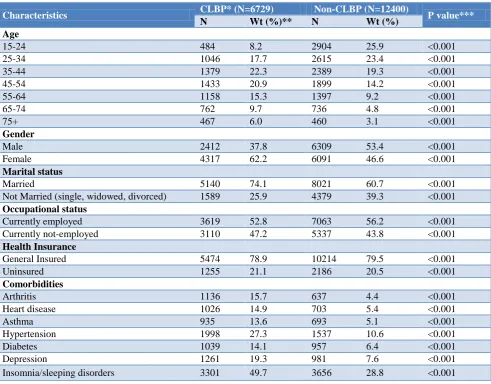
Socio-demographic, comorbid conditions, and health behaviors of individuals with CLBP and non-CLBP individuals was observed (Table 1; N=19129). A total of 6729 patients reported they had CLBP. Adults who self-reported CLBP were middle aged (35–44) (22.3% and 19.3% for CLBP and non-CLBP adults; p<0.001), female (62.2% and. 46.6% for CLBP and non-CLBP adults; p<0.001), married (74.1% and 60.7% for CLBP and non-CLBP adults) and less likely to be currently employed (52.8% and 56.2% for CLBP and non-CLBP adults; p<0.001) or have general health insurance (78.9% and 79.5% for CLBP and non-CLBP adults, p<0.001) [Table
1]. Differences in the comorbidity rates for arthritis (15.7% vs. 4.4% for CLBP and non-CLBP adults), heart disease (14.9% vs. 5.4% for CLBP and non-CLBP adults), asthma (13.6% vs. 5.1% for CLBP and non-CLBP adults), hypertension (27.3% vs. 10.6% for non-CLBP and non-CLBP adults), diabetes (14.1% vs. 6.4% for CLBP and non-CLBP adults), depression (19.3% vs. 7.6% for CLBP and non-CLBP adults) and insomnia/sleep disorders (49.7% vs. 28.8% for CLBP and non-CLBP adults) were significantly higher among CLBP adults (p<0.001 for all; Table 1). Individuals who had CLBP were less likely to be smokers (80.8% vs. 83.1% for CLBP and non-CLBP adults, p<0.001) and alcohol consumers (30.7% vs. 33.4% for CLBP and non-CLBP adults) and this difference was marginally significant. Non-CLBP adults were also doing significantly more physical (8.7% vs. 4.8% for non-CLBP and non-CLBP adults, p<0.001) and muscle strengthening activities (3.9% vs. 2% for non-CLBP and CLBP adults, p<0.001), ate healthy (15.3% vs. 14.4% for CLBP and non-CLBP adults, p<0.001), visited kinesiotherapist (3% vs. 1.1% for non-CLBP and CLBP adults, p<0.001) and psychotherapist (10.5% vs. 2.7% for non-CLBP and CLBP adults, p<0.001) more frequently.
Table 1: Descriptive characteristics for adults with CLBP and non-CLBP.
Characteristics CLBP* (N=6729) Non-CLBP (N=12400) P value***
N Wt (%)** N Wt (%)
Age
15-24 484 8.2 2904 25.9 <0.001
25-34 1046 17.7 2615 23.4 <0.001
35-44 1379 22.3 2389 19.3 <0.001
45-54 1433 20.9 1899 14.2 <0.001
55-64 1158 15.3 1397 9.2 <0.001
65-74 762 9.7 736 4.8 <0.001
75+ 467 6.0 460 3.1 <0.001
Gender
Male 2412 37.8 6309 53.4 <0.001
Female 4317 62.2 6091 46.6 <0.001
Marital status
Married 5140 74.1 8021 60.7 <0.001
Not Married (single, widowed, divorced) 1589 25.9 4379 39.3 <0.001
Occupational status
Currently employed 3619 52.8 7063 56.2 <0.001 Currently not-employed 3110 47.2 5337 43.8 <0.001
Health Insurance
General Insured 5474 78.9 10214 79.5 <0.001 Uninsured 1255 21.1 2186 20.5 <0.001
Comorbidities
Arthritis 1136 15.7 637 4.4 <0.001 Heart disease 1026 14.9 703 5.4 <0.001
Asthma 935 13.6 693 5.1 <0.001
Hypertension 1998 27.3 1537 10.6 <0.001
Diabetes 1039 14.1 957 6.4 <0.001
Table 1: Descriptive characteristics for adults with CLBP and non-CLBP. (Continued..)
Characteristics CLBP* (N=6729) Non-CLBP (N=12400) P value***
N Wt (%)** N Wt (%)
Health behaviors
Smoking 5371 80.8 10153 83.1 <0.001 Alcohol consumption 2119 30.7 4355 33.4 <0.001 Physical activity 335 4.8 1086 8.7 <0.001 Healthy eating behavior 1087 15.3 1845 14.4 <0.001 Muscle strenghtening activities 131 2 466 3.9 <0.001 Visiting a kinesitherapist 213 3 140 1.1 <0.001 Visiting a psychotherapist 739 10.5 352 2.7 <0.001
Results were expressed as un-weighted numbers and weighted percentages (%), *CLBP: Chronic low back pain, *Wt: Weighted. All analysis incorporated sampling weights, **P based on X2 test.
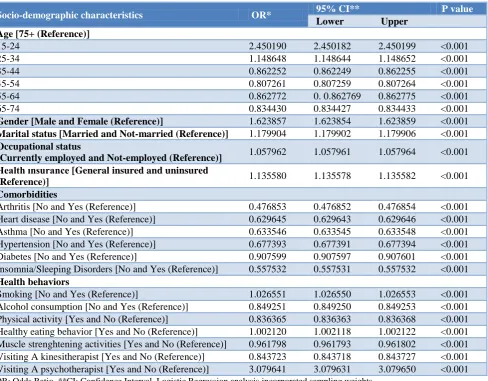
Table 2. Factors associated with self-reported CLBP.
*OR: Odds Ratio, **CI: Confidence Interval, Logistic Regression analysis incorporated sampling weights.
Factors associated with self-reported CLBP
Age, gender, marital status, occupational status, health insurance, comorbidity, and health behaviors based on the likelihood of CLBP was calculated (Table 2). The likelihood of CLBP was higher for adults in the 15–24 (OR: 2.450190; 95% CI. 2.450182–2.450199) and 25–34
(OR: 1.148648; 95% CI. 1.148644–1.148652) age groups compared to older age groups. Males 1.623857 (95% CI. 1.623854–1.623859), married (OR: 1.179904; 95% CI. 1.179902–1.179906), currently employed (OR: 1.057962; 95% CI. 1.057961–1.057964) or general health insured adults (OR: 1.135580; 95% CI. 1.135578–1.135582) associated with a higher likelihood to report CLBP.
Socio-demographic characteristics OR* 95% CI** P value
Lower Upper Age [75+ (Reference)]
15-24 2.450190 2.450182 2.450199 <0.001 25-34 1.148648 1.148644 1.148652 <0.001 35-44 0.862252 0.862249 0.862255 <0.001 45-54 0.807261 0.807259 0.807264 <0.001 55-64 0.862772 0. 0.862769 0.862775 <0.001 65-74 0.834430 0.834427 0.834433 <0.001
Gender [Male and Female (Reference)] 1.623857 1.623854 1.623859 <0.001
Marital status [Married and Not-married (Reference)] 1.179904 1.179902 1.179906 <0.001
Occupational status
[Currently employed and Not-employed (Reference)] 1.057962 1.057961 1.057964 <0.001 Health ınsurance [General insured and uninsured
(Reference)] 1.135580 1.135578 1.135582 <0.001
Comorbidities
Arthritis [No and Yes (Reference)] 0.476853 0.476852 0.476854 <0.001 Heart disease [No and Yes (Reference)] 0.629645 0.629643 0.629646 <0.001 Asthma [No and Yes (Reference)] 0.633546 0.633545 0.633548 <0.001 Hypertension [No and Yes (Reference)] 0.677393 0.677391 0.677394 <0.001 Diabetes [No and Yes (Reference)] 0.907599 0.907597 0.907601 <0.001 Insomnia/Sleeping Disorders [No and Yes (Reference)] 0.557532 0.557531 0.557532 <0.001
Health behaviors
Comorbidities associated with self-reported CLBP showed that OR for CLBP for those who had arthritis, heart disease, asthma, hypertension, diabetes, and insomnia/sleeping disorders was 0.476853 (95% CI. 0.476852–0.476854), 0.629645 (95% CI. 0.629643– 0.629643), 0.633546 (95% CI. 0.633545–0.633548), 0.677393 (95% CI. 0.677391–0.677394), 0.907599 (95% CI. 0.907597–0.907601), and 0.557532 (95% CI. 0.557531–0.557532). Adults who are non-smoked (OR: 1.026551, 95% CI. 1.026550–1.026553), consumed alcohol (OR: 0.849251 (95% CI. 0.849250–0.849253), didn’t do physical activities (OR: 0.836365; 95% CI. 0.836363–0.836368), ate healthy (OR: 1.002120; 95% CI. 1.002118–1.002122), didn’t do muscle strengthening activities (OR: 0.961798; 95% CI. 0.961793–0.961802), not visited kinesiotherapist (OR: 0.843723; 95% CI. 0.843718–0.843727) and visited psychotherapist (OR: 3.079641; 95% CI. 3.079631–3.079650) were more likely to report CLBP.
DISCUSSION
This study highlights that CLBP is associated with certain socio-demographic, comorbidity, and health factors where younger (15-24), male, married, employed, insured individuals are more likely to report CLBP. CLBP patients are more likely to have been non-smokers, alcohol consumers, involved in less physical and muscle strengthening activities and not regular visitors to kinesiotherapist and visitors to psychotherapist. It also shows that diabetes and hypertension are comorbid conditions highly associated with CLBP.
As CLBP is a syndrome, self-reported data is important. However, there is a lack of literature regarding the cause and effect of self-reported CLBP and its socio-demographic, comorbid, and health factors.8 Previous studies have focused on the prevalence of socio-demographic factors and CLBP at a population level in Turkey.15,16 But these studies do not examine the association between comorbidity and health factors with CLBP. To the best of our knowledge, this is the first population based study examining the association between socio-demographic, comorbidity, and health factors, with self-reported CLBP in Turkey.
CLBP in young individuals is very uncommon; however, some studies refute this notion and show that CLBP has an effect on functional activity and is one of the major causes of disability in people younger than 45 years of age.24,28,29 There is growing evidence that CLBP is increasing among young people and there is a need to focus on childhood and adolescence in association with CLBP.25 Our study also shows that there is an inverse association between age and CLBP. Cigarette smoking was associated with an increased risk among adults.30 It is still controversial as to why females had prevalence of CLBP and if it was due to pathology or a result of reporting difference.9 A study on gender differences in CLBP stated that CLBP is more significant in females
rather than males31 similar to our findings. There is a common agreement in the literature that being employed for a long time increases the risk of poor low back health.32 Indeed, the type of occupation increased the possibility of having CLBP where reportedly it is one of the most common “work-related diseases” in European countries.33 Health insurance status of households was also inversely related to severe back pain.34,35 It has been previously suggested that married individuals were more significantly associated with CLBP; results of our study show similar results with the literature. This study also shows that adults with diabetes and hypertension are associated with strong likelihood with CLBP compared to other comorbid conditions.35 In support of this, it was shown that CLBP is an increasing health concern among patients with Type-2 diabetes mellitus and that diabetes and hypertension are strongly associated with CLBP.36 It is important to emphasize that our findings are consistent with results from developed European countries like Germany where it was observed that hypertension is one of the most important comorbidity factor associated with CLBP.37
We show that smoking, alcohol consumption, physical activity, healthy eating behavior, muscle strengthening activities, visiting kinesiotherapist and psychotherapist are associated with CLBP. It has been previously shown that occasional smoking can increase the odds of having chronic CLBP.38 However, with respect to alcohol consumption, previous studies diverge from our results and show that alcohol consumption is not associated with CLBP.25 There is a growing literature emphasizing strong association between CLBP and physical and muscle strengthening activities. Studies suggest that individuals who perform less physical activity are more likely to have CLBP.31 Kinesiotherapy and psychotherapy are other health factors associated with CLBP in this study and previous studies have also suggested that they are effective methods to manage CLBP.39
Limitations for this study are similar to any cross-sectional population based study. One of the restrictions of survey data is that it is based on respondents’ own judgments which may affect its validity. On the other hand, as the primary purpose of THS is administrative rather than research, it is difficult to get detailed information about diseases like CLBP. Thus, this study determines the associated factors with CLBP. These results form the basis of future studies for CLBP and its associated behavioral factors. It is known that many of the chronic conditions are related with health and thus, the practical implications of this research are significant. Despite previous studies pointing the high prevalence of CLBP in Turkey, there was no analysis for the associated behavioral factors of CLBP.15,16
light of this study, we propose public health smoking and alcohol consumption cessation programs, development of guidelines to promote healthy eating, physical activity, and increasing the awareness of kinesitherapy and psychotherapy are advisable strategies to improve low back health. Moreover, increasing the number of intensive interdisciplinary rehabilitation, exercise therapy, acupuncture are other alternative strategies to overcome CLBP.39 Also, in Turkey little is known about chiropractice and insurance compared to developed countries17 which could also be an another alternative treatment for CLBP. Because depression associated with a strong likelihood of LBP it is also advisable for public policy makers to develop intensive biopsychosocial rehabilitation programs.9 Increased awareness and usage of alternative treatments like spa, yoga, and massage therapy are also policies to overcome CLBP. Little is known about CLBP management in developing countries and our study results form a basis to better understand associated factors with CLBP. There is also a need to manage CLBP considering socio-demographic, comorbidity and health factors of a population.
CONCLUSION
This study extends our knowledge of the factors associated with CLBP by concentrating on socio-demographic, comorbidity, and health of individuals. This study is based on sample derived from the total population of the country with detailed analysis of the factors associated with CLBP. Results of this study highlight the association of CLBP with adults possessing certain socio-demographic profile, comorbidities, and health factors. Effort is needed to overcome and increase the awareness of CLBP, which is currently a common symptom among adults in Turkey. We anticipate that the results of this study will increase awareness in public health policy makers’ to develop strategies against CLBP.
Funding: No funding sources Conflict of interest: None declared Ethical approval: Not required
REFERENCES
1. Elders LA. Burdorf A. Interrelations of risk factors and low back pain in scaffolders. OEM. 2001;58(9):597-603.
2. Waddell G. Low back pain: A twentieth century health care enigma. Spine (Phila Pa 1976). 1996;21(24):2820-5.
3. Andersson GB. Epidemiological features of chronic low-back pain. The Lancet. 1999;354(9178):581-585.
4. Murray CJL, Vos T, Lozano R, Naghavi M, Flaxman AD, Michaud C, et al. Disability-adjusted life years (DALYs) for 291 diseases and injuries in 21 regoins, 1990–2010: a systematic analysis for the Global Burden of Disease Study 2010. The Lancet. 2012;380:2197–223.
5. Nole, PS, Kristman VL, Cote P. Is low back pain associated with worse health-related quality of life 6-months later? ESJ. 2015;24(3):458-66.
6. Picavet HS, Struijs JN, Westert GP. Utilization of health resources due to low back pain: survey and registered data compared. Spine (Phila Pa 1976). 2008;15(33):436-44.
7. Engel GL. The need for a new medical model: a challenge for biomedicine. Science. 1977;196(4286):129-36.
8. Balague F, Mannion AF, Pellise F. Non-specific low back pain. The Lancet. 2012;379(9814):482-91. 9. Reisbord LS, Greenland, S. Factors associated with
self-reported back-pain prevalence: A population based study. JCD. 1985;38(8):691-702.
10. Hollingworth W, Dixon AK, Todd CJ, Bell MI, Antoun NM, Arafat Q, et al. Self-reported health status and magnetic resonance imaging findings in patients with low back pain. Eur Spine J. 1998;7(5):369-75.
11. Schüttte S, Chastang JF, Parent-Thirion A, Vermeylen G, Niedhammer I. Social differences in self-reported health among men and women in 31 countries in Europe. SJPH. 2013;41:51-7.
12. Bayramoglu M, Akman MN, Kilinç S, Cetin N, Yavuz N, Ozker R. Isokinetic measurement of trunk muscle strength in women with chronic low-back pain. AJPMR. 2011;80(9):650-5.
13. Sözmen K, Baydur H, Simsek H, Ünal B. Decomposing socioeconomic inequalities in self-assessed health in Turkey. IJEH. 2012;11:1-9. 14. Cakmak A, Yucel B, Ozyalcin SN, Bayraktar B,
Ural HI, Duruöz MT, et al. The frequency and associated factors of low back pain among a younger population in Turkey. Spine (Phila Pa 1976). 2004;29(14):1567-1572.
15. Gilgil E, Kaçar C, Bütün B, Tuncer T, Urhan S, Yildirim C, et al. Prevalence of low back pain in a developing urban setting. Spine (Phila Pa 1976). 2005;30(9):1093-8.
16. Oksuz E. Prevalence, risk factors and preference-based health states of low back pain in a Turkish population. Spine (Phila Pa 1976). 2006;31(25):968-72.
17. Altinel L, Köse KC, Ergan V. The prevalence of low back pain and risk factors among adult population in Afyon region, Turkey. Acta Orthop Traumatol Turc. 2008;42(5):328-33.
18. Melikoglu MA, Kocabas H, Sezer I, Bilgilisoy M, Tuncer T. Validation of the Turkish version of the Quebec back pain disability scale for patients with low back pain. Spine (Phila Pa 1976). 2009;34:219-24.
19. Icagasioglu A, Yumusakhuylu Y, Ketenci A. Burden of chronic low back pain in the Turkish population. Turk J Phys Med Rehab. 2015;61:58-64. 20. TURKSTAT. Turkey Health Survey-2014 Bulletin,
21. Miranda H, Viikari-Juntura EV, Punnett L, Riihimäki H. Occupational loading, health behavior and sleep disturbance as predictors of low-back pain. Scandinavian J Work Environ Health. 2008;34:411-419.
22. Bener A, Verjee M, Dafeeah E.E. Pyschological factors: anxiety, depression and somatization symptoms in low back pain patients. J Pain Res. 2013;6:95-101.
23. Manchikanti L, Singh V, Falco FJ, Benyamin RM, Hirsch JA. Epidemiology of low back pain in adults. Neuromodulation. 2014;17:3-10.
24. Leboeuf-Yde C, Kyvik KO. At what age does low back pain become a common problem? A study of 29.424 individuals aged 12-41 years. Spine (Phila Pa 1976). 1998;23:228-34.
25. Leboeuf-Yde C. Alcohol and low back pain: a systematic literature review. JMPT. 2000;23(5):343-6.
26. Wiener RC, Sambamoorthi U. Cross-sectional association between the number of missing teeth and cardiovascular disease among adults aged 50 or older: BRFSS 2010 IJVM. 2014;421567:1-6. 27. Ozaydin N, Turkyilmaz AS, Cali S. Prevalence and
risk factors of Helicobacter pylori in Turkey: a nationally-representative, cross-sectional, screening with the C-Urea breath test. BMC Public Health. 2013;13:1-12.
28. Andersson GBJ. The epidemiology of spinal disorders. In: Frymoyer JW, ed. The Adult Spine: Principles and Practice. Philadelphia, PA: Lippincott- Raven, 1997: 93–141.
29. Karahan A, Kav S, Abbasogl A, Dogan N. Low back pain: prevalence and associated risk factors among hospital staff. J Adv Nurs. 2008;65:516-24. 30. Alkherayf F, Agbi C. Cigarette smoking and chronic
low back pain in the adult population. Clin Invest Med. 2009;32:360-7.
31. Alnojeidi AH. Gender differences in low back pain and self-reported muscle strenghtening activity among U.S. adults. University of Florida, UNF Digital Commons, Available at: http://digitalcommons.unf.edu/cgi/viewcontent.cgi?
article=1626andcontext=etd. Accessed on 29 August 2016.
32. Costa-Black KM, Loisel P, Anema JR, Pransky G. Back pain and work. Best Pract Res Clin Rheumatol. 2010;24(2):227-40.
33. Hestbaek L, Leboeuf-Yde C, Kyvik KO, Vach W, Russell MB, Skadhauge L, et al. Comorbidity with low back pain: A cross sectional population-based survey of 12- to 22-years-olds. Spine (Phila Pa 1976). 2004;29(13):1483-91.
34. Wilper AP, Woolhandler S, Lasser KE, et al. A national study of chronic disease prevalence and access to care in uninsured U.S. adults. AIM. 2008;149(3):170-6.
35. Stewart Williams JS, Ng N, Peltzer K. Risk factors and disability associated with low back pain in older adults in low and middle income countries. Results from the WHO Study on Global AGEing and Adult Health (SAGE). PLOS One. 2015.
36. Idowu OA, Adeniyi AF, Babatunde OA. Prevalence of self-reported low back pain among patients with Type 2 Diabetes Mellitus: a preliminary study. EAOJ. 2015;9:6-11.
37. Schneider S, Mohnen SM, Schiltenwolf M. Comorbidity of low back pain: representative outcomes of a national health study in the Federal Republic of Germany. EJP. 2007;11(4):387-97. 38. Levangie PK. Association of low back pain with
self-reported risk factors among patients seeking physical therapy services. PTJ. 1999;79(8):757-66. 39. Donzelli S, Di Domenica FD, Cova AM. Two
different techniques in the rehabilitation treatment of low back pain: a randomized controlled trial. Eura Medicophys. 2006;42(3):205-10.
40. Abbott A. Evidence base and future research directions in the management of low back pain. World J Orthop. 2016;7(3):156–61.