InterdIscIplInary Workshop report
The Future of Knowledge
Mapping Interfaces
Standing Committees for the Humanities (SCH); Social Sciences (SCSS); Life, Earth and Environmental Sciences (LESC)
The European Science Foundation
The European Science Foundation (ESF) is an independ-ent, non-governmental organisation, the members of which are 79 national funding agencies, research per-forming agencies, academies and learned societies from 30 countries.
The strength of ESF lies in the influential membership and in its ability to bring together the different domains of European science in order to meet the challenges of the future.
Since its establishment in 1974, ESF, which has its headquarters in Strasbourg with offices in Brussels and Ostend, has assembled a host of organisations that span all disciplines of science, to create a common platform for cross-border cooperation in Europe.
ESF is dedicated to promoting collaboration in scientific research, funding of research and science policy across Europe. Through its activities and instruments ESF has made major contributions to science in a global context. The ESF covers the following scientific domains: • Humanities;
• Life, Earth and Environmental Sciences • Medical Sciences
• Physical and Engineering Sciences • Social Sciences
• Marine Sciences
• Materials Science and Engineering • Nuclear Physics
• Polar Sciences • Radio Astronomy • Space Sciences
The Chair of the steering committee of the Interdisciplinary New Initiatives Fund (INIF) project Mapping Interfaces: The Future of Knowledge is Professor Gísli Pálsson, member of the ESF Standing Committee for the Humanities. This report has been put together under his guidance and with the precious contribution of Professor Ulrike Landfester, also member of the ESF Standing Committee for the Humanities. We are par-ticularly grateful to the authors of the papers and the workshop participants for their expert input. Special thanks also go to Professor Pasqualina Perrig-Chiello (Standing Committee for the Social Sciences) and Dr Sonja Lojen (Standing Committee for the Life, Earth and Environmental Sciences).
Project coordinated by the ESF Humanities Unit: • Dr Nina Kancewicz-Hoffman, Head of Unit • Dr Arianna Ciula, Science Officer
• Ms Marie Suchanova, Administrator
Cover picture:
Contents
1. Introduction
3
Ulrike Landfester and Gísli Pálsson
2. Workshop Programme
7
3. Paper Abstracts
9
4. The Metaphorics of Mapping Interdisciplinary Knowledge
17
Julie Thompson Klein
5. Collaboration of Natural and Social Sciences in Research
25
for Sustainable Development
Christian Pohl
6. Conclusions
35
Ulrike Landfester and Gísli Pálsson
1. Introduction
of most scientific efforts, and, as a result, invitations were also sent to non-European scholars.
This report briefly presents the rationale of the Reykjavík workshop, the workshop programme and paper abstracts. Also, it contains two broad essays by two of the workshop participants, Julie Thompson Klein and Christian Pohl. Klein’s essay focuses on the discourses of disciplinarity, highlighting at the same time some of the issues and arguments raised by other workshop participants, while Pohl’s essay discusses the relevance of interdisciplinarity in the context of a critically important contemporary issue, that of envi-ronmental change and sustainability. Furthermore, the Chair and the Vice-Chair of the project conclude with some general thoughts about disciplinarity in the mod-ern academe. Finally, the report lists the participants in the workshop.
Workshop Rationale
The classification of academic fields and disciplines has for a long time now been accepted as somehow natural or predetermined, as a final state of affairs bound to be eventually revealed or brought forth through the processes of history. Fostered by the development of European institutions of learning since the 18th century, the honing of specialised expertise and the accompany-ing differentiation of academic disciplines led to Wilhelm Dilthey in the second half of the 19th century claiming a fundamental methodological incompatibility of the arts and the humanities on the one hand and the so-called ‘hard’ natural sciences on the other.
During the last years, however, academics have increasingly seen this simplifying binary construction as masking a much more complex field of differences
The ‘Future of Knowledge’ and
the European Science Foundation
The European Science Foundation Strategic Plan for 2006-2010 emphasises that exciting developments in many fields of science require an “increased scale of European cooperation and a wider scope of disciplines including more interdisciplinarity”. This increased inter-disciplinarity is at the heart of the ESF project Mapping Interfaces: The Future of Knowledge (acronym: MIKnowl-edge), the focus of this report. In line with ESF objectives, the project seeks to explore critically the borderlines evident in the production of knowledge (including the five-fold disciplinary structure of the Standing Commit-tees of the ESF), the forces of resistance to realignment and collaboration, and the possibility of alternative divi-sions of scientific labour. In doing so, it is hoped that a better coordination of targeted research and more realistic and meaningful philosophies and policies of science might be achieved in Europe. It fits the aim of the Interdisciplinary New Initiatives Fund (INIF) until recently active under the ESF, namely to strengthen the interac-tion between Standing Committees, in a natural way.
The Steering Committees involved in the Mapping Interfaces project established a Steering Committee with the following members:
• Professor Gísli Pálsson, Chair (University of Reykjavik, Iceland; subject representative for anthropology; Standing Committee for the Humanities)
• Professor Ulrike Landfester, Vice-Chair (University of St. Gallen, Switzerland; German literature studies; Standing Committee for the Humanities)
• Professor Pasqualina Perrig-Chiello (University of Bern, Switzerland; psychology; Standing Committee for the Social Sciences)
• Dr Sonja Lojen (J. Stefan Institute, Ljubljana, Slovenia; environmental sciences; Standing Committee for the Life, Earth and Environmental Sciences)
• Dr Nina Kancewicz-Hoffman (Head of the Humanities Unit, European Science Foundation)
The Steering Commmittee organised a workshop at the University of Iceland in Reykjavík on 16-17 June 2009. The preparation of the workshop and logistics were han-dled by Kristín Erla Harðardóttir, Director of the Institute of Anthropology, University of Iceland.
A number of speakers from a variety of fields and disciplines were invited to present papers. Candidates were selected on the basis of two criteria: (1) scientific expertise in a ‘border’ area and (2) willingness to engage in a meaningful dialogue beyond conventional discipli-nary borders. The policy aspects of interdisciplinarity are obviously not limited to Europe, given the common epistemologies of regional science and the global nature
The Future of Knowledge – Mapping Interfaces – Reykjavík, 16-17 June 2009 | 5
and interferences both within the two cultures and between them. Recent research in the fields of cultural theory, sociology and anthropology as well as both history and philosophy of science has readjusted the ontological notion of knowledge as something which is already there and only needs to be retrieved, towards the epistemological notion of knowledge as something which is produced by sets of practices, mechanisms and principles assembled by structural affinities, necessity and historical coincidence.
The conditions for academic practice continue to change and, as a result, the disciplines and their divi-sion of labour continue to change. At the same time, new fields emerge in response to new intellectual and pragmatic developments. Indeed, much reshuffling is going on in the academe in the current age, as a result of major changes in the ‘real’ world. Not only has the mod-ernist project with its notions of truth and grand narrative increasingly been challenged, the academic landscape of fields and disciplines in itself is tense and unstable. Quite possibly, the changes now taking place within it are just as spectacular as the changes represented by the Renaissance and Enlightenment eras.
The Future of Knowledge project sought to facilitate an unprecedented, broad discussion of the issues involved, challenging the nature-society divide by drawing upon theoretical developments in a variety of disciplines. Such a conflation of fields, it was hoped, would generate new and exciting intellectual avenues and research agen-das. Keeping clearly in mind that a reassessment of the established academic formations of discourse must not deny the necessity of expert codes or of the discipli-nary subdivision of science into cultures of science, the
Future of Knowledge project aimed at creating a level of self-awareness in the area of scientific communication which allows for trading zones between these cultures. In the process, it also aims at uncovering trading zones or interfaces that in fact may already have been in exist-ence without being effectively put to their full use. Given the theoretical relevance and pragmatic importance of transdisciplinarity, the structural inertia in many contexts, the cultures of science as they unfold, and the nature of the forces of resistance to movement across borders – if not the deconstruction of the borders themselves – pose important questions. Many of these questions were broadly addressed by the Reykjavík workshop.
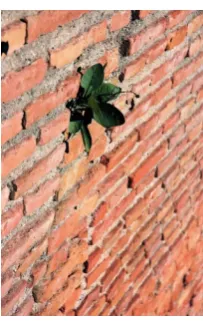
Figure 2.Wall flower by André de Jong.
Organisation of the Workshop,
Themes and Key Questions
One of the major dividing lines of the academe and its disciplinary architecture and classification, if not the
dividing line, is that represented by the separation of the natural and the social. In recent years, this separation has increasingly been challenged, partly because of ongoing changes in the real world. Thus, with the new genetics, what used to be called ‘life itself’ is obviously modified by humans through artificial means, includ-ing genetic engineerinclud-ing, undermininclud-ing the separation of the old categories of the ‘natural’ and the ‘artificial’ If the major conceptual dividing line between nature and society – and by extension, the natural sciences, on the one hand, and, on the other, the humanities and the social sciences – has collapsed, if the philosophical grounds for current divisions of labour have disappeared and the pragmatics of ongoing research show a grow-ing tendency towards transdisciplinary approaches, it seems essential to critically reflect on and rethink the cartography of the scientific project across the entire landscape of the academe. The Future of Knowledge
workshop aimed to do so. A number of key persons from the life sciences, medicine, the natural sciences, the humanities and the social sciences were invited to present their thoughts and perspectives in a transdis-ciplinary fashion. Three overlapping major themes and questions were addressed:
and metaphors most appropriate for the theoretical understanding of current and future developments? In the past, spatial metaphors have typically been used with respect to disciplinary fragmentation; thus, the language of borders, zoning, areas, fields, provinces, pastures and territories. Recently, new hybrid zones of intellectual discourse bordering on different fields of science have appeared at a growing rate. The field of pragmatics is a case in point, a fusion of several disciplinary perspec-tives, including those of linguistics, logic, sociology, anthropology and cognitive psychology. Indeed, there are strong grounds for arguing for transdisciplinarity, as much creative work develops at the interfaces of estab-lished fields of scholarship. What are the implications of such bordering for the objects of knowledge generated by the new discourse?
2. Empirical and Experimental Sites
An interdisciplinary approach to interdisciplinarity seems in order, focusing on specific border zones and experimental sites. What are the empirical lessons from emerging experiments and developments? What are the sites of promising enquiry? One important site is that of the interfaces of the ‘biosocial’ and ‘natureculture’. These interfaces may be usefully expanded to frame human impact, generally, on the ‘natural’ order. Once seen as entirely beyond the human domain, climate is now known to become increasingly artificial, a byproduct of human activities, as the growing scientific and public discourse about global warming testifies. To what extent does the notion of the biosocial open up new perspectives on environmental change and ‘life itself’, and which new approaches towards academic divisions of labour can be developed from these perspectives? Several other fields and sites, beyond those represented by biosociality and environmental change, might also be explored, including those of ageing, gender relations, water management, urban studies and life-long learning.
3. Policy for the Future Academe
Moving on from theory and empirical results regard-ing research and teachregard-ing at border zones, what is the relevant academic policy for the future? How is the aca-deme likely to be restructured and disciplined? Funding agencies, including the ESF and many of its member organisations, often favour transdisciplinary perspec-tives and approaches. While much is to be gained by constructively overcoming disciplinary boundaries, often there is strong resistance in academies and uni-versities, funding agencies and research institutes to
genuine transdisciplinary collaboration in either teach-ing or research. What are the forces of resistance and to what extent should they be monitored and, possibly,
2. Workshop Programme
Day 1: 16 June 09:00-09:10
Opening: Professor Gísli Pálsson,
Chair of Mapping Interfaces: The Future of Knowledge
Steering Committee
Session I
Chair: Professor Ulrike Landfester, University of St. Gallen
09:10-09:40
Professor Julie Thomson Klein, Interdisciplinary Studies Program, Wayne State University, Detroit
The metaphorics of mapping interdisciplinary knowledge
09:40-10:10
Professor Aant Elzinga, Department of Philosophy, Linguistics and Theory of Science, Gothenburg University
The humanities in a time of changing demands, boundaries and reconfigurations
Session II
Chair: Professor Pasqualina Perrig-Chiello, University of Bern
10:40-11:10
Dr Christian Pohl, td-net, Bern
Coming to grips with inter- and transdisciplinary research
11:10-11:40
Professor Sally Jane Norman, Culture Lab, Newcastle University
AMI: Artfully mapping interfaces
Session III
Chair: Dr Sonja Lojen, J. Stefan Institute, Ljubljana
13:30-14:00
Professor Casper Bruun Jensen, Department of Organization, Copenhagen Business School
Recursive partnerships: Knowledge interfaces and exchange of perspectives in global development aid
14:00-14:30
Dr Monica Konrad, Department of Social Anthropology, University of Cambridge
The portfolio, the multiversity and conceptual origami
Session IV
Chair: Professor Ulrike Landfester 15:00-15:30
Dr Matthijs Hisschemöller, Institute for
Environmental Studies, Free University Amsterdam (co-authors Eefje Cuppen and William N. Dunn)
Stakeholder dialogue as a social experiment
15:30-16:00
Professor Mitchell G. Ash, Department of History, University of Vienna
Were there ever only two cultures? Cultures of science and scholarship in historical perspective
Day 2: 17 June
Session V
Chair: Dr Sonja Lojen 10:00-10:30
Professor Hans-Jörg Rheinberger,
Max-Planck Institute for the History of Science, Berlin
Molecular biology: A paradigm of 20th Century
science – On the nature of disciplines and on cultures of emergence
10:30-11:00
Professor Marianne Sommer, ETH Zentrum RAC, Zürich
Anthropological genetics and other ways of making history
Session VI
Chair: Professor Pasqualina Perrig-Chiello 11:30-12:00
Professor Helga Nowotny, Vienna Science and Technology Fund (WWTF)
Mapping the interfaces of biosociality in time and space
domains, both natural scientific ones and humaniora. The process appears to be attended by new forms of data-driven or technology-driven modes of research with strong elements of constructivism that have inter-esting epistemological implications. But we must also turn the lens back onto ourselves and look critically at the ‘audit gaze’ promoted when the methods of New Public Management move into one societal realm after another and are now also pushing the universities to what Daniel Greenberg calls campus capitalism. Is it possible that computer-aided bibliometric methods of assessing academic performance are contributing to the creation of cultures of compliance in which new regimes of per-ceptibility and (ac)countability fix only on what can be measured in quasi-quantities and the metrics determine who and what (dimensions) are ‘seen’ and therefore ‘count’? If the answer is yes, a paradox arises, in as far as traditionalist and critical approaches in the humani-ties will find it even more difficult to maintain a foothold at a time when they are most needed to counteract the increasing dominance of pragmatic utilitarian thinking and action that appears to be a strong driver behind some of the ongoing reconfigurations of the organisa-tional and epistemic landscapes (epistemic cartography) that characterise science and scholarship.
Julie Thompson Klein
The metaphorics of mapping
interdisciplinary knowledge
Iceland is an appropriate setting for a meeting on map-ping interfaces of knowledge. It is the site of a fissure and drifting between the Eurasian and American plates. The new paradigm of plate tectonics revolutionised the way we understand the structure and dynamics of the Earth. Over the past several decades, a parallel shift has been occurring in the way we describe knowledge. Images of a static foundation and structure have been replaced by dynamic properties of a network, a web, a system and even a rhizome without a central root. Spatial meta-phors – turf, territory, border and domain – continue to highlight the demarcation and regulation of knowl-edge formations. Another set of metaphors, though, highlights connection. Organic images – generation, crossfertilisation, mutation and interrelation – compare intellectual movements to processes in ecology and the evolution of new species. The operations of place and production are not isolated. They occur simultane-ously and, Michael Winter suggests, models may even be combined to form a third type, highlighting interactions between social groups and environments. Mapping the interactions associated with inter- and transdisciplinarity requires a common conceptual vocabulary capable of describing and tracking the current heterogeneity and relationality of knowledge.
Aant Elzinga
The humanities in a time of
changing demands, boundaries and
reconfigurations
In historical perspective and even in current debates about the role of scholarship in the humanities one may identify at least three approaches. I call them traditional-ist, pragmatic and critical, respectively, and argue that in practice all three of these may be found to a greater or lesser degree, while at the institutional level the mix is more complex. Against this background several examples will be taken of scientific and technological advances that (should) bring the two communities, the natural sciences and the humanities, closer together, thus rendering C.P. Snow’s notion of ‘two cultures’ obsolete, at least in practice, even though we are sorely aware how the division remains in the mentalities and still tends to trigger heated and endless discussion whenever mentioned in contexts dominated by mainstream sci-entific practitioners. New computer-aided visualisation techniques, data mining and simulation modelling, in particular, are having an impact that cuts across many
The Future of Knowledge – Mapping Interfaces – Reykjavík, 16-17 June 2009 | 11
Christian Pohl
Coming to grips with inter- and
transdisciplinary research
The transdisciplinarity-net of the Swiss Academies of Arts and Sciences (www.transdisciplinarity.ch) was launched to support transdisciplinary research. In the Swiss context transdisciplinary research stands for research that crosses disciplinary boundaries and boundaries between science and society in order to address ‘real world issues’ like global environmental change, migra-tion, poverty or public health. Transdisciplinary research is usually conceptualised similar to what Gibbons and Nowotny have identified as mode-2 knowledge produc-tion, as a process of knowledge production for which people come together in temporary networks. If such research projects are mainly temporary collaborations of disciplinary researchers and actors of further sectors of society, then the questions are whether, which and how experiences gained in one project can be deper-sonalised and transferred in order to disburden other projects from reinventing the wheel in each case. Dur-ing the last years we have tried to identify experiences that we consider typical for such research projects, and conceptualised them as challenges from the perspective of those involved in the research process. First experi-ences with the concepts and further tools suggest that they help projects to come from exaggerated expecta-tions on inter- and transdisciplinarity to a structured and reflexive approach to integrative, collaborative and implementation-oriented research.
Sally Jane Norman
AMI: Artfully mapping interfaces
The founding of epistemological frameworks to tackle the multiple temporal and spatial scales inherent to interdis-ciplinary challenges requires conceptual agility. Wider adoption of these frameworks in turn requires a sense of shared confidence and social cohesion. In its crafting of symbolic materials to generate communicable cogni-tive experience, art can effeccogni-tively address both these requirements, acting as a mutagen for the collective imagination, and offering arenas for engaging cultural groups in memorable, shareable events. My paper will discuss the value of creative insights, wilful ambivalence and playful associations, that can whet our appetite for the startling patterns of emerging epistemologies, allow-ing us to entertain and share vitally new visions.
Casper Bruun Jensen
Recursive partnerships: Knowledge
interfaces and exchange of perspectives
in global development aid
the same way – on the same level as – the actors they study. To the extent that partnerships may illustrate one (present) future of knowledge, the recursivity whereby research is enrolled in that which it studies poses inter-esting questions for the qualities of knowledge produced through this process. Not least interesting is the ques-tion of how diverse ways of interfacing knowledge support or inhibit ‘exchanges of perspectives’, through which disparate development partners can both receive information and learn to understand their engagements differently.
Monica Konrad
The portfolio, the multiversity
and conceptual origami
As the idea of the ‘specialist’ diversifies and as knowl-edge communities ramify within and beyond the academe, what are the social concepts of the future that will make a difference? What is research supposed to be doing in an age of reallocated resources and how does a global twenty-first century scholarship organise itself? Whose knowledge counts and against whose expectations? This paper asks what it means to engage in such debates for the kind of knowledge we wish the
debates themselves to generate. The more attentive we become to the politics of funding and research spon-sorship for sustaining disciplinary innovation, the more critically charged the notion of ‘research’ itself becomes. Crucial to the refinement of these questions are the concepts and metaphors with which we work. ‘The portfolio, the multiversity and conceptual origami’ is a critical exploration of the portfolio concept and the work it can do as an intellectual and organisational resource for theorising relations of research in the knowledge economy. Opening up the portfolio, it is argued, means learning to see its derivatives as a material object, multi-organisational form and metaphorical device. The paper considers the consequences of retrieving the portfolio as a carrier for conceptual work and the cultural forms this may take.
Matthijs Hisschemöller
(with Eefje Cuppen and William N. Dunn)
Stakeholder dialogue as a social
experiment
The Future of Knowledge – Mapping Interfaces – Reykjavík, 16-17 June 2009 | 13
tutes that hardly cooperate with small and medium sized innovative businesses. Finally, the paper addresses the question as to whether a stakeholder dialogue that is able to articulate knowledge claims in the margin of the knowledge system and assess their merit vis-à-vis more consensual options in the heart of the knowledge system may be considered a social experiment. The discussion will especially concentrate on the conditions for quasi-experimentation.
Mitchell G. Ash
Were there ever only two cultures?
Cultures of science and scholarship
in historical perspective
The ‘two cultures’ debate has been going on for quite a while now. Perhaps it is time to ask why this is so, even though it could be and has been argued that the essentialistic distinction between two ‘cultures’ in C.P. Snow’s book, which gave the debate its name, presented a picture of the situation in science and scholarship that was fundamentally flawed even in the 1950s, and has become less rather than more accurate over time. In this paper I will begin by describing very briefly the current situation in the history of science and scholarship, which is characterised by efforts to go beyond the history of disciplines, focusing instead on knowledge areas broadly conceived, and on the historical analysis of changing ideals of knowing at the meta-level. I will then direct attention to a number of cases taken from the history of science and the humanities since the 19th century, in order to provide some historical perspective on the ‘two cultures’ idea. Among these will be: (1) the rise of large-scale, frankly positivistic scientific research in the 19th century humanities, just at the time at which the essentialistic distinction between the sciences and the humanities was invented; (2) the case of psychology as a protean multi- or transdiscipline, which has resisted classification under any of the available essentialistic headings, for good reason; (3) the ‘behavioural sciences’ and ‘cognitive science’ during the Cold War and the ‘human sciences’ today, which mark serious and often productive efforts to overcome the alleged ‘two cultures’ divide. Though such examples may not suffice to sup-port broad generalisations, I nonetheless would like to state two basic claims as possible implications, and to put them perhaps too strongly in order to stimulate discussion:
1. There have never been only two cultures of science: either there have been many such cultures, or only one – academic research per se versus other forms of culture. Talk of ‘two cultures’ is thus not a description but a trope – a tool for organising discussion that may
be convenient in some ways but, on further examina-tion, is revealed to be a historical construct invented in a particular historical context, which obscures actual affinities in method and interactions in practice across the alleged boundary line.
2. The construct appears today to be an artifact of aca-demic identity politics and a counter in the ongoing – probably never-ending – struggle for power and influ-ence within academic institutions, rather than a guide to improved understanding of science and scholarship in actual practice. Perhaps it would therefore be better to consign ‘two cultures’ talk to science studies and cultural history, or to the sociology of research and funding organisations, and to search for more useful terms, better able to capture the complexities of the current situation.
Hans-Jörg Rheinberger
Molecular biology: A paradigm of
20
thcentury science — On the nature of
disciplines and on cultures of emergence
The paper analyses the short life of molecular biology as a discipline, its emergence and eventual dissolution. It tries to draw consequences from this example for the changing disciplinary constitution of the sciences in general – natural and social – at the turn of the 21st century. It argues that the dynamics of recent science are no longer to be formed on a disciplinary level, but rather in what Gaston Bachelard once called “cultures of emergence”.mental distortion.” In addition, the molecular approach of protein sequencing (as a proxy for the gene) was con-sidered methodologically superior to other approaches such as physical anthropology and palaeoanthropology. At the time of the Human Genome Diversity Project, the large-scale comparative analysis of the genetic variation between human populations had become feasible. In its aftermath, the genetic approach has been applied to the phylogeny and migration history of human populations from genetic Eve and Adam to the history of the Jew-ish diaspora, the Indian caste system, and many other national population constituencies and histories. The genetic approach thus not only interfaces with physical anthropology, palaeoanthropology and archeology; it has become associated with the notion of a scientisation of history. Genetic history has also been commercialised. Genetic ancestry tracing companies offer to determine one’s place of origin, ancestral population(s) and place in the human phylogeny. Here, the notion of the gene as the fundamental historical archive and the rhetoric of the objectivity of the genetic approach are central. In my talk, the history of genetic anthropology is dis-cussed with a view to the role of scientific objects and of scientific objectivity in the ways in which different approaches to human origins and history interface. I will also raise the question of how anthropological genetics, its commercialisation and popularisation may impact understandings of history as biohistory.
Helga Nowotny
Mapping the interfaces of biosociality
in time and space
Following the more general outline of mapping interfaces
Contemporary encounters between the natural and the social sciences, to be published in the Annals of the IIS, this presentation focuses on one of the “promising sites of enquiry” mentioned in the background note, namely on biosociality. As defined by Paul Rabinow, biosocial-ity denotes the current situation in the life sciences in which ‘knowing life’ means de facto changing life through human intervention. The natural and the artificial can no longer be clearly separated. Using my recent book,
Gläserne Gene. Die Erfindung des Individuums im mole-kularen Zeitalter, with Giuseppe Testa as a backdrop, the attempt is to map some of the interfaces of biosociality in time and in space:
1. The interface between the ‘old’ and what is considered to be ‘new’. David Edgerton has forcefully argued in his The Shock of the Old against the innovation-centric view in the history of technology. I argue that, confronted with often exaggerated claims of radical breakthroughs in the life sciences (reinforced through Figure 7. Butterfly emerges from stellar demise in planetary nebula
NGC 6302; credit of NASA, ESA and the Hubble SM4 ERO Team.
Marianne Sommer
Anthropological genetics and other ways
of making history
environ-The Future of Knowledge – Mapping Interfaces – Reykjavík, 16-17 June 2009 | 15
media hype), a more sober analysis reveals that the latest scientific and technological achievements and their real or imagined societal impact represent both continuities and discontinuous, novel features. To recognise something as new, as noted already by Niklas Luhmann, always entails a change in the self-description of the system. Its emphasis on discon-tinuities enables it to organise its coupling capabilities differently and to do away with traditions. The new therefore has to overlap somehow with what appears as familiar if it is to be recognised at all. As examples taken from human reproductive technologies and from human enhancement will show, the interface of ‘old’ and ‘new’ knowledge and practices has far-reaching consequences for the relative ease with which the new will be accommodated in society or whether it will engender resistance. To carefully map the inter-faces between old and new knowledge and practices allow us to understand better why some scientific-technological innovations are rapidly embraced while others are rejected.
2. The interface between decontextualised and (re)con-textualised knowledge. The fascination of ‘gene talk’ among the general public and the persistence of a widespread genetic determinism cannot only be attrib-uted to a kind of ‘cultural lag’ in the public’s knowledge about the latest developments in the life sciences. As we argue in Gläserne Gene, it is the visibility of genes that allows us to conceive them as entities upon which essential qualities are conferred. The visibility of genes is achieved by radically decontextualising them. While this is maybe accepted practice in the life sciences (although the discovery of epigenetics implies at least a biological recontextualisation), stripping the newly manufactured entities entirely from their social con-text leads to severe distortions or even alienation in society.
The Future of Knowledge – Mapping Interfaces – Reykjavík, 16-17 June 2009 | 17
4. The Metaphorics of Mapping Interdisciplinary
Knowledge
Julie Thompson Klein
Iceland is a fitting location for an international workshop on mapping interfaces of knowledge, because it is the site of a fissure and drift between the Eurasian and North American tectonic plates. In the mid-20th century, the new paradigm of plate tectonics revolutionised the way we think about the structure and dynamics of the Earth. Over the past several decades, a parallel shift has been occurring in the way we think about knowledge. Our host for the workshop, the European Science Foundation (ESF), is keenly aware of the need to reflect critically on the changing cartography of knowledge. Along with other national science policy bodies, educational organisations and funding agencies, the ESF is weighing the impact of increasing interdisciplinarity and transdisciplinarity. Discussions, though, are typically dispersed across forums. This chapter offers a common meeting point, with a conceptual vocabulary for mapping knowledge today based on insights from the current literature on inter- and transdisciplinarity as well as presentations of workshop participants. It highlights shared metaphors of mapping and boundaries as well as the underlying keywords of discipline, boundary crossing, interface
and classification.
4.1 Social cartography and
boundary work
The cartographic trope is a pervasive figure of speech. We map everything from the atom, the brain and the human genome to social structures, the global environ-ment and the cosmos. Traditional maps of knowledge in the West bear a resemblance to historical maps of the Earth. The centre of the Earth for European cartog-raphers was dominated by Europe and North America. The techno-science of Peters projection also made countries of the South appear smaller or marginal in relation to centred powers. Likewise, after the formation of modern disciplinarity in the 19th and early 20th cen-turies knowledge was represented as a designated set of domains of inquiry and teaching. In both cases, enti-ties were presumed to be ‘natural’ and fixed. All maps, however, are subject to change due to new discoveries, historical developments and shifts in theory and practice that require new ways of thinking. Workshop participant Monica Konrad highlighted this need in calling for new social concepts of the future that will make a difference. Konrad asked, in particular, whose knowledge counts and against whose expectations? Comparably, Sally Jane Norman called for epistemological frameworks and
visions with the conceptual agility to tackle temporal and spatial scales of interdisciplinarity.
The ideas of ‘social cartography’ and ‘boundary work’ offer social concepts for the future and the agility that Konrad and Norman called for. They originated in differ-ent contexts but share a common capacity to illuminate both continuity and change. Social cartography, Nelly Stromquist explains, is both a metaphor and an analyti-cal tool for writing and reading maps in order to address questions of location and relationship in the social milieu (1996, 224). As an analytical tool, Paulston and Liebman note social cartography borrows notions of place, space and location from geography. It is also informed by the work of Bourdieu, French poststructuralists and feminist scholars (1966, xvi). Boundary work originated in science studies. It is a label for the composite set of activities by which individuals and groups work directly and through institutions to create, maintain, break down and refor-mulate boundaries between knowledge domains. Initial studies focused on disciplinarity, though subsequently the concept was extended to interdisciplinary formations (Fisher 1993; Klein 1996). Combined as umbrella con-cepts for mapping knowledge, social cartography and boundary work help to explain both the social locations of inter- and transdisciplinary work as well as move-ments, interactions and relationships across boundaries. Four related keywords deepen understanding of the changing landscape of knowledge: discipline, boundary crossing, interface and classification.
“ I view maps as a kind of language… as reciprocal value-laden images used to mediate different views of the world.”
J. B. Harley, Maps, Knowledge, and Power
The Future of Knowledge – Mapping Interfaces – Reykjavík, 16-17 June 2009 | 19
Keyword #1: Discipline
Two sets of metaphors populate descriptions of disci-plinarity. Spatial metaphors – turf, territory, border and domain – highlight the demarcation, normalisation and control of domains of intellectual inquiry. They accentuate stable structures, fixed foundations, linear development and universal properties dominated by a coherent core and habitus. In contrast, organic metaphors highlight connection. Images of generation, crossfertilisation, mutation and interrelation compare intellectual move-ments to processes in ecology and the evolution of new species. They accentuate heterogeneity, permeability and change, while positing new models of a network, a web, a system and even a rhizome without a central root. The operations of place and production, however, are not isolated. They occur simultaneously and, Michael Winter suggests, spatial and organic models may even be combined to form a third type that highlights inter-actions between social groups and environments. The Greek word oikeos, he reminds us, meant household or settlement. The root idea is to make and reinforce jurisdictional claims and exploit resources to produce new forms and settlements (Winter 1996).
Matthijs Hisschemöller and Hans-Jörg Rheinberger echoed both sets of metaphors in their contributions to the workshop. Hisschemöller emphasised the roles that ‘habit of mind’ and ‘tacit knowledge’ play in reinforc-ing the social labour that occurs in knowledge spaces. The study of knowledge systems is crucial to unraveling mechanisms of power and influence that are taken for granted and are usually not visible at first sight, includ-ing informal rules that shape decisions about which knowledge is usable, relevant, irrelevant or unwanted. Hisschemöller offered stakeholder dialogue as a vehi-cle for gaining insights on the actual functioning of knowledge systems, from the heart of systems to small players situated at the margin or outside. Rheinberger
highlighted the emergence and dissolution of molecu-lar biology as an example of the changing disciplinary constitution of sciences in general at the turn of the 21st century. The dynamics of recent science, he argued, are no longer to be formed on a disciplinary level, rather in Gaston Bachelard’s notion of “cultures of emergence.” Disciplines, sub-disciplines and fields of enquiry arise, develop and disappear much like natural species, thereby pluralising and diversifying expertise and specialism. New hybrid zones of intellectual discourse bordering on different fields of science have also been appearing at a growing rate.
Keyword #2: Boundary crossing
In a book reporting on how boundaries are being redrawn in literary studies, Stephen Greenblatt and Giles Gunn (1992) advised that boundaries “can be crossed, con-fused, consolidated and collapsed”. They can also be “revised, reconceived, redesigned and replaced”. They cannot, however, be entirely abolished. Furthermore, they differ. Boundary lines are drawn in bold, unbroken strokes and as a series of intermittent, irregular dashes. They have multiple functions, stances are accepted or redrawn, and boundaries are crossed, overlap or converge at different places and in differing degrees. Furthermore, multiple boundaries are at stake today, not only disciplinary borders but also national-geographical, historical-generational, racial-ethnic, social-political, ethical-religious and trans-sector divisions. Mapping, Stromquist exhorts, sheds light on the moments at which spaces are crossed, how they are crossed, or why some are seldom crossed (1996, 244). Echoing Frederic Jame-son, Crystal Bartolovich adds, mapping attempts to describe not only where social subjects are situated but also theoretically and practically what has been and might now go (1996, 376). Gender, ethnic, ecological, regional and national groups have all created alternative maps that disrupt ‘central’ truth claims through alterna-tive views and new rhetorical spaces. Comparably, the migration of specialists across disciplinary boundaries to work on new problems and questions challenges conventional practices and paradigms. Methods and concepts also diffuse, and social redistributions of knowledge occur in collaborations, partnerships and new hybrid enclaves.
strategy of women’s studies exemplifies Winter’s third model. Scholars constructed spaces of women’s studies, as well as gender and sexuality studies, in order to pro-vide a ‘home’ for developing feminist theory, methods and practices. At the same time, they occupied disciplinary spaces, using them for feminist research, teaching and professional service. Feminist practices also engaged the multiple boundaries of knowing and doing; subjec-tive and objectified consciousness; gender, race, class and culture; academic and indigenous knowledge; and disciplinary-professional-interdisciplinary affiliations. In describing a boundary line of a different kind, workshop member Mitchell G. Ash cited the widely-held idea of ‘two cultures’ of science and humanities. Close scrutiny of the history of science and the humanities since the 19th century indicates that there have never been only two cultures of science: either many such cultures or only one, academic research versus other forms of culture. Talk of ‘two cultures’ is not a description but a trope – a tool for organising discussion in a particular historical context that obscures actual affinities in method and interactions in practice.
Keyword #3: Interface
The idea of an interface between knowledge domains goes by many names, including trading zones, liminal and interstitial spaces, hybrid enclaves and communi-ties, and matrix structures. In science studies, the term ‘trading zones’ arose to describe heterogeneous
inter-actions of scientific cultures (Galison 1996). They range in formality from a ‘pidgin zone’, in the linguistic sense of an interim form of communication, to a ‘creole zone’, the main subculture or native language of a group that develops a new hybrid role and professional identity. The idea of an interface overlaps with the idea that a border functions as a dividing line and a zone of crossing. Both borders and disciplines, Michael Kearney suggests, are riddled with holes and contradictions. They are zones of contested space, capital and meanings. Classical anthropology and history, for instance, were challenged and reordered by new ‘antidisciplinary’ studies of border areas and their cultural politics. New interfaces, though, are not without their own risks of institutionalising new forms (Kearney 1991).
Five workshop participants presented models of inter-faces. Christian Pohl’s account of Transdisciplinarity-net illustrated different temporal scales of collaboration at interfaces. Teams and networks form to cross bound-aries between disciplines and between science and society in order to address particular ‘real world issues’. When a problem is solved or redefined, they may reas-semble in different groups with different people, often in other locations and around other problems. Describing the experimental site of development aid partnerships, Casper Bruun Jensen emphasised that networks of asymmetric exchange require creating formats for sharing information that are robust enough to cross the borders of organisations, disciplines and countries. Strategies between donor countries and recipients need to be
The Future of Knowledge – Mapping Interfaces – Reykjavík, 16-17 June 2009 | 21
aligned, and donor systems and procedures harmonised for ensuring mutual accountability between development partners. Three other members presented cautionary tales from biological research. Marianne Sommer high-lighted interfaces of the genetic approach with physical anthropology, palaeoanthropology and archeology. The gene became regarded as the most authentic docu-ment of history, because it was granted the status of being ‘fundamental’ and ‘bare of environmental dis-tortion’. The methodology of protein sequencing was also given priority. Helga Nowotny and workshop host Gísli Pálsson added the example of bisociality. Mapping real and imagined societal impacts of breakthroughs in life sciences reveals why some scientific-technological innovations are embraced and others rejected, as the ‘new’ trumps the ‘old’ in a popular philosophy of genetic determinism.
Keyword #4: Classification
Classification orders disciplines and fields into rec-ognised categories of knowledge. Two major tools of classification – taxonomy and assessment – have tra-ditionally favoured disciplinary domains. The growth of inter- and transdisciplinary activities, though, has fostered rethinking of traditional taxonomies. Three examples signal changes in education. The U.S. National Center for Educational Statistics (NCES) documents the increasing presence of both the generic category of ‘Multidisciplinary/Interdisciplinary’ programmes and particular fields, including biomedical fields, nano-science and computational nano-sciences. In Fall 2010, the Department of Education’s Classification of Instructional Programs (CIP) began allowing wider reporting of areas such as ethnic and gender studies, health sciences, neurobiology, informatics and computation sciences, nanotechnology and genome sciences. And, a new tax-onomy for graduate education, resulting from review of the U.S. National Research Council’s (NRC) 1995 taxon-omy of research-doctorate programmes acknowledges the need for greater recognition of interdisciplinary fields. In 2005, a subcommittee on taxonomy and interdiscipli-narity recommended an overall increase in the number of recognised fields – including basic biomedical fields in medical schools and emerging fields of feminist, gender and sexuality studies as well as nanoscience, bioinformatics and computational biology. It also advo-cated expansion of the category of global area studies and renaming ‘biology’ ‘life sciences’ while including agricultural sciences. In the NRC’s final report, life sci-ences received the closest attention, though the 2009 methodology guide also cites ‘Emerging Fields’ of bio-informatics; biotechnology; computational engineering; criminology and criminal justice; feminist, gender and sexuality studies; film studies; information science;
nano-science and nanotechnology; nuclear engineering; race, ethnicity and postcolonial studies; rhetoric and composi-tion; science and technology studies; systems biology; urban studies and planning (Ostriker and Kuh 2003, I; Ostriker et al. 2009).
Research taxonomies are also being reconsidered. In 2008, the NRC commissioned a Panel on Modernizing the Infrastructure of the National Science Foundation’s Federal Funds for R&D Survey. Like the Frascati manual used in Europe, the classification scheme for fields of Science and Engineering has not been updated since 1978. As a result, the category of ‘not elsewhere clas-sified’ is overused. It lumps together a plurality of developments, including new subfields, single-discipline projects for which a separate field has not been assigned, emergent and established interdisciplinary fields, cross-cutting initiatives and problem-focus areas of research.
Among its rcommendations, the Panel urged taking advantage of new technologies to federate, navigate and manage data. It highlighted in particular the National Institute of Health’s Research Condition and Disease Classification (RCDC) database system. The RCDC demonstrates the potential of bottom-up comprehen-sive systems to incorporate taxonomic elements while permitting users to construct crosswalks with agency-relevant keywords (tags) used in projects and programs (Data 2010). Even so, Aant Elzinga cautioned workshop participants, computer-aided bibliometric methods of assessing academic performance are contributing to the creation of cultures of compliance in which new regimes of perceptibility and (ac)countability operate.
4.2 Implications: from metrics
to research policy
Elzinga’s caveat echoes in a recent literature review of indicators and measures of interdisciplinary output commissioned by the US National Science Foundation (Wagner 2009). Authors of the review questioned the narrowness of conventional metrics. Units and levels of analysis vary by specificity. Database classification systems produce different results for the same measure of interdisciplinary research. And, standard measures and quantitative metrics rely on indirect or field-based indicators rather than the direct substance of the work, such as numbers of patents, publications and citations, grants, and rankings determined by social procedures of peer review and proxy. The emergent literature on interdisciplinary assessment, which draws on both quali-tative and quantiquali-tative approaches, reveals that variability of goals drives variability of criteria, while identifying expanded indicators of inputs, processes and outputs (Klein 2008). Ultimately, authors of the NSF literature review concluded, ‘structure’ is too static to capture all manifestations of intellectual work in a dynamic knowl-edge system. New technologies reveal linkages between specialities and clusters of specialities, while showing exchanges, shared interests and common methods across subject categories. They afford a more open, flexible, dynamic and transactional approach that depicts research in a network representation more aligned with changing configurations of research, taking advantage of new techniques such as semantic mapping, web and text mining, controlled thesauri, tag clouds, internet-based, user generated taxonomies (folksonomies). In short, they are mediating expanding and alternative views of knowledge.
Gaps persist, however, between the widespread rheto-ric of support for inter- and transdisciplinarity and the realities of practice at two policy levels, local institutions
The Future of Knowledge – Mapping Interfaces – Reykjavík, 16-17 June 2009 | 23
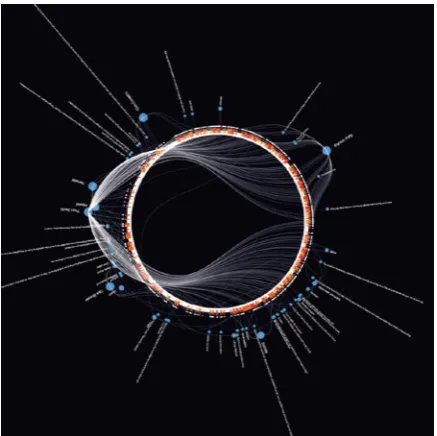
Figure 12. ‘Map of knowledge’ assembled by scientists at the Los Alamos National Laboratory research library in 2009. It is based on users’ data searches on different journals and thus on the associations established between them. The model represents a visualisation of “a journal network that outlines the relationships between various scientific domains and clarifies the connection of the social sciences and humanities to the natural sciences.” It also corrects “the underrepresentation of the social sciences and humanities that is commonly found in citation data.” See Bollen J, Van de Sompel H, Hagberg A, Bettencourt L, Chute R, et al. 2009 Clickstream Data Yields High-Resolution Maps of Science. PLoS ONE 4(3): e4803. doi:10.1371/journal.pone.0004803.
References
Bartolovich, C. (1996) Mapping the spaces of capital. In: R. Paulston (Ed.) Social Cartography: Mapping ways of seeing social and educational change, pp. 375-97. Garland, NY.
Data on Federal Research and Development Investments: A Pathway to Modernization (2010) National Academies Press, Washington, D.C.
Fisher, D. (1993) Fundamental Development of the Social Sciences: Rockefeller Philanthropy and the United States Social Science Research Council. University of Michigan Press, Ann Arbor.
Galison, P. (1996) Computer simulations and the trading zone. In: P. Galison and D. J. Stump (Eds) The Disunity of Science: Boundaries, Contexts, and Power. Stanford University Press,Palo Alto.
Greenblatt, S. and G. Gunn (1992) Introduction. In: S. Greenblatt and G. Gunn(Eds) Redrawing the Boundaries: The Transformation of English and American Literary Studies, pp. 1-11. Modern Language Association, New York.
Harley, J.B. (1988) Maps, knowledge, and power. In: D. Cosgrove and S. Daniels(Eds) The Iconography of Landscape, pp. 277-312. Cambridge University Press, Cambridge.
Huutoniemi, K., J.T. Klein,H. Bruun and J. Hukkinen (2010)
Analyzing interdisciplinarity: Typology and indicators.
Research Policy 39, 79-88.
Kearney. M. (1991) Borders and Boundaries of the State and Self at the End of Empire. Journal of Historical Sociology 4 (1), 52-74.
Klein, J.T. (1996) Crossing Boundaries: Knowledge, Disciplinarities, and Interdisciplinarities. University of Virginia Press, Charlottesville.
Klein, J.T. (2008) Evaluation of interdisciplinary and transdisciplinary research. American Journal of Preventive Medicine 35(2S), S116-S123. Klein, J.T. (2010) Creating Interdisciplinary Campus
Cultures. Jossey Bass and Association of American Colleges and Universities, San Francisco.
Ostriker, J.P. and C.V. Kuh (Eds) (2003) Assessing Research-Doctorate Programs: A Methodology Study. National Academies Press, Washington, D.C.
Ostriker, J.P., P.W. Holland, C. Kuh and J.A. Voytuk(Eds) (2009) A Guide to the Methodology of the National Research Council Assessment of Doctorate Programs.
National Academies Press, Washington, D.C. Paulston, R. and M. Liebman (1996) Social cartography:
A new metaphor for comparative studies. In: R. Paulston (Ed.) Social Cartography: Mapping Ways of Seeing Social and Educational Change, pp. 7-28. Garland, NY. Stromquist, N.P. (1996) Mapping gendered spaces in third
world educational interventions. In: R. Paulston (Ed.)
Social Cartography: Mapping Ways of Seeing Social and Educational Change, pp. 233-47. Garland, NY. Wagner, C.S., J.D. Roessner and K. Bobb (2009) Evaluating
the Output of Interdisciplinary Scientific Research: A Review of the Literature. Prepared for the SBE/SRS, National Science Foundation, by SRI International Science and Technology Policy Program (May). Winter, M. (1996) Specialization, territoriality, and
5. Collaboration of Natural and Social Sciences
in Research for Sustainable Development
Christian Pohl
td-net, Swiss Academies of Arts and
5.1 Introduction
The issue of collaboration of natural and social sciences has been a loyal companion of research for sustainable development1 for several decades. When Meadows et al. (1972) presented the modelling results of Earth’s col-lapsing human population in 2020 – assuming stable patterns of consumption and economic, population and pollution growth – the natural and social science’s per-spectives were joined in a systems dynamic model of the Earth, and expressed in rates of economic growth, environmental pollution, agricultural production and human reproduction. During the 1980s the natural sci-ences took the lead in framing more specific problems: acid rain, eutrophication of lakes and the Baltic Sea, forest decline, the ozone hole, the greenhouse effect and biodiversity loss are the concepts through which global environmental change entered the awareness of academe and society at large. The social sciences were a marginal power in framing the problems and the societal answers to it, as developed, for instance, in the frame of the international conventions and protocols of Montreal (ozone hole), Kyoto (greenhouse), Gothenburg (acid rain and eutrophication) and Cartagena (biodiversity).2
The uneven involvement of natural and social sciences in environmental research and problem framing becomes an explicit concern in the scholarly literature during the 1990s. For Redclift it is mirrored in the structure of the IPCC’s working groups:
The natural science agenda manifest in the way that the work of the Intergovernmental Panel on Climate Change (IPCC) was originally conceived – the taxono-my began with scientific ‘processes’ (Working Group One) and led on to ‘impacts’ and the ‘responses’. The point about this view of science is that it begins with the physical, and takes on a human character some way down the road… (Redclift 1998, 177)
Consequently, Redclift further states, the climate prob-lem (the etiology of climate change”) is framed in terms of natural sciences, and – with a view on the central role of Working Group One – in terms of atmospheric physics. Rayner and Malone (1998) edited a four-volume book entitled Human Choice & Climate Change, presenting numerous social scientific approaches to climate change. The title of the book is meant as a programme, asking whether the problem of climate change might have been framed in the wrong way and in fact should be seen as a problem of humans making the wrong choices in every-day life – rather than a climate that is changing.
As Rapport argues, a collaboration of natural and social sciences on equal terms is required, since envi-ronmental or sustainability issues are problems of the
Abstract
Based on a review of studies of collaborative research in the field of sustainability, two challenges of collabo-ration are identified: (1) a lack of mutual understanding of natural and social scientists, for instance, of the role of research in social change; (2) a strange perception of social sciences and participation as exchangeable means to bridge research and social change. Both challenges can be addressed by (a) clarifying roles and expectations of natural and social sciences in research for sustainable development; (b) exploring collaboration through collective problem framing of current sustainability issues; (c) balancing power and resources of the interpretative and the positivist approach.
The Future of Knowledge – Mapping Interfaces – Reykjavík, 16-17 June 2009 | 27
entire socio-anthropo-bio-geo-hydro-atmosphere and therefore need to be addressed from different perspec-tives simultaneously:
Through much of the 20th century, progress in sci-ence has been measured by going deeper into the more specialised areas of knowledge. Environmen-tal challenges call for another standard, measured by the degree of synthesis or integration among the parts. The new face of science will be more public-spirited and be characterised by its problem solving capability. It will draw upon the disciplines and not compete with them. It will seek models in which there is no longer the separation of the human from the rest of the biosphere, and in which uncertainty, surprise and incompleteness are not taken as signs of failure, but rather as better approximations of the real world. (Rapport 1997, 289)
Researchers who engage in such collaborations are usually trained in and belong to a specific disciplinary community. They look at the world through the eyes of this community’s paradigm (Fleck 1986 [1947]; Kuhn 1996). And they are evaluated according to what they contribute to this paradigm’s understanding of progress.
Rapport’s vision challenges such researchers in the sense of ‘asking for things that they are not trained to do’. Two such challenges are:
• To bridge to other disciplines in order to come up with a comprehensive understanding of an environmental or sustainability issue.
• To bridge between the academic and non-academic world in order to connect research and social change towards sustainability.
The following section discusses the first challenge, the inner academic collaboration. The challenge is described in terms of bridging a positivist and an interpretative paradigm. In section 5.3 both paradigms will be used to briefly discuss the strange perception of social science and participation as exchangeable means to bridging research and social change. Section 5.4 concludes by giving three recommendations.
5.2 Collaboration within academia
The collaboration of natural and social sciences within academia is motivated by “the recognition that the present and future paths of environmental dilemmas are inextricably linked to dynamics of coupled human and biophysical systems” whereas “[i]nterdisciplinary research, particularly between social and biophysi-cal scientists, is deemed both essential and urgent to addressing these challenges” (MacMynowski 2007). Research programmes in the field of environmental and
sustainability issues have been promoting such col-laborations since the early 1990s.3
Empirical studies of such collaborative research sug-gest that the collaboration of natural and social sciences is more elaborated on the level of concepts, proposal prose and the programme management than in practice of research. Bruce et al. (2004, 468) – analysing the fifth framework programme that should promote interdisci-plinary research within Europe – found “disappointingly few projects among those funded in the early calls of the FP5 Programme that seemed by our criteria to be clearly interdisciplinary, particularly in terms of crossing the boundary between natural and social sciences”. A comparative analysis of a Swiss and a Swedish envi-ronmental research programme revealed that a period of three years of close collaboration may be needed to understand the other researcher’s perspective and to be ready for jointly framing research questions. And even after years of collaboration, the question that bothered some of the researchers most was – as stated by a social scientist: “As a sociologist to collaborate intimately with a biologist. What should we write about? I don’t know!” (Pohl 2005, 1169).
Thus, one of the main barriers for collaboration seems to be a lack of deep mutual understanding, which is only achieved through intensive intellectual work. If the schol-arly debate on collaboration in research for sustainable development is taken as the point of reference, this lack of understanding does not relate to natural and social science, but to the underlying paradigms. Hirsch Hadorn et al. (2010, 432) consider the emancipation of the inter-pretative paradigm in social science research since the 19th century – and thus the possibility to collaborate on equal terms with a positivist approach – as one of the core historical developments nurturing transdisciplinary research until today. Krohn (2008, 371) juxtaposes the two paradigms, the ideographical (interpretative) that at that time had to emancipate from the nomothetic (posi-tivist) paradigm:
Nomothetically, a case is taken as an exemplar of a more general kind and its specific features will be ne-glected. Eventually it becomes an abstract instance of a general law (e.g., a falling body as an instance of gravitation). Ideographically, the case is taken as an object to be valued for its unique composition of highly specific features: it counts in its own rights (e.g., a falling Chinese vase). (Krohn, 2008, 371)
gravitation at work and the literary intellectual the irre-trievable loss of cultural heritage. Snow was concerned that the lack of communication between the two cultures “is making it difficult or impossible for us to take good action” (Snow 1964, 60), by “good action” meaning to solve the problem of unequally distributed wealth and goods on earth – to promote sustainable development in today’s terminology. The two cultures, not willing or able to collaborate and therefore not of help in research for sustainable development, persist:
There was always a tension between the engineers, who came with a technology in search of a market, and the anthropologists, who were trained to understand and possibly protect the values of the indigenous culture. (Fenstad 1995, 61)
[W]hile the natural sciences proceed by closing down debate, by establishing near-consensus between everybody, the social sciences proceed by opening up debate, by admitting the existence of competing controversial universes, or distinct epistemic com-munities. It should not be surprising that both natural and social sciences get so frustrated with the way in which the discourse is often conducted, since their expectations are mutually incompatible. (Redclift 1998, 178)
The two paradigms do not only differ in how they per-ceive a specific sustainability issue. They also differ in the (implicit) assumptions about, for instance, what the role of research in collaborations for sustainable development is. Elkana (1979, 276-783) distinguishes within every paradigm a specific body of knowledge – the state of knowledge with its methods, solutions, open problem, theories – from the paradigm’s specific image of knowledge. The image of knowledge is build by the beliefs “held about the task of science (understanding, prediction, etc.), about the nature of truth (certain, prob-able, attainprob-able, etc.), about the sources of knowledge (by revelation, by ratiocination, by experiments through the senses)”. And in the present context one can add: beliefs held about the general role of research in social change; beliefs held about the specific contributions of natural and social sciences in co-producing knowledge for sustainable development.
Guba and Lincoln (1994; 2005) tabulate such images of knowledge – using the term ‘paradigm’ – of positiv-ism, postpositivpositiv-ism, critical theory, constructivism and a participatory approach. Although Guba and Lincoln (1994, 105-109) emphasise that all five images of knowl-edge can be found within qualitative research, they still see the positivist image of knowledge as the one that has been dominating science in general for several centuries. Table 1 is an extract of their juxtaposition for the image of knowledge of positivism and critical
theory et al. Guba and Lincoln (1994, 109) use critical theory et al. as “a blanket term denoting a set of several alternative paradigms, including additionally (but not limited to) neo-Marxism, feminism, materialism, and participatory inquiry”. Thus Table 1 confronts a spe-cific positivist image of knowledge – here standing for the natural environmental sciences – with a specifically engaged social science paradigm – here standing for the social environmental sciences. The reason for depict-ing both positions in Table 1 was that they were – to my understanding – closest to the two positions I found in conflict in the scholarly debate in research for sustainable development. They are, however, not comprehensive: just think of all the constructivist social scientists that are not represented.
Table 1 depicts the two paradigms as ideal typical simplifications in Weber’s sense (1962). Real research-ers’ images of knowledge will not necessarily include all features of one type. For example, Snow’s physicist is generally a positivist and still an activist, aiming at solving the world energy problem by nuclear power. Snow’s literary intellectual, on the other hand, might be a historical realist (or relativist) and yet more distant towards action than the positivist physicist. Note that the paradigms do not represent natural and social sci-ences in general. A biologist, for instance, who lives in a community of apes to learn about their behaviour, may hold the image of knowledge of critical theory et al. An economist searching for basic rules (like maximising personal utility) that govern human economic behaviour might be in the positivist paradigm.