SETTING SCIENCE AGENDAS FOR EUROPE
EMRC WHITE PAPER
Present Status and Future
Strategy for Medical Research
in Europe
www.esf.org
Authors:
EMRC White Paper 3
Executive Summary
This 2007 White Paper from The European Medical Research Councils “Present Status and Future Strategy for Medical Research in Europe” aims to strengthen and improve European medical research, which in turn will result in better healthcare and improved human welfare. In Europe and in the rest of the world we are facing rapid changes in society with globalisation, new emerging and rapidly spreading infectious diseases, changed disease patterns with treatment-resistant tuberculosis, rapid and dramatic climate changes and, in Europe, a changed demography with an ageing population. Medical research is essential to cope with these future challenges. Furthermore, new knowledge in the field of medical science is important to facilitate greater success for the European medical industry.
We propose that the present level of funding for medical research across Europe is increased, and that there is enhanced collaboration between European nations and institutions. Funding should be distributed in competition through peer review on the basis of scientific excellence. Collaboration within Europe and worldwide, with the sharing of research and results, is essential for ensuring that European research can make a real difference to the health and wealth of its people. This will create a stronger medical research base, and provide society with the necessary scientific tools to meet the serious challenges facing us in the coming decades. Increased funding for medical research in Europe will, in addition, help to fulfil the recommendations of the EC Green Paper which envisions Europe as a leading knowledge-based society.
A comprehensive analysis of funding shows that the USA spends significantly more on medical research than does Europe. Relative to GDP (gross domestic product) the USA non-market sector spending on biomedical research and development in 2004 (the most recent figures available) was between 0.37 and 0.40 % compared with 0.17 % for the original 15 EU countries (EU15) in the same year. If all the EU countries were used for comparison the difference would be even more marked. The USA thus spends more than twice as much as Europe relative to GDP, and almost three times as much when measured relative to the size of the respective populations.
A bibliometric analysis of the output of medical research shows that per capita, the USA produces roughly one paper more per 10,000 inhabitants than does Europe (the output per 10,000 inhabitants increased from 3.2 in 1996 to 3.9 in 2005 in Europe compared with a change from 4.4 to 4.9 in the USA over the same period). The total number of citations to US publications between 1996 and 2003 greatly exceeded the number of citations to EU15 publications during the same period. The share of the world’s citations to biomedical publications remained about 50% for the USA and 40% for the EU15 in the study period. This may be partially due to the positive English language bias in citation databases, but may also be due to a quality difference in favour of the USA.
We propose to use “best practice” for medical research in Europe, as described in the tool box below. Collaboration is the key-word, with a focus on strong basic research, strong clinical research, and strong translational research, bringing basic knowledge into clinical practice and vice versa. All three elements need to be facilitated by interdisciplinary approaches and through public-private partnerships. Career track schemes that provide attractive opportunities for researchers are essential. Research must be conducted according to the highest ethical standards, and appropriate tools of governance must be in place to prevent scientific misconduct. Europe should invest in national and European research infrastructure, as indicated in the ESFRI Roadmap. We propose that EC and national regulations that impact on biomedical research should be made as simple as possible, so that research is facilitated and not impeded. Partnership is needed in the EU among institutions. Along with improvement for the original EU members, investment should be made in technology, infrastructure and employees in the new EU member states in order to eliminate the differences between the original and new countries and to enable new member states to achieve their enormous intellectual potential. This will create an optimal environment for medical research across the whole Europe.
for collaboration and organisation of medical research, there will be major benefits for European society, with a better health, welfare and hospital treatment, and a thriving medical industry. It is well documented that investment in medical research reaps large returns for society, which justifies the interventions we are proposing.
The EMRC has an important role in the future development of medical research in Europe through its science policy and through dialogue with the European Commission, the European Research Council, learned societies, universities and academic medical centres. We firmly believe that a concerted and collaborative effort to strengthen and improve European medical research will have a positive impact for health and welfare in Europe and the rest of the world, and with the publication our new 2007 White Paper “Present Status and Future Strategy for Medical Research in Europe” we invite debate and action to bring our proposals to fruition.
Recommendations for strengthening
medical research in Europe
Executive Summary
1. Implementation of “best practice” for funding and performing medical research (see tool box).
2. Collaboration via EMRC and its Membership Organisations and EC, ERC, COST, the scientific societies, the medical journals and the university and academic medical centres to enhance collaboration and sharing of research and results.
3. Revision of EC Directives related to medical research to facilitate research.
4. Endorsement of the EMRC statement on equal opportunities for performing research: “The EMRC advocates equal opportunities in all aspects of medical research – regardless of age, gender, origin, profession, race, religion, or sexual orientation.”
EMRC White Paper 5
research
Tool Box: “Best Practice” for medical research in Europe:
Primary goals:
• Strong basic research
• Strong clinical research
• Strong translational research: bringing basic research knowledge into clinical
practice, and
vice versa
-- all three of the above being facilitated by interdisciplinary research and public–
private partnerships
Tools to reach these goals:
people
• Career track schemes with attractive possibilities for researchers taking advantage of
co-funding strategy
• European Medical Scientific Training Programme (EMSTP) for physicians and
scientists scaling up existing successful initiatives
• The highest level of research ethics, and no scientific misconduct
Tools to reach these goals:
research infrastructure
• Investment in national and European research infrastructure – covering the whole
range from laboratory equipment in basic science labs and research facilities in
hospitals, to the largest pan-European infrastructures, as outlined in the ESFRI
Roadmap
• Launch a call for proposals to directly support on a highly competitive basis a
league of top performing biomedical research centres of excellence, integrated
into regional clusters
• Post-genomic clinical medicine
• Intelligent and coordinated use of Information Technology (IT)
• EC and national regulatory issues for clinical research adapted to facilitate
research
Tools to reach these goals:
research funding
• Adequate research funding – distributed on the basis of scientific excellence and
through peer review
• Common criteria and methods for the evaluation of research outcomes
Tools to reach these goals:
societal means
EMRC White Paper 7
Preface
The aim of this White Paper from The European Medical Research Councils (ERMC) is to strengthen and improve European medical research – for creating new knowledge, better practice of medicine and an improvement in human health and welfare.
The White Paper may be read as a coordinated and consensus reply from the European Medical Research Councils to the EC Green Paper1, ‘The
European Research Area: New Perspectives’, which highlighted that research is a cornerstone for a European ‘knowledge society’.
The White Paper was developed during two round-table meetings in Paris on May 28 and July 20, 2007 hosted by the EMRC and endorsed at the EMRC Plenary Meeting in October 2007.
The return on investment in medical research are enormous for society, and proper funding for medical research in Europe will lead to better health, welfare and economic prosperity. We hope that this White Paper will lead to a debate followed by actions to create improved conditions for medical research in Europe, and thereby secure for European patients and citizens the benefits from significantly improved health and welfare in the future.
A very warm thank you to the White Paper authors: Prof. Håkan Billig, VR, Sweden; Prof. Colin Blakemore, MRC, UK; Prof. Roger Bouillon, FWO, Belgium; Prof. Christian Bréchot, Inserm, France; Prof. Arturo Brunetti, CNR, Italy; Prof. Agnès Gruart, MEC, Spain; Dr. Tony Peatfield, MRC, UK; Prof. Martin Röllinghoff, DFG, Germany; Prof. Jürgen Schölmerich, Regensburg Univ. & DFG, Germany; and Prof. Eero Vasar, EAS, Estonia.
Grateful thanks are also due to Drs Michael Stolpe, Van Bui, Gisela Hostenkamp and Robert Poppe, The Kiel Institute for the World Economy, Germany, as well as the national and international experts listed in the appendix for the superb gathering and analysis of data on biomedical research funding, and to Dr. Wolfgang Glänzel and Dr. Koenraad Debackere, Managerial Economics, Strategy and Innovation (MSI), Leuven, Belgium, and Dr. Martin Meyer, SPRU, Univ. of Sussex, UK for excellent assistance in data collection and evaluation of European biomedical research performance.
A special warm thank you to Dr. Carole Moquin-Pattey, Head the EMRC Unit in Strasbourg, France and to her assistant Julien Weber for excellent organisation of this White Paper process.
We are grateful also to Dr. Elias Zerhouni and his team at The National Institutes of Health (NIH), USA, for their very valuable comments to the White Paper.
Professor Liselotte Højgaard, MD DMSc Chair of the EMRC
1 EC Green Paper The European Research Area: New perspectives’ Brussels 4 April 2007
EMRC White Paper 9
Contents
Executive summary 3
Preface 7
Contents 9
1. Introduction: “The special case of medicine” 11
2. The positive outcomes of medical research 13
3. Medical research funding in Europe and globally 15
4. Medical research outputs in Europe and globally 21
5. European medical research needs to be strengthened 25
6. How to improve medical research in Europe 29
7. Scenarios for the future development of medical research in Europe 37
8. Recommendations for strengthening medical research in Europe 39
Annexes 41
Participants in The White Paper Group 48
EMRC White Paper 11
1. Introduction: “The special case of medicine”
This EMRC 2007 White Paper “Present Status and Future Strategy for Medical Research in Europe” aims to strengthen and improve European medical research – for better healthcare and improved human welfare, to create new knowledge in the field of medical science, and to facilitate greater success for the European medical industry.
Stronger medical research in Europe will have positive consequences for European welfare, as the benefits from medical research to society are substantial, with a many-fold return from investments in medical research. Healthcare costs have increased substantially in the last 10–15 years, but public funding of medical research in Europe has only increased modestly in comparison. As has been voiced in the USA2,
better funding of medical research and its translation towards evidence-based medicine will be important for improving healthcare systems, and thereby contributing to the reduction of healthcare costs in the future.
Preparedness is a key word for our future development in Europe. We are facing a rapidly changing society, with globalisation, new emerging and rapidly spreading infectious diseases, bioterrorism, and changes in disease patterns in Europe and in the rest of the world. Tuberculosis is increasing in Europe, with new and rapidly changing microbial resistance patterns, leading to treatment resistance. Rapid and dramatic climate changes anticipated in the near future will modify disease patterns, and represent a major challenge. A changed demography with an ageing population will result in an increased demand for healthcare. Neurodegenerative disorders and depression will increase, and an epidemic of obesity and the metabolic syndrome will be another substantial challenge with diabetes and all the related side-effects: cardiovascular and kidney diseases, blindness, and bone and joint problems. The post-modern global society with increased societal stress, fear of the future, and a changing European demography will lead to grand challenges in the area of mental health-related diseases. Medical research is essential to cope with these future challenges in the best and most intelligent way.
Biomedical research should be instrumental in accompanying the paradigm shift from the present healthcare system into a new era, where prevention of disease and healthy ageing are the primary goals.
The EC Green Paper states: “ERA is essential to making Europe a leading knowledge society and thus creating the conditions for long-term prosperity, a society where research, education, training and innovation are fully mobilised to fulfil the economic, social and environmental ambitions of the EU and the expectations of its citizens.” This should be viewed in the context of the Lisbon strategy, agreed by Member States in 2002, which stated that “overall spending on R&D and innovation in the Union should be increased with the aim approaching 3% of GDP by 2010, with two-thirds of this investment coming from private sector”3,4. Science is global, and stronger
and better European medical research will yield benefits for Europe, as well as more widely. Overall it will help improve welfare for the whole world.
Research is on the European and national political agendas. Dr. Janez Poto nik, Commissioner of Research and Science at the European Commission, highlighted that “What we need and what we want is an attractive Europe, with exciting research opportunities in the scientific fields of the future, with the human resources and capacities optimised to match our ambitions; with a society that is aware and supportive of research”. The new British Prime Minister Gordon Brown is quoted in Science 6th July 2007: ”The
government’s long-term vision is to make Britain one of the best places in the world for science, research and innovation”5. One of the first acts
the new French President, Nicolas Sarkozy, was to create a new ministry whose responsibility includes both research and higher education. In Germany, under the leadership of Bundeskanzlerin
Dr. Angela Merkel, herself a scientist, the ‘Excellence Initiative’ has already been underway for two years6.
Medical research is special, as the outcome of the research produces not only new knowledge, science and innovation (as for other research
2 Zerhouni, EA., (2007). Fiscal year 2008 Budget Request Witness appearing before the Senate Subcommittee on Labor-HHS-Education Appropriation: http://www.nih.gov/about/director/ budgetrequest/fy2008directorssenatebudgetrequest.htm 3 Presidency conclusions Barcelona 15 & 16 March 2002: http://ec.europa.eu/invest-in-research/pdf/download_en/ barcelona_european_council.pdf
4 More research for Europe Towards 3% of GDP http://ec.europa.eu/invest-in-research/pdf/499/en.pdf 5 Clery, D. Science gets new home in U.K. Government.
Science July 2007; 317: 28.
6 On 23 June 2005 the German federal and state governments
agreed on an initiative to promote top-level research in Germany. The Excellence Initiative aims to strengthen science and research in Germany in the long term, improve its international competitiveness and raise the profile of the top performers in academia and research. The total budget of the initiative will be
€1.9 billion for the period 2006 through 2011, which will be split
between three lines of funding: i) Graduate schools to promote young researchers; ii) Clusters of Excellence to promote world-class research; iii) Institutional strategies to promote top-level university research
1. Introduction: “The special case of medicine”
areas), but can also rapidly be translated into better ways of preventing disease and improving healthcare. The benefit for patients is often both immediate and invaluable.
Medical research should be used to transform the present healthcare system into one that is focused much more on prevention. This will come about through the intelligent and collaborative use of the exploding amount of new knowledge on genetic analysis, biomarkers and risk assessment, thereby leading to better and longer lives for people globally. All this new information can be harnessed to produce a new type of “post-genomic” personalised medicine, where interventions will focus on prevention and early diagnosis, rather than, as now, on diagnosis, treatment and rehabilitation after the onset of disease.
EMRC White Paper 13
2. The positive outcomes of medical research
The most important outcomes of medical research are better prevention strategies, better treatments for individuals, and broader health and societal and economic benefits. Medical research plays a key role in improving health and prosperity. New studies applying micro- and macro-economic models for accessing the socio-economic effects of research have shown very high returns on investment into medical research. A recent study7 showed a more than four-fold return on
investment in randomised clinical trials funded by the US National Institute of Neurological Disorders and Stroke. An Australian study showed an eight-fold return on cardiovascular research, a six-eight-fold return on respiratory medical research, and a five-fold return on digestive disease research8. The UK
Government Science and Innovation Framework 2004 concluded that innovation in science and technology has driven the increasing living standards in developing countries over many years, and that investment in research has had a consistently positive impact on long-term national productivity and growth9,10.
Policy-makers and the tax-paying public need to understand the benefits that arise from investment in medical research in order to make well-informed decisions about funding of medical research. In Europe and the USA, spending on health-related R&D is respectively 0.14% and 0.33% of GDP11,
which is very small compared to current and likely future health expenditure.
Recent economic studies predict a rising demand for healthcare at least until the middle of the 21st
century. An influential article12 has shown that
rising incomes alone could lead to a doubling in the efficient share of health spending in GDP in the coming decades, even without the degree of population ageing that is forecast. But population ageing will of course create an additional unprecedented demand for the findings, better practices, new treatments and technologies from
medical research. These predictions are based on the empirical observation that as people get richer and consumption rises, additional consumption of material goods becomes relatively less valuable, but the value of additional years of life does not decline. The optimal composition of total spending shifts towards health, and the efficient share of health in GDP will grow as long as per capita incomes rise. For the USA, the authors predicted an optimal health share in GDP of more than 30 % by the middle of the 21st century.
One of the best-known attempts to describe the value of medical research to society in economic terms is a US-study sponsored by The Mary Woodward Lasker Charitable Trust13.
Improvements in health were found to account for almost half of the gain in American living standards in the previous fifty years. The decline in deaths in the US between 1972 and 1992 from cardiovascular disease and stroke was worth more than USD 1.5 trillion per year to the US economy. Assuming that only one-third of this gain came from medical research, the return on investment in research (USD 500 billion per year) was twenty times greater than annual spending on medical research. An investment of USD 100 billion in research would yield USD 935 billion in societal gain.
At present European medical industries invest more in US-based research than in Europe-based research; this is a sign that European medical R&D could perform better14,15. It has been
shown that resources used in the pharmaceutical industry produce greater economic benefits than if they were employed elsewhere, for example in manufacturing. Private–public partnerships, with collaboration between industry/academia/ hospitals/charities, are an important future means for enhancing prosperity in Europe. In the US, it has been suggested that 500,000 jobs in the pharmaceutical industry would not exist if the
7 Johnston SC, Rotenberg JD, Katrak S, Smith WS, Elkins JS. Effect of a US National Institutes of Health Programme of clinical trials on public health costs. Lancet 2006; 367: 1319-1327. 8 ‘Exceptional returns, the value of investing in health R&D in Australia’. Prepared for The Australian Society for Medical Research by Access Economics; Canberra, September 2003 Download at: http://www.researchaustralia.com.au/files/Access_ Economics_Exceptional_Returns.pdf)
9 Medical research: assessing the benefits to society. A report by the UK Evaluation Forum, supported by the Academy of Medical Sciences, Medical Research Council and Wellcome Trust, May 2006 10 Blakemore C, Davidson J. Putting value on medical research.
Lancet 2006;367: 1293-1295. 11 See Figure 1 in Chapter 3.
12 Hall RE, Jones CI. The value of life and the rise in health spending.
The Quaterly Journal of Economics February 2007;122:39-72.
13 Funding First. Exceptional Returns: The Economic Value of America’s Investment in Medical Research. Mary Woodward Lasker Charitable Trust: New York, NY 2000.
Download at: http://www.laskerfoundation.org/reports/pdf/ exceptional.pdf
14 Science & innovation investment framework 2004-2014: next steps. A report by The Department of Health, the Department for education & skills, the DTI and HM Treasury, March 2006. Download at: http://www.hm-treasury.gov.uk/media/7/8/bud06_ science_332v1.pdf
2. The positive outcomes of medical research
industry were not standing on the shoulders of public funding and academic performance16.
This requires a well-functioning public medical research base and a positive attitude towards private–public partnership.
Continuous and substantial funding in specific research areas has led to dramatic improvements, e.g. for children with cancer, where the cure rate is now well above 75%; this can be ascribed to the medical research efforts in paediatric oncology over the last fifty years17. Strong research efforts
building on basic science knowledge have led to the novel effective vaccine against human papilloma virus (HPV), which can prevent cervical cancer18. On the other hand, an under-researched
area, such as respiratory diseases, has failed to come up with similar improvements for patients with lung diseases19.
Assessing returns on medical research in economic terms in Europe is difficult and should become a research area in its own right. It is extremely difficult to evaluate the societal outcome of medical research, as it is a complex, slow and incremental process. Likewise, it is a demanding task to ensure that all areas of expenditure and benefits for human health are recognised. There is a time-lag between research and tangible outcomes, and it is difficult to trace the role of individual research contributions. A commonly accepted methodology for how to evaluate outcomes of research funding both from public funding and from private charities needs to be developed, and both public funding organisations and private charities supporting medical research
should employ such methods for assessment of the outcomes of their research funding.
Greater spending on medical research and development today is a necessary investment for reducing the healthcare costs of tomorrow. A research environment that contributes to the health and wealth of the European nations is essential, as new ideas, new evidence, and new products provide the necessary base for more effective and more efficient healthcare systems. It will secure economic growth through a healthier workforce and by providing an attractive environment for investment by pharmaceutical and biotechnology companies.
Research is an international endeavour and the product of many different actors working over often long periods. If improved, European medical research will give further benefit to societies globally. The essential starting point for success is the selection of which research to support. Investment in poor quality basic ideas will generate useless findings. Badly designed clinical trials or epidemiological studies will produce unreliable or even harmful results and, in that they involve the participation of people, would be unethical. In contrast to this, the benefits to society of investment in excellent medical research are enormous, and therefore worth investing in.
16 Rosenberg L. Exceptional economic returns on investments in medical research. The Medical Journal of Australia 2002;177:368-371. 17 Pui CH, Cheng C, Leung W et al. Extended follow-up of long-time survivors of childhood acute lymphoblastic leukemia. New England Journal of Medicine 2003;349:640-649.
18 HPV and HPV Vaccine. Information for Health-care providers. CDC, Center for Disease Control & Prevention, USA. August 2006. Download at: http://www.cdc.gov/std/hpv/hpv-vacc-hcp-3-pages-hi-res.pdf
EMRC White Paper 15
3. Medical research funding in Europe and globally
In this chapter we try to find and compare data for medical research funding in Europe and globally. International comparisons of funding for medical research are plagued by conceptual and technical problems. Conceptually, we are interested primarily in knowledge about public funding relative to relevant measures of country size and economy, and we therefore report medical research funding relative to countries’ gross domestic product (GDP). What matters is, however, the amount of resources that go into medical research, such as hours worked by research scientists, the utilisation of scientific infrastructure and all forms of research-specific consumables. To consider only monetary inputs may conceal important qualitative and quantitative differences between countries. For example, the stock of knowledge used as an input to generate further knowledge, varies widely. Moreover, changes in relative input prices limit the comparability of aggregate expenditure data internationally and across time, especially where a biomedical research price deflator is absent. Linking inputs to research output raises further issues: the efficiency of medical research varies with the extent to which countries exploit economies of scale and with appropriability20
conditions, such as intellectual property rights, that determine private research incentives.
In addition to generating new knowledge, medical research may endow countries with absorptive capacity for existing medical knowledge, including the translation of international research advances into better healthcare practice at home. The development and application of evidence-based medicine and treatment guidelines for specific diseases requires the presence of medical researchers who are trained in the latest methods, knowledgeable about all relevant research advances worldwide, and at the same time familiar with local epidemiological conditions in the community they serve.
Technical problems in measuring medical research funding arise because the relevant definitions of research cannot fully keep pace with the changing scope, evolving science base
and rapid proliferation of research methods and technologies. International standards for the classification of research activities, for example provided by the so-called Frascati Manual21,
are inevitably incomplete and largely rely on voluntary adherence. The two main sources of internationally comparable data on health-related research and development (R&D), Eurostat and the OECD, report research expenditures by sectors of performer and by the funding bodies involved. The data presented below are from the joint annual Eurostat/OECD survey that asks performers how much they actually spent on R&D in the preceding year and asks funders how much they have committed to R&D for the current year, and data from the USA published in peer review journals, as recommended by the NIH.
We used performer-reported data to compare the aggregates of all intramural expenditure on biomedical R&D performed in the government, higher education and private non-profit sectors, collectively known as the ‘non-market R&D sectors’. Care has been taken to minimise problems arising, inter alia, from national traditions of classifying differently the human health-related parts of multifarious research activities, particularly in the field of biological research. An important advantage of performer-reports is that they include funding not only from national governments, but from all sources of R&D funds flowing into the domestic non-market sector, including funds from industry and from abroad, such as disbursements in the European Commission’s Research Framework Programmes.
However, as a first look at national government priorities, we have used funder-reported data that compare government budget appropriations for health-related R&D, irrespective of the sector of performance. The difficulty here was to identify all relevant budget items and to measure or estimate their R&D content in terms of funding. The OECD and Eurostat databases22 use a breakdown by
socio-economic objective (SEO) for this purpose. Besides the protection and improvement of human health, the relevant socio-economic objectives comprise the medical science components of
20 The conditions surrounding an invention that enables the capture of the value of an innovation. Some amount of appropriability is necessary to make more money than the cost of R&D. Strategies to ensure appropriability include patents, branding, gaining lead time and exploiting a learning curve advantage (legal, technical, or strategic). Appropriability can be considered part of the competitive advantage and is part of the defensibility and sustainability of a venture.
Retrieved from "http://andrewhargadon.com/wiki/index php?title= Appropriability"
21 OECD (2002). Frascati Manual - Proposed Standard Practice for Surveys on Research and Experimental Development. Paris: OECD. 22 The OECD R&D database is at: http://caliban.sourceoecd.org/ vl=7429255/cl=24/nw=1/rpsv/cw/vhosts/oecdstats/16081242/ v209n1/contp1-1.htm
3. Medical research funding in Europe and globally
23 Alison Young, is a well-known international expert on science and technology indicators and independent consultant on health R&D to Statistics Canada and the Global Forum for Health Research, formerly with the OECD.
non-oriented research and general university funds (GUF) as well as industrial production and technology for the pharmaceutical and medical devices industries. The Frascati Manual (2002, p.145) defines the SEO protection and improvement of human health as “research aimed at protecting, promoting and restoring human health broadly interpreted to include health aspects of nutrition and food hygiene. It ranges from preventive medicine, including all aspects of medical and surgical treatment, both for individuals and groups, and the provision of hospital and home care, to social medicine and paediatric and geriatric research”.
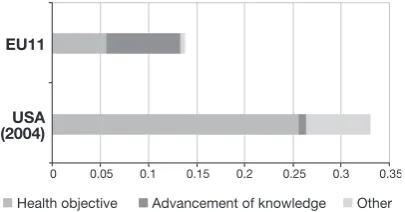
Figure 1 shows recent government funding data for a cross-section of the 11 European countries where data are available and the USA. The weighted average European share of health-related R&D budget appropriations in GDP is more than 50% below the corresponding share in the US, in spite of the much higher GDP per capita in the USA. However, to arrive at a valid comparison for all EU15 countries, we would need to include Italy, Belgium, Portugal and Luxembourg, four countries that have not reported all their health-related government budget appropriations for research funding.
1-Óää{®
i>Ì ÊLiVÌÛi `Û>ViiÌÊvÊÜi`}i "Ì iÀ
äÊÊÊÊÊÊÊÊÊÊä°äxÊÊÊÊÊÊÊÊä°£ÊÊÊÊÊÊÊÊÊä°£xÊÊÊÊÊÊÊÊä°ÓÊÊÊÊÊÊÊÊÊä°ÓxÊÊÊÊÊÊÊÊä°ÎÊÊÊÊÊÊÊÊÊä°Îx
1££
Figure 1: Government budget appropriations for health-related research, % of GDP
Note: The graph is based on the latest data and estimates for the years 2004 to 2007, depending on availability. Data are generally as reported by Eurostat for the health research objective, augmented by parts of budget appropriations for other socio-economic objectives that also contribute to health research. Where the latter are not available from Eurostat they have been supplied by Alison Young23, from national publications and personal estimates. The category advancement of knowledge comprises primarily the part of general university funds that is used for medical research. But
for France, the advancement of knowledge data covers all life sciences. The figures for the EU11 aggregate are GDP-weighted averages of the corresponding figures for the eleven EU members included in the graph. The health objective part of our data is in line with the structure of government R&D budgets that the European Commission’s DG Research (2007) reports in 2007 in Table II.1.324 as being largely unchanged since 2000. For the USA, funding from all federal government departments, such as the Departments of Defense and Energy, the Environmental Protection Agency and the National Aeronautic and Space Administration and the Veterans’ Administration, is included – although the vast majority of funding comes from the Department of Health and Human Services and is administered by the National Institutes of Health. Incidentally, so is federal spending for bio-defence research.
The use of sector of performance data allowed all EU15 countries to be analysed, and largely confirms the strong lead of the USA relative to Europe.
Figure 2 compares estimates of minimum health-related R&D performed in the non-market sectors in the EU15 countries and the USA during 2004 that have been provided by Alison Young23. The dataset
was compiled largely from the results of the joint OECD/Eurostat R&D questionnaire for 2004 using the methodology proposed in the Frascati Manual (2002). Where expenditures on medical research performed in the higher education, government and private non-profit sectors were not available, funder reports of R&D for the health objectives were used as a substitute. Where both were available, Alison Young selected the higher figure. The underlying definition of medical sciences involves numerous subfields in basic medicine, clinical medicine and general health sciences, but does not follow the 2007 revisions25 in the Frascati Manual that
recommend broadening the definition and including new fields, such as medical biotechnology. Overall differences in price levels between countries were taken into account by using European purchasing power parities.
The combined total minimum spending on medical R&D in the EU15 countries is only 67% of the minimum spending in the USA, as compiled by the OECD.
Other sources, published in the highly respected peer review journal Journal of the American Medical Association (JAMA)26 have identified much higher
spending levels for medical research in the USA. These differences arise partly because the minimum
24 EC DG Research (2007). Key Figures 2007 on Science, Technology and Innovation – Towards a European Knowledge Area. 25 OECD (2007). Revised Field of Science and Technology (FOS) Classification in the Frascati Manual. Paris: OECD.
EMRC White Paper 17
performance estimates by the OECD cover only R&D in the medical sciences proper, excluding the health-related component of other life sciences and the social sciences. Much of the health research funded by federal government departments other than the Department of Health and Human Services is not reflected in the minimum performance estimates. If R&D performed in universities outside the medical sciences, in particular in biology, is included, this increases the USA total by over 20%. Another reason is that research funders traditionally report higher sums for a given year than do the performers, especially where the amounts are rising rapidly, as it takes time for the funds to move from commitment to final expenditure. Thus USA government appropriations for health-related R&D, underlying Figure 1, were about USD 33 billion, whereas estimated performer receipts from government were only about USD 25 billion.
Differences also occurred because there were no reliable data for health-related R&D financed by State and Local governments, and estimates can differ markedly. Research America27 estimated that federal
government funding and other funds flowing into the non-market sectors in 2004 exceeded USD 49 billion, or Euro 42 billion at purchasing power parity. Another calculation27 – funded by the Alerion Institute
and the Boston Consulting Group – put total USA funding for medical research performed in the non-market sectors at USD 40.1 billion in 2003, with USD 26.4 billion spent by the National Institutes of Health, USD 6.9 billion by other federal agencies, USD 4.3 billion by state and local governments and USD 2.5 billion by private non-profit sources.
Relative to GDP, the USA non-market sector spent between 0.25 and 0.43% in 2004 on biomedical R&D, compared with 0.17% for the EU15 countries in the same year. Since most European countries have much more centralised administrative structures to disburse public funding for medical R&D, and private institutions such as charities and private universities tend to play a smaller role, the standard errors of the European figures are likely to be much smaller than in the case of USA estimates.
The large lag in European biomedical research spending contrasts with a much smaller lag in
government spending for other socio-economic objectives and other fields of science. In 2004, OECD data imply a combined total government funding for all research and development in the EU15 at approximately 80% of the USA level.
äÊÊÊÊÊÊÊÊÊÊÊÊÊÊÊÊxäääÊÊÊÊÊÊÊÊÊÊÊ£ääääÊÊÊÊÊÊÊÊÊÊÊ£xäääÊÊÊÊÊÊÊÊÊÊÓääääÊÊÊÊÊÊÊÊÊÊÓxäää
1£x
1-Figure 2: Minimum expenditures on health-related R&D performed in the non-market sectors 2004, in million Euros purchasing power parity
Note: The figure for the EU15 aggregate is the sum of the corresponding figures, using purchasing power standards, for the first fifteen countries to become EU members included in the graph. These data have been provided by Alison Young26, mostly from the joint OECD/Eurostat R&D survey, except for Germany, France, the UK, Italy, the Netherlands and the USA. She used national publications and some estimates to arrive at a comprehensive picture. France and the Netherlands publish national tables on gross domestic expenditures on research and development at various times. Data for France are an estimated update from base 2001. Data for the USA have been updated using national publications from base 1997. For Italy, it is assumed that 25% of university R&D is in the medical sciences. For the UK, a funder-reported figure was used as a proxy since no suitable performer-reported data were available. Data for Germany were from an unpublished special analysis made by the Deutsche Forschungsgemeinschaft (2007) of the data from Germany’s Federal Statistical Office that includes biomedical research in the fields of medicine, biology, pharmaceutical and nutrition sciences and excludes agricultural, forestry, horticultural and veterinary research, so that the reported data are equivalent with international definitions of biomedical research performed in the government and higher education sectors. The German data refer to year 2005, and so do the Swedish and Greek data.
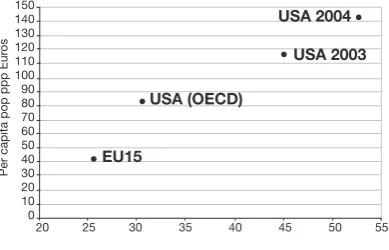
Figure 3 plots per capita non-market sector spending on biomedical research against the share of “health” in all non-market research. This is not meant to imply causality, but to help distinguish the level of health research from the weight of health in the overall research portfolio. For the USA, the graph includes the strictly performer-reported figure from the OECD, which
27 Connelly, E., and S. Propst (2005). 2004 Investment in U.S. Health Research – About 6¢ of health dollar is spent on research. Research America (5/2005).
Retrieved from http://www.researchamerica.org/publications/ appropriations/healthdollar2004.pdf
3. Medical research funding in Europe and globally
28 Moses, H., Dorsey ER, Matheson DHM and Thier SO. Financial Anatomy of Biomedical Research. Journal of the American Medical Association 2005; 294(11):1333 – 1342.
29 Connelly, E., and S. Propst (2005). 2004 Investment in U.S. Health Research – About 6¢ of health dollar is spent on research. Research America (5/2005).
Retrieved from http://www.researchamerica.org/publications/ appropriations/healthdollar2004.pdf
is equivalent to the minimum expenditures on health research in Figure 2, as well as the largely funder-reported figures reported in Connelly and Propst (2005) and Moses et al. (2005). It must be noted that the performer-reported figure that Connelly and Propst attribute to the USA higher education sector is likely to be an overestimate as they included all fields of science, not just the human health-related subset of university research. Moreover, the USA funder-reported figures for medical research outside the higher education sector are not strictly comparable with the performer-reported figures for all gross domestic expenditures on research in the non-market sectors that were used to calculate the percentage ratios on the horizontal axis.
£xä £{ä £Îä £Óä ££ä £ää ä nä Çä Èä xä {ä Îä Óä £ä ä *iÀÊV>«Ì>Ê««Ê«««ÊÕÀ à 1-Ê"® 1-ÊÓääÎ 1-ÊÓää{ 1£x ÓäÊÊÊÊÊÊÊÊÊÊÓxÊÊÊÊÊÊÊÊÊÊÎäÊÊÊÊÊÊÊÊÊÊÊÎxÊÊÊÊÊÊÊÊÊÊÊ{äÊÊÊÊÊÊÊÊÊÊÊ{xÊÊÊÊÊÊÊÊÊÊÊxäÊÊÊÊÊÊÊÊÊÊxx ¯ÊvÊ>Ê>ÀiÌÊ}ÀÃÃÊ`iÃÌVÊiÝ«i`ÌÊÕÀiÊÊ,EÊ,®
Figure 3: Performer-reported per-capita spending on biomedical research and the share of health in all research expenditures performed in the non-market sectors 2004
Note: USA (OECD) refers to the same data, compiled on the basis of the OECD/Eurostat R&D survey, that were used in Figure 2. Data for the USA in 2003 is taken from Moses et al. (2005)28. Data for the USA in 2004 are from Connelly and Propst, Research America (5/2005)29. Data for Germany refer to year 2005, as described in the legend to Figure 2, and so do the data for Sweden and Greece.
A more detailed comparison of components of health research spending in the USA market and non-market sectors reported by Moses et al. (2005) for 2003 and Connelly and Propst (2005) for 2004 is given in Figure 4 below. It appears that the differences in the aggregate
estimates arise mainly from different estimates for Federal Government agencies other than the NIH and from the university sector where the peer-reviewed JAMA article by Moses et al. (2005) provides no estimate.
Connelly &
Propst (2005) Moses et al. (2005)
Industry
Pharma 39 27
Biotechn 10 59 bn 18 54 bn
Medical Techn 10 9
Federal Government
NIH 28 26
Other 10 38 bn 7 33 bn
Other
University 7 NA
State/Local 3 12 bn 4 7 bn
Foundation 2 3
109 bn 94 bn
Figure 4: Comparison of USA Funding of Biomedical Research by Sources in 2004 (Connelly & Propst, 2005) and 2003 (Moses et al, 2005) (in USD Billion)
EMRC White Paper 19
has been about one-third lower in real terms than in nominal terms over the 1995 to 2003 period, as reported in Moses et al. (2005).
USA developments contrast sharply with those in the world’s second largest economy, Japan, where only 50% spending growth in nominal terms was observed between 1996 and 2005. However, in a period of general deflation, it is likely that a biomedical R&D price index for Japan would have shown more stability for most of the past ten years, perhaps even a decline in some of those years. Eurostat reports that Japan’s total expenditure on biomedical research in the non-market sector accounted for only 17.9% of all research spending in that sector in 2003, up from 15.5% in 1996, and the ratio to total health-care spending was 1.8% in both years, virtually the same as the average for the EU15 countries. Relative to GDP, Japan’s non-market biomedical research spending was at 0.13% in 1996 and 0.14% in 2004, about the same as the weighted average for the 11 European countries shown in Figure 1.
1-ÊÊÊÊÊÊÊÊÊÊÊÊÊÊÊÊÊ>«>ÊÊÊÊÊÊÊÊÊÊÊÊÊÊÊÊ1£x Ó{ä
ÓÓä
Óää
£nä
£Èä
£{ä
£Óä
£ää
£xÊÊÊ£ÈÊÊ£ÇÊÊÊ£nÊÊ£ÊÊÊÓäääÊÊÊÓää£ÊÊÓääÓÊÊÊÓääÎÊÊÓää{ÊÊÊÓääx
Figure 5: Time trends for nominal medical research expenditures performed in the non-market sectors, relative to 1995 levels (=100) in national currencies
Note: For Japan, Eurostat has not reported the 1995 value and we assumed the same level of expenditures as observed in 1996.
The EU15 countries as a group appear to have experienced slightly higher spending growth than Japan, with a nominal increase of biomedical research expenditures performed in Europe’s non-market sectors at just below 50% from 1995 to 2004.
In conclusion, it is obviously difficult to achieve valid, robust and unquestionable data about the funding for medical research in Europe and in the USA. The EMRC recommends that data acquisition in the future should be correct and with up-to-date research definitions, and reported by all governments following the same “gold standard”.
Yet no matter how the available data are analysed and compared, biomedical research funding in the USA is much larger than in Europe30. Relative
to GDP the USA non-market sector spent between 0.25 and 0.43% in 2004 on biomedical R&D (depending on the way university research is included and on the data source used), compared with 0.17% for the EU 15 countries the same year. The most credible estimate for the USA lies between 0.37 and 0.40% more than twice the European spending relative to GDP and almost three times the European spending when measure relative to the size of the population.
30 The JAMA data were recommended to us from the NIH.
EMRC White Paper 21
4. Medical research outputs in Europe and globally
31 See Annex 1 for complementary information on the methodology used for this analysis.
32 Glänzel, W. Debackere, K. Meyer, M.’Triad’ or ’Tetrad’? On global changes in a dynamic world. Scientometrics, 2008;74 forthcoming
Research output measured in
publications and citations
Medical research aims at improving understanding of basic aspects of life, and ultimately prevention or cure of diseases. A single and simple link between biomedical research and major clinical breakthroughs is rare as most discoveries build on extensive background information. Moreover, new discoveries require a long validation and implementation process before they can lead to improvements in healthcare. Therefore direct measurement of medical research outputs is usually estimated on the basis of proxy criteria such as publications, patents (with real exploitation), and major awards such as Nobel and Nobel-like prizes, but such events usually recognise innovations and inventions that took place many years previously. Bibliometric analysis is normally regarded as the best method to estimate quality of research output, as the quality of the journal publishing the data and the subsequent citations to these publications are the earliest markers of respect or appreciation by peers. Such a system is of course subject to over- and underestimation before, at or shortly after the publication. Many examples can be cited, with hindsight, where there was unjustified attention and appreciation, or especially the lack of it, but such exceptions should not disqualify the use of bibliometric analysis for most cases.
To compare research output of the USA with that of the 15 original EU member states, raw bibliometric data were extracted from the 1996–2005 annual volumes of the Web of Science (WoS) of the Institute for Scientific Information (Thomson Scientific, Philadelphia, PA, USA). The extracted data have carefully been cleaned and then processed to give standard bibliographic indicators. All papers of the document type
articles, letters, notes and reviews indexed in the 1996 and 2005 annual updates of the WoS have been included. Citations received by these papers have been determined for the three-year period beginning with the publication year on the basis of an item-by-item procedure using special identification-keys made up of bibliographic data elements. The last publication year that could be
taken into account for the citation analysis was therefore 2003 (citation window: 2003-2005). Papers were assigned to countries based on the corporate address given in the by-line of the publication. All countries indicated in the address field were thus included. An integer-counting scheme has been applied; each publication has been assigned as a full paper to all countries contributing to the paper31.
Publications
The number of publications indexed by the WoS database has increased every year. This is in line with the general growth of scientific literature. Both the number of covered journals and the number of papers published by most journals are continuously growing. The strong increase of USA and EU publication is therefore not surprising. In particular, the total number of publications with EU15 origin (between 1996 and 2005; about 1.32 million ISI publications) slightly exceeded the number of USA publications in the study period (1.25 million) with a 25% and 23% increase between 1996 and 2005, respectively. In order to obtain a realistic picture of the evolution of publication activity, figures should be normalised by the world total in the field under study. The share of EU15 and USA biomedical publications of all worldwide biomedical publication has remained fairly stable over the last 10 years (Figure 6). However, the “EU advantage” reached its peak around 2000; beyond this year the deviation between the EU and the USA contributions to the world output in this field began to shrink. This observation is in line with the general pattern in all science fields combined32. The per-capita publication output
of the USA exceeded that of the EU15 output by roughly one paper per 10,000 inhabitants.
4. Medical research outputs in Europe and globally
{ä
Îä
Óä
£ä
ä
£ÈÊÊÊÊÊÊÊÊÊÊÊÊÊ£nÊÊÊÊÊÊÊÊÊÊÊÊÊÓäääÊÊÊÊÊÊÊÊÊÊÊÊÊÓääÓÊÊÊÊÊÊÊÊÊÊÊÊÊÓää{ÊÊÊÊÊÊÊÊÊ
1-Êà >ÀiÊvÊLi`V>Ê-Ê«ÕLV>Ìà 1-Êà >ÀiÊvÊ>ÊÃViViÊ«ÕLV>Ìà 1£xÊà >ÀiÊvÊLi`V>Ê-Ê«ÕLV>Ìà 1£xÊà >ÀiÊvÊ>ÊÃViViÊ«ÕLV>ÌÃ
Figure 6: Share of EU15 and USA in total or biomedical ISI publications 1996-2005
Citations
The value of publications to the scientific community can be assessed in different ways, but on a macro scale citations to publications are a good marker for visibility and science impact, although some distortions may occur due to conscious or unconscious preferential unscientific citations of specific publications. However, US authors more frequently cite other US authors than authors outside the USA33, and English
language publications are favoured in citation databases34. The total number of citations to US
publications 1996–2003 largely exceeded the number of citations to EU15 publications during the same time period (Figure 8A), with a 40 and 56% growth respectively between citations to publications from 1996 versus 2003. The share of the world citations to biomedical publications remained about 50% and 40% for USA and EU15 publications, respectively (Figure 7B) throughout the studied period (1996–2003).
£äää
nää
Èää
{ää
Óää
ä
Èä
{x
Îä
£x
ä
ÝÊ£äää
¯
£ÈÊÊÊÊÊÊ£ÇÊÊÊÊÊÊÊ£nÊÊÊÊÊÊ£ÊÊÊÊÊÊÓäääÊÊÊÊÊÊÓää£ÊÊÊÊÊÊÓääÓÊÊÊÊÊÊÓääÎÊÊÊÊÊÊÊ 1-1£x
Figure 7: Biomedical research output from USA and EU15 estimated from ISI citations to publications from 1996 to 2003
A. Crude citation number
B. Share of EU15 and USA citations
(100% = citations to all worldwide biomedical publications)
It can be seen that the mean observed citation rate (MOCR) was always substantially higher for US than EU15 publications, with a steady difference of about two citations per publication. This relative difference remains important even when corrected for the journal standard (MECR, Figure 8A) and became even bigger when corrected for sub-field (NMCR, Figure 8B).
Both the journal-based relative citation rates of Europe and the USA are thus distinctly higher than the world standard where the US indicator-values even exceed those of the EU15. However, for the corresponding field-based indicators, the countries of the European Union have substantially lower citation rates than the USA; indicator values of around one for the EU reflect a citation impact just in line with the world standard, while those of the USA lie distinctly above this standard. The
33 Glänzel, W. Schubert, A. Domesticity and internationality in co-authorship, references and citations. Scientometrics, 2005;65:323-342. 34 Winkmann G, Slutius S, Schweim HG. Publication languages of impact factor journals and of medical bibliographic databank.
EMRC White Paper 23
35 Hill D, Rapoport AI, Lehming RF, Bell RK. Changing U.S. Output of Scientific Articles: 1998-2003. (2007) National Science Foundation, Division of Science Resources Statistics, Directorate for Social, Behavioral, and Economic Sciences.
ratio of the two indicators confirms that American scientists publish on average in journals with distinctly higher impact (factor) than their European colleagues, and this difference remained stable throughout the observation period.
Figure 8: Biomedical research output from USA and EU15 countries estimated from citations from 1996 till 2003 publications
A. Mean expected citation rate = average citation rate of all papers [in the same journal in the same year] during the subsequent 3 years B. Normalized citation rate = mean observed citation rate / weighted average of citation rate for the subfield
Of special interest for the specific case of biomedical research are data recently published by the National Science Foundation35 – the world
share of the top 1% and 10% cited articles by field on research in 2003 and shown in Figures 9 and 10 below.
Êi`Ã
V>Êi`iVi
i`V>Ê,iÃi>ÀV
1-1£x >«> >ÃÌÊÃ>Ê{ ÊÌ iÀ
Figure 9: World share of top 1% cited articles by field (2003)
Êi`Ã
V>Êi`iVi
i`V>Ê,iÃi>ÀV
1-1£x >«> >ÃÌÊÃ>Ê{ ÊÌ iÀ
Figure 10: World share of top 10% cited articles by field (2003)
n°ä
È°ä
{°ä
Ó°ä
ä°ä
£°x
£°ä
ä°x
ä°ä
£ÈÊÊÊÊÊÊ£ÇÊÊÊÊÊÊÊ£nÊÊÊÊÊÊ£ÊÊÊÊÊÊÓäääÊÊÊÊÊÊÓää£ÊÊÊÊÊÊÓääÓÊÊÊÊÊÊÓääÎÊÊÊÊÊÊÊ 1-1£x
i>ÊÝ«iVÌi`ÊÌ>ÌÊ,>ÌiÊ
À>âi`ÊÌ>ÌÊ,>Ìi
4. Medical research outputs in Europe and globally
In conclusion, the bibliometric analysis of biomedical publications clearly demonstrates the dominant role of the USA and EU15 in biomedical research. As shown in Table 1, jointly they produced about two-thirds of the world total in this field36. The EU15 countries published slightly
more biomedical publications than the USA over
the last 10 years, but the number of citations the USA publications received far exceeded the number of citations to EU15 publications. This suggests a quality difference in research visibility, reception and impact of the published results, but may also partly be due to a positive English language bias in citation databases.
Table 1 Publication and citation indicators on biomedical research in the USA and Europe-15 (1996-2005)
Year US/EU Papers % Papers Cites %Cites MOCR MECR RCR NMCR NMCR/RCR %SCIT
1996 USA 117764 37.7% 745519 53.2% 6.33 5.87 1.08 1.38 1.28 21.3%
EU15 119674 38.3% 535322 38.2% 4.47 4.27 1.05 0.99 0.94 26.7%
1997 USA 119343 37.1% 801213 52.2% 6.71 6.19 1.08 1.38 1.27 20.3%
EU15 124208 38.6% 591509 38.6% 4.76 4.58 1.04 0.99 0.95 25.3%
1998 USA 122660 36.8% 838425 51.9% 6.84 6.33 1.08 1.38 1.27 19.8%
EU15 131541 39.5% 635559 39.4% 4.83 4.64 1.04 0.99 0.95 24.3%
1999 USA 123072 36.5% 860480 51.0% 6.99 6.46 1.08 1.37 1.26 19.5%
EU15 131980 39.2% 668585 39.6% 5.07 4.89 1.04 1.00 0.97 23.3%
2000 USA 122375 36.4% 861225 50.9% 7.04 6.48 1.09 1.36 1.25 19.1%
EU15 131196 39.1% 673718 39.8% 5.14 4.96 1.04 1.02 0.98 22.5%
2001 USA 124944 36.7% 924603 51.0% 7.40 6.78 1.09 1.36 1.25 19.0%
EU15 133182 39.1% 720266 39.8% 5.41 5.21 1.04 1.01 0.98 22.1%
2002 USA 121892 36.2% 918449 50.6% 7.53 6.88 1.10 1.37 1.25 18.3%
EU15 129599 38.5% 724462 39.9% 5.59 5.38 1.04 1.03 0.99 21.3%
2003 USA 131393 36.2% 1049874 50.1% 7.99 7.30 1.09 1.35 1.24 17.9%
EU15 138913 38.3% 837218 39.9% 6.03 5.79 1.04 1.03 0.99 20.8%
2004 USA 127419 36.9% : : : : : : : :
EU15 130769 37.9% : : : : : : : :
2005 USA 144034 36.2% : : : : : : : :
EU15 149538 37.6% : : : : : : : :
EMRC White Paper 25
5. European medical research needs to be strengthened
37 The European Roadmap on Research Infrastructure (Report 2006) hftp://ftp.cordis.europa.eu/pub/esfri/docs/esfri-roadmap-report-26092006_en.pdf
38 Ernest Henry Starling (1866 – 1927) Physician and Physiologist – A short biography by Jens H. Hendriksen. Lægeforeningens forlag, Copenhagen (2000).
39 AAAAS August R&D Funding Update: ‘Congress endorses competitiveness increases, adds funds for biomedical, environmental, and energy R&D in 2008’ AAAS – August 6, 2007 – Page 1-8.
40 Nylenna M, Riis P, Karlsson Y. Multiple blinded reviews of the same two manuscripts, effects of referee characteristics and publication language. JAMA 1994 Jul 13; 272(2):149-151. 41 Callaham M, Wears RL, Weber E. Journal prestige, publication bias, and other characteristics associated with citation of published studies in peer-reviewed journals. JAMA 2002;287:2847-2850. If the present level of funding for medical research in Europe were brought up to the US level, and if this were combined with enhanced European collaboration and implementation of “best practice”, this would create a very strong medical research base in Europe. It is important that Europe meets future challenges in the most intelligent and effective ways. We recommend a substantial increase in the funding of medical research from the European Commission, the European Research Council (ERC), from all the national funding agencies and charities, and from the European medical and pharmaceutical industries.
This should primarily be achieved by increasing the total expenditure for science and research, and only secondarily by shifting resources within the existing research budgets.
Implementation of “best practice” in how to spend research money is necessary; this is described in detail in Chapter 6, “How to improve medical research in Europe”. We propose a set of tools on how to spread “best practice”, with a focus on collaboration and distribution of funding after peer review, and the use of excellence criteria. Other mechanisms include improved career track schemes and mobility, more focus on equal opportunities (including gender), and more focus on interdisciplinary research – where Europe should take the lead. A strengthening of research infrastructure is necessary for basic, translational and clinical medical research, as proposed in the European Strategy Forum on Research Infrastructures (ESFRI) Roadmap37. Enhanced
collaboration between academia and industry through private–public partnerships will also be important, an example being the new EC Joint Technology Initiative, the “Innovative Medicines Initiative”61.
Europe is progressing in the right direction. The EC Framework Programme 7 (FP7), with a larger budget than ever for research, is starting this year. The new ERC represents an important and positive
step towards excellence for European research. The budget for the ERC is about a quarter of the total FP7 budget, and thus about 2% of the total research budget in Europe. (FP7 distributes about 8% of the total public research budget in Europe, with 12% of FP7 allocated for medical research).
The ERC has rightly placed a strong emphasis on bottom-up applications and funding distribution on the basis of excellence; this is crucial for the whole field of medical research. These principles should be used by all national and international funding bodies, covering all areas of medical research – from basic research, through translational to clinical research and public health and epidemiology. The ERC will hopefully set standards for the future development of European research practice. As Ernest Starling advised the British Research Council in the 1920s: “Get the best of men, give them the equipment you can afford, and leave them alone”38. (In those days very few women
were doing medical research – it is improving).
The National Institutes of Health (NIH) in the USA, have for 2007 an annual budget of USD 28.4 billion39, one common strategy and a
globally-acknowledged peer review system with emphasis on bottom-up research and excellence. The US shares one language for research publications, and there is an acknowledged set of values for research funding, evaluation and performance. We have many different languages in Europe, and we need to overcome fragmentation, different approaches to peer review and excellence criteria, and heterogeneity of economic welfare, research infrastructure and of healthcare systems.
The number of European publications in the field of medicine is comparable to that of the USA, but their citations are fewer. Part of this observation may be due to the citation effect – Americans quote Americans40,41,42,43,44,45. There is an English
language bias in citation and impact-factor derivations46; the overall share of English language
publications in the citation databases is around 90%.
42 Campbell FM. National bias: a comparison of citation practices by health professionals. Bull Med Libr. Assoc. 1990;78(4):376-382. 43 Link AM. US and non-US submissions: an analysis of reviewer bias. JAMA 1998;280(3):246-247.
44 Grange RI. National bias in citations in urology journals: parochialism or availability? BJU International 1999;84:601-603. 45 Ross JS et al. Effect of blinded peer review on abstract acceptance. JAMA 2006;295:1675-1680.
46 Winkmann G, Slutius S, Schweim HG. Publication languages of impact factor journals and of medical bibliographic databank.
5. European medical research needs to be strengthened
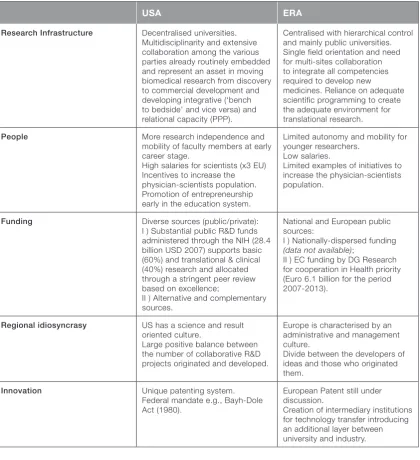
Biomedical research and innovation systems in the EU and in US regions differ in many ways as presented in Annex 2 and summarised in Table 2 below.
47 Riccaboni, M., Powell, W.W., Pammolli, F. and Owen-Smith, J. (2004). Public research and industrial innovations: a comparison of U.S. and European innovation systems in the life sciences. In A. Geuna, A. Salter and E. Steinmueller (Eds.). Science and Innovation: Rethinking the Rationales for Funding and Governance. Cheltenham, United Kingdom: Edward Elgar Pub., (Chapter 10)
Table 2: Comparison of the biomedical research and innovation systems in the USA and in the ERA47
USA ERA
Research Infrastructure Decentralised universities.
Multidisciplinarity and extensive collaboration among the various parties already routinely embedded and represent an asset in moving biomedical research from discovery to commercial development and developing integrative (‘bench to bedside’ and vice versa) and relational capacity (PPP).
Centralised with hierarchical control and mainly public universities. Single field orientation and need for multi-sites collaboration to integrate all competencies required to develop new medicines. Reliance on adequate scientific programming to create the adequate environment for translational research.
People More research independence and
mobility of faculty members at early career stage.
High salaries for scientists (x3 EU) Incentives to increase the physician-scientists population. Promotion of entrepreneurship early in the education system.
Limited autonomy and mobility for younger researchers.
Low salaries.
Limited examples of initiatives to increase the physician-scientists population.
Funding Diverse sources (public/private):
I ) Substantial public R&D funds administered through the NIH (28.4 billion USD 2007) supports basic (60%) and translational & clinical (40%) research and allocated through a stringent peer review based on excellence;
II ) Alternative and complementary sources.
National and European public sources:
I ) Nationally-dispersed funding
(data not available);
II ) EC funding by DG Research for cooperation in Health priority (Euro 6.1 billion for the period 2007-2013).
Regional idiosyncrasy US has a science and result
oriented culture.
Large positive balance between the number of collaborative R&D projects originated and developed.
Europe is characterised by an administrative and management culture.
Divide between the developers of ideas and those who originated them.
Innovation Unique patenting system.
Federal mandate e.g., Bayh-Dole Act (1980).
European Patent still under discussion.