Original Research Article
Factors influencing early initiation of breast feeding among mothers in
North Coastal Andhra Pradesh, India
Kiran Pamarthi
1*, Jugal Kishore Palli
2INTRODUCTION
Breastfeeding is the most effective method of promoting the health of infants. It’s God’s gift to human beings. Breastfeeding is a most valuable natural resource and is of utmost importance to prevent disease and to promote child survival. Yet, it is not been practiced universally.
The benefits of breastfeeding for the health and wellbeing of the mother and babies are well documented. WHO recommends early (i.e., within one hour of giving birth) initiation of breastfeeding. A recent trial has shown that
early initiation of breastfeeding could reduce neonatal mortality, which would contribute to the achievement of the millennium development goals.1
A recent meta-analysis reported that the initiation of breastfeeding within 24 hours of birth was significantly associated with reduction in “all-cause neonatal mortality”, “low birth weight related neonatal mortality” and “infection related neonatal mortality” among all live births.2
About one fourth to one half of all infant deaths in developing countries occur in the first week of life.
ABSTRACT
Background: The benefits of breastfeeding for the health and wellbeing of the mother and babies are well documented. A recent trial has shown that early initiation of breastfeeding could reduce neonatal mortality, which would contribute to the achievement of the Millennium development goals. The positive effects of breastfeeding on the new-born’s health can be attributed to the components of breast milk, as well as the contact between mother and baby.
Methods: This is a hospital based, cross sectional study conducted in the Department of Pediatrics and Department of Obstetrics and Gynaecology, at a tertiary care hospital in North Coastal Andhra Pradesh. Study period was one year between March 2018 to February 2019. 310 healthy term new-born babies of singleton pregnancy were included. Results: The prevalence of initiation of breast breastfeeding within one hour in this study is 48.7% (151 neonates). Hindu religion, literacy, urban residence, vaginal delivery, male child, breast feeding advice during antenatal period, birth spacing <2 years, not giving prelacteal feeds, absence of breast-feeding problems and maternal illness were found to have a significant association with initiation of breast feeding within 1 hour after delivery (p value <0.05). Conclusions: Innovative strategies like provision of breastfeeding counsellors in the hospital setup; constant counselling to mothers and their immediate relatives who take care of baby and mothers can increase early initiation of breast feeding.
Keywords: Breast feeding, Early initiation, New-born
1Department of Community Medicine, NRI Institute of Medical Sciences, Visakhapatnam, Andhra Pradesh, India 2MBBS Intern, Andhra Medical College, Visakhapatnam, Andhra Pradesh, India
Received: 09 July 2019 Revised: 18 August 2019 Accepted: 04 September 2019
*Correspondence: Dr. Kiran Pamarthi,
E-mail: [email protected]
Copyright: © the author(s), publisher and licensee Medip Academy. This is an open-access article distributed under the terms of the Creative Commons Attribution Non-Commercial License, which permits unrestricted non-commercial use, distribution, and reproduction in any medium, provided the original work is properly cited.
Initiation of breast feeding within the first hour of life followed by exclusive breast feeding improves the health and survival status of newborns.3
According to NFHS-4 the initiation of breast feeding within one hour of birth is only 37.1%.4 The positive effects of breastfeeding on the newborn’s health can be attributed to the components of breast milk, as well as the contact between mother and baby. The colostrum, milk on its first days, contains the epidermal growth factor, which accelerates the development of the intestinal mucus, as well as the immunological bioactive factors that provide immunological protection to the newborns, preventing intestinal colonization by pathogenic microorganisms.5
Therefore, the present study is aimed at evaluating breastfeeding patterns of hospital born healthy term infants with focus on factors influencing early initiation of breast feeding in term healthy newborns and prevalence of breastfeeding within first hour of life.
METHODS
This is a hospital based, cross sectional study conducted in the Department of Pediatrics and Department of Obstetrics and Gynaecology, at King George Hospital in Visakhapatnam, a city in North Coastal Andhra Pradesh. All the healthy term newborn babies of singleton pregnancy delivered in the hospital who gave informed consent were included during study period of one year between March 2018 to February 2019. Preterm, post term babies, multiple pregnancies, newborn with congenital malformations, and those admitted in NICU were excluded. Based on the prevalence of initiation of breast feeding within one hour from a previous study done by Karol et alas 73.8%, at 5% absolute precision, 80% power, 5% alpha error and 95% confidence limits, a sample size of 310 was obtained.6
Ethics committee of institution has reviewed the protocol and approved the study. Informed consent was taken
from all patients in the study. Data is collected by interviewing with mothers using semi structured questionnaire. Background questions covered are demographic, social and economic status. The results were categorized into two groups of those who have initiated within one hour and those who haven’t initiated. Timely initiation of breastfeeding by the mother is defined as having initiated breast feeding if, within the first hour of birth, either she puts the baby to the breast, or the baby is given any of the mother’s breast milk.
Socio-demographic variables
Maternal age, religion, residence, parity, inter delivery interval, mode of delivery, high risk pregnancy, sex of the child, socio-economic status, maternal education, maternal occupation and pre lacteal feeds.
Variables related to antenatal care (ANC) and postnatal care (PNC)
ANC visited or not, received advice regarding breast feeding during antenatal period, initiated breast feeding within one hour or not after birth, previous duration of exclusive breast feeding in multiparous women, maternal illness and feeding problems.
The rate of early initiation of breastfeeding and distribution by different independent variables was reported as percentage. Chi square tests were performed to evaluate the association of independent variables with the early initiation of breastfeeding. P value less than 0.05 was considered as statistically significant. All the analysis was carried out using Statistical package for social sciences (SPSS) v21.0.
RESULTS
A total of 310 neonates were studied during the study period of 12 months. The prevalence of initiation of breast breastfeeding within one hour in this study is 48.7% (151 neonates) (Figure 1).
Figure 1: Proportion of mothers by initiation of breast feeding within 1 hour after delivery. 48.70%
51.30%
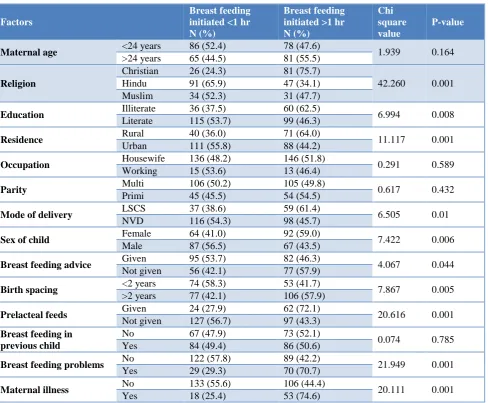
Table 1: Association of factors in relation to early initiation of breast feeding.
Factors
Breast feeding initiated <1 hr N (%)
Breast feeding initiated >1 hr N (%)
Chi square value
P-value
Maternal age <24 years 86 (52.4) 78 (47.6) 1.939 0.164
>24 years 65 (44.5) 81 (55.5)
Religion
Christian 26 (24.3) 81 (75.7)
42.260 0.001 Hindu 91 (65.9) 47 (34.1)
Muslim 34 (52.3) 31 (47.7)
Education Illiterate 36 (37.5) 60 (62.5) 6.994 0.008
Literate 115 (53.7) 99 (46.3)
Residence Rural 40 (36.0) 71 (64.0) 11.117 0.001
Urban 111 (55.8) 88 (44.2)
Occupation Housewife 136 (48.2) 146 (51.8) 0.291 0.589
Working 15 (53.6) 13 (46.4)
Parity Multi 106 (50.2) 105 (49.8) 0.617 0.432
Primi 45 (45.5) 54 (54.5)
Mode of delivery LSCS 37 (38.6) 59 (61.4) 6.505 0.01
NVD 116 (54.3) 98 (45.7)
Sex of child Female 64 (41.0) 92 (59.0) 7.422 0.006
Male 87 (56.5) 67 (43.5)
Breast feeding advice Given 95 (53.7) 82 (46.3) 4.067 0.044
Not given 56 (42.1) 77 (57.9)
Birth spacing <2 years 74 (58.3) 53 (41.7) 7.867 0.005
>2 years 77 (42.1) 106 (57.9)
Prelacteal feeds Given 24 (27.9) 62 (72.1) 20.616 0.001
Not given 127 (56.7) 97 (43.3) Breast feeding in
previous child
No 67 (47.9) 73 (52.1)
0.074 0.785 Yes 84 (49.4) 86 (50.6)
Breast feeding problems No 122 (57.8) 89 (42.2) 21.949 0.001
Yes 29 (29.3) 70 (70.7)
Maternal illness No 133 (55.6) 106 (44.4) 20.111 0.001
Yes 18 (25.4) 53 (74.6)
When socio demographic variables and other variables related to antenatal and postnatal care were analysed to find out association with early initiation of breast feeding, hindu religion, literacy, urban residence, vaginal delivery, male child, breast feeding advice during antenatal period, birth spacing <2 years, not giving prelacteal feeds, absence of breast-feeding problems and maternal illness were found to have a significant association with initiation of breast feeding within 1 hour after delivery (p value <0.05) (Table 1).
DISCUSSION
Prevalence of initiation of breastfeeding in <1 hour of birth
Out of 310 newborns examined in the present study, 151 newborns were initiated within one hour [48.7%], which is more when compared with 38.6% in Sharma et al study, 32% in Nepal et al study, 36.4% in Patel et al study and 22% in Meshram et al study.7-10 Also, our study
findings are more when compared to NFHS-4 findings, where the initiation of breast feeding within one hour of birth is 37.1%.4
Prevalence of initiation of breast feeding within one hour of birth in our study (48.7%) can be considered in the fair group according to the classification of WHO [poor (0-29%), fair (30-49%), good (50-89%), and very good (90-100%)].11
Maternal age
Maternal religion
Among Hindu mothers, 65.9% started breastfeeding within 1 hour of birth which was comparable to 67.3% in Adhikari et al study but lesser than 90.6% in Mamtarani et al study.14,15 Prevalence of initiation of breast feeding within 1 hour after delivery is more among Hindus (65.9%) as compared to Christians (24.3%) and Muslims (52.3%). This can be attributed to different religious practices prevailing in different religions but in the present study there is significant difference among different religions.
Maternal education
Among literate mothers, 53.7% initiated breastfeeding within one hour which is comparable with 51.5% in Mekonen et al study.16 Among illiterate mothers, 37.5% initiated breastfeeding within one hour which is less when compared with 57.9% in Adhikari et al study.14 There is a significant difference between literates and illiterates in the present study.
Residence
Among mothers residing in rural area, 36% initiated breastfeeding within one hour which was less when compared to 41.8% in Khanal et al study and 47.3% in Setegn et al study and more when compared to 17.1% in Haghighi et al study, 25.1% in Mekonen et al study.2,16-18 Among mothers residing in urban areas, 55.8% initiated breastfeeding within one hour which was comparable to 54.7% in Mekonen et al study.16 It was more than 43.9% in Khanal et al study and less when compared to 73.5% in Setegn et al study.2,7 Initiation of breastfeeding within one hour is more in urban mothers like other studies. This can be attributed to the better knowledge of breastfeeding practices among urban mothers. There is a significant difference between rural and urban mothers in the present study.
Maternal occupation
Among working mothers, 53.6% started breastfeeding within 1 hour which was more when compared with 36.3% in Khanal et al study but less than 74.2% in Adhikari et al study and 76.4% in Hailemariam et al study.2,14,19 Among house wife mothers, 48.2% started breastfeeding within 1 hour which was comparable to 46.2% in Khanal et al study but less than 89.3% in Wolde et al study.19 Differences in initiation among working and non-working mothers may be confounded by the educational status of the mothers.
Parity
Among Primi mothers, 45.5% started breastfeeding within 1 hour of birth which was comparable to 44.6% in Khanal et al study but lesser than 56.8% in Setegn et al study.2,17 Among multipara mothers, 50.2% started
breastfeeding within 1 hour of birth which was more when compared with 37.5% in Khanal et al study, 41.2% in Athavale et al study and comparable to 50.3% in Setegn et al study.2,17,20 The present study showed that there is no significant difference between Primi and Multipara mothers in initiation of breastfeeding like in other studies.
Mode of delivery
Among mothers delivered by NVD, 54.3% mothers started breastfeeding within 1 hour which was greater than 37.3% in Taghreed et al study and 45.7% in Khanal et al study but less than 89.9% in Seid et al study.2,21,22 Among mothers delivered by LSCS, 38.6% started breastfeeding within 1 hour which was more when compared to 23.4% in Vieria et al study and 24.8% in Khanal et al study but less than 63.3% in Abdulbasit et al study.2,12,22 There was a significant difference between both groups in our study. Mothers who underwent LSCS who did not initiate breastfeeding within one hour, which can be attributed to the postoperative pain and discomfort of the mother.
Pain after surgery, significant discomfort in holding and positioning the baby, delayed skin-to-skin contact and delay in the production of breastmilk, limited mobility, and needing extra help for BF could account for this delay. Women who undergo cesarean delivery may need additional help to attain comfortable and correct positioning of their infant for BF. In recent years, cesarean section rates are above the expected levels around the world. Developing policies to reduce cesarean rates is essential, but it should also be noted that providing special lactation consultancy and emphasizing skin-to-skin contact in patients where cesarean is mandatory is necessary.
Sex distribution
Out of mothers who had male newborns, 56.5% initiated breast feeding within one hour which was higher than 36.26% in Athavale et al study.20 Out of mothers who had female newborns, 41% initiated within one hour which was comparable to 42.85% in et al study.20 The prevalence of initiation was high among male newborns compared to female newborns which is similar to study by Adhikari et al and Gilany et al.14,23 The difference was also found to be statistically significant in our study.
Breast feeding advice
al study and significantly less than 94.2% in Hassan et al study.12,17,24 This shows that antenatal advice about breastfeeding has a significant influence on the initiation of breastfeeding and thus it should be encouraged.
In a study performed in Israel to explore the effect of BF education given in the perinatal period, it was found that both the initiation and the duration rates of BF were increased.25 Therefore, antepartum education should be considered by health staff to increase the self-confidence of mothers.
Prelacteal feeds
Among babies who were given pre lacteal feeds, 27.9% were started on breastfeeding within 1 hour which was comparable to 21.33% in Athavale et al study, 26% in Khanal et al study but less than 60% in Hailemariam et al study.2,19,20 Among babies who were not given pre-lacteals, 56.7% were started on breastfeeding within 1 hour which was comparable to 50.1% in Khanal et al study and 55.7% in Athavale et al study.2,20 There is a significant difference between two groups showing that pre-lacteal feeds like honey, coconut water etc. are hindering the early initiation of breastfeeding thereby depriving the babies of colostrum which is immunologically potent.
Breast feeding in previous child
Among mothers who had given breastfeeding in the previous child, 49.4% started breastfeeding within 1 hour which was less when compared to 71% in Mahnaz et al study but comparable to 48.9% in Tatiana et al study.12,18 Among mothers who had not given breastfeeding in the previous child, 47.9% started breastfeeding within 1 hour which was comparable to 45.3% in Tatiana et al study and less than 58.2 % in Mahnaz et al study. 12,18
Breast feeding problems
Among mothers who had breastfeeding problems, 29.3% started breastfeeding within 1 hour which was less than 63.7% in Mahnaz et al study and more than 3.6% in Gilany et al study.18,23 Among mothers who had no breastfeeding problems, 57.8% started breastfeeding within 1 hour which was comparable to 63.1% in Mahnaz et al study and more than 12.7% in Gilany et al study.18,23 Flat/inverted nipples, mastitis, breast engorgement and perceived breast milk insufficiency are the problems which caused delayed breast feeding in present study. The difference was also found to be statistically significant for breast feeding problems in our study.
Maternal illness
Among mothers who had illness, 25.4% started breastfeeding within 1 hour which was less than 45.5% in Mahnaz et al study.18 Among mothers who had no illness, 55.6% started breastfeeding within 1 hour which was less
than 63.9% in Mahnaz et al study.18 Ante partum hemorrhage, postpartum hemorrhage and Eclampsia were illnesses where mother needed ICU treatment which hindered initiation of breastfeeding in the first hour. The difference was also found to be statistically significant for maternal illness in our study.
There are many factors which affect early initiation of breastfeeding. A single parameter cannot be attributed for initiation. Health education, socioeconomic development and antenatal breastfeeding advice are all important for early initiation of breastfeeding. This study provides empirical support for the links that exist between early initiation of breastfeeding and several factors.
Recommendations
Innovative strategies like provision of breastfeeding counsellors in the hospital setup, constant counselling to mothers and their immediate relatives who take care of baby and mothers; by doctors and nurses are essential for increasing early breastfeeding.
As physicians and other medical personnel play an important role in the initiation of early breast feeding and prolongation of exclusive breastfeeding, their skill about breast feeding should be upgraded by giving periodic trainings and conducting workshops. All pregnant ladies should get antenatal breast-feeding counseling in the ANC period itself, similarly they should be counseled and supported in each step regarding breast feeding.
There is a need to provide opportunity and encouraging mother for breastfeeding in delivery room itself to increase initiation rates.
Breast problems like flat nipple or inverted nipple should be identified in Antenatal period and appropriate measures should be taken accordingly so that they do not hinder early initiation.
Funding: No funding sources Conflict of interest: None declared
Ethical approval: The study was approved by the Institutional Ethics Committee
REFERENCES
1. Edmond KM, Zandoh C, Quigley MA, Amenga-etego S, Owusu-agyei S, Kirkwood BR. Delayed Breastfeeding Initiation Increases Risk of neonatal mortality. Pediatrics. 2006;117(3):380–6.
2. Khanal V, Scott JA, Lee AH, Karkee R, Binns CW. Factors associated with Early Initiation of Breastfeeding in Western Nepal. Int J Environ Res Public Health. 2015;12(8):9562–74.
4. National Family Health Survey-4: State Fact Sheet, Telangana. 2015. Available at: rchiips.org/NFHS/ NFHS-4Reports/Telangana.pdf Accessed on 5 April 2019.
5. Esteves TM, Daumas RP, Oliveira MI, Andrade CA, Leite IC. Factors associated to breastfeeding in the first hour of life: systematic review. Rev Saude Publica. 2014;48(4):697–708.
6. Karol S, Khanna P, Verma R, Karol M. Predictors of early initiation of breastfeeding at birth among Mothers of rural area of Haryana, India. Int J Sci Res. 2018;7(8):64-7.
7. Sharma A, Thakur PS, Tiwari R, Kasar PK, Sharma R, Kabirpanthi V. Factors associated with early initiation of breastfeeding among mothers of tribal area of Madhya Pradesh, India: a community based cross-sectional study. Int J Community Med Public Health. 2016;3(1):194-9.
8. Nepal D, Jeeva S, Mishra S, Paul V. Determinant of Early Initiation of Breastfeeding in a Tertiary Neonatal Unit. JNPS. 2009;29(2):74–8.
9. Patel A, Banerjee A, Kaletwad A. Factors associated with prelacteal feeding and timely initiation of breastfeeding in hospital delivered infants in India. J Human Lactation. 2013;29(4):572–8.
10. Meshram II, Laxmaiah A, Venkaiah K, Brahmam GNV. Impact of feeding and breastfeeding practices on the nutritional status of infants in a district of Andhra Pradesh, India. Natl Med J India. 2012;25(4):201–6.
11. World Health Organization (WHO): Indicators for assessing infant and young child feeding practices Part 1 Definitions. Geneva: WHO; 2008. Available at: https://www.who.int/maternal_child_adolescent/ documents/9789241596664/en/. Accessed on 12 March 2019.
12. Vieira TO, Vieira GO, Giugliani ERJ, Mendes CMC, Martins CC, Silva LR. Determinants of breastfeeding initiation within the first hour of life in a Brazilian population: cross-sectional study. BMC Public Health. 2010;10:760.
13. Dashti M, Scott JA, Edwards CA, Al-Sughayer M. Determinants of breastfeeding initiation among mothers in Kuwait. Int Breastfeed J. 2010;5:7. 14. Adhikari M, Khanal V, Karkee R, Gavidia T.
Factors associated with early initiation of breastfeeding among Nepalese mothers: further analysis of Nepal Demographic and Health Survey, 2011. Int Breastfeed J. 2014;9:21.
15. Mamtarani, Divakar B, Srivastava RK. Socio-demographic features and breast-feeding profile of mothers attending teaching hospital in Gujarat state,
India. J Community Med Health Educ. 2012;2(7):1– 5.
16. Mekonen L, Seifu W, Shiferaw Z. Timely initiation of breastfeeding and associated factors among mothers of infants under 12 months in South Gondar zone, Amhara regional state, Ethiopia; 2013. Int Breastfeed J. 2018;13:17.
17. Setegn T, Gerbaba M, Belachew T. Determinants of timely initiation of breastfeeding among mothers in Goba Woreda, South East Ethiopia: A cross sectional study. BMC Public Health 2011;11:217. 18. Haghighi M, Taheri E. Factors Associated with
Breastfeeding in the First Hour after Birth, in Baby Friendly Hospitals, Shiraz-Iran. Int J Pediatr. 2015;3(21):889–96.
19. Hailemariam TW, Adeba E, Sufa A. Predictors of early breastfeeding initiation among mothers of children under 24 months of age in rural part of West Ethiopia. BMC Public Health. 2015;15:1076. 20. Athavale AV, Athavale SA, Deshpande SG, Zodpey
SP, Sangole S. Initiation of breastfeeding by urban women. Health and population-Perspectives and Issues. 2004;27(2):117–25.
21. Shaban TA, Bella H, Shaban HA, Aldahan F. Factors Affecting Initiation and Exclusivity of Breastfeeding Qatif, Saudi Arabia. IJMHS. 2015;5(5):191–200.
22. Seid AM. Vaginal Delivery and Maternal Knowledge on Correct Breastfeeding Initiation Time as Predictors of Early Breastfeeding Initiation: Lesson from a Community-Based Cross-Sectional Study. ISRN Epidemiology. 2014;2014:Art Id904609.
23. El-Gilany AH, Sarraf B, Al-Wehady A. Factors associated with timely initiation of breastfeeding in Al-Hassa province, Saudi Arabia. East Mediterr Health J. 2012;18(3):250–4.
24. Hassan AA, Taha Z, Ahmed MAA, Ali AAA, Adam I. Assessment of initiation of breastfeeding practice in Kassala, Eastern Sudan: a community-based study. Int Breastfeed J. 2018;13:34.
25. Shinwell ES, Churgin Y, Shlomo M, Shani M, Flidel-Rimon O. The effect of training nursery staff in breastfeeding guidance on the duration of breastfeeding in healthy term infants. Breastfeed Med. 2006;1(4):247-52.