Original Research Article
An epidemiological study of type-2 diabetes mellitus in
an adopted urban slum area
Vishwanath G. R.
1, Tejaswini V. Sangrulkar
2*, Shrarma S. K.
1, Praveen Patil
3INTRODUCTION
Diabetes is one of the most common non-communicable diseases globally and there is evidence that it is an epidemic in many developing and developed countries, thus posing a serious threat to be met in the 21st century. Diabetes mellitus, a chronic disease, once thought to be uncommon in the developing countries, has emerged as one of the public health problem. According to WHO (world health organization) estimates, globally there were approximately 135 million adults with diabetes in 1995.
The figure is expected to rise to 300 million by year 2025. In 2012, an estimated 1.5 million deaths were directly caused by diabetes and 2.2 million deaths were attributed to high blood glucose. More than 80% of diabetics occur in low and middle income countries.1 The National Urban Diabetes Survey (NUDS), a population-based study was conducted in six metropolitan cities across India. This study revealed the prevalence in the southern part of India to be higher, 13.5% in Chennai, 12.4 per cent in Bangalore, and 16.6% in Hyderabad, compared to eastern India (Kolkata) 11.7%; northern
ABSTRACT
Background: Diabetes is one of the most common non-communicable diseases globally and there is evidence that it is a epidemic in many developing and developed countries, thus posing a serious threat to be met within the 21st century. Diabetes mellitus, a chronic disease once thought to be uncommon in the developing countries, has emerged as one of the public health problem. Therefore, establishing the predominant risk factors and the distribution of these in a given population are of high importance for designing and implementing targeted interventions to halt and reverse the future prospects. Since the factors responsible for diabetes had not so far received much attention, it is aimed to show epidemiological profile of the disease in general and keeping this in mind this study has taken.
Methods: A cross-sectional study was carried out upon adults aged more than 30 years in the adopted community of Urban Health centre of Community Medicine Department, Government Medical College, Miraj (1st January-31st December, 2015).
Results: The overall prevalence of diabetes was 21.7%, out of this (12.3%) were known diabetic and (9.4%) were new diabetic cases among study. A very highly significant association was observed between diabetes and Habits. The association between diabetes and BMI was very highly significant (p<0.001).
Conclusions: Very highly significant association was found between age, family history, personal history, body mass index, waist circumference, waist: hip circumference and diabetic status.
Keywords: Type 2 diabetes mellitus, Survey, Risk factors role, Indian diabetes risk score
Department ofCommunity Medicine, 1Government Medical College, Miraj, 2Government Medical College, Kolhapur,
Maharashtra, India
3
Department ofPharmacology, Government Medical College, Miraj,Maharashtra, India
Received: 30 July 2018
Revised: 31 August 2018
Accepted: 01 September 2018
*Correspondence:
Dr. Tejaswini V. Sangrulkar,
E-mail: [email protected]
Copyright: © the author(s), publisher and licensee Medip Academy. This is an open-access article distributed under the terms of the Creative Commons Attribution Non-Commercial License, which permits unrestricted non-commercial use, distribution, and reproduction in any medium, provided the original work is properly cited.
India (New Delhi) 11.6% and western India (Mumbai) 9.3%. Urban-rural differences in the prevalence of diabetes have been consistently reported from India. The ICMR (Indian council of medical research) study reported that the prevalence was three times higher among the urban (8.2%) compared to the rural population (2.4%).2 Great efforts have been made by developed countries to control infectious diseases, but non-communicable diseases have not received much attention. Diabetes mellitus is one of the non- communicable diseases which has become a major global health problem, World Health Organisation projects that diabetes will be the 7th leading cause of death in 2030.3 Inadequacies in primary health care system result in poor detection of cases, sub-optimal treatment and insufficient follow-up leading to un-necessary disabilities and severe complications, often resulting in premature death.4 As there is an increasing prevalence of diabetes in urban population of India, it is essential to have background information of factors which may be responsible for this increasing trend of diabetes mellitus in urban community, thus the present study is planned to determine the magnitude of this preventable problem and its risk factors in the urban slum area.
Objectives of the study
To determine the prevalence of type-II diabetes
mellitus.
To study the risk factors associated with type-II diabetes mellitus.
METHODS
A cross-sectional study was carried out upon adults aged more than 30 years from January 2015 to December 2015 in the adopted community of Urban Health centre of Community Medicine Department, Government Medical College, Miraj. Previously diagnosed diabetics, high-risk population (according to IDRS-Indian Diabetes Risk Score) and who were residing more than 6 months in the study area were included. All Pregnant mothers, lactating women up to 12 weeks postpartum, patients under treatment of any endocrinal disorders were excluded. Total population of the adopted urban slum area was 3,540 and the adult population with age more than 30 years that is 1100 (Source: updated register of the adopted slum area) was assessed for diabetes and its risk factors for data collection. All the families residing in the locality were visited and the proforma was duly filled in on interviewing and examining all the persons of age more than 30 years. Every household was surveyed; informed consent was obtained from the study subjects. A pretested-predesigned proforma was used; it consisted of socio-demographic profile, family history, and dietary history by 24 hour oral recall questionnaire method, personal history, physical activity and anthropometric measurements. Modified B.G. Prasad’s Socio-economic classification was used.5 IDRS score was used to identify patients under high risk and further these patients with high risk by IDRS score were tested for random capillary
blood sugar.6 WHO-Asian classification was used for Calculation of Body Mass Index (BMI) and is expressed
as weight (kg) divided by height (m2).7 Waist
circumference measurements were recorded (cm) midway between the lower rib margin and the iliac crest in standing position to the nearest 0.5 cm with the help of standard non-elastic measuring tape, cut-off points used
for males: ≥90 cm; for females: ≥80 cm.8
Hip circumference measurements taken in centimetres, at the widest girth of buttocks in standing position, wearing light cloths to the nearest 0.5 cm with the help of standard non-elastic measuring tape. Waist-Hip Ratio (WHR) measurements expressed as Waist circumference divided by hip circumference, cut-off points used for males: ≥0.90. For females: ≥0.80.8
The data was tabulated after entering in Microsoft excel 2010 and analysed by using SPSS version 22.
RESULTS
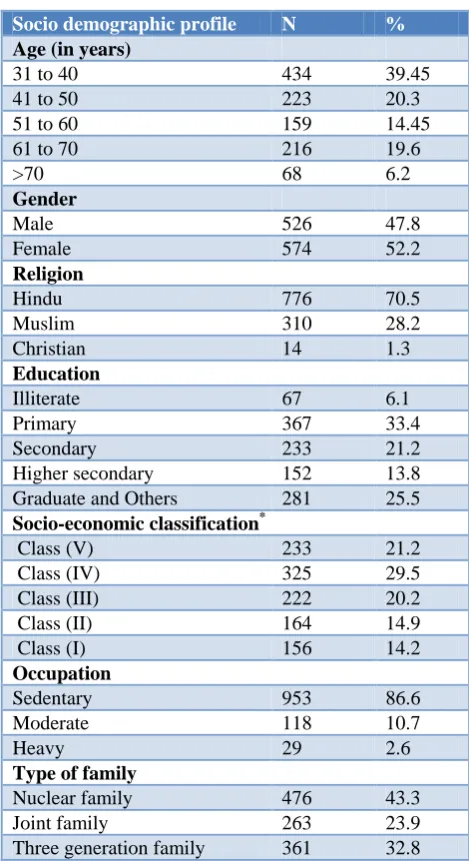
Table 1: Socio demographic profile of study subjects (n=1100).
Socio demographic profile N %
Age (in years)
31 to 40 434 39.45
41 to 50 223 20.3
51 to 60 159 14.45
61 to 70 216 19.6
>70 68 6.2
Gender
Male 526 47.8
Female 574 52.2
Religion
Hindu 776 70.5
Muslim 310 28.2
Christian 14 1.3
Education
Illiterate 67 6.1
Primary 367 33.4
Secondary 233 21.2
Higher secondary 152 13.8
Graduate and Others 281 25.5
Socio-economic classification*
Class (V) 233 21.2
Class (IV) 325 29.5
Class (III) 222 20.2
Class (II) 164 14.9
Class (I) 156 14.2
Occupation
Sedentary 953 86.6
Moderate 118 10.7
Heavy 29 2.6
Type of family
Nuclear family 476 43.3
Joint family 263 23.9
Urban health centre’s field population is 3540; 1100 subjects with the age group >30 years were assessed for diabetes and its risk factors. It was observed that majority of study population was from the age group of 31 to 40 years i.e. 434 (39.5%). Females constituted 574 (52.2%). Majority belonged to Hindu religion, 776 (70.5%). Majority of the subjects had Primary education, 367 (33.4%), and 67 (6.1%) were illiterate. According to Modified B.G. Prasad’s classification, Out of 1100, 233 (21.2%) belonged to class V, 325 (29.5%) were in class IV and 156 (14.9%) were in class I. Majority of them were sedentary workers, 953 (86.6%). 476 (43.3%) were from Nuclear family.
Table 2: Prevalence of diabetes in the study.
Prevalence of diabetes N %
Diabetes
No diabetes 861 78.3
Known diabetic 136 12.3
Diabetes’ new cases 103 9.4
Total 1100 100.0
The overall prevalence of diabetes was 21.7%. Out of this, 136 (12.3%) were known diabetic and 103 (9.4%) were new diabetic cases.
Table 3: Association between habits and diabetes among subjects.
Addiction habits
Diabetes
Diabetes
present No diabetes
n % n %
Nil 175 73.2 754 87.6
Alcohol intake 9 3.8 29 3.4
Smoking 32 13.4 33 3.8
Smoking, alcohol
intake 6 2.5 13 1.5 Tobacco chewing 17 7.1 32 3.7
χ²=39.488, df=4, p<0.001*
Among alcohol consumers, 9 (3.8%) had diabetes. Amongst smokers, 32 (13.4%) were diabetic. 6 (2.5%) were both smokers and alcoholic and had diabetes. 17 (7.1%) subjects had habit of tobacco consumption in the form of betel quid, mawa. A very highly significant association was observed between diabetes and habits.
Table 4: Association between family history of diabetes and diabetes status.
Family history of diabetes mellitus
Diabetes
Association
Diabetes
present No diabetes N % N %
χ2
=55.83, df =2, p<0.001*
No 161 67.4 755 87.7
In parents 5 2.1 5 0.6
In siblings 73 30.5 101 11.7
73 (30.5%) diabetic subjects had diabetic siblings. 5 (2.1%) diabetic subjects had diabetic parents and very highly significant association was observed between diabetes and family history of diabetes.
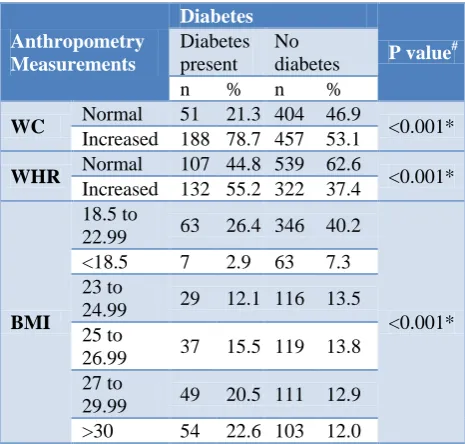
Table 5: Association between anthropometry and diabetes.
Anthropometry Measurements
Diabetes
P value#
Diabetes present
No diabetes
n % n %
WC Normal 51 21.3 404 46.9 <0.001*
Increased 188 78.7 457 53.1
WHR Normal 107 44.8 539 62.6 <0.001*
Increased 132 55.2 322 37.4
BMI
18.5 to
22.99 63 26.4 346 40.2
<0.001*
<18.5 7 2.9 63 7.3
23 to
24.99 29 12.1 116 13.5
25 to
26.99 37 15.5 119 13.8
27 to
29.99 49 20.5 111 12.9
>30 54 22.6 103 12.0
#Chi-Square test * very highly significantly associated; WC=waist circumference, WHR=waist-hip ratio, BMI= body mass index.
188 (78.7%) study subjects with increased waist circumference were diabetic. This association between waist circumference and diabetic status was found to be very highly significant (p<0.001). 132 (55.2%) study subjects with increased waist: hip ratio was diabetic. This association between Waist: Hip circumference and diabetic status was very highly significant (P<0.001). Amongst subjects with >30 BMI, 54 (22.6%) had diabetes. The association between diabetes and BMI was very highly significant (p<0.001).
DISCUSSION
The overall prevalence of diabetes was 21.7%, out of this 12.3% were known diabetic and 9.4% were new diabetic cases.
Aswar et al conducted a study to find the prevalence and associated risk factors of type 2 diabetes mellitus in urban population aged 30 years and above of Nanded city (Maharashtra-India); they found that overall prevalence of type 2 diabetes mellitus was 9.7% in population aged 30 years and above. The result in our study found to be high.9
Diabetes mellitus in Kerala, they observed prevalence of Diabetes mellitus was 14.6%.10
Our study found significant association between diabetes mellitus and family history of diabetes and similar findings were observed by Mohan et al. They showed that prevalence of diabetes mellitus was higher among subjects who had positive family history of diabetes compared to subjects without a family history of
diabetes.11 Study conducted by Vijayakumar et al
observed that diabetes mellitus was significantly associated with positive family history of diabetes mellitus.10 Arora et al conducted study they observed that 67% of prediabetics and 49.4% of diabetics have family history of diabetes mellitus in first degree relationship while 1.8% of non-diabetic had a family history of diabetes.12
Another study conducted by Abdullah AG et al observed significant association with family history of diabetes.13
Our study observed significant association between diabetes and habits. Similar study done by Kokiwar et al, a cross sectional study of prevalence of diabetes mellitus in Nagpur district, the results showed that association of alcohol consumption and abnormal glucose tolerance was statistically significant (p<0.001).14
Ahmad et al estimated the prevalence and risk factors for diabetes mellitus in urban areas of Hazratbal, Kashmir and showed that smoking was significantly associated with diabetes.15 Very highly significant association (p<0.001) was observed between diabetes and Body Mass Index in our study. Results are consistent with the study conducted by Aswar et al. The study reveals that the association between BMI (≥30.00) and diabetes mellitus was highly significant (χ² = 11.51, df =1, p<0.001), and also highly significant (χ² = 16.55, df =1, p<0.001) for waist hip ratio.9 Another study by Rao et al to estimate the prevalence and study the socio-demographic correlates of type 2 diabetes among adults aged 30 and above years in Karnataka found central obesity in 56.2% and truncal obesity in 62.1% of study subjects.16
CONCLUSION
Present study showed 12.3% known cases of diabetes and 9.4% new cases. The overall prevalence of diabetes was 21.7%. Very highly significant association was found between age, family history, personal history, body mass index, waist circumference, waist: hip circumference and diabetic status.
Limitations of the study
As this study was cross-sectional, it was not possible to get all the detailed information about all the risk factors; only few factors were studied. Random blood sugar was used as diagnostic test for study subjects because of feasibility and accessibility of study subjects. Fasting
blood sugar and HbA1C tests could not be done due to lack of resources. However random blood sugar test was done after assessing risk factors and symptoms of diabetes in study subjects using IDRS scoring system.
Recommendations
The prevalence of diabetes mellitus is increasing in urban slum population, Hence there is an impending need to conduct regular screening programmes for early identification and prompt treatment. Intensive health education programmes focusing on the risk factors need to be emphasized.
Funding: No funding sources Conflict of interest: None declared
Ethical approval: The study was approved by the Institutional Ethics Committee
REFERENCES
1. WHO (2016), Gobal report on diabetes; Available
at: http://apps.who.int/iris/bitstream/handle/_eng. pdf. Accessed on 3 June 2018.
2. Mohan V, Sandeep S, Deepa R, Shah B, Varghese
C. Epidemiology of type 2 diabetes: Indian scenario Indian J Med Res. 2007;125:217-30.
3. WHO (2016). Diabetes Fact sheet; Available at:
http://www.who.int/mediacentre/factsheets/fs312/en /. Accessed on 3 June 2018.
4. Park K. Park‘s textbook of preventive and social medicine, 23rd ed, Banarsidas Bhanot Publishers, Jabalpur, India; 2013: 392-395.
5. Mangal A, Kumar V, Panesar S, Talwar R, Raut D,
Singh S. Updated BG Prasad socioeconomic classification, 2014: A commentary. Indian J Public Health. 2015;59:42-4.
6. Mohan V, Anbalagan VP. Expanding role of the
Madras Diabetes Research Foundation Indian Diabetes Risk score in clinical practice, Indian J Endocr Metab. 2013;17:31-6.
7. WHO/IASO/IOTF. The Asian Pacific Prospective;
Redefining Obesity and its treatment. Health Communications Australia Pt Ltd. 2000.
8. Bhalvar R. Textbook of Public health and
community medicine. 1st ed. AFMC Pune and WHO, New Delhi: India; 2009: 1196-1200.
9. Aswar Nandkeshav R, Kale Kalpana M, Ghorpade
Kusumakar S, Doibale Mohan K, Balaji B. Prevalence of Type 2 Diabetes Mellitus in an Urban Area of Nanded City (Maharashtra, India). Int J Health Sci Res. 2015;5(2):1-10.
10. Vijayakumar G, Arun R, Kutty VR. High
prevalence of type 2 diabetes mellitus and other metabolic disorders in rural central Kerala. JAPI. 2009;57:563-7.
11. Mohan V, Deepa M, Deepa R, Shanthirani CS,
rural epidemiology study. Diabetologia. 2006;49:1175-8.
12. Arora V, Malik JS, Khanna P, Goyal N, Kumar N, Singh M. Prevalence of Diabetes in urban Haryana. AMJ. 2010;3(8):488-94.
13. Abdallah AG. Familial clustering of type 2 diabetes
mellitus (DM) diagnosed under the age of 40 years in Yemen: is it early-onset type 2 DM or maturity-onset diabetes of the young. Annals of Saudi Med. 1999;19(4):308-16.
14. Kokiwar PR, Gupta S, Durge PM. Prevalence of
diabetes in a rural area of central India. Int J Diab Dev Ctries. 2007;27(1):8-10.
15. Ahmad J, Ahmad MM, Mohd A, Rashid R, Ahmad
R, Ahmad A, et al. Prevalence of diabetes mellitus
and its associated risk factors in age group of 20 years and above in Kashmir, India. Al Ameen J Med Sci. 2011;4(1):38 -44.
16. Rao CR, Kamath VG, Shetty A, Kamath A. A study
on the prevalence of type-2 diabetes in costal Karnataka. Int J Diab Dev Ctries. 2010;30(2):80-5.
Cite this article as: Vishwanath GR, Sangrulkar TV,
Shrarma SK, Patil P.An epidemiological study of