World Maritime University
The Maritime Commons: Digital Repository of the World
Maritime University
World Maritime University Dissertations Dissertations
2014
Assessment of the maritime legislative regulatory
framework relating to the Jamaica logistics hub with
special reference to selected contemporary
maritime issues
Deniece Melissa AikenWorld Maritime University
Follow this and additional works at:http://commons.wmu.se/all_dissertations Part of theAdmiralty Commons
This Dissertation is brought to you courtesy of Maritime Commons. Open Access items may be downloaded for non-commercial, fair use academic purposes. No items may be hosted on another server or web site without express written permission from the World Maritime University. For more information, please [email protected].
Recommended Citation
WORLD MARITIME UNIVERSITY
Malmö, Sweden
ASSESSMENT OF THE MARITIME LEGISLATIVE AND
REGULATORY FRAMEWORK RELATING TO THE
JAMAICA LOGISTICS HUB WITH SPECIAL
REFERENCE TO SELECTED CONTEMPORARY
MARITIME ISSUES
By
DENIECE MELISSA AIKEN
JamaicaA dissertation submitted to the World Maritime University in partial
Fulfilment of the requirements for the award of the degree of
MASTER OF SCIENCE
In
MARITIME AFFAIRS
MARITIME LAW & POLICY
2014
ii
DECLARATION
I certify that all the material in this dissertation that is not my own work has been identified, and that no material is included for which a degree has previously been conferred on me.
The contents of this dissertation reflect my own personal views, and are not necessarily endorsed by the University.
Signature: ………
Date: ………
Supervised by: Dr. Aref Fakhry
World Maritime University
Assessor: Patrick Donner
World Maritime University
iii
ACKNOWLEDGEMENTS
I would like to express the deepest appreciation to my donor, BP Shipping, for affording me this rare opportunity to further my studies in Maritime Law, and to experience the wonders of Malmo, Sweden.
I would also like to thank my parents, Vonett and Dervin Aiken, for their unwavering support, love, encouragement and patience. You both have been my source of strength throughout the course of my life.
My gratitude goes to my supervisor, Associate Professor Dr. Aref Fakhry, who has assisted in guiding me though this paper. I would also like to thank Christopher Hoebeke and Anna Volkova of the World Maritime University Library for their invaluable assistance with research and referencing and for their encouraging words throughout. Mr. Hoebeke and Ms. Volkova have demonstrated nothing short of dedication and attention to each student and never failed to convey a spirit of excitement in regard to research and scholarship.
In addition, a special thank you to my host parents in Sweden, Ed and Maria Epstein, who opened their homes to me. Their love and care over the past months have been appreciated. Similarly, I wish to thank my colleagues at the World Maritime University who treated me like a family member and my friends in Jamaica who provided me with reassurance daily. To you I’m forever grateful.
Special thanks to the Board of Directors of the Caribbean Maritime Institute for their support and succour during my time of study. I take this opportunity to mention Dr. Joan Spencer-Ernandez, Dr. Fritz Pinnock and Dr. Ibrahim Ajagunna for their tremendous assistance with my research.
Lastly, but certainly not least, I would like to thank the Heavenly Father for blessing me and seeing me through this MSc course. Without whom, all this would not be possible.
iv
ABSTRACT
Title of Dissertation: Assessment of the maritime legislative and regulatory framework relating to the Jamaica Logistics Hub with special reference to selected contemporary maritime issues
Degree: MSc
The Jamaica Logistics Hub is the largest project to be undertaken by the Government of Jamaica for decades. Being strategically linked to the current expansion of the Panama Canal which is scheduled to be completed in 2015, this project emerged as a national project and is considered the centrepiece of Jamaica’s maritime strategy. The goal of this initiative is to position Jamaica as a fourth node in the global logistics network to complement Singapore, Dubai and Rotterdam and has tremendous implications for Jamaica’s ports and terminals. The project includes activities such as; expansion of the Port of Kingston to receive post-panamax ships, construction of a dry dock at Jackson Bay in Clarendon, installation of bunkering facilities at Cow Bay, near Yallahs, St. Thomas, construction of a cargo and maintenance, repair and operations facility at Vernamfield in Clarendon and development of an economic zone at Caymanas with a direct road link to the Port of Kingston.
Like all other projects of this magnitude, a legal framework is necessary to ensure a seamless transition and continued compliance both at the international level and local level and a detailed legal framework for the Jamaica Logistics Hub remains a mystery. It is necessary that Jamaica lays the proper legal foundations to ensure the success of the project, including but not limited to, international and bilateral trade and investment agreements as well as, an extensive review of all domestic laws relevant to and touching the logistics hub; this may include amendments, repeals and/or introduction of new legislation.
v
submitted for the legal framework for this extensive project.
vi
Table of Contents
DECLARATION ... ii
ACKNOWLEDGEMENTS ... iii
ABSTRACT ... iv
LIST OF TABLES ... ix
LIST OF FIGURES ... ix
LIST OF CASES... xi
LIST OF ABBREVIATIONS ... xii
CHAPTER ONE ... 1
1.0 INTRODUCTION ... 1
1.1 Background ... 1
1.1.1 The Port Royal Earthquake... 2
1.2 Research Objectives ... 4
1.3 Research Questions ... 5
1.4 Jamaica’s Geography, Ports and Strategic Location ... 6
1.4.1 Jamaica’s Geography ... 6
1.4.2 Jamaica’s Ports ... 6
1.4.3 Jamaica’s Strategic Location ... 7
1.5 Scope of Research ... 8
1.6 Delimitation ... 9
1.7 Methodology ... 10
CHAPTER TWO ... 11
2.0 LITERATURE REVIEW ... 11
2.1 Defining Logistics Hubs ... 11
2.2 Maritime Governance ... 13
CHAPTER THREE ... 17
3.0 THE JAMAICA LOGISTICS HUB INITIATIVE ... 17
3.1 Panama Canal Expansion Project ... 17
3.2 Jamaica’s Proposed Transformation ... 19
vii
4.0 JAMAICA’S INTERNATIONAL LEGISLATIVE AND REGULATORY FRAMEWORK
... 28
4.1 Sources of International Law ... 28
4.2 IMO Conventions ... 29
4.3 Maritime Commercial Conventions ... 31
4.4 Multilateral and Bilateral Agreements ... 33
CHAPTER FIVE ... 35
5.0 JAMAICA’S DOMESTIC LEGISLATIVE AND REGULATORY FRAMEWORK ... 35
5.1 Brief History of Jamaica’s Legal System ... 35
5.2 Jamaica’s Judicial System ... 36
5.3 Jamaica’s Admiralty Jurisdiction ... 38
5.4 Jamaica’s Maritime Governance ... 39
5.5 Jamaica’s Domestic Laws ... 41
5.5.1 Maritime Security Laws ... 41
5.5.2 Maritime Environmental Laws ... 42
5.5.3 Maritime Labour Laws ... 45
5.5.4 Maritime Commercial Laws ... 45
5.6 Other Relevant Legislation... 46
5.7 Summary of Chapter Five... 47
CHAPTER SIX ... 48
6.0 CASE STUDIES ... 48
6.1 Case Study 1 –Singapore ... 48
6.1.1 Singapore’s Maritime Governance ... 48
6.1.2 Singapore’s National Maritime Laws ... 51
6.2 Case Study 2 –Hong Kong ... 53
6.2.1 Hong Kong’s Maritime Governance ... 54
6.2.2 Hong Kong’s National Maritime Laws ... 56
CHAPTER SEVEN ... 58
7.0 ANALYSIS OF SELECTED MARITIME CONTEMPORARY ISSUES ... 58
7.1 Trafficking ... 59
viii
7.3 Carriage of Goods ... 62
7.4 Maritime Labour ... 63
7.5 Goat Islands ... 64
7.6 Tax Structure ... 66
7.7 Summary of Chapter 7 ... 68
CHAPTER EIGHT ... 69
8.0 RECOMMENDATIONS AND CONCLUSION ... 69
8.1 Maritime Safety and Security ... 70
8.2 Marine Environment ... 71
8.3 Enforcement and Implementation ... 72
8.4 Regulatory Committee ... 72
8.5 Conclusion ... 73
ix
LIST OF TABLES
Table 1.1 Container Traffic in the Caribbean by Port, 2008-2011 (TEU) …………. 4
Table 4.1 Status of IMO Conventions – Jamaica ……….. 30
LIST OF FIGURES
Figure 1.1 Port Royal before and after the earthquake ……… 2Figure 1.2 Map of Jamaica ……….. 6
Figure 1.3 Jamaica’s locational advantage in the global trade network ………. 8
Figure 2.1 Structure of an ideal logistics hub ………. 12
Figure 2.2 The interrelation between the various sectors ……….. 14
Figure 3.1 Panama Canal routes ………. 18
Figure 3.2 Proposed logistics hub ……… 20
Figure 3.2.1 Kingston Harbour ……….. 21
Figure 3.2.2 Port of Kingston ……… 22
Figure 3.2.3 Port Community System ……….. 24
Figure 3.2.4 Caymanas Economic Zone ……….. 26
Figure 5.1 Structure of Jamaica’s Court System ……… 36
Figure 5.2 Maritime governance structure of Jamaica ……….. 40
x
Figure 6.2 Air Freight Statistics 2003-2012 ……… 53
Figure 6.3 Hong Kong’s maritime governance structure before and after 2003 …… 55
Figure 7.1 Vision for Singapore logistics hub ……… 58
Figure 7.2 Main Caribbean drug trafficking routes ……… 59
Figure 7.3 Aerial view of the Goat Islands ……… 65
xi
LIST OF CASES
Calvin Cameron v Security Administrators Ltd [2007] SGHC 102 ……… 64
Campbell v Hall [1774] All ER Rep 252 ……… 35
Citadelle Line S.A. v The Owners of Motor Vessel ‘Texana’ (1996) 16 JLR 1………. 39
DYC Fishing Ltd v The Owners of MV Devin and MV Brice Claim No. 2010 A 00002 (delivered October 8, 2010) ……… 39
Matcam Marine Limited v Michael Matalon (The registered owner of the Orion Warrior (Formerly Matcam 1) Claim No. A0002/2011 (delivered on October 6, 2011 ……….. 38,39
Pacific Marine & Shipbuilding Pte Ltd v Xin Ming Hua Pte Ltd [2014] SGHC 102 ………. 52
xii
LIST OF ABBREVIATIONS
ACP African, Caribbean and Pacific Group of States
ASEAN Association of Southeast Asian Nations
BASEL The Basel Convention on the Control of Transboundary Movements of Hazardous Wastes and Their Disposal
B2B Business to Business
B2G Business to Government
BP British Petroleum
BUNKER International Convention on Civil Liability for Bunker Oil Pollution Damage
C.I.T.E.S Convention on International Trade in Endangered Species of Wild Fauna and Flora (Washington Convention)
CARIBCAN Caribbean-Canada Trade Agreement
CARICOM Caribbean Community
CARIFORUM Caribbean subgroup of the African, Caribbean and Pacific Group of States
CBI Caribbean Basin Initiative
CCJ Caribbean Court of Justice
CEPA Closer Economic Partnership Agreement
CFZ Cazoumar Free Zone
CLC International Convention on Civil Liability for Oil Pollution Damage
CMI Caribbean Maritime Institute
xiii
CPR Civil Procedure Rules
CROSQ CARICOM Regional Organization for Standards and Quality
CSEZ Caymanas Economic Zone
CSME Caribbean Single Market and Economy
EC European Commission
ECLAC Economic Commission for Latin America and the Caribbean
EDLB Economic Development and Labour Bureau
EEZ Exclusive Economic Zone
EPA European Partnership Agreement
FTAA Free Trade Area of the Americas
FUND International Convention on the Establishment of an International Fund for Compensation for Oil Pollution Damage
G2B Government to Business
GDP Gross Domestic Product
GFZ Garmex Free Zone
GOJ Government of Jamaica
HKIAC Hong Kong International Arbitration Centre
HKMAG Hong Kong Maritime Arbitration Group
ICJ International Court of Justice
ILO International Labour Organization
xiv
IMO International Maritime Organization
INTERVENTION International Convention Relating to the Intervention on the High Seas in Cases of Oil Pollution Casualties
ISPS International Ship and Port Facility Security Code
ITLOS International Tribunal on the Law of the Sea
IUCN International Union for Conservation of Nature
JDF Jamaica Defence Force
JET Jamaica Environmental Trust
JLH Jamaica Logistics Hub
JLHPC Jamaica Logistics Hub Policy Committee
JP Justice of the Peace
KCT Kingston Container Terminal
KFZ Kingston Free Zone
KPI Key performance indicators
LC Convention on the Prevention of Marine Pollution by Dumping of Wastes and other Matter (London Convention)
LL International Convention on Load Lines
LLMC Convention on Limitation of Liability for Maritime Claims
LOGSCOM Steering Committee on Logistics Development
LOGSCOUNCIL Logistics Development Council
LPI Logistics Performance Index
xv
MARPOL International Convention for the Prevention of Pollution from Ships
MBFZ Montego Bay Free Zone
MIC Hong Kong Maritime Industry Council
MLC Maritime Labour Convention
MOU Memorandum of Understanding
MPA Maritime and Port Authority of Singapore
MPP Maritime Performing Party
MTI Ministry of Transport and Industry
MTW Ministry of Transport and Works
NPC National Ports Council
OPRC International Convention on Oil Pollution Preparedness, Response and Cooperation
PAJ Port Authority of Jamaica
PBPA Portland Bight Protected Area
PCS Port Community System
PDC Hong Kong Port Development Council
PMB Hong Kong Port and Maritime Board
PSA Port of Singapore Authority
RCCL Royal Caribbean Cruise Lines
RM Resident Magistrate
xvi
SALVAGE International Convention on Salvage
SAR International Convention on Maritime Search and Rescue
SEZ Special Economic Zone
SOLAS International Convention for the Safety of Life at Sea
SRS Singapore Registry of Ships
STCW International Convention on Standards of Training, Certification and Watchkeeping for Seafarers
SUA Convention for the Suppression of Unlawful Acts Against the Safety of Maritime Navigation
TEU Twenty-foot equivalent unit
TO Terminal Operator
TONNAGE International Convention on Tonnage Measurement of Ships
UK United Kingdom
UNCLOS United Nations Convention on the Law of the Sea
UNESCO United Nations Educational Scientific and Cultural Organization
USA United States of America
WB World Bank
1
CHAPTER ONE
1.0
INTRODUCTION
"From its central situation as regards the other West Indian islands and the fact of it being
in the direct track between Europe, the United States and the Isthmus of Panama, Jamaica
furnishes special advantages and conveniences for trade and commerce between these
points. When the ship canal uniting the Atlantic and Pacific is completed, Jamaica will
undoubtedly be of great strategic importance upon the new trade route1."
1.1 Background
The preceding quotation was relevant in the initial construction of the Panama Canal, which opened in 1914 and bears the same importance to date, one hundred years later, with the current expansion of the said Panama Canal, expected to be completed in 2015.
Shipping has been an important factor in the history of Jamaica and an inconspicuous driver of economic growth in the country. Shipping activities in Jamaica date back to the seventeenth century, prior to the great Port Royal earthquake of 1692, when the “real pirates of the Caribbean” were resident in Port Royal, the then capital. Between the years 1655 and 1692, Port Royal grew in popularity and became a major trading area; it grew faster than any English town in the New World. In 1662, there were approximately 740 inhabitants in Port Royal which increased to about 10,000 inhabitants (Hamilton, 2000). The seventeenth century was also an era in which the slave trade was very active and in addition to the slave trade, there were the exports of sugar and raw materials, which soon enabled Port Royal to emerge as the mercantile hub of the Caribbean and the most profitable English port in the Americas.
Due to its flat topography, deep water close to the shore, and safe and protected location, large ships could be accommodated easily and would dock for servicing, loading and unloading, and merchants and sailors established themselves to benefit from the trading opportunities that
1
2
existed. There were artisans, tradesmen, captains, slaves and notorious pirates whose businesses all came together in an expansive business and trade network.
1.1.1 The Port Royal Earthquake
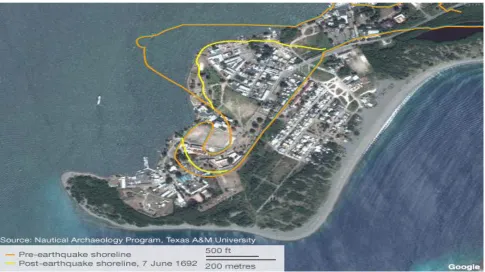
June 7, 1692 changed the entire nature of shipping in Jamaica. It was reported that sometime after 11:00am on that day, the ground opended up swallowing bodies and buildings and wrecking naval, merchant and fishing fleets. Bones and bodies from uprooted graves were scattered in the harbour and approximately two-thrids of the town immediately sank into the sea, after the main shock. (Gragg, 2000) Figure 1.1 indicates the shoreline before and after the Port Royal Earthquake.
Figure 1.1 Port Royal before and after the earthquake
3
Since the 1692 earthquake the town never regained its former glory, and this marked the end of an era of global integration. Subsequently, the focus shifted to Kingston which functioned as a service port. By 1750, Kingston had the only port of any significance, Kingston Harbour, and no less than 14 finger piers had been built along the shoreline, which allowed a large number of vessels to be berthed near the source of the best navigational water, warehouses and stores where the ships’ agents and merchants were located. Kingston’s growth reflected an increase in mercantile activity as the city grew. One of the great disadvantages of the old finger piers was that a large number of ships were concentrated on a relatively small area of shoreline. This might have been advantageous in a harbour short of deep berths and adequate access routes but it proved a crippling disadvantage to Kingston, whose roads leading to the harbour had not been designed to take this kind of traffic.
On 14th February 1966, the first ship, the S.S. United States, docked at Newport West. The Port Authority of Jamaica (PAJ) then sought for the second time to capitalize on Jamaica’s geostrategic location to develop a world-class transhipment hub port in Latin America and the Caribbean. The expansion created the capacity of 1,200,000 TEU, propelling the port of Kingston to become the third largest transhipment port in Latin America and the Caribbean, and subsequently the 63rd largest container port in the world in 2002. In 2008, the port of Kingston then became the busiest port in the Caribbean, which maintained to 2011 (see Table 1.1) (Pinnock & Ajagunna, 2014). According to ECLAC (2014) the downtrend of container movement in the Latin America and Caribbean region led to the port of Kingston moving to the 6th busiest port in the region in 2012 and the 8th busiest in 2013. It was this decline, coupled with the stagnant economic growth for Jamaica that led the Government of Jamaica to actively pursue the Jamaica Logistics Hub (JLH) Initiative.
4
Table 1.1: Container Traffic in the Caribbean by Port, 2008-2011 (TEU)
Source: ECLAC (2012); Pinnock & Ajagunna (2014)
1.2 Research Objectives
The research will seek to fulfill the following key objectives-:
5
2. Provide a review of the legislative and judicial structure of Jamaica with specific focus on the maritime legislations and administration of maritime affairs within the country. Comparisons will be made with other locations of major logistics hubs; such as Singapore and Hong Kong. A general overview of the maritime legislation and regulations, in the context of the administration of maritime affairs in these territories will be provided, followed by an analysis and comparisons of how they are administering maritime matters in their territories as it relates to the logistics hub activities.
3. Identify comparative features observed in the case study locations and analyze the fettle of Jamaica’s current legislative and maritime framework to address the selected maritime contemporary issues with the establishment of the JLH; outlining the possible problems and shortcomings of the said framework.
1.3 Research Questions
In achieving the above objectives, this research paper shall strive to answer the following questions-:
Is the current maritime legislative and administrative framework of Jamaica sufficient to
address the likely issues associated with the establishment of the Jamaica Logistics Hub?
What lessons, if any, can Jamaica learn from the maritime legislative and administrative frameworks of the States which have successfully established global logistics hubs?
What are the possible shortcomings of Jamaica’s current maritime legislation in relation
to the selected contemporary maritime issues?
What are the possible changes, if any, that can be made to Jamaica’s legal and regulatory
6
1.4 Jamaica’s Geography, Ports and Strategic Location
1.4.1 Jamaica’s Geography
Jamaica is the third largest of the Caribbean islands with a size of 4,411 square miles. It lies 600 miles south of Florida, 100 miles southwest of Haiti, and 90 miles south of Cuba. (Boske & Leigh, 2001) The island is located in the Caribbean Sea and contains fourteen (14) parishes, as illustrated in Figure 1.2 below.
Figure 1.2: Map of Jamaica
Source: http://www.caribbeanislands.us/jamaica-map.htm
1.4.2 Jamaica’s Ports
7
1. North Terminal – consisting of 535 metres of berth, 47 hectares of yard space for stacking containers and 4 super Post-Panamax ship-to-shore gantry cranes
2. South Terminal – consisting of 1,300 metres of berth, 5 post-Panamax gantry cranes, 6 super post-Panamax ship-to-shore gantry cranes and 82 hectares of container storage space
3. West Terminal – consisting of 475 metres of berth, and extension of 65 hectares of container yard and 4 super post-Panamax ship-to-shore gantry cranes
The port of Montego Bay is located in the second city of Jamaica and its facilities include a 2694 square metre cruise ship terminal, 427 metres of berth, 1.2 hectare of yard space for container storage and 1858 squared metres of warehouse. The port of Ocho Rios consists of a bauxite pier and a cruise ship pier. The bauxite pier is 274.3 metres long with a draft of 12.2 metres and can accommodate passenger and cargo vessels and the cruise ship pier has two berths, 222 metres and 274.3 metres in length respectively. The port of Falmouth is fairly new, having had its first ship call in February 2011. The port was constructed to accommodate cruise ships and has gained considerable popularity over the past few years.
1.4.3 Jamaica’s Strategic Location
Jamaica is strategically located in the centre of the Caribbean Sea, in close proximity to the Panama Canal and the major ports of North America, South America and the Caribbean. The port of Kingston in Jamaica boasts the world’s seventh largest natural harbour and is located at the intersection of two major intermodal trade routes. These attributes contributed to the success of Jamaica in the transhipment of cargo and cruise shipping.
8
Figure 1.3 Jamaica’s locational advantage in the global trade network
Source: Shirley (2013)
Elson (2013) found that Jamaica was strategically located along major shipping routes from Asia to the Middle East as illustrated in Figure 1.3 above.
1.5 Scope of Research
9
discussed. The paper will also suggest recommendations as to how the current maritime legislative and regulatory framework of Jamaica can be improved to meet the needs of the maritime industry, the financial sector and other associated industries.
The dissertation is structured into ten main Chapters; Chapter One being the introduction, in which the research objective, research questions, a brief background to Jamaica’s shipping activities and the methodology are outlined. Chapter Two gives a literature review of the discourse and academic writings on logistics hubs, maritime governance, as well as differing maritime and legislative frameworks surrounding the establishment and operation of a global logistics hub. Chapter Three capsulizes the Jamaica Logistics Hub Initiative, outlining the proposed activities involved in the establishment of the hub and planned changes put forward by the Government of Jamaica. An analysis of the maritime legislative and administrative frameworks of Jamaica, both at the international and domestic level are discussed in Chapters Four and Five respectively, and Chapter Six examines the maritime and legislative frameworks of Singapore, and Hong Kong, which constitute the case studies. Chapter Seven considers the possible challenges of Jamaica’s current framework and Chapter Eight submits recommendations to overcome the possible challenges identified in the previous chapter. Chapter Nine outlines the summary and conclusion, emphasizing whether the research objectives have been met. The contributions of this research to future study are also illustrated in this chapter. Following the final chapter are the references.
1.6 Delimitation
Jamaica has several ports along its coast; however this study will focus on the Port of Kingston, which handles approximately two-thirds of the vessels visiting Jamaica’s ports and 87 percent of the container traffic through the island (PAJ, 2000). The focus is also due to its strategic location and the fact that a majority of the planned operations will be happening in and around that area.
10
road transportation. The core discussion is centred on the maritime sector and marine legislation and regulations.
The analysis of international instruments and treaties are limited to IMO Conventions and those centred around and touching the maritime industry. Likewise, the national legislations reviewed were selected based on the measure of their applicability to marine operations and shipping. The analysis of said legislation will also be probed as it relates to selected contemporary maritime issues.
1.7 Methodology
To achieve the aforementioned objectives, an explorative research was conducted from a number of primary and secondary sources in the form of books, journal articles, peer reviews, and reports. This further involved a dogmatic approach of analysis, looking at various legal instruments including, international and domestic conventions regulations, policies and case law.
Further, an analytical approach was applied concurrently throughout, in that applicable case law and legislation were examined in terms of their scope of applicability and consequently recommendations are made based on the analysis of said regulations in response to the selected maritime contemporary issues. A case study approach was also employed, which involved a scrutiny of the legal and regulatory frameworks of the Singapore and Hong Kong logistics hubs respectively and a further comparison made with that of Jamaica’s existing framework.
11
CHAPTER TWO
2.0 LITERATURE REVIEW
Logistics has been an emerging area in the global transport sector. According to Tongzon (2004) logistics is expected to grow by 3 to 10 percent per annum promising tremendous economic opportunities for the countries in the ASEAN region. In the midst of these opportunities, several other countries have undertaken concerted efforts to upgrade their infrastructure and technology to get a bigger slice of the market. One of these “several countries” is Jamaica. The country has taken a chance at seizing an opportunity with the expansion of the Panama Canal and hopes to gain a place in the chain of global logistics hubs. To effectuate this master plan, there needs to be an efficient legal system and policies in place. Jamaica will need to put a proper fool-proof system of governance and policies in place which will address most, if not all, of the possible issues and/or incidents that may occur as a result of this grand venture, especially in the maritime industry.
2.1 Defining Logistics Hubs
12
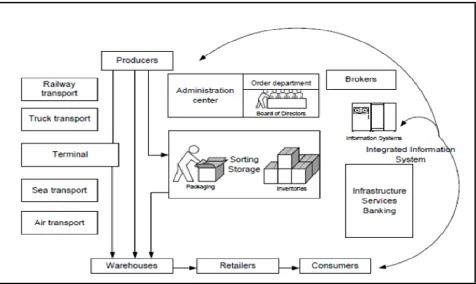
in accordance to the needs of the destination points. The structure of an ideal logistics hub was put forward by Skowron-Grabowska (2008) and is illustrated in Figure 2.1 below. Specifically, in the context of maritime transport, Song & Panayides (2012) defined a logistics hub as a seaport and hinterland in terms of the spatial boundary where logistics activities are conducted.
Figure 2.1: Structure of an ideal logistics hub
Source: Skowron-Grabowska (2008)
13
regulations. The ninth determinant, government role and regulations, is of paramount importance. The fact that it was listed last is certainly not an indication of its validity and avoirdupois. In fact, it is suggested that legal and institutional issues be identified before establishing a logistics centre in port areas, and the new logistics-related laws and national strategies should be launched to transform and upgrade ports to the next level of logistics development. Further the Economic and Social Commission for Asia and the Pacific (2002) stated that as to the legal aspects regarding logistics centres, institutional schemes should be made to improve the conditions and simplify the administrative procedures affecting logistics centres, as the existence of an effective institution plays a crucial role in building logistics centres in ports.
2.2 Maritime Governance
It has been observed in the maritime industry that effective governance and policy making has been presenting numerous issues and consists of several lacunae that have not adequately addressed all the issues. Roe (2013) stated that the maritime sector is also far from immune to governance failures and it is the contention that this in turn has undermined any attempts at coherent and meaningful maritime policy-making. Mukherjee and Brownrigg (2013) outlined the various aspects of shipping from a legal and economic perspective. They stated,
“… Shipping does not comprise one industry but a number of them... It is a peculiarity of shipping that each sector has its own clear character and style; and that those who work,
even for a lifetime in one sector, often have little perception or understanding of others.
Equally the sectors may well have different ‘political’ perceptions even in the same
country…”
14
efficiency; all locations, from Europe to the United States and from Asia to Africa; and in particular, every part of the jurisdiction and functioning of policy-making ad its underlying governance from the international and global to the local and regional, through to the supra-national and supra-national.
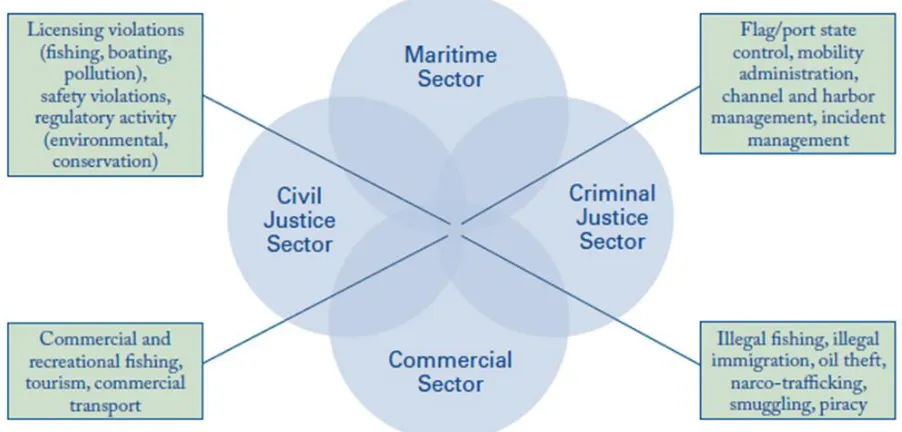
The Bureau of Political-Military Affairs (2010) outlined that maritime governance and marine law enforcement can be a cooperative endeavour between national regional, sub-national and private agencies and actors, as depicted Figure 2.2.
Figure 2.2: The interrelation between the various sectors
Source: Bureau of Political-Military Affairs (2010)
15
being an open economy with more reliance on foreign capital than any other country in Southeast Asia. Coe (1999) adds that,
“…At the level of the general electronic commerce environment, largely associated with government policy, Singapore has made significant progress in developing legal
frameworks, technical standards and incentive schemes for electronic commerce. In
terms of legal frameworks, a major step was the enactment of the Electronic Transactions
Act, an Electronic Commerce Policy Committee recommendation, which came into force
in July 1998.”
It is clear that an efficient and strong legal framework is necessary to enable the proper functioning of the upcoming logistics hub. The Hong Kong Logistics Council in its 2008 report illustrated that Hong Kong is often the preferred logistics hub for many international traders because of its clear and transparent legal framework founded on the rule of law and an independent judiciary. A judicial system that operates independently from the executive and legislative branch of Government and makes its own judgments without fear or favour is a key element in the success and continuing attraction of Hong Kong as an ideal base for the administration of business development, investment and trade in the mainland.
16
17
CHAPTER THREE
3.0 THE JAMAICA LOGISTICS HUB INITIATIVE
3.1 Panama Canal Expansion Project
2014 marks the centennial year of the existence of the Panama Canal and Panama has embarked on a new canal expansion project in order to facilitate passage of post-Panamax vessels which are too large to fit in the original design of the Panama Canal. These post-Panamax vessels account for approximately 16% of the world container fleet and account for nearly one half of the total fleet’s cargo capacity. (Hricko, 2012). Since the opening of the Panama Canal in 1914, over 9 billion long tons have transited the waterways in the form of over 1 million vessels. Sabonge (2013) outlines that in 2012, 84 million long tons of the approximate total of 218 million long tons that had transited through the Panama Canal correspond to the United States East Coast – East Asia route.
The expansion is hoped to create greater economies of scale in sea transport and accommodate vessels of 49 metres in beam, 15.2 metres in draft and 12,600 20-foot equivalent units (TEU). At present the canal can only accommodate vessels up to 4,400 TEU. Sabonge (2013) further stated, “…the canal is a crossroads for economic activities based on maritime traffic. It enhances the region’s export potential by spurring export-dependent economic sectors…” The canal expansion also complements and indirectly encourages logistics development in the rest of Latin America. By increasing their export potential, these countries will be investing more resources in public infrastructure and port terminals. The canal, the international logistics hub and the related services provided by Panama are not only the bedrock of the economy, but also provide a support base for the entire region. As each country increases its logistical capabilities, the region as a whole will improve its competitiveness (Sabonge, 2013).
18
Caribbean transshipment involvement is integrally tied to the efficiency and competitiveness of the expanded Panama Canal. Figure 3.1 depicts the trade routes channeling through the Panama Canal.
Figure 3.1 Panama Canal routes
Source: Georgia Tech Logistics Innovation & Research Centre (2014)
19
3.2 Jamaica’s Proposed Transformation
On May 14, 2013, Anthony Hylton, Minister of Industry, Investment and Commerce of Jamaica announced that the Government of Jamaica will embark on a colossal project in the form of the Jamaica Logistics Hub, which is expected to transform the economy of Jamaica over a ten (10) year period. According to Deans (2014), the Jamaica Logistics Hub Initiative is a growth and development strategy with the main goal of positioning Jamaica as a fourth node in the global logistics network to complement Singapore, Dubai and Rotterdam, which has tremendous implications for Jamaica’s ports and terminals. The JLH Initiative includes a number of key elements, which are; expansion of the Port of Kingston to receive post-panamax ships, construction of a dry dock at Jackson Bay in Clarendon, installation of bunkering facilities at Cow Bay, near Yallahs, St. Thomas, construction of a cargo and maintenance, repair and operations facility at Vernamfield in Clarendon and development of an economic zone at Caymanas with a direct road link to the Port of Kingston.
Jamaica sits at the intersection of several maritime and aviation routes to the Americas, Europe and Western Africa and businesses located in Jamaica can readily access large commercial markets in North, Central and South America totaling approximately 800 million people. The JLH Initiative is expected to provide businesses with prime opportunities for global partnerships and expansion. (Jamaica Logistics, 2014)
20
Figure 3.2: Proposed Logistics Hub
Source: Port Authority of Jamaica
The transformation process to be undertaken by Jamaica contains a number of elements, which will be briefly discussed.
Kingston Harbour Channel Upgrade
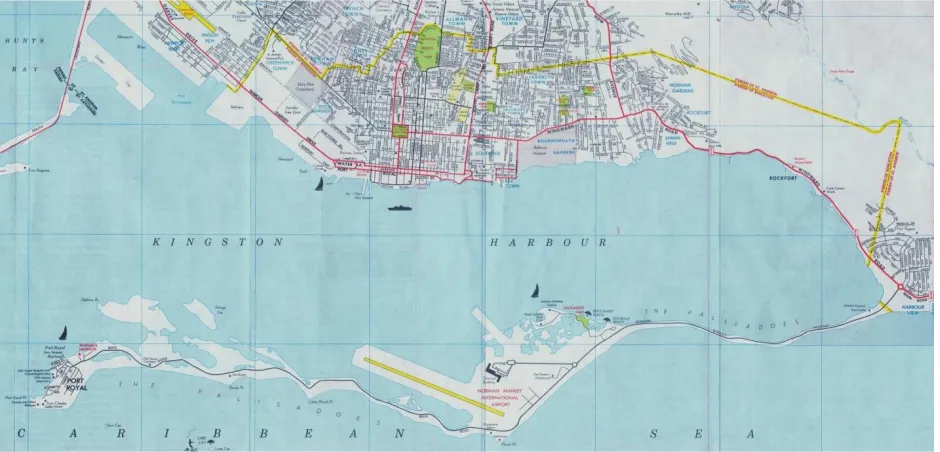
21
fishing site for thousands of industrial and commercial enterprises, as well as home for many people. Figure 3.2.1 illustrates a map of Jamaica depicting the Kingston Harbour.
Figure 3.2.1: Kingston Harbour
Source: http://jamaicajamaica.yolasite.com/kingston.php
Despite its vast size, in order to accommodate the expected vessel traffic, the Kingston Harbour will require some remodelling and restructuring. The Government of Jamaica is presently making arrangements to deepen Port Bustamante, the shipping channel and the east channel to accommodate the larger ships traversing the expanded Panama Canal, by way of a dredging exercise. Currently, the Kingston Harbour stands at 14 meters or 46 feet deep and the planned dredging activities are expected to deepen the said harbour to approximately 17 meters or 56 feet in depth.
Privatization of Kingston Container Terminal
22
by the KCT Services Limited, and is situated 32 nautical miles off the main trade lanes, which affords vessels minimal route deviations to and from the Panama Canal. ("General Overview," n.d.)
Figure 3.2.2: Port of Kingston
Source: KCT Services Limited (2014)
23
The TO will be responsible for capital expenditure for the superstructure and equipment, working capital and spare parts investment, and managing the port operations in a competitive and profitable manner. Figure 3.2.2 is an aerial photograph of the Port of Kingston.
Adjustment of Business Shortcomings
The Government of Jamaica is desirous of establishing a port community system (PCS), which is believed to significantly improve the port operations of the State. PCS is defined as a neutral and open electronic platform enabling intelligent and secure exchange of information between public and private stakeholders in order to improve the competitive position of the sea and air port's communities (Pinnock, 2014).
The PCS will optimise, manage, and automate port and logistics efficiency processes through a single submission of data and connecting transport and logistics chains and will provide to all logistics stakeholders a collaborative platform to manage all their Business to Business (B2B), Business to Government (B2G), and Government to Business (G2B) logistics operations for imports, exports, and trans-shipment.
24
Figure 3.2.3: Port Community System
Source: Shirley (2013)
Other Planned Developments
There are other projects involved in the JLH initiative. These include the establishment of a dry dock facility at Jackson Bay in Clarendon, the establishment of a bunkering facility at Cow Bay, the construction of a cargo and maintenance, repair and operations facility at Vernamfiled, and the development of the Caymanas Zone. Also planned is the creation of a single electronic window to enable efficient cross-border flows of goods, services and people, and the development of special economic zones (SEZs).
Special Economic Zones
25
economy.” ("Jamaica Logistics," 2014) Hence, the Government of Jamaica aims to successfully implement a SEZ regime that will serve the global logistics industry and function as an example to the region and other logistics-aspiring States.
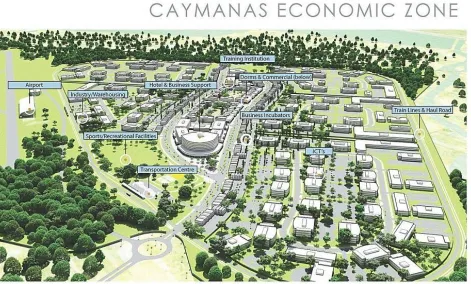
Jamaica currently has four (4) free zones: Kingston Free Zone (KFZ), Montego Bay Free Zone (MBFZ), Garmex Free Zone (GFZ) and Cazoumar Free Zone (CFZ). The World Bank (1992) defined a free zone as a fenced-in industrial estate specializing in manufacturing for exports that offer firms free trade conditions and a liberal regulatory environment. In 2007, the General Council of the World Trade Organization adopted a decision for the extension of the transition period for the elimination of export subsidy programmes, otherwise known as free zones, in developing countries by the 31st December 2015, the latest. Such States were also urged to enact legislation to phase out these said subsidy programmes. There are a number of differences between a free zone and a SEZ, one of which is that a free zone consists of an area where goods are landed, handled and re-exported without the intervention of national customs authorities, expect for when the goods are moved directly to customers within the country, while a special economic zone accommodates the same activities but consist of other laws which are more tailored to a free-market than the national laws (MENA-OECD Investment Programme, 2010). So far, Singapore, Dubai, Rotterdam and Panama have all established SEZs, but Jamaica is still to establish SEZs.
26
Figure 3.2.4: Caymanas Economic Zone
Source: http://www.skyscrapercity.com/showthread.php?t=1539098
Additionally, situated just a few kilometres in distance from the location of the planned CSEZ is the proposed location for the Naggo Head Informatics Park, which will be 100,000 square feet of factory space for information and communication technology businesses. It is also expected that elements within the country’s policy, regulatory and legislative framework will be revised or replaced; one such being the enactment of the Special Economic Zone Act and Regulations that will govern the SEZs, as well as the establishment of a Special Economic Zone Authority. The Government of Jamaica plans to introduce a total of sixteen (16) SEZs with the adjacent development of the surrounding areas for recreational activities, and residential and commercial purposes, to capitalize on fiscal growth.
27
Committee, with the responsibility of overseeing and guiding the formation of a proper policy framework for the SEZ, and the Enterprise Team, comprised of a number of experts from various fields, to specifically manage the development of the CSEZ and to ensure that its progression is concurrent to the other aspects of the JLH. The Enterprise Team is particularly important as the CSEZ is a critical component of the government’s programme to become a value-added and logistic-centred economy. (“Jamaica Logistics”, 2014)
28
CHAPTER FOUR
4.0 JAMAICA’S INTERNATIONAL LEGISLATIVE AND REGULATORY
FRAMEWORK
4.1 Sources of International Law
Article 38(1) of the Statute of the ICJ outlines the main sources of international law. There are:
1. International conventions, whether general or particular, establishing rules expressly
recognized by the contesting states;
2. International custom, as evidence of a general practice accepted as law;
3. The general principles of law recognized by civilized nations; judicial decisions and teachings of the most highly qualified publicists of the various nations, as subsidiary
means for the determination of rules of law (Churchill and Lowe, 2008)
The law of the sea is considered to be an arm or branch of international law. In fact, Churchill & Lowe (2008) found that the development of the law of the sea is inseparable from the development of international law in general. Despite its small size, Jamaica has made efforts to maintain its position in the international community and has ratified a considerable number of international instruments. One of the most exigent international legal instruments relating to the law of the sea is the UNCLOS and it is noteworthy that Jamaica was the fourth State to ratify this instrument on the 21st March 1983 (UNODC, 2013).
The sources outlined in Art. 38 of the ICJ supra are comprehensive, but far from imperforate. Mukherjee and Brownrigg (2013) indubitably outlined the aspects of international law that will affect shipping and shipping activities of any State, these being;
1. National (unilateral) regulations or requirements 2. Subsidies (overt or covert)
3. Bilateral, Government-to-Government, arrangements 4. Regional arrangements
29
The aforementioned all affect the shipping and maritime operations of any nation State, and require special attention to be paid to the aforementioned aspects of international law in the pursuance of any changes and/or developments in the State’s maritime operations. Within the maritime industry, the IMO conventions stand at the pinnacle of all international instruments. It is, therefore, necessary to review Jamaica’s status as it regards IMO conventions.
4.2 IMO Conventions
In the maritime context, Jamaica is party to thirty (30) IMO Conventions, the most recent accession being in November 2013, when Jamaica deposited instruments of accession for the Convention on Maritime Salvage 1989, the Convention for the Suppression of Unlawful Acts against the Safety of Maritime Navigation 2005 and the Protocol for the Suppression of Unlawful Acts against the Safety of Fixed Platforms located on the Continental Shelf 2005. Table 5.1 outlines the IMO Conventions to which Jamaica has indicated acceptance, approval and/or accession.
From a mere examination of the IMO instruments outlined in Table 4.1, there is an indication that up to October 2013, Jamaica had only been party to selected conventions relating to the marine environment and marine safety, including but not limited to MARPOL 73/78, COLREGS, STCW and SOLAS. Most maritime issues fall under the umbrella sectors of safety, security and the environment, and this is portrayed in the organization’s mission statement as outlined in Resolution A.1060(28). Since November of 2013, Jamaica has broadened the scope of its international framework by signing on to particular conventions relating to maritime security. This is certainly a step in the right direction in light of the current logistics hub project. The scope of application of the ratified conventions to selected maritime issues will be discussed in Chapter Eight.
30
instrument addressing, among other things, the rights of seafarers and the responsibilities of shipping companies and shipowners.
Table 4.1: Status of IMO Conventions – Jamaica Source: International Maritime Organization (2014)
TREATY DEPOSIT DATE DATE OF COUNTRY
ENTRY INTO FORCE
TYPE
IMO Convention 48 11/5/1976 11/5/1976 Acceptance
IMO Amendments 91 17/8/2005 7/12/2008 Acceptance
IMO Amendments 93 31/8/1999 7/11/2002 Acceptance
BUNKERS 2001 2/5/2003 21/11/2008 Accession
CLC Protocol 1992 6/6/1997 6/6/1998 Accession
COLREG 1972 30/3/1979 30/3/1979 Accession
FUND Protocol 1992 24/6/1997 24/6/1998 Accession
INTERVENTION 1969 13/3/1991 11/6/1991 Accession
LC 1972 22/3/1991 21/4/1991 Approval
LL 1966 18/8/1982 18/11/1982 Accession
LL Protocol 1988 2/5/2003 2/8/2003 Accession
LLMC 1976 17/8/2005 1/12/2005 Accession
LLMC Protocol 1996 19/8/2005 17/11/2005 Accession
MARPOL Annex I/II 13/3/1991 13/6/1991 Accession
MARPOL Annex III 13/3/1991 1/7/1992 Acceptance
MARPOL Annex IV 13/3/1991 27/9/2003 Acceptance
MARPOL Annex V 13/3/1991 13/6/1991 Acceptance
MARPOL Annex VI 29/5/2008 29/8/2008 Accession
OPRC 1990 8/9/2000 8/12/2000 Accession
SALVAGE 1989 28/11/2013 28/11/2014 Accession
SAR 1979 10/6/1988 10/7/1988 Accession
SOLAS 1974 14/10/1983 14/1/1984 Accession
SOLAS Protocol 1978 17/8/2005 17/11/2005 Accession
SOLAS Protocol 1988 2/5/2003 2/8/2003 Accession
STCW 1978 19/2/1987 19/5/1987 Accession
SUA 1988 17/8/2005 15/11/2005 Accession
SUA Protocol 1988 19/8/2005 17/11/2005 Accession
SUA 2005 28/11/2013 26/2/2014 Accession
SUA Protocol 2005 28/11/2013 26/2/2014 Accession
31
4.3 Maritime Commercial Conventions
Central to maritime commercial law are the rules governing the bills of lading and the activities involved in trading by sea and the carriage of goods. This is a vital area in the operations of a global logistics hub as the main activity is trade and in particular, global trade. Despite Jamaica’s notable ratification of IMO conventions, the State’s action to become party to the various maritime commercial conventions has been unimpressive. Currently, Jamaica is party to the International Convention for the Unification of certain rules of law relating to Bills of Lading (Hague Rules) 1924. Other international commercial instruments addressing carriage of goods by sea, to which Jamaica is not a party, are the International Convention on Arrest of Ships 1999, the International Convention on Maritime Liens and Mortgages 1993, the Protocol to Amend the International Convention for the Unification of Certain Rules of Law Relating to Bills of Lading 1968 and the most recent and impending legislation, the United Nations Convention on Contracts for the International Carriage of Goods Wholly or Partly by Sea (Rotterdam Rules) 2008.
The Rotterdam Rules (RR), in particular, may require special attention in a project such as the establishment of a logistics hub. These rules were created with an aim to address the shortcomings of the Hamburg Rules, Hague Rules and the Hague-Visby Rules and also to establish uniform rules to modernize and harmonize the rules that govern international carriage of goods by sea. (Adamsson, 2011)
The major changes introduced by the Rotterdam Rules are in the following areas;
Scope of application, to include door-to-door transport. This provision was drafted to
govern all modes of transport, once there is an international sea leg involved, as well as an overall international carriage;
Electronic commerce, which introduced provisions regulating electronic commerce and
electronic bills of lading. This aspect was not addressed in the previous Hague, Hague-Visby or Hamburg Rules;
32
Carrier’s liability, which discusses the carrier’s obligation of seaworthiness and extended
same for the entire duration of the voyage by sea, as opposed to before and at the beginning of the voyage as in the preceding rules.
The Rotterdam Rules also addressed other maritime issues such as the liability of Maritime Performing Parties (MPP) which extends liability directly to other parties and provides automatic protection to the Carriers’ agents provided that they are subject to suit; Controlling Party and right of control, which is the person entitled to exercise control and the Rotterdam Rules specifically acknowledges the identity of the said Party and their right of control; Shipper’s obligations, illustrating that the shipper continues to be strictly liable for loss or damage caused by dangerous goods, but bears a fault-based liability for loss or damage caused by its failure to provide necessary information, instructions and documents to the carrier.
Under the Rotterdam Rules the claimant has two years in which to file its action against the carrier before such an action being time-barred. Prior to the Hamburg Rules, the prescribed time for action was one year. The Hamburg Rules extended this period to two years and the RR maintained this extension. Jurisdiction and arbitration were first addressed in the Hamburg Rules and the Rotterdam Rules went further to establish an “opt-in” reservation outlining that only the States that make a declaration to be bound by these chapters will be bound by them. The concept of volume contract was also addressed in the Rotterdam Rules. The rules speak to the freedom of contract which holds that in certain cases, contracting parties should be allowed certain contractual freedoms. It allows shippers of a certain commercial size and those shipping a large quantity of goods in a series of shipments, to negotiate with the carrier for contractual provisions different from the mandatory provisions in the Convention, having regard to the provisions from which no derogation is granted.
33
4.4 Multilateral and Bilateral Agreements
Jamaica has also engaged in a number of regional and international agreements, which resulted in the State’s attachment to particular institutions and initiatives. The agreements are outlined below.
CARICOM or the Caribbean Community is an organization of 15 Caribbean states with the purpose of promoting economic integration and cooperation among members, ensuring that benefits of integration are equitably distributed and coordinating foreign policy. Through CARICOM came the CARICOM Single Market and Economy (CSME) which was aimed at facilitating the free movement of goods, services, capital and people across the region. Also through CARICOM came the Caribbean Court of Justice (CCJ), an institution charged with the settlement of disputes by way of hearings, mediation and arbitration. The CARICOM Regional Organization for Standards and Quality (CROSQ) was also instituted to facilitate development and harmonization of regional standards in the production of goods and services amongst member states.
Additionally, the Cotonou Economic Partnership Agreement was signed in June 2000, and the agreement provides a timetable for the negotiation of new WTO-compatible Economic Partnership Agreements (EPAs). It was signed between the African, Caribbean and Pacific States (ACP) and the European Union.
The Free Trade Area of the Americas (FTAA) was established to ensure that small economies benefit equally as other parties in CARICOM from trade agreements; while CARIBCAN is a programme introduced by the Government of Canada to facilitate trade and investment with CARICOM member states.
In addition, the Caribbean Basin Initiative (CBI), initially launched through the Caribbean Basin Economic Recovery Act, provides preferential access and trade between the United States and the Caribbean.
34
approximating an equidistance line between the countries to be measured from mainland Jamaica and not the small cays nor the archipelagic baselines. Similarly, the 1994 Agreement between Jamaica and Cuba on the delimitation of the Maritime Boundary was established with both States agreeing that the equidistance method be the equitable solution for establishing a delimitation line between the States’ EEZs and continental shelves.
Whether to a great extent or to some minute extent, most, if not all, of the regional, multilateral and bilateral agreements to which Jamaica is a party will, somehow be affected by the JLH initiative hence, the State should ensure that the new developments involved in the process do not contravene the provisions, purposes and /or objectives of these agreements to which the state has acquiesced.
35
CHAPTER FIVE
5.0 JAMAICA’S DOMESTIC LEGISLATIVE AND REGULATORY
FRAMEWORK
5.1 Brief History of Jamaica’s Legal System
Jamaica has a common law legal system and is a member of the Commonwealth Caribbean. This system originated in England from customs and norms, which then became recognized and enforced by decrees and court judgments. As opposed to the other Commonwealth countries which merged their pre-colonial laws with the English law, Jamaica’s system is unique due to the fact that it came under the control of the British through battle and use of force. The British victory over the Spanish, resulted in a total eradication of the previously existing system of government and law, and in essence the common law came to Jamaica via the exercise of the Crown’s Prerogative in the proclamation of 14 December 1661. (Antoine, 2008)
Being, one of the first conquered colonies, the British battled with uncertainty as to how far its Prerogative or Royal power extended. Nonetheless in 1774, in the case of Campbell v Hall [1774] All ER rep 252, Lord Mansfield CJ outlined, “…a country conquered by British arms
becomes a dominion of the sovereign in the right of his crown, and therefore, subject to the
Parliament of Great Britain…” After Jamaica’s independence on August 6, 1962, existing laws were preserved by virtue of s 4(1) of the Constitution of Jamaica and thus the existing regime was saved.
36
5.2 Jamaica’s Judicial System
Figure 5.1: Structure of Jamaica’s Court System
Source: Supreme Court of Jamaica (2014)
37
The next tier of court is the Resident Magistrates’ Court; an inferior court of record governed entirely by statute. In this court, Resident Magistrates have the jurisdiction to try cases summarily and on indictment. Sanctions, such as fines and imprisonment are generally imposed, but the levels of sanctions are lower than that which may be imposed in the Supreme Court. Resident Magistrates preside over a range of courts at this level; Coroner’s Court, Traffic Court, Drug Court, Tax Court, Family Court, Juvenile Court and Civil Court. The jurisdiction of the Civil Court, prior to 2013, was limited to claims not exceeding Two Hundred and Fifty Thousand Jamaican Dollars ($250,000.00) or US $2,200.00, but has now increased for regular civil matters to One Million Jamaican Dollars ($1,000,000.00) or US $8,800.00. (Henry, 2013). Appeals from the Resident Magistrates’ Court are to the Court of Appeal.
At the third tier is the Supreme Court, the highest first instance court. It is a superior court of record and has unlimited jurisdiction with both inherent and statutory jurisdiction. Courts of equivalent jurisdiction in other countries are generally referred to as “High Courts”. The Supreme Court has jurisdiction in Civil, Criminal, Family, Commercial, Succession and Admiralty cases. There are also specialised courts which also exercise superior jurisdiction which are presided over by Supreme Court Judges. These are the High and Circuit Court Divisions of the Gun Court and the Revenue Court. Appeals from the Supreme Court are also made to the Court of Appeal. ("The Court Structure and Hierarchy," 2013)
38
Belize, Dominica, Guyana, St. Lucia, St. Vincent and the Grenadines, and Trinidad and Tobago to ratify a treaty to establish the Caribbean Court of Justice (CCJ). The CCJ settles disputes between the Caribbean Community (CARICOM) Member States and to date, only three (3) of said CARICOM states have replaced the Privy Council with the CCJ: Barbados, Belize and Guyana. The CCJ does not have the competence to hear individual cases on human rights violations, but may apply rules of international law as required. It sits at the fifth tier of the Jamaican Court Structure.
It must be noted that decisions from courts outside of Jamaica are not binding, but may also be referred to as persuasive authority if there is no local case which has settled the point in issue. That said judgments of the various international courts and tribunals such as the International Court of Justice (ICJ) and the International Tribunal on the Law of the Sea (ITLOS), as well as international maritime arbitrations can be considered persuasive authority in matters similar in nature ("The Court Structure and Hierarchy," 2013).
5.3 Jamaica’s Admiralty Jurisdiction
Being a former colony of the United Kingdom (UK) and having adopted the basic structure of their legislative system, decisions from the UK, particularly those from the House of Lords, are also very persuasive in Jamaican courts. As is evident in Figure 5.1, there is no separate Admiralty Court in Jamaica, rather an Admiralty Division of the Supreme Court. The Judicature (Supreme Court) Act was passed in Jamaica in 1880 and section 4 of the said Act itemized the Courts which would constitute the Supreme Court of Judicature of Jamaica. Section 4 made no mention of the Admiralty Court.
The matter of admiralty jurisdiction was raised in the recent Jamaican case of Matcam Marine Limited v Michael Matalon (The registered owner of the Orion Warrior (Formerly Matcam 1)
39
gave a two-step process to identifying the admiralty jurisdiction of the Supreme Court of Jamaica. These being;
“…The first step is that section 2(2) of the Colonial Courts of Admiralty Act of 1890 (UK) shall be read as if the admiralty jurisdiction set out there was substituted with the
Admiralty jurisdiction set out in section 1 of the 1956 Act.
The second step is that this new reading of the 1890 Act applies to the Supreme Court of
Jamaica. Section 1 of the 1956 Act (UK) sets out the admiralty jurisdiction applicable to
the Supreme Court of Jamaica…”
Justice Sykes also mentioned two other Jamaican cases which affirmed that the UK legislation is applicable in Jamaica; Citadelle Line S.A. v The Owners of Motor Vessel ‘Texana’ (1996) 16
JLR 1 and DYC Fishing Ltd v The Owners of MV Devin and MV Brice Claim No. 2010 A 00002 (delivered October 8, 2010).
Presently there are very little cases heard in the Admiralty Division of the Supreme Court of Jamaica but with the JLH initiative, there is a likelihood of increase in volume. While it is accepted in Matcam v Matalon supra that admiralty jurisdiction does exist in Jamaica, the Supreme Court may benefit from examining the current structure, and considering the establishment of a separate Admiralty court rather than a mere Division of the said court, based on the number of matters being brought before the courts as the project progresses.
5.4 Jamaica’s Maritime Governance
40
The MAJ was established to implement the provisions of the Shipping Act of Jamaica 1998, with an objective to pursue the development of shipping and to regulate matters relating to shipping and seafarers. Additionally, the shipping registry of Jamaica is the responsibility of the maritime authority, along with the inspection of ships for the purposes of maritime safety and prevention of marine pollution. The PAJ is responsible for the regulation and development of Jamaica’s ports. Its functions include regulating the use of all port facilities in a port, providing and operating such port facilities and other services as the Minister may require, giving recommendations to the Minister from time to time regarding measures necessary to maintain or improve port facilities, operating facilities owned by, or leased to the Authority and maintaining and improving port facilities vested in the Authority (MHTWW, 2014).
CMI is the premier maritime training institution in the Caribbean and is considered the region’s centre of excellence for the training of professional seafarers and personnel in the shipping, logistics and supply chain management sectors (MHTWW, 2014). Figure 5.2 below is a simplified illustration of maritime governance in Jamaica.
Figure 5.2: Maritime governance structure of Jamaica
41
5.5 Jamaica’s Domestic Laws
There are a number of statutes that apply to maritime operations in Jamaica, some directly and others indirectly, but all applicable depending on the nature of the situations.
5.5.1 Maritime Security Laws
Maritime security is one of the main areas of concern in the international maritime community, and concerns matters such as piracy, armed robbery, terrorism and other transnational crimes such as drug, arms and human trafficking.
Particularly in the Caribbean region, transnational crime continues to be a major issue, and in an effort to address this problem, Jamaica introduced the Maritime Drug Trafficking (Suppression) Act in 1999. This Act introduced the provisions of the United Nations Convention Against Illicit Traffic in Narcotic Drugs and Psychotropic Substances 1988 and established a Central Authority with the power to conduct law enforcement operations for the prevention, detention and suppression of illicit traffic in drugs. Of noted importance is the fact that the Maritime Drug Trafficking (Suppression) Act 1999 accommodates treaties and bilateral agreements relating to illicit traffic in drugs. Section 18 of the 1999 Act allows for aircrafts or vessels to follow foreign vessels into Jamaica’s territorial waters, under special circumstances, in order to maintain contact with or investigate, board and search the vessel. Additionally, section 21 of the said 1999 Act establishes jurisdiction of Jamaican courts in situations outside of Jamaica’s waters where the vessel in question is registered in Jamaica and/or the alleged offender is a Jamaican national or found in Jamaica.