Original Research Article.
Prevalence of Depression among College Students in Saudi Arabia
Najeeb Saleh Alsalameh
1*, Fahad Abdullah Almansour
2, Faisal Mohammad Alzakri
3,
Hassan Rafaa Alshehri
4, Abdullah Saleh Almohaimeed
51MBBS, Psychiatry Physician, Alamal Mental Complex, Riyadh, Saudi Arabia. 2MD, Psychiatric Consultant at Alamal Mental Complex, Riyadh, Saudi Arabia. 3MD, Psychiatric Consultant at Alamal Mental Complex, Riyadh, Saudi Arabia. 4MD, Psychiatric Consultant at Alamal Mental Complex, Riyadh, Saudi Arabia. 5MBBS, General Physician at Buraidah Central Hospital, Alqassim, Saudi Arabia.
ABSTRACT
Background: Depression is a public problem which increases
significantly around the world. Depression has several outcomes and the worst is suicide. It increases among youths and adolescent and ignoring it will lead to undesirable outcome as it affects the school grades and attention of students. Several tools were established to assess depression prevalence including PHQ-9.
Aim: To assess the prevalence of depression among college students using PHQ-9 questionnaire.
Methods: This study is a cross-sectional study which included college students from 5 different areas in Saudi Arabia. This study used Patient Health Questionniare-9 (PHQ-9) to investigate the prevalence of depression and its degrees.
Results: The severity of depression in the present study was various, 18.2% had mild depression, 27.3% had moderate depression, 25.8% had moderately severe depression, 22.5% had severe depression, only 6.3% had no depression. Gender and area were significantly affected the severity of depression (P-value˂0.001).
Conclusion: There were high rates of depression prevalence
among college students and severity of depression was associated with female and students from north area.
Keywords: PHQ-9, Depression, Saudi Arabia.
*Correspondence to:
Najeeb Saleh Alsalameh,
MBBS, Psychiatry Physician, Alamal Mental Complex, Riyadh, Saudi Arabia.
Article History:
Received: 16-12-2017, Revised: 11-01-2018, Accepted: 06-02-2018
Access this article online
Website:
www.ijmrp.com
Quick Response code
DOI:
10.21276/ijmrp.2018.4.2.010
INTRODUCTION
Depression was defined as "a persistent experience of a sad or irritable mood as well as anhedonia, a loss of the ability to experience pleasure in nearly all activities".1 Symptoms of depression include changes in appetite, significantly decreased feelings of self-worth, impaired attention and concentration as well as disrupted sleep patterns.1 It was stated that depressive disorders are the fourth ranked health problem in the world and major depressive disorder will be the second disabling disease among population in 2020.2,3 In the last two decades, depression among adolescents became as a major mental health problem.4 It was observed that depression disorders are commonly under detected in healthcare settings, and this will result in significant problems for adolescents and youths at schools if left undetected.5 Rates of depression increase from childhood to adolescence with an increase in girls than in boys by 1.5 to 3 folds.6 A Chinese-American study revealed that 15 % of participants of the study had depression using the Chinese version of Beck’s questionnaire.7
Another study among high school students reported prevalence of mild depression in 18%, moderate depression in 19% and severe depression in 7%.8 Another study used Beck’s depression questionnaire reported moderate depression in 8% to 36%9, while another study reported severe depression in 18% of adolescents.10 In Saudi Arabia, there were several studies reported the prevalence and severity of depression among school students. One study used Arabic version of the 'Depression, Anxiety and Stress Scale' (DASS), and it was found that 22.6% of students had depression, anxiety, and stress disorders and 59.4% had at least one of the three disorders.11 Another study used DASS and reported that 50.1% had symptoms of at least two disorders of the three previous disorders and 73.4% had symptoms of at least one of the three disorders.12 As far as we know there was no Saudi study conducted on college students from different areas to assess depression prevalence using
SUBJECTS AND METHODS Study Design and Subjects
This study is a cross-sectional study which was conducted on college students from 5 areas of Saudi Arabia including; east, west, south, north and central areas. The study was conducted in the period between 26th November2017 to 17th December 2017. This study used Patient Health Questionniare-9 (PHQ-9) to investigate the prevalence of depression and its degrees. The questionnaire consists of 9 questions with another question investigated problems they faced.
The interpretation of the questionnaire score was as follow; 1-4: No depression; 5-9: Mild depression; 10-14: Moderate depression; 15-19: Moderately severe depression; 20-27: Severe depression.
Statistical Analysis
Data were analyzed using SPSS software version 16, simple descriptive analysis in the form of numbers and percent .chi square was used as a test of significance to compare qualitative variables between trained and untrained group significant level of less than 0.05
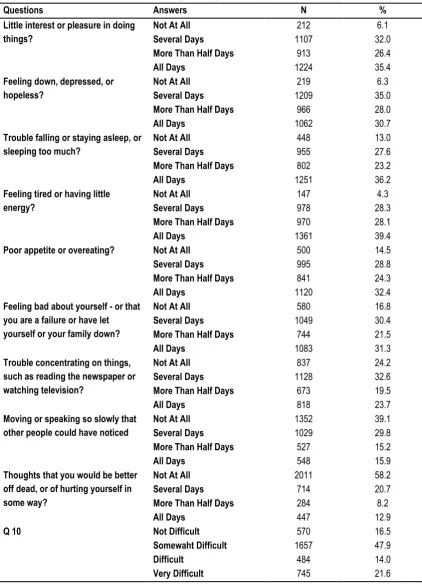
Table 1: Description of questionnaire element
Questions Answers N %
Little interest or pleasure in doing things?
Not At All 212 6.1
Several Days 1107 32.0
More Than Half Days 913 26.4
All Days 1224 35.4
Feeling down, depressed, or hopeless?
Not At All 219 6.3
Several Days 1209 35.0
More Than Half Days 966 28.0
All Days 1062 30.7
Trouble falling or staying asleep, or sleeping too much?
Not At All 448 13.0
Several Days 955 27.6
More Than Half Days 802 23.2
All Days 1251 36.2
Feeling tired or having little energy?
Not At All 147 4.3
Several Days 978 28.3
More Than Half Days 970 28.1
All Days 1361 39.4
Poor appetite or overeating? Not At All 500 14.5
Several Days 995 28.8
More Than Half Days 841 24.3
All Days 1120 32.4
or that -Feeling bad about yourself
are a failure or have let you
yourself or your family down?
Not At All 580 16.8
Several Days 1049 30.4
More Than Half Days 744 21.5
All Days 1083 31.3
Trouble concentrating on things, such as reading the newspaper or watching television?
Not At All 837 24.2
Several Days 1128 32.6
More Than Half Days 673 19.5
All Days 818 23.7
Moving or speaking so slowly that other people could have noticed
Not At All 1352 39.1
Several Days 1029 29.8
More Than Half Days 527 15.2
All Days 548 15.9
that you would be better Thoughts
off dead, or of hurting yourself in some way?
Not At All 2011 58.2
Several Days 714 20.7
More Than Half Days 284 8.2
All Days 447 12.9
Q 10 Not Difficult 570 16.5
Somewaht Difficult 1657 47.9
Difficult 484 14.0
Fig 1: Prevalence of depression among students
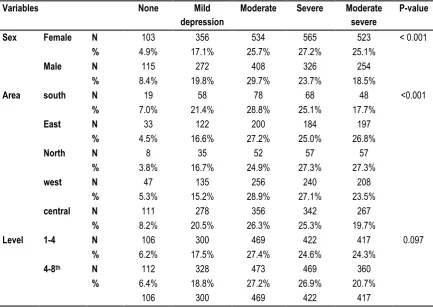
Table 2: Relation of depression to sociodemographic
Variables None Mild
depression
Moderate Severe Moderate
severe
P-value
Sex Female N 103 356 534 565 523 < 0.001
% 4.9% 17.1% 25.7% 27.2% 25.1%
Male N 115 272 408 326 254
% 8.4% 19.8% 29.7% 23.7% 18.5%
Area south N 19 58 78 68 48 <0.001
% 7.0% 21.4% 28.8% 25.1% 17.7%
East N 33 122 200 184 197
% 4.5% 16.6% 27.2% 25.0% 26.8%
North N 8 35 52 57 57
% 3.8% 16.7% 24.9% 27.3% 27.3%
west N 47 135 256 240 208
% 5.3% 15.2% 28.9% 27.1% 23.5%
central N 111 278 356 342 267
% 8.2% 20.5% 26.3% 25.3% 19.7%
Level 1-4 N 106 300 469 422 417 0.097
% 6.2% 17.5% 27.4% 24.6% 24.3%
th
8
-4 N 112 328 473 469 360
% 6.4% 18.8% 27.2% 26.9% 20.7%
106 300 469 422 417
RESULTS
The present study included 3456 students, the large majority of them 2081(60.2%) were females, while 1375 (39.8%) were males. The students were from first level across eighth level, there were 565 (16.3%), 237(6.9%), 661 (19.1%) and 251 (7.3%) students from 1st, 2nd, 3rd and 4th levels respectively, while 616 (17.8%), 213 (6.2%), 426 (12.3%) and 487 (14.1%) were from 5th, 6th, 7th and 8th levels respectively. The large majority of students 1354 (39.2%) were from the central area, followed by those from western area 886(25.6%), then eastern area 736 (21.3%) and finally south and north areas 271(7.8%) and 209(6%) respectively.
The questionnaire included 9 questions, the percent of each answer for each question is shown in table 1.
The grade of depression among college students was evaluated and it was found that, moderate depression was the most common grade among students 942(27.3%), followed by moderately severe depression 891(25.8%), then severe and mild depression 777(22.5%) and 628(18.2%) respectively, whereas 218(6.3%) only had no depression, figure 1.
Gender had a significant association to depression (P-value˂0.001), where depression was more prevalent in females than in males, table2. Also, area significantly affected the
0.00% 5.00% 10.00% 15.00% 20.00% 25.00% 30.00%
None Mild Moderate Moderately
severe Severe
6.30%
18.20%
27.30%
25.80%
prevalence of depression (P-value˂0.001), moderate severe and severe depression were more prevalent in students of north area, where as more students of the central area had no depression. The level of education had no significant difference on the depression prevalence (P-value=0.09), table 2.
DISCUSSION
The present study included large sample size from 5 different areas in the kingdom. In the present study there were high rates of depression prevalence among college students, only 6.3% had no depression, while the others had depression with different degrees. 18.2% had mild, 27.3% had moderate, 25.8% had moderately severe and 22.5% had severe depression, the most prevalent degree was moderate depression. A study from Iran was conducted on high school students and it was demonstrated that mild depression was prevalent in 28% of students, while moderate and severe were prevalent in 5.7% and 0.3% respectively.13 A study from India showed a prevalence of various degrees of depression ranged from minimal to severe, there were 9.3%, 25.4%, 45.7% and 19.6% experienced minimal, mild, moderate and severe depression respectively14 these results were close to ours. Lower prevalence of depression in secondary school students was reported from Qatar, where 65.5% of students had no depression , while 34.5% had depression, 14.9 of them had mild depression, 11.2% and 8.4% had moderate and severe depression respectively.14 A study from Malaysia showed that moderate, severe and extremely severe depression was prevalent in 21.5%, 18.1% and 3% respectively, while 33.2% experienced mild depression symptoms.15 A study from Taif, Saudi Arabia reported high prevalence of depression 42.9% among secondary school girls, there were 63.8% had mild depression, while 36.2% had severe depression.16 The current study revealed that both gender and area affected significantly the severity of depression (P-value˂0.001), while the level of education had no significant effect. Females were more prone to develop severe depression as well as those from north area. A study on medical students from India using PHQ-9 questionnaire showed that the year of academic study significantly associated with the prevalence of depression.17 It is not surprising that these results differed from ours as we studied depression in college students who had less depression than those medical students, as their study is hard and this may lead to more depression they experience. The previous study17 also showed conflict with our results as they showed that gender had no significant effect on depression. In agreement with our study, Iranian study13 reported that females were significantly suffered depression than males, while grades had no significant effect on having depression. Also another study18 showed that depression was more prevalent in females (26%) than in males (16%). Other several studies showed that depression prevalence was more dominant in females than in males.18-21 Although there were differences in the method used to assess depression between our study and the previous studies, the association of depression with female gender is very common. A study from Qatar also reported significant association between female gender and depression prevalence.14 A study from Malaysia reported no association between gender and experiencing moderate-extremely severe depression, however larger number of female suffered depression than males.15 We performed this study in different areas of the kingdom so the area
was found as a significant factor related to depression, but there was no study investigated the prevalence of depression in different areas before, so we should give attention to this area and find out the problem made students suffering the higher rate of depression. This study used PHQ-9 questionnaire to assess depression severity among college students and this is the first study to use this questionnaire among students with this large sample.
CONCLUSION
The present study revealed high prevalence of depression among college students with more association to female gender and living in the north areas of countries. It is very recommended to give these students enough care and make them visit doctors to solve this problem, because depression can lead to suicide.
ACKNOWLEDGMENTS
We would like to thank Jinan Ramadan Alhamad in helping in data collection.
REFERENCES
1. Cash, R.E. Depression in Children and Adolescents: Information for Parents and Educators, National Association of School Psychologists; 2004:pp.1-3.
2. Akiskal H. Mood disorders. Introduction and overview. In: Sadock BJ, Freedman AM, Kaplan, HI, eds. Comprehensive Textbook of Psychiatry. 7th ed. Philadelphia: Williams and Wilkins; 2000: 1284 – 1298.
3. Murray CJ, Lopez AD. Evidence-based health policy-- lessons from the Global Burden of Disease Study. Science. 1996; 274: 740 – 743.
4. Jayanthi P and Thirunavukarasu M. Prevalence of Depression among School Going Adolescents in South India. International Journal of Pharmaceutical and Clinical Research 2015;7(1):61-63. 5. Alotaibi T. Combating anxiety and depression among school children and adolescents through student counselling in Saudi Arabia.Procedia-Social and Behavioral Sciences;2015:205:18–29. 6. Nolen-Hoeksema S. Sex differences in unipolar depression: Evidence and theory. Psychologicall Bulletin 1987; 101:259-82. 7. Yeung A, Howarth S, Chan R, Sonawalla S, Nierenberg AA, Fava M. Use of the Chinese version of the Beck Depression Inventory for screening depression in primary care. J Nerv Ment Dis. 2002; 190: 94 – 99.
8. Hughes N. Cognitive-Behavior Therapy of Children in Schools. New York: Pergamon Press; 1988: 172 – 174.
9. Kashani HJ, McNaul J. Mood disorders in adolescent. In: Wiener JM, ed. Textbook of Child and Adolescent Psychiatry. 2nd ed. Washington, DC: American
Psychiatric Press; 1997: 343 – 385.
10. Kandel DB, Davies M. Epidemiology of depressive mood in adolescents: an empirical study. Arch Gen Psychiatry. 1982; 39: 1205 – 1212.
13. Modabber-Nia MJ, Shodjai-Tehrani H, Moosavi SR, Jahanbakhsh-Asli N and Fallahi M. The Prevalence of Depression Among High School and Preuniversity Adolescents: Rasht, Northern Iran. Arch Iranian Med 2007; 10 (2): 141 – 146.
14. Al-Kaabi N, Selim NA, Singh R, Almudahka H, Salem M. Prevalence and Determinants of Depression among Qatari Adolescents in Secondary Schools. Fam Med Med Sci Res 2017, 6:3.
15. Abdul Lattiff L, Tajik E, Ibrahim N, Abubakar AS and Ali SSBA. Depression And Its Associated Factors Among Secondary School Students In Malaysia. Southeast Asian J Trop Med Public Health;2016: 47(1): 131-141.
16. El- Sayed Desouky D, Abdellatif Ibrahem R, Salah Omar M. Prevalence and Comorbidity of Depression, Anxiety and Obsessive Compulsive Disorders among Saudi Secondary School Girls, Taif Area, KSA. Arch Iran Med. 2015; 18(4): 234 – 238. 17. Sidana S, Kishore J, Ghosh V, Gulati D, Jiloha RC, Anand T. Prevalence of depression in students of a medical college in New Delhi: A cross-sectional study. AMJ;2012:5(5)247-250.
18. Dahlmann BH. Depressive syndromes and suicide. In: Remschmidt H, ed. Psychotherapy with Children and Adolescents. Cambridge; New York: Cambridge UniversityPress;2001:291–306. 19. Cooper PJ, Goodyear LA. Community study of depression in adolescent girls; estimates of symptom and symptom prevalence. Br J Psychiatry. 1993; 163: 369 – 374.
20. Scheidt P, Over P, Wyatt W, Aszmann A. Adolescent general health and well being in health and health behavior among young people. WHO policy series, health policy for children and adolescents, International Report Copenhagen. Denmark: WHO Company; 1998: 177 – 178.
21. Angold A, Rutter M. Effects of age and pubertal status on depression in a large clinical sample. Development Psychopathol. 1992; 4: 275 – 280.
Source of Support: Nil.
Conflict of Interest: None Declared.
Copyright: © the author(s) and publisher. IJMRP is an official publication of Ibn Sina Academy of Medieval Medicine & Sciences, registered in 2001 under Indian Trusts Act, 1882. This is an open access article distributed under the terms of the Creative Commons Attribution Non-commercial License, which permits unrestricted non-commercial use, distribution, and reproduction in any medium, provided the original work is properly cited.