REVIEW AND CHALLENGES OF IMPLEMENTING SUSTAINABLE BUILDING CONSTRUCTION
POLICIES, LAWS AND REGULATIONS IN DEVELOPING COUNTRIES
Claude-Bernard TENE
1Universi
2,3Department of Architecture & Built Environment, University of
A R T I C L E I N F O
INTRODUCTION
Over the past decades several incidences of building failures and fire outbreaks have been observed worldwide and the trend is continuing. Amongst other reasons advanced is the non-implementation or non-adherence to building laws and regulations. It is observed that where building policies, laws and regulations have been developed following the traditional policy development cycle and where they are specifically tailored to the local customs and needs they have better chances of being adhered to by the populations. Several theories about strategies that could be applied to achieve
International Journal of Current Advanced Research
ISSN: O: 2319-6475, ISSN: P: 2319-6505,
Available Online at www.journalijcar.org
Volume 7; Issue 8(F); August 2018; Page No.
DOI: http://dx.doi.org/10.24327/ijcar.2018
Copyright©2018 Claude-Bernard TENE et al. This is an open access article distributed under the Creative Commons Attribution License, which permits unrestricted use, distribution, and reproduction in any medium, provided the original work is properly cited.
Article History:
Received 5th May, 2018 Received in revised form 24th
June, 2018 Accepted 20th July, 2018 Published online 28th August, 2018
Key words:
Building Regulations, Building standards, Policy implementation; Comparison of Building standards; developing countries
*Corresponding author: Claude-Bernard TENE University of Nottingham, Claude-Bernar
REVIEW AND CHALLENGES OF IMPLEMENTING SUSTAINABLE BUILDING CONSTRUCTION
POLICIES, LAWS AND REGULATIONS IN DEVELOPING COUNTRIES
Bernard TENE
1., Siddig OMER
2and Blaise MEMPOUO
University of Nottingham, Claude-Bernar
Department of Architecture & Built Environment, University of Nottingham
A B S T R A C T
There is a recognised need for effective implementation of sustainable building laws and regulations in response to building failure, the global energy shor
warming. The aim of this paper is to review and contrast
implementation of sustainable building policies in selected countries (England, Nigeria, Ghana, Cameroon and South Africa). It also aims at identifying the
practice in implementing Building Regulations. In a case study like exercise,
carried out a desktop review of building laws, regulations and policies of the selected countries and conducted three focus group discussions w
building construction field in Cameroon. The results analysed using the thematic method illustrate that although developed countries have moved to the development, adoption and effective implementation of innovative building codes, developing countries still lack behind and building policies, laws and regulations developed in those countries are not effectively implemented. Implementation of these policies and strategies is generally rated as being poor. The reasons highlighted for this include lack of accountability mechanisms, poor or inadequate processes, lack of policy coherence, lack of collaborative framework, resistance to cultural change and qualitative and quantitative understaffing. We conclude that contextual realities and local cultures significantly affect not only the development of building policies but also their implementation. Good practices learnt from developed countries are noted and suggestions including reinforcing the role of government in policy coordination, establishment of strong policy processes and effective collaboration between stakeholders and development of an effective building control system to enhance the implementation of building laws and regulations are made. The review focuses on policy implementation and does not consider aspects of policy planning and development even though they impact upon the implementation. The review highlights the best practices for implementing building policies, laws and regulations and gives a food for thought policymakers and practitioners. It sets the ground for the development of a global implementation framework dedicated to building construction laws and regulations for developing countries.
Over the past decades several incidences of building failures and fire outbreaks have been observed worldwide and the trend is continuing. Amongst other reasons advanced is cited adherence to building laws and regulations. It is observed that where building policies, laws and regulations have been developed following the traditional policy development cycle and where they are specifically d to the local customs and needs they have better chances of being adhered to by the populations. Several theories about strategies that could be applied to achieve
greater implementation of a policy or legal and regulatory instrument are advocated. One of the most prominent policy one known as “Stick-Carrots
whichcombining sticks (regulations), and carrots (incentives), with tambourines (measures to attract attention such as information or public leadership programs) would in
chances of achieving the set policy goal (Warren 2007 in UNEP SDCI 2007). Meeus and Delarue (2011) who also sustain that view submit that whatever the policy or regulation that is being developed, it would be better implemented where thethree specific ingredients are used together as implementation strategies. In the context of building construction, the idea would be to have building laws and regulations (the stick) to ensure that there is a minimum standard to which buildings must be constructe
International Journal of Current Advanced Research
6505, Impact Factor: 6.614
www.journalijcar.org
; Page No. 14948-14966
//dx.doi.org/10.24327/ijcar.2018.14966.2730
This is an open access article distributed under the Creative Commons Attribution License, which permits unrestricted use, distribution, and reproduction in any medium, provided the original work is properly cited.
Bernard TENE
REVIEW AND CHALLENGES OF IMPLEMENTING SUSTAINABLE BUILDING CONSTRUCTION
POLICIES, LAWS AND REGULATIONS IN DEVELOPING COUNTRIES
and Blaise MEMPOUO
3Nottingham
There is a recognised need for effective implementation of sustainable building laws and regulations in response to building failure, the global energy shortage and climate warming. The aim of this paper is to review and contrast the status and extent of implementation of sustainable building policies in selected countries (England, Nigeria, Ghana, Cameroon and South Africa). It also aims at identifying the trends, gaps and good practice in implementing Building Regulations. In a case study like exercise, the authors carried out a desktop review of building laws, regulations and policies of the selected countries and conducted three focus group discussions with 19 key stakeholders of the building construction field in Cameroon. The results analysed using the thematic method illustrate that although developed countries have moved to the development, adoption and codes, developing countries still lack behind and building policies, laws and regulations developed in those countries are not effectively implemented. Implementation of these policies and strategies is generally rated d for this include lack of accountability mechanisms, poor or inadequate processes, lack of policy coherence, lack of collaborative framework, resistance to cultural change and qualitative and quantitative understaffing. We conclude es and local cultures significantly affect not only the development of building policies but also their implementation. Good practices learnt from developed countries are noted and suggestions including reinforcing the role of government in policy tion, establishment of strong policy processes and effective collaboration between stakeholders and development of an effective building control system to enhance the implementation of building laws and regulations are made. The review focuses on policy plementation and does not consider aspects of policy planning and development even The review highlights the best practices for implementing building policies, laws and regulations and gives a food for thought for policymakers and practitioners. It sets the ground for the development of a global implementation framework dedicated to building construction laws and regulations for
greater implementation of a policy or legal and regulatory One of the most prominent policy Carrots-tambourine” according to whichcombining sticks (regulations), and carrots (incentives), with tambourines (measures to attract attention such as information or public leadership programs) would increase the chances of achieving the set policy goal (Warren 2007 in UNEP SDCI 2007). Meeus and Delarue (2011) who also sustain that view submit that whatever the policy or regulation that is being developed, it would be better implemented where ecific ingredients are used together as
In the context of building construction, the idea would be to have building laws and regulations (the stick) to ensure that there is a minimum standard to which buildings must be constructed; Because
Research Article
there is an international agenda on green buildings for the fight against global warming and energy shortage, the policymaker
must in addition take appropriate step to ensure that anybody
who is complying or exceeding the minimum standards set gets a reward (carrot). That could be in the form of fiscal benefits, subsidy or grants. Finally, the third ingredient (tambourine) will mainly be driven by the government and local authorities who should take appropriate steps to sensitize the populations and make transparent the benefits of building sustainably. This will typically be reinforced by the introduction of recognition badges such as energy performance certificates and other certifications. The chaotic situation of building failures and fire outbreaks persisting in various countries push us to review the existing building laws and regulations in various jurisdiction in order to establish their implementation strategies and to holistically assess whether those strategies are appropriate and if not why. To achieve that aim we carried a desktop review of building laws and regulations in England, Nigeria, South Africa, Ghana and Cameroon and the outcome of the study is summarised in part1 of this paper. Drawing from the desktop review of building policies and regulations part2 of the paper presents the finding of a case study conducted in Cameroon to analyse the causes of non-implementation of building laws and regulations in developing African countries and what is subjectively perceived by stakeholders of the building construction field as solutions of the causes identified.
Desktop review of Building laws and regulations and their implementation strategies in selected countries
In this part we present the desktop review of building laws, regulations and policies of several targeted countries focusing on their policy and regulatory framework before analysing their respective implementation strategies. We start with England, followed by South Africa, Nigeria, Ghana and Cameroon respectively.
England
England is one of the front runner and international leader on the promotion and implementation of safe building laws and regulations.
Overview of the regulatory and legal framework
The current legislation in the England and wales is the Building Regulations 2010 (SI2010/2214) made under specific sections of the Building Act of 1984. Alongside the above main instruments regulating the building construction field also operates the International Green Construction code 2012 which aims at enhancing sustainability. The sustainability side is reflected through the implementation of the European Energy Performance of Buildings Directive (EPBD) passed in 2002 and reviewed in 2012 (inserted in the English’s building regulations as Part L).
The aim of the Building Act 1984 is to ensure that the health, welfare and convenience of persons living in or working in or nearby building is secured, whereas, the purpose of building regulations is to set the minimum standards of design and building work for the construction of domestic, commercial and industrial buildings. Overall, Building Regulations ensure that new developments or alterations or/and extensions to buildings are carried out to an agreed standard that protect the health and safety of the people in and around the building. (Ray Tricker, 2005).
The Building Regulations 2010 is a comprehensive instrument supported by separate documents called the Approved Documents which contain practical and technical guidance for meeting the requirements of schedule 1 and Regulation 7 of the Building Act 1984. Those regulations are complete in detail and procedure and deal with all aspects of the building construction cycle from the planning permission to occupancy. A thorough review of those Regulations reveals that they have been designed in a thoughtful manner and that the implementation stage was duly considered by the policymakers at the policy conception stage. That is reflected by the fact that the BR 2010 provide guidance for administration that makes it very easy for any user to apply to any building construction in order to be compliant.
Implementation strategy
The strategy adopted by England and Wales for effective implementation of building laws and regulations draws from three tenets of motivation (Carrots, Sticks and Tambourines) advocated in all policy school of thoughts (Warren 2007 in UNEP SCDI 2007 and Meeus and Delarue 2011) and consists in the use of (1) Legal and Regulatory Instruments (sticks) through technology-based standards (i.e mandatory standards with emphasize on the design and use of preventive methods); Performance-based standards (i.emandatory standards which set the goals it must achieve, focusing on the outcome and avoiding overt prescription and non-compliance fees such as payments imposed under civil and criminal law (Sections 2, 7, 35, 36, 38 and 112 of the Building Act 1984 ) on those who do not comply with building regulations and environmental requirements); (2) Financial and economic instruments (Carrots) such as payments for the cost of collective services primarily used for the financing of local authorities and third party building controllers, and environmental subsidies such as soft loans and grants to those using sustainable technologies such solar energy in their building construction; (3) Information tools (Tambourines) such as Public information campaign reflected by the Environmental labelling schemes which provide information on the environment-related performance of products which is certified by third parties or the producers themselves according to predetermined criteria and Research and development tools characterised by support for the research and development in the private and public sectors through the financing of the activities of the national research council.
Those strategies for effective implementation of existing laws and regulations are traduced in practice by the sheer number of penalties, incentives and other mechanisms for improving compliance, insertion of penalties for non-compliance with energy provisions in codes, fines and rejection of building permits. In addition, stakeholders are encouraged to go beyond minimum required performance standard and for example building constructed to achieve net carbon emissions of zero over the year are exempt from the stamp duty tax.
Countries
total floor area up to 450m2 and Simplified Building Energy Model (SBEM) for public buildings such as schools, churches, airports, offices and others.
Beyond the legislative and regulatory framework, the policymakers recognise that to achieve the aim and effectively implement the designed policies and regulations for building to be compliant and perform better, the quality of building materials is central. As such, in order to assure design performance of buildings strategies have been developed for all building materials to be tested and certified as meeting the published specifications. A network of accredited materials testing laboratories necessary to certify the quality of building materials as well as several deeply assessed self-certification methods have been developed to support the initial policy and regulations. This strategy works in concert with the other implementation ingredients identified above to ensure an effective implementation of building policies, laws and regulations in practice.
Furthermore, the policymakers in England recognise that local authorities are in the front line of risk prevention in planning and buildingconstruction and as such have taken adequate ground setting strategies to provide them with adequate tool for success. For instance, staff training and adequate budget are made available for the smooth running of these services who take charge of planning and control of all development. Appropriate academic programs targeting the training and qualification of planning officers are validated and included in various university programs.
Beyond the policy developed, adequate steps are taken to enforce the legislative and regulatory provision related to breaches in practice. For instance, there were 219 prosecution cases in 2016/17, resulting in 206 (94%) with a conviction for at least one offence and almost £16 million in total fines as revealed by the HSE enforcement data.
Finally, in addition to those strategies and implementation methods, the country has also taken the lead in recognising that successful implementation of laws and regulations cannot be achieved without adequate and relevant processes and as such it developed and deployed the RIBA plan of work aiming at setting the best practice within the building construction field. That tool provides guidance at the main building construction phases from the pre-conception and design phase to post occupancy. That instrument is periodically reviewed and the current version was last reviewed in 2013. Arguably the level of implementation of laws and regulations of the building sector has been enhanced by the stakeholders’ adherence to the recommendations of the RIBA plan of work. In the same light effort is made for the planning permission process to be clear, transparent and foreseeable whereas the same applied to the processes involved during the building construction phases. For instance, the various inspection stages of any single project are known in advance and agreed with the project owners well in advance. The cooperative framework between all stakeholders is firmly established with clear data accessible to all concerned.
Also, it is worthy of a note to highlight that in this jurisdiction thepolicy development and implementation strategies applied by the policymakers, are a mixture of Top-down and Bottom-up methods judging by the law development strategy. Indeed prior to developing statutory or regulatory instruments and
framework, consultations with stakeholders are initiated at streams before the white paper is finally drafted for the process leading to the legal or regulatory promulgation of the instrument to kickoff.
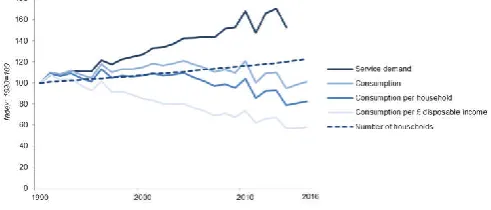
The strategies used appear to yield positive outcome and meet the policymakers’ objective as all regulations and laws in the building sector are well embraced and implemented by all stakeholders. That is evidence by the minimum level of building collapses/ fire outbreaks in the country over the past 5 years (196 fatalities over five years leading to 2017). Indeed, statistics of the HSE show that for the level of injuries and death caused on building site has been reducing steadily which implies that building regulations have been implemented at higher rate. The successful implementation rate is also traduced by the reduced level of energy consumption in building (household consumption) between 2010 and 2016 as shown by the data collected by BEIS ECUK as shown in the below figure.
Figure 1 Factors impacting on domestic consumption (source BEIS ECUK).
South Africa
A desktop review of the building laws, regulations and policies of the Republic of South Africa suggest that amongst the African countries below the Sahara, South Africa has arguably the better organised building construction system. Drawing from its strong history of environmental protection, which is indeed enshrined in its constitution in Chapter 2, the country has clear building policies, building regulations and standards. As early as in 1977 the country developed and adopted a global agenda on green building and it has been accommodated within the country’s institutions and daily practice.
Overview of the regulatory frameworks
Standards (SABS) is entrusted with supporting the regulatory framework by ensuring a uniform understanding and implementation of the NBRBS at the national level. In the execution of that duty in 2011, they introduced the South African National Standard 10400 (SANS 10400), which sets out the minimum standards for building construction. The application of these rules is not yet mandatory. It is the responsibility of the building owner to take all appropriate steps to ensure that his building satisfies the requirements of the regulations.
In furtherance of the green building policy, an energy part has also been developed and added, and is referenced as Part X and Part XA. Part X deals with environmental sustainability, whereas Part XA deals with energy use in buildings.
As to its nature, the South African building regulations can be defined as a mixture of prescriptive and performance based given the provisions of Paragraph 4.2.1(a) of the SANS 2004 (Performance route to prove compliance and Paragraph 4.2.1(b) (for the prescriptive route to prove compliance).
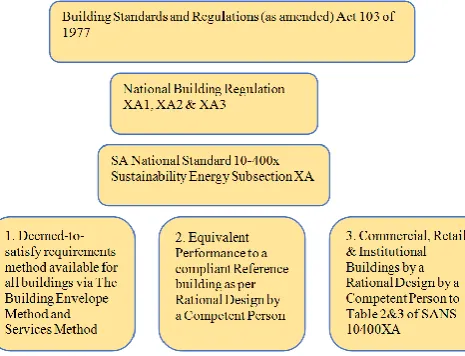
Below is an overview of the South African building regulatory framework.
Fig 2 Overview of the South Africa building regulatory framework
Overall in term of policy, the government of South Africa also has a number of policy and strategy documents related to sustainable development and which address the role of buildings including: (1) Energy Efficiency Strategy of the Republic Africa (2005); 2) National Climate Change Response Strategy for South Africa (2004); National Framework for Sustainable Development in SA (2008). The below table summarises the country’s building policies including laws, regulations and standards as well as their aim.
Table 1 Overview of the regulatory frameworks that are applicable to
the building industry in South Africa. These comprise legislation, national policies and industry standards (Adapted from Greencape Market Intelligence Report 2014: Greening South African Buildings)
Year Legislation/policy/standard Objectives
Legislation
2008 National Building Regulations
and Building Standards Act, Act 103 of 1977 as amended in 2011
Outlines a set of functional guidelines for anybody building any type of structure in South Africa.
Policies and government strategies Social housing policies
2004 Breaking New Ground (BNG) -
a comprehensive plan for the development of sustainable human settlements
Outlines an extensive plan to promote densification and integration of urban areas through enhanced regulatory mechanisms, planning functions and financial incentives. Objectives Include Using housing provision as a job creation strategy
Ensuring that property can be accessed by all as an asset for wealth creation and empowerment Accelerating growth in the economy Supporting the functioning of the entire single residential property market to reduce duality within the sector by breaking the barriers between the first economy residential property boom and the second economy slump Using housing as an instrument for economic development.
2005 Social Housing Policy for South
Africa
Provides an overview of the national housing programmes for the development of social housing in South Africa. (Refer to appendices for an overview of social housing programmes.)
2009 National Housing Code Outlines the national norms and standards
for the construction of standalone residential dwellings, which apply to all units built through one of the National Housing Programmes. (Refer to appendices for full schedule of programmes.)
Year Legislation/policy/standard Objective
Western Cape policies
2005-2014
Rental Housing Strategy (Building Sustainable Communities)
Presents a 10-year strategic plan for the roll-out of rental stocks in the province. This strategy focuses on three tiers of the rental market: social housing rental housing for low- to medium-income households; community residential units or CRUs, including former hostels that have been converted into low-income family units and other public housing stock; and backyard dwellings, which form a large part of the rental market in townships and informal settlements.
2012 Information and guideline
documents on the implementation of green procurement in the City of Cape Town (CoCT)
Provides information and describes the preferred ways to implement green public procurement and environmental legal compliance in the CoCT.
Year Legislation/policy/standard Objective
Green building framework
2011 National Framework for Green
Building in South Africa (NFGBSA)
Promotes the objectives of green building in the public sector. These include: Pro-actively inform and support development of plans and programmes Identify opportunities and constraints Identify key strategic areas Integrate principles of green building across areas, regions and sectors Improve the realisation of cumulative effects Focus on enhancement of human settlements Integrate the concept of green building into immovable asset formation in South Africa.
2011 Green Economy Accord Outlines the South African Government
pact − between Government, private business, trade unions and civil society − to create 300 000 new green jobs and double the country’s energy generation capacity by 2020. Includes a commitment to installing 1 million solar water-heating (SWH) systems in South Africa by the end 2014; promoting retrofitting in commercial buildings to reduce energy use; and a provision of R25 billion by the Industrial Development Corporation (IDC) for investments in green economy activities over a five-year period.
2012 Green building manual
(Drakenstein Municipality
Outlines a set of guidelines covering green construction principles for built environment professionals.
2013 Income tax allowance on energy
efficiency savings
Regulations in terms of Section 12L of the Income Tax Act administered by the DTI aimed at large manufacturing investments. That is: upgrades, expansions or new facilities that exceed R30 million and R200 million respectively.
South African National Standards (SANS)
2011 SANS 10400 Provides guidelines for the application of
the technical aspects of the NBR. (Refer to appendices for full schedule of chapters: Chapter A-XA.)
2011 SANS 10400-XA Provides technical guidelines for the
Countries
Implementation strategy
The Country has adopted an implementation strategy centered on local municipalities in the building construction and environmental sector. Indeed Schedule 4(B) and section 156(1) of the 1996 Constitution gives law-making and executive powers to local governments in relation to building regulations. The strong powers vested in the local authorities is further asserted within section 152 (1) of the constitution which clearly states that municipalities are co-responsible with the government to protect the environment and to secure an environment that is not detrimental to the health or well-being of people.
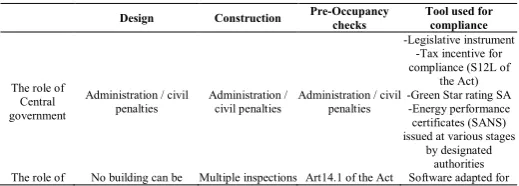
In order to ensure that the regulations are observed and successfully implemented, the country has adopted methods based on some elements of the three pillars of the “Sticks, carrots and tambourine” implementation strategy. Legal (direct implementation strategy within the legislation/regulation) approaches such as fines and prosecutions in the event of breaches are the preferred implementation method adopted by the policymakers. In the same perspective, Local authorities are responsible for the administration of the regulations and on-site inspections. Clear sanctions are in place with enforcement methods in the event of breach as set in Section 12 of the National Building Regulations and Building Standards Act (stick policy as defined by Meeus and Delarue, 2011). In addition, the “tambourine” approach is evidenced by the Green Star Certification which has been designed to enhance adherence. Also, the country has in place other targeted financial strategies to ensure that the code is successfully implemented. These include a statutory instrument known as Regulations on the allowance for energy efficiency savings (National Energy Act, 2008), which provides for a tax incentive that could be earned by companies who are able to provide evidence of energy efficiency savings (carrots policy as defined by Meeus and Delarue, 2011). In the meantime, the South African green building council champions the promotion of the new standards through various awareness campaigns and education programs as elaborated on its website (tambourine policy as defined by Meeus and Delarue, 2011). This tambourine approach is also observed in capacity building mission evidenced by the collaborative work of the government initiative through the partnership work of the South African Institute of Architectural Technicians and the Swiss Development Corporation to provide training and workshops on SANS 10400 XA for energy efficiency targeting designers and building control officers. This is particularly important, as without effective administration and policing, effective implementation cannot be guaranteed. The implementation mechanism put in place by the authorities at the main stages of the building project and can be summarized in the table 2 below:
Table 2 Implementation mechanism of the SA building policies
Design Construction Pre-Occupancy
checks
Tool used for compliance
The role of Central government
Administration / civil penalties
Administration / civil penalties
Administration / civil penalties
-Legislative instrument -Tax incentive for compliance (S12L of
the Act) -Green Star rating SA -Energy performance certificates (SANS) issued at various stages
by designated authorities The role of No building can be Multiple inspections Art14.1 of the Act Software adapted for
local Authorities
erected without the prior written consent of the
local authorities
during the construction phase.
requires the local authority to inspect and issue a certificate
of occupancy within 14 days of completion if the
work has been completed satisfactorily Non-Compliance leads to refusal of permission to occupy
energy performance measurement (SANS
10400 Part X) Human resources (increase in budget for
recruitment and training) Various certificates
(SANS) issued at various stages of construction
The role of Third Parties
Building Plans must be validated by a competent
person such as engineers/architects before it can be approved
by the local authorities (SANS10400XA) Non-Compliance leads to
refusal of permission to build
Building Control Officers must inspect the erection of buildings and any activities or matter connected therewith
throughout this phase and issue certificates where so
directed. Approved professionals and suppliers inspect
and issue compliance certificates where so
directed
All third parties can only be recognized as competent if they
hold valid memberships from their statutory body or appropriate state
certification
Capacity building and education that support code implementation
(international cooperation)
The mechanism is also strengthened by the creation of a national Building Performance Register, which includes particulars of all energy performance certificates issued by South African National Accreditation System (SANAS). The registry is accessible to the general public.
In respect of the overall implementation strategy applied by the policymakers, it should be highlighted that the strategy is a mixture of Top-down and Bottom-up methods in the country. Whilst the former is self-explanatory through the provisions of the statutory instruments identified above, the latter is evidenced by the development of SANS which was made through the establishment of committees and working groups. Also, in practice the standards are updated through based on the submissions made by those working groups made of stakeholders of various backgrounds.
The other step taken by the policymakers in this jurisdiction to ensure that the laws and regulations identified above are efficiently implemented was to make the process of applying and obtaining a planning permission smooth, traceable and transparent for all stakeholders. This exercise is difficult in practice due to the fact that the planning process is different in each of the country’s nine provinces. The policymakers are conscious of the fact that uniformity could enhance the implementation rate, particularly in a context where it is unanimously admitted that in the country people were struggling to understand and adhere to the existing planning laws and regulations. It is observed that the lack of uniformity and coherence in the bylaws hampers the implementation of the overall planning laws and regulation at national level. However, the process for building control during the construction phase is clear and transparent and this is perceived as contributing to the effective implementation of the Act and the various SANS relevant to the building construction field.
CONCLUSION
with the regulations. Also, adequate strategies have been adopted to ensure greater implementation. However, unlike in England and Wales a closer review of those regulations, standards and policies on the ground leads various authors to draw the unavoidable conclusion that despite the effort made the National Building Regulation is not implemented effectively in South Africa and where it is partially implemented it is not done uniformly in the various municipalities of the country (Twum-Darko & NtombizodwaMazibuko 2015, Laubscher, J 2011, and Watermeyer 2010). Several causes are identified for the failure of effective implementation and amongst other reasons Twum-Darko & NtombizodwaMazibuko (2015) submit that the low or inadequate implementation was attributed to the lack or poor business process as well as to the low level of awareness as to the existing building policies. In the light of their findings they suggested that in order to trigger better adherence and deep implementation of the existing BR that the focus should amongst others be on redesigning and improving the existing regulatory business processes. That view is backed by the South African cities network (2014) which concluded their own study by declaring that “planning is in dire straits and much of this has to do with the complex legal and institutional arrangements” and it makes the implementation of the various planning regulations whether at national or provincial level difficult to achieve.
Nigeria
This part is divided into two sub-sections namely the overview of the national regulatory framework (1.3.1) and the national implementation strategy (1.3.2)
Overview of the national regulatory frameworks
The built environment is regulated in Nigeria by the National Building Code (NBC) published in 2006 and a set of building regulations whether pre-established by the central government or by regional planning laws and regulations.
Like the codes of other jurisdictions, the NBC 2006 sets out the minimum provisions for design and construction of buildings with the aim of providing an adequate level of safety, comfort, health, and accessibility and building protection. The NBC 2006 is divided in several parts and it deals with pre-design stage, design stage, the construction stage and the post construction stage. At the pre-design stage, specific environmental prescriptions are made in a clear and concise manner as well as the interior requirements (light and ventilation) and the general building limitations. The post construction stage put an emphasis on building maintenance and fire protection and resistance. The enforcement part is made of one section only and refers mainly to the control of building works at all stages and it prescribes the functioning of notices, inspections and certifications amongst other requirements.
The NBC clarifies that regulations dealing with planning permissions implemented and conducted by the department of urban planning at both the Federal and Municipal levels, whereas the execution, supervision and management of the operational process for implementation is the responsibility of the building control department.
In addition to the NBC 2006, the authorities have followed up from the Paris agreement on Climate change developed and adopted the National Building Energy Efficiency Code edited
in 2017 (BEEC 2017) under the auspices of the Federal Ministry of Power, Works and Housing. The BEEC 2017 sets the minimum efficiency requirements for new buildings to achieve reductions in energy use and gas emissions over the life of the building. It is worth noting that the ambitious BEEC applies to new buildings only and to specific buildings identified within the NBC 2006 as group B and group R. As to the implementation of the BEEC it should be noted that to come in force it has to be adopted both at national level and then at local level. After the adoption procedure at these two levels it is directed that the BEEC will be voluntary for up to a maximum of two years to allow for an adoption and inception phase and thereafter it will become mandatory. As anticipated despite being published in 2017 after the Paris agreement, the BEEC has not yet been adopted in any federation.The Nigerian energy efficiency libel with a rating system as set within the BEEC has recently been launched in support of the BEEC but only time would say how it is implemented in practice. It should be noted with emphasis that the BEEC is developed and has within a provision which clearly demonstrates that its implementation is unrealistic as Part6 on enforcement clearly dictates that compliance shall be checked by qualified staff with a pre-requisite that they be trained, qualified and certified. It is unclear whether there is any national or local strategy to satisfy that pre-requisite giving the already existing barrier of insufficient budget. It is argued here that the BEEC has been developed out of context and without regards to the local reality. This is a major policy pitfall and it can be anticipated that implementation of the BEEC is likely to fail or to be ineffective.
Implementation strategies
On the basis of the above identified legislative and regulatory framework it can be concluded that the Nigeria Building code is a mixture of prescriptive and performance based in nature with a typical top-down approach for implementation purposes. The best strategy applied by the policymakers to achieve effective implementation is set within the legal and regulatory instruments themselves. Several provisions cater for fines, civil, criminal prosecutions and administrative sanctions for non- compliance (stick strategy). The identified implementers are membersof the Code Enforcement Unit which is a statutory body established within the development Control Department as set within the enforcement part of the NBC. Their missionsinclude the control of building works at all stages and it prescribes the functioning of notices, inspections and certifications amongst other requirements. To ensure compliance they can issue penalties and prosecute non-compliant actors.
Countries
The other strategy used by the policymakers in Nigeria to enhance the implementation rate was to introduce an incentive for building owners to comply with the BEEC. Accordingly, a national building label to rate the buildings’ compliance with the BEEC has been developed and validated (tambourine strategy). It is however important to stress the fact that there is no financial incentive for projects owners to try and comply with the BEEC as the only aim of the label is to encourage compliance with an official ‘badge of honour’ as proud owner of an environmental friendly building.
In the same perspective the policymaker in this jurisdiction has taken adequate steps to give the building laws and regulations a chance of greater implementation by making the planning process clear and transparent at least in theory as set out within the Nigeria urban and Planning Act. The process at the planning stage is clear and foreseeable although in practice it is usually disregarded (Windapo; 2012). The legislator has taken the same care by setting out the building control process within the NBC. If the processes set are thoroughly adhered to, it is submitted that the implementation rate would be enhanced.
Regardless of the above observations, the NBC 2006 and the BEEC are perceived as modern sustainable instrumentswhich on their faces arecomfortably comparable to the codes implemented in developed countries and which if successfully implemented will be at the standard expected by all respected nations.
Unfortunately, as observed by Windapo (2012) the NBC 2006 is not effectively implemented as evidence show that there are still as many building failures as there were before the code was promulgated.
Despite the well-intended aim of the NBC 2006, the scientific community and practitioners are unanimous in the agreement that its implementation is poor as it is yet to be adopted by most states of the federation and has not led to any change on the ground (Windapo& Rotimi 2012; Akinsola&Fatokun 2012). A field study carried out by Olaitan and Yakubu, (2013: p.145) reveals that only 16% of buildings constructed complied with the planning laws and regulations and obtained the relevant permits prior to the construction and that invariably and in breach of the NBC 2004 there was no building control during the construction phase, which is a blunt statement of the regulatory failure of enforcement.
Several authors also observe that the poor implementation of existing regulations is prominent when it comes to the sustainability incorporated within the regulations. In that respect, Windapo& Rotimi (2012) point to the current construction practices and opine that they are unsustainable due to poor adherence to existing regulations. Dauda et al also agree with the view that implementation of the NBC has failed and recommend that “an efficient enforcement agency, should be established, adequately staffed and funded, to ensure the implementation of the code, especially those provisions concerning sustainable construction.” A recent launch of the energy efficiency label is also expected to fail owing to lack of strong strategy background and consideration of the local realities.
CONCLUSION
Nigeria has developed a sustainable building code which currently regulates the building construction in the country.
That modern instrument has recently been enriched by the introduction of the BEEC and it is observed that strategies have been put in place to achieve an effective implementation. Unfortunately, the literature review suggest that those strategies have not been so far successful as the laws and regulations are simply not effectively implemented. Several reasons are given to justify that finding. Concretely, the sheer number of building collapse and open admission that people continue to build in disregard of the existing laws and regulations as well as the open admission that pre-established processes are not followed by all stakeholders in practice are hard evidence of the implementation failure.
Ghana
Overview of the national building policies
A review of the Ghana building laws and regulations show that the development of the National Building Regulations has its genesis in the colonial Town and Country Planning Ordinance (CAP 84) of 1945.
By the early 1970s the existing colonial land and construction Regulations were no longer relevant to the reality and the Building and Road Research Institute (BRRI) of the Council for Scientific and Industrial Research decided to produce a draft document, for discussion, modification and use as a basis for an updated Code to address the redundancy of the earlier documents. That led to the publication of the Code in 1977, followed by a review in 1988. This instrument was in place until 1996 when with changes in land use patterns, materials and construction methods and local government structure, the Ministry of Works and Housing substantially revised the laws and regulations by producing a document known as National Building Regulations, published as (LI.1630). This document was to improve upon the Building Regulations of the Colonial times and to complement the existing Code.
The L.I.1630 is a legislative instrument deriving from the Local Government Act 462 of 1993 and made as a law in 1996. This law is a set of rules and standards that must be followed to satisfy the minimum acceptable levels of safety for buildings and non-building structures in the country. The L.I.1630 is applicable to the erection, alteration or extension of any building and consists of 19 parts and 187 regulations. The 19 parts include a mixture of planning, design and construction procedures. There is no designated implementer within the regulations.
modern building code to answer the current energy deficits. Accordingly, a Draft Building Code was compiled under the supervision of the Ministry of Water Resources, Works and Housing in 2012. Surprisingly despite the good intentions of various stakeholders and the support of the UNEP there has not been any political will to turn the wish into reality. The draft code was duly validated, yet six years down the line the document is still under the coffers of the ministry Alongside these two master pieces of legislation also operates the Towns Act 1892 which apply to specified towns and cities only as identified within the Act. Whilst the local Government Act 462 and the Towns Act 1892 govern the planning side of building regulations, the LI 1630 set out the technical requirement and processes of all building constructions.
Implementation strategies
The implementation strategies for the above building laws and regulations in Ghana are top-down in nature and inbuilt within the above instruments. Theymostly reflect the “Stick”approach in the sense that the Towns Act 1892 provides for heavy penalties for people who build without obtaining the adequate and relevant authorisations. The Local Government Act 462 also provides for fines and other penalties for people guilty of constructing without authorisation, although their penalties are lighter than those handed under the Towns Act 1892.
In the same manner, the strategy adopted by the policymaker to ensure efficient implementation of building laws and regulations during the construction phase is prescriptive as they place a burden upon the project owner to make the move and initiate the statutory building control at each of the 10 phases identified within the legislative instrument. This is similar to the English system with the notice of commencement and subsequent notices prior to the completion of dedicated stages.
The implementation powers is vested upon the Local Authority and in the event of a breach (i.e when a stage has been covered without given the notice to the authorities to inspect the work in advance) they can serve notice on the owner of the building to cut into, lay open or pull down the relevant part of the building to verify that the work has been done in compliance with the regulations. Where the project owner is unwilling to cut down voluntarily, the Authority can apply to the courts for an order to cut down and inspect the work done. It is however worthy of a note that the local authority powers to force the inspection where the project owners are not willing to co-operate cannot be executed without leave of the court as stated in Randolph v. Accra City Council [1975] 2 GLR 198.
The policymakers appear to have banked on the fact that with its heavy top-down approach, building controllers suitably qualified and experienced along with the severe sanction for breaches would be enough to ensure that building regulations are effectively implemented. Such belief from the policymaker seems unrealistic with hindsight as most scholars and researchers agree that since its adoption in 1996 the level of compliance with the LI.1610 by all stakeholders is highly minimal (Ahmed and Dinye (2011) and Boamah et al. (2012)). In the light of this research findings, the “stick” strategy intensely applied by the policymakers and the implementers on the prescriptive building regulations in Ghana is clearly insufficient and criticised by several practitioners and scholars as they advocate for the focus to be shifted on strategies
similar to “carrot” that will facilitate voluntary compliance and less on enforcement (Boamah; 2014).
The policymakers have also ensured that planning and building processes are firmly established. The planning regulations clearly enunciate the process through which an applicant must go to secure the permission to build. The process during the building construction is also well established including the process for building control. It is submitted that if those processes were followed thoroughly the laws and regulations would be better implemented in practice. Unfortunately, it is observed that in practice buildings are still failing, blatant breach of health and safety contrary to regulations are still occurring and it is clear that the processes set are not been followed and the direct consequence is building failures and associated consequences. For instance, between 2009 and 2012 twelve cases of building collapses causing at least 37 deaths were identified (Danso & Boateng, 2013). Ametepey and Ansah (2015) considered the factors affecting the failure and attributed the negative events such as fire outbreaks and occasional collapse of buildings to the fact that despite the implementation methods adopted the regulations were not being followed.
Despite the implementation strategy adopted to enhance the success rate, it is observed that buildings continue to be raised without appropriate planning permission and in disregard of the existing rules and regulations. From the above flows a conclusion that the L.I.1630 has not made the needed impact due to its poor adherence.
CONCLUSION
Overall a review of the current building laws, regulations and practices in Ghana put into light the evidence that existing regulations are of low standards and they lack political and legislative power to drive any meaningful success. Existing regulations are not adhered to, which leads to the conclusion that they are not adequately implemented. The strategies adopted by the policymakers are limited to the stick approach and unless further and better strategies are invented and included in the conduct of business and unless the process in term of both planning and building stages are made more robust the laws and regulations would continue to be ignored. There is clearly an insufficient policy strategy for effective implementation of building construction and planning laws in the country.
Cameroon
Like the preceding section the Cameroon building laws, regulations and policies are summarised below in sub-section 1.5.1 whereas the implementation strategies adopted are contemplated in 1.5.2.
The national regulatory framework
The regulatory framework of the republic of Cameroon is rather blurred when it comes to the building construction sector. The building laws and regulation in the jurisdiction cab be described but not limited to the following:
Countries
drawing up and revising town planning documents, the Decree No.2008/0737/PM laying down safety, hygiene and sanitation rules applicable to construction works; Decree No.2008/0738/PM organizing land-use procedures and processes, Decree No.2008/0739/PM laying down land-use and construction rules (repealed and replaced by Decree No.2016/3058/PM of 28 July 2016) and Decree No. 2008/0740/PM setting rules on penalties in the event of breach of town planning rules. Since the enactment of the Code, the policymakers and the government have also developed additional instruments to ensure that the it is effectively implemented in practice. These include amongst others the Ordinance No.0002/E/2/MINDUH of 23May 2011 establishing a model for building permit applications, Ordinance No.0003/E/2/MINDUH of 23May 2011 establishing a model for permit to implant applications, Ordinance No.0004/E/2/MINDUH of 23May 2011 establishing a model for demolition permit applications and the Ordinance No.0005/E/2/MINDUH of 23May 2011 establishing a model for a works completion statement and compliance certificate.
Alongside these laws and regulations mainly concentrated on towns and building planning activities also operate several other laws and regulation specifically for building constructions as they set out provisions for design and construction of buildings with the view of providing an acceptable level of safety, health, and accessibility and building protection. These are but not limited to
Decree No 2018/1969/PM of 15 March 2018: This Prime ministry’s decree establishes the basic fire safety standards in buildings andit is supported by theMinistry of Urban Development and Housing (MINDUH)’s Ordinance No 00928 of 02 April 2018 approving the technical notices for the implementation of the basic fire safety standards in buildings.
Law n°97/003 of 10 January 1997: This law regulates the real estate development, specifically with reference to public housing. This law is supported by the ministry Decree No 0001/E/2/MINDUH of 20 January 2010 setting the rules of presentation of the specifications of real estate development and Decree No 0009/E/2/MINDUH of 21 August 2008fixing social housing standards.
Also, alongside the above legal instruments all depending directly upon the authority of the MINDUH, also operate other instruments which can be construed as part of building regulations at least in some of their aspects. These are:
Law No. 96/12 laying down the framework on the management of the environment with its implementation Decree No. 2005/0577/ PM
Law No. 89/27 regulating toxic waste and Law No.98/005 concerning the water regime
Decree No. 0070/MINEP of the Ministry of Environment and nature conservation fixing the different categories of operations subject to an impact assessment prior to their execution
Law No 98/006 relating to tourist activity and its execution decree No99/443/PM.
Law No. 2011/022 governing the Electricity Sector, the Oil code enacted under Law No 99/013 and its implementation decrees No. 2000/465
Law No. 2012/006 relating to the gas code
Various other instruments relevant to the building construction but depending upon other various ministries also exist and cannot be easily individually identified given the inadequate filing system in the country. In the absence of a proper building construction code and in the light of the scattered nature of the various laws and regulations applying to the building sector developed without coordination by various ministries it is an impossible task to identify and pin down each and every single regulation. Even so, a good desktop review of laws and regulations in this jurisdiction suggests that whilst efforts have been made to regulate urbanisation and planning activities in the country, the technical aspect of building construction is not effectively controlled. Indeed, the technical standards (except for fire and public housing as shown above) are dealt with under the global blanket of International Organisation for Standardisation (ISO) standards with no real effort to calibrate them to the specific situation of the country. The government has attempted to correct this insufficiency by creating in 2009 the National Cameroonian Standards and Quality Agency (ANOR), which is affiliated with the ISO. The former’s main aim is to provide solutions to the challenges facing the country by setting the technical standards of various products including the standards within the building construction sector. Other agencies such as MIPROMALO have been crated for the promotion of local building materials.
Turning to the sustainability of building construction in Cameroon the regulatory framework has no reference on energy and resources efficiency in building construction. However, it should be noted that prior to and in the wake of COP21 in Paris concerted action have been made to introduce the sustainability aspect within the country’s legal arsenal.
A deep review of those existing building laws and regulations in Cameroon show that without a real building code dealing with the technical and normative standards it is impossible to efficiently regulate the sector let alone to ensure the implementation of the existing rules (Tene et Al; 2018)
Implementation strategy
enforcement of breaches for non-compliance are ensured by the local authorities.
The strategies adopted for implementing the laws and regulations here are typical of a top-down practice where the central authorities simply dictate how the policy developed should be deployed by the implementers. The method used to ensure that the policy aims are achieved are typical of the “stick” method whereby failure to adhere to the prescribed planning and building laws and regulations leads to severe pecuniary, administrative and criminal sanctions ranging from fines to destruction of the contravening building projects as evidence within the Decree No. 2008/0740/PM setting rules on penalties in the event of breach of town planning rules.
Local authorities have within their implementation powers the duty to carryout inspection of building construction sites at various (although undetermined) phases of building projects within their locality. The policymakers had hoped that by discharging that duty competently and professionally the building laws and regulations would improve the quality of building and improve the welfare and comfort of the people occupying those buildings.
Table 3 comparative table of the national building regulations of the targeted countries and their implementation strategies
England South africa Ghana Cameroon Nigeria
Building Laws, Regulations & Standards
International
Green Construction code 2012
Building
Regulations 2010
Building Act
of 1984
NBRBS Act (No.103 of 1977) amended in 2011
SANS
The Local Government Act 462
L.I1630
The Towns Act 1892
NBC 2006
BEEC 2017
Description Performance based standard Mixture of Performance
based & prescriptive prescriptive prescriptive
Mixture of Performance based & prescriptive
Standard type (energy)
Rating & Certification system
Rating & Certification
system NIL NIL Rating & certification
Mandatory/
Voluntary Mandatory
Mandatory for residential buildings and Voluntary for
other buildings
Voluntary
Building type ALL types (existing and
new) New Commercial/ residential New Commercial/ residential only Implementation strategies
Sticks (Legal and regulatory tools) Technology-based standards (mandatory) Performance based-standards Administrative/enforcement structures (Fines/ civil, penal and administrative
sanctions for non- compliance
Emissions rate targets setting and sanction for
breach)
inspection/control by local authority and/or Approved
controllers
Carrots (Financial & economic tools)
Environmental subsidies for sustainable technologies
Tax exemption for achieving emissions targets
Tambourines (information tools) Public information campaigns Environmental labeling schemes Research funding
Sticks (Legal and regulatory tools)
Technology-based standards (Software
adapted for energy performance measurement
(SANS 10400 Part X))
Administrative/enforcement structures (Fines/ civil, penal and administrative
sanctions for non- compliance
inspection/control by local authority
Carrots (Financial & economic tools)
Tax incentive to enhance adherence to legislation and
regulations through the National Energy Act, 2008
Tambourines (information tools)
Capacity building and education that support code implementation: training & workshops on SANS 10400
XA
Environmental labeling schemes (SANS 1995)
Sticks (Legal and regulatory tools)
Administrative/enforcement structures (Fines/ civil, penal and administrative
sanctions for non- compliance
Provision for inspection (structural calculations at
Part V)
Carrots (Financial & economic tools)
NIL
Tambourines (information tools)
NIL incentive
Sticks (Legal and regulatory tools)
Administrative/enforcement structures (Fines/ civil, penal and administrative
sanctions for non- compliance
inspection/control by local authority
Carrots (Financial & economic tools)
NIL
Tambourines (information tools)
NIL incentive
Sticks (Legal and regulatory tools)
Administrative/enforcement structures (Fines/ civil, penal and administrative
sanctions for non- compliance
Technology based standards
Provision for all building Controls
Carrots (Financial & economic tools) NIL incentive Tambourines (information tools) Environmental labeling schemes Planning process
Clear, traceable and strictly applied
Confused/ unclear in various provinces
Not strictly applied
Clear and traceable but not strictly applied (ignored by
most owners)
Clear and traceable but not strictly applied (ignored by
many owners)
Clear and traceable but not strictly applied (ignored by
most owners)
Building construction
process
Clear traceable and strictly applied
Clear and traceable
Not strictly applied (ignored by some owners)
Clear and traceable but not strictly applied (ignored by
most owners)
Confusing/ vague and not traceable
Clear and traceable but not strictly applied (ignored by
Countries
To increase the chances of effectively implementing the building laws and regulations in the country, the policymakers have also taken care to set clear and traceable processes, at least as long as the planning side of the building process is concerned. The different stages of a planning application are clearly specified and published with relevant timelines and processes to follow. The only downside is with respect to the building construction stage as although the control mission is given to the local authorities there are no traceable processes governing that exercise. It is submitted that such unclear position contributes to the observe implementation failure as described by researchers (Bikoko and Tchamba; 2015).
CONCLUSION
In conclusion the review of the legislative and regulatory framework for the building construction activities has yield evidence that the Cameroon building laws and regulations are scattered, various and difficult to trace. That is probably due to the complex structure of the administration and the extensive political battle to keep control on all aspect of daily life. The building regulations identified are essentially prescriptive in nature. The question is whether in practice this plethora of laws and regulations are effectively implemented. Those laws and regulations are implemented through various strategies with the prominent feature being their association to the “stick” method. Studies carried by several authors including Bikoko and Tchamba (2015)point to the fact that existing laws and regulations are not effectively implemented in practice.
CONCLUSION
In summary a comparative table of the national building regulations of the targeted countries and their implementation strategies can be shown in table 3 below. Overall it is observed that building regulations in all the countries considered come in different shapes and sizes. The prominent feature is that where there is evidence of appropriate policy conception upstream, the implementation rate and mechanism is greater. Also, it transpires from the review and comparison made that where the mechanisms and processes are well identified and a mixture of the “stick-Carrots-Tambourines” approaches applied, they work together to yield a better implementation outcome as seen in the case of England and partially in the case of South Africa. The conclusion is blunt in establishing thatinadequate processes associated to a poor legal and legislative framework make the implementation difficult to achieve. In the face of these remarks appropriate steps were taken to establish the causes behind the poor implementation noted from the desktop reviews of laws and regulations of all jurisdictions and the outcome is presented in the next session.
Case Study
The above section has highlighted that regardless of their forms and shapes (Sustainable Building Code in Nigeria and South Africa, prescriptive building regulation in Ghana and scattered regulatory instruments in Cameroon) building laws and regulations are not effectively implemented in developing African countries. Effort will be made in this section to review the causes of such situation and to collect stakeholders’ view on potential solutions. That is done through a study carried out in Cameroon between 2016 and 2017.
Case study description
Cameroon is a typical developing African country situated below the Sahara desert. Geographically, it is situated in west Africa and shares borders with Nigeria, Gabon, Congo, Equatorial Guinea, Chad and Central Africa Republic. Politically it is classified as belonging to the CEMAC zone. Culturally the country is often called a mini Africa given its socio-cultural diversity with ethnic groups that can be found in most African countries. It heritage from the colonisation era has led the country to be bilingual with two region speaking English as first language and 8 regions speaking French as first language. That diversity of culture means that the legal and regulatory framework is a combination of Common Law and Civil law and that is reflected in the courts and administrative practices of the country. Because of that rich and diverse background, Cameroon represents the ideal country for a study of issue related to the implementation of building laws and regulations in developing countries. One of the main motivations of this country choice as representative case study was the heterogeneity of the population, the dual legal system and the various cultural backgrounds as the diverse experiences lived in this country would closely replicate what is similar in other countries with the same specifications, particularly in the context of building construction where architecture usually reflect the customs ad ways of life of the diverse populations. The laws and regulations as well as the building construction policies of the country is defined by the government through the MINDUH. The implementation of laws and regulations are left to the municipalities. The review of the laws and regulations has clearly indicated that like in other developing countries reviewed in this paper, Cameroon building laws and regulations are not effectively implemented. The aim of the case study is to identify the reasons behind the poor/non-implementation observed and where appropriate to discuss and make suggestions on how the decried trend could be inversed.
METHOD
The investigation of the case study was carried out using the qualitative method by the means of Focus group discussion.
Focus group discussions