Performance of Software
for DM MIMD Systems.
Jonathan William Gulley
A dissertation submittedfor the degree o f
Doctor o f Philosophy in the University ofLondon.
This work was carried out under the PRl scheme at CRL under the
supervision o f Professor S. R. Wilbur, University College London,
and Dr. J. S. Severwright, formerly o f CRL.
CRL
Dawley Road Hayes
Middlesex UB3 IHH UNITED KINGDOM
All rights reserved
INFORMATION TO ALL USERS
The quality of this reproduction is dependent upon the quality of the copy submitted.
In the unlikely event that the author did not send a complete manuscript and there are missing pages, these will be noted. Also, if material had to be removed,
a note will indicate the deletion.
uest.
ProQuest U642822
Published by ProQuest LLC(2016). Copyright of the Dissertation is held by the Author.
All rights reserved.
This work is protected against unauthorized copying under Title 17, United States Code. Microform Edition © ProQuest LLC.
ProQuest LLC
789 East Eisenhower Parkway P.O. Box 1346
Supemode™ is a trademark of Parsys Ltd.
3L™ and 3L Parallel C™ are trademarks of 3L Ltd.
Texas Instruments™, TMS320C40™ and TMS320C44™ are trademarks of Texas Instruments Incorporated.
Analog Devices™ and SHARC™ are trademarks of Analog Devices Incorporated. DEC™ and Alpha™ are trademarks of the Digital Equipment Corporation.
INMOS™, IMS™, T800™, T9000™, OCCam™, Transputer™, Inquest™ and IMON™ are trademarks of SGS-THOMSON Microelectronics Group.
Helios™ is a trademark of Perihelion Distributed Software Limited. Transim™ and Gecko™ are trademarks of the University of Westminster.
SES/wor^èe/îc/i™ is a trademark of Scientific and Engineering Software Incorporated. ADAS™ is a trademark of the Research Triangle Institute.
Windows™ is a trademark of the Microsoft Corporation.
The X-Windows System™ and Motif™ are trademarks of The Open Group. SUN Workstation™ is a trademark of Sun Microsystems Incorporated. Pegasus™ is a trademark of Jovian Systems Incorporated.
In high-performance computing, distributed-memory multiple-instruction multiple-data systems, in which processors have local memories and exchange data via links, have the potential to achieve very high degrees of parallelism at low levels of cost. The use of non-deterministic, complex software behaviours, in order to guard against performance risks, has raised the cost of realising this potential. Programs with simpler behaviours are much easier to construct, debug and modify, but their success depends upon being able to manage performance risk successftjlly, particularly through tuning after implementation.
At the current state of the art, program tuning is supported only by performance monitoring tools, which give no prediction of the performance which will be achieved by tuning. The performance risks in program design, on the other hand, are reduced by the analysis and simulation of performance models. This dissertation extends the field of research by evaluating methods which bring model analysis and simulation to bear on the problem of program tuning. For some programs, model analysis can predict, on the basis of monitoring results, limits on what can be achieved through tuning for various levels of cost. Model simulations help to determine whether these gains will, in fact, be realised.
I would first like to thank my supervisors, Professor S. R. Wilbur, UCL, and Dr. J. S. Severwright, formerly of CRL, for their advice and encouragement throughout the development of this work. I would also like to thank Andrew Preston, Chris Jobson, Trevor Carden, Mark Burton and Guy Morrogh, all formerly of CRL, for the early discussions I had with them. Finally, I am also grateful to the external examiners. Professor R. Winder of King’s College London and Dr. P. C. Capon of the University of Manchester, for their helpful comments on my work.
Commercial-strength performance monitoring tools have been developed during an activity that has spread over several years and have been marketed as the VPB Toolset’’'''^. The tool VPB/View™, described in this dissertation, has been developed into a product with user interfaces implemented under Windows™ and under the X-Windows System™ and Motif’’’^. The monitoring tool, VPB/Mon™, has been developed for INMOS transputers™ programmed using the INMOS C™ environment and for Texas Instruments™ TMS320C40s™ programmed using the 3L Parallel C™ environment. Many colleagues at CRL have been involved in the technical, commercial and managerial development of this work. Particular thanks are due to Peter Clare, Nigel Bamford, Julian Nolan, Rob Verran, Roger Waterworth, Richard Waltham, Rob Saunders, Fabian Schmidt, Simon Hirsch and Liaket Ali. The ideas developed on the use of performance tools in this dissertation are my own and I developed the prototypes from which the VPB Toolset™ is derived. However, the research work is only a small part in the development of a software product, so it is Avith great pleasure that I acknowledge the contribution of the development team. Further thanks are due to those who tested the VPB product, particularly to Geoffrey Lawday, of Buckinghamshire College for his encouraging remarks, and to the staff of 3L Ltd, the distributor of the VPB Toolset™ for TMS320C40s™.
I would also like to thank colleagues on the Supemode II team for their discussions and suggestions. I am also particularly grateful for the assistance of Chris Smith, Ian Ellis, Dave Burnett and Stuart Arnold of Sensors Group, THORN EMI Electronics Ltd, now part of the Racal Group. They gave me the invaluable opportunity to test the prototype tools on their application while it was being developed and they persisted and succeeded in the free of considerable technical difficulties; the experience gained in using the tools was invaluable in defining the problems discussed in this dissertation.
Table of Figures... 10
Table of Tables...12
Glossary...13
1. Performance Risk...
31
1.1 Introduction...31
1.2 Parallel Hardware... 31
1.3 Software Issues... 32
1.4 Tuning Costs and Risks...34
1.5 Summary...37
2. Parallel Programs and Tuning...38
2.1 Introduction...38
2.2 Expressing Parallel Programs...38
2.3 Program Behaviours... 41
2.4 Examples of DAG Programs...48
2.5 Types of Tuning... 51
2.6 Summary...53
3. Performance Tools...55
3.1 Introduction...55
3.2 Performance Engineering Techniques... 55
3.3 Performance Visualisation... 55
3.4 Performance Monitoring... 58
3.5 Model Analysis... 60
3.6 Model Simulation... 62
3.7 Perfect and Imperfect Tools...65
3.8 Integrating Tools... 66
3.9 Generating Programs and Models...70
4.1 Introduction...75
4.2 Event Tuning...76
4.3 Analysis of Monitoring Results... 80
4.4 Other Types of Tuning... 83
4.5 Large Programs and Re-Use...85
4.6 Summary... 88
5. Tuning...89
5.1 Introduction...89
5.2 Tuning Trees...90
5.3 Tuning Trajectories... 91
5.4 Tuning Plans and Performance Gaps... 93
5.5 Indirect Tuning...95
5.6 Relative Costs...97
5.7 The Tuning Risk Problem... 99
5.8 The Search Problem...101
5.9 Practical Experience...103
5.10 Summary... 104
6. Grain Sizes... 105
6.1 Introduction... 105
6.2 Performance Testing...106
6.3 Upper Bound M odels...107
6.4 Anomalies... 108
6.5 Grain Size Bounds...I l l 6.6 Managing Risks in Grain Size Tuning...112
6.7 Pessimistic and Optimistic Upper Bound Models...115
7.1 Introduction... 117
7.2 The Overheads of Modelling... 117
7.3 Model-Driven Program Development...118
7.4 Trace-Driven Models...119
7.5 Synthetic Workloads...121
7.6 Combining Techniques...123
7.7 Data-dependent Traces...123
7.8 Non-deterministic Traces...125
7.9 Summary... 127
8. Imperfect Tools... 128
8.1 Introduction... 128
8.2 Obstacles to Monitoring...128
8.3 Perturbation... 132
8.4 Imperfect Discrete Event Simulation Models...136
8 .5 Imperfect Synthetic Workload Models...140
8.6 Non-Deterministic Programs... 142
8.7 Techniques for Managing Imperfection...142
8.8 Summary... 143
9. Conclusions... 145
9.1 Introduction... 145
9.2 The Tuning Method...145
9.3 Fundamental Problems with Tuning... 146
9.4 Practical Problems with Tuning... 146
9.5 Benefits of this Research...148
9.6 Benefits for Developers of Hardware and System Software...149
9.7 Continuation of this Research... 150
9.8 Further Work... 151
9.9 Summary...154
Table of Figures
Figure 1 : A Parallel System... 39
Figure 2 : Messages, Routing and Packets... 40
Figure 3 : Task Script...41
Figure 4 : Event Log and Event Trace...42
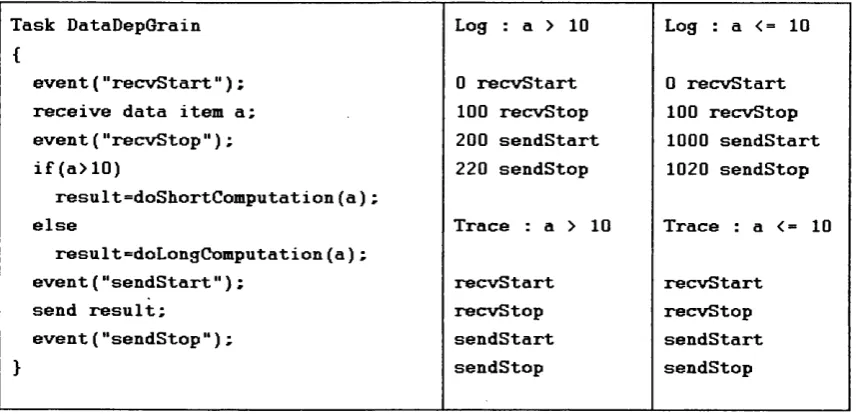
Figure 5 ; Logs and Traces with a Data-dependent Grain... 43
Figure 6 ; A Data-Dependent Trace...44
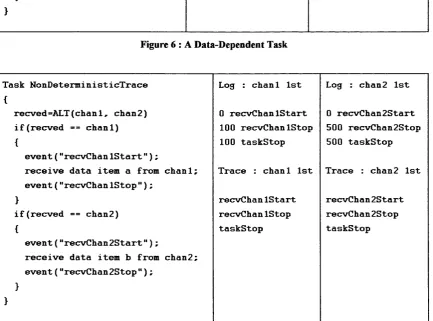
Figure 7 ; A Non-deterministic Task...44
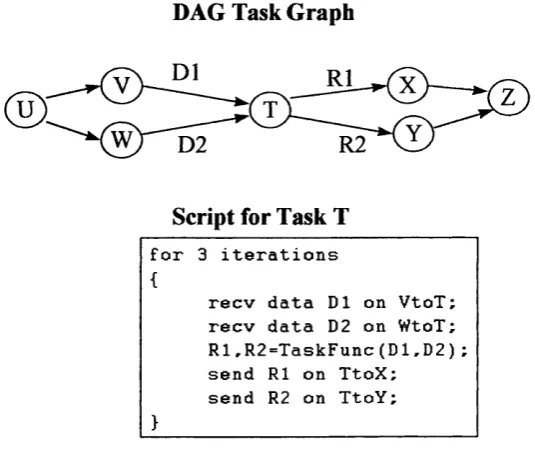
Figure 8 : DAG Task Graph and Task Script... 46
Figure 9 : Classification Diagram for Task Graph Programs... 47
Figure 10 : The Processor Farm as a DAG Program...49
Figure 11 : A Pipeline Implemented as a DAG Program...49
Figure 12 : ID Geometric Array... 50
Figure 13 : VPBA/^iew Example... 57
Figure 14 : Performance Monitoring and the Software Life Cycle... 59
Figure 15 : 2D Geometric Array Computation... 61
Figure 16 : Idealised and Realistic Behaviour of a Processor Farm... 62
Figure 17 : Analogous Simulation... 65
Figure 18 : The VPB Toolset Concept...67
Figure 19 ; Using the Hamlet Toolset... 69
Figure 20 ; Automatic Generation of DAG Programs and Modules... 71
Figure 21 : Programs and Models using VPB and Gendag...73
Figure 22 : Critical Path Analysis... 77
Figure 23 : Critical Load Analysis... 78
Figure 24 : Monitoring Analysis Decision Tree for Event Tuning... 82
Figure 25 : Critical Path Analysis of Grain and Parallelism Tuning... 84
Figure 27 ; Replicated Tasks... 87
Figure 28 : Program with 2 Sub-Programs...87
Figure 29 : A Tuning Tree... 91
Figure 30 : Tuning Iterations for Direct Tuning... 92
Figure 31 ; Tuning Trajectories for Direct Tuning... 93
Figure 32 : Ideal and Real Tuning Trajectories for Direct Tuning... 95
Figure 33 ; Indirect Tuning Program Iterations... 96
Figure 34 : An Example of a DAG Program...109
Figure 35 ; An Example of a Tuning Anomaly...110
Figure 36 : Indirect Tuning with Data-Independent, but Uncertain Grain Sizes...114
Figure 37 ; Typical Structure for a Parallel Program... 118
Figure 38 : VPB/Mon'*'^ Setup Phase... 129
Figure 39 : VPB/Mon™ During Application Execution... 130
Figure 40 ; VPB/Mon™ During Results Output Phase... 130
Figure 41 : Overview of the VPB/Sim™ Architecture...138
Figure 42 : Operation of VPB/Sim™ - Starting a Grain... 138
Figure 43 : Operation of VPB/Sim™ - Finishing a Grain... 139
Table of Tables
Table 1 ; Assumptions and Risks in Model Analysis Techmques... 80
Table 2 : Risk Management for Indirect Tuning at Negligible Cost...97
Table 3 ; Estimated Costs of Program Modification and Model Modification... 99
Table 4 ; Preferred Technique for Tuning at Different Levels of Cost...100
Table 5 ; Risk Management for Indirect Tuning with Non-negligible Cost...103
Table 6 ; Event Perturbation for VPB/Mon™...133
Glossary
Please note that cross-references to other terms defined in this glossary are printed in italics, abstraction
The representation of aspects of a system in a simplified way. abstract model
A model which represents a system in a simplified way. analysis
The use of analytical or mathematical techniques for predicting the behaviour of a parallel system, anomaly
An anomaly occurs where a reduced grain size leads to an increase in overall run-time. ANSIC
The ‘C’ language as defined by the American National Standards Institute. array
Parallel program structure in which an array of tasks is distributed over a DM MIMD system so that each task’s contribution corresponds to a region of a physical space represented by the computation. The tasks are generally mapped onto a corresponding array of processors. Introduced in Section 2.4.
assumptions
Propositions which form the premises for modelling and on which the validity of the model depends.
bandwidth
The rate at which data is transmitted over the links between processors. best plan
The plan which represents the best tuning achievable in the budget available. Where grain sizes are data-dependent, the performance by which the tuning is judged is that of the upper bound model. blocking
budget
The financial funding set aside to defray the expenses of tuning a parallel system, budget limit
The budget limit is the best performance that can be achieved for a given budget. buffer
Block of memoiy for holding message data. buffer task
Task whose sole purpose is to hold and then pass on a message, holding it in a buffer in the meantime.
bus
Mechanism for communication between processors which is shared between a number of processors. Each can communicate directly with any other over the bus, subject to its not being in use. This is typically the medium of communication in SMMIMD systems.
channel
Software mechanism whereby tasks communicate. This mechanism is an abstraction fi"om the links or buses which connect processors, the packets of data which pass over them and the software which is used to route the packets from one processors to another.
computation
The execution of a single and continuous stream o f instructions. computation grain
A computation to be executed between successive messages in a task on a single processor. communication grain
A block of data to be transmitted from one task to another between successive computations. consistency
A parallel system is said to meet a performance specification consistently if it does so for every relevant input data vector. Consistency is an important consideration in specifying performance for programs with data-dependent grain sizes and data-dependent traces.
cost
The penalty associated with a human activity, usually expressed as the number of man-hours to undertake it. For the acquisition of equipment, the cost is usually expressed in financial terms. tktical load
critical path
Where the run-time of a parallel program is defined by chain of dependency between grains and messages, that chain of dependency is said to be the critical path.
CSP
Communicating Sequential Processes. This refers to a theoretical treatment of the interaction of concurrent activities and their interactions. It has been influential in the design of parallel languages, notably OCCam.
DAG
Directed Acyclic Graph. In this dissertation, refers to class of parallel programs in which each task must receive messages, compute and send messages, in that order. Each task repeats the cycle the same number of times. Each output channel on every task must be connected to one input channel on another task. There is a source task and a sink task and a number of intermediate tasks and channels. The run-time of such a program is defined by the time between the source task beginning and the sink task terminating.
data-dependent grain size
A grain size which depends, directly or indirectly, on the input data vector. data-dependent message size
A message size which depends, directly or indirectly, on the input data vector. data-dependent trace
A trace which depends on the input data vector. data-independent grain size
A grain size which does not depend, either directly or indirectly, on the input data vector. data-independent message size
A message size which does not depend, directly or indirectly, on the input data vector. data-independent trace
A trace which does not depend on the input data vector. design
The initial concept for a parallel program, deterministic
deterministic trace
A parallel program has a deterministic trace if the order of events within each task does not depend on the timing of past events. The trace is thus is not affected by monitoring, by errors in grain size values in a model simulation or by types of tuning which do not explicitly affect the trace.
Directed Acyclic Graph See DAG. direct tuning
In direct tuning, tuning modifications are evaluated by applying them directly and in full to the parallel program. This contrasts with indirect tuning, in which tuning modifications are evaluated by applying them to a model of the parallel program, not to the program itself.
distributed memory See DM MIMD. discrete event model
Model of a parallel computing system in which behaviour is represented in terms of events, their relationships with one another and the relative times associated with those relationships. In the case of models of parallel programs, the times between events represent the times taken for computations or communications between processors and these may delay one another as they contend for processors and links.
discrete event model analysis
Prediction of the behaviour of a discrete event model by use of analysis on the basis of assumptions.
discrete event model simulation
The transformation of a discrete event model into an explicit and precise description of model behaviour by determining the timing of all the events in the model. As the timing of each event is determined, the timing of those events defined in relation to it can be determined, taking into account all possible effects the timing of past events may have on the timing of future events. This latter point is important in modelling contention for processors and links and its effects.
DMMIMD
EUCLID
European Commitment to the Long-term In Defence. A programme of research into defence technologies and systems. It is organised at a European level under the auspices of the Western European Armaments Group.
event
A data record defining what happened at a particular point in a parallel program and when. It consists o f an event type, which defines what happened, and a time, to define when it happened. Events are generated by both performance monitoring tools and performance simulation tools. event log
Set of ordered lists of events, one for each task in a program, in which both the event time and the event type are significant.
event trace
Set of ordered lists of events, one for each task in the program, in which only the event type is significant. An event trace is like an event log, in that the order of event types is identical, but the event times are not taken into consideration in comparing event traces, whereas the timing is considered in comparing event logs.
event tuning
Tuning modifications which simply alter the timing of events without making modifications to the grain sizes, the structure of the parallel program or the hardware of the parallel computer. In this dissertation, event tuning refers exclusively to modifications to the mapping of tasks to processors, the priorities of tasks, the order of directly consecutive messages and the level of buffering between tasks. Excludes grain tuning, parallelism tuning or hardware tuning.
explicit assumptions
Assumptions which are stated as premises of a model analysis. farm
Parallel program to process a series of data items such that different tasks each handle a share of the items to be processed. Typically, a different task is allocated to each processor in the parallel computer. Introduced in Section 2.4.
functional specification
gram
A computation grain or a communication grain, grain tuning
Tuning which only modifies particular sizes, usually to produce a size reduction. Does not directly refer to event tuning modifications, though these may be required following grain tuning. Excludes changes covered by parallelism tuning and hardware tuning.
grain size
The time to execute a computation grain on a processor or to send a communication grain over a single link, assuming, in both cases, no pre-emption by other grains.
graph
A graph consists of a set o f nodes connected by directed arcs in which each node is connected to at least one other node and in which there are no disconnected sub-sets of nodes. Graphs can represent the connectivity of tasks in parallel programs, forming task graphs. The DAG class of programs is a special case of the class of task graph programs.
hardware tuning
Tuning which alters the number of processors, the type of processors or the way they are connected together in an attempt to produce an increase in performance. Does not directly refer to event tuning, grain tuning or parallelism tuning, though these may be required following hardware tuning.
hook
A mechanism which continually updates a measure of the cumulative time spent busy by a processor or link. The total is maintained in a defined memory location. The utilisation can then
be measured by sampling the hook at known intervals. intplicit assumptions
Assumptions which are not explicitly stated. indirect tuning
Indirect tuning occurs where tuning modifications are evaluated by applying them to a model of parallel program behaviour.
INMOS C
input data vector
The data which forms the input to the parallel program. It is assumed for the purpose of this research that the data takes a fixed format and can be expressed as a vector of values.
IRST
Infra Red Search and Track. iteration
A tuning cycle, in which a tuning modification is evaluated. latency
The delay as a message is passed fi-om one processor to another. link
An electrical connection between a pair of processors devoted exclusively to passing packets of data from one processor to the other.
load
The set of grains which must execute on a processor or be communicated over a link during the life o f a parallel program.
log
See event log. load balancing
Parallel programming technique whereby decisions as to which grains should execute on which processors are taken during the execution of the parallel program. The aim is, where possible, to allocate the computation grains to idle processors and the communication grains to idle links, thus achieving efficient use of the processors and links.
lower bound
Lower estimate of a grain size after tuning or, in the case of data-dependent grains, the lower estimate of the upper bound on the grain size after tuning.
lower bound model
Model of a parallel program based on using lower bound grain sizes. manual tuning
Tuning which is carried out through direct human decision-making and modification of the parallel program, as opposed to by some automated decision-making and program modification process. mapping
message
Block of data which is transmitted from one task to another over a channel, meta-monitoring
The use of one type of monitoring to detect the effects of other types of monitoring. For example, the monitoring of events can be used to compare program behaviour with and without the monitoring of processor or link utilisation.
model
An abstract mathematical representation of the behaviour of a parallel system. In this dissertation, a model represents the events in the tasks in a parallel program and the way in which the timings of events are affected by contention of tasks and messages for processors and links.
model analysis
The use of analysis for predicting the behaviour of a parallel system after tuning on the basis of a model by making assumptions to simplify the model The assumptions made are normally optimistic in nature, so that the model behaviour represents an optimistic limit on what can be achieved by tuning.
model harness
A script written in a language for discrete event model simulation to represent the behaviour of a task harness.
model simulation
See discrete event model simulation. monitoring
See performance monitoring. monitoring analysis
The application of critical load analysis and critical path analysis techniques to the results of performance monitoring in order to establish optimistic limits on different types of tuning.
non-deterministic
Opposite of deterministic. The nature of a non-deterministic program trace is such that the events which occur can be altered by the relative times of events in the past. In particular, the program trace can be altered by performance monitoring, by errors in discrete event models or by timing modifications which do not explicitly alter the program trace.
occanif^
operating system
Typically, an operating system provides abstractions intended to give a simplified conceptual view of a computer and its operation. In the context of this dissertation, an operating system comprises hardware and software components which facilitate the management and use o f a DMMIMD system. In particular, it comprises the task scheduler and the router.
optimistic assumptions
Models of parallel programs are evaluated on the basis of assumptions. Optimistic assumptions are assumptions which tend to make the performance prediction better than the performance which will occur in reality. See also strictly optimistic assumptions.
optimistic estimate
A lower limit on a grain size after grain tuning. optimistic limit
An optimistic Umit is a limit on the performance which can be achieved with tuning modifications within a particular type of tuning. It is defined by a model constructed on the basis o f strictly optimistic assumptions.
packet
Block of data passed from one processor to another via a link. A number of packets may be necessary in order to pass a message. Hence, one or more packets of data are associated with each communication grain.
parallel computing
Computing involving parallel processing whereby a parallel program is executed on a parallel computer.
parallelism tuning
Tuning modifications which increase the degree of parallelism of all or part of a parallel program without affecting the general design of the program. Does not directly refer to event tuning or grain size tuning, though these may be required following parallelism tuning. Excludes hardware tuning.
parallel processing
Processing of data in which there is an aim to increase performance by carrying out multiple computations concurrently using a number of processors. This is distinct from multi-tasking, in which multiple computations are carried out by the same processor, using scheduling to share the processor’s time and thus create an abstraction that the tasks are being processed concurrently. parallel computer
parallel program
In this dissertation, a parallel program consists of a set of tasks connected by channels, parallel system
In this dissertation, refers to the combination of a parallel program with the parallel computer on which it executes.
perfect model
A perfect model of a parallel program is defined as a model which can be simulated to reproduce exactly the event log of an equivalent program with identical grain sizes.
perfect rrumitoring
See perfect performcmce monitoring. perfect petforrttance monitoring
A perfect performance monitoring tool is defined as one which records the event log of the behaviour of a parallel program and the processor and link utilisation over time both completely and precisely and which does so without disturbing program behaviour.
performance
The capacity of a parallel program to meet its functional specification and terminate within a certain interval of time. This is equivalent to the ability to process data items at a certain throughput, since throughput can be tested in terms of the time to process a reasonably large number of items.
performance critical
A parallel system is said to be performance critical if performance is of the essence in tK& specification. This is especially the case if performance is a safety critical issue or the key to system survivability.
performance gap
The performance gap is the difference between the tuning limit defined by model analysis and the actual performance achieved within a finite budget.
performance monitoring
The use of measurement techniques to record a description of program behaviour as it develops over time.
performance specification
perturbation
Disturbance to a parallel program caused by the interaction between performcmce monitoring tasks and the tasks of the program itself.
pessimistic estimate
An upper estimate of the grain size after tuning. pessimistic upper bound
In the case of a parallel program with data-dependent grains, this term refers to an upper estimate of the upper bound on the grain size after tuning. Where the program has data-independent grain sizes, the term simply refers to a pessimistic estimate of the grain sizes.
pessimistic upper bound model
A model of a parallel program based on each grain size taking its pessimistic upper bound value. Petri net
Method of modelling whereby system states are represented by “tokens” occupying “places” and the transitions between states are represented by the movement of tokens between places. This method of modelling can be extended to represent the times between transitions and, therefore, the temporal aspects of system evolution.
pipeline
Parallel program in which each of a series of data items are processed through a number of stages by corresponding tasks which pass messages from one stage to the next. Typically, this is implemented on a parallel computer connected as a chain of processors with as one or more tasks mapped onto each processor.
plan
A plan is a series of tuning modifrcations which have been or which are to be applied to a parallel program.
pre-emption
Pre-emption occurs during the execution of a parallel program when one task is removed from a processor and replaced with another; the first task is said to be pre-empted by the second. The pre emption operation is carried out by the scheduler software in the operating system. Similarly, a message can be pre-empted if its packets must contend for time on links with those of other messages; this is controlled by the router component of the operating system.
priority
priority tasks have the same priority, an algorithm called a scheduling discipline is used to decide which should be scheduled.
priority inversions
Priority inversions occur where a less important computation or packet transmission is scheduled at the expense of one which is more important to achieving high performance. A typical example is where computation grains associated with routing a message which is not on the critical path are scheduled at the expense of a task which is on the critical path.
processor
Hardware device which can process a single task at given point in time. By using a scheduler, the mapping of a number of concurrent tasks onto a single processor is possible.
processor topology diagram
Diagram of the way processors are connected together in a DMMIMD system. program
See parallel program. realisation
Realisation of the tuning modifications in a plan occurs when they are applied to the program itself, as opposed to being applied to a model.
re-design
Large-scale alteration to the parallel program, including the nature of the computational algorithms and the nature of the messages which are sent and received. Not specifically studied in this dissertation except insofar as re-design is excluded from the definition of tuning.
re-use
The re-use of the whole of a parallel program or of one of its sub-programs occurs when its structure o f computation and communication is used in a different parallel program.
risk
In this dissertation, risk refers to the possibility that some objective or goal will not be met. In particular, this term refers to the possibility that a performance specification may not be met. The term tuning risk is also used.
risk resolution
router
Component of the operating system for a DMMIMD system responsible for ensuring that messages can be sent over channels between processors which are not directly connected by links. Also ensures that messages on multiple channels can pass over a single link.
run-time
The length of the time interval for which a parallel program executes. The completion of a program is generally taken to occur when a program has produced all the results required by the junctional specification. See also performance specification.
safety critical
A system is said to be safety-critical if the survival, safety or well-being of persons depends upon it. The specification of the characteristics of such a system may also be said to be safety-critical. scalability
The ability of a parallel program to make effective use of a DMMIMD system with more processors by carrying out computations and sending messages according to a similar program
design but with a higher degree of parallelism. scheduler
Component of the operating system on each processor responsible for ensuring that mqltiple tasks can share access to the processor.
search problem
The search problem in tuning arises because the best plan is not necessarily chosen or found before the tuning budget has been exhausted.
self-representing grains
Refers to grains which represent themselves in a synthetic work-load model. shared-memory
See SM MIMD. serial program
Program with a single instruction stream capable of executing only on a single processor. In effect, a program with a single task.
server task
simulation
Program which is used to predict the behaviour and performance of a parallel program on the basis of a model of performance. In the context of this dissertation, a simulation model may be a discrete event model or a synthetic workload model.
SMMIMD
Shared memory, multiple-instruction multiple-data. Class of parallel computer in which processors share memory, often by contending with each other to access the memory over a shared bus. specification
Definition of the computations and temporal behaviour which are to be achieved by the system being developed. See also functional specification and performance specification.
strictly optimistic assumptions
Assumptions made in model analysis which are optimistic in an absolute sense, so that it is not possible to make the prediction of performance more optimistic. For example, an assumption that a link will be 100% utilised after tuning is strictly optimistic, because utilisation of more than 100% is impossible. Note that pessimistic assumptions cannot be made in the same strict sense in model analysis to define a pessimistic limit on the performance of a DM MIMD system.
sub-programs
A sub program is a distinct portion of a parallel program which can be built, tested and tuned in isolation. However, sub-programs may interact with other computations and communications when running as part of the main program, thus altering their behaviour and having their own behaviour altered.
Supernode™
DMMIMD system consisting of multiple transputers™, which allows the transputers to be configured into any desired topology.
survivability
The capacity of a system to continue to function effectively, usually in a hostile environment. synthetic computations
Computations o f a defined grain size which are used to impose a defined load on a processor at a particular point in a synthetic workload model. Such computations may perform arbitrary computations, but should not affect the operation of the rest of the parallel program.
synthetic grains
synthetic messages
Messages of a particular grain size sent from one task to another to impose a defined load on the routing system in a synthetic workload model. Synthetic messages may contain arbitraiy data. synthetic workload model
A parallel program which acts as a model to support the indirect tuning of another parallel program. The synthetic workload model will typically have been derived from the first parallel program, often by introducing synthetic computations and synthetic messages. The synthetic workload model is used to conduct experiments to evaluate tuning modifications for the program it represents.
system software
Software components of the operating system. T 800^
Product number of the transputer"^ used to support some of the research in this dissertation. task
A single instruction stream which forms part of a parallel program. A task can perform computations and send and receive messages to or from other tasks. It is assumed in this dissertation that parallel programs are designed so that all messages sent are received.
task graph
A diagram with nodes representing tasks and directed arcs between them representing how the tasks are connected by channels.
task harness
A source file for a task in a parallel program. A task harness may not carry out computations directly; it may only make calls to functions which do so. Furthermore, it must directly send or receive all the messages sent or received by the task. These properties are important in allowing task harnesses to be generated automatically by tools which represent parallel program behaviour at a higher level.
TMS320C40^
Product number of the Texas Instruments™ processor used to support some of the research of this dissertation.
transfer cost
Cost of transferring information about the parallel program or about the tuning plan from a program to a model or vice versa.
trace
trace-driven simulation model
Model of a parallel program derived by recording the event traces of its tasks and transforming each of them into a model harness.
transputers^
Processor with four sets of links by which direct bi-directional connections can be made to a maximum of four other processors. See also T800.
tuning
Modifications made to a parallel program with the sole intention of improving its performance. Excludes re-design of the program; in other words, the basic design of the program is retained. tuning iterations
Stages in the tuning of a parallel program. tuning modifications
See tuning. tuning risk
See risk. tuning risk problem
In direct tuning, the tuning risk problem occurs because substantial tuning costs are at stake with respect to the tuning risk.
tuning trajectory
A tuning trajectory is a graph of parallel program run-time against costs incurred. tuning tree
A tuning tree represents the state of a tuning exercise as a tree of tuning iterations. Each tuning iteration is related to the tuning iteration from which it was derived, to the tuning iterations derived from it and to possibilities for future tuning iterations.
upper bound
Upper limit on the variation of a grain size. Used in model simulation to model the extent to which data-dependent grain sizes vary between input data vectors. Putting an upper bound in a model implies an assumption-, this assumption may be violated.
upper bound model
utilisation
Percentage of the time for which a processor or link is busy rather than idle. This is recorded for a series of juxtaposed intervals of time by performance monitoring tools.
VPEP^
Visualisation of Parallel Behaviour. Trade name under which the performance monitoring and simulation tools of CRL are marketed.
VPB/Mon^^
CRL tool for monitoring parallel programs on transputer'^^based systems and systems based on the TMS320C40TM.
VPB/Sim™
CRL prototype tool for creating simulation models of parallel programs. VPB/View™
1. Performance Risk
1.1 Introduction
This chapter discusses the problem of performance in parallel computing. The key points to be explored are the rationale for seeking high performance through parallelism, the opportunities which arise from recent and future advances in hardware technology and the difficulties of producing parallel software. The development of high performance computers has been driven by the need to decrease the run-time of programs and increase the throughput of data processing systems. This is important both in computationally intensive real-time applications over short time-scales, such as signal processing, image processing or robotic control, and in applications which can absorb many hours of computer time, such as weather forecasting, fluid dynamics, structure modelling and economic modelling.
The power of single processor machines has advanced rapidly by decreasing chip feature size and by providing greater concurrency within a single device. At the system level, performance can be increased still further by using multiple processors to improve performance by a factor which can approach the degree of concurrency. Also, it is sometimes possible to replace a single leading edge processor with multiple, cheaper processors of mature technology, obtaining comparable performance at reduced cost.
1.2 Parallel Hardware
Flynn’s taxonomy [Flynn72] classifies parallel systems according to the number of data streams and the number of instruction streams. The most flexible and general class are the multiple-instruction, multiple- data (MIMD) class; these are generally sub-divided into the shared-memory (SM MIMD) and distributed memory (DM MIMD) classes. Practical SM MIMD systems have a limited bandwidth between the processors and the shared memory [Otto89], so that the number of processors and the total performance are limited. In DM MIMD systems, each processor has its own local memory, so this restriction is removed and systems with large numbers of processors have the potential to operate efficiently.
Historically, the cost of processors has been an obstacle to using large numbers of processors, but recent years have seen the introduction of low-cost processors capable of being connected to form DM MIMD systems, notably the transputer™ and its successors, the Texas Instruments TMS320C40™ and the Analog Devices SHARC™ processor. The development of these recent processors has been driven by high volume signal processing applications including telecommunications and video processing. Such systems use a moderate number of processors. Because of the volumes of production involved, it is essential to minimise the number of processors used in order to minimise system cost.
A more exciting opportunity presented by DM MIMD technology is to research the use of systems with many processors to perform high performance computing at reasonable cost. The potential for such systems has been studied by the author in Research Technology Project (RTP) 8.2 of the European Commitment to the Long Term in Defence (EUCLID) Programme [DeVito96], which is investigating technologies for a future Infra-Red Search and Track (IRST) system. The processing in the future IRST system will be characterised by a high degree of parallelism, arising between images, between sections of each image and between successive operations on images, so that DM MIMD systems of sufficient size can, in principle, cope with the high processing rates demanded. The constraints are likely to be imposed by the volume, mass, power and cooling requirements of the processing system, rather than by the cost or reliability of hardware. Using multi-chip module construction techniques, it is conceivable that 2500 SHARC™ processors, giving a processing power of the order of 2x10 " operations per second, can be fitted into a 10 litre system. However, the need for data connections, the need to deal with power and heat management issues and the need for the system to be rugged enough to withstand the military environment imply that the practical volume required might be rather larger than this. For applications where the physical constraints on the processing system are less important, systems with a much higher processing power can be envisaged; depending on the technologies used, the limit may be imposed by the reliability of processors or interconnection circuitry, by the amount of parallelism in the computational problem or by the communication bandwidths required between processors.
These limits on the processing power available will probably be extended still further by the advance of circuit fabrication technologies. In particular, innovative processing techniques, which will also be studied under EUCLID RTP 8.2, can be exploited. Using state of the art fabrication techniques to give circuit feature sizes of 0.25p.m, integrated circuits with 7.5 million gates have been produced [ElecTimes97]. The T800 transputer™ contained 300 000 transistors [Imon92]. It is therefore possible to conceive of a devices containing tens of distributed memory processors which will be capable of connecting to other similar devices to form massively parallel systems.
1.3 Software Issues
obstacles to massively parallel processing are connected with software engineering issues, notably programming environment, performance and debugging.
The issue of programming environment has been substantially addressed by the commercial availability of system software, ranging from compilers with run-time environments from 3L™ [3L89] and IJsjMqStm [INMOS92], through routing kernels such as VCR [Debbage91], PVM [PVM] and MPI [Dongarra95] to operating system kernels such as Helios™ [Helios91], SPOX^*^ [Spectron96] and VxWorks™ [WindRiver], Most environments offer many of the facilities available on a serial machine, so that it is much easier for programmers accustomed to a serial environment to build and maintain parallel code and so that software written for serial processors can be ported more easily to a processor in a parallel machine. For example, 3L’s Parallel C™ provides a run-time library for C programs similar to that found on serial machines. This is available for transputers™, for Texas Instruments TMS320C40s™ and for DEC Alpha™ processors, so software can be ported between platforms.
The problem of performance arises because software for DM MIMD systems may behave in complex ways. Parallel programming environments must provide facilities to allow different parts of the computation to send messages to one another. The complexity arises because messages which traverse the network of processors over shared links contend with application processing and with each other and can therefore cause and be subject to significant delays. Contention for processors or links is combined with data-dependence in the lengths of computations and the sizes of data items, leading to variations in the delays and complex, data-dependent behaviour.
It is the contbination of contention and the need to exchange data between parts of a computation that makes performance issues in parallel programs more severe than in related disciplines. In digital logic circuit design, by contrast, contention can often be avoided. A further contrast is with computer system engineering, in which the processing of a stream of programs often involves a great deal of contention, but with far less exchange of data between programs.
For moderately parallel systems, the volume of production generally implies that efficient use of a small number of processors is essential to containing costs. Programs must be designed with complex, concurrent behaviour if they are to be efficient. For example, processors must be over loaded with work to avoid idle time, so that processing must often take place while a processor awaits data from another processor. Because of this need for efficiency in using the processors, load-balancing, whereby the work of the program is allocated to processors as they become idle, is an important technique. To achieve this, the program must be capable of adapting its behaviour so that grains are executed on lightly loaded processors and links, as opposed to those which are heavily loaded. This is often achieved using non- deterministic program behaviours, whereby the behaviour of one part o f the program depends on the times at which other program behaviours occur.
effectively if they can be decomposed into a number of independent sub-programs. Where the functional behaviour of one sub-program depends on the behaviour over time of another, it becomes impossible to test parts of the program individually and thus isolate programming errors. It is therefore sensible to initiate research in this field on the basis that programs for massively parallel systems should be deterministic in nature. Notwithstanding this, non-determinism will be discussed in more detail in Chapter 2 and in Chapter 7. Eliminating non-determinism reduces the debugging problem, because the functional behaviour of parts of a deterministic program can then be tested and debugged in isolation and because large parallel programs can be built by combining smaller parallel programs. However, determinism makes the problem of obtaining high performance and efficient use of processors far worse, because the user has much greater responsibility for ensuring that the program is able to use the processors and links effectively.
1.4 Tuning Costs and Risks
Tuning is defined here as the modification of an existing parallel system to improve its performance; this research will focus on situations where performance improvements are to be made manually, by human effort. Automatic techniques at program compilation time or at program execution time can be expected to be effective in particular situations, but manual techniques are believed to be more general. Future research should seek to strike a balance between automatic and manual techniques, but this research will concentrate on the benefits and limitations of manual techniques.
Tuning conventionally refers to low cost tuning modifications yielding small benefits, but the term will be used here to cover all modifications intended to improve performance which retain the basic design of the program. In particular, tuning may include the parallélisation of part of an existing program or an increase in the degree of parallelism of part of a program. This is significant because it implies that tuning techniques can be used to develop serial software to exploit highly parallel systems. Furthermore, tuning may include modifications to the computations performed, especially those which make them more efficient, providing their overall specification is left unchanged. However, it is clear that wholesale modifications to the nature and structure of the computations performed are much more expensive and subject to much greater uncertainty than more conventional types of tuning
Tuning may be necessary after initial program implementation, following program modification, following the porting of the software fi'om one architecture to another or to meet an increased requirement. Support for the maintenance phases of system development is particularly important, since maintenance accounts for a very high proportion of total activity in the software life cycle [Somerville96].
in which outcomes occur at random in particular proportions. They express an expectation that outcomes in the future will occur at random in similar proportions to outcomes in the past. Risk, by contrast, is a property of the current state of knowledge o f the program; it can be resolved through knowledge o f what can be or has been achieved by tuning. This distinction is important because, in making decisions concerning risk, judgements and views are often expressed in terms o f probabilities o f a particular occurrence. The probabilistic view of risk and consequential losses is expounded by Boehm [Boehm91] to give a structured framework for prioritising and evaluating risks to software projects in quantitative terms. Such judgements are not equivalent to statistical probabilities. However, probabilities are used as a benchmark with which opinions about the likelihood of an outcome can be compared.
Tuning risk is a serious issue because tuning can be expensive, involving extensive re-engineering of computations and data-flows within a program or the installation and configuration of hardware and the porting of software to adapt to different hardware and system software. Such large and costly modifications are associated with the most risk, because they may cause unexpected contention between different parts of the program and are thus subject to considerable uncertainty. In commercial projects, where a performance specification must be met within restricted project time-scales and budgets and software must be maintained over the operational life of the system, fear of these costs and risks can be a severe obstacle to the adoption and exploitation of parallelism.
Examples of costly performance problems arise even for engineers experienced in parallelism. The author was part of a parallel operating system design team whose first attempt at message routing software wasted over half the bandwidth of the underlying architecture by failing to exploit concurrency; considerable re-engineering of low-level routing software was required to correct the problem. On another project in which the author was involved, the speed of a performance critical portion of the application was doubled through tuning, but the cost was considerable re-engineering of the application. In the published literature, a parallel chess program [Otto89B] required a considerable amount of work to be done to implement a load-balancing scheme before satisfactory performance was achieved. Even simple parallel applications have given disappointing increases in performance; an example is the parallel program described in [Banda-Gamboa92] to analyse cell structure images.
In this dissertation, tuning budgets will be assumed to be fixed. In practice, there is often scope to extend the budget once it is exhausted, but the extent to which this is possible is usually limited. In addition, the arguments are greatly simplified if the possibility of extending the budget is ignored.
The performance specification of a parallel system comprising hardware and software will be defined here in terms of an upper limit on run-time. For a weather forecasting system, for example, performance must be specified in terms of run-time to ensure that the forecast is obtained well before the predicted weather actually occurs. Another common way of specifying performance is in terms of throughput of data items. For a computer vision system, for instance, the throughput of images required is often defined by the rate at which they are supplied to system. Assuming adequate buffering of input data to ensure a smooth flow of data items into the system, the throughput performance may be tested against a simple run-time specification by measuring the time to process a large number of data items, so the specification of a run time can be taken to cover both cases for practical purposes.
The discussion to be presented concerns the use of tuning techniques to deal with tuning risks. These techniques yield predictions of performance or the limits on performance. These predictions may be subject to residual risks, which are not resolved by the technique, and these risks have certain consequences. Techniques may be supported by tools. A given tool may support a number of techniques. This research will define methods, whereby combinations of techniques can be used to manage performance risk, and will discuss their residual risks and consequences. Methods, techniques and tools will be discussed in depth in Chapter 3 and in subsequent chapters, but some examples serve to illustrate the definitions here. Examples of tools include performance monitoring tools and performance simulation tools. These support tuning techniques such as the analysis of program behaviour and program modelling. A basic method for tuning is to use the analysis of monitoring results to predict the potential for tuning, simulation to predict the effects of tuning alternatives and performance monitoring to determine the effect on program behaviour as each modification is applied. One of the residual risks of this method is that the tuning of computations is not as effective as expected. The consequence is that further tuning is required.
This dissertation will discuss methods using combinations of techniques, such as performance monitoring, model analysis and model simulation, whereby parallel systems can be tuned. The thesis of this dissertation is that, using appropriate methods, risk can be resolved in advance of incurring significant costs. The aim of the research is to show that this thesis is true in certain circumstances. Most of the research therefore discusses the benefits and limitations of various methods in terms of the properties of the software and hardware of the system being developed and of the performance monitoring and simulation tools.
commercially, but was only partially successful. This work and the lessons drawn from it form the background to the theoretical evaluation of techniques and methods which is the main focus of this work. Through analysis o f techniques and their application for different classes of program, it has proved possible to make suggestions for techniques to be the subject of the next iteration of research and development and to make some predictions as to what the ultimate limitations on these techniques might be.
The method of research is reflected in the structure of the remainder of this dissertation. Chapter 2 classifies programs and tuning modifications. Chapter 3 discusses the state of the art in tuning tools and techniques. Chapters 4, 5 and 6 examine the fundamental limits on tuning for idealised performance tools and for an idealised class of programs. Chapter 7 relaxes the restriction to idealised programs and Chapter 8 relaxes the restriction to idealised performance tools.
1.5 Summary
DM MIMD machines in which processors are connected by communication finks to local neighbours can exhibit a high degree of parallelism. They give access to computing performance at and far beyond that of state of the art serial processors on a cost-effective basis.
To overcome problems with debugging and exploit DMMIMD systems to the full, deterministic programs are needed, but developers of such programs must be prepared to tune them manually, particularly where there are real-time performance requirements. In practice, tuning of parallel programs has been found to be an iterative process, involving high costs and risks of failure which are of grave concern.
2. Parallel Programs and Tuning
2.1 Introduction
The previous chapter identified DM MIMD machines with processors connected by links as offering a vehicle for the construction of massively parallel machines. This chapter discusses a classification of parallel programs to be executed on such machines and a classification of tuning modifications. These classifications define distinctions which, in later chapters, will be used to discuss the limits on the use of tuning methods.
The next section defines a way of expressing parallel programs for DM MIMD systems and a further section classifies their different properties and behaviours. Since programs with deterministic behaviour have been identified as important, examples of deterministic designs for common parallel programming paradigms are discussed. The final section classifies different types of tuning modifications according to their costs and their effects on behaviour.
2.2 Expressing Parallel Programs
This section describes an abstract and simplified programming environment for programs which execute on DM MIMD systems. The features described are a subset of the features present in many real programming environments, so programs described in terms of this environment can be implemented within real environments. However, real programming environments are often much richer in features, so the converse does not necessarily hold. This abstract environment is presented in order to avoid confiision as to terminology, since definitions and terms vary between proprietaiy environments, and to avoid the loss of generality which might arise from adopting a particular environment for this research.
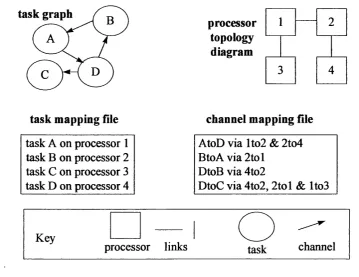
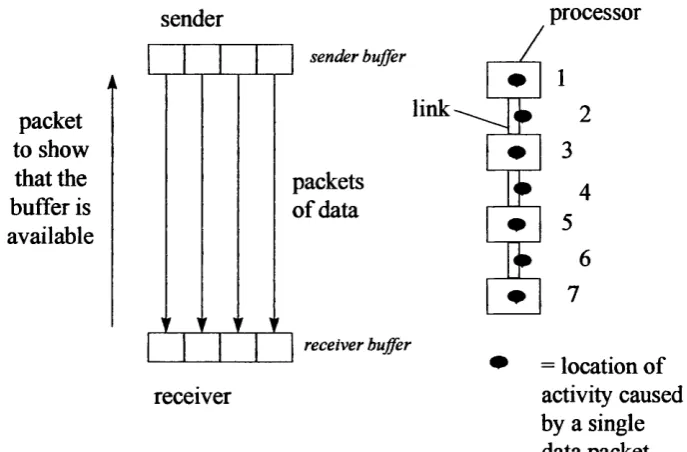
Processors each have exclusive access to a local memory and are connected via links, which are dedicated point to point, bi-directional connections between processors, by which data can be transferred from the local memory of one processor to the local memory of another. A program consists of a set of tasks, each of which supports a single instruction stream. Each processor supports one or more tasks. Tasks communicate by sending messages. The effect is to copy data fi’om the memory buffer of one task to a memory buffer of the same size on another task. Messages are transmitted over channels, which are directed, dedicated, point-to-point links between tasks. A channel may be implemented using no links, if the tasks reside on the same processor, or using one or more links, if tasks are on different processors. Multiple channels may contend for the use of a given link.
concepts are illustrated in Figure 1. In practice, the channel mapping is often defined in terms of tables in the router, rather than as a separate file.
task graph
processor
topology
diagram
task mapping file
task A on processor 1
task B on processor 2
task C on processor 3
task D on processor 4
channel mapping file
AtoD via lto2 & 2to4
BtoA via 2tol
DtoB via 4to2
DtoC via 4to2, 2tol & ItoS
Key
processor
links
task
channel
Figure 1 : A Parallel System
packet
to show
that the
buffer is
available
receiver
processor
sender
sender buffer
link
packets
of data
receiver buffer
location of
activity caused
by a single
data packet
Figure 2 : Messages, Routing and Packets
A task is defined to have a single instruction stream. It is assumed that its progress must only be delayed by message passing or by contention for processor time with other tasks on the same processor. In particular, it must not be delayed by accessing devices such as semaphores or critical sections directly. Where it is required to access data or operating system resources which are shared, it is assumed that a single task acts as a server task, accessing the data or resource directly and communicating with other tasks through messages. It is assumed that all tasks terminate and that the program as a whole always terminates.