R E V I E W
Open Access
Underutilisation of routinely collected data
in the HIV programme in Zambia: a review
of quantitatively analysed peer-reviewed
articles
Tendai Munthali
1,2*, Patrick Musonda
1, Paul Mee
5, Sehlulekile Gumede
1,3, Ab Schaap
3,4, Alwyn Mwinga
4,
Caroline Phiri
2, Nathan Kapata
2, Charles Michelo
1and Jim Todd
3Abstract
Background:
The extent to which routinely collected HIV data from Zambia has been used in peer-reviewed
published articles remains unexplored. This paper is an analysis of peer-reviewed articles that utilised routinely
collected HIV data from Zambia within six programme areas from 2004 to 2014.
Methods:
Articles on HIV, published in English, listed in the Directory of open access journals, African Journals Online,
Google scholar, and PubMed were reviewed. Only articles from peer-reviewed journals, that utilised routinely collected
data and included quantitative data analysis methods were included. Multi-country studies involving Zambia and
another country, where the specific results for Zambia were not reported, as well as clinical trials and intervention
studies that did not take place under routine care conditions were excluded, although community trials which referred
patients to the routine clinics were included. Independent extraction was conducted using a predesigned data
collection form. Pooled analysis was not possible due to diversity in topics reviewed.
Results:
A total of 69 articles were extracted for review. Of these, 7 were excluded. From the 62 articles reviewed, 39
focused on HIV treatment and retention in care, 15 addressed prevention of mother-to-child transmission, 4 assessed
social behavioural change, and 4 reported on voluntary counselling and testing. In our search, no articles were found
on condom programming or voluntary male medical circumcision. The most common outcome measures reported
were CD4+ count, clinical failure or mortality. The population analysed was children in 13 articles, women in 16 articles,
and both adult men and women in 33 articles.
Conclusion:
During the 10 year period of review, only 62 articles were published analysing routinely collected HIV data
in Zambia. Serious consideration needs to be made to maximise the utility of routinely collected data, and to benefit
from the funds and efforts to collect these data. This could be achieved with government support of operational
research and publication of findings based on routinely collected Zambian HIV data.
Keywords:
Routinely collected data, HIV, Zambia
* Correspondence:[email protected]
1School of Public Health, University of Zambia, Lusaka, Zambia 2Ministry of Health, Lusaka, Zambia
Full list of author information is available at the end of the article
Background
Worldwide, many countries routinely collect data on
HIV care and services, which is then used to provide
national and international indicators about the HIV
epidemic. These indicators provide information and
insight to aid policymakers and planners when
mak-ing important decisions about HIV services, to
re-quest for further research, and in advocacy for new
initiatives and funding [1, 2].
Sub-Saharan Africa is home to approximately 71% of
the people living with HIV [3]. Zambia is a high HIV
burden country within sub-Saharan Africa, having a
na-tional HIV prevalence of 11.6% and almost 980,000
people living with HIV in 2016 [4
–
6]. The HIV epidemic
in Zambia is generalised and is mainly attributed to
un-protected heterosexual activity [7]. This creates a need
to monitor the HIV epidemic by focusing on indicators
of effective prevention and on the quality of the HIV
ser-vices in Zambia [8]. Six key service areas are prioritised
in the country for prevention and treatment of HIV.
These are (1) voluntary medical male circumcision
(VMMC); (2) condom programming; (3) behavioural
change; (4) HIV testing and counselling (HTC); (5)
prevention of mother-to-child transmission (PMTCT);
and (6) treatment and retention in care [7]. At national
level, these programmes are monitored using routinely
collected data and periodic country representative surveys.
Routinely collected data can also be used to
under-stand the effectiveness of services and to improve
decision-making in the healthcare system. The benefits
in using routinely collected data include wider coverage
of recorded items from across the whole country and
the longitudinal nature of the data allowing estimation
of trends and changes in the use of services [9]. The use
of these data in this way is cost effective, as it is already
collected and readily available for analysis. Therefore,
re-search can be conducted in a timely and cost-efficient
manner [10]. It can be the basis of sampling for clinical
trials, cohort studies and case-control studies, as
matched case-control analyses can be performed
repeat-edly over long time periods [11]. Routinely collected data
are usually clinic based, but results from analysis of such
data can be generalisable to the whole population if the
services are widely used and serve all sections of society
[10]. One of the main data collection systems for the
routine collection of data from the HIV programme is
SmartCare, which is one of the largest electronic patient
monitoring systems (PMS) in Africa and is used in South
Africa and Ethiopia [12]. In Zambia, the SmartCare
database is used as a PMS for HIV services, and the data
are used to monitor and plan improvements in the
country
’
s HIV programme. SmartCare has been used as
a pilot since 2004, and was officially rolled out in 2006
[13], with 528 clinics using SmartCare in 2012, and
implemented in more than 700 clinics that provide
anti-retroviral therapy services by 2013 [14, 15]. SmartCare
data, in facilities where it is available, is used to provide
aggregate reports for DHIS2, and other health
manage-ment information systems at the district level. In some
health facilities, the SmartCare data can inform the drug
ordering and the laboratory information systems, but
this is not possible in most health facilities in Zambia.
Research has revealed that countries like Zambia, with
one of the highest HIV/AIDS prevalence rates in Africa,
are not the largest contributors to research on HIV/
AIDS. This was evident in a review of three journals
fo-cusing on HIV/AIDS [16], which showed that the United
States of America and Western Europe accounted for
85% of all published articles between 1986 and 2003. In
sub-Saharan Africa, 50% of all publications on Africa
indexed in PubMed between 1981 and 2009 were from
South Africa, Uganda and Kenya. Zambia was ranked
seventh, with 922 publications within that period,
trans-lating to approximately 32 publications per year [17].
This paper is a review of published studies using
rou-tinely collected HIV data from Zambia from 2004 to
2015, within the six areas of focus (VMMC, condom
programming, behavioural change, HTC, PMTCT, and
treatment and retention in care). We sought to examine
the extent to which routinely collected HIV data has
been analysed quantitatively for publication and identify
gaps that exist across the six prioritised areas. It is hoped
that findings from this review will potentially inform
guidelines and strategies as well as stimulate policy
dialogue in the use of routinely collected data.
Methods
Literature search strategy
community trials that referred patients to the routine
clinics were included.
We searched the PubMed, Google Scholar, Directory
of Open Access Journals, and African Journals Online
databases for articles on HIV in Zambia that utilised
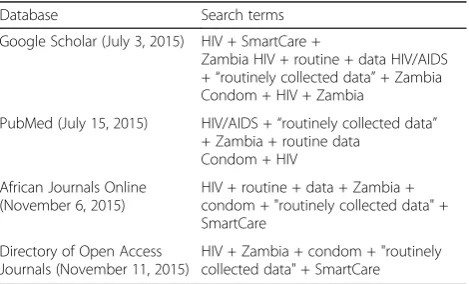
routinely collected data (Table 1). We used a
combin-ation of search words that included
“
HIV
”
,
“
SmartCare
”
and
“
routinely collected data
”
, among others (Table 1).
One of the authors (TM) searched for articles and
ex-tracted the data from included studies, while another
au-thor (SG) reviewed the extracted data for discrepancies.
All discrepancies were discussed and resolved. A
stand-ard data extraction form was used to review and extract
data such as sample size, study design, number of study
sites, dates of data collection, year of publication and
main outcomes.
Data analysis
The selected papers could only be categorised by the six
programme areas as the range of topics covered
pre-vented aggregated statistical analysis of findings. All
eli-gible articles were further grouped by the populations
used in the papers, namely adult (males and females
above 15 years of age), women and children (under the
age of 15 years) to assess how effectively the priority
areas cover the different age categories. The eligible
arti-cles were also analysed based on institutions that
collab-orated to publish the articles.
Results
A total of 1846 titles were reviewed and 1048 were
excluded because they were not published in journals (n
= 482), were published before 2004 (n = 335), or the
topics were not relevant (n = 231). A total of 791
ab-stracts were then reviewed. Of these, some were
ex-cluded because they were clinical trials (n = 39),
qualitative studies (n = 110), or did not use routinely
collected data (n = 470), or were multi-country studies
that did not include specific data on Zambia (n = 103)
(Fig. 1). From these, 69 full length articles were selected,
of which seven were found to be multi-country studies
that did not use routinely collected data, and the remaining
62 were considered for categorisation. The articles were
then classified into the six HIV service areas.
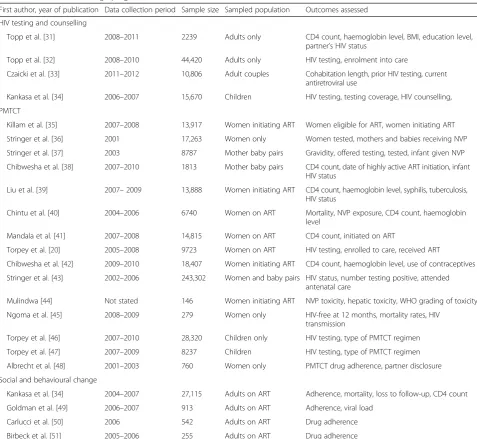
Overall, 15 articles addressed PMTCT, four focussed
on HTC, four covered social and behavioural change
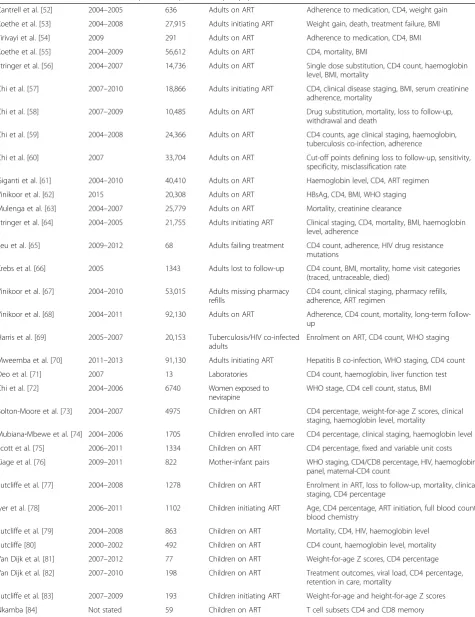
(Table 2), and 39 covered treatment and retention in
care. Our search did not reveal any articles that used
routinely collected HIV data in Zambia reporting
out-comes in the areas of condom programming or VMMC
utilising quantitative methods.
The majority of the papers were mostly large samples,
with thousands of subjects, covering many different
health facilities. The articles on HIV treatment and
retention in care covered topics such as enrolment and
retention into antiretroviral therapy, effectiveness of
different drug regimens, coinfections with laboratory
confirmed pathogens, comorbidities using clinical signs
and symptoms, and food supplementation (Table 3). The
15 PMTCT articles found addressed elimination of
paediatric HIV infections, transmission of HIV to the
babies, and improvement of survival in infected mothers
and their exposed children.
We found four articles on HTC covering couple
coun-selling and provider-initiated testing and councoun-selling.
Ar-ticles on social and behaviour change looked at creating
demand for adherence, prevention interventions,
im-proved biomarkers and treatment uptake. Treatment
and care had the largest number of articles with 39
arti-cles covering the topic (Table 3). Of the 62 artiarti-cles, 33
full length papers utilised adult only routinely collected
data and addressed retention in care, access to HIV
treatment, mortality and clinical outcomes. A total of 16
full-length articles used data from only women, covering
contraception, PMTCT and antenatal HIV prevalence
rates. The articles using data on women only were
pub-lished between 2010 and 2011, and had sample sizes
ranging from 1435 to 138,884. There were 13
peer-reviewed articles that addressed paediatric HIV care and
treatment. These were published between 2007 and
2013, with sample sizes ranging from 1120 to 4975. Our
search did not reveal any articles utilising routinely
col-lected HIV data specifically on adolescents aged 10
–
24
years old.
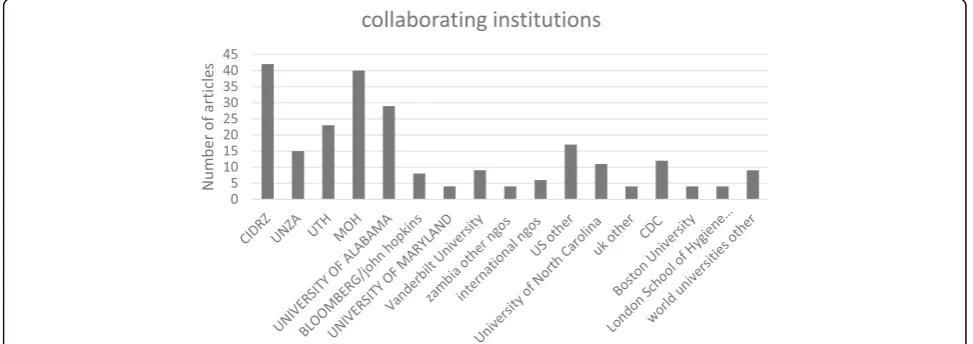
The 62 papers analysed were published in
collabor-ation with partner institutions (Fig. 2). The Centre for
Infectious Disease Research in Zambia and the
Univer-sity of Alabama had the highest contribution, with
col-laboration on 42 and 29 papers, respectively. The staff
from national and district levels of the Ministry of
Health participated in 40 of the published articles,
while the lower collaboration was from institutions
based in the United Kingdom, with collaboration on
Table 1
Search strategy
Database Search terms
Google Scholar (July 3, 2015) HIV + SmartCare +
Zambia HIV + routine + data HIV/AIDS +“routinely collected data”+ Zambia Condom + HIV + Zambia
PubMed (July 15, 2015) HIV/AIDS +“routinely collected data” + Zambia + routine data
Condom + HIV
African Journals Online (November 6, 2015)
HIV + routine + data + Zambia + condom + "routinely collected data" + SmartCare
Directory of Open Access Journals (November 11, 2015)
only 8 articles, four from LSHTM and four from
other universities.
Discussion
The review of published articles showed that
consider-able strides are being made in utilisation of routinely
collected HIV data in Zambia. A total of 62 articles were
found and considered in this review. Treatment and
retention in care and PMTCT had the highest
contribu-tion, with counselling and social and behavioural change
having four articles each. However, we could not find
published papers that utilised quantitative data analysis
methods in our search on VMMC and condom
pro-gramming despite the importance of these programmes
and the inclusion of data from these programmes in
SmartCare. The broad focus of the literature search on
HIV in Zambia should have identified many papers on
condom programming or VMMC, but the only papers
found were qualitative studies on these topics. It was
also observable during the search process that
quantita-tively analysed studies on HIV in adolescents in the
country were limited and information for this age group
has to be extracted from paediatric and adult studies.
This study was a collection of articles covering a
di-verse range of topics, which meant that no meta-analysis
of the studies was possible. One of the goals of this
paper was to highlight the range and diversity of the
topics available for analysis using routinely collected
data, and to explore the gaps in the published literature
so far. The main topics were grouped into treatment and
retention in care, PMTCT, HTC, condom programming
and VMMC. Our search on VMMC and condom
programming revealed no quantitatively analysed papers
and few qualitatively analysed papers.
which could be a source of bias. However, as far as we
are aware, this is the first study to provide such a
baseline of studies for future referral.
The total number of published articles found in our
literature search on the six HIV programmatic areas
using routinely collected data meeting our criteria was
quite low (an average of six articles per year)
consider-ing that these have been published in the past 10 years.
This finding is lower than the 32 articles per year
re-ported by Uthman [17], but in line with findings by the
Ministry of Health [18], where the use and analysis of
routinely collected data were found to be inadequate in
Zambia, with analysed data displayed in graphs and
information from the districts rarely used for
decision-making at district levels. The reasons for these low
numbers could be the limited data analysis skills,
un-availability of data analysis software, disapproval or lack
of support from supervisors, and lack of time and
op-portunity [9
–
11, 18
–
20]. It could be further argued that
the limited use of routinely collected data was due to
lack of knowledge on the benefits of analyzing such
data at facility and district levels and poor data
man-agement, which could be alleviated by deliberate policy
from government to support existing staff capacity
building, operational research and publication of
find-ings [18, 21].
Table 2
Studies utilising routinely collected data in HIV testing and counselling, prevention of mother-to-child transmission (PMTCT)
and social behavioural change programmes in Zambia
First author, year of publication Data collection period Sample size Sampled population Outcomes assessed
HIV testing and counselling
Topp et al. [31] 2008–2011 2239 Adults only CD4 count, haemoglobin level, BMI, education level, partner’s HIV status
Topp et al. [32] 2008–2010 44,420 Adults only HIV testing, enrolment into care
Czaicki et al. [33] 2011–2012 10,806 Adult couples Cohabitation length, prior HIV testing, current antiretroviral use
Kankasa et al. [34] 2006–2007 15,670 Children HIV testing, testing coverage, HIV counselling,
PMTCT
Killam et al. [35] 2007–2008 13,917 Women initiating ART Women eligible for ART, women initiating ART
Stringer et al. [36] 2001 17,263 Women only Women tested, mothers and babies receiving NVP
Stringer et al. [37] 2003 8787 Mother baby pairs Gravidity, offered testing, tested, infant given NVP
Chibwesha et al. [38] 2007–2010 1813 Mother baby pairs CD4 count, date of highly active ART initiation, infant HIV status
Liu et al. [39] 2007–2009 13,888 Women initiating ART CD4 count, haemoglobin level, syphilis, tuberculosis, HIV status
Chintu et al. [40] 2004–2006 6740 Women on ART Mortality, NVP exposure, CD4 count, haemoglobin level
Mandala et al. [41] 2007–2008 14,815 Women on ART CD4 count, initiated on ART
Torpey et al. [20] 2005–2008 9723 Women on ART HIV testing, enrolled to care, received ART
Chibwesha et al. [42] 2009–2010 18,407 Women initiating ART CD4 count, haemoglobin level, use of contraceptives
Stringer et al. [43] 2002–2006 243,302 Women and baby pairs HIV status, number testing positive, attended antenatal care
Mulindwa [44] Not stated 146 Women initiating ART NVP toxicity, hepatic toxicity, WHO grading of toxicity
Ngoma et al. [45] 2008–2009 279 Women only HIV-free at 12 months, mortality rates, HIV transmission
Torpey et al. [46] 2007–2010 28,320 Children only HIV testing, type of PMTCT regimen
Torpey et al. [47] 2007–2009 8237 Children HIV testing, type of PMTCT regimen
Albrecht et al. [48] 2001–2003 760 Women only PMTCT drug adherence, partner disclosure
Social and behavioural change
Kankasa et al. [34] 2004–2007 27,115 Adults on ART Adherence, mortality, loss to follow-up, CD4 count
Goldman et al. [49] 2006–2007 913 Adults on ART Adherence, viral load
Carlucci et al. [50] 2006 542 Adults on ART Drug adherence
Birbeck et al. [51] 2005–2006 255 Adults on ART Drug adherence
Table 3
Studies utilising routinely collected data on HIV treatment and retention in care in Zambia
First author Data collection period Sample size Sampled population Outcomes assessed
Cantrell et al. [52] 2004–2005 636 Adults on ART Adherence to medication, CD4, weight gain
Koethe et al. [53] 2004–2008 27,915 Adults initiating ART Weight gain, death, treatment failure, BMI
Tirivayi et al. [54] 2009 291 Adults on ART Adherence to medication, CD4, BMI
Koethe et al. [55] 2004–2009 56,612 Adults on ART CD4, mortality, BMI
Stringer et al. [56] 2004–2007 14,736 Adults on ART Single dose substitution, CD4 count, haemoglobin level, BMI, mortality
Chi et al. [57] 2007–2010 18,866 Adults initiating ART CD4, clinical disease staging, BMI, serum creatinine adherence, mortality
Chi et al. [58] 2007–2009 10,485 Adults on ART Drug substitution, mortality, loss to follow-up, withdrawal and death
Chi et al. [59] 2004–2008 24,366 Adults on ART CD4 counts, age clinical staging, haemoglobin, tuberculosis co-infection, adherence
Chi et al. [60] 2007 33,704 Adults on ART Cut-off points defining loss to follow-up, sensitivity, specificity, misclassification rate
Giganti et al. [61] 2004–2010 40,410 Adults on ART Haemoglobin level, CD4, ART regimen
Vinikoor et al. [62] 2015 20,308 Adults on ART HBsAg, CD4, BMI, WHO staging
Mulenga et al. [63] 2004–2007 25,779 Adults on ART Mortality, creatinine clearance
Stringer et al. [64] 2004–2005 21,755 Adults initiating ART Clinical staging, CD4, mortality, BMI, haemoglobin level, adherence
Seu et al. [65] 2009–2012 68 Adults failing treatment CD4 count, adherence, HIV drug resistance mutations
Krebs et al. [66] 2005 1343 Adults lost to follow-up CD4 count, BMI, mortality, home visit categories (traced, untraceable, died)
Vinikoor et al. [67] 2004–2010 53,015 Adults missing pharmacy refills
CD4 count, clinical staging, pharmacy refills, adherence, ART regimen
Vinikoor et al. [68] 2004–2011 92,130 Adults on ART Adherence, CD4 count, mortality, long-term follow-up
Harris et al. [69] 2005–2007 20,153 Tuberculosis/HIV co-infected adults
Enrolment on ART, CD4 count, WHO staging
Mweemba et al. [70] 2011–2013 91,130 Adults initiating ART Hepatitis B co-infection, WHO staging, CD4 count
Deo et al. [71] 2007 13 Laboratories CD4 count, haemoglobin, liver function test
Chi et al. [72] 2004–2006 6740 Women exposed to nevirapine
WHO stage, CD4 cell count, status, BMI
Bolton-Moore et al. [73] 2004–2007 4975 Children on ART CD4 percentage, weight-for-age Z scores, clinical staging, haemoglobin level, mortality
Mubiana‐Mbewe et al. [74] 2004–2006 1705 Children enrolled into care CD4 percentage, clinical staging, haemoglobin level
Scott et al. [75] 2006–2011 1334 Children on ART CD4 percentage, fixed and variable unit costs
Kiage et al. [76] 2009–2011 822 Mother-infant pairs WHO staging, CD4/CD8 percentage, HIV, haemoglobin panel, maternal-CD4 count
Sutcliffe et al. [77] 2004–2008 1278 Children on ART Enrolment in ART, loss to follow-up, mortality, clinical staging, CD4 percentage
Iyer et al. [78] 2006–2011 1102 Children initiating ART Age, CD4 percentage, ART initiation, full blood count, blood chemistry
Sutcliffe et al. [79] 2004–2008 863 Children on ART Mortality, CD4, HIV, haemoglobin level
Sutcliffe [80] 2000–2002 492 Children on ART CD4 count, haemoglobin level, mortality
Van Dijk et al. [81] 2007–2012 77 Children on ART Weight-for-age Z scores, CD4 percentage
Van Dijk et al. [82] 2007–2010 198 Children on ART Treatment outcomes, viral load, CD4 percentage, retention in care, mortality
Sutcliffe et al. [83] 2007–2009 193 Children initiating ART Weight-for-age and height-for-age Z scores
Treatment and retention in care had the largest
num-ber of studies. This is in line with global trends in HIV
prevention strategies where treatment and retention in
care have been identified as the most effective HIV
prevention tool among the biomedical prevention tools
analysed to date [22, 23]; more research is encouraged in
these areas. However, considering the period under
review, the number of studies found on retention and
care were rather low. Similar trends of low levels of
pub-lication in this area have been attributed to long
follow-up periods required to monitor retention in care as well
as to inconsistent information systems that make it difficult
to track patients that seek care from multiple facilities [24].
There was also a limited number of studies that looked
at children born with HIV infection identified in our
search. This is in line with findings from a systematic
re-view of care and retention in HIV-infected children in
low- and middle-income countries, where limited data
were also found in Asia, Eastern Europe and Latin
America [25], attributed to emphasis on studies on adult
data. It was also apparent that no quantitative
peer-reviewed studies on treatment and retention among
ado-lescents already in HIV care in Zambia were found in
our search. Data on this age group has to be extracted
from paediatric and adult studies. Similar findings have
been reported in studies conducted in southern Africa in
2009 [26] and 2010 [27], where few data were reported
on perinatally infected adolescents with most of the
available data on adherence and outcomes emerging
from the developed world. It is further argued that data
for adolescents in southern Africa are disaggregated into
0
–
14, 15
–
19 and 15
–
24 year age groups, which makes it
difficult to ascertain adolescent-specific data since, in
most cases, the data includes very young children or
adults [28].
The search on condom programming revealed mostly
intervention studies in settings where prospective users
could access them. Reasons for this could be the mode
of distribution, which is restricted to public health
facil-ities and to private health facilfacil-ities only on request [29].
Similarly, Kane et al. [30] argued that use of aggregate
data on condom sales does not provide information on
utilisation of condoms after they are obtained, resulting
in the need for in-depth analysis on factors associated
with condom use. The same could be concluded on
use-fulness of aggregate condom distribution data. Moreover,
condom distribution data are difficult to document in
routinely collected data and thus there is heavy reliance
Table 3
Studies utilising routinely collected data on HIV treatment and retention in care in Zambia
(Continued)
Van Dijk et al. [85] 2007–2008 192 Children on ART Years of receiving ART, distance from clinic, CD4 percentage, weight-for-age Z score
Sinkala et al. [86] 2005–2006 5609 Adults only Colonoscopy, laparoscopy, culture results
Sheyo [87] 2009–2010 452 Adults and children HIV status, burn history, burn outcome and management
Brugha et al. [88] 2004–2007 39 Health facilities VCT, ART, PMTCT, childhood immunisation service and coverage trends
Kancheya et al. [89] 2003–2006 203 Adults HIV status, VCT
Kaile et al. [90] 2004 18 Adults on ART Blood pressure serum potassium, creatinine and sodium, Karnofsky score, WHO staging
ARTantiretroviral therapy,BMIbody mass index,PMTCTprevention of mother-to-child transmission,VCTvoluntary counselling and testing
on survey data [7]. There is an urgent need to
under-stand the demographics of condom distribution in the
country. Similar trends were revealed in the VMMC
programme, which also yielded low numbers of
peer-reviewed articles that utilised routinely collected quantitative
data, despite the country not meeting its circumcision
targets [7].
Conclusion
There are positive advances being made in the HIV
programme in the use of routinely collected data in
Zambia. This progress must be nurtured and enhanced
if Zambia is to reach elimination stages in HIV control.
However, more efforts must be put into research and
publishing results in critical areas, such as paediatric and
adolescent care, VMMC and condom distribution, in
order to build the skills and knowledge-base to deliver
HIV services. Research on adolescent and childhood
HIV morbidity and mortality outcomes as well as social
behavioural change needs is important because
HIV-infected adolescents and children are the key population
in reducing HIV spread in their generation.
To improve the use of routinely collected data for use in
publications the government could deliberately put in
place policies to prioritise training of civil servants
work-ing in various programmes in operational research and
consequently fund publishing of findings. These published
articles would aid in international resource mobilisation
for most programmes in the country as programme level
data can be easily accessed in peer-reviewed articles.
Abbreviations
HTC:HIV testing and counselling; PMS: patient monitoring system; PMTCT: prevention of mother to child transmission; VMMC: voluntary male circumcision
Acknowledgements
We acknowledge the SEARCH Project team in London for the additional training in HIV data analysis and support while in London.
Funding
This writing or this paper was supported by the Sustainable Evaluation through Analysis of Routinely Collected HIV data (SEARCH) project Zambia.
Availability of data and materials
The dataset supporting the conclusions of this article is included with the article and its additional files.
Authors’contributions
TM and PM participated in the conception of the study. SGM reviewed the analysed articles. CM, PM, JT, NK and CP reviewed all the drafts for intellectual content, participated in the interpretation of the findings. The whole team participated in the critical review and editing of all the manuscript drafts for scientific merit and depth. All authors read and approved the final manuscript.
Competing interests
The authors declare that they have no competing interests.
Consent for publication Not applicable.
Ethics approval and consent to participate Not applicable.
Publisher
’
s Note
Springer Nature remains neutral with regard to jurisdictional claims in published maps and institutional affiliations.
Author details
1School of Public Health, University of Zambia, Lusaka, Zambia.2Ministry of Health, Lusaka, Zambia.3Department of Population Health, London School of Hygiene and Tropical Medicine, London, United Kingdom.4Zambia AIDS Related Tuberculosis (ZAMBART) Project, Lusaka, Zambia.5MeSH Consortium, Department of Social Economic and Health Research, Faculty of Public Health and Policy, London School of Hygiene and Tropical Medicine, London, United Kingdom.
Received: 9 June 2016 Accepted: 30 May 2017
References
1. World Health Organization. Consolidated Strategic Information Guidelines for HIV in the Health Sector. Geneva: WHO; 2015.
2. World Health Organization. National AIDS Programmes: A Guide to Indicators for Monitoring and Evaluating National Antiretroviral Programmes. Geneva: WHO; 2005.
3. UNAIDS. The Gap Report. Geneva: UNAIDS; 2014.
4. National HIVAIDS Council Zambia; Zambia Country Report: Monitoring the Declaration of Commitment on HIV and AIDS and the Universal Access, The United Nations General Assembly Special Session on HIV and AIDS. Lusaka: Republic of Zambia; 2014.
5. UNAIDS. Global Report: UNAIDS Report on the Global AIDS Epidemic 2013. Geneva: UNAIDS; 2013.
6. Ministry of Health. Zambia Population-Based HIV Impact Assessment (ZAMPHIA) 2015–2016, Summary Sheet: Preliminary Findings. Lusaka: Ministry of Health; 2016.
7. Ministry of Health. National AIDS Strategic Framework 2014-2016: A Nation Free from the Threat of HIV and AIDS. Lusaka: Ministry of Health; 2014. 8. Central Statistical Office, Ministry of Health, and ICF International. Zambia
Demographic and Health Survey 2013–14. Rockville: CSO, MoH, and ICF Int; 2014. 9. Deeny SR, Steventon A. Making sense of the shadows: priorities for creating a learning healthcare system based on routinely collected data. BMJ Qual Saf. 2015;24(8):505–15.
10. Grzeskowiak LE, Gilbert AL, Morrison JL. Methodological challenges in using routinely collected health data to investigate long-term effects of medication use during pregnancy. Ther Adv Drug Saf. 2013;4(1):27–37. 11. Bain MR, Chalmers JW, Brewster DH. Routinely collected data in national and
regional databases-an under-used resource. J Public Health. 1997;19(4):413–8. 12. Tassie J-M, Malateste K, Pujades-Rodríguez M, Poulet E, Bennett D, Harries A,
Mahy M, Schechter M, Souteyrand Y, Dabis F. Evaluation of three sampling methods to monitor outcomes of antiretroviral treatment programmes in low-and middle-income countries. PLoS One. 2010;5(11):e13899. 13. Ministry of Health. National Health Report, Directorate of Public Health and
Research. Lusaka: MoH; 2012.
14. Ministry of Health. List of Health Facilities in Zambia, Preliminary Report. Lusaka: MoH; 2013.
15. PEPFAR. Zambia Operational Plan Report FY 2013. Washington, DC: PEPFAR; 2013. https://www.pepfar.gov/documents/organization/222188.pd . Accessed July 2015.
16. Uusküla A, Toompere KLK, et al. HIV research productivity and structural factors associated with HIV research output in European Union countries: a bibliometric analysis. BMJ Open. 2015;5(2):e006591.
17. Uthman OA. Pattern and determinants of HIV research productivity in sub-Saharan Africa: bibliometric analysis of 1981 to 2009 PubMed papers. BMC Infect Dis. 2010;10:47.
18. Ministry of Health. Assessment of the Health Information System in Zambia. Lusaka: Ministry of Health, Department of Planning and Development, Monitoring and Evaluation Unit; 2007.
20. Torpey K, Kabaso M, Kasonde P, Dirks R, Bweupe M, Thompson C, Mukadi Y. Increasing the uptake of prevention of mother-to-child transmission of HIV services in a resource-limited setting. BMC Health Serv Res. 2010;10:29. 21. Jorm L. Routinely collected data as a strategic resource for research: priorities
for methods and workforce. Public Health Res Pract. 2015;25(4):e2541540. 22. UNAIDS. 90-90-90: An Ambitious Treatment Target to Help End the AIDS
Epidemic. Geneva: UNAIDS; 2014.
23. World Health Organization. Treat all people living with HIV, offer antiretrovials as additional prevention choice for people at“substantial risk”. 2015. http://www.who.int/mediacentre/news/releases/2015/hiv-treat-all-recommendation/en/. Accessed Oct 2015.
24. Rosen S, Fox MP. Retention in HIV care between testing and treatment in sub-Saharan Africa: a systematic review. PLoS Med. 2011;8(7):e1001056. 25. Fox MP, Rosen S. Systematic review of retention of pediatric patients on HIV
treatment in low and middle-income countries 2008–2013. AIDS. 2015;29(4):493–502.
26. Nachega JB, Hislop M, Nguyen H, Dowdy DW, Chaisson RE, Regensberg L, Cotton M, Maartens G. Antiretroviral therapy adherence, virologic and immunologic outcomes in adolescents compared with adults in Southern Africa. J Acquir Immune Defic Syndr. 2009;51(1):65–71.
27. Gray GE. Adolescent HIV? Cause for concern in Southern Africa. PLoS Med. 2010;7(2):e1000227.
28. Hervish A, Clifton D. Status Report: Adolescents and Young People in Sub-Saharan Africa. Opportunities and Challenges. 2012. www.prb.org/pdf12/ status-report-youth-subsaharan-Africa.pdf. Accessed July 2015. 29. Sandøy IF, Zyaambo C, Michelo C, Fylkesnes K. Targeting condom
distribution at high risk places increases condom utilization-evidence from an intervention study in Livingstone, Zambia. BMC Public Health. 2012;12:10. 30. Kane R, Wellings K, Free C, Goodrich J. Uses of routine data sets in the
evaluation of health promotion interventions: opportunities and limitations. Health Educ. 2000;100(1):33–41.
31. Topp SM, Li MS, Chipukuma JM, Chiko MM, Matongo E, Bolton-Moore C, Reid SE. Does provider-initiated counselling and testing (PITC) strengthen early diagnosis and treatment initiation? Results from an analysis of an urban cohort of HIV-positive patients in Lusaka, Zambia. J Int AIDS Soc. 2012;15(2):17352.
32. Topp SM, Chipukuma JM, Chiko MM, Wamulume CS, Bolton-Moore C, Reid SE. Opt-out provider-initiated HIV testing and counselling in primary care outpatient clinics in Zambia. Bull World Health Organ. 2011;89(5):328–35. 33. Czaicki NL, Davitte J, Siangonya B, Kastner R, Ahmed N, Khu NH, Kuo WH,
Abdallah J, Wall KM, Tichacek A, et al. Predictors of first follow-up HIV testing for couples’voluntary HIV counseling and testing in Ndola, Zambia. J Acquir Immune Defic Syndr. 2014;66(1):e1–7.
34. Kankasa C, Carter RJ, Briggs N, Bulterys M, Chama E, Cooper ER, Costa C, Spielman E, Katepa-Bwalya M, M'soka T, et al. Routine offering of HIV testing to hospitalized pediatric patients at university teaching hospital, Lusaka, Zambia: acceptability and feasibility. JAIDS J Acquir Immune Defic Syndr. 2009;51(2):202–8.
35. Killam WP, Tambatamba BC, Chintu N, Rouse D, Stringer E, Bweupe M, Yu Y, Stringer JS. Antiretroviral therapy in antenatal care to increase treatment initiation in HIV-infected pregnant women: a stepped-wedge evaluation. AIDS. 2010;24(1):85–91.
36. Stringer EM, Sinkala M, Stringer JS, Mzyece E, Makuka I, Goldenberg RL, Kwape P, Chilufya M, Vermund SH. Prevention of mother-to-child transmission of HIV in Africa: successes and challenges in scaling-up a nevirapine-based program in Lusaka, Zambia. AIDS. 2003;17(9):1377. 37. Stringer JS, Sinkala M, Maclean CC, Levy J, Kankasa C, DeGroot A, Stringer
EM, Acosta EP, Goldenberg RL, Vermund SH. Effectiveness of a city-wide program to prevent mother-to-child HIV transmission in Lusaka, Zambia. AIDS. 2005;19(12):1309.
38. Chibwesha CJ, Giganti MJ, Putta N, Chintu N, Mulindwa J, Dorton BJ, Chi BH, Stringer JS, Stringer EM. Optimal time on HAART for prevention of mother-to-child transmission of HIV. J Acquir Immune Defic Syndr. 2011;58(2):224. 39. Liu KC, Mulindwa J, Giganti MJ, Putta NB, Chintu N, Chi BH, Stringer JS,
Stringer EM. Predictors of CD4 eligibility for antiretroviral therapy initiation among HIV-infected pregnant women in Lusaka, Zambia. J Acquir Immune Defic Syndr. 2011;57(5):e101.
40. Chintu N, Giganti MJ, Putta NB, Sinkala M, Sadoki E, Stringer EM, Stringer JS, Chi BH. Peripartum nevirapine exposure and subsequent clinical outcomes among HIV‐infected women receiving antiretroviral therapy for at least 12 months. Trop Med Int Health. 2010;15(7):842–7.
41. Mandala J, Torpey K, Kasonde P, Kabaso M, Dirks R, Suzuki C, Thompson C, Sangiwa G, Mukadi YD. Prevention of mother-to-child transmission of HIV in Zambia: implementing efficacious ARV regimens in primary health centers. BMC Public Health. 2009;9:314.
42. Chibwesha CJ, Li MS, Matoba CK, Mbewe RK, Chi BH, Stringer JS, Stringer EM. Modern contraceptive and dual method use among HIV-infected women in Lusaka, Zambia. Infect Dis Obstet Gynecol. 2011;2011:261453. 43. Stringer EM, Chintu NT, Levy JW, Sinkala M, Chi BH, Muyanga J, Bulterys M,
Bweupe M, Megazzini K, Stringer JS. Declining HIV prevalence among young pregnant women in Lusaka, Zambia. Bull World Health Organ. 2008; 86(9):697–702.
44. Mulindwa JM. A study of nevirapine toxicity in HIV infected pregnant women at the University Teaching Hospital in Lusaka, Zambia. Med J Zambia. 2012;39(1):11–5.
45. Ngoma MS, Misir A, Mutale W, Rampakakis E, Sampalis JS, Elong A, Chisele S, Mwale A, Mwansa JK, Mumba S, et al. Efficacy of WHO recommendation for continued breastfeeding and maternal cART for prevention of perinatal and postnatal HIV transmission in Zambia. J Int AIDS Soc. 2015;18(1):19352. 46. Torpey K, Mandala J, Kasonde P, Bryan-Mofya G, Bweupe M, Mukundu J,
Zimba C, Mwale C, Lumano H, Welsh M. Analysis of HIV early infant diagnosis data to estimate rates of perinatal HIV transmission in Zambia. PLoS One. 2012;7(8):e42859.
47. Torpey K, Kasonde P, Kabaso M, Weaver MA, Bryan G, Mukonka V, Bweupe M, Zimba C, Mwale F, Colebunders R. Reducing pediatric HIV infection: estimating mother-to-child transmission rates in a program setting in Zambia. J Acquir Immune Defic Syndr. 2010;54(4):415–22.
48. Albrecht S, Semrau K, Kasonde P, Sinkala M, Kankasa C, Vwalika C, Aldrovandi GM, Thea DM, Kuhn L. Predictors of nonadherence to single-dose nevirapine therapy for the prevention of mother-to-child HIV transmission. J Acquir Immune Defic Syndr. 2006;41(1):114–8.
49. Goldman JD, Cantrell RA, Mulenga LB, Tambatamba BC, Ried SE, Levy JW, Limbada M, Taylor A, Saag MS, Vermund SH, et al. Simple adherence assessments to predict virologic failure among HIV-infected adults with discordant immunologic and clinical responses to antiretroviral therapy. AIDS Res Hum Retroviruses. 2008;24(8):1031–5.
50. Carlucci JG, Kamanga A, Sheneberger R, Shepherd BE, Jenkins CA, Spurrier J, Vermund SH. Predictors of adherence to antiretroviral therapy in rural Zambia. J Acquir Immune Defic Syndr. 2008;47(5):615–22.
51. Birbeck GL, Chomba E, Kvalsund M, Bradbury R, Mang’ombe C, Malama K, Kaile T, Byers PA, RAAZ Study Team, Organek N. Antiretroviral adherence in rural Zambia: the first year of treatment availability. Am J Trop Med Hyg. 2009;80(4):669–74.
52. Cantrell RA, Sinkala M, Megazinni K, Lawson-Marriott S, Washington S, Chi BH, Tambatamba-Chapula B, Levy J, Stringer EM, Mulenga L, et al. A pilot study of food supplementation to improve adherence to antiretroviral therapy among food insecure adults in Lusaka, Zambia. J Acquir Immune Defic Syndr. 2008;49(2):190–5. doi:10.1097/QAI.
1090b1013e31818455d31818452.
53. Koethe JR, Lukusa A, Giganti MJ, Chi BH, Nyirenda CK, Limbada MI, Banda Y, Stringer JS. Association between weight gain and clinical outcomes among malnourished adults initiating antiretroviral therapy in Lusaka, Zambia. J Acquir Immune Defic Syndr. 2010;53(4):507.
54. Tirivayi N, Koethe JR, Groot W. Clinic-based food assistance is associated with increased medication adherence among HIV-infected adults on long-term antiretroviral therapy in Zambia. J AIDS Clin Res. 2012;3(7):171. 55. Koethe JR, Limbada MI, Giganti MJ, Nyirenda CK, Mulenga L, Wester CW, Chi
BH, Stringer JS. Early immunologic response and subsequent survival among malnourished adults receiving antiretroviral therapy in Urban Zambia. AIDS. 2010;24(13):2117.
56. Stringer JS, Mwango AJ, Giganti MJ, Mulenga L, Levy JW, Stringer EM, Mulenga P, Saag MS, Musonda P, Williams FB. Effectiveness of generic and proprietary first-line anti-retroviral regimens in a primary health care setting in Lusaka, Zambia: a cohort study. Int J Epidemiol. 2012;41(2):448–59. 57. Chi BH, Mwango A, Giganti MJ, Sikazwe I, Moyo C, Schuttner L, Mulenga LB,
Bolton-Moore C, Chintu NT, Sheneberger R. Comparative outcomes of tenofovir-and zidovudine-based antiretroviral therapy regimens in Lusaka, Zambia. J Acquir Immune Defic Syndr. 2011;58(5):475.
59. Chi BH, Giganti M, Mulenga PL, Limbada M, Reid SE, Mutale W, Stringer JS. CD4+ response and subsequent risk of death among patients on antiretroviral therapy in Lusaka, Zambia. J Acquir Immune Defic Syndr. 2009;52(1):125.
60. Chi BH, Cantrell RA, Mwango A, Westfall AO, Mutale W, Limbada M, Mulenga LB, Vermund SH, Stringer JS. An empirical approach to defining loss to follow-up among patients enrolled in antiretroviral treatment programs. Am J Epidemiol. 2010;171(8):924–31.
61. Giganti MJ, Limbada M, Mwango A, Moyo C, Mulenga LB, Guffey MB, Mulenga PL, Bolton-Moore C, Stringer JS, Chi BH. Six-month hemoglobin concentration and its association with subsequent mortality among adults on antiretroviral therapy in Lusaka, Zambia. J Acquir Immune Defic Syndr. 2012;61(1):120.
62. Vinikoor MJ, Sinkala E, Mweemba A, Zanolini A, Mulenga L, Sikazwe I, Fried MW, Eron JJ, Wandeler G, Chi BH. Elevated AST‐to‐platelet ratio index is associated with increased all‐cause mortality among HIV‐infected adults in Zambia. Liver Int. 2015;35(7):1886–92.
63. Mulenga LB, Kruse G, Lakhi S, Cantrell RA, Reid SE, Zulu I, Stringer EM, Krishnasami Z, Mwinga A, Saag MS. Baseline renal insufficiency and risk of death among HIV-infected adults on antiretroviral therapy in Lusaka, Zambia. AIDS. 2008;22(14):1821.
64. Stringer JS, Zulu I, Levy J, Stringer EM, Mwango A, Chi BH, Mtonga V, Reid S, Cantrell RA, Bulterys M. Rapid scale-up of antiretroviral therapy at primary care sites in Zambia: feasibility and early outcomes. JAMA. 2006;296(7):782–93. 65. Seu L, Mulenga LB, Siwingwa M, Sikazwe I, Lambwe N, Guffey MB, Chi BH.
Characterization of HIV drug resistance mutations among patients failing first-line antiretroviral therapy from a tertiary referral center in Lusaka, Zambia. J Med Virol. 2015;87(7):1149–57.
66. Krebs DW, Chi BH, Mulenga Y, Morris M, Cantrell RA, Mulenga L, Levy J, Sinkala M, Stringer JS. Community-based follow-up for late patients enrolled in a district-wide programme for antiretroviral therapy in Lusaka, Zambia. AIDS Care. 2008;20(3):311–7.
67. Vinikoor MJ, Schuttner L, Moyo C, Li M, Musonda P, Hachaambwa LM, Stringer JS, Chi BH. Short communication: late refills during the first year of antiretroviral therapy predict mortality and program failure among HIV-infected adults in urban Zambia. AIDS Res Hum Retroviruses. 2014;30(1):74–7.
68. Vinikoor MJ, Joseph J, Mwale J, Marx MA, Goma FM, Mulenga LB, Stringer JS, Eron JJ, Chi BH. Age at antiretroviral therapy initiation predicts immune recovery, death, and loss to follow-up among HIV-infected adults in urban Zambia. AIDS Res Hum Retroviruses. 2014;30(10):949–55.
69. Harris J, Hatwiinda S, Randels K, Chi B, Kancheya N, Jham M, Samungole K, Tambatamba B, Cantrell R, Levy J. Early lessons from the integration of tuberculosis and HIV services in primary care centers in Lusaka, Zambia. Int J Tuberc Lung Dis. 2008;12(7):773–9.
70. Mweemba A, Zanolini A, Mulenga L, Emge D, Chi BH, Wandeler G, Vinikoor MJ. Chronic hepatitis B virus coinfection is associated with renal impairment among Zambian HIV-infected adults. Clin Infect Dis. 2014;59(12):1757–60. 71. Deo S, Topp SM, Westfall AO, Chiko MM, Wamulume CS, Morris M, Reid S.
Impact of organizational factors on adherence to laboratory testing protocols in adult HIV care in Lusaka, Zambia. BMC Health Serv Res. 2012;12:106. 72. Chi BH, Sinkala M, Stringer EM, Cantrell RA, Mtonga V, Bulterys M, Zulu I,
Kankasa C, Wilfert C, Weidle PJ. Early clinical and immune response to NNRTI-based antiretroviral therapy among women with prior exposure to single-dose nevirapine. AIDS. 2007;21(8):957.
73. Bolton-Moore C, Mubiana-Mbewe M, Cantrell RA, Chintu N, Stringer EM, Chi BH, Sinkala M, Kankasa C, Wilson CM, Wilfert CM. Clinical outcomes and CD4 cell response in children receiving antiretroviral therapy at primary health care facilities in Zambia. JAMA. 2007;298(16):1888–99.
74. Mubiana‐Mbewe M, Bolton‐Moore C, Banda Y, Chintu N, Nalubamba‐Phiri M, Giganti M, Guffey MB, Sambo P, Stringer EM, Stringer JS. Causes of morbidity among HIV‐infected children on antiretroviral therapy in primary care facilities in Lusaka, Zambia. Trop Med Int Health. 2009;14(10):1190–8. 75. Scott CA, Iyer H, Bwalya DL, McCoy K, Meyer-Rath G, Moyo C, Bolton-Moore
C, Larson B, Rosen S. Retention in care and outpatient costs for children receiving antiretroviral therapy in Zambia: a retrospective cohort analysis. PLoS One. 2013;8(6):e67910.
76. Kiage JN, Heimburger DC, Nyirenda CK, Wellons MF, Bagchi S, Chi BH, Koethe JR, Arnett DK, Kabagambe EK. Cardiometabolic risk factors among HIV patients on antiretroviral therapy. Lipids Health Dis. 2013;12:50.
77. Sutcliffe CG, Bolton-Moore C, van Dijk JH, Cotham M, Tambatamba B, Moss WJ. Secular trends in pediatric antiretroviral treatment programs in rural and urban Zambia: a retrospective cohort study. BMC Pediatr. 2010;10:54. 78. Iyer HS, Scott CA, Lembela Bwalya D, Meyer-Rath G, Moyo C, Bolton Moore
C, Larson BA, Rosen S. Resource utilization and costs of care prior to ART initiation for pediatric patients in Zambia. AIDS Res Treat. 2014;2014:235483. 79. Sutcliffe CG, van Dijk JH, Bolton-Moore C, Cotham M, Tambatamba B, Moss
WJ. Differences in presentation, treatment initiation, and response among children infected with human immunodeficiency virus in urban and rural Zambia. Pediatr Infect Dis J. 2010;29(9):849–54.
80. Sutcliffe CG, Scott S, Mugala N, Ndhlovu Z, Monze M, Quinn TC, Cousens S, Griffin DE, Moss WJ. Survival from 9 months of age among HIV-infected and uninfected Zambian children prior to the availability of antiretroviral therapy. Clin Infect Dis. 2008;47(6):837–44.
81. van Dijk JH, Moss WJ, Hamangaba F, Munsanje B, Sutcliffe CG. Scaling-up access to antiretroviral therapy for children: a cohort study evaluating care and treatment at mobile and hospital-affiliated HIV clinics in rural Zambia. PLoS One. 2014;9(8):e104884.
82. van Dijk JH, Sutcliffe CG, Munsanje B, Sinywimaanzi P, Hamangaba F, Thuma PE, Moss WJ. HIV-infected children in rural Zambia achieve good immunologic and virologic outcomes two years after initiating antiretroviral therapy. PLoS One. 2011;6(4):e19006.
83. Sutcliffe C, van Dijk J, Munsanje B, Hamangaba F, Sinywimaanzi P, Thuma P, Moss W. Weight and height z-scores improve after initiating ART among HIV-infected children in rural Zambia: a cohort study. BMC Infect Dis. 2011;11:54. 84. Nkamba KR-LHC, Moss W, Siziya S. Antimycobacterial immune responses in
HIV-infected children starting antiretroviral therapy in Lusaka, Zambia. Med J Zambia. 2010;37(4):216–22.
85. van Dijk JH, Sutcliffe CG, Munsanje B, Hamangaba F, Thuma PE, Moss WJ. Barriers to the care of HIV-infected children in rural Zambia: a cross-sectional analysis. BMC Infect Dis. 2009;9:169.
86. Sinkala E, Gray S, Zulu I, Mudenda V, Zimba L, Vermund SH, Drobniewski F, Kelly P. Clinical and ultrasonographic features of abdominal tuberculosis in HIV positive adults in Zambia. BMC Infect Dis. 2009;9:44.
87. Sheyo M. Clinical outcome of burns in HIV positive patients in Lusaka, Zambia. Med J Zambia. 2012;39(4):1–6.
88. Brugha R, Simbaya J, Walsh A, Dicker P, Ndubani P. How HIV/AIDS scale-up has impacted on non- HIV priority services in Zambia. BMC Public Health. 2010;10:540.
89. Kancheya NG, Jordan AK, Zulu IS, Chanda D, Vermund SH. Improved HIV testing coverage after scale-up of antiretroviral therapy programs in urban Zambia: evidence from serial hospital surveillance. Med J Zambia. 2010;37(2):71–7. 90. Kaile T, Zulu I, Lumayi R, Ashman N, Kelly P. Inappropriately low aldosterone
concentrations in adults with AIDS-related diarrhoea in Zambia: a study of response to fluid challenge. BMC Res Notes. 2008;1:10.
• We accept pre-submission inquiries
• Our selector tool helps you to find the most relevant journal
• We provide round the clock customer support
• Convenient online submission
• Thorough peer review
• Inclusion in PubMed and all major indexing services • Maximum visibility for your research
Submit your manuscript at www.biomedcentral.com/submit