158
STUDIES ON PHYSICAL, CHEMICAL AND HYDROPHYSIC PROPERTIES
OF SOILS AT SC AGROPRIM SRL - OLT, OLT COUNTRY BY
ADMINISTRATION OF AMENDMENTS AND CHEMICAL FERTILIZERS
AND OBTAINED CROWN PRODUCTIONS
TĂNASIE ȘTEFANIA ELIZA1)
, OBRETIN IONEL CRISTINEL2) 1)
University of Medicine and Pharmacy of Craiova, Petru Rares Street 2, 200349 / Romania.
2)
Faculty of Mechanics, Street path Bucharest 107, Craiova 200512/ Romania.
Keywords: agrochemical properties, mineral fertilization, production.
ABSTRACT
Since large areas of field crops are cultivated in Romania with cereals and legumes, corn crops find a favorable environment in almost all regions of the country for development and the production of grain yields and record green mass.
The purpose of this paper is to explain the importance of knowing the physical, hydro physical and chemical properties of the soils studied in order to obtain the desired productions. The researches take place in the commune of Izbiceni Olt County, SC AGROPRIM SRL, where the amendments with CaCO3 and
mineral fertilization with NPK were applied in different quantities, and the effect on the agrochemical properties of soil with effect on production was applied.
Soil fertility and changes occurring due to the application of CaCO3 and NPK
and the production of corn grain are also being studied. Due to the application of calcium-based modifications and the application of variable doses of NPK, an improved acid reaction of the soil and a better supply of plants with fertilizing elements and water is achieved.
Analyzing the interaction between the three factors, it can be concluded that all three have contributed positively to the production of grain maize compared to the unmodified and untreated control. From the results obtained, it is clearly evident the necessity of chemical and mineral fertilization, the treatment of slightly acidic soil with amendments before the establishment of the culture, in order to obtain planned results.
INTRODUCTION
Continuing underestimation of the soil, as it does not bring an immediate profit and the effects of its degradation are felt slower than the degradation of water and air, is a serious concern not only for Romania but also for the whole contemporary society (Munteanu I, 2006). In the market economy, land valuation is very complex. In addition to the quality of the land on the basis of its intrinsic attributes (ecotourism), other economic, infrastructure and social elements influence economic value (Mihalache M., Ilie L., 2009).
159
both the first and subsequent years of application (Coculescu et al., 1968). Corn, sugar beet, potato, sunflower are highly potassium-consuming, and react better to the application of potassium fertilizers, to nitrogen and phosphorus agglomerates. In addition to the direct effect of increasing the production of maize produced by the separate application of fertilizers with a certain element, an important role has the interaction between them when applied together. Improvement of plants to obtain lines of highly productive, resistant to disease and extreme weather conditions is one major direction of the agricultural biotechnologies. Here is included the production of plants with increased rates of photosynthesis, plants resistant to low or high temperatures, to drought or to soil
salinity (Bonciu E. and Sărac I., 2016). The combined influence of cultivar and
crop technology (application of irrigation and administration of appropriate fertilizer doses) leads to changes in the main physiological processes that can lead to optimization of technologies in order to obtain maximum yields at doses of rationally applied fertilizers (Pandia Olimpia 2006 and Saracin I. 2010).
In Oltenia region, drought is one of the major problems that affect growth of crops and yield, including maize. Therefore, identification of tolerant cultivars, is necessary (Bonea and Urechean, 2011; Bonea, 2016).Generally speaking, it is necessary to know the specific problems that may arise in different geographical areas due to the soil and climate conditions, the biological particularities of the cultivated plants, as well as the cultivation technologies used.
MATERIAL AND METHOD
SC AGROPRIM SRL owns 40 ha of agricultural land in the commune of Izbiceni county, which is cultivated with: corn, wheat, rape, lucerne and sunflower. The studied years were 2016-2017 and included a number of 12 soil samples randomly harvested per hectare of cultivated agricultural land and we kept a batch for the blank sample that did not intervene. The characteristic soil of this area is luvic reddish brown which has a lower natural potential and therefore requires a correction of its acidity by fine-tuning or by applying different doses of NPK.
The experience was located in the autumn of 2016, when land finishing was done with 4 t / ha with CaCO3. Being a
polyfactorial experience with three factors, it was followed:
Factor A - Fertilization level with N with four graduations:
a1 - N0
a2-N80
a3-N120
a4-N160
Factor B - Fertilization with phosphorus and potassium with four graduations: b1 - P0
b2- P40
b3- P80K60
b4-P120K80
Factor C - Amendments with two graduations:
c1-unamended c2-CaCO3 - 4 t / ha.
For the soil chemical, physical and hydrophysical analyzes (ICPA 1987; ICPA 1980), were performed by methods known as:
160
Sb. The method of determination is to treat the soil with an excess of 0,05 HCl 0,005 n and the sum of the bases being equivalent to the amount of HCl consumed in the reaction is determined by titration with NaOH in the presence of the methyl red used as an indicator. Phosphorus was determined by the Engner-Riehm-Domingo method and was carried out by removing the mobile phosphorus with a solution of ammonium lactate acetate. The concentration in the phosphorus thus obtained is determined by colorimetry.
Potassium was determined by the same method as phosphorus, and its dosing was carried out on a flame photometer. For the determination of Humus, the Walkle and Black method was used and was made by oxidizing the organic substance in the soil with potassium dichromate in the presence of sulfuric
acid and titrating excess potassium dichromate with a Mohr's salt solution. Nt was obtained by applying the Kjeldahl method, which was done by soil mineralization with concentrated sulfuric acid, and by measuring excess sulfuric acid with 0.1N NaOH, the nitrogen content of the sample to be analyzed can be calculated.
Also the exchangeable hydrogen was made by percolation with a solution of 1n potassium acetate. For the hydroscopicity coefficient the Mitescherlich method was used, the wicking coefficient was determined by the Kacinscki NA method, the penetration resistance was determined by a laboratory penetrometer, the soil moisture determined by drying in the laboratory oven at 1100C. Volumetric weight was determined by harvesting soil samples, weighing them before and after drying, and making the calculation.
RESULTS AND DISCUSSIONS
Following chemical, physical and hydro physical determinations of soil samples taken before the establishment of maize
crops and chemical treatments on the soil and application of amendments where the following results were obtained.
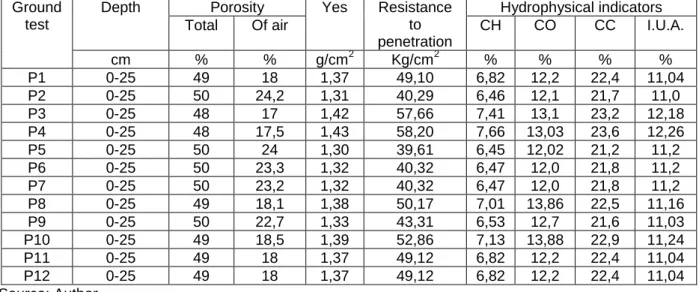
Table 1 Physical and hydro physical characteristics of the 12 red luvic red soil samples
harvested on SC AGROPRIM SRL's agricultural land in September – 2016
Ground test
Depth Porosity Yes Resistance
to penetration
Hydrophysical indicators
Total Of air CH CO CC I.U.A.
cm % % g/cm2 Kg/cm2 % % % %
P1 0-25 49 18 1,37 49,10 6,82 12,2 22,4 11,04
P2 0-25 50 24,2 1,31 40,29 6,46 12,1 21,7 11,0
P3 0-25 48 17 1,42 57,66 7,41 13,1 23,2 12,18
P4 0-25 48 17,5 1,43 58,20 7,66 13,03 23,6 12,26
P5 0-25 50 24 1,30 39,61 6,45 12,02 21,2 11,2
P6 0-25 50 23,3 1,32 40,32 6,47 12,0 21,8 11,2
P7 0-25 50 23,2 1,32 40,32 6,47 12,0 21,8 11,2
P8 0-25 49 18,1 1,38 50,17 7,01 13,86 22,5 11,16
P9 0-25 50 22,7 1,33 43,31 6,53 12,7 21,6 11,03
P10 0-25 49 18,5 1,39 52,86 7,13 13,88 22,9 11,24
P11 0-25 49 18 1,37 49,12 6,82 12,2 22,4 11,04
P12 0-25 49 18 1,37 49,12 6,82 12,2 22,4 11,04
Source: Author
At depths of 0-25 cm, the total porosity is close to the minimum limit with slightly different values, this is also due to agricultural works, whereas aeration
161
progressively, but penetration resistance varies from 40.29 g / cm3 to 58.20 g / cm3. The hydroscopicity coefficient ranges from 6-46% to 7-66%, as the determinations on many places are constant. The wicking coefficient values show a small variation on this profile, the water field capacity ranges from 21.1% to 23.5% of the dry soil weight to 25 cm
depth. The range of active humidity ranged between 11.0% and 12.26% at the surface and at a depth of 25 cm. To demonstrate the chemical composition of the soil studied, numerous chemical, physical and hydro physical determinations were performed:
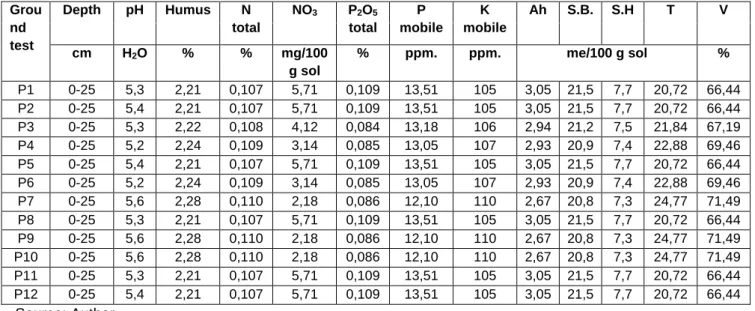
Table 2 The chemical properties of the 12 red luvic red soil samples harvested on the
agricultural land of SC AGROPRIM SRL in September – 2016
Grou nd test
Depth pH Humus N
total
NO3 P2O5
total P mobile
K mobile
Ah S.B. S.H T V
cm H2O % % mg/100
g sol
% ppm. ppm. me/100 g sol %
P1 0-25 5,3 2,21 0,107 5,71 0,109 13,51 105 3,05 21,5 7,7 20,72 66,44
P2 0-25 5,4 2,21 0,107 5,71 0,109 13,51 105 3,05 21,5 7,7 20,72 66,44
P3 0-25 5,3 2,22 0,108 4,12 0,084 13,18 106 2,94 21,2 7,5 21,84 67,19
P4 0-25 5,2 2,24 0,109 3,14 0,085 13,05 107 2,93 20,9 7,4 22,88 69,46
P5 0-25 5,4 2,21 0,107 5,71 0,109 13,51 105 3,05 21,5 7,7 20,72 66,44
P6 0-25 5,2 2,24 0,109 3,14 0,085 13,05 107 2,93 20,9 7,4 22,88 69,46
P7 0-25 5,6 2,28 0,110 2,18 0,086 12,10 110 2,67 20,8 7,3 24,77 71,49
P8 0-25 5,3 2,21 0,107 5,71 0,109 13,51 105 3,05 21,5 7,7 20,72 66,44
P9 0-25 5,6 2,28 0,110 2,18 0,086 12,10 110 2,67 20,8 7,3 24,77 71,49
P10 0-25 5,6 2,28 0,110 2,18 0,086 12,10 110 2,67 20,8 7,3 24,77 71,49
P11 0-25 5,3 2,21 0,107 5,71 0,109 13,51 105 3,05 21,5 7,7 20,72 66,44
P12 0-25 5,4 2,21 0,107 5,71 0,109 13,51 105 3,05 21,5 7,7 20,72 66,44
Source: Author
Based on these results of the chemical determinations on the studied soil, they fall within the limits of characterization of red luvic red soil. The soil reaction is moderately acidic, and the pH value at the 12 samples collected was between 5.2-5.6. The humus content for all 12 samples is low with values between 2.21-2.28%. But, as well as total nitrogen as supply, it has low values ranging from 0.107-0.110%, these results being correlated with the values of the humus content. Mobile phosphorus existing in the arable layer is poorly supplied, medium supplied with mobile potassium. Nitric nitrogen has a higher concentration in samples 1, 2, 5, 8, 11 and 12 with slight decrease for soil samples 3, 4, 6, 7, 9 and 10. The hydrolytic acidity is higher in the arable layer and has values ranging
from 3.05 me / 100g soil with a slight decrease to 2.67me / 100g soil. The total cationic exchange capacity has average values increasing depending on the increase in the amount of clay from 20.72 to 24.77%. The degree of saturation in the bases is small and has values ranging from 66.44 to 71.49%, being stable for this depth.
162
Table 3 The physical and hydro physical characteristics of the twelve red luvic red soil samples harvested on the agricultural land of SC AGROPRIM SRL in October – 2016
Ground test
Depth Porosity Yes Resistance
to penetration
Conductivity hydraulics Total
cm % g/cm2 Kgf/cm2 mm/h
P1 0-25 52 1,38 37,19 9,9
P2 0-25 57 1,28 32,41 9,40
P3 0-25 50 1,43 38,18 10,13
P4 0-25 50 1,44 34,17 10,13
P5 0-25 57 1,31 39,61 12,88
P6 0-25 57 1,36 32,41 12,88
P7 0-25 57 1,36 32,41 12,88
P8 0-25 52 1,39 36,15 11,57
P9 0-25 57 1,37 33,86 12,88
Source: Author
After chemical, physical and hydro physical determinations, it can be noticed that on the fined agro fond, but also on the background of N160P120K80, there was
a slight increase compared to the
unmodified land and without treatments to the maize crop until the harvest. Thus, total porosity increased 50 to 57% and apparent density ranged from 1.28 to 1.44.
Table 4 The chemical properties of the 12 red luvic red soil samples harvested from
SC AGROPRIM SRL's agricultural land in October – 2016
Ground test
Depth pH Humus N total NO3 P
mobile K mobile
cm H2O % % mg/100g
sol
ppm. ppm.
P1 0-25 6,3 2,32 0,137 5,72 15,51 113
P2 0-25 6,5 2,32 0,137 5,72 15,53 113
P3 0-25 6,3 2,35 0,148 4,13 16,20 114
P4 0-25 6,4 2,37 0,139 3,15 16,08 115
P5 0-25 6,4 2,32 0,137 5,72 15,57 113
P6 0-25 6,4 2,37 0,139 3,13 14,07 115
P7 0-25 6,4 2,39 0,139 2,19 16,14 118
P8 0-25 6,5 2,32 0,137 5,72 17,59 114
P9 0-25 6,3 2,40 0,140 2,19 15,14 117
P10 0-25 6,3 2,40 0,140 2,19 15,13 117
P11 0-25 6,5 2,32 0,137 5,72 16,55 114
P12 0-25 6,5 2,32 0,137 5,72 16,55 115
Source: Author
After application of chemical amendments and fertilizers, the soil pH improved with minor modifications due to fined agro fond, having a positive influence on the establishment of corn crops and a great contribution to the physical properties of the soil.
Soil humus content does not undergo any
163
Table 5 Production of grain maize obtained in 2017
Factor Average production
q/ha
A 77,4
B 79,7
C unamended 69,4
CaCO3 -4 t/ha 80,6
Source: Author
Due to these improvements in chemical and biochemical soil content, the established corn culture has capitalized well in terms of quantity and
quality of production over the unmodified agrofonds, knowing that maize assimilates both low doses of NPK and high doses.
CONCLUSIONS
Due to the application of calcium-based modifications and the application of variable doses of NPK, an improved acid reaction of the soil and a better supply of plants with fertilizing elements and water is achieved.
Analyzing the interaction between the three factors, it can be concluded that all three have contributed positively to the production of grain maize compared to the unmodified and untreated control. From the results obtained, it is clearly evident the necessity of chemical and mineral fertilization, the treatment of slightly acidic soil with amendments
before the establishment of the culture, in order to obtain planned results.
Of the above, it is clear that apparent density is positively influenced by agrofond and applied fertilizer doses. The total porosity, hydraulic conductivity has remarkable improvements on the fertilized agrofond, and the penetration resistance is significantly diminished.
In conclusion, soil reaction has been improved and it is recommended that treatments and appropriate use of amendments be made to obtain production increases in the established crop.
BIBLIOGRAPHY
1. Bonciu E., Sărac I., 2016. Implications of modern biotechnology in the food security and food safety. Annals of the University of Craiova - Agriculture, Montanology, Cadastre Series, Vol. 46, Issue 1, pp. 36-41.
2. Bonea Dorina., 2016 - The effect of climatic conditions on the yield and quality of maize in the central part of Oltenia. Annals of the University of Craiova - Agriculture, Montanology, Cadastre Series, 46(1): 48-55.
3. Bonea Dorina, Urechean Viorica., 2011 - The evaluation of water stress in maize (Zea mays L.) using selection
indices. Romanian Agricultural Research, 28: 79-86.
4. Coculescu, et al., 1968 - Influence of mineral fertilizers on the assimilation of nutrients in the main crop plants. Annals of I.C.C.P.T., 34, B.
5. Hera, Cr., Borlan Z., 1978 - Effect of Long Fertilization with Nitrogen and Phosphorus on the Production and the N-P Corn Grain Relationship. Year. ICCPT Fundulea, vol. XLIII, Bucharest.
164
7. Munteanu I., 2006 - Pedophilosophy, a new field of philosophy of science, the Congress of Soil Science.
8. Pandia Olimpia., 2006 - Research on the effect of fertilizers on production and quality in maize. Doctoral thesis, USAMVB Timişoara.
9. Saracin Ion, Olimpia Pandia, et al.,
2010 - Appatrus dor determination soil pentration resistance for elstablishing work index parameters agricultural machinery, Metalurgia International, nr.11, pp. 91-93.
10.*** ICPA., 1987 - Methodology of pedological studies I, II.
11*** ICPA., 1987 - Methodology of pedological studies III.
12.*** ICPA., 1980 - Plant Analysis Methodology for Assessment of Mineral Nutrition Status.