217
RESEARCH REAGRDING ACID SOILS IMPROVEMENT USING
A WASTE FROM METALLURGY
MIHALACHE M.1, ILIE L.1, MARIN D.I.1, BOLOHAN C1., MIHAELA ULMANU2, ILDIKO
ANGER2, EUGENIA GAMENȚ3
1University of Agronomic Sciences and Veterinary Medicine of Bucharest 2National R&D Institute for Nonferrous and Rare Metals of Pantelimon 3National R&D Institute for Soil Science, Agrochemistry and Environmental Protection of Bucharest
Keywords:LF slag, acid soil, soil amendment
ABSTRACT
The soil reaction value depend on the soil percentage base saturation degree and of the saturation type (predominantly with calcium or sodium). At the same time, the soil moisture regime, percolative or periodically percolative, the long application of nitrogen fertilizers, acid pollution, determine the deep leaching of bases. So, the upper part of soil suffers an acidification process especially under the conditions without liming. Generally, soil pH values less than 5,5 ensure conditions for strong solubilization of pollutants and their translocation into plants. Particular problems are raised by the very strongly and strongly acid soils (0,60% and 6,57%, respectively), some of the being specific for the mountainous pastures. In Romania are 1 867 000 ha acid agricultural land, representing over 12% from the total agricultural surface of the country. On the other hand, in Romania are produced annually from 0.18 to 0.2 million tones ladle slag (LF slag) from steel refinery, classified as a dangerous waste due to its alkalinity (alkalinity index 3.5-4.5).
INTRODUCTION
Poor plant growth on acid soils is generally associated with a low soil pH value. The effects of soil pH on growth are complex and it is difficult to separate the direct effects from the indirect effects associated with changes in the solubility and availability of varios elements affecting plant growth. There are two main effects of Al and H on growth: injury to roots and deacresed uptake of cations (Ca2+, Mg2+ and K+). In addition to common liming materials in amending acid soils, other materials are also used as acid soil amendment such as waste resulted from secondary refinery of the steel, named LF slag. Romania are produced annually from 0.18 to 0.2 million tones ladle slag (LF slag) from steel refinery, classified as a dangerous waste due to its alkalinity (alkalinity index 3.5- 4.5). In Germany, 20% of slags are used as fertilizer or soil amendment (Economic Comismmission For Europe, Geneva, 1990). Slag increases soil pH and mobile fraction of P, K, Ca and Mg during the incubation period (Abou Seeda et al., 2002, Mohammadi et al., 2007). This slag can not be recycled in the process because it no contains iron. It contains high percents of calcium oxide and from this reason we think to be appropriate to be used instead of lime in acid soil treatment.
MATERIAL AND METHOD
Lately, following the application of agricultural technologies and long time applied with nitrogen fertilizers has been a decrease a reddish preluvosoil reaction from the experimental field of Moara Domnească from 6.4 to 5-5.5. For improving the reaction of reddish preluvosoil from the experimental field was used as amendment a metallurgical waste from the Galați steel refinery. The experimental field consisted of five variants, in three repetitions V1 (control), V2 (1 t/ha), V3 (2 t/ha), V4 (3 t/ha) and V5 (5 t/ha). The
218
Weed control was achieved by preemergent herbicide, Guardian 2.2 l/ha product and postemergence with Ceredin super 1/ha + Titus 25DF 40 g/ha.
Rates for soil improving were determined according to the neutralize power of amendment and soil hydrolytic acidity.
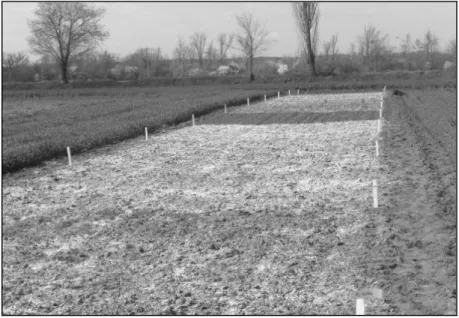
Fig. 1. Experimental field from Moara Domnească – Ilfov (2013)
The reddish preluvosoil from Moara Domnească experimental field has in the surface horizon the following properties: pH - 5.27, humus content - 2.46%, Nt - 0.135%, PAL - 59 ppm, KAL - 105 ppm and the C/N ratio of 12.4. The base saturation degree is 72%,
hydrolytic acidity - 5.89% and the base exchange - 15.18%. Soil texture is clay loam of horizon surface (0-20 cm) with a clay content of 32% and 39% in the Bt horizon at a depth of 60 cm (Mihalache and al., 2010).
For determining the reaction of the soil used the laboratory WTW 750 pH-meter . To determine the physical characteristics were collected the soil samples of two depths 0-20 cm and 20-40 cm with metal cylinders, volume of 100 cm3. Were determined the bulk density, soil penetration resistance, and the compaction degree of each experimental variants. Was used to determine the biomass and products obtained from maize.
RESULTS AND DISCUSSIONS
The climate conditions in 2013 showed a direct influence on the development of crop plants. Rainfall recorded values below normal zone and the temperatures above it. In maize vegetation period the average of temperature was 20.8 0C versus 18.4 0C as is the annual average and the rainfall amount of 179.3 mm, 111.8 mm less than multi-values (291.1 mm).
The characteristics of the LF slag are presented in Table 1. Samples of LF slag were analyzed by Optic Spectometry with plasma inductively coupled ICP-OES, for iron, magnesium, aluminium, silica etc.
Table 1 The chemical composition of slag
MU Fe Mg Al Si Na Ca Mn pH
% 10.55 4.10 2.27 8.70 0.034 43.50 0.25 11.08
219
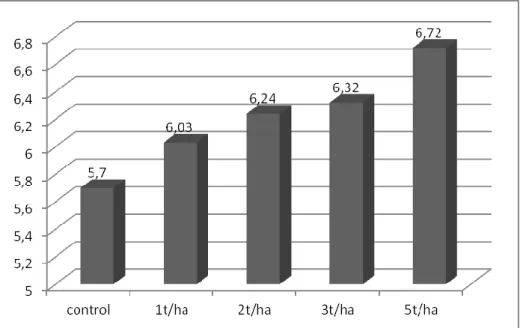
Fig. 2. Effects of the treatments on soil reaction (0-20 cm)
Determination of soil reaction the depth 0-20 cm show an increase in the soil reaction with the applied rate from 5.67 in the control variant to 6.12 to the application of a rate of 5 t/ha slag.
The depth of 20-40 cm increased soil reaction value is significant, it increases by one unit of the first year of application. To the control variant value of reaction was 5.7 and the variant with 5 t/ha pH=6.72 (Figs. 2, 3).
Fig. 3. Effects of the treatments on soil reaction (20-40 cm)
220
Table 2 The main phisycal characteristics of reddish preluvosoil
Experimental variants
Depth (cm)
Bulk density (g/cm3)
Total porosity
(%)
Compaction degree
(%)
V1 0-20 1.49 42.42 15.28
20-40 1.63 37.19 26.39
V2 0-20 1.44 44.35 11.44
20-40 1.59 38.94 23.27
V3 0-20 1.58 38.93 22.25
20-40 1.59 38.59 23.62
V4 0-20 1.49 42.75 14.62
20-40 1.64 36.76 27.24
V5 0-20 1.55 40.05 20.00
20-40 1.63 37.10 26.58
In Table 3 are shown the influence of amendment used on maize production.
Table 3 The influence of metallurgical waste on maize yield form experimental
field of Moara Domnească
Variant Grain yiled (q/ha)
% Diff.
(q/ha)
V1 72.15 100 Mt
V2 76.28 105.7 4.13*
V3 77.80 107.8 5.65**
V4 78.45 108.7 6.30**
V5 79.66 110.4 7.51***
DL 5% = 3.14 q/ha DL 1% = 4.55 q/ha DL 0.1% = 6.82 q/ha
Maize production was positively influenced by the application of different rates of slag, in the control variant yield was 72.15 q/ha and increased to 79.66 q/ha in variant V5 (5 t/ha).
Production growth was 4.13 q/ha to V2 (1 t/ha), 2.83 q/ha to V3, 2.1 q/ha to V4 and 1.50
q/ha to V5 (5 t/ha).
221
CONCLUSIONS
These waste from secondary refinery of the steel can be use with good results in agriculture, with positive influences on the maize crop.
LF slag resulted from the refinery of the steel may be used as amendment for correction acidic soil reaction.
Slag from the steel industry brings increases of calcium and micronutrients in soil content.
There was an increase in the reaction of reddish preluvosoil with increasing rate from 5.7 to 6.72 at 20-40 cm depth.
The harvest increase per tonne of LF slag was 4.13 q/ha at a rate of 1 t/ha and 1.50 q/ha at a rate of 5 t/ha.
The highest yield of maize, 79.66 q/ha, was obtained in V4 (5 t/ha).
Biomass production was higher in treated variants compared to the control variant.
BIBLIOGRAPHY
1. Abou Seeda, M., El-Aila, H.I. and El-Ashry, S., 2002 - Assessment of basic slag as soil amelioration and their effects on the uptake of some nutrient elements by radish plants, Bulletin National Res. Centre (Cairo), 27: pp. 491-506.
2. Mihalache, M., Ilie, L., Marin, D.I., 2009 - Research concerning the effect of management systems on physical and chemical properties of reddish preluvosoil from Moara Domneasca experimental field, The International Scientific Conference - „Durable agriculture - Agriculture of the future”, 20-21 november, University of Craiova, pp. 428-432. 3. Mihalache, M., Ilie, L., Marin, D.I., 2010 - Research concerning the evolution of
physical and chemical properties of reddish preluvosoil from Moara Domneasca, Scientific
Papers, USAMV Bucharest, Series A, vol. LIII, pp. 61-66.
4. Mihalache, M., Ilie, L., Marin, D.I., 2012 - Research concerning evolution on
physico-chemical properties of reddish preluvosoil from Moara Domnească experimental field,
Analele Universității din Craiova, vol. XLII-2012/1, ISSN 1841-8317, pp. 354-359.
5. Mohaammadi, T.A., Shahram, S.H., 2007 - Converter slag as a liming agent in the amelioration of acid soil, International Journal of Agriculture and Biology, pp. 715-720.
6. Ulmanu, Mihaela, Gamenț, Eugenia, Mihalache, M., Popescu, Lavinia, Anger,
Ildiko, Zaman, F., Plopeanu, Georgiana, Ilie, L., 2013 - A new process for acid soil
amelioration using a metallurgical waste. I. Preliminary data, XV Balcan Mineral