Mathematics among Middle School Teachers
A dissertation presented to the faculty of
The Gladys W. and David H. Patton College of Education of Ohio University
In partial fulfillment of the requirements for the degree
Doctor of Philosophy
Suzanne D. Nichols August 2010
This dissertation titled
Perceptions and Implementation of the Ohio Academic Content Standards for Mathematics among Middle School Teachers
by
SUZANNE D. NICHOLS
has been approved for
the Department of Teacher Education
and The Gladys W. and David H. Patton College of Education by
George A. Johanson Professor of Educational Studies
Renée A. Middleton
ABSTRACT
NICHOLS, SUZANNE D., Ph.D., August 2010, Curriculum and Instruction, Mathematics Education
Perceptions and Implementation of the Ohio Academic Content Standards for Mathematics among Middle School Teachers (202 pp.)
Director of Dissertation: George A. Johanson
This dissertation describes findings of a qualitative study using a grounded theory methodology to explore teacher perceptions and implementation of the Ohio Academic Content Standards for Mathematics. Teachers who have knowledge of the Standards and have participated in professional development that builds on that knowledge do not always teach in a way that is indicative of standards-based instruction. This study examines the disconnect between teachers’ espoused beliefs about standards-based instruction and what students eventually experience in their classroom. Classroom
practice of twelve teachers was explored through interviews, observations, and surveys of lesson plans and assessments.
Not all teachers in this study had a thorough understanding of the Standards. For many, standards-based instruction meant teaching the Standards. The Standards involved mathematics content with little or no attention paid to the mathematical process
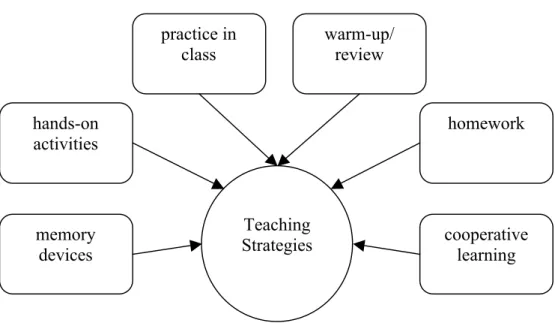
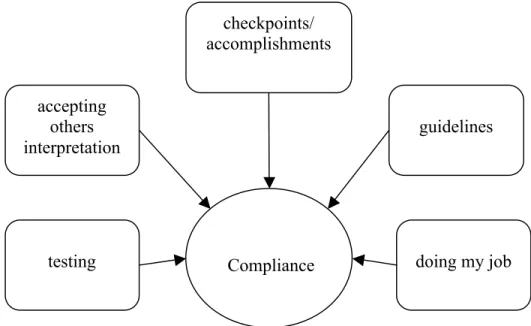
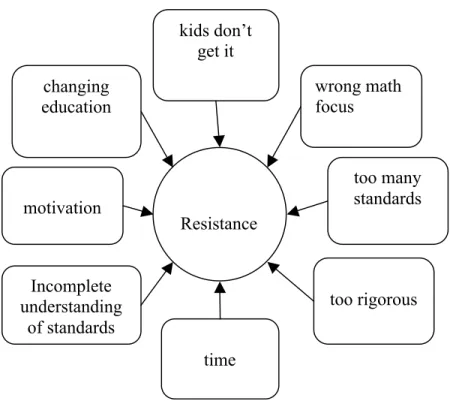
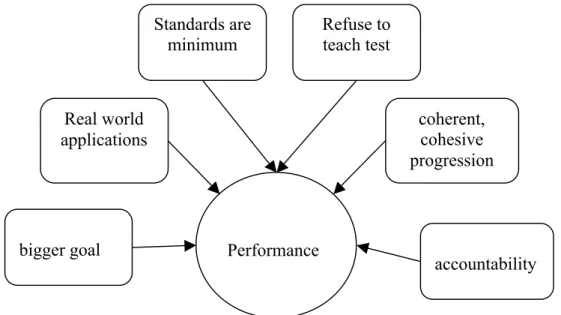
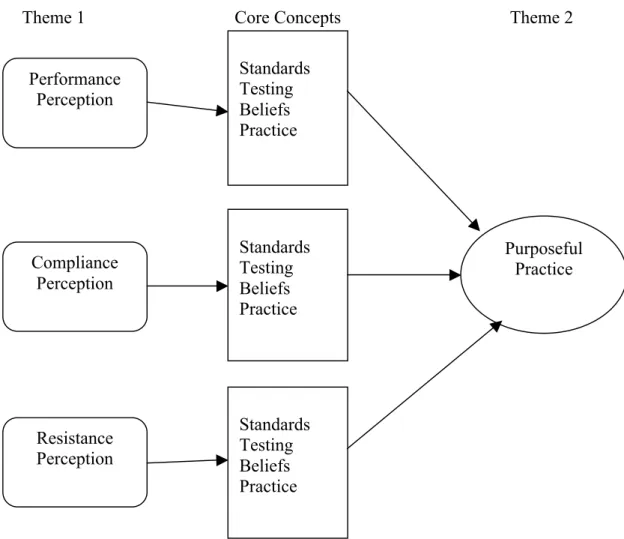
Teachers’ perception of their role and responsibilities could be categorized into three distinct groups- performance, compliance, and resistance- with each group having a differing perception made up of a compilation of ideas about the Standards, testing, teacher beliefs, and practice. Regardless of teacher perception, teachers’ decisions about classroom practice were purposeful. Teachers taught in a way they believed to be most likely to bring about desired results. Levels of teacher efficacy were associated with their success at achieving those desired results.
Foundationally, teachers believed that their responsibility to students was based upon what was fundamental to their job. Some teachers approached teaching mathematics from a school mathematics perspective in which school mathematics was of the utmost importance. Their job was to prepare students to understand mathematics on a deeper, conceptual level in order to build a foundation for the mathematics students would encounter throughout life and, more immediately, throughout future mathematics course. Other teachers approached teaching mathematics from an assessed curriculum
perspective in which teaching mathematics standards in order to prepare students to achieve at acceptable levels on high-stakes tests was their job.
Approved: _____________________________________________________________ George A. Johanson
ACKNOWLEDGMENTS
My deepest appreciation goes to my doctoral chair, Dr. George A. Johanson, who believed in me when I had trouble believing in myself. Your encouragement, persistent but subtle reminders to keep moving, and words of wisdom made this dissertation a finished product. As a show of lessons learned, I will tell you, sincerely, I am pleased with this work. Thank you, Dr. J.
Thank you, also, to my committee members Dr. Tom Davis, Dr. Dianne Gut, and Dr. Craig Howley. Your wise counsel throughout the study design, my proposal, and the dissertation defense were invaluable. I have learned so much from you and for that I am grateful.
I will always owe a debt of gratitude to the ACCLAIM leadership team, Dr. Vena Long, Dr. Bill Bush, Dr. Carl Lee, Dr. Jim Schultz, and Dr. Craig Howley for without them this doctoral degree would not have been possible. These amazing people had vision, imagination, drive, and the unique ability to make rural education at the mall a real experience. Kudos to you all.
Thanks to my ACCLAIM cohort members. Rarely a day goes by that I don’t think of one of you and smile. You have changed my life in ways you will never know. Thank you especially to the “Git ‘R Done” cheerleaders who were encouraging me to the end.
childhood lasts but a season, Mamaw can go to the park every day now. And, you are only required to call me Dr. Mamaw for a few weeks longer, and of course, on special occasions.
And last, but certainly not least, thank you, my dear husband, Roger, for being there through the tears and frustration, for understanding when you spent the evenings sitting on the porch alone, had cold cuts for dinner, and listened to my ranting and raving in moments of frustration. I love you more today than I ever have. And, you, my love, do not ever have to call me Dr. Sue.
TABLE OF CONTENTS
Page
ACKNOWLEDGMENTS ... 6
LIST OF TABLES... 11
LIST OF FIGURES ... 12
CHAPTER 1: INTRODUCTION ... 13
Background ... 17
Statement of the Problem... 19
Significance... 20
Limitations and Delimitations of the Study ... 21
Definitions of Terms ... 25
Summary ... 27
CHAPTER 2: LITERATURE REVIEW ... 28
Student Achievement ... 30
Trends in International Mathematics and Science Studies (TIMSS)... 31
National Assessment of Educational Progress (NAEP) ... 32
Ohio Achievement Test... 33
Summarizing Achievement ... 34
Standards... 34
NCTM Standards... 35
Ohio Standards... 37
Teaching... 39
Instructional Pedagogy ... 39
Current Classroom Practice ... 43
Factors that Affect Classroom Practice ... 46
Teacher Beliefs ... 51
Decisions about Practice ... 54
Teacher Efficacy... 56
Summary ... 60
CHAPTER 3: METHODOLOGY ... 62
Prior Research Focus Groups as a Backdrop for the Study ... 62
Focus Group Alpha ... 63
Focus Group Beta ... 64
Focus Group Gamma ... 67
Summary of Focus Groups: What Does It Mean? ... 71
Qualitative Design Choice ... 73
Grounded Theory ... 74
The Researcher... 76
Participants ... 77
Data Collection ... 80
Verification of Interpretation ... 91
Summary ... 91
CHAPTER 4: DATA ANALYSIS AND RESULTS ... 93
Using Observations to Determine Practice ... 93
Physical Setting/Classroom Environment ... 94
Lesson Overview ... 94
Instructional Overview ... 95
Questioning ... 96
Classroom Atmosphere ... 96
Analysis of Instruction Leading to the Development of Higher Order Skills... 96
Overall Classroom Rating Profile... 97
Mathematical Processes Benchmarks from Ohio Academic Content Standards: Mathematics... 97
Context: Who Are They? ... 98
Meet the Teachers ... 99
Mr. Allen Anderson ... 99
Mr. Ben Brown ... 102
Ms. Carla Case... 103
Ms. Diane Davis ... 105
Ms. Ellen Early... 107
Ms. Faye Fout ... 109
Ms. Grace Gardner ... 110
Ms. Harriet Holmes... 113
Ms. Ingrid Ivy ... 114
Ms. Jane Johnson ... 115
Ms. Kathy Kale ... 117
Ms. Laura Limley ... 118
Data Analysis ... 120
Open Coding ... 120
Axial Coding... 122
A Procedural Aside ... 125
Themes... 128
Perception ... 128
Purposeful Practice... 138
Grounded Theory ... 140
School Mathematics Perspective... 141
Assessed Curriculum Perspective ... 143
Member Checking... 146
Summary ... 146
CHAPTER 5: DISCUSSION AND IMPLICATIONS... 149
Discussion of Research Questions in Light of Themes ... 149
Research Question 1: What are teachers’ perceptions and understandings of the Ohio Academic Content Standards for Mathematics?... 149
Research Question 2: How do teachers translate Standards into classroom practice? ... 151
Research Question 3: If teachers truly support the Standards and standards-based instruction, to what extent is this evident in their classroom practice? ... 155
Research Question 4: What conditions influence teachers enacting standards-based instruction in their mathematics classroom?... 157
Discussion of Findings... 159
Theme 2: Purposeful Practice... 161
Grounded Theory: Perspective ... 162
Interpretation of Findings ... 164
They Don’t Know That They Don’t Know... 164
Teacher Efficacy... 165
Implications for Policy and Practice ... 168
Recommendations for Future Practice... 170
Contribution to Literature ... 173
Recommendations for Future Research ... 174
Summary ... 175
REFERENCES ... 178
Appendix A: TIMSS Test Scores ... 190
Appendix B: Professional Development... 191
Appendix C: Interview Prompts ... 194
Appendix D: Mathematics Classroom Observation Instrument ... 195
Appendix E: Teacher Information ... 198
Appendix F: MCOI Results ... 199
LIST OF TABLES
LIST OF FIGURES
Page
Figure 1: Example of open coding to categories………...………..126
Figure 2: Compliance descriptor codes……….………..131
Figure 3: Resistance descriptor codes……….135
Figure 4: Performance descriptor codes………..………137
Figure 5: Relationship between themes and core concepts………….………..…..148
CHAPTER 1: INTRODUCTION
As a result of the passage of No Child Left Behind legislation (No Child Left Behind Act, 2002), schools are, more than ever, being required to increase student achievement. The administrators and teachers of school districts failing to increase student achievement are being held accountable for lack of acceptable performance. Stakeholders are pressuring public educators to improve student performance (National Mathematics Advisory Panel, 2008). In an effort to fulfill the NCLB mandate requiring all students to achieve, mathematics teachers are being urged to use standards-based instruction in their teaching in order to increase student understanding and performance (Balfanz, MacIver, & Byrnes, 2006). The reputed need for standards-based instruction is not new in mathematics education and has been a suggested part of mathematics reform.
While the push for major reform efforts in mathematics education has been ongoing for many years (Brownell, 1935; National Research Council, 1989), efforts have been renewed since 1989 when the National Council of Teachers of Mathematics
(NCTM) released the original standards document, Curriculum and Evaluation Standards
for School Mathematics. This document was intended to serve as a framework to guide
understanding to conceptual understanding and included “real-world” application of mathematics, using process skills such as reasoning, problem-solving, communication, and connections, and moving away from focusing on arithmetic to include other
mathematical topics (Herrera & Owens, 2001). Changes in pedagogy called for student-centered instruction, which included students “discovering and constructing mathematical relationships, rather than merely memorizing procedures and following them by rote” (Herrera & Owens, 2001, p. 89), using concrete materials to represent mathematics, and teaching in a way that requires students to actively engage in mathematics process skills (Herrera & Owens, 2001).
State departments of education became catalysts for change. Ohio developed a state mathematics model in response to the NCTM Standards, and Ohio school districts were urged to rewrite local courses of study in mathematics to more closely resemble the state model.
After 10 years of attempting to implement the original NCTM Standards, classroom instruction had changed very little (Balfanz et al., 2006; Hiebert & Stigler, 2004; Jacobs, Hiebert, Givvin, Hollingsworth, & Wearne, 2006; Schoenfeld, 2002). According to the Third International Mathematics and Science Study (TIMSS), overall, students in the United States were still being outperformed by their international
effective? It remains an open question- one that can be answered, perhaps, only by learning about the perceptions of those directly responsible for delivering mathematics instruction. This type of insight can best be elicited using qualitative methods.
The 1989 NCTM Standards were never intended as a final product (NCTM 2000). NCTM realized the standards put forth in 1989 served as a working document requiring continual change in order to remain pertinent. The NCTM Board of Directors appointed a multi-varied constituency committee to plan and launch a revision to the original NCTM documents (NCTM, 2000). As a result of the work of this committee, in 2000 NCTM released an updated standards document titled Principles and Standards for
School Mathematics (PSSM).
Despite the concerted efforts of many classroom teachers, administrators, teacher-leaders, curriculum developers, teacher educators, mathematicians, and
policymakers, the portrayal of mathematics teaching and learning in Principles
and Standards for School Mathematics is not the reality in the vast majority of
classrooms, schools, and districts. (NCTM, 2000, p. 5)
NCTM’s newest standards document, PSSM, is currently the guiding force in mathematics education being less prescriptive than the previous document and
generalizing expectations (or benchmarks) into grade bands rather than by grade-specific indicators. Concern and criticism persists, much of which relates to what has been called a “mile wide - inch deep” curriculum (Schmidt et al., 2002).
NCTM, in developing the Principles and Standards for School Mathematics
process skills is evidenced by the fact that each of the process skills is designated a standard just as are the content standards-- Number and Operations, Algebra, Geometry, Measurement, and Data Analysis and Probability. The process standards address Problem Solving, Reasoning and Proof, Communication, Connections, and Representation
(NCTM, 2000). Many of the differences in describing a traditional teaching approach as opposed to a standards-based instructional approach are closely linked to the emphasis placed on mathematical processes (Hamilton et al., 2003).
In response to PSSM and No Child Left Behind, Ohio, like most other states, developed a new standards document for mathematics. Ohio’s Amended Substitute Senate Bill 1, which went into effect September 11, 2001, mandated that Ohio “develop and adopt clear academic content standards” (Ohio Department of Education, 2001, p. i). Using PSSM as a guideline, a group of mathematics educators from throughout the state met and developed the Ohio Academic Content Standards for Mathematics that Ohio teachers would use to prepare students to attain proficiency under a new accountability plan which included new standardized testing requirements. In December, 2001, the Ohio State Board of Education adopted the Ohio Academic Content Standards for Mathematics
(Ohio Department of Education, 2001).
Cocking, 2000; Cooney, 1994; Herrera & Owens, 2001), classroom teachers tend to maintain traditional approaches (Jacobs et al., 2006).
Jerome Bruner, John Dewey, and Jean Piaget built their learning theories around research based in the field of cognitive psychology. They founded their theories premised on the belief that students learn by creating knowledge for themselves based on a network of ideas already developed and in place by life experience and prior learning (Brooks & Brooks, 1993; Heaton, 2000; Kennedy & Tipps, 1991). NCTM maintains that in order for students to learn, the knowledge they are building should be applicable to their lives or should, at the very least, be of interest to them (NCTM, 2000). On this view, teachers should attempt to supply such relevance by using hands-on or inquiry-based activities. This general theory, along with its classroom application, is commonly referred to as constructivism and seems to be the foundation on which one builds most of the tenets of standards-based instruction (Brooks & Brooks, 1993; Heaton, 2000; Kennedy & Tipps, 1991).
Background
As part of a research project in which I was involved, I had the opportunity to observe teachers’ practice in mathematics classes at the junior high and high school in a district where standardized mathematics test scores were substantially above the state average while socioeconomic status was very low and the transient rate quite high. Students from this school district were not, by several key indicators for success,
the classrooms of mathematics teacher from Grades 7-12. Because of my previous experience as a mathematics teacher and my views about effective instruction, I had preconceived expectations of what I would see in these mathematics classes. Going into classrooms, I expected to see standards-based instruction and was surprised instead to see a traditional method of instruction. As a proponent of standards-based instruction myself, I was astonished that in each classroom I visited students sat in rows and teachers used a classic, traditional, directed instructional teaching style. This did not seem to coincide with research indicators of good practice promoted by NCTM and the Ohio Department of Education.
The research experience of observing in classrooms at this particular school for the purposes of the aforementioned study provoked a state of wonder and confusion in my mind. Having personally taught from a constructivist, hands-on, inquiry-based methodology when in the classroom, and believing this to be the best, most effective approach for students, I was philosophically unprepared to accept what I was seeing. According to the interviews I conducted, these teachers were knowledgeable about Standards and grade-level indicators and believed they were delivering a quality mathematics education to their students. Test scores seemed to validate this belief.
In trying to make sense of these observations, I considered my personal
mathematics reform as well as a proponent in my school district for standards-based instruction. What seemed to me to be a logical consequence of understanding mathematics reform did not seem to be manifesting itself in the practice of these classroom teachers. I wondered what was going on.
Statement of the Problem
Mathematics standards are not new. While it is true that there have been changes in the content of the standards throughout the past 20 years, the changes have been of a narrowing sort resulting in more definitive and precisely defined standards. Many teachers, both in-service and pre-service, have had a great deal of interaction with mathematics standards, many teachers profess to have a working knowledge of the
standards, and many self-reportedly support the standards and standards-based instruction (Spillane & Zeuli, 1999).
Research suggests that while teachers indicate they value standards-based mathematics instruction and use this approach regularly, there is little indication that many mathematics teachers are regularly using standards-based instruction, and, in fact, teach in a traditional manner. There appears to be a disconnect between what teachers say they believe and what teachers actually do in their practice. To understand this disconnect for Ohio teachers, the following questions need answering.
1. What are teachers’ perceptions and understandings of the Ohio Academic Content Standards for Mathematics (Ohio Department of Education, 2001)?
3. If teachers truly support the Standards and standards-based instruction, to what extent is this evident in their classroom practice?
4. What conditions influence teachers enacting standards-based instruction in their mathematics classrooms?
Significance
Influential bodies of mathematics educators assert that mathematics reform is needed (NCTM 1989, 2000; National Research Council, 1989), and they contend that practicing classroom teachers are the ones who are in the best position to bring about that change (Heaton, 2000; NCTM, 1991, 2007; National Research Council, 1989). Thus, understanding mathematics reform from teachers’ perspectives is vital to developing strategies to promote the desired reform.
The NCTM Research Advisory Committee (1995) responds to the question, “What is the point of doing mathematics education research?” (p. 302) with the following explanation:
People often think the point of research is to answer questions definitively or to find solutions to problems. Rarely does either of these occur as a direct outcome of research. The point of doing research is more often to gain insight into
problems, their sources, and their definition, or to open new ways of seeing what is currently taken as simple and obvious. (p. 302)
classroom teachers-- an understanding that may be used in the future to foster mathematics reform.
Limitations and Delimitations of the Study
It is important for a researcher to divulge limitations of the study (Maxwell, 1996; Patton, 2002). A limitation of this study involved participants. While the study called for purposefully chosen participants in an attempt to collect information-rich data, their participation was voluntary, and selection was subject to willingness to participate. While many teachers with reportedly discrepant practice and espoused beliefs were identified, not all were willing to participate in the study. After many unsuccessful attempts, I was able to secure participation from teachers who, while perhaps not the most discrepant, readily took part in the study.
Furthermore, accuracy of data collected was vital. It was possible that data obtained from observations did not represent practice that was typical for the participant. The “halo effect” suggests that teachers want to, and often do, try to present themselves in the best possible light or in a manner that they assume the researcher expects (Patton, 2002). In order to minimize this phenomenon, the researcher logged time in the
classroom prior to the documented classroom observation and interviews. The amount of time in each class ranged from 9-11 days based on the rate at which students and teachers became accustomed to my presence.
to misrepresent their opinions in the direction of answers consistent with prevailing social norms” (Polit & Beck, 2004, p. 732). One strategy for controlling for the effect of social desirability bias was to present the study as an examination of effective practice and the participant as having been identified by professional development providers or
curriculum directors as a provider of effective practice. This allowed participants to identify themselves as part of the prevalent culture.
“When people become aware of the prevalence, they then believe that if they hold these attitudes or exhibit these behaviors they are part of the majority, rather than part of the minority. This legitimizes their own attitudes and behaviors, and they judge themselves less harshly. Once this happens, people are much more candid in their responses about these attitudes and behaviors.” (Thomas, Grawitch, & Scandell, 2007, p. 2752)
With this approach, it appeared that an acceptable level of collegiality was achieved that lessened the effect of social desirability bias but the degree to which it was neutralized remains unknown. Another preventative measure to social desirability was that the researcher did not accept participants with whom there was a pre-existing relationship or knowledge. This lessened the likelihood of the participant attempting to act and respond in a way that they thought the researcher expected.
Student behavior during the observations would have indicated a change in what the students considered normal routine and such behavior was documented in field notes. Additionally, lesson plan and assessment documentation, to the extent that it was
from and about humans inevitably represent some degree of perspective rather than absolute truth” (Patton, 2002, p. 569). Teachers’ self-reporting, while not usually intended to be misleading, is not always totally indicative of actual practice (Spillane & Zeuli, 1999). Therefore, teacher reporting was compared to other indicators such as observations, lesson plans, and student behavior.
Another limitation of the study pertained to the selected method. Grounded theory is an inductive process and therefore operates from a postpositivist perspective (Patton, 2002). The accuracy of the results was dependent upon the analysis of the data gathered. In addition, it is difficult to separate the data gathered from the context in which it was collected (Maxwell, 1996). According to Denzin and Lincoln (1998):
In so far as theory that is developed through this methodology is able to specify consequences and their related conditions, the theorist can claim predictability for it, in the limited sense that if elsewhere approximately similar conditions are obtained, then approximately similar consequences should occur. (p. 169)
Transferability, therefore, is limited to the degree of similarity between the context of this study and the context of the study in question, and it is not the researcher’s task “to provide an index of transferability; it is his or her responsibility to provide the data base that makes transferability judgments possible on the part of potential appliers” (Lincoln & Guba, 1995, p. 316). I attempted to provide a thorough description of the context to allow for transferability.
effective mathematics teaching, and because of this prior experience, I took precautions to guard against bias in interpretation of data. I continued to strive for neutrality
throughout the study. Patton (2002) cautions:
The neutral investigator enters the research arena with no ax to grind, no theory to prove... and no predetermined results to support. Rather, the investigator’s
commitment is to understand the world as it unfolds, be true to complexities and multiple perspectives as they emerge, and be balanced in reporting both
confirmatory and disconfirming evidence with regard to any conclusions offered. (p. 51)
While I do have a preconceived notion of good practice, I recognize my
Definitions of Terms
Standards-based mathematics instruction refers to practices that are consistent
with content and process standards and guidelines published by the American
Association for the Advancement of Science (1993) and the National Council of Teachers of Mathematics (2000). Common to all these documents is an emphasis on instruction that engages students as active participants in their own learning and enhances the development of complex cognitive skills and processes. Specific practices often associated with this approach include cooperative learning groups, inquiry-based
activities, use of materials and manipulatives, and open-ended assessment techniques. All of these practices support active rather than passive learning, promote the application of critical thinking skills, and provide opportunities to apply mathematics and science learning to real-world contexts.
In a comprehensive literature review synthesizing research conducted from 1993-2000 on reform in mathematics education, Ross, McDougall, and Hogaboam (2002) developed a list of 10 chief characteristics of classroom practice one would observe in a classroom where the teacher was attentive to mathematics education reform. The
following list of characteristics has been paraphrased from page 125 of Ross, McDougall, and Hogaboam’s article:
1. a broader scope of mathematical content (as opposed to the over-emphasis on numbers and operations)
3. tasks are usually open-ended real life problems which sometimes have more than one answer and do not always contain all the information students need to solve the problem (as opposed to decontextualized tasks with one correct answer and all necessary information included in the problems)
4. instruction focused on building understanding of mathematical concepts through student discourse (as opposed to teaching content by the more traditional approach of presenting the material, practicing the skill, giving feedback, and remediating if necessary)
5. teacher taking the role of co-learner (as opposed to dispenser of knowledge) 6. mathematics is taught using manipulatives, calculators, and computers as
teaching aids (as opposed to no teaching aids)
7. student discourse seen as a key learning mechanism (as opposed to being seen as a distraction)
8. authentic assessment (as opposed to formal end of chapter or unit tests) 9. mathematics as dynamic (as opposed to static)
10. increased importance of development of self-confidence (as opposed to correct mathematics
These characteristics will be used to differentiate between standards-based and traditional instruction.
Teacher efficacy is broadly defined by Wheatley (2005) as “teachers’ belief in
[sic] that they can influence how well students learn, even those who may be considered difficult or unmotivated” (p. 628).
Traditional instruction, according to Goldsmith and Mark (1999), is instruction
that “focuses on memorization, rote learning, and the application of facts and
[algorithmic] procedures” (p. 40); it is teacher-centered and uses drill and practice and direct instruction as the primary teaching formats.
Summary
Mathematics reform is ultimately a function of teachers’ practice (Battista, 1994; Swanson & Stevenson, 2002). Overall, there has been little evidence of widespread change in teacher practice even with a continuing emphasis on Standards and standards-based instruction through pre-service preparation and in-service professional
CHAPTER 2: LITERATURE REVIEW
Education reform, and mathematics education reform in particular, has been a leading concern in education for decades. The past 25 years especially have shown an increased focus on school mathematics reform due in part to stakeholders’ lack of satisfaction with student achievement (National Research Council, 1989). To address persistent achievement concerns, those in the field of mathematics education developed and disseminated standards to guide mathematics educators in their decisions on what and how to teach mathematics. The mathematics principles and standards introduced and presented to the general public demonstrated a shift in the emphasis on the mathematics necessary to prepare students to be successful in an ever-changing world and were presented as an integral part of bringing about the desired changes in mathematics education. The majority of the suggested changes involve classroom practice. The demand for teachers to transform classroom instruction is argued as essential to the success of mathematics reform (Battista, 1994; Finley, 2000; Herrera & Owens, 2001). Teachers acknowledge the need to change their practice (Hiebert & Stigler, 2000). We are seeing changes in classrooms, but the changes are not always consistent with the vision set forth by NCTM in the 2000 Principles and Standards for School Mathematics,
This literature review examines three bodies of literature that help to frame and illuminate the discrepancy between teachers’ avowal and implementation of standards-based practice. The first section explores student achievement in mathematics--
internationally, nationally, and on the state level-- as a catalyst for mathematics reform. The second section of the literature review gives a brief history and overview of the development and purpose of mathematics standards that teachers are asked to implement in classrooms. The last section, by far the largest due to the multi-faceted nature of instruction, examines teaching as a practice.
Teaching as a practice is subdivided into six categories and draws on literature concerning instructional pedagogy, current classroom practice, factors affecting classroom practice, teacher beliefs, decisions about practice, and teacher efficacy. The first three of these categories provides a basis for understanding what one might see in the classroom. The differences between traditional and standards-based pedagogy are explored, and the current state of classroom practice is conceptualized while taking into account research indicating factors that affect classroom practice. Together, these three topics prepare the researcher for positioning this study in classroom practice. This literature describes what teachers actually do in their classrooms.
Without qualitative inquiry, it is almost impossible to learn about teacher beliefs, decisions about practice, and teacher efficacy (Patton, 1987). While there is a solid literature base dealing with teacher beliefs, most research relies upon teacher
questionnaires and surveys, which limit one’s ability to contextualize data (Patton, 1987). Data about teacher beliefs and practice analyzed during Trends in International
Mathematics and Science Studies (TIMSS) data collection cycles is a result of survey data. Surveys provide a way to collect a great deal of data from many different sources. The problem with surveys is that many use Likert scales, the most common measurement for teacher responses on surveys and questionnaires that do not allow responders to qualify their answers with additional information (Wheatley, 2005). Likert scales typically allow respondents to indicate their level of agreement with specific statements on a scale with varying incremental designations ranging from indicators of strongly disagree to strongly agree. There have been fewer studies and research on decisions about practice and teacher efficacy. Like teacher beliefs, effective research in these two areas lends itself to qualitative approaches.
Student Achievement
On October 4, 1957, the Soviet Union launched Sputnik 1, the first man-made satellite to orbit the earth. Americans, who had settled comfortably into their illusion of international intellectual superiority, found this turn of events unacceptable. Roger D. Launius (2006), a curator at the National Air and Space museum at the Smithsonian Institute, reports that on the evening of October 4, 1957, Lyndon B. Johnson, then the Senate Majority Leader, considered the events of the day and shared his “profound shock of realizing that it might be possible for another nation to achieve technological
superiority over this great country of ours” (p. 6). The United States began planning to regain their status as world leader. The call for science and mathematics reform in the United States was reinvigorated, and a federally funded top-down approach to reform requiring major changes (mostly in curriculum) was suggested without input from
teachers or school communities (Finley, 2000; Schoenfeld, 2004). This was the launch of the current round of emphasis on mathematics reform.
Trends in International Mathematics and Science Studies (TIMSS)
United States students completing their final year of secondary school, 12th grade, scored 461. This score was well below the international average of 500 (NCES, 1999). In 2003, the results of a more recent international comparison study, the Trends in International Mathematics and Science Study (TIMSS), were published. The study included only fourth- and eighth-grade students. Fourth-grade students from the United States again ranked 12th, but this time with an average score of 518, continuing to score above the international average of 495. Eighth-grade students showed improvement, scoring 504, which placed them above the international average of 466 but still ranking in 15th place internationally (NCES, 2004). These results, although showing improvement in scoring averages over previous studies, still indicate the United States trailing many of our international counterparts.1
National Assessment of Educational Progress (NAEP)
Nationally, many states in cooperation with the federal government have, through their individual state departments of education, mandated accountability measures for local school districts for many years. State testing, however, is neither uniform nor does it allow for comparison to other states. Test scores can not be compared to determine how well students are achieving as these tests often do not measure the same content. One indicator of student achievement to this end is the National Assessment of Educational Progress (NAEP) scores. NAEP, or what is known as The Nation’s Report Card, is a project mandated by congressional legislation. NCES, which operates within the United States Department of Education, oversees the project. NAEP tests are administered to
1 See Appendix A for mean scores as well as standard deviation of mean scores for a sample of selected
students in randomly selected schools throughout the United States. According to NCES (2005), over a period of 31 years beginning in 1973 and continuing through 2004, mathematics trend scores for students ages 9 and 13 have continued to increase over the 31 year period (219-241), whereas scores for 17-year-old students, although showing some fluctuation, have remained basically the same (304-307) as they were in 1973.
Ohio Achievement Test
The No Child Left Behind legislation required state level accountability
assessments in order to maintain federal government funding (NCLB, 2001). Individual states, in an attempt to meet the requirements of NCLB, have developed statewide assessments addressing the accountability mandates. The Ohio Achievement Test, the OAT2, includes a mathematics assessment that is administered to students in grades 3 through 8. At the high school level, students are required to take and pass the Ohio Graduation Test (OGT), a high-stakes test that also includes a mathematics assessment. The extent to which Ohio teachers buy in to these and other objectives is uncertain.
Statewide mathematics assessment results for Ohio indicate that students on the fourth-grade level have shown a slight decline in achievement since the inception of the current test in 2006. The average percentages of fourth-grade students scoring at or above proficient throughout the state for the three school years 2006-2008 are respectively 77%, 76%, and 74%, indicating a slight decline (ODE, 2008).
In eighth grade, the mathematics portion of the OAT was first administered in 2005. For the years 2005-2008, the average percentage of eighth-grade students scoring
2 Effective in 2010, the Ohio Achievement Test (OAT) became known as Ohio Achievement Assessment.
at or above proficient was respectively 60%, 68%, 71%, and 73%. These percentages indicate a significant jump followed by a steady increase in the average test scores (ODE, 2008).
The high school graduation test, the OGT, was first administered in 2004. The average percentage of students scoring at or above proficient on this test, much like eighth-grade, showed a significant jump but then fluctuated over the next four years. For the years 2004 through 2008, the percentage of students passing the OGT has been 67%, 80%, 82 %, 81 %, and 79 % (ODE, 2008).
Summarizing Achievement
With the exception of secondary schools, where students’ long term test scores seem to have remained somewhat flat, these assessments seem to indicate that students are beginning to show improved achievement in meeting the new demands of
mathematics. This improvement may be due in part to a focused mathematics curriculum aligning with the assessments being given. There was a time when every teacher, in every grade-level mathematics department, in every school district, in every state of the United States determined their own mathematics curriculum (National Research Council, 1989). This is no longer the case. Those in the mathematics field have determined a need for guidelines for mathematics education in the United States. Guidelines have been established in the form of standards.
Standards
United States nor was there a mandated, uniform, official curriculum for school districts to follow. This does not mean that teachers had no guidance on what mathematics to teach. In reality, the United States had an unofficial national curriculum dictated by textbook companies and anonymous officials who selected which standardized tests to use in classrooms (National Research Council, 1989; Schoenfeld, 2004). The curriculum was said to be underachieving with arguably needless repetition year after year (National Research Council, 1989). This unofficial curriculum allegedly did not meet the changing needs of students in the United States (National Research Council, 1989).
NCTM Standards
In taking a leadership role in mathematics, the National Council of Teachers of Mathematics created the Curriculum and Evaluation Standards for School Mathematics
new focus on conceptual understanding and problem solving, educators are urged to shift their approach to teaching and learning away from behaviorism to constructivism
(Battista, 1994; Schoenfeld, 2004) and a more student-centered pedagogy emphasizing mathematical process skills.
The 1989 Standards were organized into three grade bands-– K-4, 5-8, and 9-12. Each grade band had the first four standards in common. The common standards, focused on processing mathematics rather than with mathematical content, are mathematics as problem solving, mathematics as communication, mathematics as reasoning, and
mathematics as connections (NCTM, 1989). The remaining standards on each grade level deal with the differing mathematics content deemed appropriate for that grade level (NCTM, 1989).
The 1989 NCTM document was just the beginning of a process of change (NCTM, 2000). Curriculum and Evaluation Standards for School Mathematics (1989) along with Professional Standardsfor Teaching Mathematics (1991), and Assessment
Standards for School Mathematics (1995) “represented an historically important first
attempt by a professional organization to develop and articulate explicit and extensive goals for teachers and policymakers” (NCTM, 2000, p. ix). This trio of documents became the basis of the standards movement.
In 1995, as a next step, NCTM organized and set into motion another project, Standards 2000, with the goal of building upon and strengthening their previous work (NCTM, 2000). The primary product of this project was Principles and Standards for
Principles and Standards is… a tool for better understanding the issues and challenges involved in improving mathematics education. It offers information and ideas that those with responsibility for mathematics education—whether the local, state or provincial, or national level—need in order to engage in
constructive dialogues about mathematics teaching, curricula, and assessment. (NCTM, 2000, p. 380)
Many mathematics educators currently recognize PSSM both as a guide and a standards document developed on a national level (even though the United States does not have an official national curriculum). As such, most states, including Ohio, have aligned their state standards documents with NCTM’s PSSM (Herrera & Owens, 2001; Ohio Department of Education, 2001).
Ohio Standards
In 1997, the state of Ohio, based on legislation from Amended Substitute Senate Bill 1 mandated a timeline for developing and implementing academic content standards. A joint council consisting of members from the State Board of Education and the Ohio Board of Regents established advisory groups to plan for development of standards. The mathematics content standards were prepared for adoption in the target year of 2001.
Standard; Patterns, Functions and Algebra Standard; Data Analysis and Probability Standard; and Mathematical Processes Standard.
Benchmarks, or key checkpoints, were delineated by grade bands and clustered into K-2, 3-4, 5-7, 8-10, and 11-12 groups. The writing teams, 50% of which were classroom teachers (ODE, 2001), dissected the benchmarks into grade-level indicators across grade bands. Grade-level indicators are specific statements regarding what
students should learn on each grade level (ODE, 2001). The process standards, however, are not grade-level specific. The mathematical processes include problem solving, reasoning, communication, representation, and connections. Writing teams attempted to incorporate mathematical processes into the writing of the content specific grade-level indicators in order to emphasize for teachers the importance of incorporating the
mathematical processes into instruction on a daily basis as “good instruction consists of teaching mathematical content through mathematical processes” (ODE, 2001 p. 194).
Once the draft document of the Ohio Academic Content Standards: K-12
Mathematics was completed, Ohio stakeholders were given an opportunity to review the
work. Teachers, administrators, mathematicians, and the public reviewed the document. This generated thousands of responses that were considered, and changes were
implemented. Ohio met the state’s legislative mandate for development of academic content standards in mathematics on December 11, 2001, with the adoption of the Ohio
Academic Content Standards: K-12 Mathematics (Ohio Department of Education, 2001).
curriculum” (Ohio Department of Education, 2001, p. 24). With standards in place, what the state says teachers in Ohio are supposed to teach is no longer in question. Teaching a standards-based curriculum, however, is not a trivial matter.
Teaching
The body of literature dealing with teaching is vast, and quite possibly, unending. In considering the research interest for this study, the researcher attempted to contain the magnitude of the literature by considering a logical progression of thought one might follow in contemplating the research questions.
Instructional Pedagogy
The practice of teaching is a compilation of numerous strategies and tactics for instruction. Characterizing a teacher’s specific teaching practice is usually difficult (even impossible) as very few teachers follow an immutable, clearly definitive procedure day after day (Cuban, 1983). Typically, even the staunchest practitioner will occasionally deviate from the familiar routine or pedagogy. It is more compelling, therefore, to describe characteristics of what one does in the classroom while teaching mathematics when categorizing instructional pedagogy. For the purposes of this study, I will
categorize instruction as either standards-based or traditional, based on a preponderance of characteristics of practice.
mathematics reform, is claimed as student-centered while traditional instruction is
claimed as teacher-centered. The applicable standards allegedly promote teachers moving from teacher-centered instruction to student-centered instruction.
Table 1. Characteristics of Teacher Practice
Teacher-centered instruction Student-centered instruction Far more teacher talk than student talk
during instruction
Student talk on learning tasks is at least equal to, if not more than, teacher talk
Most teacher questions call for reciting factual information
Students ask questions as much as, if not more than, the teacher
Most instruction occurs with whole group rather than small groups or with individuals
Most instruction occurs individually, in small or moderately-sized groups, rather than whole class
Teacher determines use of class time Students help choose and organize the content Teachers often rely upon textbooks
with lesser use of films, tapes, records, television, or other technology
Varied instructional materials are available so students can use them independently or in small groups and use of materials can be determined by students or teacher
Tests usually concentrate on factual recall of information
Assessment is often open-ended or contextualized in real world applications The classroom is usually arranged into
rows of seats facing a blackboard with a teacher’s desk nearby
Classroom is usually arranged in a manner that permits students to work together; no dominant pattern exists
Teacher-centered instruction began during a time when there was little printed material available and knowledge was considered to be purely objective. Nearly all schooling can be traced back to religious establishments, when teaching consisted of one who was knowledgeable with access to scarce printed materials bestowing their
knowledge upon their passive students (Cohen, 1988). This view of education, teaching by telling, has not ceased. Many people within the general public, as well as some
mathematics educators, believe the most effective approach to teaching mathematics is by teaching students how to follow rules and procedures (Battista, 1994; Roehrig & Kruse, 2005). The practice of emphasizing rules and procedures with little or no attention paid to developing conceptual understanding is the characteristic most associated with traditional teaching of mathematics (Hiebert, 1999).
Research into the effectiveness of classroom practice is conflicting in many cases. Determining which teaching strategies and tactics best promote student learning is a controversial subject that mathematics educators have in the past, and will in the future, continue to debate (Franke, Kazemi, & Battery, 2007). However, studies dealing with student learning have identified deficiencies in traditional instructional practices associated with a behaviorist approach to teaching (Battista, 1994; Hiebert, 1999). Traditionally, the focus of mathematics has been on proficiency in computational procedures (Hiebert, 1999). With that outcome in mind, a behaviorist approach to teaching was appropriate as the focus was on observable behaviors rather than
ineffective and obsolete teaching methods. Indeed, Astleitner (2005) argues that the preponderance of empirical research suggests that teachers must teach in a way that produces cognitive effects.
Current Classroom Practice
Most mathematics classroom teachers do not teach in a way that is considered conducive to mathematics reform (Hiebert, 1999). “Psychological and educational research on learning of complex subjects such as mathematics has solidly established the important role of conceptual understanding in the knowledge and activity of persons who are proficient” (NCTM, 2000, p. 20). According to this view, when students are learning mathematics in a traditional classroom, procedural proficiency often takes precedence over conceptual understanding.
The TIMSS video study showed that in classrooms in the United States students spent 96% of the time they were engaged in seatwork doing procedural computation (Stigler & Hiebert, 1997). In Everybody Counts: A Report to the Nation on the Future of
Mathematics Education, the National Research Council (1989) reported on what they
considered to be the preferred mode of instruction:
Research in learning shows that students actually construct their own
In spite of the Everybody Counts report,and ongoing calls for mathematics reform, current classroom practice has changed very little. Cuban (1983) attempted to determine how teachers taught from the early 1900s to 1980. He gathered data from a variety of sources including photographs of classrooms, textbooks, tests, recollections of students, reports by teachers and others visiting classrooms, student writing, research studies, and various other sources of information about classroom design. He discovered that, for the most part, teachers maintained teacher-centered instruction except for occasional periods of various school-adopted reforms (Cuban, 1983). Even though there was some deviation in elementary schools, this trend to maintain the status quo remains true, especially on the high school level (Cuban, 1983).
While not all studies or researchers agree, many believe that student-centered instruction is the most appropriate pedagogical approach for mathematics teaching and learning. In addition, state mathematics standards call for mathematics instruction that focuses on mathematical process skills. Some observers assert that implementation of process skills into instructional practice, by nature, requires a student-centered focus.
Research into the effectiveness of the instructional practices associated with the Standards gives only limited insight. It is impossible to assess the effectiveness of the Standards on student achievement without knowing what teachers are doing in the classroom (Hiebert, 1999). The effectiveness of Standards is susceptible to the nature of current classroom practice.
lessons–each in a different classroom. Of the 231 lessons, 81were taught by teachers in the United States. Of these, 95% of the teachers reported being “somewhat or very aware of current ideas about teaching mathematics” (p. 5) which includes the ideals of
mathematics reform. Additionally, 70% of the videotaped teachers from the United States reported that their recorded lesson was in keeping with current ideas in mathematics when, in reality, analysis suggested there was little evidence to support teachers’ assertions of reformed mathematics teaching (Hiebert & Stigler, 2000).
In a study conducted in Michigan, researchers investigated classroom practice of self-reporting teachers using standards-based reform practices in Grades 3-8. Teachers completed the TIMSS teacher questionnaire about their instructional practices and questionnaires were scored based on the degree to which reported teacher practice matched the tenets of what NCTM standards, as well as state standards, identified as the goals and mission of mathematics instruction. The 25 teachers scoring in the top 10% were chosen for closer study. After observing in the classrooms of these teachers, the researchers determined that only 4 of the 25 teachers were really teaching in a way that promoted true integration of national or state standards (Spillane & Zeuli, 1999).
Basically, teachers primarily teach in a traditional manner consisting of lectures, note-taking, and practice (Manouchehri, 2003; NRC, 1989). While this method may be considered effective for test-taking on standardized tests, it reportedly does little to promote understanding and long-term learning (NRC, 1989).
Many observers claim that teachers usually teach as they were taught (Battista, 1994; Cuban, 1983; NRC, 1989; Thomas & Monroe, 2006) and, that even when motivated to reform classroom practice to standards-based instruction, may find it difficult to locate a colleague upon which to model instructional changes (Thomas & Monroe, 2006). School environments promote this traditional approach to teaching mathematics (Ross et al., 2002). Many parents, policymakers, school administrators, and testing program coordinators view traditional instruction as effective and prefer it to other less familiar pedagogy (Lubienski, 2002; Ross et al., 2002).
Factors that Affect Classroom Practice
Researchers have documented variability in classroom practice. They have also attempted to document various factors affecting and determining classroom practice. This task has proven to be quite difficult as there are many circumstances contributing to the end result of what one observes in a classroom. Research into such circumstances
mathematics reform. Ross et al. (2002) identified the following paraphrased commonly cited barriers to reform:
1. Teachers are being asked to use a pedagogy unfamiliar to them and much more difficult to learn;
2. Teachers lack the mathematical content knowledge necessary to effectively use rich mathematical problems to present content; 3. Textbooks can not provide support for unanticipated occurrences in
classroom instruction using student-centered instruction;
4. Teachers feel less efficacious using strategies that put students in control of learning;
5. Teacher beliefs about mathematics often conflict with mathematics reform;
6. Parent expectations of what constitutes effective mathematics instruction often do not coincide with reform-style mathematics instruction;
7. Mandated assessments often place more emphasis on computational speed and accuracy than on conceptual understanding of mathematics;
8. Mathematics reform practices and content require a greater time
commitment for teachers in their actual presentation of material as well as in their preparation for classroom instruction.
decisions. Those beliefs are based on their apprenticeship of observation (Lortie, 1975) which is the compilation of experiences teachers have had as students of mathematics in kindergarten through their teacher preparation programs (Lortie, 1975). Research has established that teachers teach much in the same way they were taught, and therefore, it is not surprising to note that one barrier to reform is teachers’ perception that they are being put in the position of agents of change for a teaching pedagogy they did not experience as students (Ross et al., 2002). Their apprenticeship of observation has not prepared them to teach reform mathematics (Anderson & Piazza, 1996; Laurenson, 1995).
Teachers’ knowledge of how students learn seemingly affects their classroom practice. Traditional instruction stresses teaching students to systematically follow a set of rules or procedures. There may be no emphasis placed on the need to understand how students think or process information (Battista, 1994). However, the recommended pedagogy of mathematics reform teaching requires a deeper and more thorough understanding of, not only the mathematics content, but of how to design most
effectively, engage students in, and maintain the rigor of worthwhile mathematical tasks (Henningsen & Stein, 1997). According to NCTM (1991), for instance,
Teaching is a complex practice and hence not reducible to recipes or prescriptions…. Teaching mathematics draws on knowledge from several domains: knowledge of mathematics, of diverse learners, of how students learn mathematics, of the contexts of classroom, school and society. (p. 22)
programs (Laurenson, 1995; Wood, 2007). In many cases, the intent of state testing as an accountability measure is in direct conflict with mathematics reform practice (Ross et al., 2002). Teachers are reportedly concerned that effectively preparing students for high-stakes testing precludes implementation of practices associated with mathematics reform, since student-centered approaches to teaching take more time in the classroom (Ross et al., 2002). Teachers are hesitant to submit to the time commitment that this type of instruction requires when there is so much emphasis placed on preparing students for high-stakes testing whether in relation to district testing regimes, state accountability mandates, federal Adequate Yearly Progress (AYP) requirements, or college entrance examinations.
Additionally, administrative factors, such as time constraints, scheduling, and curriculum also affect classroom practice (Laurenson, 1995). Many teachers alter or avoid classroom practices that threaten their control over students (Laurenson, 1995; Wheatley, 2000). Teachers’ willingness to venture into unknown territory such as open-ended problem solving or the type of mathematics instruction called for with mathematics reform may be stifled by teachers’ lack of confidence in their knowledge of mathematics (Laurenson, 1995). All of these circumstances can reportedly influence classroom practice.
In a study of 21 mathematics teachers, Manouchehri (2003) reported participants were knowledgeable and highly supportive of standards-based practice and rated
disposition to embrace reform-style practice. This researcher noted four commonalities: (a) they were self-assured in their ability to control what and how well students learn and had a detailed view of what teaching and learning would occur in their classrooms; (b) their philosophical view of mathematics education was strongly supportive of
mathematics as an apparatus for social change; (c) they envisioned themselves as change agents for education; and (d) they considered themselves to be life-long learners and their teaching as a work in progress ( Manouchehri, 2003).
In another study, Raymond (1997) investigated the relationship between
beginning elementary teachers’ beliefs and their classroom practice. She concurred with other researchers (Thompson, 1992) that practice is not always consistent with the teachers’ expressed beliefs. Further, she questioned whether the teacher was actually aware of the discrepancy. She wrote of Joanna, the participant highlighted in the study, “It was as if she thought that believing in good mathematics teaching practices was a way of practicing good mathematics teaching” (p. 569). Joanna reported inconsistencies in her classroom practice being influenced by many of the circumstances discussed previously in this literature review: time constraints on instruction, lack of resources, a need to control students’ behavior, and an emphasis placed on standardized testing.
their traditional beliefs about mathematics than in their non-traditional beliefs about mathematics pedagogy. Their classroom practice, in short, was mostly traditional. By contrast, Pittman found the experienced elementary teachers’ practice to be more non-traditional than their beliefs.
Teacher Beliefs
Teacher beliefs play a critical role in mathematics education, and Battista (1994) asserts that beliefs directly influence what happens in the classroom. Beliefs affect the way teachers teach, the way they assess students, the way they relate to students, and their dispositions toward and interactions with students (Barkatsas & Malone, 2005). Simply put, it would seem that knowing about a teacher’s beliefs would allow one to predict the teacher’s practice. Teacher beliefs and their effect on practice are, however, anything but simple according to other observers.
Green (1971) contended that “nobody holds a belief in total independence of all other beliefs. Beliefs always occur in sets or groups. They take their place always in belief systems” (p. 41). In addition, not only is what one believes important but also how
one believes it. In attempting to qualify them, Green identified three dimensions of beliefs.
further or underlying identifiable belief. That terminus of the litany of “why” questions is defined as a primary belief with all the others being held as derivatives of that primary belief. Green refers to this as a quasi-logical structure because it deals with the order of the beliefs in the belief system instead of with their logical relationship to one another (Green, 1971).
Green’s second dimension of belief systems is psychological structure.
Psychological structure refers to the strength with which one holds a particular belief. Green used the idea of concentric circles to explain psychological structure. The inner-most circle contains the belief or beliefs held inner-most strongly and are referred to as central beliefs. Central beliefs are accepted without question, held most dear, and are not easily debated. Each circle moving outward from the center represents beliefs held less strongly. These beliefs are peripheral and more susceptible to change (Green, 1971).
Finally, a third dimension of belief systems as defined by Green is clustering. Clustering is grouping beliefs into groups that are disjunctive from other clusters of beliefs (Green, 1971). These beliefs can sometimes be conflicting, and clustering allows one to hold beliefs separate that are in direct contradiction with one another. There is typically a corresponding belief associated with this contradiction that allows one to continue to hold both beliefs even though they are contradictory (Green, 1971).
by the evidence, or he may accept the evidence because it happens to support a belief he already holds” (Green, 1971, p. 49). Non-evidentially held beliefs are more resistant to change than evidentially held beliefs because a belief based upon evidence can change when proof is presented that negates currently held evidence (Green, 1971).
Teacher beliefs about mathematics can be divided into at least two distinct structures – beliefs about mathematics as a discipline and beliefs about mathematics teaching and learning. An important finding in a study by Barkatsas and Malone (2005) is that a teacher’s “prior school experiences and personal world-views, and ideologies were the main influence on the teacher’s beliefs about mathematics, but her own school experiences and her teaching experiences were the main influences on beliefs about teaching, learning and assessing mathematics” (p. 86). In other words, a teacher’s experiences in the classroom are the most influential factor in affecting classroom practice. This study is important in that it may indicate, like Green’s third dimension of belief systems, teachers may have clustered their beliefs about mathematics and their beliefs associated with teaching, learning and assessing mathematics in two separate and contradictory clusters.
the higher the levels of based beliefs, the more the teachers exhibited reform-based classroom practice. Likewise, there was little change in the classroom practices of teachers holding traditional beliefs about instruction.
Several studies on teacher beliefs look at the disconnect between espoused beliefs and classroom practice. One such study consisted mostly of survey questions using Likert-scale responses (Barkatsas & Malone, 2005). Analysis of the survey responses allowed the researchers to characterize secondary mathematics teachers based on their response data but it did not allow the researchers to query participants about their practice and the consistencies of practice and beliefs. In their ancillary case study of one teacher, however, Barkatsas and Malone probed for explanations behind evident discrepancies of beliefs and practice. According to the teacher’s interview, most discrepancies were related to classroom situations over which the teacher felt she had no control, her own prior experiences, and the social norms and expectations of her students and their families. A similar study by Raymond (1997) conducted at the elementary level resulted in explanations very similar to those uncovered by Barkatsas and Malone.
Decisions about Practice
plan their lessons to the point at which they feel comfortably prepared to react on instinct and experience (Zimmerlin & Nelson, 2000).
In a study comparing the planning process of fifth- and sixth-grade teachers in the United States and Japan, participants prepared and taught a lesson on finding the area of a triangle. Participating teachers were interviewed within both 24 hours before teaching the lesson and then after having taught it. Both groups of teachers reported similar issues while planning, with an emphasis on the mathematics. The biggest differences reported between the two groups was that teachers from Japan, unlike their American
counterparts, spent a great deal more time considering how to promote student
engagement and how to develop a more positive attitude toward mathematics learning (Fernandez & Cannon, 2005).
Another study of 45 teachers in 16 schools in California, Michigan, North Carolina, and Vermont was undertaken in an attempt to understand why teachers fail to faithfully embrace the fundamental changes associated with mathematics reform.
Kennedy (2004) looked at why teachers engaged in specific practices rather than trying to discern why they did not engage in other specific reform practices. Kennedy attempted to identify teachers’ concerns in specific classroom scenarios. Teachers, as well as
telling either what they intended to do or giving their interpretation of what happened in the video. The second emergent pattern was that teachers usually voiced multiple intentions for a specific segment of their videotaped lesson. It seemed that perhaps teachers’ intentions were somewhat compatible with reform ideals while taking on even greater concerns such as long held principles about students learning. (Kennedy, 2004). In the final analysis of this study, Kennedy suggests that teachers attend to three reform ideals: (1) teachers are attentive to rigorous and important content; (2) teachers realize the importance of intellectual engagement; and (3) teachers try to ensure student participation (Kennedy, 2004). Kennedy summarizes:
Reform ideals are indeed present in teachers’ thinking, though in somewhat different forms… Teachers interpret classroom situations in terms of six different areas of concern [content coverage and learning outcome, fostering student learning, maintaining momentum, student willingness to participate, classroom as a community, and personal needs], and rely on their own prior beliefs, values, and accumulated principles of practice to decide how to respond to situations as they arise. The problem reformers face may not be one of persuading teachers of their ideals, but instead one of persuading teachers to weigh different areas of concern differently as they make moment-by-moment trade-offs. (pp. 28-29)
Teacher Efficacy