ORIGINAL INVESTIGATION
Rationale, design, and baseline
characteristics of the CArdiovascular safety
and Renal Microvascular outcomE study
with LINAgliptin (CARMELINA
®
): a randomized,
double-blind, placebo-controlled clinical trial
in patients with type 2 diabetes and high
cardio-renal risk
Julio Rosenstock
1*, Vlado Perkovic
2, John H. Alexander
3, Mark E. Cooper
4, Nikolaus Marx
5, Michael J. Pencina
3,
Robert D. Toto
6, Christoph Wanner
7, Bernard Zinman
8,9, David Baanstra
10, Egon Pfarr
11, Michaela Mattheus
11,
Uli C. Broedl
11, Hans‑Juergen Woerle
12, Jyothis T. George
11, Maximilian von Eynatten
11and Darren K. McGuire
13on behalf of CARMELINA® investigators
Abstract
Background: Cardiovascular (CV) outcome trials in type 2 diabetes (T2D) have underrepresented patients with
chronic kidney disease (CKD), leading to uncertainty regarding their kidney efficacy and safety. The CARMELINA® trial aims to evaluate the effects of linagliptin, a DPP‑4 inhibitor, on both CV and kidney outcomes in a study population enriched for cardio‑renal risk.
Methods: CARMELINA® is a randomized, double‑blind, placebo‑controlled clinical trial conducted in 27 countries in T2D patients at high risk of CV and/or kidney events. Participants with evidence of CKD with or without CV disease and HbA1c 6.5–10.0% (48–86 mmol/mol) were randomized 1:1 to receive linagliptin once daily or matching placebo, added to standard of care adjusted according to local guidelines. The primary outcome is time to first occurrence of CV death, non‑fatal myocardial infarction, or non‑fatal stroke. The key secondary outcome is a composite of time to first sustained occurrence of end‑stage kidney disease, ≥ 40% decrease in estimated glomerular filtration rate (eGFR) from baseline, or renal death. CV and kidney events are prospectively adjudicated by independent, blinded clinical event committees. CARMELINA® was designed to continue until at least 611 participants had confirmed primary outcome events. Assuming a hazard ratio of 1.0, this provides 90% power to demonstrate non‑inferiority of linagliptin versus placebo within the pre‑specified non‑inferiority margin of 1.3 at a one‑sided α‑level of 2.5%. If non‑inferiority of linagliptin for the primary outcome is demonstrated, then its superiority for both the primary outcome and the key secondary outcome will be investigated with a sequentially rejective multiple test procedure.
© The Author(s) 2018. This article is distributed under the terms of the Creative Commons Attribution 4.0 International License (http://creativecommons.org/licenses/by/4.0/), which permits unrestricted use, distribution, and reproduction in any medium, provided you give appropriate credit to the original author(s) and the source, provide a link to the Creative Commons license, and indicate if changes were made. The Creative Commons Public Domain Dedication waiver (http://creativecommons.org/ publicdomain/zero/1.0/) applies to the data made available in this article, unless otherwise stated.
Open Access
*Correspondence: [email protected]
1 Dallas Diabetes Research Center at Medical City, 7777 Forest Lane, Suite C‑685, Dallas, TX 75230, USA
Background
People with type 2 diabetes (T2D) are at increased risk for both cardiovascular (CV) disease and microvascu-lar complications such as chronic kidney disease (CKD) and kidney failure. In 2008, concerns about adverse CV events associated with the peroxisome proliferator-acti-vated receptor agonists rosiglitazone [1] and muraglitazar [2] were among the issues that led the US Food and Drug Administration (FDA) and European Medicines Agency (EMA) to mandate that novel glucose-lowering drugs for treatment of T2D demonstrate CV safety [3–5]. The CV outcome trials conducted in response to this guidance over the past decade have consequently focused on T2D patients at high risk for CV complications [6–16]. In con-trast, evaluation of novel glucose-lowering drugs in indi-viduals at high risk of adverse kidney outcomes has been sparse and relatively neglected.
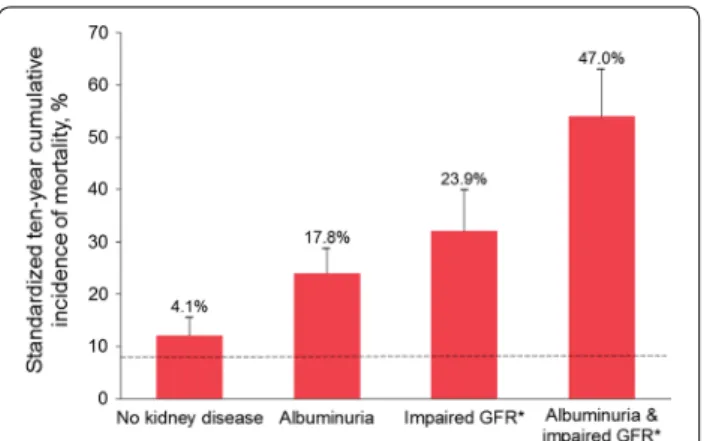
Approximately 50% of patients with T2D globally also have some evidence of CKD [17], which is associated with significantly increased risk of progression to end-stage kidney disease (ESKD) and premature mortality (Fig. 1). CKD is also one of the strongest risk factors for CV events [18]. A 2016 summit convened by the Interna-tional Society of Nephrology concluded that a concerted effort is required to increase the quantity and quality of clinical trials investigating CKD [19]; however, there are notable challenges involved in conducting such studies [20]. The paucity of clinical trials specifically designed to evaluate kidney-related efficacy and safety outcomes with glucose-lowering drugs represents an important gap in knowledge to support informed treatment deci-sion-making in patients with T2D at high risk for kidney complications.
Dipeptidyl peptidase-4 (DPP-4) inhibitors are now established as oral glucose-lowering drugs with little intrinsic risk of causing hypoglycemia or weight gain [22]. The DPP-4 inhibitors evaluated to date in CV out-comes studies (saxagliptin, alogliptin, sitagliptin) have
demonstrated CV safety with regard to atherosclerotic CV disease outcomes, with neutral effects on major adverse CV events compared with placebo [6–8]. How-ever, the incidence of hospitalization for heart failure was statistically increased in the SAVOR-TIMI 53 trial of saxagliptin versus placebo [6] and numerically increased in the EXAMINE trial of alogliptin versus placebo [23]; whereas no effect on the incidence of heart failure hospi-talization was observed in the TECOS trial of sitagliptin versus placebo [24]. These observations have prompted FDA product label warnings in the US for all members of the DPP-4 inhibitor class.
Linagliptin is a DPP-4 inhibitor that is excreted pre-dominantly by non-renal pathways, unlike most other members of this drug class, and thus can be prescribed
Results: Between July 2013 and August 2016, 6980 patients were randomized and took ≥ 1 dose of study drug (40.6, 33.1, 16.9, and 9.4% from Europe, South America, North America, and Asia, respectively). At baseline, mean ± SD age was 65.8 ± 9.1 years, HbA1c 7.9 ± 1.0%, BMI 31.3 ± 5.3 kg/m2, and eGFR 55 ± 25 mL/min/1.73 m2. A total of 5148 patients (73.8%) had prevalent kidney disease (defined as eGFR < 60 mL/min/1.73 m2 or macroalbuminuria [albumin‑ to‑creatinine ratio > 300 mg/g]) and 3990 patients (57.2%) had established CV disease with increased albuminuria; these characteristics were not mutually exclusive. Microalbuminuria (n = 2896 [41.5%]) and macroalbuminuria (n = 2691 [38.6%]) were common.
Conclusions: CARMELINA® will add important information regarding the CV and kidney disease clinical profile of linagliptin by including an understudied, vulnerable cohort of patients with T2D at highest cardio‑renal risk. Trial registration ClinicalTrials.gov identifier—NCT01897532; registered July 9, 2013
Keywords: Diabetes mellitus, type 2, Cardiovascular diseases, Diabetic nephropathies, Dipeptidyl‑peptidase IV inhibitors, Linagliptin, Clinical trial, phase IV, Research design, Treatment outcome
to patients with T2D at a single dose irrespective of kid-ney function [25, 26]. In pooled analyses of clinical tri-als designed to evaluate glycemic efficacy and tolerability over the short term (typically 12–24 weeks), linagliptin was not associated with an increase in either CV [27] or kidney risk [28] in patients with T2D, but was associated with a significant reduction in clinically relevant kidney disease endpoints [28].
The CV and kidney clinical profile of linagliptin is being comprehensively evaluated in the CArdiovascu-lar safety and Renal MicrovascuCArdiovascu-lar outcomE study with LINAgliptin (CARMELINA®) trial. Uniquely among the outcomes studies of glucose-lowering drugs initiated to date, the CARMELINA® trial was designed to recruit patients with T2D at high risk of both CV and kidney complications who had evidence of compromised kidney function with or without CV disease. We report here the study design and methods of CARMELINA® alongside the pooled baseline clinical characteristics of the patients in this trial.
Methods Study design
The CARMELINA® study is a multi-national, rand-omized, double-blind, placebo-controlled clinical trial conducted in 27 countries (ClinicalTrials.gov identifier: NCT01897532) (Fig. 2). CARMELINA® is an event-driven trial designed to assess the impact of linagliptin versus placebo on CV and kidney outcomes in a popu-lation of patients with T2D enriched for both macro-vascular and kidney micromacro-vascular risk. The study is designed to run until at least 611 participants have had
an adjudicated primary-outcome event. The study pro-tocol was approved by institutional review boards, independent ethics committees and competent authori-ties according to national and international regulations. CARMELINA® was conducted in accordance with the ICH Harmonised Tripartite Guideline for Good Clinical Practice. All participants provided written informed con-sent prior to entering the study.
Participants
Patients with T2D aged ≥ 18 years with glycated hemo-globin A1c (HbA1c) 6.5–10.0% (48–86 mmol/mol) and body-mass index (BMI) ≤ 45 kg/m2 were eligible for inclusion. Participants had to be at high risk of vascular events based on established history of CV disease, and/ or the presence of markers of CKD (Table 1). Participants could be either drug-naïve or receiving any glucose-lowering therapy except glucagon-like peptide (GLP)-1 receptor agonists, DPP-4 inhibitors and/or sodium-glucose co-transporter 2 (SGLT2) inhibitors. Those individuals already receiving glucose-lowering therapy had to be on the same dose for at least 8 weeks prior to randomization.
Individuals who had had an acute coronary syndrome in the 2 months prior to screening were ineligible, as were those who had had a stroke or transient ischemic attack in the 3 months before screening, and those who were scheduled to have percutaneous coronary intervention (PCI) or coronary artery bypass graft surgery (CABG) or had had PCI and/or CABG in the 2 months before screening. Also excluded were individuals with ESKD, defined as an estimated glomerular filtration rate (eGFR)
by the Modification of Diet in Renal Disease study equa-tion (MDRD) of < 15 mL/min/1.73 m2 and/or the receipt of maintenance dialysis. Premenopausal women who were pregnant, nursing, or not practicing birth control were also excluded, as were individuals with active liver disease or impaired hepatic function (serum levels of alanine aminotransferase, aspartate aminotransferase or alkaline phosphatase equal to or greater than three times the upper limit of normal [≥ 3× ULN]), and those with prior or planned bariatric surgery. The full inclusion and exclusion criteria are shown in Additional file 1.
Randomization, investigational product administration and follow‑up
Eligible individuals were randomized 1:1 via an interac-tive telephone/web-based system to receive once-daily oral treatment with linagliptin 5 mg (the licensed dose) or matching placebo in a double-blind manner (Fig. 2). Treatment assignment was determined by computer-generated random sequence with stratification by geo-graphical region. Following randomization, participants were instructed to return to the clinic for check-up after 12 weeks and then every 24 weeks until study end. Assessments included checks for adverse events and out-come events, physical examinations, vital signs, labora-tory parameters, and 12-lead electrocardiograms (ECGs). The use of additional medication for optimizing gly-cemic control according to local standard of care was encouraged throughout the trial independent of study treatment assignment, and included any approved glu-cose-lowering drugs except DPP-4 inhibitors, GLP-1 receptor agonists, and SGLT2 inhibitors. Dosing was required to adhere to local labelling and be in accordance with local/international guidelines. Intensification of gly-cemic control was advised for participants with fasting plasma glucose > 180 mg/dL (> 10.0 mmol/L) (confirmed by at least two measurements on different days) and those with HbA1c > 7.5% (> 58 mmol/mol). Investigators were also encouraged to treat all other CV risk factors (e.g. dyslipidemia, hypertension, albuminuria, smoking) in accordance with optimal local or regional guidelines and standards of care. Ultimately, changes in medication were at the discretion of the investigator and/or treating clinician.
Outcomes and adjudication
The primary outcome is the time to the first occurrence of CV death, non-fatal myocardial infarction (MI) or non-fatal stroke—the so-called 3-point major adverse CV events (3P-MACE) composite outcome. The adoption of 3P-MACE as the primary outcome resulted from a study protocol amendment in 2016 from the original primary outcome of 4P-MACE (3P-MACE plus hospitalization
for unstable angina). Although no longer a component of the primary composite, hospitalization for unstable angina continued to be an adjudicated endpoint. This amendment was made by the CARMELINA® steering committee based on emerging evidence from other CV outcomes studies accumulated since study start indi-cating that 3P-MACE is the more suitable primary out-come for studies of glucose-lowering medications [29] and, accordingly, is now preferred by the FDA as a CV outcome over the 4P-MACE composite outcome [30]. This change aligns CARMELINA® with other recent and ongoing studies of novel glucose-lowering drugs [29]. The steering committee had neither access to unblinded data nor input from the independent data monitoring committee when making this amendment, and the study remained fully blinded to the steering committee, spon-sor, trial team, investigators and participants during these deliberations.
The key secondary outcome is a kidney composite of time to first occurrence of sustained ESKD, renal death (adjudicated death due to kidney disease), or a sustained decrease of ≥ 40% in eGFR from baseline. This kidney composite outcome had been amended in 2016 to lower the threshold for sustained eGFR decrease from ≥ 50 to ≥ 40%. This amendment was made on the basis of evolving clinical evidence and multi-disciplinary work-shops convened by the US National Kidney Foundation and the FDA, where it was concluded that there is strong evidence for a sustained decline of ≥ 40% in eGFR being an appropriate outcome for clinical trials seeking to iden-tify evidence of kidney protection [31, 32]. Furthermore, both the FDA and the EMA have acknowledged that a ≥ 40% decline in eGFR is a suitable outcome in kidney outcome studies to improve trial efficiency [32, 33]. The original key secondary composite outcome (time to first occurrence of ESKD, renal death, or a sustained decrease of ≥ 50% in eGFR from baseline) will be evaluated as a tertiary endpoint.
Further tertiary outcomes include the following, among others: 4P-MACE, CV death, fatal or non-fatal MI, fatal or non-fatal stroke, hospitalization for unstable angina, stent thrombosis, transient ischemic attack, all-cause mortality, and renal death. Additional kidney-related endpoints include transition in albuminuria class or CKD stage from baseline as well as eGFR slope analyses. Glu-cose-related outcomes include change from baseline in levels of HbA1c and fasting plasma glucose.
Table
1
C
ARMELINA
® inclusion crit
eria CT c omput ed t omog raph y, CV car dio vascular , ECG elec tr ocar diog ram, eGFR estima
ted glomerular filtr
ation r at e, MDRD M odifica
tion of Diet in R
enal Disease study equa
tion, MRI mag netic r esonanc e imag ing , U AC R , ur inar y albumin-t o-cr ea tinine r atio H igh r
isk of vascular e
vents (I and/or II)
I. Albuminur ia (U A CR ≥ 30 mg/g or ≥ 30
μg albumin/min or
≥
30
mg albumin/24
h in t
w
o out of thr
ee unr
elat
ed spot ur
ine or timed samples in the 24
months pr
ior t
o randomiza
‑
tion) and pr
evious macr
ovascular disease
, defined as one or mor
e of the f
ollo wing (a) Confir med hist or
y of m
yocar dial infar ction (> 2 months pr ior t o scr eening) (b) A dvanced cor onar y ar ter y disease
, defined b
y an
y one of the f
ollo
wing
≥
50% nar
ro
wing of the luminal diamet
er in 2 or mor
e major cor
onar y ar ter ies (lef t ant er ior descending , cir cumflex, r ight cor onar y ar ter y) b y cor onar y ang iog raph
y, MRI ang
i‑
og
raph
y or C
T ang iog raph y L ef
t main st
em cor onar y ar ter y with ≥ 50% nar ro
wing of the luminal diamet
er b y cor onar y ang iog raph
y, MRI ang
iog
raph
y or C
T ang iog raph y P rior per
cutaneous or sur
gical r
evascular
ization of
≥
2 major cor
onar y ar ter ies ≥ 2 months pr ior t o scr eening T
he combination of pr
ior per
cutaneous or sur
gical r
evascular
ization of 1 major cor
onar y ar ter y ≥ 2 months pr ior t o scr eening , and ≥ 50% nar ro
wing of the luminal diamet
er b y cor onar y ang iog raph
y, MRI ang
iog
raph
y or C
T ang
iog
raph
y of at least 1 additional major cor
onar y ar ter y (c ) H igh ‑r isk single ‑v essel cor onar y ar ter y disease
, defined as the pr
esence of
≥
50% nar
ro
wing of the luminal diamet
er of one major cor
onar y ar ter y b y cor onar y ang iog raph y, MRI ang iog raph
y or C
T ang
iog
raph
y in patients not r
evascular
iz
ed and at least one of the f
ollo wing A positiv e non ‑in vasiv e str ess t est, confir med b y either A positiv e EC G ex er cise t olerance t
est in patients without lef
t bundle branch block
, W olff–P ar kinson– Whit e syndr ome , lef t v entr icular h yper tr oph
y with r
epolar
ization abnor
‑
malit
y, or paced v
entr
icular r
hythm, atr
ial fibr
illation in case of abnor
mal ST ‑T seg ments A positiv e str ess echocar diog ram sho
wing induced r
eg
ional syst
olic wall motion abnor
malities
A positiv
e nuclear m
yocar dial per fusion imag ing str ess t est sho wing str ess ‑induced r ev ersible per fusion abnor malit y A positiv e car diac str ess per
fusion MRI sho
wing a str
ess ‑induced per fusion def ec t P atient dischar ged fr
om hospital with a document
ed diag
nosis of unstable ang
ina pec
tor
is bet
w
een 2 and 12
months pr ior t o scr eening (d ) H ist or
y of ischemic or hemor
rhag ic str ok e (> 3 months pr ior t o scr eening) (e ) Pr
esence of car
otid ar
ter
y disease (sympt
omatic or not) document
ed b
y either
Imag
ing t
echniques with at least one lesion estimat
ed t
o be
≥
50% nar
ro
wing of the luminal diamet
er
P
rior per
cutaneous or sur
gical car otid r evascular ization (f ) Pr
esence of per
ipheral ar
ter
y disease document
ed b
y either
P
re
vious limb ang
ioplast
y, st
enting or b
ypass sur
ger
y
P
re
vious limb or f
oot amputation due t
o macr ocir culat or y insufficienc y Ang iog raphic e
vidence of per
ipheral ar ter y st enosis ≥ 50% nar ro
wing of the luminal diamet
er in at least one limb (
definition of per
ipheral ar
ter
y: common iliac ar
ter y, int er nal iliac ar ter y, ex ter
nal iliac ar
ter y, f emoral ar ter y, poplit eal ar ter y) II Impair ed r enal func
tion with/without C
V comor
bidities
eGFR (MDRD) of 15 t
o
<
45
mL/min/1.73
m
2 at scr
eening eGFR (MDRD) ≥ 45 t o 75 mL/min/1.73 m
2 at scr
eening with U
A CR > 200 mg/g or > 200
μg albumin/min or
>
200
mg albumin/24
h in t
w
o out of thr
ee unr
elat
ed spot ur
ine or
timed samples in the 24
months pr
ior t
hospitalization for heart failure is prospectively evalu-ated. All reported events of hospitalization for heart failure are independently adjudicated under blinded conditions by a central committee based on pre-defined criteria. Hospitalization for heart failure is another pre-defined tertiary outcome in the protocol—both on its own and as a composite with CV death, consistent with contemporary best practice in heart failure trials. Sepa-rate independent and blinded clinical event committees adjudicate kidney and pancreatic events.
Identification of potential outcome events sent for adju-dication based on investigator reports was supplemented using a search of the trial database for events based on Standardised Medical Dictionary for Regulatory Activi-ties (MedDRA) Queries and other events defined in the adjudication charters to trigger adjudication committee review. Furthermore, all deaths were sent for adjudica-tion. Additionally, a periodic, blinded pharmacovigilance review of all other (non-trigger) events was performed.
Safety is assessed based on all reported adverse events (including serious adverse events and adverse events of special interest), physical examinations, vital signs, laboratory parameters, and 12-lead ECGs. Hypoglyce-mia was defined as documented blood glucose ≤ 70 mg/ dL (≤ 3.9 mmol/L) with the exception of severe hypo-glycemia, which was defined as any episode requiring third-party assistance. Incidence and event rates will be analyzed for hypoglycemia ≤ 70 mg/dL (≤ 3.9 mmol/L) and < 54 mg/dL (< 3.0 mmol/L) or severe hypoglycemia. Adverse events pre-specified as being of special inter-est were hypersensitivity reactions, skin lesions, kidney adverse events including acute kidney injury, pancreati-tis, pancreatic cancer, benign thyroid neoplasms, thyroid cancer and hepatic events. A periodic review of all lipase values ≥ 3× ULN not reported as adverse events was performed.
Study oversight and organization
The CARMELINA® trial was sponsored by Boehringer Ingelheim, the manufacturer of linagliptin, and Eli Lilly and Company. CARMELINA® was designed jointly by independent academic investigators and sponsor-employed scientists and physicians with relevant clinical and methodological expertise, who together comprise the steering committee. The steering committee, led by the academic investigators, supervised the conduct of the trial, and an independent data monitoring commit-tee regularly reviewed safety data, on the basis of which it recommended the trial to continue or terminate early according to a pre-specified charter. Independent con-tract research organizations were involved in interac-tive response technology for randomization, analyses
of ECGs, blinded event adjudication, central laboratory analyses, and operational implementation of the trial.
Statistical analysis
The primary null hypothesis was that treatment with linagliptin would be inferior by a hazard ratio of ≥ 1.3 compared with placebo as assessed by the time to first occurrence of any of the 3P-MACE (primary endpoint) events. Rejection of the null hypothesis will be evaluated by the upper limit of the two-sided 95% confidence inter-val (CI) for the hazard ratio, as required by FDA guidance [3]. The test of the primary outcome for non-inferiority is the first of the following two-step testing strategy in which superiority tests will only be performed if the first test is statistically significant: (i) non-inferiority test of the primary outcome; (ii) superiority tests of (a) the pri-mary outcome and (b) the key secondary composite kid-ney outcome, with a sequentially rejective multiple test procedure (Fig. 3).
A total of 611 primary (3P-MACE) events provides 90% power to demonstrate non-inferiority of linagliptin ver-sus placebo at the overall one-sided α-level of 2.5% if the hazard ratio is 1.0. The sample size and event estimates were based on the primary hypothesis.
If non-inferiority has been demonstrated, then superi-ority with regard to the primary outcome will be tested. Assuming 611 patients with an event and a hazard rate for linagliptin at any time 20% less than the risk for pla-cebo, then the resulting power to demonstrate superior-ity at the final analysis is 79% for a test at the α-level of 2.5%.
Assuming 432 patients with a composite kidney out-come, an annualized event rate of 2.5% in the placebo group and a hazard rate for linagliptin of 0.75, then the resulting power to demonstrate superiority for the key secondary outcome at the final analysis is 85% if the test can be performed at the α-level of 2.5%.
The primary and key secondary outcomes will be ana-lyzed using the treated set (all patients treated with at least one dose of study drug) with treatment assignment at randomization and including all adjudication-con-firmed events that occur until study end. The primary and key secondary endpoints will be analyzed using a Cox proportional hazards regression model of time to the first event, with randomized treatment and geographical region as factors.
later than 30 days after last intake of study drug. An addi-tional analysis will only include outcome events until last study drug intake (treated set + 0).
The primary and key secondary outcomes will also be analyzed in patient subgroups based on several baseline characteristics, including but not limited to the following: geographical region, age, sex, blood pressure, insulin use, eGFR < 60 mL/min/1.73 m2, and prevalent kidney disease (eGFR < 60 mL/min/1.73 m2 or urinary albumin-to-cre-atinine ratio [UACR] > 300 mg/g).
Safety will be evaluated in the treated set using descrip-tive statistical analyses of adverse events, as well as changes in clinical and laboratory parameters.
The data will be analyzed by the contract research organization in charge of study conduct, the sponsor, and the statistics group at the Duke Clinical Research Insti-tute (Durham, NC, USA) who will conduct an independ-ent statistical analysis.
Results
Recruitment of participants for the CARMELINA® study began in July 2013 and was completed in August 2016. A total of 12,280 individuals were screened and 6991 were randomized at 407 clinics in 27 countries. Of these, 6980 participants received at least one dose of study drug. Europe provided the largest number of participants (n = 2833 [40.6%]), followed by South America (n = 2310
[33.1%]), North America (n = 1180 [16.9%]) and Asia (n = 657 [9.4%]).
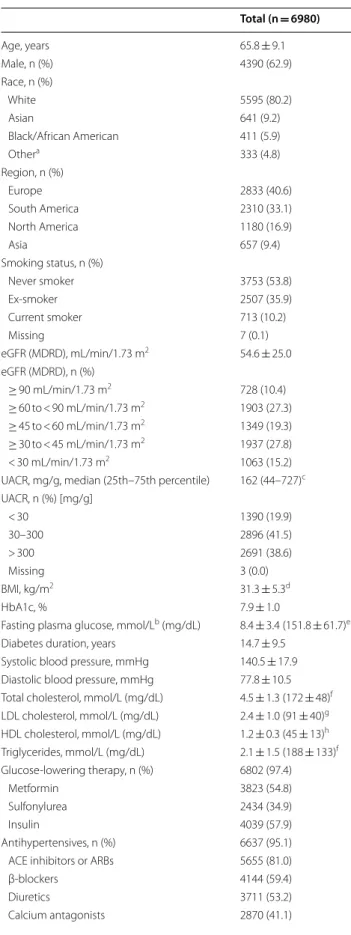
Pooled baseline characteristics of the participants are shown in Table 2. Participants had mean age, HbA1c, and BMI of 65.8 years, 7.9% and 31.3 kg/m2, respec-tively, with mean duration of diabetes of 14.7 years (Table 2). The majority were male (63%), white (80%) and had eGFR < 60 mL/min/1.73 m2 (62%). Mean eGFR was 54.6 mL/min/1.73 m2, and 1063 (15%) participants had severe renal impairment (eGFR < 30 and > 15 mL/ min/1.73 m2). Median UACR was 162 mg/g (25th– 75th percentile: 44–727 mg/g); 1390 participants (20%) were normoalbuminuric (UACR < 30 mg/g), while the majority had either microalbuminuria (UACR 30 − 300 mg/g; n = 2896 [41.5%]) or macroalbuminuria (UACR > 300 mg/g; n = 2691 [39%]). Mean systolic and diastolic blood pressure were 141 and 78 mmHg, respec-tively, and 95% of participants (6637) were taking antihy-pertensive medication. Angiotensin-converting enzyme (ACE) inhibitors or angiotensin-receptor blockers were being taken by 81% of the trial population, while 53% were taking diuretics.
statins and platelet aggregation inhibitors (excluding heparin), respectively. Almost all participants (n = 6802 [97%]) were taking glucose-lowering medication at base-line. Over half (n = 4039 [58%]) were taking insulin, while metformin was the most frequently used oral drug (n = 3823, [55%]) (Table 2).
The majority of patients from the overall trial popu-lation (5148 [74%]), had prevalent kidney disease at baseline, defined as eGFR < 60 mL/min/1.73 m2 or UACR ≥ 300 mg/g, while 3990 (57%) had established CV disease with elevated UACR (≥ 30 mg/g) and 2268 (32.5%) had both conditions (Fig. 4). Baseline characteris-tics for patients with prevalent kidney disease are shown in Table 3, while Additional files 2 and 3 show baseline characteristics for those with established CV disease and those with both prevalent kidney disease and established CV disease.
Approximately 71% of CARMELINA® participants are considered at high risk (n = 1902 [27.2%]) or very high risk (n = 3033 [43.5%]) for adverse kidney events, on the basis of their eGFR and albuminuria status at base-line according to risk stratification by Kidney Disease: Improving Global Outcomes (KDIGO) foundation stand-ards (Fig. 5).
Discussion
The CARMELINA® trial comprises 6991 patients with T2D randomized to daily oral treatment with the DPP-4 inhibitor linagliptin or placebo on top of standard care. Baseline characteristics of the treated set (n = 6980) delineate a population with long-standing T2D and a substantial burden of both CV and kidney disease. As intended, this will enable assessment of whether linaglip-tin is non-inferior—and, if so, superior—to placebo for CV and renal outcomes in individuals with T2D at very high vascular risk.
A pooled analysis of 19 randomized clinical trials of linagliptin involving 9459 individuals found no increased risk for major adverse CV events [27]. However, this analysis was limited by the short duration of drug expo-sure, inclusion of participants at relatively low CV risk, the small number of CV events for analysis, and the fact that these trials were not designed to assess either CV or renal safety. In hypothesis-generating, mechanistic clini-cal studies, linagliptin did not alter macrovascular func-tion, but showed potential to improve microvascular function [36, 37], reduced early atherosclerotic vascular wall inflammation [38] and appeared to improve arterial stiffness [39].
In the last decade, a multitude of CV outcomes trials of glucose-lowering drugs have been initiated [29]. The trials completed to date have shown discordant results. The studies of empagliflozin, an SGLT2 inhibitor, and
Table 2 Baseline characteristics
Total (n = 6980)
Age, years 65.8 ± 9.1
Male, n (%) 4390 (62.9)
Race, n (%)
White 5595 (80.2)
Asian 641 (9.2)
Black/African American 411 (5.9)
Othera 333 (4.8)
Region, n (%)
Europe 2833 (40.6)
South America 2310 (33.1) North America 1180 (16.9)
Asia 657 (9.4)
Smoking status, n (%)
Never smoker 3753 (53.8)
Ex‑smoker 2507 (35.9)
Current smoker 713 (10.2)
Missing 7 (0.1)
eGFR (MDRD), mL/min/1.73 m2 54.6 ± 25.0 eGFR (MDRD), n (%)
≥ 90 mL/min/1.73 m2 728 (10.4)
≥ 60 to < 90 mL/min/1.73 m2 1903 (27.3)
≥ 45 to < 60 mL/min/1.73 m2 1349 (19.3)
≥ 30 to < 45 mL/min/1.73 m2 1937 (27.8) < 30 mL/min/1.73 m2 1063 (15.2) UACR, mg/g, median (25th–75th percentile) 162 (44–727)c UACR, n (%) [mg/g]
< 30 1390 (19.9)
30–300 2896 (41.5)
> 300 2691 (38.6)
Missing 3 (0.0)
BMI, kg/m2 31.3 ± 5.3d
HbA1c, % 7.9 ± 1.0
Fasting plasma glucose, mmol/Lb (mg/dL) 8.4 ± 3.4 (151.8 ± 61.7)e Diabetes duration, years 14.7 ± 9.5
Systolic blood pressure, mmHg 140.5 ± 17.9 Diastolic blood pressure, mmHg 77.8 ± 10.5 Total cholesterol, mmol/L (mg/dL) 4.5 ± 1.3 (172 ± 48)f LDL cholesterol, mmol/L (mg/dL) 2.4 ± 1.0 (91 ± 40)g HDL cholesterol, mmol/L (mg/dL) 1.2 ± 0.3 (45 ± 13)h Triglycerides, mmol/L (mg/dL) 2.1 ± 1.5 (188 ± 133)f Glucose‑lowering therapy, n (%) 6802 (97.4)
Metformin 3823 (54.8)
Sulfonylurea 2434 (34.9)
Insulin 4039 (57.9)
Antihypertensives, n (%) 6637 (95.1) ACE inhibitors or ARBs 5655 (81.0)
β‑blockers 4144 (59.4)
Diuretics 3711 (53.2)
liraglutide, a GLP-1 receptor agonist, observed statisti-cally significant reductions in CV mortality of 38% (haz-ard ratio, 0.62 [95% CI 0.49–0.77]) [9] and 22% (hazard ratio, 0.78 [95% CI 0.66–0.93]) [11], respectively. The outcomes trial of the SGLT2 inhibitor canagliflozin found a significant reduction in CV events (hazard ratio, 0.86 [95% CI 0.75–0.97) [13]. The GLP-1 receptor agonist semaglutide was shown to be non-inferior to placebo in CV safety (hazard ratio, 0.74, 95% CI 0.58–0.95) [12], while another two GLP-1 receptor agonists (lixisenatide [10] and once-weekly exenatide [15]) have demonstrated CV safety but no significant reduction in CV events. The three DPP-4 inhibitors studied to date (saxagliptin [6], alogliptin [7], sitagliptin [8]) have demonstrated neutral
effects on atherosclerotic CV disease. However, a sig-nificantly increased risk of hospitalization for heart fail-ure with saxagliptin was observed in the SAVOR-TIMI 53 study [6]. It remains to be determined whether this reflects a class effect of DPP-4 inhibitors, as a numerical (but non-significant) increase in hospitalization for heart failure was also seen in the EXAMINE study of aloglip-tin [23] but not in the TECOS study of sitagliptin [24]. Recent observational studies have suggested that indi-viduals treated with DPP-4 inhibitors may have a lower risk for CV disease (including events of heart failure) than those treated with either a non-sulfonylurea insu-lin secretagogue or insuinsu-lin [40], and that the risk of heart failure with linagliptin is not increased compared with sulfonylureas [41]. The CARMELINA® study will thor-oughly explore heart failure-related outcomes with lina-gliptin, as it includes hospitalization for heart failure as an adjudicated and pre-specified outcome and is proac-tively capturing information related to heart failure.
The CV outcomes data provided by CARMELINA® will also complement the results from the ongoing CAROLINA® study of linagliptin (ClinicalTrials.gov identifier: NCT01243424) [42]. CAROLINA® is designed to evaluate the CV outcomes of linagliptin as a second-line treatment added to metformin. CAROLINA® is comparing linagliptin with an active compound, the sulfonylurea glimepiride, rather than placebo, and with this unique design represents the only active-controlled, double-blind, multinational CV outcome study to date in patients with T2D. Furthermore, by design, the par-ticipants in CAROLINA® have lower overall CV and renal risk, earlier stage of T2D disease (median dura-tion 6.2 years), and better glycemic control (mean base-line HbA1c 7.2%) [42] than those in the CARMELINA® study. The results from CAROLINA® will help inform decision-making for second-line treatment of early T2D and may answer a long-standing question regarding the CV safety of sulfonylureas.
In addition to CV safety, CARMELINA® was also designed and powered to evaluate renal outcomes of linagliptin treatment in an alpha-controlled manner— a notable feature compared to CV outcomes studies of other glucose-lowering drugs. Accordingly, the propor-tion of participants with overt kidney disease (defined as eGFR < 60 mL/min/1.73 m2 or macroalbuminuria [74%]) or reduced kidney function (eGFR < 60 mL/min/1.73 m2 [62%]) is substantially higher in CARMELINA® than in other CV outcomes studies of oral glucose-lower-ing drugs in T2D (9.3–29.1%) [6–12, 43, 44] (Fig. 6). CARMELINA® also includes a large number of individu-als with very low eGFR (< 30 mL/min/1.73 m2) (n = 1063 [15%]) and/or elevated levels of albuminuria (n = 5587 [80%]) (Additional file 4).
Data are mean ± SD unless otherwise specified, and may change slightly when the trial is completed
ACE angiotensin-converting enzyme, ARB angiotensin-receptor blocker, BMI
body-mass index, eGFR estimated glomerular filtration rate, HbA1c glycated hemoglobin A1c, HDL high-density lipoprotein, LDL low-density lipoprotein,
MDRD Modification of Diet in Renal Disease study equation, UACR urinary albumin-to-creatinine ratio
a American Indian/Alaska Native or Native Hawaiian/other Pacific Islander, b
calculated by multiplying mg/dL values by 0.0555 [34], c n = 6977, d n = 6975, e
n = 6915; f n = 6749, g n = 6744, h n = 6748
Table 2 continued
Total (n = 6980)
Platelet aggregation inhibitors (excluding
heparin), n (%) 4764 (68.3) Statins, n (%) 5010 (71.8)
Table 3 Baseline characteristics by prevalent kidney disease at baseline
Prevalent CKDa (n = 5148) No prevalent CKD (n = 1832)
Age, years 66.8 ± 9.0 62.9 ± 8.8
Male, n (%) 3114 (60.5) 1276 (69.7)
Race, n (%)
White 4042 (78.5) 1553 (84.8)
Asian 508 (9.9) 133 (7.3)
Black/African American 349 (6.8) 62 (3.4)
Otherb 249 (4.8) 84 (4.6)
Region, n (%)
Europe 1997 (38.8) 836 (45.6)
South America 1658 (32.2) 652 (35.6)
North America 984 (19.1) 196 (10.7)
Asia 509 (9.9) 148 (8.1)
Smoking status, n (%)
Never smoker 2821 (54.8) 932 (50.9)
Ex‑smoker 1861 (36.1) 646 (35.3)
Current smoker 461 (9.0) 252 (13.8)
Missing 5 (0.1) 2 (0.1)
eGFR (MDRD), mL/min/1.73 m2 44.6 ± 19.2 82.6 ± 16.9 eGFR (MDRD), n (%)
≥ 90 mL/min/1.73 m2 179 (3.5) 549 (30.0)
≥ 60 to < 90 mL/min/1.73 m2 620 (12.0) 1283 (70.0)
≥ 45 to < 60 mL/min/1.73 m2 1349 (26.2) 0
≥ 30 to < 45 mL/min/1.73 m2 1937 (37.6) 0
< 30 mL/min/1.73 m2 1063 (20.6) 0
UACR, mg/g, median (25th–75th percentile) 336 (60–1126)d 70 (27–138)j UACR, n (%) [mg/g]
< 30 907 (17.6) 483 (26.4)
30–300 1548 (30.1) 1348 (73.6)
> 300 2691 (52.3) 0
BMI, kg/m2 31.4 ± 5.4e 31.0 ± 5.1
HbA1c, % 7.9 ± 1.0 8.0 ± 1.0
Fasting plasma glucose, mmol/Lc (mg/dL) 8.3 ± 2.6 (150.1 ± 47.5)f 8.7 ± 5.0 (156.5 ± 90.3)k
Diabetes duration, years 15.9 ± 9.6 11.6 ± 8.4
Systolic blood pressure, mmHg 141.7 ± 18.5 137.2 ± 15.3 Diastolic blood pressure, mmHg 77.5 ± 10.8 78.8 ± 9.5 Total cholesterol, mmol/L (mg/dL) 4.5 ± 1.3 (173 ± 50)g 4.4 ± 1.2 (168 ± 44)l LDL cholesterol, mmol/L (mg/dL) 2.4 ± 1.1 (92 ± 40)h 2.3 ± 1.0 (90 ± 37)m HDL cholesterol, mmol/L (mg/dL) 1.2 ± 0.3 (45 ± 13)i 1.1 ± 0.3 (44 ± 12)l Triglycerides, mmol/L (mg/dL) 2.2 ± 1.5 (191 ± 136)g 2.0 ± 1.4 (181 ± 125)l
Glucose‑lowering therapy, n (%) 5013 (97.4) 1789 (97.7)
Metformin 2350 (45.6) 1473 (80.4)
Sulfonylurea 1653 (32.1) 781 (42.6)
Insulin 3294 (64.0) 745 (40.7)
Antihypertensives, n (%) 4946 (96.1) 1691 (92.3)
ACE inhibitors or ARBs 4183 (81.3) 1472 (80.3)
β‑blockers 3043 (59.1) 1101 (60.1)
Diuretics 3032 (58.9) 679 (37.1)
No new pharmacotherapy for diabetic kidney dis-ease has been licensed since the early 2000s when the angiotensin-receptor blockers losartan and irbesartan demonstrated efficacy in this indication [45]. Hypothesis-generating evidence has suggested that DPP-4 inhibi-tors may have specific renal effects independent of their glucose-lowering properties [46]. A pooled analysis of 13 randomized controlled studies found that linagliptin treatment was associated with a significant 16% reduc-tion in the risk for clinically relevant adverse renal events (hazard ratio 0.84, 95% CI 0.72–0.97; P= 0.02) [28]. Additional data from pooled analyses of the linagliptin development program [47] and exploratory data from SAVOR-TIMI 53 and TECOS [48, 49] suggested that DPP-4 inhibitors could lower albuminuria in patients with T2D. This hypothesis was, however, not supported by the MARLINA-T2D™ study of linagliptin, which was the first randomized clinical study prospectively designed to investigate the effects of a DPP-4 inhibitor
on albuminuria [50]. In MARLINA-T2D™, linagliptin
elicited a placebo-adjusted, non-significant 6% reduc-tion in albuminuria (95% CI − 15.0 to 3.0; P= 0.1954) after 24 weeks of treatment in individuals with T2D and early diabetic kidney disease who had residual albumi-nuria despite receiving ACE inhibitors or angiotensin-receptor blockers [50]. Since previous clinical evidence for renal effects of DPP-4 inhibitors has mainly emerged from patient populations at earlier stages of kidney dis-ease, CARMELINA® will answer an important
ques-tion whether DPP-4 inhibiques-tion with linagliptin may have the potential to alter renal disease progression at more advanced stages of the renal continuum. Respective experimental evidence to support such a hypothesis has emerged from recent preclinical studies showing that lin-agliptin exerted fibrotic, inflammatory and anti-oxidant renal effects in animal models of diabetic kidney disease that—if translated to human disease—would be more likely to manifest as long-term disease-modifying
Data are mean ± SD unless otherwise specified, and may change slightly when the trial is completed
ACE angiotensin-converting enzyme, ARB angiotensin-receptor blocker, BMI body-mass index, CKD chronic kidney disease, eGFR estimated glomerular filtration rate,
HbA1c glycated hemoglobin A1c, HDL high-density lipoprotein, LDL low-density lipoprotein, MDRD Modification of Diet in Renal Disease study equation, UACR urinary
albumin-to-creatinine ratio
a Defined as eGFR < 60 mL/min/1.73 m2 or macroalbuminuria (UACR > 300 mg/g), b American Indian/Alaska Native or Native Hawaiian/other Pacific Islander, c
calculated by multiplying mg/dL values by 0.0555 [34], d n
= 5146, e n
= 5143, f n
= 5097, g n
= 4971, h n
= 4967, i n
= 4970, j n
= 1831, k n
= 1818, l n
= 1778, m n
= 1777
Table 3 continued
Prevalent CKDa (n = 5148) No prevalent CKD (n = 1832)
Platelet aggregation inhibitors (excluding heparin), n (%) 3365 (65.4) 1399 (76.4)
Statins, n (%) 3708 (72.0) 1302 (71.1)
UACR (mg/g)
eGFR (mL/min/1.73 m2) <30 30−
>60 45−59 30−44 <30
*KDIGO categories. Reprinted from Levey et al. [35] with permission from Elsevier.
Very high risk
CARMELINA population at baseline, n (%)
300 >300
Prognosis of CKD Low risk Moderate risk High risk
484 (6.9) 1561 (22.4) 1902 (27.2) 3033 (43.5)
®
renal effects than to elicit short-term changes in albumi-nuria [51–54].
Conclusions
The CARMELINA® trial is designed to assess CV and
kidney outcomes of the DPP-4 inhibitor linagliptin ver-sus placebo when added to standard care in individuals with T2D and established CV and/or kidney complica-tions. Compared with the spectrum of CV outcome trials conducted in patients with T2D to date, CARMELINA®
has the highest number of individuals with prevalent kid-ney disease, including a large proportion of patients with severe kidney impairment and/or elevated albuminuria. These individuals are at a very high CV risk, face lim-ited glucose-lowering treatment options, and have been largely underrepresented in previous CV outcomes tri-als in T2D. CARMELINA® will thus enable assessment
of the inherent effects of linagliptin on CV and kidney events in a vulnerable population at high cardio-renal risk. Results are expected in 2018.
Additional files
Additional file 1. Full inclusion and exclusion criteria for CARMELINA®.
Additional file 2. Baseline characteristics by established CV disease at baseline in CARMELINA® participants.
Additional file 3. Baseline characteristics by established CV disease and prevalent kidney disease at baseline in CARMELINA® participants.
Additional file 4. CARMELINA® baseline characteristics versus TECOS and SAVOR‑TIMI 53.
Abbreviations
3P‑MACE: 3‑point major adverse cardiovascular events; 4P‑MACE: 4‑point major adverse cardiovascular events; ACE: angiotensin‑converting enzyme; ARB: angiotensin‑receptor blocker; BMI: body‑mass index; CABG: coronary artery bypass graft surgery; CANVAS: CANagliflozin cardioVascular Assessment Study; CANVAS‑R: CANVAS‑Renal; CARMELINA®: CArdiovascular safety and Renal Microvascular outcomE study with LINAgliptin; CAROLINA®: CARdiovas‑ cular Outcome Study of LINAgliptin versus Glimepiride in Patients with Type 2 Diabetes; CI: confidence interval; CKD: chronic kidney disease; CT: computed tomography; CV: cardiovascular; CVD: cardiovascular disease; DPP‑4: dipeptidyl peptidase‑4; ECG: electrocardiogram; eGFR: estimated glomerular filtration rate; ELIXA: Evaluation of Lixisenatide in Acute Coronary Syndrome; EMA: European Medicines Agency; EMPA‑REG OUTCOME: EMPAgliflozin Removal of Excess Glucose: Cardiovascular OUTCOME Event Trial in Type 2 Diabetes Mellitus Patients; ESKD: end‑stage kidney disease; EXAMINE: Examination of Cardiovascular Outcomes with Alogliptin versus Standard of Care; EXSCEL: Exenatide Study of Cardiovascular Event Lowering; FDA: US Food and Drug Administration; GLP‑1: glucagon‑like peptide‑1; HbA1c: glycated hemoglobin A1c; HDL: high‑density lipoprotein; KDIGO: Kidney Disease: Improving Global Outcomes; LDL: low‑density lipoprotein; LEADER: Liraglutide Effect and Action in Diabetes: Evaluation of Cardiovascular Outcome Results; MARLINA‑T2D™: Efficacy, Safety & Modification of Albuminuria in Type 2 Diabetes Subjects With Renal Disease With LINAgliptin; MDRD: Modification of Diet in Renal Disease study equation; MI: myocardial infarction; MRI: magnetic resonance imaging; PCI: percutaneous coronary intervention; P‑gp: P‑glycoprotein; UACR: urinary albumin‑to‑creatinine ratio; SAVOR‑TIMI 53: Saxagliptin Assessment of Vascular Outcomes Recorded in Patients with Diabetes Mellitus‑Thrombolysis in Myo‑ cardial Infarction 53; SGLT2: sodium‑glucose cotransporter 2; SUSTAIN‑6: Trial to Evaluate Cardiovascular and Other Long‑term Outcomes with Semaglutide in Subjects with Type 2 Diabetes; T2D: type 2 diabetes; TECOS: Trial Evaluating Cardiovascular Outcomes with Sitagliptin; UACR: urinary albumin‑to‑creatinine ratio; ULN: upper limit of normal.
Authors’ contributions
All authors participated in design of the study, and collection and interpreta‑ tion of data. JR, VP, DKM, JT, and MvE were involved in developing the initial draft of the manuscript and all subsequent revisions, and approved the final version. JHA, MEC, NM, MJP, RDT, CW, BZ, DB, EP, MM, UCB, and HJW reviewed the initial draft and all subsequent revisions. All authors read and approved the final manuscript.
62.3
15.6*
29.1
9.3*
25.9 23.2 23.1 28.5
16.4 22.9 21.6
0 10 20 30 40 50 60 70 80 90 100
Proportion of participants wit
h
reduced kidney function (%)
CARMELINA©
(Linagliptin) n = 6980
SAVOR-TIMI 536
(Saxagliptin) n = 16492
EXAMINE7
(Alogliptin) n = 5380
TECOS8
(Sitagliptin) n = 14671
EMPA-REG OUTCOME®9
(Empagliflozin) n = 7020
ELIXA10
(Lixisenatide) n = 6068
LEADER11
(Liraglutide) n = 9340
SUSTAIN-612
(Semaglutide) n = 3297
CANVAS44
(Canagliflozin) n = 4330
CANVAS-R43
(Canagliflozin) n = 5811
EXSCEL15
(Exenatide QW) n = 14752
Author details
1 Dallas Diabetes Research Center at Medical City, 7777 Forest Lane, Suite C‑685, Dallas, TX 75230, USA. 2 The George Institute for Global Health, Faculty of Medicine, University of New South Wales, Sydney, NSW, Australia. 3 Duke Clinical Research Institute, Duke Health, Durham, NC, USA. 4 Head of Diabe‑ tes, Monash University, Melbourne, VIC, Australia. 5 Department of Internal Medicine I, University Hospital Aachen, RWTH Aachen University, Aachen, Germany. 6 University of Texas Southwestern Medical Center, Dallas, TX, USA. 7 Dept of Medicine, Würzburg Univ Clinic, Würzburg, Germany. 8 Lunen‑ feld‑Tanenbaum Research Institute, Mount Sinai Hospital, Toronto, Canada. 9 University of Toronto, Toronto, Canada. 10 Boehringer Ingelheim bv, Alkmaar, The Netherlands. 11 Boehringer Ingelheim Pharma GmbH & Co. KG, Ingelheim, Germany. 12 Ulm University, Ulm, Germany. 13 Division of Cardiology, Depart‑ ment of Internal Medicine, University of Texas Southwestern Medical Center, Dallas, TX, USA.
Acknowledgements
The authors thank the individuals who participated in this study. Medical writ‑ ing assistance, supported financially by Boehringer Ingelheim, was provided by Giles Brooke, Ph.D., CMPP, of Envision Scientific Solutions during the prepa‑ ration of this manuscript.
Competing interests
JR has served on scientific advisory boards and received honoraria or consult‑ ing fees from Eli Lilly, Sanofi, Novo Nordisk, Janssen, AstraZeneca, Boehringer Ingelheim and Intarcia; he has also received grants/research support from Merck, Pfizer, Sanofi, Novo Nordisk, Bristol‑Myers Squibb, Eli Lilly, GlaxoSmith‑ Kline, Genentech, Janssen, Lexicon, Boehringer Ingelheim and Intarcia. VP con‑ sults for AbbVie, Astellas, Bristol‑Myers Squibb, Boehringer Ingelheim, Eli Lilly, GlaxoSmithKline, Janssen, Novartis, Retrophin, and Astra Zeneca; has received lecture fees or grant support from Baxter, Boehringer Ingelheim, Merck and Pfizer; and his institution has held clinical trial contracts with AbbVie, Roche, Janssen, Servier and Novartis. JHA has received institutional research grants from Bristol‑Myers Squibb, Boehringer Ingelheim, CSL Behring, National Institutes of Health, Regado Biosciences, Sanofi, Tenax Therapeutics, Vivus Pharmaceuticals; consulting fees from Bristol‑Myers Squibb, Portola Phar‑ maceuticals, Somahlution; and honoraria from Bristol‑Myers Squibb, Portola Pharmaceuticals, Somahlution. MEC has received fees for advisory services to Boehringer Ingelheim. NM has served as a consultant to AstraZeneca, Amgen, Bayer, Bristol‑Myers Squibb, Boehringer Ingelheim, Merck, Novo Nordisk, Roche, and Sanofi and has received grant support from Merck and Boehringer Ingelheim; he has served as a speaker for AstraZeneca, Amgen, Bayer, Bristol‑ Myers Squibb, Boehringer Ingelheim, Lilly, Merck, Mitsubishi Tanabe Pharma Corporation, Novartis, Novo Nordisk, Pfizer, Roche, and Sanofi. MJP has no competing interests. RT is a consultant to Amgen, Boehringer Ingelheim, ZS Pharma, Relypsa, Novo Nordisk, Reata, AstraZeneca and receives grant support from the NIH. CW has received grants from the European Foundation for the Study of Diabetes (EFSD), personal fees from Boehringer Ingelheim (steering committee membership, lecturing), and personal fees from Janssen (data safety monitoring board membership). BZ has received grant support from Boehringer Ingelheim, AstraZeneca and Novo Nordisk; and consulting fees from AstraZeneca, Boehringer Ingelheim, Eli Lilly, Janssen, Merck, Novo Nordisk, and Sanofi Aventis. DB, EP, MM, JTG, UCB, MvE are employees of Boehringer Ingelheim, the manufacturer of linagliptin. HJW was an employee of Boehringer Ingelheim at the time of the study. DKM has received support for clinical trial leadership from Novo Nordisk, AstraZeneca, Boehringer Ingel‑ heim, Merck & Co., Lexicon, GlaxoSmithKline, Janssen, Lexicon, Sanofi Aventis and Eli Lilly and consultancy fees from Novo Nordisk, Sanofi‑Aventis, Janssen, Boehringer Ingelheim, AstraZeneca, Eli Lilly and Merck & Co.
Availability of data and materials
Data sharing is not applicable to this article as no datasets were generated or analyzed during the current study.
Ethics approval and consent to participate
The study protocol was approved by the respective Institutional Review Boards, Independent Ethics Committees and Competent Authorities accord‑ ing to national and international regulations. CARMELINA® is being conducted in accordance with the ICH Harmonised Tripartite Guideline for Good Clinical Practice. All participants provided written informed consent prior to entering the study.
Funding
This study was sponsored by the Boehringer Ingelheim & Eli Lilly and Com‑ pany Diabetes Alliance. The authors employed by the sponsor were involved in study design, data collection, review and analysis.
Prior publication
Data from this study have previously been presented at the American Diabe‑ tes Association 77th Scientific Sessions, June 9–13, 2017, San Diego, CA, USA and the 53rd Annual Meeting of the European Association for the Study of Diabetes, Lisbon, Portugal, 11–15 September 2017.
Publisher’s Note
Springer Nature remains neutral with regard to jurisdictional claims in pub‑ lished maps and institutional affiliations.
Received: 13 January 2018 Accepted: 27 February 2018
References
1. Nissen SE, Wolski K. Effect of rosiglitazone on the risk of myocar‑ dial infarction and death from cardiovascular causes. N Engl J Med. 2007;356(24):2457–71.
2. Nissen SE, Wolski K, Topol EJ. Effect of muraglitazar on death and major adverse cardiovascular events in patients with type 2 diabetes mellitus. JAMA. 2005;294(20):2581–6.
3. Center for Drug Evaluation and Research. Guidance for industry. Diabetes mellitus—evaluating cardiovascular risk in new antidiabetic therapies to treat type 2 diabetes. Silver Spring, MD, U.S. Food and Drug Adminis‑ tration; 2008. http://www.fda.gov/downloads/drugs/guidancecompli‑ anceregulatoryinformation/guidances/ucm071627.pdf. Accessed 10 July 2017.
4. Committee for Medicinal Products for Human Use (CHMP). Guideline on clinical investigation of medicinal products in the treatment or prevention of diabetes mellitus. London. European Medicines Agency; 2012. http://www.ema.europa.eu/docs/en_GB/document_library/Scien‑ tific_guideline/2012/06/WC500129256.pdf. Accessed 10 July 2017. 5. Smith RJ, Goldfine AB, Hiatt WR. Evaluating the cardiovascular safety of
new medications for type 2 diabetes: time to reassess? Diabetes Care. 2016;39(5):738–42.
6. Scirica BM, Bhatt DL, Braunwald E, Steg PG, Davidson J, Hirshberg B, Ohman P, Frederich R, Wiviott SD, Hoffman EB, et al. Saxagliptin and cardiovascular outcomes in patients with type 2 diabetes mellitus. N Engl J Med. 2013;369(14):1317–26.
7. White WB, Cannon CP, Heller SR, Nissen SE, Bergenstal RM, Bakris GL, Perez AT, Fleck PR, Mehta CR, Kupfer S, et al. Alogliptin after acute coronary syndrome in patients with type 2 diabetes. N Engl J Med. 2013;369(14):1327–35.
8. Green JB, Bethel MA, Armstrong PW, Buse JB, Engel SS, Garg J, Josse R, Kaufman KD, Koglin J, Korn S, et al. Effect of sitagliptin on cardiovascular outcomes in type 2 diabetes. N Engl J Med. 2015;373(3):232–42. 9. Zinman B, Wanner C, Lachin JM, Fitchett D, Bluhmki E, Hantel S,
Mattheus M, Devins T, Johansen OE, Woerle HJ, et al. Empagliflozin, cardiovascular outcomes, and mortality in type 2 diabetes. N Engl J Med. 2015;373(22):2117–28.
10. Pfeffer MA, Claggett B, Diaz R, Dickstein K, Gerstein HC, Kober LV, Lawson FC, Ping L, Wei X, Lewis EF, et al. Lixisenatide in patients with type 2 diabe‑ tes and acute coronary syndrome. N Engl J Med. 2015;373(23):2247–57. 11. Marso SP, Daniels GH, Brown‑Frandsen K, Kristensen P, Mann JF, Nauck
MA, Nissen SE, Pocock S, Poulter NR, Ravn LS, et al. Liraglutide and cardio‑ vascular outcomes in type 2 diabetes. N Engl J Med. 2016;375(4):311–22. 12. Marso SP, Bain SC, Consoli A, Eliaschewitz FG, Jodar E, Leiter LA, Lingvay
I, Rosenstock J, Seufert J, Warren ML, et al. Semaglutide and cardio‑ vascular outcomes in patients with type 2 diabetes. N Engl J Med. 2016;375(19):1834–44.
14. Marso SP, McGuire DK, Zinman B, Poulter NR, Emerson SS, Pieber TR, Pratley RE, Haahr PM, Lange M, Brown‑Frandsen K, et al. Efficacy and safety of degludec versus glargine in type 2 diabetes. N Engl J Med. 2017;377(8):723–32.
15. Holman RR, Bethel MA, Mentz RJ, Thompson VP, Lokhnygina Y, Buse JB, Chan JC, Choi J, Gustavson SM, Iqbal N, et al. Effects of once‑weekly exenatide on cardiovascular outcomes in type 2 diabetes. N Engl J Med. 2017;377(13):1228–39.
16. Vaccaro O, Masulli M, Nicolucci A, Bonora E, Del Prato S, Maggioni AP, Riv‑ ellese AA, Squatrito S, Giorda CB, Sesti G, et al. Effects on the incidence of cardiovascular events of the addition of pioglitazone versus sulfonylureas in patients with type 2 diabetes inadequately controlled with metformin (TOSCAIT): a randomised, multicentre trial. Lancet Diabetes Endocrinol. 2017;5(11):887–97.
17. Thomas MC, Cooper ME, Zimmet P. Changing epidemiology of type 2 diabetes mellitus and associated chronic kidney disease. Nat Rev Neph‑ rol. 2016;12(2):73–81.
18. Gansevoort RT, Correa‑Rotter R, Hemmelgarn BR, Jafar TH, Heerspink HJ, Mann JF, Matsushita K, Wen CP. Chronic kidney disease and cardio‑ vascular risk: epidemiology, mechanisms, and prevention. Lancet. 2013;382(9889):339–52.
19. Levin A, Tonelli M, Bonventre J, Coresh J, Donner JA, Fogo AB, Fox CS, Gansevoort RT, Heerspink HJL, Jardine M, et al. Global kidney health 2017 and beyond: a roadmap for closing gaps in care, research, and policy. Lancet. 2017;390(10105):1888–917.
20. Baigent C, Herrington WG, Coresh J, Landray MJ, Levin A, Perkovic V, Pfeffer MA, Rossing P, Walsh M, Wanner C, et al. Challenges in conducting clinical trials in nephrology: conclusions from a Kidney Disease‑Improv‑ ing Global Outcomes (KDIGO) Controversies Conference. Kidney Int. 2017;92(2):297–305.
21. Afkarian M, et al. Kidney disease and increased mortality risk in type 2 diabetes. J Am Soc Nephrol. 2013;24:302–8.
22. Cahn A, Cernea S, Raz I. An update on DPP‑4 inhibitors in the manage‑ ment of type 2 diabetes. Expert Opin Emerg Drugs. 2016;21(4):409–19. 23. Zannad F, Cannon CP, Cushman WC, Bakris GL, Menon V, Perez AT, Fleck
PR, Mehta CR, Kupfer S, Wilson C, et al. Heart failure and mortality out‑ comes in patients with type 2 diabetes taking alogliptin versus placebo in EXAMINE: a multicentre, randomised, double‑blind trial. Lancet. 2015;385(9982):2067–76.
24. McGuire DK, Van de Werf F, Armstrong PW, Standl E, Koglin J, Green JB, Bethel MA, Cornel JH, Lopes RD, Halvorsen S, et al. Association between sitagliptin use and heart failure hospitalization and related outcomes in type 2 diabetes mellitus: secondary analysis of a randomized clinical trial. JAMA Cardiol. 2016;1(2):126–35.
25. Blech S, Ludwig‑Schwellinger E, Grafe‑Mody EU, Withopf B, Wagner K. The metabolism and disposition of the oral dipeptidyl peptidase‑4 inhibitor, linagliptin, in humans. Drug Metab Dispos. 2010;38(4):667–78. 26. Graefe‑Mody U, Friedrich C, Port A, Ring A, Retlich S, Heise T, Halabi A,
Woerle HJ. Effect of renal impairment on the pharmacokinetics of the dipeptidyl peptidase‑4 inhibitor linagliptin(*). Diabetes Obes Metab. 2011;13(10):939–46.
27. Rosenstock J, Marx N, Neubacher D, Seck T, Patel S, Woerle HJ, Johansen OE. Cardiovascular safety of linagliptin in type 2 diabetes: a comprehen‑ sive patient‑level pooled analysis of prospectively adjudicated cardiovas‑ cular events. Cardiovasc Diabetol. 2015;14:57.
28. Cooper ME, Perkovic V, McGill JB, Groop PH, Wanner C, Rosenstock J, Hehnke U, Woerle HJ, von Eynatten M. Kidney disease end points in a pooled analysis of individual patient‑level data from a large clinical trials program of the dipeptidyl peptidase 4 inhibitor linagliptin in type 2 diabetes. Am J Kidney Dis. 2015;66(3):441–9.
29. Marx N, McGuire DK, Perkovic V, Woerle HJ, Broedl UC, von Eynatten M, George JT, Rosenstock J. Composite primary end points in cardio‑ vascular outcomes trials involving type 2 diabetes patients: should unstable angina be included in the primary end point? Diabetes Care. 2017;40(9):1144–51.
30. Center for Drug Evaluation and Research. Meeting expectations to exclude a CV risk margin of 1.3. In: Application number: 204042Orig1s000 summary review. 2013, p. 20. https://www.accessdata.fda.gov/drugsat‑ fda_docs/nda/2013/204042Orig1s000SumR.pdf. Accessed 24 Oct 2017. 31. Levey AS, Inker LA, Matsushita K, Greene T, Willis K, Lewis E, de Zeeuw
D, Cheung AK, Coresh J. GFR decline as an end point for clinical trials in
CKD: a scientific workshop sponsored by the National Kidney Foun‑ dation and the US Food and Drug Administration. Am J Kidney Dis. 2014;64(6):821–35.
32. Thompson A, Lawrence J, Stockbridge N. GFR decline as an end point in trials of CKD: a viewpoint from the FDA. Am J Kidney Dis. 2014;64(6):836–7.
33. Mol PG, Maciulaitis R, Vetter T. GFR decline as an end point for clinical trials in CKD: a view from Europe. Am J Kidney Dis. 2014;64(6):838–40. 34. SI Conversion Calculator. American medical association manual of style:
a guide for authors and editors. 10th ed. Oxford: Oxford UP. http://www. amamanualofstyle.com/page/si‑conversion‑calculator. Accessed 22 Jan 2018.
35. Levey AS, de Jong PE, Coresh J, El Nahas M, Astor BC, Matsushita K, Gansevoort RT, Kasiske BL, Eckardt KU. The definition, classification, and prognosis of chronic kidney disease: a KDIGO controversies conference report. Kidney Int. 2011;80(1):17–28.
36. Jax T, Stirban A, Terjung A, Esmaeili H, Berk A, Thiemann S, Chilton R, von Eynatten M, Marx N. A randomised, active‑ and placebo‑controlled, three‑period crossover trial to investigate short‑term effects of the dipeptidyl peptidase‑4 inhibitor linagliptin on macro‑ and microvas‑ cular endothelial function in type 2 diabetes. Cardiovasc Diabetol. 2017;16(1):13.
37. Baltzis D, Dushay JR, Loader J, Wu J, Greenman RL, Roustit M, Veves A. Effect of linagliptin on vascular function: a randomized, placebo‑con‑ trolled study. J Clin Endocrinol Metab. 2016;101(11):4205–13. 38. de Boer SA, Heerspink HJ, Lefrandt JD, Hovinga‑de Boer MC, van Roon
AM, Juarez Orozco LE, Glaudemans AW, Kamphuisen PW, Slart RH, Mulder DJ. Effect of linagliptin on arterial (18)F‑fluorodeoxyglucose positron emission tomography uptake: a randomized controlled trial (RELEASE). J Am Coll Cardiol. 2017;69(8):1097–8.
39. de Boer SA, Heerspink HJL, Juarez Orozco LE, van Roon AM, Kamphu‑ isen PW, Smit AJ, Slart R, Lefrandt JD, Mulder DJ. Effect of linagliptin on pulse wave velocity in early type 2 diabetes: a randomized, double‑ blind, controlled 26‑week trial (RELEASE). Diabetes Obes Metab. 2017;19(8):1147–54.
40. Ou HT, Chang KC, Li CY, Wu JS. Risks of cardiovascular diseases associated with dipeptidyl peptidase‑4 inhibitors and other antidiabetic drugs in patients with type 2 diabetes: a nation‑wide longitudinal study. Cardio‑ vasc Diabetol. 2016;15:41.
41. Kim YG, Yoon D, Park S, Han SJ, Kim DJ, Lee KW, Park RW, Kim HJ. Dipep‑ tidyl peptidase‑4 inhibitors and risk of heart failure in patients with type 2 diabetes mellitus: a population‑based cohort study. Circ Heart Fail. 2017;10(9):e003957.
42. Marx N, Rosenstock J, Kahn SE, Zinman B, Kastelein JJ, Lachin JM, Espe‑ land MA, Bluhmki E, Mattheus M, Ryckaert B, et al. Design and baseline characteristics of the CARdiovascular Outcome Trial of LINAgliptin Versus Glimepiride in Type 2 Diabetes (CAROLINA(R)). Diab Vasc Dis Res. 2015;12(3):164–74.
43. Neal B, Perkovic V, Matthews DR, Mahaffey KW, Fulcher G, Meininger G, Erondu N, Desai M, Shaw W, Vercruysse F, et al. Rationale, design and baseline characteristics of the CANagliflozin cardioVascular Assessment Study‑Renal (CANVAS‑R): a randomized, placebo‑controlled trial. Diabetes Obes Metab. 2017;19(3):387–93.
44. Neal B, Perkovic V, de Zeeuw D, Mahaffey KW, Fulcher G, Stein P, Desai M, Shaw W, Jiang J, Vercruysse F, et al. Rationale, design, and base‑ line characteristics of the Canagliflozin Cardiovascular Assessment Study (CANVAS)—a randomized placebo‑controlled trial. Am Heart J. 2013;166(2):217–23.
45. Wanner C. EMPA‑REG OUTCOME: the nephrologist’s point of view. Am J Cardiol. 2017;120(1S):S59–67.
46. Shi S, Koya D, Kanasaki K. Dipeptidyl peptidase‑4 and kidney fibrosis in diabetes. Fibrogenesis Tissue Repair. 2016;9:1.
47. Groop PH, Cooper ME, Perkovic V, Emser A, Woerle HJ, von Eynatten M. Linagliptin lowers albuminuria on top of recommended standard treat‑ ment in patients with type 2 diabetes and renal dysfunction. Diabetes Care. 2013;36(11):3460–8.
• We accept pre-submission inquiries
• Our selector tool helps you to find the most relevant journal
• We provide round the clock customer support
• Convenient online submission
• Thorough peer review
• Inclusion in PubMed and all major indexing services
• Maximum visibility for your research
Submit your manuscript at www.biomedcentral.com/submit
Submit your next manuscript to BioMed Central
and we will help you at every step:
49. Mosenzon O, Leibowitz G, Bhatt DL, Cahn A, Hirshberg B, Wei C, Im K, Rozenberg A, Yanuv I, Stahre C, et al. Effect of saxagliptin on renal out‑ comes in the SAVOR‑TIMI 53 trial. Diabetes Care. 2017;40(1):69–76. 50. Groop PH, Cooper ME, Perkovic V, Hocher B, Kanasaki K, Haneda M,
Schernthaner G, Sharma K, Stanton RC, Toto R, et al. Linagliptin and its effects on hyperglycaemia and albuminuria in patients with type 2 diabe‑ tes and renal dysfunction: the randomized MARLINA‑T2D trial. Diabetes Obes Metab. 2017;19(11):1610–9.
51. Tsuprykov O, Ando R, Reichetzeder C, von Websky K, Antonenko V, Sharkovska Y, Chaykovska L, Rahnenfuhrer J, Hasan AA, Tammen H, et al. The dipeptidyl peptidase inhibitor linagliptin and the angiotensin II receptor blocker telmisartan show renal benefit by different pathways in rats with 5/6 nephrectomy. Kidney Int. 2016;89(5):1049–61.
52. Gangadharan Komala M, Gross S, Zaky A, Pollock C, Panchapakesan U. Linagliptin limits high glucose induced conversion of latent to active TGFss through interaction with CIM6PR and limits renal tubulointerstitial fibronectin. PLoS ONE. 2015;10(10):e0141143.
53. Shi S, Srivastava SP, Kanasaki M, He J, Kitada M, Nagai T, Nitta K, Takagi S, Kanasaki K, Koya D. Interactions of DPP‑4 and integrin beta1 influences endothelial‑to‑mesenchymal transition. Kidney Int. 2015;88(3):479–89. 54. Kanasaki K, Shi S, Kanasaki M, He J, Nagai T, Nakamura Y, Ishigaki Y,