SOCIALIZATION INFLUENCES ON SEXUAL HEALTH BEHAVIORS AMONG AFRICAN AMERICAN MEN: UTILIZING AN INTER-GROUP AND
INTRA-GROUP APPROACH TO HEALTH DISPARITIES
Derrick Deshun Matthews, MPH
A dissertation submitted to the faculty of the University of North Carolina at Chapel Hill in partial fulfillment of the requirements for the degree of Doctor of Philosophy in the
Department of Health Behavior.
Chapel Hill 2013
Approved by:
Wizdom Powell Hammond, PhD
Susan Ennett, PhD
Lisa Hightow-Weidman, MD
Luz McNaughton Reyes, PhD
Enrique Neblett, Jr., PhD
ii
©2013
iii
ABSTRACT
DERRICK DESHUN MATTHEWS: Socialization Influences on Sexual Health Behaviors Among African American Men: Utilizing an Inter-group and Intra-group
Approach to Health Disparities
(Under the direction of Dr. Wizdom Powell Hammond, Chair)
The large and persistent racial disparity in HIV and STD infection among men
has prompted researchers to identify determinants driving differences in sexual health
behaviors. However, the process which men develop sexual health behavior early in life
remains an understudied factor in the production of sexual health disparities.
Additionally, the study of African American men’s health behaviors is frequently limited
by only comparing their experiences to men of other racial groups. This dissertation
explores sources of variation in the relationship between health socialization and sexual
health behaviors both across and within race.
Manuscript 1 examined racial differences in the effects that peers and fathers have
on the age of first sex and condom use during adolescence and young adulthood. Using
data from the National Longitudinal Study of Adolescent Health, analyses revealed that
peers and fathers influenced the age of first sex. These effects did not differ by race,
though African American men became sexually active more quickly than White men.
There was no racial difference in rates of condom use, nor did any socialization effects
from adolescence carry over to young adulthood.
Manuscript 2 explored variability in condom use among African American men
iv
class approach was employed to explore the joint effects of racial and masculine identity
on condom use. Analysis yielded four distinct classes of racial and masculine identity,
though these profiles did not explain variability in condom use. However, early life
paternal sexual health socialization was positively associated with condom behavior.
These findings suggest that those agents who shape the development of sexual
health behavior, particularly fathers, play an important role in delaying sexual initiation
and possibly condom use. Based on results, interventions should work with fathers to
leverage their existing influence, and foster additional opportunities for father-son
communication about sexual health. The large racial difference in the timing of sexual
initiation, coupled with the lack of racial difference in condom use, suggests that
additional research is needed into structural factors driving the racial disparity in HIV and
v
ACKNOWLEDGEMENTS
Extensive thanks to Dr. Wizdom Powell Hammond, my dissertation committee
chair and mentor, for being so generous with your time and energy from the day we met.
The encouragement and advice you offer always pushes me to produce work of the
highest quality. Your personal and professional investment in my growth is nothing but
humbling.
I would also like to thank my dissertation committee for their guidance
throughout this process. Dr. Enrique Neblett was instrumental as I learned more about
latent class analysis and integrating racial identity into this work. Many thanks to Dr.
Luz McNaughton Reyes for her assistance in the analysis, and for being an excellent
resource from the time I entered the doctoral program. I will always be grateful to Dr.
Lisa Hightow-Weidman, who was the first faculty member at UNC who hired me as a
research assistant, and without whom I would not have had opportunities to participate in
intervention research. I am particularly grateful to Dr. Susan Ennett for her thoughtful
feedback on my dissertation research, but also for her tireless efforts as director of the
doctoral program that allowed me to thrive within the department.
Thanks to the Graduate School for honoring me with the prestigious William R.
Kenan, Jr., Fellowship that supported me throughout my time at UNC. My gratitude also
goes to the members of the Men’s Health Research Lab for their help in the formative
stages of my dissertation research, and for their assistance with data collection. The
vi
for three years. Seeing the staff and students work so hard each week was an incredible
experience, and I always left reminded that I do this work so that all young men have the
opportunity to reach their potential.
Drs. Dio Kavalieratos, Nathan Nickel, and Gregory Boyer: we spent most of our
time in the School of Public Health with each other, and I am proud to call you
colleagues and friends. To Brian Adams, Dr. Nathan Harris, Eric Roberts, Dr. Thomas
Rodriguez, Regina Rutledge, and those affectionately known as “the gaggle,” you have
my gratitude for your friendship and being a dependable source of laughter when I
needed it most. A special thank you to Justin Smith for being one of the best friends I
have ever had. I will always remember how much you have supported me over these last
few years.
I am forever grateful for my family. My grandparents have never once forgotten
to tell me how proud they are of me. Thanks to Michael and Brian, because of you “older
brother” is one of my favorite titles. Finally, to acknowledge my parents for all they have
done so that I might be here now. Mom, I love you for always encouraging me and
reminding me that I am loved. You always go out of your way to show it in even the
smallest way, whether it be asking how my day went or sending me back to North
Carolina with gumbo. Dad, thanks for being patient and always willing to help, even
when it meant adding an extra hour to your evening commute just to drive me home from
track practice. Let there be no doubt that I would not be the man I am today were it not
vii
TABLE OF CONTENTS
LIST OF TABLES ... x
LIST OF FIGURES ... xi
LIST OF ABBREVIATIONS ... xii
CHAPTER 1: INTRODUCTION ... 1
1.1 Problem statement ... 1
1.2 Application of an inter- and intra-group approach to health disparities ... 6
1.3 Study aims ... 9
1.4 Organization ... 11
CHAPTER 2: REVIEW OF THE LITERATURE ... 13
2.1 Definition of sexual activity ... 13
2.2 Overview of sexual initiation ... 13
2.3 Overview of condom behavior ... 15
2.4 The relationship between sexual initiation and condom use ... 16
2.5 Health socialization ... 17
2.5.1 Definition ... 17
2.5.2 Health socialization as a determinant of health behavior ... 18
2.5.3 Peers as agents of health socialization ... 19
2.5.4 Fathers as agents of health socialization... 21
2.5.5 Health socialization as a determinant of health disparities ... 23
2.6 Sexual health socialization ... 23
2.7 Peers and fathers as agents of sexual health socialization ... 25
2.8 Masculinity and health ... 28
2.8.1 Defining masculinity ... 28
2.8.2 Masculinity and the formation of health behavior ... 29
2.9 Racial identity ... 32
viii
2.9.2 Racial identity and health ... 34
2.10 Summary and synthesis ... 36
CHAPTER 3: THEORETICAL FRAMEWORKS ... 39
3.1 Intersectionality theory ... 39
3.2 Models of health socialization... 41
3.3 Theoretical synthesis and description of conceptual framework ... 45
CHAPTER 4: LONGITUDINAL INVESTIGATION OF RACIAL DIFFERENCES IN PATERNAL AND PEER SEXUAL HEALTH SOCIALIZATION AND BEHAVIORS OF YOUNG MEN ... 49
4.1 Introduction ... 49
4.2 Theoretical Framework and Conceptual Model ... 50
4.3 Research Questions and Hypotheses ... 53
4.4 Methods ... 54
4.4.1 Study Design and Participants ... 54
4.4.2 Study Measures... 55
4.4.3 Data Analysis ... 59
4.5 Results ... 63
4.5.1 Descriptive Characteristics ... 63
4.5.2 Proportional Hazards Model: Sexual Initiation ... 64
4.5.3 Condom Use at Wave I ... 65
4.5.4 Condom Use at Wave III ... 65
4.6 Discussion ... 66
4.7 Tables and figures ... 78
CHAPTER 5: CROSS-SECTIONAL INVESTIGATION OF PATERNAL SEXUAL HEALTH SOCIALIZATION, MASCULINE AND RACIAL IDENTITY, AND SEXUAL HEALTH BEHAVIORS AMONG AFRICAN AMERICAN MEN ... 84
5.1 Introduction ... 84
5.2 Theoretical Framework and Conceptual Model ... 88
5.3 Research Questions and Hypotheses ... 90
ix
5.4.1 Study Design and Participants ... 91
5.4.2 Study Measures... 92
5.4.3 Data Analysis ... 95
5.5 Results ... 98
5.5.1 Descriptive Characteristics ... 98
5.5.2 Bivariate Analyses ... 99
5.5.3 Identification of Latent Classes ... 99
5.5.4 Multivariate Analyses ... 102
5.6 Discussion ... 104
5.7 Tables and figures ... 110
CHAPTER 6: CONCLUSION ... 117
6.1 Summary of dissertation activities ... 117
6.2 Synthesis of significant findings ... 119
6.3 Strengths and limitations ... 123
6.4 Implications for research and practice ... 126
APPENDIX A: CHAPTER 4 STUDY VARIABLES ... 131
APPENDIX B: CHAPTER 5 STUDY VARIABLES ... 133
x
LIST OF TABLES
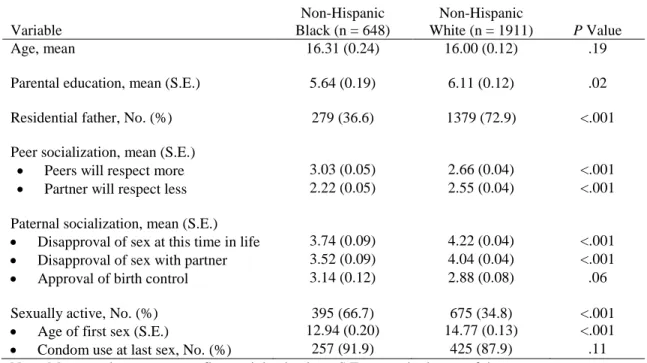
Table 4.1. Characteristics of Study Sample at Wave I ... 78
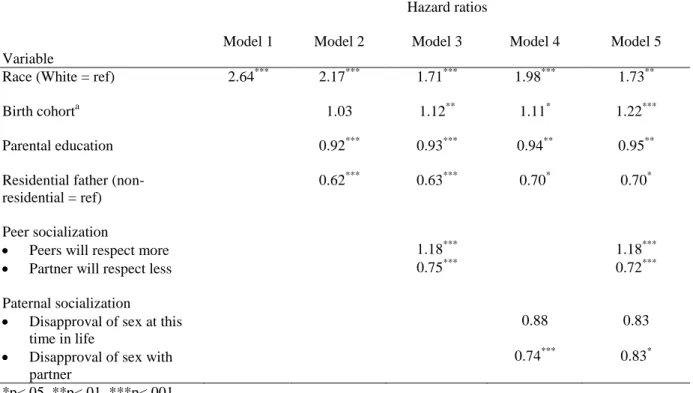
Table 4.2. Sexual Initiation Regressed on Socialization Influences
(Wave I) ... 79
Table 4.3. Condom Use at Last Sex Regressed on Socialization
Influences (Wave I)... 80
Table 4.4. Condom Use Frequency Regressed on Socialization
Influences (Wave III) ... 81
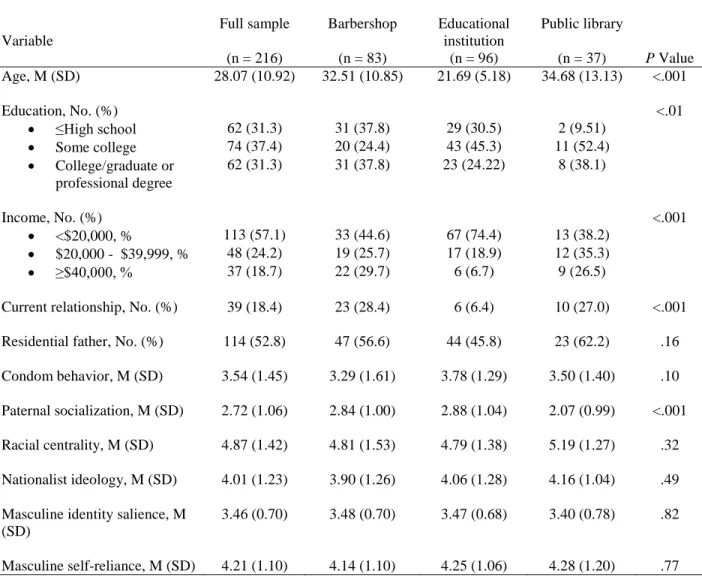
Table 5.1. Characteristics of Study Sample ... 110
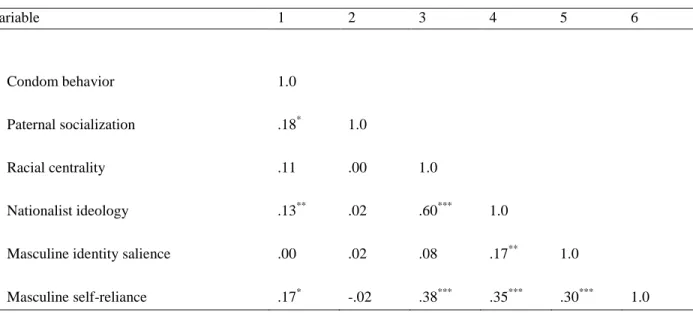
Table 5.2. Correlations Between Study Measures ... 111
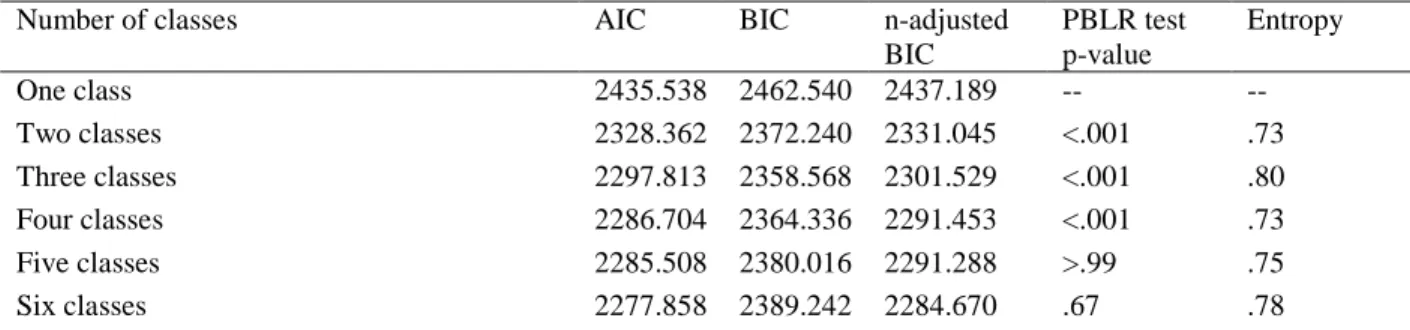
Table 5.3 Model Fit Indices for Identity Profiles Generated
with Latent Class Analysis... 112
Table 5.4. Raw and Standardized Means, and (Standard Deviations),
by Identity Profile ... 113
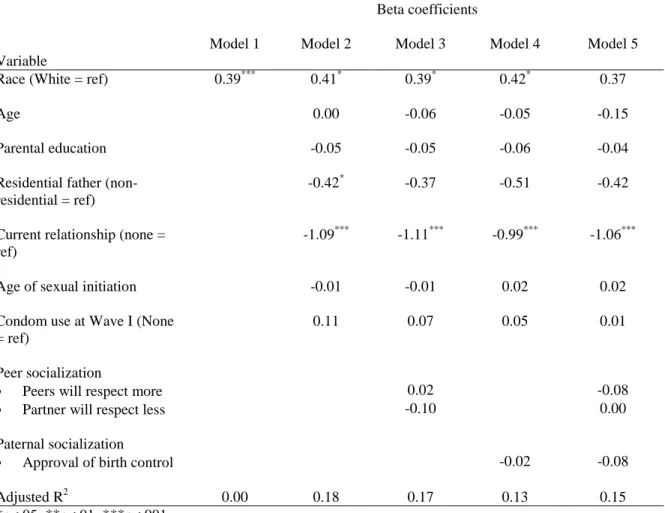
Table 5.5 Condom Use Frequency Regressed on Paternal Sexual
xi
LIST OF FIGURES
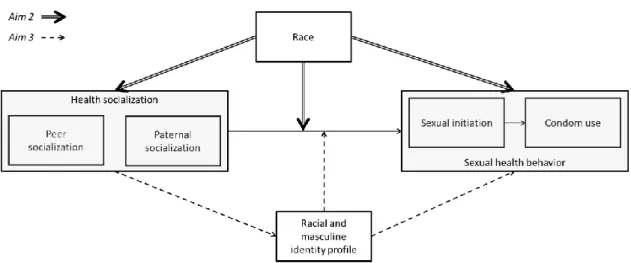
Figure 3.1. Comprehensive conceptual model depicting relationships
of interest within both dissertation studies... 48
Figure 4.1. Conceptual model of the relationship between sexual health
socialization and sexual behaviors ... 82
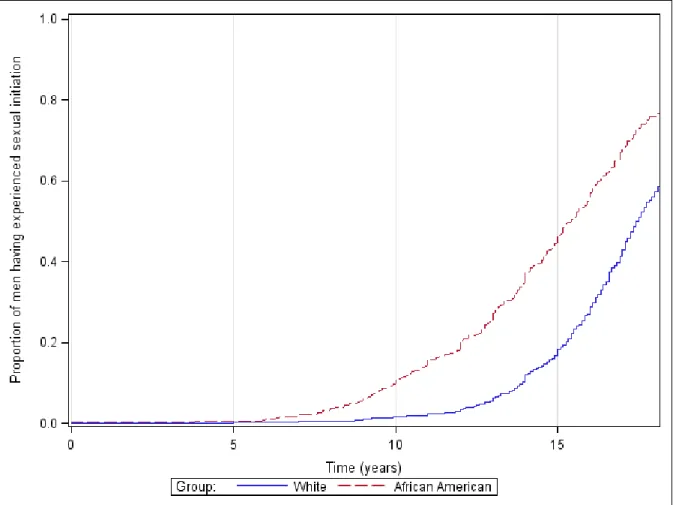
Figure 4.2. Unadjusted survival plot illustrating racial differences
the age of first sex. ... 83
Figure 5.1. Conceptual model of the relationship between paternal
sexual health socialization, identity profiles, and condom use. ... 115
Figure 5.2. Standardized mean values of racial and masculine identity
xii
LIST OF ABBREVIATIONS
AAMHSL African American Men’s Health and Social Life Study
AIDS Acquired Immunodeficiency Syndrome
HIV Human Immunodeficiency Virus
LCA Latent Class Analysis
MSM Men who have sex with men
STD Sexually transmitted disease
CHAPTER 1: INTRODUCTION
1.1 Problem statement
Men in the United States have a lower life expectancy than women (Arias, 2007;
Kung, Hoyert, Xu, & Murphy, 2008), and higher rates of chronic disease morbidity
(American Cancer Society, 2009; National Center for Health Statistics, 2009; Wong et
al., 2006), particularly ones that are amenable to preventive health behaviors (American
Cancer Society, 2009; Hayward, Miles, Crimmins, & Yang, 2000). Even at young ages
boys engage in fewer health promoting behaviors than girls, and are also more likely to
engage in health risk behavior (Eaton et al., 2008). Additionally, African Americans
compared to many other racial groups experience a greater burden of disease,
consequently suffering from premature mortality (Arias, 2007; Smedley, Stith, & Nelson,
2002; Ward et al., 2004). Against the backdrop of these demographic trends, perhaps it is
not surprising then that African American men consistently have among the worst health
outcomes of any race-gender group in the United States (Albano et al., 2007; Baskin,
Ard, Franklin, & Allison, 2005; Fontaine, Redden, Wang, Westfall, & Allison, 2003;
Hayward, et al., 2000). These racial and gender disparities exist in mortality rates as
well. The age-adjusted death rate for African Americans is 20% greater than that of
non-Hispanic Whites, while the rate for men is 38% greater than that of women (Hoyert &
Xu, 2012). The life expectancy for those born in 2011 is 76.4 years for non-Hispanic
White men, and 77.8 years for African American women. However, the life expectancy
2
Perhaps one of the most alarming disparities experienced by African American
men is the disproportionate rate they are diagnosed with HIV and other sexually
transmitted diseases (STDs). Compared to non-Hispanic White men, African American
men have a 20-times greater rate of gonorrhea, almost 12-times greater rate of chlamydia,
and 7-times greater rate of primary or secondary syphilis (Centers for Disease Control
and Prevention, 2010). The most recent estimates of HIV incidence from the Centers for
Disease Control and Prevention place the HIV incidence rate for African American men
at 103.9 per 100,000, a rate 6.5 times that of White men (Prejean et al., 2011). Despite
the identification of these racial differences, many factors driving them elude researchers,
and disparities have increased over time. Between 2004 and 2008 African American men
aged 15-24 experienced a three-fold increase in new syphilis cases, far exceeding the rate
of any other race-gender group (Centers for Disease Control and Prevention, 2010).
Though recent estimates of HIV incidence indicate a stable rate of new infections in the
United States between 2006 and 2009, African American men continue to experience the
greatest number of new HIV infections each year. The majority (61%) of new HIV
infections occur among men who have sex with men (MSM), though 27% of the 48,100
new infections in 2009 were attributable to heterosexual contact (Prejean, et al., 2011).
In both types of sexual transmission, African American men are disproportionately
burdened by the epidemic. They comprise 37% of new infections among MSM and 67%
of new infections among heterosexual men, despite African Americans only constituting
12.6% of the United States population (Centers for Disease Control and Prevention,
3
Even though the data are compelling, a number of health care factors are likely
cause an underestimation of the prevalence of HIV and other STDs among African
American men. Men are more likely to go undiagnosed with an STD as they are reluctant
to admit illness and seek health care (Addis & Mahalik, 2003). Providers routinely
suggest screening their male patients for STDs at levels far below recommended
standards (St Lawrence et al., 2002), and mistrust of the medical system prevents many
African Americans from interfacing with health care systems and providers responsible
for documenting infections (Boulware, Cooper, Ratner, LaVeist, & Powe, 2003;
Hammond, Matthews, Mohottige, Agyemang, & Corbie-Smith, 2010).
The epidemiologic data underscores that the youngest (13-29 years old) African
American men experience the most rapid increases in HIV infection. These increases are
primarily attributable sexual behavior, the majority of which occur between same-sex
partners. Yet despite sexual activity remaining the predominate mode of transmission,
much remains unknown about how sexual health behavior is developed during
adolescence or the effect that developmental process has on sexual health behavior in
young adulthood and beyond. Two health behaviors that are frequently the target of
sexual interventions are sexual initiation (how soon individuals first become sexually
active) and condom use consistency (how likely individuals are to use condoms
consistently when having sexual intercourse). (Albarracin, Johnson, Fishbein, &
Muellerleile, 2001; Lohman & Billings, 2008). These behaviors are a key focus of this
dissertation.
Though racial disparities in HIV and STD rates among men have resulted in a
4
Wagstaff, & Havens, 2000; Hightow-Weidman et al., 2011) comparatively few have
focused on cultural-specific factors salient to this population (Mays, Cochran, &
Zamudio, 2004; Parker, 2001; Whitaker, Furr-Holden, Floyd, Chatterjee, & Latimer,
2010). The paucity of research into determinants or other causal factors that may be
relevant to the formation of sexual health behaviors for African American men is
startling, particularly since other health behaviors coalesce early in life and have an
enduring effect throughout the life-course (e.g., Barnes, Reifman, Farrell, & Dintcheff,
2000; Lau, Quadrel, & Hartman, 1990; Paavola, Vartiainen, & Haukkala, 2004). A
review of programs aiming to alter sexual health behavior of adolescents document
inconsistent effects. The authors attribute these inconsistent findings to the failure of
interventions to target appropriate mediators of sexual behavior within their populations
of interest (Pedlow & Carey, 2003). That result underscores the importance of
identifying variables that influence sexual health behavior for African American men in
order to develop classes of more effective interventions. The variables which may be the
most promising candidates for intervention are likely those that not only have a strong
documented association with sexual behavior, but that are also the most culturally
relevant to and reflective of young African American men’s lived experiences.
One understudied determinant of sexual health behavior for young African
American men is health socialization, or the process by which individuals learn and
acquire health attitudes, norms, and ultimately behaviors. Even among those studies of
health socialization, there is a striking gap: the majority of these studies fail to discuss the
role of fathers in the development of their young African American sons. Though many
5
literature reveals that in the context of sexual health behavior the focus is almost
exclusively placed on mother-daughter relationships (e.g., M. F. Cox, 2006; Hutchinson,
Jemmott, Jemmott, Braverman, & Fong, 2003). These familial relationships are
important and should not be discounted. However, given the epidemiology of HIV
infection in the United States where in 2009 men accounted for 76.7% of all new HIV
infections (Prejean, et al., 2011), we might expect the majority of this research to focus
upon sons and the relationships they have with their parents. The relative absence of
research focused on father-son relationships is just as striking since parents who share the
same gender with their children play a particularly salient role in their gender role
development (Galambos, Almeida, & Petersen, 1990), a fact which is especially relevant
in the study of sexual behavior as these and other health behaviors are largely informed
by gender norms and masculine ideology (Courtenay, 2000b).
The father-son relationship may have particular salience for African American
men warranting additional study. Discussed in more detail in Chapter 2, I articulate how
the simultaneous socialization of masculine and racial identities uniquely positions
African American fathers to not only teach their sons about the formation of these aspects
of identity, but also puts them in the unique role of embedding messages about health
behavior throughout this process. Nevertheless, much of the published literature
examining the role of African American fathers fails to appreciate the full complexity of
their roles as agents of socialization. The scope of inquiry concerning African American
paternal roles is frequently limited to that of financial or economic provider, or their
parental function is articulated from a deficit model in which non-residential fatherhood
6
23.6% of all children in the United States live in households where the mother is the
single parent (Krieder & Ellis, 2011), I consider the role of non-residential fatherhood
through a normative lens. This is particularly important for African American fathers, as
50.4% of African American children are raised in households without their father living
in the same location (Krieder & Ellis, 2011).
1.2 Application of an inter- and intra-group approach to health disparities
The inter-group or comparative approach is the most common means of
examining health disparities. An inter-group approach involves the identification and
documentation of unjust differences between groups. The strategy also alerts researchers
to the existence of disparities, and allows for continual monitoring of how well
interventions reduce them. As applied in addressing this dissertation’s problem
statement, the strategy of identifying between group differences is an important
component of health disparities research. By contrasting African American and White
men, we can seek answers to questions concerning the shared and discordant sources of
sexual health disparities. Additionally, an examination of how socialization processes
differ can better inform interventions aimed at delaying sexual initiation and increasing
condom behavior.
However, while the inter-group approach has great utility, it can too easily
oversimplify the diversity inherent within groups. Studies that examine within-group
diversity are important to understand group-specific factors to which there may not be an
appropriate analog or comparison. With few exceptions, masculine identity and racial
7
development of sexual health behavior among African American men, despite growing
amounts of literature illustrating their association with a variety of other health behaviors
among African American men (Addis & Mahalik, 2003; Brook & Pahl, 2005; Caldwell,
Kohn-Wood, Schmeelk-Cone, Chavous, & Zimmerman, 2004; Caldwell, Sellers, Bernat,
& Zimmerman, 2004; Courtenay, 2000a, 2000b; Hammond, et al., 2010; Resnicow,
Soler, Braithwaite, Selassie, & Smith, 1999).
The focus on racial differences in both sexual initiation and condom use is
important but explored alone obscures intra-group sources for African American men’s
higher incidence of HIV and STDs (Centers for Disease Control and Prevention, 2008b;
Prejean, et al., 2011). To complement this focus, we also need a careful examination of
within-group differences in African American men’s acquisition of sexual health
behaviors. Attention towards these within-group differences can assist in the creation of
appropriately tailored interventions for African American men. Through the union of an
inter- and intra-group approach to the study of sexual health behavior, this dissertation
examines differences in behavior as well as explores which factors most strongly
influence sexual health behaviors for African American men.
Though we frequently assess health disparities by examining the independent
effects of race and gender, done too often this approach reduces these important
characteristics to simple control variables. This common analytic approach also suffers
from two fundamental conceptual shortcomings. First, it implies the influences of race
and gender are simply additive. Second, it ignores the underlying assumptions of
controlling for variables in statistical models. When statistically controlling for a
8
in the model held constant, what is the difference of the effect of an individual possessing
trait A on an outcome, compared to the exact same individual having had possessed trait
B instead of A on that outcome? The awkward nature of the language is itself illustrative
of the fact this approach will never yield an answer to this question. Nevertheless, this
logic commonly referred to as the counterfactual conditional is necessary and useful logic
underlying how we measure the effects of variables in some instances. However, there is
no true counterfactual to race or gender, as we cannot hold constant all aspects of a
person’s life with the sole exception of these variables. Membership in any race or
gender group is comprised of elements so fundamentally unique to that group, and so
interlaced with the totality of social experience, that counterfactual logic cannot
effectively accommodate these variables. It is difficult if not impossible to imagine a
circumstance in which two people could be identical on all psychosocial dimensions
except race or gender. Since these two variables influence and interact with almost all
other psychosocial factors responsible for health (e.g., income, education, health care),
Kaufman and Cooper (1999) caution researchers to pay special attention to the
information produced by inter-group analysis of health disparities.
Unlike a comparative approach to health disparities, an intra-group perspective
applied to an examination of sexual health behaviors among African American men
facilitates research designed to identify relevant sociocultural factors, acknowledge
diversity and strength among African American men, and perhaps most importantly
identify mechanisms through which sexual health outcomes can be readily improved
(Bediako & Griffith, 2007). These studies also address many of the gaps that inter-group
9
amenable to public health intervention. These studies acknowledge cultural strengths that
can be leveraged in interventions, while also being poised to more readily identify other
modifiable variables that result in relatively poor health among racial or ethnic minorities
(Bediako & Griffith, 2007).
Nevertheless, even with the myriad strengths of intra-group approaches, they
alone cannot wholly address health disparities. Inter-group studies provide the necessary
starting point from which researchers can proceed to a more nuanced examination of
what produces health disparities, and can identify differences in both outcomes of
interest, as well as “exposures” that may facilitate those outcomes. Recognizing the
unique strengths and weaknesses of inter-group and intra-group studies, the goal of this
dissertation is to utilize both an inter- and intra-group approach to health disparities.
Through using both perspectives, combined with empirical methods to match the
theoretical rationale for my hypotheses, I aim to leverage their strengths in order to arrive
at a more full understanding of the ways in which African American men develop sexual
health behavior.
1.3 Study aims
Aim 1: Examine the longitudinal association between peer and paternal agents, and sexual initiation and condom use in adolescence.
Aim 2: Determine if the association between peer and paternal health socialization, and sexual initiation and condom use differs by race.
10
Study aims 1 and 2 correspond to the inter-group manuscript of this dissertation,
and are addressed through secondary analysis of data from the National Longitudinal
Study of Adolescent Health, a nationally representative longitudinal study of adolescents
and young adults in the United States. The goal of this analysis is to: 1) examine the
roles of peers and fathers on the timing of sexual initiation; 2) determine if the effect of
peers and fathers on condom use in adolescence persists into young adulthood; and 3)
assess whether or not these health socialization effects on sexual initiation and condom
use differ by race.
Study aim 3 corresponds to the intra-group manuscript of this dissertation, and is
addressed through the analysis of data collected through the African American Men’s
Health and Social Life (AAMHSL) Study, a cross-sectional non-probability sample of
African American men recruited from barbershops, academic institutions, and
community spaces. The goal of this analysis is to: 1) examine the effect of masculine and
racial identity on condom use through the development and application of latent class
profiles which reflect the mutually constitutive nature of identity formation; 2) determine
how these profiles influence the relationship between paternal socialization and condom
use.
The unifying goal of this dissertation study rests in determining if and how agents
of sexual health socialization influence the development of African American men’s
sexual health behaviors. Applying both an inter-group and intra-group lens to the study
of health disparities, this dissertation is uniquely poised to present a richer
contextualization of sexual health behaviors among African American men by examining
11
initiation and frequency of condom use; 2) racial differences in the effect peers and
fathers have on the timing of sexual initiation and frequency of condom use; 3)
differences among African Americans in the effect that masculine and racial identity have
on condom use. Each of these differences are important lines of inquiry into sexual
health disparities, and together they can yield information to inform the development of
more precise interventions and public health strategies that promote the health of African
American men, and reduce their burden of new HIV/STD infections.
1.4 Organization
This dissertation consists of six chapters. Chapter 1 outlines the public health
significance and the rationale behind the application of an inter-group and intra-group
approach to health disparities as a guiding framework of the empirical studies presented
within this dissertation. Study aims of this dissertation are presented in Chapter 1.
Chapter 2 provides a review of the literature concerning both sexual initiation and
condom use among African American men in the United States. Additionally, Chapter 2
provides a review of the literature on health socialization broadly, its application to
sexual health behavior, and the role played by peers and notably fathers in this
developmental process. Finally, Chapter 2 concludes with a description of the literature
linking masculine identity and racial identity to health outcomes, health behavior, and
sexual health behavior. Chapter 3 introduces the theoretical frameworks used throughout
the dissertation to justify the relevance of factors identified in Chapter 2’s examination of
sexual health behavior. The chapter then articulates proposed relationships between these
factors to allow for the development of testable hypotheses within each of the two
12
Investigation of Racial Differences in Paternal and Peer Sexual Health Socialization and
Behaviors of Young Men” and Chapter 5 is a manuscript titled “Cross-Sectional
Investigation of Paternal Sexual Health Socialization, Masculine and Racial Identity, and
Sexual Health Behaviors Among African American Men.” These chapters correspond to
the inter- and intra-group approach to health disparities, respectively, and represent the
original empirical components of this dissertation. Methods, results, and discussion
specific to each of these manuscripts are within these chapters. Chapter 6 concludes the
dissertation study by synthesizing the results from Chapters 4 and 5, summarizing key
findings, and outlining the contributions of this dissertation while acknowledging
important limitations. Finally, I conclude with implications for research and practice, and
CHAPTER 2: REVIEW OF THE LITERATURE
2.1 Definition of sexual activity
Recognizing the diversity of sexual activity, the scope of this dissertation limits
its consideration to activity including penetration of the vagina or anus. The imprecision
with which oral sex is frequently assessed, and its comparatively lower risk for HIV/STD
infection preclude it from being considered alongside vaginal or anal intercourse.
This dissertation will examine two different health behaviors specific to sexual
activity as defined. Sexual initiation is a health behavior that refers to if and when an
individual has their first sexual experience. Previously in the literature, those who have
not yet experienced sexual initiation were referred to as “virgins”, but the variety of
sexual experiences renders its application problematic – the word holds several different
meanings for adolescents. The second behavior of study is condom use, and specifically
refers to the consistent application and use of a male condom throughout the entirety of
an experience of either vaginal or anal intercourse.
2.2 Overview of sexual initiation
The timing of sexual initiation is an important determinant of sexual health
behaviors and ultimately sexual health, as early sexual initiation has been associated with
14
2010). For example, findings from a nationally representative study of adolescents
indicate that the odds of having an STI were over twice as high for 18 year olds who
became sexually active by 13 as compared to those 18 year olds who had only become
sexually active a year earlier (Kaestle, Halpern, Miller, & Ford, 2005). Early sexual
initiation is also associated with other negative health behaviors such as alcohol use,
cigarette smoking, and perpetrating violence (Coker et al., 1994). Data from the National
Survey of Family Growth shows that the trend over the last two decades has been a
marked delay in sexual initiation: whereas 60% of men were sexually active by 19 in
1998 only 43% reported sexual activity in 2008 (Abma, Martinez, & Copen, 2010). Yet,
these data obscure that 38% of non-Hispanic White men were sexually active while 60%
of non-Hispanic African American men were sexually active at this same age.
Research into factors associated with sexual initiation is extensive, ranging from
intrapersonal determinants such as attitudes and outcome expectations (Beadnell et al.,
2007) to the role of preventive interventions and policies such as sexual education
programs within schools (Kirby, 2008; Tortolero et al., 2010). However, a great deal of
this literature is characterized by its focus on individuals within social networks who
influence sexual initiation - A cursory examination of this literature reveals that both
peers and parents are among the most frequently studied social influences on sexual
initiation (e.g., Busse, Fishbein, Bleakley, & Hennessy, 2010; Coker, et al., 1994;
Karofsky, Zeng, & Kosorok, 2001). Yet perhaps the most notable characteristic of the
research on sexual initiation is that even among the studies which include young African
15
(e.g., racial and masculine identity) that may also play a role in the decision of when to
become sexually active. This dissertation addresses this scientific gap.
2.3 Overview of condom behavior
Though sexual initiation is an important behavioral determinant, the goal is not to
stop sexual initiation altogether but rather to delay it until individuals are
developmentally equipped to engage in healthy sexual decision-making. When men do
become sexually active, failing to consistently use condoms is a primary sexual health
behavior of concern. Consistent condom use is one of the most proximal determinants of
sexual health. Any discussion of HIV/STD disparities requires attention to both condom
behavior and those factors that influence it. While some studies report that compared to
White men, African American men are less likely to report consistent condom use
(Fullilove et al., 1990; Maxwell, Bastani, & Warda, 1999), others report no difference
(Catania et al., 1992), and in some instances a greater likelihood to use condoms
consistently (Doherty, Schoenbach, & Adimora, 2009; Sonenstein, Pleck, & Ku, 1989).
The results in the literature are show greater uniformity for MSM than heterosexuals,
however. Despite having the highest HIV incidence and prevalence among any
population subgroup, the emerging consensus is that African American MSM use
condoms at the same frequency, and in some instances more, than their White MSM
counterparts (Millett, Flores, Peterson, & Bakeman, 2007; Millett et al., 2012).
16
2.4 The relationship between sexual initiation and condom use
Though many studies investigate sexual initiation or condom behavior in
isolation, other research more appropriately articulates these sexual health behaviors as
co-occurring and influencing additional risky practices. For example, among
adolescents, earlier sexual initiation can result both in greater numbers of sexual partners
and an increased likelihood of having sex while under the influence of alcohol (Sandfort,
Orr, Hirsch, & Santelli, 2008). Additionally, failure to use a condom during the initial
sexual encounter sets individuals on a trajectory for reduced condom use throughout
adolescence (Shafii, Stovel, Davis, & Holmes, 2004; Shafii, Stovel, & Holmes, 2007).
Some researchers suggest the quality and context of the first sexual experience itself may
either confound or mediate the relationship between sexual initiation and condom
behavior (Laumann, Gagnon, Michael, & Michaels, 1994; Laumann & Michael, 2001;
Nicole, Hyde, & DeLamater, 2005), further strengthening the evidence which links
sexual initiation and subsequent condom use. These previously mentioned studies move
the literature forward from the investigation of sexual initiation and condom use in
isolation, towards the identification of mechanisms that connect the two in a causal
pathway. However, sexual initiation and condom use are associated not only because of
a causal relationship, but also because they are shaped by common sources. In the next
section, I review health socialization and articulate it as a mechanism that serves to
17
2.5 Health socialization
2.5.1 Definition
One important determinant of sexual health behaviors, and the primary focus of
this dissertation, is the process by which an individual develops health behaviors, referred
to as health socialization (Tinsley, 2003). Socialization is a general concept not specific
to health, largely referring to the progression through which individuals acquire attitudes,
norms, beliefs, and behaviors (Clausen, 1968). Tinsley (1992) describes in detail how
children acquire attitudes, norms, beliefs, and behaviors specific to health - or health
socialization. Health socialization starts early in life, and the process influences children
through a variety of sources, including the school and media, as well as their family and
peers. The sources that shape attitudes, norms, beliefs, and ultimately behaviors are
referred to as health socialization agents.
Researchers offer several definitions of health socialization, a function of varying
perspectives on this construct. Earlier scholarship often treats socialization agents as
molders of attitudes, knowledge, and behavior through a one-way transfer process in
which children are framed simply as receivers (Erikson, 1950). This dissertation,
however, builds on more recent conceptualizations which frame socialization as a
transactional process (C. Hart, Olsen, Robinson, & Mandleco, 1997; Pomerantz & Eaton,
2001; Sameroff & MacKenzie, 2003). Examining health socialization as a transactional
process acknowledges both the role of multiple influential agents, and individuals’ active
18
2.5.2 Health socialization as a determinant of health behavior
Health socialization is perhaps most frequently studied as a determinant of health
behavior in children. Studies frequently focus on the association between health
socialization factors as diverse as the social environment (Ashford & LeCroy, 2010),
media consumption (Baranowski, Buday, Thompson, & Baranowski, 2008; J. L. Harris,
Bargh, & Brownell, 2009), health status (Levy, Kronenberger, & Carter, 2008) and
children’s health behavior. Though much of the conceptual basis for health socialization
starts early in the developmental process, the empirical basis for health socialization
acquired during adolescence is greater. This focus does not likely reflect
disproportionate scientific interest in children’s health behavior, but rather the increasing
autonomy demanded by adolescents that makes it easier to observe their health behavior
independent of parental control. This distinction is important because it raises the issue
that agents of health socialization during earlier developmental periods, where much of
the health socialization work is conceptualized, may not be the same or function similarly
in adolescence where the empirical work is concentrated. The relatively limited social
interactions of young children results in their primary socialization agents being family
members, most usually parents. Nevertheless, increased exposure to health socialization
agents outside the family such as peers and media arguably has an equally important role
influencing health behaviors during adolescence, as evidenced by its linkage to a variety
of health behaviors including smoking (Villanti, Boulay, & Juon, 2011), alcohol use
(Anderson, De Bruijn, Angus, Gordon, & Hastings, 2009), and physical activity (Kahn et
19
We must also broaden how we think about agents of health socialization lest we
rely solely on earlier models that purport one-way transfers of information from agent to
individual (Erikson, 1950). The sheer diversity of socialization agents suggest the
importance of identifying and focusing attention on those which are most salient during a
specific developmental period since agents that hold influence at one point may be more
or less relevant in another. Health socialization is not merely transactional but
continually changing and adaptive as individuals become more and less receptive to
different influences. In addition to observing multiple agents of health socialization,
studies must examine within-person associations over time to understand sufficiently the
process in which people develop health behavior. By doing so, investigations will provide
answers to a looming question: do sources in adolescence maintain their importance in
young adulthood and beyond? Recognizing the potential importance health socialization
has on not just health behavior, but health outcomes throughout the life course, I focus
upon those influential agents who facilitate the process in adolescence and examine if
they maintain their influence in young adulthood.
2.5.3 Peers as agents of health socialization
As individuals with whom adolescents have frequent contact, peers are incredibly
important agents of health socialization. Adolescence is marked by a time in which many
argue that familial influences over behavior diminishes and individuals become more
easily shaped by, and shape behaviors of those in their peer networks (Gardner &
Steinberg, 2005). For this reason, norms, attitudes, and even the behaviors of peers can
have profound influence on a variety of health behaviors. Peers shape many health
20
physical activity (Brustad, 2012), and most recently evidence shows they also strongly
influence texting while driving (Elliott, Jacobsohn, Winston, & Ginsburg, 2012). Other
studies confirm the association between peer influence and the development of health
behaviors among young men specifically (e.g., Brown, Dolcini, & Leventhal, 1997;
Dishion, McCord, & Poulin, 1999; Kiuru, Burk, Laursen, Salmela-Aro, & Nurmi, 2010).
Whether or not researchers correctly attribute the mechanism through which peers
influence one another remains an important tension in the literature. Many researchers
point out that cross-sectional associations between individual and peer attitudes, norms,
and behaviors held by a peer group, and the attitudes, norms, and behaviors are
frequently mislabeled as peer socialization. These associations may instead exist due to
peer selection, and in such instances the causal direction would actually be reversed. In
other words, rather than peers influencing health behavior, peers may select their friends
partially because they engage in, or have the same dispositions to engage in, similar
health behaviors (Prinstein, et al., 2001). While many studies are unable to disentangle
these effects, others confirm the effect of peer selection. In one study of adolescent
tobacco use, peer socialization is not associated with smoking behavior, though peer
selection is (Simons-Morton, Chen, Abroms, & Haynie, 2004). Another study confirms
results reported by Simons-Morton et al. (2004), but adds that both peer selection and
socialization play a role in determining adolescent alcohol use (Kiuru, et al., 2010).
However, other studies of adolescent behavior support peer socialization as the dominant
way through which peers influence substance use (Wills & Cleary, 1999) as well as
21
suggest we reject uniformly favoring peer selection or socialization, but rather
acknowledging each has varying importance depending on the health behavior studied.
2.5.4 Fathers as agents of health socialization
Despite the acknowledged importance of peers as key health socialization agents,
parents still maintain a powerful influence over the health behaviors adopted by their
children during adolescence (Kliewer, Fearnow, & Miller, 1996; Lau, et al., 1990).
However, a preponderance of research on health outcomes in early childhood and
adolescence focuses on the role of mothers exclusively, or uses maternal involvement as
a proxy for parental involvement (Coley, 2001; Russell & Radojevic, 1992). This
illustrates a problematic exclusion of fathers not only from new lines of scientific inquiry,
but also ignores existing empirical literature pointing to the unique and important paternal
influences on children’s health outcomes (Diener, Isabella, Behunin, & Wong, 2008;
Rubin et al., 2004).
In one study of father involvement with their children in two-parent homes,
researchers found that paternal involvement style varied by race, such that compared to
White fathers, African American fathers were found to monitor their children more, and
claim a greater amount of responsibility for their children’s well-being (Hofferth, 2003).
To be certain, African American fathers are less likely than White fathers to live with
their children in two-parent homes (Fields et al., 2004). Even still, non-residential
African American fathers maintain relationships with their children (Caldwell et al.,
2004; Pan & Farrell, 2006), and compared to non-residential fathers of other racial
groups, appear to be more likely to visit their children (Lerman, 1993). This dissertation
22
of fathers, especially African American or non-residential fathers, in a limited fashion.
Following the work of others, I extend the role of fathers as more than merely providers
of instrumental and economic support (Cabrera, Tamis‐LeMonda, Bradley, Hofferth, &
Lamb, 2000; Garfield & Isacco, 2006; Hammond, Matthews, Cooper, Johnson, &
Caldwell, 2011; Levant, Wimer, Williams, Smalley, & Noronha, 2009; Teitler, 2001).
Instead, the dissertation builds on recent theoretical work which situates African
American fathers as primary agents of socialization for other health behaviors (e.g.,
health care visits, fruit and vegetable consumption) (Hammond, et al., 2011).
Due to the increased importance of same-gender parental socialization as children
enter adolescence (Galambos, 2004), it is plausible that this also translates into an
increased importance of fathers’ roles in shaping the health behaviors of their sons.
Increasing amounts of literature also points to masculine role socialization as a powerful
mechanism through which father-son relationships are made particularly salient
(Courtenay, 2000b; Levant, 1996). Of additional importance for African American
fathers and sons, the process of racial identity development may additionally strengthen
the salience of the father-son relationship and partially be responsible for increased
paternal involvement (Coard, Wallace, Stevenson, & Brotman, 2004; H. P. McAdoo,
2002). I discuss the roles of both masculine and racial socialization further in this
chapter, and examine them empirically within Chapter 5. Despite these theoretical and
empirical considerations, much work remains to increase understanding about the extent
23
2.5.5 Health socialization as a determinant of health disparities
Health socialization plays a role not only in the development of health behaviors,
but has been conceptualized as a contributor to racial health disparities (Singh-Manoux &
Marmot, 2005; Tinsley, 1992). Singh-Manoux and Marmot, specifically, note that
individual responses to social structures and conditions that pattern health disparities
often result in a set of health-harming attitudes, beliefs, and behaviors. Individuals then
transmit these health behaviors within and across generations, serving to perpetuate those
health disparities rooted in health behavior. Race and gender also play an important role
in how health socialization messages are transmitted and received (see Chapters 2.8 and
2.9). There is an undeniably robust link between race and social advantage in the United
States, the latter of which is consistently associated with better health outcomes and
health behaviors (Braveman, 2006; Marmot, 2004). The enduring quality of this link and
the suppositions made by researchers (Singh-Manoux & Marmot, 2005; Vagero & Illsley,
1995) suggest that racial differences in health socialization may also help to explain
racial disparities in sexual health behaviors and outcomes, providing further impetus for
its study.
2.6 Sexual health socialization
According to a recent nationally representative study, 38.3% of non-Hispanic
White men ages 15-19 reported ever having a sexual experience, compared to 60.6% of
non-Hispanic Black men the same age (Abma, et al., 2010). These data reflect the
continuation of a trend in prior studies documenting earlier sexual initiation among
Levy-24
Storms, Sucoff, & Aneshensel, 1998). These racial differences in sexual initiation may
be related to the racial disparities in sexual health outcomes that already exist in the
15-19 year age group. For men this age, the rate of new syphilis infections alone is an
alarming 25 times greater for African Americans than non-Hispanic Whites (Centers for
Disease Control and Prevention, 2010). Health disparities are frequently characterized
and explained by an accumulation of disadvantage and disproportionate burden that
diminishes health over the life-course. However, the emergence of such stark differences
as early as ages 15-19 suggests the causes of sexual health behavior may be more
immediate and proximal in nature.
Peers are most frequently implicated as a “negative” influence on sexual
initiation, where they are often found to facilitate earlier age of first sex (Busse, et al.,
2010; Kinsman, Romer, Furstenberg, & Schwarz, 1998). Many studies also explore the
role of parents in sexual initiation, examining characteristics such as level of parental
supervision (Browning, Leventhal, & Brooks-Gunn, 2005), general parenting style
(Longmore, Manning, & Giordano, 2001), and parental communication (e.g., Karofsky,
et al., 2001; Lammers, Ireland, Resnick, & Blum, 2000; Miller, Levin, Whitaker, & Xu,
1998). Recognizing the importance of socialization from both peer and parental
influences several interventions have leveraged the social networks of adolescents to
delay sexual initiation (e.g., Caron, Godin, Otis, & Lambert, 2004; Gavin, Catalano,
David-Ferdon, Gloppen, & Markham, 2010), though substantially more have sought to
utilize parental influence to encourage delayed sexual initiation (Wight & Fullerton,
2012). Such a differential focus may be attributable to a concern that peer-dominated
25
also articulated in studies that situate parental influence as a buffer of the relationship
between peer influence and sexual initiation (Fasula & Miller, 2006). Similarly to sexual
initiation, there is an abundance of literature on the role that both peers and parents play
in condom behavior, as illustrated through intervention studies alone which aim to
leverage existing social networks to increase consistent condom use (Wang, Brown,
Shen, & Tucker, 2011; Wight & Fullerton, 2012).
Investigating racial differences in sexual health socialization may provide a way
to understand how disparities in sexual health behaviors and outcomes arise in early
adolescence, even in the increasing presence of sexual education campaigns (Shtarkshall,
Santelli, & Hirsch, 2007). Relatively few studies take a prospective approach in the
examination of race-differences in sexual health behavior acquisition. This dissertation
addresses this oversight by examining if racial differences in sexual health socialization
account for racial differences in sexual initiation and condom use.
2.7 Peers and fathers as agents of sexual health socialization
Sexual health socialization largely includes indirect messages communicated
about sexual health behavior – for young men sexual initiation and condom use are
arguably the most important. Puberty and the onset of physical maturity mark
adolescence and the time when sexual health socialization is likely to be more salient.
Though individuals receive health messages from a variety of sources, peers may be
among the primary agents of sexual health socialization during adolescence. Supporting
26
peers more likely to engage in sex themselves (Bears, 2009; Biglan et al., 1990; Metzler,
Noell, Biglan, Ary, & Smolkowski, 1994).
A substantial number of parents report discomfort with, and consequently low
rates of, talking to their children about sexual health matters (Diiorio, Kelley, &
Hockenberry-Eaton, 1999; Hutchinson & Cooney, 1998). Adolescents, as a result, rely
on peers as agents of sexual health socialization. However, sexual health socialization
from peers is often health-harming as peers can perpetuate incorrect information (e.g.,
coitus interruptus is an effective form of birth control) and problematic attitudes about
sexual health behavior (e.g., becoming sexually active is necessary to be regarded
favorably) (Holtzman & Rubinson, 1995). Even the mere perception that their peers do
not use condoms increases an adolescent’s likelihood of not using a condom (Leland &
Barth, 1993). Exacerbating concerns over the negative influence of peers on sexual
health behavior is that peer sexual health socialization occurs in adolescence. As the
developmental stage in which other youth risk behaviors are also developing (Haugaard,
2001; Holm et al., 2009; Thornton, Craft, Dahlberg, Lynch, & Baer, 2002; Turner, Irwin,
Tschann, & Millstein, 1993), adolescence not only heralds an increase in a myriad of
health risk behaviors but may also signal waning parental influence to promote healthier
choices (Aseltine, 1995; Hawkins, Catalano, & Miller, 1992; Hu, 1995).
While several studies have examined the role played by parents in child sexual
health development, this research is often limited to maternal influences (e.g.,
Guilamo-Ramos, Jaccard, Dittus, & Collins, 2008; Miller et al., 2009; Miller, et al., 1998), and
constricted to mother-daughter pairs (e.g., M. F. Cox, 2006; Hutchinson, et al., 2003). A
27
randomized-control trials, only two of which focused on parental communication with
adolescents about sexual activity (Pedlow & Carey, 2004). Though this analysis omits
those studies not evaluated via randomized control trial, it is emblematic of a need to
understand the role of parents, including fathers, on sexual behavior. Rather than
maintaining the common notion that fathers play a secondary role relative to mothers in
health socialization (see Garfield & Isacco, 2006; Teitler, 2001), this dissertation
considers in greater detail the contribution made by fathers to their sons’ sexual health
socialization.
Literature also points to racial variation among the influences peers and fathers
wield as agents of sexual health socialization (Furstenberg Jr, Morgan, Moore, &
Peterson, 1987; Lottes & Kuriloff, 1994). Shah and Zelnik (1981) discovered that peers
influenced the likelihood of premarital sex in young women, but this was true to a lesser
extent among African Americans. More recently, a study of urban adolescents found that
peer socialization accounted for a greater amount of variance in sexual behavior among
Whites than African Americans (Doljanac & Zimmerman, 1998). Holtzman and
Rubinson (1995) find that male adolescents are more influenced by peer socialization
than female adolescents. While evidence demonstrates racial differences in effects of
peers as agents of sexual health socialization (though none explore racial differences
among men), other research similarly indicates African American fathers may have a
more pronounced effect on the sexual health socialization of their sons than White fathers
(Coard, et al., 2004; Hofferth, 2003; Lerman, 1993; H. P. McAdoo, 2002). Whether or
not African American fathers wield comparatively greater influence over their son’s
28
clear (Ali & Dwyer, 2010; Hutchinson & Cooney, 1998). A primary objective of this
dissertation is to address these gaps in our knowledge of racial differences in peer and
paternal sexual health socialization among young men.
2.8 Masculinity and health
2.8.1 Defining masculinity
Masculinity is a multidimensional construct that researchers have operationalized
in a variety of ways. Masculine ideology generally refers to a set of traits or
characteristics traditionally prescribed and proscribed to being a man. These ideologies
encompass a host of qualities regarded as positive (e.g., self-sacrifice, rational thought)
and negative (e.g., aggression, acceptance of violence) (Fischer & Good, 1998; E.
Thompson & Pleck, 1995). Men’s subscription to these ideologies are articulated
through a variety of lenses such as gender role theory and the uniquely “male” sex role
(Harrison, Chin, & Ficarroto, 1992), and the male-gender role strain paradigm (O'Neil,
2008). Masculine ideologies manifest as behaviors demonstrated most often in the ways
men transact with individuals and social institutions. Men engage in sets of behaviors
and other social scripts in a ritualistic manner to portray their masculine identity to the
outside world (Butler, 1997; Majors & Billson, 1993).
Though conceptualizations of masculinity are numerous and varied, they are not
mutually exclusive. Rather, they extend from the common perspective that society
actively constructs gender roles. In other words, masculinity is not inherent to being
biologically male, instead it is something that society and men create transactionally.
29
observing others. Individuals, culture, and social structures teach socially appropriate
gender behavior by instructing boys and girls to enact gender-specific attitudes,
behaviors, and norms (Courtenay, 2000c; Levant & Pollack, 1995). This process of
learning gendered attitudes, norms, and behaviors, is referred to as gender-role
socialization, and is the predominate means through which I examine the effect of
masculinity and its resulting impact on health behavior throughout the dissertation.
Both men and women, and society as a whole, act as agents of gender-role
socialization every time they reinforce associations between a trait or behavior and a
specific gender (e.g., strength is male, nurturing is female) (Courtenay, 2000b). The
ability for most people in society to identify typically male or typically female
characteristics is a testament to the pervasiveness of gender-role socialization (Williams
& Best, 1990). One of the strongest agents of gender-role socialization are parents,
particularly the same-gender parent (Eccles, Jacobs, & Harold, 1990; Witt, 1997); fathers
serve a primary role in shaping beliefs about masculinity among their sons. The focus in
this dissertation on paternal health socialization then requires an examination of the role
of gender-role socialization and masculinity in the lives of men.
2.8.2 Masculinity and the formation of health behavior
A substantial body of literature documents associations between being male and
failure to engage in a variety of preventive health behaviors (Courtenay, 2000c; Garfield,
Isacco, & Rogers, 2008; Mahalik, Burns, & Syzdek, 2007; Waldron, 1988), as well as an
increased likelihood of engaging in a variety of harmful health behaviors (Eaton, et al.,
2008; Pleck, Sonenstein, & Ku, 1994). Research conducted among men, however,
30
that are largely responsible for these observed behaviors. Ironically, men’s desire to
display their masculinity through the acquisition of power and social standing, factors
generally associated with greater health, frequently manifest as health-harming behaviors
(e.g., excessive alcohol consumption) (Courtenay, 1998). Though a body of evidence
documents a negative association between masculinity and health behaviors, other studies
demonstrate the opposite. Increasing amounts of literature suggest masculinity can in
fact be positively associated with health-promoting behaviors (Annandale & Hunt, 1990;
Hammond, et al., 2010; Wade, 2009). For example, a study of college men found that
traditional masculine ideology was negatively associated with health-risk behaviors
(Levant, et al., 2009). Samples consisting exclusively of African American men also
replicate these findings. African American men with high levels of masculine identity
salience and masculine self-reliance are less likely to delay blood pressure or cholesterol
screening (Hammond, et al., 2010), and non-traditional masculinity is positively
associated with wellness and associated behavior (Wade, 2008, 2009).
Both theoretical and empirical literature also implicates men’s endorsement of
masculine ideology as being associated with reduced condom use and earlier sexual
initiation. Most studies indicate an association between masculinity and less
health-promoting sexual behavior (Amaro, 1995; Noar & Morokoff, 2002; Pleck, Sonenstein, &
Ku, 1993; Smith, 1996). Whitehead (1997) proposes that African American men use
sexual behavior as a vehicle to enact masculinity in light of their increased difficulty in
meeting those goals associated with traditional masculinity such as providing for family.
To compensate, exaggerated sexual behavior and demonstrating sexual prowess through
31
ways in which African American men enact masculinity (Whitehead, 1997; Wolfe,
2003). Several qualitative studies of African American men support this articulation of
African American masculinity (Bowleg, 2004; Bowleg et al., 2011; Wolfe, 2003).
However, to my knowledge, only one quantitative study has confirmed these results in a
sample of African American men (Santana, Raj, Decker, La Marche, & Silverman, 2006).
Other studies demonstrate positive relationships between masculinity and sexual
behavior. One study of college men found, albeit with marginal statistical significance,
that men who hold traditional ideas about being male are less likely to have ever had sex
without using a condom (C. L. Shearer, S. J. Hosterman, M. M. Gillen, & E. S.
Lefkowitz, 2005). Blome (2004) similarly finds in a sample of African American men
those who endorse strong beliefs in masculinity are more likely to report consistent
condom use in the future. Together these findings demonstrate that while associations
between masculinity and sexual health behavior exist, the literature has not yet
consistently established their effect on sexual health behavior.
Even as we acknowledge the importance of masculinity in health behaviors,
including those specific to sexual activity, we are missing a critical link in the literature.
As detailed in Chapter 2.5.4, as agents of health socialization, fathers play a critical role
in their sons’ health behavior development. However, fathers also communicate
messages to their sons about masculinity, and as they do so they impart lessons about
health behavior, further reinforcing their roles as agents of health socialization
(Courtenay, 2000b; Levant, 1996; Pleck, 1997; Tinsley, 1992). Just as masculinity and
health behavior are linked, implicit within the messages that teach men to value traits
32
healthful behaviors (Addis & Mahalik, 2003); masculinity itself is demonstrated in part
through health behavior. Understood this way, gender-role socialization and paternal
health socialization are bound together (Courtenay, 2000b; Tinsley, 1997). This
socialization can be both explicit and implicit, and is already pervasive in childhood and
preadolescence (Hammond, et al., 2011). Nevertheless, masculinity is but one relevant
aspect of identity that shapes sexual health socialization and behaviors among African
American men. In the next section I consider the role racial identity plays on health
behavior, and how African American fathers facilitate its development.
2.9 Racial identity
2.9.1 Defining racial identity
Racial identity refers to the importance and meaning individuals ascribe to their
self-definitions of race (Sellers, Smith, Shelton, Rowley, & Chavous, 1998). Sellers et al.
(1998) propose a multidimensional model of racial identity for African Americans that
includes both the common elements that accompany any group’s identity (e.g., the
importance of belonging to that group), as well as those elements that acknowledge the
unique historical and cultural experiences of African Americans (e.g., the value placed on
African American culture specifically). I utilize Sellers et al.’s model in the discussion of
racial identity because it acknowledges three important concepts: 1) there is no inherently
“good” or “bad” version of racial identity; 2) an individual’s perception of racial identity
is the most accurate assessment of racial identity; and 3) racial identity is but one of many