Limitations in Dual-Task Performance
ISBN 978-90-9024840-0
Copyright © 2009, Merel M. Pannebakker
Printed by Print Partners Ipskamp B.V. Amsterdam
Limitations in Dual-Task Performance
Proefschrift
ter verkrijging van
de graad van Doctor aan de Universiteit Leiden,
op gezag van Rector Magnificus prof. mr. P.F. van der Heijden, volgens besluit van het College voor Promoties
te verdedigen op donderdag 3 december 2009 klokke 13.45 uur
door
Merel Mathilde Pannebakker
Promotiecommissie
Promotor Prof. dr. B. Hommel
Prof. dr. K. R. Ridderinkhof (University of Amsterdam)
Copromotor Dr. G. P. H. Band
Overige leden Prof. dr. I. Koch (Aachen University) Prof. dr. N. O. Schiller
Dr. G. Wolters
Contents
List of Abbreviations 9
Chapter 1 General Introduction 11
Chapter 2 Process Compatibility: A neglected Contribution to Dual-task Costs
29
Chapter 3 What do Psychological Refractory Period and Attentional Blink have in Common?
63
Chapter 4 How does Mental Rotation affect Spatial Attention in a Psychological Refractory Period Paradigm: Behavioural and Neurophysiological measures
81
Chapter 5 Capacity Limitations of Cognitive Operations 107
Chapter 6 Discussion and Conclusion 131
Chapter 7 References 145
Appendices
Appendix A Summary in Dutch (Samenvatting) 161
Appendix B Acknowledgements (Dankwoord) 169
List of Abbreviations
AB attentional blink
AEC adaptive executive control
ANOVA analysis of variance
CCW counter clockwise
CW clockwise
ECTVA executive control theory of visual attention
EEG electro-encephalogram EOG electro-oculogram
ERP event-related potential
fMRI functional magnetic resonance imaging
HEOG horizontal electro-oculogram
IQ intelligence quotient
LRP lateralized readiness potential
MEG magneto-encephalogram
MSE mean square error
N2pc negative 2 posterior contralateral
OSPAN operation span
PC percentage correct
R response
RSVP rapid serial visual presentation
RT reaction time
PRP psychological refractory period
S stimulus
SD standard deviation
SOA stimulus onset asynchrony
SPCN sustained posterior contralateral negativity
SPM standard progressive matrices
SEM standard error of the mean
T task
TEC theory of event coding
TVA theory of visual attention
VEOG vertical electro-oculogram
VSTM visual short-term memory
Chapter 1
Working memory is the active part of the brain that is occupied with short-term maintenance and active processing of information. If information such as stimuli and goals is task relevant, it is activated in working memory. Processes such as retrieving, manipulating or combining information also use working memory. Working memory is capacity limited, something that is revealed when working memory is increasingly taxed, for example when you have to remember a large list of groceries, or when you have to perform more tasks at the same time. Therefore, to study working memory and its limitations, it makes sense to increase the information burden of working memory systematically, and to investigate performance impairments. In this thesis, this is accomplished by presenting two tasks instead of one in a variety of dual-task paradigms.
Figure 1.1. Conducting the two tasks from a dual task takes longer than conducting a single task. This
is caused by a capacity-limited process (block β; in grey), while processes before and after this capacity-limited process (blocks α & γ; in white) are not affected. The lower panel illustrates a model in which two competing processes share the available capacity (e.g., Tombu & Jolicœur, 2003).
Dual tasking, or doing two things simultaneously, is something we engage in our daily lives, for example when we drive a car and talk on our handsfree phone at the same time. When driving on an empty motorway, talking on the phone is relatively easy to do, but talking on the phone while crossing a large, busy roundabout is more difficult. In the end, the easiest way to talk to someone on the phone remains when you are at home, sitting on the settee. Responding to one task is always faster than when you combine that same task with another task (e.g., Bertelson, 1967; Gottsdanker, Broadbent, & Van Sant, 1963) as a consequence of the limited capacity of working memory (see Figure 1.1). The response delay that arises by doing two tasks instead of one depends on the circumstances. The size of that delay is determined not only by task difficulty but also by the combination of task properties (e.g., Hommel, 1998;
α
α
α
γ
γ
γ
Single task
Dual task with
similar effort as
in single task
Logan & Schulkind, 2000). The available research does not explain what exactly these limitations are, how they come about and what they are dependent on. This thesis is aimed to rectify this situation.
In this introduction, first a brief history and several important dual-task paradigms are described. Then, the different subprocesses involved in dual-task processing are explained to a wider extent, together with the meaning of attention in general and for dual-task processing specifically. Subsequently, an introduction in electrophysiological processing is presented; a method that is used in a later chapter. With this information, the occurring delays in dual-task processing are explained, as are the most important models that are used to describe results from dual-task experiments. Then, two specific classes of limitations are set out: structural and functional limitations. They are part of different models and they both predict different outcomes in situations that will be investigated later in the empirical section of this paper. Lastly, the thesis question and the outline of the thesis will introduce and structure the chapters that follow.
Early dual-task studies
visual-spatial storage modality, an auditory storage modality, and a central executive that controls the operations on the stored information. Applying the model to dual tasks, it can be argued that performance on dual tasks restricted to one modality, the visual, say, suffers more than performance on dual tasks presented in two different modalities, the auditory and the visual, say (see also Brooks, 1967, 1968). Later, interest arose into the effect of talk between tasks (e.g., Navon & Miller, 2002). During cross-talk, properties of one stimulus can influence the response to the other stimulus when they are presented at the same time in the same visual field. Navon and Miller (2002) suggested that when two tasks overlap, the available resources can be divided among the two tasks, although the first task (T1) will have priority. Because both tasks – and particularly the capacity-limited processes of the tasks - can be active at the same time, cross-talk can occur and properties of the second task (T2) can influence the reaction time for the first task (RT1). T1 properties can always influence the reaction time for the second task (RT2), even without cross-talk, for example when T2 is a repetition of T1.
Dual-task paradigms
There are multiple dual-task paradigms that show the limitations that we experience when we do two things at the same time, for example the dichotic listening paradigm (Broadbent, 1958), the task switch paradigm (Jersild, 1927; Rogers & Monsell, 1995), the Psychological Refractory Period (PRP) paradigm (Telford, 1931) and the Attentional Blink (AB) paradigm (Raymond, Shapiro, & Arnell, 1992). The latter two will be used in the current thesis. In all four paradigms, working memory is overloaded, which makes it possible to measure the boundaries of working memory. Additionally, in the dichotic listening paradigm and the attentional blink paradigm attention plays a significant role.
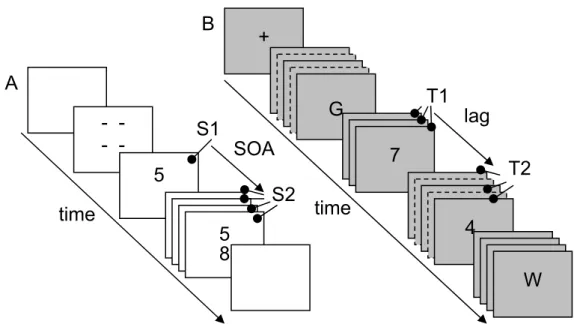
Figure 1.2. (A) An example of a PRP trial. After the fixation that indicates the boundaries in which the
stimuli are presented, S1 is presented and after a delay – the SOA – S2 is also presented on the screen. Responses for both stimuli are speeded. (B) An example of an AB trial. After a fixation that is used to centre people’s attention, a rapid stream of letters is presented. Within the stream, two digits are presented that serve as targets. The distance (lag) between the two digits can vary. Unspeeded responses are required at the end of the trial.
In a typical AB paradigm, a series of characters is presented one after the other in the centre of the screen in rapid succession (see Figure 1.2B). Two targets are placed within that series with a variable number of distractors in between them. The two target stimuli require unspeeded responses at the end of each trial. The accuracy of reporting Target 1 is generally high, whereas the accuracy of reporting Target 2 depends on the place it takes after Target 1 (i.e. the lag) and the number of targets separating them usually varies from zero (lag 1) up to 8 (lag 9). Long lags show good Target-2 performance while lags up to 500 ms show impaired Target-2 performance (Broadbent & Broadbent, 1987; Raymond, Shapiro, & Arnell, 1992). This impairment is called the attentional blink and it is considered to express an inability to process Target 2 up to a conscious level when Target-1 processes have not yet been completed (Sergent, Baillet, & Dehaene, 2005; Vogel, Luck, & Shapiro, 1998). Both the PRP paradigm and the AB paradigm investigate dual-task interference. The former investigates interference that is created when two tasks are presented simultaneously
SOA
lag
time
time
S1
S2
T1
T2
5
5
8
- -
- -
A
B
4
G
W
7
and the latter investigates interference as after-effect of Target 1 processing. The two paradigms are often attended to separately, although occasionally they are treated together (e.g., Jolicœur, 1999). Jolicœur and Dell’Acqua (1999) suggest that the AB magnitude and the PRP effect are based on similar mechanisms (see also Jolicœur, 1999), an idea that was further investigated in this thesis. Additionally the PRP effect and AB magnitudes were compared with a variety of constructs like working memory and IQ that might explain their similarity. Working memory and IQ were both measured because they are related but they are not the same (Conway, Kane, & Engle, 2003; Süβ, Oberauer, Wittmann, Wilhelm, & Schulze, 2002). If participants would make use of working memory when they execute the PRP paradigm as well as when they execute the AB paradigm, then increased working memory costs would have an effect on AB and PRP performance although research shows that this effect is not as straightforward (e.g., Akyürek, Hommel, & Jolicœur, 2007).
Jolicœur and Dell’Acqua (1999) investigated memory encoding in a dual task and proposed a two-step mechanism on how information is encoded into memory. Information is transported via sensory encoding to a more sustainable perceptual encoding stage. During sensory encoding, the to-be-encoded information can be overwritten by other sensory input, for example by masking. When the information has reached the perceptual-encoding process stage, masking can no longer overwrite the information, but the information in here needs to be consolidated or it will decay. As soon as the information is consolidated, it becomes conscious and will be stored in memory. In two dual-task experiments, Jolicœur and Dell’Acqua (1999) showed that short-term consolidation of a character in an identification task postponed response selection of a tone-distinction task independent of which task was presented first. This demonstrated that memory encoding is capacity-limited just as response selection.
The AB is particularly useful to study short-term consolidation and delay, because of the speed of the rapid presentation of visual stimuli that all mask each other, including the two targets that need unspeeded response at the end of each trial. Chun and Potter (1995) suggested that the blink occurs because short-term consolidation of the first target defers short-term consolidation of the second target. As a consequence of the mask presented immediately after the second target, Target 2 will decay and accordingly will fail to reach visual short-term memory.
people need to respond with their right hand to a red circle and with their left hand to a green circle. They will tend to respond quicker to a red circle if it was preceded by another red circle than if it was preceded by a green circle. This repetition effect is called priming. If R2 is a repetition of R1, then RT2 is quicker than if R2 is different from R1. Vice versa, T2 properties can influence T1 performance only when T2 properties are already activated before the T1 response decision has been made. In our example, this situation would translate to a facilitation of R1 if this was followed by a similar color compared to if it was followed by a different color. Since this effect works in opposing direction (from T2 to T1) and it describes compatibility for features or processes (e.g., color), this effect is called the backward-compatibility effect (which depends on cross-talk). The backward-compatibility effect gives us information on what T2 processes are available before T1 response decision and is therefore a very useful tool to study in what way two tasks can be performed concurrently, and which processes are limiting this concurrent processing.
Subdivision of processes
Figure 1.3. A discrete serial three-stage model (cf. Sternberg, 1969)
As described in the first part, it is the overlap of processes between the two tasks that causes dual-task slowing. In order to study this, performance on these tasks can be subdivided into different processes and subprocesses. This makes it easier to distinguish which (part of the) process causes the slowing. Sternberg (1969) proposed discrete serial models such as a three-stage model (see Figure 1.3) in which several subprocesses are differentiated from stimulus onset to when the response is executed. When a stimulus is presented, first early, perceptual processes (e.g., color) are performed, ending with the classification of the stimulus. Next, response selection is initiated, which constitute the capacity-limited part of processing (see e.g., Pashler & Johnston, 1989). After the response has been selected, response execution can commence. Adapting this model for dual tasks made it possible to distinguish which processes are operated in what order and how they overlap. Although there is evidence that stages are not discrete and serial, but rather continuous and overlapping
(e.g. Miller & Hackley, 1992), serial stage models have proven to be useful in investigating sources of dual-task interference. Drawbacks of the model are that in reality, the distinction between the different subprocesses is not so clear-cut, and in more complicated tasks more subprocesses are involved.
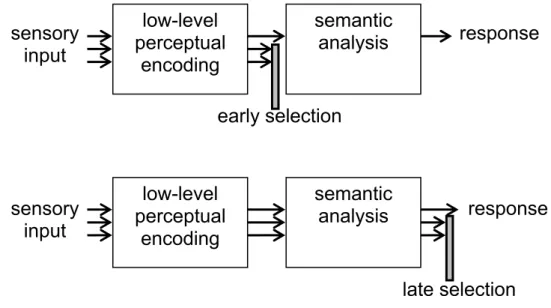
Figure 1.4. Schematic presentation of the early vs. late selection models of attention
Attention selects relevant information, and it monitors what we store in our memory. Two main models have been put forward that describe the way attention operates: the early-selection model (Broadbent, 1958) and the late-selection model (Deutsch & Deutsch, 1963) (see Figure 1.4). In the early selection model (Broadbent, 1958), information is encoded up to perceptual encoding, but no meaning is added; instead, information is encoded according to physical characteristics. In the late selection model, all information is processed beyond perceptual encoding, up to the level of semantic analysis. At the late selection point it is decided which information is entered into memory to be identified (Deutsch & Deutsch, 1963). Because of the decay that occurs after short-term consolidation (see Jolicœur and Dell’Acqua, 1999) information that is not selected into memory will decay (i.e. will be forgotten).
Both attentional models show that there are limitations to our capacity to process information. As described earlier, dual-task processing is also vulnerable to
low-level
perceptual
encoding
low-level
perceptual
encoding
semantic
analysis
semantic
analysis
response
response
early selection
late selection
sensory
input
sensory
capacity-limited processing. It is currently unclear to what extent these attentional limitations are caused by the same mechanism as dual-task limitations (e.g., Brisson & Jolicœur, 2007a; 2007b; Johnston, McCann, & Remington, 1995; Pashler, 1991). Therefore it is necessary to investigate the role of attention in dual-task processing, and how it relates to the limited-capacity processes responsible for dual-task interference. In this thesis, the effect of visual-spatial attention was measured in a dual task. Visual-spatial attention is used to locate information at a specific position on a visual screen. If attention occupies the same limited-capacity process that is also responsible for dual-task interference, attention should be delayed by competing processes.
Event-related potential (ERP)-measurements in dual-task processing
-2 -1 0 1 2 3 4
-200 0 200 400 600 800 1000 1200
time (ms)
mi
cr
ov
ol
t
no blink blink
Figure 1.5. An example of an event related potential waveform measured over the medial posterior
side of the head. Target 2 is presented at 360 ms and the P3 starts to rise 400 ms later at 750 ms with a peak at 900ms. The dotted line represents the correct (no-blink) trials and is high in amplitude. The bold line represents the incorrect (blink) trials and is heavily attenuated (Pannebakker, Band, Ridderinkhof, & Hommel, 2007).
Process overlap in dual tasks
Attentional processes like visual-spatial attention have also been investigated on whether they have capacity-limited properties. Results from behavioural research showed that visual-spatial attentional processes do not cause interference in a dual task, and therefore visual-spatial attention was assumed not to be capacity limited (Johnston et al., 1995; Pashler, 1991). Recent electrophysiological research (using the N2pc as an electrophysiological measure) however, showed that there was indeed a postponement of visual-spatial attentional processes by limited-capacity processes of a preceding task (Brisson & Jolicœur, 2007a; 2007b). Research in this thesis will investigate whether these recent results can be extended to other capacity-limited processes than the one used in Brisson and Jolicœur (2007a; 2007b).
Task 2 Task 1
C) Time course for task 1 and 2 at long SOAs
α β γ
α β γ
α β γ
D) Time course for task 1 and 2 at long SOAs
α β γ
Task 1 Task 2 Task 2
Serial central processing
Task 1
A) Time course for task 1 and 2 at short SOAs
α β γ
α β γ
α β γ
B) Time course for task 1 and 2 at short SOAs
α β γ
Parallel central processing
Task 1 Task 2 slack time slack time Task 2 Task 1
C) Time course for task 1 and 2 at long SOAs
α β γ
α β γ
Task 2 Task 1
C) Time course for task 1 and 2 at long SOAs
α β γ
α β γ
α β γ
D) Time course for task 1 and 2 at long SOAs
α β γ
Task 1 Task 2
α β γ
D) Time course for task 1 and 2 at long SOAs
α β γ
Task 1 Task 2 Task 2
Serial central processing
Task 1
A) Time course for task 1 and 2 at short SOAs
α β γ
α β γ
α β γ
B) Time course for task 1 and 2 at short SOAs
α β γ
Parallel central processing
Task 1 Task 2
slack time
slack time
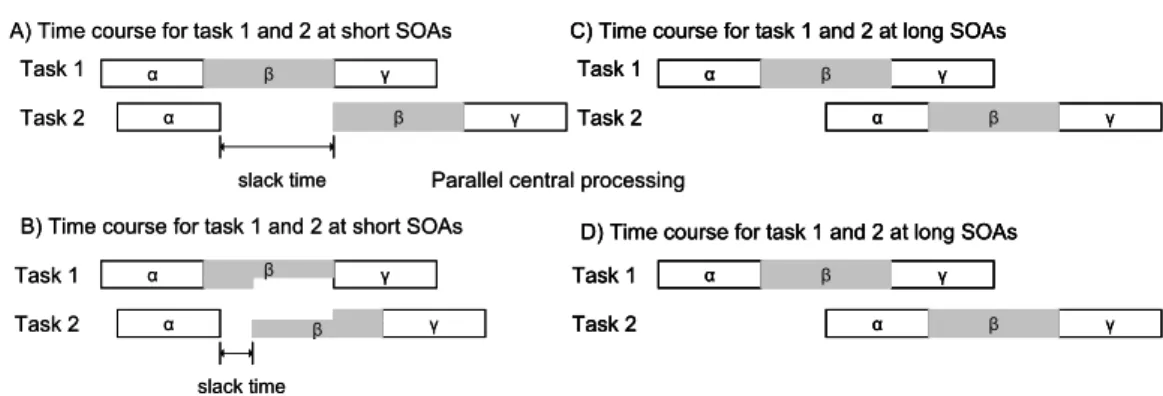
Figure 1.6. An overview of the time course of the serial processing model and the parallel processing
model for short and long SOA
In sum, the serial limited processing model and the parallel capacity-limited processing model can be distinguished by their performance on T2 for short SOAs. The serial capacity-limited processing model predicts an additive effect of RT2 with decreasing SOA because T2 processing has to wait for T1 capacity-limited processing to finish. The parallel capacity-limited processing model predicts an underadditive effect of RT2 with decreasing SOA because T2 capacity-limited processing can start before T1 capacity-limited processing is finished.
These predictions have been tested and the results show evidence for both models, although more evidence is available for parallel capacity-limited processing models. Research supporting the serial capacity-limited processing model was proposed by Carrier and Pashler (1995) who conducted a PRP paradigm in which T1 was a tone discrimination and T2 was an episodic memory-retrieval task. Tone discrimination was made between a high and a low tone. In the memory-retrieval task, participants practiced words that later had to be recalled in the test phase. Results show that when SOA was shorter, RT2 became longer; this effect was additive for RT2. Carrier and Pashler (1995) argued that this dual-task slowing was caused by a response-selection bottleneck that postponed S2 response-selection processes (but not any other processes like perceptual or motor processes).
angle from upright (Corballis, 1986). Results showed a delayed RT2 for shorter SOA, but this delay was underadditive with SOA implying parallel processing up to some extent. Moreover, Van Selst and Jolicœur (1994) found that varying the angle from upright in the mental rotation task - thereby varying working-memory load - influenced RT1. This is an indication that mental rotation started before R1 selection. Any influence of T2 processes on RT1 is an indication of activation of particular T2 subprocess before T1 capacity-limited processing has finished, which can only be explained by a parallel capacity-limited processing model. In sum, a processing delay occurs in dual tasks, although parallel processing up to a certain extent is possible.
Limitations: structural vs. functional
At the start of the introduction I have discussed how talking on the phone is the most convenient when you are sitting on the settee, giving the person you talk to your full attention. When talking on the phone takes place concurrently with another activity, in this case driving, this can affect your ability to drive as well as your ability to talk on the phone. This impairment will be bigger when the tasks are more demanding, or take up more working memory. Apart from the effect of working-memory load, the combination of tasks can also affect how well two tasks can be conducted together. For example, talking on the phone can be combined more easily with driving than with listening to a third person. Similarly, when dual tasks are studied, limitations can be due to working-memory load or capacity limitations, or they can be due to feature- or process-combination limitations. The former has been studied in research that is focused on limitations of the task load and the capacity of processing hardware, that is structural processing limitations. The latter has been studied by investigating whether the combination of the task properties (features or processes) or for example the strategic settings during a task can increase performance given the same task load, which points to functional processing limitations.
response-selection bottleneck. At the same time, RT1 varied with SOA indicating that T2 capacity-limited processes were activated before T1 response decision was made, which was taken to suggest that T2 processes started at the cost of a longer duration of capacity-limited processes of T1.
Other dual-task models take into consideration that combinations of different features or processes can also influence the size of the dual-task delay (functional processing limitations) (Hommel, 1998; Logan & Schulkind, 2000). Hommel (1998) conducted a series of dual-task experiments in which he investigated the contribution of functional processing limitations to dual-task slowing. He presented a red or green H or S that required a manual response to the color (T1) and vocal response to the letter (T2). The two responses could be compatible or incompatible, i.e., pressing left and saying “left” would be considered compatible while pressing left and saying “right” would be considered incompatible. The backward-compatibility effect compared the effect of compatible versus incompatible feature-response combinations at RT1. Results showed a facilitation effect for RT1 (i.e., less dual-task slowing) in case of compatible responses. This could only occur when R2 is activated before S1 response selection. Any effect of R2 features on RT1 is direct evidence for parallel processing. More importantly, in the experiment by Hommel (1998), the working-memory load of the compatible and the incompatible conditions did not differ: there were no differences in structural processing limitations. However, the combination of features did differ; the key press and the vocal response could be compatible or incompatible. Therefore the functional processing limitations were different. Because there was no difference in working-memory load, any difference in the dual-task delay could be attributed to the features of the stimuli and how they were combined. Whether compatibility between processes would also show facilitation, independent of task load, has not yet been investigated and will be one of the aims of this thesis.
Aims of thesis
dual-task processing and in working memory in general. More specifically the purpose was to:
1. investigate the relative contribution of functional limitations in the backward-compatibility effect in a dual task;
2. explore the relation between the dual-task costs that occur in the PRP paradigm and in the AB paradigm. Additionally, it was explored whether the dual-task limitations in the PRP and AB paradigm can be explained by similar factors. This was accomplished by investigating the correlation between PRP, AB, memory operation span and IQ to examine the role of working-memory operation span in the two paradigms (independent of IQ);
3. investigate the process overlap in a dual task between mental rotation and visual-spatial attention electrophysiologically to clarify whether attention can be used independent of capacity-limited processes, or whether they might share a common resource;
4. explore whether an additional working-memory load affects the relative contribution of functional limitations in the backward-compatibility effect in a dual task. Additionally, the purpose was to investigate which processes (i.e. so-called implementation processes and execution processes) in a dual task other than response selection are capacity limited.
Outline of thesis
This thesis consists of four chapters (Chapters 2-5) reporting empirical work on dual-task limitations.
upright stimulus that moved in an irrelevant path around S1. In this case, T2 is low in task load. Still, category response match facilitates R1 in case of rotation compatibility. In the third chapter, a study is presented of the correlation between the PRP effect, the AB magnitude and two factors that can predict PRP and AB performance to some extent: working-memory operation span and IQ. Results show a correlation between performance on PRP and AB paradigms: participants with high dual-task costs in the PRP also show a greater difficulty to report T2 in the AB (at intermediate lag). Furthermore, both the PRP effect and the AB magnitude show a correlation with working-memory operation span: people who score high on working-memory operation span have a better PRP and AB performance. In case of the AB magnitude but not the PRP effect, this is independent of IQ performance. This suggests that at least some but not all variance in the two effects is unique to a paradigm.
In the fourth chapter, the effect of a specific capacity-limited process, mental rotation, on T2 visual-spatial attention is examined. The ERP-components N2pc –a measure of the deployment of attention– and sustained posterior contralateral negativity (SPCN) –a measure of the arrival of information into visual short-term memory– are taken to measure attentional delay. Results show that increased difficulty in T1 mental rotation delays succeeding visual-spatial attention. This suggests that mental rotation and visual-spatial attention share capacity-limited properties.
suggest that two operations can be implemented simultaneously, but only if the two processes are rotated in the same direction.
The work reported in the four empirical chapters in this thesis has been submitted or accepted for publication. The list is presented below to acknowledge the valuable contributions of the co-authors.
Pannebakker, M.M., Band, G.P.H., & Ridderinkhof, K.R. (2009). Operation compatibility: a neglected contribution to dual-task costs. Journal of Experimental Psychology: Human Perception and Performance, 35,447-460.
Pannebakker, M.M., Colzato, L.S., Band, G.P.H,& Hommel, B. (submitted). What do PRP and AB have in common? Experimental Psychology.
Pannebakker, M.M., Jolicœur, P., Van Dam, W., Band, G.P.H., Ridderinkhof, K.R., & Hommel, B. (in prep). Does mental rotation affect T2 spatial attention in a dual task?
Chapter 2
Process Compatibility: A Neglected
Contribution to Dual-Task Costs
Merel M. Pannebakker, Guido P. H. Band, & K. Richard Ridderinkhof (2009) Journal of Experimental Psychology: Human Perception
Abstract
Introduction
Performance on demanding tasks is known to be limited by temporal overlap with other demanding tasks. Although it is common practice to depict processing limitations in terms of task load, the current study takes the perspective that the notion of task load is in itself insufficient to predict the extent to which two tasks can be performed simultaneously. We study the relative contribution of task content, and in particular inter-task compatibility to concurrent processing and show that this is another important but neglected dimension in dual-task research. Task content is defined here as task features that do not contribute to task load, but nonetheless contribute to the extent to which two tasks can be performed simultaneously.
Research on dual tasks has shown that when two tasks are presented in rapid succession, the reaction time to the second stimulus (RT2) is increased, while the reaction time to the first stimulus (RT1) is much less affected, compared to conditions without temporal overlap. The effect of stimulus onset asynchrony (SOA) on RT2 is attributed to interference of task 1 (T1) processes onto task 2 (T2) processes and is called the Psychological Refractory Period (PRP) effect. This effect is shown to be very robust (e.g., Logan & Schulkind, 2000; Meyer & Kieras, 1997a, 1997b; Pashler, 1994; Van Selst & Jolicœur, 1994).
Several models have tried to account for the PRP effect. Most of these emphasize structural processing limitations. Structural processing limitations are determined by the combination of the task load and the capacity of processing hardware. As a result, such limitations are not diminished by a different way of performing on a task or by varying the compatibility between them. For example, limited-capacity models assume that the PRP effect reflects the delay that occurs when the sum of processing demands required for separate tasks exceeds the available capacity.
more cautious, serial mode of processing. In this way, when features or processes are less compatible, the deployment of parallel processing will decrease.
Structural-limitation models
Structural capacity limitations have been postulated in several dual-task models. Some of these assume all-or-none use of the available capacity, whereas others assume that capacity allocation can be graded. According to the structural-bottleneck model, there are fixed limitations to parallel processing that affect only central processes such as decision making or mental rotation. Such bottleneck processes of T2 can only start after the bottleneck processes of T1 have finished (Pashler, 1994, see also: Keele, 1973, Kerr, 1973, Welford, 1967). The idle time in T2 processing between the offset of pre-bottleneck and the onset of bottleneck processes (slack) is thought to determine the size of the PRP effect. A reduction of SOA will lead to an increase of slack and consequently longer RT2, whereas on longer SOAs there is no slack and RT2 is relatively short.
Carrier and Pashler (1995) introduced the so-called locus of slack logic to distinguish between pre-bottleneck and bottleneck processes. Because bottleneck processes cannot continue during slack, changes of the duration of bottleneck processes will have the same effect on conditions with and without slack. In contrast, pre-bottleneck processes of T2 can continue while bottleneck processes of T1 are taking place. Therefore, experimental manipulations of pre-bottleneck process duration will be absorbed by the slack and will have a smaller effect on RT2 at short SOAs (where slack is present), than at long SOAs (where slack is absent). This pattern of results translates into an additive effect of decreasing SOA and any factor that affects the duration of bottleneck processes, but an underadditive effect of decreasing SOA and any factor that prolongs the duration of pre-bottleneck processes.
Ruthruff, Miller, and Lachman (1995) investigated whether mental rotation qualifies as a bottleneck process. In four PRP experiments using sound discrimination for T1 and a mental rotation task for T2, they observed additive effects in three, and underadditive effects in one experiment. They concluded that mental rotation requires a bottleneck system and that the results give evidence for a single-channel mechanism like the structural bottleneck model (but see: Van Selst & Jolicœur, 1994; Heil, Wahl, & Herbst, 1999; Schumacher et al., 2001).
processes were slowed down by mental rotation in T2. This result is consistent with central capacity sharing models, which assume that demanding processes can run in parallel, but that parallel processing is limited by the load of concurrent tasks relative to the available processing capacity (Bornemann, 1942; Kahneman, 1973; Navon & Gopher, 1979; Navon & Miller, 2002; Norman & Bobrow, 1975; Tombu & Jolicœur, 2003).
Functional-limitation models
Functional-limitation models are a category of models that assert that the relationship between two tasks influences the amount of dual-task costs, independent of task load. They attribute dual-task interference, at least in part, to changes invoked by the combination of tasks involved: some combinations facilitate parallel processes, attenuating the interference. Although they are related in the sense that they do not focus on processing load -like structural models- there are also differences between functional models in explaining in what way this limitation occurs.
The first type of functional limitation involves the delay imposed by coordination over the tasks that are combined. Meyer and Kieras (1997b) argued in their adaptive executive control (AEC) models that central processes such as response selection can take place in parallel. Perfect time sharing (Schumacher et al., 2001) may even be possible with certain task combinations if subjects engage in performing with the appropriate strategy. Nonetheless, subjects usually show performance that is more consistent with serial processing. According to Meyer and Kieras (1997a), deferment of T2 is a way to accomplish the instructed task goal and reduce the risk of errors that is inherent in certain task combinations. This deferment causes RT2 to be delayed on short SOAs, but the size of the delay depends on the content of the concurrent tasks.
Consistent with AEC models, Luria and Meiran (2005) argued that task overlap is modulated by control demands. In two PRP experiments, they varied control demands by a task switch and T1 response selection difficulty by number of response alternatives. The carry-over effect of T1 selection difficulty onto RT2 was used as a measure for parallel processing. Results show a carry-over effect on switch trials, but not on repeat trials. This led Luria and Meiran to argue against structural limitation of parallel processing; instead they suggested that a higher control demand shifts the processing from parallel to serial.
required for keeping more than one task set active, and are independent of the relationship between tasks. However, set switching costs vary with the number of parameters that require adjustment. Finally, crosstalk between two tasks occurs if the tasks involve overlapping stimulus or response sets. Because the priority is never fully assigned to processing one stimulus and not the other (cf. the capacity allocation policy, Tombu & Jolicœur, 2003), the set of one task may be applied to the stimulus from another task.
Finally, the third source of functional limitations stems from the interaction at the representation level between feature codes belonging to two concurrent tasks. Features that are activated by one task can interfere with feature representations for another task. This leakage of information between channels is commonly referred to as crosstalk (e.g., Hommel, 1998; Logan & Schulkind, 2000). When two tasks facilitate each other, an increase of parallel processing occurs, while interference because of crosstalk would give rise to a more serial modus of processing. As much as conflicting information between an irrelevant and a relevant channel within a task renders a response slower and more error prone (Stroop, 1935; Simon, 1969), features can also affect performance between tasks. A requirement for interference seems to be the presence of dimensional overlap (Kornblum, Hasbroucq, & Osman, 1990) between competing codes. For example, activation of a left-hand code interferes with the activation of a right-hand code, but not with an unrelated vocal response because these are not mutually exclusive.
An obvious source of interference following crosstalk is the competition between concurrently activated response codes (e.g., Stoet & Hommel, 1999), but interactions have also been shown between feature codes belonging to stimuli and those belonging to responses. Müsseler and Hommel (1997), for example, showed that observing the direction of an arrow was impeded by the simultaneous planning for a response on the same side. This and other observations have led to the postulation of a unified coding environment for all active features; both stimulus and response features, by the theory of event coding (TEC; Hommel, Müsseler, Aschersleben, & Prinz, 2001). TEC predicts that dual-task costs due to concurrently activated features are modulated by the correspondence of these features.
Backward compatibility and the category-match effect
there was feature overlap between S1 and R2. Hommel found longer RT1s to a nonmatching S1-R2 combination (e.g., GREEN-RED) than to a matching combination (e.g., GREEN-GREEN).
Hommel’s (1998) results are a clear sign of crosstalk between the two tasks. Moreover, crosstalk occurred between stimulus and response representations, consistent with the TEC notion of a unified encoding environment. This notion also plays an important role in Experiment 2 of the current study, in which crosstalk between stimulus representations and concurrent operations is demonstrated.
The match effect that Hommel (1998) reported also has implications for the plausibility of strictly serial models. The effect from T2 processes onto RT1 implies that stimulus classification processes (like decision and selection processes) of T1 only finished after R2 was activated. It demonstrates that response activation processes can run in parallel, and that concurrent task content affects the speed of mental operations in a dual task.
An important methodological innovation of Hommel’s (1998) study is that it demonstrated parallel processing with priming effects of T2 features onto RT1. This technique has been developed further by Logan and Schulkind (2000). They tested whether semantic memory retrieval can happen in parallel for two alphanumeric stimuli presented on either sides of the center that had to be classified as letter vs. digit. Consistent with Hommel’s (1998) results, matching response categories (digit-digit or letter-letter) led to a shorter RT1 than mismatching response categories (digit-letter or letter-digit). Logan and Schulkind concluded that, at least when two similar tasks are combined, R2 information becomes available before R1 is selected. Due to crosstalk, the similarity between response categories affects the speed by which R1 is selected. Category-match effects are typically even larger on RT2 than on RT1, but RT2 effects can not exclusively be attributed to crosstalk taking place during parallel processing.
The category-match effect is a robust finding that has been replicated with a variety of task combinations (Band & van Nes, 2006; Logan & Delheimer, 2001; Logan & Gordon, 2001; Lien, Schweickert, & Proctor, 2003). It is therefore suited to demonstrate differences between conditions in the degree of parallel processing. In the current study we adopt the category-match effect as an index of parallel processing in tasks that involve the same versus opposite operations.
Current experiments
both tasks will modulate dual-task performance. We manipulated the task content and task load independently with a mental rotation task (Shepard and Metzler, 1971) which invokes the imagined turning of a tilted stimulus to an upright position. This process needs to be executed before the subject is able to decide whether the stimulus is in normal- or mirror-image (Corballis, 1986). Task difficulty (or task load) was varied by changing the angle between the rotated and the upright position.
Task content was varied by having to rotate the stimuli clockwise (CW) or counter clockwise (CCW) to upright position, in variable combinations for T1 and T2. This manipulation does not influence task difficulty: the amount of cognitive effort to mentally turn a stimulus 120 degrees CW or CCW is assumed to be equal. The task content does differ, however, between rotating two stimuli in the same versus opposite directions, where the compatibility of rotations is an emergent property of the combination of tasks. Structural-limitation models, which explain dual-task costs by capacity limitations, do not predict an effect of task content whereas functional-limitation models would predict that compatible rotations facilitate parallel processing.
The most important measure in this study is the size of the category-match effect on RT1. First of all, it is predicted that subjects respond faster to a tilted stimulus if the relevant stimulus category, that is normal- versus mirror-image, is equal for S1 and S2. Because judgment of the image is contingent upon mental rotation (see Corballis, 1986), the observation of a category-match effect would imply that mental rotation, response selection, or both take place in parallel for both tasks. Because both mental rotation and response selection are demanding processes that have been associated with the central bottleneck (Ruthruff et al., 1995; Van Selst & Jolicœur, 1994), a significant category-match effect would be evidence against an all-or-none bottleneck and in favour of parallel processing. Next step would be to differentiate which processing steps (i.e. mental rotation, response selection or both) would be facilitated or impeded with different conditions of the match effect.
Second, experimental modulation of the category-match effect would imply that parallel processing can be increased or decreased. Because we manipulate both task content and task load, it is possible to measure independently whether these factors affect processing limitations and to what extent.
between trials with matching and mismatching response categories. Restrictions to parallel processing, for example due to the incompatibility of operations, can be expected to cause a reduction of the match effect.
As discussed, some functional limitation models predict that compatibility between features involved in concurrent tasks contribute to the ability to process two tasks in parallel. Whether this also applies to the compatibility between operations is an empirical question that is addressed in this study.
It is important to note that rotation compatibility as such is not responsible for yielding preliminary information about R1 or R2. It should not be confused with the category-match effect. When two stimuli require mental rotation in the same direction, they equally often require opposite and same responses.
Experiment 1 Methods
Participants
Thirty students (six male) of Leiden University participated in this experiment that took three sessions of 1.5 hours. The mean age was 21 years (SD = 2). The experiment was conducted in accordance with relevant laws and institutional guidelines and was approved by the local ethics committee from the Faculty of Social Sciences. One student indicated to be left-handed, the remaining were right-handed. All students had normal or corrected to normal eye-sight. They received either thirty-six euros or course credits or a comparable combination of both. Data from two participants were excluded from analysis as there were too few trials in some conditions.
Apparatus
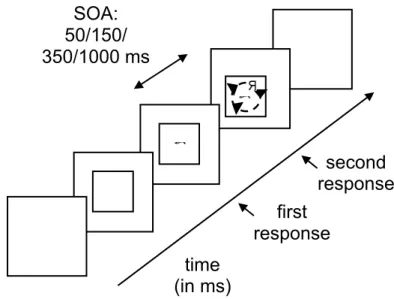
Figure 2.1. Sequence of events within one trial in Experiment 1: the rectangle serves as a fixation, in which S1 appears left from the middle, and after a variable SOA S2 appears right from the middle
Stimuli
For the stimuli presented on the screen, the alphanumeric characters 2, 4, 5, 7, f, G, k, Q and R were used in both tasks. These stimuli were selected because their asymmetry allows the creation of unambiguous rotation and mirroring conditions. They were oriented either normally or mirror-imaged and their orientation was 0, 60 or 120 degrees. CW and CCW tilted stimuli occurred equally often. The characters were presented in black on a white screen within a black-lined rectangle. Because this was a dual task, two characters were presented within the rectangle with a visual angle of 5.8º × 3.6º (horizontal × vertical). Stimuli were presented well within the boundaries of this rectangle. The two presented stimuli were separated by a SOA of 50, 150, 350 and 1000 ms. SOA, mirror/normal image of characters, response category match/mismatch, rotation direction, and angle of rotation were all varied randomly within blocks.
S1 always appeared left from the middle and called for a left-hand response, S2 always appeared right from the middle (see Figure 2.1) and called for a right-hand response. The mapping of normal/mirror image to index/middle fingers was balanced between subjects. A normal image required either the left finger (‘z’ or ‘n’ key) or the
Time
(in ms)
First
response
SOA:
50/150/
350/1000 ms
outer finger of each hand (‘z’ or ‘m’ key). A mirror image required either the right finger (‘x’ or ‘m’ key) or the inner finger of each hand (‘x’ or ‘n’). Thus, a confound between the category match effect and the benefit of using homologous fingers was prevented.
Procedure
Before the start of the experiment, participants received a written instruction. They were asked to respond as quickly as possible, and not to be too cautious in their response. No reference was given as to which stimulus had to be responded to first. Then more explanation was presented on the computer followed by three practice blocks, after which the experimental blocks started. The first practice block was a single-task practice for the left hand, and the second one was a single-task practice block for the right hand. These two blocks contained 20 trials each. The third block was a dual-task block session that consisted of 40 trials.
Experimental trials were presented in 14 blocks of 90 trials. Pauses separated the blocks and participants were encouraged to use them. Within the experimental blocks, the trial started with the presentation of a black rectangle for 250 ms in the middle of the screen (see Figure 2.1). Then, two stimuli appeared on either side of the middle of the rectangle, separated by a variable SOA. As soon as the stimuli appeared, participants had 8000 ms to respond before the screen automatically turned white. Responding to S2 caused the screen to turn into white immediately. Two correct responses resulted in a ‘+’ feedback response, while any other combinations of responses elicited a ‘-’ feedback response that was in both cases shown for 500 ms at the end of every trial. After a Response-Stimulus Interval (RSI) of 1000 ms the empty rectangle appeared to announce the beginning of the next trial. At the end of each block, an average reaction time (RT) in ms and a percentage correct (PC) over that block was presented to give participants insight on their progress, and to motivate them to keep trying to respond faster on every block.
Results
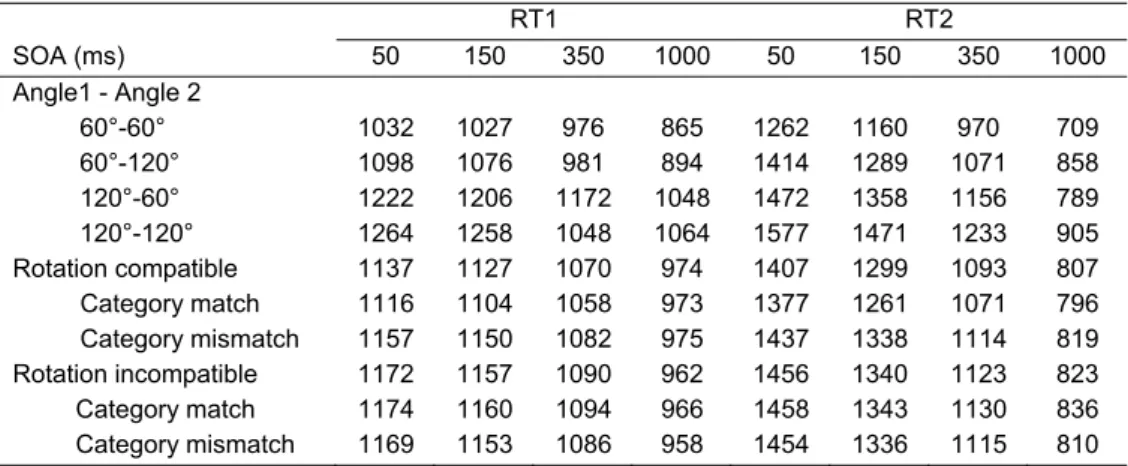
2.2 show the mean performance data. The ANOVA results are summarized in Table 2.3 and Table 2.4.
Table 2.1. Mean reaction times for Task 1 and Task 2 in Experiment 1
Table 2.2. Mean percentages correct for Task 1 and Task 2 in Experiment 1
RT1 RT2
SOA (ms) 50 150 350 1000 50 150 350 1000 Angle1 - Angle 2
60°-60° 1032 1027 976 865 1262 1160 970 709 60°-120° 1098 1076 981 894 1414 1289 1071 858 120°-60° 1222 1206 1172 1048 1472 1358 1156 789 120°-120° 1264 1258 1048 1064 1577 1471 1233 905 Rotation compatible 1137 1127 1070 974 1407 1299 1093 807 Category match 1116 1104 1058 973 1377 1261 1071 796 Category mismatch 1157 1150 1082 975 1437 1338 1114 819 Rotation incompatible 1172 1157 1090 962 1456 1340 1123 823 Category match 1174 1160 1094 966 1458 1343 1130 836 Category mismatch 1169 1153 1086 958 1454 1336 1115 810
PC1 PC2
SOA (ms) 50 150 350 1000 50 150 350 1000 Angle1 - Angle 2
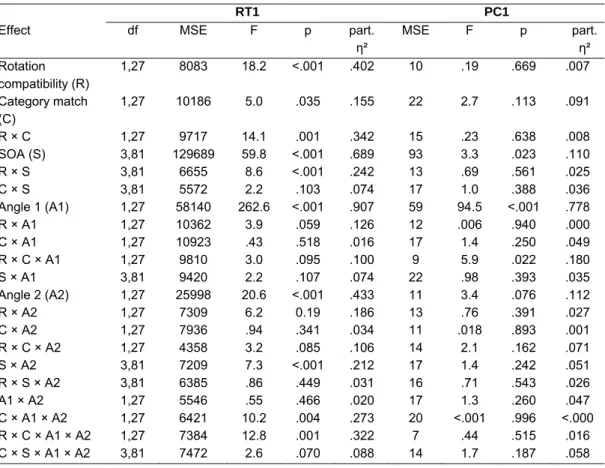
Table 2.3. Summaries for Analyses of Variance for reaction times and percentages correct for Task 1 in Experiment 1 for all effects up to second order effects plus the significant higher order effects
RT1 PC1
Effect df MSE F p part.
η²
MSE F p part.
η² Rotation
compatibility (R)
1,27 8083 18.2 <.001 .402 10 .19 .669 .007 Category match
(C)
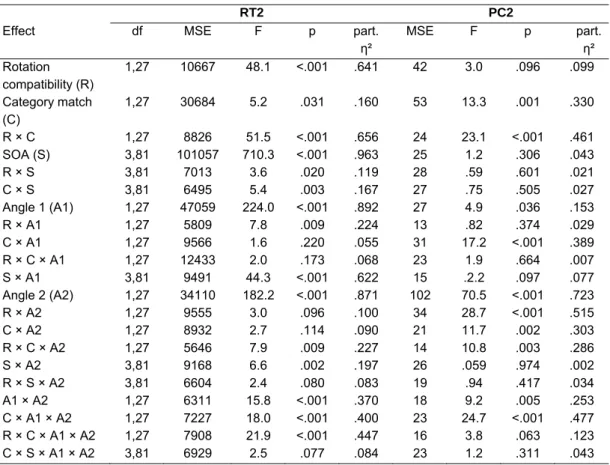
Table 2.4. Summaries for Analyses of Variance for reaction times and percentages correct for Task 2 in Experiment 1 for all effects up to second order effects plus the significant higher order effects
RT2 PC2
Effect df MSE F p part.
η²
MSE F p part.
η² Rotation
compatibility (R)
1,27 10667 48.1 <.001 .641 42 3.0 .096 .099 Category match
(C)
1,27 30684 5.2 .031 .160 53 13.3 .001 .330 R × C 1,27 8826 51.5 <.001 .656 24 23.1 <.001 .461 SOA (S) 3,81 101057 710.3 <.001 .963 25 1.2 .306 .043 R × S 3,81 7013 3.6 .020 .119 28 .59 .601 .021 C × S 3,81 6495 5.4 .003 .167 27 .75 .505 .027 Angle 1 (A1) 1,27 47059 224.0 <.001 .892 27 4.9 .036 .153 R × A1 1,27 5809 7.8 .009 .224 13 .82 .374 .029 C × A1 1,27 9566 1.6 .220 .055 31 17.2 <.001 .389 R × C × A1 1,27 12433 2.0 .173 .068 23 1.9 .664 .007 S × A1 3,81 9491 44.3 <.001 .622 15 .2.2 .097 .077 Angle 2 (A2) 1,27 34110 182.2 <.001 .871 102 70.5 <.001 .723 R × A2 1,27 9555 3.0 .096 .100 34 28.7 <.001 .515 C × A2 1,27 8932 2.7 .114 .090 21 11.7 .002 .303 R × C × A2 1,27 5646 7.9 .009 .227 14 10.8 .003 .286 S × A2 3,81 9168 6.6 .002 .197 26 .059 .974 .002 R × S × A2 3,81 6604 2.4 .080 .083 19 .94 .417 .034 A1 × A2 1,27 6311 15.8 <.001 .370 18 9.2 .005 .253 C × A1 × A2 1,27 7227 18.0 <.001 .400 23 24.7 <.001 .477 R × C × A1 × A2 1,27 7908 21.9 <.001 .447 16 3.8 .063 .123 C × S × A1 × A2 3,81 6929 2.5 .077 .084 23 1.2 .311 .043
RT1
All the five main effects on RT1 were significant. A main effect of SOA reflected a monotonic decrease of RT1 with increasing SOA (1154, 1142, 1080 and 967 ms). The difference between 60 and 120° was 185 ms for angle 1 and 35 ms for angle 2 in favour of the smallest angle. Participants responded 10 ms faster to matching than to mismatching categories, and 18 ms faster to compatible than to incompatible rotation pairs.
significant (a reduction from 18 to -3 ms). The effect of angle 1 did not vary systematically with SOA.
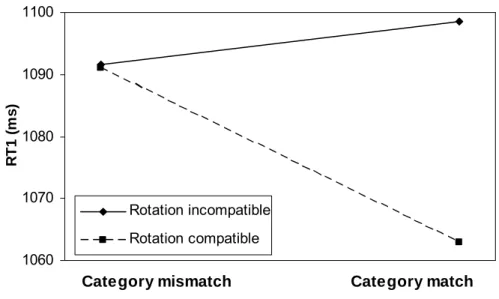
The pivotal interaction of rotation compatibility × category match was significant (see Figure 2.3). Follow-up analyses showed that the category-match effect was substantial for compatible rotations (29 ms; F (1,27) = 12.4, p < .01), but not significant for incompatible rotations (6 ms; F (1,27) = 1.9, p = .182). The effects of rotation compatibility and rotation compatibility × category match were marginally larger if angle 1 was 120 relative to 60°, but significantly smaller if angle 2 was 120 relative to 60°. Furthermore, the category-match effect and the interaction of rotation compatibility × category match were largest if both angle 1 and angle 2 were 120°.
800 900 1000 1100 1200 1300
0 200 400 600 800 1000
SOA (ms)
RT
1
(
m
s
)
60-60 60-120 120-60 120-120
Figure 2.2. The interaction of angle 1, angle 2 and SOA on reaction time 1 of Experiment 1. In this
Category match 1060
1070 1080 1090 1100
Category mismatch
R
T
1 (m
s)
Rotation incompatible
Rotation compatible
Figure 2.3. The interaction of rotation compatibility and category match on reaction time 1 of
Experiment 1
PC1
Only the main effects of SOA and angle 1 were significant. The main effect of SOA was not monotonic, with all levels of PC1 between 94.1% and 95.1%. The main effect of angle 1 was caused by a 3.5% decrease of PC1 going from S1=60° to S1=120°. Interactions of rotation compatibility × category match × angle 1 and of category match × SOA × angle 2 showed no systematic pattern.
RT2
700 800 900 1000 1100 1200 1300 1400 1500 1600
0 200 400 600 800 1000
SOA (ms)
RT
2
(
m
s
)
60-60 60-120 120-60 120-120
Figure 2.4. The interaction of angle 1, angle 2 and SOA on reaction time 2 of Experiment 1
Category match 1120
1140 1160 1180 1200
Catergory mismatch
R
T
2 (
m
s)
rotation incompatible rotation compatible
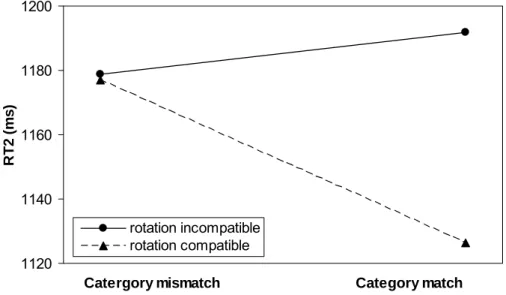
Figure 2.5. The interaction of rotation compatibility and category match on reaction time 2 of
An increasing SOA led to a decrease of the effects of angle 1 (from 187 to 63 ms) and a nonmonotonic changes in the effect of angle 2 (129, 120, 89 and 133 ms, as shown in Figure 2.4). At long, relative to short SOAs, there was a decrease of the effects of rotation compatibility (from 49 to 16 ms) and category match (from 28 to -1 ms).
Rotation compatibility interacted with category match, as is illustrated in Figure 2.5. The category-match effect was larger for compatible rotations (51 ms) than for incompatible rotations (-12 ms). The rotation compatibility effect was larger if angle 1=120° vs. 60° (44 vs. 24 ms) and marginally smaller if angle 2=120° vs. 60° (26 vs. 42 ms). An interaction of rotation compatibility × category match × angle 2 signified that the category-match effect was reversed if S2 had to be rotated in 120° in the opposite direction of S1, whereas all other comparisons showed faster responses to matching response categories.
There was an underadditive interaction of angle 1 × angle 2. This was most of all the case on compatible rotations and with matching response categories, as indicated by the interactions of rotation compatibility × category match × angle 1 × angle 2 and category match × angle 1 × angle 2.
PC2
There were main effects of angle 1 and angle 2 in the expected direction and an interaction of angle 1 × angle 2, showing underadditive costs of rotating both S1 and S2 120°. The category-match effect (1.3%) and the marginal effect of rotation compatibility (0.6%) were both in the reversed direction. An interaction of rotation compatibility × category match was caused by remarkably high accuracy with incompatible rotation and nonmatching response categories.
An interaction of effects of category match × angle 1 × angle 2 was caused by deviating high costs if there was a category match between stimuli with angle 1=60° and angle 2=120°. This pattern also explains the interactions of category match × angle 1 and category match × angle 2.
Discussion
of mental rotation as such limited parallel processing. One example is the finding that RT1 was affected by angle 2. This is a result that suggests that an increased T2 load imposed by mental rotation over a larger angle left less capacity available for T1. Apparently, T1 did not receive full priority over T2, as S2 rotation must have taken place before T1 was finished. This suggests that rather than through an all-or-none bottleneck, capacity was allocated to tasks in a graded manner.
More evidence against all-or-none bottlenecks comes from the category-match effect, which implies that the correct response category (mirror vs. normal) for T2 was activated before R1 was selected (Hommel, 1998). The match effect as such might be explained by capacity-sharing models (Navon & Miller, 2002; Tombu & Jolicœur, 2003), but only under the assumption of crosstalk between T1 and T2. One might want to argue that this crosstalk took place without mental rotation and response selection. However, this is hard to account for, given the data: at least some mental rotation took place before R1 was selected, as the occurrence of a category-match effect is contingent on the activation of the R2 category, and decisions about the R2 category are contingent on mental rotation. This implies that mental rotation of S2 started before R1 was selected and affected R1 speed and accuracy.
Modulation of the category-match effect
To test whether task load modulates parallel processing, the difficulty of mental rotation was manipulated. Subjects rotated S2 over 60° or 120°, and the question was whether this affected the category-match effect. The category-match effect was somewhat larger if T1 competed with a S2 rotation of 60° (26 ms) than with a rotation of 120° (12 ms), but not significantly. Furthermore, the interaction of category match and rotation compatibility became somewhat smaller if S1 was tilted 60° compared to 120°; this effect did not reach significance either. These inconclusive findings do not support a modulation of parallel processing by task load as manipulated by the rotation angle. There was a substantial effect of angle 2 on RT1 (53 ms on short SOAs) however, which clearly validates that task load was higher during 120° than during 60° rotation. Thus, while task load affected the efficiency of RT1, it did not modulate the crosstalk from T2 to T1.
effect of the T2 response code was present only if T1 and T2 involved mental rotation in the same direction, and not in case of opposite direction.
To our knowledge, this is the first illustration of modulation of parallel processing by the compatibility between two competing tasks. This result can not be explained by any dual-task model that explains interference by the relationship between the available processing capacity and task load, as the task load was identical for compatible and incompatible rotations. Instead the results argue for functional limitations to dual-task performance: the extent to which two tasks can be combined depends on the combination of tasks to be performed.
The modulation of the match effect by operation compatibility is reminiscent of the relationship between the match effect and task switching. There are illustrations of a match effect on trials that involve a task switch (Hommel, 1998; Lien, Schweickert, & Proctor, 2003), but Logan and Schulkind (2000) have shown a substantial reduction of the category match effect on switch relative to repetition trials.
Although modulation of the match effect by a task switch in itself underlines the importance of functional-capacity limitations in explaining the amount of parallel processing, it may not have the same origin as the asymmetry of match effects observed with compatible as compared to incompatible rotation. In the current study there was no need to switch the task set. Furthermore, rotating two stimuli in the same direction but over different angles did not remove the category match effect. Therefore, the tentative conclusion is that the absence of a match effect on incompatible trials can not be attributed to task set reconfiguration as it is commonly understood (Allport, Styles, & Hsieh, 1994; Rogers & Monsell, 1995), and should instead be attributed to the mere inability to simultaneously make a mental representation of two opposite directions of rotation.
Experiment 2
While Experiment 1 required subjects to engage in mental rotation of S2 as a way to induce a rotation compatibility relation, Experiment 2 presents physical rotation as an irrelevant feature of S2. If the contribution of rotation compatibility to dual-task performance is limited to the compatibility of demanding operations, as predicted by structural capacity-limitation models, ECTVA or AEC models, Experiment 2 should not show a modulation of the category-match effect by the compatibility of rotations. If in contrast there are functional limitations, induced by conflict at the level of representing task features, Experiment 2 should show a larger category-match effect if the physical rotation of S2 is compatible with the mental rotation of S1.
To be able to distinguish between the different limitation-models, we adapted the first experiment as follows. We presented a tilted S1 in the centre of the screen, comparable to the first experiment. Participants were to judge whether it was presented in normal or mirror image. S2 however was an upright character, moving in circles around S1, either CW or CCW. Participants had to respond to the mirror/normal status of S1 and S2. Because S2 was presented in upright position, mental rotation was not necessary. In a category match, stimuli were either both mirror or both normal images, and mismatches were combinations of a mirror and a normal image stimulus. Rotation compatibility has a slightly different meaning in Experiment 2 than in Experiment 1. Rotations were compatible if the mental rotation required for bringing S1 to the upright position was in the same direction as the physical motion of S2 (i.e. both CW or both CCW).
Methods
All experimentation methods were the same as in Experiment 1, unless stated otherwise below.
Participants
excluded from the experiment, because the number of replications per cell was insufficient. Mean age of the participants was 22 years (SD = 3).
Stimuli
Two characters were presented within the rectangle, with a SOA separating them in time. S1 was always presented in the centre with S2 continuously moving in a circular course around S1. It took 1450 ms to complete one rotation of S2 and the movement was either CW or CCW. This made the speed of the movement 248°/sec, while the speed of the mental rotation for S1 was 337°/sec (as calculated by the difference in time between 120° and 60° rotation; this would calculate back to 1070 ms for one rotation). The movement of S2 was irrelevant for the response. The whole view within the limits of the rectangle was less than 5.6° horizontally and vertically.
Figure 2.6. Sequence of events within one trial in Experiment 2: the rectangle serves as a fixation, in
which S1 appears, and, after a short interval, S2. The arrows indicate circular motion and were not presented in the display
Design
Stimuli were presented in 50 blocks of 26 trials. S1 rotation angle, S1 tilting direction, S2 movement direction, S1 and S2 mirror vs. normal image, and SOA were
time
(in ms)
second
response
first
response
SOA:
all randomized. Because S2 was not tilted combinations of the angle combinations were 60°- 0° and 120°- 0° (0° was not presented for S1).
Procedure
Before the start of the experiment, participants received a written and a spoken instruction. Then more explanation was presented on the computer followed by a practice block containing 30 trials, after which the experimenter started the experimental blocks. In the trials, an RSI of 500 ms was used. For a sequence of events within one trial see Figure 2.6.
Results
All RT and PC results were analyzed in ANOVAs using a 2 × 2 × 2 × 4 design with the within-subjects factors rotation compatibility, category match, angle 1 and SOA, unless stated otherwise below. Table 2.5 and Table 2.6 show the mean performance and the ANOVA results are summarized in Table 2.7 and Table 2.8.
Table 2.5. Mean reaction times and percentages correct for Task 1 in Experiment 2
RT1 PC1
SOA (ms) 50 150 350 1000 50 150 350 1000
Angle 1
Table 2.6. Mean reaction times and percentages correct for Task 2 in Experiment 2
Table 2.7. Summaries for Analyses of Variance for performance on Experiment 2
RT2 PC2
Effect df MSE F p part.
η²
MSE F p part.
η² Rotation
compatibility (R)
1,16 8721 .60 .449 .036 36 .982 .337 .058 Category match
(C)
1,16 101246 9.7 .007 .378 31 7.0 .018 .304 R × C 1,16 8348 15.2 <.001 .488 14 1.8 .196 .102 SOA (S) 3,48 111099 6.3 .013 .282 30 5.6 .005 .258 R × S 3,48 10409 .53 .665 .032 20 2.0 .141 .109 C × S 3,48 26692 6.1 .010 .277 28 4.0 .018 .200 R × C × S 3,48 10784 .68 .546 .040 29 .92 .420 .054 Angle 1 (A1) 1,16 12328 347.9 <.001 .956 65 14.4 .002 .473 R × A1 1,16 17505 .003 .956 .000 17 .47 .505 .028 C × A1 1,16 7240 4.1 .059 .206 30 1.8 .204 .099 R × C × A1 1,16 5280 .37 .550 .023 10 .043 .838 .003 S × A1 3,48 11417 2.7 .078 .144 26 4.6 .010 .223 R × S × A1 3,48 10819 .96 .406 .057 19 .44 .685 .027 C × S × A1 3,48 12584 3.1 .049 .160 24 .63 .565 .038 R × C × S × A1 3,48 8308 0.20 .877 .012 30 .61 .580 .037
RT1 PC1
SOA (ms) 50 150 350 1000 50 150 350 1000
Angle 1
Table 2.8. Summaries for Analyses of Variance for performance on Experiment 2
RT2 PC2
Effect df MSE F p part.
η²
MSE F p part.
η² Rotation
compatibility (R)
1,16 11926 .942 .347 .059 12 .11 .742 .007 Category match
(C)
1,16 221047 10.5 .005 .412 18 .031 .863 .002 R × C 1,16 12885 9.5 .008 .387 7 .045 .835 .003 SOA (S) 3,48 65924 345.6 <.001 .958 12 10.4 <.001 .394 R × S 3,48 10159 .71 .530 .045 9 1.6 .226 .088 C × S 3,48 35850 6.0 .012 .287 11 4.4 .016 .215 R × C × S 3,48 12905 .71 .509 .045 15 .93 .411 .055 Angle 1 (A1) 1,16 13598 224.1 <.001 .937 9 .18 .678 .011 R × A1 1,16 17679 .50 .488 .033 12 .43 .520 .026 C × A1 1,16 6653 4.6 .048 .236 9 .27 .612 .016 R × C × A1 1,16 4708 .12 .730 .008 14 1.1 .320 .062 S × A1 3,48 12330 13.1 <.001 .466 8 .74 .505 .044 R × S × A1 3,48 11622 1.2 .308 .076 10 .52 .640 .032 C × S × A1 3,48 13553 4.2 .017 .217 12 .74 .493 .044 R × C × S × A1 3,48 11449 .79 .476 .050 10 3.1 .048 .160
RT1
Subjects were 85 ms faster on a category match relative to a mismatch, and 178 ms faster to 60° than to 120° tilted S1s. There was a gradual decline in RT1 as the SOA increased (1262, 1222, 1202, and 1145 ms respectively), but no main effect of rotation compatibility.
The most important interaction of rotation compatibility and category match was significant. The category-match effect was larger for compatible than for the incompatible rotation directions (116 ms vs. 54 ms, see Figure 2.7). Furthermore, the category-match effect was larger for short than for longer SOAs (111, 130, 91, 12 ms), and marginally larger for small than for larger angles (101 vs. 71 ms). A tendency for an interaction of angle 1 × SOA reflected that the effect of angle 1 decreased from 203 on short to 142 ms on long SOAs.
PC1
increasing SOAs, there was a decrease of the benefit of a category match from 2.8 to -0.3%, and a decrease of the angle 1 effect from 4.4% to 1.3%.
Category match
1140 1160 1180 1200 1220 1240 1260 1280
Category mismatch
R
T
1 (
m
s)
rotation incompatible rotation compatible
Figure 2.7. The interaction of rotation compatibility and category match on reaction time 1 in
Experiment 2
RT2
The PRP effect was observed; RT2 decreased with increasing SOAs (1524, 1392, 1205, and 845 ms respectively). Subjects were 135 ms faster on a category match relative to a mismatch, and 154 ms faster to 60° than to 120° tilted S1s.
The category-match effect was modulated by rotation compatibility (165 ms for compatible and 104 ms incompatible rotations); by angle 1 (150 ms for small and 119 for larger angles) and by SOA (a decrease from 169 to 48). There was also a three-way interaction of category match × angle 1 × SOA, reflecting that the effect of angle 1 largely maintained its size on longer SOAs if categories mismatched, but decreased with SOA when they matched.
PC2