ON THE MERITS OF STEREOSELECTIVE DESYMMETRIZATION REACTIONS
IN THE ASSEMBLY OF COMPLEX NATURAL MOLECULES:THE TOTAL SYNTHESIS OF PACTAMYCIN AND PASPALINE
Robert Jacks Sharpe
A dissertation submitted to the faculty of the University of North Carolina at Chapel Hill in partial fulfillment of the requirements for the degree of Doctor of Philosophy in the
Department of Chemistry.
Chapel Hill 2015
Approved by:
Jeffrey S. Johnson
Simon J. Meek
Maurice S. Brookhart
Michael T. Crimmins
iii
ABSTRACT
Robert Jacks Sharpe: On the Merits of Stereoselective Desymmetrization Reactions in the Assembly of Complex Natural Molecules: The Total Synthesis of Pactamycin and Paspaline
(Under the direction of Jeffrey S. Johnson)
I. Asymmetric Synthesis of the Aminocyclitol Pactamycin, a Universal Translocation Inhibitor
A concise, enantioselective synthesis of the aminocyclopentitol natural product
pactamycin is presented. The critical feature of this approach was the execution of an
asymmetric Mannich reaction and symmetry-breaking diketone monoreduction to assemble
the C1, C2, and C7 relative stereochemistries early in the route, enabling facile construction of
the remaining core functionalities. A remarkable series of serendipitous stereochemical
outcomes ensued in the sequence that followed, ultimately providing the title compound in
fifteen steps from the commercially available 2,4-pentanedione, constituting the shortest
reported synthesis to date. The development and evolution of this synthetic strategy is
thoroughly detailed, and an analysis of observed outcomes is presented. This synthesis was
designed to immediately enable the facile preparation of structural analogs for the purposes of
iv
II. Preparation and Biological Evaluation of Synthetic and Polymer-Encapsulated Congeners of the Antitumor Agent Pactamycin: Insight into Functional Group Effects and Biological Activity
Using the previously described total synthesis of pactamycin as a platform for synthetic
diversity, twenty-five unique synthetic congeners of the natural product have been prepared to
provide greater understanding into the source of pactamycin’s biological profile. Specific
attention was given to the production of synthetic derivatives at the branch points of
pactamycin’s unique functional groups (i.e. aniline, salicylate, and dimethylurea). In addition,
the encapsulation of pactamycin and its derivatives into the PRINT© technology was
demonstrated. This work has provided unprecedented access to a large number of pactamycin
synthetic congeners, and subsequent in vitro analysis of the prepared compounds revealed a
number of insights into the source of pactamycin’s activity.
III. Inception and Development of a Global and Local Desymmetrization Approach to the Synthesis of Steroidal Alkaloids: Stereocontrolled Total Synthesis of Paspaline.
An enantioselective synthesis of the indole diterpene alkaloid paspaline is described.
Key features of this synthesis included the execution of both “global” and “local”
desymmetrization reactions to enable expedient assembly of challenging quaternary centers in
the core structure. A complete account of the conception and development of this approach is
described, and an analysis of desired (and undesired) outcomes is provided. The described
v
of molecules, and the steps contained therein provide the synthetic community with
vi
ACKNOWLEDGEMENTS
My success in this program has been primarily the result of contributions and
encouragement from so many others outside of myself during these past four years. I would
first like to thank my advisor, Jeff Johnson, for the teaching, mentorship, patience, and support
he has provided me since I began in his program in 2011. Jeff, even going back to when I was
crowding your inbox with emails as a prospective student, your kindness to me has been far
more than I deserve. Because of your research program, I feel equipped for success in any
future scientific endeavor, not just because of your training in synthesis, but also for your
training in effectively communicating scientific discoveries, devising creative approaches to
hard problems, and managing time effectively. I am especially grateful for your help and
referrals during my job search: one interviewer, when asked by me why I was brought onsite
for an interview, simply stated, “I have a high respect for Jeff, and he wrote you a strong
recommendation.” Thank you for taking me on four years ago, and I am grateful to have been
a part of your program and to have worked on some really fun projects.
I would like to thank Professors Michel Gagné, Simon Meek, Michael Crimmins, and
Maurice Brookhart for serving on my final defense committee as well as a special thank you
to Simon Meek and Chris Luft for being references for job applications. Chemistry at UNC
truly has an incredible support network for solving challenging problems in science, and I am
grateful for the guidance and support you all have provided.
I am thankful for the incredible group of co-workers I have been able to work alongside
vii
Mackay, Sam Bartlett, Matt Horwitz, Kendrick Smith, Jamie Giarusso, Desireé Matias, Blane
Zavesky, Steffen Good, Jessica Griswold), and I have very much enjoyed getting to know each
of you. I am especially grateful for all of the students I worked with directly on projects. Justin
Malinowski, I really appreciate you showing me the ropes in the lab and for the great time we
had working on pactamycin. Federico Sorana, I had a blast making pacta derivatives with you
and getting to know more about your life and work in Italy. Steffen, although our collaboration
has been short, it is already evident that you are going to be really successful in this lab and
will be able to complete tetrodotoxin in no time after my departure. Special thanks also to
Blane for engaging college football discussions, Will for engaging early morning
conversations on a variety of topics, and Scott Krabbe for career advice as he went through his
job search process a year before I did.
I would also like to thank my friends and family from home who have been so loving
and understanding during this period of intense work in my life. My parents (Ed and Anna
Sharpe) have been so supportive during these past four years. I love you both and am excited
to move closer back to home! To my brother and sister-in-law (Grayson and Holly Sharpe)
and my niece (Josie Sharpe), thank you guys for always being there when Alden and I needed
advice (or a weekly college football reprieve). To my in-laws (Pat and Darlene Jones, Pres,
Peyton, Barrett), thank you for supporting me and loving Alden and I so well since we have
been here. I would finally like to thank Jeffrey Bolan, whose weekly accountability
discussions have been a huge source of encouragement and prayer each week. I really
appreciate your continued friendship, even through great distance for many years.
I am so thankful for our friends here in Chapel Hill. To our life group, Alden and I are
viii
separate men’s sharing times each week have too often been exactly what I needed to get back
to work with a renewed perspective and a ministry attitude. I can’t tell you how much Alden
and I are going to miss you all (would you consider skyping us in to LG?), and we looking
forward to keeping in touch for many years to come. To our church friends, Alden and I are
so grateful to have met you, been mentored by you, and to be a part of your lives during these
past four years. Please keep us in touch moving forward.
Finally I would like to thank my Lord and Savior Jesus Christ, who has begotten me
again to a living hope, and has forever sealed my identity in Him, and not in the measure of
my success here on earth. He has provided for me at every turn from my childhood to high
school to college to moving here with Alden.
And lastly, to my wife, who has so often been the encouragement I needed to get out
of bed every morning and work as hard as I could. Alden, you are the most incredible wife a
guy could have, and I know I have said it many times, but I honestly would have dropped out
years ago had it not been for your love, support, encouragement, and patience. I know we will
never forget these first few years of our marriage (from trips to Arby’s, Monterrey, and
Chick-fil-a to going to the zoo to walking Ruthie on Sundays and so many others), and I can’t wait to
see what God has planned for us in our next chapter. I want to continue to commit to loving,
ix
To my wife in honor of her love, patience, encouragement, and support during these past four years.
x
TABLE OF CONTENTS
LIST OF TABLES………..……xiv
LIST OF FIGURES AND SCHEMES………...………..…xv
LIST OF ABBREVIATIONS AND SYMBOLS………...…...xix
CHAPTER ONE ASYMMETRIC SYNTHESIS OF THE AMINOCYCLITOL PACTAMYCIN, A UNIVERSAL TRANSLOCATION INHIBITOR………...……..1
1.1 Introduction………....1
1.2 Background………....2
1.2.1 Introduction, History, and Biological Activity of Pactamycin………2
1.2.2 Pactamycin Structural Features, Biosynthesis, and Previous Synthetic Endeavors………..….3
1.2.3 Initial Retrosynthetic Analysis and Summary of Preliminary Route…………..6
1.3 Results and Discussion………..….9
1.3.1 C2 Unfunctionalized Desymmetrization Approach: Strategy Development………...….9
1.3.2 Substrate Preparation for Symmetry-Breaking Reduction……….9
1.3.3 Symmetry-Breaking Reduction and Stereochemical Analysis……….10
1.3.4 Intramolecular C5 Addition………...………...11
1.3.5 Attempts at Lactone Reduction………...………….12
1.3.6 Revision of Strategy and Early Stage Incorporation of C2 Functionality………...………13
1.3.7 C2 Furan Approach – Substrate Preparation and Desymmetrization Studies……….…..15
xi
1.3.9 C2 Mannich Reaction Development……….…18
1.3.10 C2 Mannich Product Symmetry-Breaking Reduction Studies………..20
1.3.11 Stereochemical Analysis: Conclusions………...……….24
1.3.12 Attempted Acylation/Cyclocondensation Route………...25
1.3.13 FormaldehydeAldol/Cyclocondensation Approach……...……….….27
1.3.14 Installation of C3, C4, C5 Stereocenters………..28
1.3.15 Unambiguous Assignment of Stereochemical Identity……….29
1.3.16 Implications of C5 Ketone Methylation………...…31
1.3.17 Implications of X-ray Study to the Symmetry Breaking Reduction………….32
1.3.18 Absolute Confirmation of Symmetry-Breaking Reduction Stereochemistry,Desymmetrization Analysis, and a Fortuitous Stereochemical Correction………...33
1.3.19 Endgame and Synthesis Completion………36
1.4 Conclusion.……….…….39
1.5 Experimental Details………..…..41
1.6 REFERENCES………87
CHAPTERTWO PREPARATION AND BIOLOGICAL EVALUATION OF SYNTHETIC AND POLYMER-ENCAPSULATED CONGENERS OF THE ANTITUMOR AGENT PACTAMYCIN:INSIGHT INTO FUNCTIONAL GROUP EFFECTS AND BIOLOGICAL ACTIVITY………..………90
2.1 Introduction………..90
2.2 Background………..…91
2.2.1 Importance of Natural Products in Pharmaceutical Development…………...91
2.2.2 Medicinal Development of Pactamycin to Date………...93
2.2.3 Application of the Johnson Synthesis to Structural Analog Preparation………...96
2.3 Results and Discussion……….98
xii
2.3.2 Derivatization at the C1 Dimethyl Urea: A Surprising Ring Closure………..102
2.3.3 Preparation of Pactamycate Derivatives……….104
2.3.4 C5 Derivatization………...…105
2.3.5 Elaboration of C5 Addition Products to Pactamycin Derivatives…………..106
2.3.6 Derivative Preparation at the C6 Hydroxymethylene Position…………..…109
2.3.7 Attempts to Prepare C7-Deoxypactamycin Derivatives………...………...111
2.3.8 Synthesis of Ent-Pactamycin………..……113
2.3.9 CarcinomaIn Vitro Biological Evaluation……….114
2.3.10 Analysis of Pactamycin Derivatives via NCI 60-Cell Line Screen……….…119
2.3.11 Pactamycin Nanoparticle Fabrication and Biological Evaluation………..…120
2.4 Conclusion.………....121
2.5 Experimental Details………..……122
2.6 REFERENCES………..207
CHAPTERTHREE INCEPTION AND DEVELOPMENT OF A GLOBAL AND LOCAL DESYMMETRIZATION APPROACH TO THE SYNTHESIS OF STEROIDAL ALKALOIDS:STEREOCONTROLLED TOTAL SYNTHESIS OF PASPALINE………...…210
3.1 Introduction………210
3.2 Background………211
3.2.1 Historical Perspective on Ergot Alkaloids……….………211
3.2.2 Structure Analysis and Biosynthetic Proposal for Paspaline……….212
3.2.3 Smith Synthesis of Paspaline……….…214
3.2.4 Desymmetrization Analysis for Paspaline………..217
3.3 Results and Discussion………...……218
3.3.1 Transannular Cyclization Strategy………...………..218
xiii
3.3.3 Tetrahydropyran Synthesis via Tandem Alkylation/Michael Addition…….221
3.3.4 Access to C4a Stereocenter………..…..222
3.3.5 Indole/Pyran Fragment Coupling: a Non-Trivial Operation…………...224
3.3.6 Decarboxylative Annulation Approach to D,E Rings……….225
3.3.7 Development of an Enantioselective Desymmetrization Strategy……….…228
3.3.8 Enantioselective Desymmetrization: Substrate Preparation………...229
3.3.9 Substrate Scope of Hydrazone Alkylation Reaction………..230
3.3.10 Development of a “Global” Enantioselective Desymmetrization…………..232
3.3.11 F-Ring Synthesis and C2 Stereocenter: an Unexpected Stereocontrol Element………...……….233
3.3.12 Synthesis of Paspaline via “D-Ring First” Approach……….…236
3.3.13 Attempts to Install C12c Quaternary Stereocenter……….……237
3.3.14 Paspaline “Methyl Group-First” Approach via Diels Alder Reaction………240
3.3.15 Investigation of Alternative Methyl Group-First Annulation Modes……….241
3.3.16 Development of an Ireland-Claisen Rearrangement Approach to Paspaline..243
3.3.17 Investigation of Higher Order Esters in the Ireland-Claisen Rearrangement.246 3.3.18 Development of a “Local” Desymmetrization of C12b Dimethyl Group.….248 3.3.19 Synthesis of Paspaline C-Ring and Incorrect C6a Stereocenter………..250
3.3.20 Substrate Directed Hydrogenation for Access to C6a Stereocenter…………252
3.3.21 Indolization and Synthesis Completion………..……254
3.4 Conclusion………...…..256
3.5 Experimental Details……….……….258
xiv
LIST OF TABLES
Table 1-1 Failed Attempts at Lactone Reduction………..12
Table 1-2 Development of an Asymmetric C2 Mannich Reaction………...19
Table 2-1 Scope of Addition of Nitrogen Nucleophiles in Epoxide Opening Reaction..100
Table 2-2 Addition of Nucleophiles to Advanced Ketone Intermediate……….105
Table 2-3 Synthesis of C6 Hydroxymethylene Pactamycin Derivatives………110
Table 2-4 Synthesis of C6, C7 Bis-Acylated Pactamycin Derivatives………....113
Table 2-5 Carcinoma Biological Evaluation of Pactamycin Derivatives…………...…116
Table 2-6 Summary GI50 Values from NCI-60 Cell Line Screening………...…119
Table 2-7 Cell-Based Assay Comparison for Pactamycin
Derivatives and NP Counterparts………...…121
Table 2-8 Physical Characteristics of 80x320 nM PRINT-Therapeutic NPs
as Measured by DLS and ζ-Potential………..……201
Table 3-1 Summary of Attempted Strained Ring Cycloaddition
for Paspaline ………...…221
Table 3-2 Intramolecular Aldol Reaction Screenings……….227
Table 3-3 Substrate Scope of the C-Selective Alkylation of
Methyl Cyclohexanediones………..…..231
Table 3-4 Birch Reduction and Thermodynamic Methylation Studies………...238
Table 3-5 Alternative Ester Screenings in Ireland-Claisen Rearrangement…………....246
xv
LIST OF FIGURES AND SCHEMES
Figure 1-1 Structure and Atom Numbering of Pactamycin………..2
Scheme 1-1 Summary of Proposed Pactamycin Biosynthesis………4
Scheme 1-2 Summary of Hanessian Total Synthesis of Pactamycin………..……5
Scheme 1-3 Initial Retrosynthetic Analysis of Pactamycin………...…….7
Scheme 1-4 Previously Reported Approach to Pactamycin by our Laboratory…………..…8
Scheme 1-5 Synthesis of C2 Unfunctionalized Desymmetrization Precursor………..10
Scheme 1-6 Racemic Diketone Desymmetrization and Stereochemical Confirmation……10
Scheme 1-7 Attempts at Intramolecular Carbon Deliver to C5 Ketone………....11
Scheme 1-8 Proposed Routes to C2 Functionalized Desymmetrization Precursors……….14
Scheme 1-9 Synthesis of Difurylketone for Tsuji-Trost Allylation………..15
Figure 1-2 Symmetry-Breaking Reduction of Difurylketone and X-ray Analysis……….16
Scheme 1-10 Advancement of Furan Reduction Product Toward Pactamycin………..17
Scheme 1-11 Optimized Protocol for Asymmetric Mannich Reaction………..……20
Scheme 1-12 Symmetry-Breaking Reduction and Initial Stereochemical Analysis………...21
Scheme 1-13 Iodoimidate Synthesis and Symmetry-Breaking Reduction……….22
Scheme 1-14 Bis-Ketone Reduction and Symmetry-Breaking Oxidation Studies………….23
Scheme 1-15 Stereochemical Possibilities Arising from Diketone Monoreduction………...25
Scheme 1-16 Ring Closure Strategies Examined from Mander’s Acylation Adduct…....…26
Scheme 1-17 Development of a Formaldehyde Aldol Hydroxymethylation………..…27
Scheme 1-18 Intramolecular Aldol Condensation for Access to Cyclopentane Core……….28
Scheme 1-19 Installation of Remaining Core Stereocenters………..29
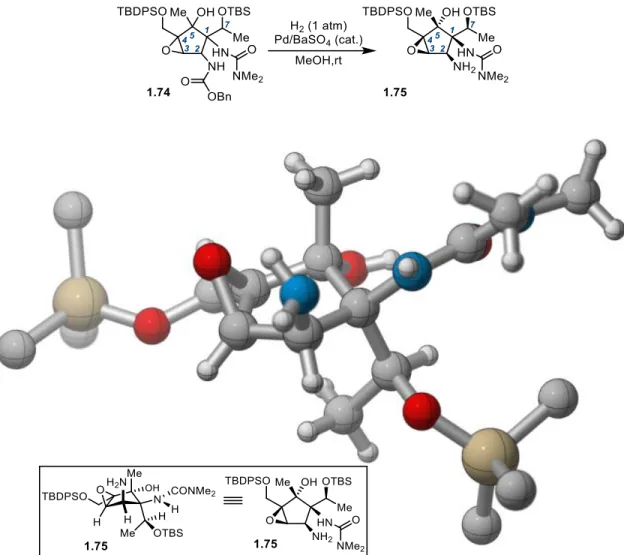
Figure 1-3 Cbz Deprotection and Critical X-ray Diffraction Study………..……….30
xvi
Scheme 1-20 Deuterium Labeling Studies on the Intramolecular Aldol Condensation……..33
Figure 1-5 Absolute Confirmation of Symmetry-Breaking Reduction Stereochemistry...34
Figure 1-6 Proposed Model for Stereoinduction in the Symmetry-Breaking Reduction…35 Figure 1-7 A Fortuitous Stereochemical Correction: Conclusions……….…36
Scheme 1-21 Development of a Lewis Acid Catalyzed Aniline Epoxide Opening………....37
Scheme 1-22 Salicylate Installation and Total Synthesis Completion………....38
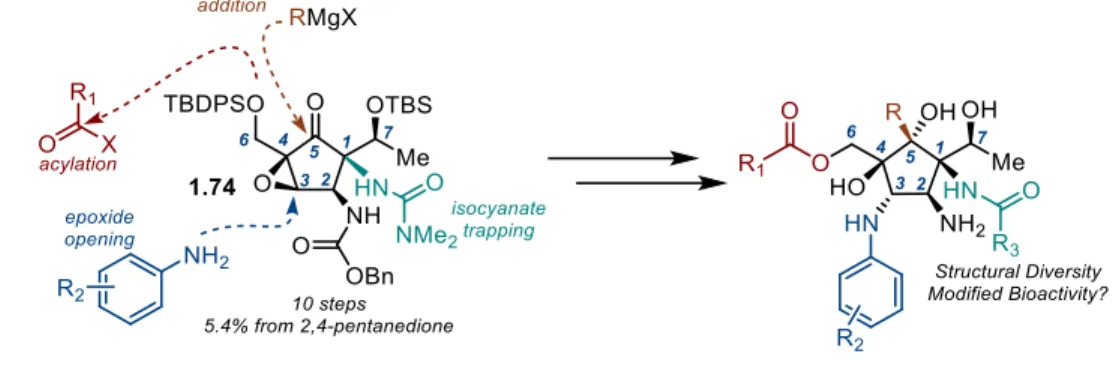
Figure 1-8 Synthetic Plan for Preparation of Pactamycin Structural Congeners………....39
Figure 2-1 Natural Product Derivatives Approved by FDA in the Past Ten Years…….…92
Figure 2-2 Pactamycin………..……….93
Figure 2-3 Naturally-Occurring Pactamycin Congeners………...….94
Figure 2-4 Biosynthetically-Engineered Derivatives Produced by Mahmud……….……94
Figure 2-5 Hanessian Approach to Pactamycin Derivatives………..…96
Figure 2-6 Synthon Analysis of Pactamycin with Branch Points for Structural Derivatization………..…97
Scheme 2-1 Pactamycin Synthesis Endgame: Summary……….98
Scheme 2-2 Reactivity Difference of m-acetylaniline and p-anisidine in Epoxide Opening………..99
Figure 2-7 Synthesis Completion of C3 Aniline Pactamycin Derivatives………....101
Scheme 2-3 Surprising Imidazolidinone Formation………..………102
Scheme 2-4 Investigating Access to Pactamycate Derivatives………...103
Scheme 2-5 Preparation of Pactamycate Derivatives……….104
Scheme 2-6 Rearrangement Observed in the Case of Aryl Nucleophiles………...106
Scheme 2-7 Native Aniline Installation to Pactamycin C5 Derivatives……….107
Scheme 2-8 Synthesis of C5 Pactamycin Derivatives………....108
Scheme 2-9 Preparation of a C5,C3 Pactamycin Derivative………..…108
xvii
Scheme 2-11 Attempts Directed at Reduction of the C7-Hydroxyl………..…112
Scheme 2-12 Synthesis of ent-Pactamycin………..…114
Figure 2-8 Scanning electron microscope (SEM) images of 80x320 nm PRINT-therapeutic NPs containing derivative (A) 2.1, (B) 2.29e, and (C) 2.42d, show that the particles are monodisperse and uniform in size and shape despite containing different therapeutics……….201
Figure 2-9 NCI-60 Screening Results for Derivative 2.51c……….…202
Figure 2-10 NCI-60 Screening Results for Derivative 2.42d……….203
Figure 2-11 NCI-60 Screening Results for Derivative ent-Pactamycin……….…204
Figure 2-12 NCI-60 Screening Results for Derivative 2.29f………..205
Figure 2-13 NCI-60 Screening Results for Derivative 2.57a……….206
Figure 3-1 Paspaline and Related Indole Diterpenoid Natural Products………..211
Figure 3-2 Divergence of Paspaline from Classical Steroidal Structures……….…213
Scheme 3-1 Biosynthetic Pathway for Paspaline………...213
Scheme 3-2 Smith Synthesis of Paspaline: Angular Methyl Group Installation……….…215
Scheme 3-3 Smith Synthesis of Paspaline: Tetrahydropyran and Indole Synthesis……..216
Scheme 3-4 Second Generation Approach to Paspaline and C12b Stereocenter………...217
Figure 3-3 Desymmetrization Applied to Pactamycin and Paspaline………..218
Scheme 3-5 Initial Retrosynthetic Analysis for Paspaline………..…219
Scheme 3-6 Synthesis of Cyclobutane [4+2] Annulation Precursor………...220
Scheme 3-7 Tandem Alkylation/Cyclization Approach to Tetrahydropyran Synthesis….222 Scheme 3-8 Desymmetrization of the C14a Stereocenter………..223
Figure 3-4 Attempts at Coupling of the Indole and Pyran Fragments………..224
Scheme 3-9 Cyclohexanedione Alkylation and Decarboxylative Annulation Strategy.…226 Scheme 3-10 Revised Approach to Paspaline via Enantioselective Desymmetrization…...229
xviii
Scheme 3-12 Enantioselective Desymmetrization Studies……….….232
Scheme 3-13 Unexpected Stereoselective Access to Tetrahydropyran and
C2 Stereocenter………..234
Figure 3-5 Mechanistic Investigations in the “Hydrazone Directed” Epoxidation……..235
Scheme 3-14 Synthesis of Paspaline D-Ring via Diels-Alder Reaction/Isomerization…....236
Scheme 3-15 Attempted Birch Alkylation Approach to C12c and C4b Stereocenters…….237
Scheme 3-16 C12c Incorporation Attempts via Semi-Pinacol and Radical Cyclization..…240
Scheme 3-17 Attempts to Install D-Ring and C12c Methyl Group via
Diels-Alder Reaction………..241
Scheme 3-18 Electrocyclization Approach to D-Ring Synthesis……….242
Scheme 3-19 Alternative Shapiro Adducts Explored in D-Ring Synthesis……….….243
Scheme 3-20 Discovery of an Ireland-Claisen Rearrangement for Paspaline…………..…244
Scheme 3-21 D-Ring Synthesis Completion with Model Ireland-Claisen Substrate……...245
Scheme 3-22 Failed Advancement of Silyl-Functionalized I-C Product to Paspaline…….248
Scheme 3-23 Development of a Local Desymmetrization for C12b Stereocenter………...249
Figure 3-6 Examples of Substrate-Directed sp3 C−H Oxidation/Desymmetrization...…250 Scheme 3-24 Access to bis-Allylic Alcohol Substrate for Ring-Closing Metathesis……..251
Scheme 3-25 Access to Non-Conjugated Enone and Undesired Convex-Face Reduction..252
Scheme 3-26 Directed Alkene Hydrogenation and Completion of Paspaline Core………..253
xix
LIST OF ABBREVIATIONS AND SYMBOLS
A549 human lung cancer cell
p-ABSA para-acetamidobenzenesulfonyl azide
Ac acetate
Ar aryl
aq aqueous
atm atmospheres
9-BBN 9-Borabicyclo[3.3.1]nonane
BINAP binapthyl
Bn benzyl
Boc benzyloxycarbonyl
Boc2O di-tert-butylcarbonate
br broad
br s broad singlet
nBu normal-butyl
tBu tert-butyl
tBuOH tert-butanol
tBuOK potassium tert-butoxide
Bz benzoyl
CSA camphorsulfonic acid
13C NMR carbon nuclear magnetic resonance spectroscopy
Cbz carboxybenzyl
xx
cat catalytic amount or catalyst
COSY correlated spectroscopy
m-CPBA meta-chloroperoxybenzoic acid
d doublet or days
DBU 1,8-diazabicyclo[5.4.0]undec-7-ene
DCC N,Nʹ-dicyclohexylcarbodiimide
dd doublet of doublet
ddt doublet of doublet of triplets
DFT density functional theory
DIBAL-H diisobutylaluminum hydride
DIC diisopropylcarbodiimide
DIPEA ethyldiisopropylamine
DLS dynamic light scattering
DMA dimethylacetamide
DMAP 4-N,N-dimethylaminopyridine
DMF N,N-dimethylformamide
DMP Dess-Martin periodinane
DMSO dimethyl sulfoxide
dq doublet of quartet
d.r. diastereomeric ratio
dt doublet of triplet
DU-145 prostate cancer cell line
EC50 half maximal effective concentration
xxi
equiv equivalents
e.r. enantiomeric ratio
ESI electrospray ionization
Et ethyl
EtLi ethyllithium
Et2O diethyl ether
EtOAc ethyl acetate
EWG electron withdrawing group
FDA food and drug administration
GII Grubbs’ second generation catalyst
GGDP geranylgeranyl diphosphate
h hour
1H NMR proton nuclear magnetic resonance spectroscopy
HCT-15 colon cancer cell line
HeLa human epithelial
n-hexylMgBr normal hexyl magnesium bromide
HOAc acetic acid
HMDS hexamethyldisilazane
HNMe2 dimethylamine
HMPA hexamethylphosphoramide
HPLC high performance liquid chromatography
HRMS high resolution mass spectroscopy
HT-1080 human fibrosarcoma cell line
xxii
IC50 half maximal inhibitory concentration
IR infrared spectroscopy
J coupling constant
KDS known drug space
LA Lewis acid
LDA lithium diisopropylamide
LDBBA lithium diisobutyl(tert-butoxy)aluminum hydride
LiHMDS lithium hexamethyldisilazide
LTBA lithium tri-tert-butoxyaluminum hydride
M metal or molarity
m multiplet
M14 melanoma
MCF7 breast cancer cell line
MDA-MB-231 human breast cancer cell
Me methyl
MeLi methyllithium
MeMgBr Methylmagnesium bromide
MeMgCl methylmagnesium chloride
MeOH methanol
Me2S dimethylsulfide
Me2S2 dimethyldisulfide
mg milligram
MHz megahertz
xxiii
min minutes
mL milliliter
mmol millimole
mol mole
MOLT-4 leukemia cell line
mp melting point
MRC-5 Human lung fibroblast cell
MS molecular sieves
MsCl methanesulfonyl chloride
MsOH methanesulfonic acid
MVK methyl vinyl ketone
n number of atoms or counterions
NaHMDS sodium hexamethyldisilazide
NaOAc sodium acetate
NaOtBu sodium tert-butoxide
NaOMe sodium methoxide
NCI-H322M nonsmall-cell lung cancer cell line
nd not determined
NEt3 triethylamine
NME new molecular entity
NMM N-methylmorpholine
NMO N-methylmorpholine N-oxide
nOe nuclear Overhauser enhancement
xxiv
NP nanoparticle
p-NPBA p-nitroperbenzoic acid
Nu nucleophile
[O] oxidation
OVCAR-3 ovarian cancer cell line
Oxone® potassium peroxymonosulfate
P.f. K1 Plasmodium falciparum K1
PCC pyridinium chlorochromate
PET poly(ethylene terephthalate)
Ph phenyl
PhMgBr phenylmagnesium bromide
PhSeBr phenylselenyl bromide
Phth phthalimide
Piv pivaloyl
PLA poly(D,L-lactide)
PMB p-methoxybenzyl
PMBz p-methoxybenzoyl
PMP p-methoxyphenyl
ppm parts per million
PPTS pyridinium p-toluenesulfinate
iPr iso-propyl
PRINT© particle replication on non-wetting templates
PTSA p-toluenesulfonic acid
xxv
R substituent
Rf retention factor
rac racemic
Red-Al® Sodium bis(2-methoxyethoxy)aluminumhydride
RNA ribonucleic acid
rt room temperature
RXF 393 renal cancer cell line
s singlet
SAR structure-activity relationship
Sec secondary
SEM scanning electron microscopy
SFC supercritical fluid chromatography
SK-OV-3 human ovarian cancer cell
SN2 bimolecular nucleophilic substitution
SNB-19 CNS tumor cell lines
Super Hydride lithium triethylborohydride
t triplet
tert tertiary
tr retention time
TBAF tetrabutylammonium fluoride
TBDPS tert-butyldiphenylsilyl
TBDPSCl tert-butyldiphenylsilyl chloride
TBS tert-butyldimethylsilyl
xxvi
TBSOTf tert-butyldimethylsilyl trifluoromethanesulfonate
Tf trifluoromethanesulfonyl
TFA trifluoroacetic acid
TFAA trifluoroacetic anhydride
Tf2O trifluoromethanesulfonic anhydride
THF tetrahydrofuran
TLC thin-layer chromatography
TMS trimethylsilyl
TMSCHN2 (trimethylsilyl)methyldiazomethane
TMSCl trimethylsilyl chloride
TMSI trimethylsilyl iodide
TMSOTf trimethylsilyl trifluoromethanesulfonate
TPAP tetrapropylammonium perruthenate
triflate trifluoromethanesulfonate
Ts para-toluenesulfonyl
UV ultraviolet
X anionic ligand, halide, substituent, or number
[] optical rotation
δ chemical shift or partial charge
L microliter
1
CHAPTER ONE:
ASYMMETRIC SYNTHESIS OF THE AMINOCYCLITOL PACTAMYCIN, A
UNIVERSAL TRANSLOCATION INHIBITOR
*1.1Introduction
The value of the continued advancement of natural products synthesis cannot be
understated. The arena of preparing complex molecules serves as the ideal breeding (and
proving) ground for innovation in organic synthesis, and successful total synthetic endeavors
of biologically active “privileged” natural scaffolds have played a vital role in the betterment
of global health. In this chapter, we report the expedient total synthesis of the natural product
pactamycin, a complex aminocyclitol alkaloid with a promising biological profile. Key to this
approach was the implementation of a complex symmetry-breaking reduction reaction for
rapid incorporation of core stereochemistry. The synthetic route provides the functionally and
stereochemically dense natural product in fifteen steps from commodity chemicals, notably, in
the absence of non-strategic downstream functional group or oxidation state manipulations.
These studies were completed as part of a cooperative effort with Justin Malinowski of these
laboratories and constitute the shortest synthesis of pactamycin reported to date.
*Reprinted in part with permission from Sharpe, R. J.; Malinowski, J. T.; Johnson, J. S. J.
2 1.2Background
1.2.1 Introduction, History, and Biological Activity of Pactamycin
Nature continues to test the state of the art in organic synthesis by providing chemists
with both structurally complex, biologically relevant molecules. Construction of these natural
products often requires the expansion of known synthetic methods to previously unreported
substrate classes or the development of new approaches for the assembly of natural
frameworks.1 Isolated in 1961 from Streptomyces pactum by scientists at the former UpJohn
Chemical Co., pactamycin (1.1, Figure 1-1) remains one of the most complex
aminocyclopentitol antibiotics known, bearing a remarkable array of unique functionality and
exceptional bioactivity.2
Figure 1-1. Structure and Atom Numbering of Pactamycin
Pactamycin exhibits activity against both Gram-positive and Gram-negative bacteria and is a
powerful antitumor agent.3 More recent biological studies have demonstrated 1.1 to have
potent antiviral (complete inhibition of polio-infected HeLa cells at 10-7 M) and antiprotozoal qualities (P.f. K1: IC50 = 14.2 nM).4 However, despite the obvious application of these qualities
to medicinal development, pactamycin’s known cytotoxicity against certain human eukaryotic
cell lines (MRC-5: IC50 = 95 nM) have to date precluded its use in human disease treatments.4
3
crystallographic studies.5 These investigations showed that pactamycin inhibits protein synthesis via its action as an RNA dinucleotide mimic, employing its unique aromatic
appendages (C3 aniline, C6 salicylate) in H-bonding interactions with the 30S ribosomal
subunit. This activity prevents translocation and leads ultimately to cell death.
Given the above facts, it is evident that if the promising biological traits of this molecule
are ever to probed further for the betterment of global health, they will be explored not in the
environment of the parent structure but in the structural congeners derived thereof. In support
of this claim, a number of biosynthetically engineered congeners of the parent pactamycin
structure have been recently reported which display diminished cytotoxicity relative to 1.1.6
These data will be described in detail in Chapter Two and have reignited promise for
structure-activity relationship (SAR) investigations of 1.1 toward the goal of obtaining a useful drug
molecule. In order to further investigate the medicinal development of 1.1 through chemical
approaches, the necessity of a practical and flexible synthesis of the target molecule is
paramount for the success of such endeavors.
1.2.2 Pactamycin Structural Features, Biosynthesis, and Previous Synthetic Endeavors
Pactamycin bears a densely-functionalized cyclopentane core featuring six contiguous
stereogenic centers, three of which are fully substituted.7 Additionally, unusual dimethylurea,
aniline, and salicylate moieties adorn the core structure, presenting numerous synthetic
challenges. The biosynthesis of pactamycin has been proposed by Mahmud and co-workers to
originate from m-acetylaniline 1.2 and UDP-N-acetyl-α-D-glucosamine 1.3;8 a subsequent series of enzymatic functional group and oxidation state transformations ensue to efficiently
4
Scheme 1-1. Summary of Proposed Pactamycin Biosynthesis
The unique challenges presented by pactamycin’s architecture have been addressed in
a number of approaches as synthetic interest in 1.1 has flourished over the past decade.
Synthetic efforts by Isobe,9 Knapp,10 Looper,11 Nishikawa,12 and our group13 have been recently disclosed. While our studies were underway, the Hanessian group disclosed the
landmark first total synthesis of pactamycin.14 Their approach was comprised of a thirty-two-step manipulation of L-threonine (1.4) and is summarized in Scheme 1-2. From L-threonine,
a three-step sequence provided the known oxazoline 1.5, setting the stage for the assembly of
cyclopentenone 1.6 in eight manipulations. The C3 and C4 stereocenters were initially
established via nucleophilic epoxidation of the alkene in 1.6 to provide epoxyketone 1.7, and
the C2 amine functionality was incorporated via SN2 addition of NaN3 to the triflate
electrophile derived from ketone 1.7. It is important to note that the epoxide stereochemistry
in 1.8 corresponds to the incorrect C4 stereochemistry needed for pactamycin at this juncture.
Following deprotection and oxidation of the C5 alcohol in 1.8, the “incorrect” epoxide was
5
Scheme 1-2. Summary of Hanessian Total Synthesis of Pactamycin
via convex surface addition to the bicyclic ketone 1.9 to afford alcohol 1.10. A four-step
protocol was employed from 1.10 to “correct” the epoxide stereochemistry and afford 1.11,
giving thence the m-propenyl aniline 1.12 after a Lewis acid mediated epoxide addition.
A significant challenge Hanessian faced in synthesis completion was introduction of
the C1 dimethylurea functionality via acylation of a primary amine bound to the
fully-substituted C1 atom. After extensive experimentation, acylation of 1.13 (prepared in three
steps from aniline addition product 1.12) was accomplished upon generation of a transient
6
furnish urea 1.14. Oxidation of the m-propenyl aniline to the acetophenone, salicylate
introduction, and deprotection afforded pactamycin in thirty-two steps and 1.1% overall yield.
A close inspection of this route and the published partial synthetic studies reveals two
challenges one faces in assembling the core structure of pactamycin: (i) execution of chemo-
and stereoselective reactions in a highly congested chemical environment and (ii) the method
by which the unusual functionality of 1.1 is introduced. In their total synthesis, the Hanessian
group observed numerous side reactions due to functional group propinquity.14 Looper and
Hanessian also noted the importance of the order in which functional group manipulations
were executed.11,14 Regarding the dimethylurea, Hanessian relied on an oxazoline protecting
group at C1 from the outset, necessitating the challenging deprotection and acylation
previously described. In the development of a synthesis plan, we took note of these issues and
sought to develop a synthesis of 1.1 that rapidly assembled the core structure and incorporated
all unique functionality in its final form, precluding the use of nonstrategic redox and
protecting group manipulations.16 This flexible route, we surmised, would provide access to
the title compound in a manner amenable to the synthesis of analogs for biological
examination.
1.2.3 Initial Retrosynthetic Analysis and Summary of Preliminary Route
Our original retrosynthetic disconnection began with simplification of 1.1 to
functionalized cyclopentane 1.15 (Scheme 1-3). C2 (allylic) functionalization, C4
hydroxylation, and C3 aniline installation might be possible from a C3-C4 alkene in 1.16,
accessed by a ring-closing metathesis (RCM) reaction. The requisite precursor would be
derived from nucleophilic addition to methyl ketone 1.17. We surmised that this addition could
7
Scheme 1-3. Initial Retrosynthetic Analysis of Pactamycin
the C7 secondary carbinol. Two approaches to β-hydroxyketone 1.17 were envisioned,
dependent upon the identity of the R-substituent. If R = OMe (1.18), we proposed an
enantioselective Tsuji−Trost allylation of ketoester 1.20 followed by diastereoselective ketone
reduction and esterketone conversion.16 Alternatively, if R = Me (1.19), we would invoke
an enantioselective, symmetry-breaking reduction strategy via diketone monoreduction,
exploiting the hidden symmetry (see outlined region) in the northeast quadrant of 1.1.17 Critical
to our strategy in either case was the early-stage installation of the dimethylurea functionality
in its final, native form, an approach divergent from those previously reported.
α-Ureidodicarbonyls 1.20 or 1.21 would serve as our points of origin, synthesized from
commodity chemicals (methyl acetoacetate 1.22 or 2,4-pentanedione 1.23, respectively).
In pursuit of this approach, our group published a preliminary synthetic study that
provided a highly advanced intermediate for pactamycin core assembly and synthesis
completion;13 the results and challenges that this synthesis faced are summarized in Scheme 1-4. Using methyl acetoacetate 1.22 as the point of origin, diazo transfer followed by a
8
further functionalized via Tsuji−Trost allylation to install an allyl group; stereoselective
reduction of the ketone followed by silyl protection furnished β-silyloxyester 1.24 in 52%
yield. From 1.24, C5 carbinol installation became the next challenge. Thus, the C1 ester was
converted to its methyl ketone upon treatment with Me3SiCH2Li to afford β-silyloxyketone
1.25 poised for nucleophilic addition. From 1.25, a screen of nucleophiles and conditions were
investigated for access to the requisite C5 carbinol; however, while addition of a model
2-propenylmetal nucleophile mediated by CeCl3 proceeded in good yield, this reaction gave
consistent preference for epimeric C5 stereochemistry (1.26). This stereoerror
9
necessitated synthesis of ketone 1.27, which upon methide addition mediated by CeCl3,
provided the desired C5 stereochemistry with >20:1 dr. This intermediate was then elaborated
to 1.28 in three steps, setting the stage for leveraging the C3 ketone to install the critical C2
amine functionality; however, attempts to introduce the amine (or a suitable surrogate) at C2
from 1.28 failed under a variety of conditions examined.
1.3Results and Discussion
1.3.1 C2 Unfunctionalized Desymmetrization Approach: Strategy Development
While the route described in Scheme 1-4 was scalable and effective for accessing
advanced intermediate 1.28, the synthesis of ketone 1.27 required a number of nonstrategic
redox and protecting group manipulations and lacked efficiency. As a result, we sought a
streamlined approach to its synthesis in parallel to the C2 functionalization studies described
above. Cognizant of the undesired stereoselectivity encountered in intermolecular addition to
methyl ketone 1.25, we envisaged that an intramolecular addition might provide the opposite
facial preference. Delivery of a tethered nucleophile from the C7 hydroxyl followed by
reduction and RCM would intercept our previous intermediate 1.28. This intermediate could
be synthesized from our proposed enantioselective desymmetrization strategy from urea 1.19,
the diketone analog of 1.18.
1.3.2Substrate Preparation for Symmetry-Breaking Reduction
The diketone reduction precursor 1.19 was prepared in three steps (Scheme 1-5). We
were pleased to find that the sequence used to synthesize ketoester 1.20 could be directly
applied to 2,4-pentanedione 1.23 with minimal reoptimization.13 In practice, the reaction of 2,4-pentanedione 1.23 with p-ABSA and NEt3 afforded the corresponding diazoketone in
10
Scheme 1-5. Synthesis of C2 Unfunctionalized Desymmetrization Precursor
studies delivered the desired ureidodiketone 1.21 in 67% yield, and a Tsuji−Trost allylation
provided the necessary diketone precursor 1.19 in 81% yield.
1.3.3 Symmetry-Breaking Reduction and Stereochemical Analysis
Having diketone 1.19 in our possession set the stage for development of the proposed
symmetry-breaking reduction (Scheme 1-6). Working first to optimize the racemic reaction,
we began screening reducing agents and conditions for selectivity. Gratifyingly,
LiAl(OtBu3)H (LTBA) emerged early in our evaluation, providing β-hydroxyketone (±)-1.17
in 75% yield with >20:1 diastereoselection. The desired stereochemistry was confirmed via
TBS protection of the ketoalcohol and direct 1H NMR comparison with 1.25 (see Scheme 1-4),which had been independently synthesized our in laboratory via our previous route.13
11
We speculate that this reduction proceeds via chelated structure 1.29, in which steric
demand of the dimethyl urea functionality directs hydride addition to the least hindered
diastereoface of the enantiotopic ketones, delivering (±)-1.17 in high selectivity. Also of note
in this reaction is the temperature required for successful reduction to occur; when the
reduction is carried out at -78 °C, no reaction is observed, and if the reaction is warmed past
the ideal temperature of -40 °C, retroaldol fragmentation ensues, presumably via instability of
the alkoxide anion derived from hydroxyketone 1.17.
1.3.4 Intramolecular C5 Addition
From β-hydroxyketone 1.17, we began investigating intramolecular additions to the C5
ketone (Scheme 1-7). Specifically, we were motivated by extant methods reported for
reductive (or alkylative) cyclizations of ynoates to carbonyls and hoped that the same protocol
might be applied to our system. Thus, acylation of monoalcohol 1.17 with 2-butynoic acid 1.30
cleanly delivered ynoate 1.31 in 79% yield. 1.30 was selected over the corresponding
propiolate ester due to a significant decrease in yield observed in the analogous esterification
with propiolic acid.
12
From ester 1.31, we began screening known conditions for allenoate generation.
Reducing agents such as SmI2 failed to promote any desired reactivity, returning only
recovered starting material.19 Soft hydride reducing agents also gave little promise as starting material decomposition was observed.20 We were encouraged, however, by the work of
Crimmins and co-workers in the use of organocuprate nucleophiles for initiating
intramolecular, alkylative cyclizations and hoped this reaction manifold might be more
compatible.21 Indeed, treatment of 1.31 with Me
2CuLi delivered lactone 1.33 in 53% yield
and 3:1 dr. The desired relative configuration of the C1/C5/C7 stereotriad in 1.33 was
confirmed by nuclear Overhauser effect spectroscopy (nOesy) analysis.
1.3.5 Attempts at Lactone Reduction
At this juncture, only reduction of lactone 1.33 remained to provide triol 1.34; this
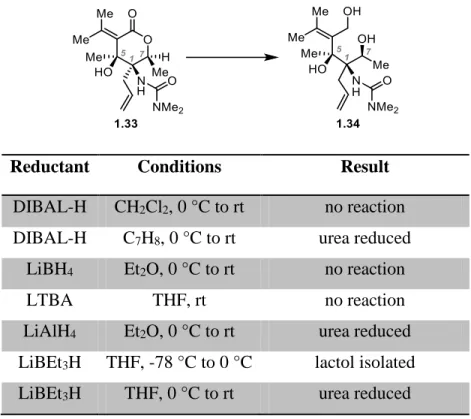
intermediate would effectively intercept the synthesis of cyclopentanone 1.28. (Table 1-1).
Table 1-1. Failed Attempts at Lactone Reduction
Reductant Conditions Result
DIBAL-H CH2Cl2, 0 °C to rt no reaction
DIBAL-H C7H8, 0 °C to rt urea reduced
LiBH4 Et2O, 0 °C to rt no reaction
LTBA THF, rt no reaction
LiAlH4 Et2O, 0 °C to rt urea reduced
LiBEt3H THF, -78 °C to 0 °C lactol isolated
13
However, an exhaustive screen of reducing agents and conditions failed to provide triol 1.34.
Hindered reducing agents such as LTBA displayed no reactivity even at elevated temperatures,
while stronger reducing agents (LiAlH4, LiBEt3H, DIBAL-H) resulted only in complex
mixtures or reduction of the dimethylurea functionality. Additionally, attempts at ring opening
of 1.33 via transesterification to its corresponding ester or thioester failed to show any desired
reactivity. These failed attempts led to the conclusion that intramolecular
addition/ring−opening strategies to establish the C5 stereochemistry might not be viable in
providing access to 1.1, and as a result, this approach was abandoned.
1.3.6 Revision of Strategy and Early Stage Incorporation of C2 Functionality
At this impasse, we began to form conclusions regarding our original and revised
strategies. First, early-stage incorporation of the dimethylurea functionality, while a strategic
risk at the onset of this work, had proven useful in directing desirable stereochemical outcomes
in each of our initial routes. The impressive diastereoselectivity accessed from
symmetry-breaking reduction of diketone 1.19 gave us cause to incorporate this strategy again in future
routes to 1.1. However, neither our previously reported approach nor the above strategy
addressed a major problem facing the endgame of our synthesis, namely, late-stage installation
of the primary amine at C2. In devising a new approach, we determined that this issue would
need to be addressed in any future iteration of our synthetic strategy. Consequently, we
envisioned enantioselective installation of C2 functionality on ureidodiketone 1.21 prior to the
symmetry-breaking reduction (Scheme 1-8). Monoreduction of this substrate would provide
access to the C1/C2/C7 stereotriad within the first four steps of the synthesis, from which
strategic manipulation of the available functional handles might give expedient access to 1.1.
14
Tsuji−Trost allylation with difurylidene acetate 1.35 would install a 2-furyl group at the C2
center (1.36); we felt that this group could function as an amine surrogate via downstream
oxidative cleavage and Curtius rearrangement.22 Since the ideal functionality at C2 would be the amine itself, a catalytic, asymmetric Mannich reaction of 1.21 with a strategically
configured imine such as 1.37 was projected to deliver diketone 1.38 with carbamate-protected
amine installed directly at C2.23
Scheme 1-8. Proposed Routes to C2-Functionalized Desymmetrization Precursors
In both the allylation and Mannich scenarios, enantioselective formation of the C2
asymmetric center would be the lone initial challenge. The ensuing diastereoselective
symmetry-breaking monoreduction of a chiral diketone would be the key for controlling the
C1/C7 configurations and would require effective guidance from the initially-installed C2
stereocenter. The identities of the alkene termini in the generic structures 1.36 and 1.38 can
be disregarded since downstream operations would purge these functionalities. Both of these
proposed pathways would deliver the entire core skeleton of 1.1 within the first three steps,
providing all carbons necessary for cyclopentane assembly. Equipped with these new
15
1.3.7C2 Furan Approach – Substrate Preparation and Desymmetrization Studies
Our first challenge in realizing the Tsuji−Trost allylation strategy was the synthesis of
the allylic acetate 1.35, which surprisingly had not been previously reported (Scheme 1-9). To
this end, reduction of difurylpropenone 1.39 afforded the corresponding alcohol 1.40; however,
upon concentration of the crude mixture, this product rapidly decomposed. The observed
decomposition was unexpected since this compound had been previously reported, although
no notes had been made regarding its instability.24 A screen of conditions designed to
circumvent this problem revealed that NaBH4 reduction of 1.39 followed by immediate
acylation using ethereal solvents provided 1.35 in crude form. Acetate 1.35 was also found to
be unstable, but could be stored in solution for up to thirty days at 0 °C.
Scheme 1-9. Synthesis of Difurylketone for Tsuji−Trost Allylation
With the desired electrophile in our possession, the reaction of diketone 1.21 with
difurylidene acetate 1.35 under the previously optimized allylation conditions afforded
C2-functionalized diketone (±)-1.36 in 80% yield. From this compound, we began to examine
conditions by which we might effect symmetry-breaking reduction (Figure 1-2).
Monoreduction of the chiral diketone 1.36 presented a complicated scenario, however, since
16
previously optimized desymmetrization conditions (LTBA, -40 °C) resulted only in retro-aldol
decomposition. A brief screen of reducing agents revealed that the reaction of 1.36 with the
recently reported LiAl(OtBu)(iBu)2H (LDBBA) afforded mono-alcohol (±)-1.41 with
moderate diastereoselectivity (4:1 1.41:Σ other diastereomers).25 While the reduction of
diketone 1.19 (lacking any C2 substituent) required warmer temperatures and extended
reaction times, reduction of 1.36 was complete within ten minutes at -78 °C. An X-ray
diffraction study of the major diastereomer confirmed the exact relative configuration needed
for elaboration to 1.1. While we envision a chelation mode similar to transition structure 1.29
might be taking place in this reduction, the involvement of the C2 furan in directing the C1/C7
relative configuration and dramatically affecting the reactivity is not well understood.
Figure 1-2. Symmetry-Breaking Reduction of Difurylketone and X-ray Analysis
1.3.8 Advancement of Desymmetrization Product to Pactamycin
Having accessed this key intermediate, we proceeded to test conditions for
17
addition to the C5 carbonyl and accordingly decided initially to invoke the ability of 1.41 to
participate in enolate chemistry. To this end, silyl protection of β-hydroxyketone 1.41
proceeded smoothly to deliver ketone 1.42 in 96% yield. The reaction of the lithium enolate
derived from 1.42 with ethyl cyanoformate provided β-ketoester 1.43 in 80% yield.26
Scheme 1-10. Advancement of Furan Reduction Product Toward Pactamycin
To access the cyclic core of 1.1 from this functionality, we proposed two parallel
strategies: i) alkene oxidative cleavage followed by aldol condensation or ii) α-methylenation
with subsequent RCM. As these routes were pursued, however, it was quickly found that the
furan functionality in 1.43 was not compatible with standard oxidative cleavage conditions
(O3, Johnson-Lemieux, RuCl3, etc.), giving only complex mixtures or starting material
decomposition. Turning to the metathesis strategy, we began investigating α-methylenation
protocols. Using the conditions recently reported by Connell and co-workers, treatment of
18
Diels−Alder adduct 1.44, effectively rendering our RCM approach unfeasible.27 These results caused doubt as to whether our proposed C2-furan approach would provide access to
pactamycin.In addition, the problems encountered in attempted oxidative cleavage of ketoester
1.43 gave us concern as to whether a late-stage unmasking of C2-furan (via oxidation and
Curtius rearrangement) could be realized. With these data points in hand, we abandoned this
route and turned our attention toward developing a route to 1.1 from an early-stage Mannich
reaction.
1.3.9 C2 Mannich Reaction Development
Our strategy for direct installation of a protected amine at C2 required an expansion of
the work of Schaus and co-workers to N-substituted dicarbonyls (Table 1-2).23 Also crucial to the success of this approach would be selection of the appropriately-protected imine
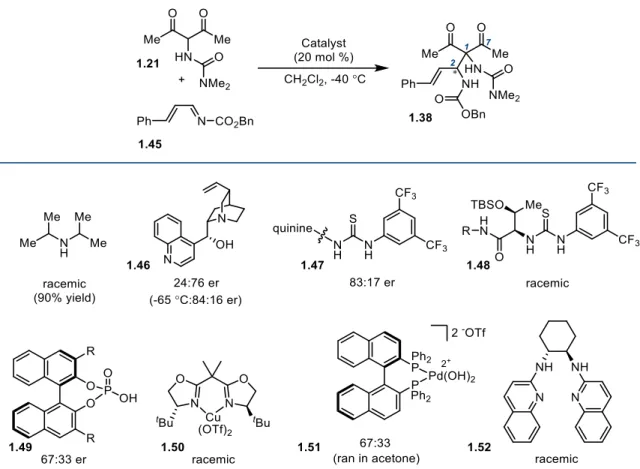
electrophile. In the event, we proceeded with Cbz-protected cinnamyl imine 1.45 and began
testing conditions for the Mannich reaction. Working first to develop the racemic reaction, the
union of α-ureidodiketone 1.21 with imine 1.45 in the presence of catalytic quantities of
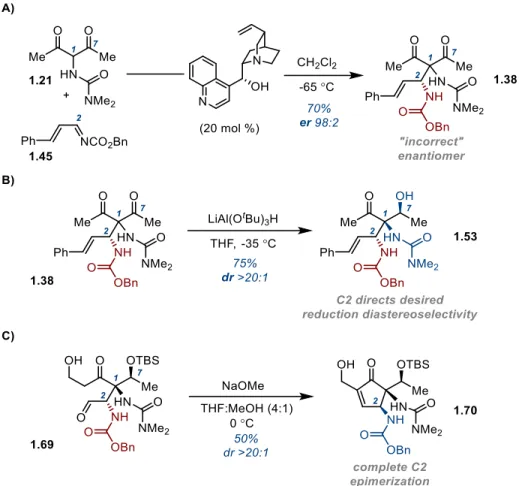
Hunig’s base delivered Mannich product (±)-1.38 in 90% yield. With the feasibility of this
bond construction established, focus turned to finding a suitable chiral catalyst for the reaction.
In order to develop the corresponding asymmetric reaction, we initially applied
Schaus’s unmodified conditions to the union of 1.21 and 1.45 (cinchonidine [20 mol %],
CH2Cl2, -35 °C, 24 h). We were pleased to obtain the crude Mannich adduct 1.38 in 24:76 er.
An extensive screen of known Mannich reaction promotors then ensued. These findings are
summarized in Table 1-2 and detailed in Section 1.5 of this Chapter. Toward these aims,
quinine thiourea 1.47 gave increased levels of induction (83:17 er), although these selectivities
19
Table 1-2. Development of an Asymmetric C2 Mannich Reaction
Thioureas of class 1.48 gave no enantioinduction. BINOL-derived phosphoric acid
catalysts 1.49 showed no improvement in selectivity, and the same was true for copper(box)
1.50,29 Pd-BINAP 1.5130 and the free base of Johnston’s organocatalyst (1.52).31 The results led to the conclusion that cinchonidine 1.46, the catalyst originally examined, might be the best
promoter for this transformation.
After optimizing the reaction further for cinchonidine by lowering the reaction
temperature (-65 °C), an initial 84:16 er was obtained. We then began examining conditions
for recrystallizing this crude enantioselectivity up to suitable levels for advancement to 1.1
(Scheme 1-11). However, upon trituration of crude 1.38 (84:16 er) for purposes of purification,
we found that crystalline racemic product could be removed by filtration, leaving highly
20
allowed for large scale material throughput. Unsure of the absolute configuration of (+)-1.38,
we proceeded in our studies with racemic material assuming that the Mannich catalyst
enantiomer could be inverted if necessary to access the correct antipode of pactamycin.
Scheme 1-11. Optimized Protocol for Asymmetric Mannich Reaction
1.3.10 C2 Mannich Product Symmetry-Breaking Reduction Studies
From functionalized dicarbonyl 1.38, we turned towards assembly of the C1/C2/C7
stereotriad via symmetry-breaking reduction (Scheme 1-12). Referring to our previously
optimized conditions in the C2-unsubstituted case, monoreduction of 1.38 with LiAl(OtBu3)H
at -35 °C provided β-hydroxy ketone 1.53 in 72% yield with high diastereoselectivity (>10:1
1.53:Σ other diastereomers). Efforts to determine the relative configuration of this
monoalcohol became challenging, however, when initial studies toward accessing a crystalline
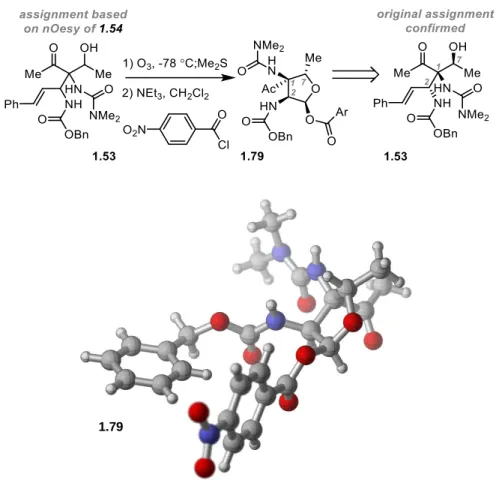
derivative proved fruitless. Turning to spectroscopic methods, ozonolysis of the styrene
moiety provided lactol derivative 1.54 in 59% yield from which nOesy analysis suggested the
relative configuration of the C1/C2/C7 stereotriad illustrated in Scheme 1-12. Alternatively,
21
Scheme 1-12. Symmetry-Breaking Reduction and Initial Stereochemical Analysis
With this result in hand, we began to analyze the stereochemical outcome, considering
the two illustrated product enantiomers. β-Hydroxyketone 1.53 is epimeric at C2 relative to
pactamycin (1.1), a stereochemical error for which a solution was not immediately obvious
given our projected synthetic plan. Alternatively, the enantiomeric form (ent-1.53) presents
C1 and C2 in the correct pactamycin configuration, but is a product resulting from incorrect
diastereotopic ketone site selectivity in the desymmetrization. Although this was a
discouraging initial result, we remained confident in our symmetry-breaking approach to 1.1
and began pursuing myriad strategies in parallel for the elaboration of diketone 1.38 to our
desired reduction diastereomer.
We first pursued an exhaustive screen of reducing agents and conditions in hopes that
reagent control would provide stereoselectivity opposite to that observed using LiAl(OtBu
3)H.
Monoreduction with a number of bulky hydride sources (L-Selectride®, LDBBA, Red-Al®,
DIBAL-H) resulted only in the formation of stereoisomer 1.53 in lower yields. Unhindered
22
accompanied with retro-aldol decomposition pathways. Finally, alternative reduction
pathways (enzymatic reduction, transfer hydrogenation) gave no promise for delivering
diastereoselectivity opposite to that observed in LTBA reduction of diketone 1.38. These
unsuccessful efforts led us to the conclusion that this reduction was proceeding with virtually
complete substrate control, and as a result, direct reduction strategies of 1.38 towards the
desired diastereomer were abandoned.
In an effort to alter the apparent conformational bias associated with the acyclic
structure 1.38, the diketone was engaged as its derived cyclic iodoimidate 1.55 through the
action of I2 and NaHCO3 (Scheme 1-13). Subsequent monoreduction of diketone 1.55 followed
by retrocyclization (mediated by Zn/HOAc) gave the acyclic hydroxy ketone 1.56 in 61% yield
over two steps as a single diastereomer. Ketone 1.56 is a diastereomer different from that
accessed via LiAl(OtBu
3)H reduction of 1.38. We immediately began work in establishing its
stereochemical identity; however, nOesy analysis in a strategy analogous to that used for 1.53
was inconclusive.
Scheme 1-13. Iodoimidate Synthesis and Symmetry-Breaking Reduction
Concurrent with these studies, we pursued an alternate strategy from the perspective of
ent-1.53. Namely, if the original monoreduction product could be further reduced to its
23
configuration (Scheme 1-14). To this end, a screen of conditions revealed that direduction of
1.38 with excess LDBBA afforded diol 1.57 as a 3:1 mixture of separable diastereomers. The
major isomer was determined to be the 1,3-trans diol via nOesy and 13C NMR analysis of the derived acetonide 1.58.32 Control experiments revealed that this reduction proceeds via the intermediacy of β-hydroxyketone 1.53. Consequently, the relative stereochemistry at C2 was
assigned according to that shown in alcohol 1.57.
Scheme 1-14. Bis-Ketone Reduction and Symmetry-Breaking Oxidation Studies
With this diol in hand, we began evaluating oxidants for symmetry-breaking oxidation.
Treating diol 1.57 with Dess-Martin periodinane (DMP) showed complete selectivity for
oxidation of a single site, returning the original hydroxyketone 1.53. Alternatively,
tetrapropylammonium perruthenate (TPAP) gave preference for the opposite alcohol,
24
prepared via the iodoimidate reduction. The ability to access 1.56 from this route enabled us
to assign its relative stereochemistry, which had previously remained ambiguous via nOesy
analysis of its derivatives.
1.3.11 Stereochemical Analysis: Conclusions
The stereochemical analysis that follows provides the context for the experimental plan
that we elected to pursue (Scheme 1-15). It is germane to emphasize at the outset that all of
our conclusions thus far hinged on the nOesy analysis of lactol derivative 1.54, which was
suggestive of its illustrated structure, but not unambiguous. Thus, while two of the four
possible monoreduction diastereomers (1.53, 1.56) had been accessed, we sought
crystallographic evidence for conclusive stereochemical assignment. Diastereoselective
oxidation of trans-diol 1.57 gives access to two (of the four possible) monoreduction
diastereomers of diketone 1.38 (the identities depending on assignment of 1.54). Should our
nOesy analysis of lactol 1.54 prove correct, then the identity of the trans-diol would be 1.57,
giving access to the C7-epimeric diastereomer 1.56 (via symmetry-breaking oxidation), which
could potentially be inverted downstream in the synthesis. Alternatively, should our
assignment of 1.54 be incorrect, the configuration of the trans-diol would be 1.61, enabling
access to the desired C1/C2/C7 stereotriad 1.62. With this information in hand, we concluded
that this selective oxidation pathway could provide entry to a useful monoreduction
diastereomer for elaboration to 1.1 regardless of the stereochemical identity of 1.53. Because
it was so easily accessible, we moved forward with keto alcohol 1.53 to explore the viability
of our remaining synthetic plan. It was our hope that unambiguous stereochemical assignment
would be realized via a suitable crystalline derivative later in the route and that the chemistry
25
Scheme 1-15. Stereochemical Possibilities Arising From Diketone Monoreduction
1.3.12 Attempted Acylation/Cyclocondensation Route
Silyl protection of 1.53 under typical conditions proceeded smoothly, delivering
β-silyloxy ketone 1.64 in 86% yield (Scheme 1-16). Some trepidation accompanied the
subsequent enolate acylation in light of the possibility for undesired side reactions associated
with deprotonation of the NHCbz group (i.e. retro-Mannich cleavage), but carboalkoxylation
of the lithium enolate derived from 1.64 with ethyl cyanoformate cleanly delivered β-ketoester
1.65 in 79% yield. Hoping to access cyclopentenone 1.67 via our two previous strategies in

![Figure 1-4. Analysis of Addition to Oxabicyclo[3.1.0]hexanes](https://thumb-us.123doks.com/thumbv2/123dok_us/8283669.2193706/57.918.239.697.369.938/figure-analysis-of-addition-to-oxabicyclo-hexanes.webp)