1
Backpack+ and SnackChef+: A Program and Evaluation Plan
for the Expansion of TABLE
By
M. Alex Ahearn
A Master’s Paper submitted to the faculty of
the University of North Carolina at Chapel Hill
in partial fulfillment of the requirements for
the degree of Master of Public Health in
the Public Health Leadership Program
Chapel Hill
2014
_________________________________
Advisor:
_________________________________
Date
_________________________________
Second Reader:
_________________________________
2 Abstract
Childhood hunger is a problem that affects local and international communities alike. Even amidst the relative wealth of the United States, an estimated one in five children lives in a food-insecure household. Food-insecurity puts children at risk for a host of negative health effects and paradoxically parallels obesity due to the wide availability of cheap, nutritionally-poor foods. Notable government programs (e.g. SNAP, WIC, NSLP, etc.) provide assistance at the national and state level, but often private charitable organizations are left to complete the patchwork safety net. Food pantries and soup kitchens serve the population broadly, but there are also a variety of interventions targeted to address children’s food insecurity more specifically. TABLE is one such North Carolina-based organization.
Founded in 2008 to “feed hungry children in the Chapel Hill-Carrboro community”, TABLE’s “Backpack” program has been providing elementary school-aged children who receive subsidized lunches with additional food to help cover their weekend meals (TABLE, 2014). The organization also uses the structure of afterschool care programs to teach children about nutrition and how to prepare healthy snacks via their “SnackChef” program. Combined, these programs aim to provide healthy food to children in need and promote the knowledge and habits necessary to eat well when food is available. Each has demonstrated success in the short-term, but if TABLE is to expand and improve its programs they will need to be reexamined and strengthened.
3 Table of Contents
Abstract...2
Introduction...4
Literature Review...6
Introduction...6
Methods...6
Summary of Programs...7
Discussion...17
Program Plan...18
Overview...18
Program Context...20
Program Theory...23
Goals and Objectives...25
Implementation...29
Evaluation Plan...32
Rationale for Evaluation...32
Evaluation Study Design...35
Evaluation Methods...36
Evaluation Planning Tables...37
Ethical Considerations...46
Dissemination Plan...48
Discussion...49
Acknowledgements...51 References
Appendix
Appendix A: Table of Similar Programs Appendix B: Logic Models
4 Introduction
Hunger is a symbol of impoverishment that is both visceral and universally relatable. For this reason, many are surprised to find that, even amidst the wealth of the United States, 22.4% of children are defined as food-insecure (C. Gundersen, Waxman, Engelhard, Satch, & Chawla, 2013). In North Carolina estimates are even higher, with an expected 27.3% of children (618,200) facing food insecurity. Across these data, “insecurity” follows the USDA definition: “a household-level economic and social condition of limited or uncertain access to adequate food”, with hunger being the most prominently associated symptom (USDA Economic Research Service, 2006). Those described as food-insecure may forego meals, avoid eating when hungry stretch food supplies, or rely on inexpensive, nutritionally poor food to meet basic caloric needs.
Aside from the physical discomforts of hunger, there are numerous health repercussions associated with childhood food insecurity. In comparison to those from secure households, food-insecure children are more likely to be hospitalized, display developmental and cognitive problems, or report headaches, stomachaches or colds than their matched peers (Craig Gundersen, 2013). Further, early childhood hunger has also been linked to significant health problems in late adolescence, demonstrating that the effects are neither transient nor inconsequential (Kirkpatrick SI, McIntyre L, & Potestio ML, 2010). It is also important to note that meeting a child’s minimum caloric requirements in no way guarantees nutritional quality. Childhood obesity is also on the rise, and many of the more financially accessible food options are calorie-dense and nutritionally lacking (Rao, Afshin, Singh, & Mozaffarian, 2013).
There have been many attempts to combat the dual challenge of poor food access and growing obesity rates – from government programs and public campaigns, to private and non-profit
5 National School Lunch Program provides food assistance for children living in families at or below 185% of the federal poverty level (FPL) (“Supplemental Nutrition Assistance Program (SNAP),” 2014, “Women, Infants, and Children (WIC),” 2014). However, gaps still remain – as evidenced by the high rates of food insecurity – and ensuring the nutritious quality of available food is a continuous struggle.
Food pantries, advocacy groups and charitable organizations often try to fill those gaps, with Feeding America (formerly America’s Second Harvest) the largest food assistance organization among them. Smaller institutions have sought to emulate many of Feeding America’s best practices as well as search for innovative ways to meet children’s needs. TABLE – a Carrboro-based non-profit founded in 2008 – is one such example, which targets elementary school-aged children in Orange county, NC (TABLE, 2014). Through their “Backpack” and “SnackChef” programs, they provide weekend meals and afterschool food education for participating low-income children. Each program has successfully served over 200 children after several years of operation, but now the organization hopes to expand their reach and improve the overall quality of their services. In particular, they aim to increase the amount of produce provided by the Backpack program and both strengthen and standardize the educational curriculum of SnackChef.
This program and evaluation plan will provide a review of similar interventions targeted toward childhood nutrition and food assistance to inform the development of TABLE’s programs. The program plan will examine the context, challenges, and theories behind the programs and lay out a framework to meet program objectives. Evaluation methods and study design are also discussed, along with an accounting of important lines of questioning to be addressed. In sum, this program and evaluation plan should serve as a resource for TABLE as they continue to expand and provide greater food aid to
6 Literature Review
Introduction
Though the provision of food assistance has been practiced on many levels and in many settings, the focus of TABLE is to provide food aid to hungry elementary school-age children in the Carrboro-Chapel Hill area. To this end, TABLE operates with two primary goals in mind: 1) alleviate food insecurity of target children in the local area, and 2) ensure the food provided is nutritious and of high quality. Several secondary goals complement and support these aims: 1) increase participant access to, and consumption of, fruits and vegetables, 2) provide quality nutritional education, and 3) equip participants and their families to make healthy choices regarding the purchase, preparation, and consumption of food.
While TABLE is continually working to increase capacity and fresh food offerings by fostering partnerships with community businesses and local organizations, program improvement and evaluation has progressed more slowly. The purpose of this review is to identify and describe food assistance programs similar to TABLE such that the planned expansion and improvement of TABLE’s programs might be better informed. Comparability of programs will be determined based on a variety of factors: target age of participants, use of an intervention applicable to resource-poor families, reporting of measurable outcomes (especially those associated with decreased hunger, increased fruit and vegetable consumption, and improved health behaviors regarding food choices), and feasibility within the local community.
Methods
7 through the electronic databases, PubMed, Scopus, and Web of Science. The terms “food insecurity”, “hunger”, “child*”, “food assistance”, “food pantry”, “food bank”, “fruit”, “vegetable”, “consumption”, “community health services”, “cooking”, “low-income” and their associated derivatives (MeSH terms included) were utilized for the initial survey, which yielded 626 results. Of these, 53 individual sources were selected for further investigation based on descriptions in the titles and abstracts. Several additional articles were identified from the references and text of the aforementioned sources, and 21 publications were determined to address TABLE’s stated goals directly. From this pool, 5 were
determined to be both appropriate and feasible comparators for a TABLE program. The reviewed programs are summarized in Appendix A.
Summary of Programs
Farm Fresh Healthy Living: A Community-Supported Agriculture Program (Quandt, Dupuis, Fish, & D’Agostino, 2013)
In Forsyth County, North Carolina, families connected with a community action agency were recruited to participate in a novel community-supported agriculture (CSA) program. All participants were heads of their household, female, caregivers of children, English-speaking, and had incomes less than 200% of the federal poverty guidelines. Eligible participants were randomized to the CSA intervention or a control (usual agency services), and all were interviewed twice by telephone (at baseline and completion) to collect personal characteristics and process evaluation.
8 participants, 44 were reached for follow-up (intervention, n=21). Within the intervention group,
participants picked up the CSA share 9.2 (SD= 4.58) times on average, with most citing work schedules, transportation, or forgetfulness as primary barriers. Similar issues arose with respect to the evening sessions, and attendance was limited (average of 1.2, SD=1.32). The two primary outcomes, regarding access and consumption of fruits and vegetables, demonstrated relatively small results. Intervention participants reported having more vegetables in the home than did controls, and average weekly
consumption of fruits and vegetables was greater across all produce categories. However, differences in mean consumption failed to reach statistical significance. Qualitatively, the intervention was well-liked by all participants. They cited the high quality of produce, the opportunity to offer more diverse food options to their children, and the access to otherwise expensive products as major assets to the program. By extension, all participants reported a willingness to pay at least $10 per week for the CSA shares, with 7 willing to pay $15 per week, and 8 willing to pay $20 or more.
There were a number of strengths and weaknesses to this study. Though the authors attempted to make the classes and pick-up of produce more convenient for participants (offering sessions in the evening and extended hours for produce pick-up), inconvenience was still the most-cited reason for limited participation in each. Additionally, the surveys used were not sensitive enough to detect whether the produce received in the intervention was supplementing or merely displacing fruit and vegetable sources already utilized by participating families. Further, a number of food products were given away or discarded by participants. It is unclear if this was due to spoilage, unfamiliarity or dislike of the product, or the result of other motivations.
9 interventions arm, but effects were too small given the sample to demonstrate statistical significance. Finally, the survey instrument considered all forms of fruits and vegetables equally (ex: fresh, frozen, canned, etc.). It is possible that the food acquired and consumed by CSA participants was of higher nutritional quality than that consumed by controls.
Several solutions for improving the Farm Fresh Healthy Living program have been suggested by the authors, some of which are already in practice at other organization. The Good Food Box in Toronto operates as a farm-to-table “buying club”, selling and delivering boxes of fresh food to the urban poor (“Good Food Box,” n.d.). Similarly, The Produce Box in Raleigh, NC divides CSA shares into smaller, more predictable and manageable portions and delivers food to participating homes (“The Produce Box,” n.d.). This allows them to sell fresh, local produce more cheaply and provide free or discounted produce boxes to partner charitable organizations. Evidence for the utility of deliverable CSA shares is especially strong in central North Carolina, where a long growing season and strong agricultural history have resulted in a farm-friendly environment.
Pennsylvania Nutrition Education TRACKS (Wall, Least, Gromis, & Lohse, 2012)
reduced-10 price meals through the National School Lunch Program, of which approximately 200 elementary
schools qualified. Following a pre-defined sampling structure, 72 elementary schools were randomized to the intervention, and 68 were randomized to control. Within each school, one 4th grade classroom was selected to participate in the study, resulting in a total participation of 2231 students.
Teachers in the intervention arm were provided with materials, an education packet, and received training through a series of online modules. They were expected to teach all four lessons and deliver pre-/post-program evaluations over a 3-5 week span between September and December of the study year. The survey and evaluation instrument was a modified version of one that had previously been used in a similar program in New Mexico, and all participating children were delivered the survey at the beginning and conclusion of the time frame studied. Those in “control” classrooms were not restricted from receiving nutrition education, but they did not participate in the vegetable-related curriculum. Over the span of the study, 13.2% of students were lost to follow-up or had provided incomplete survey data. Of the remaining participants, those in the intervention group demonstrated small, but statistically significant, differences from the control group across all survey domains tested (attitude, self-efficacy, preferences, and knowledge).
11 components measured, effect sizes were small and it is difficult to discern if these are meaningful differences. Selection and loss of participants may also have biased outcomes. Each school “chose” a 4th grade classroom to participate, and while this ensured teacher buy-in, it may have also selected for “champion educators”. Finally, the demographic characteristics of participating children are not known, making it difficult to assess the comparability of the two groups or evaluate the effects of a 13.2% loss of follow-up.
Delicious and Nutritious Garden (Heim, Stang, & Ireland, 2009)
Building upon research suggesting that garden-based experiences increase children’s fruit and vegetable intake, researchers in Minnesota developed and implemented a 12-week garden-based intervention within a YMCA summer camp. Participating children were those enrolled in the YMCA camp, entering 4th-6th grades, and who completed pre- and post-intervention surveys assessing food exposures, preferences, and related behaviors. Parents provided consent for participation and also completed a comparable survey measure. The camp was structured such that children were enrolled on a weekly basis – meaning participation was variable across the group – with about half of the
participants attending camp for 6 or more weeks.
The activities and curriculum were developed by the lead author using a variety of garden and nutrition education tools, and community stakeholders were engaged to ensure the intervention was age-appropriate and addressed common goals. Intervention activities were conducted twice per week and included several components, which varied over the course of the program: gardening (planting, weeding, watering, harvesting), food tastings (from the garden or local farmer’s market), learning about healthy eating and goal-setting through MyPyramid for Kids (USDA food guide), and preparation of healthy snacks from the garden.
12 wanted to spend more time in the gardens planting more vegetables and learning about food.
However, it is important to note that the majority of children had previously tried at least 75% of the fruits and vegetables being taste-tested. Number of vegetables tried by children increased significantly at follow-up, and preferences for vegetables increased in association. Additionally, children reported high availability of fruits and vegetables in the home, and both a preference and a tendency to eat fruit for snacks at baseline and at follow-up. Perhaps most notably, there was a slight, statistically significant increase in “asking behavior” of children for fruits and vegetables in the home.
While this intervention supports the claim that experiential education in a garden can influence children’s perceptions of fruits and vegetables, the study sample displayed very positive opinions of fruits and vegetables at baseline. Given that the YMCA summer camp was not targeted toward a low-income demographic and financial data were not collected, it may be that the participating children were already exposed to fruits and vegetables at above average levels. This may make these findings less applicable to those children who grow up in households that struggle to provide adequate food, much less nutritious snacks. The sample was also relatively ethnically homogenous, which may decrease the generalizability of this program to other populations. It is also important to note that the garden activities and facilitation were undertaken by a “Master Gardener” with years of experience working with youth, which may decrease applicability in settings where such a skill set is unavailable. Also, though statistical significance was shown across fruits and vegetables tried and vegetable preferences, absolute differences were very small and may not reflect meaningful differences. Thus, while a garden-based intervention might be a useful educational aid for reinforcing healthy eating, the evidence presented was too modest to make definitive judgments on its outcomes.
Cooking With Kids (Cunningham-Sabo & Lohse, 2013)
13 children in the Santa Fe area participate in CWK, which is designed to incorporate food exposure and nutrition education into a series of school lessons for 4th grade students. The curriculum includes a total of 16 hours of material, including an introduction, 5 fruit and vegetable tasting sessions (1 hour each), and 5 cooking sessions (2 hours each). Due to the time and resource-intensive nature of the program, some schools have opted to only implement the “tasting-only” curriculum. This study was the first to quantitatively measure the CWK-CT (cooking and tasting) model against the CWK-T (tasting-only) model. CWK participation, and by extension enrollment in the study, required that at least 50% of students at a given school qualify for the NSLP. Study arm assignments were made based upon which version of the curriculum the school had prior exposure with so that previous experience would not unnecessarily bias the results.
In all, eleven schools participated with 26 classrooms in the CWK-CT group, 18 in the CWK-T group, and 20 in the comparison group (no CWK intervention). All students provided assent to be included in the study and completed pre- and post-intervention surveys regarding their self-efficacy, attitudes, and preferences as they pertain to fruits and vegetables. Survey instructions were delivered in both English and Spanish by researchers, and then each student was directed to finish completing the survey independently. Participants reflected local demographics (84% Hispanic), and the vast majority reported cooking at home (80%) or preparing food with their family (90%) at baseline.
14 exposures to cooking in this population, poor discriminant validity of the survey instrument, or true effect sizes of the intervention. Similar issues and small effect sizes were seen across the other domains (attitude and fruit and vegetable preferences), and in each instance statistical significance was reached, despite absolute differences of no more than 2 points on any given scale. However, those with prior cooking experience consistently demonstrated higher scores, but smaller absolute increases in their scores, than those children without cooking experience. Also, it is notable that those children in the CWK-CT arm displayed slighter higher mean scores across studied domains than the CWK-T arm, who in turn displayed slightly higher scores than those without any intervention.
There are a number of factors that make these results difficult to interpret. First, the pre-intervention data suggests that this population of students may have a higher exposure to cooking at home than many comparable populations around the country. Second, cooking self-efficacy was significantly higher in the CWK-CT students at baseline, reflecting a possible bias from prior exposure to the CWK curriculum itself (some schools teach a modified form at earlier grade levels as well, and the survey was not designed to detect prior involvement in the program). As in many similar programs, the participants were not randomized to an intervention, but rather compared across schools based on prior involvement. This makes appropriate comparisons difficult as those schools that have independently implemented an intervention may possess qualities not seen in other schools (ex: additional resources, time, an especially engaged administration, etc.). Like with many interventions, the investigators chose to measure fruit and vegetable preferences as a proxy for intake. While evidence suggests that those with a high preference for fruits and vegetables will also consume more of them, there may be many factors that drive eating behavior beyond preferences alone.
The CookShop Program (Liquori, Koch, Ruth Contento, & Castle, 1998)
15 the Community Food Resource Center in Harlem, New York City, the intervention was created within the context of serving a predominantly low-income, urban community. The program attempts to engage students through three settings: school lunches, classrooms, and through parents and community support.
First, program organizers identified 13 nutritious foods (7 vegetables, 4 whole grains, 1 rice, and 1 bean) available through the school lunch system that were not regularly served, and identified these as “CookShop foods”. Investigators then worked with foodservice staff to serve at least one of these foods each day on a 13 day rotating cycle using “lunchroom friendly” recipes. The classroom
“CookShop” (CS) lessons were taught in 1-1.5 hour blocks, incorporated these same foods, and used food preparation to engage students in nutrition education over a 10 class series. Each class also utilized college nutrition students and parent volunteers to assist with small-group teaching and provide
children with more individualized attention. A second educational series, titled “Food and Environment Lessons” (FEL), was designed to teach the same principles as CS, but in less time (45 minutes) and without the component of food preparation. The final component, parent and community support, incorporated a monthly newsletter describing how to eat well on a smaller budget, as well as tips for storing and preparing CookShop foods. This newsletter was sent to all parents at study schools. Those in the CS classes also received information about what their children were learning in the classroom.
16 survey regarding food preferences, attitudes, knowledge, behavior, and cooking self-efficacy. This instrument included both young student (K-3rd grades) and older student (4th-6th grades) versions and was read aloud in each classroom. Finally, in an attempt to measure true intake, at several periods throughout the study independent observers made visual assessments of each child’s lunch plate for food waste (CS foods only), which were recorded and then compared for inter-rater agreement.
Though sample sizes within each subgroup were relatively small, the study allowed for
interesting comparisons to be made given the factorial design of the intervention arms and broad range of ages included. Involvement in the CS lessons correlated with higher mean food preferences scores across all ages, increased behavioral intentions (ex: “I will eat spinach the next time it is served”) among younger children, and increased cooking self-efficacy among older children. The FEL series did not demonstrate a statistically significant effect across any of these domains. Both FEL and CS increased food knowledge scores, though larger effects were demonstrated among older children who
participated in CS. Neither lesson series significantly altered student’s attitudes about food. Results from observing food waste were especially revealing and challenged the notion that food preferences are a strong proxy for actual consumption. While students receiving both CS and FEL had the lowest recorded food waste (with CS exposure demonstrating the larger effect), they still left three-quarters of CS foods untouched at the end of the meal. Evidence suggests that low-income children receive between 40-60% of their daily fruit and vegetable intake from school meals, so wasted food reflects missed opportunities improve consumption (Robinson-O’Brien, Burgess-Champoux, Haines, Hannan, & Neumark-Sztainer, 2010). Given that students in the control group left 94-97% of CS foods on their plate, simply offering healthy options in the lunchroom may not be sufficient to change eating behavior.
17 with peers) under small-scale, non-randomized conditions. Additionally, the survey instrument used reflected relatively poor correlation for several of the domains measured. This may complicate interpretation of domain scores and suggests that further instrument development may be necessary. Such improvement and associated outcomes data could be revisited following expansion to more schools. The use of parent and college student support was a necessary element to ensure a small-group environment in running CS lessons effectively. This level of access to volunteers may not be applicable to all settings, but several other iterations of CookShop have also been developed for use beyond the classroom. The Food Bank for New York City now sponsors CookShop programs at schools, food pantries, soup kitchens and afterschool programs, and provides a variety of additional resources for teens and families to encourage and support healthy eating (“The CookShop Program,” n.d.).
Discussion
These 5 reviewed programs share several attributes, but ultimately inform the development of TABLE’s programs in very different ways. Nearly all address a low-income, underserved population and try to alter healthy food perceptions and behaviors through relatively limited interventions. To this end, increasing fruit and vegetable consumption is incredibly difficult, as is evident in the small effect sizes of even well-conducted studies. All programs highlight forms of experiential education to strengthen and attempt to engage children through cooking, tasting, gardening, and classroom games. When possible, parental involvement appears to reinforce good habits and contribute positively to children’s
experiences more broadly. Current TABLE programs employ only minimal parental engagement due to time and scheduling constraints, though expanding parents’ roles may be explored further in future programs.
18 TABLE already has a presence. Only one reviewed program attempted to increase access to fresh produce directly, though participants expressed a clear willingness to pay for such a service were it both available and affordable. TABLE partners with a small network of farms in the Orange County area, but its produce offerings make up the smaller share of meals in the Weekend Backpack program. Increasing the ratios of fresh produce offered in Backpack meals represent one form of program expansion and quality improvement.
All programs used survey instruments in some capacity to evaluate the effects of their
interventions. Such tools, if well-designed, can elucidate meaningful changes in preferences, knowledge and behavior. However, most fall short of quantifying the primary outcome: changes in consumption. Even if positive effects in food preferences and cooking self-efficacy are achieved, there is no guarantee that they will translate into altered consumption patterns. End-outcomes data is limited, and the literature is largely mixed on what role children play in household eating habits. Discerning such
19 Program Plan
Overview
In 1946 the federal government codified financial support for childhood nutrition by passing the “National School Lunch Act”, which set nutritional standards for school meals and ensured children from impoverished households had access to healthy foods (Gordon Gunderson, 1971). The National School Lunch Program (NSLP) has since been modified and expanded many times and now also includes subsidized breakfast and afterschool snacks for financially eligible children. Under current guidelines, children from families at or below 130% of the federal poverty level (FPL) are eligible for free meals through the program, and those at or below 185% FPL are eligible for reduced-price meals – $0.40 or less (USDA Economic Research Service, 2006). Household income is an imperfect metric – as not all poor are food-insecure and at least 13.5% of food-insecure households have incomes above 185% FPL – but it remains one of the most strongly correlated indicators for targeting food insecurity (Coleman-Jensen, Nord, Andrews, & Carlson, 2011).
Federal programs such as the NSLP and Supplemental Nutrition Assistance Program (SNAP; formerly food stamps) are lauded among child health advocates, but charitable organizations note that food needs remain unmet for many children. In light of this, the largest private food assistance
organization (America’s Second Harvest, now known as Feeding America) and several others adopted “BackPack” programs, which provided children with take-home parcels of food to supplement weekend meals when school lunches were inaccessible (Feeding America, 2014). In combination with “Summer Food” and “Kids Café” programs, which apply the same rationale to summer breaks and community centers respectively, food banks are attempting to build a tighter safety net for food-insecure children.
20 nutrition as priorities (Orange County Health Department, 2011). Though data demonstrate that Orange County has made progress in relation to North Carolina at large, childhood overweight/obesity remains high (28% among 5-11 year-olds) while consumption of fruits and vegetables has stayed relatively low (Orange County Health Department, 2011). In addition to Orange County’s participation in the NSLP and SNAP, several food banks and relief organizations operate in the area, providing assistance to local families.
Since its foundation in 2008, the Carrboro-based non-profit TABLE (originally Table Ministries) has been working to target food aid to vulnerable children by partnering with Chapel Hill-Carrboro City schools (CHCCS) and incorporating many of Feeding America’s best practices (TABLE, 2014). TABLE’s flagship program, “Backpack”, currently provides weekend meals for around 200 children at 3 of the 11 CHCC elementary schools and several afterschool programs, using NSLP eligibility as the primary criterion for entry. Food is sorted, packaged and delivered to schools by volunteers, eliminating transportation challenges for participating families. TABLE would like to expand their activities to include all local elementary schools and afterschool programs, but their food storage space is limited and nearing full capacity. In addition to growing the size of their pantry, TABLE would like to ensure they are providing adequate supplies of nutritious foods, ideally by incorporating more produce in their weekly meals.
TABLE also runs a food education program, “SnackChef”, for elementary students at low-income afterschool programs. In its current iteration, SnackChef is managed and taught by college student volunteers and suffers from a lack of continuity with participants, as organizers rotate weekly to
21 and nutrition in concert with food insecurity by establishing healthy food choices in association with the provision of nutritious foods.
Program Context
As with any program plan, it is important to assess the local context in order to anticipate and plan for possible challenges that may arise. Children’s food security and nutrition have long been valued issues, but the recent economic downturn, changing political landscape, and growing problem of
childhood obesity have garnered new attention to the subject. Political Environment
During the economic recession, national and state policymakers have become increasingly budget conscious, and the permanence of programs financed with “discretionary spending” is regularly called into question. Though the NSLP will likely continue to be maintained, funding for SNAP, WIC and other government food programs were temporarily cut during one of the more recent rounds of federal budget negotiations (Stacy Dean & Dorothy Rosenbaum, 2013). Further, these programs are
administered at the state level with some flexibility in their operation, and the current North Carolina legislature has demonstrated a reluctance to allocate additional funding toward “welfare efforts” without assurances of their societal value (Annalise Frank, 2013). Food insecurity worsens during times of economic instability, marking the present as a period of particular vulnerability for affected persons. Consistency with Local, State, and National Priorities
22 vegetables are cornerstones of this effort. TABLE uses donations to purchase most perishable items from local farms at a discounted price that honors their recipients and supports local agriculture. Acceptability to Providers, Recipients and other Stakeholders
TABLE has already established collaborative relationships with CHCCS and local food banks to minimize duplication of efforts or wasting of resources. TABLE’s school delivery system is unique in the area, and has been well-received so far by the community, participants, and partner schools. However, it is unclear if participant families feel their needs are being fully met and what, beyond expansion to more schools, would best meet those needs. Interviews and surveys of participating families and school personnel would likely better elucidate which needs are greatest and ensure services are both
appropriate and sufficient. Possible Financial Resources
As a non-profit organization, TABLE is solely reliant upon food and financial donations to operate. While their food stores have historically been cyclical and inconsistent, several successful drives and growing community recognition have now filled their pantry near its limit. However, in order to expand services to more children that capacity will need to grow substantially, likely via investment in a larger or second storage location. Additionally, most of the produce supplied for Backpack and
SnackChef must be purchased directly, as storage conditions will not allow for advance donations of perishable items. This means that TABLE’s access to fresh foods is almost exclusively supported by grants and monetary gifts, leaving their produce supplies less resistant to sudden shortages. Much of the organization’s labor is supplemented by a broad team of volunteers and work-study agreements with the University of North Carolina-Chapel Hill, but the salaries of full-time staff (two executive positions hired this past year) are a recurring expense that will require supplemental funding to guarantee appropriate compensation.
23 Under current operations, the donor base for TABLE is sufficient to sustain a steady supply of meals for even more children than are currently being served. However, it is unclear if this would be maintained were the organization to expand quickly to additional schools. Despite recent success with food drives, the added demand may require new staff, interns or volunteers to accommodate the increased workload. Delivery of meals will warrant greater technical organization as well, and may benefit from a second set of drivers to ensure timely and coordinated drop-offs. School staff and other county personnel will also need to be consulted for input on the appropriateness of the program plan and allow for adaptation to meet the needs of all stakeholders.
Program Theory
TABLE has a variety of priorities they would like to address in their expansion efforts.
Approaching these priorities from theories of behavioral change will guide the programmatic design in order to address all desired outcomes. As much of the program will require community investment and coordination with local partners, I have selected a community-based and interpersonal model to explore: Community Organization Theory and The Social Cognitive Theory.
Community Organization Theory
24 achieve broad buy-in and unite many local actors toward a common aim (Minkler, Thompson, Bell, & Rose, 2001).
TABLE was created with community organization at its roots. When a concerned citizen saw a need in her community, she gathered her friends and sought support from those around her to join and fill those gaps (TABLE, 2014). Today, TABLE relies heavily on volunteerism and donations to operate effectively. Engagement of these community members and utilization of their diverse array of knowledge and skills will be necessary for both the growth and sustainability of its programs. The productive partnerships that have been formed with community school leaders will need to be
strengthened, and new relationships with local farmers must be forged to ensure fresh produce remains accessible and community-driven. Finally, TABLE has been fortunate to work with several other local food assistance programs that have been supportive of TABLE’s more targeted approach to providing food aid. These varied organizations bring a competency and experience that will serve TABLE well in predicting future challenges and navigating roadblocks that may arise.
Social Cognitive Theory
25 The SCT will play a substantial role in one of TABLE’s secondary objectives: to encourage healthy eating habits and preferences beyond the weekly provided meals. While the weekend Backpack meals support an environment where healthy eating is possible, it is TABLE’s SnackChef program that truly reinforces this aim. Approaching the program from an SCT perspective will aid in presenting food education in a manner that empowers children to make healthy choices and demonstrates how they can do so in their own homes. Increasing program frequency and continuity will also aid in reinforcing behaviors and knowledge among participants, hopefully developing role model relationships with instructors and deepening the impact of the program.
Goals and Objectives
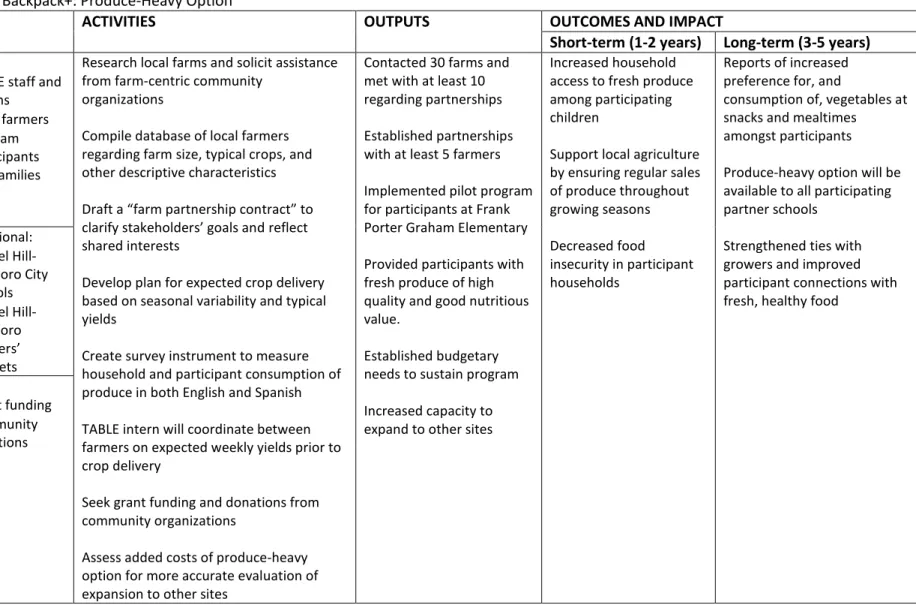
TABLE’s programs operate with the primary goal of alleviating hunger among elementary school-age children in the Chapel Hill-Carrboro City school system of Orange County, North Carolina (TABLE, 2014). Beyond addressing hunger, TABLE works to ensure the food provided is nutritionally sound, of good quality, and reflects an implicit aim to consume healthier items when the option to do so is available. To accomplish this task, TABLE draws on the support and efforts of local schools, college students, and a variety of community members to successfully implement its programs. This provides the most vulnerable children with food at times when subsidized school meals are unavailable, engages children though basic education regarding healthy eating decisions, and unites community members in service to improve the health and well-being of some of their poorest members. Logic models of the two programs supported by TABLE (Backpack+ and SnackChef+) are provided in Appendix B.
Backpack+: Produce-Heavy Option – Goals
26 preferences as participants and their families become more familiar with the produce and its
preparation. The program also intends to support community agriculture while emphasizing the reciprocal role local food producers have in providing for their communities.
Short-term Backpack+ Objectives:
1. By 3 months, compile a database of farmers in Orange County and bordering counties, with information regarding farm size, typical seasonal crops, and other descriptive characteristics. Activities: A TABLE intern will speak with local farmers’ market directors, Produce Box
coordinators, and other farm-centric organizations to ensure information collected is thorough and accurate. Additional research will be conducted to capture the breadth of local farms and maintain an up-to-date database.
2. By 6 months, TABLE will have contacted 30 farms and met with 10 regarding partnership on a produce-heavy Backpack option.
Activities: This will include the drafting of a “farm partnership contract” similar to those already in use with TABLE’s school partners. Such meetings will aim to better clarify all stakeholders’ goals and will inform the drafting so that a generalized agreement can better reflect those shared interests.
27 in crop yields, and nutritional quality. Chosen produce must also be accessible to children’s preferences and demonstrate basic familiarity for families who will be preparing it.
4. By 18 months, TABLE will implement a pilot of the program at Frank Porter Graham Elementary school.
Activities: In anticipation of the pilot, families of participating children will be informed of the planned changes to the current Backpack program and surveyed regarding current household and child-level consumption of produce. This will require development of a survey instrument by the TABLE staff, which would be available in both English and Spanish. Families will also be provided with additional recipes for cooking the produce to discourage waste and improve uptake of new foods.
Long-term Backpack+ Objectives:
1. By year 3, TABLE will have established partnerships with at least 10 farms.
2. By year 3, the produce-heavy Backpack option will be available to all participating partner schools.
3. By year 3, the reported availability of produce in participants’ households will increase by 10%, and the quantity of produce consumed by participating children will increase by 5%.
SnackChef+: Tasting and Food Preparation Curriculum – Goals
28 afterschool programs’ budgetary expenditures by offsetting the cost of snacks, and support broader community engagement by strengthening the role of college students in TABLE’s activities.
Short-term SnackChef+ Objectives:
1. By 3 months, develop a 10 session weekly food preparation and tasting curriculum for SnackChef+ participants in afterschool programs.
Activities: This includes reviewing the publically available material regarding “Vegetable Core” and “CookShop” programs and contacting the Pennsylvania Nutrition Education Tracks and the Food Bank of NYC, respectively, to determine if any supplemental resources are available. Additionally, TABLE interns will revise lessons to fit the constraints and personnel of a typical SnackChef session.
2. By 6 months, recruit two pairs of student team leaders (4 total) from UNC-Chapel Hill to lead curriculum sessions at each afterschool program pilot site.
Activities: TABLE personnel will advertise throughout UNC using their established marketing strategies, through the UNC Department of Nutrition, via the Campus Y, and other network contacts to recruit students to co-lead SnackChef+ education teams. If interest in the position is substantial, TABLE will conduct interviews to select the most committed and capable volunteers.
3. By 9 months, student team leaders will have initiated SnackChef+ at two pilot afterschool programs.
Activities: This will require student team leaders to have been trained in the SnackChef+
29 or challenges that may arise with program implementation. This approach allows for flexibility and individualized modification based on the characteristics of each afterschool program. Participants’ food preferences and eating habits will be assessed at baseline and reexamined at the conclusion of each pilot program.
4. By 12 months, all afterschool programs will have the option to participate in the new SnackChef+ curriculum one semester per year in addition to routine SnackChef activities. Activities: TABLE will further revise the curriculum following feedback from all stakeholders involved in the pilot sessions. They will then promote scalability by adding a dedicated intern to coordinate student team leaders and ensure open communication amongst the organization and afterschool programs.
Long-term SnackChef+ Objectives:
1. By year 3, expand SnackChef to serve at least 200 children at local afterschool programs. 2. By year 3, secure at least $10,000 in grant funding to ensure continuation of the program and
account for expenses associated with future expansion.
3. By year 5, increase reported preferences for vegetables as snacks by 10% and consumption of vegetables each week by 5% among SnackChef participants.
Implementation
30 among elementary school-age children in Orange County, the organization recognizes that food
insecurity is just as tightly coupled with obesity and poor nutrition. This relationship is reflected in the 2011 Orange County Community Health Assessment (Orange County Health Department, 2011) – which identified childhood food security, obesity and nutrition as priorities – and addressed in the
redevelopment and design of TABLE’s two flagship programs: Backpack (aimed at hunger) and SnackChef (aimed at obesity and nutrition).
Backpack+: Produce-Heavy Option
The new “Backpack+” will serve as a produce-heavy option for participants, and will enhance the traditional weekend backpack meals by including a higher proportion of fruits and vegetables. In order to accomplish this task, TABLE will need to develop and strengthen partnerships with local farmers. Over the first 3 months, a TABLE intern will compile a database of small, regional farms, reaching out to farmers’ market organizers and other farm-centric organizations to ensure records are sufficiently thorough and accurate. Most TABLE interns are UNC-Chapel Hill college students with a strong interest in working at service or non-profit organizations. They are connected to TABLE through a partnership with UNC’s “Campus Y”, and students are paid for their hours of labor by the university’s work-study program. The partnership has been very successful thus far, and TABLE is expected to add 2-3 interns to their part-time staff in the coming year.
By 6 months, TABLE staff will work to draft a “farm partnership contract” aimed at meeting the program’s new produce requirements and clarifying responsibilities for potential farm partners. This document will be revised throughout this period as TABLE meets with farmers in order to better reflect growers’ concerns and achieve agreed upon goals and expectations. This will culminate in the
31 planning of produce delivery throughout the course of a typical school year, using expected growing patterns and crop yields as a guide.
By 18 months, the Backpack+ program will be piloted at Frank Porter Graham Elementary (FPG), a current partner school that has expressed significant interest in a more produce-heavy option for participating students. In anticipation of program launch, families of participating students will be informed of expected changes to the Backpack program, and each will be surveyed regarding current child and household consumption of fruits and vegetables. TABLE will work with FPG staff to
communicate with families and ensure that both information and surveys are conveyed accurately in both English and Spanish. TABLE will also provide participating families with recipes and suggestions for weekly produce preparation to improve uptake and discourage waste of new or unfamiliar foods.
Within three years, Backpack+ should be an available option for all of TABLE’s partner schools who wish to provide more produce-rich meals to student participants. To accommodate this expected demand, TABLE will expand farm partnerships to at least 10 local growers as well. The ultimate objective of the program over this time period is to increase the average household availability and consumption of produce amongst participating children. Budgetary estimates for Backpack+ can be found in Appendix C.
SnackChef+: Tasting and Food Preparation Curriculum
32 preparation and tasting curriculum for SnackChef+ participants, drawing on the publically available materials listed previously (e.g. Vegetable Core, CookShop, etc.). This curriculum will be modified to fit the time, resource, and personnel constraints of a typical SnackChef session, and will include lesson-by-lesson variations to account for substantive age-differences in participants.
By 6 months, TABLE will recruit four college student volunteers from UNC-Chapel Hill to operate as team leaders (two per location) at each of the two afterschool sites where SnackChef+ will be piloted. Recruitment will be conducted through TABLE’s current marketing channels, utilizing the UNC Campus Y and other network contacts to reach able leaders. Each pair of team leaders will then work with
teachers from their assigned afterschool program to ensure that the curriculum is appropriate for their students and make any revisions necessary to ensure smooth operation at each site. By 9 months, teams will have initiated the first education sessions at each of the two pilot afterschool sites.
Additional student volunteers will be recruited to teams on a week-by-week basis using TABLE’s online sign-up portal, which has proven reliable for volunteer scheduling in all of their current ventures.
33 Evaluation Plan
Rationale for Evaluation
The importance of evaluation to the development and maintenance of health programs cannot be understated. This is equally true whether a program is led by a government organization, funded through grants and private philanthropy, or one of a host of other not-for-profit entities. Proper evaluation allows for program effectiveness to be measured in discrete terms, provides opportunities for the improvement of programs, and demonstrates accountability to program funders and good stewardship over scarce resources (Centers for Disease Control and Prevention, 2013). To be of greatest use, it is important to establish the primary goals of evaluation, denote which parties will be conducting the evaluation, and define expectations of the evaluation for all involved stakeholders.
For TABLE, evaluation will provide an excellent opportunity for priority setting and improvement within the organization. Like any organization with limited funds and multiple programs, identifying effective and sustainable strategies will be critical for ensuring appropriate resource allocation and assessing long-term success (W.K. Kellogg Foundation, 2010). This also equips TABLE with the information needed to be transparent to their many stakeholders and community partners. Among them, schools and families entrust that the food and services TABLE provides to participant children is of good value, and community members who donate their time and money to program operations deserve an accounting of how their efforts are put to use. Additionally, as Backpack+ and SnackChef+ are intended to build upon current TABLE programs, close evaluation will help the organization to determine if the programs are meeting their aims and inform continuous improvement (Centers for Disease Control and Prevention, 2013).
34 stakeholders alike (W.K. Kellogg Foundation, 2010). As such, an internal evaluator will be in a strong position to conduct longitudinal evaluation and promote communication throughout the evaluation. Internal evaluators can also be invested in program improvement by assessing effectiveness and addressing shortcomings in real-time. External evaluators can lend credibility to the evaluation process by creating needed distance between the programs and the organizations implementing them, which is especially important when funding comes from governmental or large private sources (W.K. Kellogg Foundation, 2010). As TABLE has a vested interest in its goals (to provide healthful food aid to hungry children) above any specific program, evaluation of its programs do not necessitate that evaluators have a high level of remove to afford an unbiased analysis. However, as Backpack+ and SnackChef+ become more established components of TABLE’s work, the importance of externally-driven evaluation will grow as well.
Equally critical to appropriate evaluation is engagement and input from key stakeholders. Even when stakeholders are partnering to address the same aims, the questions and aspects of evaluation they deem to be of greatest importance may reflect differing perspectives and priorities. In this way, TABLE and the children they serve will benefit most from involving a wide range of stakeholders (e.g. parents, teachers, farmers, school officials, etc.) to establish which measures and questions will make the evaluation most useful (Issel, 2014).
35 Budgetary constraints in particular can hinder the conduct of a thorough and meaningful
evaluation. If financial estimates are not sufficient to cover the full costs of evaluation (or
implementation costs rise unexpectedly), the time allotted to the evaluation process and overall quality may suffer (Issel, 2014). Likewise, if it is determined that an internal evaluator does not have sufficient time nor skill set for a comprehensive evaluation, an external evaluator may need to be utilized, adding unexpected costs and delays to the situation. Assuring the data collected is valid and reliable is also important, as conclusions based on inaccurate information can be more damaging that failing to evaluate at all. For example, if language and literacy barriers are not adequately addressed when seeking input from participants’ parents, salient issues may be overlooked or misinterpreted altogether. Consideration for these many potential challenges and pressures from competing interests will require evaluators to be flexible and patient throughout the evaluation process.
Study Design
The design of an evaluation must be appropriate to the intervention it aims to study to ensure that program activities can be assessed and strengthened accordingly. TABLE will employ an
observational and a quasi-experimental design to evaluate the Backpack+ and SnackChef+ programs. As the intent of the program plan is to expand upon and improve TABLE’s activities, the previous iterations of TABLE’s programs will serve as comparison groups. This approach will provide rich subjective data, but may still make objective comparisons difficult, given the limited data evaluating current versions of Backpack and SnackChef. Rather, much of the quantifiable evaluation data will come from baseline and post-pilot surveys of food availability, behavior, attitudes, and preferences. As all pilot sites are
36 Given that much of the evaluation will be conducted as a feasibility study, observational data will inform the majority of the programs’ assessments. This will be prospectively collected throughout the stages of program implementation and will allow participating parties to reflect on the strengths and weaknesses of each step in real-time. It will also allow for development of improvement strategies in a continuous manner while remaining cognizant of the programs’ time and budgetary constraints.
Evaluation Methods
This evaluation will utilize a variety of quantitative and qualitative methods for data collection. Qualitative approaches will include focus groups, ended interviews, and surveys that utilize open-ended questions. Quantitative methods will include reviews of organizational records, evaluation of program documents, participant surveys and assessments.
Open-ended interviews with program staff, farmers, teachers and other stakeholders will serve as one of the primary means of collecting evaluation data. Their broad nature and adaptability to the interviewee make this method one of the most flexible, though more time-consuming, to implement. However, interviews also allow an evaluator to probe into critical components of program activities to obtain adequate follow-up and clarity that can be difficult to achieve from written surveys. Surveys that utilize open-ended questions seek to gather much of the same information, but in a more time-efficient manner. These can be especially useful if data is being collected from many parties, or follow-up at the conclusion of the program is particularly challenging (as may be the case with college student team leaders). Focus groups are another time and resource-efficient method for collecting substantive, open-ended information from many parties, and will be useful when receiving feedback from teachers and parents.
37 occurred as planned and how effective documents were at achieving their aims (essentially assessing the content of documentation). Participant surveys and assessments testing knowledge, attitudes, and behaviors regarding vegetable consumption are also critical components of evaluation (and the ultimate long-term objectives).
Evaluation Planning Tables
Backpack+ Objectives
Short-Term Objective #1: By 3 months, compile a database of farmers in Orange County and bordering counties, with information regarding farm size, typical seasonal crops, and other descriptive
characteristics.
EVALUATION QUESTIONS
PARTICIPANT EVALUATION
METHOD
Did program staff compile a database of farmers in Orange County and bordering
counties, with information regarding descriptive characteristics of the farms?
Program Staff Organizational Records
How will program staff know the database is complete?
Agriculture-associated organizations (e.g. Farmers’
Market personnel)
Open-ended Interviews
Is there detailed information regarding characteristics of all included farms?
Program Staff Document Review of Database
To what extent is the information current, reliable and predictable (from year-to-year)? How can it be
improved?
Agriculture-associated organizations (e.g. Farmers’
Market personnel) Local Farmers
Open-ended Interviews
What challenges hindered collection of the information?
38
Short-Term Objective #2: By 6 months, TABLE will have contacted 30 farms and met with 10 regarding partnership on a produce-heavy Backpack option.
EVALUATION QUESTIONS
PARTICIPANT EVALUATION
METHOD
Did program staff identify and contact 30 farms?
Program Staff Organizational Records
Did program staff meet and discuss partnership with 10 farms?
Program Staff Organizational Records
Were organizational meetings with farmers challenging? What barriers and other issues made this difficult?
Program Staff Local Farmers
Open-ended Interviews
Was staff able to draft a “farm partnership contract”?
Program Staff Organizational Records
Which aspects of the
partnership contract are seen as reasonable/unreasonable by farmers?
Local Farmers Open-ended Interviews
Short-Term Objective #3: By 12 months, TABLE will have established at least 5 partnerships with farmers and developed plans for expected delivery of produce to TABLE throughout the course of the
elementary school year.
EVALUATION QUESTIONS
PARTICIPANT EVALUATION
METHOD
Did TABLE establish
partnerships with at least 5 farmers?
Program Staff Organizational Records
Did the “farm partnership contracts” need to be
modified to meet agreed-upon needs?
39 Was the development of
mutually-beneficial “farm partnership contracts” difficult? If so, why?
Program Staff Local Farmers
Open-ended Interviews
How will produce be delivered to TABLE, and are there contingency plans for missed deliveries?
Program Staff Local Farmers
Open-ended Interviews
Were farmers able to
anticipate crop yields and crop rotation by the start of the year? What made those expectations more or less reliable?
Program Staff Local Farmers
Organizational Records Open-ended Interviews
Do expected seasonal crop yields consistently meet the program’s weekly food needs? If not, why?
Program Staff Local Farmers
Organizational Records Open-ended Interviews
Is the produce available diverse, of good nutritional quality, and accessible to children?
Program Staff Organizational Records
Short-Term Objective #4: By 18 months, TABLE will implement a pilot of the program at Frank Porter Graham Elementary school.
EVALUATION QUESTIONS
PARTICIPANT EVALUATION
METHOD
Did TABLE implement the pilot program at Frank Porter Graham Elementary school?
Program Staff Organizational Records
How were families of participating children informed of the planned changes to the Backpack program? Was this clearly and adequately communicated?
Program Staff Participant Families
Document review of Informational Literature
40 Did program staff develop and
distribute a survey instrument regarding opinions of the current program and consumption of produce by participating families? Was it available in Spanish?
Program Staff Participant Families
School Officials
Document review of Informational Literature
Focus Groups
Were suggested recipes developed to correspond with seasonally available
vegetables? Were they available in Spanish?
Program Staff Participant Families
Document review of Informational Literature
Focus Groups
How were program changes received by participating families? What gaps did they identify in program services?
Participant Families Focus Groups
Did program changes alter participating family and/or child eating habits?
Participant Families Participant Surveys Focus Groups
Were partners at FPG satisfied with the changes to the
Backpack program? Were they able to accommodate new program constraints?
School Officials Open-ended Interviews
Long-Term Objective #1: By year 3, TABLE will have established partnerships with at least 10 farms.
EVALUATION QUESTIONS
PARTICIPANT EVALUATION
METHOD
Did TABLE establish
partnerships with at least 10 farms?
Program Staff Organizational Records
If partnerships were difficult to establish, what obstacles hindered their formation?
Program Staff Local Farmers
Open-ended Interviews
Are current farm partners satisfied with their contracts? Why or why not?
41 Have farm partners been able
to consistently supply high-quality produce to meet expected program needs?
Program Staff Farm Partners
Organizational Records Open-ended Interviews
If farms vary in their quality as partners, which farm aspects are associated with “high reliability” and “high quality”?
Program Staff Farm Partners
Open-ended Interviews Organizational Records
Long-Term Objective #2: By year 3, the produce-heavy Backpack option will be available to all participating partner schools.
EVALUATION QUESTIONS
PARTICIPANT EVALUATION
METHOD
Is Backpack+ an option for all participating partner schools?
Program Staff School Officials
Organizational Records
Does TABLE have the organizational capacity to manage the program for all partner schools?
Program Staff Open-ended Interviews
Are available food supplies from partner farms sufficient to provide for all participants?
Program staff Farm Partners School Officials
Open-ended Interviews
If partner schools are unable to participate in the produce-heavy Backpack program, what barriers/challenges prevent them from doing so?
School Officials Program Staff
Open-ended Interviews
42 EVALUATION
QUESTIONS
PARTICIPANT EVALUATION
METHOD
Do participating households report a 10% increase in the availability of produce in the home?
Participant Families Participant Surveys
Do participating households report a 5% increase in the quantity of produce consumed by their children?
Participant Families Participant Surveys
SnackChef+ Objectives
Short-Term Objective #1: By 3 months, develop a 10 session weekly food preparation and tasting curriculum for SnackChef+ participants.
EVALUATION QUESTIONS
PARTICIPANT EVALUATION
METHOD
Did program staff develop a 10 session weekly food
preparation and tasting curriculum?
Program Staff Organizational Records
Are sessions adaptable for varied afterschool environments? Program Staff Afterschool Teachers School Officials Open-ended Interviews Focus Groups
Does each session reinforce nutrition concepts and incorporate new foods?
Program Staff Afterschool Teachers
Nutritionists
Document Review of Curriculum Open-ended Interviews
Can sessions be
adapted/targeted to different age groups?
Program Staff Afterschool Teachers
Open-ended Interviews
Are the resource requirements for each lesson reasonable?
43
Short-Term Objective #2: By 6 months, recruit two pairs of student team leaders (4 in total) from UNC-Chapel Hill to lead curriculum sessions at each afterschool program pilot site.
EVALUATION QUESTIONS
PARTICIPANT EVALUATION
METHOD
Were 2 pairs of student team leaders recruited to lead curriculum sessions at each pilot program pilot site?
Program Staff Organizational Records
What went well with advertising for potential student leaders?
Program Staff Student Team Leaders
Open-ended Interviews Student Team Leader Surveys
Was interest substantial enough to require interviewing candidates?
Program Staff Open-ended Interviews
Do student team leaders have the expected skills and time available to commit to all curriculum sessions?
Program Staff Student Team Leaders
Organizational Records Open-ended Interviews Student Team Leader Surveys
Short-Term Objective #3: By 9 months, student team leaders will have initiated SnackChef+ at two pilot afterschool programs.
EVALUATION QUESTIONS
PARTICIPANT EVALUATION
METHOD
Was SnackChef+ initiated at two pilot afterschool programs? If not, what barriers arose?
Program Staff Organizational Records Open-ended Interviews
Did student team leaders feel they were adequately trained in the SnackChef+ curriculum?
Student Team Leaders Student Team Leader Surveys
Did student team leaders and afterschool teachers each feel comfortable in modifying the
Student Team Leaders Afterschool Teachers
44 curriculum to fit their
program?
Were student team leaders able to recruit additional college students to help teach weekly SnackChef+ sessions?
Program Staff Student Team Leaders
Organizational Records Open-ended Interviews Student Team Leader Surveys
Was a survey created to assess participating children’s food preferences and eating habits? Was adequate time given to implement it during the first session?
Program Staff Student Team Leaders
Afterschool Teachers
Organizational Records Open-ended Interviews Student Team Leader Surveys
How did students’ knowledge and attitude about vegetables change after participation in the SnackChef+ curriculum?
Afterschool Teachers SnackChef Participants
Program Staff
Open-ended Interviews Participant Surveys and
Assessments
Were sufficient time and resources allotted to each SnackChef+ session?
Student Team Leaders Afterschool Teachers
Open-ended Interviews Student Team Leader Surveys
What about each session would team leaders or teachers do differently?
Student Team Leaders Afterschool Teachers
Open-ended Interviews Student Team Leader Surveys
Short-Term Objective #4: By 12 months, all afterschool programs will have the option to participate in the new SnackChef+ curriculum one semester per year in addition to routine SnackChef activities.
EVALUATION QUESTIONS
PARTICIPANT EVALUATION
METHOD
Is SnackChef+ an option at all participating afterschool programs?
Program Staff Organizational Records
What went well with the pilot programs? What needs to be revised?
Program Staff Afterschool Teachers
Open-ended Interviews
45 sufficient student team
leaders to operate SnackChef+ at all participating afterschool programs?
Was TABLE able to add a dedicated intern to coordinate student team leaders?
Program Staff Organizational Records
What challenges have arisen in expanding and implementing the curriculum? How can these challenges be addressed?
Program Staff Student Team Leaders
Afterschool Teachers
Open-ended Interviews Student Team Leader Surveys
Long-Term Objective #1: By year 3, expand SnackChef to serve at least 200 children at local afterschool programs..
EVALUATION QUESTIONS
PARTICIPANT EVALUATION
METHOD
Does SnackChef+ serve at least 200 children at local
afterschool programs?
Program Staff Organizational Records
What is the satisfaction of SnackChef+ at its current participating afterschool programs? Are there things those programs feel should be changed? Afterschool Teachers SnackChef Participants School Officials Participant Surveys Focus Groups Open-ended Interviews
Which aspects of an
afterschool program (#/age of children, location, amenities, etc.) produce an ideal SnackChef+ environment?
Program Staff Student Team Leaders
Afterschool Teachers School Officials
Open-ended Interviews Focus Groups
Are funding/staff resources sufficient to provide for this level of expansion?