Continuous Quality Improvement in Emergency Medical Services: A Proposal for a Comprehensive Model
By
Jose G. Cabanas MD, FACEP
A Master’s Paper submitted to the faculty of the University of North Carolina at Chapel Hill
in partial fulfillment of the requirements for the degree of Master of Public Health in
the Public Health Leadership Program
Chapel Hill 2013
Advisor:
Second Reader:
Abstract
After beginning in the manufacturing industry, continuous quality improvement (CQI) practices have evolved to unprecedented applications across numerous
industries, especially the field of medicine. Emergency Medical Services (EMS) is considered a fundamental component of healthcare’s safety net because it provides
medical treatment and transport for patients with illnesses and injuries 24 hours a day. In 2006, the IOM published a report entitled “Emergency Medical Services at the Crossroads” that identified critical vulnerabilities for the future of EMS systems in the
Introduction
The continuous pursuit for excellence in what we do every day is the core
foundation of the continuous quality improvement (CQI) movement. Across the last five decades, the CQI movement has revolutionized numerous industries around the world (Sollecito & Johnson, 2013). From manufacturing industries, to business practices, to more recently the healthcare industry, the application of CQI techniques has made a significant contribution in process improvement, reducing variability, improving industry standards, and most importantly improving the quality of the services the industry provides.
The concept of CQI began in the early twentieth century with the development of more efficient inspection methods in the manufacturing industry to ensure the quality of finished products. Its biggest momentum likely came after World War II when the
Japanese manufacturing industry was facing significant issues with the quality of their products. With the implementation of robust quality-assurance methods and sound statistical analysis based on the experiences from Shewhart and Deming, Japanese industry became more efficient, dependable, and of a higher standard. These
experiences became an example for other industries and created the conditions that allowed the quality improvement movement to grow and evolve until it reached the healthcare industry (Deming, 1986).
There is an underlying similarity between the practice of medicine and key principles of CQI. Both medicine and CQI require common steps: observing a
sought. The fundamental principle is the commitment to ongoing improvement and not limiting the data analysis to a snapshot in time. On the contrary, if the results are adverse, the data analysis continues to determine the next steps for potential areas to improve.
Quality improvement is not a new concept in healthcare. The infancy of CQI in medicine can be traced to the Crimean War of 1854 when Florence Nightingale found a relationship between hospital sanitation practices and mortality rates among injured soldiers (L. McDonald, 2001). However, its modern application in medicine came in the 1950s after the successful experience of the manufacturing industry. Quality
improvement gained more attention in the hospital sector when several physicians organizations came together to create a volunteer accreditation process for institutions by adopting the recommendations that Avedis Donabedian presented in his landmark publication Evaluating the Quality of Medical Care (Donabedian, 2005). In this
publication Donabedian presented the structure-process-outcomes model as a framework for healthcare quality. He believed quality had three main domains: who provides care (structure); how care is provided (process); and the impact of care provided (outcomes). This model was applied in hospital settings across the country and became a foundation for quality improvement in health care.
Besides Donabedian, other great scholars like Shewhart and Deming had a significant impact on the development of CQI in the healthcare industry. Shewhart is credited with the Plan-Do-Study-Act model (PDSA) for improvement practices
continuously repeated until the desired improvement is achieved. Similarly, Deming made enormous contributions to the development of CQI with his well-known 14-program recommendations that focus on management to improve quality (Deming, 1993). His main concern was always process rather than organizational structures. He believed in the need for objective data make good management decisions. Deming believed in a top-down approach to CQI because management had the final
responsibility for quality in an organization. This philosophy has significant implications in the healthcare industry where professionals must work together across boundaries to ensure a high-quality outcome.
The publication of two landmark Institute of Medicine (IOM) reports in 1999 and 2001 brought national attention to the critical need for a more consistent application of CQI in health care. Both reports came under the domain of patient safety, which caught the attention of thousands of healthcare professionals and hospital administrators
throughout the US. The first report, “To Err Is Human” (2000), magnified the safety gaps
in the healthcare system, noting that approximately 98,000 people die every year due to avoidable medical errors (Institute of Medicine, National Academy of Sciences, 2000) The second report, “Crossing the Quality Chasm” (2001), had a broader view of the
delivery of healthcare services in the US but still indicated the healthcare system was failing to provide “consistent, high-quality medical care to all people” (Institute of
Medicine, National Academy of Sciences, 2001). Both reports drew attention across medical specialties and caused unexpected reactions within the walls of the house of medicine through editorials in high impact journals that questioned the validity of the data presented in the IOM's reports (C. J. McDonald, Weiner, & Hui, 2000).
Given that these published reports created a significant momentum, the IOM’s definition of quality—“The extent to which health services increase the likelihood of desired health outcomes and are consistent with current professional knowledge”
(Institute of Medicine, National Academy of Sciences, 2001)—brings together six crucial “aims” to provide a framework for improving the delivery of care (Figure 1). Any CQI
Figure 1. Six aims of the IOM to improve quality (Institute of Medicine, National Academy of Sciences, 2001).
Despite increasing acceptance in medicine over the last decade, CQI still lacks a consistent presence in certain domains of medicine including out-of-hospital medicine. Successful CQI programs have focused on processes rather than individuals with the goal of minimizing variation to improve outcomes. It is just not a methodology to study or criticize clinical performance, but instead it is a philosophy that promotes a
commitment to ongoing improvement. Unlike quality assurance, which focuses on identifying and remedying individual problems, CQI focuses on the overall system first by examining all involved system processes that have an impact on the desired clinical outcome (Kelly, 2003).
The Role of Emergency Medical Services (EMS) in Health Care
In order to understand the application of CQI principles in EMS systems, it is first important to understand the fundamental role of EMS in the healthcare system.
Historically, EMS was developed to manage two key critical conditions: trauma and cardiac arrest (Institute of Medicine, National Academy of Sciences, 1966; Pantridge & Geddes, 1967). However, its role in medicine has evolved over the past 30 years.
1. Safe
Avoiding preventable injuries, reducing medical errors 2. Effective
Providing services based on scientific knowledge (clinical guidelines) 3. Patient centered
Care that is respectful and responsive to individuals 4. Efficient
Avoiding wasting time and other resources 5. Timely
Reducing wait times, improving the practice flow 6. Equitable
Many consider EMS to be an extension of emergency medical care into the prehospital setting (Eisenberg, Bergner, & Hallstrom, 1980; Eisenberg, 1997) while others believe it provides access to unscheduled health care in an alternative way. For these reasons, EMS is considered a fundamental component of healthcare’s safety net. EMS is
characterized by providing medical treatment and transport to definitive care for patients with illnesses and injuries. Regardless of regional variations in EMS across jurisdictions, ongoing and frequent requests for emergency medical assistance are received at 9-1-1 emergency dispatch centers around the country. With a common characteristic of dedication for public service, EMS providers attend patients 24 hours a day in dynamic and challenging environments. For instance, first medical contact starts when a trained tele-communicator provides initial treatment instructions over the phone while
dispatching all the necessary resources to the patient’s location. Once at the scene,
pre-hospital providers must conduct a clinical decision process to determine each patient’s immediate needs and establish a treatment plan, which sometimes must be
rapid for time-dependent emergencies (see Figure 2).
In 2006, the IOM published a report entitled “Emergency Medical Services at the Crossroads” (Institute of Medicine, National Academy of Sciences, 2006) that identified
The practice of out-of-hospital medicine is a field that interfaces with multiple domains within the healthcare system, and also represents an area of high risk for medical errors and adverse events with numerous opportunities for performance improvement and process redesign. In this paper, I provide an overall review of fundamental CQI concepts, discuss its potential application to the practice of out-of-hospital medicine, and recommend a comprehensive framework for EMS agencies to implement locally.
Methodology for Literature Review
I completed a comprehensive search of the literature on January 2013 using different search strategies in Medline, Google Scholar, and the Cochrane database. In addition to the literature search, I also hand-searched references of review articles, key chapters on EMS, and quality improvement textbooks. I also visited websites of key federal agencies that have an oversight role in health care and consulted with content experts to make sure we did not miss important reference material for this paper. All material utilized for this paper is referenced at the end of the manuscript.
1 – Patient Contact 2 – Scene Time 3 – Transport Time 4 – Total prehospital time *Adapted from Glickman S.W. (2010)
4
Depart from scene EMS Provider
on scene location
1
2 3
Appropriate Destination 911
AccesAc
Key Words for Literature Search
Continuous quality improvement Performance improvement Out-of hospital
Evidenced-based measures Performance measures Emergency medical services Patient safety
Medication errors
Discussion The Quality Improvement Movement in EMS
Traditionally the public’s expectations in 9-1-1 emergency situations, regardless
of true time-dependency in a clinical condition, have been based on how quickly pre-hospital responders arrive and attend to their family members as a surrogate measure for quality care. Response time analyses on time-dependent conditions provide an important description of the interrelationship between operational and clinical
performance. However, this only represents one component of emergency medical care which is not sufficient to demonstrate the overall delivery of quality care.
The Information Systems section states, “that the lack of organized information
systems that produce data which are valid, reliable, and accurate is a significant barrier to coordinating EMS system evaluation, including outcomes analysis” (Delbridge et al.,
1998; National Highway Traffic Safety Administration., 1996). Since that time, national EMS organizations and industry leaders have embraced CQI process and assessment tools, including the development of educational offerings on these topics at important scientific meetings and the publication of key consensus and position statements (Dunford et al., 2002).
Much has been changed, but more stayed the same until the 2006 report from the IOM. The report brought significant national attention because it described the state of EMS clinical performance and accountability with the following language:
“Accountability has failed to take hold in EMS systems because responsibility is
dispersed across many different components of the system; thus it is difficult for policy makers to determine when a system breakdown occurs, much less where it is located or how it can be adequately addressed” (Institute of Medicine, National Academy of
The EMS Medical Director’s Role and Potential Challenges
Medical direction is a vital component for any EMS system because EMS physicians have the fiduciary responsibility to oversee medical care in the community assuring it is safe and effective. This responsibility exists at many levels and includes: defining the clinical practice for the community through the development of clinical standards, directing the educational content for EMS providers, and building a strong clinical team that collaborates to continuously improve performance throughout the systems. The medical director also interfaces with stakeholders in the healthcare system to implement innovative strategies and serves in advocacy roles for the patient, the EMS system, and the community.
Besides providing clinical leadership for the EMS system, medical directors must promote an environment that fosters and cultivates the value of teamwork within a system that has complex processes of care and delivers critical medical services. A close working relationship between field providers, management, and the clinical leadership team is critical to ensure a clear understanding of roles and responsibilities while maintaining a unified message across the system. Although we acknowledge teamwork is a vital component of pre-hospital care, CQI still lacks utilization of this concept. By having a team working together with a sense of purpose, all providers are empowered rather than just the clinical leadership in the system.
a “constancy of purpose” (Deming, 1993). This is a vital to foster an environment that
values continuous improvement within its organizational culture. This has been referred to by various authors as a “culture of excellence” (Sollecito & Johnson, 2013).
From an overall systems perspective, a key challenge is that EMS medical
directors come from a wide range of backgrounds. Many are emergency physicians who have had some exposure to EMS activities during training; some come from other
specialties with or without previous exposure to EMS. This is a unique challenge given the potential variability in knowledge and experience on CQI and its application in the practice of pre-hospital medicine. In order to have an effective CQI program, EMS medical directors must recognize first the value of CQI practices before they can embrace a commitment toward implementing these practices in the EMS system.
Figure 3. The medical director’s vision for the Austin/Travis County EMS system.
Another potential challenge with applying CQI practices in EMS is the possibility of a disconnect between ongoing performance-improvement activities and the
established vision from the clinical leadership for the system. Most EMS medical directors do not build a performance-improvement program from the beginning; rather, they may inherit operational procedures that are more focused on a disciplinary process
The Austin/Travis County EMS System will be nationally known for continuously striving to:
Utilize the latest clinical evidence to provide innovative OOH care to our community,
Create a patient centric, safety oriented environment for both patients & providers,
rather than a performance-improvement culture. Also, they may inherit a CQI process that may not reflect their own philosophical visions for the system’s clinical practice.
Besides all the previously discussed potential challenges faced by EMS systems, organizational culture is perhaps the most important challenge of all because it is what keeps a CQI program functional. It is important for quality organizations to promote a culture that brings the system together by establishing core values that are patient-centered utilizing system-based thinking. This requires the system’s leadership to focus
more on investing in their personnel because it is their most valuable asset.
Besides having clear direction from the clinical leadership, it is also important for medical directors to cultivate a culture that promotes collaboration within and across organizational boundaries that represent the EMS system. Despite the importance of teamwork in emergency medical care, very little is known about how well EMS teams work together, what improves or derails teamwork, and what the implications are for conflict between field providers, especially across multiple levels of certification. Patterson and colleagues recently developed a tool to measure effective teamwork in EMS teams (Patterson et al., 2012). They designed a survey tool study which
addressed team leadership, partner communication, trust, adaptability, and conflict. This tool could provide valuable information to better understand the potential impact of teamwork on clinical performance.
and the fundamental objective of improving a process rather than placing blame on individuals. This is particularly critical to build a patient safety culture throughout the system so providers feel comfortable self-reporting potential clinical issues without being afraid of an adverse impact on their careers.
One aspect of EMS system design that can impact organizational culture and that medical directors must take into consideration is the historical-rank command structure. Most EMS systems can be integrated by several public safety agencies
including the fire department and EMS agencies. These entities have a solid disciplinary foundation that focuses on a traditional public-safety rank structure, which can influence CQI initiatives because individuals may be afraid of losing their employment. Therefore, the clinical leadership team must be consistent and emphasize that the ultimate goal of an effective CQI program in a modern EMS system is to have better EMS personnel, a better service to the community, and most importantly, better patient care.
Clinical Performance for High-Impact Clinical Conditions
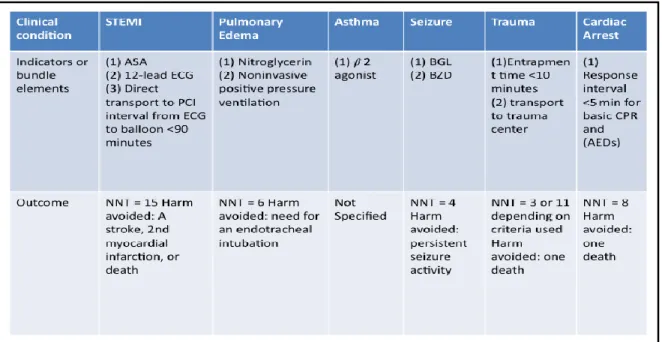
EMS clinicians should not only look at clinical outcomes; they need to also look at potential harms avoided as a benefit from the intervention in the field. This approach must be accompanied by efforts towards building a culture that promotes continuous improvement and a plan to disseminate the information across the system and the community.
Figure 4. Evidenced-based practices in out-of-hospital medicine (Myers et al., 2008) In many EMS systems, the perception of quality service has been dependent on response-time intervals and resuscitation rates for victims of cardiac arrest (Blackwell, Kline, Willis, & Hicks, 2009; Khalifah Al-Shaqsi, 2010; Myers et al., 2008). These
view of clinical performance considering all the clinical emergencies EMS attends on a daily basis, and caution should be taken to not focus on just achieving a measure to comply with the expectations from management. Deming offered fourteen key principles to transform organizations by making them more effective. One of his recommendations was to eliminate the need for numerical quotas or management goals as a measure for quality. Rather, organizations should target leadership that focuses on learning,
embracing, and implementing methods for improvement (Deming, 1993). Therefore, new and effective clinical performance measures as part of a comprehensive CQI plan are needed. The 2007 US Metropolitan Municipalities EMS Medical Directors Consortium published a position statement which lays out a
multifactorial model for EMS system performance measurements (Myers et al., 2008). This should serve as a working template. Simple measures allow for the clinical
leadership team to communicate the value of the system with nonclinical stakeholders like public officials or community members in an understandable format. It also allows for the development of specific educational content based on clinical data while providers view the impact of their work.
contain limited and variable information. Data collection through electronic data capture systems utilizing tablets can simplify this method while also providing a more consistent process for documenting clinical and operational data.
Given that less than optimal performance may be related to clinical decision making rather than process issues, it is important for the clinical leadership team to clearly communicate expectations to all practitioners in the system. Most systems rely on a retrospective analysis of patient care records after the fact to teach providers on specific findings without looking for common root-causes. This is a limited analysis of clinical performance and neither reflects total patient care nor predicts future
performance.
In order to expand a CQI function, it is important to lay out a clinical vision for the system in a process that includes participation by EMS personnel. Field providers should have the opportunity to participate with the quality improvement team in the development of new quality initiatives. This promotes teamwork and collaboration with the clinical leadership team by allowing everyone to work together towards a clear goal. Gwande’s work in the implementation of surgical safety checklists is a great example
that shows how a quality initiative was accepted as a result of effective teamwork during the development of a safety initiative (Gawande, 2009).
CQI Framework for EMS
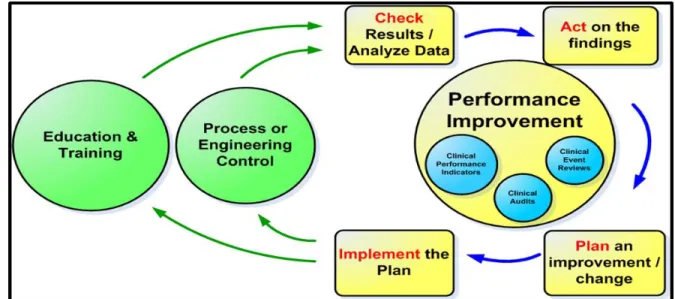
design and resource deployment, clinical performance, provider education, equipment implementation, response intervals, patient outcome, patient and provider satisfaction, patient and provider safety, and participation in EMS benchmarking activities. Figure 5 summarizes the interrelationship between the components of a CQI process for EMS systems.
Figure 5. Austin/Travis County EMS system CQI Framework. – Courtesy of Louis Gonzales, LP (2012)
One aspect that requires particular attention in the CQI model for EMS is the monitoring and detection of clinical adverse events. Philip Crosby, one of the giants of quality improvement, advocated for a greater emphasis on prevention as a measure of quality. He stated, “The performance standard must be zero defects” (Crosby, 1979).
Patient safety can be evaluated prospectively or retrospectively. In the
retrospective model, an adverse event is identified through reporting or ideally through a system-wide surveillance process. Once detected, the performance-improvement team should analyze the event to take proper actions and prevent a recurrence. Most
systems study adverse events in a reactive mode without knowing all the potential causal factors that lead to the event (Grayson & Gandy, 2012). Therefore, some systems continue to face similar adverse clinical events. On the contrary, a proactive approach would focus on studying weak processes that have an unacceptable level of risk for patients having an adverse event under the care of EMS personnel, thereby preventing the event. I propose a framework for EMS systems that is built on three interrelated dimensions of CQI.
Prospective CQI.
Prospective CQI includes various activities that promote quality patient care through continuing medical education, a credentialing process for new trainees, face-to-face meetings for in-service reviews, sharing clinical performance, and engaging in prevention activities. All of these processes are essential in maintaining a
patient-centered EMS system that focuses on quality. However, this can sometimes become an overwhelming task for clinical leaders, given the broad scope of medical services that EMS provides on a daily basis. Therefore, clear direction and focus is important in order to be effective, especially when implementing changes across the system.
Given that EMS interacts with numerous stakeholders, it is important to
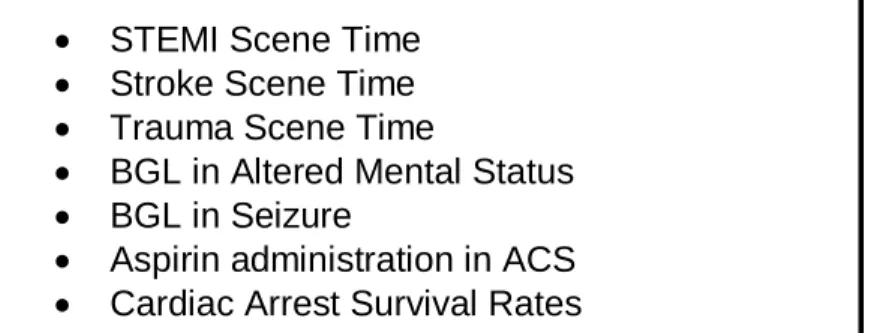
that center on high-impact clinical conditions utilizing process and outcome metrics. Process measures seek to evaluate the key steps EMS providers perform to produce a desirable clinical outcome, while outcome measures reflect the effect of clinical
interventions in the field. These data can help drive clinical behaviors across the system to minimize variation while communicating the value of out-of-hospital interventions. A list of potential clinical performance indicators is listed in Figure 6.
One aspect of prospective performance management is to link clinical outcomes with evidence-based practices to improve patient care by utilizing effective clinical interventions. Even though evidenced-based medicine is not a new concept, its potential in out-of-hospital medicine is unrealized (Jensen, Petrie, Travers, & PEP Project Team, 2009). For the past decade, EMS has seen an exponential increase in quality clinical research literature. EMS clinical teams are now becoming more familiar with clinical effectiveness measures like number needed to treat (NNT) to better comprehend the impact of particular interventions. For example, EMS systems commonly use noninvasive ventilation as part of a standard treatment strategy for patients with acute congestive heart failure. The literature clearly shows this therapy reduces the need for intubation with an NNT = 6 (Williams et al., 2013). Therefore, this intervention reduces the potential harm of intubation, which is a risky procedure with potential comorbidities and complications. Therefore, CQI teams should also examine harms avoided as part of prospective clinical performance.
Customer satisfaction is another area that deserves particular attention as part of prospective CQI. Several studies have identified common areas of patient
Harris, 2004; Risavi, Buzzard, & Heile, 2013). The identification of areas of dissatisfaction will allow focused performance improvement programs directed at customer service and risk management (Colwell et al., 2003). From a quality
improvement perspective, patient satisfaction is one aspect of ED care that sometimes lacks attention from clinicians. As part of my practicum experience, I develop a survey instrument for ED discharge telephone follow-up as part of an ongoing quality
improvement initiative to improve patient satisfaction. EMS customer satisfaction could be assessed using telephone-survey methods as part of a prospective CQI process.
Figure 6. Potential list of EMS clinical performance indicators. Retrospective CQI.
This domain relies on patient care records to evaluate medical care provided by field personnel. Chart audits are useful to evaluate clinical management, decision making, protocol compliance, and adherence to documentation standards. Chart audits also provide an opportunity for the clinical leadership team to identify potential adverse events that may not have been reported through the system-defined process. However, this is one of multiple data sources that CQI programs should utilize to identify areas for improvement.
STEMI Scene Time Stroke Scene Time Trauma Scene Time
BGL in Altered Mental Status BGL in Seizure
Some EMS services focus exclusively on retrospective chart reviews as their main component of a quality improvement program, which has limitations because it is based solely on what has been documented by providers. Although chart audits can be useful for a particular function or project, they can also provide a narrow perspective on quality. Therefore, the clinical leadership team must have a clear methodological
approach to minimize bias and inaccurate analysis and to avoid reflecting solely the opinion of the reviewer. Also in order to be effective, it is important to have
pre-established criteria with which charts will be reviewed for the process to be feasible and sustainable. For example, a small rural EMS system can review every patient care record, unlike a busy urban system where reviewing every record is not a manageable task.
The EMS clinical leadership team must define what they are seeking to accomplish by reviewing patient care records. This may be part of a quality
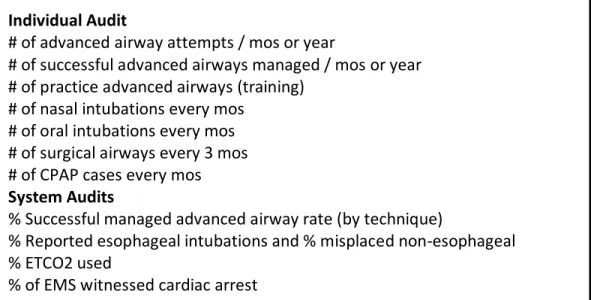
improvement intervention, project, or initiative. For EMS systems, clinical audits can be useful for high-risk low-frequency clinical events to evaluate performance across the system but also at the individual provider level. Most of these are critical clinical interventions where adherence to clinical guidelines is essential. The information gathered can be utilized to develop new education strategies to assure competency in these critical skills.
One of the opportunities most commonly missed by quality improvement teams is recognizing and reinforcing good practices. Clinical audits not only provide an
good clinical behavior. A list of potential clinical audits for EMS systems is listed in Figure 7.
Figure 7. List of clinical audits for low-frequency/high-risk events. Concurrent CQI.
Concurrent CQI occurs during real-time activities that evaluate the quality of patient care. One is when the quality improvement team including, the medical director, engages in direct field response to observe personnel during patient care activities. This allows the clinical leadership team to better understand potential challenges that
providers face in the field. It also allows the medical director to see how clinical protocols are implemented and to detect opportunities for improvement. Direct
observation is a valuable strategy to better understand the quality of medical services. Direct review of specific clinical concerns through a defined process is another form of real-time CQI. Like other patient-centered organizations, EMS systems must have a mechanism for clinical personnel to report concerns about less than optimal performance. This review should focus on understanding system issues rather than
Individual Audit
# of advanced airway attempts / mos or year
# of successful advanced airways managed / mos or year # of practice advanced airways (training)
# of nasal intubations every mos # of oral intubations every mos # of surgical airways every 3 mos # of CPAP cases every mos System Audits
% Successful managed advanced airway rate (by technique)
% Reported esophageal intubations and % misplaced non-esophageal % ETCO2 used
individuals so providers can buy-in and feel they are part of the improvement process without conveying blame. For significant clinical issues like sentinel events, the clinical leadership should utilize root-cause analysis methods to identify causal factors that can be addressed through process redesign and education to improve clinical performance. Patient Safety as a Dimension of CQI
EMS Systems must maintain a commitment to patient safety at all levels, from frontline personnel to the leadership team, as part of a comprehensive CQI plan. A culture of safety is an essential component of preventing or reducing errors and
improving overall health care quality (AHRQ Patient Safety Network, 2012). Preventable harm from emergency medical care has been gaining more attention in EMS during the last decade (Bigham et al., 2011; Brice & Daniel Patterson, 2012; Institute of Medicine, National Academy of Sciences, 2006; McCallion, 2007; Moore, 1999). Specifically, it has gained more momentum with the publication of several key publications (Bigham et al., 2012; Brice et al., 2012; Weaver, Wang, Fairbanks, & Patterson, 2012). In particular, Bigham and colleagues recently published a comprehensive systematic review
Medication errors.
The immediate need for life-saving medications can often tragically encounter a drastic error in administration. These incidents, such as giving the wrong dosage or the wrong medication, can expose the patient to unintended harm. Because the
consequences of a medication error can be severe and so immediate, there is often no time to intervene before they occur. EMS systems must build a process to identify and classify medication errors and build a culture that promotes self-reporting. These events errors must be treated differently from operational errors because they are typically multifactorial and require revisions of clinical the process.
Case example
A young patient with a known ingestion of methadone due to suicidal intentions was found with minimal breathing. The EMS providers on scene administered 0.3 mg of naloxone (reversal agent); protocol states 2 mg should be administered in these
situations. Given that providers administered a small dose, there was no clinical effect, and the paramedics proceeded to administered medications for intubation and
placement of an advanced airway. Once in the hospital, the patient received a full dose of naloxone, woke up, and was extubated. The correct dose of naloxone would have prevented an unnecessary risky procedure.
with the needed dosage. A potential performance improvement intervention could be the introduction of a checklist to serve as a cognitive aid and standardize the process. Future Implications
The practice of out-of-hospital medicine is evolving rapidly, and its future looks promising. Rapid changes are occurring in the industry, including the development of new areas of focus that have been traditionally outside the scope of EMS providers. This occurs out of necessity to have a more integrated and effective healthcare system in a time when growing healthcare cost continues to be an ongoing issue for
communities across the country. EMS will need to integrate more with healthcare networks due to the increased demand for higher quality and more service with less financial resources. Multiple studies show that a small proportion of patients with chronic conditions, including asthma, renal failure, chronic pulmonary disease, hypertension, congestive heart failure, (Miller et al., 2013; Reinius et al., 2012) and mental health and substance abuse, consume a significant number of available
healthcare dollars (Reinius et al., 2012). In part, this is related to the numerous hurdles that patients encounter when navigating the healthcare network to gain access to
primary or specialty services once they are discharged from the emergency department. In the future, EMS will play a crucial role in helping these patients navigate local
Conclusion
EMS systems continue to expand the role of CQI activities in their day-to-day functions. Although there are numerous challenges ahead, much progress has been made, especially in the domain of patient safety. EMS CQI activities should include prospective, retrospective, and concurrent review of all aspects of the EMS system that potentially impact patient care. It should also include the creation of educational
curriculums to teach prehospital providers about quality improvement.
EMS medical directors should be prepared to lead their organizations in the new world of healthcare, where performance and CQI principles will play a crucial role in the practice of medicine and are linked to new reimbursement models that will expand the traditional role of EMS systems.
References
AHRQ Patient Safety Network. (2012). Safety culture. Retrieved April/5, 2013, from http://psnet.ahrq.gov/primer.aspx?primerID=5
Alonso-Serra, H., Blanton, D., & O'Connor, R. E. (1998). Physician medical direction in EMS. national association of EMS physicians. Prehospital Emergency Care : Official Journal of the National Association of EMS Physicians and the National Association of State EMS Directors, 2(2), 153-157.
Bigham, B. L., Buick, J. E., Brooks, S. C., Morrison, M., Shojania, K. G., & Morrison, L. J. (2012). Patient safety in emergency medical services: A systematic review of the literature. Prehospital Emergency Care : Official Journal of the National Association of EMS Physicians and the National Association of State EMS Directors, 16(1), 20-35. doi:10.3109/10903127.2011.621045; 10.3109/10903127.2011.621045
Bigham, B. L., Bull, E., Morrison, M., Burgess, R., Maher, J., Brooks, S. C., et al. (2011). Patient safety in emergency medical services: Executive summary and
recommendations from the niagara summit. Cjem, 13(1), 13-18.
Blackwell, T. H., Kline, J. A., Willis, J. J., & Hicks, G. M. (2009). Lack of association between prehospital response times and patient outcomes. Prehospital Emergency Care : Official Journal of the National Association of EMS Physicians and the National Association of State EMS Directors, 13(4), 444-450.
doi:10.1080/10903120902935363; 10.1080/10903120902935363
tachycardia: Observations from the resuscitation outcomes consortium. Resuscitation, 81(2), 155-162. doi:10.1016/j.resuscitation.2009.10.026; 10.1016/j.resuscitation.2009.10.026
Brice, J. H., & Daniel Patterson, P. (2012). Special section: Safety in EMS. Prehospital Emergency Care : Official Journal of the National Association of EMS Physicians and the National Association of State EMS Directors, 16(1), 1.
doi:10.3109/10903127.2011.627108; 10.3109/10903127.2011.627108
Brice, J. H., Studnek, J. R., Bigham, B. L., Martin-Gill, C., Custalow, C. B., Hawkins, E., et al. (2012). EMS provider and patient safety during response and transport: Proceedings of an ambulance safety conference. Prehospital Emergency Care : Official Journal of the National Association of EMS Physicians and the National Association of State EMS Directors, 16(1), 3-19.
doi:10.3109/10903127.2011.626106; 10.3109/10903127.2011.626106 Cairns, C. B., & Glickman, S. W. (2012). Time makes a difference to everyone,
everywhere: The need for effective regionalization of emergency and critical care. Annals of Emergency Medicine, 60(5), 638-640.
doi:10.1016/j.annemergmed.2012.05.031; 10.1016/j.annemergmed.2012.05.031 Christenson, J., Andrusiek, D., Everson-Stewart, S., Kudenchuk, P., Hostler, D., Powell,
J., et al. (2009). Chest compression fraction determines survival in patients with out-of-hospital ventricular fibrillation. Circulation, 120(13), 1241-1247.
Colwell, C. B., Pons, P. T., & Pi, R. (2003). Complaints against an EMS system. The Journal of Emergency Medicine, 25(4), 403-408.
Crosby, P. B. (1979). Quality is free: The art of making quality certain. New York: Mentor.
Dawson, D. E. (2006). National emergency medical services information system (NEMSIS). Prehospital Emergency Care : Official Journal of the National Association of EMS Physicians and the National Association of State EMS Directors, 10(3), 314-316. doi:10.1080/10903120600724200
Delbridge, T. R., Bailey, B., Chew, J. L.,Jr, Conn, A. K., Krakeel, J. J., Manz, D., et al. (1998). EMS agenda for the future: Where we are ... where we want to be. EMS agenda for the future steering committee. Annals of Emergency Medicine, 31(2), 251-263.
Deming, W. E. (1986). Out of the crisis. Cambridge: Massachusetts Institute of Technology Center for Advanced Engineering Study.
Deming, W. E. (1993). The new economics for industry, goverment, education. Cambridge: Massachusetts Institute of Technology Center for Advanced Engineering Study.
Donabedian, A. (2005). Evaluating the quality of medical care. 1966. The Milbank Quarterly, 83(4), 691-729. doi:10.1111/j.1468-0009.2005.00397.x
Dunford, J., Domeier, R. M., Blackwell, T., Mears, G., Overton, J., Rivera-Rivera, E. J., et al. (2002). Performance measurements in emergency medical services.
Eisenberg, M. S. (1997). Life in the balance: Emergency medicine and the quest to reverse sudden death. New York: Oxford University Press.
Eisenberg, M. S., Bergner, L., & Hallstrom, A. (1980). Out-of-hospital cardiac arrest: Improved survival with paramedic services. Lancet, 1(8172), 812-815.
El Sayed, M. J. (2012). Measuring quality in emergency medical services: A review of clinical performance indicators. Emergency Medicine International, 2012, 161630. doi:10.1155/2012/161630; 10.1155/2012/161630
Fairbanks, R. J., Crittenden, C. N., O'Gara, K. G., Wilson, M. A., Pennington, E. C., Chin, N. P., et al. (2008). Emergency medical services provider perceptions of the nature of adverse events and near-misses in out-of-hospital care: An ethnographic view. Academic Emergency Medicine : Official Journal of the Society for Academic Emergency Medicine, 15(7), 633-640.
Gawande, A. (2009). The checklist manifesto. New York: Metropolitan Books.
Glickman, S. W., Greiner, M. A., Lin, L., Curtis, L. H., Cairns, C. B., Granger, C. B., et al. (2012). Assessment of temporal trends in mortality with implementation of a statewide ST-segment elevation myocardial infarction (STEMI) regionalization program. Annals of Emergency Medicine, 59(4), 243-252.e1.
doi:10.1016/j.annemergmed.2011.07.030; 10.1016/j.annemergmed.2011.07.030 Glickman, S. W., Kit Delgado, M., Hirshon, J. M., Hollander, J. E., Iwashyna, T. J.,
Jacobs, A. K., et al. (2010). Defining and measuring successful emergency care networks: A research agenda. Academic Emergency Medicine : Official Journal of the Society for Academic Emergency Medicine, 17(12), 1297-1305.
Grayson, S., & Gandy, W. E. (2012). Fatal mistakes in prehospital medicine. the laryngoscope, the syringe and the ink pen can all cause great harm. EMS World, 41(10), 28, 30, 32 passim.
Heffner, A. C., Pearson, D. A., Nussbaum, M. L., & Jones, A. E. (2012). Regionalization of post-cardiac arrest care: Implementation of a cardiac resuscitation center.
American Heart Journal, 164(4), 493-501.e2. doi:10.1016/j.ahj.2012.06.014; 10.1016/j.ahj.2012.06.014
Institute of Medicine, National Academy of Sciences. (1966). Accidental death and disability: The neglected disease of modern society. Washington, DC: National Acadmies Press.
Institute of Medicine, National Academy of Sciences. (2000). To err is human: Building a safer health system. Washington, DC: National Academies Press.
Institute of Medicine, National Academy of Sciences. (2001). <br />Crossing the quality chasm: A new health system for the 21st century. Washington DC: National Academies Press.
Institute of Medicine, National Academy of Sciences. (2006). Emergency medical services at the crossroads. Washington, DC: National Academies Press.
Kelly, D. L. (2003). Applying quality management in healthcare: A process forImprovement. Chicago: Health Administration Press.
Khalifah Al-Shaqsi, S. (2010). Response time as a sole performance indicator in EMS: Pitfalls and solutions. Open Access Emergency Medicine, 2, 1.
Martinez, R., & 2010 Academic Emergency Medicine consensus conference, Beyond Regionalization: Integrated Networks of Care. (2010). Keynote address-redefining regionalization: Merging systems to create networks. Academic Emergency
Medicine : Official Journal of the Society for Academic Emergency Medicine, 17(12), 1346-1348. doi:2712.2010.00945.x; 10.1111/j.1553-2712.2010.00945.x
McCallion, T. (2007). Ambulance safety first: Experts convene to discuss personal & patient safety issues. JEMS : A Journal of Emergency Medical Services, 32(6), 44-47. doi:10.1016/S0197-2510(07)72229-5
McDonald, C. J., Weiner, M., & Hui, S. L. (2000). Deaths due to medical errors are exaggerated in institute of medicine report. JAMA : The Journal of the American Medical Association, 284(1), 93-95.
McDonald, L. (2001). Florence nightingale and the early origins of evidence-based nursing. Evidence-Based Nursing, 4(3), 68-69.
Mears, G., Glickman, S. W., Moore, F., & Cairns, C. B. (2009). Data based integration of critical illness and injury patient care from EMS to emergency department to intensive care unit. Current Opinion in Critical Care, 15(4), 284-289.
Mears, G. D., Pratt, D., Glickman, S. W., Brice, J. H., Glickman, L. T., Cabanas, J. G., et al. (2010). The north carolina EMS data system: A comprehensive integrated
emergency medical services quality improvement program. Prehospital Emergency Care : Official Journal of the National Association of EMS Physicians and the National Association of State EMS Directors, 14(1), 85-94.
doi:10.3109/10903120903349846; 10.3109/10903120903349846
Miller, J. B., Brauer, E., Rao, H., Wickenheiser, K., Dev, S., Omino, R., et al. (2013). The most frequent ED patients carry insurance and a significant burden of disease. The American Journal of Emergency Medicine, 31(1), 16-19.
doi:10.1016/j.ajem.2012.05.001; 10.1016/j.ajem.2012.05.001
Moore, L. (1999). Measuring quality and effectiveness of prehospital EMS. Prehospital Emergency Care : Official Journal of the National Association of EMS Physicians and the National Association of State EMS Directors, 3(4), 325-331.
Myers, J. B., Slovis, C. M., Eckstein, M., Goodloe, J. M., Isaacs, S. M., Loflin, J. R., et al. (2008). Evidence-based performance measures for emergency medical services systems: A model for expanded EMS benchmarking. Prehospital Emergency Care : Official Journal of the National Association of EMS Physicians and the National Association of State EMS Directors, 12(2), 141-151.
doi:10.1080/10903120801903793; 10.1080/10903120801903793
Nichol, G., Thomas, E., Callaway, C. W., Hedges, J., Powell, J. L., Aufderheide, T. P., et al. (2008). Regional variation in out-of-hospital cardiac arrest incidence and outcome. Jama-Journal of the American Medical Association, 300(12), 1423-1431. Pantridge, J. F., & Geddes, J. S. (1967). A mobile intensive-care unit in the
management of myocardial infarction. Lancet, 2(7510), 271-273.
Patterson, P. D., Weaver, M. D., Weaver, S. J., Rosen, M. A., Todorova, G., Weingart, L. R., et al. (2012). Measuring teamwork and conflict among emergency medical technician personnel. Prehospital Emergency Care : Official Journal of the National Association of EMS Physicians and the National Association of State EMS
Directors, 16(1), 98-108. doi:10.3109/10903127.2011.616260; 10.3109/10903127.2011.616260
Persse, D. E., Jarvis, J. L., Corpening, J., & Harris, B. (2004). Customer satisfaction in a large urban fire department emergency medical services system. Academic
Emergency Medicine : Official Journal of the Society for Academic Emergency Medicine, 11(1), 106-110.
Reinius, P., Johansson, M., Fjellner, A., Werr, J., Ohlen, G., & Edgren, G. (2012). A telephone-based case-management intervention reduces healthcare utilization for frequent emergency department visitors. European Journal of Emergency Medicine : Official Journal of the European Society for Emergency Medicine,
doi:10.1097/MEJ.0b013e328358bf5a
Risavi, B. L., Buzzard, E., & Heile, C. J. (2013). Analysis of complaints in a rural
Sasser, S. M., Hunt, R. C., Faul, M., Sugerman, D., Pearson, W. S., Dulski, T., et al. (2012). Guidelines for field triage of injured patients: Recommendations of the national expert panel on field triage, 2011. MMWR.Recommendations and Reports : Morbidity and Mortality Weekly Report.Recommendations and Reports / Centers for Disease Control, 61(RR-1), 1-20.
Shewhart, W. A. (1931). Economic control of quality of manufactured product. Princeton, NJ: Van Nostrand Reinhold.
Sollecito, W. A., & Johnson, J. (2013). “The Global Evolution of Continuous Quality Improvement: From Japanese Manufacturing to Global Health Services,” in W.A. Sollecito and J.K. Johnson (Eds.), Mc Laughlin and Kaluzny’s Continuous Quality
Improvement in Health Care, 4th Edition, Sudbury, MA, Jones and Bartlett Publishers.
Sollecito, W. A., & Johnson, J. (2013). “Factors Influencing the Adoption and Diffusion of CQI in Health Care,” in W.A. Sollecito and J.K. Johnson (Eds.), Mc Laughlin and Kaluzny’s Continuous Quality Improvement in Health Care, 4th Edition, Sudbury,
MA, Jones and Bartlett Publishers.
Swor, R. (Ed.). (1994). Quality management in prehospital care: By the national association of EMS physicians National Association EMS Physicians.
Wang, H. E., Mann, N. C., Mears, G., Jacobson, K., & Yealy, D. M. (2011). Out-of-hospital airway management in the united states. Resuscitation, 82(4), 378-385. doi:10.1016/j.resuscitation.2010.12.014; 10.1016/j.resuscitation.2010.12.014 Weaver, M. D., Wang, H. E., Fairbanks, R. J., & Patterson, D. (2012). The association
Emergency Care : Official Journal of the National Association of EMS Physicians and the National Association of State EMS Directors, 16(1), 43-52.
doi:10.3109/10903127.2011.614048; 10.3109/10903127.2011.614048
Williams, T. A., Finn, J., Perkins, G. D., & Jacobs, I. G. (2013). Prehospital continuous positive airway pressure for acute respiratory failure: A systematic review and meta-analysis. Prehospital Emergency Care : Official Journal of the National Association of EMS Physicians and the National Association of State EMS Directors, 17(2), 261-273. doi:10.3109/10903127.2012.749967