Curve Breakers
Understanding Women’s Electoral Representation in
Malawian Local Government
Carolyne Barker
Senior Honors Thesis
Department of Public Policy
University of North Carolina at Chapel Hill
Abstract
In the last two decades, women’s formal political representation has increased globally.
Much of this increase is attributable to a rise in the adoption of mandatory gender
quo-tas. However, quota adoption has not been universal, and non-quota countries continue to
see low levels of women’s political representation. I consider the determinants of women’s
representation at the level of local government in Malawi. There are no mandatory quotas,
and less than 15 percent of Malawi’s local councillors are women. I seek to understand
what distinguishes wards with high rates of women’s candidate emergence and electoral
suc-cess. I construct a new dataset combining electoral returns from Malawi’s 2014 elections
with ward-level covariates measuring population, poverty, health, education, political
char-acteristics, and geography. I estimate the correlates of women’s candidate emergence and
electoral success using three models. I first estimate my results using a linear probability
model (LPM) with fixed effects. I compare these estimates to those produced with a logit
regression model (without fixed effects). Finally, I use a Heckman Selection model to
esti-mate the correlates of women’s electoral success, controlling for selection effects driven by
uneven candidate emergence. My most robust finding, consistent across models, suggests
that women are more likely to run in wards with more competitive electoral environments.
Moreover, women are less likely to win elections in more competitive wards. Women are also
more likely to run in wards with lower levels of population health. At the same time, women
are less likely to run in wards that have an international land border and in wards that
elected a woman Member of Parliament five years prior. My results suggest that policies to
increase women’s representation in local government in Malawi must consider that different
Acknowledgements
I would like to thank Dr. Brigitte Seim and Dr. Steven Hemelt for their guidance and support
throughout this process. Dr. Seim challenged me to produce my best work, and has been
a dedicated mentor throughout my college career. Dr. Hemelt provided invaluable feedback
and support. I am grateful to the Public Policy thesis program, led by Dr. Anna
Krome-Lukens, for giving me the opportunity to complete this project alongisde a supportive and
insightful group of my peers. I am also grateful to Bright Chimatiro and Jimmy Mkandawire
for their guidance and willingness to provide insight into the Malawian political context.
Contents
1 Introduction 7
1.1 Why Malawi? . . . 10
1.2 Women in Local Government in Malawi . . . 11
1.3 Research Questions . . . 11
1.4 Organization of the Argument . . . 12
2 Background and Conceptual Framework 14 2.1 Gender Inequality in Developing Countries . . . 14
2.2 Malawian Context . . . 15
2.2.1 Political History: Malawi’s Democratic Consolidation and The 2014 Elections . . . 15
2.2.2 Women, Gender, and Inequality in Malawi . . . 16
2.2.3 Gendered Politics in Malawi . . . 18
2.3 Explaining Underrepresentation . . . 20
2.4 Theories of Representation . . . 21
2.5 Women’s Electoral Quotas . . . 23
2.6 Women as Candidates . . . 24
2.7 Theories of Voting and Candidate Evaluation . . . 25
3 Methods and Data 27 3.1 Empirical Approach . . . 27
3.2.1 Where Did Women Run? . . . 28
3.2.2 Where Did Women Win? . . . 28
3.2.3 Heckman Selection Model . . . 28
3.3 Data Sources . . . 29
3.4 Controlling for Ward-Level Characteristics . . . 31
3.4.1 Ward Population . . . 31
3.4.2 Ward-Level Poverty . . . 31
3.4.3 International Borders . . . 32
3.4.4 Ward-Level Educational Disparity by Sex . . . 32
3.4.5 Ward-Level Population Health . . . 33
3.4.6 Political Environment . . . 34
3.5 Hypotheses . . . 36
3.6 Discussion of Limitations . . . 37
4 Descriptive Statistics and Empirical Results 38 4.1 Descriptive Statistics . . . 38
4.1.1 Variables Summary . . . 38
4.1.2 Missingness . . . 39
4.1.3 Descriptive Statistics . . . 40
4.2 Empirical Model Results . . . 41
4.2.1 OLS Results . . . 41
4.2.2 Logit Model Results . . . 45
4.2.3 Heckman Selection Model Results . . . 50
5 Conclusion and Policy Implications 53 A Appendix 57 A.1 Postponed Elections . . . 57
A.3 Geospatial Visualizations . . . 58
List of Figures
4.1 Where did women win? . . . 41
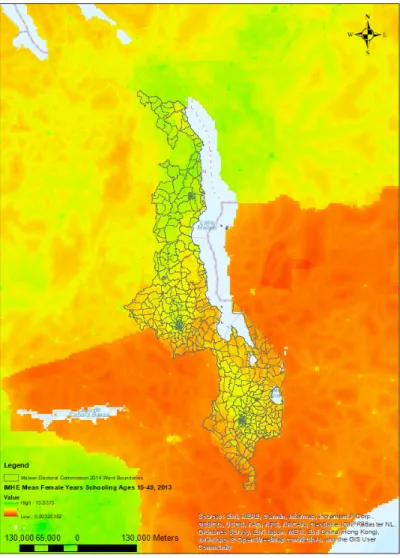
A.1 IMHE Data: Sex Disparity in Years of Educational Attainment, 2013 . . . . 58
List of Tables
4.1 Summary Statistics for Select Variables . . . 39
4.2 OLS Models for Women’s Candidate Emergence . . . 43
4.3 OLS Models for Women’s Electoral Success . . . 44
4.4 Post-Estimation Marginal Effects on Women’s Candidacy . . . 47
4.5 Post-Estimation Marginal Effects on Women’s Electoral Success . . . 48
4.6 Post-Estimation Predicted Probabilities on Women’s Electoral Success . . . 49
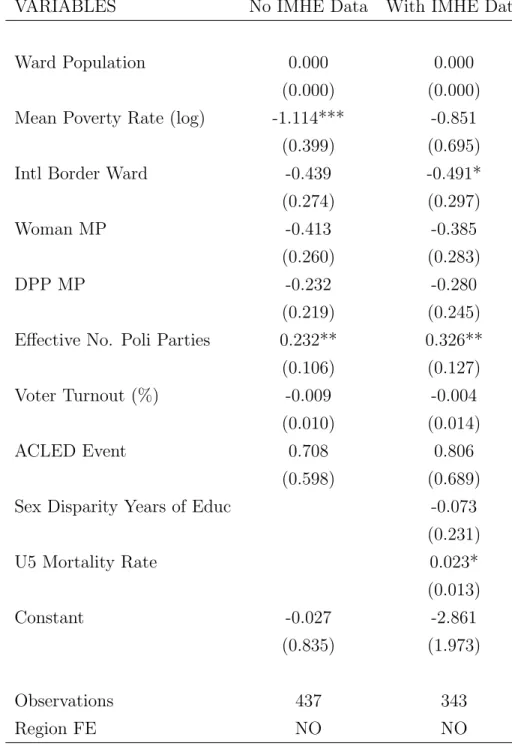
4.7 Heckman Selection Model for Women’s Electoral Success . . . 52
A.1 Logit Models for Women’s Candidate Emergence . . . 60
A.2 All Means Post-Estimation Predicted Probabilities on Women’s Candidate Emergence . . . 61
A.3 Post-Estimation Predicted Probabilities on Women’s Candidate Emergence . 61 A.4 Logit Models for Women’s Electoral Success . . . 62
A.5 All Means Post-Estimation Predicted Probabilities on Women’s Electoral Suc-cess . . . 63
Chapter 1
Introduction
Globally, less than a quarter of the world’s political representatives are women
(Inter-Parliamentary Union, 2018).1 Levels of women’s representation in formal political insti-tutions fall far below calls for gender parity. Yet two decades ago, this figure stood at 12
percent (Inter-Parliamentary Union, 1997). Much of the increase is attributable to a rise in
the adoption of policies mandating women’s electoral inclusion (Hughes, Paxton, & Krook,
2017). These policies, known as gender quotas, exist in over 130 countries today (Hughes
et al., 2017). Despite their popularity, gender quotas have not been universally adopted, and
women’s underrepresentation in politics persists in many contexts. While global and national
policy documents enshrine gender equality as a basic tenet of human rights, women’s role in
the public sphere remains constrained. Moreover, there is little consensus on the most
effec-tive policy tools to increase women’s formal representation in contexts where quota adoption
is politically infeasible. To increase women’s representation moving forward, policy makers
must consider strategies beyond quotas.
My analysis of the local elections held in Malawi in 2014 aims to elucidate the
struc-tural determinants of women’s candidacy and electoral success. Malawi represents one of
many countries where calls for gender quotas have gone unrealized, and where women’s
representation remains low. At the level of local government, barriers to candidate entry
are ostensibly lower than those at the national level. Yet scholars and policymakers have
an incomplete understanding of how barriers to candidate emergence operate at the local
level. Understanding the drivers of candidate emergence and success will allow activists and
policymakers to develop strategies focused on those factors that are both amenable to policy
change and likely to impact women’s ability to fully participate in local elections.
This chapter offers a brief introduction to the concept of political representation, with
a particular focus on women’s representation. I describe the theoretical puzzles motivating
my analysis, and discuss the relevance of Malawi’s local government to existing work. I then
present my research questions. Finally, I outline the structure of later chapters.
Political theorists have long considered the significance of representation. In a
classi-cal treatment of the concept Pitkin (1967), defines politiclassi-cal representation as being present
in the public policy making process (Dovi, 2018). From a social justice perspective, there
are salient normative reasons to include women in formal political processes (Hughes et al.,
2017). Increasing women’s inclusion in political institutions also matters to those who value
representative democracy. For example, encouraging gender equality is central to
interna-tional efforts that promote democracy (Bush, 2011). Most notably, the United Nation’s
Sustainable Development Goal 5 includes a measure of “the proportion of seats held by
women in (a) national parliaments and (b) local governments” (The United Nations, 2018).
While women’s representation in politics therefore has normative foundations, there is
a growing body of evidence to suggest that once women are elected, they often govern
differently than men. In India, Chattopadhyay and Duflo find that women policymakers
adopt policies that align with concerns expressed by women constituents (2004). In other
contexts, researchers find that women politicians are less corrupt (Brollo & Troiano, 2016),
promote greater economic growth (Baskaran, Bhalotra, & Min, 2018), and decrease gendered
disparities in education (Beaman, Duflo, Pande, & Topalova, 2012).
For gender parity efforts to succeed, policymakers must understand the gendered barriers
to political representation and inclusion. Much of the existing scholarly attention on women,
South (Medie & Kang, 2018). Explanations that seek to understand women’s
underrepre-sentation in the Global South must address structures and processes that differ from those in
the Global North. Moreover, some explanations for women’s underrepresentation that apply
in North America are unlikely to apply in all other contexts. Lawless and Fox’s (2005)’s
”ambition gap” theory posits that girls’ socialization in the United States drives low rates of
female candidacy. Given its reliance on socialization, this explanation, for example, is one
that is unlikely to apply across contexts (Clayton, Johnson, & Robinson, 2017).
Moreover, there has been relatively more scholarly attention paid to women’s
representa-tion at the narepresenta-tional level than to the local level. In part, this might be due to measurement
challenges. Data on local government are generally maintained by national electoral
manage-ment bodies (UN Women, 2018). These bodies are frequently under-resourced, do not
main-tain centralized electronic records of local election returns, and may not integrate individual
characteristics (like sex) into electoral records (UN Women, 2018). Yet local governments
continue to exert influence and power in communities across the world. Local government
can function as a ‘school of democracy,’ in which women learn how to navigate government
institutions and can eventually move to higher levels of representation (Chiweza, 2016). As
such, localizing gender parity remains a priority among both international policymakers (UN
Women, 2018).
Women’s underrepresentation in politics is an active area of both scholarship and policy
discussion. I situate my analysis at the level of local government in Malawi, a consolidating
democracy in Southeast Africa. I look to existing explanations for women’s
underrepre-sentation as orienting concepts. I then estimate the explanatory power of different
macro-structural variables in the Malawian context. To do so, I construct a dataset that combines
election results with ward-level characteristics. Ultimately, I identify four factors (levels
of political competition, the presence of international borders, population health, and the
presence of women in parliament) that most influence the probability of women running as
candidates for local councils. Conditional on running, the correlates of women’s electoral
1.1
Why Malawi?
Reserved seat quota systems are relatively common across countries in Southern and East
Africa. Legislation in Zimbabwe, eSwatini, Tanzania, and Uganda mandate women’s reserved
seats in parliament. South Africa and Mozambique have voluntary party quotas at the
national level. Approximately 40% of the seats in each country’s national parliament are
currently held by women (Inter-Parliamentary Union, 2018). At the national level, Malawi
represents a somewhat puzzling case owing to its reticence in adopting mandated electoral
quotas for women. While Malawi has voluntary party quotas, only 17% of the country’s
parliamentary seats are held by women (Inter-Parliamentary Union, 2018).
Current evidence identifies the factors that make quota adoption more likely (Hughes
et al., 2017). Among these, international influence and inducements, including foreign aid
dependency, make quota adoption more likely (Bush, 2011). The policy history of its regional
peers and its dependence on foreign aid both predict that Malawi would adopt legislated
gender quotas. Malawi is thus unique in its not having adopted quotas. Malawi’s lack of
gender reservations allows me to consider how, in settings where gender reservation or quota
systems are perhaps politically infeasible, women successfully navigate the path to elected
office. Understanding the mechanisms driving women’s electoral success is a preliminary step
towards designing policies that are effective in increasing women’s representation in Malawi’s
formal political institutions. In this way, understanding barriers to women’s representation
in Malawi may provide insight into how policymakers might increase women’s representation
in cases where quota adoption is unlikely.
Further, a unique institutional setting motivates my focus on local governance in Malawi.
Since its transition to multiparty democracy in 1994, Malawi has only held local government
elections once, in 2000 (Dulani & Dionne, 2014). Terms for the first cohort of local councillors
expired in 2005, and no local officials were elected until 2014 (Dulani & Dionne, 2014). As
such, no candidates in the 2014 local council elections derived any advantage or disadvantage
owing to their status as an incumbent. In some contexts scholars have found differential
however, the literature on incumbency effects as they relate to candidate gender is somewhat
mixed. In the U.S. context, for example, most incumbent candidates have historically been
men, and their status as incumbents increases their likelihood of winning re-election. Lawless
and Fox (2005) term this ‘institutional inertia,’ but argue that it explains only part of
women’s continued underrepresentation. In studying a context without any incumbents, I
eliminate the ambiguity surrounding how incumbency affects women’s electoral prospects,
and am able to evaluate alternative barriers to women’s representation.
1.2
Women in Local Government in Malawi
Domestic women’s activist groups, regional bodies, and international organizations are
in-volved in efforts to increase the number of women in Malawian politics. The South African
Development Community, to which Malawi is a member, mandated that members strive
for gender parity in public decision-making positions by 2015 (Sahle, 2017). Malawi has
yet to reach this target. International donor organizations (including the European Union
and NorwayAid), partnered with local organizations to launch the 50/50 Campaign prior to
the country’s 2014 elections. Ultimately, in the 2014 local elections, there were 421 women
(equal to approximately 17 percent) in a pool of 2,412 candidates. Of the women who ran,
55 women councillors (12 percent of all candidates) were elected. The 2014 election results
thus fell far below regional and national targets.
1.3
Research Questions
I seek to understand the drivers of electoral success among women candidates at the local
level. I am interested in the respective role that political parties, candidates, and voters have
in determining women’s electoral success. Women candidates undoubtedly face differential
barriers to electoral success when compared to their male counterparts. My analysis is an
My research questions represent a simplified model of electoral outcomes. Answering
these questions is a useful first step in understanding the mechanisms that drive women’s
political inclusion, but is by no means deterministic or comprehensive. For example, barriers
to political candidacy for women exist long before women candidates contemplate participate
in an election: girls in Malawi have differential access to primary education compared to their
male peers (Institute for Health Metrics and Evaluation (IMHE), 2018), and women have
not traditionally been included in the formal political process (O’Neil, Kanyongolo, Wales, &
Mkandawire, 2016). Moreover, my analysis does not capture women candidates’ intangible
characteristics – the resiliency and determination required to run, for example. With these
caveats in mind, I now turn to the questions this thesis sets out to address.
The first question considers how districts with women political aspirants differ from those
in which only male candidates run. In this, I aim to disentangle the factors contributing to
women’s candidacy. I consider the following questions.
1. Where did women run?
(a) How many wards had a woman candidate?
(b) What characteristics did these wards have in common?
(c) How successful were women candidates compared to male candidates? (i.e. Do
women win at greater rates than men)?
2. Where did women win?
(a) How many wards elected a woman candidate?
(b) Which ward-level factors are the best predictors of electing a woman candidate?
1.4
Organization of the Argument
The remainder of this thesis is organized as follows. I begin the second chapter with an
Malawi’s political environment, focusing on its history of democratic consolidation and the
role of women in politics. Next, I consider theories of political representation and
summa-rize evidence on women as policymakers. The latter half of the chapter considers theories
that seek to understand women as political candidates and the drivers of women’s electoral
success.
The third chapter describes my empirical approach and data. I begin by outlining my
primary hypotheses. My primary empirical strategy uses multivariate logit regressions to
estimate the impact of ward-level characteristics on the probability of women’s candidate
emergence and electoral success. My results are robust to regressions using multivariate
ordinary least squares (OLS) with fixed effects and a Heckman Selection model. I conclude
this chapter, with a discussion of my key variables, their operational definitions, and the
data sources I used to construct my dataset.
In the fourth chapter, I outline descriptive statistics and examine the basic trends in
women’s candidacy and election. From there, I present my empirical results. To conclude, I
discuss the potential explanations for my results.
The fifth chapter reviews the implications of my results. I consider the limitations of my
approach, with a focus on geospatial autocorrelation and omitted variable bias. The chapter
ends with a discussion of the potential policy implications of my findings, as well as avenues
Chapter 2
Background and Conceptual
Framework
This chapter describes the primary theoretical frameworks that shape scholars’
understand-ing of women’s inclusion in formal political institutions, and applies these ideas to the
Malaw-ian context. I begin by summarizing current understandings of gender inequality in the
Global South. Next, I discuss Malawi’s political context, focusing on recent democratic
development and how gender operates within the political sphere. I then discuss women’s
underrepresentation, outlining the normative (or intrinsic) and instrumental justifications
for increasing the number of women in formal political institutions. I also review evidence
regarding women’s electoral quotas. While I situate my research in a non-quota context,
understanding the motivations behind and effects of quotas guides my understanding of
women’s role in politics more generally. Finally, I briefly review the frameworks that seek to
explain how voters evaluate women as candidates.
2.1
Gender Inequality in Developing Countries
Across the world, cultural norms engender favoritism toward men. These norms are more
norms are highly contested, it is widely accepted that economic and political factors can (and
do) compound inequalities. In Africa specifically, the neoliberal restructuring of many
coun-tries’ economic and political arenas deepened pre-existing gender inequalities (Sahle, 2006).
The reduction in social sector spending of the 1980s and 1990s differentially affected women
and men (Sahle, 2006). For example, the introduction of user fees for healthcare increased
the burden of care-related responsibilities among women, and the removal of government
subsidies for education deepened gender biases in attendance (Sahle, 2006). More recently,
women’s empowerment has become a common policy objective, with economic development
programmes explicitly considering their gendered implications (Duflo, 2012).
At the same time, the available evidence suggests that economic growth alone will not
be sufficient to overcome the discrimination women face in either private or public domains
(Duflo, 2012). Rather, the relationship between economic development and women’s
em-powerment is bidirectional (Duflo, 2012; Jayachandran, 2015). Thus, reducing gender-based
discrimination has become both a policy goal in its own right and a means of driving
broad-based economic development. As a result, international institutions, including the United
Nations, and national governments have enacted policy objectives focused on increasing the
proportion of women in elected office at all levels.
2.2
Malawian Context
2.2.1
Political History: Malawi’s Democratic Consolidation and
The 2014 Elections
The late Hastings Kamuzu Banda was the life-president and authoritarian ruler of Malawi
from 1966 until the re-introduction of multipartyism in 1994. In his first democratic election
in 1994, Banda lost the presidency to Bakili Muluzi (Dulani & Dionne, 2014). Muluzi, a
member of the United Democratic Front (UDF) party, was re-elected in 1999, and stepped
wa Mutharika ran as a UDF candidate in 2004, and won the presidential election that
year. A year into his term, Mutharika founded the Democratic People’s Party (DPP), which
became the country’s de facto ruling party. Mutharika was re-elected in 2009, but died of
a heart attack in April 2012. Despite efforts by political elites within the DPP to install
Mutharika’s brother, Joyce Banda, then the country’s Vice President, became Mutharika’s
successor (Dionne & Dulani, 2013). Early in her tenure, Banda enjoyed widespread support.
However, ‘Cashgate,’ a major corruption scandal revealed in September 2013 saw Banda’s
support among the electorate plummet (Dulani & Dionne, 2014). As such, the 2014 elections
were highly contested, with four viable presidential candidates (Patel & Wahman, 2015).
Ultimately, Peter Mutharika the DPP candidate and brother of the late president Bingu wa
Mutharika, won the presidency.
Malawi has had five national contests for the presidency since 1994, yet Banda’s admission
of defeat in 2014 marked only the second transition of power facilitated by an election.
Despite peaceful transitions of power, challenges to democracy in Malawi remain. Entrenched
informal norms, the suppression of dissent, and regional patterns of political support suggest
that democratic consolidation in Malawi continued to be a work in progress at the conclusion
of the 2014 elections (Dulani & Dionne, 2014; Patel & Wahman, 2015).
2.2.2
Women, Gender, and Inequality in Malawi
Formally, Malawian women have long had political and civil rights equal to men’s. Malawi
is party to a number of regional and international resolutions that aim to increase gender
equality. Malawi acceded to the United Nations Convention on the Elimination of all Forms
of Discrimination Against Women (CEDAW) in 1987.1 At the time of its accession, the Government of Malawi submitted a number of reservations. The primary reservation stated
1In international treaty law, “Accession” is defined as, “The act whereby a state accepts the offer or
that,
”Owing to the deep-rooted nature of some traditional customs and practices
of Malawians, the Government of the Republic of Malawi shall not, for the time
being, consider itself bound by such of the provisions of the Convention as require
immediate eradication of such traditional customs and practices”
(Secretary-General United Nations, 1981, p. 35).
However, in October of 1991, the Government of Malawi notified the United Nations of
its decision to withdraw this reservation. Malawi’s accession (with reservations) to CEDAW
exemplifies the tensions that emerge from the national government’s attempts to translate
‘human rights,’ as a transnational concept into a local context (Ribohn, 2002, p. 166).
Ribohn argues that discussions of human rights in Malawi frequently invoke women’s role as
the ‘keepers’ of culture, particularly in the face of global notions of human rights (2002). In
this way, Malawian women can face greater constraints than men when considering running
as political candidates, owing to the gendered understandings of social roles which exclude
women from political arena.
At the same time, women have been involved in party politics throughout Malawi’s
recent history. Kamuzu Banda’s Malawi Congress Party (MCP) rhetoric emphasized the
dominant position of the MCP Women’s League. The MCP Women were required to praise,
dance, and sing for Banda at public occasions. While some scholars have argued that women
were exploited in this position, others have highlighted the fact that some women considered
themselves powerful within the party (Ribohn, 2002). The MCP Women’s League illustrates
the difficulty in defining women’s political voice when they are forced to operate within
confined gender roles and power structures.
After the reintroduction of multi-partyism, the Government of Malawi adopted additional
provisions that formally advanced women’s rights. Malawi’s 1994 constitution guaranteed a
robust set of civil and political rights, regardless of gender (O’Neil et al., 2016). In addition,
the Government of Malawi signed onto the United Nation’s 1995 Beijing Declaration and
on Gender and Development. Together, the CEDAW and the Beijing Declaration make
up Malawi’s ‘National Gender Machinery’ (NGM) (Chasukwa, 2016). Despite these formal
declarations, in practice gender parity in public life has not been a goal of successive national
governments (O’Neil et al., 2016).
Today, gender inequality is evident across Malawi. Malawi ranks of 173 out of 188
countries on the United Nation’s Gender Equality Index. High rates of child marriage,
births per woman, and gender-based violence are widespread (United States Agency for
International Development, 2016). The fertility rate in Malawi in 2014 was 4.7 births per
woman (The World Bank, 2014). The same year, 76% of males over the age of 15 were
literate, compared to 55% of women over the age of 15 (The World Bank, 2014). Overall,
women’s participation in the public arena is limited by both patriarchal traditions and social
institutions (Coker, de Brito, Chinsinga, & Banda, 2009).
2.2.3
Gendered Politics in Malawi
How does gender inequality operate in the political arena? Public discourse during Joyce
Banda’s presidency regularly invoked ideas of gender and dismissed women’s leadership,
par-ticularly following Cashgate. Pundits commonly referenced the saying, “A female cow does
not pull an ox-cart” when criticizing Banda (Patel & Wahman, 2015). In 2014, over one
third of Malawians either agreed or agreed very strongly with the statement, “Men make
better political leaders than women, and should be elected rather than women”
(Afrobarom-eter (Malawi), 2018). There is some evidence that perceptions about women’s inability to
act as political leaders are more prominent in local-level politics. This is driven by
rural-urban divides, whereby gender-based disparities in education and financial resources are
more prominent in rural areas (iKNOW Politics, 2018). Ultimately, the beliefs and norms
surrounding fitness for political leadership, in conjunction with resource-based constraints,
constrain women’s political representation.
Following the 2004 parliamentary elections, policymakers identified five primary
women in ‘unwinnable’ constituencies; (2) financial constraints among women candidates;
(3) lack of political experience among women; (4) socio-cultural obstacles; (5) gender
dis-criminatory aspects of the electoral process (Coker et al., 2009). In response, the 50-50
Campaign sought to raise awareness about women’s political participation through
lobby-ing, community mobilization, and capacity building among women candidate and aspirants
(Coker et al., 2009).
The primary policy response to women’s underrepresentation – Support to Electoral
Re-form and Election in Malawi Programme – was established in the lead up to the 2009
elec-tions (Coker et al., 2009). The Programme’s primary policy tool is the ‘50-50 Campaign’,
Increasing Women Representation in Parliament and Local Government. The Government
of Malawi implemented the campaign, with technical support from the United Nations
De-velopment Programme, and funding from external donors including the Norwegian Agency
for Development Cooperation (NORAD) and Irish Aid (Coker et al., 2009).
The 50-50 campaign was successful in increasing the number of women who registered
as candidates in the 2009 election (Coker et al., 2009). However, following these elections,
the Campaign’s success has been more mixed. A popular criticism is inactivity between
elections (Kayuni, 2016). As the Campaign became more prominent in the lead up to the
2009 elections, donor and government agencies had increasing difficulty co-ordinating their
initiatives, and were simultaneously competing for the same pool of resources. This context
created a dynamic that some scholars have likened to a ‘turf war,’ which has worsened over
time (Chasukwa, 2016). Moreover, institutional cultures within government agencies likely
hampered the success of Ministry-led projects. For example, civil servants generally prefer
to spend more time working on donor-, rather than government-funded projects (Chasukwa,
2.3
Explaining Underrepresentation
Given pervasive gender inequalities, how have scholars conceptualised political
underrepre-sentation? Globally, women’s candidacy for elected office lags behind men’s at the national,
sub-national, and local levels. In the United States, women’s underrepresentation is
com-monly attributed to low rates of women’s candidacy (Lawless & Fox, 2005).
Scholars have advanced multiple explanations for why the ‘supply’ of women candidates
lags behind that of men. Some of these explanations are applicable across cultural
con-texts. For example, women face gender-based discrimination and biased beliefs regarding
their abilities (Brown, Mansour, & O’Connell, 2018), and women have historically had
re-stricted access to educational opportunities (O’Neil et al., 2016). At the same time, not all
explanations are relevant in all contexts. Sociocultural explanations, such as the “political
ambition gap” found in the United States, must take into account differences in cultural
norms around women’s leadership. Answers to questions of gender and politics must take
global economic and political ideas, structures, and processes into account (Medie & Kang,
2018).
In Malawi in particular, advocates for decentralisation argue that local government
are-nas are more open to individuals without political experience, which ought to increase the
number of women candidates (Chiweza, 2016). However, scholars observe persistently low
levels of women’s representation within local government. To explain this, Kayuni (2016)
highlights cultural norms that dictate women as caretakers within the private sphere, unfit
for political office or public discourse. Chiweza (2016) considers both women’s motivations
for running, as well as institutional factors that define spaces of participation. In survey
responses, the overwhelming majority of women councillors identified their primary
motiva-tion for running as a way to address the needs of their communities. No women indicated
running to increase women’s political representation specifically (Chiweza, 2016). From an
institutional perspective, women are less likely to volunteer for positions in political parties
at the local level, as compared to their male peers (Kayuni, 2016). Women also occupy far
factors contribute both to women’s underrepresentation in politics and to the constraints
placed on their participation within party and government institutions.
2.4
Theories of Representation
Despite these challenges, governments, civil society groups, and international organizations
seek to increase the number of women in office. Evaluating the normative value of these
projects in general, and understanding women as political actors specifically, requires a
working definition of political representation. Pitkin (1967) put forth the classical definition
of representation. As summarized by Dovi (2018), Pitkin’s concept of political representation
emphasizes the activity of being present in the policymaking process (1967). She describes
four distinct kinds of representation: formalistic representation, symbolic representation,
descriptive representation, and substantive representation. Dovi (2018) summarizes these
forms according to the following: Formalistic representation considers the institutional
ar-rangements of a political body, and the dimensions of authorization and accountability in
particular. Symbolic representation considers the meaning that a particular representative
has for those being represented. Descriptive representation asks if the representative shares
common interests, looks, and experiences with the represented. Finally, substantive
rep-resentation invokes the notion of representatives as an agent of and substitute for those
being represented. These conceptions of representations have implications for both policy
outcomes and the extent to which constituents shape policy decisions.
On the basis of Pitkin’s concept of representation, even if there is no difference in
leader-ship or policymaking across men and women, increasing the proportion of women politicians
has instrumental value as a means of symbolic representation (Paxton & Hughes, 2018).
However, there is a robust body of evidence demonstrating women’s distinct participatory
effects in the policy making process. Women’s leadership styles (Karpowitz & Mendelberg,
2014), propensity to engage in corruption (Afridi, Iversen, & Sharan, 2017), responsiveness
(Baskaran et al., 2018) differ from otherwise equivalent male legislators.2.
In light of this evidence, calls to increase women’s presence in politics are often made on
the basis descriptive and substantive representation. Yet defining women as a particular type
of representative is challenging. Understanding the nature of representation requires nuanced
and context-specific understandings of what ‘womanhood’ means to both constituents and
representatives. Questions of women’s representation often presume a common agreement of
womanhood, of which policy issues are ‘women’s issues,’ and of women’s policy preferences
(if such agreement exists).3
Scholars interested in these questions have considered the effect of women politicians
through two channels: (1) the effect of women on policymaking and policy outcomes, and (2)
the effect of women politicians on girls’ aspirations, gendered expectations, and biases.
Evi-dence on the effects of women politicians through both of these channels finds that women’s
representation has significant effects on a range of outcomes across these channels: Scholars
examining the effect of U.S. mayors find no difference in policy outcomes across women and
men mayors (Ferreira & Gyourko, 2014). Despite this, most evidence from contexts outside
of North America and Europe suggests that women and men do govern in substantively
different ways. The classical assessment of women as policy makers assessed women on local
councils in India, following a 1993 constitutional amendment that randomized gender quota
requirements across localities. In this context, scholars find that women politicians are more
responsive to women constituents as compared to male politicians (Chattopadhyay & Duflo,
2004). A subsequent study in India uses the outcomes of close elections, rather than the
im-plementation of the constitutional amendment. The results of this study show significantly
higher growth in economic activity in woman-led constituencies (Baskaran et al., 2018). In
Brazil, women policymakers appear to engage in less corruption (Brollo & Troiano, 2016).
2In line with the majority of this scholarship, I do not argue that these differences are due to innate
differences across sexes or genders. Rather, differences between men and women legislators are driven by the social, cultural, and institutional contexts in which they exist.
3Clayton et al. (2019) find evidence for some degree of policy preference alignment among citizens and
2.5
Women’s Electoral Quotas
The adoption of gender quotas mandating women’s inclusion in formal political institutions
has been a major political development of the last four decades. Today, more than 130
coun-tries across the world have adopted such quotas; a rapid increase compared to the handful
of countries with quotas in the 1970s (Hughes et al., 2017). These quotas represent binding
policies that mandate women’s inclusion in legislatures. Interestingly, the adoption of
gen-der quotas has frequently occurred in countries where women have low status. Analyzing
quota adoption in developing countries, Bush (2011) finds that international influence in the
form of international peacekeeping forces and reliance on foreign aid, among other factors,
increases the likelihood of quota adoption in developing countries. Barnes and Burchard
(2013) primarily consider the domestic factors that increase the probability of adoption,
which include political transitions and pressure from elite women’s movements. These
schol-ars find that quota adoption occurs without strong public support or agitation. In contrast,
Paxton and Hughes (2014) identify women’s explicit demands for gender quotas, particularly
during peacebuilding processes, as impactful. Regardless of the impetus for implementation,
legislative quotas remain an effective short-term means of increasing women’s presence in
formal political institutions (Hughes et al., 2017).
For some, these policies remain controversial. Some experts argue that women elected
through quota systems will have limited legislative influence and effectiveness (as cited in
Paxton and Hughes (2014)). However, available evidence does not lend support to this
claim. Clayton (2014) finds that women elected through quota systems in Lesotho effectively
occupy authoritative political positions. As discussed above, there is also substantial body
of evidence demonstrating that women’s inclusion in politics via quota systems can change
the policy making process (Beaman, Chattopadhyay, Duflo, Pande, & Topalova, 2009) and
2.6
Women as Candidates
Women who do choose to become candidates represent diverse motivations, political and
ideological agendas, and policy preferences. At the same time, women candidates are
sim-ilar by virtue of having to navigate social and political environments that are not gender
neutral. Acker uses the term ‘gendered institutions’ to describe the presence of gender in
the “processes, practices, images and ideologies, and distributions of power in the various
sectors of social life” (Acker, 1992, p. 567). In Malawi, despite global and national policy
frameworks, implementation and enforcement at the local level are weak (Farai Chikadza,
2016). Women’s political participation is frequently shaped at the political party level, which
emboldens political ‘gatekeepers’ (Farai Chikadza, 2016). Despite the adoption of voluntary
candidate recruitment quotas, membership in elite party structures remains male-dominated
(Farai Chikadza, 2016).
Women campaign, govern and legislate in ways that are distinct from men. As outlined
above, an increase in women’s participation in elected office often shapes constituent beliefs
and preferences in salient ways. In general, incumbent politicians are advantaged in bids
for re-election (Lawless & Fox, 2005). In Malawi, Chikapa (2016) recognizes that men’s
historic involvement in political office means that they accrue incumbency effects at greater
rates than women. As a result, historically underrepresented groups (including women)
are less likely to benefit from this advantage. At the same time, there is evidence that
women politicians experience differential returns to incumbency than similar men who run
for office more than once. In Indonesia, Shair-Rosenfield (2012) finds a ‘diffusion effect’
of women’s incumbency, whereby women who are newcomers benefited from the presence
of woman incumbents. Part of this effect is driven by the ability of women’s incumbency
to demonstrate women’s political capacity and capability more broadly (Shair-Rosenfield,
2012). At the same time, women politicians who held a reserved seat in local government in
India did not benefit from an incumbency advantage in subsequent elections (Beaman et al.,
2009). (Beaman et al., 2009). In a non-reservation context, women mayors in Brazil also
The drivers that shape the difference in returns to incumbency are not well understood.
For example, while Ferreira and Gyourko (2014) do not find an effect of gender on mayoral
policy outcomes in the U.S., they do find that women mayors enjoy a higher incumbency
effect. While this finding contradicts later finding in Brazil, the Ferreira and Gyourko argue
that this result may be driven by a higher skill set among women politicians.
2.7
Theories of Voting and Candidate Evaluation
A prominent explanation for women’s underrepresentation asserts that some voters
discrim-inate against candidates on the basis of gender. Drivers of discriminatory voting practices
include, inter alia, sociocultural beliefs about and perceptions of women’s competency and
fitness for office (Shair-Rosenfield, 2012). Given asymmetric gender norms, an otherwise
identical women and man will likely have differential electoral support (See Bhalotra,
Clots-Figueras, and Iyer, 2013 for a discussion of the role of voter bias). Here, I briefly consider
how the influence incumbent politicians and cultures of patronage decrease voter support
for women candidates in Malawi.
At the national level, incumbent President Joyce Banda was defeated by a large
mar-gin in 2014. Scholars have pointed to negative perceptions surrounding Banda’s economic
management and perceived involvement in large-scale corruption as reasons for her defeat
(Dulani & Chunga, 2015). Criticisms of Banda’s leadership invoked negative perceptions of
women’s leadership abilities. Gendered evaluations of government performance may have
de-creased to voters’ confidence in women leaders at other levels of politics. Dulani and Chunga
(2015) find that gendered evaluations of Banda’s presidency increased hostility toward and
decreased electoral support for women political leaders generally.
The politics of patronage in Malawi may contribute to voters’ systematically preferring
men candidates. Patronage networks and clientelism were influential in shaping the
pre-electoral context and outcome of the country’s 2014 elections (Chinsinga, 2015). Political
‘develop-ment rallies’ during which she handed out food, livestock, and other goods (Chinsinga, 2015).
A culture of handouts has grown from the country’s high levels of poverty combined with
patronage and clientelism. This shapes both national and local politics alike: women have
systematically lower levels of access to the financial resources required to compete for voters’
support. Assuming voters choose candidates at least in part on the basis of a candidate’s
ability to provide access to goods, women candidates are at an electoral disadvantage.
This chapter provided an overview of the existing conceptual frameworks and empirical
evidence that orient how I understand women as political actors and as candidates for elected
office. The next chapter outlines the methodology I use to evaluate the correlates of women’s
Chapter 3
Methods and Data
My thesis aims to provide descriptive evidence identifying the correlates of women candidates’
electoral outcomes. In this chapter, I describe my empirical approach, my data sources, and
where necessary, operationally define my variables. Where a variable represents a proxy
measure of a given construct, I also provide the theoretical justification for my measurement
choice. To reiterate, my primary research questions are:
1. Where do women run?
(a) How often do women win?
2. Where do women win?
3.1
Empirical Approach
To study the relationships between women’s electoral outcomes and ward-level
character-istics, I use three regression frameworks: linear probability models with fixed effects, logit
regressions, and a Heckman Selection Model.
My first research question seeks to identify ward-level characteristics that increase the
probability of a women choosing to run in local council elections. As such, my outcome of
I control for a number of observable characteristics: my regression specifications include
information on each ward’s (a) population size; (b) mean poverty rate; (c) international
border status; and (d) sex disparity in educational attainment; (e) child mortality rate; and
(f) political environment characteristics.
My second research question estimates how the probability of a woman candidate’s
elec-toral success varies with observable ward-level characteristics. My outcome of interest is a
binary variable equal to one if a woman is elected to a given ward’s local council in 2014. I
include in my regressions the same set of observable characteristics as in my first research
question.
3.2
Estimating Equations
3.2.1
Where Did Women Run?
W omanRanw =β0+β1P opulationw+β2P overtyw+β3IntlBorderw+
β4Educationw+β5Healthw+β6W omanM Pw+β7DP P M Pw+
β8Competitionw+β9T urnoutw +β10Instabilityw+ (3.1)
3.2.2
Where Did Women Win?
W omanW onw =β0+β1P opulationw+β2P overtyw+β3IntlBorderw+
β4Educationw+β5Healthw+β6W omanM Pw+β7DP P M Pw+
β8Competitionw+β9T urnoutw +β10Instabilityw+ (3.2)
3.2.3
Heckman Selection Model
The selection equation for women’s candidate emergence is:
This equation represents the likelihood that a ward has at least one woman candidate
for local council. Population health, electing a woman MP in 2009, and the level of political
competition are observed factors that significantly predict the likelihood that ward has at
least one woman candidate. These variables are the most consistent predictors of women’s
candidate emergence, as I will show in Chapter 4 when presenting the results of OLS and logit
regressions of candidacy. The error term, µw, represents the unobserved factors (i.e. ward
characteristics) that contribute to the likelihood that a ward registers a woman candidate.
The outcome equation estimates whether a ward elects a woman, controlling for the
selection bias associated with having a woman candidate. The outcome equation is:
If µw >0
W omanW onw =
β0 +β1P opulationw+β2P overtyw+β3IntlBorderw+
β4Educationw +β5Healthw+β6W omanM Pw+
β7DP P M Pw+β8Competitionw+β9T urnoutw +β10Instabilityw+ (3.4)
3.3
Data Sources
I combine data from four sources to construct a unique ward-level database. First, I use
published Malawi Electoral Commission (MEC) returns for local election candidate
charac-teristics and results. These returns provide information on candidate name, party affiliation,
vote share, ward-level voter turnout, and candidate sex. I also use MEC electoral returns
from the 2009 parliamentary elections, which include candidate names, party affiliation, and
vote shares. To code international border wards, I use a MEC map and geospatial mapping
software to determine whether a given ward shares a border with a neighboring country.
Second, to create ward-level measures of population and poverty, respectively, I leverage
geospatial data from WorldPop at the University of Southhampton. The dataset estimates
the number of people per grid cell for Malawi in 2010 using a random forest regression
light densities, and satellite imagery (A. J. Tatem et al., 2017). Using geospatial mapping
software, I aggregate the WorldPop measure of population to the ward-level.
I also use geospatial data to estimate the mean proportion of people in each ward living
in poverty in 2010. The threshold for this consumption-based measure of poverty is set at 2
USD per day. Consumption measures are calculated using GPS-located national household
survey data from the Demographic and Health Survey (DHS) and the Living Standards
Measurement Survey (LSMS). These headcount estimates are then extrapolated to generate
national coverage using a Bayesian geostatistical modeling framework (A. Tatem, Peter,
Pezzulo, Weiss, & Bhatt, 2013; A. Tatem, Gething, Weiss, Pezzulo, & Bhatt, 2013). While
this measure of poverty is therefore an estimate, WorldPop is one of the only sources of
nationally-comprehensive poverty data suitable for geospatial analysis and aggregation at
the ward level. Both datasets allow me to measure ward characteristics prior to the 2014
local elections.
Third, I use data from The Institute for Health Metrics and Evaluation’s (IHME) Local
Burden of Disease database (Institute for Health Metrics and Evaluation (IMHE), 2017,
2018). This data combine household surveys with census information to produce geospatial
estimates of education and health measures. I aggregate IMHE data to the ward level to
estimate (1) mean educational attainment disparities by sex, (2) mean child mortality rates.
Finally, I use the Armed Conflict Location and Event Data Project (ACLED) to code
whether a ward experienced an incident of political violence in the four years preceding the
election (Raleigh, Linke, Hegre, & Karlsen, 2010). Based on the GPS coordinates of each
event in the ACLED database, I used geospatial mapping software to code in which ward each
event took place. Next, I created an indicator variable equal to one if the ward experienced
any political violence event in the time period under consideration. The ACLED database
codes political violence event types according to: Battle; Headquarters or base established;
Non-violent transfer of territory; Remote violence; Riots/protests; Strategic Development;
3.4
Controlling for Ward-Level Characteristics
My research questions seek to uncover the relative applicability of multiple theoretical
ex-planations for women’s electoral success. In this section, I offer operational definitions of the
variables used in my analysis.
3.4.1
Ward Population
Across my models, I control for the size of each ward’s population. Wards with larger
populations have greater absolute numbers of women who can run as candidates. A larger
population may increase candidate emergence if wards with higher populations also have
access to public resources that would differentially increase citizens’ propensity to run for
office. However, larger populations might also decrease women’s electoral chances. Political
campaigns across Malawi routinely give handouts to voters, in the form of t-shirts, food, and
other goods (Chinsinga, 2015). If women have lower access to campaign financing than men,
then woman might be more likely to run and win in smaller districts. I consider gendered
access to financial resources in Malawi in the next section.
3.4.2
Ward-Level Poverty
I use the mean proportion of people living in poverty as a proxy to control for long-term
standard of living. Ideally, my analysis would include a measure of each ward’s average
household wealth. However, this data is not available for all wards. Ex ante, it’s difficult to
predict how wealth might influence a woman’s propensity to run for and to win an election.
Wards with a higher proportion of poorer voters might be more dissatisfied with the provision
of public services, for example, and therefore more likely to embrace political change in the
form of a woman candidate. Campaigning might be less costly in a poorer ward, which
would represent a lower barrier to entry in terms of campaign finance requirements, and
more women might be able to compete. Alternatively, given that women in Malawi have
2016, p. 28), poorer wards might have fewer women candidates who have the finances to run
for office.
3.4.3
International Borders
I include a dummy variable equal to one if any part of a ward’s border is also an international
border. While Malawi is a landlocked country, not all wards share a border with an
interna-tional neighbor. Theoretically, internainterna-tional boarder wards have increased exposure to flows
of people, money, and goods from abroad. This process of ‘internationalisation’ operates
most prominently through cross-border business activity (Emontspool & Servais, 2017). In
Malawi in particular, much of this business activity involves small-scale entrepreneurs and
traders. As such, in an international border ward, many citizens have opportunities to
ex-change information and ideas with their international neighbors. Ultimately, I am uncertain
about the precise mechanism through which international borders affect citizens’ views on
women’s political involvement. However, by including this as an independent variable, I
hope to proxy for informational and cultural exchange through formal and informal
chan-nels. Given the striking differences in women’s national representation between Malawi and
some of its immediate neighbors (e.g. South Africa and Mozambique), it seems plausible that
information exchanged across international border might shape attitudes towards women’s
inclusion in politics.1
3.4.4
Ward-Level Educational Disparity by Sex
The Local Government Election Act of 1996 mandates that candidates for local government
are able to read and write in English. While there are no explicit educational requirements
to run for local council, in practice this legislation could limit who is able to run, especially
given the low levels of education in many of Malawi’s wards. Because women in Malawi
1There are wards that border Lake Malawi, and therefore are technically situated on an international
receive, on average, fewer years of schooling than their male peers, this English provision
in the 1996 Act has been identified as a potential barrier to women’s candidacy (Chiweza,
2016). To test if this is the case, I include a variable that measures the disparity in years
of educational attainment between men and women between the ages of 15 and 49 for
the year 2013 (Institute for Health Metrics and Evaluation (IMHE), 2018). In a more
abstract sense, considering ward-level variation in educational disparities also proxies for
wards’ commitments to gender equity.
3.4.5
Ward-Level Population Health
To measure population health, I include the under-5 mortality rate in 2010 for each ward
(Institute for Health Metrics and Evaluation (IMHE), 2017). My motivation is two-fold.
First, population health is a proxy for both human capital, and (in a less direct sense) access
to government services. The child mortality rate is distinct from measures of poverty in
that it specifically reflects the (in)adequacy of public health services in each ward. The
second motivation for including a measure of population health draws on the emergent
literature that considers health a policy issue particularly salient to women politicians and to
women voters. Existing evidence from 17 Sub-Saharan African countries, including Malawi,
suggests that women MPs prioritize health more than men MPs (Clayton et al., 2019). More
generally, research from a global sample of 139 countries finds that once elected, women
politicians increase government expenditure on public health (Clayton & Zetterberg, 2018).
If population health is more important for candidate emergence, I expect higher levels of
women’s candidacy in wards with lower rates of child mortality. Once a woman candidate
emerges, however, I expect higher rates of child mortality will be correlated with higher rates
of women winning, as voters might view women candidates as uniquely able to prioritize
3.4.6
Political Environment
Descriptive evidence from Malawi suggests that at the parliamentary level, political parties
run fewer women in regions where their party has more support (Kayuni, 2016; O’Neil et al.,
2016). Moreover, as the ruling party, the Democratic Progressive Party (DPP) provides
higher levels of funding for its parliamentary candidates compared to the non-ruling parties
(O’Neil et al., 2016). The degree of competition in a given race can shape campaigns.
Anecdotal evidence suggests that women candidates’ gender identity may be highlighted by
her competitors in more competitive races (O’Neil et al., 2016). Ultimately, it is impossible
to wholly capture the political environment of each ward. My model looks to capture two
of the most salient elements of a ward’s political environment. At the parliamentary level, I
look to the political affiliation of a ward’s Member of Parliament in 2009. At the local level,
I include a measure of the effective number of political parties in each ward.
Ward Electoral History: MP Gender
I consider whether each ward is in a constituency that elected a woman Member of Parliament
(MP) in the 2009 election. I code this as an indicator variable equal to one if the MP elected
in 2009 was a woman. Previous studies of the correlates of women’s candidacy suggest that
women politicians can serve as role models, modelling women’s inclusion in politics (Clayton,
Josefsson, & Wang, 2017; Barnes & Burchard, 2013). I consider if this is similarly the case
in the context of Malawian local government.
Ward Electoral History: MP Party Affiliation
I consider whether each ward is in a constituency that elected a Democratic Progressive
Party (DPP) MP in the 2009 election. I code this as an indicator variable equal to one
if the MP elected in 2009 ran as a member of the DPP. I use MP party affiliation as a
proxy of a constituency’s partisan affiliation, given that party membership in Malawi is
somewhat difficult to capture (O’Neil et al., 2016). DPP affiliation also signals access to
these services may be higher in wards that elected a DPP representative five years prior to
the 2014 elections. As such, position of local councillor in these wards is potentially more
lucrative. Moreover, despite its prominence the DPP has not prioritized fielding an equal
number of women candidates. Taken together, DPP wards may be uniquely competitive,
thus increasing the barriers to women’s emergence and success as candidates.
Ward-Level Political Competition
I include the effective number of political parties in each ward to control for the political
environment across wards. In line with Laakso and Taagepera (1979), I consider both the
number of political parties fielding candidates, and each party’s relative size. To do so, I
calculate an index that uses the proportion of votes that each party receives as a measure of
party size. (I present the equation used to calculate this index in the appendix as Equation
A.1).
Ward-Level Voter Turnout
Next, I include the level of voter turnout in each ward. I use this measure as a proxy for
citizens’ political engagement and their ability to access polling places. Limited
transporta-tion infrastructure in some areas of Malawi represents a barrier to voting for many poorer
citizens. In line with previous work considering women’s electoral performance, I primarily
use voter turnout as a control for pre-election characteristics across wards (Baskaran et al.,
2018).
Pre-Election Instability
Finally, I consider pre-election levels of political violence in each ward. To measure political
stability, I used publicly available data from the ACLED (Raleigh et al., 2010). I considered
episodes of political violence that occurred between 1 January 2010 and 30 April 2014. (Local
and parliamentary elections took place on 20 May 2014). A four year time span allows me
connected to the 2014 elections.
3.5
Hypotheses
The set of variables outlined above allow me to consider a number of ward-level
character-istics. Here, I outline my central hypotheses based on a subset of these variables:
1. Women’s candidate emergence will be less likely in poorer wards. Women in these
wards are less likely to have access to the resources required to run, as women are
more likely to live in poverty. Poorer wards thus have fewer women with access to the
monetary and educational resources required to run.
2. Women’s candidate emergence and election will be more likely in international border
wards. Citizens in these international border wards are exposed to the social and
political norms and beliefs of other countries. As many of the countries bordering
Malawi have high levels of women’s representation, these norms may spillover.
3. Women’s candidate emergence and election will be more likely in wards with lower
ed-ucational disparities by gender. Lower levels of eded-ucational disparity (broadly) capture
ward-level commitments to gender equity.
4. Women’s candidate emergence will be less likely in wards with high rates of child
mortality, but women’s electoral success will be higher in these wards. Women in
wards with lower levels of population health may be more likely to have higher levels
of unpaid care work, and thus less likely to have access to the financial and time-based
resources required to run. However, women’s policy preferences suggest that platforms
emphasizing a commitment to public health may be more successful in these wards.
5. Women’s candidate emergence and election to be more likely in wards that elected a
6. Women’s candidate emergence will be more likely in wards with more competitive
political environments, but women’s electoral success will be less likely, as parties
influence where women are permitted to run.
3.6
Discussion of Limitations
My analysis seeks to identify descriptive evidence of the correlates of women’s electoral
suc-cess. I cannot identify causal relationships between ward-level characteristics and women’s
political representation. My aim is to identify avenues for future research. In particular, my
findings will be helpful in identifying factors that are both amenable to policy intervention
and that have a high likelihood of increasing women’s political representation.
Data on individual candidates’ previous political experience, income, and educational
attainment were not available. I discuss this limitation in more detail in my final chapter.
In using a Heckman Selection model, I aim to control for some of the unmeasured and
Chapter 4
Descriptive Statistics and Empirical
Results
In this chapter, I first present the descriptive statistics that illustrate women’s electoral
representation in Malawian local government following the 2014 elections. Then, I provide
descriptive evidence of the characteristics associated with women’s candidacy.
4.1
Descriptive Statistics
4.1.1
Variables Summary
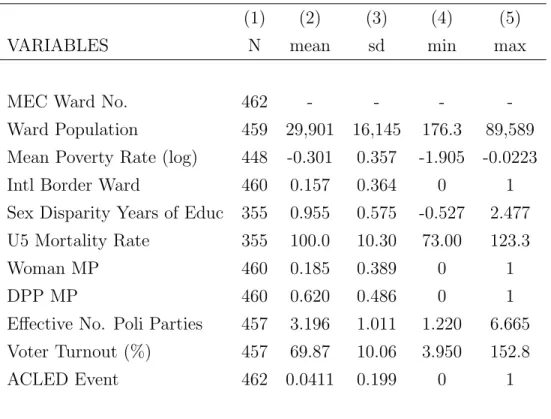
Table 4.1 provides summary statistics for select variables. Before discussing missingness and
presenting descriptive statistics, I first outline the measurement of some of these variables.
The variable ”Sex Disparity Years of Education” uses IMHE geospatial data for Malawi
for the year 2013. A value of 0 means there is no difference in educational attainment
across sexes. Positive values represent the additional average number of years of educational
attainment among men, compared to women. Negative values indicate the average number
of additional years of education among women. The variable ”U5 Mortality Rate” measures
the mean number of deaths per 1,000 live births among children under the age of five. The
2009 or a DPP MP in 2009, respectively.
(1) (2) (3) (4) (5)
VARIABLES N mean sd min max
MEC Ward No. 462 - - -
-Ward Population 459 29,901 16,145 176.3 89,589
Mean Poverty Rate (log) 448 -0.301 0.357 -1.905 -0.0223
Intl Border Ward 460 0.157 0.364 0 1
Sex Disparity Years of Educ 355 0.955 0.575 -0.527 2.477
U5 Mortality Rate 355 100.0 10.30 73.00 123.3
Woman MP 460 0.185 0.389 0 1
DPP MP 460 0.620 0.486 0 1
Effective No. Poli Parties 457 3.196 1.011 1.220 6.665
Voter Turnout (%) 457 69.87 10.06 3.950 152.8
ACLED Event 462 0.0411 0.199 0 1
Table 4.1: Summary Statistics for Select Variables
4.1.2
Missingness
I compiled complete data for all wards’ electoral returns and incidents of political
insta-bility (ACLED events). However, while geospatial data provide complete country coverage
for Malawi, the resolution of certain datasets made it impossible to accurately measure
ward-level averages for some wards. In general, geospatial data missingness was randomly
distributed, but very small wards and those near bodies of water were most susceptible to
missingness. The IMHE data, which measures educational disparities and under-five
mor-tality rates, has the greatest missingness. Each of these variables are missing 107 wards out
of a total of 462 wards. I attempt to account for any selection bias generated by missingness
4.1.3
Descriptive Statistics
Malawi is divided into three regions (Northern, Central, and Southern), which are then
further divided into 28 districts. Each district is made up of constituencies. The country’s 193
constituencies each elect one Member of Parliament, which make up the national Legislature.
Constituencies are divided into wards, which are the lowest administrative level.
In total, 2,412 candidates ran in local elections across Malawi’s 462 wards. My unit of
analysis is the ward [N=462]. Candidates were affiliated with 21 different parties, and nearly
a quarter (n=572) of candidates ran as independents. The People’s Party fielded the highest
number of candidates, with 451 affiliates, while the ruling Democratic People’s Party (DPP)
fielded 429 candidates. The DPP won the greatest number of elections, as 168 of the elected
councillors were DPP members.
Of these candidates, 421 (equal to 17.4 percent) were women. While 100 percent of
wards had at a least one man run for election, 58.7 percent of wards had at least one woman
run for office. Among DPP candidates, only 15.6 percent were women. Among the other
major parties (those with more than 30 affiliated candidates), Malawi Congress Party (MCP),
People’s Party (PP), and United Democratic Front (UDF) fielded between 16 and 20 percent
woman candidates. The plurality of women candidates (89 candidates, or approximately 21
percent of all women candidates) ran as PP affiliates. 68 women (approximately 16 percent)
ran as independents.
Five wards did not hold local elections on time (see ”Postponed Elections” in Appendix).1 Among wards that did hold elections on time, women candidates won election in 55 wards.
Figure 4.1 shows where women won on a map of Malawi’s wards.
Overall, the mean rate of winning an election across all candidates was 19.17 percent.
1For four of these reasons, the death of a contesting candidate is plausibly random. In the instance