Improving Inpatient Glycemic Control:
Utilization of Daily Pharmacist Monitoring and Intervention
Honors Thesis
Joel Bibby
Class of 2017 PharmD Candidate
April 9, 2017
Project Advisor: Becky Szymanski, PharmD, BCPS
CHS NorthEast Residency Program Director
Faculty Advisor: Josh Guffey, PharmD, BCACP, BC-ADM, BCPS
Assistant Professor of Clinical Education UNC Eshelman School of Pharmacy
Associate Director of Pharmacy Education, Charlotte AHEC
Abstract
As a directive of the Hospital Engagement Network 2.0 and in order to improve patient care, CHS NorthEast undertook project to improve glycemic control, specifically to reduce overall incidence of hypoglycemia and hyperglycemia. The primary overall goal was reduction of incidence of hyperglycemia via utilization of pharmacist or pharmacy extender chart review. In addition to this, incidence of
hypoglycemia was also tracked to ensure the percent of patients experiencing hypoglycemia remained low. The project took place in three main phases, the baseline data collection and proposal phase, the student TheraDoc intervention phase, and the interdisciplinary rounds phase. Over the course of one year, glycemic control was improved in the targeted units within the hospital. The student phase
showed modest improvements, while the interdisciplinary rounds phase demonstrated a more dramatic improvement.
Introduction
The ADA guidelines recommend the use of an insulin regimen including basal, nutritional and correction components for patients with diabetes who are admitted to the hospital.1 Quite often the regimen does not include all three components. Some barriers to this may include number of insulin administrations, simplification of orders, uncertainty related to patient’s home diabetes medications, and fear of hypoglycemia. Despite the fear of severe adverse effects due to hypoglycemia, a well-structured insulin protocol can mitigate the risk of this occurring. Hyperglycemia is associated with a number of negative outcomes such as increased inpatient complications, ventilator days, ICU and hospital length-of-stay, and an overall increased cost.2
Carolinas HealthCare System (CHS) was part of a group of 17 hospital systems called the Hospital Engagement Network 2.0 (HEN) to take part in a grant program funded by the Centers for Medicare and Medicaid Services that sought to reduce all-cause preventable harm to patients. One goal of this
program that CHS established was to reduce all out-of-range point-of-care (POC) blood glucose measurements by 40% from baseline. The range was defined as any value < 70mg/dL and >179 mg/dL. This goal was assigned to all hospitals within CHS, including CHS NorthEast, a 457 bed hospital in Concord, NC. A baseline period was measured in 2015 and found the total percentage of out-of-range values at NorthEast to be ~38%. The 40% reduction goal was calculated to be ~22.7% by the end of the HEN 2.0 trial period, October 2016. A previous intervention was effective in reducing incidence of hypoglycemia. Because of this, and the fear of severe negative outcomes associated with hypoglycemia, there was some push-back among providers against the idea of initiating more aggressive therapy for hyperglycemia.
Methods
An initial assessment of baseline data was conducted for the months November 2015-January 2016. The goal was to identify possible problem areas and potential target areas for intervention. The assessment phase lasted from January to March 2016. In April the results were presented to the various
shareholders including physicians, pharmacists, nurses, hospital administrators and diabetes educators. There were three specific presentations given to the NorthEast Diabetes Care Team, at the April
Carolinas Hospitalist Group (CHG) monthly meeting, and finally to the Performance
Improvement/Patient Safety Committee meeting, which included the CMO. After each presentation, feedback was gathered and potential interventions were modified accordingly. Following this period, the specific final interventions were defined.
The first would be a three-month trial period of student monitoring of glycemic control in one particular 15 bed general medicine unit called “Med 1.” May 2016, the first month, was a pilot phase that was used to train 4th year pharmacy students and identify complications and confounders. June and July 2016 were the months of the live student intervention phase. Students were trained to use TheraDoc, a clinical surveillance software. TheraDoc was and is used by CHS pharmacists in the Antimicrobial
Stewardship Network teams and in the Virtual Critical Care Units.
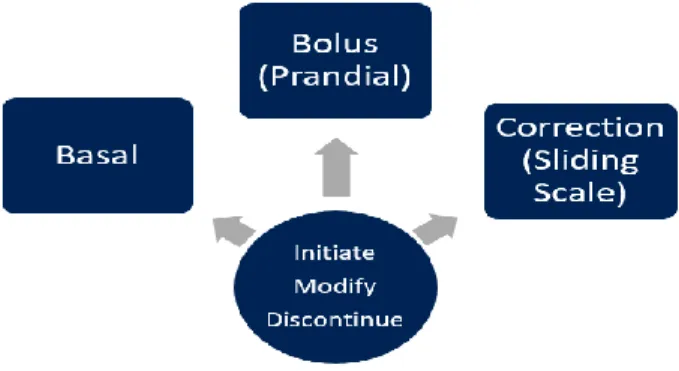
Students received daily alerts for any POC blood glucose check that was > 179 or < 70 for a patient in Med 1 (User Protocol in appendix). Each morning, students received alerts for patients who had POC blood glucose readings that were outside the acceptable range. The TheraDoc software allows the user to analyze labs and trends as well as medications. In addition to the alert, students used charting for the patient to assess for potential therapeutic modifications. Students could then propose an intervention if an intervention was necessary. The initial proposal was given to the pharmacy preceptor, and then to the physician, in person or over the phone. Student interventions could be cataloged according to two dimensions of the proposal; the first was related to administration and dose and the second was related to the type of insulin. The type of insulin that could be adjusted was either “basal,” “bolus,” or
“correction.” Doses could be “initiated,” “modified,” or “reduced.” Any combination of the two dimensions was allowed, for example “initiate basal insulin” or “modify correction insulin.” Following the proposal to the physician, the result was logged as either “accepted,” “accepted – modified,” or “rejected,” depending on the result. Patient medications were allowed to be modified on multiple occasions, for example, a proposal could be made to “initiate bolus insulin” one day and then “reduce (modify) sliding scale insulin” the next day.
Figure 1: Possible intervention options. Students propose an intervention to initiate, modify or discontinue any component of a patient’s insulin
No students were on rotation in August 2016 since the pharmacy residents were going through training during that month. The second intervention was initiated from August and going forward indefinitely. Interdisciplinary rounds were restructured in Med 1, Med 2 and Med 3 to include a clinical pharmacist plus a 4th year pharmacy student and/or a pharmacy resident. Pharmacy representation in
interdisciplinary rounds covered a variety of therapeutic monitoring including drug interactions, anticoagulation, antimicrobials, IV to PO conversion, renal dosing adjustments, and glycemic control among other things. Proposals could be made during interdisciplinary rounds which included providers, nurses, social workers, diabetes educators and pharmacy. They did not use TheraDoc during this phase, but instead worked up each patient individually. These rounds have been ongoing since this initial phase.
Out-of-range POC readings during all months of the HEN 2.0 period were excluded within the first 24 hours of hospital admission, and within 2 hours of another alert. The rationale for this was to give providers time to correct dysglycemia from prior to admission, and to reduce the impact of repeated measurements during a period of intense dysglycemia from skewing the data. The same criteria were used for the baseline data.
Results
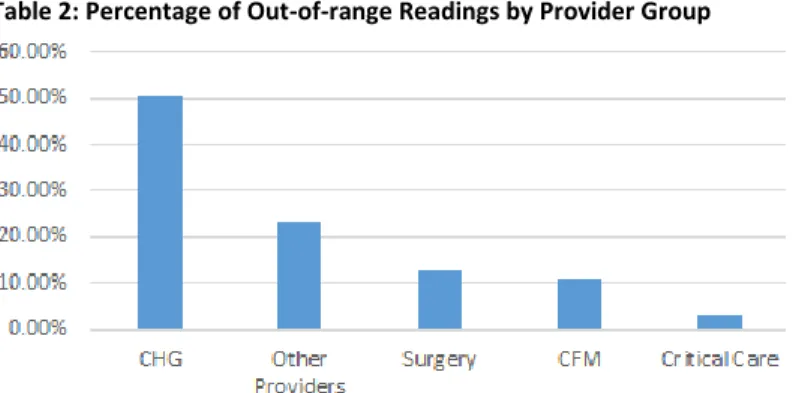
Table 1: Percentage of Out-of-range Readings by Unit Table 2: Percentage of Out-of-range Readings by Provider Group
Med Units: General Medical/Surgical Units; IPU: InterPulmonary Unit; PCCU: Cardiac Care Unit; CIE: Cardiac Unit; PSC: Post-surgical Care Unit; RSE: Renal/Dialysis Unit; CDE/FME: Family Medicine/Clinical Decision Units; ONE: Oncology
CHG: Carolinas Hospitalist Group; CFM: Cabarrus Family Medicine
Due to a variety of factors, including the small number of patients in each unit, there was considerable variability from one month to the next. With regard to the raw percent of out-of-range numbers for the three time frames, there does seem to be a downward trend in the percentage of out-of-range readings. In the pre-interventional phase of January through April, the average out of range readings was 57%. During the student phase of May through July, the average was 53%, and during the interdisciplinary rounds phase of August-December the average was 35%. There is certainly a steady trend toward a decline in hyperglycemia over the course of the year (Figure 2, Table 3).
Figure 2: Percentage of hyperglycemic readings for Med 1 only (green line) and Med 1-3 combined (blue line). Dashed lines represent overall trends for the year.
0
20
40
60
80
Jan
Feb
Mar
Apr
May
Jun
Jul
Aug
Sep
Oct
Nov
Dec
% POC Glucose >179 mg/dL
Month Jan Feb Mar Apr May Jun Jul Aug Sept Oct Nov Dec M1 %
> 179
44 50 75 58 43 59 57 42 45 31 25 32
M1-3% > 179
42 55 50 50 48 48 44 35 40 29 26 31
Table 3: Numerical representation of percentage of hyperglycemic readings
During HEN 1.0 there had been considerable progress at CHS NorthEast with regard to incidents of hypoglycemia. A major concern with all of the stakeholders was than any reduction in incidents of hyperglycemia would not increase the incidents of hypoglycemia. The trend for hypoglycemia roughly follows that of hyperglycemia, with variation throughout the year, but an overall reduction from start to finish in both Med 1 and all of the med units (Figure 3).
Figure 3: Percentage of hypoglycemic readings for Med 1 only (green line) and Med 1-3 combined (blue line). Dashed lines represent overall trends for the year.
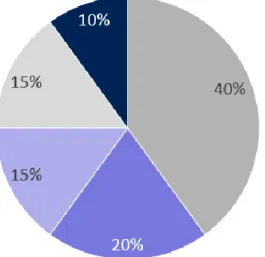
Students initiated 114 total interventions, 20 of which were accepted and implemented. The majority of accepted interventions were to initiate bolus insulin, followed by initiating basal insulin (Figure 4). A large number of potential interventions were never implemented either due to actual patient discharges, or potential patient discharges that did not happen until a later date. Other factors that accounted for interventions that were not accepted included patient transfers to other units and dysglycemia that was corrected prior to intervention.
0
1
2
3
4
5
6
7
Jan
Feb
Mar
Apr
May
Jun
Jul
Aug
Sep
Oct
Nov
Dec
Hypoglycemia % < 70 mg/dL
Figure 4: Types of accepted student intervention by percent
Discussion
The decision to target Med 1 for intervention was due to a variety of factors. Looking at the baseline data it was clear that the areas with the highest percentage of out-of-range readings were the med units, and patients under the care of CHG physicians. With limited time and resources, any intervention would have to be targeted for the greatest return on investment. The decision to try interdisciplinary rounds came partly out of the observation of outstanding glycemic control in the ICU. Despite having the sickest patients in the hospital, the ICU accounts for a disproportionally small percentage of the elevated POC glucose readings. This may be due to the fact that the ICU has well-established, meaningful
interdisciplinary rounds in place that serve to control a number of potential problems, including dysglycemia.
Overall, the trend was toward improvement of glycemic control over the intervention period and beyond. The goal of a 40% overall reduction was not achieved during the HEN 2.0 timeframe, and has still not been achieved, although percentages in recent months are approaching the 22% mark. At the beginning of the project there was strong support among some providers for using sliding scale insulin as the primary therapy for most of the patients. There were several reasons expressed for this. One was that many patients have a brief stay in the hospital, or transfer units rapidly. The idea is that using sliding scale can keep blood sugars from getting too high while they are admitted, and then the patient can go back on their home regimen. The main concern was that using the full hospital protocol as written could lead to overdoses of insulin and hypoglycemia. During a previous improvement grant, HEN 1.0, the focus had been on reducing incidents of hypoglycemia in particular. The staff at NorthEast was very successful with this goal, reducing the overall rate of hypoglycemia to 2.1%. Even though this was a positive goal, it may have contributed to a conservative approach to hyperglycemia in order to avoid hypoglycemia. It is possible to reduce hyperglycemia without significantly increasing
dramatically. Providers became more comfortable with initiating at least basal and correction insulin, as well as prandial insulin as well in many patients.
There were several limitations of this particular study. The most important were probably the limited timeframes for the interventions, and the small size of the interventions. The student TheraDoc period was especially short in duration and only involved a 15 bed unit. There is considerable variability in glycemic control, even prior to the initiation of the intervention. Unfortunately factors such as student schedules and workload limited the scope of this intervention. Students were only on rotation for a month at a time, and only from 07:00 to 15:00 M-F, so were only able to make interventions during that time. Four different students participated in the study and there were differences in number of
interventions made by each student. During the study period, NorthEast did not assign physicians to particular units, which made interventions difficult on a practical level. In the past few months the hospital has made the decision to transition to having physicians cover specific units, which increases the likelihood of making an in-person recommendation, particularly at rounds.
Despite the limitations, blood glucose readings appear to be under much better control. This has taken place within a fairly short period of time. The interdisciplinary rounds seem to have had the largest, and most sustained effect. The students who used the TheraDoc alerts did find them to be useful for
targeting specific interventions. The software is easier to use that the hospital charting system Cerner and students were able to identify and formulate interventions quickly. A possible future strategy would be to combine both interventions, that is to use TheraDoc alerts for interdisciplinary rounds. This could be used not only for glycemic control, but also for the other things that are monitored such as
antimicrobials, anticoagulation and various laboratory parameters. With the help of pharmacy extenders, such as APPE students, this could become a regular addition to the pharmacy service. A major limitation of either intervention is the inability to scale up to cover the whole hospital. A little more than 50% of the beds in the hospital are covered by pharmacy representation at interdisciplinary rounds. Increasing this number would likely require more students, residents, and/or increased pharmacy FTE.
There are countless variables that affect glycemic control in the hospital. This project was limited by a quick development phase, a short overall duration, and a limited group of patients receiving the intervention. With all of that taken into account, the results from the med units, particularly since the initiation of interdisciplinary rounds is impressive. Adding more targeted pharmacy oversite to glycemic control can be beneficial with regard to several outcomes, including length of stay, patient health, and cost to the patient and healthcare system. Utilization of pharmacy extenders and surveillance software are potential options for increasing the reach of pharmacy into patient care.
Acknowledgements
References
1. American Diabetes Association 2016 Standards of Medical Care in Diabetes. Diabetes Care. 2016;39 S99-104. http://care.diabetesjournals.org/site/misc/2016-Standards-of-Care.pdf. Accessed February 8, 2016.
2. Moghissi ES, Korytkowski MT, DiNardo M, et al. American Association of Clinical Endocrinologists and American Diabetes Association Consensus Statement on Inpatient Glycemic Control. Diabetes Care 2009; 32(6): 1119-1131.
3. Munoz M, Pronovost P, Dintzis J, et al. Implementing and Evaluating a Multicomponent Inpatient Diabetes Management Program: Putting Research into Practice. The Joint
Commission Journal on Quality and Patient Safety 2012; 38(5):195–206.
4. Handelsman Y, Bloomgarden ZT, Grunberger G, et al. American Association of Clinical Endocrinologists and American College of Endocrinology-Clinical Practice Guidelines for Developing a Diabetes Mellitus Comprehensive Care Plan-2015.
https://www.aace.com/files/dm-guidelines-ccp.pdf. Accessed March 11, 2016.
5. Schnipper JL, Ndumele CD, Liang CL, et al. Effects of a Subcutaneous Insulin Protocol, Clinical Education, and Computerized Order Set on the Quality of Inpatient Management of
Hyperglycemia: Results of a Clinical Trial. Society of Hospital Medicine 2009; 4(1): 16-27. 6. Horton WB, Subauste JS. Top 10 Facts to Know About Inpatient Glycemic Control. The
American Journal of Medicine 2016; 129 (2): 139-142
7. Pronovost P, Berenholtz S, Needham D. Translating Evidence into Practice: A Model for Large Scale Knowledge Translation. BMJ 2008; 337: 963-965
8. Neubauer KM, Schaupp L, Plank J et al. Failure to Control Hyperglycemia in NonCritically Ill Diabetes Patients Despite Standard Glycemic Management in a Hospital Setting. Journal of