*Correspondence to Author:
Ancy Paul, a (Pharm. D), Depart-ment of Pharmacy Practice, St. James College of Pharmaceuti-cal Sciences, Chalakudy, India E-mail: ancy156 @gmail.com, Ph: 9539635484
How to cite this article:
Ancy Paul et al., An Assessment of Knowledge and Evaluation of Risk on Developing Type II Diabetes Mellitus- a Prospective Study. Inter-national Journal of Hospital Phar-macy, 2017,2:2.
eSciPub LLC, Houston, TX USA. Website: http://escipub.com/
International Journal of Hospital Pharmacy
(ISSN:2574-0318)
Research Article IJHP 2017, 2:2
An Assessment of Knowledge and Evaluation of Risk on Developing
Type II Diabetes Mellitus- a Prospective Study
Background: As per WHO definition Diabetes is a chronic dis-ease that occurs either when the pancreas does not produce
enough insulin or when the body cannot effectively use the insu -lin it produces. Recent study estimates that there were 171 mil-lion people in the world with diabetes in the year 2000 and this is projected to increase to 366 million by 2030. WHO projects that diabetes will be the 7th leading cause of death in 2030. Aim: To identify and improve the level of knowledge in type II Diabetes and to evaluate risk of developing type II DM among non-diabet-ics attending tertiary care hospital. Methods: A qualitative ob-servational interview based method was conducted out in a 450 bedded tertiary care hospital for a period of 6 months. Patient data was collected through structured form and evaluated using standard validated scales DKQ – 24 item questionnaire form and Type II Diabetes Risk Assessment form. All patients admitted with Type II DM with/ without co-morbidities in the age range of 18-70years will be selected. The patients with increased risk of developing Type II DM will also be evaluated. The patients who are not interested to participate in study or due to serious illness or impairment are excluded. Results: 150 patients enrolled for study of both having diabetic and non-diabetics. They were also carried out the post survey for assessment diabetic knowledge after patient counseling. Patient counseling along with leaflets were provided to patients with poor knowledge. Patient improved from (SD +/-8.63) average pre-score of knowledge to post-score
Ms. ANCY PAUL*a, Ms. ANJU PAULa, Ms. SONA BENNYa, Mrs. DEEPTHI. C. DENNYb, Mrs.
LINCY GEORGEc, Dr. K. KRISHNAKUMARd, Dr. L. Panayappane
a(Pharm. D), Department of Pharmacy Practice, St. James College of Pharmaceutical Sciences, Chalakudy, b M.Pharm, Assistant Professor, Department of Pharmacy Practice, St. James College of Pharmaceutical Sciences, Chalakudy, c M.Pharm, (Ph.D), Assistant Professor, Department of Pharmacy Practice, St.James College of Pharmaceutical Sciences, Chalakudy, d M.Pharm, Ph.D, Principal, St. James College of Pharmaceutical Sciences, Chalakudy, eM.Pharm, Ph.D, Head of Department of Pharmacy Practice.
(SD +/-2.505) with P<0.05. Risk was estimated and found to slightly elevated risk in majority of respondents.Conclusion: In conclusion this study revealed the need for pharmacist intervention in improving knowledge about Type II Diabetes Mellitus and risk assessment of developing dia-betes mellitus. Also statistical significant differ-ence was observed between pre and post sur-vey.
Keywords: Diabetes Mellitus, World Health Or-ganization, Diabetes Knowledge Questionnaire, Standard Deviation.
INTRODUCTION
Definition
Diabetes mellitus is a chronic disease caused by
inherited and/or acquired deficiency in produc
-tion of insulin by the pancreas, or by the ineffec
-tiveness of the insulin produced. Such a deficien -cy results in increased concentrations of glucose in the blood, which in turn damage many of the body’s systems, in particular the blood vessels and nerves.1
Diabetes Mellitus are commonly classified into
three groups:
• Type I diabetes (referred to as insulin dependent diabetes mellitus IDDM)
• Type II diabetes (referred to as non-insulin dependent diabetes mellitus or NIDDM)
• Gestational Diabetes
WHO estimation:
• In 2014 the global prevalence of diabetes was estimated to be 9% among adults aged 18+ years
• In 2012, an estimated 1.5 million deaths were directly caused by diabetes.
• More than 80% of diabetes deaths occur in low- and middle-income countries.
• WHO projects that diabetes will be the 7th leading cause of death in 2030.
Rising Prevalence of Diabetes in India:
• During the period 1971–2000, studies
from different parts of India reported a 10-fold
increase in the incidence of diabetes in urban India.
• In 2003–2005, a national survey was conducted, in which self-reported prevalence of diabetes was 7.3% in the urban areas and 3.2% in peri-urban slum areas. The prevalence in rural
areas was significantly lower (3.1%).
• In another 20 years nearly one-fifth of the world’s diabetic population will be in India.
RISK FACTORS
There are several risk factors that can be direct-ly linked for developing type II DM and are: • Weight: Being overweight is a primary risk factor for type II diabetes. The more fatty tissue you have, the more resistant your cells become to insulin
• Fat distribution: If your body stores fat primarily in your abdomen, your risk of type II diabetes is greater than if your body stores fat elsewhere, such as your hips and thighs.
• Inactivity: The less active you are, the greater your risk of type II diabetes. Physical activity helps you control your weight, uses up glucose as energy and makes your cells more sensitive to insulin.
• Family history: The risk of type II diabetes increases if your parent or sibling has type II diabetes.
• Race: Although it’s unclear why, people of certain races — including blacks, Hispanics, American Indians and Asian-Americans — are more likely to develop type II diabetes than whites are.
• Age: The risk of type II diabetes increases as you get older, especially after age 45. That’s probably because people tend to exercise less, lose muscle mass and gain weight as they age. But type II diabetes is also increasing dramatically among children, adolescents and younger adults.
• Prediabetes: Prediabetes is a condition in which your blood sugar level is higher than
as diabetes. Left untreated, Prediabetes often progresses to type II diabetes.
• Gestational diabetes: If you developed gestational diabetes when you were pregnant, your risk of developing type II diabetes increases. If you gave birth to a baby weighing more than 9 pounds (4 kilograms), you’re also at risk of type II diabetes.
• Polycystic ovarian syndrome: For women, having polycystic ovarian syndrome - a common condition characterized by irregular menstrual periods, excess hair growth and obesity - increases the risk of diabetes.
COMPLICATIONS
Type II diabetes can be easy to ignore,
especial-ly in the earespecial-ly stages when you’re feeling fine. But diabetes affects many major organs, includ -ing your heart, blood vessels, nerves, eyes and kidneys. Controlling your blood sugar levels can help prevent these complications.
Although long-term complications of diabetes develop gradually, they can eventually be dis-abling or even life-threatening. Some of the po-tential complications of diabetes include:
Cardiovascular disease
Diabetes dramatically increases the risk of var-ious cardiovascular problems including: Cor-onary artery disease with chest pain (angina), Heart attack, Stroke, narrowing of arteries (ath-erosclerosis) & hypertension.
Stroke
A stroke happens when the blood supply to the part of the brain is suddenly interrupted. Then brain tissue is damaged. Most strokes happen because a blood clot blocks a blood vessel in the brain or neck. If you have diabetes, your chanc-es of having a stroke are 1.5 timchanc-es higher than in people who don’t have diabetes.
Neuropathy
Excess sugar can injure the walls of the tiny blood vessels (capillaries) that nourish your nerves, especially in the legs. This can cause tingling, numbness, burning or pain that usually
begins at the tips of the toes or fingers and grad -ually spreads upward. Damage to the nerves
that control digestion can cause problems with nausea, vomiting, diarrhoea or constipation. For men, erectile dysfunction may be an issue.
Kidney diseases
The kidneys contain millions of tiny blood
ves-sel clusters that filter waste from your blood.
Diabetes can damage this system. High levels
of blood sugar make the kidneys filter too much
blood. After many years, they start to leak and useful protein is lost in the urine. Having small amounts of protein in the urine is called micro-albuminuria. Severe damage can lead to kidney failure or irreversible end-stage kidney disease, which often eventually requires dialysis or a kid-ney transplant.
Retinopathy
Diabetes can damage the blood vessels of the retina (diabetic retinopathy), potentially leading to blindness. Diabetes also increases the risk of other serious vision conditions, such as cata-racts and glaucoma.
Glaucoma
People with diabetes are 40% more likely to suf-fer from glaucoma than people without diabetes. Glaucoma occurs when pressure builds up in the eye. In most cases, the pressure causes drain-age of the aqueous humour to slow down so that it builds up in the anterior chamber. Vision is gradually lost because the retina and nerve are damaged.
Cataracts
Many people without diabetes get cataracts, but people with diabetes are 60% more likely to de-velop this eye condition. People with diabetes also tend to get cataracts at a younger age and have them progress faster. With cataracts, the eye’s clear lens clouds, blocking light. For cata-racts that interfere greatly with vision, the patient gets a new transplanted lens.
Foot Complications
People with diabetes can develop many different
foot problems. Even ordinary problems can get worse and lead to serious complications.
can cause tingling, pain (burning or stinging), or weakness in the foot. It can also cause loss of feeling in the foot, so you can injure it and not
know it. Poor blood flow or changes in the shape
of your feet or toes may also cause problems.
Hearing impairment: Hearing problems are more common in people with diabetes.
Skin Complications
Diabetes can affect every part of the body, in -cluding the skin. Luckily, most skin conditions can be prevented or easily treated if caught early. These include bacterial infections, fun-gal infections, and itching. Other skin problems happen mostly or only to people with diabetes. These include diabetic dermopathy, necrobio-sis lipoidica diabeticorum, diabetic blisters, and eruptive xanthomatosis.
DKA (Ketoacidosis) & Ketones
Diabetic ketoacidosis (DKA) is a serious condi-tion that can lead to diabetic coma (passing out for a long time) or even death. When your cells don’t get the glucose they need for energy, your body begins to burn fat for energy, which produc-es ketonproduc-es. When ketonproduc-es build up in the blood, they make it more acidic. High levels of ketones can poison the body. DKA may happen to any-one with diabetes, though it is rare in people with type II DM.
Peripheral Arterial Disease (PAD)
Peripheral arterial disease, also called PAD, occurs when blood vessels in the legs are nar-rowed or blocked by fatty deposits and blood
flow to your feet and legs decreases.
If you have PAD, you have an increased risk for heart attack and stroke. An estimated 1 out of every 3 people with diabetes over the age of 50 have this condition. However, many of those with warning signs don’t realize that they have PAD and therefore don’t get treatment.
Alzheimer’s disease
Type II diabetes may increase the risk of Alz-heimer’s disease. The poorer your blood sugar control, the greater the risk appears to be. The exact connection between these two conditions still remains unclear.
Fungal Infections
The culprit in fungal infections of people with diabetes is often Candida albicans. This yeast-like fungus can create itchy rashes of moist, red areas surrounded by tiny blisters and scales. These infections often occur in warm, moist folds of the skin. Problem areas are under the breasts,
around the nails, between fingers and toes, in the
corners of the mouth, under the foreskin (in un-circumcised men), and in the armpits and groin.
Gastroparesis
Gastroparesis is a disorder affecting people
with both type 1 and type 2 diabetes in which the stomach takes too long to empty its contents (delayed gastric emptying). The vagus nerve controls the movement of food through the di-gestive tract. If the vagus nerve is damaged or stops working, the muscles of the stomach and intestines do not work normally, and the move-ment of food is slowed or stopped.
KNOWLEDGE
The greatest weapon in the fight against diabetes
mellitus is knowledge. Information can help peo-ple assess their risk of diabetes, motivate them to seek proper treatment and care, and inspire them to take charge of their disease for their
life-time. Differences in knowledge level have been
described depending on level of education, gen-der and social classes. Assessment of the level of knowledge on diabetes among persons with diabetes can assist in targeting public health ef-forts to reduce diabetes related complications.5
Factors affecting Knowledge
• Age: Knowledge of diabetes mellitus and hypoglycemic symptoms and adherence to medical advice declined with age and time since last education class attended. Elderly diabetic patients should receive a continuing programme of education. The older a person is, the greater their risk of diabetes.
• Education: Individuals with diabetes who are well-educated about how to manage their condition are more likely to have a lower blood glucose level, which is associated with fewer long term complications. Diabetes self-management
training can help improve the effectiveness of
care and reduce morbidity.
Measurement of knowledge:
Various methods mentioned in the literature are discussed below, yet there is no gold standard for measuring knowledge:
• Self-Report: It involves questionnaire or interviews directly to patient about disease, drug and life stylehabits. Merits of self-report are that it is cheaper, reliable and easier to perform.
• Feedback Method: Oral instructions
are provided and reflective type questions are
asked at the end to the participants. Feedback may be given either orally or in a written form. Merits of this method are that it helps assessing knowledge of patient in the instructions provided, identifyingweaknesses which must be overcome
through follow-up actions and not the fault-finding
technique for criticism.
• Survey Method: It involves the process of systematically acquiring and recording information about the population under study. Merits of this method are that it helps assessing a big population andthe need of follow-up actions to be proceeded.4
RISK
Indians seem to be at higher risk for diabetes. Apart from the conventional risk factors pro-pelled by urbanization, industrialization, global-ization and aging, other factors may also contrib-ute. It has been proposed that obesity, regional adiposity, higher percentage body fat, early life
influences including fetal programming and ge -netic factors contribute to increased risk. The variables independently associated with diabe-tes in adults include age, BMI, WHR, income and family history of diabetes. Indians tend to have more body fat and a higher risk of diabetes for the same BMI as compared to Western popula-tions. In view of this, the WHO recommends that for public health action, BMI of 23–27.5 kg/m2 be considered at increased risk for type II diabe-tes and cardiovascular disease; and 27.5 kg/m2
or higher be considered as high risk. Changing diets and declining physical activity levels, espe-cially in urban India, have also contributed to the rising prevalence of obesity and diabetes. While Indians share several high risk alleles for dia-betes with Caucasians, a recent Genome Wide Association Study (GWAS), has reported a new susceptibility locus at 2q21. It is however clear that in a complex disorder such as diabetes, the known genetic loci contribute approximately 10% to the risk of disease development.
Influences in early life, including the intra-uterine
period, may also predispose to diabetes. In the New Delhi Birth Cohort, dysglycaemia in later life inversely related to BMI and weight at 1 year of age. After 2 years of age, increase in BMI was associated with increased risk of diabetes. The highest prevalence of diabetes and dysglycae-mia was in subjects who were in the lowest third of the group with respect to BMI at 2 years and highest at age 12 years .Thus low birth weight and accelerated weight gain after 48 months are risk factors for adult glucose intolerance.2
Study Estimations
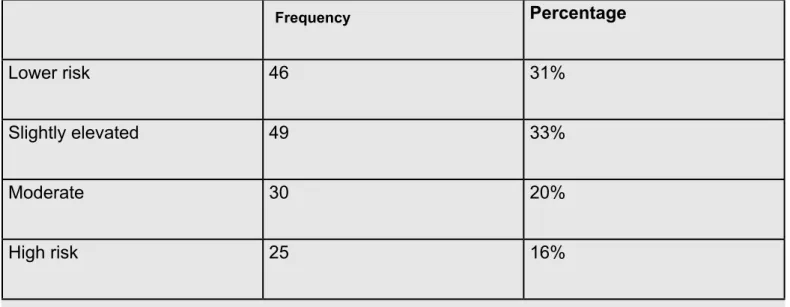
Patient’s risk about diabetes was suboptimal. 31% of the patients had low risk, 33% had slight-ly elevated and 20% had moderate risk and 16% had high risk. Risk in terms of gender was same for males and females. The risk about diabetes was high in patients those with positive fami-ly history of diabetes, those with long length of co-morbid diseases like hypertension, dyslipi-daemia etc. and those with have social history of alcoholic and smoker.
Factors affecting risk
Issues related to awareness: There is poor awareness about diabetes in the Indian popula-tion. 25% of an urban population was unaware of a medical condition called DM, Similarly, only 22% of the general population and 41% of known diabetics felt that diabetes could be pre-vented. Only 12% were aware of the risk factors for diabetes. Even among people with diabetes, only 40% were aware that it could result in organ damage.
56.3 % of the population knew that diabetes can be prevented and 51.5% understood that
diabe-tes can affect other organs.
Measurement of risk
In line with poor awareness, glycaemic control in Indian patients is also poor. In the ICMR IN-DIAB study approximately 30 % subjects had glycosylated haemoglobin (HbA1C) levels below 7%. Only 22.4% of urban and 15.4% of rural sub-jects had reported having checked their HbA1c in the past year. Thus, there is a rapid increase in diabetes prevalence across the country, pre-dominantly in urban areas, but with rural areas in some parts of India also reporting nearly 10% prevalence. There is a need to address issues of awareness, education; evidence based clinical care and policy in the country.
A set of assessment methodologies, from the simple checking list to several risk score mod-els, was developed in recent years, such as the Finnish Risk Score, Danish Diabetes Risk Score, ADA, Cambridge Risk Score, NHANESIII, DRC, Thailand Risk Score, Spanish Diabetes Risk Score and so on. All these tools are helpful in the assessment of high risk and of persons with diabetes all over the world but only a few are de-veloped in China.6
Pharmacist role
Patient counseling is a process that improves pa-tients ‘ability to cope with their disease and make informed decisions regarding management and medication. It helps motivate patients to change any harmful dietary and lifestyle habits. Pharma-cists are in a unique position to play a vital role in helping patients to cope with their disease. Studies have shown that pharmacist
interven-tions positively influence health outcomes and
patient satisfaction, which are crucial indicators for quality of health care and a key factor for medication adherence.8
• Support of self-blood glucose monitoring (SBGM)
• Monitoring and promoting patient adherence with medication and other components of self-management
• Identifying and resolving drug-related problems
• Providing targeted education
• Monitoring blood pressure, weight and lipids
• Reminding patients of the importance of regular examinations for the presence of diabetic complications, for example, eye and feet examinations or drug therapy management. • Assist in the detection, education and referral of individuals at risk of diabetes.
• Increased patients’ satisfaction with their care
• Pharmacists’ role was mainly to specify all drug-related problems including poor drug
compliance and side effects and communicating
these to the physician.
• Be able to contribute to promoting good diabetes control and avoiding unplanned hospitalizations.
METHODOLOGY Study design
Qualitative observational interview based meth-od.
Study site
450 bedded tertiary care hospital
Study duration
For a period of 6 months
Study approval
The protocol of study submitted to Institu-tional Human Ethics Committee of Hospital (IHEC). The protocol was approved by com-mittee with the approval number SJPCEC/P25/ PP/2014/032 and the hospital approval number SJCP/DIR/A.18/2015-2016.
Disease selection
• Type II DM patient with / without co-mor-bidities.
• Patients with increased risk of develop-ing type II DM.
Inclusion criteria
• Gender: both females and males.
• Type II DM patient with / without co-mor-bidities.
• Patients with increased risk of develop-ing type II DM.
Exclusion criteria
• Seriously ill patients.
• Physical or cognitive impairment. • Not interested to participate in study. • Pregnant women
Sample size
150 diabetic patients and 150 non-diabetic pa-tients.
Study tool
• DKQ – 24 item questionnaire form • Type II Diabetes Risk Assessment form
Statistical analysis
Statistical Package for Social Sciences (SPSS) version 17 for windows was used for analysis. Knowledge of Type II Diabetes Mellitus was assessed using DKQ-24 item questionnaire. The DKQ-24 item used, a mark of two (2) was awarded for Yes, and one (1) for No and a mark of zero (0) was awarded for no response. The knowledge items were aggregated to create the knowledge scale on a 48-point scale. Partici-pants that scored (0) were considered neutral; 1-24 need improvement; and 25-48 as good.
T-test for finding significant difference between
pre and post survey. Risk assessment was done using Finnish Type II Diabetes Risk Assessment form. The rating was as: Low risk, Slightly elevat-ed risk, Moderate risk, High risk according to the scoring criteria.
RESULTS
DEMOGRAPHIC CHARACTERISTICS AGE OF RESPONDENTS (n=150) Knowledge
The respondents age were grouped into 5 cate-gories for analysis. The majority of the
respon-dents 63(42%) fell in the category 61-70yrs. Followed by 45 (30%) in the category of 51-60yrs, 28 (18.7%) in the category 41-50yrs and 14 (9.3%) in the category 31-40yrs. Altogether about 90.7% of respondents were above 40yrs of age and only 9.3% were below 40yrs of age.
Risk
The respondent’s age were grouped into 5 cat-egories for analysis. The majority of the respon-dents 42 (28%) fell in the category 41-60yrs. Fol-lowed by 41 (29.3%) in the category of 61-70yrs, 22 (14.7%) in the category 31-40yrs, Altogether about 85.3% of respondents were above 40yrs, while only 14.7% were below 40yrs of age.
GENDER OF RESPONDENTS (n=150) Knowledge
The sample consisted of 54 (36%) females and 96 (64%) males.The majority of the respondents were males.
Risk
The sample consisted of 80 (53.3%) males and 70 (46.7%) females.The majority of the respon-dents were males.
MARITAL STATUS (n=150) Knowledge
The majority of respondents mainly 148 (98.7%) were married, 2 (1.3%) were single. Most of the respondents were in the research were married.
Risk
The majority of respondents mainly 142 (94.7%) were married, 8 (5.3%) were single. Most of the respondents were in the research were married.
EDUCATIONAL STATUS (n=150) Knowledge
The majority of respondents namely 94 (62.7%) had school level education, 33 (22%) were illiter-ate and 23 (15.3%) were found to be university level.The results suggest that the majority of re-spondents had their formal education.
Risk
had school level education, 44 (29.4%) were found to be university level and 16 (10.7%) were illiterate.The results suggest that the majority of respondents had their formal education.
EMPLOYMENT STATUS (n=150) Knowledge
Majority of the respondents, namely 81 (54%) were employed, followed by 69 (46%) were un-employed. These results shows that majority of the respondents were employed.
Risk
Majority of the respondents, namely 83 (55.3%) were employed, followed by 65 (43.3%) were un-employed. These results shows that majority of the respondents were employed.
FAMILY HISTORY OF DIABETES MELLITUS (n=150)
Knowledge
Out of 150respondents only 83 (55.3%) reported present, 67 (44.7%) reported absent.Thus it is clear that majority of the respondents were from the family history of Diabetes Mellitus.
Risk
Out of 150 respondents only 76 (50.7%) report-ed present, 72 (48%) reportreport-ed absent.Thus it is clear that majority of the respondents were from the family history of Diabetes Mellitus.
HABITANTS (n=150) Knowledge
Out of 150 respondents 136 (90.7%) reported as non-vegetarians and 14 (9.3%) reported as vegetarians. Thus it is clear that majority of the respondents were non- vegetarians.
Risk
Out of 150 respondents 132 (88%) reported as non-vegetarians and 18 (12%) reported as veg-etarians. Thus it is clear that majority of the re-spondents were non- vegetarians.
CO-MORBIDITIES (n=150) Knowledge
Out of 150 respondents only 10% reported no
co-morbid disease state, 22% reported single co-morbid disease state and 68% reported mul-tiple co-morbid disease condition. Commonly observed co-morbid disease conditions are obe-sity, dyslipidaemia, hypertension, cardiovascular diseases, etc.
Risk
Out of 150 respondents only 32.7% reported no co-morbid disease state, 27.7% reported single co-morbid disease state and 72.2% reported multiple co-morbid disease condition. Commonly observed co-morbid disease conditions are obe-sity, dyslipidaemia, hypertension, cardiovascular diseases, etc.
SMOKER (n=150) Knowledge
Majority of the respondents, namely 119 (79.3%) were non-smokers, followed by 31 (20.7%) were smokers. These results shows that majority of the respondents were non-smokers.
Risk
Majority of the respondents, namely 122 (81.3%) were non-smokers, followed by 28 (18.7%) were smokers. These results shows that majority of the respondents were non-smokers.
ALCOHOLIC (n=150) Knowledge
Out of 150 respondents only 40 (26.7%) reported alcoholic and 110 (73.3%) were reported non-al-coholic. Most of the respondents in the research were non-alcoholic.
Risk
Out of 150 respondents only 49 (32.7%) reported alcoholic and 101 (67.3%) were reported non-al-coholic. Most of the respondents in the research were non-alcoholic.
PHYSICAL ACTIVITY (n=150) Knowledge
Risk
The majority of the respondents namely, 110 (73.3%) had physical activity, 40 (26.7%) had no physical activity. The results suggest that the majority of the respondents had their physical activity.
SOCIO-ECONOMIC STATUS (n=150) Knowledge
The majority of the respondents namely, 107 (71.35) fell under middle class, followed by 35 (23.3%) under high economic status and 8 (5.3%) under low class
Risk
The majority of the respondents namely, 91 (60.7%) fell under middle class, followed by 43 (28.7%) under high economic status and 16 (10.7%) under low class
PATIENT KNOWLEDGE LEVEL Baseline Intervention
Knowledge Level (n= 150)
Knowledge level in Type II diabetes mellitus assessed through DKQ-24 item questionnaire. The respondents were categorized as Good, Need Improvement and Neutral. Majority of the respondents 85 (57.23%) had good knowledge level, only 62 (41.77%) need improvement in knowledge and 2 (1%) in neutral position. Thus the need for educating patients about Type II Di-abetes Mellitus is highly demanded.
Final Intervention
Level of Knowledge (n=150)
Baseline line information was carried out in 150 patients. Out of which 139 (92.96%) were found to be good in knowledge level, followed by 11 (7.04%) still need improvement and none (0%) found to be neutral. This shows improvement in level of knowledge after pharmacist intervention.
Level of Risk (n= 150)
Baseline intervention was carried in 150 patients. Out of which 49 (33%) were slightly elevated, fol-lowed by 46 (31%) low risk, 30 (20%) were hav-ing moderate risk and 25 (16%) have high risk of developing Type II diabetes mellitus
ASSOCIATED DEMOGRAPHIC CHARACTER-ISTICS
Statistical Package for Social Sciences (SPSS) version 17.0 for windows was used for analy-sis. The statistical analysis used for the purpose
was: Pearson Chi-square test, p<0.05 for finding
association between demographic variables with knowledge and risk.
Knowledge
Note: The value of asymptomatic significance
(DKQ- 24 item) for Pearson Chi-Square should be less than 0.05 (p<0.05) so that there will be association between the variable. Thus Age, Education, Marital status, Smoking, Alcoholism, Physical Activity, Socio-economic status was found to be associated with knowledge.
RISK
Note: The percentage of risk of developing Type II Diabetes Mellitus was assessed using the Finnish Type II Diabetes Risk Assessment form. Thus most of the respondents were found to be have slightly elevated risk.
Interpretation between Pre and Post Survey
Statistical Package for Social Sciences (SPSS) version 17.0 for windows was used for analy-sis. The statistical analysis used for the purpose
was: T-test, Significance and P<0.05 for finding significant difference between pre and post sur
-vey. It was that there is significant difference in
knowledge of Type II Diabetes Mellitus between pre and post survey.
Note: Significance (DKQ-24 item) should be less than 0.05 to be significant (i.e. p<0.05).
DISCUSSION
A qualitative observational interview based method was carried out for a period of 6 months in a multi-speciality hospital to evaluate 2 main objectives: Knowledge and Risk in Type 2 Dia-betes Mellitus population with/without co-morbid disease conditions.
Diabetes Knowledge Questionnaire in Type 2 Diabetes patients, Part-C Post study. Structured and validated interview form (Finnish Diabetes Association Risk Assessment Form) consisting of 2 (A and B) sections was developed for in-terview purpose. Part-A deals with Demographic characteristics, Part-B deals with Risk Assess-ment Form.
The study was purposed to assess knowledge and risk with Type 2 diabetes. Furthermore, possible relationships between knowledge with variables obtained from research were explored using statistical method.
The statistical analysis used for the purpose was: Percentage calculation, Pearson Chi-square
test, P<0.05 for finding association between de -mographic variables with knowledge. Whereas
T- test was used for finding the significant differ -ence in patient knowledge between pre and post survey.
Data analysis presented in result section is based on the interview schedule used for the study. Complementary information from the form was also included, were appropriate. In all cas-es, clarity of data is invigorated with the use of charts and tables. The analysis of data was con-ducted in 2 phases: Baseline intervention and
Final intervention. In the first phase analysis of
all variables in the interview schedule was per-formed. In the second phase, variables
associ-ated with the final intervention and statistical as -sociation between the variables was performed.
Demographic Characteristics
This section presents data pertaining to the re-spondents’ demographical data such as age, gender, employment status, marital status, ed-ucation status, social habits and socio-economic status.
A total of 150 patients were enrolled for study and their data were collected. Among the respon-dents, 90.7% were above 40 years of age and 9.3% were below 40yrs of age. This result was coincided with the study “Management of Type 2 Diabetes Mellitus in Older Adults” by Kyung Soo Kim, Kyung Mi Sung29. The risk was assessed in a total of 150 patients and their data were col-lected. Among the respondents, 85.3% above 40 years of age and 14.7% below 40 years of age and this result was coincided with the study
‘Di-agnosis of Type 2 Diabetes at an Older Age’ by Hwee H. Tan, Ritchie R. McAlpine.29
A total of 150 patients were enrolled for study and their data were collected. Among the re-spondents, 64% was males and 34% was fe-males. This result was coincided with the study “Diabetes and gender” by Gale 31. The risk was assessed in a total of 150 patients and their data were collected. Among the respondents, 80 (53.3%) was males and 70 was (46.7%) females. This result was coincided with the study “Gender aspects in Type 2 Diabetes mellitus and cardio metabolic risk” by Naveed Sattar.30
The results suggest that the majority of respon-dents mainly 148 (98.7%) were married, 2 (1.3%) were single. This result was coincided with the study. “The Marital Relationship and Psychoso-cial Adaptation and Glycemic Control of Individ-uals with Diabetes” by Paula M. Trief, Christine L. Himes33. The risk assessment was conducted in a total of 150 patients and their data were col-lected. Among them 142 (94.7%) were married, 8 (5.3%) were single. This result was coincided with the study “Marital status and Risk of type 2 Diabetes in the Health Professionals Follow-up Study” by Marilyn C Cornelis, Maria Glymour33 The results suggests that the majority of respon-dents 94 (62.7%) had school level education, 33 (22%) were illiterate and 23 (15.3%) were found to be university level. This result was coincided
with the study “The influence of socioeconomic
status on future risk for developing Type 2 dia-betes in the Canadian population between 2011
and 2022: differential associations by sex” by
Laura A. Rivera, Michael Lebenbaum35. The risk assessment was made in a total of 150 pa-tients. Among the respondents, 90 (60%) had school level education, 40 (26.7%) were found to be university level and 20 (13.4%) were illit-erate. This result was coincided with the study “Assessment of Risk of Type 2 Diabetes Mellitus Among Rural Population in Tamilnadu by Using Indian Diabetic Risk Score” by Raja Subramani, Uma Devi.35
. Upon the risk assessment, majority of the re-spondents, namely 83 (55.3%) were employed, followed by 65 (43.3%) were unemployed. This result was coincided with the study ‘Prospective Study of Social and Other Risk Factors for In-cidence of Type 2 Diabetes in the Whitehall II Study’ by Meena Kumari, Michael Marmot.37 Majority of the respondents, namely 119 (79.3%) were non-smokers, followed by 31 (20.7%) were smokers. These results shows that majority of the respondents were non-smokers. This result was coincided with the study “Does increased knowledge of risk and complication of smoking
on diabetes affect quit rate? Findings from a ran -domized controlled trial in kerala, India” by Mini, Nichter, Thankappan.39 and in risk assessment, majority of respondents, namely 122 (81.3%) were non-smokers, followed by 28 (18.7%) were smokers and this result was coincided with the study ‘Active Smoking and the Risk of Type 2 Di-abetes, A Systematic Review and Meta-analysis’ by Carole Willi, Patrick Bodenmann39
Out of 150 respondents only 40 (26.7%) reported alcoholic and 110 (73.3%) were reported non-al-coholic and result was coincided with the study. “Diabetes related health knowledge, attitude and practice among diabetic patients in Nepal” by Anju Gautam, Dharma Nand Bhatta41 and in risk assessment, Out of 150 respondents only 49 (32.7%) reported alcoholic and 101 (67.3%) were reported non-alcoholic and the result was coincided with the study ‘Alcohol Consumption
and the Incidence of Type 2 Diabetes’ by Sofia
Carlsson, Niklas Hammar41
The majority of the respondents namely, 110 (73.3%) had physical activity, 40 (26.7%) had no physical activity and the result was coincided with the study ‘Diabetes related health knowledge, attitude and practice among diabetic patients in Nepal’ by Anju Gautam, Dharma Nand Bhatta41 and the risk was assessed and 110 (73.3%) had physical activity, 40 (26.7%) had no physical ac-tivity and the result was coincided with the study ‘Physical Activity of Moderate Intensity and Risk of Type 2 Diabetes’ by Christie Y. Jeon, BA1, R. Peter Lokken.42
The majority of the respondents namely, 107 (71.35) fell under middle class, followed by 35 (23.3%) under high economic status and 8 (5.3%) under low class and the result was
coin-cided with the study “The influence of socioeco -nomic status on future risk for developing Type 2 diabetes in the Canadian population between
2011 and 2022: differential associations by sex”
by Laura A. Rivera, Michael Lebenbaum44 and the risk assessment was made in a majority of the respondents namely, 91 (60.7%) fell under middle class, followed by 43 (28.7%) under high economic status and 16 (10.7%) under low class and this result was coincided with the study ‘As-sessment of Risk of Type 2 Diabetes Mellitus Among Rural Population in Tamilnadu by Using Indian Diabetic Risk Score’ by Raja Subramani, Uma Devi.35
Disease Characteristics
This section presents data pertaining to the re-spondents’ disease condition such as co-mor-bidities and family history.
Out of 150 respondents only 10% reported no co-morbid disease state, 22% reported single co-morbid disease state and 68% reported mul-tiple co-morbid disease condition. This result was coincided with the study ‘Prevalence and co-prevalence of co-morbidities among patients with type 2 diabetes mellitus’ by Iglay , Hannachi and the risk was assessed and 32.7% reported no co-morbid disease state, 27.7% reported sin-gle co-morbid disease state and 72.2% report-ed multiple co-morbid disease condition and this result was coincided with the study ‘Prevalence and co-prevalence of co-morbidities among pa-tients with type 2 diabetes mellitus’ by Iglay , Hannachi45
As family history was considered, Out of 150re-spondents only 83 (55.3%) reported present, 67 (44.7%) reported absent and the result was coin-cided with the study ‘The link between family his-tory and risk of type 2 diabetes is not explained by anthropometric, lifestyle or genetic risk fac-tors: the EPIC- InterAct study’ by Scott RA, Lan-genberg C50 and the risk was assessed among 150 respondents only 76 (50.7%) reported pres-ent, 72 (48%) reported absent and this result was coincided with the study ‘Family history of type 2 diabetes and prevalence of metabolic syndrome in adult Asian Indians by Mithun Das, Susil Pal46
Knowledge Level in Respondents:
47.77% need improvement and 1% in neutral position. This result was coincided with study conducted by Yadav SB et al.53 The need for pharmacist intervention was clearly shown here.
Risk in Respondents:
Out of 150 respondents, majority of the respon-dents were have slightly elevated risk 33%, 31% low risk, 20% moderate risk and 16% high risk. This result was coincided with the study “Risk Assessment Tools for Identifying Individuals at Risk of Developing Type 2 Diabetes” conducted by Brian Buijsse et al.26 The need for pharma-cist intervention was clearly drawn from report of this research.
Final Interventions:
Knowledge Level in Respondents:
Final intervention carried out in 150 patients. 7.04% still in need of improvement in knowl-edge. This was because of illiteracy, lack of con-centration during counselling, and age. 92.96% were found to be good in knowledge and none in neutral. This shows improvement in knowledge of patients due to pharmacist intervention. This result was coincided with study “Diabetes Knowl-edge in Predominantly Latino Patients and Fam-ily Caregivers in an Urban Emergency Depart-ment” conducted by Sanjay Arora et al.50
Associated Demographic Characteristics Knowledge
Knowledge was found to be associated with Age, Education, Marital Status, Smoking, Alcoholism, Physical Activity and Socio- Economic Status. This might be due to following reasons:
Age:
There was association between age and knowl-edge (Table: 1); this might be due to fewer
num-ber of people below 40 yrs. suffering from Type II
Diabetes Mellitus when compared with the larger number of respondents above 40yrs. The study in “Management of Type 2 Diabetes Mellitus in Older Adults” conducted by Kyung Soo Kim et al
supports these findings.28
Education:
There is association between education and knowledge, on the basis of education level, a
highly literate population is associated with bet-ter understanding of Type II Diabetes Mellitus (Table: 1). This research population was mainly school level and capable of compromising with knowledge. This study conducted by Al-Qazaz
HKh et al supports these findings.
Marital Status:
There shows association between marital status and knowledge (Table: 1). Most married respon-dents had good knowledge than the singles.
Mar-ital status might influence patients’ knowledge
with disease positively. The study conducted by
Paula M. Trief et al supports these findings. The help and support from a spouse in different as -pects could be the reason why married patients had good knowledge than single patients.32
Smoking:
There shows association between smoking and knowledge (Table: 1). A huge number of non- smokers had knowledge about the Type II Diabetes Mellitus than the smokers. The study conducted by Mark Nichter et al supports these
findings.38
Alcoholism:
There shows association between alcoholism
and knowledge (Table: 1). There is significant difference between the knowledge within non-
alcoholics than alcoholic respondents. The study conducted by Anju Gautam et al supports these
findings.40
Physical Activity:
There shows association between physical activ-ity and knowledge (Table: 1). Most respondents had good knowledge who were having physical activity than other. The study conducted by Anju
Gautam et al supports these findings.44
Socio- Economic Status:
There is association between socio-economic status and knowledge, on the basis of education level. Those who were coming under middle and high socio-economic status had better knowl-edge than others. The studies conducted by
Laura A. Rivera et al supports these findings.43
Significant Difference between Pre and Post
Much significant difference is shown between
pre and post survey analysis (Table: 3, 4).This shows that pharmacist intervention plays an ef-fective role in improvement of patient knowledge. The study conducted by Titien Siwi Hartayu et al
supports these findings.48
CONCLUSION
As per Dr. Hans V. Hogerzeil, WHO Director of Medicines Policy and Standards, said, “Pharma-cists have an important role to play in health care, which is much more than selling medicines.” This qualitative observational survey shows that –
In Pre – survey the majority of individuals had a poor knowledge about type II Diabetes mellitus. The study also revealed that there is slightly ele-vated risk in developing type II Diabetes mellitus among respondents. This is not surprising since the respondents have school level education and most of the patients need improvement in knowledge about type II DM. The respondents apparently failed to understand their condition and importance of risk that leads to type II DM. Proper management requires life style changes and adequate Diabetes Knowledge of which is considered a key component of diabetes man-agement. Differences in knowledge level have
been described depending on level of education, gender and social classes.
Patient counseling was provided to all respon-dents who were categorized under: Need im-provement and Neutral in case of knowledge. A post – survey was conducted after short time
span. A statistical significant difference was ob -served between pre and post survey.
Indians tend to have more body fat and a higher risk of diabetes for the same BMI as compared to Western populations. Changing diets and declining physical activity levels, especially in urban India, have also contributed to the rising prevalence of obesity and diabetes. Majority of the respondents have slightly elevated risk in the survey conducted for assessing the risk of Type II DM.
Health education campaigns concerning Type II
DM and life style modifications should be con -ducted through hospitals where patients’ can
come and share their experiences. Posters and pamphlets regarding disease, drug and life style
modifications provided during campaign helps
them for their future references. Pharmacist in-tervention in risk check of patients is always nec-essary as the level of risk cease to low degree when no interventions are made.
In conclusion this study revealed the need for pharmacist intervention in improving knowledge about Type II Diabetes Mellitus and risk assess-ment of developing diabetes mellitus.
REFERENCES
1. Shannon Shalene Prasad, Final Technical Report for Research Project ‘Type 2 Diabetes -Patients’ Knowledge On Diabetes, Its Medications And Complications At Outpatient Pharmacy, Colonial War Memorial Hospital, 2014 November
2. Global report on diabetes. World Health Organiza-tion, Geneva, 2016.
3. Ambady Ramachandran, Ananth Samith Shetty, Arun Nanditha, Chamukuttan Snehalatha, Type 2 Diabetes in India: Diabetes mellitus Challenges and Possible Solutions, Medicine update 2016 4. LM Moodley BPharm, MMed. Sci, MPS & V
Ram-biritch PhD, An assessment of the level of knowl-edge about diabetes mellitus among diabetic patients in a primary healthcare setting, South African Family Practice, 49:10, 16-16d, 2007 5. Tandon, Nikhil, Raizada, Nishant. The burden of
diabetes in India. 2014 Sep 3
6. Senlin Luo, Longfei Han, Ping Zeng, Feng Chen, Limin Pan, Shu Wang, Tiemei Zhang, A Risk As-sessment Model for Type 2 Diabetes in Chinese; August 7, 2014.
7. R Malathy, MP Narmadha, S Ramesh, Jose M
Alvin, and Babu N Dinesh, Effect of a diabetes
counseling programme on knowledge, attitude and practice among diabetic patients in Erode district of South India
8. Sunya-Lee Antoine, Dawid Pieper, Tim Mathes, and Michaela Eikermann, Improving the adher-ence of type 2 diabetes mellitus patients with pharmacy care: a systematic review of random-ized controlled trials; 2014 Jul 7.
9. D Og. O’Donovan, S. Byrne, L. Sahm, The role of pharmacists in control and management of type 2 Diabetes Mellitus; a review of the literature 10. Azuka C. Oparah, Akintoye J Famakinde &
interven-tions in the collaborative care of patients with diabetes; January 2009; 9 (1): 18-22
11. Lucy Nkukuma Ngoh. Health Literacy: A Barrier to Pharmacist- Patient Communication and Med-ication Adherence. Pharmacy Today. 2009 Aug; 15 (8): 45-57
12. Statistics About Diabetes, Overall Numbers, Di-abetes and PrediDi-abetes - See more at: http:// www.diabetes.org/diabetes
13. Anju Gautam, Dharma Nand Bhatta, and Umesh Raj Aryal, Diabetes related health knowledge, attitude and practice among diabetic patients in Nepal; 2015 Jun 5
14. Unyime Sunday Jasper,Babatunde Gbolahan Ogundunmade, Macmillian Chinonso Opara, Olayinka Akinrolie, Edna Bawa Pyiki and Aishatu Umar, Determinants of diabetes knowledge in a cohort of Nigerian diabetics; Journal of Diabetes & Metabolic Disorders; 4 March 2014
15. Kalayou K Berhe, Haftu B Gebru, Hailemariam B Kahsay and Alemseged A Kahsay, Assessment of Diabetes Knowledge and its Associated Fac-tors among Type 2 Diabetic Patients in Mekelle and Ayder Referral Hospitals, Ethiopia; May 25, 2014
16. Patrício Fernando Lemes dos Santos, Poliana Rodrigues dos Santos, Graziele Souza Lira Fer-rari, Gisele Almeida Amaral Fonseca, Carlos Kusano Bucalen Ferrari, Knowledge of Diabetes
Mellitus: Does Gender Make a Difference? Au -gust 2014Volume 5, Issue 4, Pages 199–203 17. Anil C Mathew, Neethu Jacob, Shintu Jose,
Rathan P, Suvetha K, Senthil Kumar R, Yun-sheng Ma, Knowledge about risk factors, symp-toms and complications of diabetes among adults in South India; 2014; 3(9): 1086-1092 18. Teerapon Dhippayom Nathorn Chaiyakunapruk,
Ines Krass, How diabetes risk assessment tools are implemented in practice: A systematic re-view; June 2014Volume 104, Issue 3, Pages 329–342
19. Niciane Bandeira Pessoa Marinho; Hérica Cristi-na Alves de Vasconcelos; ACristi-na Maria
Parente Garcia Alencar; Paulo César de Almeida; Marta Maria Coelho Damasceno, Risk for type 2 diabetes mellitus and associated factors; vol.26 no.6 São Paulo Nov./Dec. 2013
20. Fatma Al-Maskari, Mohamed El-Sadig, Juma M. Al-Kaabi, Bachar Afandi, Nicolas Nagelkerke, and Karin B. Yeatts, Knowledge, Attitude and Practices of Diabetic Patients in the United Arab Emirates; 2013 Jan 14
21. Nelofer Khan, Kadayam G Gomathi, Syed Ilyas Shehnaz and Jayakumary Muttappallymyalil, Di-abetes Mellitus-Related Knowledge among Uni-versity Students in Ajman, United Arab Emirates; 2012 Aug; 12(3): 306–314.
22. Brian Buijsse, Rebecca K. Simmons, Simon J.
Griffin, and Matthias B. Schulze, Risk Assess -ment Tools for Identifying Individuals at Risk of Developing Type 2 Diabetes; 2011 May 27 23. C. Muninarayana, G. Balachandra, S. G.
Hiremath, Krishna Iyengar, and N. S. Anil, Prev-alence and awareness regarding diabetes melli-tus in rural Tamaka; 2010 Jan-Mar; 30(1): 18–21. 24. Nighat Nisar, Iftikhar Ahmad Khan, Majid hafeez Qadri, Syed Azam Sher, Knowledge and Risk assessment of diabetes mellitus at primary care level: A Preventive approach required combating the disease in a developing country; October - December 2008 (Part-I) Vol. 24 No. 5 667-672 25. Katherine Heller, OTC Product: BioSafe
Diabe-tes Risk Assessment; Journal of the American Pharmacists Association; July–August, 2008Vol-ume 48, Issue 4, Page 562
26. Bertram Häussler, Gisela C Fischer, Sibylle Meyer, and Diethard Sturm, Risk assessment in diabetes management: how do general
prac-titioners estimate risks due to diabetes? 2007
Jun; 16(3): 208–212.
27. Jaana Lindström, and Jaakko Tuomilehto, Amer-ican diabetes association, The Diabetes Risk Score-A practical tool to predict type 2 diabetes risk
28. Kyung Soo Kim, Soo Kyung Kim, Kyung Mi Sung, Yong Wook Cho, and Seok Won, Management of Type 2 Diabetes Mellitus in Older Adults 29. Hwee H. Tan, Ritchie R. McAlpine, Peter James,
Philip Thompson, Marion E.T. McMurdo, Andrew D. Morris, Josie M.M. Evans, Diagnosis of Type 2 Diabetes at an Older Age
30. Naveed Sattar, Gender aspects in type 2 diabe-tes mellitus and cardiometabolic risk
31. Gale, Gillespie KM, Diabetes and gender. 32. Paula M. Trief, Christine L. Himes, Rebecca
Orendorff, and Ruth S. Weinstock, The Marital
Relationship and Psychosocial Adaptation and Glycemic Control of Individuals With Diabetes 33. Marilyn C Cornelis, Maria Glymour, Ichiro
34. Laura A. Rivera, Michael Lebenbaum and Laura
C. Rosella, The influence of socioeconomic sta -tus on future risk for developing Type 2 diabetes in the Canadian population between 2011 and
2022: differential associations by sex; 24 Octo -ber 2015
35. Raja Subramani, Uma Devi, Udhay Shankar, Stephen, Karthik, Seshadhri, Satheesh Kumar and Sathya Suganya, Assessment of Risk of Type 2 Diabetes Mellitus Among Rural Popula-tion in Tamilnadu by Using Indian Diabetic Risk Score
36. Kaan Tunceli, Cathy J. Bradley, David Nerenz, L. Keoki Williams, Manel Pladevall and Jennifer Elston Lafata, . The Impact of Diabetes on Em-ployment and Work Productivity
37. Meena Kumari, Jenny Head, Michael Marmot, Prospective Study of Social and Other Risk Factors for Incidence of Type 2 Diabetes in the Whitehall II Study FREE
38. Mini, Nichter M, Thankappan K, Does increased knowledge of risk and complication of smoking
on diabetes affect quit rate? Findings from a ran -domized controlled trial in kerala, India.
39. Carole Willi, Patrick Bodenmann, William A. Ghali, Peter D. Faris, Jacques Cornuz, Active Smoking and the Risk of Type 2 Diabetes -A Systematic Review and Meta-analysis
40. Anju Gautam, Dharma Nand Bhatta and Umesh Raj Aryal, Diabetes related health knowledge, attitude and practice among diabetic patients in Nepal; BMC Endocrine Disorders 2015
41. Sofia Carlsson, Niklas Hammar, Valdemar Grill
and Jaakko Kaprio, Alcohol Consumption and the Incidence of Type 2 Diabetes
42. Christie Y. Jeon, BA1, R. Peter Lokken, Physical Activity of Moderate Intensity and Risk of Type 2 Diabetes
43. Laura A. Rivera, Michael Lebenbaum and Laura
C. Rosella, The influence of socioeconomic sta -tus on future risk for developing Type 2 diabetes in the Canadian population between 2011 and
2022: differential associations by sex; Interna -tional Journal for Equity in Health; 24 October 2015
44. Raja Subramani, Uma Devi, Udhay Shankar, Stephen, Karthik, Seshadhri, Satheesh Kumar and Sathya Suganya, Assessment of Risk of Type 2 Diabetes Mellitus Among Rural Popula-tion in Tamilnadu by Using Indian Diabetic Risk Score
45. Iglay, Hannachi, Joseph Howie, , Engel , Moore, Rajpathak, Prevalence and prevalence of co-morbidities among patients with type 2 diabetes mellitus.
46. Mithun Das, Susil Pal, and Arnab Ghosh, Family history of type 2 diabetes and prevalence of met-abolic syndrome in adult Asian Indians
47. InterAct Consortium, Scott RA, Langenberg Sharp, Franks, Rolandsson, Drogan, van der Schouw, Ekelund, Kerrison, Ardanaz, Arriola, Balkau, Barricarte, Barroso , Bendinelli , Beulens , Boeing , de Lauzon-Guillain , The link between family history and risk of type 2 diabetes is not explained by anthropometric, lifestyle or genetic risk factors: the EPIC-InterAct study.
48. Titien Siwi Hartayu, Mohamed Izham MI and Sri Suryawati , Improving of Type 2 Diabetic Patients’ Knowledge, Attitude and Practice To-wards Diabetes Self-care by Implementing Com-munity-Based Interactive Approach-Diabetes Mellitus Strategy; 21 June 2012
49. Shrestha, Yadav, Joshi, Patel, Shrestha, Bharkher, Diabetes Knowledge and Associated Factors among Diabetes Patients in Central Ne-pal
Table 1: Percentage distribution of samples according to their demographic characteristics. S l
No Demographic vari-ables Poor A v e r -age Good χ2 value df T a b l e value 'p' value Inference 1. Age in years
31-40 5 9 0
14.924 8 15.507 0.049
* Significant
41-50 4 17 7
51-60 5 27 13
61-70 4 36 20
71-80 0 3 0
2 Sex
Male 12 62 12
1.921 2 5.991 0.383 cantNot Signifi
-Female 6 30 6
3. Marital status
Single 0 0 2
11.562 4 9.488 0.021* Significant
Married 18 92 38
4. Educational status
Illiterate 3 26 4
5.574 2 5.991 0.048
* Significant
School level 11 58 25
University level 4 8 11
5. Occupation
Employed 12 50 19
1.847 2 5.991 0.397 cantNot Signifi
-Unemployed 6 42 21
6. Family History of di-abetes mellitus
Present 9 48 26
2.091 2 5.991 0.352 cantNot Signifi
-Absent 9 44 14
7 Habitants
Vegetarian 1 7 6 2.145 2 5.991 0.342 Not Signifi
-cant
Non vegetarian 17 85 34
8 Co-morbid disease
condition
Present 11 65 26 0.855 2 5.991 0.652 Not Signifi
-cant
9 Smoker
Yes 1 25 5 6.510 2 5.991 0.039* Significant
No 17 67 35
10 Alcoholic
Yes 8 29 3 11.532 2 5.991 0.003* Significant
No 10 63 37
11 Physical activity
Yes 7 35 35 28.563 2 5.991 0.000* Significant
No 11 57 5
12 Socioeconomic
sta-tus
High 2 14 19 23.030 4 5.991 0.000* Significant
Middle 16 74 17
Low 0 4 4
Table 2: Percentage of risk of developing Type II Diabetes Mellitus
Frequency Percentage
Lower risk 46 31%
Slightly elevated 49 33%
Moderate 30 20%
High risk 25 16%
Table 2a: Mean Percentage
N=150
Parameter Obtained
Range Mean Median Standard de-viation Mean percentage
Pre-test 14-48 27.47 26 8.63 57.23
Post-test 32-48 44.62 44.5 2.51 92.96
Table 3: T-test Value
N=150
Parameter Mean Standard de-viation
Mean differ -ence
‘t’ value p value
Pre-test 27.47 8.63
17.15 25.917* <0.001
Post-test 44.62 2.51