VOLUME 16 ISSUE 3 (2018) Page 357 – 368
IMPEDIMENTS TO HOME OWNERSHIP: PERCEPTION OF LOW- AND MIDDLE-INCOME TENANTS IN SELANGOR
Yong Kun Hing1 & Kuppusamy Singaravelloo2
Faculty of Economics and Administration UNIVERSITI MALAYA MALAYSIA
Abstract
Home ownership affordability has been a serious issue among the low and middle income households in Malaysia. Main contributors to this issue are low income, high cost of living and growth in income that does not commensurate the rise in property price. This research intends to identify the level of home ownership affordability among those who are unable to have a house and are tenants. In addition, it intends to examine the factors that affect their home ownership affordability. The study focuses on people residing at rented units in Kajang, an urban city in Selangor, where primary data was collected using questionnaire method. The target group was low and middle income households, whose head of household aged between 21 to 50 years and total household income capped below RM7,500. The success rate was 74 percent based on 250 households met. The research findings indicate that the level of home ownership affordability varies by ethnicity, household income and educational level. Meanwhile, four main factors that influence home ownership affordability are price of house, affordable mortgage loan, proximity to workplace and government policy on affordable housing. Majority of the respondents are still pessimistic of their ability to own a residential unit.
INTRODUCTION
Housing has direct and immediate influence on education, health, political, environment, security, safety, economy and social life of any society (Ariffin, Zahari, & Nadarajah, 2010). Carlson et al. (2011, cited by Salhotra, 2018) state that consequences of inadequate housing include ‘worse health, educational, and economic outcomes’. Poor families that do not receive housing assistance are likely affected in their drive to higher education, lower socioeconomic status, and pose higher chances of teenage pregnancy and being malnourished (Salhotra, 2018). In developing countries, the price of house increases faster than its annual household income. Although housing reserve may be adequate by quantity, but as the price is high, those in the lower and middle income groups are unable to achieve their dream of owning a home (K’Akumu, 2007). For the majority in these groups, monthly expenditure on housing instalments forms the single largest category. Quite often, more than 30 percent of their monthly income is spent on mortgage payments (Beer, Kearins, & Pieters, 2007).
It is commonly known that rapid urbanisation and industrialisation attract rural to urban immigration in developing countries. This creates a continuous demand for housing, especially for the immigrants from low and middle income households at urban areas. Shaffer (2015) points that supply in the United States is lower than demand due to restrictions by local government in the provision of housing, mainly from ‘zoning regulations, … approval processes, … and outdated building codes’ (p. 41). Inadvertently, the value of residential properties in urban areas has skyrocketed while population growth in urban areas reduces availability of land for development, leading to an exponential increase in the premium for urban land (Arıŏglu, 2002) eventually causes the rise in price of new house. In Malaysia, the price of residential properties in the country grew at 6.45 percent between 2016 and 2017 alone (Valuation and Property Services Department, 2017). The Malaysian government has carried out policies that focus on low income households to purchase affordable house. Yet, the volume offered is still insufficient for this target group (Wan Abd Aziz, Kuppusamy, Doling, & Hanif, 2014).
not want to own it, which would otherwise cost RM250 per month, excluding the maintenance costs, repairs and taxes (Pros and cons in rent-to-own schemes, 2018). Renting however lead to a shortfall in the sense of belongingness to their unit, facilities and the neighbourhood.
There is still a dearth of work in tenants and home ownership affordability in Malaysia. This paper fills the gap in home ownership affordability, especially discussion on obstacles to home ownership and affordability among the tenants in urban area among low and middle income tenants in Selangor and secondly, factors that cause them to continue being tenants.
THEORETICAL UNDERPINNING
Within the mainstream economic theory, neoclassical economic theory appears more established to press for liberalising the market from the state in the provision of goods like housing. The theory states price is determined by an interplay between supply and demand in the market, which moves into an equilibrium price when quantity in demand equals its supply (Khalid, 2010). Neoliberalism theory is widely used to describe liberalisation of government control or protection of the economy which augments corporate control of the market (Kahn, 2007). In China, neoliberal reform has brought significant changes in the provision of urban housing in the 1980s (Wang, Shao, Murie, & Cheng, 2012). In many countries, neoliberal policy has impacted on the housing provision, opportunities and affordability (Forrest & Hirayama, 2009).
Duan (2011) applied price to income ratio (PIR) and housing affordability index to measure housing affordability in Lanzhou, Northwest China and confirmed that household income is a significant factor of housing affordability. Besides, Lau and Li (2006) used PIR to analyse the changing financial ability of Beijing households in the purchase of commercial housing. Torluccio and Dorakh (2011) identified that housing affordability is not only to be seen as the ratio of apartment cost to citizen’s income but also the ability to obtain a loan to buy a house. They pointed that housing affordability in Russia and Belarus continues to be a big challenge. Home ownership affordability issues in Australia have been influenced by demographic change, household income, location, mortgage loan, housing prices, social amenities, economic growth and government policy (Berry & Dalton, 2004; Berry, 2006; Burke et al., 2008; Yates & Milligan, 2007; Sliogeris, Crabtree, Phibbs, Johnston, & O'Neill, 2008).
Thus, findings above show that home ownership affordability can be influenced by various factors such as availability of housing loans by financial institutions, construction cost, household income, housing loan interest rates, house price, social amenities, demography characteristics, location, population size, government policies and programmes.
METHODOLOGY
This study was focused on Kajang, a large town situated about 20 kilometres away from Kuala Lumpur with a population of local citizens being at 311,785 (Department of Statistics, 2011). The research targeted on low and middle income tenants only. As such, this quantitative study employs a purposive sampling technique as it required respondents who are aged 21 years old and above, married and still renting a house. Parents visiting eight kindergartens, one vernacular primary school and a convent school in the area form the basis of identifying the respondents, who must be tenants. Once identified, the respondents were interviewed directly or issued a questionnaire if they insisted of being given one to answer themselves.
Being the key instrument, the questionnaire used was developed based on previous studies by scholars in this field such as Trimbath and Montoya (2002), Berry and Dalton (2004), Berry (2006), Burke and Pinnegar (2007), Md. Sani (2007), Yates and Milligan (2007), Sliogeris et al. (2008), Duan (2011), and Torluccio and Dorakh (2011). All questions were closed-ended and based on perspectives of neo-classical economic and neoliberal theories. The five-point Likert scale is used to assess the level of agreement to statements. Home ownership affordability was measured using 17 statements but was reduced to only 14 after a pilot test. The alpha reliability coefficient scores for the items in the pilot test were 0.7799. As many as 250 sets of questionnaires were distributed but only 204 sets of questionnaires were returned successfully. After a review, 19 sets of questionnaires were removed as they did not comply fully to the criteria set. Therefore, only 185 sets of questionnaires were used in this study, with an alpha value of 0.7916 in the final test. We have left the housing affordability level to be decided by the respondents themselves.
DATA ANALYSIS
see whether the level of home ownership affordability is significantly influenced by respondents’ demographic background.
RESULTS AND DISCUSSION
Of the 185 participants in the survey, 51.4 percent were females. This may be incidental due to the method employed by the study, which accepted the head of household or the spouse residing at the unit. The majority of respondents were ethnic Malays (57.3%), followed by Indians (21.1%), Chinese (16.2%) and Others (5.4%). Almost one quarter of respondents (25.4%) have completed higher secondary school or MCE/SPM academic qualification followed by lower secondary schooling or SRP/PMR qualification (24.3%), 14.6 percent had a diploma and only 11.9 percent had a degree. In contrast, only 1.1 percent of total respondents had post-graduate degree. Meanwhile, a large proportion of respondents’ spouses have completed lower secondary schooling (26.1%). As a result, majority of them are blue collar workers. Almost all (97.3%) households had one or two persons working. Distance of respondents’ workplace was recorded as follows: below 3 km (23.4%), 3.0 – 5.9 km (18.1%), 6.0 – 8.9 km (4.6%), 9.0 – 11.9 km (9.9%) and 12 km and above (33.9%). Almost two-thirds (66.9%) of the tenant respondents paid a monthly rental of below RM500, while those for RM500-799, RM800-1099, and RM1100 and above accounted for 25.4 percent, 7 percent and 0.7 percent, respectively. The tenure of occupancy at the time of study was 22.2 percent for below 2 years, 25.4 percent for 2 – 3.9 years, 17.8 percent for 4 – 5.9 years, 17.8 percent for 6 – 10 years, and the remaining 16.8 percent have resided there more than 10 years.
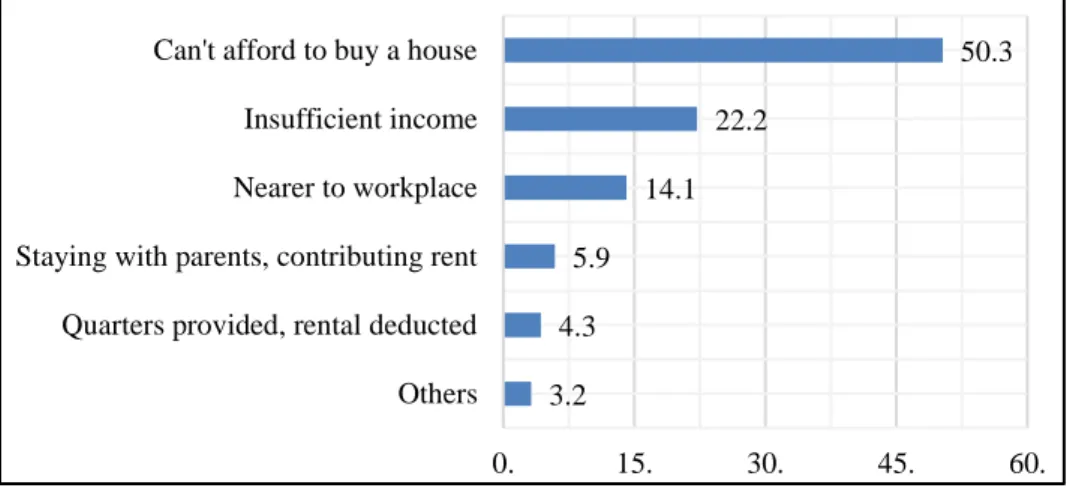
Figure 1 presents reasons why the respondents were still renting a unit than to own one. A total of 72.5 percent of the respondents cited financial reasons while 14.1 percent wanted a unit near their workplace.
The plan to purchase a house whether it is new or a house that was occupied before may be influenced by various factors such as ethnicity, total household income and the affordability level. Table 1 verifies that there is almost no discernible difference in the proportion of tenants by ethnicity (Malays and Indians) in terms of affordability to purchase a house that is priced below RM150,000. However, a larger proportion of the Chinese could afford a house that is priced more.
Among the low income tenants, more ethnic Indians (28.6%) could afford a house that is priced between RM100,000 and RM150,000 as compared with 5.8 percent by Malays and 15.4 percent by ethnic Chinese.
Figure 1: Reasons for residing in rented unit (%)
Note: “Others” include ‘have not decided yet’, ‘intend to purchase unit elsewhere’, and ‘blacklisted by financial institution’
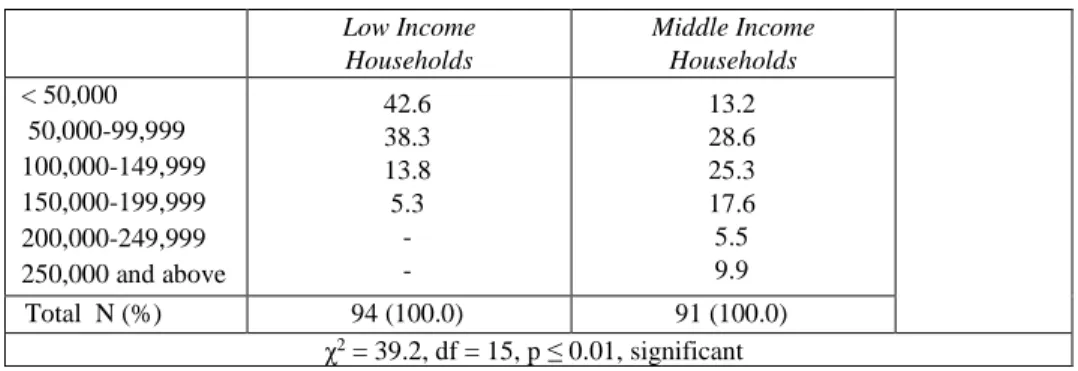
Table 2 displays affordable price according to household income. About 43 percent of respondents from low household income group (RM500-RM2,499) are likely to buy a house priced below RM50,000 only. On the other hand, the corresponding proportion of respondents for the middle income household is expectedly low at 13.2 percent. However, 42.9 percent of those from the middle income households (RM2,500-RM7,499) are able to purchase a house priced between RM100,000 and RM200,000. Only about 15 percent of the latter income group could afford a house priced RM200,000 and more. This confirms household income as one of the significant determinants of home ownership affordability, consistent with the findings of Duan (2011).
The analysis found that 72.7 respondents with only primary school education could afford to buy house at RM50,000 and below. Meanwhile, 80.0 percent of respondents with SRP/PMR certificate could afford a house below RM100,000, followed by 89.4 percent of respondents with MCE/SPM certificate could afford a house valued at RM150,000. All respondents who had Form Six/STPM qualification could afford houses below RM150,000. Among those who have a degree, it is noted that 90.9 percent of respondent could afford a house at a higher ceiling up to RM300,000. This illustrates that the higher the educational attainment, the higher the affordability level for a house of their choice.
50.3
22.2
14.1
5.9
4.3
3.2
0. 15. 30. 45. 60.
Can't afford to buy a house
Insufficient income
Nearer to workplace
Staying with parents, contributing rent
Quarters provided, rental deducted
Table 1: Affordable price of house by ethnicity
Affordable Price of House (RM)
Ethnicity Total
N (%) Malay Chinese Indian Others
Households: Both Low and Middle Income < 50,000
50,000-99,999 100,000-149,999 150,000-199,999 200,000-249,999 250,000 and above
28.3 40.6 16.0 8.5 1.9 4.7 26.7 16.7 16.7 23.3 10.0 6.7 33.3 28.2 28.2 10.3 - - 10.0 30.0 30.0 10.0 - 20.0 52 (28.1) 62 (33.5) 36 (19.5) 21 (11.4) 5 (2.7) 9 (4.8) Total N (%) 106 (100.0) 30 (100.0) 39 (100.0) 10 (100.0) 18 (100.0)
χ2 = 27.83, df = 15, p ≤ 0.05, significant
Households: Low Income onlya
< 50,000 50,000-99,999 100,000-149,999 150,000-199,999 200,000-249,999 250,000 and above
42.3 48.1 5.8 3.8 - - 53.8 15.4 15.4 15.4 - - 39.9 28.6 28.6 3.6 - - 100.0 - - - - - 40 (42.6) 36 (38.3) 13 (13.8) 5 (5.3) - - Total N (%) 52 (100.0) 13 (100.0) 28 (100.0) 1 (100.0) 94 (100.0)
Households: Middle Income onlyb
< 50,000 50,000-99,999 100,000-149,999 150,000-199,999 200,000-249,999 250,000 and above
14.8 33.3 25.9 13.0 3.7 9.3 5.9 17.6 17.6 29.4 17.6 11.8 18.2 27.3 27.3 27.3 - - 22.2 33.3 11.1 - - 22.2 12 (13.2) 26 (28.6) 23 (25.3) 16 17.6) 5 (5.5) 9 (9.9) Total N (%) 54 (100.0) 17 (100.0) 11 (100.0) 9 (100.0) 91 (100.0) Note: For a and b, the income categories are retained for easy comparison, but χ2 estimates are withdrawn due to excessive empty cells.
Table 2: Affordable price for a house by monthly household income
Affordable Price of House (RM)
Household Income (RM)
Total N (%) 500- 1,499 1,500- 2,499 2,500- 4,499 4,500- 7,499 Households: Both Low and Middle Incomea
< 50,000 50,000-99,999 100,000-149,999 150,000-199,999 200,000-249,999 250,000 and above
46.2 34.6 15.4 3.8 - - 41.2 39.7 13.2 5.9 - - 16.9 33.8 27.7 10.8 3.1 7.7 3.8 15.4 19.2 34.6 11.5 15.3 52 (28.1) 62 (33.5) 36 (19.5) 21 (11.4) 5 (2.7) 9 (4.8) Total N (%) 26 (100.0) 68 (100.0) 65 (100.0) 26 (100.0) 185 (100.0)
Low Income Households
Middle Income Households
< 50,000 50,000-99,999 100,000-149,999 150,000-199,999 200,000-249,999 250,000 and above
42.6 38.3 13.8 5.3
-
-13.2 28.6 25.3 17.6 5.5 9.9
Total N (%) 94 (100.0) 91 (100.0) χ2 = 39.2, df = 15, p ≤ 0.01, significant
Level of Home Ownership Affordability among Tenants
Table 3 shows that the level of home ownership affordability between low and middle income tenants is, as expected, different.
Table 3: Affordability level between low and middle income households
Description Low Income
Households
Middle Income Households
Affordable Price (RM) 100,000 and below (80.9%)
100,000 - 200,000 (42.9%)
Affordable Deposit (RM) 5,000 or below (78.7%) 10,000 or below (81.3%)
Affordable Monthly Housing Loan
Payment (RM) 500 or below (81.9%) Below 800 (81.4%)
Source: Survey results
Factors Affecting Home Ownership Affordability
We used 14 statements to explore factors influencing home ownership affordability premised on perspectives of neoclassical economic and neoliberal theories. They are housing price, household income, daily expenditure, interest rates, monthly instalment, housing loan, economic crisis, public amenities, transportation, network, nearby workplace, supply affordable housing, perception of National Housing Policy, government policy and enforcement.
The employment of a factor analysis using the principal component model in this analysis reduced these variables into several key factors using orthogonal rotation (Hair, Black, Babin, & Anderson, 2010). Although Field (2005) suggested critical factor loadings to be 0.4, we set a higher critical factor loading at 0.5. Four factors were produced – labelled as Affordable Mortgage Loan (monthly instalment, housing loan, household income, daily expenditure and fear of economic crisis); Housing Price (enforcement, interest rates, housing price and supply affordable house); Proximity to Workplace (nearby workplace, transportation network and public amenities) and Government Policy on Affordable Housing (national housing policy and government policy).
In real terms, Affordable Mortgage Loan allows an individual to submit an application for a loan, and once approved, he/she worries whether he/she can afford to pay the monthly housing loan instalment. This behaviour which focuses on affordable mortgage loan is as predicted by neo-classical economic theory. Meanwhile, on Housing Price, people complain that they could not afford to buy a house due to constant increases in house price as the latter is determined by the market forces causing the poor to remain being tenants. The neoliberal theory widely applies in the Malaysian housing market.
Proximity to Workplace, contributes to home ownership affordability because people prefer to stay in places nearby their workplace, public infrastructure and facilities to save time and cost. The final factor Government Policy on Affordable Housing, relates to the Ministry of Housing and Local Government and Ministry of Finance which are directly involved in addressing the problem of housing affordability. Nevertheless, according to neoliberal theory, the government should stay away from intervening in the market. On the contrary, the Malaysian government attempts to assist the low income group to own a house through national housing policy and applies minimal intervention in the upper band of housing industry (Wan Abd Aziz et al., 2014). Private developers are not keen to produce housing units for the low income people as they gain too little from it.
CONCLUSION
RM100,000. These are still difficult to find due to the high housing prices in Kajang contributed by its proximity to Kuala Lumpur and Federal Government Administrative Centre of Putrajaya. Meanwhile, they still prefer to be tenants at Kajang due to proximity to their workplace. This somewhat mirrors the finding of Cox and Followill (2018) whose exploration of historical data in few US cities found that home ownership is not always the best decision. Furthermore, they also worry whether they can afford to pay the monthly housing loan instalment once they secure a loan. With these compounding reasons, they are most likely to continue to stay in rental homes than to buy a house at current scenario. But, being a tenant does not free them from rises in the rental rates.
Although the government has implemented various programmes and activities to ensure the people, especially urban low income group, have access to housing market, there exists a serious impurity in the imbalance between demand and supply of housing units. Home ownership affordability cannot be solved just by giving subsidy or zero deposit to purchase a house. It is because owning a house does not just involve the payment of deposit but also involves the commitment to monthly instalments for the next 25 years or so, involving the burden to commit about one-third of their income. Thus, buying a house and the ability to hold on to home ownership are two different things. Then comes the need to commit a deposit for the unit. Providing a low public assisted interest rate for their housing loan may help.
ACKNOWLEDGEMENT
An earlier version of this paper was presented at the APNHR Conference.
REFERENCES
Ariffin, R. N. R., Zahari, R. K., & Nadarajah, S. (2010, July). Residential satisfaction in private low-cost housing in the urban area: a case study of the Klang Valley, Malaysia. 22nd International Housing Research Conference. July 4-7, 2010, Istanbul, Turkey.
Arıŏglu, N. (2002). The usage trends of materials in high-rise buildings. In O. Ural, V. Abrantes, & A. Tadeu (Eds.), Housing construction: An interdisciplinary task (pp. 1655-1660). Portugal: University of Coimbra.
Beer, A., Kearins, B., & Pieters, H. (2007). Housing affordability and planning in Australia: The challenge of policy under neoliberalism, Housing Studies, 22(1), 11-24.
Berry, M. (2006). Housing affordability and the economy: A review of macroeconomic impacts and policy issues. Research Paper 4. Australian Housing and Urban Research Institute: RMIT-NATSEM Research Institute.
Burke, T., Pinnegar, S., Phibbs, P., Neske, C., Gabriel, M., Ralston, L., Ruming, K. (2008)
Experiencing the housing affordability problem: blocked aspirations, trade-offs and financial hardships, AHURI Research Paper No. NRV3-9. Australian Housing and Urban Research Institute Limited, Melbourne.
Cox, A., & Followill (2018). To rent of buy? A 30-year perspective. Journal of Financial Planning, 31(5), 48-55.
Duan, M. (2011). Investigation on housing affordability in Lanzhou, Northwest China.
International Journal of Housing Markets and Analysis, 4(2), 180-190.
Field, A. (2005). Discovering SPSS for windows: Advanced techniques for the beginner. London: Sage Publications.
Forrest, R., & Hirayama, Y. (2009). The uneven impact of neoliberalism on housing opportunities. International Journal of Urban and Regional Research, 33(4), 998-1013.
Hair, J. R., Black, W. C., Babin, B. J., & Anderson, R. E. (2010). Multivariate data analysis: A global perspective. Singapore: Pearson.
K’Akumu, O. A. (2007). Strategizing the decennial census of housing for poverty reduction in Kenya. International Journal of Urban and Regional Research, 31(3), 657-674.
Kahn, J. (2007). World trade, world bank, privatization: Neoliberalism the economics favored by big business, banks, and our government. Retrieved from http://www.skeptically.org/wto/id10.html.
Khalid, M. S. (2010). Abandoned housing development: The Malaysian experience
(Doctoral dissertation). Heriot-Watt University, Edinburgh, Sctland.
Lau, K. M., & Li, S. M. (2006). Commercial housing affordability in Beijing, 1992-2002.
Habitat International, 30(2006), 614-627.
Malaysia, Department of Statistics (2011). Population distribution by local authority areas and mukims 2010. Putrajaya: Author.
Md. Sani, N. (2007). Kemampuan pemilikan rumah kos rendah di Kuala Lumpur
(Doctoral dissertation). Universiti Sains Malaysia, Penang, Malaysia.
Pros and cons in rent-to-own schemes (2018, July 28). The Star Bizproperty. Retrieved from https://www.thestar.com.my/business/business-news/2018/07/28/pros-and-cons-in-renttoown-schemes/
Salhotra, R. (2018). Inadequate affordable housing in Houston: Causes, effects, and solutions. Kansas Journal of Law & Public Policy, 27(2), 186-210.
Shaffer, B. (2015). Affordable housing in the Big City: A look at causes and current policies in San Francisco, Boston, and New York. Harvard Kennedy School Review, 15, 40-46.
Torluccio, G., & Dorakh, A. (2011). Housing affordability and methodological principles: An application. International Research Journal of Finance and Economics, 79, 64-78.
Trimbath, S., & Montoya, J. (2002). Housing affordability in three dimensions: Price, income and interest rates. California: Milken Institute.
Valuation and Property Services Department. (2017). Malaysian house price index. Retrieved August 2, 2018 from http://napic.jpph.gov.my/portal.
Wan Abd Aziz, W. N. A., Kuppusamy, S., Doling, J., & Hanif, N. R. (2014). Towards a housing policy in Malaysia. In J. Doling, & R. Ronald (Eds.), Housing East Asia: Socioeconomic and demographic challenges. London: Palgrave Macmillan. Wan Abd Aziz, W. N. A., Hanif, N. R., & Kuppusamy, S. (2010). Housing affordability
issues for middle income households: The Malaysian perspective. Paper presented at the 22nd International Housing Research Conference, ENHR 2010, 4-7 July, Istanbul.
Wang, Y. P., Shao, L., Murie, A., & Cheng, J. (2012). The maturation of the neo-liberal housing market in urban China. Housing Studies, 27(3), 343-359.
Yates, J., & Milligan, V. (2007). Housing affordability: A 21st century problem, Final
report. Australian Housing and Urban Research Institute (AHURI), Sydney Research Centre.