THE EFFECTIVENESS OF MALARIA INTERVENTIONS IN
ELDORET MUNICIPALITY, KENYA
Juley-Anne Bochaberi Mokua
MPH, School of Public Health, College of Health Sciences, Moi University, Eldoret, Kenya and Senior
Public Health Officer, Uasin Gishu County, Kenya
Peter Oino Gutwa
Moi University, School of Arts and Social Sciences, Department of Anthropology and Human Ecology,
Kenya
Abstract
Over decades malaria has killed more than a million people each year, mainly young children and pregnant women. Despite such devastating statistics of dead due to malaria, little has been done to combat the disease. This study aimed at establishing the effectiveness of malaria interventions in Eldoret Municipality. The objective of the study was to determine the effectiveness of malaria interventions in the Municipality. Both primary and secondary data was collected using structured and semi-structured questions and interviews for primary data and examination of records for secondary data. Processed data was analyzed and presented in percentages and frequency tables. The study found out that there are a number of interventions within the Municipality, though most of these interventions are mainstreamed from the national government to the grassroots. However, very few personnel employed in the health sector within the municipality and those available do not have the personal drive to perform their responsibilities. The study recommends that for malaria treatment to be effective there is need for availability of adequate training for the personnel, supervision and follow-up in achieving a change in perceptions and practice. There is also need to seal the existing gap between policy on malaria control and reality in actual implementation at the Municipality level.
Keywords:
Effectiveness, Malaria Interventions, Eldoret, Kenya1.
INTRODUCTION
including death, arising from maternal malaria infection during pregnancy (Campbella, 2006). On global scale malaria is the most prevalent infectious disease affecting humans: malaria parasites now infect over 500 million people every year, killing up to 2 million and causing at least 100 million cases of acute illness. Its importance as a public health problem is reflected by the staggering toll malaria extracts in illness and suffering (Campbella, 2006).
Malaria poses an enormous health and economic burden in Kenya, being a leading cause of morbidity and mortality in the country. 25 million out of a population of 34 million Kenyans are at risk of malaria, it accounts for 30-50% of all outpatient attendance and 20% of all admissions to health facilities and an estimated 170 million working days are lost to the disease each year (MOH 2001). Malaria is also estimated to cause 20% of all deaths in children under five (MOH 2006) with the most vulnerable groups to malaria infections being pregnant women and children under 5 years of age (DOMC, 2009).
Historically, malaria has been primarily a rural problem because of the water habitat that the mosquito vector requires and because populations in the least developed nations were dispersed in rural areas. In the past several decades urbanization has become a demographic force and with it malaria has moved into cities (Campbella, 2006).
Malaria poses an enormous health and economic burden in Kenya, being a leading cause of morbidity and mortality in the country. 25 million out of a population of 34 million Kenyans are at risk of malaria, it accounts for 30-50% of all outpatient attendance and 20% of all admissions to health facilities and an estimated 170 million working days are lost to the disease each year (MOH 2001). Malaria is also estimated to cause 20% of all deaths in children under five (MOH 2006) with the most vulnerable groups to malaria infections being pregnant women and children under 5 years of age (DOMC, 2009).
The vast majority of current malaria control efforts use interventions aimed at limiting human-vector contact. In Africa, these interventions are ITNs and IRS. These interventions are often deployed without a detailed understanding of the bionomics of the local vectors. Thus, appropriate vector control depends on knowing both the distribution and epidemiological significance of Anopheles vectors. Vector control managers require fully informed basic knowledge of local anophelines. Attempts have been made to describe and map the Anopheles distribution in the Americas (Foley et al., 2008), Europe (Kuhn et al., 2002), Central and South East Asia (Manguin et al., 2008) and in Africa (Coetzee et al., 2000). Recently, these vector distribution maps have been updated (Sinka et al., 2010). The importance of developing vector maps and regular updating the maps is to provide strategic, evidence-based advice for malaria control programmes.
The Kenya government is committed to the control and prevention of malaria. To this effort it has developed a strategy document outlining several intervention measures. The four intervention measures outlined in the National Malaria Strategy (NMS) document are 1) management of malarial illness; 2) vector control by use of insecticide-treated mosquito nets (ITNs) and other methods, such as indoor house spraying; 3) control of malaria in pregnancy; and 4) control of malaria epidemics (DOMC, 2009).
The theme/slogan for the 2009 World malaria Day in Kenya was ''Counting malaria out, towards a malaria-free Kenya. This implies that both the Global and the National levels are committed to decrease malaria burden to a level where it is no longer in the top ten causes of morbidity and mortality and possibly eliminate malaria in the long term. Additionally, it also seeks to expand coverage with effective vector and parasite control interventions to universal access levels, mobilize and strengthen the national as well as global malaria elimination movement Roll Back Malaria movement and finally document /report on the progress of the move towards a malaria-free country and a malaria-free world.
personnel with skills must have the opportunities to use their skills and know when and how to use them; programs need more than access to drugs, insecticides and personal protection devices; program managers and their users must know how to use these tools effectively, and delivery systems are required to get these tools to those who need them (Campbella, 2006).
Recent economic research shows that malaria slows economic growth in Africa by up to 1.3 per cent each year. The short-term benefits of disease control are estimated at between $3 and $12 billion per year (GlaxoSmithKline, 2003). Some of the malaria control strategies employed in Kenya includes; vector control by use of insecticides treated nets (ITNs) and indoor residual spraying, management of malaria and anaemia in pregnancy: Pregnant women living in malaria endemic areas should get at least 2 doses of IPT and epidemic preparedness and response which involves predicting, containing epidemics, and establishing an early warning system for epidemics (DOMC, 2009).
IRS is carried out in highland malaria epidemic-prone areas. The strategy is to spray over 80% of the households in malaria epidemic-prone district to minimize transmission. The IRS strategy is currently being implemented in these 16 malaria epidemic-prone districts.
Malaria control must address the foremost challenge: to improve the management of malaria disease and to accomplish this in the context of strengthening the local and national health services (Campbella, 2006).
There has been rapidly increasing optimism for greatly improved malaria control, particularly in Kenya where the vast majority of people affected by the disease reside through research and development. This new positive attitude is based on major advances in malaria research and public health practices, and careful epidemiologic and economic analyses of malaria‟s burden and cost effective ways to lessen it. Most crucial has been unheard of political, strategic, and financial support for malaria scientific studies and control actions (Breman, 2004). Malaria intervention strategies need to become an integral part of child survival and maternal and child health activities. Such an integration of services will permit a shared implementation of activities for diagnosing, treating and preventing disease syndromes in children and mothers, syndromes that are related to malaria clinically, epidemiologically and operationally (Campbella, 2006).
Despite considerable progress in malaria control over the past decade, malaria remains a serious problem--particularly in Africa, south of the Sahara, where about 90% of clinical cases occur. Malaria, either alone or in combination with other diseases, is estimated to kill between 1.1 and 2.7 million people worldwide each year, and over 2400 million remain at risk (WHO, 2000).
Notwithstanding, considerable effort for eradication or control during this century, malaria is still the most prevalent and, from the public health standpoint, the most devastating disease in the tropics. While some countries have successfully managed the threat of malaria, there has been a dramatic, worldwide increase in malaria-related illness and death over the past two decades. In many parts of the globe, malaria is not only a major threat to public health, but is a major impediment to development through excessive public health costs, lost productivity and impaired individual growth (Campbella, 2006). This study aims at interrogating some of the interventions employed in controlling malaria incidences in the Municipality.
2.
RESEARCH METHODOLOGY
administered questionnaires which collected data on social demographic information, trainings undertaken, malaria control activities and challenges faced in the implementation of malaria control activities.
3.
FINDINGS AND DISCUSSIONS
3.1
Social Demographic Information
Table 1.0: Social demographic informationCharacteristics Frequency Percentage (%)
Gender
Male 38 75.6
Female 14 24.4
Total 52 100
Analysis in Table 1.0 above shows that 75.6% of the respondents were males, whereas 24.4% were females. This is indicates that the Eldoret Municipality has more male employs than females hence, gender imbalance. Through key informant it was found that the personnel employed in the health sector within the municipality is very low hence, unable to address the needs of people in the Municipality. This study observes that addressing the human resources crisis in the health sector should also be a major and immediate priority.
3.2
Malaria Control Interventions in Eldoret Municipality
The vast majority of current malaria control efforts use interventions aimed at limiting human-vector contact. In the country, these interventions are ITNs and IRS. The study found out that these interventions are often deployed without a detailed understanding of the bionomics of the local vectors. Thus, appropriate vector control depends on knowing both the distribution and epidemiological significance of Anopheles vectors. Vector control managers require fully informed basic knowledge of local anophelines. Analysis of secondary data in the Municipality offices, it was evident that the Kenya government has developed a strategy document outlining several intervention measures. There are four intervention measures outlined in the National Malaria Strategy (NMS) document which include; 1) management of malarial illness; 2) vector control by use of insecticide-treated mosquito nets (ITNs) and other methods, such as indoor house spraying; 3) control of malaria in pregnancy; and 4) control of malaria epidemics (DOMC, 2009).
Additionally, the theme for the 2009 World malaria Day in Kenya was counting malaria out, towards a malaria-free Kenya. This implies that both the Global and the National levels are committed to decrease malaria burden to a level where it is no longer in the top ten causes of morbidity and mortality and possibly eliminate malaria in the long term. Additionally, it also seeks to expand coverage with effective vector and parasite control interventions to universal access levels, mobilize and strengthen the national as well as global malaria elimination movement Roll Back Malaria movement and finally document/report on the progress of the move towards a malaria-free country and a malaria-free world.
Some of the malaria control strategies employed in the Municipality include; vector control by use of insecticides treated nets (ITNs) and indoor residual spraying, management of malaria and anaemia in pregnancy: Pregnant women living in malaria endemic areas should get at least 2 doses of IPT and epidemic preparedness and response which involves predicting, containing epidemics, and establishing an early warning system for epidemics.
3.3
Research on Malaria as an Intervention
Research on malaria has been one of the strategies towards achieving a malaria free society. This new positive attitude is based on major advances in malaria research and public health practices, and careful epidemiologic and economic analyses of malaria‟s burden and cost effective ways to lessen it. As Breman (2004) asserts most crucial has been heretofore unheard of political, strategic, and financial support for malaria scientific studies and control actions. Malaria intervention strategies need to become an integral part of child survival and maternal and child health activities. These findings are in concurrence with Campbella, (2006) who opined that such an integration of services will permit a shared implementation of activities for diagnosing, treating and preventing disease syndromes in children and mothers, syndromes that are related to malaria clinically, epidemiologically and operationally. Cibulskis, (2007) adds that data on changes in malaria incidence and mortality are needed to judge the success of program implementation and to determine whether programs are performing as expected or whether adjustments in the scale of or blend of interventions are required. Therefore, investment in malaria elimination will help other public health programmes to achieve their goals, including prevention and control of neglected tropical diseases. Once elimination is achieved, malaria control will rely mainly on vigilance and surveillance as part of the general public health services, thus saving the huge expenses related to treatment and prevention methods for other public health priorities (WHO, 2008).
3.4
The Role of the Central Government in Malaria Control activities
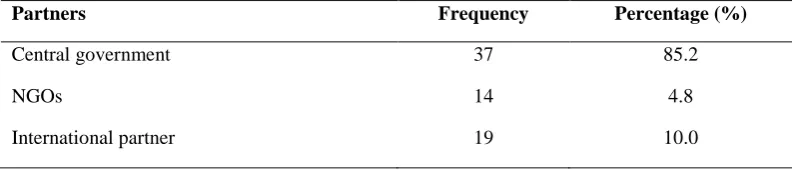
The study established that the role of the central government in malaria control activities is supply drugs and insecticides to the municipality, supervision of those involved in malaria control activities, pay salaries and wages for worker, supply equipment and materials and provide refresher training. Key informants reported that inter-sectoral collaboration is encouraged in the implementation of malaria control activities as other sectors are given opportunity by the government to supplement the activities done by the government on malaria control.
Table 2.0: Partners involved in the implementation of malaria control activities
The study further established that the central government only provides 85% of the support needed to carry out malaria control activities in the Municipality, whereas the national Non-Governmental Organizations and other international partners contribute about 15% of the support needed in malaria control activities. The found that the activities partners are involved in include; supply of drugs and insecticides (87.7%), supply of insecticide treated nets (5%), production and distribution of IEC materials (3%), training of health personnel (2%) and health education (2.3%).
Partners Frequency Percentage (%)
Central government 37 85.2
NGOs 14 4.8
3.5
Factors Affecting the Implementation of Malaria Interventions
Education Level of Staff
Table 3.0: Level of Education
Level of Education Frequency Percentage (%)
Certificate 21 40
Diploma 18 37.8
Higher Diploma 4 4.4
Undergraduate 7 15.6
Masters 2 2.2
Total 52 100.0
The study established that 40% of the respondents had attained secondary school certificate as the highest level of education. Majority of staff in this category were involved in clerical jobs within the municipality particularly, in the department of public health. About 58% of the respondents had attained post secondary education. This category had been involved in the implementation of malaria control activities.
The study found that only insignificant numbers 2.2% of respondents had qualifications beyond undergraduate degree and were mostly involved in designing and planning malaria interventions in Eldoret Municipality. Through informal discussions, the study found that most of the respondents had been involved in the implementation of malaria control activities in the Municipality for more than 6 years. This study indicates that recruitment of health workers in the municipality is low as well as the posts are filled with unqualified staff.
3.6
Training of Personnel involved in Malaria control Activities
Oytsein et al. (2005) contends that one urgent aspect that needs to be addressed in the health sector is the issue of training. For example, Tanzania has the lowest ratio of health personnel per capita in sub-Saharan Africa. Therefore, this study sought to investigate how much the government has invested training public health personnel involved in malaria control activities. The findings are shown in Table 3.0 below:
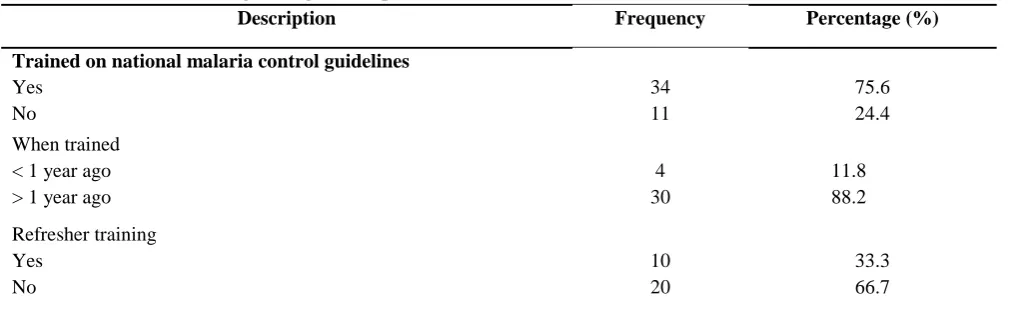
Table 4.0: Level of Training among the Respondents
Description Frequency Percentage (%)
Trained on national malaria control guidelines Yes
No
34 11
75.6 24.4
When trained < 1 year ago > 1 year ago
4 30
11.8 88.2
Refresher training Yes
No
10 20
Analysis in Table 4.0 above shows that 75.6% of the respondents reported to have been trained on the national malaria control guidelines with 88.2% of these category of respondents receiving the training more than one year ago. Only 33.3% of those trained more than one year ago had received refresher training. From the above findings it is evident the ministry of health is not keen enough to provide regular trainings to its staff. This may render the personnel in health departments into redundancy, given that they do not have updated information on malaria control interventions in the Municipality.
The study established that the 11.8% of the respondents who received trainings in less than one year were those in senior management positions. The study further found out that the trained staffs are supposed to liaise with medical practitioners within the district to diagnose malaria with the district. It is assumed that accurate diagnosis is a vital part of good malaria case management. However, many people who come for treatment in public facilities within the Municipality are not diagnosed for malaria and the medical staff mostly depends on verbal diagnosis of malaria.
One of the respondents in the study narrated that:
Medical practitioners in the Municipality engage patients on clinical diagnosis, while avoiding laboratory diagnosis. This is sometimes caused by lack of testing kits or unwillingness of the medical staff in the municipality clinics. This leads to people receiving wrong diagnosis, further accelerating spread of the epidemic in the municipality (Female, 34 years old).
From the above evidence, it is clear that the proportion of people treated for malaria who have a confirmed diagnosis is low. This is in concurrence with (WHO, 2008) who found that sub Saharan African there is low diagnosis of malaria in these countries compared with other regions of the world. This is due to lack of commitment from the staff working in the malaria sector. Therefore, for easy combating of malaria, there is need to carry out laboratory diagnosis as methods such as Rapid Diagnostic Tests (RDTs) are easy to use, give fast results and are increasingly affordable. As these procedures (RDTs) become more widely available, confirmation of malaria prior to treatment will become the standard procedure.
The introduction of RDTs at the community level needs to be carefully planned, to include transport and storage considerations, local sensitivity testing and establishment of a comprehensive quality assessment/control system. Overcoming the tendency of verbal prescribers to treat malaria despite a negative test result poses a significant challenge to the „patients‟. For malaria treatment to be effective there is need for adequate training, supervision and follow-up in achieving a change in perceptions and practice. This study also confirms that New WHO guidelines recommend that anti-malarial drugs should not be given to febrile patients unless the parasitological presence of malaria has been confirmed by laboratory or rapid diagnostic testing. This reduces the unnecessary administration of these drugs and may also help to combat the spread of resistance by ensuring that only malaria patients receive this treatment. It will also mean that patients who present with a fever but do not have malaria are more likely to be given an appropriate treatment more rapidly.
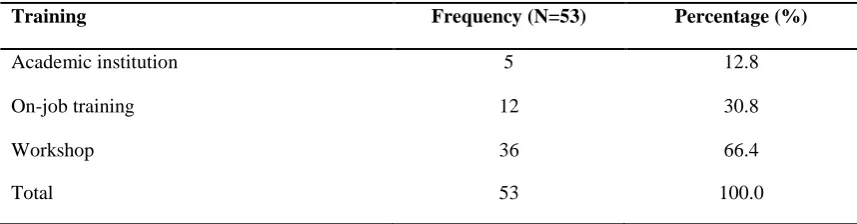
Table 5.0 Nature of the Training
Training Frequency (N=53) Percentage (%)
Academic institution 5 12.8
On-job training 12 30.8
Workshop 36 66.4
Analysis in Table 5.0 indicates that only 12.8% of the respondents reported to have received training from an academic institution while most of the respondents (92.3%) received the training in a workshop. However, almost all the respondents felt that the training received was not adequate to enable them undertake malaria control activities, hence implementation challenges. The respondents were asked to mention some of the things they need to be improved in the Municipality in regard to malaria control activities. The responses are show in Table 5.0 below.
Table 6.0: What needs to be improved?
Activity Frequency Percentage (%)
Continuous education 32 74.4
Refresher training 19 14.2
Provision of IEC materials on malaria control 21 12.4
Total 62 100.0
The study found that 32(74.4%) of the respondents needed continuous education on malaria management, 19(14.2%) of the respondents said that there is need for regular fresher trainings on malaria management. Malaria trainings should be provided so as to enable them prepare adequately and be able to undertake malaria control activities in the Municipality. Twelve percent of the respondents lamented that there is need for production and provision of Information Education and Communication (IEC) materials on malaria control. The educational materials should be distribute to the residents of the municipality and in particular, caregivers, which have been translated into languages that are better understood by the majority of the residents to educate them on how to manage malaria. The IEC materials should be distributed free of charge to the residents frequently.
3.7
Challenges faced in Implementation Malaria Interventions in Eldoret Municipality
Some of the challenges the officers faced when implementing malaria control activities included; lack of supplies (83.7), lack of funds for undertaking activities (62.8%) and lack of proper data from implementing partners (39.5%) among others. Officers reported that despite the challenges they faced they were able to undertake malaria control activities. Some of the ways in which they deal with the challenges include; informing supervisors who would then advice on what to do, ask for donation of drugs and other supplies from the central government and other partners, continuous education on proper record keeping, requesting the business community to assist and prioritizing activities as per the available funds. The study also found out that the burden of malaria still remains high, partly because of weak municipality management capacity, poor coordination, inadequate monitoring, and lack of adequate training of key staff in the health sector in the Municipality.
3.8
The Role of the Central government in Malaria Control activities
The study established that the role of the central government in malaria control activities is supply drugs and insecticides to the municipality, supervision of those involved in malaria control activities, pay salaries and wages for worker, supply equipment and materials provide refresher training. Key informants reported that inter-sectoral collaboration is encouraged in the implementation of malaria control activities as other sectors are given opportunity by the government to supplement the activities done by the government on malaria control.
Table 7.0: Partners involved in the implementation of malaria control activities
Partners Frequency Percentage (%)
Central government 37 85.2
NGOs 14 4.8
The study further established that the central government only provides 85% of the support needed to carry out malaria control activities in the Municipality, whereas the national Non-Governmental Organizations and other international partners contribute about 15% of the support needed in malaria control activities. The found that the activities partners are involved in include; supply of drugs and insecticides (87.7%), supply of insecticide treated nets (5%), production and distribution of IEC materials (3%), training of health personnel (2%) and health education (2.3%).
4.
CONCLUSION AND RECOMMENDATIONS
This study concludes that the number of personnel employed in the health sector within the municipality is very low hence, unable to address the needs of people in the Municipality and this poses a major human resources crisis in the health sector leading to low diagnosis of malaria and those few available to not have the personal drive to perform their responsibilities. The study recommends that for malaria treatment to be effective there is need for adequate training for the personnel, supervision and follow-up in achieving a change in perceptions and practice. Additionally, there is need to seal the existing gap between policy on malaria control and reality in actual implementation at the Municipality level.
5.
REFERENCES
[1] AMREF, (2009). http://www.amref.org/what-we-do/fight-disease/malaria/
[2] Attaran , A, (2000), Promises once, promises twice: a view on the Abuja Declaration and a new opportunity for African malaria control, An Issues Framework for the “Roll Back Malaria for African Prosperity” meeting Center for International Development at Harvard University, 29-30 June 2000,
[3] Breman,J, Alilio, M,And Mills, A, (2004), Conquering the Intolerable Burden of Malaria: What’s New,What’s
Needed: A Summary, American Journal of Tropical Medicine and Hygiene., 71(Suppl 2), pp. 1–15
[4] Cibulskis, R. E, Bell, D, Christophel, E, Hii, J, Delacollette, C., (2007), Estimating Trends in the Burden of Malaria at Country Level American Journal of Tropical Medicine and Hygiene., 77(Suppl 6), pp. 133–137. [5] DOMC, (2006), Malaria Control Notice Board, Ministry of Health issue 1
[6] DOMC, (2007), Malaria Control Notice Board, Ministry of Health issue 3 [7] GlaxoSmithKline, (2003), Facing up to the challenges of malaria, vol 2 [8] Kenya Meteorological Department, (2008), Malaria in Kenya, Panet Kenya [9] Lambert, P.H, (9/12/2003), Malaria: Past and Present, nobelprize.org
[10] Sambo,L, (2007) Defining and Defeating the Intolerable Burden of Malaria III. Progress and Perspectives,