ARTIGO ORIGINAL
Type 2 Diabetes Mellitus, Depression and Eating
Disorders in Patients Submitted to Bariatric Surgery
Diabetes Mellitus Tipo 2, Depressão e Alterações do
Comportamento Alimentar em Doentes Submetidos a
Cirurgia Bariátrica
1. Departamento de Neurociências Clínicas e Saúde Mental. Faculdade de Medicina. Universidade do Porto. Centro Hospitalar de São João. Porto. Portugal. 2. Faculdade de Medicina. Universidade do Porto. Porto. Portugal.
3. Escola de Psicologia. Centro de Investigação em Psicologia. Universidade do Minho. Braga. Portugal. 4. Serviço de Cirurgia. Hospital de Braga. Braga. Portugal.
5. Departamento de Bioquímica. Faculdade de Medicina. Universidade do Porto. Porto. Portugal.
Autor correspondente: Eva Conceição. [email protected]
Recebido: 13 de março de 2015 - Aceite: 28 de setembro de 2015 | Copyright © Ordem dos Médicos 2016
Isabel BRANDÃO1, Ana Marques PINHO2, Filipa ARROJADO1, Ana PINTO-BASTOS3, José Maia da COSTA4,
Rui COELHO1, Conceição CALHAU5, Eva CONCEIÇÃO3
Acta Med Port 2016 Mar;29(3):176-181 ▪ http://dx.doi.org/10.20344/amp.6399
RESUMO
Introdução: A obesidade associa-se a um elevado número de comorbilidades, entre as quais a diabetes mellitus tipo 2 e a patologia psiquiátrica. A cirurgia bariátrica tem demonstrado ser a melhor solução para a perda de peso e a melhoria das complicações nos casos de obesidade mórbida. O objetivo deste estudo é o de analisar a evolução da diabetes mellitus tipo 2 e de variáveis psicopa-tológicas antes e depois da cirurgia bariátrica e verificar o seu impacto na perda de peso.
Material e Métodos: É um estudo longitudinal, que avalia 75 indivíduos antes e depois de serem submetidos a cirurgia bariátrica (47 - Banda gástrica; 19 – Bypass Roux-en-Y gástrico; 9 - Sleeve gástrico), com tempo de follow-up entre 18 e 46 meses. Os instrumentos de avaliação foram a entrevista clínica e os questionários Eating Disorder Examination questionnaire – EDE-Q e Beck Depression
Inventory – BDI.
Resultados: Verificou-se melhoria relativamente à variável dicotómica diabetes mellitus tipo 2 após a cirurgia (χ2 (1) = 26,132, p <
0,001). Não ocorreu melhoria significativa em termos de patologia psiquiátrica quando a análise foi controlada para o tipo de cirurgia. Encontrámos uma associação significativa entre as variáveis em estudo no pós-cirúrgico e a perda de peso. Este modelo explica 27% da variação do peso após a cirurgia (R2 = 0,265) e é significativo F (3,33) = 2,981, p = 0,038.
Discussão: A diabetes mellitus tipo 2, patologia depressiva ou do comportamento alimentar mostraram estar relacionados com a perda de peso. Não ficou esclarecido em que sentido esta relação é estabelecida, nem a relação que estas variáveis metabólicas e psicológicas possam ter entre si ao longo do período pós cirurgia bariátrica.
Conclusão: A diabetes mellitus tipo 2 evoluiu favoravelmente após a cirurgia. Diabetes mellitus tipo 2, depressão e patologia alimentar no período pós-cirúrgico associaram-se a menor perda de peso. As variáveis estudadas no período pré cirúrgico não contribuíram de forma significativa para a perda de peso.
Palavras-chave: Cirurgia Bariátrica; Comportamento Alimentar; Depressão; Diabetes Mellitus Tipo 2; Obesidade Mórbida.
ABSTRACT
Introduction: Obesity is associated with a great number of complications, including type 2 diabetes mellitus and psychiatric pathology. Bariatric surgery is the best solution to weight loss and improvement of complications in morbid obese patients. This study aims to analyze the evolution of type 2 diabetes mellitus and psychopathologic variables before and after bariatric surgery and assess the importance of different variables in weight loss.
Material and Methods: This is a longitudinal study, which evaluates 75 patients before and after bariatric surgery (47 - LAGB – Laparoscopic Adjustable Gastric Band; 19 – RYGB – Roux-en-Y Gastric Bypass; 9 - Sleeve) with a follow-up time between 18 and 46 months. A clinical interview and self report questionnaires were applied - Eating Disorder Examination questionnaire – EDE-Q and Beck Depression Inventory – BDI.
Results: Results show an improvement in type 2 diabetes mellitus after surgery (χ2 (1) = 26.132, p < 0.001). There was not a significant
improvement among psychiatric pathology when we controlled the analysis for the type of surgery. It was verified that type 2 diabetes
mellitus, depression and eating disorders in post-operative period are associated with less weight loss. This model explains 27% of
weight variance after surgery (R2 = 0.265) and it is significant F (3.33) = 2.981, p = 0.038.
Discussion: Type 2 diabetes mellitus, psychiatric pathology and eating disorders after surgery influenced weight loss. It was not clear in what way this relation was verified, neither the relation that these metabolic and psychological variables may have during the postoperative period.
Conclusion: Type 2 diabetes mellitus improved after surgery. Type 2 diabetes mellitus, depression and eating disorders influenced weight loss in the postoperative period. These variables did not influence weight loss in the preoperative period.
Keywords: Bariatric Surgery; Depressive Disorder; Diabetes Mellitus, Type 2; Feeding and Eating Disorders; Obesity, Morbid.
INTRODUCTION
Obesity may be defined as an excessive body fat ac-cumulation, describing people with Body Mass Index (BMI)
higher than 30 kg/m2 and morbid obesity describing people
ARTIGO ORIGINAL It has become a serious health concern due to
the increasing number of patients and to associated comorbidities. The number of patients with morbid obesity has doubled over the last 20 years and at least 400 million worldwide are obese.1,2
In Portugal, prevalence has increased and, between 2003 and 2005, 52.4% of the Portuguese population was obese or overweight, a percentage that is increasing.3,4
This public health issue is associated to the double of mortality as well as to a high number of comorbidities, namely type-2 diabetes mellitus, psychological or psychiatric pathology (including depression, anxiety or eating disorders), cardiovascular pathology and cancer. Comorbidities related to morbid obesity are largely responsible for its poor outcome, as well as for the increasing health-related costs.1,5,6
Bariatric surgery has become the most efficient way to obtain satisfying results in terms of weight loss, comorbidity improvement and survival increase and patients with morbid obesity (BMI > 40 kg/m2) or with BMI over 35 kg/m2
when associated to major comorbidities have an indication for bariatric surgery.5-10 A global improvement in quality of
life has also been described in patients who underwent this procedure.11,12 However, heterogeneous outcomes have
been obtained with this type of intervention and patients with poor weight loss were described, leading to study which factors are associated, in some patients, to a poorer weight reduction.13,17
Either surgical option in bariatric surgery produce two major effects: malabsorptive and restrictive. Malabsorptive surgery (such as gastric bypass) limit the absorption of food bypassing parts of the gastrointestinal tract, leading to a negative energy balance and to weight loss. Restrictive procedures (including gastric banding and partly gastric sleeve) reduce stomach’s storage capacity, leading to a lower caloric intake. There are also mixed procedures, such as the Roux-en-Y gastric bypass.6,7
As described above, patients with an indication for bariatric surgery frequently present with metabolic disorders such as type-2 diabetes, having been shown significant improvements upon bariatric surgery.6,11,18,19
Literature also supports the hypothesis that obese patients, namely those with an indication for bariatric surgery, more frequently present with psychological/ psychiatric disorders, when compared to normal-weight patients; 20 to 60% of the patients present with axis-1 psychiatric disorders,20 with depression, anxiety and binge
eating disorder as the most common pathologies.8,12,16,21
There is also an association between psychological and psycho-social factors, dysfunctional eating behaviour and obesity.13,14,21,22
As regards the outcomes of bariatric surgery, studies
are not consensual significant improvements in terms of mental health were not always found;10 other studies found
improvements in terms of depression and anxiety disorders, with better results for depression.12,18,19,23
Type-2 diabetes and psychological/psychiatric disorders simultaneously emerge and may relate with each other; understanding the progression upon bariatric surgery as well as the influence on outcomes is therefore very relevant.12,24,25 Post-surgical eating behaviour14,22 as well as
depression9,13 were found to be associated to lower weight
loss.8 A recent study has shown the association between
post-surgical weight gain and episodes of compulsive food intake, concerns regarding body image and depressive symptoms.26 The presence of type-2 diabetes has also
been associated to worst outcomes. However, medical and psychological variables are traditionally assessed in an independent way and few studies have analysed the impact of psychological and social factors along with medical variables within the same model aimed to understand its possible relationship with weight loss.21,27,28
Our study aimed to assess the progression of type-2 diabetes and psychopathological variables (depression and eating disorders) before and after bariatric surgery, as well as to analyse the importance of the different variables in weight loss outcomes, testing an integrated model that includes medical and psychological variables.
MATERIAL AND METHODS
This was a retrospective observational and cross-sectional study involving clinical data regarding 75 patients before and upon bariatric surgery (47 – Gastric banding; 19 – Gastric bypass – Roux-en-Y gastric bypass [RYGB]; 9 – Gastric sleeve) performed at the Centro Hospitalar de São João - Porto, (n = 56; 74.7 %) and at the Hospital de Braga (n = 19; 25.3%). Data were obtained between January 2009 and June 2013. Patients included in the study had to meet the following inclusion criteria: having an indication for bariatric surgery; having completed the self-report questionnaires detailed below; having been followed-up for at least 18 months. The patients having been submitted to subsequent surgery or getting pregnant during follow-up were excluded from the study. Approval by the ethics committees of the involved institutions was requested and all participants were asked to complete a written informed consent.
ARTIGO ORIGINAL
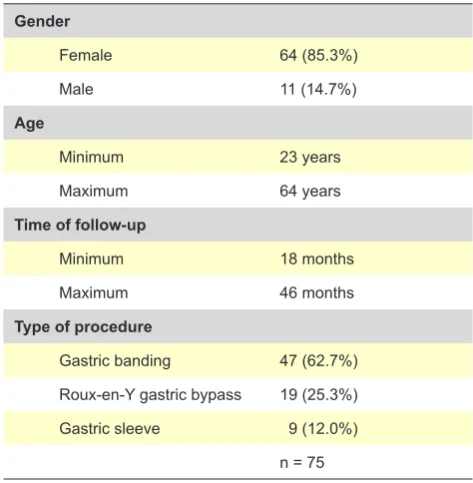
Table 1 - Social and demographic characteristics of our group of patients
Gender
Female 64 (85.3%)
Male 11 (14.7%)
Age
Minimum 23 years
Maximum 64 years
Time of follow-up
Minimum 18 months
Maximum 46 months
Type of procedure
Gastric banding 47 (62.7%)
Roux-en-Y gastric bypass 19 (25.3%)
Gastric sleeve 9 (12.0%)
n = 75
Instruments
Clinical interview according to DSM-IV20
It includes data that allows for the identification of patient’s social and demographic characteristics, type or surgery, time after surgery and any relevant clinical history. Diagnosis and metabolic clinical data were obtained from patient’s hospital clinical records.
Eating Disorder Examination questionnaire (EDE-Q)29,30
This is a 36-item self-report survey aimed to estimate the frequency and severity of pathological eating behaviours over a 28-day time period. Reliability and consistency of this method have been recognized and the validity of using the questionnaires in Portuguese population has also been established. These surveys aimed to identify the presence of any eating disorder.
Beck Depression Inventory (BDI)31,32
This is a survey aimed to estimate the presence of depressive symptoms over the last seven days. The questionnaire includes 21 multiple-choice questions, each one ranking 0 to 3, up to a maximum total score of 63. This has also been shown as a reliable and applicable method for the Portuguese population.
Diagnosis of type-2 diabetes
The diagnosis of type-2 diabetes was confirmed by an endocrinologist, according to the criteria issued by the Portuguese Direção Geral de Saúde.33
Statistical analysis
A chi-square test was initially used in order to assess the progression of the dichotomous variable ‘type-2 diabetes’, before and after bariatric surgery. Analysis of variance (ANOVA) was also used to test for repeated measures, in order to analyse any differences between the two assessment moments regarding the selected psychiatric variables. Analyses were controlled for the type of surgical procedure.
A multiple linear regression analysis was carried out in order to understand the effect of variables (type-2 diabetes, depression and eating disorders) on weight loss and pre and post-operative tests were carried out. The variable ‘weight loss’ was defined as the percentage of excess weight loss from surgery to the moment of assessment.
IBM’s SPSS, Version 20 software was used. Statistical significance was set at 0.05. Differences regarding the size of sample occurred due to the presence of missing values.
RESULTS
Our study involved 75 participants, aged between 23 and 64 (85.3% female). In total, 47 patients (62.7%) underwent
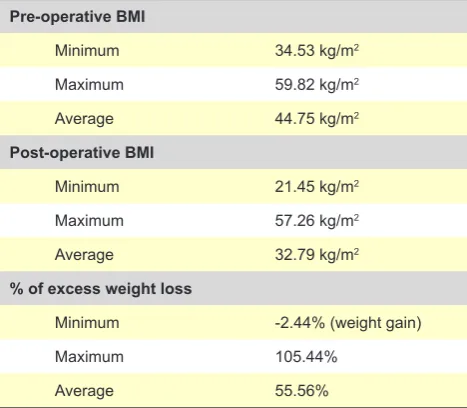
the implantation of gastric banding, 19 (25.3%) a RYGB and nine (12%) patients underwent a gastric sleeve. The social and demographic characteristics of the participants in our study are shown in Table 1. Information regarding the progression of BMI after surgery, as well as the percentages of excess weight loss are shown in Table 2.
As regards the progression of type-2 diabetes, 50.7% (n =34) of the patients had no diabetes before surgery and 61.2% (n = 41) had no diabetes upon surgery. A significant difference was found between both stages, χ2 (1) = 26.132,
p < 0.001. A statistically significant percentage of diabetic patients improved upon surgery. The progression of diabetes in our group of participants is shown in Table 3. As regards the progression of psychiatric disorders, a statistically significant improvement was found in terms of depression (Wilk’s Lambda = 0.89, F = 1.38, p = 0.006). The variable ‘eating disorders’ also showed an improvement upon surgery (Wilk’s Lambda = 0.806, F = 1.797, p = 0.008), even though the analysis did not find statistically significant differences when controlled for the type of surgical procedure.
ARTIGO ORIGINAL Table 2 - BMI progression and percentage of excess weight loss
Pre-operative BMI
Minimum 34.53 kg/m2
Maximum 59.82 kg/m2
Average 44.75 kg/m2
Post-operative BMI
Minimum 21.45 kg/m2
Maximum 57.26 kg/m2
Average 32.79 kg/m2
% of excess weight loss
Minimum -2.44% (weight gain)
Maximum 105.44%
Average 55.56%
a significant association between these factors and weight loss was found. This model explains for 27% of the variation of body weight upon surgery (R2= 0.265) and showing a
significant value F (3.33) = 2.981, p = 0.038. Type-2 diabetes was shown as the most relevantly associated variable to weight loss (β = -0.484, t = -2.373, p = 0.024). Eating disorders (β = -0.1, t = -0.38, p = 0.341) and depression (β
= -0.249, t = -0.967, p = 0.341) also have contributed, even though marginally, to weight loss.
DISCUSSION
A statistically significant improvement was found in our study as regards type-2 diabetes after bariatric surgery, in line with literature.6,11,18,19 However, follow-up of these
patients is still short (minimum of 18 months, maximum of 46 months) and longer follow-up would be crucial in order to analyse outcomes –a study described that remission of type-2 diabetes mellitus is three times more frequent at 10 years when compared to non-surgical methods.34
Psychopathological variables used in our study had a favourable progression upon surgery, but only when the analysis was not controlled to the type of procedure. This is possibly related to the fact that symptom improvement is mainly associated to gastric bypass, possibly due to the fact that it leads to higher weight loss, less collateral effects, higher level of satisfaction with the procedure or due to other constraints.
Previous studies suggested improvements in terms of psychiatric pathology in obese patients who underwent bariatric surgery.12,18,19,23 However, this needs further
Table 3 - Progression of type-2 diabetes
Pre-operative 50.7% (n = 34) non-diabetic 49.3% (n = 33) diabetic
Post-operative 61.2% (n = 41) non-diabetic 38.8% (n = 26) diabetic
research as results from different studies were not consistent.11
The presence of post-operative type-2 diabetes (the variable with greatest impact on weight loss) was associated to a lower percentage of weight loss. As described above, type-2 diabetes does not influence weight loss when observed pre-operatively. In fact, there is in literature some evidence that remission of type-2 diabetes is related to post-operative weight loss and therefore non-remission of diabetes may have a contribution to a lower weight loss.35
The relationship of psychiatric pathology with weight loss is controversial. According to our study, depression was one of the variables included in the model associated to weight loss. Literature shows that the impact of psychiatric status in weight loss is not clear.21 In fact, post-operative
psycho-social functioning and psychiatric disorders may influence and, at the same time, may be influenced by weight loss.12,16
We were not able to clarify whether the fact that patients in poorer psychological state had a lower weight loss or the fact that they did not obtain the expected result did contribute to a poorer state in terms of mental health. The presence of post-operative eating disorders was found to be related with the percentage of weight loss, in line with literature. In fact, different studies found that the presence of post-operative, unlike pre-operative eating disorders predicted a poorer outcome (lower weight loss), in line with what was found in our study.12,17
The fact that this was a cross-sectional study confers solidity to our results. However, some limitations should be mentioned. A higher uniformity as regards the type of surgical procedure would be desirable in order to better sustain our results, as well as using a larger sample and a longer follow-up. The study was based on self-report questionnaires, which may have biased the results (such as memory or classification biases as regards psychopathological assessment).
CONCLUSION
Improvement in type-2 diabetes upon bariatric surgery was found in our study. We also found that factors such as type-2 diabetes, depression and eating disorders have an influence on weight loss postoperatively.
The results support the importance of a continuous psychiatric follow-up of patients submitted to bariatric surgery. Therefore, the need for tailored strategies in terms of psychological and psychiatric follow-up is crucial in order to improve the outcomes of bariatric surgery.
ARTIGO ORIGINAL disorders in patients who underwent bariatric surgery should be related to the type of surgical procedure. Further studies are important in order to prevent the limitations described in our study, as well as to search for new variables that may have a major role in weight loss, therefore influencing the outcome of these procedures.
ACKNOWLEDGMENTS
The authors wish to acknowledge Gil Faria (Centro Hospitalar de São João, Porto) for the collaboration in data collection.
HUMAN AND ANIMAL PROTECTION
The authors declare that the followed procedures were according to regulations established by the Ethics and Clinical Research Committee and according to the Helsinki Declaration of the World Medical Association.
DATA CONFIDENTIALITY
The authors declare that they have followed the protocols of their work centre on the publication of patient data.
CONFLICTS OF INTEREST
The authors declare that there were no conflicts of interest in writing this manuscript.
FINANCIAL SUPPORT
This research was partially supported by the Fundação para a Ciência e Tecnologia, Portugal through the project (PTDC/MHC-PCL/4974/2012) and grant (SFRH/ BPD/78896/2011) awarded to Eva Conceição and grant (SFRH/BD/104159/2014) awarded to Ana Pinto-Bastos.
REFERENCES
1. Al-Hadithy N, Mennie J, Magos T, Stewart K. Desire for post bariatric body contouring in South East Scotland. J Plast Reconstr Aesthet Surg. 2013;66:87-94.
2. World Health Organization. Obesity: preventing and managing the global epidemic. Report of a WHO consultation. World Health Organ Tech Rep Ser. 2000;894:1-25.
3. do Carmo I, Dos Santos O, Camolas J, Vieira J, Carreira M, Medina L, et al. Overweight and obesity in Portugal: national prevalence in 2003-2005. Obes Rev. 2008;9:11-9.
4. do Carmo I, dos Santos O, Camolas J, Vieira J, Carreira M, Medina L, et al. Prevalence of obesity in Portugal. Obes Rev. 2006;7:233-7. 5. Woodman G, Cywes R, Billy H, Montgomery K, Cornell C, Okerson T.
Effect of adjustable gastric banding on changes in gastroesophageal reflux disease (GERD) and quality of life. Curr Med Res Opin. 2012;28:581-9.
6. Cannon CP, Kumar A. Treatment of overweight and obesity: lifestyle, pharmacologic, and surgical options. Clin Cornerstone. 2009;9:55-68. 7. Bariatric surgery for people with diabetes and morbid obesity: an
evidence-based analysis. Ont Health Technol Assess Ser. 2009;9:1-23. 8. Gradaschi R, Noli G, Cornicelli M, Camerini G, Scopinaro N, Adami
GF. Do clinical and behavioural correlates of obese patients seeking bariatric surgery differ from those of individuals involved in conservative weight loss programme? J Hum Nutr Diet. 2013;26:S34-8.
9. Junior WS, do Amaral JL, Nonino-Borges CB. Factors related to weight loss up to 4 years after bariatric surgery. Obes Surg. 2011;21:1724-30. 10. Kaul A, Sharma J. Impact of bariatric surgery on comorbidities. Surg Clin
North Am. 2011;91:1295-312.
11. Julia C, Ciangura C, Capuron L, Bouillot JL, Basdevant A, Poitou C, et al. Quality of life after Roux-en-Y gastric bypass and changes in body mass index and obesity-related comorbidities. Diabetes Metab J. 2013;39:148-54.
12. de Zwaan M, Enderle J, Wagner S, Muhlhans B, Ditzen B, Gefeller O, et al. Anxiety and depression in bariatric surgery patients: a prospective, follow-up study using structured clinical interviews. J Affect Disord. 2011;133:61-8.
13. Sousa P, Bastos AP, Venancio C, Vaz AR, Brandao I, Costa JM, et al. Compreender a sintomatologia depressiva após a cirurgia bariátrica: o papel do peso, da alimentação e da imagem corporal. Acta Med Port. 2014;27:450-7.
14. Conceição E, Bastos AP, Brandao I, Vaz AR, Ramalho S, Arrojado F, et al. Loss of control eating and weight outcomes after bariatric surgery: a study with a Portuguese sample. Eat Weight Disord. 2014;19:103-9. 15. Sjostrom CD. Surgery as an intervention for obesity. Results from the
Swedish obese subjects study. Growth Horm IGF Res. 2003;13:S22-6. 16. Mitchell JE, Crosby R, de Zwaan M, Engel S, Roerig J, Steffen K, et
al. Possible risk factors for increased suicide following bariatric surgery. Obesity. 2013;21:665-72.
17. Kinzl JF. Morbid obesity: significance of psychological treatment after bariatric surgery. Eat Weight Disord. 2010;15:e275-80.
18. Behrens C, Tang BQ, Amson BJ. Early results of a Canadian laparoscopic sleeve gastrectomy experience. Can J Surg. 2011;54:138-43. 19. Mathus-Vliegen EM, de Weerd S, de Wit LT. Health-related
quality-of-life in patients with morbid obesity after gastric banding for surgically induced weight loss. Surgery. 2004;135:489-97.
20. DSM-IV – (1994). American Psychiatric Association. Diagnostic and statistical manual of mental disorders. 4th edition. Washington: American
Psychiatric Association; 1994
21. Sarwer DB, Wadden TA, Fabricatore AN. Psychosocial and behavioral aspects of bariatric surgery. Obes Res. 2005;13:639-48.
22. Meany G, Conceição E, Mitchell JE. Binge eating, binge eating disorder and loss of control eating: effects on weight outcomes after bariatric surgery. Eur Eat Disord Rev. 2014;22:87-91.
23. Assimakopoulos K, Karaivazoglou K, Panayiotopoulos S, Hyphantis T, Iconomou G, Kalfarentzos F. Bariatric surgery is associated with reduced depressive symptoms and better sexual function in obese female patients: a one-year follow-up study. Obes Surg. 2011;21:362-6. 24. Webb JB, Applegate KL, Grant JP. A comparative analysis of Type 2 diabetes and binge eating disorder in a bariatric sample. Eat Behav. 2011;12:175-81.
25. Zhang J, Xu CP, Wu HX, Xue XJ, Xu ZJ, Li Y, et al. Comparative study of the influence of diabetes distress and depression on treatment adherence in Chinese patients with type 2 diabetes: a cross-sectional survey in the People’s Republic of China. Neuropsychiatr Dis Treat. 2013;9:1289-94.
26. Ramalho S, Bastos AP, Silva C, Vaz AR, Brandao I, Machado PP, et al. Excessive skin and sexual function: relationship with psychological variables and weight regain in women after bariatric surgery. Obes Surg. 2014.
27. Clark MM, Balsiger BM, Sletten CD, Dahlman KL, Ames G, Williams DE, et al. Psychosocial factors and 2-year outcome following bariatric surgery for weight loss. Obes Surg. 2003;13:739-45.
28. Sutton D, Raines DA. Health-related quality of life following a surgical weight loss intervention. Appl Nurs Res. 2010;23:52-6.
29. Fairburn CG, Beglin SJ. Assessment of eating disorders: interview or self-report questionnaire? Int J Eat Disord. 1994;16:363-70.
30. Machado PP, Martins C, Vaz AR, Conceição E, Bastos AP, Goncalves S. Eating disorder examination questionnaire: psychometric properties and norms for the Portuguese population. Eur Eat Disord Rev. 2014;22:448-53.
31. Wang YP, Gorenstein C. Psychometric properties of the Beck Depression Inventory-II: a comprehensive review. Rev Bras Psiquiatr. 2013;35:416-31.
ARTIGO ORIGINAL portuguesa de doentes deprimidos. Coimbra MED 1973; XX:623-644
33. Boavida JM, Duarte A, Vicente LF, Ruas MA, Melo PC. Norma 002/2011 Diagnóstico e Classificação de Diabetes Mellitus. Lisboa: DGS; 2011. 34. Sjostrom L, Lindroos AK, Peltonen M, Torgerson J, Bouchard C,
Carlsson B, et al. Lifestyle, diabetes, and cardiovascular risk factors 10
years after bariatric surgery. N Engl J Med. 2004;351:2683-93. 35. Buchwald H, Estok R, Fahrbach K, Banel D, Jensen MD, Pories WJ, et