ISSN-L: 2501 - 1235 Available on-line at: www.oapub.org/edu
DOI: 10.46827/ejpe.v6i6.3248 Volume 6 │ Issue 6 │ 2020
EVALUATION OF FITNESS CENTER SERVICE QUALITY
THROUGH IMPORTANCE-PERFORMANCE ANALYSIS
iÖzgün Özdemir1ii, Suleyman M. Yildiz2
1MSc., Mugla Sitki Kocman University,
Faculty of Sport Sciences, Mugla, Turkey
2PhD, Mugla Sitki Kocman University,
Faculty of Sport Sciences, Mugla, Turkey
Abstract:
Various methods are used to evaluate service quality. This study aimed to evaluate the quality of service in a fitness center through the importance-performance analysis (IPA) by focusing on the fitness center customers. The data were obtained from a commercial fitness center. The Service Quality Scale for Fitness Centers (SQS-FC) for fitness centers developed by Yildiz (2011) was used as a data collection tool. The study result showed that IPA is an effective method to evaluate the service quality of fitness centers. Evaluations were made regarding missing and weak service attributes through IPA.
Keywords: fitness center, service quality, importance-performance analysis
1. Introduction
In the marketing literature, researchers’ interest in service quality, customer satisfaction,
and customer loyalty continues to increase in recent years (Abreu, Antonialli, and Andrade, 2019). The reason for this is that service quality, customer satisfaction, and customer loyalty provide a competitive advantage to enterprises in an intensely competitive environment. Today, especially the concept of service quality is still a subject
of research in various sectors (Anlatıcı and Biçer, 2019; Li, Canziani, and Barbieri, 2018).
Specifically, in the sports sector, there are also researches for sports services (Cepeda-Carrion, Galvez-Ruiz, Sanchez-Oliver, and Grimaldi-Puyana, 2019; Schijns, Caniëls, and Conté, 2016; Serrano and Segado, 2015), sports tourism (Andam, Montazeri, Feizi, and
Mehdizadeh, 2015), recreation (Çevik, Şimşek, and Yılmaz, 2017; Dhurup and Mokoena,
i This article is summarized from the master thesis of the first author presented to the Sport Management
2017) and sports & fitness centers (Albayrak, and Caber, 2014; Arias-Ramos, Serrano-Gomez, and Garcia-Garcia, 2016; Ayar, 2018; Bagci, 2017; Carrion and
Cepeda-Carrion, 2018; Esentaş, Yıldız, and Güzel, 2020; Farias, Quaresma, and Vilaça-Alves, 2019;
Zopiatis, Theocharous, Constanti, and Tjiapouras, 2017), and today specific researches for these fields is increasing rapidly.
Service quality is defined as “the difference between the customer’s expectation from the
enterprise and actual product performance” (Parasuraman, Zeithaml, and Berry, 1988). Many
studies have been conducted in the past to conceptualize service quality (Grönroos, 1984). Especially since the early 1980s, various researches on service quality and measurement have been carried out, and the most striking among them is the successive studies of Parasuraman et al. (1985, 1988, 1994). These researchers have developed the SERVQUAL model to measure service quality and have suggested that this measurement instrument will measure service quality across the all service industry. Later, serious criticisms were made towards this measurement instrument. It is among the most serious criticisms that the five dimensions of SERVQUAL are inadequate in generalization (Carman, 1990), inadequate in representing some service sectors (Babakus and Boller, 1992; Buttle, 1996), and the nature and characteristics of the service sectors may differ from sector to sector (Babakus and Boller, 1992; Teas and DeCarlo, 2004; Yildiz, 2008). Based on these criticisms, researchers have developed special scales for sectors that have unique features in recent years. Since the sports (Angosto-Sánchez, López-Gullón, and Díaz-Suárez, 2016; Galvez-Ruiz et al, 2018; Sanchez, Ruiz, and Alba, 2013; Ramirez, Lorenzo, and Lopez de
Subijana, 2017), recreation (Çevik and Şimşek, 2014; Mercanoğlu, Çevik and Şimşek,
2015), and fitness (Calesco, and Both, 2019; Filho, Campos, and Dantas, 2013; Polyakova and Mirza, 2016) enterprises in the service sector have special features, various special measurement instruments have been developed for these services (Yildiz, 2012). Moreover, along with the developed scales, evaluations regarding service quality were made by using various analysis methods such as gap model (Basfirinci and Mitra, 2015; Can, 2016; Priambodo and Bayudhirgantara, 2019), kano model (Leon-Quismondo, García-Unanue, and Burillo, 2020a; Yıldız, Polat, and Güzel, 2018), and importance-performance analysis (IPA) (Leon-Quismondo, Garcia-Unanue, and Burillo, 2020b; Yildiz, 2011). In the sports, recreation, and fitness sector, IPA has been the most interesting of these methods (Ku and Hsieh, 2020; Leon-Quismondo et al., 2020b; Martínez-Caro, Martínez-Caro, and Díaz-Suardíaz, 2014; Maksimovic et al., 2017;
Ormanović et al., 2017; Vieira, Ferreira, and Joao, 2019; Yildiz, 2011; Zamorano-Solis and
Garcia-Fernandez, 2018).
IPA is an effective method introduced by Martilla and James (1977) and later used in service sectors. By evaluating the current status of IPA service attributes to evaluate service quality, it determines which attribute is effective compared to others, and reveals the attributes of the service that are strong and need improvement. IPA is a simple and
useful technique that examines the difference between “Performance (P)” and “Importance (I)” (Abalo, Varela, and Manzano, 2007). “Performance” means customer
reflection of the relative value attributed to the service by the customer. In IPA, the
“performance” points are subtracted from the “importance” points (P-I), thus providing
information on whether the service offered is approved by the customer. The values obtained are loaded into the IPA matrix. This matrix is divided into 4 quadrants: Low priority, concentrate here, possible overkill, and keep up the good work. All evaluations are made according to this matrix (Yildiz, 2011).
Today, increasing competition conditions force enterprises that offer similar products to focus more on service quality and customer satisfaction in order to survive and profit. Along with the increase in the demand for fitness services, the increase of the enterprises producing these services also caused competition in this sector as in other sectors. It is a fact that today sports enterprises face the obligation to develop customer-oriented strategies in order to sustain their existence. While the enterprises that are successful in the competition survive, those who are unsuccessful have to withdraw from the market. This necessitates the development of effective strategies (Vieira and Ferreira, 2018) and continuous assessment of service quality by enterprises in various ways (Garcia-Fernandez et al., 2014; García Mayor, Vegara Ferri, López Sánchez, and Díaz Suárez, 2016). Hence, to contribute to the marketing literature and enterprise management, this study aimed to evaluate the quality of service in a fitness center through IPA by focusing on fitness center customers.
2. Method
2.1 Measurement Instrument
In this study, the “Service Quality Scale for Fitness Centers (SQS-FC)” developed by
Yildiz (2011) was used as a data collection tool. Scale statements were measured in two sections with a five-point Likert-type scale: The first section attempted to determine the
importance of each service attribute (1 = “Unimportant” and 5 = “Very important”). The
second section attempted to determine the performance of the fitness center as perceived
by the customers (1 = “Strongly disagree” and 5 = “Strongly agree”).
2.2 Sample Size
The sample of the research consists of a private fitness center operating in Izmir province, Turkey. With the convenience sampling method, by giving importance to privacy, 275 scale was distributed to customers and a week was given for them to fill. The number of scales rotating at the end of one week was determined to be 242. Then, incomplete scales were eliminated and as a result 220 scales were eligible for analysis.
2.3 Statistical Analysis
Since the validity study of the scale was conducted in previous studies, only the reliability
of the scale was examined in this study. Cronbach’s alpha coefficient was calculated for
performance have been identified. A “paired sample t-test” was performed to find
differences between variables.
3. Analysis and Results
3.1 Demographic Characteristics
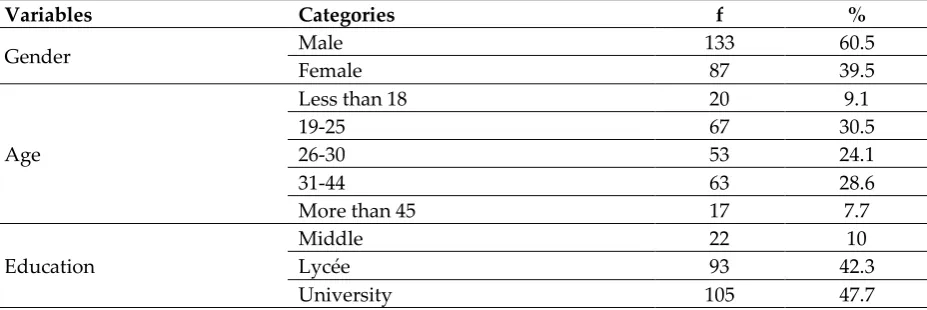
Table 1 shows that male participants (60.5%) are more than women. Among the age group, participants between the ages of 19-25 (30.5%) are more than others. In the case of education, the highest participation belongs to university graduates (47.7%).
Table 1: Frequency and Percentage Values of Participants’ Demographic Characteristics
Variables Categories f %
Gender Male 133 60.5
Female 87 39.5
Age
Less than 18 20 9.1
19-25 67 30.5
26-30 53 24.1
31-44 63 28.6
More than 45 17 7.7
Education
Middle 22 10
Lycée 93 42.3
University 105 47.7
3.2 Reliability Results of the Scale
In the reliability analysis, the Cronbach’s alpha value of the “performance” part of the
SQS-FC was 0,892 and the Cronbach’s Alpha value of the “importance” part was 0,753.
All these values show that the scale is “highly reliable”.
3.3 Importance – Performance Analysis Results
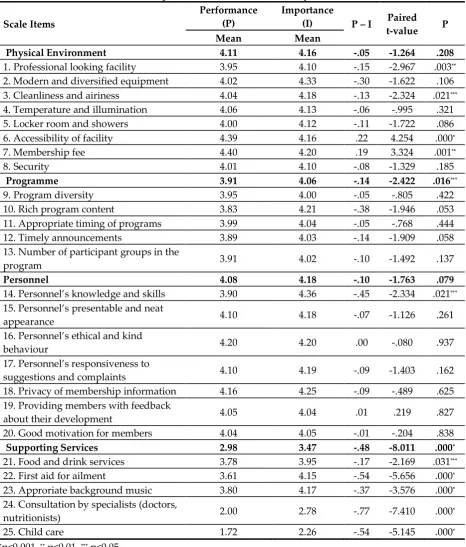
Table 2 shows the IPA results of the sub-dimensions and items of the SQS-FC scale.
Customers perceived the “physical environment”, “programme”, and “personnel”
dimensions of the enterprise at a high degree and the “supporting services” dimension
at a moderate level. According to the results of the analysis, there is a statistically
significant difference between the importance and performance in “supporting services” and “programme” dimensions. While the highest difference is in the “supporting
services” dimension (X= -.48; p<0.001), the difference in the “programme” dimension is
lower (X= -.14; p<0.05). There is no statistically significant difference between the
importance and performance in the “personnel” dimension (X= -.10) and the “physical
environment” dimension (X= -.05).
According to Table 2, the number of positive items is very few and the best item is the accessibility of the facility (X= .22). On the other hand, the highest difference is in the
need support services, it can be said that some customers need some support for their specific needs (eg, child care, first aid).
Table 2: Importance – Performance Analysis Scores
Scale Items
Performance (P)
Importance
(I) P – I Paired
t-value P
Mean Mean
Physical Environment 4.11 4.16 -.05 -1.264 .208
1. Professional looking facility 3.95 4.10 -.15 -2.967 .003**
2. Modern and diversified equipment 4.02 4.33 -.30 -1.622 .106 3. Cleanliness and airiness 4.04 4.18 -.13 -2.324 .021***
4. Temperature and illumination 4.06 4.13 -.06 -.995 .321
5. Locker room and showers 4.00 4.12 -.11 -1.722 .086
6. Accessibility of facility 4.39 4.16 .22 4.254 .000*
7. Membership fee 4.40 4.20 .19 3.324 .001**
8. Security 4.01 4.10 -.08 -1.329 .185
Programme 3.91 4.06 -.14 -2.422 .016***
9. Program diversity 3.95 4.00 -.05 -.805 .422
10. Rich program content 3.83 4.21 -.38 -1.946 .053
11. Appropriate timing of programs 3.99 4.04 -.05 -.768 .444
12. Timely announcements 3.89 4.03 -.14 -1.909 .058
13. Number of participant groups in the
program 3.91 4.02 -.10 -1.492 .137
Personnel 4.08 4.18 -.10 -1.763 .079
14. Personnel’s knowledge and skills 3.90 4.36 -.45 -2.334 .021***
15. Personnel’s presentable and neat
appearance 4.10 4.18 -.07 -1.126 .261
16. Personnel’s ethical and kind
behaviour 4.20 4.20 .00 -.080 .937
17. Personnel’s responsiveness to
suggestions and complaints 4.10 4.19 -.09 -1.403 .162 18. Privacy of membership information 4.16 4.25 -.09 -.489 .625 19. Providing members with feedback
about their development 4.05 4.04 .01 .219 .827
20. Good motivation for members 4.04 4.05 -.01 -.204 .838
Supporting Services 2.98 3.47 -.48 -8.011 .000*
21. Food and drink services 3.78 3.95 -.17 -2.169 .031***
22. First aid for ailment 3.61 4.15 -.54 -5.656 .000*
23. Approriate background music 3.80 4.17 -.37 -3.576 .000*
24. Consultation by specialists (doctors,
nutritionists) 2.00 2.78 -.77 -7.410 .000*
25. Child care 1.72 2.26 -.54 -5.145 .000*
*p<0.001, ** p<0.01, *** p<0.05
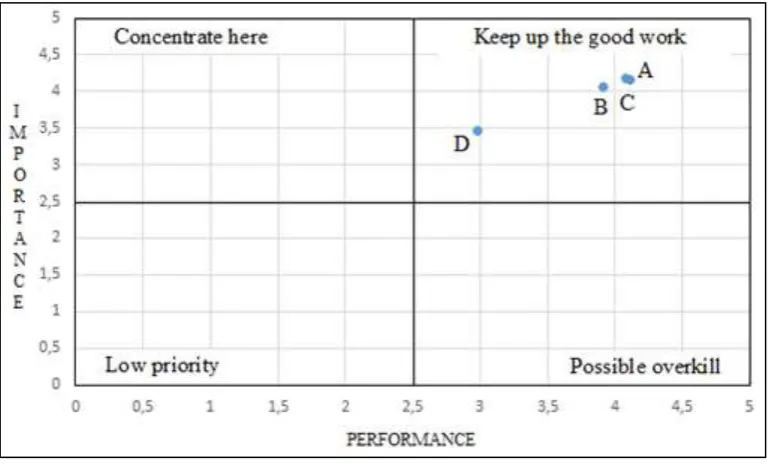
Figure 1 shows the position of the physical environment, programme, personnel, and
up the good work” quadrant. However, it is also seen that the supporting services
dimension is close to the “concentrate here” quadrant.
Figure 1: IPA matrix of service dimensions
(A=Physical Environment, B=Programme, C=Personnel, D=Supporting Services)
4. Conclusion
Measurement and evaluation of service quality, attracting more customers, and retaining existing customers are increasingly important in the fitness industry (Foroughi,
Iranmanesh, Gholipour, and Hyun, 2019; Nacar, Şimşek, and Devecioğlu, 2019). While
service quality measurement for fitness centers is more subject to academic research
(Yıldız, Polat, Sönmezoğlu, and Çokpartal, 2016), studies based on service quality
evaluations are few (Filho, Campos, and Dantas, 2015). Therefore, in this study, the quality of service in a fitness center was evaluated through IPA, with a focus on fitness center customers to contribute to the literature and give an idea to enterprise management.
Four dimensions and 25 items were used to evaluate the quality of service in the fitness center (Yildiz, 2011). Thus, it has been determined how the customers perceive the service qualities of the enterprises with their perceptions of performance regarding the qualities of the service offered by the enterprise. The customers perceived the
performance of the enterprise’s physical environment, programme, and personnel
dimensions at a high level, and the performance of the supporting services dimension at
a moderate level. The IPA matrix showed that all dimensions are in the “keep up the
good work” quadrant. However, it was also observed that the supporting services
dimension was close to the “concentrate here” quadrant. Therefore, although some
Won Yong and Kyoungho (2018) states that various factors play a role in choosing a fitness center for customers. Physical features, personnel, and program are among these. Freitas and Lacerda (2019) emphasize that physical features and personnel are valued by customers in a fitness center. Franco and Simões (2017) underlined that the staff providing fitness services should be well trained. In summary, there is a consensus in the literature that the attributes of the fitness center are considered important by the customers. On the other hand, Inan and Ozel (2019) stated that customer complaints analysis should be done in fitness centers and the deficiencies should be eliminated. Briefly, researches in the literature underline that the development of enterprises can only be achieved by ensuring customer satisfaction (Miragaia and Constantino, 2019; Ndayisenga, 2019; Pradeep, Vadakepat, and Rajasenan, 2020; Sevilmiş and Şirin, 2019;
Suharjo, Fahmi, and Hannan, 2020).
To sum up, this study conducted an empirical analysis of the customers of a private fitness center and provided an understanding of service quality level through IPA. It also showed that the IPA method can be used successfully in fitness centers. Enterprises can identify missing and weaknesses using such methods and can develop more effective marketing strategies by developing missing and weaknesses. Thus, fitness centers can increase customer satisfaction and loyalty and increase their profitability. These efforts will make it easier for enterprises to survive in an intensely competitive environment. As a result, it may be suggested that fitness enterprises make service quality evaluations periodically and use the IPA method in evaluations.
4.1 Limitations and Future Research
This study is not generalizable as it was conducted in a private fitness center and on a limited sample. Therefore, the results of this study can be compared with future research results. Future research can be done in the public sector, as in the private sector. In addition, research can be conducted in various sub-sectors of sports.
About the Author(s)
Özgün Özdemirhas a master’s degree and his research area is sports marketing.
Dr. Suleyman M. Yildiz is Associate Professor in the Faculty of Sport Sciences at Mugla Sitki Kocman University, Turkey. His research areas are sports management and service marketing and he has published extensively on these subjects in sports journals. Dr. Yildiz currently teaches sport management and service marketing.
References
Albayrak, T., and Caber, M. (2014). Symmetric and asymmetric influences of service attributes: The case of fitness clubs. Managing Leisure, 19(5), 307-320.
Andam, R., Montazeri, A., Feizi, S., and Mehdizadeh, R. (2015). Providing a multidimensional measurement model for assessing quality of sport tourism services: Empirical evidence from sport conference as sport event tourism. Iranian Journal of Management Studies, 8(4), 607-629.
Angosto-Sánchez, S., López-Gullón, J.M., and Díaz-Suárez, A. (2016). A Scale for
assessing participants’ perceived quality in popular sporting events (CAPPEP
V2.0). Journal of Sports Economics & Management, 6(2), 69-84.
Anlatıcı, B., and Biçer, T. (2019). Beş yıldızlı otel sağlıklı yaşam merkezlerinin, hizmet
kalitesi ve fiyatlarının üyelerin üyelik yenileme eğilimlerindeki rolü. Avrasya Spor
Bilimleri Araştırmaları, 4(1), 18-33.
Abreu, A.A., Antonialli, L.M., and Andrade, D.M. (2019). Explorando a base intelectual do tema qualidade em serviços: Quando o discurso muda o tom. Revista Brasileira de Marketing, 18(2), 137-168.
Arias-Ramos, M., Serrano-Gomez, V., and Garcia-Garcia, O. (2016). Are there differences in perceived quality or satisfaction of the user who attends a sports center of private or public ownership? A pilot study. Cuadernos de Psicologia del Deporte, 16(2), 99-110.
Ayar, H. (2018). Evaluation of the perceived service quality of special sport center oriented at recreation according to some variables. European Journal of Physical Education and Sport Science, 4(6), 181-190.
Babakus, E., and Boller, G.W. (1992). An empirical assessment of the SERVQUAL scale. Journal of Business Research, 24, 253-268.
Bagci, E. (2017). Is it advantageous or disadvantageous for the business that fitness centers are not used (underused) by the members? Science, Movement and Health, XVII(2), 184-189.
Basfirinci, C., and Mitra, A. (2015). A cross cultural investigation of airlines service quality through integration of Servqual and the Kano model. Journal of Air Transport Management, 42, 239-248.
Buttle, F. (1996). Servqual: Review, critique, research agenda. European Journal of Marketing, 30(1), 8-32.
Calesco, V.A., and Both, J. (2019). Scale of quality assessment of services provided by fitness center (QUASPA).Journal of Physical Education, 30(1), e3011.
Can, P. (2016). Hizmet kalitesinin servqual ölçeği ile ölçülmesi: Uşak Üniversitesi merkez kütüphanesi üzerine bir araştırma. Karabük Üniversitesi Sosyal Bilimler Enstitüsü Dergisi, 6(1), 63-83.
Carman, J.M. (1990). Consumer perceptions of service quality: An assessment of the SERVQUAL dimensions. Journal of Retailing, 66(1), 33-55.
Cepeda-Carrion, I., Galvez-Ruiz, P., Sanchez-Oliver, A.J., and Grimaldi-Puyana, M. (2019).Approximation to the creation of value in the sports sector: A conceptual approach. Materiales para la Historia del Deporte, 18, 129-140.
Çevik, H., and Şimşek, K.Y. (2014). Rekreasyonel sporlarda hizmet kalitesi ölçeğinin
geçerlik ve güvenirlik çalışması. Akademik Sosyal Araştırmalar Dergisi, 2(7), 522-541.
Çevik, H., Şimşek, K.Y., and Yılmaz, İ. (2017). The evaluating of service quality in recreational sport events: Kite festival sample. Pamukkale Journal of Sport Sciences, 8(1), 73-93.
Dhurup, M., and Mokoena, B.A. (2017). The influence of service quality variables in predicting satisfaction and behavioural intentions in a university campus recreation setting. African Journal of Hospitality, Tourism and Leisure, 6(1), 1-19.
Esentaş, M., Yıldız, K., and Güzel, P. (2020). Özel spor salonu müşterilerinin hizmet
kalitelerinin bazi demografik değişkenler açisindan incelenmesi. Sportif Bakış: Spor
ve Eğitim Bilimleri Dergisi, 7(SI1), 11-25.
Galvez-Ruiz, P., Conde-Pascual, E., Estrella-Andrade, A., García-Fernández, J., Romero-Galisteo, R.P., Vélez-Colón, L., and Pitts, B.G. (2018). Testing factorial invariance of the questionnaire of evaluation of the quality perceived in sports services in Spanish, Ecuadorian and Colombian users. Current Psychology, in the publishing process.
Garcia-Fernandez, J., Bernal-Garcia, A., Fernandez-Gavira, et al. (2014). Analysis of existing literature on management and marketing of the fitness centre industry. South African Journal for Research in Sport Physical Education and Recreation, 36(3), 75-91.
García Mayor, J., Vegara Ferri, J.M., López Sánchez, G.F., and Díaz Suárez, A. (2016). Satisfaction of sports services users in Orihuela (Alicante). Revista Euroamericana de Ciencias del Deporte, 5, 155-162.
Grönroos, C. (1984). A service quality model and its marketing implementations. European Journal of Marketing, 18(4), 36-44.
Filho, E.P., Campos, D.F., and Dantas, M.L.R. (2013). Measurement of service quality in health clubs: of standard scales to development of a specific scale. HOLOS, 29(5), 175-190.
Filho, E.P., Campos, D.F., and Dantas, M.L.R. (2015). Customer expectations about the service offered by fitness centers in Natal/RN: A study under the perspective of the analysis of clusters. International Journal of Services and Operations, 22(1), 1-20.
Franco, S., and Simões, V. (2017). Fitness professionals’ pedagogical intervention.
European Journal for Exercise Professionals, 1, 27-38.
Freitas, A.L.P., and Lacerda, T.S. (2019). Fitness centers: What are the most important attributes in this sector?. International Journal for Quality Research, 13(1), 177-192. Farias, E., Quaresma, L., and Vilaça-Alves, J. (2019). Avaliação da qualidade de serviços
Foroughi, B., Iranmanesh, M., Gholipour, H.F., and Hyun, S.S. (2019). Examining relationships among process quality, outcome quality, delight, satisfaction and behavioural intentions in fitness centres in Malaysia. International Journal of Sports Marketing and Sponsorship, 20(3), 374-389.
İnan, H.E., and Özel, Ç.H. (2019). Fitness işletmelerine yönelik e-şikâyetlerin içerik analizi
ile incelenmesi. Spor ve Performans Araştırmaları Dergisi, 10(3), 280-298.
Ku, G. C-M., and Hsieh, C-M. (2020). Can fitness education programs satisfy fitness
professionals’ competencies? Integrating traditional and revised importance
-performance analysis and three-factor theory. International Journal Environmental Research Public Health, 17, 4011.
Leon-Quismondo, J., García-Unanue, J., and Burillo, P. (2020a). Importance-Performance Analysis (IPA) and Kano Model applied to fitness centers in the Community of Madrid. Cultura, Ciencia y Deporte, 15(44), 223-234.
Leon-Quismondo, J., Garcia-Unanue, J., and Burillo, P. (2020b). Service Perceptions in Fitness Centers: IPA Approach by Gender and Age. International Journal Environmental Research Public Health, 17, 2844.
Li, J., Canziani, B.F., and Barbieri, C. (2018). Emotional labor in hospitality: Positive affective displays in service encounters. Tourism and Hospitality Research, 18(2) 242-253.
Maksimovic, N., Matic, R., Tovilovic, S., Popovic, S., Maksimovic, B., and Opsenica, S. (2017). Quality of services in fitness centres: Importance of physical support and assisting staff. South African Journal for Research in Sport, Physical Education and Recreation, 39(3), 67-78.
Martilla, J.A., and James, J.C. (1977). Importance-performance analysis. Journal of Marketing, 14 (January), 77-79.
Martínez-Caro, E., Martínez-Caro, E., and Díaz-Suardíaz, A. (2014). Services quality on grassroots football clubs in the region of Murcia: An application of the importance-performance analysis. SporTK: Revista Euroamericana de Ciencias del Deporte, 3(1-2), 33-40.
Mercanoğlu, A.O., Çevik, H., and Şimşek, K.Y. (2015). Kampüs rekreasyonu kapsamında
düzenlenen sportif rekreasyon etkinliklerinin hizmet kalitesinin
değerlendirilmesi: Anadolu Üniversitesi Örneği. Akademik Sosyal Araştırmalar
Dergisi, 3(9), 256-267.
Miragaia, D.A.M., and Constantino, M.S. (2019). Topics and research trends of health clubs management: Will innovation be part of the fitness industry research interests?. International Journal of Sport Management and Marketing, 19(1-2), 129-146.
Nacar, E., Şimşek, A., and Devecioğlu, S. (2019). Fitness merkezlerinde hizmet kalitesi,
müşteri tatmini ve müşteri sadakati üzerine bir çalışma. Akademik Sosyal
Araştırmalar Dergisi, 7(88), 42-52.
Ormanović, Š., Ćirić, A., Talović, M., Alić, H., Jelešković, E., and Čaušević, D. (2017).
Importance-performance analysis: Different approaches. Acta Kinesiologica, 11(Supp. 2), 58-66.
Parasuraman, A., Zeithaml, V.A., and Berry, L.L. (1985). A conceptual model of service quality and its implications for future research. Journal of Marketing, 49(4), 41-50. Parasuraman, A., Zeithaml, V.A., and Berry, L.L. (1988). SERVQUAL: A multiple-item
scale for measuring consumer perceptions of service quality. Journal of Retailing, 64(1), 12-40.
Parasuraman, A, Zeithaml, V.A., and Berry, L.L. (1994). Reassessment of expectations as a comparison standard on measuring service quality: Implications for further research. Journal of Marketing, 58(1), 111-124.
Polyakova, O., and Mirza, M.T. (2016). Service quality models in the context of the fitness industry. Sport, Business and Management: An International Journal, 6(3), 360-382. Pradeep, S., Vadakepat, V., and Rajasenan, D. (2020). The effect of service quality on
customer satisfaction in fitness firms. Management Science Letters, 10(9), 2011-2020.
Priambodo, R.E.A., and Bayudhirgantara, E.M. (2019). Measurıng student satisfaction
through SERVQUAL: Empirical study at Binawan University. International Journal of Advance Research, 7(9), 78-87.
Ramirez, C., Lorenzo, A., and Lopez de Subijana, C. (2017). Review of the instruments of measure of the quality in the sport services. Kronos, 16(1), 1-8.
Sanchez, V.M., Ruiz, P.G., and Alba, R.R. (2013). Contributions psychometric in the development of a questionnare to evaluate the perceived quality of sport services. Revista Iberoamericana De Psicologia Del Ejercicio Y El Deporte, 8(1), 71-86.
Schijns, J.M.C., Caniëls, M.C.J., and Conté, J.L. (2016). The impact of perceived service quality on customer loyalty in sports clubs. International Journal of Sport Management Recreation & Tourism, 24, 43-75.
Serrano, J.A., and Segado, F.S. (2015). Analysing instruments for measuring perceived sport service quality: A literature review. Deporte CCD, 11(10), 67-76.
Sevilmiş, A., and Şirin, Ö.F. (2019). Fitness merkezleri standart ve kalite belgelendirme sürecinde almanya modeli ve Türkiye'de uyarlanabilirlik çalışması. Ankara: Akademisyen Kitapevi A.Ş.
Suharjo, A.R., Fahmi, I., and Hannan, S. (2020).Digital marketing strategy of small and medium enterprises for snack in Bogor city. Jurnal Manajemen & Agribisnis, 17(1), 74-85.
Teas, R.K., and DeCarlo, T.E. (2004). An examination and extension of the zone-of-tolerance model: A comparison to performance-based models of perceived quality. Journal of Service Research, 6, 272-286.
Vieira, E., Ferreira, J.J., and Joao, R.S. (2019). Creation of value for business from the importance-performance analysis: The case of health clubs. Measuring Business Excellence, 23(2), 199-215.
Won Yong, J., and Kyoungho, C. (2018). Factors influencing choice when enrolling at a fitness center. Social Behavior and Personality: An International Journal, 46(6), 1043-1056.
Zopiatis, A., Theocharous, A.L., Constanti, P., and Tjiapouras, L. (2017). Quality,
Satisfaction and Customers’ Future Intention: The Case of Hotels’ Fitness Centers
in Cyprus. Journal of Quality Assurance in Hospitality & Tourism, 18(1), 1-24.
Yıldız, K., Polat, E., Sönmezoğlu, U., and Çokpartal, C. (2016). Fitness merkezi üyelerinin
algıladıkları hizmet kalitesinin belirleyicileri üzerine bir analiz. Niğde University
Journal of Physical Education and Sport Sciences, 10(3), 453-464.
Yıldız, K., Polat, E., and Güzel, P. (2018). A study investigating the perceived service quality levels of sport center members: A Kano Model Perspective. Journal of Education and Training Studies, 6(4), 177-188.
Yildiz, S.M. (2008). The models and measuring instruments of service quality for assessing the quality of sports services. Gazi Physical Education and Sports Sciences Journal, 13(3), 35-48.
Yildiz, S.M. (2011). An importance-performance analysis of fitness center service quality: Empirical results from fitness centers in Turkey. African Journal of Business Management, 5(16), 7031-7041.
Yildiz, S.M. (2012). Instruments for measuring service quality in sport and physical activity services. Collegium Antropologicum, 36(2), 689-696.
Creative Commons licensing terms