ARTIGO ORIGINAL
ARTIGO
ACEITE P
ARA
PUBLICAÇÃO DISPONÍVEL
EM WWW
.ACT
AMEDICAPORTUGUESA.COM
Impact of the COVID-19 Pandemic on Ophthalmology
Residency Training in Portugal
O Impacto da Pandemia COVID-19 no Internato de
Formação Específica de Oftalmologia em Portugal
Nisa SILVA1, Rita LAIGINHAS2, Angelina MEIRELES1,3, João BARBOSA BREDA4,5,6 Acta Med Port 2020 xxx;33(AOP):xxx-xxx ▪ https://doi.org/10.20344/amp.14341
ABSTRACT
Introduction: The purpose of this study was to provide objective and real-life data concerning the impact of the COVID-19 pandemic on ophthalmology residency training in Portugal.
Material and Methods: Descriptive survey-based study applied to current Portuguese ophthalmology residents (n = 80 eligible).
Results: Seventy-five residents participated (94% response rate). All except one (99%) admitted a change in their routine clinical practice during the pandemic, and most (89%) continued to be engaged in ophthalmology department duties. Twenty-five percent were deployed to COVID-19 units, which was combined with ophthalmological activities in about half of them (47%). A significant proportion of participants stated that they were enrolled in the following ophthalmological activities: emergency/inpatient care (87%), outpatient visits (73%; general 70% vs subspecialty 29%), and surgical procedures (64%). Twenty-five percent did not assist in any outpatient visits and 36% did not participate in any surgical procedures. On a scale from 1 (no impact) to 5 (maximum impact), most participants classified their perceived negative impact of the pandemic on the training program as 3 (24%), 4 (40%), or 5 (27%). Participants highly agreed with the extension of the residency program (80%) in order to to make up for training disruption.
Discussion: Most trainees provided ophthalmological care during the pandemic. However, those clinical activities were essentially related to general and emergency care. Surgical experience was significantly curtailed. As such, strategies are needed to guarantee a high-quality learning process. Further studies are required to develop an international perspective on how ophthalmology training programs have been affected so that educational organizations can make recommendations regarding standardized adjustments to training programs.
Conclusion: The COVID-19 pandemic has significantly impacted the training of ophthalmology residents nationwide.
Keywords: Coronavirus Infections; COVID-19; Internship and Residency; Ophthalmology; Pandemics; Portugal
RESUMO
Introdução: Este estudo teve como objetivo avaliar o impacto da pandemia COVID-19 no internato de Formação Específica de Oftal-mologia em Portugal.
Material e Métodos: Estudo descritivo dos resultados obtidos de um questionário aplicado a todos os internos de Formação Especí-fica de Oftalmologia em Portugal (n = 80).
Resultados: Setenta e cinco internos participaram no estudo (taxa de resposta de 94%). Excetuando um caso, todos (99%) admitiram alteração da sua prática clínica durante a pandemia, e a maioria (89%) manteve atividades clínicas no seu serviço de Oftalmologia. Vinte e cinco porcento foram integrados em unidades COVID-19, e metade desses inquiridos (47%) desempenharam concomitante-mente atividades no âmbito da oftalmologia. Uma percentagem significativa dos inquiridos referiu estar envolvido nas seguintes ativi-dades clínicas oftalmológicas: serviço de Urgência/consultas internas (87%), consultas externas (73%: geral 70% vs subespecialidade 29%), e cirurgias (64%). Vinte e cinco porcento não participaram em consultas externas, e 36% em procedimentos cirúrgicos. Numa escala de 1 (sem impacto) a 5 (máximo impacto), a maioria dos inquiridos classificou o impacto percecionado da pandemia no interna-to de Formação Específica de Oftalmologia em 3 (34%), 4 (40%) e 5 (27%). Oitenta porceninterna-to dos inquiridos enumerou a extensão do período do internato de Formação Específica como uma medida a adotar para minimizar o impacto negativo da pandemia.
Discussão: A maioria dos internos mantiveram-se a desempenhar atividades clínicas no seu serviço de Oftalmologia, principalmente no âmbito da oftalmologia geral e de urgência. O desempenho de atividade cirúrgica foi largamente afetado. São necessárias estra-tégias adaptativas para garantir a continuação adequada da formação dos internos. Futuros estudos noutros contextos geográficos permitirão perceber de que forma os programas de formação em oftalmologia estão a ser afetados ao nível internacional, para que as organizações educacionais possam elaborar recomendações.
Conclusão: A pandemia COVID-19 teve um impacto significativo no internato de Formação Específica de Oftalmologia em Portugal.
Palavras-chave: COVID-19; Infecções por Coronavírus; Internato e Residência; Oftalmologia; Pandemia; Portugal
INTRODUCTION
The novel coronavirus, meanwhile named severe acute respiratory syndrome coronavirus 2 (SARS-CoV-2), was first
identified in China.1 The infection spread rapidly worldwide which led the World Health Organization to declare a “public
1. Department of Ophthalmology. Centro Hospitalar Universitário do Porto. Porto. Portugal.
2. Department of Ophthalmology. Centro Hospitalar de Entre o Douro e Vouga. Santa Maria da Feira. Portugal. 3. Instituto de Ciências Biomédicas Abel Salazar. Universidade do Porto. Porto. Portugal.
4. Cardiovascular R&D Center. Faculty of Medicine. Universidade do Porto. Porto. Portugal. 5. Department of Ophthalmology. Centro Hospitalar e Universitário São João. Porto. Portugal.
6. Research Group Ophthalmology. Department of Neurosciences. Katholieke Universiteit Leuven. Leuven. Belgium
Autor correspondente: Nisa Silva. [email protected]
ARTIGO ORIGINAL
ARTIGO
ACEITE P
ARA
PUBLICAÇÃO DISPONÍVEL
EM WWW
.ACT
AMEDICAPORTUGUESA.COM
health emergency” by January 30th 20202 and afterwards a pandemic on March 11th 2020.3 In Portugal, the “state of
emer-gency” was announced on March 18th 2020 and lasted until May 2nd, with people placed under voluntary lockdown all over
the country.4,5
In an attempt to mitigate the spread of the virus, healthcare systems had to rapidly reshape their framework
consider-ing that a substantial number of patients could be infected in healthcare settconsider-ings.6,7 Addressing this challenge caused a
shift from patient-centered medicine to a community-centered approach and all medical fields faced the challenge of re-viewing their prioritization strategies regarding both outpatient services and surgical procedures. In the particular case of ophthalmology, there were concerning reports suggesting that ophthalmologists could be at higher risk of infection due to
the proximity to patients during clinical assessment.8 In response, several organizations, including the American Academy
of Ophthalmology, promptly recommended in-person examinations only for those requiring urgent or emergent care, with
elective activity being consequently postponed or carried out via telemedicine.9 Ophthalmology registered the highest
es-timated decline in outpatient visits (approximately 79%) among all medical fields.10 Elective surgical procedures were also
postponed, with the activity being primarily restricted to urgent or emergent conditions.9
Overall, this reorganization and considerable reduction in clinical activities represented an unprecedented challenge for ophthalmology residency training programs and there are concerns that it might impact the course of training for the cur-rent resident cohort. Many departments temporarily changed their residency programs, suspending normal clinical rotation schedules and overhauling residents into alternating coverage teams in order to reduce the risk of cross-contamination. Moreover, the additional spare time seems to have been used heterogeneously; while some residents were able to expand their scientific curriculum, others have been called to the front line to care for patients with COVID-19 (the designation of
the disease caused by SARS-CoV-2).11
It is thus essential to objectively monitor the impact of the pandemic in residency programs and ensure the implementa-tion of alternative strategies to cope with this shortcoming.
This survey-based study aimed to provide an overview of the impact of the COVID-19 pandemic on ophthalmology training in Portugal.
MATERIAL AND METHODS
This is a nationwide cross-sectional study. An anonymous, web-based survey (see Appendix 1: https://www.actamedi-caportuguesa.com/revista/index.php/amp/article/view/14341/Appendix_01.pdf) was developed by all authors, which in-cludes residents and attending ophthalmologists, from a variety of ophthalmology departments. The survey was approved by the Portuguese College of Ophthalmology and the Portuguese Group of Young Ophthalmologists. A pilot study was tested in a small sample of Portuguese residents (n =8) in order to validate the content, clarity of the questions, and time
necessary to complete the survey. All Portuguese ophthalmology residents (n = 80)12 received the survey on April 23rd 2020
via email, and replies were collected by April 25th 2020 (one week before the ‘state of emergency’ was lifted). Therefore, the
questionnaire evaluated the period between the March 11th and April 23rd (since the survey was sent in the latter).
Willing-ness to participate in the study was voluntary and consent was given to use the aggregated data resulting from the survey. Since the data was completely anonymous, no personal information was collected, and participants were informed how the data would be handled providing informed consent before answering the questionnaire, ethical approval was not deemed necessary.
The survey consisted of 28 questions (25 multiple choice and three open response), grouped into four sections. The first section included demographics and training setting. The second section focused on the activities taking place at the ophthalmology department during the pandemic. The third section centered on the activities performed by the resident, ranging from outpatient visits, surgical procedures, clinical research and online education. The fourth section comprised questions about the personal perspective and concerns of the residents. Finally, a free text question allowed residents to suggest additional measures that could be adopted so as to mitigate the impact of the pandemic in their residency program.
Statistical analysis
Categorical variables were described through absolute and relative frequencies and compared using Fisher’s test or the chi-square test, as appropriate. Continuous variables were described as means and standard deviations for variables with a normal distribution or medians and ranges for variables with a skewed distribution. The normality of the distributions
was checked using the Shapiro-Wilk test. Student’s t-test was used to compare continuous variables with normal
distribu-tion, while the Mann-Whitney test was used to compare continuous variables with non-normal distribution. Differences among residents from different years were evaluated with the use of an analysis of variance (ANOVA) test. Descriptive analysis was performed using SPSS version 24 (IBM SPSS Statistics for Windows, Version 24.0. Armonk, NY, USA).
RESULTS
ARTIGO ORIGINAL
ARTIGO
ACEITE P
ARA
PUBLICAÇÃO DISPONÍVEL
EM WWW
.ACT
AMEDICAPORTUGUESA.COM
Section 1: Demographics and training setting
Fifty-nine percent (n = 44) of the respondents were female, with a median age of 27 years (range 24 - 38). Regarding the year of residency, 25% (n = 19) were in the first year, 21% (n = 16) in the second year, 27% (n = 20) in the third year and 27% (n = 20) in the fourth (last) year. Nearly all of the respondents (97%, n = 73) were trainees in a hospital assigned to treat patients infected with SARS-CoV-2.
Most of the participating residents (89%, n = 67) continued to work in their ophthalmology department during the pan-demic. Twenty-five percent (n = 19) had been integrated into medical teams in COVID-19 units, and about half of those (47%, n = 9) were working concomitantly in the ophthalmology department.
Section 2: Clinical practice of ophthalmology departments during the COVID-19 pandemic
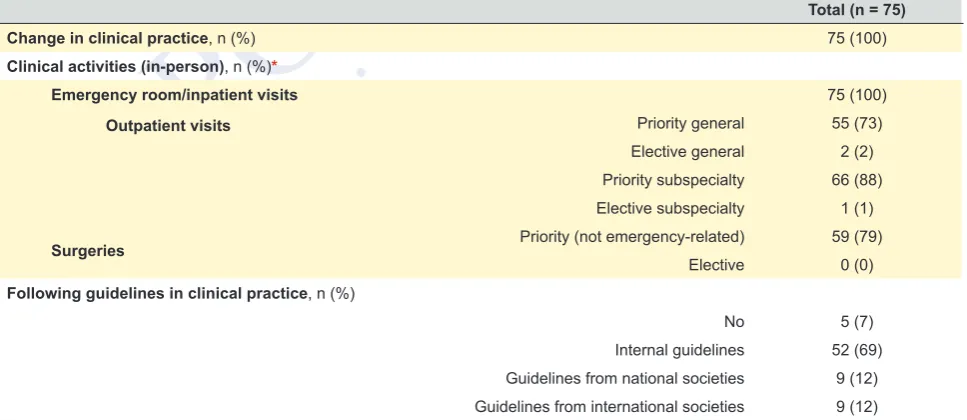
Table 1 details the responses regarding clinical practice during the pandemic in the ophthalmology departments sur-veyed. All the respondents answered that clinical practice changed in their ophthalmology department since the beginning of the pandemic. The main in-person clinical activities performed during the pandemic were emergency/inpatient care (100%, n = 75), priority subspecialty outpatient visits (88%, n = 66), priority surgeries (79%, n = 59) and priority general outpatient visits (73%, n = 55). No department performed elective ophthalmology surgeries.
Section 3: Ophthalmology training during the COVID-19 pandemic
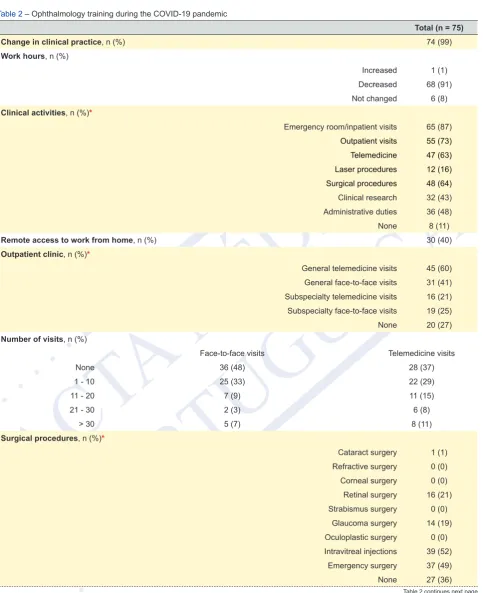
Table 2 details the responses regarding ophthalmology training during the COVID-19 pandemic. The clinical practice of nearly all participants (99%, n = 74) changed since the beginning of the pandemic. A significant proportion of participants mentioned that they were engaged in the following activities within the ophthalmology departments: emergency/inpatient care (87%, n = 65), outpatient visits (73%, n = 55) and surgical procedures (64%, n = 48).
Regarding outpatient clinics, 63% (n = 47) performed telemedicine visits, 52% (n = 39) performed in-person visits, 41% (n = 31) participated in both and 25% (n = 20) did not assist in any outpatient visits. Specific rates for the type of visit, gen-eral or subspecialty, are presented in Table 2. A higher proportion of respondents were engaged in gengen-eral ophthalmology clinics (70%, n = 53) compared with subspecialty clinics (29%, n = 22).
The number of visits and surgical procedures performed is outlined in Table 2. During the pandemic, residents partici-pated in the following surgical activities: intravitreal injections (52%, n = 39), emergency surgery (49%, n = 37), retinal sur-gery (21%, n = 16), glaucoma sursur-gery (19%, n = 14) and cataract sursur-gery (1%, n = 1). If we exclude intravitreal injections, 49% (n = 37) of the residents did not assist in any surgical procedures. In addition, whereas only 8% (n = 69) reported not participating in cataract surgeries before the pandemic, during the pandemic this rate increased to 99% (n = 74).
Clinical research was conducted by 43% (n = 32) of the respondents during the pandemic. Forty-two percent (n = 32) admitted an increase in the number of submitted papers, and 39% (n = 29) mentioned an increase in the number of submit-ted abstracts to congresses. Most of the respondents (80%, n = 60) declared having had more time to develop research projects. Eighty-nine percent (n = 67) attended virtual meetings.
Section 4: Subjective perspective on the impact of the COVID-19 pandemic on the overall training program
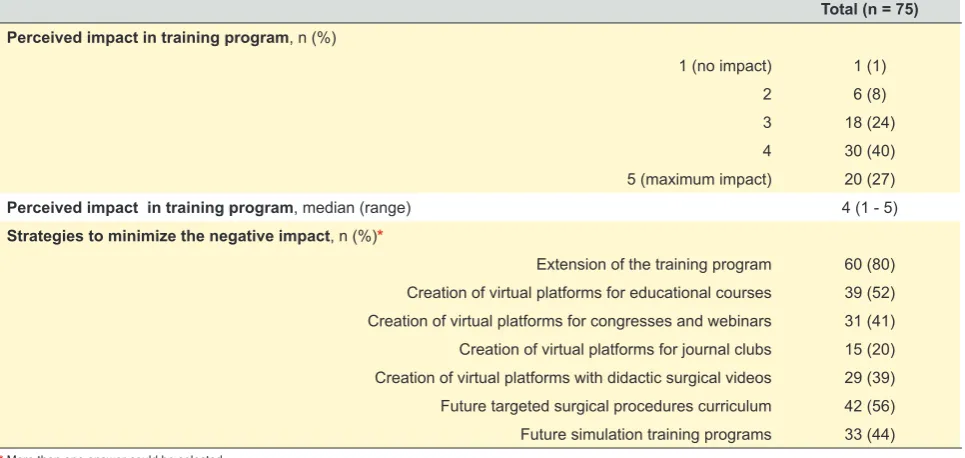
Table 3 summarizes the responses regarding personal perspective concerning the impact of the COVID-19 pandemic on the training program. The perceived impact of the pandemic was rated by the participants from 1 (no impact) to 5 (maxi-mum impact) as shown in Fig. 1: 1 was reported by 1% (n = 1), 2 by 8% (n = 6), 3 by 24% (n = 18), 4 by 40% (n = 30) and 5 by 27% (n = 20). There were no statistically significant differences between the median rate from residents deployed
and not deployed to COVID-19 units (4.5 vs 4.0, p = 0.10). As strategies to offset the negative impact of the pandemic,
participants agreed with the extension of the training program (80%, n = 60), a curriculum incorporating targeted surgical procedures (56%, n = 42) and development of virtual platforms for educational courses (52%, n = 39). Future simulation training programs (44%, n = 33), virtual platforms for congresses and webinars (41%, n = 31) and virtual platforms with educational surgical videos (39%, n = 29) were also significantly selected by the participants. Five free text responses were received regarding additional strategies. Among these, two additional measures were suggested: adapting the end-of-residency exam (which is mandatory in Portugal) to the training limitations experienced during this period, excluding, for instance, presentations in international conferences from the final evaluation parameters; providing subspecialty fellow-ships across national academic medical centers as an alternative to international exchange (which is the usual choice for most Portuguese residents).
Comparison of results among residency years
A smaller percentage of ophthalmology junior residents (first- and second-year residents) were performing telemedicine
visits (46% vs 78%, p = 0.005) and surgical procedures (49% vs 78%, p = 0.009) compared with senior residents (third-
and fourth-year residents). There were no overall statistically significant differences between the median rate of perceived
ARTIGO ORIGINAL
ARTIGO
ACEITE P
ARA
PUBLICAÇÃO DISPONÍVEL
EM WWW
.ACT
AMEDICAPORTUGUESA.COM
DISCUSSION
In this study, we used a survey-based approach to evaluate the impact of the COVID-19 pandemic in Portuguese
ophthalmology residency programs since the beginning of the pandemic on March 11th to April 23rd (when the survey was
applied). We found that reorganization of clinical practice induced by the COVID-19 pandemic seems to have decreased the number of learning opportunities of residents in the context of the ophthalmology residency, thus demanding revised and novel strategies to counterbalance this breach in the curriculum.
The COVID-19 pandemic is threatening residency training programs across all medical fields, but this most likely hap-pens disproportionately. Some specialties, including internal medicine, infectious diseases and anesthesia, were able to
use their acquired skills, and learn new ones, when recruited to manage COVID-19 patients.13,14 On the other hand,
surgi-cal fields, such as ophthalmology, were highly affected, with daily activities restricted only to those deemed essential.15-17 To
the best of our knowledge, few publications addressed the impact of the COVID-19 pandemic in ophthalmology residency
programs, and from those, only one presents objective data.18-20 A nationwide study conducted in India with ophthalmology
trainees (96% of which were enrolled in residency programs; n = 716, unknown response rate) revealed that 25% had been
deployed to COVID-19 duties and 81% felt that the COVID-19 lockdown adversely affected their learning.20
According to objective data from our study, ophthalmology teaching departments were following the recommendations of public health organizations and scheduling only priority, urgent and emergent visits, and procedures. Routine ambula-tory visits and surgeries were largely postponed. These drastic changes have demanded an adjustment in the resident’s schedules with 99% of the survey participants reporting changes to their routine clinical practice. A significant proportion of residents did not assist in any outpatient visits (25%) or surgical procedures (49%, excluding intravitreal injections). Additionally, 25% were deployed to work in the front-line response for COVID-19 patients. This reassignment may have represented an opportunity to establish relationships with colleagues of other specialties, enhance medical knowledge, develop abilities of dynamic teamwork, and expand perspectives about health policy and global health. Nevertheless, this training disruption could have raised concerns about accomplishing the residency requirements and affect the well-being of these trainees. The perceived impact of the pandemic in Portuguese ophthalmology residency training programs was not significantly higher among those reassigned to COVID-19 units, which most likely happened because most of them were also working in their ophthalmology department. In fact, most of the respondents (89%) were engaged in activities of their ophthalmology department, mostly focused in general (priority) and emergency/inpatient care.
Telemedicine has become the primary and safest form of outpatient clinical care in healthcare settings.21 We reported
a significant rate (62%) of residents actively participating in telemedicine clinics. By participating in these virtual visits, residents can review charts and contribute to patient counseling under the supervision of an attending ophthalmologist. Nonetheless, physicians, especially in fields such as ophthalmology that is highly dependent on technical equipment, can find telemedicine delivery particularly challenging. The need for social distancing may accelerate the movement towards other consultation methods, such as virtual clinics with clinical data acquisition outside the hospital facilities in a
shared-care scheme.22 This could also be done for screening efforts, such as those regarding diabetic retinopathy, age-related
macular degeneration, and glaucoma.23 Residents could benefit from a formal incorporation of telemedicine/virtual patient
visits into their residency curriculum.
Surgical skills are among the most valuable competencies for ophthalmologists in training. During the pandemic, surgi-cal experience was limited by the reduction in non-essential surgisurgi-cal volume and by the prioritization of experienced faculty to participate in surgical activity. Our survey revealed that nearly half of residents were not participating in any surgical pro-cedures and, in the other half, the number of surgical cases was curtailed. These data raise concerns about the confidence of trainees and their acquisition of technical skills, particularly considering that a reduction in surgical output is expected to continue for some time. It is important to highlight that many ophthalmology residency programs stipulate the minimum number of procedures that residents are expected to have assisted in or performed as primary surgeon, with significant
variability across the globe.24,25
For some residents, the reduction in clinical responsibilities meant more time to focus on research work. An increase in research productivity was found in 40% of the residents. Moreover, there was a nationwide attempt to provide physicians with remote access to electronic medical records in order to allow telemedicine to be conducted outside hospital facilities. This has enabled residents to conduct retrospective research work remotely. This is particularly important given the current limitations in conducting clinical trials.
ARTIGO ORIGINAL
ARTIGO
ACEITE P
ARA
PUBLICAÇÃO DISPONÍVEL
EM WWW
.ACT
AMEDICAPORTUGUESA.COM
of respondents mentioned the creation of courses (52%), conferences and webinars (41%), and surgical videos (39%) in virtual platforms directed for trainees. The unique opportunities to embrace didactic and web-based learning as
alterna-tives to traditional educational methods have been largely mentioned in the literature from a variety of medical fields.26,27
For ophthalmology residents, e-learning resources have been offered by ophthalmology organizations (e.g. International
Council of Ophthalmology), American Academy of Ophthalmology) to promote active independent study.28 Furthermore,
ophthalmology conferences have started to move to virtual platforms, in order to support scientific presentations and allow research efforts to be disseminated. Other advantages include the ability to revisit digitally recorded sessions, and envi-ronmental and financial savings on transportation. Video-based surgical education is another form of web-based learning,
which has proved to be effective but can hardly replace the technical skills acquired in the operating room.29 Regarding
the trend towards web-based learning, a virtual curriculum could be implemented allowing program directors to monitor resident’s independent efforts towards proficiency. Another option to enhance surgical education is simulation training, which may serve an important role for surgical specialties in the wake of the COVID-19 pandemic. In ophthalmology, these
systems exist throughout the various subspecialties30; the most commonly used is the EyeSi virtual reality surgical
simula-tor (VR Magic).31 The association between EyeSi virtual reality training and reduced complication rates in live surgery has
been demonstrated.32 Nonetheless, a lack of standardized incorporation into the residency curricula, low-quality of
valida-tion study designs, and costs have been the major barriers to widespread adopvalida-tion.30-32
We are aware that our study has the inherent limitations of survey-based research. First, given the rapid evolution of the pandemic we had no time to validate the questionnaire and different interpretations are possible. Second, it may happen that the perspective of the respondents changes with time, as feelings and emotions are prone to influence the answers during these challenging times. Third, it only represents the reality of one country. Besides the potential limitations, our study has as a major strength the almost total representability of the target population (94% response rate). Besides, this questionnaire was conducted during the peak of the pandemic in Portugal and care was taken to obtain the responses in
a short period of time before this state was lifted on May 2nd. In addition, this is one of the first studies to provide objective
data on the impact of the COVID-19 pandemic in ophthalmology residency training programs.
Similar studies in other countries/regions would provide an international perspective on how ophthalmology training programs have been affected and the different strategies that are being employed to cope with the effects of the COVID-19 pandemic.
CONCLUSION
The COVID-19 pandemic has significantly impacted the training of ophthalmology residents. While one quarter of resi-dents was deployed to COVID-19 units, most ophthalmology trainees still performed clinical activities within ophthalmol-ogy departments during the pandemic. As ophthalmolophthalmol-ogy departments adapted, residents were essentially dedicated to emergent/inpatient and priority general care. The lower amount of time spent on subspecialty and surgical electives led to a drastic reduction in learning experiences. This is aggravated by the fact that it is not yet clear when, and if, the output of ophthalmology departments will recover to pre-COVID-19 numbers. A variety of short- and long-term strategies, including extension of the residency program, web-based education, surgical simulation, and curriculum adjustments, need to be considered in order to guarantee high-quality training programs. This pandemic has provided an unprecedented opportu-nity to offer standardized training in ophthalmology, thus levelling the ophthalmology curriculum.
PROTECTION OF HUMANS AND ANIMALS
The authors declare that the procedures were followed according to the regulations established by the Clinical Re-search and Ethics Committee and to the 2013 Helsinki Declaration of the World Medical Association.
DATA CONFIDENTIALITY
The authors declare having followed the protocols in use at their working center regarding patients’ data publication.
COMPETING INTERESTS
The authors have declared that no competing interests exist.
FUNDING SOURCES
This research received no specific grant from any funding agency in the public, commercial, or not-for-profit sectors.
REFERENCES
1. Zhu N, Zhang DY, Wang WL, Li X, Yang B, Song J, et al. A novel coronavirus from patients with pneumonia in China, 2019. N Engl J Med. 2020;382:727-33.
ARTIGO ORIGINAL
ARTIGO
ACEITE P
ARA
PUBLICAÇÃO DISPONÍVEL
EM WWW
.ACT
AMEDICAPORTUGUESA.COM
3. World Health Organization. Coronavirus disease 2019 (COVID-19) situation report–51. [accessed 2020 May 29]. Available from: https://reliefweb.int/ report/china/coronavirus-disease-2019-covid-19-situation-report-51-11-march-2020.
4. Decreto do Presidente da República n.º 14-A/2020. Diário da República, I Série, n.º 55 (2020/03/18). p.13-(2)-(4). 5. Resolução do Conselho de Ministros n.º 33-A/2020. Diário da República, I Série, n.º 85 (2020/04/30). p.7-(10)-(21).
6. Arora VM, Chivu M, Schram A, Meltzer D. Implementing physical distancing in the hospital: a key strategy to prevent nosocomial transmission of COVID-19. J Hosp Med. 2020;15:290-1.
7. Her M. Repurposing and reshaping of hospitals during the COVID-19 outbreak in South Korea. One Health. 2020;100137.
8. Romano MR, Montericcio A, Montalbano C, Raimondi R, Allegrini D, Ricciardelli G, et al. Facing COVID-19 in Ophthalmology department. Curr Eye Res. 2020;45:653-8.
9. American Academy of Ophthalmology (updated 2020, April 17). Recommendations for urgent and nonurgent patient care. 2020. [accessed 2020 May 29]. Available from: https://www.aao.org/headline/new-recommendations-urgent-nonurgent-patient-care.
10. Mehrotra A, Chernew M, Linestsky D, Hatch H, Cutler D. “What Impact Has COVID-19 Had on Outpatient Visits?”. To the Point. doi: 10.26099/ds9e-jm36. 11. World Health Organization. Report of the WHO - China joint mission on Coronavirus disease 2019 (COVID-19). 2020. [accessed 2020 May 29]. Available
from: https://www.who.int/docs/default-source/coronaviruse/who-china-joint-mission-on-covid-19-final-report.pdf.
12. Administração Central do Sistema de Saúde. 2020. [accessed 2020 May 29]. Available from: http://www.acss.min-saude.pt//2016/09/26/acesso-a-area-de-especializacao/.
13. Rakowsky S, Flashner BM, Doolin J, Reese Z, Jason S, Shu Y, et al. Five questions for residency leadership in the time of COVID-19: reflections of chief medical residents From an Internal Medicine Program. Acad Med. 2020;95:1152-4.
14. Wax RS, Christian MD. Practical recommendations for critical care and anesthesiology teams caring for novel coronavirus (2019-nCoV) patients. Can J Anaesth. 2020;67:568-76.
15. Porpiglia F, Checcucci E, Amparore D, Verri P, Campi R, Claps F, et al. Slowdown of urology residents’ learning curve during the COVID-19 emergency. BJU Int. 2020;10.1111/bju.15076.
16. Clark VE. Editorial. Impact of COVID-19 on neurosurgery resident research training. J Neurosurg. 2020;1-2.
17. Kogan M, Klein SE, Hannon CP, Nolte MT. Orthopaedic education during the COVID-19 pandemic. J Am Acad Orthop Surg. 2020;28:e456-64. . 18. Chen RW, Abazari A, Dhar S, Fredrick DR, Friedman IB, Glass LR, et al. Living with COVID-19: a perspective from New York Area Ophthalmology
Residency Program Directors at the epicenter of the pandemic. Ophthalmology. 2020; 127:e47-8.
19. Wong TY, Bandello F. Academic Ophthalmology during and after the COVID-19 Pandemic. Ophthalmology. 2020;127:e51-2.
20. Mishra D, Nair AG, Gandhi RA, Gogate P. The impact of COVID-19 related lockdown on ophthalmology training programs in India - outcomes of a survey. Indian J Ophthalmol. 2020;68:999-1004.
21. Moazzami B, Razavi-Khorasani N, Dooghaie Moghadam A, Farokhi E, Rezaei N. COVID-19 and telemedicine: Immediate action required for maintaining healthcare providers well-being. J Clin Virol. 2020;126:104345.
22. Jayaram H, Strouthidis NG, Gazzard G. The COVID-19 pandemic will redefine the future delivery of glaucoma care. Eye. 2020;1-3.
23. Rathi S, Tsui E, Mehta N, Zahid S, Schuman JS. The current state of Teleophthalmology in the United States. Ophthalmology. 2017;124:1729-34. 24. Accreditation Council for Graduate Medical Education. Required Minimum Number of Procedures for Graduating Residents in Ophthalmology - Review
Committee for Ophthalmology. 2014. [accessed 2020 May 29]. Available from: https://www.acgme.org/Portals/0/PFAssets/ProgramResources/240_ Oph_Minimum_Numbers.pdf.
25. Portaria n.º 550/2004. Diário da República, I Série-B, n.º 119 (2004/05/21). p.3248-53.
26. Chick RC, Clifton GT, Peace KM, Propper BW, Hale DF, Alseidi AA, et al. Using Technology to Maintain the Education of Residents During the COVID-19 Pandemic. J Surg Educ. 2020;S1931-7204(20)30084-2.
27. Claps F, Amparore D, Esperto F, Giovanni C, Cristian F, Andrea M, et al. Smart learning for urology residents during the COVID-19 pandemic and beyond: insights from a nationwide survey in Italy. Minerva Urol Nefrol. 2020 (in press). doi: 10.23736/S0393-2249.20.03921-1.
28. International Council of Opthtalmology. E-Learning. [accessed 2020 May 29]. 2020. Available from: http://www.icoph.org/refocusing_education/ educational_programs/e_learning.html.
29. Ahmet A, Gamze K, Rustem M, Sezen KA. Is video-based education an effective method in surgical education? A systematic review. J Surg Educ. 2018;75:1150-8.
30. Lee R, Raison N, Lau WY, Aydin A, Dasgupta P, Ahmed K, et al. A systematic review of simulation-based training tools for technical and non-technical skills in ophthalmology. Eye. 2020 (in press). doi: 10.1038/s41433-020-0832-1.
31. Ferris JD, Donachie PH, Johnston RL, Barnes B, Olaitan M, Sparrow JM. Royal College of Ophthalmologists’ National Ophthalmology Database study of cataract surgery: report 6. The impact of EyeSi virtual reality training on complications rates of cataract surgery performed by first and second year trainees. Br J Ophthalmol. 2020;104:324–9.
ARTIGO ORIGINAL
ARTIGO
ACEITE P
ARA
PUBLICAÇÃO DISPONÍVEL
EM WWW
.ACT
AMEDICAPORTUGUESA.COM
Figure 1 – The perceived impact of the COVID-19 pandemic on residency training programs
Number of replies (%)
27% 40%
24%
8%
1%
1 2 3 4 5
Table 1 – Clinical practice of ophthalmology departments during the COVID-19 pandemic
Total (n = 75)
Change in clinical practice, n (%) 75 (100)
Clinical activities (in-person), n (%)*
Emergency room/inpatient visits 75 (100)
Outpatient visits Priority general 55 (73)
Elective general 2 (2) Priority subspecialty 66 (88) Elective subspecialty 1 (1)
Surgeries Priority (not emergency-related) 59 (79)
Elective 0 (0)
Following guidelines in clinical practice, n (%)
No 5 (7) Internal guidelines 52 (69) Guidelines from national societies 9 (12) Guidelines from international societies 9 (12)
ARTIGO ORIGINAL
ARTIGO
ACEITE P
ARA
PUBLICAÇÃO DISPONÍVEL
EM WWW
.ACT
AMEDICAPORTUGUESA.COM
Table 2 – Ophthalmology training during the COVID-19 pandemic
Total (n = 75)
Change in clinical practice, n (%) 74 (99)
Work hours, n (%)
Increased 1 (1) Decreased 68 (91) Not changed 6 (8)
Clinical activities, n (%)*
Emergency room/inpatient visits 65 (87)
Outpatient visits 55 (73) Telemedicine 47 (63) Laser procedures 12 (16) Surgical procedures 48 (64)
Clinical research 32 (43) Administrative duties 36 (48) None 8 (11)
Remote access to work from home, n (%) 30 (40)
Outpatient clinic, n (%)*
General telemedicine visits 45 (60) General face-to-face visits 31 (41) Subspecialty telemedicine visits 16 (21) Subspecialty face-to-face visits 19 (25) None 20 (27)
Number of visits, n (%)
Face-to-face visits Telemedicine visits
None 36 (48) 28 (37)
1 - 10 25 (33) 22 (29)
11 - 20 7 (9) 11 (15)
21 - 30 2 (3) 6 (8)
> 30 5 (7) 8 (11)
Surgical procedures, n (%)*
Cataract surgery 1 (1) Refractive surgery 0 (0) Corneal surgery 0 (0) Retinal surgery 16 (21) Strabismus surgery 0 (0)
Glaucoma surgery 14 (19) Oculoplastic surgery 0 (0) Intravitreal injections 39 (52)
Emergency surgery 37 (49) None 27 (36)
ARTIGO ORIGINAL
ARTIGO
ACEITE P
ARA
PUBLICAÇÃO DISPONÍVEL
EM WWW
.ACT
AMEDICAPORTUGUESA.COM
Table 2 – Ophthalmology training during the COVID-19 pandemic (final section)
Total (n = 75) Number of surgeries (excluding intravitreal injections), n (%)
Before COVID-19 pandemic During COVID-19 pandemic
None 1 (1) 37 (49)
1 - 5 7 (9) 35 (47)
6 - 10 22 (29) 1 (1)
11 - 20 31 (41) 2 (3)
> 20 14 (19) 0 (0)
Number of cataract surgeries, n (%)
Before COVID-19 pandemic During COVID-19 pandemic
None 6 (8) 74 (99)
1 - 5 17 (23) 1 (1)
6 - 10 37 (49) 0 (0)
11 - 20 11 (15) 0 (0)
> 20 4 (5) 0 (0)
Number of submitted papers, n (%)
Increased 32 (43) Decreased 6 (8) Not changed 37 (49)
Number of submitted abstracts to congresses, n (%)
Increased 29 (39) Decreased 6 (8) Not changed 29 (39)
Feeling of having more time to prepare research studies, n (%) 60 (80)
Virtual meetings attendance, n (%) 67 (89)
* More than one answer could be selected
Table 3 – Subjective perspective of the impact of the COVID-19 pandemic in the overall training program
Total (n = 75) Perceived impact in training program, n (%)
1 (no impact) 1 (1)
2 6 (8)
3 18 (24)
4 30 (40) 5 (maximum impact) 20 (27)
Perceived impact in training program, median (range) 4 (1 - 5)
Strategies to minimize the negative impact, n (%)*
Extension of the training program 60 (80) Creation of virtual platforms for educational courses 39 (52) Creation of virtual platforms for congresses and webinars 31 (41) Creation of virtual platforms for journal clubs 15 (20) Creation of virtual platforms with didactic surgical videos 29 (39) Future targeted surgical procedures curriculum 42 (56) Future simulation training programs 33 (44)