TESTING THE AGENDAMELDING THEORY:
HOW AUDIENCES TAILOR AGENDAS TO SUIT THEIR NEEDS
Milad Minooie
A dissertation submitted to the faculty at the University of North Carolina at Chapel Hill in partial fulfillment of the requirements for the degree of Doctor of Philosophy in the Mass
Communication program in the School of Media and Journalism.
Chapel Hill 2018
Approved by: Frank Baumgartner
Francesca Dillman Carpentier Daniel Riffe
© 2018 Milad Minooie
ABSTRACT
Milad Minooie: Testing the Agendamelding Theory How Audiences Tailor Agendas to Suit Their Needs
(Under the direction of Donald L. Shaw and Francesca Dillman Carpentier)
Technological advancements have lowered the cost of information dissemination, resulting in the proliferation of media sources ranging from the traditional daily newspaper to streaming services and social media. The exponential growth of media sources raises questions about the agenda setting power of the media in the digital age. The present study reexamines the first and second levels of agenda setting as well as the contribution of need for orientation in our evolving media environment in an effort to shed light on how audiences “meld” agendas from various media sources with their own personal preferences to form a coherent picture of society.
those with professional training and without a college degree. However, young, educated, female Independents allow their personal preferences to impact their agenda most. Income tends to impact agendamelding in minorities more than Caucasians.
The findings support the agendamelding theory that predicts differences in the way various individuals mix media messages to form, or join, agenda communities. While the results bode well for the nascent field of agendamelding, more research is needed to replicate the findings.
ACKNOWLEDGEMENTS
I would like to express my deepest gratitude to my mentor and friend Dr. Donald L. Shaw, without whom the present study would not have been possible. Dr. Shaw, one of the founding fathers of the agenda-setting theory, offered his unshakable support throughout the planning, development and execution of this project.
Special thanks to Dr. Francesca Dillman Carpentier, the voice of reason in this
dissertation, who partially funded the survey, assisted with data collection, and offered helpful comments and suggestions to improve this manuscript.
TABLE OF CONTENTS
LIST OF TABLES ... ix
LIST OF FIGURES... ix
CHAPTER 1: INTRODUCTION ... 1
CHAPTER 2: LITERATURE REVIEW ... 5
Agenda Setting ... 5
First-Level Agendas Setting ... 8
Second-Level Agenda Setting... 11
Third-level agenda setting ... 16
A Need for Orientation ... 18
Agendamelding ... 21
The Study of Agendamelding ... 36
Hypotheses and Research Question ... 38
H1a ... 39
H1b ... 39
H1c ... 39
H1d ... 40
H2a ... 40
H2b ... 40
H2c ... 40
H2d ... 40
H3 ... 41
RQ ... 43
CHAPTER 3: METHOD ... 44
Overview ... 44
Survey Sample... 45
Content Analysis ... 48
Traditional Media Sample ... 49
Social Media Sample ... 51
Concepts and Measures... 53
Media Agenda ... 53
Public Agenda ... 54
Community Agenda ... 54
Personal Agenda ... 56
Media Attributes ... 56
Audience Attributes ... 57
Media Consumption ... 57
Need for Orientation ... 58
Coding ... 59
Survey responses ... 59
Procedure ... 61
Data Analysis Strategy ... 62
CHAPTER 4: RESULTS... 65
CHAPTER 5: DISCUSSION AND CONCLUSIONs ... 82
Summary of Findings... 82
Theoretical Contributions... 85
Implications ... 87
Limitations ... 88
Conclusions ... 92
TABLES ... 94
FIGURES ... 118
APPENDICES ... 122
Appendix 1 – SURVEY INSTRUMENT ... 123
Appendix 2 – IRB APPLICATION ... 140
LIST OF TABLES
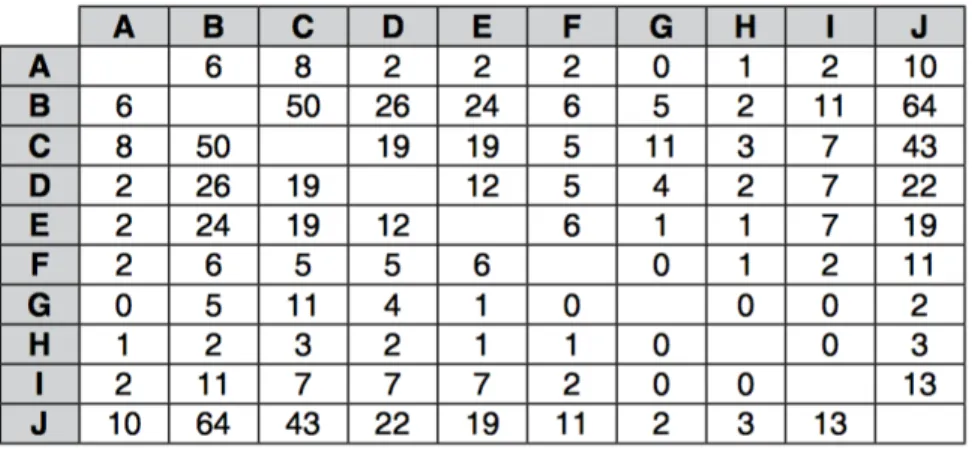
Table 2-2: Matrix of Candidate Attributes Based on Content Analysis………94
Table 2-3: Matrix of Candidate Attributes Based on Voter Survey………..94
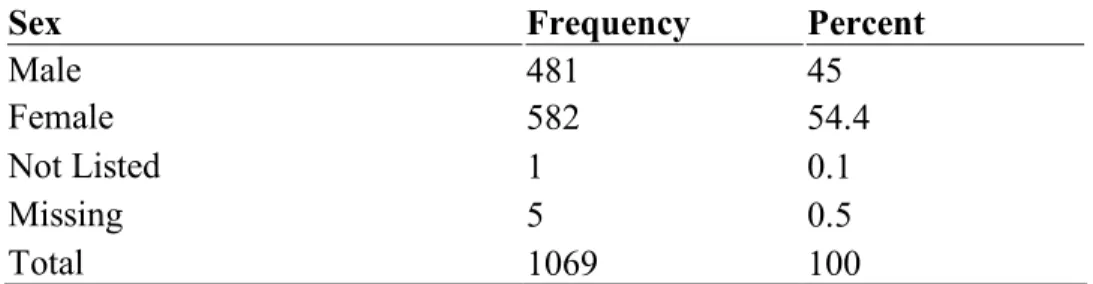
Table 3-1: Distribution by Sex ………...………...95
Table 3-2: Need for Orientation Distribution ……….………...96
Table 3-3: Kendall’s tau Compared with Spearman’s Rho………97
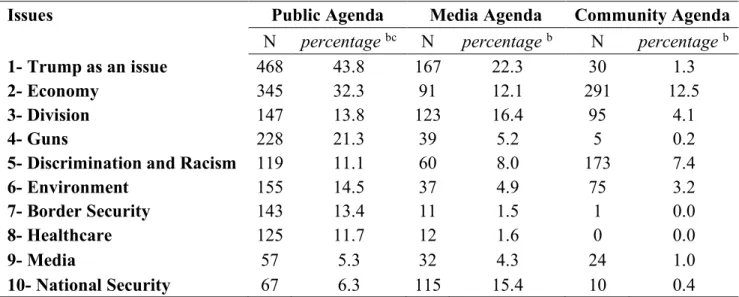
Table 4-1: Top Ten Public Agenda Issues Compared with Media and Community Agendas………..98
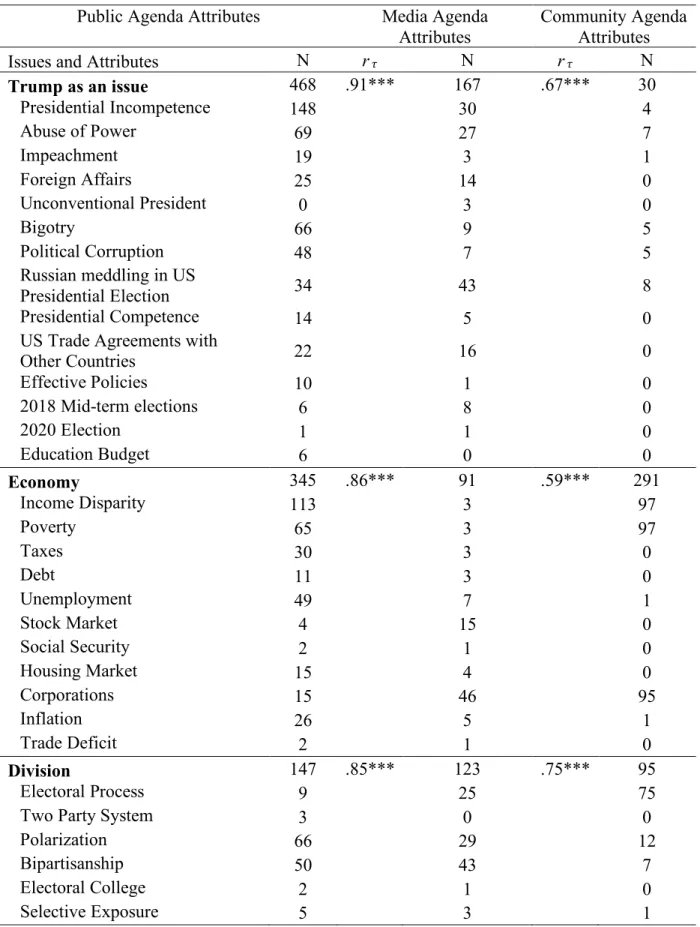
Table 4-2: Result of Correlations and Attribute Distribution……….………99
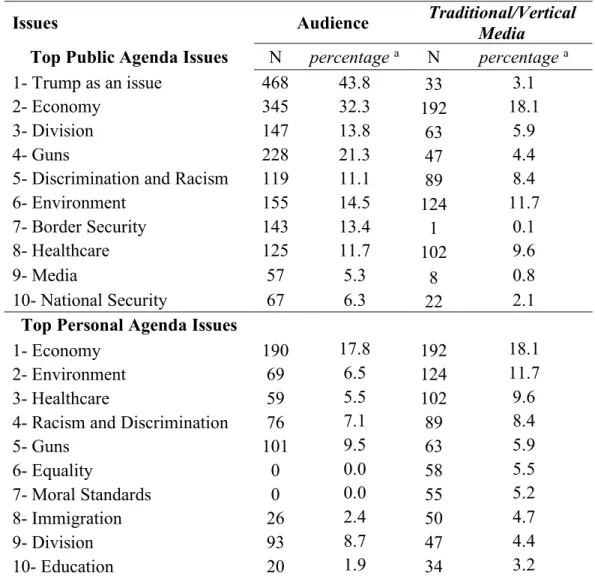
Table 4-3: Top Public Agenda Issues compared with Top Personal Agenda issues…………..……….102
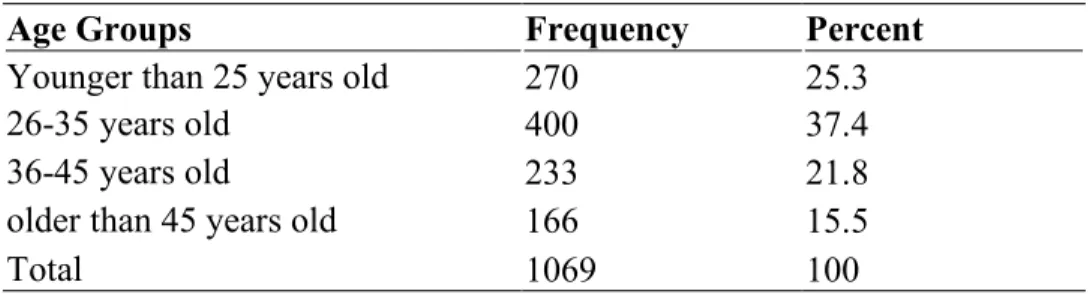
Table 4-4: Age Groups Distribution ………….……….……….103
Table 4-5: Income Groups Distribution ……….……….104
Table 4-6: Ethnicity Distribution ………….……….……….………….105
Table 4-7: Political Affiliation Distribution …..………….……….106
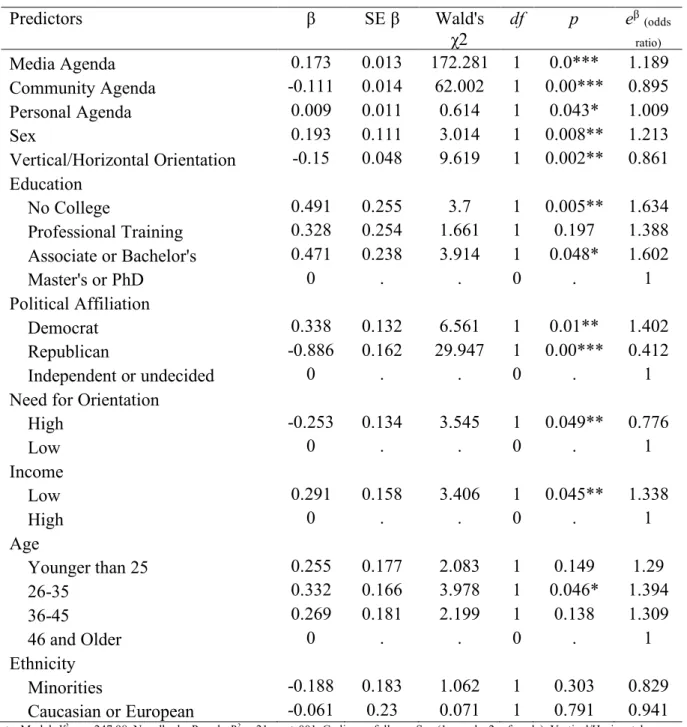
Table 4-8: Ordinal Logistic Regression Analysis of Public Agenda………...107
Table 4-9: Multicollinearity Tests Between Independent Variables………...108
Table 4-10: Results of Two-Way Interactions Between Independent Variables……….………..….112
LIST OF FIGURES
Figure 2-1: Second-Level Agenda Setting and the Framing Process ... 118
Figure 2-2: Need for Orientation Flow Chart... 119
Figure 2-3: Three Sources of Information ... 120
Figure 4-1: The main effect of the predictors on the likelihood of selecting the top issue on the agenda ... 121
CHAPTER 1: INTRODUCTION
“No Society has ever existed, or ever could exist, without a well-ordered system of communication, and no individual could survive for long without knowing how that system operates” (Trenholm, 2017, p. 3). As such, scholars from various disciplines have attempted to study human interaction and communication. The theories that have emerged from their efforts either view communication as a “practical art of discourse” (Rhetorical Tradition), an
“intersubjective mediation by signs” (Semiotic Tradition), “the experience of otherness”
(Phenomenological), “information processing” (Cybernetic Tradition), “expression, interaction, and influence” (Socio-psychological Tradition), “reproduction of social order”, (Socio-cultural Tradition), or “as discursive reflection” (Critical Tradition) (Craig, 1999).
In psychology, communication generally falls within the framework of human cognitive architecture, which relates to the mind, the brain, and human behavior (Newell, 1994).
Psychologists study attention, comprehension, and retention (Cameron, 2009) to explain the cognitive processes of messages and intentions and subjective norms (Ajzen & Fishbein, 1977; Fishbein & Ajzen, 1974), interactional synchrony (Kendon, 1970), expectancy violations (Burgoon, 1978), susceptibility, and efficacy (Bandura, 1982), among others, to explain human behavior within the boundaries of face-to-face, mediated, or mass communication.
increasingly focus on the sources and consequences of political information (Beck, Dalton, Greene, & Huckfeldt, 2002). In their studies of voter behavior, political scientists analyze variables like party identification, ideology, socioeconomic status, and gender alongside media content (Dalton, Beck, & Huckfeldt, 1998). They also study interpersonal communication by “analyzing the availability of discussion partners in one’s immediate environment and the amount of selectivity exercised in the choice of partners” (Mutz & Martin, 2001).
At any given time and in any given place, audiences encounter various sources of information: Their own personal networks of social interaction and political communication, particular newspapers, television channels, radio programs, a range of electronic media outlets, and a variety of organized efforts at persuasion (Beck et al., 2002). There are merits to studying each of these sources discretely as communication, political science, and psychology scholars have done for decades (Trenholm, 2017). However, in a modern society all of these sources compete for the audience’s attention at the same time and studying one or even a couple of sources in isolation may not yield a complete picture of reality. The present study aims to bridge this gap by acknowledging the contribution of each of these sources to an individual’s agenda – or a set of issues that are the subject of decision-making and debate within a given political system at any one time – within a larger societal context and treating them as only a part of a bigger body of information that represents all the knowledge available to individuals.
audiences, agendamelding1 takes into consideration the contribution of all types of media –i.e. one-to-many (mass media), many-to-many (social media), and one-to-one (inter-personal) – in setting the agenda.
Whereas agenda setting falls within the socio-cultural tradition (Littlejohn & Foss, 2008), which deals with problems arising from technological change and the breakdown of social order (Craig, 1999), agendamelding falls between the socio-cultural tradition and socio-psychological tradition, in which human judgment is believed to be influenced by immediate social context (Craig, 1999). The socio-psychological tradition considers communication as the process by which “individuals interact and influence each other” through “one-to-one, one-to-many, or many-to-many” interactions that involve “interposed elements that mediate between individuals” (Craig, 1999).
“Communication theorized in this way explains the causes and effects of social behavior and cultivates practices that attempt to exert intentional control over those behavioral causes and effects. Communication problems in the socio-psychological tradition are thus thought of as situations that call for the effective manipulation of the causes of behavior in order to produce objectively defined measured outcomes” (Craig, 1999, p. 143).
Agendamelding is concerned with the cause-effect relationship that Craig attributes to the socio-psychological tradition, but uses the method typically employed in agenda-setting research to study how various media and non-media communicators impact individuals and estimates the contribution of various categories of communicators to one’s agenda. In doing so,
1McCombs, Shaw, and Weaver (2014) recommend using a single word, “agendamelding,” rather than two words,
agendamelding identifies the category of media that is more effective in influencing the audience’s agenda on certain topics and the category of media that are more successful in influencing audiences on other topics.
Agendamelding’s contribution to the field lies in its power to measure the portion of public agenda explained by each media category, which has several implications. First and foremost, it sheds light on agenda communities, or characteristics of people who use the same category of media and share a similar agenda, and the structure of society. By drawing attention to sources of information previously left out of agenda-setting research, it provides a new way for other theories derived from agenda setting or other media effects theories to be used and tested. And finally, it can be used to estimate the amount of emphasis communicators should place on each category of media to effectively communicate their messages to their audience as various types of media may be more suited to set certain agendas than others (Shaw, Terry, & Minooie, 2015).
CHAPTER 2: LITERATURE REVIEW
Agenda Setting
Political scientists and communication scholars have been tinkering with the idea that mass media influence public opinion since the publication of Walter Lippmann’s Public Opinion (1922/1997). To Lippmann, the media were the link between “the world outside and the picture in our head.” Like a “beam of searchlight,” Lippmann (1922/1997) argued, the media shine light on issues and topics audiences will perceive as important. More than forty years later, Bernard Cohen (1963) claimed the media “may not be successful much of the time in telling people what to think, but [they are] stunningly successful in telling [the audience] what to think about.” Maxwell McCombs and Donald Shaw (1972) found support for this proposition in their study of the 1968 presidential election, calling it the agenda setting function of mass media.
McCombs and Shaw (1972) defined agenda setting as a process that transfers issue salience from media to audiences thus setting the agenda for the public. An agenda is a
combination of issues presented in order of their importance, where an issue is “a social problem, often conflictual, that has received mass media coverage” (Dearing & Rogers, 1996). Salient issues are those that “come to be regarded by the public as being important” (McCombs, 2014, p. 4).
Although public issues during a presidential campaign have been at the heart of
(Lopez-discussed in society, Cobb and Elder (1972) identified the “institutional agenda,” a set of issues being discussed in a particular government institution, which is commonly referred to as the
policy agenda. Policy agenda setting is a research tradition carried forward mostly by political scientists and sociologists for whom the key question is “how does an issue get on the policy agenda?” (Rogers, Dearing, & Bregman, 1993). Measures of policy agenda vary from study to study and include actions such as introduction of legislation about an issue, budget appropriation, and the amount of time dedicated to debating an issue in Congress (Dearing & Rogers, 1996). Kingdon (1984/2011), for example, identified three streams of problems (issues), proposals
(solutions), and politics (political climate and national mood) and posited that the policy agenda is set when at least two of these streams come together during what he calls a policy window. Kingdon based his model on hundreds of interviews with politicians. Baumgartner and Jones (1993/2009), however, relied on media indices and congressional records to observe the rise and fall of certain issues in the post-World War II era and their relation with longstanding policy changes. The two scholars found that policy agenda is often set when an issue reaches high salience and dramatic changes upset routines of behavior and power. The issue then loses salience, allowing the newly empowered political institutions and policymakers to settle into stable routines of behavior that persist for decades at a time (Baumgartner, 2001).
Aside from public and policy agendas, scholars have also investigated how the media
(Blondheim, 1994; Breed, 1955; Gold & Simmons, 1965; Horvit, Gade, & Lance, 2013; Lim, 2011; Whitney & Becker, 1982). Wire services are not the only ones setting media agendas: the
New York Times was found to set the agenda for the Washington Post, the Los Angeles Times
(Reese & Danielian, 1989), and even television networks (Rogers & Chang, 1991; Semetko, Blumler, Gurevitch, & Weaver, 1991). More recent studies have found that in some cases online media set the agenda for print media (Ku, Kaid, & Pfau, 2003) and wire services (Lim, 2006), while in other cases, print media set the agenda for online media (Lee, Lancendorfer, & Lee, 2005). Members of the public are also found to set theinterpersonal agenda among themselves (McCombs & Snow, 1974). A four-month study of 227 Charlotte voters compared the agenda setting effect of interpersonal communication with the Charlotte Observer and found that “the month-by-month agendas of the local paper were insignificantly and at times somewhat negatively related to voters’ agenda” (Shaw, 1977, p. 80). This finding suggests that interpersonal agenda setting competes with media agenda setting.
As mentioned earlier, the concept of agenda setting started with the work of Lippmann (1922/1997) and went through several transformations (Cohen, 1963; Lazarsfeld & Merton, 1948/2000; Schattschneider, 1960/1975) – although it was not called “agenda setting” until 1972. The tradition of combining a media content analysis with an audience survey of the ranking of agendas was sparked by the 1968 Chapel Hill study (Rogers et al., 1993). Since its introduction, the agenda-setting theory has been supported and refined in more than 400 empirical studies (Griffin, Ledbetter, & Sparks, 2014).
attempt to solve the apparent paradox of “no effect” findings in a world where the media were ubiquitous and consonant as the main justification for their work (Rogers et al., 1993).
Another contributing factor to the development of agenda setting as a theory was a string of longitudinal studies finding a causal relationship between the media agenda and the public agenda such as the 1972 follow-up study in Charlotte, NC (Shaw & McCombs, 1977), the panel studies of the 1976 presidential election in Lebanon, NH, Evanston, IL, and Indianapolis, IN (Weaver, Graber, McCombs, & Eyal, 1981), Funkhouser’s 10-year study of three major news media of the 1960s (Funkhouser, 1973), and the 22-year study of civil rights issues (Winter & Eyal, 1981).
Iyengar and Kinder (1987) reconfirmed that the media agenda sets the public agenda rather than reflecting the public’s priorities in a series of lab experiments by altering the media agenda to test its effects on individuals' public agendas. Furthermore, many scholars used cross-lagged correlations to determine how long it would take for the agenda setting effect to transfer salience (Dillman Carpentier, 2014). The length of this period depends on factors such as the nature of the issue and the amount of media coverage it receives and can range from as long as several months to only a few weeks (Dearing & Rogers, 1996; Rogers, Dearing, & Chang, 1991).
Nearly half a century after the Chapel Hill study, agenda setting, also known as first-level agenda setting, has evolved and matured, sparking new propositions along the way: Second-level agenda setting, third-level agenda setting, intermedia agenda setting, need for orientation and agendamelding.
First-Level Agendas Setting
McCombs, 2005). The term “object” is used here in the same way that social psychologists use the phrase “attitude object” to designate the thing that an individual has an attitude or opinion about (McCombs, 2005). The public agenda is typically measured by public opinion surveys in which respondents are asked a variation of the most important problem (MIP) question originally devised by the Gallup poll: “What is the most important problem facing this country today?” (Dearing & Rogers, 1996; Dillman Carpentier, 2014; Lopez-Escobar et al., 1998; McCombs, 2014; McCombs, Llamas, Lopez-Escobar, & Rey, 1997; Weaver et al., 1981). Although the MIP question and its variations assessing issue salience remain a popular measure, there are other ways to measure object salience on the public agenda (McCombs, 2014). Among the creative alternatives to MIP are: Recognition and recall of news stories that had appeared in the
newspaper and ranking their importance (Althaus & Tewksbury, 2002); a combination of issue importance scales and behavioral measures (Einsiedel, Salomone, & Schneider, 1984); and a combination of open-ended MIP questions and multiple choice issue categories (Dillman Carpentier, 2014).
using perceived importance measures, Kim, Scheufele, and Shanahan (2002) advocate using an open-ended MIP question – as opposed to multiple choice questions – and asking about the respondent’s opinion on the issue in a follow-up question.
In their seminal study, McCombs and Shaw (1972) tested the agenda setting process during the United States presidential election in 1968 when Democrat Hubert Humphrey ran against Republican Richard Nixon. Through content analysis of media reports, they monitored the topics in all the major news media available in Chapel Hill, NC. They compared the data with results from a survey of a random sample of 100 citizens of Chapel Hill and Carrboro in North Carolina. Participants were interviewed in their homes and were asked a series of
questions about what media they used, how often they used them and what they regarded as the most important problem. Through their content analysis, McCombs and Shaw (1972) identified foreign policy (the Vietnam War), law and order, fiscal policy (economy), public welfare, and civil rights as the major issues discussed in the media. Having identified the issues, the
researchers counted the frequency of each issue and ordered them by rank. Then they rank-ordered issues mentioned by subjects based on frequency and conducted a Spearman’s Rho correlation, reporting an extremely strong and statistically significant correlation (ρ = .97) between media topics and participant topics.
As pioneered by McCombs and Shaw (1972) and Funkhouser (1973), as a parallel to the MIP measure of the public agenda, the media agenda is usually measured by a content analysis of news media to determine the frequency of stories about the objects – or issues being studied (Dearing & Rogers, 1996; McCombs, 2005, 2014; Rogers et al., 1993; Weaver et al., 1981).
commercial and personal niche changed how millions, or perhaps billions, of people from around the world communicate and opened new areas for research to communication scholars
(McCombs, 2005). Chaffee and Metzger (2001) argue that the idea that “on the Internet anyone can be an author” has diminished the “mass-ness” of mass media, casting doubt over the media’s agenda-setting power on public opinion. They claimed that the diversification of sources,
resulting from the proliferation of the Internet, has produced fragmented and competing media agendas that challenge a fundamental assumption of the agenda setting theory: that people get their information from a uniform media agenda (Chaffee & Metzger, 2001). Yue Tan and Weaver compared forty-eight years of Gallup’s MIP question with a random sample of the New York Times Index to study agenda diversity and the strength of the agenda setting effect (Tan & Weaver, 2013). While they found that agenda diversity fluctuated over the years – declining from the 1950s to 1980s and picking up again thereafter – they found no indication of “a weaker agenda-setting effect over time.” Rather they maintained “an alternative hypothesis predicting that the agenda-setting effect between the New York Times and public opinion has remained mainly constant over time seems more valid” (Tan & Weaver, 2013, p. 781).
Second-Level Agenda Setting
characteristics of an object and direct away from others (McCombs & Estrada, 1997). “When the news media talk about an object – and when members of the public talk and think about an object – some attributes are emphasized, while others are mentioned only in passing. For each object on the agenda, there is an agenda of attributes that influences our understanding of the object” (McCombs, 2005, p. 546). In the maiden second-level agenda setting study, Becker and McCombs (1978) found that not only did the media set the agenda for voters by transferring object salience, but they also did so by transferring attributes, such as describing Vice President Hubert Humphrey in terms of his age and vice presidential candidate Sargent Shriver in terms of his connection to the Kennedys. The discovery of the second-level agenda setting, sometimes called attribute agenda setting (McCombs, 2014), prompted McCombs and Shaw (1993) to revise their original assessment of agenda setting:
“New research exploring the consequences of agenda setting and media framing suggest that the media not only tell us what to think about, but also how to think about it, and, consequently, what to think” (p. 65).
Subsequent attribute agenda setting research, such as the study of attributes surrounding the Southwest Park commercial development in New York by Kim, Scheufele, and Shanahan (2002), have also found support for this notion.
Second-level agenda setting extends our understanding of how the news media shape public opinion and is also closely linked to first-level agenda setting. In the context of political campaigns, mass media coverage of candidates or campaigns can sometimes shape voter
describe the candidates. The authors concluded media coverage and second-level agenda setting may have been a factor in McCain’s upset victory in New Hampshire (Golan & Wanta, 2001).
During the 1993 Japanese general election, the issue of political reform accounted for 80 percent of news coverage in the country's top two newspapers and three television networks, resulting in a high transfer of object salience (Toshio & Shunji, 1995 as cited in McCombs, 2014). “Systems-related” attributes and “ethics-related” attributes of the reform were discussed in the news media, but the former was discussed more frequently. This resulted in a positive correlation between public political attentiveness and systems-related reforms and a near zero correlation between political attentiveness and ethics-related reforms – a manifestation of second-level agenda setting at work (Toshio & Shunji, 1995).
Another example of how second-level agenda setting can add to the
understanding of agenda setting research is the study of the federal budget crisis of the 1990s. The study compared the content of 19 different newspapers with the MIP question of 12 different public opinion tracking polls between 1994 and 1996 (Jasperson, Shah, Watts, Faber, & Fan, 1998). While the coverage of the budget deficit increased over time, intriguingly, the number of respondents who cited the issue as the most important
1998). The agenda-setting effect of the media on public opinion depends to a “great degree” on the sub-issues, attributes, or news frames (Wanta & Hu, 1993).
McCombs et al. (2000) have identified two types of attributes (i.e. “substantive” attributes and “affective” attributes) that contribute to understanding of the agenda setting effect, while Ghanem (1997) identifies four types of attributes: “Subtopics,” independent attributes within a particular issue; “framing mechanisms,” which are the manners in which the media place emphasis on various issues (e.g. photographs, pull quotes, and subheads); “affective” and “cognitive,” which McCombs and colleagues call substantive (Ghanem, 1997; Golan & Wanta, 2001; Kiousis, Bantimaroudis, & Ban, 1999). Affective attributes refer to the valence characteristics of an object (i.e. positive, neutral, or
negative) in the media content that elicit emotional responses from the audience (Kiousis et al., 1999; Kiousis, Popescu, & Mitrook, 2007; McCombs et al., 2000). Substantive attributes refer to cognitive characteristics that describe an object (e.g. the age of a candidate, or a candidate’s connection to a former president) in a manner that helps structure the news and differentiate among various topics (Kiousis et al., 1999, 2007; McCombs et al., 2000). A sub-category of substantive attributes, candidate image attributes (e.g. ideology, issue positions, biographical information, perceived
qualifications, personality, and integrity), has received special attention in the literature (Kiousis, Mitrook, Wu, & Seltzer, 2006; McCombs et al., 1997, 2000).
such a way as to promote a particular problem definition, causal interpretation, moral evaluation, and/or treatment recommendation for the item described” (Entman, 1993, p. 52). Others have defined it as “the central organizing idea for news content that supplies a context and suggests what the issue is through the use of selection, emphasis, exclusion, and elaboration” (Tankard, Hendrickson, Silberman, Bliss, & Ghanem, 1991, p. 3). Scheufele and Tewksbury (2007) argue that the term framing refers to the assumption that how an issue is presented and galvanized by the media has an impact on how the issue is perceived by the audience. Yet in cognitive psychology, framing is defined as “a function that specifies the relations that hold among the arguments comprising a
particular conceptual bundle at a particular level of abstraction” (Friedman, 1979, p. 321). Friedman argues that frames go beyond mere appearance and presentation. She describes frames as packages that contain sub-frames, for example the “head,” is a frame that contains the sub-frames “eyes” and “nose,” although the latter two may not be explicitly mentioned by the communicator (Friedman, 1979).
Weaver (2007, p. 143) observed that even in a single issue of the Journal of Communication, authors employed a wide range of “definitions of framing, including problem definitions, causal interpretations, moral evaluations, and treatment
processes (Weaver, 2007). McCombs (1997) believes that conceptualizing frames as attributes and bringing framing under the umbrella of agenda setting “brings some order and parsimony to the vast literature on framing whose popularity led to highly diverse even incompatible – applications and definitions” (p. 6). Figure 2-1 displays the placement of framing with respect to second-level agenda setting.
Third-level agenda setting
Although not directly pertinent to the present study, third-level agenda setting will be briefly discussed since it is closely related to second-level agenda setting, which the present dissertation will explore. The main idea behind third-level agenda setting is that each object is usually described in the media by more than one attribute. Moreover, objects are often frequently mentioned with a certain set of attributes, creating a linked network of objects and attributes. As a result, the salience of the networks of objects and attributes are transferred to audiences in a bundle (Guo, Vu, & McCombs, 2012).
Third-level agenda setting, also known as Network Agenda Setting (NAS), is based on the foundations of the associative network model of memory (Anderson, 2016; Anderson & Bower, 1980) as well as the cognitive network model (Santanen, Briggs, & de Vreede, 2000). NAS posits that the audience’s cognitive representation of objects and attributes is akin to a network-like structure, in which any given node (e.g. object, or attribute) is connected to numerous other nodes (Guo et al., 2012).
whole picture of reality constructed by the news media and individuals’ cognitive maps using network analysis tools (Guo, 2012). Instead of examining the prominence of issues through frequency counts, the network agenda setting model turns to the centrality of issues, the location of individual issue nodes in terms of how close they are to the center of a network (Vargo et al., 2014). As a result, the unit of analysis in third-level agenda setting is a dyad – two issues or attributes mentioned together (Guo et al., 2012). The NAS model “hypothesizes that news media have the capability to construct the connections among agendas, thereby constructing the
centrality of certain agenda elements in the public’s mind” (Guo et al., 2012, p. 56). The first study of the NAS model (Guo & McCombs, 2011) reanalyzed Kim and McCombs’ (2007) attribute agenda setting data collected during the 2002 gubernatorial and senatorial Texas election and measured the co-occurrence of objects and attributes (dyads) in media coverage and survey responses, devising two 10 × 10 matrices for network analysis (Guo, 2012). Kim and McCombs’ (2007) identified 83 attributes used by the Austin-American
Statesman to describe the four candidates (Rick Perry (R) and Tony Sanchez (D) for governor, and John Cornyn (R) and Ron Kirk (D) for the US Senate) over a four-week period. They collapsed the attributes into six major categories of general political descriptions, specific issue positions, personal qualifications and character, biographical information, campaign conduct, and support and endorsements. Then, they asked a representative sample to describe the
Using the data collected during the Texas gubernatorial and senatorial election, Guo and McCombs (2011) employed a Quadratic Assignment Procedure (QAP) to analyze the dyadic data. The authors devised matrices for media and audience agenda attributes with attributes on the first row and first column and the frequency of the co-occurrence of the two attributes in the cell where the two meet (see Table 2-1 and Table 2-2). The QAP is most commonly
implemented for network data by using the observed occurrences to generate a distribution of possible alternative outcomes and computing the statistical significance of the observation against the generated distribution (Martin, 1999). Guo and McCombs (2011) found that “the rank-order correlation coefficient (Spearman’s Rho = .65) between the media and public attribute agendas reported by Kim and McCombs corresponded closely with the QAP correlation
(Pearson’s r = .67) between the media and public network agendas” (Guo et al., 2012, p. 59). Aside from the 2002 Texas elections study (Guo & McCombs, 2011), scholars have found support for the NAS model by studying media coverage and public opinion in non-presidential election years (Guo et al., 2012), Twitter data during the 2012 non-presidential election (Guo & Vargo, 2015; Vargo et al., 2014), and the media coverage and public opinion in Hong Kong (Cheng, 2016).
A Need for Orientation
agendas. McCombs and Weaver (1973) introduced the audience’s need for orientation (NFO) in a 1972 study of the US presidential election in Charlotte, NC. The concept of NFO is developed based on the utilitarian theories’ premise that individuals are problem solvers, who approach any situation as an opportunity to acquire useful information or new skills for coping with life’s challenges (Weaver, 1980). NFO is based on the assumption “that each person feels some need to be familiar with his surroundings” (Weaver, 1991, p. 132). McCombs and Weaver (1973) suggest that higher need for orientation leads to increased media use, which in turn results in increased agenda setting effects. Two factors of relevance and uncertainty determine the audience’s need for orientation (McCombs & Weaver, 1973).
Uncertainty occurs when audiences do not feel they have all the information they need about a topic and relevance refers to a person’s interest in a subject matter (Camaj & Weaver, 2013). When encountering new information, audiences experience one of four conditions: 1- High relevance and high uncertainty, 2- low relevance and high uncertainty, 3- high relevance and low uncertainty, and 4- low relevance and low uncertainty.
Relevance must occur first (Hester & Gibson, 2007). In the typology of need for orientation, low relevance results in low need for orientation, regardless of the level of
uncertainty; high relevance and low uncertainty results in a moderate need for orientation; while high relevance and high uncertainty results in a high need for orientation (Weaver, 1991). See Figure 2-2. The Charlotte study (Shaw & McCombs, 1977) measured the agenda-setting effect of news coverage during the 1972 US presidential election campaign. In October, the
An analysis of the psychology behind agenda setting has identified need for orientation as part of the cause of agenda setting effect and accessibility and applicability as other parts
(McCombs & Stroud, 2014). The study concluded that audiences who are passive consumers of media generally have lower levels of NFO compared to those consuming media actively. The authors also found that audiences whose media consumption is rated “moderate-active” in the high relevance and low uncertainty condition use partisan media more than those in the high relevance and high uncertainty condition (McCombs, Shaw, & Weaver, 2014). According to McCombs and Stroud (2014), this finding means that the former group is motivated by
directional goals and the latter by accuracy goals. In contrast to audiences with low and moderate-passive NFO – those in the low relevance and high uncertainty condition – who process mediated information passively and use the news media infrequently (and thus resulting in limited agenda setting effects), those with moderate-active NFO and high NFO engage in information seeking and are less susceptible to an accessibility (top of the mind) bias, which results in higher agenda setting effects (McCombs et al., 2014). However, the strength of the first- and second-level agenda setting is not the same among the latter two groups. Audiences with moderate-active NFO consume more partisan media, which results in high first- and second-level agenda-setting effects, while audiences with high NFO seek more mainstream, and less partisan, media, which results in strong first-level agenda-setting effects, but only moderate second-level effects (McCombs et al., 2014).
NFO measure is meant to predict agenda-setting effects in regard to specific issues, items should be formulated for specific issues only” (Matthes, 2005, p. 427). Therefore, for non-elections- and non-politics-related issues, Matthes (2005) recommends the following three questions: “I want to be instantly informed about recent developments” toward this issue, “It is important for me to observe this issue constantly,” and “I would like to hear something about the issue every day” (p. 433). Matthes (2005) tested three variations of each question in three different studies and found them to be a better predictor of NFO than the traditional questions.
Agendamelding
Although Shaw et al. (1999) conceived agendamelding over a decade before the increasing awareness of the role of audiences in agenda setting effects (McCombs et al., 2014; McCombs & Stroud, 2014), the audience is the locus of agendamelding scholars’ attention. Agendamelding centers on the receivers of media messages and their motivations for selecting their information sources, adopting agendas, and affiliating with other people (Weaver,
audience-oriented and strives to study the culmination of the effects of various media used by audiences that prompts them to join agenda communities (Shaw et al., 1999).
The audiences’ strong impulses to affiliate with others influence their media choice, which is an indicator of their membership in various groups. Groups play a central role in the human experience, serving as the foundation upon which society is built (Hogg, Hohman, & Rivera, 2008). Groups may be based on physical attributes such as ethnicity and gender or more abstract attributes such as political ideology and hobbies. Social psychologists believe that individuals join groups to reduce feelings of uncertainty about themselves and the world they live in (Hogg, 2000; Hogg et al., 2008). The social identity theory (Hogg, 2016; Tajfel & Turner, 1979) posits that individuals understand groups as a series of interrelated attributes such as attitudes, behaviors, and customs that capture overall similarities within groups and overall differences between groups and the extent to which a group appears distinct from other groups. According to the uncertainty-identity theory, as a result of this self-categorization process, individuals actually perceive themselves and the world through the lens of these attributes – e.g. attitudes, feelings, and behaviors – which helps them predict how others will think of and interact with them, thus reducing uncertainty (Hogg et al., 2008).
One situation where uncertainty arises, is when an individual faces contradictory information. The theory of cognitive dissonance posits that in the face of contradictory cognitions, individuals feel an unpleasant state, called dissonance, and they move to resolve dissonance either by rejecting the contradictory information or by altering their beliefs (Festinger, 1957). Festinger (1962) argued that individuals prefer to maintain internal
on his theory, saying that “if a person knows various things that are not psychologically consistent with one another, he will, in a variety of ways, try to make them more consistent” (Festinger, 1962, p. 93). He added that cognitive dissonance was a “motivating state of affairs,” prompting individuals to “exaggerate the attractiveness of their choice and unattractiveness of the alternative” (p. 95).
Since its introduction in 1957, cognitive dissonance has been used to explain human behavior ranging from evaluating and devaluating the attractiveness of objects, to why people donate to charity or eat grasshoppers (Harmon-Jones & Mills, 1999).
In modern psychology, social groups and social relations are considered one of the main sources of dissonance or its resolution (Matz & Wood, 2005). Dissonance begins when an individual engages in a behavior and then evaluates that behavior “against a standard for judgment” (Stone & Cooper, 2001). The standard for judgment can stem from personal considerations such as self-expectancies (Thibodeau & Aronson, 1992) and self-affirmation (Steele, 1988), or perceived social factors such as societal and normative standards for behavioral conduct (Cooper, 1999).
Moreover, an individual’s discrepant behavior can trigger discomfort in observers and result in an attitude change to resolve the socially shared dissonance (Norton, Monin, Cooper, & Hogg, 2003; Sakai, 1999). Some of the mechanisms that groups adopt to resolve shared
dissonance include diffusion of responsibility for a dissonance-producing act to others in a group and the misattribution of dissonance arousal to dislike for an out-group (Cooper & Mackie, 1983; Zanna & Sande, 1987).
and are considered to be “defense mechanisms we routinely use to protect ourselves from information that would threaten us” (Baran & Davis, 2012, p. 154).
Shaw et al. (1999) originally described agendamelding as a “theory of social dissonance,” basing their description on Bellah’s (1985/2008) finding that individuals have a strong desire to belong to groups and communities, as well as on Festinger’s (1957) finding that individuals, on their own or in groups strive to reduce dissonance – or information that is inconsistent with a person’s attitudes, belief and values.
For example, individuals who perceive themselves as conservatives will seek out
conservative media, when faced with information about a candidate they support that contradicts their beliefs. The notion that audiences overwhelmingly prefer media messages that are
consistent with their attitudes – especially when it comes to political information – has found empirical support in recent years (Knobloch-Westerwick, 2015). Klapper (1960) argued that people tend to expose themselves to messages that are in line with their existing opinions to avoid “unsympathetic material.” This “systemic bias in audience composition” is often referred to as selective exposure (Sears & Freedman, 1967), congeniality bias (Eagly & Chaiken, 1993), or confirmation bias (Jonas, Schulz-Hardt, Frey, & Thelen, 2001).
Agendamelding also involves “disequilibration,” a process similar to selective exposure that prompts individuals to avoid information from other people or the media that could
significantly alter their views in an unanticipated manner and place them in a state of dissonance (Chaffee et al., 1996) and fits earlier findings that individuals try to keep their attitudes toward outside objects in balance with others (Heider, 1958; Newcomb, 1960).
McCombs developed the concept of need for orientation, finds agendamelding the next step in the evolution of this concept:
“Agendamelding offers an explanation for why some persons might find some agendas more relevant than others—a felt need to affiliate with certain groups—and predicts that those who desire to join a group or community, but who have little information about it, will be the most likely to seek information about its agenda from other persons or from various media such as newspapers and magazines”(Weaver et al., 2010, p. 3).
Originally, Shaw et al. (1999) conceived agendamelding as a process that contained six stages: 1- A decision to belong (need for group affiliation), 2- information on hand (about the group that the individual belongs to), 3- a need for orientation, 4- the medium of communication (that the individual uses for information), 5- agenda setting level 1, and 6- agenda setting level 2. If the authors were aware of network agenda setting effects at the time, they probably would have included it as a seventh stage.2
In the first stage of this model, Shaw et al. (1999) argued that individuals either
consciously choose to be part of a group or community, or become part of a group by accident (like being born into a certain family). When one joins a group, there is a need for information about the group and its agenda – either one has that information, or one seeks it out from various media or other people. “No group [be it a political party, church, or a purely social group like family or a bridge club] is without at least a loose agenda of issues on some topics” (Shaw et al.,
1999, p. 11). Next comes one’s need for orientation toward the agenda of the groups to which one belongs or wants to belong. This need for orientation depends on the level of uncertainty, interest and whether the individual is an active or passive consumer of media. The last stage of agendamelding before the occurrence of various agenda setting effects is the individual’s choice of medium and source of information (whether the information is obtained from traditional mass media, also called vertical media, interpersonal and social media, also called horizontal media, or from personal observations or experience), which are at the heart of the agendamelding process and will be discussed in depth in the following section. The final stages of the
agendamelding process are agenda setting levels 1 through 3. In short, “Whereas agenda setting research has concentrated, for the most part, on what people learn from the media,
agendamelding incorporates media agenda setting as part of a larger ongoing social learning process from various media, including other persons” (Weaver et al., 2010, p. 4).
Vertical and Horizontal Media
Agendamelding is an audience-centric process; as such, the media that particular
audience members use are important components of this theory. Rather than concerning
themselves solely with mass media that disseminate information to the public as a whole,
agendamelding scholars also takes into consideration other media such as social
networking websites. Traditional mass media such as newspaper, radio, and network
television relay messages from a single source (the printing press or the point of
broadcast) to a large number of people, and the audience-source relationship is similar to
a vertical hierarchy, where information flows from top to bottom – that is why Shaw,
Hamm, and Terry (2006) called these media traditional/vertical. On the other hand,
mediated interpersonal interactions) fit the horizontal label as information can flow back
and forth and both the sender and receiver have control over the context and manner in
which messages are transferred – leading Shaw et al. (2006) to call these media
social/horizontal.
This categorization, however, is not the same as “old media” and “new media.”
The term “new media” is not new; communication scholars have been using this term
since the 1960s (Dance & Gerbner, 1967; McLuhan, 1962; Schramm, 1963). McLuhan
(1962) used the term to distinguish between media forms like radio, television, tape
recorder and even the gramophone, and print media such as newspaper, novels, written
poems and paintings (p. 59). Some of the “new media” McLuhan talks about are
considered old or traditional today, some even obsolete. In fact, some “old media” like
specialized magazines, novels and poems would fall under the horizontal categorization,
while some “new media,” such as network television news are identified as vertical.
McLuhan’s hot and cool media categorization also does not mirror the
categorization that Shaw et al. (2006) had in mind, although it is somewhat more in line
with their conception than old and new media. McLuhan (1962) defines hot media as
those that extend a single sense in high definition (i.e. have more granularity), engender
specialization and fragmentation, exclude certain audiences, extend space, and are
horizontally connecting – all characteristics that are associated with Shaw’s horizontal
media. But McLuhan maintains that hot media are typically low in audience participation
and cites books, radio, and lectures as examples of hot media, which do not necessarily
low definition (i.e. less granularity), include more audiences and are high in audience
participation, engender holistic patterns, collapse spaces and create vertical associations.
While the latter is true about Shaw’s vertical media, Shaw contends that audience
participation is low in this category and considers most of the cool media examples
offered by McLuhan (e.g. cartoons, comic, telephone, interpersonal communication) to
be horizontal.
Today, the term new media is used to denote a host of media that include new
information communication technologies (ICTs), such as the Internet, social networking
websites and even video games, and owes its popularity to its inclusiveness that avoids
technical definitions such as “digital,” “electronic,” “interactive,” or “computer-mediated
communication” (Fenton, 2009). Some scholars have argued that new media
revolutionizes the way people consume different content and will eventually lead to the
death of traditional media (Coffey & Stipp, 1997; Ferguson & Perse, 2000; McMillan,
2006; Stephens, 1998), while others believe that they play a complementary role and
there is congruence between consumption of new and traditional media within a specific
content domain (Dutta-Bergman, 2004; Lin & Dutta, 2017; Sin & Kwon, 2017). The
former contention is incompatible with the assumption of agendamelding that posits there
are multiple sources of information; if the new media were to completely replace the old
media, and if “new media” were what Shaw et al. (1999) refer to as horizontal, then there
would be no place for vertical media. Complementarity, however, is compatible with
agendamelding, but would not mean that the new and old labels would fit vertical and
vertical agenda (e.g. heavily partisan talk shows or news outlets that focus on vertical
media agendas, or objects, but offer a different spin, or attributes), there are also
horizontal media that promote their own agenda independent of the vertical media (e.g.
niche magazines that focus on specialized topics like fishing, cars, or gardening).
Therefore, legacy-modern, or old-new, analog-digital and similar dichotomies do not
reflect the vertical-horizontal relationship in agendamelding.
Another media categorization used by communication scholars is mainstream
versus alternative, or community, media (Carpentier, Lie, & Servaes, 2003). Mainstream
media are generally defined as “the media most usually available in the area, or media
organized in the usual way” (Lewis, 1993, p. 12). These media are “large scale and
geared towards large, homogeneous (segments of) audiences… [they are] state-owned
organizations or commercial companies… vertically structured organizations staffed by
professionals… [and] carriers of dominant discourses and representations” (Carpentier et
al., 2003, p. 56). Alternative media are in stark contrast with mainstream media in as
many as ten different ways: Their motive or purpose, their source of funding, regulation
and supervision, organizational structure, message content, professional practices, their
relationship with the audience, composition of their audience, range of diffusion (market
reach), and their research methodology (Lewis, 1993). Due to these differences between
mainstream and alternative media, Carpentier and colleagues (2003) classify alternative
media as “community media” because they encourage a higher level of participation of
McNair (1998) argues that mainstream media are more oriented toward the elites,
using government bodies and officials as their source, which results in “structural bias.”
On the other hand, alternative media tend to give voice to various social movements,
minorities, and sub-, or, counter-cultures, resulting in a more diverse content, underlining
the multiplicity of societal voices (Carpentier et al., 2003). The mainstream-alternative
classification is very close to the vertical-horizontal classification. The problem with
using this classification lies in part with the fragmented definition of alternative media.
An early explication of the term alternative media described it as noncommercial
with a focus on social responsibility, which may simply self-identify as alternative (Task
Force on Alternatives in Print American Library Association, 1980). Others have
contested this definition for being too broad, arguing that it can lend itself to an
expression of lifestyle politics or a tool for branding (Duncombe, 2008; Rauch, 2015;
Sandoval & Fuchs, 2010). Some scholars argue the term “alternative media” places too
much legitimacy on mainstream media, while others have questioned the term alternative
itself, since everything is an alternative to something else (Downing, 2001; Kenix, 2011).
Some scholars have taken issue with definitions that describe the term alternative in light
of other concepts such as mainstream media instead of attempting to establish a precise
definition:
When alternative has been defined, it has been in terms of what alternative
is not. It is not the established order, it is not the capitalist system: it is not the
simply not the conventional way of doing something (Landry, Morley, &
Southwood, 1984, p. 95).
Rather than defining vertical and horizontal media in relation to one another, an
attempt is made here to define the two discretely – although the two are connected and
not completely independent of one another. Vertical media disseminate media agenda –
the agenda of issues that impact a large number of the audience as elaborated by the
agenda setting literature. These issues range from politics and elections to the economy,
unemployment, foreign policy and so on. The term media agenda is used in contrast with
community agenda – which refers to issues that have implications only for a select group
of people. Community agendas include such issues as a town hall meeting over a planned
Wegmans grocery store, or school board elections that impact some families in certain
neighborhoods, or issues pertaining to a fictional universe (e.g. the Upside Down,
Hogwarts, and Middle Earth) that has garnered a cult following. Community agendas are
disseminated by horizontal media. This is not to say that issues discussed in vertical and
horizontal media are mutually exclusive. In fact, issues may start from one and find
common grounds in the other and be promoted in both vertical and horizontal media.
Other issues may start in one and shift 90 degrees to end up in the other like Occupy Wall
Street (Tremayne, 2014) and Ferguson (Bonilla & Rosa, 2015) that started out as
community agendas in horizontal media, but soon dominated the media agenda in vertical
media. Or like Deflategate – an NFL controversy involving the allegation that the New
England Patriots deliberately under-inflated footballs in their win against the Indianapolis
long after it stopped dominating the media agenda through vertical media (Eberle, Eager,
& Peirce, 2015). When overlaps occur, the overlapping portion of the effect is attributed
to traditional/vertical media (Shaw et al., 2006; Shaw, Minooie, Cole, & Vargo, 2016;
Weaver et al., 2010). While the terms media agenda and community agenda denote the
agenda of various media (vertical and horizontal, respectively), the term public agenda
refers tothe audience’s agenda, or the issues that audiences find to be salient.
Over the years various adjectives have been used to describe vertical and
horizontal media classification. Shaw et al. (2006) described vertical media as “mass
media” and horizontal media as “niche media.” Most college-level introductory texts
define mass media as a set of media institutions with organizational structure that
transmit content through various channels and identify the following mass media
industries: newspapers, magazines, books, film, radio, television, and their “support”
industries, advertising and public relations, or strategic communication (Chaffee &
Metzger, 2001, p. 366). The technologies that enabled mass dissemination of media
content were, at one time, expensive, allowing only a handful of organizations to
dominate each media industry. Therefore, mass media – which Schramm (1957)
characterized by their “bigness and fewness” – were mass produced, lacked individual
control, and were finite in available channels (Chaffee & Metzger, 2001). While vertical
media have organizational structure and lack individual control, they need not be
mass-produced or be finite in available channels. For example, the White House Office of the
Press Secretary is considered a vertical medium because it disseminates media agenda
Similarly, the term “niche media” did not age well. Shortly after Shaw and
colleagues (2006) used the term to describe horizontal media, advances in technology
made it possible for niche media to disseminate their content to masses and blur the line
between niche and mass media with niche audiences now exerting control over “mass
media” (for some examples, see: Slade, Narro, & Givens-Carroll, 2016).
Shaw et al. (2015) updated the description and chose the term “traditional” to refer
to vertical media in the sense that vertical media, regardless of their platform, function in
the same way that traditional media (e.g. newspaper, radio, and television, among others)
did in the past to set the public agenda. By that definition, the New York Times, for
example, is considered traditional/vertical whether it is distributed on paper, their official
website, or through their official Twitter account. The authors described horizontal media
as “social” in the sense that these operate with the needs of certain audiences (social
groups) in mind and may have a reciprocal relationship with their audiences. Horizontal
media may or may not be classified as mass media, they may include well-established
organizations as well as private individuals that audiences know and interact with. These
interactions may be mediated or face-to-face. In other words, community agenda includes
two-step agenda setting and interpersonal agenda setting, a concept that McLeod, Becker
and Byrnes (1974) labeled “community issue salience” (p. 139). The messages
exchanged do not necessarily go through gatekeepers and may represent a particular point
of view and have certain attributes. Partisan media that sacrifice objectivity to promote a
particular ideology are considered social/horizontal media because they target certain
Limbaugh on radio, Rachel Maddow on television) or ITCs (e.g. Buzzfeed), or both, as
their platform.
Moreover, agendamelding is audience-centered and, as discussed earlier, borrows
from the uses and gratification theory. According to uses and gratification (Katz et al.,
1973), audiences are active and self-aware and can self-report data about their media use,
therefore, it stands to reason that they can provide information which could help
researchers understand whether certain media are perceived as vertical or horizontal by
audiences.
Which media audiences are more attuned to is primarily a result of habit. There is
evidence that “habit strength” is the greatest predictor of news media use (Diddi &
LaRose, 2006; LaRose & Eastin, 2002, 2004; LaRose, Lin, & Eastin, 2003; Vishwanath,
2015) and that over half of all media behaviors result from habitual and automated acts
(Wood, Quinn, & Kashy, 2002). Habit forming in media consumption has its roots in
neurology, as certain cognitive and behavioral tasks are assigned to nonconscious,
automatic processes to protect individuals from being overwhelmed when processing
information about routine activities (LaRose, 2010). Habits are initially intentional and
conscious behavior that over time and through the repeated association of a behavior and
a situation become increasingly accessible to memory (Aarts & Dijksterhuis, 2000). As
people grow up, they tend to become socialized into the habit of consuming what, for
them, is considered the dominant media of the day (Shaw et al., 2015). That is because at
takes over and the processes of choosing the media happens by force of habit regardless
of which media is dominating at the time.
Despite the shift toward horizontal media, most agenda setting research has been
oriented toward the vertical media, such as television and newspapers (Coleman &
McCombs, 2007; Moeller, Trilling, Helberger, Irion, & De Vreese, 2016), although more
recently some attention is being paid to social networking websites such as Twitter
(Vargo, 2011; Vargo, Basilaia, & Shaw, 2015; Vargo, Guo, & Amazeen, 2017).
According to the agenda building theory, media agendas are a subtle form of
social control by powerful groups and the elite that result from limited time and resources
available to journalists. This prompts them to allow external sources to become involved
in the gatekeeping process (Cobb & Elder, 1972; Cobb, Ross, & Ross, 1976; Lee & Riffe,
2017). Media agendas can be influenced by “outside initiatives” (grievances expressed by
non-government actors in response to government policies or plans), or “mobilization
model” (situations where political leaders initiate policy but require public support for its
implementation) through information subsidies such as press releases and media kits
(Cobb & Elder, 1972; Cobb, Ross, & Ross, 1976; Lee & Riffe, 2017). It can be argued
that traditional/vertical media relay the agenda of the elites to the wider public and in
doing so create a one-way channel from the elite to the people. Social/horizontal media,
on the other hand, connect people with friends as well as the distant world, although they
are also used for transmission of vertical agenda via opinion leadership and two-step flow
of information. The two-step model was first introduced by Lazarsfeld et al. (1944) and
from scholars, who have observed its influence on the agenda setting effect (Brosius &
Weimann, 1996; Weimann & Brosius, 1994). The two-step flow underlines the
importance of social/horizontal media in agendamelding.
On Twitter, many users follow news, celebrities, and trending topics, but they are
also exposed to news that their friends follow. YouTube may be used to view a diverse
collection of videos ranging from presidential addresses and documentaries to DIY
tutorials to “cat fails.” People create personal communities on Facebook, Instagram and
Snapchat. They post about topics that interest them, share their opinions through words,
sounds, images, and videos, while at the same time filtering out those they do not want to
be exposed to (Shaw et al., 2016).
The Study of Agendamelding
As noted, agendamelding is a large process at societal level through which
individuals join groups. Shaw (2018) calls these groups agenda communities –
communities built around shared media agendas, community agendas (not to be confused
with agenda communities), and personalagendas. In other words, agenda communities
are formed by the unique way in which audiences “meld” agendas from different types of
media.
Agenda communities can be broad or narrow. Through agendamelding, audiences
combine information from different sources to form an agenda (or, join the community of
people who have the same agenda), such as voting for a particular candidate, donating to
a cause, or selecting a new gaming console. There are three ways to acquire information
or vertical media, (which disseminate media agenda); 2- social, or horizontal, media
(which include friends, and other people and disseminate community agenda); and
finally, 3- the individual’s personal experiences, which is the source of their personal
agenda (Shaw et al., 2015). An individual’s personal agenda is the collection of agendas
an individual holds independent – or, even in spite – of vertical media and horizontal
media agendas. For example, an unemployed individual may find the issue of
unemployment most salient, even at a time when this issue is not dominating either
vertical or horizontal media agendas. Figure 2-3 depicts the three sources of information.
If agendamelding were to be applied to a presidential election, potential voters
could form an opinion about the presidential candidates by using these three sources: 1-
newspaper, television, or other traditional/vertical sources, that aim for broad general
audiences; 2- the official campaigns, niche magazines that cater to a particular audience,
social media of all types, friends, or from other observers, who are looking at events from
a more specialized point of view (e.g. humor, parody, and partisan lens, among others);
or 3- the individual’s personal feelings, experiences, and attitudes. In other words,
individuals may tune in to their local broadcast to learn about candidates, they may use
their Facebook connections to find out what their friends think about these candidates,
and they may remember their grandfather, who always believed in voting Republican
regardless of the candidates’ qualifications. Individuals process the messages that they
receive from these various sources and meld them to form their own agenda.
In one of the few empirical studies of agendamelding, Ragas and Roberts (2009)
analysis of vertical media reports about Chipotle and comparing it with responses to a
survey of members of a horizontal media outlet (Chipotlefans.com, a web-based
community of Chipotle fans). They found that when individuals join groups, even though
these individuals may have different backgrounds, they tend to “meld their agendas with
the overall agenda of the group, in this case, the most salient brand attributes as perceived
by the community” (Ragas & Roberts, 2009). In other words, the contribution of
social/horizontal media is moderated by joining like-minded social groups.
In another study, Iranian citizens were found to be more oriented toward
social/horizontal media on issues pertaining to social justice and individual freedoms,
while relying on traditional/vertical media for economic issues (Minooie, 2016).
The present study attempts to shed light on how American audiences meld
agendas from various sources of information. By studying the first-level and second-level
agenda setting effect of different sources of information on audiences of various
demographic backgrounds and their need for orientation, the present study attempts to
identify the variables driving the orientation of audiences to different types of media.
Hypotheses and Research Question
H1a- There is a strong positive correlation between emphasis on issues by traditional/vertical media (media agenda) and perceived importance of issues by audiences (public agenda).
As explained earlier, McCombs and Weaver (1973) found that an increase in media use results in a greater agenda setting effect. Therefore, the present study hypothesizes that:
H1b - The correlation between media agenda and public agenda is stronger for high traditional/vertical media users, compared with low traditional/vertical media users.
Traditional/Vertical media are the greatest predictors of political information (Chaffee & Frank, 1996; Chaffee, Zhao, & Leshner, 1994; Weaver & Drew, 1995). Therefore, from a need for orientation perspective, it is expected that:
H1c - The correlation between media agenda and public agenda is stronger for audiences with a high need for orientation compared to those with moderate or low need for
orientation.
H1d -There is a strong positive correlation between attributes used to describe issues by traditional/vertical media and the attributes used by audiences to describe the same issues.
Hypotheses 1a through 1d deal with traditional/vertical media. To complete the picture and gain insight into how audiences meld agendas, social/horizontal media also need to be studied. The following hypotheses are very similar to a traditional agenda setting study, with one notable difference – instead of using traditional media content as the agenda indicator, horizontal media content will be used.
H2a- There is a positive correlation between emphasis on issues by social/horizontal media (community agenda) and perceived importance of issues by audiences (public agenda).
H2b- The correlation between community agenda and public agenda is stronger among high social/horizontal media users, compared with low social/horizontal media users.
H2c – The correlation between community agenda and public agenda is stronger among audiences with a high need for orientation compared to those with moderate or low need for orientation.