Association Between Sitagliptin Use and Heart Failure
Hospitalization and Related Outcomes
in Type 2 Diabetes Mellitus
Secondary Analysis of a Randomized Clinical Trial
Darren K. McGuire, MD, MHSc; Frans Van de Werf, MD, PhD; Paul W. Armstrong, MD; Eberhard Standl, MD, PhD; Joerg Koglin, MD; Jennifer B. Green, MD; M. Angelyn Bethel, MD; Jan H. Cornel, MD;
Renato D. Lopes, MD, MHS, PhD; Sigrun Halvorsen, MD; Giuseppe Ambrosio, MD; John B. Buse, MD;
Robert G. Josse, MBBS; John M. Lachin, ScD; Michael J. Pencina, PhD; Jyotsna Garg, MS; Yuliya Lokhnygina, PhD; Rury R. Holman, MBChB; Eric D. Peterson, MD, MPH; for the Trial Evaluating Cardiovascular Outcomes With Sitagliptin (TECOS) Study Group
IMPORTANCEPrevious trial results have suggested that dipeptidyl peptidase 4 inhibitor (DPP4i) use might increase heart failure (HF) risk in type 2 diabetes mellitus (T2DM). The DPP4i sitagliptin has been shown to be noninferior to placebo with regard to primary and secondary composite atherosclerotic cardiovascular (CV) outcomes in the Trial Evaluating Cardiovascular Outcomes With Sitagliptin (TECOS).
OBJECTIVETo assess the association of sitagliptin use with hospitalization for HF (hHF) and related outcomes.
DESIGN, SETTING, AND PARTICIPANTS TECOS was a randomized, double-blind,
placebo-controlled study evaluating the CV safety of sitagliptin vs placebo, each added to usual antihyperglycemic therapy and CV care among patients with T2DM and prevalent atherosclerotic vascular disease. The median follow-up was 2.9 years. The setting was 673 sites in 38 countries. Participants included 14 671 patients with T2DM and atherosclerotic vascular disease. The study dates were December 2008 through March 2015.
INTERVENTIONSPatients were randomized to sitagliptin vs placebo added to standard care.
MAIN OUTCOMES AND MEASURESPrespecified secondary analyses compared the effect on hHF, hHF or CV death, and hHF or all-cause death composite outcomes overall and in prespecified subgroups. Supportive analyses included total hHF events (first plus recurrent) and post-hHF death. Meta-analyses evaluated DPP4i effects on hHF and on hHF or CV death.
RESULTS Of 14 671 patients, 7332 were randomized to sitagliptin and 7339 to placebo. Hospitalization for HF occurred in 3.1% (n = 228) and 3.1% (n = 229) of the sitagliptin and placebo groups, respectively (unadjusted hazard ratio, 1.00; 95% CI, 0.83-1.19). There was also no difference in total hHF events between the sitagliptin (n = 345) and placebo (n = 347) groups (unadjusted hazard ratio, 1.00; 95% CI, 0.80-1.25). Post-hHF all-cause death was similar in the sitagliptin and placebo groups (29.8% vs 28.8%, respectively), as was CV death (22.4% vs 23.1%, respectively). No heterogeneity for the effect of sitagliptin on hHF was observed in subgroup analyses across 21 factors (P> .10 for all interactions). Meta-analysis of the hHF results from the 3 reported DPP4i CV outcomes trials revealed moderate
heterogeneity (I2= 44.9,P= .16).
CONCLUSIONS AND RELEVANCESitagliptin use does not affect the risk for hHF in T2DM, both overall and among high-risk patient subgroups.
TRIAL REGISTRATIONclinicaltrials.gov Identifier:NCT00790205
JAMA Cardiol. 2016;1(2):126-135. doi:10.1001/jamacardio.2016.0103 Published online April 13, 2016.
Editorialpage 123 Author Audio Interviewat jamacardiology.com Supplemental contentat jamacardiology.com
Author Affiliations:Author affiliations are listed at the end of this article.
Group Information:The Trial Evaluating Cardiovascular Outcomes With Sitagliptin (TECOS) executive committee members are listed at the end of this article.
T
ype 2 diabetes mellitus (T2DM) is associated with mul-tiple cardiovascular (CV) complications, possibly exac-erbated by certain antihyperglycemic therapies. Be-cause of these latter concerns, US and European regulatory guidance calls for rigorous CV safety assessment of all antihy-perglycemic medications developed for T2DM.1While the fo-cus of such CV safety assessment has been on the composite outcomes of CV death, acute coronary syndromes, and stroke, heart failure (HF) has emerged as an increasingly important consideration.2The diagnosis of HF is a risk factor for T2DM,3 and T2DM is associated with an approximate 30% increased risk of hospitalization for HF (hHF) in contemporary cohorts, with worse prognosis of patients with HF to a similar extent.4 Moreover, the use of some antihyperglycemic medications has been associated with new or worsening HF, such as the thiazolidinediones,5,6as well as dual peroxisome proliferator– activated receptor α and γ agonists.7,8More recently, dipeptidyl peptidase 4 inhibitor (DPP4i) use has been associated with increased hHF risk, with ongoing un-certainty regarding the validity of the findings and their clini-cal implications.9Specifically, saxagliptin use was associated with a significant increase in hHF risk in the Saxagliptin Assessment of Vascular Outcomes Recorded in Patients With Diabetes Mellitus–Thrombolysis in Myocardial Infarction 53 (SAVOR-TIMI 53) trial.10Alogliptin use was also associated with a numerically higher but not statistically significant in-creased risk for hHF in the Examination of Cardiovascular Out-comes With Alogliptin vs Standard of Care (EXAMINE) trial.11 Meta-analyses12,13of these and other DPP4i investigations suggest that these agents may be associated with up to a 25% increased risk for hHF.
The Trial Evaluating Cardiovascular Outcomes With Sita-gliptin (TECOS) is the third completed DPP4i, large-scale, ran-domized CV outcomes trial. Overall, TECOS results demon-strated that sitagliptin was noninferior to placebo with regard to its primary and secondary composite CV outcomes.14This report explores in-depth potential associations of sitagliptin use with hHF and associated CV clinical outcomes, either over-all or in key patient subgroups according to a prespecified analy-sis plan. The additive TECOS evidence with respect to DPP4i effects on hHF risk is also used to place these findings into a new overall context.
Methods
Study Design, Population, and Oversight
The design, protocol, Consolidated Standards of Reporting Trials diagram, and primary results of TECOS have been pre-viously published.14,15The present study is a prespecified sec-ondary analysis of TECOS, which was a randomized, double-blind, event-driven study evaluating the CV safety of sitagliptin vs placebo, each added to usual antihyperglycemic therapy and CV care among patients with T2DM and prevalent atheroscle-rotic vascular disease. TECOS was designed and conducted by the Duke Clinical Research Institute and the University of Ox-ford Diabetes Trials Unit in an academically independent col-laboration with the sponsor (Merck Sharp & Dohme Corp). The
database was located at and independently verified by the Duke Clinical Research Institute. The protocol14was approved by the ethics committees associated with all participating trial sites, and all participants provided written informed consent for trial participation.
Study Population
Eligible patients had T2DM and prevalent coronary, cerebro-vascular, or peripheral atherosclerotic vascular disease; were 50 years or older; and had a baseline glycated hemoglobin (A1c) level of 6.5% to 8.0% on stable antihyperglycemic medica-tion. Trial exclusions included the use of a DPP4i, glucagon-like peptide 1 receptor agonists (GLP-1 RAs), or rosiglitazone during the preceding 3 months; 2 or more episodes of hypo-glycemia requiring third-party assistance in the previous 12 months; or an estimated glomerular filtration rate less than 30 mL/min/1.73 m2at baseline. Patients with previous HF were not excluded.
Randomization and Study Medication
Participants were randomly assigned 1:1 to treatment with 100 mg daily of sitagliptin (50 mg daily if the baseline estimated glomerular filtration rate was between 30 and <50 mL/min/ 1.73 m2) or matching placebo, with predefined dosage adjust-ments throughout the trial based on changes in the estimated glomerular filtration rate.15The A
1clevel was measured lo-cally at enrollment, at 4 and 8 months, and then annually. Open-label addition or titration of antihyperglycemic medi-cations, other than a DPP4i or GLP-1 RA, was encouraged throughout the trial, targeting A1clevels in accord with re-gional standards of care and individualized goals.
Outcomes
Prespecified HF-related outcomes included the time to the first hHF, the time to the first event of hHF or CV death, the time to the first event of hHF or all-cause death, total hHF events (including recurrent hHF), and the time to the first hHF in subgroup analyses by 21 factors of interest, of which 16 were prespecified in the main trial statistical analysis plan and 5 were added post hoc (eAppendix 1 in theSupplement). Among patients with hHF, post-hHF death was also summarized by
Key Points
QuestionWhat is the effect of sitagliptin use on risk for hospitalization for heart failure and related outcomes? FindingsThis randomized, placebo-controlled clinical trial included 14 671 adults with type 2 diabetes mellitus and prevalent atherosclerotic vascular disease. In secondary analyses, over a median follow-up of 2.9 years, there were no significant differences between sitagliptin vs placebo for the risk of hospitalization for heart failure (3.1% vs 3.1%, respectively) or for the composite of hospitalization for heart failure or cardiovascular death (7.3% vs 7.2%, respectively).
treatment group and was defined as deaths occurring either during the index hHF or at any time thereafter, with CV death and all-cause death reported. An independent clinical events committee masked to treatment allocation adjudicated all events of hHF and death using end point definitions as previ-ously reported,15derived from definitions of the Standard-ized Data Collection for Cardiovascular Trials Initiative
work-ing group (http://www.clinpage.com/images/uploads
/endpoint-defs_11-16-2010.pdf).The hHF outcome was defined as at least 12-hour inpatient or emergency department care for HF, with clinical manifestation of HF that included at least 1 of the following: new or worsening dyspnea, orthopnea, paroxysmal nocturnal dyspnea, edema, pulmonary basilar crackles, jugular venous distension, or radiological evidence of worsening HF, together with additional or increased therapy, including intravenous treatment with diuretic, inotrope, or vasodilator therapy, or the use of a mechanical or surgical intervention (mechanic al circulatory support, heart transplantation, or ventricular pacing to improve cardiac function) or the use of ultrafiltration, hemofiltration, or dialysis specifically directed at treatment of HF (see the clinical events committee definitions and process in eAppendix 2 in the Supplement).
Statistical Analysis
Baseline characteristics for the randomized population were summarized using the mean ±1 SD or the median and inter-quartile range for quantitative data and as proportions for cat-egorical data. The time to the first occurrence of hHF was a pre-specified secondary analysis in the original TECOS protocol and statistical analysis plan.15In response to the hHF signals re-ported by the SAVOR-TIMI 53 and EXAMINE DPP4i trials dur-ing the conduct of TECOS, additional exploratory hHF analy-ses were planned prospectively and before trial completion and unmasking in a supplementary HF statistical analysis plan (eAppendix 1 in theSupplement) to further investigate the po-tential effect of sitagliptin use on hHF-related outcomes.
As per the original trial statistical analysis plan,14the time to the first occurrence of hHF was evaluated using a Cox pro-portional hazards regression model that included treatment and history of HF as explanatory factors, with region as a strati-fication factor, when analyzing the intent-to-treat popula-tion. Analyses added in the supplemental HF statistical analy-sis plan included similar methods for analyanaly-sis of the time to the composite of the first hHF or CV death or hHF or all-cause death, unadjusted analysis of the time to the first hHF and the hHF or CV death composite, and subgroup analyses of hHF by key prespecified baseline characteristics, including preva-lent HF at baseline. Exposure times of all patients were censored at the date they were last known to be free of all com-ponents of the individual and composite outcomes analyzed. The method by Andersen and Gill16was used to analyze all first plus recurrent hHF events. Interaction terms in the Cox pro-portional hazards regression models were used to assess heterogeneity of the effect of sitagliptin vs placebo on the risk of hHF outcomes among each subgroup analyzed. All analy-ses were performed by Duke Clinical Research Institute stat-isticians (M.J.P., J.G., and Y.L.) independent of the sponsor
using a software program (SAS, version 9.4; SAS Institute Inc). Meta-analyses using random-effects models on summative data were performed for hHF outcomes and the composite out-come of hHF or CV death without adjustment for baseline HF using data from SAVOR-TIMI 53, EXAMINE, and TECOS with a software program (Comprehensive Meta-Analysis Soft-ware, version 2.0; Biostat, Inc), with heterogeneity assessed among studies using the CochranQtest andI2index.
Results
Study Patients
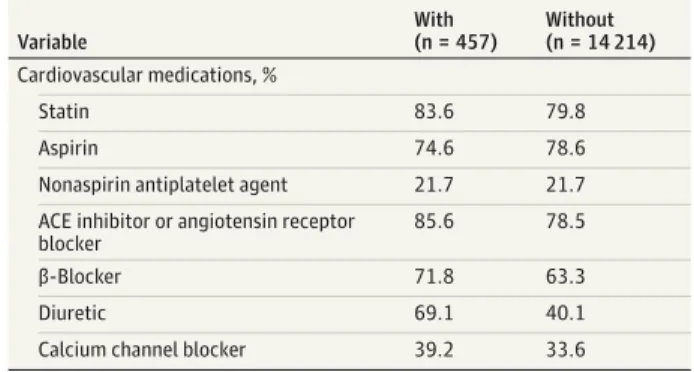
The study setting was 673 sites in 38 countries. Of 14 671 pa-tients in the intent-to-treat population randomized between December 16, 2008, and July 31, 2012, a total of 7332 were as-signed to sitagliptin and 7339 to placebo. Among the 2643 pa-tients (18.0%) with previous HF at trial entry, 1303 were as-signed to sitagliptin and 1340 to placebo. During a median follow-up surveillance for fatal plus nonfatal outcomes of 2.9 years (interquartile range, 1.4-5.7 years), 95.1% of sitagliptin-assigned and 94.1% of placebo-sitagliptin-assigned patients completed the study, with 26.1% and 27.5%, respectively, discontinuing study medication prematurely. End-of-study vital status was obtained on 97.5% of patients. Overall, 457 patients (3.1%) had at least 1 hHF event, with baseline characteristics stratified by those with vs without hHF events listed inTable 1. Baseline data for the subset of patients with previous HF, stratified by randomized treatment assignment, are listed in eTable 1 in the Supplement. There was no difference between the random-ized treatment groups in blood pressure, heart rate, or weight throughout the trial (eFigure 1 in theSupplement).
HF-Related Outcomes
The HF-related outcomes by randomized treatment group are summarized inTable 2andFigure 1. The rate of a first hHF did not differ between the groups, occurring in 228 patients (3.1%) in the sitagliptin group and 229 patients (3.1%) in the placebo group, with an unadjusted hazard ratio (HR) of 1.00 (95% CI, 0.83-1.19) (Table 2 and Figure 1A). The HR was unchanged with adjustment for region of enrollment and baseline HF (HR, 1.00; 95% CI, 0.83-1.20) and in fully adjusted analyses (HR, 1.02; 95% CI, 0.83-1.26). There was also no difference between sita-gliptin vs placebo for the composite outcomes of hHF or CV death (538 vs 525 events; HR, 1.02, 95% CI, 0.90-1.14) (Figure 1B) or hHF or all-cause death (685 vs 682 events; HR, 1.00; 95% CI, 0.90-1.11) (Figure 1C).
Death during or after hHF did not differ by randomized group (Table 2), with CV death occurring in 51 of 228 sita-gliptin patients (22.4%) and 53 of 229 placebo patients (23.1%). All-cause death occurred in 68 of 228 sitagliptin patients (29.8%) and 66 of 229 placebo patients (28.8%).
As shown inFigure 2, the rate of hHF varied substantially across subgroups defined by baseline characteristics but with no heterogeneity of effect for sitagliptin vs placebo on hHF (P> .10 for all interactions). Similar data for subgroup analy-ses by randomized assignment for the composite outcome of hHF or CV death are shown in eFigure 2 in theSupplement, likewise with no evidence of heterogeneity of effect (P> .05 for all interactions).
For comparison across the 3 reported DPP4i CV out-comes trials, baseline characteristics of the SAVOR-TIMI 53, EXAMINE, and TECOS study populations are listed in eTable 2 in theSupplement, demonstrating substantial similarity. The pooled estimate for the effect of a DPP4i vs placebo on hHF in these 3 large CV outcomes trials (Figure 3A) showed a numeri-cally increased HR of 1.14 (95% CI, 0.97-1.34), with moderate heterogeneity (P= .16,I2= 44.9). The pooled estimate for the
hHF or CV death composite (Figure 3B) showed no significant difference between the DPP4i and placebo groups (HR, 1.06; 95% CI, 0.98-1.15), with minimal heterogeneity (P= .36,
I2= 1.29).
Discussion
In patients with T2DM and prevalent atherosclerotic vascular disease participating in the TECOS global, randomized CV out-comes trial, sitagliptin compared with placebo did not affect the risk for hHF or for the composite hHF or CV death or hHF or all-cause death outcomes. There was also no increased risk of HF observed in any subgroup analyzed, including those at high-est risk for hHF, such as patients with previous HF, kidney dys-function, concomitant insulin use, and highest A1clevel, as well as the elderly.
Table 1. Baseline Characteristics of Patients in the TECOS Intent-to-Treat Population, Stratified by Those With vs Without First Hospitalization for Heart Failure During the Trial
Variable
With (n = 457)
Without (n = 14 214)
Age, mean (SD), y 68.5 (7.6) 65.4 (8.0)
Female sex, % 25.2 29.4
Race/ethnicity, %
White 76.6 67.6
Black 6.8 2.9
Asian 11.4 22.6
Other 5.3 6.9
Not Hispanic or Latino 91.5 87.6
Hispanic or Latino 8.5 12.4
Region, %
North America 28.7 17.3
Latin America 5.9 10.2
Western Europe 13.8 14.2
Eastern Europe 26.3 27.1
Asia Pacific or other 25.4 31.3
Diabetes duration, mean (SD), y 12.3 (8.7) 11.6 (8.1)
Glycated hemoglobin, mean (SD), % 7.3 (0.5) 7.2 (0.5)
Glycated hemoglobin category, %
<7% 35.2 33.9
≥7 to <7.5% 27.1 30.8
≥7.5% 37.6 35.2
eGFR, mean (SD), mL/min/1.73 m2 66.5 (20.9) 75.2 (21.1)
Prior vascular disease, %
Coronary artery disease 85.3 73.7
Myocardial infarction 58.2 42.1
Cerebrovascular 29.1 24.3
Peripheral artery 17.3 16.6
Prior heart failure, % 41.8 17.3
Baseline heart failure severity among those with prior heart failure, %
NYHA class I 18.8 20.4
NYHA class II 39.3 50.4
NYHA class III 16.8 13.4
NYHA class IV 1.6 0.4
NYHA class not reported 23.6 15.4
Blood pressure, mean (SD), mm Hg
Systolic 134.0 (19.4) 135.1 (16.9)
Diastolic 74.4 (11.2) 77.3 (10.4)
Weight, mean (SD), kg 89.6 (20.4) 84.9 (18.9)
Body mass index, mean (SD)a 31.4 (6.3) 30.2 (5.6)
Cigarette smoking, %
Current 11.4 11.4
Former 47.9 39.6
Never 40.7 49.0
Antihyperglycemic therapies, %
Metformin 72.2 81.9
Sulfonylurea 46.2 45.3
Thiazolidinedione 2.8 2.7
Insulin 32.4 22.9
(continued)
Table 1. Baseline Characteristics of Patients in the TECOS Intent-to-Treat Population, Stratified by Those With vs Without First Hospitalization for Heart Failure During the Trial (continued)
Variable
With (n = 457)
Without (n = 14 214)
Cardiovascular medications, %
Statin 83.6 79.8
Aspirin 74.6 78.6
Nonaspirin antiplatelet agent 21.7 21.7
ACE inhibitor or angiotensin receptor blocker
85.6 78.5
β-Blocker 71.8 63.3
Diuretic 69.1 40.1
Calcium channel blocker 39.2 33.6
Abbreviations: ACE, angiotensin-converting enzyme; eGFR, estimated glomerular filtration rate; NYHA, New York Heart Association; TECOS, Trial Evaluating Cardiovascular Outcomes With Sitagliptin.
a
The TECOS findings do not confirm the signals for in-creased risk of hHF observed in 2 previous large DPP4i trials. The SAVOR-TIMI 53 trial10assessed the effects of saxagliptin vs placebo on hHF in patients with T2DM, and a history or risk of CV events showed an unexpected 27% increased risk for hHF (HR, 1.27; 95% CI, 1.07-1.51) associated with saxagliptin use. The EXAMINE trial11of alogliptin vs placebo in patients with T2DM and a recent acute coronary syndrome event showed a nonsignificant numerical increase of hHF associated with alogliptin use (HR, 1.19; 95% CI, 0.90-1.58). Previous meta-analyses12,13of DPP4i agents, including saxagliptin, alo-gliptin, linaalo-gliptin, vildaalo-gliptin, and sitaalo-gliptin, have shown statistically significant increased pooled estimates of DPP4i-associated risks for hHF of 24% to 25%. In contrast, meta-analysis herein limited to the TECOS findings and those from the SAVOR-TIMI 53 and EXAMINE trials showed a nonsignifi-cant 14% increase. This meta-analysis is not intended to be a comprehensive systematic review of all DPP4i effects on hHF. Rather, the objectives are to capitalize on the commonality of these trial designs (using placebo controls and targeting gly-cemic equipoise between the groups) and the similarities of the patient populations enrolled (with prospective capture and central adjudication of hHF events using virtually iden-tical processes and outcome definitions) and to place the present results into the context of a similar meta-analysis10 of the SAVOR-TIMI 53 and EXAMINE trial outcomes previ-ously published. Given the moderate heterogeneity in this
analysis, important differences across the DPP4i class can-not be excluded.
It is unclear why unexpected signals for increased hHF risk were seen with saxagliptin, as well as a similar adverse trend observed with alogliptin, compared with the neutral effect of sitagliptin in TECOS. Differences in the trial populations are unlikely to explain the discordant hHF outcomes. The TECOS population had well-managed CV and glycemic risk factors at entry and was broadly similar to those studied in the EXAMINE and SAVOR-TIMI 53 trials with regard to baseline characteristics and the use of background antihyperglycemic and CV medications (eTable 2 in theSupplement).14,17-19The annualized hHF rates observed across these trials were low and comparable (1.1%, 1.3%, and 2.3% in TECOS, SAVOR-TIMI 53, and EXAMINE, respectively). TECOS and SAVOR-TIMI 53 both enrolled patients with previous atherosclerotic vascular dis-ease, although 21% (n = 3533) of the trial cohort in SAVOR-TIMI 53 had multiple CV risk factors only. The EXAMINE trial enrolled patients at higher CV risk after recent acute coro-nary syndrome events, as evidenced by their numerically higher annualized hHF. Previous CV disease was an indepen-dent predictor for hHF in the SAVOR-TIMI 53 trial,10but no heterogeneity was seen for the effect of saxagliptin on hHF risk when analyses were stratified by prevalent CV disease.
In TECOS, 2643 patients (18.0%) had prior HF compared with 2105 patients (12.8%) in the SAVOR-TIMI 53 trial and 1533 patients (28.9%) in the EXAMINE trial. In all 3 trials, patients
Table 2. Heart Failure–Related Outcomes for Sitagliptin vs Placebo in the TECOS Intent-to-Treat Population and in the Subset of Patients With Prior Heart Failure at Baseline
Variable
No./Total No. (%)
HR (95% CI) PValue Sitagliptin
(n = 7332)
Placebo (n = 7339)
Overall Intent-to-Treat Population
First hospitalization for heart failure (unadjusted)
228 (3.1) 229 (3.1) 1.00 (0.83-1.19) .95
Adjusted for region and prior heart failure at baseline
NA NA 1.00 (0.83-1.20) .98
Multivariable adjusteda NA NA 1.02 (0.83-1.26) .82
Composite of hospitalization for heart failure or cardiovascular death (unadjusted)
538 (7.3) 525 (7.2) 1.02 (0.90-1.14) .81
Adjusted for region and prior heart failure at baseline
NA NA 1.02 (0.90-1.15) .74
Composite of hospitalization for heart failure or all-cause death (unadjusted)
685 (9.3) 682 (9.3) 1.00 (0.90-1.11) .93
Total hospitalization for heart failure events
(first plus recurrent) (unadjusted)b 345 347 1.00 (0.80-1.25) >.99
Patients with 2 events 37 44 NA NA
Patients with ≥3 events 26 25 NA NA
Death during or after first hospitalization for heart failure (unadjusted)
Cardiovascular death 51/228 (22.4) 53/229 (23.1) NA NA
All-cause death 68/228 (29.8) 66/229 (28.8) NA NA
Subset of Patients With Prior Heart Failure at Baseline
First hospitalization for heart failure (unadjusted)
97/1303 (7.4) 94/1340 (7.0) 1.03 (0.77-1.36) .86
Cardiovascular death (unadjusted) 120/1303 (9.2) 133/1340 (9.9) 0.91 (0.71-1.17) .46
Composite of hospitalization for heart failure or cardiovascular death (unadjusted)
183/1303 (14.0) 191/1340 (14.3) 0.96 (0.79-1.18) .71
All-cause death 166/1303 (12.7) 182/1340 (13.6) 0.92 (0.75-1.14) .46
Abbreviations: eGFR, estimated glomerular filtration rate; HR, hazard ratio; NA, not applicable; TECOS, Trial Evaluating Cardiovascular Outcomes With Sitagliptin.
aAdjusted for ethnicity, race, prior
myocardial infarction, coronary stenosis exceeding 50%, prior coronary artery bypass graft surgery, prior peripheral arterial disease, prior heart failure, cigarette smoking, diuretic use, age, body mass index, systolic blood pressure, diastolic blood pressure, eGFR, glycated hemoglobin, high-density lipoprotein cholesterol, and triglycerides and stratified by region.
bAnalyzed using the method of
with prior HF were at increased risk for hHF but with no evi-dence for heterogeneity of the DPP4i effect by prior HF in any of the trials,10,11making it unlikely that different proportions of patients with prior HF across the 3 trials account for the
dis-cordant hHF findings. The SAVOR-TIMI 53 and EXAMINE trials allowed higher A1clevels at trial entry (up to 12% and 11%, re-spectively) in contrast to the TECOS upper limit of 8%. How-ever, in both TECOS and SAVOR-TIMI 53, there was no
asso-Figure 1. Kaplan-Meier Plots
12.5
10.0
7.5
5.0
2.5 5
4
3
2
1
10
8
6
4
2 0
0 42 48
% of Patients With an E
v
ent
Time in the Trial, mo
4 8 12 18 24 30 36
First hospitalization for heart failure A
No. at risk
7189 7204
7036 7025
6917 6903
6780 6712
6619 6549
4728 4599
3515 3443
2175 2131
1324 1315 7332
7339 Sitagliptin Placebo
Sitagliptin Placebo
0
0 42 48
% of Patients With an E
v
ent
Time in the Trial, mo
4 8 12 18 24 30 36
Composite of hospitalization for heart failure or cardiovascular death B
No. at risk
7178 7190
7024 7003
6895 6882
6755 6684
6593 6517
4707 4579
3501 3425
2165 2117
1320 1307 7332
7339 Sitagliptin Placebo
0
0 42 48
% of Patients With an E
v
ent
Time in the Trial, mo
4 8 12 18 24 30 36
Composite of hospitalization for heart failure or all-cause death C
No. at risk
7178 7191
7025 7006
6895 6885
6755 6686
6593 6519
4707 4581
3502 3425
2165 2117
1320 1307 7332
7339 Sitagliptin
Placebo Treatment with sitagliptin is
Figure 2. Stratified Analyses for Sitagliptin vs Placebo on First Hospitalization for Heart Failure for Prespecified and Post Hoc or Exploratory Subgroups
0 0.5 1.0 1.5 2.0 2.5 3.0 3.5 4.0
Subgroup
Sitagliptin No./Total No.
Placebo
No./Total No. HR (95% CI)
Favors Placebo Favors Sitagliptin
P Value for Interaction Overall Age ≤Median >Median Sexa Male Female Region Latin American Asia Pacific and other Western Europe Eastern Europe North America Racea White Black Asian Other Ethnicitya Hispanic or Latino Not Hispanic or Latino
Diabetes durationa ≤Median >Median
Prior congestive heart failure Yes
No
Baseline heart failure severity NYHA class I
NYHA class ≥II NYHA class not reported None
Prior myocardial infarction Yes
No
Prior coronary artery disease Yes
No
Prior hypertensiona Yes
No
Body mass indexa ≤Median >Median <30 ≥30
Systolic blood pressure, mm Hg <140
≥140 to <160 ≥160 Glycated hemoglobin
≤Median >Median Renal function
<60 eGFR, mL/min/1.73 m2 ≥60 eGFR, mL/min/1.73 m2
≥30 to ≤60 eGFR, mL/min/1.73 m2 a ≥60 to <90 eGFR, mL/min/1.73 m2 a ≥90eGFR, mL/min/1.73 m2 a Insulin Yes No Thiazolidinedione Yes No ACE inhibitor Yes No
Angiotensin receptor blocker Yes No β-Blocker Yes No Diuretic Thiazide Other None 228/7332 76/3676 148/3498 171/5198 57/2134 11/744 62/2313 27/1051 63/1980 65/1244 181/4955 12/206 25/1654 10/517 18/886 210/6446 119/3813 107/3514 97/1303 131/6029 20/285 48/809 29/209 131/6029 125/3133 103/4199 191/5397 37/1935 204/6344 24/988 99/3668 126/3596 107/3907 118/3357 143/4386 63/2283 22/640 117/3776 110/3549 91/1667 134/5587 91/1666 109/3943 25/1644 68/1724 160/5608 7/196 221/7136 147/3932 81/3400 54/2052 174/5280 158/4647 70/2685 60/1682 104/1294 64/4356 229/7339 74/3640 153/3537 171/5176 58/2163 16/727 54/2252 36/1025 57/1985 66/1350 169/5002 19/241 27/1611 14/485 21/912 208/6427 108/3895 121/3437 94/1340 135/5999 16/250 62/876 16/214 135/5999 141/3122 88/4217 199/5466 30/1873 203/6304 26/1035 90/3597 133/3673 95/3828 128/3442 133/4429 71/2228 24/663 119/3830 110/3501 84/1657 142/5617 84/1655 105/3936 37/1681 80/1684 149/5655 6/200 223/7139 141/3932 88/3407 70/2120 159/5219 170/4675 59/2664 57/1782 95/1262 77/4295 1.00 1.00 0.98 0.99 0.99 0.67 1.11 0.71 1.11 1.04 1.07 0.68 0.89 0.68 0.90 1.00 1.11 0.87 1.05 0.96 1.08 0.82 1.94 0.96 0.87 1.18 0.97 1.19 1.00 0.94 1.08 0.96 1.10 0.94 1.08 0.86 0.93 0.98 1.00 1.07 0.95 1.07 1.02 0.70 0.82 1.08 1.09 0.99 1.04 0.92 0.80 1.08 0.93 1.17 1.12 1.05 0.81 (0.83-1.20) (0.73-1.38) (0.79-1.23) (0.80-1.23) (0.69-1.43) (0.31-1.44) (0.77-1.59) (0.43-1.17) (0.77-1.58) (0.74-1.47) (0.87-1.33) (0.33-1.41) (0.52-1.53) (0.30-1.54) (0.48-1.69) (0.83-1.21) (0.86-1.44) (0.67-1.13) (0.79-1.39) (0.76-1.23) (0.56-2.09) (0.56-1.19) (1.05-3.57) (0.76-1.23) (0.69-1.11) (0.89-1.57) (0.79-1.18) (0.73-1.92) (0.82-1.21) (0.54-1.64) (0.81-1.43) (0.75-1.23) (0.84-1.45) (0.73-1.21) (0.86-1.37) (0.62-1.21) (0.52-1.65) (0.76-1.27) (0.76-1.30) (0.80-1.44) (0.75-1.20) (0.80-1.44) (0.78-1.34) (0.42-1.17) (0.59-1.13) (0.87-1.35) (0.37-3.24) (0.82-1.19) (0.82-1.31) (0.68-1.24) (0.56-1.14) (0.87-1.33) (0.75-1.16) (0.83-1.66) (0.78-1.61) (0.79-1.38) (0.58-1.13) .92 .99 .48 .47 .75 .19 .67 .12 .12 .45 .85 .55 .40 .54 .95 .52 .36 .16 .87 .53 .16 .27 .38
Body mass index is calculated as weight in kilograms divided by height in meters squared. ACE indicates angiotensin-converting enzyme; eGFR, estimated glomerular filtration rate; HR, hazard ratio; and NYHA, New York Heart Association.
a
ciation between baseline A1clevel and hHF risk, nor was there heterogeneity of the effect of study drug on hHF events by baseline A1clevel in either trial.
Differences in trial duration might influence detection of a risk signal for hHF, with TECOS having the longest duration of the DPP4i trials reported to date. The median follow-up pe-riods for death were 3.0 years in TECOS, 1.9 years in SAVOR-TIMI 53, and 1.5 years in EXAMINE. In this regard, it is no-table that in the SAVOR-TIMI 53 trial the greatest incremental risk for hHF was observed early in the trial. Saxagliptin vs pla-cebo showed hHF HRs of 1.80 (95% CI, 1.29-2.55) at 6 months and 1.46 (95% CI, 1.15-1.88) at 12 months, declining to 1.27 (95% CI, 1.07-1.51) at trial end, with significant heterogeneity of the effect size by time (P= .02 for interaction). No such time-varying heterogeneity was observed with the sitagliptin ef-fects on hHF in TECOS.
There was uniform prospective ascertainment and cen-tral adjudication of hHF throughout the TECOS using the same definition as the SAVOR-TIMI 53 and EXAMINE trials,10,11 ex-cluding another possible cause of the discordant hHF find-ings. While many of the hHF-related analyses in the SAVOR-TIMI 53 and EXAMINE trials were post hoc, each of the 3 trials identified hHF as a prespecified secondary analysis. Unex-pected SAVOR-TIMI 53 and EXAMINE hHF findings reported during the conduct of TECOS led to the development of a for-mal HF statistical analysis plan before trial completion and un-masking. While this a priori planning yields some incremen-tal statistical conservatism, our analysis methods largely parallel and extend those reported from the SAVOR-TIMI 53 and EXAMINE trials. Accordingly, statistical limitations are un-likely to account for the discordance in hHF findings.
To date, there has been no clear explanation as to the mechanisms by which some DPP4i agents might increase HF risk. It is possible that DPP4i pharmacological differences could account for the differential hHF risks, which was evident for example with the thiazolidinediones, for which a meta-analysis6demonstrated within-class qualitative differ-ences for HF risk. Most important for the thiazolidinediones, other markers of HF are also affected, including higher rates of peripheral edema, weight gain, and increased circulating brain natriuretic peptide (BNP),5,20while no such associa-tions have been reported for the DPP4i class. In the SAVOR-TIMI 53 trial, N-terminal pro-BNP increased slightly in both randomized groups, with a slightly greater mean increase in the placebo group compared with the saxagliptin group.10 In the EXAMINE trial, BNP declined slightly in both ran-domized groups, with no difference between alogliptin and placebo.11Natriuretic peptide assessments are not presently available from TECOS. Sitagliptin use was not associated with increased weight in TECOS (eFigure 1D in the Supple-ment), with similar neutral weight effects of saxagliptin and alogliptin in the SAVOR-TIMI 53 and EXAMINE trials, respectively.10,17However, given the absence of adverse DPP4i effects on weight in these 3 trials and on natriuretic peptides in SAVOR-TIMI 53 and EXAMINE, the interpreta-tion of these observainterpreta-tions is limited.
It remains possible that the increased hHF observed in the SAVOR-TIMI 53 trial and the numerical imbalance in hHF found
in the EXAMINE trial are due to chance, with analyses largely post hoc and not adjusted for multiplicity of comparisons or controlled for type I error. However, this possibility remains an unlikely explanation for the discordant observations be-tween the trials. Despite the uncertain statistical validity in-herent in post hoc analyses, the validity of the observation in the SAVOR-TIMI 53 trial is supported by the large number of hHF events (n = 517) (yielding robust statistical power), the prospective collection and adjudication of hHF events, and the time-dependent increase in hHF emerging soon after study drug initiation. This validity is supported, although not proved, by previously published meta-analyses12,13of data from these trials and others evaluating the effect of DPP4i agents on HF risk.
The present results have certain limitations. TECOS in-cluded patients with well-controlled glucose levels and ex-cluded patients with severe kidney dysfunction. Therefore, the present observations may not apply to patients with such ex-clusion criteria. However, no increased risk was observed with sitagliptin use among those with baseline mild or moderate kidney impairment. Although designed to achieve balance in glycemic control between the groups, there was a mean 0.3% lower A1clevel in the sitagliptin group over the trial duration, which could confound the direct drug effects with the glyce-mic effects on the outcomes assessed. Limited clinical detail is available for the hHF events, with no imaging information available on cardiac structure and function, and other objec-tive measures of HF, such as measurement of circulating na-triuretic peptides, were not captured. The trial duration was longer than most trials assessing antihyperglycemic medica-tions reported to date, with a follow-up period of up to 5 years, but the longer-term CV safety and efficacy of sitagliptin
Figure 3. Meta-Analysis of SAVOR-TIMI 53, EXAMINE, and TECOS
0 1 2
HR First hospitalization for heart failure
A
HR (95% CI) P Value
Favors DPP4i FavorsPlacebo
SAVOR-TIMI 53 1.27 (1.07-1.51) .007
EXAMINE 1.19 (0.89-1.59) .24
TECOS 1.00 (0.84-1.20) >.99
SAVOR-TIMI 53 plus EXAMINE plus TECOS (P = .16, I2 = 44.9)
1.14 (0.97-1.34) .10
0 1 2
HR Composite of hospitalization for heart failure or cardiovascular death B
HR (95% CI) P Value
Favors DPP4i FavorsPlacebo
SAVOR-TIMI 53 1.14 (1.00-1.30) .05
EXAMINE 1.00 (0.82-1.22) >.99
TECOS 1.02 (0.90-1.14) .81
SAVOR-TIMI 53 plus EXAMINE plus TECOS (P = .36, I2 = 1.29)
1.06 (0.98-1.15) .18
cannot be assessed. Exploratory analyses planned in the supplemental HF statistical analysis plan were additional to those planned at the start of the trial and not analyzed under strict hierarchical statistical testing planned for key end points associated with hypotheses. Limitations of the meta-analysis include overall low hHF event rates (despite the large sample sizes of the trials), limited participation in each of the trials of patients with prior HF (13%-28% across the trials), and a short median follow-up duration for each of the trials (range, 1.5-3 years), precluding the ability to assess longer-term effects. In addition, although hHF events were prospectively captured and centrally adjudicated using similar processes and com-mon definitions across each of the 3 trials, all of the hHF results reported derive from post hoc, exploratory analyses.
Therefore, the findings should be interpreted carefully be-cause these analyses were not adjusted for multiplicity.
Conclusions
The results of the present analyses demonstrate that sitagliptin use did not affect the risk for hHF or related adverse clinical outcomes, overall or across selected subgroups of interest. In the context of the primary findings from TECOS that dem-onstrated noninferiority of the effects of sitagliptin vs pla-cebo on major atherosclerotic adverse CV events, the present results provide further support that sitagliptin may be safely used in a population of patients with T2DM at high CV risk.
ARTICLE INFORMATION
Accepted for Publication:January 22, 2016.
Published Online:April 13, 2016. doi:10.1001/jamacardio.2016.0103.
Author Affiliations:Division of Cardiology, Department of Medicine, University of Texas Southwestern Medical Center, Dallas (McGuire); Department of Cardiovascular Sciences, University of Leuven, Leuven, Belgium (Van de Werf); Canadian Virtual Coordinating Centre for Global Collaborative Cardiovascular Research (VIGOUR) Centre, Department of Medicine (Cardiology), University of Alberta, Edmonton (Armstrong); Munich Diabetes Research Group e.V. at Helmholtz Centre, Neuherberg, Germany (Standl); Global Clinical Development, Merck Research Laboratories, Merck & Co, Inc, Kenilworth, New Jersey (Koglin); Division of Endocrinology, Department of Medicine, Duke Clinical Research Institute, Duke University School of Medicine, Durham, North Carolina (Green); Diabetes Trials Unit, Oxford Centre for Diabetes, Endocrinology and Metabolism, University of Oxford, Oxford, England (Bethel, Holman); Department of Cardiology, Medisch Centrum Alkmaar, Alkmaar, the Netherlands (Cornel); Division of Cardiology, Department of Medicine, Duke Clinical Research Institute, Duke University School of Medicine, Durham, North Carolina (Lopes, Peterson); Department of Cardiology, Oslo University Hospital Ulleval and University of Oslo, Oslo, Norway (Halvorsen); Division of Cardiology, University of Perugia School of Medicine, Perugia, Italy (Ambrosio); Division of Endocrinology, Department of Medicine, University of North Carolina School of Medicine at Chapel Hill (Buse); Division of Endocrinology and Metabolism, St Michael’s Hospital, Li Ka Shing Knowledge Institute, University of Toronto, Toronto, Ontario, Canada (Josse); The Biostatistics Center, George Washington University Biostatistics Center, Rockville, Maryland (Lachin); Department of Biostatistics and Bioinformatics, Duke Clinical Research Institute, Duke University School of Medicine, Durham, North Carolina (Pencina, Lokhnygina); Department of Clinical Trials Statistics, Duke Clinical Research Institute, Duke University School of Medicine, Durham, North Carolina (Garg).
Author Contributions:Dr McGuire had full access to all data in the study and takes responsibility for the integrity of the data and the accuracy of the data analysis.
Study concept and design:McGuire, Van de Werf, Armstrong, Standl, Green, Bethel, Cornel, Lopes, Buse, Lachin, Holman, Peterson.
Acquisition, analysis, or interpretation of data: McGuire, Van de Werf, Armstrong, Standl, Koglin, Green, Bethel, Cornel, Lopes, Halvorsen, Ambrosio, Buse, Josse, Lachin, Pencina, Garg, Lokhnygina, Holman.
Drafting of the manuscript:McGuire, Armstrong, Standl.
Critical revision of the manuscript for important intellectual content:McGuire, Van de Werf, Standl, Koglin, Green, Bethel, Cornel, Lopes, Halvorsen, Ambrosio, Buse, Josse, Lachin, Pencina, Garg, Lokhnygina, Holman, Peterson.
Statistical analysis:Armstrong, Standl, Lachin, Pencina, Garg, Lokhnygina, Peterson. Obtained funding:Koglin, Holman. Administrative, technical, or material support: Standl, Green, Bethel.
Study supervision:Van de Werf, Armstrong, Cornel, Halvorsen, Ambrosio, Holman, Peterson.
Conflict of Interest Disclosures:All authors have completed and submitted the ICMJE Form for Disclosure of Potential Conflicts of Interest. Dr McGuire reported receiving personal fees from Boehringer Ingelheim, Janssen Research and Development LLC, Sanofi US Services Inc, Genentech Inc, Merck Sharp & Dohme Corp, Daiichi Sankyo Inc, Lilly USA, Novo Nordisk,
GlaxoSmithKline, Takeda Pharmaceuticals North America, Bristol-Myers Squibb, AstraZeneca, Orexigen, Lexicon, Eisai, Regeneron, Janssen, Boehringer Ingelheim, Merck, Pfizer, and Genfit; reported receiving personal fees from the University of Oxford, Duke Clinical Research Institute, Partners Healthcare, and Cleveland Clinic Foundation; and reported receiving nonfinancial support from Gilead Sciences. Dr Van de Werf reported receiving personal fees from Merck. Dr Armstrong reported receiving grants, personal fees, and nonfinancial support from Merck and reported receiving grants from AstraZeneca. Dr Standl reported receiving personal fees from the Oxford Diabetes Trials Unit, AstraZeneca, Bayer, Boehringer Ingelheim, Merck Serono, EXCEMED, Novartis, and Sanofi. Dr Koglin reported being an employee of Merck Sharp & Dohme Corp, a subsidiary of Merck & Co, Inc. Dr Green reported receiving grants from Merck Sharp & Dohme Corp, AstraZeneca, and GlaxoSmithKline; reported receiving grants and personal fees from Merck Sharp & Dohme Corp; reported receiving other
support from Boehringer Ingelheim; and reported receiving personal fees from Bioscientifica and the Endocrine Society. Dr Bethel reported receiving grants, personal fees, and other support from Merck Sharp & Dohme Corp; reported receiving other support from Boehringer Ingelheim, Novo Nordisk, and GlaxoSmithKline; and reported receiving nonfinancial support from Bayer. Dr Cornel reported receiving personal fees from Merck and Eli Lilly. Dr Lopes reported receiving consulting fees and research grants from Bristol-Myers Squibb; reported receiving research grants from
GlaxoSmithKline, and Bayer HealthCare AG. Dr Holman reported receiving grants and personal fees from Merck; reported receiving grants from Bayer, AstraZeneca, and Bristol-Myers Squibb; reported receiving personal fees from Amgen, Bayer, Intarcia, Novartis, Novo Nordisk, and Owen Mumford Ltd; and reported receiving other support from GlaxoSmithKline, Janssen, and Takeda. Dr Peterson reported receiving grants and personal fees from Janssen; reported receiving grants from Eli Lilly; and reported receiving personal fees from AstraZeneca, Bayer, and Sanofi. No other disclosures were reported.
Funding/Support:The Trial Evaluating Cardiovascular Outcomes With Sitagliptin (TECOS) was funded by Merck Sharp & Dohme Corp, a subsidiary of Merck & Co, Inc.
Role of the Funder/Sponsor:Merck Sharp & Dohme Corp had no role in the analyses of the data or in writing the first draft of the report. The authors are solely responsible for the design and conduct of the study; collection, management, analysis, and interpretation of the data; drafting and editing of the manuscript; and its final contents. Merck Sharp & Dohme Corp reviewed and commented on the final draft.
Group Information:The Trial Evaluating Cardiovascular Outcomes With Sitagliptin (TECOS) executive committee members were Paul W. Armstrong, MD, John B. Buse, MD, Samuel S. Engel, MD, Jyotsna Garg, MS, Robert G. Josse, MBBS, Keith D. Kaufman, MD, Joerg Koglin, MD, Scott H. Korn, MD, John M. Lachin, ScD, Darren K. McGuire, MD, MHSc, Michael J. Pencina, PhD, Eberhard Standl, MD, PhD, Peter P. Stein, MD, Shailaja Suryawanshi, PhD, Frans Van de Werf, MD, PhD, Eric D. Peterson, MD, MPH, and Rury R. Holman, MBChB.
Additional Contributions:We thank the patients, without whom this study and these analyses would not have been possible, and the following academic partners and contract research organizations for their assistance with the Trial Evaluating Cardiovascular Outcomes With Sitagliptin (TECOS): Parexel International, Jubilant Clinsys Limited, Clinogent, Canadian VIGOUR Centre, Green Lane Coordinating Centre, and South Australian Health and Medical Research Institute. Robert Califf served as joint chair of the TECOS until taking up the post of deputy commissioner of the US Food and Drug Administration on March 1, 2015.
REFERENCES
1. Gore MO, McGuire DK. Cardiovascular disease and type 2 diabetes mellitus: regulating glucose and regulating drugs.Curr Cardiol Rep. 2009;11(4):258-263.
2. McMurray JJ, Gerstein HC, Holman RR, Pfeffer MA. Heart failure: a cardiovascular outcome in diabetes that can no longer be ignored.Lancet Diabetes Endocrinol. 2014;2(10):843-851. 3. Holman RR. Cardiovascular endocrinology: first-time heart failure increases risk of diabetes mellitus.Nat Rev Endocrinol. 2014;10(8):453-454. 4. Cavender MA, Steg PG, Smith SC Jr, et al; REACH Registry Investigators. Impact of diabetes mellitus on hospitalization for heart failure, cardiovascular events, and death: outcomes at 4 years from the Reduction of Atherothrombosis for Continued Health (REACH) registry.Circulation. 2015;132(10): 923-931.
5. McGuire DK, Inzucchi SE. New drugs for the treatment of diabetes mellitus, part I:
thiazolidinediones and their evolving cardiovascular implications.Circulation. 2008;117(3):440-449. 6. Lago RM, Singh PP, Nesto RW. Congestive heart failure and cardiovascular death in patients with prediabetes and type 2 diabetes given
thiazolidinediones: a meta-analysis of randomised clinical trials.Lancet. 2007;370(9593):1129-1136. 7. Nissen SE, Wolski K, Topol EJ. Effect of muraglitazar on death and major adverse cardiovascular events in patients with type 2 diabetes mellitus.JAMA. 2005;294(20):2581-2586. 8. Lincoff AM, Tardif JC, Schwartz GG, et al; AleCardio Investigators. Effect of aleglitazar on cardiovascular outcomes after acute coronary syndrome in patients with type 2 diabetes mellitus: the AleCardio randomized clinical trial.JAMA. 2014; 311(15):1515-1525.
9. Standl E, Schnell O. DPP-4 inhibitors and risk of heart failure EXAMINEd.Lancet. 2015;385(9982): 2022-2024.
10. Scirica BM, Braunwald E, Raz I, et al; SAVOR-TIMI 53 Steering Committee and Investigators. Heart failure, saxagliptin, and diabetes mellitus: observations from the SAVOR-TIMI 53 randomized trial [published correction appears inCirculation.
2015;132(15):e198].Circulation. 2014;130(18):1579-1588.
11. Zannad F, Cannon CP, Cushman WC, et al; EXAMINE Investigators. Heart failure and mortality outcomes in patients with type 2 diabetes taking alogliptin versus placebo in EXAMINE:
a multicentre, randomised, double-blind trial.Lancet. 2015;385(9982):2067-2076.
12. Clifton P. Do dipeptidyl peptidase IV (DPP-IV) inhibitors cause heart failure?Clin Ther. 2014;36 (12):2072-2079.
13. Udell JA, Cavender MA, Bhatt DL, Chatterjee S, Farkouh ME, Scirica BM. Glucose-lowering drugs or strategies and cardiovascular outcomes in patients with or at risk for type 2 diabetes: a meta-analysis of randomised controlled trials.Lancet Diabetes Endocrinol. 2015;3(5):356-366.
14. Green JB, Bethel MA, Armstrong PW, et al; TECOS Study Group. Effect of sitagliptin on cardiovascular outcomes in type 2 diabetes.N Engl J Med. 2015;373(3):232-242.
15. Green JB, Bethel MA, Paul SK, et al. Rationale, design, and organization of a randomized, controlled Trial Evaluating Cardiovascular Outcomes With Sitagliptin (TECOS) in patients with type 2 diabetes and established cardiovascular disease.Am Heart J. 2013;166(6):983-989.e7. doi: 10.1016/j.ahj.2013.09.003.
16. Andersen PK, Gill RD. Cox’s regression model for counting processes: a large sample study.Ann Stat. 1982;10(4):1100-1120.
17. White WB, Cannon CP, Heller SR, et al; EXAMINE Investigators. Alogliptin after acute coronary syndrome in patients with type 2 diabetes.N Engl J Med. 2013;369(14):1327-1335. 18. Scirica BM, Bhatt DL, Braunwald E, et al; SAVOR-TIMI 53 Steering Committee and Investigators. Saxagliptin and cardiovascular outcomes in patients with type 2 diabetes mellitus.
N Engl J Med. 2013;369(14):1317-1326. 19. Bethel MA, Green JB, Milton J, et al; TECOS Executive Committee. Regional, age and sex differences in baseline characteristics of patients enrolled in the Trial Evaluating Cardiovascular Outcomes With Sitagliptin (TECOS).Diabetes Obes Metab. 2015;17(4):395-402.