MEASURING COUNTRY OWNERSHIP AND ITS RELATIONSHIP TO HEALTH OUTCOMES: THE CASE OF LIBERIA
Stephanie Watson-Grant
A dissertation submitted the faculty at the University of North Carolina at Chapel Hill in partial fulfilment of the requirements of the degree of Doctor of Public Health in the Department of
Health Policy and Management in School of Public Health.
Chapel Hill 2013
Approved by: Sandra B. Greene
Edward Brooks
Sîan Curtis James C. Thomas
ii © 2013
iii ABSTRACT
Stephanie Watson-Grant: Measuring Country Ownership and its relationship to Health Outcomes: The case of Liberia
(Under the direction of Sandra B. Greene)
The concept of country ownership, in the international development aid context is not a new one; it is an essential international development aid component. The structure of
development aid assumes a relationship between donor and recipient with the intention of
creating goods or services to improve the socio-economic situation in a recipient country. But while country ownership’s value is assumed to be beneficial, country ownership’s effect is unknown. There is no universally accepted definition, and secondly, no systematic measurement
of the concept has been developed.
The study aims are: 1) develop a measure of country ownership test if the performance
based financing (PBF) system implemented by the Ministry of Health and Social Welfare, and supported by the US Government, can be referred to as ‘country owned’; 2)assess if health outcomes have improved in Liberia; 3) determine intervening variables that could test a
connection between country ownership and health outcomes; and 4) develop a plan for change. This study used a mixed methods approach, first the concept of country ownership was
defined, and then country ownership of the PBF system in Liberia was measured. Second, secondary data analysis was done to determine if health outcomes have improved. Third, a qualitative assessment was done to suggest intervening variables that could be used to detect a
iv
The study’s key findings are the PBF scheme in Liberia can be referred to as being country owned; health outcomes examined have not improved and variables for detecting a
connection between a country-owned PBF scheme and health outcomes are already being
measured within the context of the country ownership of the PBF scheme, so essentially there are
no intervening variables.
The plan for change includes specific policy recommendations to improve the ownership of the PBF process for Liberian donors and recipients. The recommendations are grounded in the
leadership principle of power and influence, which examines power relationships and processes of influence towards achieving effective outcomes and is framed around Kotter’s Steps for
v
ACKNOWLEDGEMENTS
The author acknowledges the Department of Planning in the Ministry of Health and Social Welfare of the Republic of Liberia for access to their Health Management Information System data; MEASURE Evaluation (a USAID Project) for access to their Lot Quality
vi
TABLE OF CONTENTS
LIST OF FIGURES ... x
LIST OF ABBREVIATIONS ... xi
CHAPTER 1: OVERVIEW AND INTRODUCTION ... 1
Study Aims ... 1
Research question ... 4
Conceptual Model... 4
Methodological Approach ... 5
Delimitation ... 6
Introduction ... 7
Country Ownership and International Development Assistance ... 7
Study Site: Liberia ... 9
Rationale for selecting Study Site ... 9
Background ... 10
Performance Based Contracting in Liberia ... 12
vii
Introduction ... 17
Part A: Define country ownership - Methods ... 17
Search Strategy ... 17
Criteria for Selection ... 18
Process for Reviewing Literature ... 19
Literature Review Findings ... 19
Discussion ... 30
Limitations of Literature Review ... 38
Implications for further study ... 39
Study Design - Part B: Measurement of Country Ownership ... 39
Definitions ... 39
Respondents ... 40
Findings... 41
Discussion ... 50
Limitations ... 51
CHAPTER 3: AIM 2 - ASSESS IF HEALTH OUTCOMES HAVE IMPROVED IN LIBERIA ... 55
Introduction ... 55
viii
Search Strategy and Criteria for Selection ... 56
Process for Reviewing Literature ... 56
Literature Review Findings... 57
Overview ... 57
Study Designs ... 58
Unit of Analysis ... 58
PBC Interventions ... 59
Evidence of the efficacy of PBCs – Improved health outcomes ... 60
Evidence of the efficacy of PBCs – Other results ... 61
Biases and Limitations ... 62
Discussion ... 64
Implications for further study ... 65
Study Design – Aim 2 ... 66
Definitions ... 66
Sample and Measures ... 66
Data Analysis ... 70
Findings... 71
Discussion and Conclusion ... 72
Limitations ... 73
ix
Respondents ... 75
Analysis Approach ... 77
Findings... 78
Discussion ... 83
Limitations ... 88
CHAPTER 5: CLOSING THOUGHTS - MEASUREMENT OF COUNTRY OWNERSHIP AND ITS INFLUENCE ON HEALTH OUTCOMES ... 90
CHAPTER 6: AIM 4 - PLAN FOR CHANGE ... 93
Introduction ... 93
Timeline for Implementation (February 2014 –December 2014)... 101
Budget ... 101
Limitations of the Study... 102
APPENDIX 1: COUNTRY OWNERSHIP INTERVIEW GUIDE AND MEASUREMENT TOOL ... 103
APPENDIX 2: RESPONSE CATEGORIES FOR THE COUNTRY OWNERSHIP MEASUREMENT TOOL ... 109
APPENDIX 3 – AIM 3 INTERVIEW GUIDE ... 110
APPENDIX 4: DATA DICTIONARY ... 116
x
LIST OF FIGURES
Figure 1 - Study Conceptual Model ... 5
Figure 2 – Map of Liberia ... 10
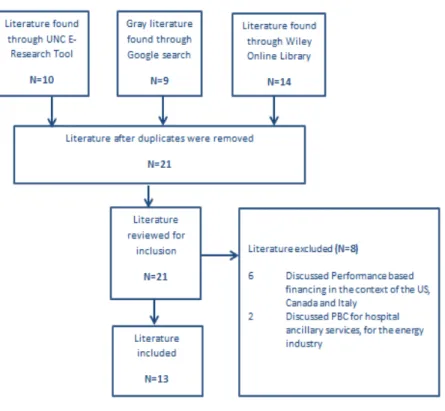
Figure 3 -Country Ownership Literature inclusion Process ... 20
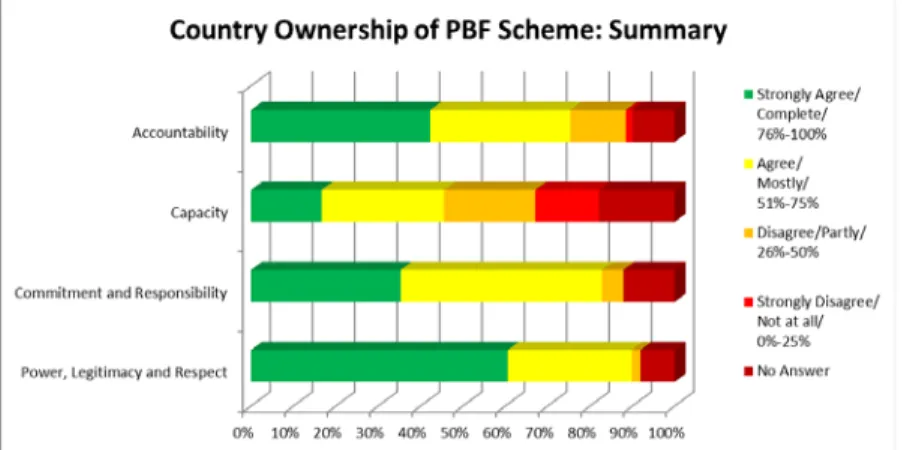
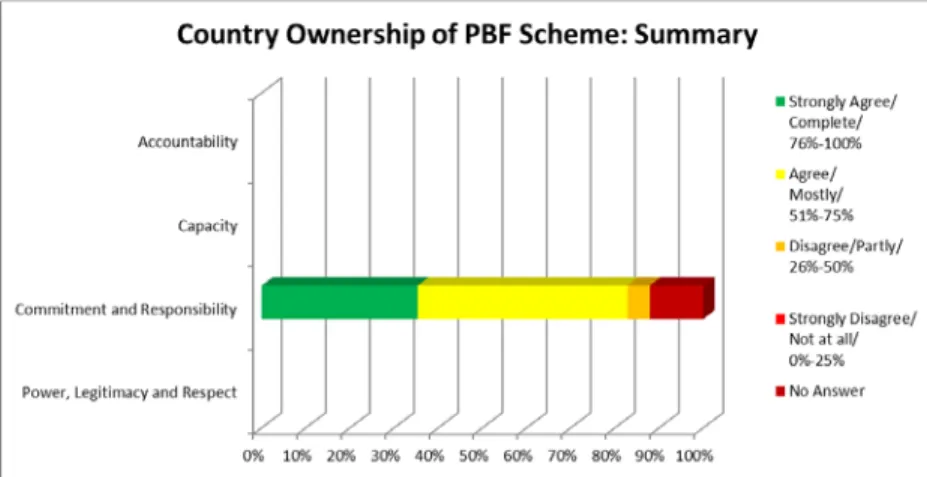
Figure 4 - Summary of Country Ownership of the PBF Scheme ... 42
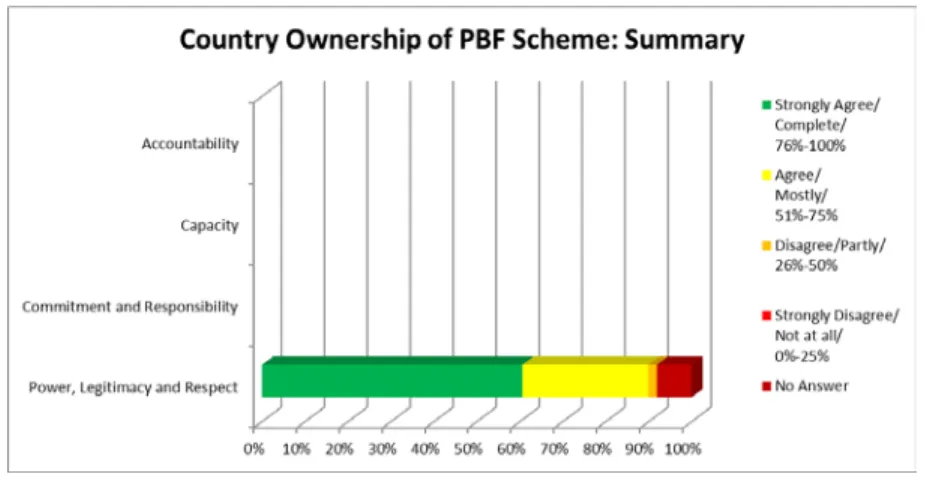
Figure 5 – Summary of the Power, Legitimacy and Respect Dimension ... 43
Figure 6 – Summary of the Commitment and Responsibility Dimension ... 44
Figure 7– Summary of the Capacity Dimension... 45
Figure 8– Summary of the Accountability Dimension ... 48
Figure 9– Comparison of the impressions of the three groups of respondents ... 49
Figure 10 – PBC Literature Inclusion Process ... 57
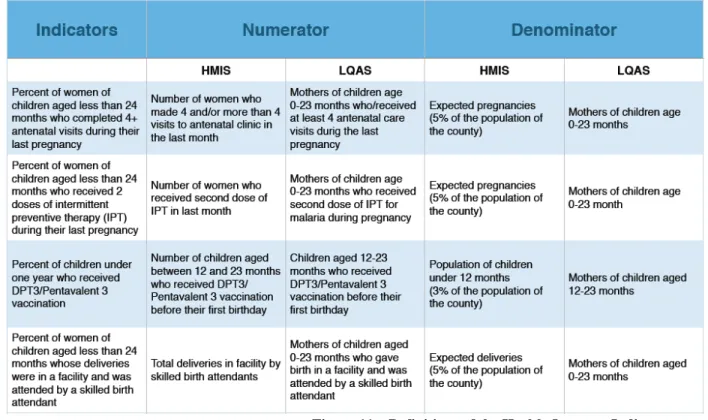
Figure 11 – Definitions of the Health Outcome Indicators... 69
Figure 12– Health Outcome data from HMIS and LQAS ... 70
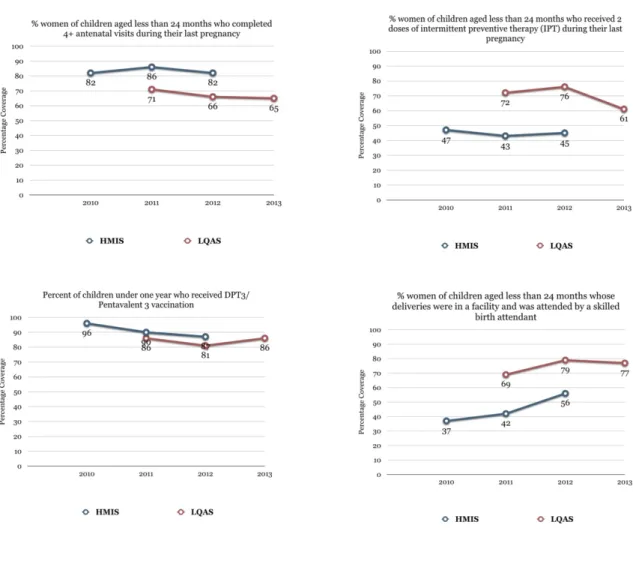
Figure 13 – Trend Graphs for Health Outcome data ... 72
Figure 14 – Summary of Process of data collection and Analysis ... 76
Figure 15 – Code Network diagram adapted from Atlas.ti ... 78
Figure 16 – Mapping of Country Ownership dimensions to themes from Aim 3 ... 87
Figure 17 – Resources, Players and Parameter of the Plan for Change ... 94
Figure 18 - Suggested Core Participants at Plan for Change Workshop ... 98
Figure 19 – Plan for Change timeline ... 101
xi
LIST OF ABBREVIATIONS BPHS Basic Package of Health Services
CHSWT County Health and Social Welfare Team
CDC Centers for Disease Control and Prevention CPC Carolina Population Center
DFID United Kingdom’s Department for International Development
DRC Democratic Republic of Congo EPHS Essential Package of Health Services FARA Fixed Amount Reimbursement Agreement
GHI Global Health Initiative
HMIS Health Management Information System
IRC International Rescue Committee IMF International Monetary Fund LQAS Lot Quality Assurance Sampling
MOHSW Ministry of Health and Social Welfare, Republic of Liberia M&E Monitoring and Evaluation
NGO Non-Governmental Organization
OECD Organization of Economic Cooperation and Development PBC Performance Based Contracting
PBF Performance Based Financing
PRISM Performance of Routine Information System Management
xii UNHCR United Nations Refugee Agency USA United States of America
1
CHAPTER 1: OVERVIEW AND INTRODUCTION
Study Aims
Objective: The concept of country ownership, in the context of international development aid is not a new one; in fact it is an essential component of international
development aid. The annual provision of billions of dollars in aid by developed countries to developing countries assumes the products and processes that a donor provides are priorities for developing countries; that they will participate in the implementation of the initiative; and
maintain and sustain the products and processes after the donor countries have discontinued their support. The structure of development aid further assumes that with the interest and participation
of the recipient country, ‘owning’ an aid funded initiative will lead to more successful outcomes. Recipients will make decisions and take necessary steps, beyond what is detailed in program documents, in order to ensure successful outcomes.
This relationship between donor and recipient is the context of country ownership; the transfer of funds from donor to recipient; the interplay of power, capacity, accountability, and
2
universally accepted definition, and secondly, no systematic measurement of the concept has been developed.
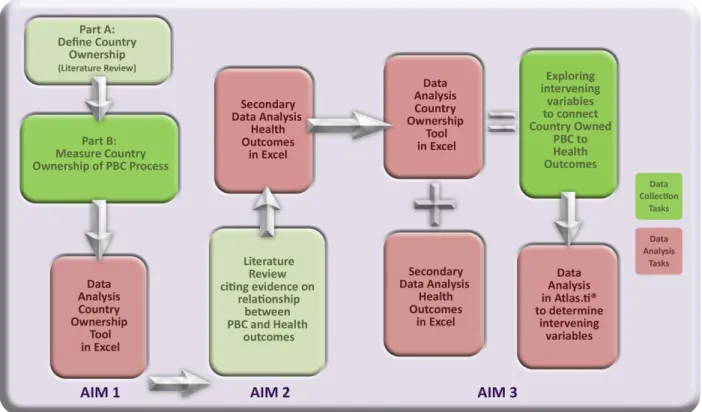
The primary objective of this study is to develop a definition of country ownership and measure it in a developing country within the context of a distinct aid funded program. Lofa
County in Liberia was selected as the geographical focus of the study and the health sector performance based contracting has been chosen as the aid funded program. A secondary objective was to determine what intervening variables1 would best demonstrate a connection
between country-owned performance based contracting and health outcomes. There were four aims to this research:
Aim 1: Develop a measure of country ownership. The idea of country ownership is multi-dimensional, intricate, and complex; therefore an over-simplified, prosaic definition is woefully inadequate in describing it. The measurement of country ownership is divided in two
parts.
Part A: Through a systematic literature review, predominant themes that writers and
practitioners use to describe the concept have been identified. These themes are the basis for the measurement of the concept.
Part B: A parallel exercise (to this study) is underway, implemented by the MEASURE
Evaluation Project of the Carolina Population Center. They are developing a tool to measure country ownership of monitoring and evaluation (M&E) systems. The Country Ownership of M&E Systems Measurement tool was adapted and used in Liberia to test if the performance
3
based contracting system implemented by the Ministry of Health and Social Welfare, and supported by the US Government, can be referred to as ‘country owned’.
Aim 2: Assess if health outcomes have improved in Liberia. A literature review was done to provide evidence that an association between performance based contracting and health
outcomes has been found in other country contexts. This association led to a rational expectation that the performance based contracting system in Liberia led to improved health outcomes. Therefore, four health outcomes were examined before and after the introduction of performance
based contracting, so as to determine if the health outcomes improved. These data were extracted from secondary data sources, the Liberia Health Information System and the Lofa County Lot
Quality Assurance Sampling Survey.
Aim 3: Determine intervening variables that could test a connection between country ownership and health outcomes. Based on results from aims 1 and 2, aim 3 explored what intervening variables future researchers may consider if they wanted to explore a
connection between country ownership of Performance Based Contracting and health outcomes.
Qualitative methods, that is, key informant interviews, were used.
Aim 4: Develop a plan for change. The plan for change includes specific policy recommendations to improve the ownership of the performance-based contracting process for
Liberian donors and recipients. The recommendations are grounded in the leadership principle of power and influence, which examines power relationships and processes of influence towards
achieving effective outcomes and is framed around Kotter’s Steps for Transformational Change.
Proposal Contribution and Significance: This research project contributes to a growing discourse on country ownership in the context of development aid. Its significance is that it
4
been done previously. This project also sought to document testable intervening variables for connecting the country ownership of the performance-based contracting to health outcomes.
Therefore, this research sought to raise the issue of country ownership from merely theoretical to more concrete.
Research question
How can country ownership be measured and what relationship might it have with health
outcomes?
Conceptual Model
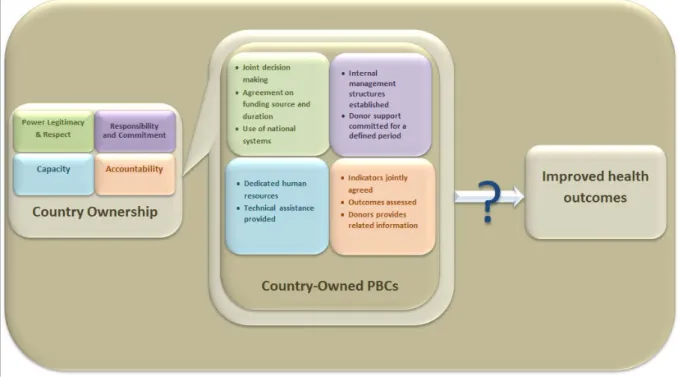
The model underpinning this research activity is that country ownership of the PBC process in Liberia is identified by looking at issues of:
1. Power, legitimacy and respect (i.e. joint decision making, agreement on source of
funding, level of funding and duration of funding), and that national systems are used in
the delivery of the PBC process;
2. Responsibility and commitment (i.e. that internal leadership and management structures
are established and that donor support is known and committed for a defined period of
time);
3. Capacity; that there are competent human resources dedicated to the PBC process and
where there are gaps identified, there is a plan to fill those gaps and that technical assistance is provided in the interim;
4. Accountability (i.e. that health outcome indicators are jointly agreed, outcomes are
5
Figure 1 - Study Conceptual Model
The model further assumes that these country ownership issues contribute to improved health outcomes. However, this connection of a country-owned PBC process to improved health outcomes is untested and therefore unknown. This study will explore intervening variables for
such a connection.
Methodological Approach
This research project used a mixed methods approach; the quantitative methods
supported the qualitative methods. It used sequential explorative strategy; first the concept of country ownership was defined, then country ownership of the performance based contracting system in Liberia was measured. Second, secondary data analysis was done to determine if
health outcomes have improved. Third, a qualitative assessment was done to suggest intervening variables that could be used to detect a connection between country owned performance based
6
Delimitation
The main limitation is that only one country, Liberia, and one county in Liberia, Lofa, was examined. This limitation means that the findings from the study are applicable only to Lofa
7
Introduction
Country Ownership and International Development Assistance
International development aid is a multi-billion dollar industry. It is estimated that in 2011, $133 billion (US) was made available for development assistance, from twenty-three (23)
countries (Organization for Economic Cooperation and Development, 2012). Other sources of aid, e.g. charities and foundations, have further expanded this industry well beyond the
assistance of the major donor governments. International development aid exists because some countries cannot independently provide goods and services for their citizens. Whether this assistance is motivated by politically defined self-interest or altruism, richer countries have
created a system designed to provide needed goods and services, while achieving or protecting their own interests.
One of the major assumptions central to international development is that once a donor provides resources to build infrastructure or systems then the recipient country will take these systems, maintain and sustain them as their own. However, there are many extant forces that
serve to complicate this assumption. It assumes recipients and donors are agreed on what is provided, that there are appropriate resources in recipient countries to receive and sustain what is
provided, and that what is provided is appropriate for filling the assessed gap.
There has always been the idea of ‘country ownership’ in development aid. The provision of funding, goods and services was not sufficient to ensure sustainable capacities, structures,
process and outcomes in developing countries. There are active collaborative roles that both recipient and donor must play in the process for the outcome to be successful.
8
provision of financing with what external experts defined as best for a particular country not only stigmatized the idea of country ownership in the 1980s and 1990s, it also created confusion about
whether it was an economic or political concept or both (Best, 2007). Further, the solutions to development issues came from external experts and there was limited contribution from
developing countries in resolving their developmental challenges. As the development
approaches of the World Bank and IMF failed to yield the expected developmental outcomes at the close of the twentieth century, the concept of country ownership had limited mention in
development discourse.
Then on March 2, 2005, approximately ninety-one (91) countries gathered in Paris, to
discuss the way international development aid is delivered and managed. These countries represented both the donor and development aid recipient communities. This meeting not only reignited the concept of country ownership but de-stigmatized it. Participants committed to
harmonized development strategies; to use and improve country level systems, where appropriate; and to deliver and manage aid to meet development objectives (OECD,
2005&2008).
In 2009, the Obama administration launched the Global Health Initiative (GHI), an integrated approach to unify the United States Government’s (USG) international health
investments (US State Department, 2009). Country ownership is one of the seven (7) principles that guide the GHI. Discussions have therefore begun, within and among USG assisted health
activities of how to assess the contribution that country ownership, as a policy principle, makes to improved health outcomes.
One of the challenges with this assessment is that country ownership is not easily
9
services in recipient countries, there are also many dimensions or component parts of country ownership. The challenge becomes even more acute when viewing it from the perspective of
recipient countries that vary in their development status, governance systems and access to funding; and the perspectives of the donors with their differing interests, outcomes, systems and
levels of resources. Although there has been considerable discussion on the issue of country ownership and the value of the principle is assumed, there has been no comprehensive definition of the concept, or testing of the idea that its existence has a positive influence on an outcome of
interest.
Country ownership is once again at the forefront of development policy because in this
era of donor economic crises and shrinking development funding, the need to objectively know if and when countries are transitioning to sustainable country systems and processes is vital.
Study Site: Liberia
Rationale for selecting Study Site
In September 2011, the United Stated Agency for International Development (USAID) in Liberia executed a $42M grant agreement with the Ministry of Health and Social Welfare
(MOHSW) focused mainly on performance-based contracting for the delivery of health services.
Previously, a large health project, Rebuilding Basic Health Services (RBHS), implemented by John Snow Inc. (JSI) had been charged with managing contracts to non-government
organizations (NGO) who deliver health services at the facility and community levels. The
10
Lofa County in Liberia provides a good test subject for measuring country ownership and determining intervening variables that could test a relationship between a country-owned PBC
system and health outcomes. Firstly, the MOHSW PBC system is newly implemented in Lofa County, having been awarded in December 2011; secondly, the post-conflict setting has meant
heavy donor investment and involvement in rebuilding national systems; thirdly, there is a data available to determine if health outcomes have improved since the start of the PBC process.
Background
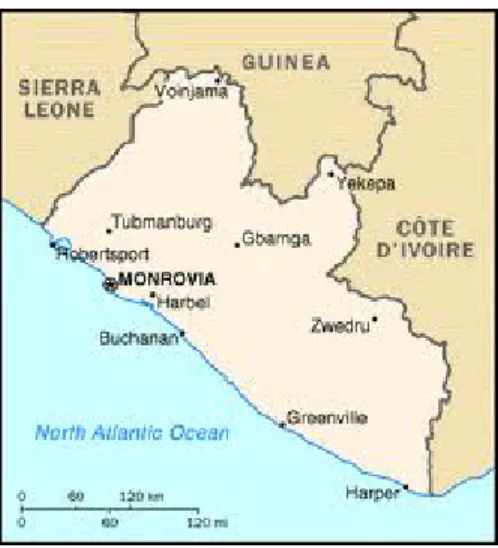
Liberia is located on the West Coast of Africa, with Guinea to the North, Cote d’Ivoire to the East, Sierra Leone to the West, and the Atlantic Ocean to the South. It is a small country, comparable to the size of the state of Tennessee in the United States of America (USA).
Figure 2 – Map of Liberia
Independent since 1847, Liberia was engulfed in a 14-year civil war that began in 1989 and ended in 2003. In 2008, Liberia’s population was estimated at 3.5 million people (LISGIS,
11
population is below the age of 35 and the annual population growth rate is 2.1 percent, with the total population of Liberia expected to double the 2008 number in 33 years (i.e. by 2041) if this
observed annual growth rate continues (LISGIS, 2009).
Education is still a challenge and remains weak in Liberia. The literacy rate is estimated
to be 58.1 percent (for age 15 and older), with more literate males (63.3 percent) than females (53 percent). The gross enrollment ratio (GER)2 varies at different levels of education (UNESCO, 2010).
Liberia is a very poor country with a market-based economy. For a few years in the 1970s, Liberia's per capita income was equivalent to that of Japan (GlobalSecurity.org). But
currently, Liberia is ranked by the World Bank among the very poorest countries in the world (World Bank, 2010). Before 1990, the country focused on curative and tertiary health care that was concentrated in cities and away from the largely preventable health issues that the country
faced. Some key effects were high infant, child, and maternal mortality, and a low life expectancy (Bureau of Statistics, 1986).
The war, which ended in 2003, worsened the health situation in Liberia and caused substantial setbacks. The country’s infrastructure collapsed and the government was unable to provide basic services. One key example is of the 293 public health facilities operating before the
war, 242 were non-functional at the end of the war because buildings were destroyed and equipment and supplies looted (Kruk, 2010). Doctors, nurses and other health workers fled the
country, leaving 30 physicians to attend to a population of 3 million (Kruk, 2010).
There have been improvements over the last eight years in the health sector and this progress has resulted in changes that can be seen in key health indicators, e.g. the infant
2
12
mortality rate dropped from 117 to 72 deaths per 1000 live births, and under-5 mortality also dropped from 194 to 111 deaths per 1000 live births (World Bank, 2010). However, there remain
significant challenges to the health sector and health outcomes continue to perform below required standards.
Performance Based Contracting in Liberia
In 2006, the Government of Liberia developed a National Health Policy and a National Health Plan. The National Health Plan (2007 – 2011) prioritized a Basic Package of Health
Services (BPHS) and decentralization of management, and implementation of programs to the 15 counties. To support the implementation of the health policy and plan, a Health Sector Pool Fund was established in 2008 and currently has four main contributing donors: The United Nations
Children Fund (UNICEF), the United Nations Refugee Agency (UNHCR), the United
Kingdom’s Department for International Development (DFID) and Irish Aid (Hughes, 2012).
Further, the MOHSW initiated performance-based financing (PBF) for health service delivery throughout the country funded by the Health Sector Pool Fund. The 2008 Policy on Contracting aims to maintain and improve access to, and quality of, the MOHSW-approved
BPHS package. Moreover, it aims to “leverage partner capacity to prepare the County Health Teams to resume management of health facilities and the workforce” (MOHSW, 2007). The
MOHSW views the contracting of NGOs as a means to facilitate the transition from relief to development by improving the management of, and collaboration with, the County Health and Social Welfare Teams (CHSWTs), which are responsible for managing health services in their
13
The United States Agency for International Development (USAID) in Liberia is funding a similar PBC process with the objective of transitioning the rebuilding of US
government funded health services to the Liberian government. The PBC process is part of an up to $42 million (US) Fixed Amount Reimbursement Agreement (FARA) to support the
implementation of the Ministry of Health and Social Welfare’s National Health Policy and Plan 2011-2021. USAID has committed funding until June 2015.
Under the ‘Procurement of Preventative and Curative Health Services and Commodities’
section of the FARA, the MOHSW will assume the management of PBCs with NGOs implementing the Essential Package of Health Services (EPHS) in Lofa, Bong and Nimba
counties. Therefore, this section replaced a previous arrangement where support to service delivery was provided through a US-based Cooperating Agency, John Snow Inc. This new arrangement, directly with the MOHSW, is part of USAID’s Forward initiative that seeks to
strengthen country partner capabilities towards the achievement and sustainability of national systems (Hughes, 2012).
The Health Sector PBF system has three models; 1) contracts between the MOHSW and a CHSWT; 2) contracts between the MOHSW and NGO or civil society organizations; and 3) a performance agreement between an implementing partner and a health facility (MOHSW, 2012).
These models can have different approaches. For example, the MOHSW to NGO/CSO could be based on management contracting, that is the contractor provides only management services over
14
The MOHSW refers to their national scheme as PBF, since it includes PBC models as well as PBF models. They define the difference as; PBCs are contracts with NGOs “with
payment depending on achievement of a performance measure that includes coverage targets and quality norms for a set of services. The contrast with PBF is that the latter concentrates on
agreements with providers” (MOHSW, 2012). For the purposes of this study, PBF will be used to describe the model in Lofa and the system in general.
The PBF model in Bomi is an example of the MOHSW contracting with a CHSWT and
the Lofa model is an example of a PBC with MOHSW contracting with an NGO based on the management services approach. There is little model differentiation by funder, i.e. both the
USAID and Pool Funds have supported the implementation the ‘contracting in’ model, that is, the MOHSW contracting with a CHSWT. This model is implemented in Bomi (Pool Fund supported) and Bong (USAID supported) counties.
The PBF intervention in Lofa County is implemented through International Rescue Committee (IRC) which successfully won a competitive bid issued by the Government of
Liberia’s procurement process. IRC is responsible for implementing the EPHS in 42 of the 48 clinics in Lofa County. The EPHS “includes all elements of the Basic Package of Health Services (maternal, child and newborn health, communicable diseases, reproductive and
adolescent health, mental health and emergency care), as well as a phased-expansion to include non-communicable diseases, essential child nutrition, neglected tropical diseases, environmental
and occupation health, school health, eye health and prison health” (MOHSW, 2012). The performance targets are agreed upon and set by the MOHSW and IRC in Lofa County. According to the MOHSW Performance Based Financing Manual, after the targets are
15
sets a target with health facilities according to catchment population of the health facility, historical performance, geographical constraints; and ensures that each facility equitably
contributes to the agreed target (MOHSW, 2012).
There is a verification process at community, health facility and county levels. This
verification process at the health facility and county levels is the responsibility of the PBF
Steering Committee and is conducted once per quarter. The county contracts an external entity to conduct the community verification. The MOHSW then conducts a counter verification of
administrative indicators to ensure the integrity of the results and hires a party external to the MOHSW to conduct the counter verification of the facility indicators.
90% of the contract amount is paid to IRC with a 10% bonus paid when the targets are met and/or exceeded. This 10% is disbursed to the facility with the “recommendation… [that] up to 65% of the earned bonus ...be used for staff motivation, while accounting for certain criteria
such as: base salary, responsibility, years of experience, absenteeism from work, etc. The remaining 35% of the earned bonus can then be used for innovative activities that are likely to
improve the performance towards achieving a set goal” (MOHSW, 2012).
The transition to country managed health services will see Liberian management of PBF, which, it is hoped will lead to improved monitoring and evaluation of health outcomes and
results. The idea with the implementation of PBF is that greater recipient country management of EPHS will mean a greater sense of responsibility for health service delivery. This greater
sense of responsibility will mean programs are implemented and quickly adjusted, which will contribute to improvements in health outcomes.
PBF assumes that twinning remuneration and incentives to performance will improve
16
holding them accountable for the services they deliver with payment as the ‘carrot’ or the ‘stick’. But what is being touted as a country owned process may be missing critical elements or
17
CHAPTER 2: AIM 1 - DEVELOP A MEASUREMENT APPROACH TO COUNTRY OWNERSHIP
Introduction
The purpose of this chapter is to develop a measure of country ownership and assess if the performance based financing system in Lofa County, Liberia can be referred to as country
owned.
Part A: Define country ownership - Methods
The key concept examined in this literature review was Country ownership. This phrase is one that has relied on intuitive interpretation that is, it is more recognizable than definable. It assumes that there is a development financing arrangement between a donor and a recipient
country and conjures up pictures of accountability, country leadership, decision making by country officials, participation in development processes by government and civil society actors,
and hopes of sustained programs and systems.
But the dimensions are not defined and agreed. This literature review will provide the basis for defining the dimensions or parameters of country ownership.
Search Strategy
The dimensions of country ownership are taken from several disciplines including, but
18
Therefore the search for literature on country ownership was divided into three parts and two tiers.
In December 2011, a general search using the term ‘country ownership’ was used in the University of North Carolina at Chapel Hill’s (UNC’s) ‘E-Research Tools’, whichprovided
access to over 350 databases and collections including PubMed, Web of Science, JSTOR Arts & Sciences Collection and Wiley InterScienceJournals.
Next, a search of gray literature (lectures, conference material, technical reports, policy
papers and speeches) of the term ‘country ownership’ was done using the Google search engine. Third, the articles used for a literature review on country ownership recently conducted by ICF
International for a Centers for Disease Control and Prevention (CDC) project, was reviewed. A second tier search was conducted; from the appropriate material found using all three search engines, the reference pages were searched to ascertain additional literature.
Criteria for Selection
All publications included in the first tier search were selected using the following criteria:
• Scholarly publications including peer reviewed journals (UNC E-research tools and
Google)
• Published after June 2005
• Published in English
• Journal articles and gray literature must provide a definition or description of ‘country
ownership’
19 Literature was excluded if:
• The discussion of country ownership was not within the context of development
supported initiatives and development funding
• The discussion was of a domestic nature within a donor country e.g. country ownership
of health reform in the US
• The discussion was within the private sector and multinational corporations with holdings
in developing countries
Process for Reviewing Literature
Articles were reviewed first looking for the search term (‘country ownership’,) in the title of the articles or literature. In most cases, appropriate literature did not have abstracts and
therefore the entire article was read to find a description or definition of the dimensions of country ownership.
Literature Review Findings
Overview
The search was conducted from January to April 2012. 69 distinct articles were found
20
Figure 3 - Country Ownership Literature inclusion Process
The titles of 69 pieces of literature were screened and 14 of those excluded. The 55 pieces of literature remaining were reviewed and 25 excluded because they mentioned, but did
not offer a definition or description of country ownership, and were newspaper articles reporting forums where country ownership was discussed. Therefore, 30 articles met the inclusion criteria
for ‘country ownership’. Key Assumption
In all of the literature reviewed, the authors write of country ownership within the setting
of development or foreign aid. Therefore, there is a key assumption that underpins all the
dimensions of country ownership. It is only within the context of development aid, development
21
This setting consists of the transfer of funds from a developed country or multilateral
organization to a developing country for the purpose of rebuilding, strengthening or maintaining
systems in those developing countries.
The idea of development aid came to prominence at the end of World War II with the US
Government’s ‘Marshall Plan’ or European Economic Recovery Program as it was officially known. The ‘Marshall Plan’s’ main purpose was to rebuild Europe after the devastation of World War II and do so in a way that engendered cooperation and reconciliation (Fuhrer, 1996).
After the success of this Plan, the US Government expanded its assistance beyond European countries into Africa, Asia and Latin America. Neutral nations were promised rapid
industrialization, akin to that of Europe, in exchange for Cold War allegiance and development funding (Easterly, 2010). The initial ‘Marshall’s Plan’ recipient countries in Europe and the US formed what was to become the Organization of Economic Cooperation and Development
(OECD), presently the largest collective of donor countries (Fuhrer, 1996) 3.
Currently, aid provided by foreign sources continues to be the primary avenue through
which strategic and emergency development initiatives are funded and implemented in many developing countries. Developing countries experience inherent vulnerabilities: natural disasters for which there are little or no resources for recovery; political instability stemming from civil
and international wars; inability to compete on the world market because of the size of their markets or the lack of diversification of national production.
These vulnerabilities result in weak national systems that tend to be incapable of independently addressing the needs of its citizens.
3
22
Donor countries are motivated to contribute to the improvement of developing countries because of humanitarian and utilitarian reasons. In response to the abject poverty being
experienced by some countries, donors believe that there are common problems and therefore common solutions. This belief in turn engenders a sense of responsibility and solidarity. Donor
countries are also motivated by self-interest and foreign policy imperatives, as instability and poverty are seen to be of strategic importance and therefore present increased security concerns for the developed donor countries (Besson, 2009).
Sustained development in much of the world, through development aid, failed to have the same blanket effect as it did in Europe in the same number of years. Moyo (2009) discusses the
eras of aid as beginning with the newly formed Bretton Woods institutions (World Bank and International Monetary Fund) in the 1940s; to the era of nation building and industrialization in the 1960s; to the time of aid as an instrument of poverty reduction and political alignment in the
1970s; to aid as a tool of stabilization and structural adjustment in the 1980s; to aid as a means of bolstering democracy and governance in the 1990’s; to the current era of aid as the main solution
of all development issues.
Throughout these eras of development, the issue of ownership has come to matter. In development aid programming, all contingencies and eventualities cannot be foreseen, therefore
remedies for these contingencies cannot be written into the program documents. When a program is ‘owned’ by a country, decisions can be made quickly and favorably for the success of the
23
Four (4) dominant themes of country ownership were found from this literature review using template analysis approach. This approach identifies key words that are then grouped and
coded into themes (King, 2004). They are discussed below.
Power and Legitimacy and Respect
The concept of country ownership is inherently a political concept (Besson, 2009; Booth,
2011). In development aid there is a donor-recipient relationship which Khan (2001) discusses in the context of a principal-agent relationship. This relationship is governed by a power dynamic where the donor’s power is seen as constructive (power to act) and the recipient’s power is seen
as controlling (power over a player or a process) (Hyden, 2008). Humanitarian and utilitarian motives mean the donor relies on the recipient to accomplish pre-determined objectives (Khan, 2001), and the recipient receives resources which it is unable to provide for itself.
Country ownership:
• Involves recipient governments having the
right, power and legitimacy to set priorities and make decisions that are respected by the donors;
• Involves commitment by political stakeholders to take responsibility for aid funded programs that address an identified need;
• Includes stakeholders in recipient countries (government, NGOs and civil society) having the capacity to sustain initiatives and programs;
24
Therefore, Besson (2009) argues that both the donor and the recipient should exercise the power to define the development and decision-making processes, prioritizing interests and
determining how initiatives will be implemented and in what direction the development will move. However, this power relationship is not equal, the social and political interests of both
parties are often different and power moves towards the source of resources, or as Carlos Diaz-Alejandro, prominent Columbia University professor of Economics, is quoted as saying, ‘if you ask for a gift, you must listen to your patron’ (Khan, 2001).
The Paris and Accra Declarations call on donors to commit to respect and support
country ownership. This support assumes that the donor will respect the direction of the recipient
country (de Renzio, 2008), listen to the priorities of governments, assist governments to achieve those priorities, and allow governments to make mistakes (Whitfield, 2009). Within this
flexibility and innovation, donors must also be willing to withdraw aid when the direction and
processes are inconsistent with what the donor is willing to support (Whitfield, 2009). Best (2007) refers to this approach as ‘political pluralism’, the idea that there is more than one way to
achieve development, that people should have ‘the opportunity to debate those alternatives’ and that the one best solution does not have to be determined by the donor.
Concurrently, recipient countries must have the power to ‘exert meaningful control over
their decisions and actions’ (Best, 2007). That is, they must have authority. Since ownership is a political concept, then in the context of this era of aid effectiveness, the recipient must be the
legitimate voice of the country, and for whom national development is a key objective (Besson, 2009; Booth, 2011). The recipient must have the right to set its own development agenda and develop strategies and programs to meet the objectives of that agenda (Ghebreyesus, 2010;
25
support and may have to resort to other forms of power such as force or coercion, which may achieve a ‘modest degree of implementation in the face of sabotage, indifference,
nonparticipation, and minimum effort and compliance from the general population, despite large expenditure of resources’ (Johnson, 2005).
The issue of legitimacy in this power dynamic is twofold. Legitimacy (perceived or actual) in a recipient country acts as internal social control as the citizens of the country believe that the government acts without coercion (Johnson, 2005); and external assurance that
development goals negotiated with donors will be met (Best, 2007). On the part of the donor, there must be the perception that the expertise behind negotiated programs is legitimate, or as
Best argues ‘its authority is perceived to be justified’ (Best, 2007). Also, there must be the perception that the donor is providing objective solutions to problems that the country is seeking to resolve (Best, 2007).
In the context of country ownership, the power that both donor and recipient possess in this relationship is tempered by a partnership arrangement. In this partnership, the donor’s power
serves to enable the objectives of the recipient, not treat them as the ‘means’ or the ‘instrument’ to achieve development results (Volker, 2011). This relationship in turn meets the objectives of the donor as these objectives are aligned to that of the recipients (Hyden, 2008).
Commitment and Responsibility
The value of the Paris and Accra Declarations was the idea of ‘commitment’. The term was used over thirty times in the documents to denote the obligation placed on donors and
recipient alike to the process of aid effectiveness. The Declarations called the donors to respect and strengthen country leadership and obliged recipients to develop and implement their own
26
Castel-Branco (2008) argues that there is a natural link between commitment, leadership and control. He argues that ownership in its purest sense includes the recipient
formulating development agendas free from the influence of the donor and the donor financing that agenda, even if the policy preferences are not aligned. Castel-Branco (2008) admits that this
purist perspective is ‘unrealistic’, and argues that the other end of the spectrum is undesirable as well. What he does advocate for is emphasis on the substance rather than the form of the
ownership; that there should be recipient country commitment to, leadership of and control over
the development goals, programs and processes to reach those goals. In this way, ‘ownership reinforces commitment, and commitment in turn yields results and assures long term
sustainability’ (Ghebreyesus, 2010).
With this commitment or right of agenda setting, comes a responsibility. Johnson (2005) argues that if a country has the right to insist on deciding its own development agenda without
coercion, then it is also obliged to take full responsibility for what comes of the policies and programs that are implemented. In other words, recipients take responsibility to ‘do or fail to do’
(Molund, 2000). They take responsibility for setting the agenda, designing the programs, engaging the partners, managing the overall process and accounting for results (Buiter, 2007; Health Systems 20/20, 2012).
This idea of responsibility implies a level of control. Whitfield (2009) introduces an idea of ‘ownership as control’. She argues that control can be assessed by observing ‘what proportion
of the implemented policy agenda was decided by the government; what proportion resulted from a compromise between recipient and donor; and what proportion was accepted reluctantly as a necessary price to pay for accessing financial aid’ (Whitfield, 2009). Whether or not
27
Molund (2000) presents a legal definition of ownership as right of use, control and transfer. He argues that in addition to these objective criteria, there are also subjective criteria of
necessary ‘attitudes, feelings and opinions’. Boughton (2002) argues that though the ‘state of mind’ and ‘internal commitment’ of the national stakeholders is important, and inferences can be
drawn from observed behavior, there is no way to directly observe this commitment and evidence would be incomplete. While not dismissing these more subjective concepts, he
suggests more practical signs of commitment can be found in greater control given by the donors
to recipients over the development agenda in a relationship of trust and empowerment. Capacity
If a recipient is to lead the determination of their policy direction, gain and sustain the trust of their donors, and take responsibility for processes and outcomes; and if donors are to achieve their development goals, then there must be the recipient capacity to do so (Best, 2007).
The recipient ‘should have the institutional capacity to develop strategies and operational plans, coordinate and align the activities of key stakeholders, implement programs or delegate their
implementation to others and provide oversight and hold implementers accountable’(Health Systems 20/20, 2012).
Capacity is a complex notion; it includes multiple stakeholders, multiple dimensions and
multiple levels. For simplicity, capacity can be said to ‘represents the potential for using resources effectively and maintaining gains in performance with gradually reduced levels of
28
A ‘capacity dilemma’ is at play in the donor recipient-relationship (Best, 2007).
Recipients who possess the required level of capacity to engage in true ownership are least likely
to need donor assistance and the recipients for whom leadership, power, authority, and engendering respect will be a challenge are the ones most in need of donor assistance and for
whom ownership of programs and initiatives would be most beneficial (Best, 2007). Within this capacity dimension of country ownership, there is a role for donors in recognizing the existing capacity and its capability, working with recipients to identify areas for
improvement or strengthening and integration of donor supported capacity and programs with institutional structures and processes(Atun, 2009; de Renzio, 2008)). Donors themselves grapple
with capacity issues as structural limitations, such as staff turnover and lack of delegation from respective headquarters, or the way they deploy their resources, constrain attempts at
contributing to capacity development (Wood, 2008). But, it is also important for the donor to
recognize that capacity building requires substantial investment, more than the usual five years, from a sustained source (InterAction, 2011; Mas de Xaxas, 2007).
Further, Sridhar (2009) argues that donors should assist recipients to find sustainable solutions to their identified needs and resist developing parallel systems that weaken and neglect already inadequate systems, in other words, the expediency of ‘quick wins’ must be replaced by
‘long-term priority setting and planning’ (Sridhar, 2009).
Recipients continue to be challenged by both real and perceived capacity constraints and
sub-29
national structures, and be open to alliances and partnerships from civil society and the private sector, and be inclusive in planning and oversight processes (Atun, 2009; Mas de Xaxas, 2007).
Hauck et al (2011) argues that capacity building and ownership are cyclical, self-perpetuating elements. Ownership is integral to creating capable systems, organizations and
individuals that are in a constant state of interaction; and this capacity in turn strengthens commitment and responsibility for outcomes, both central tenets of ownership.
Accountability
Accountability is based on a power dynamic where an agent reports to a principal on his/her activities and there are consequences for non-compliance. Easterly (2010) and Sridhar
(2009) point out that in this dynamic, those with power are not accountable to those with less power.
The Paris and Accra Declarations use the term mutual accountability to describe the joint
obligation that both the recipient and the donor share in this development process. This contemporary view of mutual accountability, assumes a more equal balance of power. It is an
agreement between recipients and donors, manifested in a sound accountability mechanism, including results-based frameworks ‘premised on clear outcome targets that must be defined and agreed to the outset’(Ghebreyesus, 2010).
Monitoring and evaluation of programs and initiatives and results frameworks have become a primary focus of accountability structure and the foundation on which other
accountability activities have been based (Wood, 2008).
In the area of health, donors and recipients need to place less emphasis on indicator reporting and more emphasis on coherent systems of data collection, analysis and use. Greater
30
addresses chronic, non-communicable diseases while integrating disease-specific initiatives in national health systems. Donors and recipients alike should appreciate that monitoring and
evaluation goes beyond counting, and investments of time and resources are needed to determine causes of morbidity and mortality and the effects of programs in a developing country setting
(Boerma , 2007; Sridhar, 2009).
Additionally, Booth (2011) and InterAction (2011) believe the donor should provide information on their plans, programs and aid flows to all partners in country. Further, recipients
must be open to sharing their national budgets as they relate to counterpart funding for development initiatives, therefore there is an enhanced parliamentary role in developing and
accounting for strategies and budgets (Wood, 2008).
There is an increased demand to account for external funding and the results that funding is intended to produce (Boerma, 2007). The challenge of mutual accountability is to ensure that
the accountability mechanisms implemented in the recipient country serve the purposes of that country and not just external accountability (Holzscheiter, 2012). Not only governments but civil
society and other non-governmental actors are involved in these accountability structures, so that accountability and ownership are ‘mutually reinforcing values’ (Germain, 2011; Wright, 2008).
Discussion
The objective of this literature review was to define the dimensions of country ownership. The results presented ideas on country ownership which coalesce around four themes, in short,
power, legitimacy and respect; commitment and responsibility; capacity and accountability. The themes are discussed below.
The literature reviewed in this section demonstrates that country ownership is both an
31
country ownership, expressed as it should be not as it is, seeks after optimal behaviors and conditions in a donor-recipient relationship. This literature review does not seek to conclude that
the donor-recipient relationship is a positive or negative one. The question is; what are the norms, behaviors, and inputs that will allow for the achievement of successful and perhaps
sustainable development outcomes, without questioning the virtues of the relationship or value of development aid. It has long been believed that country ownership is critical for a successful development result. Nonetheless, each theme identified has inherent challenges that make the
concept of country ownership complex.
First, once the idea of power is introduced, intrinsic in that dynamic will be the
‘powerful’ and the ‘less powerful’ or the ‘powerless’. And certainly once a discussion of a donor recipient relationship is broached, this dichotomy of power is even more pronounced. How then does the issue of a more balanced share of power in this relationship become practice? Is it
realistic to expect that there will be power sharing in a relationship defined by power? But can ownership be said to exist if the recipient does not exercise power over the process?
• Is it realistic to expect that there will be power sharing in a relationship defined by power?
• This new paradigm recognizes the power of donors but also the right of legitimate recipients and attempts to define the parameters for engagement in this
32
Can a recipient ‘own’ an initiative if they are not the legitimate representative of the target constituency? Is there country ownership if the donor does not demonstrate respect for
recipient leadership, priorities and systems?
The answers to these questions are the crux of the concept of country ownership. To seek
greater aid effectiveness and more sustainable outcomes, donors and recipients alike, through the Paris and Accra Declarations are articulating a new paradigm of development, in short, a new relationship. This new paradigm recognizes the power of donors but also the right of legitimate
recipients and attempts to define the parameters for engagement in their relationship. While Easterly (2010) and Buiter,( 2007) question whether a ‘ruler’ can represent a
heterogeneous population with ‘conflicting views and interest,’ including the poor of the country; and Moyo (2009) points to the donors as the constituents of the recipients in
contemporary aid relationships; these arguments do not negate the current political practice of an
elected leader of a country being the legitimate spokesperson for its citizens. And that spokesperson has authority over the policies and programs that are implemented in order to
improve the status of the citizens he/she leads, despite the source of funding.
• Not all development processes and products need to be sustainably ‘owned’
• Commitment and responsibility are not static concepts but dynamic and appropriate to the initiative
33
Second, Johnson (2005) argues that recipients must have a vision for the country that the donors ‘buy into’ and that they must be responsible for the successful or failed outcomes of
development processes and products.
As there are many development products and processes that can be ‘owned’, so too can
there be many levels or layers of ownership. A recipient may only be interested in a given product. Does the recipient also have to own the process of developing this product? For
example, if a country is interested in a Demographic and Health Study does it need to commit to
and take responsibility for the process when there is no comparable capacity to oversee and manage the process? When there is no notion if there will be a need for this study to be repeated
or if it will be a single activity? Can the recipient trust the partner to undertake the process but commit to using or ‘owning’ the results from the study?
These questions point to the idea that not all development processes and products need to
be sustainably ‘owned’, perhaps some processes and products need only to be owned for a point in time and no more. Therefore, commitment and responsibility are not static concepts but
dynamic and appropriate to the initiative. As Molund (2000) argues, “the strength of ownership depends on two types of circumstances; what the actors want and what they, under prevailing circumstances, can do or believe they can do, their desires, preferences, or priorities, on the one
hand, and their actual and presumed capacities on the other”.
Which leads to the third challenge; the capacity involved in ownership depends on the
product being owned and necessary inputs into the process. For example, a process may involve the recipient having the capacity to assess the situation in a country and develop a vision for change; lead and negotiate the terms of the aid package; have the technical capacity to manage
34
national processes. Or an initiative may simply require the will and commitment of the recipient, while the donor builds capacity for future implementation by the recipient. Therefore, some
capacity may be needed for ownership to thrive as well as the ownership process may engender capacity development. As Goldberg et al (2012) argues, “All organizations must already have
some level of capacity as a pre-condition to effectively build more capacity”.
But capacity is not one-sided. The capacity of donors is important in three ways; first the donor must have the ability to scan the national environment and twin its global objectives with
national priorities in a way that is helpful and not disruptive or distortive of national goals (Sridhar, 2009); second the donor must be able to provide the resources needed to accomplish
what it has agreed with the recipient to undertake; and third, the donor must have the ability to deliver those resources through adequately staffed offices and appropriate procurement systems that are not neglectful of national development processes (Sridhar, 2009).
• It is clear that the idea of accountability is wrapped up in power dynamics and whereas the donor has the means of ensuring
accountability from recipients, the recipients do not have such means.
• Donors have broadly instituted accountability mechanisms and recipients have complied with those mechanisms.
• The authors do not dispute the importance of power, legitimacy and respect; commitment and responsibility; capacity and accountability; rather they argue the practicality of engendering or seeking after these dimensions within the current donor recipient environment.
• A theme missing from the systematic search of literature was that of financial transition.
35
Therefore, ‘successful country-owned capacity building projects echo the importance of inclusiveness in the planning process and excellent working relationships between partner/donor
organizations that produce true partnerships’ (Goldberg, 2012).
Finally, the authors talk about accountability; recipients being accountable to donors,
recipients being accountable to their citizens, donors being accountable to recipients and also to their citizens. It is clear that the idea of accountability is wrapped up in power dynamics and, whereas the donor has the means of ensuring accountability from recipients, the recipients do not
have such means. Therefore, usually missing from the donor recipient accountability process is information from the donor (Wood, 2008).
It may be argued that accountability is a western concept that has little meaning for other cultures. In other words, others cultures may believe that they do not need to be accountable for a gift or for something which is now theirs. Nonetheless, even if this perspective is held by
many, donors have broadly instituted accountability mechanisms and recipients have complied with those mechanisms.
Despite these challenges, country ownership is a theme that endures in the context of development aid. There is a logical, and almost inextricable, link between country ownership, development financing, technical assistance and successful outcomes of initiatives. The authors
do not dispute the importance of power, legitimacy and respect; commitment and responsibility; capacity and accountability; rather they argue for practicality of engendering or seeking these
dimensions within the current donor recipient environment. This debate, important and cautionary in nature, does not, however, diminish the importance of these dimensions.
A theme missing from the systematic search of the literature was that of financial
36
or processes for themselves, independent of donor assistance. This neglect is quite a notable absence in the discussion as this idea of financial transition is the very essence of development
aid; that a donor provides resources to a country now, domestic resources and systems are built and there is no longer any need for donor assistance. This objective is the epitome of the Chinese
proverb ‘Give a man a fish and you feed him for a day. Teach a man to fish and you feed him for a lifetime’. And it is rooted in the ideology of self-determination (Goldberg, 2012).
In fall 2012, the US Government made public their Global Health Initiative Interagency
Paper on Country Ownership. The paper does mention financial transition and does so in the context of strengthening local capacity to eventually assume financial responsibility over health
initiatives. The paper acknowledges that the pace of this transition is dependent on the stage of development of the country.
Nonetheless, the absence of a discussion of financial transition in the literature found
from the systematic search perhaps indicates that the authors wish to insert some realism in this modular concept, may be after 60 years of development aid, they have enough examples to
demonstrate the development aid is an on-going concern rather than a means to an end. Perhaps they discussed the idea of country ownership within the context of contemporary international political economy where structural and systemic challenges conspire for developing countries to
remain ‘un-developed’ (with a few notable exceptions). Or perhaps they delimited their
discussions to that of donor recipient relationship where the predominant source of funding is the
37
Conceivably, the reason for this absence is explained by the dearth of donor policy
papers. Aside from a published article, Atun & Kazatchkine, (2009), coauthored by Michel Kazatchkine, Executive Director of the Global Fund for AIDS, Tuberculosis and Malaria, the donor voice, captured in their policy documents, is missing from this review. If the donors have
written on this subject, they have not shared these writings publicly, except for the case of US Government Interagency Paper. For other donors, perhaps, this lack of writing, or lack of access
to documentation, points to a global alignment of thought and ideas around country ownership and financial transition.
Interestingly, the US Government Interagency Paper defines and discusses country
ownership as a one-sided concept. They include aspects of the dimensions discussed in this review, but articulate these dimensions as roles, responsibilities and purview of recipients. They
discuss the role of the US Government as ‘promoting’, ‘accelerating’ and ‘enhancing’ country ownership. While these are important advocacy activities, the paper is silent on the duality of responsibility as has been discussed in this review.
This dual role for the donor and the recipient make the term ‘country ownership’ a misnomer. Power has to be shared; the perception of legitimacy and the attitude of respect have
• The dual role for the donor and the recipient make the term ‘country ownership’ a misnomer.
38
to be held by both donor and recipient; commitment, responsibility, capacity and accountability are mutual. Therefore, a more accurate concept label would be ‘ownership’ rather than ‘country
ownership’. So, though the concept label suffers from some inaccuracy, the terminology is useful in its distinctiveness and notoriety.
Limitations of Literature Review
There are two main limitations of this review.
First, the perspective of major donors in the form of policy, other papers, and transcripts
of speeches or conference presentations is limited. It is unclear whether this limitation is due to a lack of public access to these documents or whether there is inadequate individual donor material
on the issue of country ownership. Further, it is unclear if the documents and comments coming from such forums as the Paris and Accra High Level meetings are the agreed and aligned voice of the donors and therefore there is no need for individual perspectives. Perhaps the inclusion
criterion for this review was too narrow to capture these additional sources. Whatever the case, the policy perspectives of the major donor countries and organizations is limited.
Second, the use of UNC’s E-Research Tool may have excluded eligible articles because the list of resources that the database searches fluctuates. Initial searches on Google Scholar, however, found the same or similar articles to that of the E-Research Tool. Both validated the
result of the search using the UNC E-Research Tool and negated the use of Google Scholar as a value added search method.
Additionally, the authors of the literature reviewed were drawn from different
backgrounds, differing expertise, expressing differing attitudes and beliefs about the concept of country ownership; from idealistic to cynical. While one could argue that the absence of a core
39
argue that the range of opinions and voices added legitimacy and authenticity to a notion that is the purview of more than just experts.
Implications for further study
Now that dimensions for country ownership have been identified, the next step is to apply
them to a developing country context where a donor recipient relationship exists. Study Design - Part B: Measurement of Country Ownership
Definitions
The definitions used in this part of the research are the same as were arrived at through the literature review:
Country ownership is defined as:
1. Recipient governments having the right, power and legitimacy to set priorities and make decisions that are respected by the donors;
2. Commitment by political stakeholders to take responsibility for aid funded programs that address an identified need;
3. Recipient stakeholders (government, NGOs and civil society) and donors have the capacity to sustain initiatives and programs;
4. Recipient governments, political actors and donors being accountable to each other and their citizens, for programs, systems and strategies.
A tool for measuring country ownership of M&E systems is being developed and validated
40
• The original tool is focused on HIV M&E systems while the adapted tool is focused on
PBF scheme. Therefore, the content and focus is different. For example, the original tool includes statements relating to an AIDS Authority while the adapted tool includes statements related to the PBF Steering Committee.
• The original tool includes a statement aimed at determining if a country engages in
international partnerships for greater impact on the domestic HIV epidemic, while the
adapted tool does not include this international aspect as the impact of this specific application of PBF will likely be felt only in Liberia.
• The original tool refers to data from different sources (facilities, community or civil
society and private sector); the adapted tool refers to data from one source, the HMIS.
A Likert-type scale of ‘strongly agree’ to ‘strongly disagree’ is used for responses to questions or statements for the first two dimensions (power, legitimacy and respect and
commitment and responsibility); and a mix of ‘completely’ to ‘not at all’ and ‘strongly agree’ to
‘strongly disagree’ for the remaining two dimensions, (capacity and accountability) (see Appendix 2).
The original version of the tool uses a dashboard that aggregates the proportion of responses and displays this aggregation to give a pictorial representation of the level of country ownership of an M&E system. This dashboard feature is also used to summarize the level of country
ownership of the PBC system.
Respondents