student pharmacists in health-system practice
Authors:
Kimberly A. Sanders, PharmD, BCPS1 Michael D. Wolcott, PharmD, BCPS1 Jacqueline E. McLaughlin, PhD, MS1 Amanda D’Ostroph1
Christopher M. Shea, PhD, MA, MPA2 Nicole R. Pinelli, PharmD, MS, CDE1
Affiliations:
1UNC Eshelman School of Pharmacy
The University of North Carolina at Chapel Hill 301 Pharmacy Lane, CB#7355
Chapel Hill, NC 27599-7355 United States
2Gillings School of Global Public Health
The University of North Carolina at Chapel Hill 135 Dauer Drive, CB#7400
ABSTRACT
Purpose. To examine preceptors’ perceptions regarding readiness for change pre- and post-implementation of a pilot early immersion program engaging student pharmacists in direct patient care.
Methods. Student pharmacists enrolled in the second professional year of a Doctor of Pharmacy degree program completed a four-week health-system introductory pharmacy practice experience (IPPE) which was modified to include direct patient care roles in operational (drug preparation and dispensing) and clinical (comprehensive medication management) pharmacy environments. Pharmacy preceptors with direct oversight for program implementation completed a pre/post Organizational Readiness for Implementing Change (ORIC) survey and a 50-minute interview or focus group post-experience. The ORIC survey evaluates two dimensions of organizational readiness for change – change commitment and change efficacy. Additional items assessed included implementation needs, support, and perceived value of the change. ORIC survey constructs were compared before and after the experience. Interviews and focus groups were audio recorded, transcribed, and evaluated by constant comparative analysis. A mixed methods approach was used to triangulate findings and develop greater understanding of the ORIC survey results.
Results. Twenty pharmacy preceptors (37 8 years of age, 60% female, 65% clinical pharmacist
requirements, contextual factors of the experience that affected implementation, and varying perceptions about the value of early immersion across preceptor roles.
Conclusion. As pharmacy curricula immerse student pharmacists in practice earlier in their education, pharmacy departments can utilize the ORIC survey to identify preceptors’
commitment and concerns to support the necessary changes for student pharmacist engagement.
Introduction
The American Society of Health-System Pharmacists (ASHP) 2015 Initiative highlights the importance of achieving optimal medication use in inpatient practice.1 Student pharmacists are poised to engage and aid in pharmacists’ provision of patient care to meet these goals.2,3 A number of studies evaluating the integration of student pharmacists into health-system and hospital pharmacy practices have shown positive impacts in both educational outcomes and organizational initiatives.4-9 While the majority of investigations focus on fourth professional year student pharmacists during advanced pharmacy practice experiences (APPEs), there is a growing interest in the potential impact of immersing student pharmacists earlier into practice settings. Initial research suggests second professional year student pharmacists can be effectively engaged in direct patient care activities, such as the medication reconciliation process.10-11
Participation in these initiatives can lead to enhanced learning and development10 as well as contribute to organizational outcomes through the identification of medication-related problems and discrepancies.11,12
Present theories of organizational readiness for change describe the factors associated with effective program implementation and are a function of individual and organizational values and perceptions.15 Organizational readiness for change can be thought of in terms of two
dimensions: the collective determination of members to implement a change (change
commitment) and the shared belief in their ability to do so (change efficacy).16 As organizational readiness for change increases, members are more likely to provide greater effort and
persistence, therefore, leading to more effective enactment of the desired task.15 A hypothesized determinant of change commitment is change valence, that is, the extent to which organizational members value the change and think it is important and worthwhile.15 Hypothesized
determinants of change efficacy include perceptions about the task demands of the change (e.g., the necessary courses of action, the appropriate sequencing of activities); the available resources to support the change implementation (e.g., human, financial and information resources needed for the change); and situational factors (e.g., whether there is sufficient time to implement the change).15 Currently, the pharmacy literature is devoid of research investigating the factors associated with readiness to implement immersive student education programs in health-systems pharmacy practice and the potential for perceptions of readiness to evolve following a pilot program.
The purpose of this study was to examine organizational readiness for change surrounding the implementation of this program at a single academic medical center with a focus on the
perceptions of pharmacist preceptors and key personnel involved in the process. Specifically, the study assessed organizational and individual readiness pre- and post- implementation of a small-scale pilot early-immersion program. The pilot served as a trial of the IPPE program to better understand the change required of pharmacy preceptors and potentially inform implementers of attributes to increase readiness on a broader scale with future efforts. For example, it could identify salient attributes for the implementers to address as the program was expanded to other institutions and pharmacy settings. In summary, the study offers a systematic approach to identifying factors influencing program implementation in pharmacy practice, from the perspective of important stakeholders, while drawing from the theoretical framework of organizational readiness for change.
Methods
The IPPE Pilot and Participants
During transition from the first to second professional year in the Doctor of Pharmacy degree program, student pharmacists were required to complete a four-week IPPE in health-system practice at a large academic medical center. The structure of the redesigned IPPE, learning goals, training processes for preceptors and student pharmacists, and positive
environment, student pharmacists were involved with several aspects of the comprehensive medication management process including reviewing medical and medication information in the electronic medical record, performing medication histories with patients and/or caregivers, presenting a basic assessment and plan to a pharmacist preceptor, engaging in discharge medication education, responding to drug information requests, and documenting detailed medication histories in the medical record in accordance with standards set by the institution.
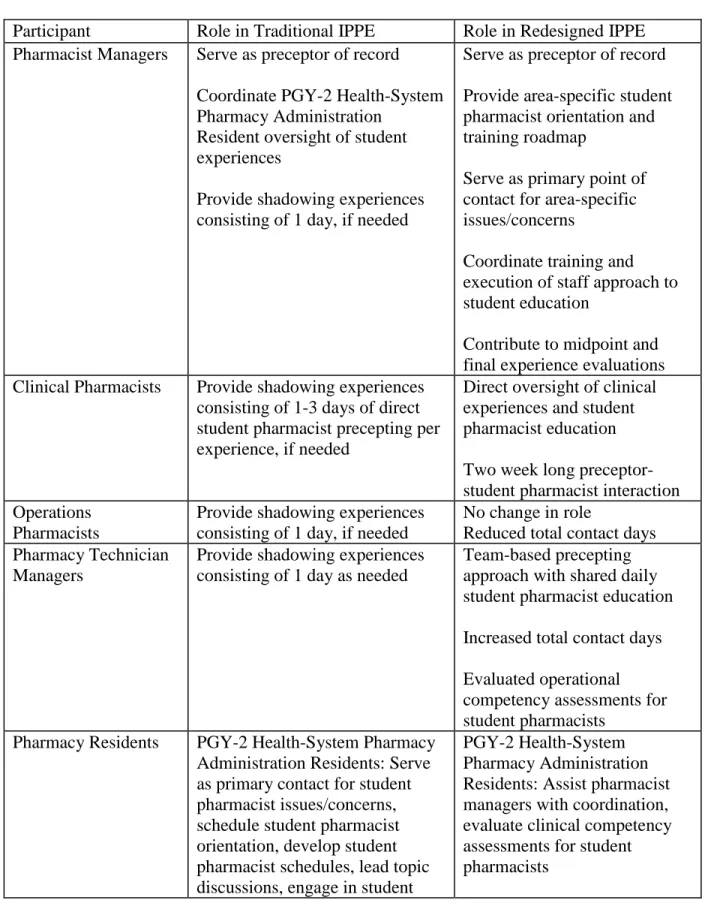
Several individuals participated in the delivery of this IPPE including operational and clinical pharmacy managers, operational and clinical pharmacists, pharmacy residents, and pharmacy technicians. A detailed summary of the differences in roles and expectations for participants in the early immersion program in comparison to the traditional IPPE is provided in Table 1. Compared to the traditional IPPE in which preceptors typically provided one day shadowing opportunities for student pharmacists with minimal engagement in the student development process, implementation requirements for the redesigned experience necessitated increased commitment by preceptors to engage in daily educational activities and scheduled competency assessments. To aid in the transition, key personnel from the school of pharmacy responsible for the implementation assisted preceptors by outlining the new expectations of the immersive experiences and meeting with preceptors to address concerns prior to initiation.
Preceptors who had direct oversight responsibility for a pharmacy team engaged in the IPPE program implementation were eligible to participate in the study. This group consisted of pharmacist managers (operational and clinical environments), clinical pharmacists responsible for patient care services, and technician managers. Pharmacy residents and technicians were excluded since they do not have direct oversight responsibility for the IPPE program
Institutional Review Board at our institution. Participants provided written informed consent. Participants were not offered incentives for their participation.
Survey Data Collection
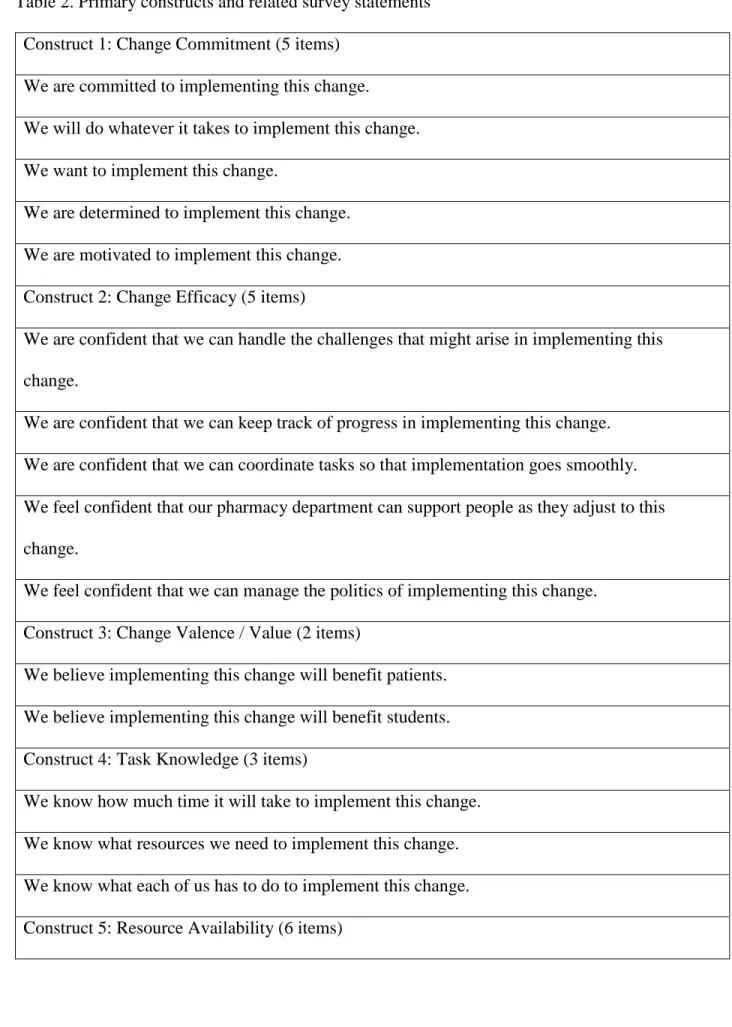
Eligible and willing preceptors completed a participant demographics survey including position title, practice environment, and previous preceptor experience via an electronic survey platform. In addition, participants completed an assessment of organizational readiness for change prior to the initiation of the immersion program training and immediately following the program’s conclusion via an electronic survey platform. The readiness for change assessment included the 10-item Organizational Readiness for Implementing Change (ORIC) survey as well as additional items hypothesized to be determinants of readiness based on Weiner’s theory of organizational readiness for change.15,18 The ORIC survey is a theory-based tool designed to evaluate organization members’ readiness for change prior to the implementation of a desired program or initiative. A psychometric analysis using the survey in simulated and genuine health care settings has shown to produce valid and reliable measures that appropriately reflect
not been evaluated previously; however, it has potential to be beneficial in the understanding of readiness for change with respect to experiential education or other programmatic initiatives.
Qualitative Data Collection
Analysis
Descriptive statistics were used to characterize all quantitative variables from the survey. Data are presented as medians (interquartile range) for continuous variables and percentages for categorical variables. Results from the survey data were aggregated by grouping survey
responses pertaining to the six evaluated constructs. Due to the small sample sizes and Likert scale data, the Wilcoxon signed rank test was used to compare the median construct scores of the pre- and post-surveys. For constructs with a statistically significant change from before to after the implementation, the Wilcoxon signed rank test was used to determine which survey item pertaining to the identified construct contributed to a statistically significant difference. Statistical significance was established a priori at an alpha of 0.05. Cronbach alpha was also calculated to evaluate the consistency of each variable in measuring the planned constructs. Cronbach alpha values greater than 0.7 were considered an appropriate indication of internal consistency. All quantitative data analyses were performed using the Program R for Mac, Version 3.2.2 (Vienna, Austria).
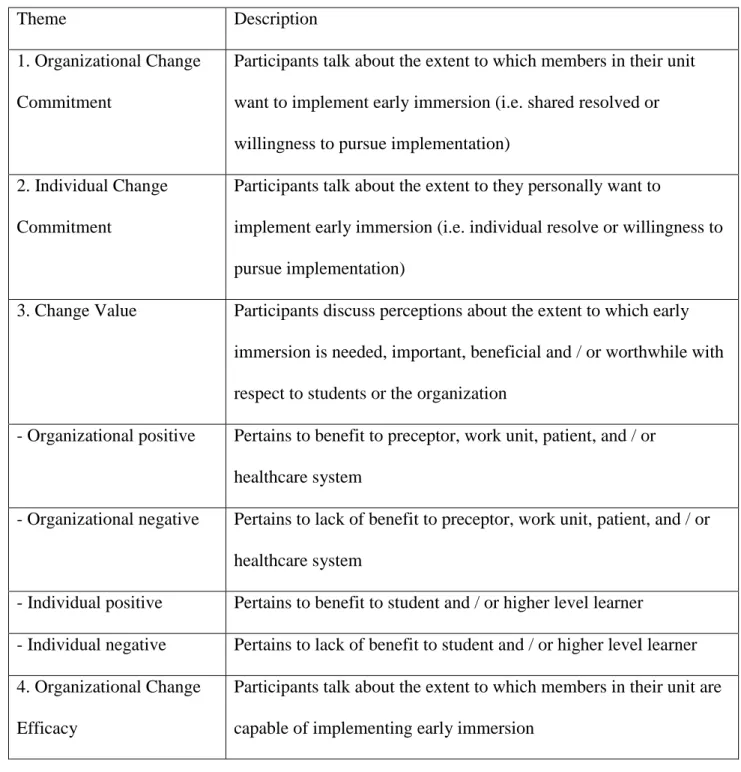
The focus group and semi-structured interview data were analyzed using thematic coding. A constant comparative approach was used by three of the researchers who independently
independently by the three researchers utilizing a more elaborate coding scheme which included the additional sub-categories. Following the completion of the second coding cycle, the
researchers met to review findings and reach consensus on the presence of major themes and concepts addressed by the participants. In cases where thematic coding diverged, two additional researchers were incorporated to reach an agreement. The qualitative findings were used to reinforce the results of the pre- and post-ORIC surveys to a greater extent. Select quotes from the focus groups and interviews are provided as supporting evidence for the qualitative and
quantitative findings.
Results
Survey Results
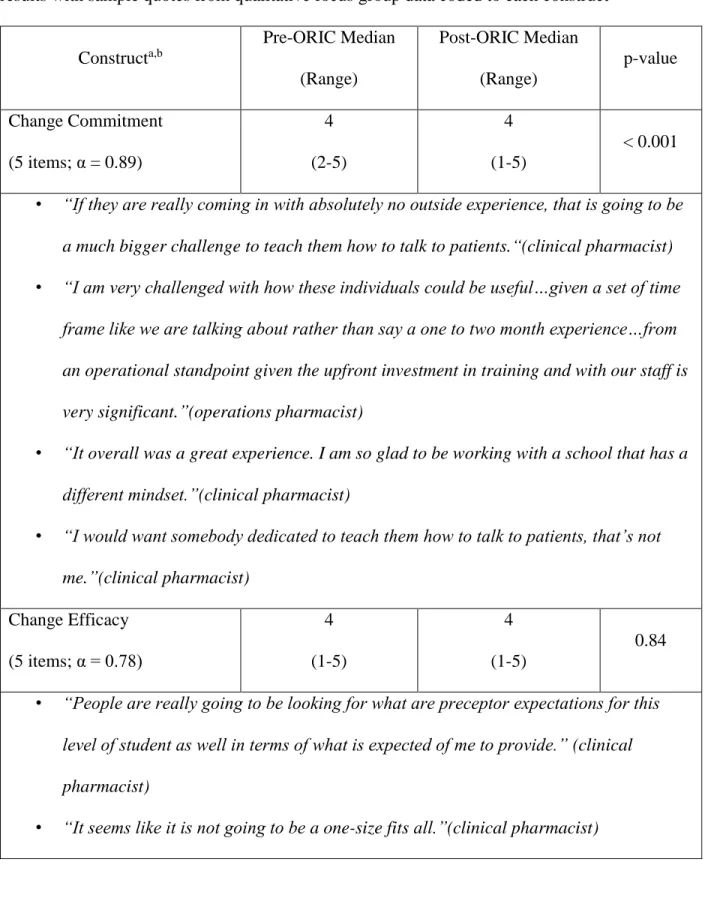
Overall, the median of the aggregate scores for each of the six constructs prior to and following program implementation were generally high with results of either 4 (somewhat agree) or 5 (strongly agree). A comparison of the aggregate median construct scores for the pre- and post-ORIC survey using the Wilcoxon signed rank revealed a statistically significant decline (p<0.001) in the perception of change commitment. As shown in Table 5, there were no differences identified in the other constructs evaluated. For each item pertaining to change commitment in the survey, median scores were compared using the Wilcoxon signed rank test to locate potential reasons for this decline. A statistically significant decline was detected for two items in the ORIC survey pertaining to change commitment: “We are committed to
implementing this change” (pre-median 5 to post-median 4; p<0.05) and “We are determined to implement this change” (pre-median 4 to post-median 4; p<0.05). With regards to the second item, the notable decline is due to the greater variance in the reported values by preceptors despite the similar median between groups (Table 5). The overall Cronbach alpha for the survey was 0.92 with each aggregated construct having an alpha value of 0.69 or greater. This provides justification for the method of item aggregation based on the selected constructs and suggests the measures were sufficiently consistent, with the exception of resource availability.
Qualitative Results
other learners, such as residents or fourth professional year student pharmacists. Discussion of implementation requirements centered on challenges with daily activity logistics and planning, technical system use such as electronic medical record access, and methods to concurrently manage learners of varying knowledge and skill levels. The perception of change value communicated was diverse as some preceptors noted benefits of student immersion for the health-system and practice in general, while others noted particular challenges and did not recognize a long-term gain. With respect to clinical services, a majority of preceptors agreed student pharmacists effectively contributed to the organizational goals as desired.
Following the second independent analysis with the additional sub-codes, the researchers collected and reviewed all coding to develop a list of example quotations pertinent to the survey constructs, which are provided in Table 5. The qualitative data were compared with the
quantitative results to determine key features that related to readiness for change. Of note, the researchers found that preceptors rarely spoke of organizational benefits or challenges during focus group and interview sessions. Instead many preceptors focused on particular benefits to themselves, their learners, or their specific clinical service or operational area.
Discussion
influencing implementation of a new experiential education program for early learners in pharmacy practice.
The current study used the ORIC survey to measure organizational readiness for change. Although there are multiple instruments in the literature that assess readiness for change, there is no gold standard. In addition to ORIC, others have been widely used, such as the 115-item
Texas Christian University organizational readiness for change (TCU-ORC) survey and the
77-item organizational readiness to change assessment (ORCA).25-26 We chose to use the ORIC
survey for this study because it is theory-based, brief (10 items), applicable to various
organizational settings that extend beyond clinical practice, and appropriate for both clinical and
non-clinical respondents.18 The findings from the ORIC survey suggest preceptors and pharmacy personnel were generally ready for the implementation of the immersion program as noted by the high level of agreement with survey items. Interestingly, scores on one construct, change
commitment, were shown to change significantly following the pilot program. This decline in change commitment indicates that the experience from implementing the pilot may have
This study is novel in its use of a measure of organizational readiness for change before and after the implementation of a pilot educational intervention. The ORIC survey utilized in this study represents a new application that illustrates organizational readiness for change is not static. Experience with a new program may shape perceptions about its requirements and value. Coupled with qualitative findings in a mixed methods approach, the survey results also identified determinants of perceived readiness, which is useful for informing future implementation efforts. Our findings, complemented by previous implementation science literature, suggest several approaches for future program implementers to consider. For example, implementation frameworks, such as the Consolidated Framework for Implementation Research (CFIR), suggest that implementation planning should involve consideration of stakeholders’ needs and
perspectives.27 Future program developers and implementers would be well served to further explore the concerns participants have about program implementation utilizing a mixed methods approach and subsequently develop strategies that could increase the perceived value and reduce the perceived task demands. Based on variation of perceived value observed in this study
between operational and clinical services, it will be essential for future program implementers to develop strategies that are tailored to the local practice environment. Additionally, efforts for program implementers to communicate how the new program aligns with organizational priorities could promote higher perceived value of the change.
The implementation of new experiential education programs in pharmacy practice represents a significant challenge to schools of pharmacy and partner organizations. This study has provided a starting point to identify specific areas that may require targeted monitoring or assistance prior to and during the full-scale implementation of practice-based education
faculty at the school of pharmacy and partner sites to expand this experience to several institutions. First, a continuous mechanism was developed for partner sites to share concerns regarding program implementation. Second, integration of assessment data has been utilized to develop sequential and cohesive didactic classes with immersion. Refinement of didactic class content to improve perceived value and reduce task demands for preceptors has occurred by ensuring student pharmacists were better prepared to participate effectively at practice sites. Finally, full-scale implementation has also included delivery of preceptor development programs offered by the school to better align the new program with organizational priorities of the
collaborating partner sites.
There are several potential limitations of this study. First, the perspectives reflected by participants represent those of individuals with less than 10 years of experience at one institution; however, the program evaluation captured a wide range of perspectives of pharmacy personnel from varying practice environments, positions, and education experience. Second, the sample size was small and may have not been sufficiently powered to show an appreciable change in the ORIC constructs. The mixed methods approach with triangulation of findings from qualitative data helps to offset this potential limitation. Third, the ORIC has been studied in simulated and live contexts18, but it has not been extensively studied in educational or pharmacy settings or to assess organizational readiness pre- and post-implementation of a small-scale pilot program. Finally, it is plausible the questions developed by the study team for the focus groups and semi-structured interviews emphasized individual implementation experiences compared to questions focused more on the organizational impact and beliefs. As such, this may partially explain the lack of alignment seen between organizational priorities and individual goals.
The implementation of programs that differ substantially from current practices can pose a significant challenge for institutions. This study suggests there are multiple aspects for schools of pharmacy to address when implementing programs that affect experiential education. Most importantly, institutions must evaluate the needs of preceptors and other stakeholders that may be affected by such initiatives and work to resolve perceived deficits to enhance participation. For successful collaboration between a school of pharmacy and a partner site, more efforts should be made to guarantee organizational and individual readiness are aligned to ensure preceptor commitment for student pharmacist engagement. Future research in experiential education should incorporate implementation science principles related to assessing barriers and targeting these barriers with appropriate implementation strategies.
Acknowledgements:. The authors would like to thank the pharmacists, pharmacy postgraduate
residents, and pharmacy technicians who gave their time and effort to the project’s
implementation. The authors do not have any relevant conflicts of interest to disclose. This research did not receive any specific grant from funding agencies in the public, commercial, or not-for-profit sectors.
References
2. Kennerly J, Weber RJ. Role of pharmacy education in growing the pharmacy practice model.
Hosp Pharm. 2013;48(4):338-42.
3. Ashby DM. Permission granted. Am J Health Syst Pharm. 2011;68(16):1497-1504.
4. Mersfelder TL, Bouthiller MJ. Value of the student pharmacist to experiential practice sites: a review of the literature. Ann Pharmacother. 2012;46(4):541-8.
5. Walker PC, Tucker Jones JN, Mason NA. An advanced pharmacy practice experience in transitional care. Am J Pharm Educ. 2010; 74(2):Article 20.
6. Walker PC, Kinsey KS, Kraft MD, et al. Improving student education and patient care through an innovative introductory pharmacy practice experience. Am J Health-Syst Pharm.
2011;68:655-60.
7. Lancaster JW, Grgurich PE. Impact of student pharmacists on the medication reconciliation process in high-risk hospitalized general medicine patients. Am J Pharm Educ.
2014;78(2):Article 34.
8. Woolley AB, Berds CA, Edwards RA, Copeland D, DiVall MV. Potential cost avoidance of pharmacy students’ patient care activities during advanced pharmacy practice experiences. Am J
Pharm Educ. 2013;77(8):Article 164.
12. Walker PC, Kraft MD, Kinsey KS, et al. Making student pharmacists indispensable: the added value of introductory pharmacy practice experience students to patient care. Curr Pharm
Teach Learn. 2015;7:47-53
13. American Society of Health-System Pharmacists. Capacity of hospitals to partner with academia to meet experiential education requirements for pharmacy students. Am J Health-Syst
Pharm. 2008;65:e53-71.
14. Danielson J, Craddick K, Eccles D, Kwasnik A, O’Sullivan TA. A qualitative analysis of common concerns about challenges facing pharmacy experiential education programs. Am J
Pharm Educ. 2015;79(1):Article 06.
15. Weiner BJ. A theory of organizational readiness for change. Implement Sci. 2009;4:67-75. 16. Weiner BJ, Amick H, Lee SY. Conceptualization and measurement of organizational readiness for change: a review of the literature in health services research and other fields. Med
Care Res Rev. 2008;65:379-436.
17. Sanders KA, Waldron K, Willoughby I, McLaughlin JE, Pinelli NR. Educational outcomes associated with student pharmacist immersion in accountable patient-care roles in health-system practice. Pharmacotherapy 2015;35:e93.
18. Shea CM, Jacobs SR, Esserman DA, Bruce K, Weiner BJ. Organizational readiness for implementing change: a psychometric assessment of a new measure. Implement Sci. 2014;9:7-21.
20. Shea CM, Reiter KL, Weaver MA, McIntyre M, Mose J, Thornhill J, Malone R, Weiner BJ. Stage 1 of the meaningful use incentive program for electronic health records: a study of
readiness for change in ambulatory practice settings in one integrated delivery system. BMC Med
Inform Decis Mak. 2014;14:119.
21. Chuang E, Ayala GX, Schmied E, Ganter C, Gittelsohn J, Davison KK. Evaluation protocol to assess an integrated framework for the implementation of the Childhood Obesity Research Demonstration project at the California (CA-CORD) and Massachusetts (MA-CORD) sites.
Child Obes. 2015;11:48-57.
22. Cook JM, Dinnen S, Thompson R, Ruzek J, Coyne JC, Schnurr PP. A quantitative test of an implementation framework in 38 VA residential PTSD programs. Adm Policy in Ment Health.
2015; 42:462-473.
23. Damschroder LJ, Hagedorn HJ. A guiding framework and approach for implementation research in substance use disorders treatment. Psychol Addict Behav. 2011;25:194-205. 24. True G, Butler AE, Lamparska BG, Lempa ML, Shea JA, Asch DA, Werner RM. Open access in the patient-centered medical home: lessons from the Veterans Health Administration.
Journal Gen Intern Med. 2013;28:539-545.
25. Lehman WE, Greener JM, Simpson DD. Assessing organizational readiness for change. J
Subst Abus Treat. 2002; 22(4):197-209.
Table 1. Role Comparison of Pharmacy Staff Engaged in the Traditional and Redesigned Introductory Pharmacy Practice Experience
Participant Role in Traditional IPPE Role in Redesigned IPPE Pharmacist Managers Serve as preceptor of record
Coordinate PGY-2 Health-System Pharmacy Administration
Resident oversight of student experiences
Provide shadowing experiences consisting of 1 day, if needed
Serve as preceptor of record Provide area-specific student pharmacist orientation and training roadmap
Serve as primary point of contact for area-specific issues/concerns
Coordinate training and execution of staff approach to student education
Contribute to midpoint and final experience evaluations Clinical Pharmacists Provide shadowing experiences
consisting of 1-3 days of direct student pharmacist precepting per experience, if needed
Direct oversight of clinical experiences and student pharmacist education Two week long preceptor-student pharmacist interaction Operations
Pharmacists
Provide shadowing experiences consisting of 1 day, if needed
No change in role
Reduced total contact days Pharmacy Technician
Managers
Provide shadowing experiences consisting of 1 day as needed
Team-based precepting approach with shared daily student pharmacist education Increased total contact days Evaluated operational competency assessments for student pharmacists
Pharmacy Residents PGY-2 Health-System Pharmacy Administration Residents: Serve as primary contact for student pharmacist issues/concerns, schedule student pharmacist orientation, develop student pharmacist schedules, lead topic discussions, engage in student
pharmacist assessment, and provide 1-1 student pharmacist training
Other residents: If scheduled and sharing a clinical
pharmacist preceptor with an IPPE student, may functionally serve as student pharmacist’s co-preceptor and provide medication history training Student Pharmacists Observational role for time of the
experience
Occasional direct involvement in patient care, but only at specific site locations
Encouraged to be directly active in >95% of the IPPE in the areas of medication use and comprehensive medication management processes Involved in delivery tracking and waste reduction programs
PGY-2: Post-Graduate Year 2
Table 2. Primary constructs and related survey statements Construct 1: Change Commitment (5 items)
We are committed to implementing this change. We will do whatever it takes to implement this change. We want to implement this change.
We are determined to implement this change. We are motivated to implement this change. Construct 2: Change Efficacy (5 items)
We are confident that we can handle the challenges that might arise in implementing this change.
We are confident that we can keep track of progress in implementing this change. We are confident that we can coordinate tasks so that implementation goes smoothly. We feel confident that our pharmacy department can support people as they adjust to this change.
We feel confident that we can manage the politics of implementing this change. Construct 3: Change Valence / Value (2 items)
We believe implementing this change will benefit patients. We believe implementing this change will benefit students. Construct 4: Task Knowledge (3 items)
We have the time we need to implement this change. We have the staff we need to implement this change. We have the space we need to implement this change. We have the skills to implement this change.
We have the resources we need to implement this change. We have the expertise to implement this change.
Construct 6: Leadership Support (2 items)
Table 3: Qualitative data codebook
Theme Description
1. Organizational Change Commitment
Participants talk about the extent to which members in their unit want to implement early immersion (i.e. shared resolved or willingness to pursue implementation)
2. Individual Change Commitment
Participants talk about the extent to they personally want to
implement early immersion (i.e. individual resolve or willingness to pursue implementation)
3. Change Value Participants discuss perceptions about the extent to which early immersion is needed, important, beneficial and / or worthwhile with respect to students or the organization
- Organizational positive Pertains to benefit to preceptor, work unit, patient, and / or healthcare system
- Organizational negative Pertains to lack of benefit to preceptor, work unit, patient, and / or healthcare system
- Individual positive Pertains to benefit to student and / or higher level learner
- Individual negative Pertains to lack of benefit to student and / or higher level learner 4. Organizational Change
Efficacy
5. Individual Change Efficacy
Participants talk about the extent to which they personally are able to implement early immersion and / or their knowledge and skills (or lack of) in relation to implementing early immersion
6. Implementation Requirements
Participants talk about the activities they completed to prepare for early immersion students and / or activities they performed while students were present
- Logistics of daily activities
Pertains to scheduling and evaluation requirements
- Technical / information system use
Pertains to access to electronic resources and / or tools
- Learner layering aspects Pertains to coordination and / or attention to multiple levels of learners in one setting
7. Available Support Participants talk about the support that they perceive to be available for implementing early immersion
8. Needed Support Participants talk about the types of support that they would like to have to continue with or sustain the early immersion program 9. Contextual Factors Participants talk about factors that affected implementation that
were generally beyond the control of the individual preceptor - Timing of implementation Pertains to conflicts and / or benefits of implementation in certain
times or months of the year
- Competing priorities Pertains to balance of concurrent changes occurring in the setting other than the early immersion program
- Capacity Pertains to space limitations and / or the number of students
Table 4. Participant Demographics N=20 Demographic
Female, n (%) 12 (60%)
Age, median (interquartile range) 36.5 (7.8)
Position Title, n (%) Clinical Pharmacist Technician Manager Pharmacist Manager
13 (65%) 4 (20%) 3 (15%) Primary Practice Environment, n (%)
Medicine
Cardiology / Heart / Vascular Oncology
Acute Care Operations Surgery
No Response
6 (30%) 4 (20%) 2 (10%) 1 (5%) 1 (5%) 6 (30%) Year of Practice at Current Institution, n (%)
< 5 years 6-10 years
11-20 years > 20 years
2 (10%) 1 (5%) Pharmacist Experience (n = 16)
Post-Graduate Training, n (%)
PGY-1 Residency (clinical intensive post-graduate experience)
PGY-2 Residency (clinical specialty intensive post-graduate experience) Graduate Degree (e.g., MPH, PhD, MHA)
Fellowship (research intensive post-graduate experience) No post-graduate training
15 (94%) 13 (81%) 4 (25%) 1 (6%) 0 (0%)
Board Certification, n (%) 13 (81%)
Additional Qualifications, n (%) 3 (19%)
Years of Practice Experience Since PharmD / BSPharm Completion, n (%) < 5 years
6-10 years 11-20 years > 20 years
3 (19%) 7 (44%) 5 (31%) 1 (6%) Served as a Primary or Co-Preceptor for Student Pharmacists on IPPEs, n
(%)
9 (56%)
Years of Experience Serving as a Primary or Co-Preceptor for Student Pharmacists on IPPEs n(%)
< 5 years 6-10 years
Served as a Primary or Co-Preceptor for Student Pharmacists on APPEs, n (%)
16 (100%)
Years of Experience Serving as a Primary or Co-Preceptor for Student Pharmacists on APPEs, n (%)
< 5 years 6-10 years 11-20 years > 20 years
8 (50%) 5 (31%) 2 (13%) 1 (6%) Technician Specific Items (n = 4)
Pharmacy Technician Certification, n (%) 2 (50%)
Years of Practice Experience As Pharmacy Technician, n (%) 6-10 years
11-20 years
2 (50%) 2 (50%) PGY-1: Post-Graduate Year 1
PGY-2: Post-Graduate Year 2 MPH: Master of Public Health
MHA: Master of Health/Healthcare Administration PhD: Doctor of Philosophy
PharmD: Doctor of Pharmacy BSPharm: Bachelor of Pharmacy
Table 5. Pre- and post- Organizational Readiness for Implementing Change (ORIC) survey results with sample quotes from qualitative focus group data coded to each construct
Constructa,b
Pre-ORIC Median (Range)
Post-ORIC Median (Range)
p-value
Change Commitment (5 items; α = 0.89)
4 (2-5)
4 (1-5)
< 0.001
• “If they are really coming in with absolutely no outside experience, that is going to be
a much bigger challenge to teach them how to talk to patients.“(clinical pharmacist)
• “I am very challenged with how these individuals could be useful…given a set of time
frame like we are talking about rather than say a one to two month experience…from
an operational standpoint given the upfront investment in training and with our staff is
very significant.”(operations pharmacist)
• “It overall was a great experience. I am so glad to be working with a school that has a
different mindset.”(clinical pharmacist)
• “I would want somebody dedicated to teach them how to talk to patients, that’s not
me.”(clinical pharmacist)
Change Efficacy (5 items; α = 0.78)
4 (1-5)
4 (1-5)
0.84
• “People are really going to be looking for what are preceptor expectations for this
level of student as well in terms of what is expected of me to provide.” (clinical
pharmacist)
• “There is such a gap now between what I am thinking about and doing… it is harder
for me to reach where they are.”(clinical pharmacist)
• “I was not able to do the amount of coaching that the student needed and I recognized
it.”(clinical pharmacist)
Change Valence / Value (2 items; α = N/A)
5 (1-5)
5 (2-5)
1.00
• “When they do come back to us during their fourth year... they should need a lot less
direction … they are already familiar with a lot of the day-to-day activities of different
types of services”(clinical pharmacist)
• “Operationally… the feedback that I have heard is it is probably going to take a bit
longer… for them to truly… be kind of independent in their work”(technician
manager)
• “They really have been incorporated and involved in patient care in a way that…
actually is contributing to our team in a positive way”(clinical pharmacist)
• “I would make the statement that the students that we had and the exposure that we
had, that they were not of value”(operational pharmacist)
Task Knowledge (3 items; α = 0.84)
4 (1-5)
4 (1-5)
0.55
• “I think if we know what they are going to have the exposure to, will help plan
it.”(clinical pharmacist)
• “Their level of knowledge is completely not what I am used to from the fourth-year
Resource Availability (6 items; α = 0.69)
4 (1-5)
4 (1-5)
0.38
• “Just the physical presence of that many additional people was substantially impactful
on workflow.”(technician manager)
• “The space issue was a major problem.”(clinical pharmacist)
• “I can only have two people on rounds… so I had to kind of figure out how to do
that.”(clinical pharmacist)
• “Once you start adding people and more people it becomes very congested… it does
effect the other technicians.”(operations pharmacist)
Leadership Support (2 items; α = N/A)
4 (1-5)
4 (2-5)
0.78
• “It really does take a lot of time to manage the team.”(clinical pharmacist)
• “If somehow in collaboration with the school, if there was almost like…what would be
appropriate for an educational discussion for them.”(clinical pharmacist)
aTotal Cronbach α = 0.92