79
Feasible Annotation Scheme for Capturing Policy Argument Reasoning
using Argument Templates
Paul Reisert† Naoya Inoue†,‡ Tatsuki Kuribayashi‡ Kentaro Inui†,‡
†RIKEN Center for Advanced Intelligence Project ‡Tohoku University
{naoya-i,kuribayashi,inui}@ecei.tohoku.ac.jp
Abstract
Most of the existing works on argument mining cast the problem of argumentative structure identification as classification tasks (e.g. attack-support relations, stance, explicit premise/claim). This paper goes a step further by addressing the task of automatically iden-tifying reasoning patterns of arguments using
predefined templates, which is called
argu-ment template (AT) instantiation. The contri-butions of this work are three-fold. First, we develop a simple, yet expressive set of easily annotatable ATs that can represent a major-ity of writer’s reasoning for texts with diverse policy topics while maintaining the computa-tional feasibility of the task. Second, we cre-ate a small, but highly reliable annotcre-ated cor-pus of instantiated ATs on top of reliably an-notated support and attack relations and con-duct an annotation study. Third, we formulate the task of AT instantiation as structured pre-diction constrained by a feasible set of tem-plates. Our evaluation demonstrates that we can annotate ATs with a reasonably high inter-annotator agreement, and the use of template-constrained inference is useful for instantiat-ing ATs with only partial reasoninstantiat-ing compre-hension clues.
1 Introduction
Recognizing argumentative structures in unstruc-tured texts is an important task for many natu-ral language processing (NLP) applications. Ar-gument mining is an emerging, leading field of argumentative structure identification in the NLP community. It involves a wide variety of sub-tasks for argumentative structure identification such as explicit premise and claim identifica-tion/classification (Reed et al.,2008;Rinott et al.,
2015;Stab and Gurevych,2014), stance classifica-tion (Hasan and Ng,2014;Persing and Ng,2016), and argumentative relation detection (Cocarascu
and Toni,2017;Niculae et al.,2017;Peldszus and Stede, 2015b;Stab and Gurevych, 2017). These tasks have been useful for applications such as es-say scoring, document summarization, etc. (Ghosh et al.,2016;Stab and Gurevych,2017).
This paper addresses a feasible annotation scheme for the task of reasoning pattern identifica-tion in argumentative texts. Consider the follow-ing argument consistfollow-ing of two argumentative seg-mentsS1andS2regarding the policy topicShould Germany universities charge tuition fees?:
(1) S1: German universities should not charge tuition fees.
S2:Every German citizen hasa right to edu-cation.
In this work, we adopt Walton et al.(2008)’s argu-mentation schemes (ASs), one prominent theory used for identifying reasoning patterns in every day arguments. Using Walton et al.(2008)’s Ar-gument from Negative Consequencesscheme, the reasoning of Example1 can be explained as fol-lows:
• Premise : If actionx is brought about, bad consequencesywill occur.
• Conclusion:xshould not be brought about.
where bothx andyare slot-fillers and x=“charge tuition fees” and y=“a right to education will be violated”. Each AS identifies a scheme (from 65 total schemes) and appropriate slot-fillers. Instan-tiations of such reasoning patterns for an argument have several advantages.
automatically assessing the quality of the logi-cal structure of a given argument, where identify-ing specific arguments can signify higher quality, especially for tasks such as essay scoring (Song et al., 2014; Wachsmuth et al., 2016). Third, it will be useful for generating support or attacks in application contexts where a human and machine are cooperatively engaged in a debate (for decision support or education). Furthermore, understand-ing the reasonunderstand-ing in an argumentative text can con-tribute towards determining implicit ARs not indi-cated with an explicit discourse marker.
Towards automatically identifying the underly-ing reasonunderly-ing of argumentative texts,Reed(2006) created Araucaria, a corpus consisting of ar-gumentative texts annotated with Walton et al.
(2008)’s ASs. Feng and Hirst(2011) used Arau-caria for creating a computational model for iden-tifying the type of argumentation scheme.
Although Araucaria is a well-known corpus in the argumentation mining community, it suf-fers from complex annotation guidelines which makes the annotation task difficult.1 A follow up study (Musi et al., 2016) reports that the inter-annotator agreement of annotating a simplified taxonomy of the Argumentum Model of Topics
argumentation schemes (Rigotti, 2006; Palmieri,
2014) results in Fleiss’κ= 0.31 (“fair agreement”) even if the annotators are trained and only a subset (8 types) of schemes are annotated. In this work, we assume the following: (i) annotating multiple types of ASs is difficult, and (ii) the reliability of annotating reasoning patterns for a single AS with implicit slot-fillers is low because when slot-fillers are not explicitly written in the original text, they must manually be generated by annotators using natural language sentences; this allows for a wide variety of possible, arbitrary candidates for each scheme (e.g.y=“a right to education is violated” in Example1), making the annotation costly and dif-ficult. Towards constructing a highly-reliable cor-pus for the task of automatic reasoning identifica-tion in argumentative texts, an annotaidentifica-tion scheme that covers a wide-range of arguments as much as possible and simultaneously offers a simple way to specify implicit slot-fillers instead of manually creating natural language sentences is crucial.
This paper makes three important contributions towards automatically capturing a writer’s
reason-1An inter-annotator agreement was not reported inReed
(2006).
ing in argumentative texts. First, we compose a simple, yet expressive set of easily annotat-able templates (argument templates or ATs) that allow for writer’s reasoning to be representable without the need for manual generation of nat-ural language sentences when slot-fillers are im-plicit. Specifically, we propose a template/slot-filler based approach for instantiating reasoning patterns that capture the underlying reasoning be-tween two argumentative segments in an argumen-tative relation (AR) using two types of causal la-bels (e.g. PROMOTEandSUPPRESS). Our annota-tion study demonstrates that we can annotate ATs with a reasonably high inter-annotator agreement (Cohen’sκ=0.80) and ATs can represent a major-ity (74.6%) of writer’s reasoning in a small essay corpus with multiple, diverse policy topics. Sec-ond, using ATs, we augment an existing, reliable corpus of argumentative texts (Peldszus and Stede,
2015a) with writer’s reasoning and create a small, but useful corpus on top of pre-labeled argumen-tative relations. Third, towards creating a fully-automated argument template instantiation model, we create a preliminary computational model for instantiating ATs. We formulate the task of AT in-stantiation as structured prediction constrained by a feasible set of ATs. We hypothesize that the in-troduction of such constraints enables us to instan-tiate ATs with only partial reasoning comprehen-sion clues. Our evaluation shows that template-constrained inference is indeed useful for instanti-ating ATs with only partial reasoning comprehen-sion clues.
2 A Corpus of Instantiated Argument Templates
The key requirements for automatically capturing an argument’s reasoning are four-fold: (i) capture a writer’s implicit reasoning as much as possible, (ii) be machine-friendly, (iii) be useful for down-stream applications, and (iv) keep human annota-tion simple. Towards this goal, as menannota-tioned in Section 1, Reed(2006) created Araucaria, a cor-pus consisting of argumentative texts annotated withWalton et al.(2008)’s ASs. However, the an-notation scheme requires annotators to manually generate natural language sentences for implicit slot-fillers (i.e. (ii) and (iv) are not considered).
slot-German universities should not charge tuition fees.
Every German citizen has a right to education.
SUPPORT Arg. Templates
OTHER
TEMPLATE SELECTION y
x
suppress
BAD( x)
GOOD( y) SLOT
FILLING
Input: Argumentative Relation Argument Templates
Output: Instantiation of arg. structure
SUPPORT St:
Ss:
St:
[image:3.595.147.454.61.174.2]Ss:
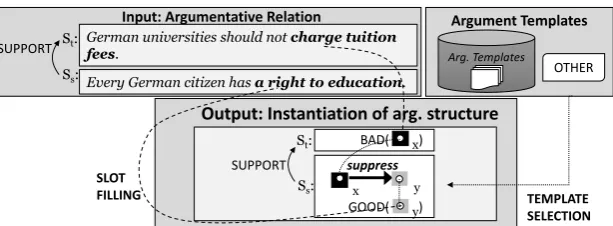
Figure 1: Overview of our argument template instantiation approach for capturing underlying reasoning.
filler is implicit. Given two argumentative state-ments with a known AR, our task is to identify the reasoning between them by (i) selecting a tem-plate from a predefined temtem-plate set (argument templates (ATs)), where each template encodes a causal label, and (ii) instantiating the template via slot-filling, where the slot is linked with a rele-vant, arbitrary phrase in the input text. Figure 1
exemplifies our proposed approach, using the sup-port relation fromS2toS1in Example1. The first
step is to identify an AT: “S1, the target segment of the relation (i.e. St), states that x should not be
brought about (i.e. bad)2, because S2, the source
segment of the relation (i.e. Ss), states that x is bad
because when x happens, y, a good entity/event, will be suppressed.”. The second step is to instan-tiate the template by filling in the slotsx,ywith a phrase from the text:x=“charge tuition fees” and
y=“a right to education”. By encoding causal la-bels, annotators are no longer required to manu-ally construct implicit slot-fillers (e.g. y=“a right to education will be violated” in Section1).
The key insight about template design from previous work (Musi et al., 2016) is that if we annotate reasoning with coarse-grained reasoning types, the annotation becomes more difficult. In this work, we hypothesize that patterns for rep-resenting argumentation are not uniformly dis-tributed but highly skewed, and create an inven-tory of major ATs, annotating only typical in-stances of reasoning with them. We label in-stances where a template cannot be instantiated as “OTHER”. In fact, as we report in Section2.3, the variety of reasoning underlying ARs in the corpus we use can be largely captured by only a small number of predefined templates. Although the
ex-2A target segment may either be a premise or conclusion
in our dataset. Therefore, we consider the classification ofx
equivalent to its consequence (i.e. x=bad is equivalent to “x
should not be brought about”).
pressibility of a slot-filler will be reduced by em-bedding causal labels into our templates, the feasi-bility of the computational task will be increased. In the future, we plan to capture the causal in-formation lost by annotating other factors of the causality such as severity, truthfulness, likelihood, etc.
2.1 Dataset
We create our set of ATs using the arg-microtexts corpus3(Peldszus and Stede, 2015a), a corpus of manually composed arguments, due to its high re-liability of annotated relations amongst 3 annota-tors (Fleissκ = 0.83).4. The corpus contains 112 argumentative texts, each consisting of roughly five segments composed of a policy topic ques-tion, a main claim, and several premises. Each argument in a text is comprised of a policy argu-ment, where each topic supports that one should or should not do something. Additionally, each argu-mentative segment was annotated with its stance (i.e. opponent or proponent) towards the topic question. 357 ARs between segments have been manually annotated as eitherSUPPORT(i.e. a seg-ment supports the acceptability of another argu-mentative segment), ATTACK (i.e. a segment at-tacks the acceptability of another argumentative segment), or UNDERCUT (i.e. a segment attacks another AR) relations, where each relation makes up 62.7% (224/357), 23.5% (84/357) and 13.8% (49/357), respectively.
In total, we used 89 texts5, consisting of 23 di-verse policy topics (e.g. fines for dog dirt, waste separation, etc.). We divided the corpus into two
3https://github.com/peldszus/arg-microtexts
4Although the texts from the arg-microtexts corpus are
controlled in a sense that they are not from “real” argumenta-tive texts, we believe annotation on top of it is a good starting point due to its high reliability.
5The corpus has 112 texts, but we ignored 23 of the texts
ATTACK TEMPLATES SUPPORT TEMPLATES
St:
Ss:
AT-A1
y x
SUPPRESS GOOD( x)
GOOD( y)
St:
Ss:
AT-A2
y x
PROMOTE GOOD( x)
BAD( y)
St:
Ss:
AT-A3
y x
PROMOTE BAD( x)
GOOD( y)
St:
Ss:
AT-A4
y x
SUPPRESS BAD( x)
BAD( y)
St:
Ss:
AT-S3
y x
SUPPRESS BAD( x)
GOOD( y) z
St:
Ss:
AT-S4
y x
PROMOTE BAD( x)
BAD( y)
St:
Ss:
AT-S1
y x
PROMOTE GOOD( x)
GOOD( y)
St:
Ss:
AT-S2
y x
SUPPRESS
BAD( y)
[image:4.595.143.459.73.200.2]GOOD( x)
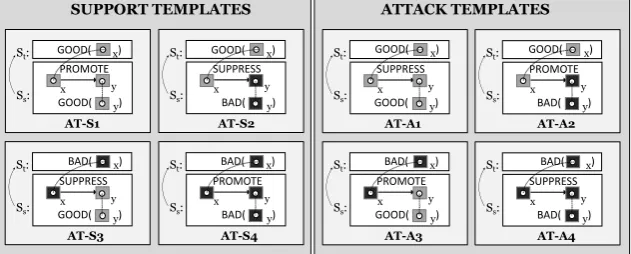
Figure 2: Some argument templates created and used in our corpus creation forSUPPORTandATTACK
relations, inspired byWalton et al.(2008)’sArgument from Consequencesscheme.
disjoint sets: (i) a development set (20 texts, 87 relations) and (ii) test set (69 texts, 270 relations). We used the development set to induce the ATs described in Section2.2and conduct several trial annotations.
2.2 Argument Templates
We build our inventory of ATs based on Walton et al. (2008)’s argumentation schemes and ana-lyze the development set for identifying the types of argumentation schemes. As the arg-microtexts corpus consists of policy arguments, we find that the most commonly used argumentation schemes from the corpus include the Argument from Pos-itive (Negative) Consequences schemes, hereby referred to as the Argument from Consequences
(AC) scheme. The scheme is as follows:
• Premise : Ifxis brought about, good (bad) consequencesywill occur.
• Conclusion: x should (not) be brought about.
We create ATs for aSUPPORTrelation by consid-ering the relation between the premise and conclu-sion (e.g. SsandSt in Figure1, respectively).
To representATTACKrelations with argumenta-tion schemes, we assume that a premise supports the opposite conclusion.
(2) St: German universities should not charge tuition fees.
Ss: However, tuition fees could promote bet-ter education quality.
For instance, in Example 2, an ATTACK relation exists fromSstoSt. The premise,Ss, is in support
of the opposite conclusion (i.e. “German universi-ties should charge tuition fees”). We represent this phenomena using theATTACKtemplates shown in Figure2.
AC-inspired templates As shown in Figure 2, we first create four ATs for a SUPPORT relation (AT-S1 to AT-S4). An example is as follows:
AT-S1: St, the target segment, implies/states
thatx, an entity/event, is GOOD and should be brought about. Ss, the source segment,
implies/states thatx isGOOD, because when
x exists/happens (or existed/happened), y, a
GOOD entity/event, will be (or was) PRO
-MOTED(orNOT SUPPRESSED)6
In Example1, the reasoning is instantiated by AT-S3, withx=“charge tuition fees”, aBADthing, and
y=“a right to education”, aGOODthing.
The terms GOOD and BAD refer to the value judgment (VJ) a writer has towards a template slot. This differs from the original stance in the arg-microtexts corpus, which considers the stance of the whole argumentative segment to-wards the topic. PROMOTE and SUPPRESS refer to the causality between slot-fillersxandy, where
PROMOTE refers to the activation of something
(e.g. smoking leads to cancer) and SUPPRESS
refers to the inactivation (e.g. smoking destroys lives) (Hashimoto et al.,2012). To reduce the com-plexity of the annotation study, we do not consider the modality of causality.
For an ATTACK relation, we create four ATs
(AT-A1 to AT-A4), as illustrated in Figure2.
6For our annotation, we consider both PROMOTED and
NOT SUPPRESSED and both SUPPRESSED and NOT PRO
St:
Ss:
AT-SA1
y x analogous
BAD( x) St:
Ss:
AT-SA2
y x analogous
GOOD( x) St:
Ss:
AT-AA1
y x analogous
BAD( x) St:
Ss:
AT-AA2
y x analogous
R1:
St:
AT-UQ1
quantifier( q)
¬quantifier( q)
St:
Ss:
AT-SP1
presupposition( p) St:
Ss:
AT-AP1
R1:
St:
AT-UP1
St:
Ss:
AT-SP2
St:
Ss:
AT-AP2
proposition( p)
proposition( p)
presupposition( p)
¬presupposition( p)
presupposition( p)
¬presupposition( p)
proposition( p)
¬proposition( p) presupposition( p)
BAD( y) GOOD( x) GOOD( y)
GOOD( x)
[image:5.595.79.522.68.197.2]BAD( y)
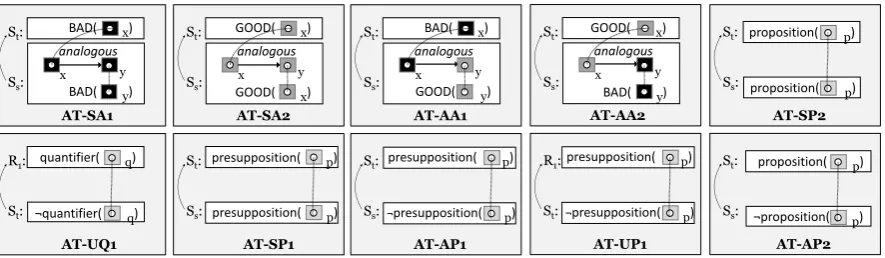
Figure 3: Argument templates for non-AC reasoning.
AT-A1: St implies/states that x is GOOD and
should be brought about, butSsimplies/states
thatxisBADbecause whenxexists/happens (or happened), y, a GOOD entity/event, will be (or was) SUPPRESSED (or NOT PRO
-MOTED).
In Example2, the reasoning is instantiated by AT-A3, withx=“corporate income tax”, aBADthing,
andy=“better education quality”, aGOODthing.
Additional templates We create a few ATs to capture minor, non-AC reasoning for each rela-tion, including UNDERCUTrelations. In total, we
create four additional types of ATs: presuppo-sition, argument from analogy, proposition, and
quantifier. We create four templates (not shown) for anUNDERCUTrelation. We thus assumeSt as
a link, denoted asRt. An example is as follows:
AT-U1: Rtsupports the goodness ofx, butSs
im-plies/states thatxisBADbecause whenx hap-pens (or happened),y, aGOODthing, will be
(or was)SUPPRESSED(orNOT PROMOTED).
Figure 3 shows analogous and propositional
templates for SUPPORT (AT-SA1 and AT-SA2)
and ATTACK (AT-AA1 and AT-AA2) relations.
The template is as follows (e.g. AT-AA1):
AT-AA1: St states thatx is BAD, and Ss states
thatxisBADbecauseyisBADand is
analo-gous tox.
For the UNDERCUT relation, our analysis
re-vealed that a quantifier in a relation could be at-tacked. Thus, we create the template AT-UQ1 for
UNDERCUT, represented as:
AT-UQ1: R1 assumes a quantifierq, butSs
dis-agrees with it.
(3) R1Sx: Intelligent services must urgently be
regulated more tightly by parliament; R1Sy: this should be clear to everyone after
the disclosures of Edward Snowden.
Ss: Granted, those concern primarily the
British and American intelligence services,
In Example3,R1, aSUPPORT(Sx,Sy) relation,
as-sumes thatallintelligent services should be regu-lated more tightly; however,Ssstates thatonlytwo
services are concerned.
To capture the argument where the underlying assumptions in one segment are supported or at-tacked by another, we introduce the relations AT-SP1, AT-AP1, and AT-UP1 for SUPPORT, AT
-TACK, and UNDERCUT, respectively. The tem-plate can be interpreted as follows (e.g. AT-AP1):
AT-AP1: St assumes a presupposition p, butSs
agrees with it.
(4) St: For dog dirt left on the pavement dog
owners should by all means pay a bit more. Ss:Indeed, it’s not the fault of the animals
In Example 4, St presupposes that dog dirt is
the fault of the animals, but Ss disagrees. Thus,
template AT-AP1 would be selected.7
We also create templates for propositional ex-planations, represented in templates AT-SP2 and AT-AP2. The templates can be interpreted as fol-lows (e.g. AT-SP2):
AT-SP2: St states a proposition p, and Ss
re-states it.
7¬presupposition means thatS
sdisagrees with the
presup-position inSt(R1in the case ofUNDERCUT). This notion is
2.3 Annotation Study
For testing the feasibility of our templates, we observe two metrics using the test set: (i) inter-annotator agreement and (ii) template coverage. For our inter-annotator agreement study, we asked two fluent-English speakers with knowledge of ASs to explain each AR with an argument tem-plate and to fill in the temtem-plate’s slots using the an-notation tool brat (Stenetorp et al.,2012). To study the coverage of relations which can be represented with an AT, we asked the annotators to mark a re-lation as the special pattern “OTHER” when any AT cannot be instantiated for a given relation. The annotators were given the original, segmented ar-gumentative text, its ARs (i.e. SUPPORT,ATTACK,
andUNDERCUTrelations), and the predefined list
of ATs. As a training phase, both of the annotators were asked to annotate the development set and to discuss disagreements amongst each other.
Next, the annotators were instructed to individ-ually annotate all 270 relations in the test set. As we were aware that an annotation may consist of two or more compatible instantiations, one being more salient than the others, we wanted to re-gard all semantically compatible templates as cor-rect. For example, consider the following text from the annotation:St:The death penalty should
be abandoned. Ss:Innocent people are convicted.
Both of the annotators agreed that an AT from Figure 2 was appropriate and slot x was “death penalty”. However, one annotator chose AT-A3 with y = “Innocent people”, a GOOD entity, and the other annotator chose AT-A4 with y= “ Inno-cent people are convicted”, aBADevent. The
an-notators agreed with each other’s annotation be-cause PROMOTE(death penalty, Innocent people are convicted) and SUPPRESS(death penalty, In-nocent people) are semantically compatible.
Therefore, when analyzing the inter-annotator agreement, we categorized each pair of template instantiations as “agreeable” if the following con-ditions were met: (i) the ATs selected by both an-notators are exactly the sameandthe phrases asso-ciated with the template slots are exactly the same or overlapped, or (ii) if (i) was not met, each of the annotators agreed on the other’s annotation.8 46.3% (125/270) of the relations were categorized as “agreeable” for (i) only. For both (i) and (ii),
8The results were unbiased, as one of the annotators
agreed 72 times and did not agree 74 times; the other an-notator agreed 64 times and did not agree 82 times.
85.9% (232/270) of the relations were categorized as “agreeable”. The Cohen’s Kappa (κ) score is 0.80, indicating a good agreement. This difference in agreement signifies the variety of semantically compatible instances for a given pair of argumen-tative relations. This also indicates the importance of conducting a large-scale annotation, where a pair of ARs may have two or more semantically compatible instances.
The coverage of relations representable with an AT for the test set is 74.6% (173/232).9. Although our set of ATs is small, we cover a majority of patterns on a test set consisting of multiple, diverse topics. Our results support our hypothesis that ATs are not uniformly distributed but highly skewed.
3 Instantiating ATs with Constrained Structured Prediction
3.1 Overview
The full-fledged task of automatically instantiat-ing ATs for two argumentative segments is com-putationally challenging due to a large amount of arbitrary slot-fillersx and y for an AT. As a first step towards full-fledged parsing, due to the small size of our corpus, we simplify this challenge in our current task setting by (i) limiting AT instanti-ations to ATTACK and SUPPORT relations instan-tiated with an AC template (i.e. 8 templates in Figure2) due to the low distributions of other ATs (e.g.undercut,presupposition, etc) and (ii) assum-ing slot-fillersxandyhave already been identified. In our future work, we will relax these conditions by testing against arbitrary slot-filler pairs and rea-soning which may not be instantiated using ATs.
Let us formally define the simplified task of AT instantiation. Our input is two argumenta-tive segments St,Ss and slot-fillers x in St and y
in Ss. Our output is an appropriate AT
repre-senting the writer’s reasoning behindSt andSs in
terms of slot-fillers x,y. To represent an AT in-stantiation, we use the notationhr,vx,c,vyi, where
r ∈ {SUPPORT,ATTACK}, vx,vy ∈ {GOOD,BAD}
and c∈ {PROMOTE,SUPPRESS} represent an
ar-gumentative relation, a VJ of slot-fillers x and
y, and the type of causality from x to y, respec-tively (e.g. hSUPPORT,BAD,PROMOTE,BADi for AT-S4). We refer tor,vx,c,vyasAT ingredients.
The core idea of the proposed method is as fol-lows. Observing the AT dev set, we found that
9For the distribution of templates, please see the
contextual clues are typically not available forall
AT ingredients but forsomeAT ingredients. Thus, we hypothesize that AT ingredients with no ex-plicit clue can be inferred using the knowledge of ATs their ingredients identified by explicit clues. In Example 1, for instance, if we already know that (i) the value judgment vx of “charge tuition
fees” isBAD, (ii) the value judgmentvyof “a right
to education” isGOOD, and (iii) the argumentative relationrisSUPPORT, then we can uniquely
iden-tify that the causality isSUPPRESS.
3.2 Models for AT ingredients
We create three models marg,mval, and mcau for
identifying an AR, VJ, and causality, each of which returns a confidence score of their decision. As this is the first attempt at automating the instan-tiation of ATs, we use simple models for identify-ing AT identify-ingredients rather than developidentify-ing sophis-ticated models. This makes the framework trans-parent and analysis simple while allowing us to ex-amine the effectiveness of template constraints.
Value Judgment (mval) We train a Support Vector Machine (SVM)-based binary classi-fier (Cortes and Vapnik, 1995) to identify the VJ of the given slot-fillers x,y (i.e. GOOD or BAD). From observation of the AT dev set, we found the following features useful for VJ identification: (i) auxiliary verbs (e.g. should, must, ought) and (ii) negated auxiliary verbs (e.g. should not, must not).10 We also found that adjectives, both inside and outside a slot-filler, are useful. For example, consider the following text: “Yes, it is annoying and cumbersome to separate your trashx”. The keywordsannoyingandcumbersomeexplicitly in-dicate that the VJ of the slot-fillerx (i.e. to sepa-rate your trash) is bad. Simultaneously, we dis-covered that slot-fillers had clues themselves for indicating VJ (e.g. Innocent in “Innocent peo-ple”). Thus, we introduce two additional features: (iii) the average sentiment of each adjective out-side the slot-filler and (iv) inout-side the slot-filler.11
Causal Relations (mcau) We develop a simple rule-based classifier for identifying causal rela-tions between the given slot-fillers x and y. We use a predefined list of causal phrases (i.e.causes,
will lead to, etc. for PROMOTE, and destroy,
10We parse each segment using Spacy (Honnibal and
John-son,2015).
11We use an existing sentiment lexicon (Warriner et al.,
2013) to extract the sentiment polarity of each adjective.
kill, etc. for SUPPRESS) composed from Reis-ert et al. (2015). We use the AT development set to expand the phrase list for any PROMOTE
or SUPPRESS phrases not in the list. Given the
sourceSs and targetSt segments, we use the
fol-lowing rules: If a PROMOTE phrase appears af-ter x in St, then predict PROMOTE with a
con-fidence score of 1.0, namely mcau(PROMOTE) =
1.0,mcau(SUPPRESS) =0.0. The same rule is
ap-plied to a SUPPRESS phrase. Else if a PROMOTE
phrase appears before y in Ss, then predict PRO -MOTE with a confidence score of 1.0. The same rule is applied to a SUPPRESS phrase. Otherwise
(i.e. there are noPROMOTEorSUPPRESSphrases), we predictPROMOTE, the majority relation (66%) in the AT development set. Since we are less confi-dent than other ingredients if there is no contextual clue for the causality, we set the confidence scores
tomcau(PROMOTE) =ε,mcau(SUPPRESS) =0.1ε.
εis a number less than all confidence scores given by AR and VJ models.
Argumentative Relations (marg) We replicate a simple classification model (Peldszus and Stede,
2015b) for identifying the argumentative relation between given segmentsSsandSt (as eitherSUP
-PORT or ATTACK). The classifier is based on a
logistic regression and uses surface features such as lemma, part-of-speech tags, and segment length from the source and target segments.
3.3 Putting all things together
To instantiate an AT, we use a standard lin-ear model constrained by ATs as follows: arg max
r,vx,c,vy
w·Φ(r,vx,c,vy)s.t.hr,vx,c,vyi ∈ T,
where w is a weight vector, Φ is a feature
function of an AT instantiation hr,vx,c,vyi and
T represents the SUPPORT and ATTACK tem-plates from Figure 2. The feature function
Φ(r,vx,c,vy) returns an 8-dimensional
fea-ture vector characterizing an AT instantiation as follows: {marg(SUPPORT),marg(ATTACK),
mval(x,GOOD), mval(x,BAD), mcau(PROMOTE),
mcau(SUPPRESS),mval(y,GOOD),mval(y,BAD)}.
We use the confidence values of each AT ingre-dient calculated by the separate models described in Section 3.2. For instance, given an AT in-stantiation hSUPPORT,BAD,PROMOTE,BADi,
we create the following feature
vec-tor: {marg(SUPPORT),0,0,mval(x,BAD),
learn w on training data by using an averaged structured perceptron (Collins, 2002). We call this a template-constrained inference model, or
TCI. To see the effectiveness, we consider the model without hr,vx,c,vyi ∈ T, which we call
non-constrained inference model, orNI. If the NI model’s output does not match an AT, we output
hSUPPORT,GOOD,PROMOTE,GOODi (AT-S1),
the majority AT in the dev set.
The advantage of TCI is that if a model of each ingredient is not confident about its prediction and the most-likely AT is invalid, the wrong predic-tion can be fixed by combining the knowledge of ATs and other confident AT ingredient predictions. The NI model entirely depends on the independent decision of each ingredient model, regardless of whether the predictions are confident or not, which is compensated by TCI.
4 Evaluation
4.1 Setting
In Section2, the annotators were given an argu-mentative relation and instructed to instantiate an AT. Towards fully automating the task of AT in-stantiation, we also test our system when no ar-gumentative relation is given. Therefore, we con-sider two settings: (i) predict an AT with the gold-standard argumentative relation (G) and (ii) with no gold-standard relation (N). Thus, we examine four models:NI-G,NI-N,TCI-G, andTCI-N.12
For all models for AT instantiation, we con-duct a 5x10-fold cross validation using 231 unique
SUPPORTandATTACKAC instantiations collected
from the annotations on the 69 texts (270 rela-tions) from our test set.13 In each fold, we create a validation set consisting of one-fifth of the train-ing data. We then oversample the traintrain-ing data. We employ early stopping with a patience of 2 and measure its performance using the accuracy of predictions on the validation set.
4.2 Results and discussion
The results (F1 score) for the marg,mval, andmcau
subtask models are as follows: 0.59, 0.65, 0.42. The results indicate that the rule-based causality classifier has lower performance. We attribute this
12Form
val, we estimate the hyperparameters of SVM by
performing an exhaustive grid search with a 3-fold cross-validation on the AT dev set instances (Radial Basis Function (RBF) kernel, c=1000, gamma=0.005).
13One relation may have two unique, semantically
compat-ible instantiations amongst our two annotators.
Table 1: Performance of our AT instantiation
mod-els with standard deviation across 5-folds.
Model Precision Recall F1
Majority 0.03±0.00 0.12±0.00 0.05±0.00 Random 0.02±0.01 0.12±0.00 0.04±0.01 NI-N 0.17±0.06 0.17±0.02 0.13±0.01 TCI-N 0.23±0.01 0.21±0.02 0.19±0.01
NI-G 0.35±0.08 0.24±0.01 0.21±0.02 TCI-G 0.44±0.02 0.41±0.02 0.38±0.01
Table 2: The performance of implicit causality
(CS) and value judgment (VJ) ingredients between NI-G / TCI-G.
Ing. Precision Recall F1
CS 0.48 /0.88 0.43 /0.88 0.38 /0.88
VJ 0.59 /0.61 0.65/ 0.62 0.57 /0.60
to the lack of explicit contextual clues indicating the causality between slot-fillers. Through a sub-jective analysis, we found that roughly 88% of causal relations are implicit in the AT test set, thus
PROMOTEis mainly predicted.
Table 1 shows the results of AT instantiation. The low performance of a majority and random baseline indicates that the AT instantiation task is not simple. The proposed models (NI, TCI) clearly outperform these baseline models. The TCI model consistently outperforms the NI model in both settings G and N. This indicates that tem-plate constraints are useful for instantiating ATs.
To further test our hypothesis that AT ingredi-ents without an explicit contextual clue (i.e. im-plicit) can be inferred with a template constraint, we manually analyzed all 231 of the testing in-stances and label whether or not an explicit con-textual clue exists for VJ and causality. We then compared the accuracies of each ingredient on implicit problem instances for NI-G and TCI-G. Shown in Table 2 are our results which indicate that our model is able to infer ingredients with no explicit contextual clue more reasonably with the introduction of a template constraint, especially in the case of causality.
The following shows an AT without an explicit contextual clue for causality that was predicted correctly using TCI-G: “St: Nevertheless,
clues (i.e. should contribute toandwe need) indi-cate the VJ of x,y, both GOOD, but the causality betweenx andy is implicit. Combining this with
theSUPPORTrelation, the template constraints
in-dicate that AT-S1 is the only possibility.
5 Related Work
ATs Reed(2006) annotated the Araucaria cor-pus (Reed, 2006) with Walton et al. (2008)’s argumentation schemes (AS), and successive work (Feng and Hirst, 2011) created a machine learning-model to classify an argument into five sets of schemes. However,Reed(2006) does not report the inter-annotator agreement. Lawrence and Reed (2016) created a model for instantiat-ing ASs with a natural language representation, whereas we instantiate using templates and slot-fillers.Green(2015) conducted work on identify-ing new ASs used in biomedical articles.
Several argumentative corpora have been cre-ated for argumentation mining fields such as ar-gument component identification, arar-gument com-ponent classification, and structure identification (Reed et al., 2008; Rinott et al., 2015;Stab and Gurevych,2014). Earlier work on discourse struc-ture analysis includes discourse theories such as Rhetorical Structure Theory (Mann and Thomp-son, 1987). The Penn Discourse TreeBank, the largest manually annotated corpus for discourse relations, targeted both implicit and explicit re-lation detection for either adjacent sentences or clauses (Prasad et al.,2008). However, these stud-ies do not aim for capturing implicit reasoning be-hind arguments.
AT ingredients Although we adopted a
sim-ple approach for AT ingredient identification for our first attempt (see Section 3.2), many sophis-ticated approaches have been proposed. Shallow discourse analysis of ARs has been extensively studied (Cocarascu and Toni,2017;Niculae et al.,
2017; Peldszus and Stede, 2015a,b). VJ iden-tification is similar to targeted sentiment analy-sis (Mitchell et al.,2013;Dong et al.,2014). So-masundaran and Wiebe (2010) developed an an-notation method for targeted sentiment. However, we aim to expand the annotation to other types of arguments, and their work only considers the task setting of stance classification. Finally, causal relation identification between an entity pair in a sentence has been studied (Zhang and Wang,
2015). In the future, we will incorporate these so-phisticated techniques into our model.
6 Conclusion and future work
In this work, we propose a feasible annotation scheme for capturing a writer’s reasoning in argu-mentative texts. We first developed a small list of predefined templates (ATs) for capturing the rea-soning of ARs, where each template encodes a causal label that enables annotators to avoid man-ual generation of natural language slot-fillers, and conducted a corpus study. Our results indicate that ATs are highly skewed, and even with a small set of ATs, we can capture a majority of reasoning (74.6%) for multiple, diverse policy topics. We believe that the design decision to leave a wide variety of long-tailed, minor classes of reasoning as “OTHER” helps keep the AT instantiation sim-ple. Furthermore, our results can be considered a good achievement (Cohen’s κ=0.80). The an-notated corpus is made publicly available.14 We then created several preliminary models for auto-matically instantiating ATs. We discovered that template-constrained inference helps towards in-stantiating ATs with implicit ingredients necessary for understanding the reasoning behind an argu-ment.
In the future, we will extend our work by conducting a large-scale annotation of ATs using methods such as crowdsourcing, and we will ex-periment with full-fledged parsing via recent neu-ral models for capturing argumentative component features (Eger et al., 2017; Schulz et al., 2018;
Ajjour et al.,2017). We plan to use other available argumentative corpora for conducting our experi-ments. We will also work towards expanding our templates and integrating them into the argument reasoning task proposed in SemEval2018 ( Haber-nal et al., 2017). Finally, we plan to capture the causal information lost by annotating other factors of the causality such as severity, truthfulness, like-lihood, to name a few.
Acknowledgements
This work was supported by JSPS KAKENHI Grant Number 15H01702 and JST CREST Grant Number JPMJCR1513. We would like to thank Jan Šnajder and all reviewers of this work for their useful comments and feedback.
14https://github.com/preisert/
References
Yamen Ajjour, Wei-Fan Chen, Johannes Kiesel, Hen-ning Wachsmuth, and Benno Stein. 2017. Unit
seg-mentation of argumentative texts. InProceedings of
the 4th Workshop on Argument Mining, pages 118– 128. Association for Computational Linguistics.
Oana Cocarascu and Francesca Toni. 2017. Identify-ing attack and support argumentative relations usIdentify-ing
deep learning. InProceedings of the 2017
Confer-ence on EMNLP, pages 1385–1390.
Michael Collins. 2002. Discriminative training meth-ods for hidden markov models: Theory and
exper-iments with perceptron algorithms. InProceedings
of the ACL-02 conference on EMNLP, pages 1–8.
Corinna Cortes and Vladimir Vapnik. 1995.
Support-vector networks. Machine learning, 20(3):273–297.
Li Dong, Furu Wei, Chuanqi Tan, Duyu Tang, Ming Zhou, and Ke Xu. 2014. Adaptive recursive neural network for target-dependent twitter sentiment
clas-sification. InProceedings of ACL, pages 49–54.
Steffen Eger, Johannes Daxenberger, and Iryna
Gurevych. 2017. Neural end-to-end learning for
computational argumentation mining. In
Proceed-ings of the ACL, pages 11–22.
Vanessa Wei Feng and Graeme Hirst. 2011.
Classify-ing arguments by scheme. InProceedings of ACL,
pages 987–996.
Debanjan Ghosh, Aquila Khanam, Yubo Han, and
Smaranda Muresan. 2016. Coarse-grained
argu-mentation features for scoring persuasive essays. In
Proceedings of ACL, volume 2, pages 549–554.
Nancy L Green. 2015. Identifying argumentation
schemes in genetics research articles. Proceedings
of the Second Workshop on Argumentation Mining, pages 12–21.
Ivan Habernal, Henning Wachsmuth, Iryna Gurevych,
and Benno Stein. 2017. The argument
rea-soning comprehension task. arXiv preprint
arXiv:1708.01425.
Kazi Saidul Hasan and Vincent Ng. 2014. Why are you taking this stance? identifying and classifying
reasons in ideological debates. In Proceedings of
EMNLP, pages 751–762.
Chikara Hashimoto, Kentaro Torisawa, Stijn
De Saeger, Jong-Hoon Oh, and Jun’ichi Kazama.
2012. Excitatory or inhibitory: A new semantic
orientation extracts contradiction and causality
from the web. In Proceedings of the 2012 Joint
Conference on EMNLP and CoNLL, pages 619–630.
Matthew Honnibal and Mark Johnson. 2015. An im-proved non-monotonic transition system for
depen-dency parsing. InProceedings of the 2015
Confer-ence on EMNLP, pages 1373–1378.
John Lawrence and Chris Reed. 2016. Argument
min-ing usmin-ing argumentation scheme structures. In
Com-putational Models of Argument, pages 379–390.
William C Mann and Sandra A Thompson. 1987. Rhetorical structure theory: Description and
con-struction of text structures. In Natural Language
Generation, pages 85–95.
Margaret Mitchell, Jacqui Aguilar, Theresa Wilson, and Benjamin Van Durme. 2013. Open Domain
Tar-geted Sentiment. InProceedings of EMNLP, pages
1643–1654.
Elena Musi, Debanjan Ghosh, and Smaranda Muresan. 2016. Towards feasible guidelines for the annotation
of argument schemes. InProceedings of the Third
Workshop on Argument Mining, pages 82–93.
Vlad Niculae, Joonsuk Park, and Claire Cardie. 2017. Argument mining with structured svms and rnns.
arXiv preprint arXiv:1704.06869.
Rudi Palmieri. 2014. Corporate argumentation in
takeover bids, volume 8. John Benjamins Publish-ing Company.
Andreas Peldszus and Manfred Stede. 2015a. An
an-notated corpus of argumentative microtexts. In
Pro-ceedings of the First Conference on Argumentation, pages 801–815.
Andreas Peldszus and Manfred Stede. 2015b. Joint
prediction in mst-style discourse parsing for
argu-mentation mining. InProceedings of EMNLP, pages
938–948.
Isaac Persing and Vincent Ng. 2016. Modeling Stance
in Student Essays. In Proceedings of ACL, pages
2174–2184.
Rashmi Prasad, Nikhil Dinesh, Alan Lee, Eleni Milt-sakaki, Livio Robaldo, Aravind K Joshi, and Bon-nie L Webber. 2008. The penn discourse treebank
2.0. InProceedings of LREC, pages 2961–2968.
Chris Reed. 2006. Preliminary results from an
argu-ment corpus. Linguistics in the twenty-first century,
pages 185–196.
Chris Reed, Raquel Mochales Palau, Glenn Rowe, and Marie-Francine Moens. 2008. Language resources
for studying argument. In Proceedings of LREC,
pages 91–100.
Paul Reisert, Naoya Inoue, Naoaki Okazaki, and Ken-taro Inui. 2015. A computational approach for
gen-erating toulmin model argumentation. In In
Pro-ceedings of the Second Workshop on Argumentation Mining, pages 45â ˘A ¸S–55.
Eddo Rigotti. 2006. Relevance of context-bound loci
to topical potential in the argumentation stage.
Ruty Rinott, Lena Dankin, Carlos Alzate, Mitesh M Khapra, Ehud Aharoni, and Noam Slonim. 2015. Show me your evidence–an automatic method for
context dependent evidence detection. In
Proceed-ings of the 2015 Conference on EMNLP, pages 17– 21.
Claudia Schulz, Steffen Eger, Johannes Daxenberger, Tobias Kahse, and Iryna Gurevych. 2018. Multi-task learning for argumentation mining in
low-resource settings. InProceedings of NAACL, pages
35–41. Association for Computational Linguistics.
Swapna Somasundaran and Janyce Wiebe. 2010. Rec-ognizing stances in ideological on-line debates. In
Proceedings of the NAACL HLT 2010 Workshop on Computational Approaches to Analysis and Genera-tion of EmoGenera-tion in Text, pages 116–124. Association for Computational Linguistics.
Yi Song, Michael Heilman, Beata Beigman Klebanov,
and Paul Deane. 2014. Applying argumentation
schemes for essay scoring. Proceedings of the First
Workshop on Argumentation Mining, pages 69–78.
Christian Stab and Iryna Gurevych. 2014. Annotating argument components and relations in persuasive
es-says. InProceedings of COLING, pages 1501–1510.
Christian Stab and Iryna Gurevych. 2017. Parsing
ar-gumentation structures in persuasive essays.
Com-putational Linguistics, 43(3):619–659.
Pontus Stenetorp, Sampo Pyysalo, Goran Topi´c, Tomoko Ohta, Sophia Ananiadou, and Jun’ichi Tsu-jii. 2012. Brat: a web-based tool for nlp-assisted text
annotation. In Proceedings of EACL, pages 102–
107.
Henning Wachsmuth, Khalid Al-Khatib, and Benno Stein. 2016. Using argument mining to assess the
argumentation quality of essays. InProceedings of
COLING, pages 1680–1691.
Douglas Walton, Christopher Reed, and Fabrizio
Macagno. 2008. Argumentation schemes.
Cam-bridge University Press.
Amy Beth Warriner, Victor Kuperman, and Marc Brys-baert. 2013. Norms of valence, arousal, and
dom-inance for 13,915 english lemmas. Behavior
re-search methods, 45(4):1191–1207.
Dongxu Zhang and Dong Wang. 2015. Relation
classi-fication via recurrent neural network.arXiv preprint
arXiv:1508.01006.
A Supplemental Material
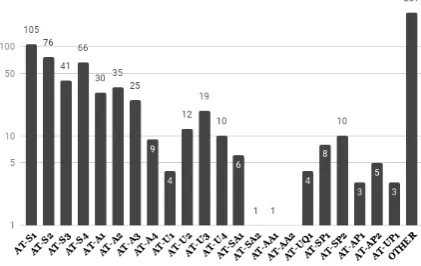
[image:11.595.315.526.321.454.2]A.1 Corpus distribution
Figure 4: Distribution of argumentation templates