16.06.2010
Elisabeth Epping
Post-Graduation
Strategies for
Students from
P
OST
-G
RADUATION STRATEGIES FOR STUDENTS FROM
DEVELOPING COUNTRIES
An Exploration of four Developed Countries through the Lenses of Brain
Drain, Brain Gain and Brain Circulation.
Name Student: Elisabeth Epping Student Number: 0134716
Faculty: Management & Governance
Study Programme: Public Administration (Track Higher Education) Department: Center for Higher Education Policy Studies (CHEPS) Supervisors: Prof. Dr. Hans Vossensteyn and Dr. Ann Morissens
Thank you!
I want to thank my supervisors Prof. Dr. Hans Vossensteyn and Dr. Ann Morissens for their support during the time of writing my thesis. Their input has always been very helpful and of great value to me. I want to thank them as well, for the fact that I could always see them in their offices to discuss my work with them. Thank you very much!
I also want to thank my family and my friends for their support during my entire studies. I want to thank them particularly for their encouragements and good words during the last months of writing my thesis. Thank you very much!
Elisabeth Epping
A
BSTRACT9 | P a g e
C
ONTENTSPost-Graduation strategies for students from developing countries ... 3
Abstract ... 7
Contents ... 9
List of Tables and Figures ... 13
Abbreviations ... 15
Part I ... 17
Introduction ... 17
1 Problem Statement & Methodology ... 23
1.1 Problem Statement ... 23
1.2 Research Questions ... 25
1.3 Definitions ... 26
1.4 Research Design ... 27
1.5 Data Collection ... 28
1.6 Demarcations ... 29
1.7 Structure of the Study ... 30
Part II ... 31
2 Conceptualising the Mobility of International Students ... 31
2.1 Cross-Border Education ... 32
2.2 Rationale behind Cross-Border Education ... 33
2.3 Rationales of Policy Makers to Retain and ‘Return’ Students ... 36
2.4 Conclusion ... 37
3 Policy Approaches for dealing with Skilled Migration ... 39
3.1 Policy Approaches ... 39
3.2 Application to the Mobility of Students ... 41
3.3 Conclusion ... 42
4 Brain Drain, Brain Gain and Brain Circulation ... 43
4.1 Brain Drain ... 43
4.1.1 Use of the Concept in the Past ... 43
4.1.2 Definition ... 44
4.1.3 Who is affected? ... 44
4.2 Brain Gain ... 45
4.2.1 Definition ... 45
4.3 Balance Brain Drain and Brain Gain ... 46
4.4 Brain Circulation ... 48
4.4.1 Emergence and Assumptions ... 48
4.4.2 Who is affected? ... 49
4.5 Application to the Mobility of Students ... 50
4.6 Comparing the Concepts and Conclusion ... 51
5 Merging the Concepts and Expectations... 53
5.1 Expectations ... 53
Part III ... 57
6 Germany ... 59
6.1 Country specific Data ... 59
6.2 View on Internationalisation ... 60
6.2.1 Internationalisation Strategy ... 60
6.2.2 Rationales for Attracting International Students ... 61
6.3 Identification of Strategies and Instruments... 61
6.3.1 Entrance Criteria ... 61
6.3.2 Legal Framework after Graduation ... 62
6.3.3 Politics & Actions ... 63
6.4 Conclusion ... 64
7 Norway ... 67
7.1 Country specific Data ... 67
7.2 View on Internationalisation ... 68
7.2.1 Internationalisation Strategy ... 68
7.2.2 Rationales for Attracting International Students ... 68
7.3 Identification of Strategies and Instruments... 69
7.3.1 Entrance Criteria ... 69
7.3.2 Framework after Graduation ... 69
7.3.3 Politics & Actions ... 70
7.4 Conclusion ... 71
8 The Netherlands ... 73
8.1 Country specific Data ... 73
8.2 View on Internationalisation ... 73
8.2.1 Internationalisation Strategy ... 74
11 | P a g e
8.3 Identification of Strategies and Instruments... 75
8.3.1 Entrance Criteria ... 75
8.3.2 Legal Framework after Graduation ... 76
8.3.3 Politics & Actions ... 77
8.4 Conclusion ... 78
9 The United Kingdom ... 81
9.1 Country specific Data ... 81
9.2 View on Internationalisation ... 82
9.2.1 Internationalisation Strategy ... 82
9.2.2 Rationales for Attracting International Students ... 82
9.3 Identification of Strategies and Instruments... 83
9.3.1 Entrance Criteria ... 83
9.3.2 Legal Framework after Graduation ... 84
9.3.3 Politics & Actions ... 84
9.4 Conclusion ... 85
10 Comparison & Analysis ... 87
10.1 Comparing the Results ... 87
10.1.1 Comparing the Instruments ... 88
10.1.2 Comparing the Policy Packages on Retention and ‘Return’ ... 90
10.2 Interpreting the Findings through the Theoretical Lens ... 91
10.3 Discussion ... 99
11 Conclusion ... 101
11.1 Reflections on the Research ... 104
11.2 Suggestions for Further Research ... 105
Appendix ... 106
1 List of Developing Countries ... 106
2 Supporting Data... 107
3 Interview Questions ... 108
3.1 Form International Student Agencies and Agencies Promoting the Country abroad:... 108
3.2 Country Questions ... 108
13 | P a g e
L
IST OFT
ABLES ANDF
IGURESTable 1: Destination Patterns of Mobile Students (in percentages) ... 20
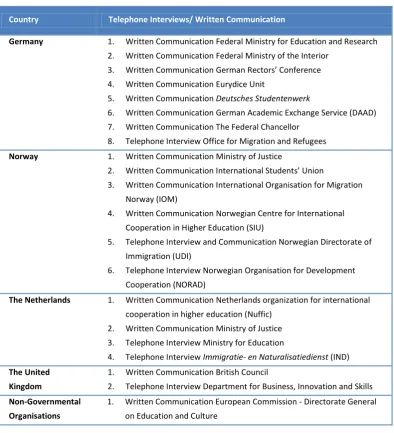
Table 2: Overview Telephone Interviews & Written Communication... 29
Table 3: Rationale Cross-Border Education (OECD, 2004, 2009b) ... 35
Table 4: Post-Graduation Options ... 42
Table 5: Brain Drain & Brain Gain ... 47
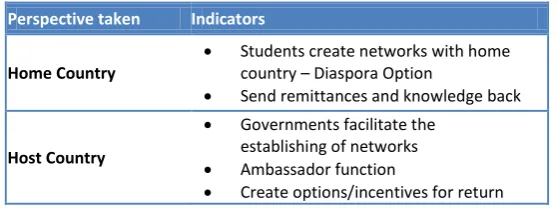
Table 6: Brain Circulation ... 50
Table 7: Expectations for the Outcomes of the Study ... 56
Table 8: Findings Germany ... 65
Table 9: Findings Norway ... 72
Table 10: Findings the Netherlands ... 79
Table 11: Findings the United Kingdom ... 86
Table 12: Comparing the Findings ... 87
Figure 1: Percentage Tertiary Education Foreign Born (OECD, 2008a) ... 18
Figure 2: Development Student Mobility ... 18
Figure 3: Absolute and Relative Number of foreign students in the system (OECD, 2009b)) ... 19
Figure 4: Brain Circulation ... 48
15 | P a g e
A
BBREVIATIONSEU European Union
GATS General Agreement on Trade in Services
IND Immigratie- en Naturalisatiedienst
IOM International Organization for Migration
MVV Machtiging tot Voorlopig Verblijf
NESO Netherlands Education Support Offices
Nuffic Netherlands Organization for International Cooperation in Higher Education
OECD Organisation for Economic Cooperation and Development
PMI Prime Minister’s Initiative
PMI2 Follow-up Prime Minister’s Initiative
UDI Norwegian Directorate of Immigration
USA United States of America
VVR Verblijfsvergunning Regulier
P
ART
I
I
NTRODUCTIONIn 2007, there were about 2.8 million students worldwide, who did not study in their country of origin to pursue a degree. This number raises immediately some questions, which are addressed in this section: How can student mobility be understood in a wider framework of global trends? Why is student mobility becoming so popular? What is the extent of the phenomenon and how did it develop over the last years? What are favoured destinations? Where do most of the students come from and what factors contribute to these developments?
In times of globalisation, national, regional and jurisdictional borders are blurring and appear to lose relevance. Globalisation is considered to be “the flow of people, cultures, ideas and values, knowledge, technology and economy across borders, resulting in a more interconnected and independent world” (Knight, 2006b, p. 18), being facilitated by new communication technologies and cheaper transport costs. Another distinct feature of globalisation is the importance attached to knowledge and skills. These days, they are decisive factors for the success and competitiveness of a society, thus defined as the knowledge society. This research deals with a core element of globalisation, the migration of highly skilled manpower. In particular it focuses on student mobility
as being a significant part of this (Altbach & Bassett, 2004; Goldin, Reinert, & Beath, 2007; Lowell & Findlay, 2002; OECD, 2002; Skeldon, 2005). The last years revealed that governments perceive the importance attached to highly skilled manpower: many countries liberalised their admission policies in favour of them. Even more they tend to formulate policies towards retaining those highly skilled people, involving complex consequences for the countries involved (OECD, 2002; Tremblay, 2008).
MOBILITY OF HIGHLY SKILLED PEOPLE
Corresponding, the mobility of highly skilled people is a characteristic of a globalising world - people follow the jobs. A closer look at this mobility, demonstrates that countries are differently affected: some tend to have a high influx of highly skilled manpower, whereas others suffer from highly skilled manpower leaving. To describe this, OECD1 countries are an attractive destination, hosting around 75.7 million foreign-born people. On average 24.3% of these are considered to be highly educated (OECD, 2008a, 2008b). Most foreign born in the OECD come from Europe (ca. 29 million) followed by Latin America (ca.19 million) and Asia (ca.16 million). Looking closer at the distribution according to the OECD countries, differences are observed: Ireland and Canada have a rather high percentage of foreign born people who are tertiary educated, which means studying in higher education. The Netherlands and Germany score rather low. For a full overview see the appendix. The opposite question is: who is suffering from a high number of expatriates abroad? Taiwan (61.1%), Nigeria, (55.1%), India (51.9%), Egypt (51.2)% and Malaysia (50.8%)2 (OECD, 2005) are the most affected countries. They suffer a lot because more than 50% of all expatriates are highly skilled – resulting in a loss of manpower. These countries are all considered to be developing, according to the definition of this study (see section 1.3).
GLOBAL STUDENT MOBILITY
The mobility of students, being of major interest for this research, is considered to be a subset of highly skilled mobility. Therefore current streams and
developments are sketched. Student mobility is nothing new: a lot of programmes (like Erasmus) facilitated mobility taking place on a temporary basis (Lee, Maldonado - Maldonado, & Rhoades, 2006). The last years, however, revealed a remarkable increase in the amount of students pursuing an education abroad. In 1975 the total number of mobile students was around 0.6 million, in 1990 the number doubled to 1.2 million
1
A list of member countries can be found here:
http://www.oecd.org/countrieslist/0,3351,en_33873108_33844430_1_1_1_1_1,00.html 2
The numbers shall be read as follows: The total number of expatriates is taken and the percentage which is made of highly skilled people is calculated. Thus it can be explained why the percentages seem to be so high.
600.000 1.200.000
2.800.000 8.000.000
[image:18.595.87.399.210.326.2]1975 1990 2007 2025
Figure 2: Development Student Mobility 25,8%
38,0%
14,9%
34,8%41,1%34,8%
19,2%
[image:18.595.333.525.594.724.2]19 | P a g e and in 2007 it approached 2.8 million (OECD, 2009a; UNESCO & UIS, 2009). Forecasts estimate that the number of international mobile students is going to increase to 8 million students in 2025 (Altbach & Bassett, 2004; OECD, 2009b).
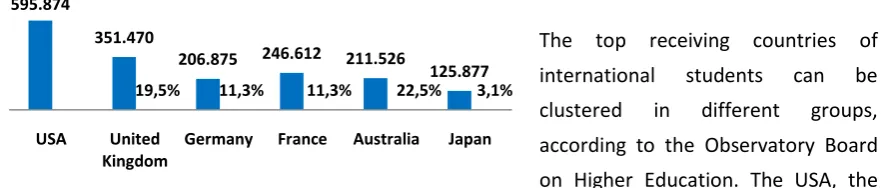
[image:19.595.78.521.304.398.2]But where do most of the students go to? The straightforward answer is that the majority of students goes to OECD countries. Around 62% of all mobile students go to six top destination countries: the USA, the United Kingdom, France, Australia, Germany and Japan (OECD, 2009b; UNESCO & UIS, 2009). Looking at the relative percentage of students in the system, the picture is slightly different: New Zealand has the biggest share of international students in the system with 26.8%., followed by Australia (22.5%), the UK (19.5%) and Switzerland with 19.3%. For a full overview see the appendix.
Figure 3: Absolute and Relative Number of foreign students in the system (OECD, 2009b))3
The top receiving countries of international students can be clustered in different groups, according to the Observatory Board on Higher Education. The USA, the United Kingdomand Australia are considered as major players. Germany and France as middle powers and Japan, Canada and New Zealand are evolving destinations. Countries like Malaysia, Singapore and China are considered to be emerging contenders in the field of international student mobility (Robertson, 2007). It is assumed that if the middle powers make stronger use of current European developments (Bologna Process and European Higher Education Area), and adapt more towards English as a language of instruction, they could position themselves in a better way and have a bigger market share. In relation to the student mobility streams, two developments are seen: first, a tendency that students stay in their region of origin (i.e.: students from Europe tend to stay in Europe). Second an expansion of the destination choice is visible. Dome countries, having been popular destinations over the last decades have increased their share (i.e.: Australia, Canada, France, Italy, Japan, New Zealand and South Africa) others like the USA record smaller increases (Altbach & Bassett, 2004; Jaschik, 2007; UNESCO & UIS, 2009). Besides, a range of other popular destinations emerged: China, New Zealand and the Republic of Korea.
Having identified the most attractive destination countries for international students two more questions are posed in return: where do most of the international students come from and where do they go to? For a country specific picture, China is by far the country having most of its nationals abroad (421.100). It is followed with quite some distance by India (153.300) and Korea (105.300)(UNESCO & UIS, 2009). Together with Germany, Japan, France, the USA, Malaysia,
3
Note that for the USA no data for the relative percentage is available.
595.874
351.470
206.875 246.612 211.526
125.877 19,5% 11,3% 11,3% 22,5% 3,1% USA United
Kingdom
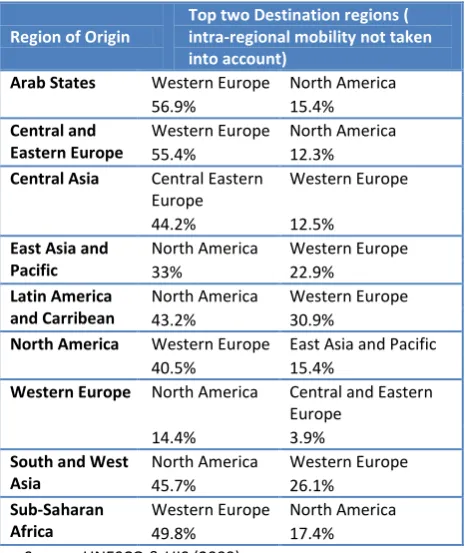
Canada and the Russian Federation, these countries account for 37.5% of all mobile students (it should be kept in mind that these countries are rather large in terms of population). For illustration purposes, reference is made to the Global Education Digest (UNESCO & UIS, 2009) which investigates the patterns of destination of mobile students. When leaving their own region apart, a high percentage of mobile students goes to Western Europe and North America. For the Arab States, Central and Eastern Europe, East Asia and Pacific, Latin America and Carribean, South and West Asia and Sub Saharan Africa, between 50% and 70% go to Western Europe and North America. The overview would confirm the phenomenon perceived by Altbach (2004) : a general flow from South to North, from the developing countries to the developed ones. It is ascertained that more than half of all current students are from developing countries, and their number is still increasing (Altbach, 2004; Altbach & Bassett, 2004; Goldin, et al., 2007; Kapur & McHale, 2005).
FACTORS EXPLAINING STUDENT MOBILITY
[image:20.595.91.324.180.457.2]Finally, factors being responsible for these developments are addressed. A common explanation as to why highly skilled manpower crosses borders refers to the effects of globalisation: better and cheaper communication and transport possibilities, a global interconnectedness, and an increase in the demand for an international labour market (Suter & Jandl, 2008; Tremblay, 2008; Vincent-Lancrin, 2008). Vlk (2006) identifies three different aspects: 1. the increasing use of English as a language in higher education, taking over national languages, 2. the grown awareness of the advantages students gain when being in another country and 3. international students are seen as new sources of revenue generation. This combination is considered to be responsible for the increasing mobility of students. Particularly the increase of English as a language of instruction seems beneficial for the ‘skyrocketing’ of the number of international students: “The English language, once forced upon Europe’s continental universities, is now turning into one of their strongest selling points” (The Hindu, 2009).
Table 1: Destination Patterns of Mobile Students (in percentages)
Region of Origin
Top two Destination regions ( intra-regional mobility not taken into account)
Arab States Western Europe North America 56.9% 15.4%
Central and Eastern Europe
Western Europe North America 55.4% 12.3%
Central Asia Central Eastern Europe
Western Europe
44.2% 12.5%
East Asia and Pacific
North America Western Europe
33% 22.9%
Latin America and Carribean
North America Western Europe 43.2% 30.9%
North America Western Europe East Asia and Pacific 40.5% 15.4%
Western Europe North America Central and Eastern Europe
14.4% 3.9%
South and West Asia
North America Western Europe 45.7% 26.1%
Sub-Saharan Africa
21 | P a g e Other reasons focus more on the individual student’s level, though not considered in this research. The factors are listed as to overcome the impression that migration is regulated and forced upon individuals by governments and other external factors. It is differentiated between factors that push students to pursue their education abroad and those factors that pull students to leave their country of origin (UNESCO & UIS, 2009). The Global Education Digest (2009, p. 35) identifies as push factors, the possibility to make new experiences, culturally and intellectually, to pursue a particular education/programme or benefit from better equipped universities. Altbach (2004, pp. 3-4) investigates push and pull factors for students from developing countries, going to developed ones. Though he designs the framework for the USA, it is valuable to report the factors here. A mismatch of supply and demand in higher education is identified as a push factor. This refers to the availability of certain fields of study, the possibility to further specialise (doing a PhD) and the entrance conditions. Sending students abroad is seen as a way to overcome this mismatch. Northern institutions are considered to have more a better reputation. Apart from that “social and political forces” can affect students in their choice to go abroad, push them abroad (OECD, 2002).
As for factors pulling students to leave their country of origin, the reputation of academic institutions is mentioned, too. In developing countries according to Altbach, hardly any ‘world class’ institutions exist. Thus students seek a good quality degree in developed higher education systems4. This factor is often combined with better career prospects in the respective countries. In more detail students have a chance to enter the domestic labour market after their studies and get higher wages (Altbach, 2004; UNESCO & UIS, 2009). The combination of these factors is facilitating international student mobility and particularly the flow of students from developing to developed countries. When believing Rosenzweig, “the substantial out-migration of persons from low-income countries is in part a manifestation of problems in those countries, whether due to poor institutions or poor geography” (2005, p. 14).
This introduction provides the background of the phenomenon of the mobility of highly skilled manpower and of students in particular. Especially a flow of students from developing to developed countries is observed. In the following, this flow will be further addressed from a perspective of possible brain drain from the developing world.
4
1
P
ROBLEMS
TATEMENT&
M
ETHODOLOGYThis chapter serves three functions: first the problem being central for this research is introduced. Second, the questions of interests stemming from this problem are listed and third the underlying methodology to perform the study and answer the questions is presented.
1.1
P
ROBLEMS
TATEMENTThis section argues for the problems being connected to the international migration of skills in form of the mobility of students. The key point lies in the role of highly skilled people: they are considered to be an important source for innovation, an indicator for research competitiveness and accordingly a contribution to the knowledge economy (European Commission, 2006; Tremblay, 2005). Thus they are a form of human capital (Docquier, 2006; Skeldon, 2005). Logically countries having a large amount of highly skilled people seem to be better off than countries having a small amount. The previous section illustrated that student mobility, as a subset of highly skilled mobility, is steadily increasing. Furthermore a flow of students from developing to developed countries has been observed.
This flow is particularly relevant to address, when keeping the importance attached to highly skilled persons and their role for innovation in mind. In other words, questions rise whether a balanced situation is reached as a consequence of this flow. The literature is discussing controversially whether this is the case: for developed countries this student flow is considered beneficial, as a contribution is made to their own economic situation in terms of overcoming an ageing population and fostering research capacity and innovation (Chiswick, 2005; OECD, 2009b; Vlk, 2006). Students from developing country can also be seen as an instrument for providing development aid and capacity building (OECD, 2009b). Other scholars claim that this student flow is balanced for the developing world as well, because it helps to overcome domestic shortages and yields potential for gathering new knowledge. In addition it is offering possibilities in terms of education, not existing in these countries in the first place (D'Costa, 2006; Wickramasekara, 2002).
The literature reveals scholars who do not consider this flow balanced and others who do. What has been neglected is the question what happens when students have pursued their education abroad? Do they leave the country or remain in their destination country? This is the problem being central for this research. It is difficult to find an immediate answer to this, as often data on return – rates does not exist (Skeldon, 2005). Yet it is assumed that students from developing countries tend to return, as they feel strongly connected homeward and aim to apply the knowledge they received (Saxenian, 2005). Others claim that this is not always the case. Although no coherent data sets are available, it is considered that university study is a new channel for migration (Baruch, Budhwar, & Khatri, 2007; Cervantes & Guellec, 2002; Goldin, et al., 2007; Gribble, 2008; Tremblay, 2005): “university study has emerged as a major avenue by which young people from developing countries can obtain the right to work and permanently reside in developed countries” (Goldin, et al., 2007, p. 167).
25 | P a g e
1.2
R
ESEARCHQ
UESTIONSFor this research, the following main research question is asked:
What are the strategies that governments of developed countries pursue for students from developing countries in terms of post-graduation and how can the situation be understood
through the lenses of brain drain, brain gain and brain circulation?
As to answer this question, a number of sub questions are formulated:
1. What are the global trends with regard to highly skilled mobility in general and student mobility in particular?
2. What are the main issues and concepts being connected to the mobility of international students?
3. What are the motives for governments to attract students and retain or ‘return’ graduates after graduation?
4. What policy instruments are used to retain or ‘return’ graduates?
5. How can the brain drain, brain gain and brain circulation approaches help to understand and analyse the central phenomenon?
6. What theoretical framework is most applicable to address the student mobility from developing to developed countries?
7. How do different countries deal with the attraction, retention and ‘return’ of students from developing countries?
1.3
D
EFINITIONSIn order to ensure validity, a coherent and stringent use of the concepts is drawn up. By means of doing so the respective concepts and definitions at hand are provided at this early stage.
INTERNATIONAL STUDENTS
International students are defined for this study as “students who have crossed a national or territorial border for the purposes of education and are now enrolled outside their country of origin”(UNESCO, 2006). Note that the focus is here on students being/entering at the Bachelor and Master level as well as the PhD level.
DEVELOPING COUNTRIES
The concept of developing countries is based on the World Bank classification. Countries are clustered accordingly to their gross national income per capita and calculated accordingly to the Atlas method5. Countries being categorized as low income and lower middle income are considered developing countries here. All other countries not falling into these categories are considered developed countries (for a full list see appendix) (The World Bank, 2009).
HIGHLY SKILLED MOBILITY/MIGRANTS
For classifying the mobility of the highly skilled, migrants are often “the most entrepreneurial and dynamic members of society” (Koser, 2007, p. 1). Highly skilled mobility is about the movement of “men and women with a broad range of educational and occupational backgrounds; [...] Some of these highly skilled individuals [...] migrate on a temporary basis, while others migrate with an intention to settle permanently in the host country” (OECD, 2002, p. 2). Here an educational background refers to “a university degree or equivalent” (Hansen, 2003, p. 4). Although students attracted at the Bachelor level do not have a degree yet, they strive for attaining it and are hence included here when talking about highly skilled mobility.
STRATEGIES AFTER GRADUATION OF STUDENTS
The concept of strategies is as such a broad variable. Here it comprises the combination of the legal framework applying to the students after graduation in addition to the instruments, and incentives governments use, intending to steer students in one or the other direction. Note that for ‘national strategies’, ‘national policies’ can be used interchangeably.
5
See for more information on the Atlas method:
27 | P a g e
1.4
R
ESEARCHD
ESIGNFor this research the considerations and quality standards formulated by Shadish, Cook & Campbell in relation to reliability and validity are taken into account, assuring a coherent and methodologically correct research (2002).
This research combines three purposes, according to Babbie (2004): explore, describe and explain. Still, as the context has hardly been approached by academics before, it strongly focuses on exploratory and descriptive features. The overall aim is to identify the strategies, instruments and incentives that governments pursue for students from developing countries upon graduation. In connection it is investigated whether an imbalanced situation for sending countries is resulting from this. Although governments are not directly involved in the attraction of students (this is mainly done at University level), they are setting up the legal scope of action after graduation. It is important to obtain more information about this, as global student mobility is expected to increase in the future, leading to changes and new challenges. Additionally this research helps to redefine the position of developed and developing countries, of potential outsourcers and outsourced.
Furthermore this research aims to be comparative and intends to contrast the different national strategies existing in that field. For a comparative study, the general guideline is the more countries being studied, the better. Here four European countries are selected yielding diversity: Germany, Norway, the Netherlands and the United Kingdom. Diversity is created in relation to the view that countries take on the internationalisation of higher education. The literature yields different views, serving different goals and instruments. Three of them are applicable here: mutual understanding, skilled migration and revenue generation (Knight, 2004, 2006a; OECD, 2004, 2009b). The way a country positions itself with regard to the internationalisation of higher education is assumed to be part of a wider strategy. Thus it creates a platform for formulating expectations for post-graduation strategies for students from developing countries. The subsequent chapters introduce this in more detail.
1.5
D
ATAC
OLLECTIONFor this research qualitative data is used. Although accused of not being explicit, making data difficult to compare and summarise and leaving more space for ambiguity (Babbie, 2004) it is the preferred choice. It seems to be beneficial here as it leaves room for assumptions not considered in the first place. Hence a new set of conclusions might be provided. This study consults different data sources in order to reach a “convergence of evidence” (Yin, 2003). For a general understanding and a mapping of the general trends of international student mobility, a literature review was made. The theoretical background is as well obtained from the literature. In order to position the countries with regard to their view on internationalisation, the internationalisation strategies of the respective countries are consulted.
Two different sources are used for gathering the empirical data: first, rules and regulations manifested in legal documents are consulted and subject of analysis. They are in turn validated and amended with information obtained from agencies supporting student mobility. Second, semi-structured interviews were held and questionnaires sent around (see appendix). The underlying intention was to get to know more about strategic efforts and governmental points of view. Interviews were held with spokespersons from different ministries, because the post-graduation strategies cover different political areas: education policy, development policy, migration policy and economic aspects.
29 | P a g e Table 2: Overview Telephone Interviews & Written Communication
Country Telephone Interviews/ Written Communication
Germany 1. Written Communication Federal Ministry for Education and Research 2. Written Communication Federal Ministry of the Interior
3. Written Communication German Rectors’ Conference 4. Written Communication Eurydice Unit
5. Written Communication Deutsches Studentenwerk
6. Written Communication German Academic Exchange Service (DAAD) 7. Written Communication The Federal Chancellor
8. Telephone Interview Office for Migration and Refugees
Norway 1. Written Communication Ministry of Justice
2. Written Communication International Students’ Union
3. Written Communication International Organisation for Migration Norway (IOM)
4. Written Communication Norwegian Centre for International Cooperation in Higher Education (SIU)
5. Telephone Interview and Communication Norwegian Directorate of Immigration (UDI)
6. Telephone Interview Norwegian Organisation for Development Cooperation (NORAD)
The Netherlands 1. Written Communication Netherlands organization for international cooperation in higher education (Nuffic)
2. Written Communication Ministry of Justice 3. Telephone Interview Ministry for Education
4. Telephone Interview Immigratie- en Naturalisatiedienst (IND)
The United Kingdom
1. Written Communication British Council
2. Telephone Interview Department for Business, Innovation and Skills
Non-Governmental Organisations
1. Written Communication European Commission - Directorate General on Education and Culture
1.6
D
EMARCATIONSFurthermore the effects on hosting countries in relation to this student migration are left apart. Due to complexity reasons, the existences and structures of scholarships for students from developing countries are not taken into account. In addition, simplified procedures for obtaining permanent settlement permits, as a result of for instance marriage are neglected, too.
1.7
S
TRUCTURE OF THES
TUDYThis study is divided into three parts.
Part I serves as an introduction to the topic and presents an overview about the situation of highly skilled mobility in general and student mobility in specific. Subsequently, chapter one addresses the specific problems being connected to this research and introduces the underlying methodological considerations.
Part II of this study introduces the theoretical framework, consisting of a combination of three different perspectives. Chapter two connects the phenomenon of student mobility from developing to developed countries to cross-border education. In accordance with this, rationales for attracting and retaining students are presented. Chapter three explores the different strategies for dealing with skilled migration. Chapter four introduces the concepts of brain drain, brain gain and brain circulation. Furthermore the differences and similarities of the different concepts are discussed and a section on the applicability of the framework for this research is given. Particular reference is made to the outcomes and effects of the two phenomena in terms of whether there are winners and losers resulting from this. Chapter five merges the three perspectives and renders a coherent framework. Subsequently it generates expectations on the outcomes of the study.
P
ART
II
This part introduces the theoretical framework for the study. It enables an understanding of the situation and provides a basis for interpreting the results of this empirical investigation. It is valuable for every research to be explicit about the theoretical framework and the concepts related to it. By means of doing so, three different perspectives are used rendering a coherent framework for analysing the phenomenon of student mobility from developing to developed countries. Accordingly, the theoretical part intends to link
the concept of cross-border education, with
the policy approaches, strategies and instruments being available for dealing with highly skilled migration.
Finally, these parts are supported by the brain gain, brain drain and brain circulation debate, meant as an indicator towards estimating the situation in terms of balance of interests.
2
C
ONCEPTUALISING THEM
OBILITY OFI
NTERNATIONALS
TUDENTSFor the purpose of conceptualising the mobility of international students, the theoretical framework of the internationalisation of higher education, more specific the lens of cross-border education is used, being a subset of internationalisation (Knight, 2006a, 2009). To begin with, a few words are addressed to the internationalisation of higher education. It entails that “nation states continue to play a role as economic, social and cultural systems, but that they are becoming more interconnected and activities crossing their borders are increasing. Cooperation between nation states is expanding and national policies are placing a stronger emphasis on regulating or facilitating cross-border activities” (Huisman & van der Wende, 2005, p. 11). The importance of the internationalisation of higher education is perceived by national systems and higher education institutions. Accordingly different instruments and means are used as to achieve these goals6.
The most prominent and most valued instrument is the mobility of students as cultural exchanges take place and international experiences are gained (Söderqvist, 2002; Suter & Jandl, 2008). In order to live up to these goals, governments position themselves and formulate strategies (Brakel, Huisman, Luijten-Lub, Matissen, & van der Wende, 2004; Tremblay, 2008). The internationalisation of higher education is distributed among different levels, according to a comparative study: the ministry for education has a central role in these developments. Still other ministries dealing with judicial affairs, economic affairs, foreign affairs and social affairs are
6
considered as having a share as well, in form of issuing residence permits etc. In addition different agencies cooperating with the ministry for education can be involved in the process (Knight, 2004; Luijten-Lub, van der Wende, & Huisman, 2005).
2.1
C
ROSS-B
ORDERE
DUCATIONThe phenomenon of international student mobility is clearly associated with what is known as cross-border education. To illustrate this, the higher education sector is coined by a lot of changes in the last few years, leading to the provision of a new dimension of higher education which is no longer limited to national and jurisdictional borders (Kehm, 2003; Marginson & van der Wende, 2006). Instead people, programmes, providers, and projects are tradable goods and moving across borders, known as transnational/ cross-border/ borderless/ or offshore education. Facilitation for this is provided by the World Trade Organisation (WTO) and the General Agreement on Trade in Services (GATS). Yet the inclusion of higher education in GATS is much disputed among academics. First because of the economic connotation being automatically attached to higher education and second because the role of governments might decrease and they lose control over the sector (Knight, 2006b; Larsen & Vincent-Lancrin, 2002; OECD, 2004; Van der Wende & Middlehurst, 2004). Merging the four different modes of supply stemming from GATS with the expressions of cross-border education, the following picture is obtained:
1. Cross-border supply (as being programme mobility) 2. Consumption abroad (as being people (student) mobility) 3. Commercial presence (as being institution mobility)
4. Presence of natural persons (as being people (academic) mobility) (OECD, 2004).
33 | P a g e
2.2
R
ATIONALE BEHINDC
ROSS-B
ORDERE
DUCATIONThe engagement of governments in cross-border education is connected to the following aspects: it enhances a country’s competitiveness, contributes to economic well-being, aims to meet domestic demands and can be understood as being part of a wider governmental strategy (Huisman & van der Wende, 2005; OECD, 2004).
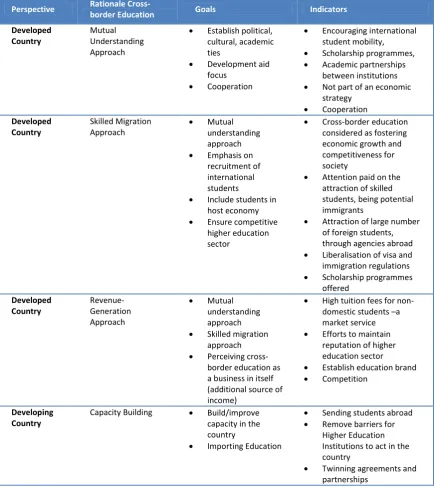
For the more nuanced rationales behind cross-border education, it is drawn on the OECD framework (2004, 2009b). Four approaches are identified, serving as an explanation as to why countries take action. Note that a country can have different perspectives on different actions. The four approaches being distinguished and differentiated according to their specific features are:
1. Mutual understanding,
2. Skilled migration/strategy on excellence and competition for talent 3. Revenue-generation
4. Capacity building.
The mutual understanding approach is the basic element for all approaches. The ideas and values it incorporates are a part of the other approaches on cross-border education. This is because it intends to create a peaceful world, facilitated by strong ties and networks among countries. This approach focuses on cooperation rather than competition. Accordingly the economic rationale is not dominantly expressed in policies. Instruments as to contribute to these goals are the mobility of students and academics, partnership programmes, grants and programmes aimed to stimulate the interaction between the developed and developing world.
The skilled migration approach/strategy on excellence and competition for talent rests on the mutual understanding rationale. It perceives the importance of strong ties among countries with regard to cultural, academic, social and political issues, yet a strong focus is on the economic aspects of cross-border education. The skilled migration approach realises that being internationally competitive is important these days. Cross-border education is considered as a means to this. In more detail students are seen as potential skilled immigrants, as they are young, dynamic and have a good knowledge of the country next to an understanding of the native language. Accordingly it is assumed that international students are ‘perfect highly skilled immigrants’ (Suter & Jandl, 2008), having short-term as well as long-term benefits for the respective economy (Chiswick, 2005).
Accordingly emphasis is placed on the attraction of international students. Agencies are set up, as to fulfil this task and promote the higher education sector. In addition immigration policies are unclenched as to pave the way for students coming to the country and staying after graduation.
The revenue-generating approach builds as well on the ideas of the mutual understanding approach and the enrichment that is brought to countries being involved. Like the skilled migration approach, the economic connotation in cross-border education is important here. Higher education is offered at a full fee basis, meaning that international students constitute additional sources of income. In strategies the potential they reveal is explicitly formulated next to explicit policies for attracting them.
The last approach is the capacity-building approach. It is, however, only applicable for emerging economies and refers to the import side of education. Domestic demand shall be met by two elements: send domestic students abroad and remove barriers in order to establish foreign institutions and programmes. Students are encouraged to go abroad as to receive additional experiences and bring knowledge to the country. It needs to be mentioned that developed countries mostly fulfil the exporting function of this education. Thus if a country aims to use instruments intending to stimulate the development of countries, this would fall into the mutual understanding approach rather than into the capacity building one. Hence for this research, the approach is not important.
35 | P a g e Table 3: Rationale Cross-Border Education (OECD, 2004, 2009b)
Perspective Rationale
Cross-border Education Goals Indicators
Developed Country
Mutual Understanding Approach
Establish political, cultural, academic ties
Development aid focus
Cooperation
Encouraging international student mobility, Scholarship programmes, Academic partnerships
between institutions Not part of an economic
strategy Cooperation Developed Country Skilled Migration Approach Mutual understanding approach Emphasis on
recruitment of international students
Include students in host economy Ensure competitive
higher education sector
Cross-border education considered as fostering economic growth and competitiveness for society
Attention paid on the attraction of skilled students, being potential immigrants
Attraction of large number of foreign students, through agencies abroad Liberalisation of visa and immigration regulations Scholarship programmes
offered Developed Country Revenue-Generation Approach Mutual understanding approach Skilled migration
approach Perceiving
cross-border education as a business in itself (additional source of income)
High tuition fees for non-domestic students –a market service Efforts to maintain
reputation of higher education sector Establish education brand Competition
Developing Country
Capacity Building Build/improve capacity in the country
Importing Education
Sending students abroad Remove barriers for
Higher Education Institutions to act in the country
2.3
R
ATIONALES OFP
OLICYM
AKERS TOR
ETAIN AND‘R
ETURN’
S
TUDENTSApart from attracting international students to a country, policy makers focus these days increasingly on immigration policies addressing the retention of highly skilled people (Chiswick, 2005). Reasons for this have partly been mentioned, but in a nutshell they can be summarized to the following ones:
Students are considered as potential highly skilled workers and perfect / designer immigrants as they are integrated into society and have a background of the country. Accordingly they create an international labour market (OECD, 2001; Suter & Jandl, 2008). Highly skilled talent in form of students is seen as a solution to the ageing population (Vlk,
2006).
Students are “driving forces for innovation and invention” (Chiswick, 2005, p. 4; OECD, 2009b).
Students are retained to fill places where the domestic demand is unmet in order to contribute to the research standards and capacity of a country in the long run (OECD, 2004).
Students create networks, leading to a well connected community and carrying political implications (ambassadors) (Nuffic, 2004).
37 | P a g e
2.4
C
ONCLUSIONTo conclude, this chapter linked the mobility of students from developing countries to a cross-border perspective. This mobility is often connected to economic grounds as international students are considered to be a new market, contributing to the knowledge society and yielding great potential for hosting societies. The rationales behind the attraction and retention of international students confirmed this: the focus is stronger on economic benefits than on political and social ties.
3
POLICY APPROACHES FOR DEALING WITH SKILLED MIGRATION
This chapter is the second component of the theoretical framework. It intends to investigate closer the options for developed economies for dealing with migration of the highly skilled from developing countries. In more detail, different policy approaches and concrete instruments shall be explored. This chapter particularly looks at the approaches being applicable for host countries of international students. A demarcation shall be made here: the intention of this research is not to create the idea that migration is a phenomenon purely arranged and controlled by governments. The individual side is very important with regard to migration, and there are reasons why people move. Still for this research they are mostly left aside, as the focus is on actions formulated at the governmental level intended to steer the process in one or the other direction.
3.1
P
OLICYA
PPROACHESWhen addressing policy approaches in relation to highly skilled migration, a critique has to be formulated. The literature hardly focuses on the side of receiving countries, but mostly on the situation for sending countries. Even more, the situation for receiving countries is neglected in terms of whether the efforts made are paying off and an advocating position for developing countries is taken – resulting in an imbalance of perspectives taken. Furthermore it shall be highlighted that the literature reveals general policy approaches, however, lacks to suggest and identify clear instruments.
Despite the formulated critique, reference shall be made to Lowell et al. (2004) who suggest three general policy options for optimising skilled migration, being applicable for both sending and receiving countries. By means of doing so three interconnected fields are addressed:
1. Migration management, 2. The ‘Diaspora option’
3. Democracy and development.
In more detail the option of migration management places emphasis on a coherent management of migration and focussing on the temporary character of migration. Accordingly, special admission policies shall be designed in line with domestic demand and incentives shall be offered meant to encourage return migration (Lowell & Findlay, 2002). The admission side is of less interest here, but the temporal character is useful. To explore this, highly skilled mobility can take place on a temporary basis or on a permanent basis. Although the concepts seem to be rather self-explanatory, reference shall be made to Bell & Ward (2000) who attempt to compare the two concepts by means of the following dimensions, options for return, duration of the stay, frequency (Bell & Ward, 2000, p. 99).
Permanent migration is considered to be a change of residence without intentions to return and thus a singular action taking place. Temporary migration instead is non-permanent and can take place to different countries, a couple of times. The options for return are given and the event might be repetitive. The question whether skilled migration is taking place on a temporary or on a permanent basis is in the first place connected to the individual decision. Yet, it is also dependent on governments, as they determine the entrance criteria, the legal framework in place and are aware of societal needs. It shall be noted, however, that a temporary stay is often preceding a permanent one. In their attempt to provide policy responses to skilled migration without further liberalising the system, Kapur & McHale (2005) offer instruments for rich and poor countries. They state that policies in terms of ‘connection’ are favourable. More specific, circulatory migration shall be facilitated as well as temporary stays to prevent brain drain.
The Diaspora option is considered to be a good way for compensation/return. The option stimulates the transfer of knowledge and technology back to the developing countries by means of networks. These networks might establish automatically and are not restricted to national and organisational barriers or in need of an infrastructure. To illustrate this, once individuals leave their home country economic and professional ties might come into being (Nuffic, 2004). These ties might result into frequent exchanges. It also strengthens the connection individuals have with their home country. Thus, knowledge transfers and interactions are enabled, being important for an increasingly interconnected marketplace. These transfers “can boost productivity, provide resources for development, stimulate education and business, develop two-way trade, and create more stable long-term partners” (Lowell, et al., 2004, p. 23).
41 | P a g e Governments can make sure that instruments are in place making the flow of remittances
smoother.
To a large extent, the literature identifies temporary migration programmes as being most favoured for the movement of students from developing to developed countries. In relation to that, the return of highly skilled people shall be facilitated. A rather positive view has been taken, referring to the flow of remittances, the benefits from Diaspora options, the inflow of knowledge and technology and the economic benefits for the workers involved and the country (Carr, Inkson, & Thorn, 2005a; Lowell & Findlay, 2002; Lowell, et al., 2004). However, it is important to take a look at the other side of the coin: “there is nothing more permanent than a temporary migrant” (Crisp, 2007, p. 24). The question is whether migrants leave the country again, although their stay was on a temporary basis in the first place.
3.2
A
PPLICATION TO THEM
OBILITY OFS
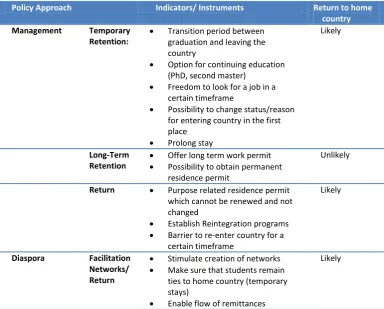
TUDENTSIt is interesting to see how the different perspectives vary with regard to the mobility of students from developing countries. The previous chapter illustrated the importance of highly skilled workers for society and the literature revealed that governments are keen on retaining them. Here, a more balanced point of view is taken, calling for the inclusion of the perspective of sending countries. The literature offers two general options for dealing with highly skilled migration. The first option intends to manage the temporal dimension connected to student migration: students may enter the country on a temporary or a long-term basis. It is suggested that this choice shall be done consciously. As for students from developing countries, the options after graduation are either a return to their country of origin/ a country of their choice or a retention in the hosting country.
Table 4: Post-Graduation Options
Policy Approach Indicators/ Instruments Return to home country
Management Temporary Retention:
Transition period between graduation and leaving the country
Option for continuing education (PhD, second master)
Freedom to look for a job in a certain timeframe
Possibility to change status/reason for entering country in the first place
Prolong stay
Likely
Long-Term Retention
Offer long term work permit Possibility to obtain permanent
residence permit
Unlikely
Return Purpose related residence permit which cannot be renewed and not changed
Establish Reintegration programs Barrier to re-enter country for a
certain timeframe
Likely
Diaspora Facilitation Networks/ Return
Stimulate creation of networks Make sure that students remain
ties to home country (temporary stays)
Enable flow of remittances
Likely
3.3
C
ONCLUSIONThis chapter provided insights with regard to the policy approaches connected to highly skilled migration. By means of doings so, two main approaches for dealing with highly skilled mobility from developing to developed countries could be identified: the management and the Diaspora option. In turn these approaches were explored and linked to a temporal dimension. In addition a number of indicators facilitating the management of highly skilled migration and the Diaspora option have been generated. By means of doing so,
1. the main ideas behind the two approaches were taken into account and instruments were taken from the respective literature.
2. other studies have been consulted, containing instruments as well. 3. own considerations have been made.
43 | P a g e
4
B
RAIND
RAIN,
B
RAING
AIN ANDB
RAINC
IRCULATIONThis chapter forms the third part of the theoretical framework, serving as an addition to the previously introduced cross-border education and migration section and render a coherent framework. By means of doing so the concepts of brain drain, brain gain and brain circulation are presented, next to a discussion on differences and similarities. As a very first step towards four aspects/dimensions are raised. They are important for a general understanding for brain drain, brain gain and brain circulation:
1. Highly skilled migration involves a sending and a receiving country, being positively and/or negatively affected
2. The effects of brain drain/gain and brain circulation differ for whether the country at hand is considered to be a developed or a developing country
3. A temporal dimension is connected to highly skilled migration: does migration take place on a temporary basis or a long-term/permanent basis?
4. The interaction of these aspects is important for further considering the issue of brain drain, brain gain and brain circulation.
In the first place reference is made to the brain drain debate which is strongly connected to the brain gain debate. Furthermore the brain circulation approach is investigated.
4.1
B
RAIND
RAINHere the concept of brain drain is explored in more detail by first referring to the use of the term in the past, providing a definition and addressing the implications of the concept.
4.1.1 USE OF THE CONCEPT IN THE PAST
4.1.2 DEFINITION
The historic use of the concept of brain drain, presents in a good way the different dimensions connected to the concept. The understanding and the definitions of the concept of brain drain are multiple. Logically the effects and consequences are differently perceived by academics (Hansen, 2003, p. 33). The following definition seems to be comprehensive:
“A brain drain can occur if emigration of tertiary educated persons for permanent or long stays abroad reaches significant levels and is not offset by the “feedback” effects of remittances, technology transfer, investments, or trade. Brain drain reduces economic growth through loss return on investment in education and depletion of the source country’s human capital assets” (Lowell & Findlay, 2002, p. 7).
This definition involves the following important dimensions: movement of skilled people, on a permanent or long term basis being problematic if the absence is not compensated by feedback. Although it remains rather neutral on brain drain, reference is made to the dangers that can occur, namely a loss of human capital.
4.1.3 WHO IS AFFECTED?
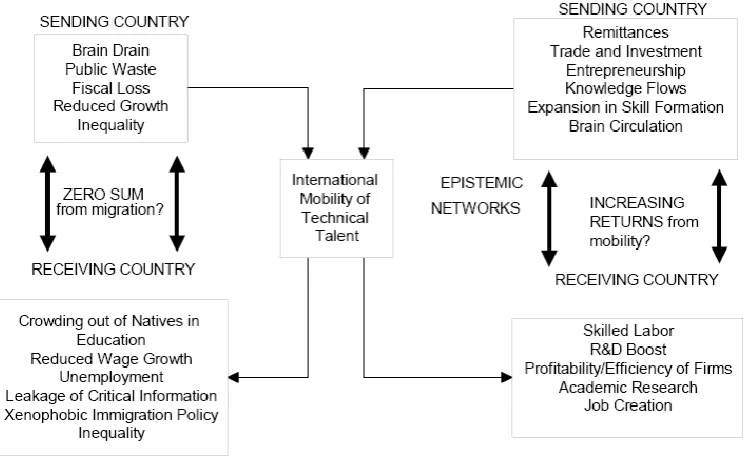
As mentioned in the introduction, there are different points of views connected to brain drain. The literature is not clear on the consequences of skilled student mobility. It is hence essential in the first place to identify the four flows marking a brain drain:
Brain drain for developing countries: people moving from developing to developed countries (and stay there on a long-term basis, also in relation to education)
Brain drain for developed countries: people educated in the developed country return to home country or another country.
People moving between developed countries People moving between developing countries
45 | P a g e This situation is as well considered to be problematic because often, once people have left the country they are not very likely to return to their home country (Baruch, et al., 2007; Cervantes & Guellec, 2002).
Reasons for this refer to the limited opportunities existing in terms of research funding, career options, intellectual input, education for children and political circumstances (Dodani & LaPorte, 2005, p. 489) next to the options prevailing in host countries. Yet, the literature is divided. Other scholars argue that particularly students from developing countries want to return home and make use of their knowledge and contribute to an improvement of the situation (Gwynne, 1999) or claim that no empirical justification exists for negative consequences of brain drain (Beine, Docquier, & Rapaport, 2008) and instead a certain brain drain is even considered to be optimal. This is because other individuals are stimulated to participate in higher education and get higher wages as well. Furthermore it is considered that spillovers can occur to other areas (Lowell & Findlay, 2002). However it has been observed that the brain drain is stronger in countries having a low level of schooling and in those countries being not too distant from OECD countries (Docquier, Lohest, & Marfouk, 2007).
A brain drain situation is as well occurring when a country is educating nationals/foreigners, who leave the country immediately after graduation. Another important aspect to be considered here is the temporal dimension. Temporary stays are rarely associated with a brain drain situation. The focus is instead on permanent or long-term migration (Tremblay, 2005). Closely connected to the concept of brain drain is the concept of brain gain. Is one country’s brain drain another country’s brain gain? The distinction between sending and receiving country is accordingly an important aspect for the brain drain concept as well.
4.2
B
RAING
AINHere the concept of brain gain is explored in more detail by providing a definition and referring to the implications.
4.2.1 DEFINITION
4.2.2 WHO IS AFFECTED?
The brain gain effect needs to be considered with regard to various dimensions as well: sending countries and receiving countries as well as a time perspective. In a nutshell, brain gain can occur at various levels. For the matter of completeness all levels are listed, yet only the first two are relevant here.
Brain gain for developing countries: people who moved abroad and come back educated (reverse migration)
Brain gain for developed countries: attract people that can be formed according to certain needs, or work at a highly skilled level
People moving between developed countries: drain for the country the people leave and gain for country the people move to
People moving between developing countries: drain for the country the people leave and gain for country people move to
Taking a receiving country perspective, brain gain refers to highly skilled people who are already specialized and enter the country. Thus the receiving country was not involved in financing the education and is just benefiting. This situation is applicable for developing countries sending its students abroad and making them return afterwards. The attraction of what Skeldon terms raw material (being young talent), as to form designer immigrants is considered to be brain gain as well (2005, p. 17). Societies which are losing skilled people can as well gain through replacements, in this case reverse migration. Reverse migration is about the return of people who have been educated abroad. Accordingly they bring new knowledge to the country (Carr, et al., 2005b, p. 388). Furthermore, it seems as if sometimes it is part of a wider ‘economic development strategy’ to send domestic students abroad and benefit from the reverse migration (Cervantes & Guellec, 2002, p. 2; OECD, 2004).
4.3
B
ALANCEB
RAIND
RAIN ANDB
RAING
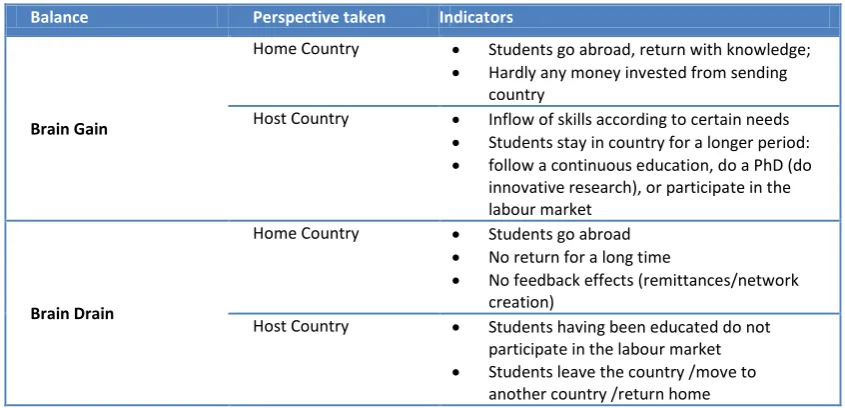
AIN47 | P a g e Starting with the positive aspects of this mobility: educated people can make use of their possibilities, which might not be available at home (overcome what is known as brain waste (Hansen, 2003)). Remittances are sent back home, very often accounting for a high amount (Dodani & LaPorte, 2005)). Furthermore the situation should be seen as an incentive for countries to invest in their domestic education; the return of skilled migrants might bring new knowledge and increase the amount of human capital. Finally if nationals are located in various countries, a huge network is established yielding benefits. This option has already been introduced and known as the Diaspora option. In the following this is dealt with in more detail.
[image:47.595.86.509.372.576.2]A negative view suggests that countries are exposed to a loss of human capital influencing growth and productivity. A financial loss is seen especially if the country invested previously in that education. The remittances might decrease over time and the quality of essential services of education might decrease. Finally students being educated on governments costs mark a further drain and options for short-term movement are often restricted by immigration policies (2002, p. 7). All in all a brain drain and brain gain situation might yields positive and negative effects, being strongly connected to the perspective that is taken.
Table 5: Brain Drain & Brain Gain
Balance Perspective taken Indicators
Brain Gain
Home Country Students go abroad, return with knowledge; Hardly any money invested from sending
country
Host Country Inflow of skills according to certain needs Students stay in country for a longer period: follow a continuous education, do a PhD (do
innovative research), or participate in the labour market
Brain Drain
Home Country Students go abroad No return for a long time
No feedback effects (remittances/network creation)
Host Country Students having been educated do not participate in the labour market Students leave the country /move to
4.4
B
RAINC
IRCULATIONA number of scholars and politicians take a different point of view for approaching international mobility and the effects on the countries involved. Instead of placing huge emphasis on the sending and receiving country the distinction is getting blurred and the process is considered less static. More specific, in times of globalisation where borders are diminishing and people often lose their feeling of national identity and statehood, scholars tend to describe international mobility as global talent flow and circular migration (Carr, et al., 2005b; Vertovec, 2007), skill flow (Clemens, 2009) or brain circulation (Lowell & Findlay, 2002; Saxenian, 2005).
4.4.1 EMERGENCE AND ASSUMPTIONS
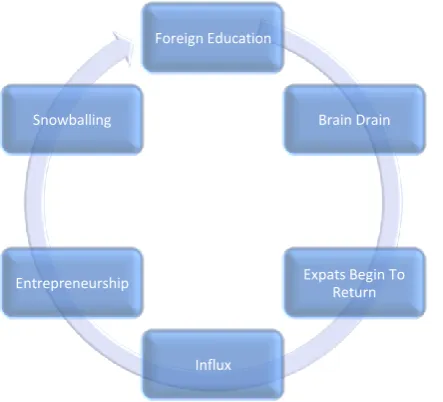
The concept emerged in the last couple of years as a response to current trends and experiences from the past (Saxenian, 2005; Vertovec, 2007). Saxenian provides a milestone with regard to the theoretical exploration of brain circulation by means of illustrating the Silicon Valley experience in the USA. Here huge emphasis is placed on the role of transnational communities (Saxenian, 2005).
The following cycle, based on the information and ideas of Saxenian (2006a), is a good illustration for the ideas connected to brain circulation. Particular stress is placed on the entrepreneurial idea behind it. Although the cycle is designed for the Silicon Valley experience in the first place, it is applicable here for providing the assumptions of brain circulation in a coherent way. It is assumed, that people in the first place move abroad as to get a foreign education and stay eventually there for some time and set up businesses. This stage is perceived as a brain drain for the sending country at that point. Later on, however, people return to their home countries and cooperate with governmental officials, spread their knowledge and in turn make investments into universities and training. Eventually new firms and enterprises might be set up, contributing to a competitive environment with new networks, ties and options for expansion.
The brain circulation approach has some distinct features, clearly extending the Foreign Education
Brain Drain
Expats Begin To Return
Influx Entrepreneurship
[image:48.595.131.353.524.725.2]Snowballing
49 | P a g e previous assumptions of brain drain and brain gain: first, a less static point in terms of sending and receiving country is taken. A brain drain is perceived in the first place before benefits are set off. Second, reference is made to the interactive character that is connected to brain circulation. And third the temporal dimension is important as migration the process is flexible and return migration can occur. It seems that the positive effects of brain circulation take time to pay off, and are long-term wise oriented. In a nutshell, the concept of the “lively return migration of the native born, or “brain circulation”, re-supplies the highly educated population in the sending country and, to the