Psychological adjustment in cleft lip and/or palate:
Outcomes, methods and neglected groups
Miss Nicola Marie Stock
Thesis for the degree of Doctorate of Philosophy by published work (DPhil) SEPTEMBER 2015
Supervisory team:
Professor Nichola Rumsey (first supervisor; internal)
Associate Professor Timothy Moss (second supervisor; internal) Professor Jonathan Sandy (external contributor, University of Bristol)
Faculty of Health and Applied Sciences Department of Health and Social Sciences University of the West of England, Bristol, UK
Contents page
Acknowledgements
7Abstract
9Author statement
10Declaration of
authorship
12Introduction
14The psychology of
appearance 15
Visible difference 16
Cleft lip and/or
palate 17
Cleft care in the UK 17
The CL/P treatment
pathway 18
The psychological
impact of CL/P 20
Theories and
models 22
Conceptualising
adjustment to CL/P 24
Methodological approaches and limitations
conclusions This doctoral
thesis 28
Aims 28
Methodology 28
Ethical considerations 28
Structure 29
Presented
publications
30Publication 1 with
author commentary 31
Publication 2 with
author commentary 35
Publication 3 with
author commentary 39
Publication 4 with
author commentary 42
Publication 5 with
author commentary 46
Publication 6 with
author commentary 50
Publication 7 with
author commentary 53
Synthesis and
conclusions
57Summary of
Outcomes 57
Methods 58
Neglected groups 62
Applicability of the findings to
psychological theory
62
Frameworks 62
Theories and models 64 Methodological
issues within this thesis
65
Secondary analysis 65
Choice of qualitative
methods 66
Saturation 67
Reflexivity and
triangulation 68
Focus on neglected
groups 69
Overlap between
disciplines 70
Current work 71
The Cleft Collective 71 Patient and Public
Involvement (PPI) 73
professional activities
Future plans 77
Conclusions 79
References
81Appendices
90Appendix 1 – Map of evidence against university doctoral descriptors
91
Appendix 2 –
Bibliography 94
Appendix 3 – National and international conference presentations
98
Appendix 4 – Additional presentations
103
Appendix 5 -
Testimonials 107
Figures
and Tables
Figure 1 Classification of cleft lip
and/or cleft palate 17
and/or palate in the UK
Figure 3 The ARC framework 26
Figure 4
A conceptual framework of psychological
adjustment to cleft lip and/or palate
59
Table 1 Consensus achieved to
Acknowledgments
I am extremely grateful to the following people who have played a key part in helping me to reach this point of my career:
My mum, for her strength, her listening ear, and for making sure I didn’t quit. My dad, for not saying much, but always saying the right thing.
My sister, for all the cups of tea.
My grandparents, for believing unconditionally that I could achieve anything, and for regularly asking me “are you a doctor yet?”
My line manager and mentor, Professor Nichola Rumsey, for recognising and nurturing my potential and for keeping me grounded.
My dear colleague and friend, Kristin Billaud Feragen, for sharing so much, and to her wonderful family for their generosity and laughter.
My team mate Joe, for being my superhero.
Pap, for all his advice, encouragement and 7am spin classes.
Dr Tim Moss for his advice and support, for always challenging me, and for reminding me to “stop doing postgraduate qualifications and have a holiday”. My fantastic friends (I wonder how many of you will read this…) for generally being excellent.
My amazing colleagues at the Centre for Appearance Research, for your ongoing inspiration and encouragement.
Professor Jonathan Sandy, for his generous financial support and the paninis. The Cleft and Craniofacial Psychology Special Interest Group, for sharing my beliefs and ambitions, and for adopting me into the team.
Dr Paul White, for helping me to feel (slightly) less terrified of statistics.
Professors Eduardo Keegan and Guillermina Rutzstein and their team, for the steak, tango and dulce de leche.
Everyone who participated in past and current research projects, for your time and sincerity.
Abstract
Author statement
From a young age I knew I wanted a career in Psychology, but it wasn’t until I began volunteering at the Centre for Appearance Research (CAR) at the University of the West of England (UWE) while studying for my undergraduate degree that I first considered academic research. Initially I was unconvinced, in my mind linking research with dull statistics and office work. Over time however, I discovered that not only is research diverse, exciting and involves plenty of patient contact, but that through research there is the potential to make much larger changes to people’s lives than is arguably possible on a one-to-one clinical basis. It also allowed me the freedom and flexibility to work independently, the space to be creative, and the opportunity to indulge my love of writing. Progressively, I was asked to present my work at a range of multidisciplinary national and international conferences. I began to build up networks of stakeholders, from other psychologists to surgeons, charities and funding bodies. During this time I also completed two Masters degrees; the first in Research Methods in Psychology and the second in Health Psychology. I felt challenged every day and I was learning at a fast pace.
A second wave of doubt arose when I realised that all of my work had started to become focused on a single field: cleft lip and/or palate (CL/P). Not only did I not want to be pigeonholed into one area of work, but I couldn’t see how my thirst for knowledge and clinical application could be satisfied by a single condition. However, I came to learn that CL/P was a lifelong, complex condition, involving not just the individual but the whole family, as well as an array of different medical disciplines and treatments. I discovered psychological adjustment to CL/P to be multifaceted and to fluctuate over time according to ever-changing situations and life events. I became fascinated with the question of why one person could seemingly adjust to the condition so well, while another person exhibited ongoing difficulties throughout their life. What was it that made these two people’s experiences so different and how could we attempt to implement this knowledge into psychological intervention?
seemed to agree upon what it is that constitutes a positive psychological outcome. While understanding there is a case to be made for the necessity of psychological intervention, I was surprised by the ongoing focus on deficits and problems, with very little work being carried out on resilience and personal growth. I also found that key groups of patients were being excluded from research samples, and I was frustrated by the tendency for authors to largely neglect any additional challenges (such as comorbid conditions) and individual variation. Finally, I was disappointed by the lack of evidence of the benefits of psychological support and intervention, and the lack of coherence in the interventions offered. Psychologists are an expensive commodity, and as such need to be able to measure, evaluate and demonstrate their value and impact. It was the identification of these gaps in the knowledge which drove my curiosity in this area, and it is these discoveries which form the key themes integrated into this doctoral thesis.
Throughout the course of preparing for this DPhil, I have grown both professionally and personally. I have learned a great deal about my strengths and the areas which would benefit from further development, as well as about the research field itself and the differing methodological approaches that can be utilised. I have felt incredibly privileged and inspired to be the recipient of participants’ past experiences and hopes for the future. I have also been remarkably fortunate to meet and collaborate with like-minded clinicians and researchers with similar ideas, values and ambitions for the field.
Declaration of authorship
Publication Role
Rumsey, N. and Stock, N.M. (2013) Living with a cleft: Psychological challenges, support
and intervention. In: Berkowitz, S., ed. (2013)
Cleft Lip and Palate: Diagnosis and
Management, 3rd edition. Berlin Heidelberg:
Springer-Verlag; pp. 907-915.
Completed comprehensive literature review
Collaboratively drew conclusions and corresponding implications
Contributed to the writing and editing of the book chapter
Disseminated the findings
Feragen, K.J.B., Stock, N.M. and Rumsey, N. (2014) Towards a reconsideration of inclusion
and exclusion criteria in cleft lip and palate:
Implications for Psychological research. Cleft
Palate-Craniofacial Journal, 51 (5), pp.
570-579.
Contributed to the overall concept and design of the project
Conducted a literature search
Contributed to the interpretation of the statistical analyses
Collaboratively drew conclusions and corresponding implications
Contributed to the writing and editing of the paper
Contributed to the dissemination of the findings
Feragen, K.J.B. and Stock, N.M. (2014) When there is more than a cleft: Psychological
adjustment when a cleft is associated with an
additional condition. Cleft Palate-Craniofacial
Journal. 51(1), pp. 5-14.
Contributed to the overall concept and design of the project
Conducted a literature search
Contributed to the interpretation of the statistical analyses
Collaboratively drew conclusions and corresponding implications
Contributed to the writing and editing of the paper
Contributed to the dissemination of the findings
Stock, N.M. and Rumsey, N. (2015, e-pub 2013) Parenting a child with a cleft: The
father’s perspective. Cleft Palate-Craniofacial
Journal. 52(1), pp. 31-43.
Identified and developed the topic
Conducted a literature search
Designed the study with supervision
Collected the data
Conducted qualitative analysis
Collaboratively drew conclusions and corresponding implications
Wrote and edited the paper with supervision
Dissemination of the findings
Stock, N.M., Feragen, K.J.B. and Rumsey, N. (e-pub ahead of print, 2014) “It doesn’t all just
Identified and developed the topic
Conducted a literature search
lip/palate. Cleft Palate-Craniofacial Journal,
doi:http://dx.doi.org/10.1597/14-178
corresponding implications
Wrote and edited the paper with supervision
Dissemination of the findings
Stock, N.M. and Rumsey, N. (2015, e-pub 2014) Starting a family: The experience of
parents with cleft lip/palate. Cleft
Palate-Craniofacial Journal, 52(4), pp. 425-436. doi:
http://dx.doi.org/10.1597/13-314.
Identified and developed the topic
Conducted a literature search
Designed the study with supervision
Collected the data
Conducted qualitative analysis
Collaboratively drew conclusions and corresponding implications
Wrote and edited the paper with supervision
Dissemination of the findings
Stock, N.M., Feragen, K.J.B. and Rumsey, N. (e-pub ahead of print, 2015) Adults’ narratives
of growing up with a cleft lip and/or palate:
Factors associated with psychological
adjustment. Cleft Palate-Craniofacial Journal,
doi:http://dx.doi.org/10.1597/14-269.
Identified and developed the topic
Conducted a literature search
Designed the study with supervision
Collected the data
Conducted qualitative analysis
Collaboratively drew conclusions and corresponding implications
Wrote and edited the paper with supervision
Dissemination of the findings
I confirm that all of the work presented in this doctoral thesis, including the chosen publications and accompanying commentary (except where stated) is the original work of the author.
I confirm that none of the published body of work included within this portfolio of selected publications has been submitted for another academic award either in this or any other institution.
I confirm that the necessary training requirements have been met (60-120 credits, of which at least 60 are at level M).
Introduction
“It’s not just surgery and fixing. It’s all the stuff that goes with it.”
--- Mother of two children born with cleft lip and palate.
The work presented in this doctoral thesis stems from an inherent interest in how people adjust to, and grow from, difficult situations, as well as a desire to understand human interaction and behaviour. At the Centre for Appearance Research (CAR), based at the University of the West of England (UWE), our research seeks to understand how an individual’s perception of their outward appearance can influence how they feel about themselves, how they perceive their social environment and the health behaviours in which they subsequently engage. My particular area of interest focuses on how people who are affected by disfigurement (visible difference) adjust to their condition from a holistic psychological perspective.
The psychology of appearance
Appearance is a universal topic with relevance to all (Rumsey and Harcourt, 2005). Our outward appearance is not only unique, but plays a key part in an array of daily activities, from social encounters with others to a wide range of health behaviours. In particular, the face is central to a person’s sense of identity and is the principal site of verbal and non-verbal communication (Rumsey, 2012). It is the face that is captured in photographs and that is presented on social networking sites. The face is constantly on show and is the primary focus of gaze in interpersonal encounters (Rumsey, 2012).
Throughout history, people have always been interested in making the most of their looks (Frith, 2012). In recent decades however, the emphasis we place on appearance as a society and the pressure to conform to sociocultural ‘ideals’ has grown alarmingly (Grogan, 2008). According to a recent survey of 77,000 adults (the largest study of appearance concerns to date; Diedrichs et al., in preparation), only 16 percent of women and 27 percent of men reported liking what they see when they look in a mirror, while 46 percent of women and 62 percent of men reported feeling ashamed of how they look. In addition to this, more than two-thirds of the women surveyed and almost half of the men reported feeling appearance-related pressure from the media. Other studies have demonstrated that girls as young as five show a preference for thinner ideal body sizes than their own (Williamson and Delin, 2001) and that body image dissatisfaction is not only common among boys but often associated with significant distress (Cohane and Pope, 2001). In adolescence, social ‘belonging’ is a central facet of wellbeing, with appearance becoming the prime method of evaluating this (Liossi, 2003). Further, beauty is often sold as a prerequisite for success in both the personal and professional sphere (Rumsey, 2008).
While the beauty ‘ideal’ grows increasingly unachievable for all, those who have an appearance which differs even from the ‘norm’ are confronted with an additional array of challenges.
Visible difference
A visible difference is the term used to describe a health condition which involves an appearance-altering component. A visible difference may be congenital, such as a birthmark or a cleft of the lip and/or palate, or be acquired later in life as a result of an injury or illness, such as a burns scar or treatment for cancer. According to the latest estimations by the charity Changing Faces, in excess of one million people living in the UK have a disfigurement to the face and/or body (Partridge and Julian, 2008).
Due to advances in medical knowledge and technology, more and more people are being saved from life-threatening conditions. Unfortunately, the result can leave aesthetic and psychological scarring. Unlike many other conditions, the ‘symptoms’ of conditions which affect appearance are clearly visible to others, and the individual can feel that they have lost their social privacy (Clarke, 1999). Facial and bodily function can also be affected, and the individual often has to engage with a long-term programme of multidisciplinary care.
Cleft lip and/or palate
A cleft (or ‘split’) in the lip and/or the palate (CL/P) is the most common congenital craniofacial condition, affecting approximately 1,000 live births each year in the UK (Mossey et al., 2009). While the various possible causes of CL/P remain largely untested or as yet unidentified, a disturbance in the embryologic development of the face and palate between the fifth and eleventh week of gestation may result in a cleft. The type of cleft which occurs can vary depending upon the timing and degree of the disturbance (Sperber and Sperber, 2013).
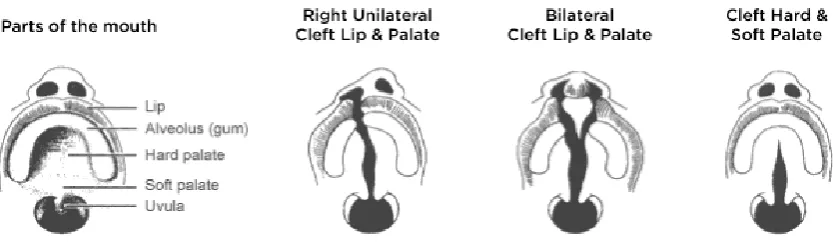
Clefts of the lip and/or palate may be classified into three main categories: 1) Cleft lip/alveolus (CL), unilateral (UCL) or bilateral (BCL)
[image:17.595.131.548.359.481.2]2) Cleft lip and palate (CLP), unilateral (UCLP) or bilateral (BCLP) 3) Cleft palate only (CP) or submucous cleft palate (SMCP)
Figure 1: Classification of cleft lip and/or cleft palate. Courtesy of the Cleft Lip and Palate Association (www.clapa.com)
Although CL/P occurs most frequently as an isolated anomaly, a cleft may also be associated with a number of other congenital irregularities. In some cases, a cleft may form part of a genetic syndrome (Mossey et al., 2009).
Cleft care in the UK
and language therapists and 105 consultant orthodontists working with children affected by CL/P (Sandy et al., 1998). Unsurprisingly, these high figures indicated that few health professionals (HPs) working in the field were specialists in CL/P. Concordantly, the standards of cleft care were disappointing and the outcomes for affected children were sub-optimal.
Following this review, cleft care was centralised in the UK. Multidisciplinary cleft teams were established and located within 18 CL/P specialist centres. Expertise and resources were allocated to each centre in accordance with population needs and accessibility. Recommendations were also made for a psychologist to be incorporated into each team.
Today, most UK cleft teams are able to offer specialist nursing, reconstructive and aesthetic surgery, orthodontics, audiology, paediatrics, speech and language therapy, genetic counselling (by referral) and psychological support. In addition, supplementary information and support is offered by the Cleft Lip and Palate Association (CLAPA; www.clapa.com), the only UK-wide voluntary organisation specifically focused on helping those with, and affected by, CL/P.
The CL/P treatment pathway
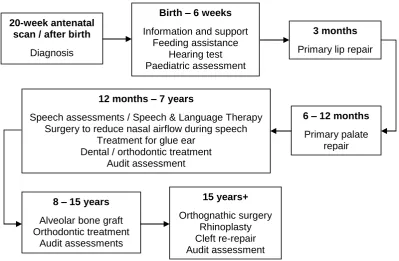
In resource-rich countries, a cleft of the lip is now usually identified during the 20-week pregnancy scan. A cleft of the palate is much more difficult to detect, and is normally diagnosed after birth. In the UK, infants diagnosed with CL/P are referred to their local specialist multidisciplinary cleft team within 24 hours. Following a diagnosis of cleft, a specialist cleft nurse will provide parents with initial information about CL/P and practical feeding assistance. Families may also be invited to attend an outpatient appointment with the core members of the cleft team.
Otitis Media with Effusion, or ‘glue ear’), small plastic tubes (grommets) may be inserted into the eardrum during surgery. Alternatively, or if the grommets are unsuccessful, a hearing aid may be required. Speech assessments are typically carried out at 18 months, three years and five years of age. If difficulties with the child’s pronunciation and/or use of language are identified, Speech and Language Therapy may be introduced to enhance the child’s speech development. Further corrective surgery may be required to reduce the airflow through the nose when speaking. Children with CL/P are also more susceptible to tooth decay, and to having missing teeth, extra teeth or teeth which are out of position. Engagement with a paediatric dentist, family dentist and/or an orthodontist may therefore be required to encourage good oral hygiene, to improve the alignment of the teeth and/or to monitor the development of the jaws and bite during growth. According to NH England guidelines (D07/S/a, 2013), children born with CL/P should have a plan in place to address any identified hearing difficulties, have dental health which is in line with other children in the region, demonstrate good quality and intelligible speech, have good maxillary growth and facial appearance and have been screened for any psychological difficulties before the age of five years.
After this, children with CL/P may require an alveolar bone graft, which aims to correct any clefting in the jaw and/or to repair the fistula between the nose and mouth. This is normally performed between the ages of eight and 11 years. Ongoing orthodontics to achieve a good appearance in the child’s permanent dentition is common between the ages of 11 and 15 years. Orthognathic surgery, rhinoplasty and cleft re-repairs may be offered to patients during late adolescence and early adulthood to enhance aesthetics and/or function.
Figure 2: Typical treatment pathway for cleft lip and/or palate in the UK.
The psychological impact of CL/P
CL/P can pose a number of significant challenges for affected individuals and their families. Initially, parents may experience shock, guilt and grief upon receiving a diagnosis of CL/P in their child (Nelson et al., 2012). Questions such as ‘why has this happened to us?’ and ‘what did we do wrong?’ often go unanswered because of a lack of understanding about what causes CL/P (Williams et al., 2012). Although the quality of information and support that a family receives at this time is crucial for long-term wellbeing (Chuacharoen et al, 2009; Vanz & Ribeiro, 2011), few parents perceive non-specialist HPs to possess the knowledge, experience and expertise to provide it (Collett and Speltz, 2007; Knapke et al., 2009; Nelson et al., 2012). Following the birth of the child, feeding difficulties are often distressing and the bonding experience between the parents and infant can be disrupted (Collett and Speltz, 2007; Despars et al., 2011). The reactions of friends, family members and members of the public to the cleft also have an influence on parental wellbeing (Nelson et al., 2012). The child’s surgical repair is
20-week antenatal scan / after birth
Diagnosis
Birth – 6 weeks
Information and support Feeding assistance
Hearing test Paediatric assessment
3 months
Primary lip repair
6 – 12 months
Primary palate repair
12 months – 7 years
Speech assessments / Speech & Language Therapy Surgery to reduce nasal airflow during speech
Treatment for glue ear Dental / orthodontic treatment
Audit assessment
8 – 15 years
genetic counselling is warranted, and an underlying genetic cause for the cleft is detected, this news can have additional implications for the whole family (Mossey et al., 2009). As the child grows older, the ongoing burden of treatment should not be underestimated. Regular outpatient appointments have the potential to impact significantly on the family’s time, energy and financial situation, as well as put strain on familial relationships (Baker et al., 2009). Parents may worry about whether their child’s treatments are effective, and whether their child will ‘be OK’ in relation to social, educational and psychological development (Nelson et al., 2012). In addition, burden of care can vary significantly across cleft teams and between countries (Semb et al., 2005).
For the child, entering into a social environment outside of the family unit can invite staring, questions and comments from others (Rumsey and Harcourt, 2005). Having an appearance which is unusual, as well as various hearing and speech complications which may interfere with communication may make it more difficult for a child with CL/P to integrate with their peers (Hearst, 2007). Seven to eight years is a peak age for teasing/bullying (Hearst, 2007). In addition, some children may experience cognitive difficulties (Richman et al., 2012; Roberts et al., 2012), which put them at risk for additional conditions such as autism, attention deficit/hyperactivity disorder (AD/HD), dyslexia, specific language impairments and developmental delay. During adolescence, appearance, romantic relationships and a sense of social ‘belonging’ become more important for psychological wellbeing (Liossi, 2003; Griffiths et al., 2012). Additional corrective surgeries at this age may pose a further challenge for adolescents trying to adjust to a continually changing appearance (Cadogan and Bennum, 2011). There is also a danger for individuals to have unrealistic expectations of surgery, or to believe that aesthetic surgery is the way to solve any psychological or social problems; if such expectations are not met this may evoke psychological distress or the desire for further surgery (Crerand et al., 2013).
lower quality of life than their peers without CL/P (Ramstad et al., 1995b; Marcusson et al., 2001). The genetic component involved in clefting also means there is an increased chance for adults with CL/P to pass the condition onto their children (Mossey et al., 2009).
Interestingly, in spite of, or perhaps because of these challenges, both individuals born with CL/P and their families often report many positive consequences of the condition. Parents have reported a high degree of positive adjustment resulting from their child’s condition (Baker et al., 2009). This has included positive perceptions of how they treat others, personal strength, belongingness, affect-regulation, religiousness and (to a lesser extent) optimism and self-understanding (Baker et al., 2009). Further, high levels of social support and approach-oriented coping strategies have been reported (Baker, 2009). For the individual, such consequences have included a high level of satisfaction with appearance (Feragen et al., 2010), particularly in relation to the appearance of physical features unrelated to the cleft (Berger and Dalton, 2009). Individuals born with CL/P have also reported a more positive social environment compared to same-aged peers (Berger and Dalton, 2009; Feragen et al., 2010), along with less emotional distress (Feragen et al., 2010), higher self-esteem and superior quality of life scores (Kramer et al., 2009).
Despite the volume of research in the field of psychological adjustment to CL/P, a number of gaps in understanding are evident and an up to date and authoritative literature is lacking.
Theories and models
While appearance is rarely the focus of broader theories and models, many can be applied to the field. These include models based on social cognition theory (see Bandura, 1986); self-regulatory theory (see Leventhal et al., 1980); and theories of stress and coping (see Lazarus and Folkman, 1984). When applied to the topic of appearance, models derived from these theories suggest that the manner in which an individual perceives their social world, as well as the way an individual interprets and copes with their condition and any related stressors are important factors in the management of appearance concerns. Examples of ways in which these theories can be applied more specifically to appearance psychology include the discrepancy between an individual’s perceived actual and ideal appearance; the relative importance of, and investment in appearance in relation to other personal characteristics; social anxiety arising from the fear of negative evaluation from peers; and attentional and interpretative biases to appearance-related information in the environment (Thompson and Kent, 2001; Cash, 2004; Moss and Carr, 2004; Rosser et al., 2010; Moss et al., 2014).
Conceptualising adjustment to CL/P
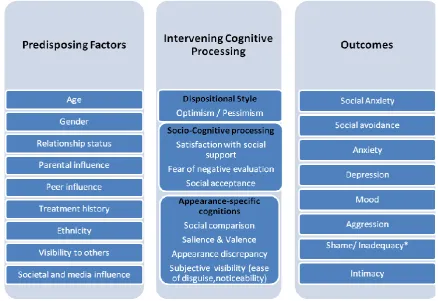
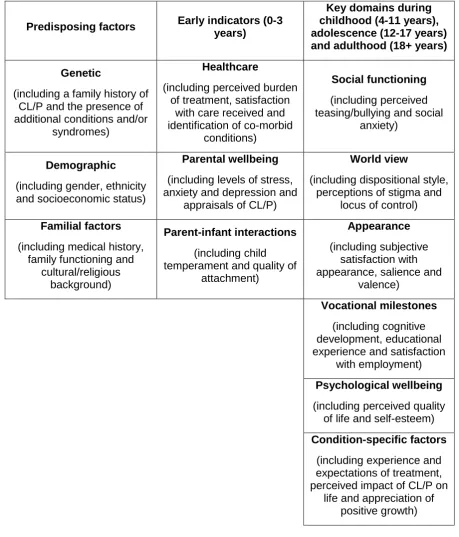
One way of addressing some of the limitations of individual theories and models is to utilise a conceptual ‘framework’. A framework has the ability to take the wider social and cultural context into account and to encompass a wide range of factors, models and theories while also being directly applicable to appearance- and condition-specific concerns. A comprehensive and testable framework, integrating information about the development, maintenance and management of psychological distress for this population would be helpful to both researchers and clinicians and would facilitate investigations and interventions relating to psychological adjustment (Rumsey and Harcourt, 2005). Further, the framework approach allows for the inclusion of findings derived through in-depth qualitative investigation, whereas existing models are wholly informed by quantitative data, further limiting their ability to account for a broad range of experiences.
with a specific focus on this condition. Crucially, there is a distinct lack of consensus in regard to what constitutes a positive psychological outcome for the CL/P population. A wide range of concepts are referred to, and are used inconsistently across studies. Many of the challenges faced by individuals with CL/P throughout life can also be applied to the general population; thus such challenges can be ‘normalised’ and discussed in relation to the wider context. Unfortunately, CL/P is still heavily medicalised and is widely described as a ‘disorder’ or an ‘anomaly’, in which any discrepancies between those with CL/P and their peers without CL/P are pathologised, and in which the cleft is conceptualised as a defining feature of the individual (for example, a ‘cleft child’, rather than a ‘child with a cleft’). Until recently, there has also been a tendency for authors to focus on deficits, differences and risks, rather than strengths, similarities and opportunities. These studies have identified a number of positive consequences of CL/P for both families and the affected individual. Perhaps somewhat surprisingly, these effects have been found to be strongest in those with a visible cleft (CL, CLP) compared to those whose cleft is arguably less visible (CP, SMCP; Feragen et al., 2010). Findings such as these could be indicative of the development of resilience and/or protective factors. Further, authors have begun to note that while individuals with CL/P and their families sometimes report low scores in relation to aspects of adjustment, these are often still within the normal range and/or in line with scores reported by reference groups. So long as deficits and difficulties are the focus of CL/P research, interpretations of findings may be skewed and indicators of resilience may be overlooked. Finally, a lack of exploration of key subgroups of this population limits the potential to develop a holistic and systemic perspective of this field.
Methodological approaches and limitations
Figure 3: The ARC framework (2009), in Clarke et al., 2013.
findings, or fail to offer pragmatic suggestions for how the corresponding challenges may be addressed within future research and practice. Finally, there is a relative paucity of literature addressing issues related to CL/P from the perspectives of the affected individual and those around them. In some cases, self-reports are excluded altogether. While both researchers and clinicians have important perspectives to contribute to the knowledge base, a comprehensive understanding of adjustment cannot be achieved without also exploring the patient experience. Recent calls have been made for an increase in qualitative work within the field in order to address this imbalance and to provide insight into the conflicted (and predominantly quantitative) evidence base (Nelson, 2009).
Summary and conclusions
This doctoral thesis
Aims
The aims of this thesis are to contribute to the understanding of current gaps in knowledge and to offer suggestions for future research and clinical practice through:
1) A series of investigations of psychological outcomes of individuals born with CL/P and
2) Critical evaluation of current conceptual and methodological approaches in the field and
3) Exploration of the experiences and support needs of professionally neglected CL/P patient groups.
Methodology
A variety of methodological approaches and tools were employed, depending upon the research question(s) posed.
Publication 1 discusses the findings of a comprehensive literature review of psychological adjustment in the field of CL/P.
Publications 2 and 3 utilise quantitative statistical methods to investigate differences among patient groups, to compare patient groups to established norms and to test different methodological approaches to analysis.
Publications 4, 5, 6 and 7 employ qualitative interview techniques and inductive thematic analysis to explore new areas of interest in more depth.
Ethical considerations
presented were based upon a retrospective review and informed consent was provided by the participants’ parents.
The research presented in Publications 4, 5, 6 and 7 were reviewed and approved by the Health and Applied Sciences Faculty Research Ethics Committee at the University of the West of England. This research was entirely compliant with the British Psychological Society Code of Ethics and Conduct (2009). All participants were aged over 18 years. Participants provided informed consent and were made aware of their right to withdraw at any time. All data were stored securely and in accordance with the Data Protection Act (1998). Details of appropriate support services were provided.
Structure
Presented publications
Publication
no. Reference
1
Rumsey, N. and Stock, N.M. (2013) Living with a cleft: Psychological challenges, support and intervention. In: Berkowitz, S., ed. (2013) Cleft
Lip and Palate: Diagnosis and Management, 3rd edition. Berlin
Heidelberg: Springer-Verlag, pp. 907-915.
2
Feragen, K.J.B, Stock, N.M. and Rumsey, N. (2014) Towards a reconsideration of inclusion and exclusion criteria in cleft lip and palate:
Implications for psychological research. Cleft Palate-Craniofacial Journal.
51(5), pp. 570-579.
3
Feragen, K.J.B. and Stock, N.M. (2014) When there is more than a cleft: Psychological adjustment when a cleft is associated with an additional
condition. Cleft Palate-Craniofacial Journal. 51(1), pp. 5-14.
4
Stock, N.M. and Rumsey, N. (2015, e-pub 2013) Parenting a child with a cleft: The father’s perspective. Cleft Palate-Craniofacial Journal. 52(1),
pp. 31-43.
5
Stock, N.M., Feragen, K.J.B. and Rumsey, N. (e-pub ahead of print, 2014) “It doesn’t all just stop at 18.” Psychological adjustment and
support needs of adults born with cleft lip/palate. Cleft Palate-Craniofacial
Journal, doi:http://dx.doi.org/10.1597/14-178.
6
Stock, N.M. and Rumsey, N. (2015, e-pub 2014) Starting a family: The experience of parents with cleft lip/palate. Cleft Palate-Craniofacial
Journal, 52(4), pp. 425-436. doi: http://dx.doi.org/10.1597/13-314.
7
Stock, N.M., Feragen, K.J.B. and Rumsey, N. (e-pub ahead of print, 2015) Adults’ narratives of growing up with a cleft lip and/or palate:
Factors associated with psychological adjustment. Cleft
Publication 1
Author commentary
Rumsey, N. and Stock, N.M. (2013) Living with a cleft: Psychological challenges, support and intervention. In: Berkowitz, S., ed. (2013) Cleft Lip and Palate: Diagnosis and
Management, 3rd edition. Berlin Heidelberg: Springer-Verlag, pp. 907-915.
The first step to identifying and addressing some of the conceptual and methodological challenges of the field was an authoritative literature review the area of psychological adjustment to CL/P. Prior to this, the most recent review was conducted in 2005 by Hunt and colleagues. This review identified many inconsistencies within the literature, and highlighted a range of methodological limitations. The primary purpose of Publication 1 was therefore to carry out a comprehensive review of the literature published between 2005 and the present (December 2010), in order to bring this review up to date, to determine whether the field has resolved its methodological problems and to inform future work in this area.
Perhaps the most important finding was the number of different concepts and measures being employed. Upon completing the review, I identified multiple competing constructs related to psychological adjustment, none of which were clearly defined, and more than 60 different measures in use. My co-author and I concluded that much of the difficulty stemmed from a lack of agreement as to what constitutes a ‘positive psychological outcome’. Without this consensus, the disparate nature of the research and the current inability of clinicians to track patients’ progress over time would be unlikely to change.
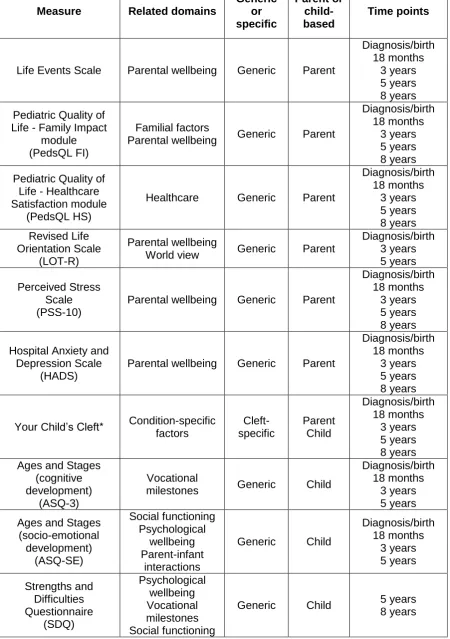
Prompted by the findings of Publication 1 and in order to tackle the huge number of concepts and measures identified, my co-author and I began working closely with the Cleft and Craniofacial Psychology Special Interest Group (SIG) in 2011. We held a number of discussions around their views of what may constitute a positive psychological outcome, informed by both the literature available to us and the psychologists’ clinical experience in the field. Based on this collaborative work and the findings of Publication 1, we then designed a conceptual framework consisting of a short list of broad outcomes, the components of which could then be broken down and measured consistently over time. This allowed us to evaluate the existing measures available in relation to these components and to select the most appropriate tools according to pre-determined criteria, such as psychometric properties, perceived clinical utility and approximate time taken to complete. This framework has since been used to inform the development of a standardised pack of measures for use within research and clinical audit at varying time points through the child’s developmental trajectory.
group, with little consideration of possible confounding variables and potentially vulnerable subgroups. In addition, there was a heavy bias towards the experiences of mothers of children born with a cleft, with few attempts to involve fathers in research; a lack of understanding of the impact of additional conditions related to CL/P (such as developmental delay and AD/HD); and few attempts to address the potentially unmet needs of adults with CL/P no longer receiving routine treatment.
This work was presented at the annual conference of the Craniofacial Society for Great Britain and Ireland (CFSGBI) in 2011 and was awarded the President’s Medal for contribution to the field. The work was also presented at the 9th European Craniofacial Congress in Salzburg, Austria in 2011. The review was updated prior to publication in the seminal book “Cleft Lip and Palate: Diagnosis and Management (3rd edition)” edited by Dr Samuel Berkowitz in 2013.
Publication 2
Author commentary
Feragen, K.J.B., Stock, N.M. and Rumsey, N. (2014) Toward a reconsideration of inclusion and exclusion criteria in cleft lip and palate: Implications for psychological
research. Cleft Palate-Craniofacial Journal. 51(5), pp. 570-579.
I met Dr Feragen, Clinical Psychologist for the Cleft Lip and Palate Team in Oslo, Norway, at the CFSGBI conference in 2011, where I presented the findings of Publication 1. Shortly after this, Dr Feragen was awarded a three-year research grant which also gave her the opportunity to travel to the UK to work at CAR for one year. During this time, Dr Feragen asked me to collaborate with her on a paper, which would attempt to address some of the key conceptual and methodological challenges I had highlighted in Publication 1. Over eleven consecutive years, Dr Feragen had collected data on psychological adjustment from children and their parents visiting the cleft clinics in Oslo. This accumulated data would not only give us one of the largest CL/P samples to date, but would allow us to look at important subgroups of children who would normally be excluded from research.
Within previous research, children with a known syndrome or severe developmental/neurological difficulties have been excluded from CL/P studies, in an attempt to ensure homogeneity within samples. Unfortunately, the biomedical parameters which are used to identify and exclude these children are rarely implemented in a uniform way across studies. Furthermore, additional conditions such as autism, attention deficit/hyperactivity disorder (AD/HD), specific language impairment, dyslexia, learning difficulties and global developmental delay are known to impact on psychological development in the wider literature, yet children with these conditions are included in CL/P samples.
approach included all children irrespective of diagnosis, while also taking into account the presence or absence of a variety of additional conditions. Results between the two analytical approaches were compared using the psychological outcome measures employed in the Oslo cleft clinic. The statistical analysis produced a large set of interesting results; however, Dr Feragen and I were concerned that we might lose focus and clarity by addressing multiple research questions in one paper. After discussing our options with third author Professor Rumsey, we decided to divide our findings across two papers; one would focus on methodology, while the second would concentrate on the subgroup(s) identified. The findings of Publication 2 suggested that different outcomes regarding the psychological adjustment of children with CL/P are evident depending upon the type of analytical approach used. Specifically, when using the traditional biomedical approach to exclusion, results were indicative of a high degree of psychological difficulties in children with CL/P. When using the suggested alternative approach, results suggested that children with a cleft alone reported scores which were in line with the reference group, while a high degree of psychological difficulties were found in children with CL/P and one or more additional conditions. It is therefore possible that the combination of poorly-defined and inconsistently applied exclusion criteria and the failure to identify those children with a range of additional conditions may be affecting the findings produced and the conclusions drawn in previous studies. Ultimately, this is likely to contribute to the conflicting results evident within current literature.
The implications drawn from Publication 2 were presented at the CFSGBI conference in 2013 and published in the leading academic journal for this field, the Cleft Palate-Craniofacial Journal, in 2014.
Publication 3
Author commentary
Feragen, K.J.B. and Stock, N.M. (2014) When there is more than a cleft: Psychological adjustment when a cleft is associated with an additional condition. Cleft
Palate-Craniofacial Journal. 51(1), pp. 5-14.
Several studies in this area have reported a relatively high frequency of additional conditions, such as those described in Publication 2, among children with CL/P. Despite this, virtually no studies have investigated the psychological impact of these conditions on individuals with CL/P, nor discussed how these conditions should be approached clinically. To follow on from the first collaborative publication between Dr Feragen and I, this paper utilised quantitative methods to investigate the impact of having an additional condition on psychological adjustment in children with CL/P at age 10.
As expected, a high percentage (39.5%) of the children in our sample had at least one condition in addition to the cleft. These children reported significantly greater psychological difficulties in relation to social experiences, attention, emotional problems and behavioural conduct than their peers with a cleft alone and in comparison to the reference group without CL/P. In stark contrast to some of the findings detailed in previous literature, children with a cleft alone reported adjustment scores which were within the normal range and that were similar to those reported by the reference group.
adjustment of children with CL/P. Of equal importance, the findings highlight that those children with an additional condition may represent a high risk subgroup. Early identification of children who exhibit signs of developmental difficulties, as well as the integration of appropriate support for these families, may be crucial for psychological adjustment among this vulnerable subgroup.
Publication 3 also highlighted a number of methodological implications. For example, the decision was taken to look at one age group only when addressing the research question. Although this approach meant that fluctuations in the relative impact of an additional condition and the psychological adjustment of those with CL/P alone could not be addressed in Publication 3, it also removed the potential for age to confound results, a common limitation evident in previous research. Second, even with a relatively large overall sample the total number of children included in the analyses is reduced when looking at subgroups. Publication 3 therefore demonstrates the importance of large and representative samples in order to facilitate the investigation of subgroups within CL/P samples. Finally, differences between self-reports and parent-reports were observed. Therefore, both self- and parent-reports may be needed to conduct a comprehensive assessment of the child’s (and the parents’) psychological adjustment, rather than rely on one or the other as has been done previously. The findings of Publication 3 were presented at the CFSGBI conference in 2013. The paper was accepted for publication in the Cleft Palate-Craniofacial Journal on its first review just one month after submission, and was published in 2014.
Publication 4
Author commentary
Stock, N.M. and Rumsey, N. (2015, e-pub 2013) Parenting a child with a cleft: The father’s perspective. Cleft Palate-Craniofacial Journal. 52(1), pp. 31-43.
While conducting the literature review in 2010, I identified a paucity of research with fathers of children born with CL/P. I found this surprising, mainly due to the volume of literature discussing the impact of CL/P on ‘parents’, which then went on to discuss the mothers’ views only. While many of these authors had not considered the possible limitations of excluding fathers from their investigations, others had commented that fathers were ‘difficult to recruit into psychological studies’.
From studying research on parent-child relationships, I found that the role of the father is different to that of the mother (for a review see Lamb, 2010). Specifically, fathers spend a much higher percentage of their interaction with their child engaging in stimulating, playful activity than do mothers. From these interactions, children learn to how to regulate their emotions and behaviour. Fathers also tend to promote independence and orientation to the outside world, which in turn is likely to exhibit self-control, achievement and pro-social behaviour in the child. An absent or incapacitated father therefore impacts significantly on the child’s physical and emotional developmental trajectory and influences the wellbeing of the family unit as a whole. Furthermore, the role of the father cannot be replaced by another family member. Following a literature review by Nelson and colleagues in 2012, which called for the implementation of improved psychological support for families affected by CL/P, I decided to explore the experience of having a child with CL/P from the perspective of the father. Until this perspective had been heard, any familial support was likely to be limited in its scope.
allow for flexibility regarding where and when the interview could take place. I hoped this would help to overcome the difficulty of recruiting fathers into the study, as stated by previous research, and would also allow me to recruit fathers from across the UK, without any geographical limitations.
In terms of my own development, this was one of the first pieces of research I had instigated, designed, conducted, analysed and disseminated with minimal supervision. I thoroughly enjoyed the process, which also enlightened me to the potential power and significance of qualitative approaches. For example, rather than dictate what I wanted to measure, based on what I guessed to be important, I took an inductive approach to interviewing and allowed the participants to simply tell their story in their way, with very occasional prompting and follow-up from me. Contrary to the previous and widespread claim that men are difficult to recruit into psychological research studies, I had recruited and interviewed fifteen fathers in under two months, and collected a wealth of informative data. This, along with the power and emotion with which each story was told, made me feel sure I had tapped into something important.
The resulting data suggested that while fathers’ reported experiences are comparable to those previously described by mothers, the support that is available for fathers, both in relation to having a baby with CL/P and to pregnancy in general, is considerably less. Fathers described their primary role to be to support their partner and family both practically and emotionally. Unfortunately, without an outlet for their own concerns and emotions, this seemed to put a great deal of strain on their own health. The findings of Publication 4 thus point to the importance of offering psychological support to fathers and of tailoring this support to fathers’ specific practical and emotional needs, as well as adopting a more inclusive approach to care more generally. Incorporating fathers’ views into future research would provide an additional and important perspective on psychological adjustment to CL/P, with the potential to shed light on conflicting reports in the literature. Further, this approach would promote a more holistic and systemic view of adjustment.
any time. This highlights the importance of a stepped approach to care (see Publication 1) in which different levels of, and approaches to, intervention are made available on a flexible basis throughout the family’s entire journey. This finding is also an example of how individual differences and fluctuations in adjustment over time could have affected the findings published in previous literature. One limitation of the paper was the heterogeneity among the recruited sample. While this matters less in terms of the quality of qualitative data compared to quantitative data, it was clear that a larger sample (given fewer time restraints) would have been beneficial. Nonetheless, Publication 4 demonstrated that men (and potentially other previously neglected groups) can be recruited into psychological research, if the approach and the research question are appropriately formulated.
The findings of Publication 4 were presented at the CFSGBI conference in 2012 and at the 12th International Craniofacial Congress in Orlando, USA in 2013. The results were also disseminated directly to participants, as well as to all members of the Cleft Lip and Palate Association (including parents and health professionals). I co-wrote a UWE national press release which received considerable online interest and some local media attention, including a fifteen-minute discussion on BBC Radio Bristol during the prime listening hour. The final paper was published in the Cleft Palate-Craniofacial Journal in 2015 (e-pub 2013). The findings have since been picked up and disseminated by additional charities in the UK, Australia and New Zealand.
Publication 5
Author commentary
Stock, N.M., Feragen, K.J.B. and Rumsey, N. (e-pub ahead of print, 2014) “It doesn’t all just stop at 18.” Psychological adjustment and support needs of adults born with cleft
lip/palate. Cleft Palate-Craniofacial Journal,doi:http://dx.doi.org/10.1597/14-178
Having thoroughly enjoyed the qualitative process of Publication 4 and found it extremely useful for eliciting rich data in areas where little is known, I decided to approach another gap in the knowledge in a similar way. The initial review (Publication 1) had identified a significant lack of literature in relation to long-term outcomes for individuals with CL/P, and this finding seemed concurrent with the tendency for routine cleft treatment to conclude around the age of 18 years. When critically evaluating the studies which had been published in relation to adults with CL/P, the existing literature was overwhelmingly negative, largely out of date and overly focused on objective medical outcomes. The patient perspective was distinctly lacking; through my work with CLAPA I had met many adults with CL/P and felt there was another side to the story.
chose to stop interviewing at this point and gather my thoughts on the data I had. The result, unsurprisingly, was an almost insurmountable quantity of qualitative data. While the data was incredibly valuable, I began to feel as if I was drowning in it, and I struggled to comprehend where I might go next. Driven by a desire to do justice to the stories I’d been told, I eventually decided to divide the data into three papers (Publications 5, 6 and 7). Since qualitative analysis of the data resulting from the interviews had proved difficult, and in order to further involve ‘patients’ in the research process, I chose to collect feedback on the preliminary findings. I hosted a presentation and discussion at a CLAPA workshop for people affected by CL/P and their families, as well as to the CLAPA Adult Voices Council in 2013. I also sent a summary to, and collected feedback from the participants themselves.
The resulting publication detailed five key themes which adults with CL/P identified as critical to their wellbeing in adulthood from their perspective. It explored issues in relation to further treatment, social and romantic relationships, higher education and employment and access to psychological support. Contrary to many of the previous studies carried out with this population, Publication 5 suggested that the majority of adults with CL/P in this study had adjusted well to the challenges associated with their condition and reported many positive outcomes. This may in part explain the discrepancies within the existing literature and emphasises the importance of including the patient perspective in research and practice. Nonetheless, Publication 5 implies that some issues attributed to CL/P may continue into adulthood, and new issues arising later in life, such as employment, long-term relationships and starting a family, may warrant further investigation and additional psychological support. Publication 5 discussed the experiences and identified the felt needs of a previously neglected group who have rarely had their voice heard. The findings have clinical implications for adults who have already left the cleft service, as well as the children who are current engaged in the treatment pathway.
invited me to be part of the campaign committee. Later in the year, Publication 5 was presented at the biannual Appearance Matters conference in Bristol, UK in 2014, in collaboration with the Co-Chairs of the CLAPA Adult Voices Council, one of whom also participated in the original study. The study thus provided an example of how ‘Patient and Public Involvement’ (PPI) in research can help to develop and improve the quality of research and dissemination. The final paper was published online in the Cleft Palate-Craniofacial Journal (e-pub ahead of print) in 2014. The findings have since been picked up and disseminated by charities in the UK, Australia and New Zealand. The printed version is due to appear in the September 2015 issue of the journal and has been selected for a National press release (USA) and awarded open-access status.
Publication 6
Author commentary
Stock, N.M. and Rumsey, N. (2015, e-pub 2014) Starting a family: The experience of parents with cleft lip/palate. Cleft Palate Craniofacial Journal, 52(4), pp. 425-436. doi:
http://dx.doi.org/10.1597/13-314.
While working on Publication 4, I interviewed one father who had been born with CL/P himself. The possibility of future generations being affected by CL/P was also raised in Publication 5. Due to the genetic component involved in clefting, there is an increased chance of an individual’s children (and subsequent generations) also being affected (Mossey et al., 2009), although the genetic and environmental mechanisms involved are poorly understood.
As part of the larger adults study, I had already decided to advertise specifically for adults who were now also parents, in order to explore how they had felt about starting their own family. I recruited adults who had children born either with or without CL/P, which would allow me to see if there were any differences between these groups of parents, which had not been done before. I chose not to interview parents who did not have a cleft themselves, since there was a wealth of literature already available on this.
investigation, in order to explore the potentially unmet needs of this unique group from their own perspective, to more fully understand some of the reported discrepancies in the literature and to provide suggestions of how to support this subgroup of patients in practice.
The findings of Publication 6 suggested that although a parental diagnosis of CL/P may be felt by interviewees to impact parents’ experiences of having a child, these parents do not necessarily experience elevated levels of distress as a result. In fact, incorporating their own experiences of growing up with a cleft into their style of parenting may be considered advantageous for both the child and the parent. Publication 6 therefore advocates a move away from ‘differences’ and ‘comparisons’ (as investigated in the two previous studies on this topic) to a more holistic and contextual standpoint. Publication 6 also demonstrates how CL/P can be a mechanism for growth and bring an individual’s strengths to the fore. The findings suggest that an ongoing cycle of psychological adjustment may be developed and maintained over generations. Finally, Publication 6 strongly highlights the importance of information for prospective parents regarding the heritability of CL/P, and of the need for access to genetic counselling and psychological support if required.
Publication 6 was presented at the CFSGBI conference in 2014, and disseminated to the CLAPA membership and via online media. The findings of the research were also included in the 2014 Cleft Awareness Week campaign. The final paper was accepted after the first review and published online in the Cleft Palate-Craniofacial Journal in 2014. The findings have since been picked up and disseminated by charities in the UK, Australia and New Zealand. The article appeared in print in July 2015 and was selected for a National press release (USA) and awarded ‘open access’ status. A number of UK cleft teams have since revised their 20-year audit clinic to include information about heritability for prospective parents with CL/P.
Publication 7
Author commentary
Stock, N.M., Feragen, K.J.B. and Rumsey, N. (e-pub ahead of print, 2015) Adults’ narratives of growing up with a cleft lip and/or palate: Factors associated with
psychological adjustment. Cleft Palate-Craniofacial Journal, doi:
http://dx.doi.org/10.1597/14-269.
When interviewing adults about their experiences of CL/P, I not only asked them about issues in adulthood, but also what they could remember from growing up with the condition. After much consideration, I had decided not to confuse Publication 5 with reported experiences of childhood and adolescence, due to the volume of data accumulated and the potential for multiple research questions. However, I felt this story provided an interesting and thus far absent perspective and still needed to be told in a separate paper.
Initially, my aim for the paper was to use this remaining data to inform the development and evaluation of new and existing interventions in the field. One of the difficulties of psychological intervention is that there is little clear guidance about what the interventions should target, and even fewer studies which provide evidence for the worth of existing interventions (Jenkinson et al., under review; Norman et al., in press 2014; Bessell and Moss, 2007). A recent priority setting initiative by the James Lind Alliance (www.lindalliance.org) identified the optimal type and timing of psychological intervention to be the most important unanswered research question in CL/P. I believed the data I had collected could provide a starting point by identifying some of the key factors which may contribute to the development of psychological distress and resilience across the lifespan.
made by the individual). While some of these factors were contextual, many others appeared to be amenable to change, and thus, to psychological intervention. The paper went on to discuss these findings in the context of a broad review of the relevant literature, pertaining to adjustment in CL/P, visible difference and health psychology more generally.
I felt confident in and proud of this paper and its potential, so I was surprised to receive a mixed review from the Cleft Palate-Craniofacial Journal shortly after submission. While one reviewer was very positive about the paper, the second reviewer had significant concerns about the scope and aims of the paper as a whole. Given the discrepancies between the two reviews, it was difficult to respond, and I was a little disappointed not to receive additional guidance from the editor. Gradually though, I began to realise that the scope of the paper was possibly too ambitious. Although the paper did have the potential to inform interventions, this related more to a possible future outcome than an initial aim. Additionally, the paper could only provide the limited perspective of the individuals in the recruited sample. It is known from the general psychology literature (see Cantor and Kihlstrom, 1987) that individuals try to find meaning in their experiences and that perceptions of events can fluctuate over time. Thus, patient theories regarding their own development are not necessarily psychologically accurate or the basis for interventions. However, after some reformulation I was able to express that the strength of the paper was to provide a patient perspective, which could potentially be added to the knowledge derived from previous research and the clinical experience of the psychologists working in CL/P. This in turn could provide collective insight into the factors and processes which may contribute to adjustment in the CL/P population. Additionally, the scope of the discussion section of the paper was significantly reduced and refined, in order to bring more focus to the paper and to ensure the findings were not over-generalised.
addition, several issues which are also relevant to the general population were identified, such as age, gender, societal pressures, optimism and faith/spirituality. These findings highlight the difficulties in trying to tease apart those challenges pertaining to the general population and those challenges specific to, or exacerbated by, CL/P and its treatment, as well as understanding how these challenges may interact. Publication 7 also demonstrated the potential to learn from those patients who report having adjusted well to the challenges associated with CL/P, in addition to those who present with difficulties attributed to CL/P. The number and breadth of psychological factors identified in this study is testament to the importance of psychology in the field of CL/P and demonstrates a clear role for psychologists in tackling appearance-related concerns, designing information and self-help materials, supporting patient decision making and exploring ways of improving social interaction, as well as providing specialist psychological support. The findings derived from Publication 7 were presented at the CFSGBI conference in 2015 and published in the Cleft Palate-Craniofacial Journal (e-pub, 2015). The findings have since been picked up and disseminated by charities in the UK, Australia and New Zealand.