Original Article
Association between CYP19 polymorphisms and
endometriosis risk: a meta-analysis
Cheng-Lei Gu1,2*, Lu-Yang Zhao1*, Ke Huang1, Wen-Sheng Fan1, Li-An Li1, Ming-Xia Ye1 , Wei-Dong Han3, Yuan-Guang Meng1
1Department of Gynecology and Obstetrics, PLA Medical School, Chinese People’s Liberation Army General
Hospi-tal, Beijing, China; 2Department of Gynecology and Obstetrics, The 309th Hospital of Chinese People’s Liberation
Army, Beijing, China; 3Department of Molecular Biology, Institute of Basic Medicine, PLA Medical School, Chinese
People’s Liberation Army General Hospital, Beijing, China. *Equal contributors.
Received December 16, 2015; Accepted March 19, 2016; Epub June 15, 2016; Published June 30, 2016
Abstract: Purpose: Studies have come to conflicting conclusions about whether CYP19 polymorphisms are associ
-ated with endometriosis risk. To help resolve this question, we carried out a meta-analysis of case-control studies in the literature. Methods: All eligible case-control studies published up to Dec. 16, 2015 were identified by searching PubMed, Embase, the Chinese Biological Medical Database and the Chinese National Knowledge Infrastructure Database, without language restrictions. Pooled odds ratios (OR) and 95% confidence intervals (95% CI) were cal
-culated. Results: A total of nine eligible articles with sixteen studies were included. Overall, no evidence indicated that the rs10046 polymorphism was associated with endometriosis risk. However, after stratification by ethnicity, a lower risk of endometriosis was found with rs10046 among Caucasians under the allele model. For the rs700519 polymorphism, a lower risk of endometriosis was found among Asians using the recessive and heterozygous mod
-els. No significant association was observed between the rs2236722 and rs700518 polymorphisms and endome
-triosis risk among Asians. Conclusions: Our meta-analysis detected that the CYP19 rs10046 polymorphism might be associated with endometriosis risk among Caucasians and the rs700519 polymorphism might be associated with endometriosis risk among Asians, while the rs700518 and rs2236722 polymorphisms might not be associ -ated with endometriosis risk among Asians.
Keywords: CYP19, aromatase, endometriosis, polymorphism, meta-analysis
Introduction
Endometriosis is a common gynecologic disor
-der defined as the presence of endometrial tissue outside the uterine cavity. It is reported
to occur in around 10% of women of reproduc
-tive age and in 30-50% of infertile women [1]. Although the exact etiology and pathogenesis
of endometriosis remain unknown, its pheno
-type is believed to be influenced by multiple genetic and environmental factors. It is well
known that endometriosis is an estrogen-de-
pendent chronic inflammatory disease. Women of reproductive age and postmenopausal
women undergoing estrogen replacement
ther-apy are most susceptible to endometriosis [2]. Therefore, it is considered that discrepancies in
the process of estrogen production and metab
-olism should play a role in the development of
endometriosis. It is logical to think that
chang-es in genchang-es that control levels of chang-estrogen, as in the case of CYP19, are potential candidates
that predispose women to this illness.
The human CYP19 gene is located on chro- mosome 15q21.2 and comprises a 30 kb
cod-ing region and a 93 kb regulatory unit [3]. This gene encodes aromatase, an enzyme whose
function is to catalyze the conversion of andro
-gens into estro-gens, a reaction known as
aro-matization [4]. Reports have indicated that increased expression of CYP19 aromatase occurs in ectopically located endometriotic lesions, especially ovarian endometriosis [5],
whereas endometrial tissue from uterine-dis
-ease-free women does not exhibit aromatase activity. In contrast, aromatase enzyme activity
and increased mRNA levels are readily detect
Although a number of studies have focused on
CYP19 genetic variation with respect to
endo-metriosis, they have yielded contradictory results [9-17]. The reasons for this disparity may be explained by potential limitations of these studies, such as sample size and the source of the controls. Therefore, we performed a meta-analysis on published papers to clarify the association of CYP19 polymorphisms
with endometriosis, including rs10046: C>T
(1531C>T), rs700518: G>A (240A>G, Val80),
rs2236722: T>C (115T>C), and rs700519: C>T
(Arg264Cys).
Materials and methods
Literature sources and search strategy
The PubMed, Embase, Chinese Biomedical Literature database (CBM) and China National
Knowledge Infrastructure (CNKI) were searched by two reviewers to retrieve all papers avail -able. The latest searches were undertaken on
Dec. 16, 2015. The combination of the terms “CYP19” or “aromatase”; “polymorphism”,
“vari-ant”, “SNP” or “mutation”; and “endometriosis” was used without restrictions on language
restriction or publication date. In addition, ref -erences cited in the retrieved articles were reviewed to trace additional relevant studies
missed by the search. Authors were contacted
to obtain related data not revealed in original articles.
Inclusion and exclusion criteria
The inclusion criteria were: (1) evaluation of the association between CYP19 polymorphisms (rs10046, rs700518, rs2236722, rs700519)
and endometriosis; (2) case-control or cohort
design; (3) human study; (4) the number or fre
-quency of genotypes was provided in the study or could be obtained by contacting the authors.
The exclusion criteria were: (1) studies with
insufficient information, such as genotype num
-ber not reported; (2) absence of control sub -jects; (3) non-clinical studies; (4) review,
com-ment or conference papers. For studies with
overlapping samples, only the one with the larg
-est sample size was included.
Data extraction and quality assessment
Two investigators (Chenglei Gu and Luyang Zhao) independently selected the article and extracted data with a consensus on all of the
terms. If the data were not identical, the two
investigators would recheck the data to come
to an agreement. The following items were col
-lected from the eligible articles: first author’s name, year of publication, country of origin, eth
-nicity, source of control, source of sample, gen
-otype method, number of cases and controls, genotype or allele distribution in cases and controls, and probability (P) value for the test of Hardy-Weinberg equilibrium (HWE) in the
controls.
The quality of all eligible studies was indepen
-dently evaluated on the basis of the Newcastle-Ottawa Scale (NOS). The NOS provides a quality rating based on criteria covering three study
dimensions: study group selection, comparabil
-ity of cases and controls, and exposure of cases and controls. If all criteria are met, nine
stars were rewarded. Seven stars were
consid-ered the cut-off for distinguishing “high-quality studies” from “low-quality studies”.
Statistical analysis
We tested whether the genotype frequencies of the controls were in Hardy-Weinberg equilibri
-um (HWE) using a χ2 test (P>0.05). The strength
of the association between the CYP19 polymor
-phisms and the risk of endometriosis was mea
-sured by odds ratios (ORs) with 95% confidence
intervals (CIs). The pooled ORs were calculated
for the allele model (T vs. C for rs10046, A vs. G for rs700518, C vs. T for rs2236722, and T vs. C for rs700519), dominant model (TT+CT vs. CC for rs10046, AA+GA vs. GG for rs700518, CC+TC vs. TT for rs2236722, and TT+CT vs. CC for rs700519), recessive model (TT vs. CT+CC for rs10046, AA vs. GA+GG for rs700518, CC vs. TC+TT for rs2236722, and TT vs. CT+CC for rs700519), homozygous model (TT vs. CC for rs10046, AA vs. GG for rs700518, CC vs. TT for rs2236722, and TT vs. CC for rs700519), and heterozygous model (TT vs. CT for rs10046, AA vs. GA for rs700518, CC vs. TC for rs2236722, and TT vs. CT for rs700519). The statistical sig
-nificance of the pooled ORs was determined by
the Z test, with P < 0.05 indicating statistical
significance. Heterogeneity was evaluated using a χ2-based Cochan’s Q statistic, and
inconsistency was tested by the I2 metric.
Heterogeneity was considered statistically sig
-nificant at P < 0.10 for the Q statistic or I2>50%
for the I2 metric statistic [18, 19]. When the het
(P>0.10), the fixed-effects model (Mantel-Haenszel method) [20] was applied; otherwise the random-effects model (DerSimonian and Laird method) [21] was performed. Considering that the frequency of the CYP19 polymorphisms varied across different populations, gene-dis
-ease associations for the different inheritance models were also analyzed. All statistical analy
-ses were performed using Stata 12.0 software
(Stata Corp, College Station, TX, USA). Results
Literature selection and study characteristics
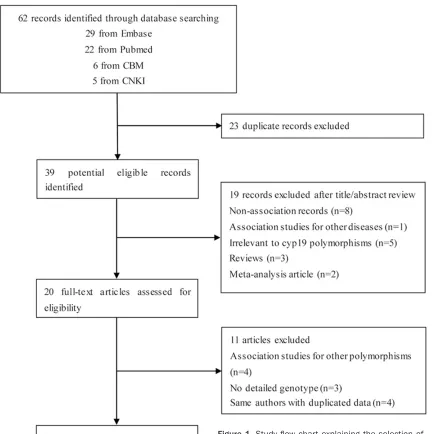
The selection process of this literature review is summarized in the flow diagram (Figure 1). A
total of nine eligible articles with sixteen stud
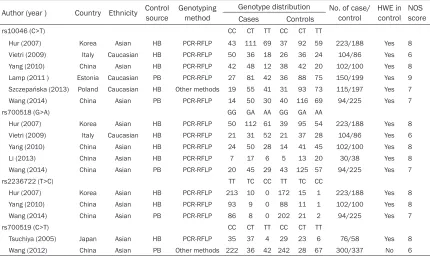
-ies fully met the inclusion criteria and were incorporated into this meta-analysis. The main characteristics of the sixteen case-control
studies are presented in Table 1. These articles were published between 2005 and 2014. The studies were carried out in China, Japan, Korea,
Italy, Estonia and Poland. Of these studies, twelve were performed on an Asian population, and four on a Caucasian population. There were six case-control studies with 788 endo -metriosis cases and 955 controls concerning
the rs10046 polymorphism, five case-control
studies with 553 cases and 637 controls
con-cerning rs700518, three case-control studies
[image:3.612.93.526.70.504.2]with 419 cases and 513 controls concerning
rs2236722, and two case-control studies with 376 cases and 395 controls concerning rs700519. Blood samples were used to
deter-mine genetic polymorphisms in all of the includ
-ed studies.
Quantitative data synthesis
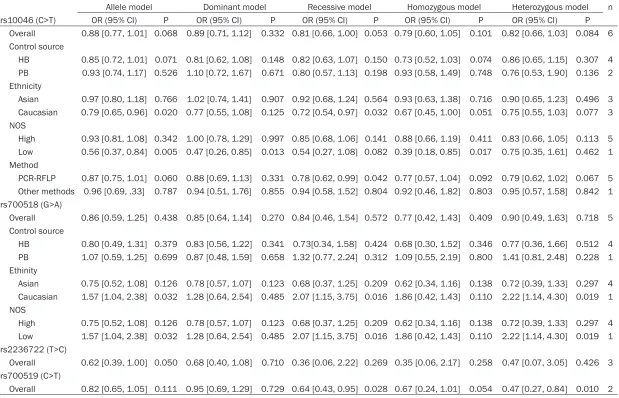
Table 2 lists the main results of the meta-anal
-ysis of CYP19 polymorphisms and endometrio
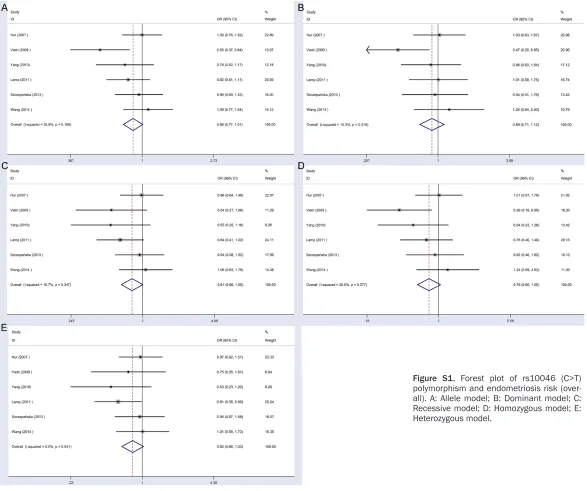
-sis risk. For the rs10046 polymorphism, six case-control studies with 788 cases and 995 controls were identified. Overall, there was no significant difference in the rs10046 genotype
distribution between endometriosis and
con-trol subjects (allele model: OR = 0.88, 95% CI: 0.77-1.01, P = 0.068; dominant model: OR = 0.89, 95% CI: 0.71-1.12, P = 0.332; recessive model: OR = 0.81, 95% CI: 0.6-1.00, P = 0.053; homozygous model: OR = 0.79, 95% CI: 0.60-1.05, P = 0.101; heterozygous model: OR =
0.82, 95% CI: 0.66-1.03, P = 0.084 Figure S1).
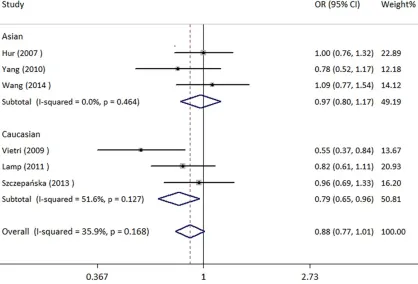
However, after stratification by ethnicity, an association was found among Caucasians
under allele model (OR = 0.79, 95% CI: 0.65-0.96, P = 0.02); this association was not
observed among Asians under any genetic
model (Figure 2).
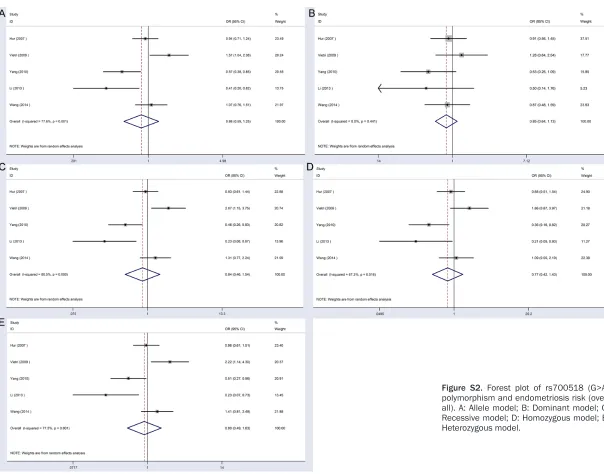
For the rs700518 polymorphism, five
case-control studies with 553 cases and 637
con-trols were identified. Meta-analysis revealed no remarkable association between the rs700518
polymorphism and endometriosis in the select
-ed samples (allele model: OR = 0.86, 95% CI 0.59-1.25, P = 0.438; dominant model: OR = 0.85, 95% CI 0.64-1.14, P = 0.270; recessive model: OR = 0.84, 95% CI 0.46-1.54, P = 0.572; homozygous model: OR = 0.77, 95% CI 0.42-1.43, P = 0.409; heterozygous model: OR =
0.90, 95% CI 0.49-1.63, P = 0.718, Figure S2).
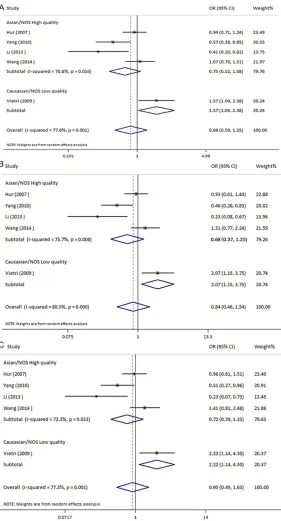
However, after stratification by different eth-nicities, an association was found among
Caucasians under three genetic models (allele
model: OR = 1.57, 95% CI: 1.04-2.38, P =
0.032; recessive model: OR = 2.07, 95% CI:
1.15-3.75, P = 0.016; heterozygous model: OR
= 2.22, 95% CI: 1.14-4.30, P = 0.019); this association was not observed among Asians
under any genetic model (Figure 3).
For the rs2236722 polymorphism, three
case-control studies with 419 cases and 513
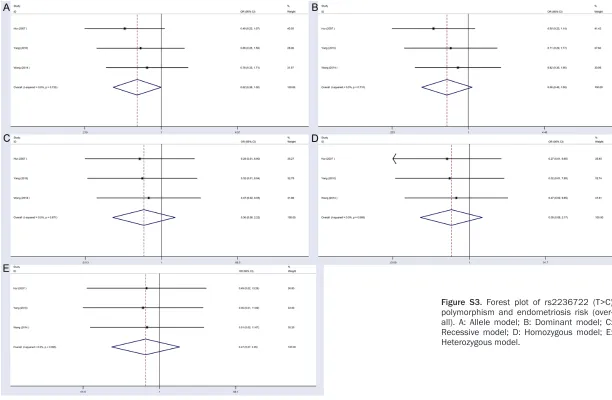
con-trols were identified. No significant association between the rs223722 polymorphism and endometriosis risk was observed under any of
[image:4.612.91.521.85.341.2]the genetic models (allele model: OR = 0.62, 95% CI 0.39-1.00, P = 0.050; dominant model: Table 1. Characteristics of studies included in the meta-analysis
Author (year ) Country Ethnicity Control source Genotyping method Genotype distribution No. of case/control HWE in control NOS score
Cases Controls
rs10046 (C>T) CC CT TT CC CT TT
Hur (2007) Korea Asian HB PCR-RFLP 43 111 69 37 92 59 223/188 Yes 8 Vietri (2009) Italy Caucasian HB PCR-RFLP 50 36 18 26 36 24 104/86 Yes 6 Yang (2010) China Asian HB PCR-RFLP 42 48 12 38 42 20 102/100 Yes 8
Lamp (2011 ) Estonia Caucasian PB PCR-RFLP 27 81 42 36 88 75 150/199 Yes 9
Szczepańska (2013) Poland Caucasian HB Other methods 19 55 41 31 93 73 115/197 Yes 7 Wang (2014) China Asian PB PCR-RFLP 14 50 30 40 116 69 94/225 Yes 7
rs700518 (G>A) GG GA AA GG GA AA
Hur (2007) Korea Asian HB PCR-RFLP 50 112 61 39 95 54 223/188 Yes 8 Vietri (2009) Italy Caucasian HB PCR-RFLP 21 31 52 21 37 28 104/86 Yes 6 Yang (2010) China Asian HB PCR-RFLP 24 50 28 14 41 45 102/100 Yes 8
Li (2013) China Asian HB PCR-RFLP 7 17 6 5 13 20 30/38 Yes 8
Wang (2014) China Asian PB PCR-RFLP 20 45 29 43 125 57 94/225 Yes 7 rs2236722 (T>C) TT TC CC TT TC CC
Hur (2007) Korea Asian HB PCR-RFLP 213 10 0 172 15 1 223/188 Yes 8
Yang (2010) China Asian HB PCR-RFLP 93 9 0 88 11 1 102/100 Yes 8
Wang (2014) China Asian PB PCR-RFLP 86 8 0 202 21 2 94/225 Yes 7 rs700519 (C>T) CC CT TT CC CT TT
Tsuchiya (2005) Japan Asian HB PCR-RFLP 35 37 4 29 23 6 76/58 Yes 8
Wang (2012) China Asian PB Other methods 222 36 42 242 28 67 300/337 No 6
Table 2. Summary of ORs of the CYP19 polymorphisms and endometriosis risk
Allele model Dominant model Recessive model Homozygous model Heterozygous model n rs10046 (C>T) OR (95% CI) P OR (95% CI) P OR (95% CI) P OR (95% CI) P OR (95% CI) P Overall 0.88 [0.77, 1.01] 0.068 0.89 [0.71, 1.12] 0.332 0.81 [0.66, 1.00] 0.053 0.79 [0.60, 1.05] 0.101 0.82 [0.66, 1.03] 0.084 6 Control source
HB 0.85 [0.72, 1.01] 0.071 0.81 [0.62, 1.08] 0.148 0.82 [0.63, 1.07] 0.150 0.73 [0.52, 1.03] 0.074 0.86 [0.65, 1.15] 0.307 4 PB 0.93 [0.74, 1.17] 0.526 1.10 [0.72, 1.67] 0.671 0.80 [0.57, 1.13] 0.198 0.93 [0.58, 1.49] 0.748 0.76 [0.53, 1.90] 0.136 2
Ethnicity
Asian 0.97 [0.80, 1.18] 0.766 1.02 [0.74, 1.41] 0.907 0.92 [0.68, 1.24] 0.564 0.93 [0.63, 1.38] 0.716 0.90 [0.65, 1.23] 0.496 3 Caucasian 0.79 [0.65, 0.96] 0.020 0.77 [0.55, 1.08] 0.125 0.72 [0.54, 0.97] 0.032 0.67 [0.45, 1.00] 0.051 0.75 [0.55, 1.03] 0.077 3 NOS
High 0.93 [0.81, 1.08] 0.342 1.00 [0.78, 1.29] 0.997 0.85 [0.68, 1.06] 0.141 0.88 [0.66, 1.19] 0.411 0.83 [0.66, 1.05] 0.113 5 Low 0.56 [0.37, 0.84] 0.005 0.47 [0.26, 0.85] 0.013 0.54 [0.27, 1.08] 0.082 0.39 [0.18, 0.85] 0.017 0.75 [0.35, 1.61] 0.462 1 Method
PCR-RFLP 0.87 [0.75, 1.01] 0.060 0.88 [0.69, 1.13] 0.331 0.78 [0.62, 0.99] 0.042 0.77 [0.57, 1.04] 0.092 0.79 [0.62, 1.02] 0.067 5 Other methods 0.96 [0.69, .33] 0.787 0.94 [0.51, 1.76] 0.855 0.94 [0.58, 1.52] 0.804 0.92 [0.46, 1.82] 0.803 0.95 [0.57, 1.58] 0.842 1
rs700518 (G>A)
Overall 0.86 [0.59, 1.25] 0.438 0.85 [0.64, 1.14] 0.270 0.84 [0.46, 1.54] 0.572 0.77 [0.42, 1.43] 0.409 0.90 [0.49, 1.63] 0.718 5 Control source
HB 0.80 [0.49, 1.31] 0.379 0.83 [0.56, 1.22] 0.341 0.73[0.34, 1.58] 0.424 0.68 [0.30, 1.52] 0.346 0.77 [0.36, 1.66] 0.512 4 PB 1.07 [0.59, 1.25] 0.699 0.87 [0.48, 1.59] 0.658 1.32 [0.77, 2.24] 0.312 1.09 [0.55, 2.19] 0.800 1.41 [0.81, 2.48] 0.228 1
Ethinity
Asian 0.75 [0.52, 1.08] 0.126 0.78 [0.57, 1.07] 0.123 0.68 [0.37, 1.25] 0.209 0.62 [0.34, 1.16] 0.138 0.72 [0.39, 1.33] 0.297 4 Caucasian 1.57 [1.04, 2.38] 0.032 1.28 [0.64, 2.54] 0.485 2.07 [1.15, 3.75] 0.016 1.86 [0.42, 1.43] 0.110 2.22 [1.14, 4.30] 0.019 1 NOS
High 0.75 [0.52, 1.08] 0.126 0.78 [0.57, 1.07] 0.123 0.68 [0.37, 1.25] 0.209 0.62 [0.34, 1.16] 0.138 0.72 [0.39, 1.33] 0.297 4 Low 1.57 [1.04, 2.38] 0.032 1.28 [0.64, 2.54] 0.485 2.07 [1.15, 3.75] 0.016 1.86 [0.42, 1.43] 0.110 2.22 [1.14, 4.30] 0.019 1 rs2236722 (T>C)
Overall 0.62 [0.39, 1.00] 0.050 0.68 [0.40, 1.08] 0.710 0.36 [0.06, 2.22] 0.269 0.35 [0.06, 2.17] 0.258 0.47 [0.07, 3.05] 0.426 3 rs700519 (C>T)
Overall 0.82 [0.65, 1.05] 0.111 0.95 [0.69, 1.29] 0.729 0.64 [0.43, 0.95] 0.028 0.67 [0.24, 1.01] 0.054 0.47 [0.27, 0.84] 0.010 2
OR = 0.68, 95% CI 0.40-1.08, P = 0.710; reces -sive model: OR = 0.36, 95% CI 0.06-2.22, P =
0.269; homozygous model: OR = 0.35, 95% CI 0.06-2.17, P = 0.258; heterozygous model: OR
= 0.47, 95% CI 0.07-3.05, P = 0.426, Figure S3).
For the rs700519 polymorphism, two
case-control studies with 376 cases and 395
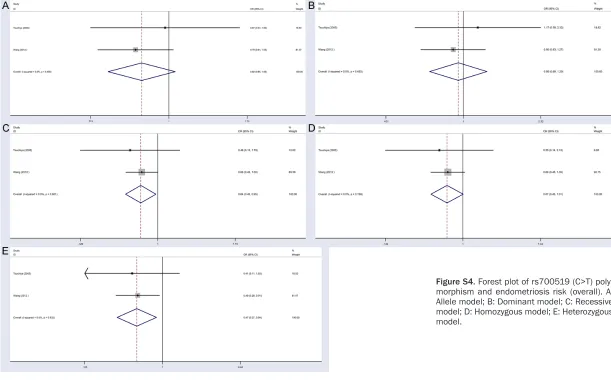
con-trols were identified. Overall, we found an asso -ciation under two genetic models (recessive model: OR = 0.64, 95% CI: 0.43-0.95, P =
0.028; heterozygous model: OR = 0.47, 95% CI: 0.27-0.84, P = 0.01), but no significant associ
-ation was found using the other three models (allele model: OR = 0.82, 95% CI 0.65-1.05, P =
0.111; dominant model: OR = 0.95, 95% CI
0.69-1.29, P = 0.729; homozygous model: OR
= 0.67, 95% CI 0.24-1.01, P = 0.054, Figure S4).
Heterogeneity and sensitivity analysis
There was no obvious heterogeneity for the
rs10046, rs2236722 and rs700519 polymor
-phisms. However, for the rs700518 polymor
-phism, significant heterogeneity between the
studies was found in overall comparisons under
the allele, recessive, homozygous and hetero
-zygous models (I2 = 77.8%, P = 0.001; I2 =
80.5%, P < 0.001; I2 = 67.3%, P = 0.016; I2 =
77.3%, P = 0.001, respectively). A random effects model was performed in these analy
-ses. For the rs700518 polymorphism, we per
-formed subgroup analyses based on control source, ethnicity and quality score, but the het
-erogeneity did not decrease.
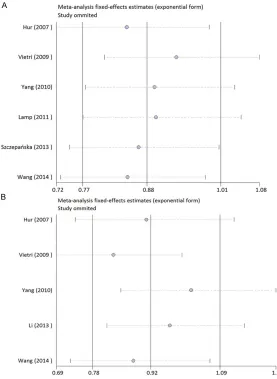
Sensitivity analysis was performed to evaluate the stability of the results by sequentially
excluding individual studies. For analyses pool
-ing more than three individual studies, the
observed significant result was not materially
altered after excluding any single study (Figure
4), indicating that our results were statistically
stable. Discussion
Endometriosis is an estrogen-dependent
dis-ease. Polymorphisms of genes encoding key
proteins involved in sex-steroid hormone
bio-synthesis have primarily been chosen as func
-tional candidate susceptibility genes for endo
[image:6.612.97.515.75.359.2]Figure 3. Forest plot of 700518 (G>A) polymorphism and endometriosis risk (Subgroup analysis by ethnicity or quality score). A: Allele model; B: Reces
-sive model; C: Heterozygous model.
metriosis. The CYP19 gene encodes
aroma-tase, the key enzyme for the terminal step of estrogen biosynthesis that converts 19-carbon
steroids (testosterone and androstenedione) to
18-carbon estrogen (testosterone and andro
-stenedione). Polymorphisms in CYP19 have
been published [9, 10, 12-15, 27]. Vietri et al.
[13] found a higher percentage of C homozygo
-sis for the rs10046 polymorphism in patients
with endometriosis, whereas other studies
found no association. Our meta-analysis
show-ed the rs10046 polymorphism was not associ
-been associated with sex-ste-roid hormone levels and other estrogen-dependent diseas-es, including endometrial
can-cer and breast cancan-cer [22-25].
We noticed that a previous
meta-analysis had been per
-formed by Hu et al. [26], which
reported on the
endometrio-sis risk with genetic polymor
-phisms involving the biosyn
-thesis of sex steroids (CYP17,
ER, PR, HSD17B1, and CYP-
19). The pooled analysis sug
-gested that no significant association was found bet-ween CYP19 polymorphisms (rs10046, rs700518, rs2236-722, 3 bp I/D) and the risk of endometriosis. However, only
two articles with six studies
for the rs10046, rs700518 and rs2236722
polymorph-isms were included in that
meta-analysis. Some differen-ces exist between our study and Hu’s report. First, our
work is more recent than the
work of other groups, which allowed for the inclusion of
some new studies. Second,
five genetic models were used in our meta-analysis. More importantly, we performed subgroup analyses, thus we believe our results for CYP19 polymorphisms are more
con-vincing.
The CYP19 rs10046 polymor
-phism is a C-to-T variation
located in the 3’ untranslated region (3’-UTR), 19 bp down
-stream of the amber stop
codon in exon 10. Seven
pre-vious studies on this polymor
ated with the overall risk of endometriosis. However, subgroup analyses showed that the rs10046 polymorphism might be a lower risk factor for endometriosis among Caucasians under the allele model. This subgroup
analy-ses suggested that the T allele variant might
decrease the risk of endometriosis among
Caucasians, but this association was not ob- served among Asians. There was no obvious
heterogeneity for the rs10046 polymorphism, and the result was confirmed as in HWE among
the studies.
The CYP19 rs700518 polymorphism is an anonymous variation in exon 3, but it may affect posttranscriptional modification, resulting in
changes in gene expression and aromatase
lev-els, and further affecting estrogen production
tant role when performing meta-analysis, and so finding the source of heterogeneity is very important for the final result. In the current study, an obvious heterogeneity between the studies was found in the overall population.
This heterogeneity cannot be explained by sev
-eral possible sources of heterogeneity, includ
-ing the source of the control, the ethnicity and the quality score. It is possible that other limita
-tions of the recruited studies may partially con
-tribute to the observed heterogeneity. For this reason, we conducted these analyses using the random effects model.
The CYP19 rs2236722 polymorphism is a
T-to-C variation resulting in a Trp39Arg
amino-acid exchange in exon 2. In our meta-analysis, no significant association was identified bet-Figure 4. Sensitivity analysis of the summary ORs on the association for
rs10046 and rs700518 polymorphisms with endometriosis risk. A: rs10046 polymorphism under allele model; B: rs700518 polymorphism under allele
model.
[28]. In our meta-analysis, the
overall result did not indicate
any associations between
this polymorphism and endo
-metriosis risk. After further stratification analysis by eth
-nicity, the results showed that the rs700518 polymorphism might be a risk factor for
endometriosis among Cau- casians under three genetic models, but this association was not observed in Asians.
There was only one study included for Caucasians, and the score of this study was
low. This result should
there-fore be interpreted with cau -tion, as this article might be a small sample bias. However, the association among Cau-
casians may indeed be relat
-ed, although further studies are required. This analysis
suggested that there was no association between this po-
lymorphism and endometrio
-sis risk among Asians, and more articles are needed to
confirm this association am-ong Caucasians. Specifically, there was significant hetero
-geneity found for the rs700-518 polymorphism under the allele, recessive, homozygous and heterozygous models.
[image:8.612.91.368.70.449.2]-ween this polymorphism and endometriosis under all five genetic models. It is noteworthy
that all the studies were carried out among Asians. This suggests that there is no associa-tion among Asians.
The CYP19 rs70019 polymorphism is a C-to-T variation resulting in an Arg264Cys amino-acid
exchange in exon 7. It was suggested that the
rs700519 polymorphism is located in a near recognition site of CYP19 aromatase, and so it might enhance estrogen synthesis and the
exposure to endogenous estrogen. The studies
both came from Asian populations and the results suggested that the TT genotype could
increase the risk of endometriosis when com
-pared with the CT+CC and CT genotypes among
Asians. However, the distribution of the geno
-types in the control population of the study by
Wang et al. was not consistent with HWE, although we did not exclude this article because
of the limited number of studies. This result
should be interpreted with caution.
Although comprehensive analysis was
perfor-med to show the association between CYP19
polymorphisms and endometriosis risk, there
are still some limitations that should be pointed
out. First, the number of studies and the num
-ber of samples included in the meta-analysis were relatively small. Second, for the rs700518 polymorphism, the heterogeneity was large, and the comprehensive analysis should be explained with caution. Third, the distribution of the genotypes in the control population of the study by Wang et al. was not consistent with
HWE. Finally, our results were based on unad
-justed estimates. A more precise analysis should be conducted if individual data were available, which would allow for the adjustment
for other covariants including age, endometrio
-sis stages, and environmental factors.
Conclusions
This meta-analysis shows a relationship bet-ween CYP19 polymorphisms (rs10046,
rs70-0518, rs2236722, rs700519) and endometrio
-sis. We found that the T allele variant of the rs10046 polymorphism might decrease the risk of endometriosis among Caucasians.
Meanwhile, the dominant recessive model and
the heterozygous model of the rs700519 poly
-morphism suggested that the TT genotype could increase the risk of endometriosis when
compared with the CT+CC and CT genotypes among Asians. However, the rs700518 and
rs2236722 polymorphisms might not be asso
-ciated with the risk of endometriosis among Asians. Considering the limited sample size included in the meta-analysis, further
large-scale and well-designed studies are needed to
confirm our results. Moreover, as many factors
have been associated with endometriosis risk,
additional factors (such as age, pregnancy times and environmental factors) should be taken into consideration in future studies on
this topic.
Acknowledgements
This work was supported by the National Natural Science Foundation of China: High-throughput sequencing identifying pathogenic genes of endometriosis (81571411).
Disclosure of conflict of interest
None.
Address correspondence to: Yuan-Guang Meng, De-
partment of Gynecology and Obstetrics, Chinese PLA General Hospital, 28 Fuxing Road, Beijing 100853, China. Tel: +86 1066938244; E-mail:
References
[1] Cramer DW and Missmer SA. The
epidemiolo-gy of endometriosis. Ann N Y Acad Sci 2002;
955: 11-22; discussion 34-16, 396-406.
[2] Feng Y, Lin X, Zhou S, Xu N, Yi T and Zhao X.
The associations between the polymorphisms of the ER-alpha gene and the risk of uter-ine leiomyoma (ULM). Tumour Biol 2013; 34: 3077-3082.
[3] Bulun SE, Sebastian S, Takayama K, Suzuki T, Sasano H and Shozu M. The human CYP19 (aromatase P450) gene: update on physiologic roles and genomic organization of promoters. J Steroid Biochem Mol Biol 2003; 86: 219-224. [4] Toda K, Terashima M, Kawamoto T, Sumimoto
H, Yokoyama Y, Kuribayashi I, Mitsuuchi Y,
Maeda T, Yamamoto Y, Sagara Y and et al.
Structural and functional characterization of
human aromatase P-450 gene. Eur J Biochem 1990; 193: 559-565.
[5] Bukulmez O, Hardy DB, Carr BR, Auchus RJ, Toloubeydokhti T, Word RA and Mendelson CR. Androstenedione up-regulation of endometrial
estrogen: potential relevance to the
pathogen-esis of endometriosis. J Clin Endocrinol Metab 2008; 93: 3471-3477.
[6] Kitawaki J, Kusuki I, Koshiba H, Tsukamoto K,
Fushiki S and Honjo H. Detection of aromatase cytochrome P-450 in endometrial biopsy spec
-imens as a diagnostic test for endometriosis.
Fertil Steril 1999; 72: 1100-1106.
[7] Bulun SE, Fang Z, Imir G, Gurates B, Tamura M,
Yilmaz B, Langoi D, Amin S, Yang S and Deb S.
Aromatase and endometriosis. Semin Reprod Med 2004; 22: 45-50.
[8] Bulun SE, Imir G, Utsunomiya H, Thung S,
Gurates B, Tamura M and Lin Z. Aromatase in
endometriosis and uterine leiomyomata. J
Steroid Biochem Mol Biol 2005; 95: 57-62.
[9] Wang L, Lu X, Wang D, Qu W, Li W, Xu X, Huang Q, Han X and Lv J. CYP19 gene variant confers susceptibility to endometriosis-associated in
-fertility in Chinese women. Exp Mol Med 2014;
46: e103.
[10] Szczepanska M, Wirstlein P, Skrzypczak J and Jagodzinski PP. Polymorphic variants of CYP17 and CYP19A and risk of infertility in endome
-triosis. Acta Obstet Gynecol Scand 2013; 92: 1188-1193.
[11] Wang HS, Wu HM, Cheng BH, Yen CF, Chang PY, Chao A, Lee YS, Huang HD and Wang TH.
Functional analyses of endometriosis-related polymorphisms in the estrogen synthesis and
metabolism-related genes. PLoS One 2012; 7: e47374.
[12] Lamp M, Peters M, Reinmaa E, Haller-Kikkatalo K, Kaart T, Kadastik U, Karro H, Metspalu A
and Salumets A. Polymorphisms in ESR1,
ESR2 and HSD17B1 genes are associated
with fertility status in endometriosis. Gynecol
Endocrinol 2011; 27: 425-433.
[13] Vietri MT, Cioffi M, Sessa M, Simeone S,
Bontempo P, Trabucco E, Ardovino M, Colacurci N, Molinari AM and Cobellis L. CYP17 and
CYP19 gene polymorphisms in women affect -ed with endometriosis. Fertil Steril 2009; 92: 1532-1535.
[14] Hur SE, Lee S, Lee JY, Moon HS, Kim HL and
Chung HW. Polymorphisms and haplotypes of the gene encoding the estrogen-metaboliz -ing CYP19 gene in Korean women: no associa-tion with advanced-stage endometriosis. J Hum Genet 2007; 52: 703-711.
[15] Yang X, Chen SQ and Liu M. [Association of the CYP19 gene polymorphism with genetic sus
-ceptibility to endometriosis]. Zhonghua Yi Xue
Yi Chuan Xue Za Zhi 2010; 27: 692-696.
[16] Tsuchiya M, Nakao H, Katoh T, Sasaki H,
Hiroshima M, Tanaka T, Matsunaga T, Hanaoka T, Tsugane S and Ikenoue T. Association
be-tween endometriosis and genetic polymor
-phisms of the estradiol-synthesizing enzyme
genes HSD17B1 and CYP19. Hum Reprod
2005; 20: 974-978.
[17] Li P, Gu ZP, Liu SZ, D BB, Yao LJ. Correlative
study on mutant allele of CYP19 240A/G, COMT1947G/A, endometriosis and adenomy
-osis. Chin J Obstet Gynecol Pediatr 2013; 1:
60-64.
[18] Stang A. Critical evaluation of the Newcastle-Ottawa scale for the assessment of the quality of nonrandomized studies in meta-analyses.
Eur J Epidemiol 2010; 25: 603-605.
[19] Minelli C, Thompson JR, Abrams KR, Thak-
kinstian A and Attia J. The choice of a genetic model in the meta-analysis of molecular asso -ciation studies. Int J Epidemiol 2005; 34:
1319-1328.
[20] Mantel N and Haenszel W. Statistical aspects of the analysis of data from retrospective stud
-ies of disease. J Natl Cancer Inst 1959; 22: 719-748.
[21] DerSimonian R and Laird N. Meta-analysis in clinical trials. Control Clin Trials 1986; 7: 177-188.
[22] Justenhoven C, Hamann U, Schubert F, Zapatka M, Pierl CB, Rabstein S, Selinski S, Mueller T, Ickstadt K, Gilbert M, Ko YD, Baisch
C, Pesch B, Harth V, Bolt HM, Vollmert C, Illig T,
Eils R, Dippon J and Brauch H. Breast cancer: a candidate gene approach across the
estro-gen metabolic pathway. Breast Cancer Res Treat 2008; 108: 137-149.
[23] Haiman CA, Stram DO, Pike MC, Kolonel LN, Burtt NP, Altshuler D, Hirschhorn J and
Henderson BE. A comprehensive haplotype analysis of CYP19 and breast cancer risk: the
Multiethnic Cohort. Hum Mol Genet 2003; 12: 2679-2692.
[24] Setiawan VW, Doherty JA, Shu XO, Akbari MR, Chen C, De Vivo I, Demichele A, Garcia-Closas
M, Goodman MT, Haiman CA, Hankinson SE,
Henderson BE, Horn-Ross PL, Lacey JV Jr, Le
Marchand L, Levine DA, Liang X, Lissowska J, Lurie G, McGrath M, Narod SA, Rebbeck TR, Ursin G, Weiss NS, Xiang YB, Yang HP, Zheng W and Olson SH. Two estrogen-related variants in CYP19A1 and endometrial cancer risk: a
pooled analysis in the Epidemiology of
Endo-metrial Cancer Consortium. Cancer Epidemiol
Biomarkers Prev 2009; 18: 242-247.
[25] Yang HP, Gonzalez Bosquet J, Li Q, Platz EA, Brinton LA, Sherman ME, Lacey JV Jr, Gaudet
MM, Burdette LA, Figueroa JD, Ciampa JG, Lissowska J, Peplonska B, Chanock SJ and Garcia-Closas M. Common genetic variation in
the sex hormone metabolic pathway and endo
[26] Hu X, Zhou Y, Feng Q, Wang R, Su L, Long J and Wei B. Association of endometriosis risk and genetic polymorphisms involving biosynthesis of sex steroids and their receptors: an updat
-ing meta-analysis. Eur J Obstet Gynecol Reprod
Biol 2012; 164: 1-9.
[27] Wu CH, Yang JG, Chang YJ, Hsu CC and Kuo PL.
Screening of a panel of steroid-related genes showed polymorphisms of aromatase genes confer susceptibility to advanced stage endo -metriosis in the Taiwanese Han population.
Taiwan J Obstet Gynecol 2013; 52: 485-492.
[28] Napoli N, Rastelli A, Ma C, Yarramaneni J,
Vattikutti S, Moskowitz G, Giri T, Mueller C, Kulkarny V, Qualls C, Ellis M and Armamento-Villareal R. Genetic polymorphism at Val80 (rs700518) of the CYP19A1 gene is associat -ed with aromatase inhibitor associat-ed bone
loss in women with ER + breast cancer. Bone
Figure S1. Forest plot of rs10046 (C>T) polymorphism and endometriosis risk (over -all). A: Allele model; B: Dominant model; C:
Figure S2. Forest plot of rs700518 (G>A) polymorphism and endometriosis risk (over -all). A: Allele model; B: Dominant model; C:
Figure S3. Forest plot of rs2236722 (T>C) polymorphism and endometriosis risk (over -all). A: Allele model; B: Dominant model; C:
Figure S4. Forest plot of rs700519 (C>T) poly -morphism and endometriosis risk (overall). A: Allele model; B: Dominant model; C: Recessive
model; D: Homozygous model; E: Heterozygous