Abstract— Hydrogen generation from MgH2 is of interest to
the research community due to various alluring attributes of MgH2 as a hydrogen generation substrate. In this study MgH2
powder was utilized as a substrate in hydrolysis reaction catalyzed by acetic acid, an environmentally friendly and relatively cheap acid. The reaction was conducted in a hydrogen generation reactor operated in a batch mode. Three sample weights (0.4g, 0.8g and 1.2g) of the substrates were utilized for the experiment at 40, 50, 60 and 70 wt% acetic acid concentration at 50 °C for investigation of the roles of substrate weigh and catalyst concentration on hydrogen yield. The results indicated that MgH2 powder weight influenced
hydrogen generation more compared to the catalyst concentration. The highest hydrogen yield in the study was 0.048 L hydrogen gas from 0.4g MgH2 powder (70 wt% acetic
acid) while the highest hydrogen generation was reported when 1.2g substrate hydrolyzed in 50 wt% acetic acid.
Index Terms— Hydrolysis, hydrogen generation, kinetics, magnesium hydride, thermodynamics.
I. INTRODUCTION
NERGY plays an important role in the day to day living of man [1]. The growth and sustained development of any economy and society has energy as one of the pivots. With the undeniable importance of energy to life comes the increase in demand for various reasons such as economic and population growths [2, 3]. The cost of energy is huge and unaffordable to some people. Furthermore, besides the relative high cost of energy generation and energy tariff in most part of the world, some of the main energy generating methods are Manuscript received May 15, 2017; revised May 28, 2017. This work by was supported by the TIA Grant of South Africa.
J.A. Adeniran is with the department of Mechanical Engineering Science, University of Johannesburg, Auckland Park Kingsway Campus, 2006, Johannesburg, South Africa (email: [email protected]/ [email protected]).
E.T. Akinlabi is with the Department of Mechanical Engineering Science, University of Johannesburg, Auckland Park Kingsway Campus, 2006, Johannesburg, South Africa (email: [email protected]).
H.S. Chen is with the department of Mechanical Engineering Science, University of Johannesburg, Auckland Park Kingsway Campus, 2006, Johannesburg, South Africa (email: [email protected]).
R. Fono-Tamo is with the Department of Mechanical Engineering Science, University of Johannesburg, Auckland Park Kingsway Campus, 2006, Johannesburg, South Africa (email: [email protected]).
T.C. Jen is with the Department of Mechanical Engineering Science, University of Johannesburg, Auckland Park Kingsway Campus, 2006, Johannesburg, South Africa (email: [email protected]).
contributing to environmental pollution through the emission of greenhouse gases majorly in the form of methane, carbon dioxide (CO2) and nitrous oxide (NOX)
[3, 4]. Moreover, renewable energy is an environment friendly means of energy generation that have offers advantage in environmental preservation and health [5]. Although, the scale up of renewable energy technologies now have not reached a stage where it can totally replace the major nonrenewable energy methods such as coal, thermal energy generation systems, it can serve a complementary energy sources. Hydrogen storage in metal hydrides is an interesting solid state hydrogen storage technique with increasing research interests with potentials for on board vehicular applications [6].
In the past, researchers have conducted energy storage tests on these special group of materials [7-11]. Brockman and colleagues[12], conducted an hydrolysis based reaction for hydrogeneration using ammonia borane as a substrate in a ruthenium (Ru) accelerated reaction. The study reported impressive hydrogen yields and storage stability. Conversely, the production of ammonia as a product of hydrolysis of ammonia borane represent a potential draw back due to toxic nature of ammonia. Similarly, the catalysis of the reaction with Ru a rare transition metal catalyst increases the cost of the experiment. Furthermore, metal alanates are another group of light weight metals with high hydrogen contents [13]. Conversely, applications of these set of materials as veritable hydrogen storage media have been limited due to reversibility and synthesis process limitations. Moreover, the study conducted by Bogdanovic and Schwickardi [14] proved that synthesis metal alanates (NaAlH4, Na3AlH6, LiAlH4) can be obtained in a single
process for hydrogen storage with the aid of transition metal catalysts. In the study [14], acceptable reversibility at moderate temperature was achieved in the metal alanates by doping them with titanium catalysts. However, the adsorption and desorption temperature of over 150 C reported is high, likewise the there is need for reduction of desorption pressure. Similarly, the relative high cost titanium catalysts employed in the study has a potential of increasing reaction cost and render the approach non-sustainable.
Among the metal hydrides being studied as energy storage substrates magnesium hydride have generated great interests lately due to its high gravimetric (about 7.6 weight %) and volumetric hydrogen concentrations [15]. Magnesium hydride has energy density of about (9MJ/Kg
Organic Acid-Catalyzed Hydrolysis of
Magnesium Hydride for Generation of
Hydrogen in a Batch System Hydrogen Reactor
Joshua Adeniyi Adeniran, Member, IAENG, Esther Titilayo Akinlabi, Member, IAENG, Hong-Sheng Chen, Romeo Fono-Tamo, Tien-Chien Jen
[16].Furthermore, other attributes that have endeared MgH2 to researchers on light weight metal applications
for onboard vehicular applications include relative low cost and low hydrogen desorption pressure [17, 18]. In addition, hydrogen generation from MgH2 is a renewable
and environment benign process. The products of the reaction are non-corrosive in nature [19]. Magnesium is also regarded as the twelfth most copious element in the world and the third most prevalent in seawater [20, 21]. This translate to about 0.13% prevalence in seawater and 2.76 wt% on the earth respectively [22], thus providing hope for the availability of the substrate. However, sustainable application of MgH2 as hydrogen storage
material and upscaling of the technology for onboard storage in vehicles is threatened by slow reaction kinetics and thermodynamic limitation requiring the use of high temperature above the ambient temperature and pressure for hydrogen desorption [22, 23] . The kinetic and thermodynamic limitations need to be improved if the MgH2 is to achieve its potential as a sustainable solid
state hydrogen storage medium. Catalysts of various types have reportedly been used in hydrogen generation studies to improve reaction kinetics and thermodynamics. For example, Uan et al. [24] catalyzed an hydrolysis reaction of low grade magnesium scraps with platinum coated titanium net in sodium solution. The study reported remarkable hydrogen yield from the magnesium scrap substrate particularly under grinding condition. Conversely, the high cost of catalysts employed in the reaction could potentially limit the scale up of the technology. In another study, Hong and fellow workers [25], investigated the impact of ball milling, additive applications on hydrogen generation in an hydrolysis reaction involving the use of aluminium (Al) , titanium hydride (TiH2), magnesium (Mg), unmilled and ball
milled MgH2 and MgH2 alloyed with 5% (magnesium
oxide) MgO, as substrates. Among the groups of substrates, the alloy of milled MgH2 and 5%MgO
recorded the best performance in terms of hydrogen generation with 0.97g hydrogen yield in one hour. However, like most hydrogen generations studies from metal hydrides, the hydrogen yield from this study is also small.
If hydrogen generation from metal hydride will be successfully scaled up, there is need to increase hydrogen yield, improve on safety, enhance the reaction kinetics of substrates, and reduce the desorption temperature and pressure (thermodynamics properties), and reduction of reaction cost. In this study, we report the use of magnesium hydride powder as hydrogen storage substrates in hydrolysis reaction catalyzed by an environmental friendly and cheap organic acid – acetic acid for hydrogen generation in a hydrogen generation reactor. This work is different from our previous study on acetic catalysis of MgH2 for hydrogen generation because
of the form of the substrates used. The previous substrates were MgH2 tablets while MgH2 powder was
employed in the present study.
II. EXPERIMENTAL DESIGN AND METHOD
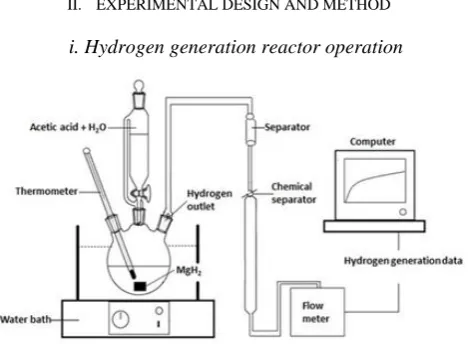
[image:2.595.312.547.55.227.2]i. Hydrogen generation reactor operation
Fig. 1. Batch system hydrogen reactor experimental set up.
Fig 1 indicates the experimental design for the hydrogen generation reactor employed in the study. The reactor is made up of a three-neck round bottom flask which serves as the reaction vessel, thermostatic regulated water bath (Julabo TW20, Julabo GmbH), the moisture absorbent unit, the flowmeter (T1000, Fujikin) and the data logger.
The hydrogen generation experiment is essentially a hydrolysis reaction. The substrate (MgH2 powder) was
poured inside round bottom flask wherein acetic acid of various concentrations was released through the soxhlet apparatus attached to the middle neck of the round bottom flask. The outer left and right neck of the reaction vessel was attached to the thermometer and the tube for harvesting the hydrogen generated from the experiment respectively. The moisture absorbent in the design trapped the moisture in hydrogen thus ensuring only hydrogen is recorded by the flowmeter. The hydrogen generation was recorded using the datalogger connected to the flowmeter [26].
An organic acid catalyzed the experiment – acetic acid (99.8%, Labchem, SA (South Africa)). Magnesium hydride powder 99.8% purity (Rockwood Lithium, Germany) employed throughout the course of experiment as hydrogen storage media (substrate) was used as received from the supplier without further treatment with average particle size of 50 µm. The equation of reaction of magnesium hydride acetic acid catalyzed hydrolysis reaction can be seen in equation (1):
rxn
C C g g
C C
g
2 2 2 2 3 ( )2 ( 3 )2 4 2
2
The heat of reaction (
rxn)
is approximately -277 KJ/mole.The investigation of the impact of substrate weight on hydrogen yield was carried with three different MgH2
powder weights (0.4g, 0.8g and 1.2g), except in 40 wt% acetic acid concentration where only 0.4g and 0.8g were utilized. Weighing of the substrate samples were carried out using BM-200 analytical balance with 0.0001g repeatability to enhance weighing uniformity. All experiments were carried out at 50 ºC external temperature.
ii. Material characterization of reaction substrate (MgH2)
powder
Scanning electron microscopy (SEM), energy dispersive x-ray spectroscopy (EDS) and X-ray-diffraction (XRD) analyses were conducted on the MgH2 powder for adequate material characterization. The SEM analysis of the MgH2 powder surface morphology was conducted using JSM 7600F Jeol ultra-high resolution field emission gun scanning electron microscope (FEG-SEM) equipped with EDS was utilized for the EDS analysis.
III. RESULTS AND DISCUSSION
i. Role of substrate weight and catalyst concentration on hydrogen yield
In this study, the roles of substrate (MgH2 powder)
concentration and acetic acid concentration on hydrogen yield were examined to find the optimum parameters that can enhance hydrogen generation. Investigation of role of MgH2 powder concentration on hydrogen generation was
conducted using 0.4g, 0.8g and 1.2g MgH2 powders at
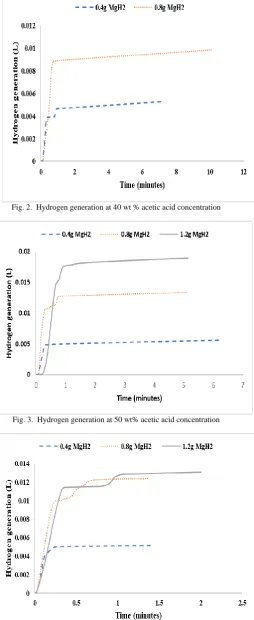
[image:3.595.308.566.88.337.2]various acetic acid concentrations namely 40 wt%, 50 wt%, 60 wt% and 70 wt% respectively. The results of the study are presented in Figures, 2, 3, 4 and 5.
Fig. 2. Present the result of hydrogen generation experiment at 40 wt % acetic acid concentration for 0.4g and 0.8g MgH2 powder. From the results, it can be observed that
higher hydrogen generation of 0.0098 L was obtained from the 0.8g MgH2 powder compared to maximum hydrogen generation of 0.005 L obtained in the 0.4g MgH2
experiment.
From Fig.3. 0.4g MgH2 powder recorded the least hydrogen yield of about 0.0056 L, followed by maximum hydrogen generation of about 0.013 L at 0.8g while the highest hydrogen yield of 0.018 L obtained when 1.2g substrate was hydrolyzed in 50 wt% acetic acid.
Furthermore, the result of hydrogen generation experiment with 60 wt% acetic acid (Fig. 4.) indicated the least hydrogen yield of 0.005 L (0.4g MgH2 powder), followed
by 0.012 L and 0.013 L hydrogen at 0.8g and 1.2g MgH2
powder respectively. Similarly, at 70 wt% acetic acid concentration, hydrogen generation increased with weight of substrate with 0.0048 L, 0.009 L, 0.013 L obtained from 0.4g, 0.8g and 1.2g substrate weight respectively.
From all the experiments conducted, hydrogen generation increased as a function of substrate concentration. Moreover, the least hydrogen yield was recorded from 0.4g MgH2 at 70 wt% acetic acid concentration with a value of
0.0048L while the highest hydrogen generation of 0.018L was recorded at 1.2g MgH2 (50 wt% acetic acid
concentration).
The results also followed the similar pattern to what was obtained in our previous study where MgH2 pill was utilized
as the substrate [26]. Thus, laying credence to the important
role of substrate concentration to hydrogen yield in MgH2
[image:3.595.310.565.92.714.2]based hydrolysis experiment for hydrogen storage.
Fig. 2. Hydrogen generation at 40 wt % acetic acid concentration
Fig. 3. Hydrogen generation at 50 wt% acetic acid concentration
Fig. 5. Hydrogen generation at 70 wt% acetic acid concentration
ii. Scanning electron micrograph characterization of substrate
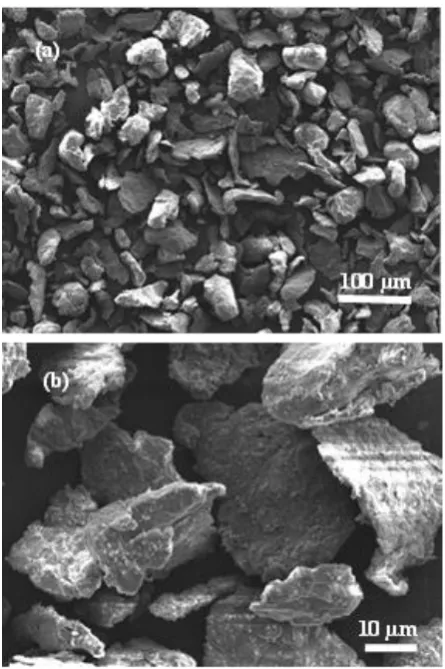
The SEM micrographs of the MgH2 powder at different
[image:4.595.56.289.48.243.2]magnifications are indicated in Fig. 6 (a and b). From the micrographs, it can be observed that the particles are of different orientations, some are flake like in nature, while some are rod like and debris particles could also be observed. This also reveals the hydrogen generation sites on the particle of the MgH2 powder.
Fig 6. SEM micrograph of the MgH2 powder as received from the supplier
iii. Substrate elemental composition investigation
Composition/purity of the substrate is important to hydrogen yield. To ascertain the elemental composition of the MgH2 sample, EDS analysis was conducted. From the
EDS result in Table in I and Fig. 7, it can be observed that three elements were observed in the MgH2 powder namely
magnesium (Mg), oxygen (O), and iridium (Ir). The Mg represent the major constituent as expected in the sample with weight and atomic compositions of 88.88 and 90.35 % respectively. This composition is expected because Mg is the major composition of MgH2. The oxygen in the result
could be attributed to oxidation process in the substrate while Ir is obtained from the coating material used in the preparation of the substrate for EDS analysis.
TABLEI
ELEMENTAL COMPOSITION OF MgH2 POWDER
Element Weight (%) Atomic(%)
O 5.81 8.97
Mg 88.88 90.35
Ir 5.31 0.68
Total 100 100
Fig. 7. EDS spectrum of the MgH2 powder
IV. CONCLUSION
Hydrolysis of MgH2 powder was catalyzed by an organic
acid (acetic acid) using batch mode hydrogen reactor. The discovery of higher hydrogen yield at higher substrate concentration also open area of research on optimization parameters for hydrogen generation. Acetic acid being a cheap catalyst employed also reduce the reaction cost thereby potentially enhancing the scale up potential of the technology.
ACKNOWLEDGMENT
[image:4.595.303.550.242.517.2] [image:4.595.57.280.401.736.2]REFERENCES
[1] J. A. Adeniran, J. J. De Koker, E. Akinlabi, and T. C. Jen, "Sustainable hydrogen generation substrates, catalysts and methods: an overview," presented at the Inteernational Conferenece on Mechanical, Industrial and Manufacturing Technologies, CapeTown, South Africa, 2017.
[2] M. H. Mahfuz, A. Kamyar, O. Afshar, M. Sarraf, M. R. Anisur, M. A. Kibria, et al., "Exergetic analysis of a solar thermal power system with PCM storage," Energy Conversion and Management, vol. 78, pp. 486-492, 2014.
[3] Z. Şen, "Solar energy in progress and future research trends,"
Progress in energy and combustion science, vol. 30, pp. 367-416, 2004.
[4] L. Z. Ouyang, J. M. Huang, C. J. Fang, Q. A. Zhang, D. L. Sun, and M. Zhu, "The controllable hydrolysis rate for LaMg 12 hydride," international journal of hydrogen energy, vol. 37, pp. 12358-12364, 2012.
[5] Y. Chen, B. Han, and W. Liu, "Green technology innovation and energy intensity in China," Natural Hazards, vol. 84, pp. 317-332, 2016.
[6] A. Züttel, "Materials for hydrogen storage," Materials today,
vol. 6, pp. 24-33, 2003.
[7] S. Wang, L. X. Sun, F. Xu, C. L. Jiao, J. Zhang, H. Y. Zhou, et al., "Hydrolysis reaction of ball-milled Mg-metal chlorides composite for hydrogen generation for fuel cells," international journal of hydrogen energy, vol. 37, pp. 6771-6775, 2012. [8] B. J. Zhang and B. H. Liu, "Hydrogen desorption from LiBH 4
destabilized by chlorides of transition metal Fe, Co, and Ni,"
international journal of hydrogen energy, vol. 35, pp. 7288-7294, 2010.
[9] Ö. Şahin, D. Kılınç, and C. Saka, "Hydrogen generation from hydrolysis of sodium borohydride with a novel palladium metal complex catalyst," Journal of the Energy Institute, vol. 89, pp. 182-189, 2016.
[10] M. Lototskyy, M. W. Davids, J. M. Sibanyoni, J. Goh, and B. G. Pollet, "Magnesium-based hydrogen storage nanomaterials prepared by high energy reactive ball milling in hydrogen at the presence of mixed titanium–iron oxide," Journal of Alloys and Compounds, vol. 645, pp. S454-S459, 2015.
[11] M. Lototskyy, M. Davids, J. Sibanyoni, J. Goh, and B. Pollet, "Magnesium-based hydrogen storage nanomaterials prepared by high energy reactive ball milling in hydrogen at the presence of mixed titanium–iron oxide," Journal of Alloys and Compounds,
vol. 645, pp. S454-S459, 2015.
[12] A. Brockman, Y. Zheng, and J. Gore, "A study of catalytic hydrolysis of concentrated ammonia borane solutions,"
International Journal of Hydrogen Energy, vol. 35, pp. 7350-7356, 2010.
[13] V. Iosub, T. Matsunaga, K. Tange, and M. Ishikiriyama, "Direct synthesis of Mg (AlH 4) 2 and CaAlH 5 crystalline compounds by ball milling and their potential as hydrogen storage materials," international journal of hydrogen energy, vol. 34, pp. 906-912, 2009.
[14] B. Bogdanović and M. Schwickardi, "Ti-doped alkali metal aluminium hydrides as potential novel reversible hydrogen storage materials," Journal of alloys and compounds, vol. 253, pp. 1-9, 1997.
[15] K. Suárez-Alcántara, A. Palacios-Lazcano, T. Funatsu, and J. Cabañas-Moreno, "Mg–M–LiH alloys prepared by mechanical milling and their hydrogen storage characteristics," International Journal of Hydrogen Energy, vol. 40, pp. 17344-17353, 2015. [16] Y. Fukai, The metal-hydrogen system: basic bulk properties vol.
21: Springer Science & Business Media, 2006.
[17] C. H. Chao and T. C. Jen, "Maximized On-Demand Hydrogen Generator Design," in Advanced Materials Research, 2013, pp. 954-961.
[18] I. P. Jain, C. Lal, and A. Jain, "Hydrogen storage in Mg: a most promising material," International Journal of Hydrogen Energy,
vol. 35, pp. 5133-5144, 2010.
[19] J. Huot, G. Liang, and R. Schulz, "Magnesium-based nanocomposites chemical hydrides," Journal of Alloys and Compounds, vol. 353, pp. L12-L15, 2003.
[20] X. Cao, M. Jahazi, J. Immarigeon, and W. Wallace, "A review of laser welding techniques for magnesium alloys," Journal of Materials Processing Technology, vol. 171, pp. 188-204, 2006.
[21] M. M. Avedesian and H. Baker, ASM specialty handbook: magnesium and magnesium alloys vol. 274: ASM international Materials Park, OH, 1999.
[22] J.-C. Crivello, B. Dam, R. Denys, M. Dornheim, D. Grant, J. Huot, et al., "Review of magnesium hydride-based materials: development and optimisation," Applied Physics A, vol. 122, pp. 1-20, 2016.
[23] C. J. Webb, "A review of catalyst-enhanced magnesium hydride as a hydrogen storage material," Journal of Physics and Chemistry of Solids, vol. 84, pp. 96-106, 2015.
[24] J. Y. Uan, C. Y. Cho, and K. T. Liu, "Generation of hydrogen from magnesium alloy scraps catalyzed by platinum-coated titanium net in NaCl aqueous solution," International Journal of Hydrogen Energy, vol. 32, pp. 2337-2343, 2007.
[25] S.-H. Hong, H.-J. Kim, and M. Y. Song, "Rate enhancement of hydrogen generation through the reaction of magnesium hydride with water by MgO addition and ball milling," Journal of Industrial and Engineering Chemistry, vol. 18, pp. 405-408, 2012.