Behavioural profile effect of forestry machine operators
in the learning process
Millana Bürger Pagnussat
1*, Eduardo da Silva Lopes
1, Rachael D. Seidler
21Department of Forest Engineering, State University of the Center-West - UNICENTRO, Irati,
Paraná, Brazil
2Department of Applied Physiology and Kinesiology, University of Florida, Gainesville, USA
*Corresponding author: [email protected]
Citation: Pagnussat M.B., Lopes E.S., Seidler R.D. (2019): Behavioral profile effect of forestry machine operators. J. For. Sci., 65: 144–149.
Abstract: A lack of efficient operators for wood harvesting machines poses a great challenge. Here, our objective was to evaluate the effect of the behavioural profile on the productive efficiency of forwarder operators. The study was carried out in a Brazilian company, with a sample of 10 operators. A profile evaluation characterized the reference profile, comparing with the profile of the operators studied. The operators were evaluated through their productive efficiency, for 11 months to track learning curves. The results showed that operators must be attentive to details, deadlines, rules, be patient and a moderate initiative taker. The operators were classified into two behavioural pro-files, class 1 appropriate to the position and class 2 with some inappropriate points. The productive efficiency of the operators increased during the training, with the profile operators 1 and 2 reaching the targets set by the company in the fifth and seventh month, respectively. The difference in the average productive efficiency between the operators of profile 1 and 2 during the training process was 19%.
Keywords: wood; operator recruitment; learning curves; productivity
The planted forests are sustainable, ecological and economical industrial base in Brazil. The in-dustry enables the production of 91% of the coun-try’s timber products without native forest defores-tation (IBA 2017).
Timber harvesting is of great economic impor-tance within the forest industry, accounting for 50 to 70% of the cost of the wood put into factories (Machado 2014).
In addition, the cost of timber harvesting is strong-ly influenced by productivity. Many factors directstrong-ly affect the productivity of the forest harvest process, such as terrain, declivity, spacing, tree species and the operator performance, mainly due to the
tech-nological advances of forestry machines and equip-ment, which are increasingly modern high produc-tivity, ergonomics and operational safety (Akay, Sessions 2004; Contreras et al. 2016).
Currently, the greatest challenge faced by Brazil-ian forestry companies is the training of machine operators with the appropriate job profile, consid-ering that people have different knowledge, behav-iours and skills (Purfürst 2010).
Some researchers argue that people have differ-ent characteristics, behaviours and abilities, which can positively or negatively affect their work perfor-mance. However, the big question is how much the profile affect the efficiency, and yet if it is possible to
achieve a stable and perfect performance in a certain activity with only practice, without requiring any “natural talent”. A natural talent is developed from childhood and it is closely linked to the motivation-al sources of each individumotivation-al. Among the different capacities or requirements, the behavioural pro-file should be a requirement for a forestry machine operator, which consists in the natural predisposi-tion of the individual for a particular job (Kanfer, Ackerman 1989; Ackerman 1998; Buckingham, Clifton 2006; Guadagnoli, Lee 2010).
Tacit knowledge is a spontaneous reaction of ac-tion through an operaac-tion, which can affect the time and efficiency of human learning, through the abil-ity that the individual develops in the execution of a given task (Reber 1989; Adloff et al. 2015). Yet, operators with the same training level can present a large difference in productivity during the training period, and besides the training process, there are other variables responsible for the efficient perfor-mance of the operators (Purfürst 2010).
Buckingham and Clifton (2006) further claim that the lack of professionals with the appropriate behavioural profile for the position may lead com-panies to act with only 20% of their productive po-tential. In addition, studies in the forest area indi-cate a variation in productivity caused by the human factor on the order of 20 to 50% during the process of training forest machine operators. Therefore, it is necessary that the operators have tacit knowledge or natural abilities related to their personality (Hars-tela 2004; Volodina et al. 2015).
The objective of this study was to evaluate the effect of the behavioural profile on the productive efficiency of forwarder operators in the extrac-tion of wood. We suggest these results can be used for the selection process of future forest machine operators.
MATERIAL AND METHODS
This research was carried out in a forest compa-ny located in the state of Mato Grosso do Sul, Bra-zil, between the geographic coordinates of latitude 20°45'04''S and longitude 51°40'42''W and average altitude of 318 m (Fig. 1), in planted forests of the hybrid Eucalyptus grandis X Eucalyptus uroplylla. The management regimen was a final cut at 7 years old, the average stocking density was 1,208 trees per ha and the mean individual volume was 0.25 m³.
The harvesting system used by the company was the Cut to Length, consisting of a harvester for the felling of trees and processing into 6-meter logs ex-tracted by a forwarder from the interior to the edge of the field. A sample of 10 male forwarder opera-tors was studied. They were trained internally by the company itself during a total workload of 360 h.
[image:2.595.305.532.95.331.2]Initially, the reference profile for the forwarder operator was developed, based on a questionnaire applied to several professionals working in the area of training forest machine operators, thus allowing Fig. 1. Study area in Brazil, used machine and workstation of evaluated operators
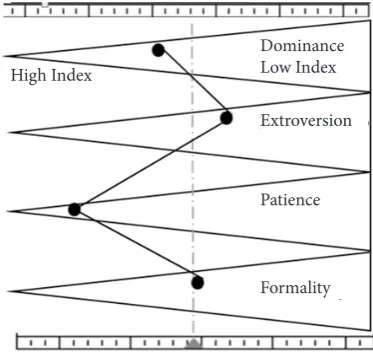
Fig. 2. Representative graph of the behavioural profile main variables, used to evaluate the machine operators
Dominance Low Index
Extroversion
Patience
[image:2.595.322.509.542.723.2]identification of the ideal characteristics for the po-sition of forwarder operator.
Then, a behavioral profile analysis tool was ap-plied to the studied operators, that obtain informa-tion related to dominance, extroversion, patience and formality (Fig. 2), which were later analyzed to characterize the behavioral profile of the operators.
Next, operators were grouped into behavioral profile classes, by the profile analysis tool, based on the following requirements defined as the reference profile: (a) operator fully meets the requirements of the function; (b) operator will need some effort to meet the function requirements.
The productive efficiency of the operators in the profile classes was evaluated from their productivity data obtained from the daily bulletins of the machines provided by the company during the 11-month pe-riod. Productivity was defined as the percentage rela-tion between the productivity obtained by the opera-tors in relation to the target of productivity expected by the company, according to Eq. 1:
EP = PR/M × 100 (1)
where:
EP – productive efficiency (%); PR – productivity (m³·h–1); M – productivity goal (m³·h–1).
The average productivity goal used was estab-lished by the company according to the specific characteristics of each stand, according to Eq. 2:
Aj × PrM TTh
M = × he ×
Va 24 (2)
where:
M – productivity goal (m³·h–1); Aj – adjusted productivity (m³·h–1); PrM – production target (m³·day–1); Va – target volume (m³·day–1); he – actual hours of work (h·day–1); TTh – total hours worked per day.
Finally, from the data of the productive efficiency given the productivity goal over the 11-month pe-riod, we obtained the learning curves of the op-erators in both profile classes. A randomized com-plete block design was used, defining the operator profile classes as treatments and the evaluated months as blocks.
The Bartlett test was applied to test the homoge-neity of the treatments’ variances and the analysis of variance was performed, and when necessary,
the means of the treatments compared to each other by the Tukey test at the 5% probability level. A regression analysis was also performed aiming to evaluate the relationship between the variables productive efficiency in relation to training peri-od. The models were adjusted, referring to the re-lationship between productive efficiency (Y) and training time (X) for each one of the behavioral profiles groups.
The models were analyzed from the following statistics: adjusted coefficient of determination (R²adj), standard error of estimation (Syx, Syx %) and graphic analysis of residues.
RESULTS
According to the behavioral profile assessment interpretation, the ideal forwarder operator pro-file for the position should have the following characteristics:
Focus: Must be work-oriented, have high stan-dards of accuracy, and comply with established rules and deadlines.
Pace of work and variety of activities: The indi-vidual must have moderate pace, be calm in per-forming repetitive tasks, being able to complete the functions to the details and quality.
Decision making: The individual must adhere to the guidelines and procedures established by the company, avoiding operational risks.
Communication and collaboration: Must be able to communicate in a formal and sincere manner, not having great extroversion, and have more in-trospective characteristics. Performing individual work with concentration, without the need for par-allel conversations or constant pauses.
Leadership style: Must be a technical expert, and, must be an expert in his field of work. However, even if he is not very extroverted, if requested, he should present the ability to lead by example.
The results showed that the studied operators had two distinct behavioral profile patterns, according to their behavioral characteristics in relation to the requirements for the position of forwarder opera-tor defined in the reference profile. The character-istics of the operators in the profile classes were:
Profile Class 2: Very patient and slow paced op-erators, to the cost of their deadline commitment. Technically oriented and attentive to detail.
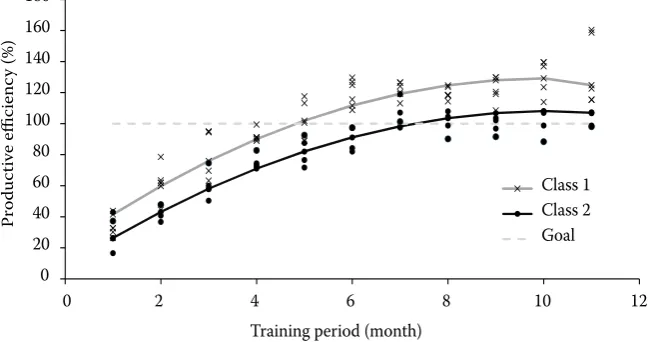
Fig. 3 shows the curve of the productive efficien-cy of the operators in the formation period. The av-erage productivity target used was 40 m³·h–1.
As can be seen, from the sixth month, no pro-duction deficit was observed, and after this period, there was an increase in productive efficiency, with values above the established target. Therefore, it is noted that the average for the training period of forwarder operators under the conditions studied was approximately 6 months.
In addition, it is observed that the profile of the operators was relevant in the training period, since the operators of the profile class 1 reached the production goal from the fifth month of
operation, while in class 2 not until the seventh month of operation, with a significant difference (P < 0.0001) between the operators of the profile classes (Fig. 4).
The operators of the profile class 1 presented an average productive efficiency of 19% higher than the operators of profile class 2, without much varia-tion in the evaluavaria-tion period.
The operators of the profile class 1 were consid-ered very patient, but with a dominant characteris-tic in the commitment with the deadlines, charac-teristics that had a positive effect on the operation, since the operators are motivated to be constantly seeking to meet the production targets.
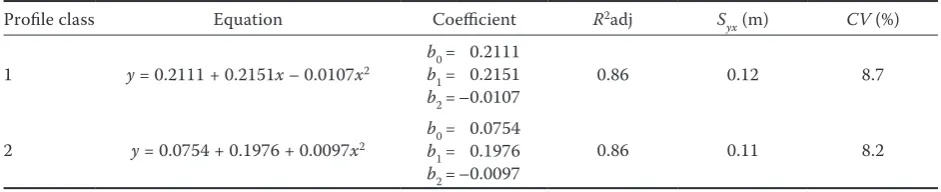
Table 1 shows the estimates of the adjusted mod-el with the adjusted coefficient of determination (R2adj) and standard error of estimate (S
[image:4.595.127.464.98.282.2]yx).
Fig. 3. Average values of productive efficiency, obtained by the operators in the two profile classes, during the training period
0 20 40 60 80 100 120 140 160 180
Pr
od
uc
tiv
e
effi
ci
en
cy
(%
)
Training period (month)
Class 1 Class 2 Goal
0 2 4 6 8 10 12
Fig. 4. Estimated productive efficiency curve of forwarder operators in both profile classes, during the training period
0 20 40 60 80 100 120 140 160 180
0 2 4 6 8 10 12
Pr
od
uc
tiv
e
effi
ci
en
cy
(%
)
Training period (month)
[image:4.595.138.466.563.734.2]DISCUSSION
The forwarder machine operator function is really repetitive and needs great attention to details, pa-tience and yet commitment with deadlines. Those are the strongest characteristics that the reference profile provided, and should be the most important topic to be evaluated in a recruitment phase of for-est machine operators. These results corroborate with the findings on the study of harvester machine operators for Lopes and Pagnussat (2017).
The operators of the profile class 1, considered very patient, but with a dominant characteristic in the commitment with the deadlines, characteristics that had a positive effect on the operation, since the operators are motivated to be constantly seeking to meet the production targets.
However, due to the fact that their patience is also at high level, the operation is not tiring and stressful for the operator. Therefore, it is important to note that although patience is fundamental in the profile of a machine operator, in order for the operator to have a good productivity and to main-tain the pace, he must have an even greater com-mitment to deadlines and rules.
Comparing the profile evaluation with the pro-ductive efficiency we can observe that although the profile 2 operators present positive characteristics, such as patience and commitment to work, these characteristics can be affected by having a slower rate. This is because the characteristics “patience” and “commitment to deadlines and rules” are re-versed in relation to the operators of profile 1, that is, this group is presented to be much more patient than committed to deadlines and rules.
Analyzing the productivity curve adjustment sta-tistics for each profile class during the training pe-riod, it is noted that the model presents satisfactory R2adj and S
yx, indicating the time as an important
variable in the operator‘s performance. The
learn-ing curves and the development of the operators presented consistent results, being able to be a source of future comparison to subsidize processes of selection and training of forwarder operators.
Yet the lack between operators’ class 1 and 2 was high, in other researches, with wood harvest machine operators the authors found differences in learning curves could be larger and can make learning time longer and costlier. Studies indicate that the productivity differences caused by the hu-man factor have the average of 20 to 50% and dur-ing the process of traindur-ing, the difference in pro-ductivity between operators can be even greater (Glöde 2001; Kärhaä et al. 2004; Ovaskainen 2005; Purfürst 2010).
CONCLUSION
The forwarder operators with the best behavioral profile for the task have, as relevant characteristics, attention to details, commitment to deadlines and rules, ability to avoid risks, patience, and are tech-nically oriented and adapted to repetitive tasks.
The behavioral profile is a variable that affected the productive efficiency of the forwarder opera-tors during the training period, in the different classes evaluated.
References
Akay A.E, Sessions J. (2004): Identifying the factors influ-encing the factors influinflu-encing the cost of mechanized harvesting equipment. Journal of Science and Engine, 7: 65–71.
[image:5.595.62.533.126.222.2]Ackerman P.L. (1988): Determinants of individual differ-ences during skill acquisition: Cognitive abilities and information processing. Journal of Experimental Psychol-ogy: General, 117: 288–318.
Table 1. Estimates of production efficiencies adjusted with respective adjusted determination coefficients (R2adj) and standard error of estimate (Syx) with respect to the formation period (x):
Profile class Equation Coefficient R2adj S
yx (m) CV (%)
1 y = 0.2111 + 0.2151x – 0.0107x2 bb0 = 0.2111 0.86 0.12 8.7 1 = 0.2151
b2 = –0.0107
2 y = 0.0754 + 0.1976 + 0.0097x2 bb0 = 0.0754 0.86 0.11 8.2 1 = 0.1976
Adloff F., Gerund K., Kaldewey D. (2015): Revealing Tacit Knowledge: Embodiment and Explication. Bielefeld, Tran-script Verlag: 308.
Buckingham M., Clifton O.D. (2006): Descubra Seus Pontos Fortes. Rio de Janeiro, Sextante: 270. (in Portuguese Brazilian) Contreras M.A., Parrott D.L., Chung W. (2016): Designing
skid-trail networks to reduce skidding cost and soil dis-turbance for ground-based timber harvesting operations. Forest Science, 62: 48–58.
IBA (2017): Indústria Brasileira de Árvores. Relatório IBA: 77. Kanfer R., Ackerman P.L. (1989): Motivation and cognitive
abilities: An integrative/aptitude-treatment interaction approach to skill acquisition. Journal of Applied Psychol-ogy, 74: 657–690.
Lopes E.S., Pagnussat M.B. (2017): Effect of the behavioral profile on operator performance in timber harvesting.
International Journal of Forest Engineering, 28: 1–6. Glöde D., Sikström U. (2001): Two felling methods in final
cutting of shelterwood, singlegrip harvester productivity and damage to the regeneration. Silva Fennica, 35: 71–83. Guadagnoli M.A., Lee T.D. (2010): Challenge point: a frame-work for conceptualizing the effects of various practice conditions in motor learning. Journal of Bone and Mineral Research, 36: 212–224.
Harstela P. (2004): The competence of the forest-machine op-erator and tacit knowledge. In: Ranta P. (ed.): Proceedings of the international seminar on simulator-based training of forest machine operators. Tampere University of Tech-nology, Digital Media Institute, Hypermedia laboratory, Tampere. Report, 2: 11–15.
Kärhaä K., Rönkkö E., Bumse S., (2004): Productivity and cutting costs of thinning harvest. International Journal of Forest Engineering, 15: 39–48.
Machado C.C. (2014): Colheita Florestal. Viçosa, UFV: 543. (in Portuguese)
Ovaskainen H. (2005): Comparison of harvester work in for-est and simulator environments. Silva Fennica, 39: 89–101. Purfürst F.T. (2010):Learning curves of harvester operators.
Croatian Journal of Forest Engineering, 31: 89–97. Reber A.S. (1989): Implicit learning and tacit knowledge
Jour-nal of Experimental Psychology: General, 118: 219–235. Volodina A., Nagy G., Köller O. (2015): Success in the first
phase of the vocational career: The role of cognitive and scholastic abilities, personality factors, and vocational interests. Journal of Vocational Behavior, 91: 11–22.