Lancaster University Management School:
Author Accepted Manuscript
This is an ‘accepted manuscript’ as required by HEFCE’s Open Access policy for REF2021.
Please cite this paper as:
Williams, Richard A., (forthcoming), Conflict Propagation within large Technology and
Software Engineering Programmes: A Multi-Partner Enterprise System Implementation as
Case Study, IEEE Access
ACCEPTED FOR PUBLICATION | November 12, 2019
ORCID NUMBER: 0000-0001-6333-9448
DOI: [Insert DOI number if assigned on acceptance]
Dr Richard Alun Williams
Senior Lecturer in Management Science
Lancaster University Management School Lancaster, LA1 4YX
Digital Object Identifier 10.1109/ACCESS.2019.DOI
Conflict Propagation within Large
Technology and Software Engineering
Programmes: A Multi-Partner Enterprise
System Implementation as Case Study
RICHARD A. WILLIAMS1,2(Senior Member, IEEE)1Department of Management Science, Lancaster University, Lancaster, LA1 4YX, UK (e-mail: [email protected]) 2Centre for Technological Futures, Lancaster University, Lancaster, LA1 4YW, UK
This work was part-funded by a SAMS-ESRC-UKCES Management and Business Development Fellowship under Grant ES/L002612/1.
ABSTRACT Enterprise system implementations are increasingly outsourced to multiple third-party ser-vice providers. These multi-partner technology and software engineering programmes are usually organized through project teams that align to the functional areas of the software. Cognitive, occupational and personal differences between members of project teams increases the potential for conflict, which in extreme cases may propagate throughout the entire social network of the programme. Using social network analysis and thematic coding analysis, within a single case study, new insights are provided into the development of conflict within and between individual project teams of large technology and software programmes, such as those seen within enterprise system implementations. A conceptual framework has been developed that builds on existing literature around conflict in groups, to explore how task, process and relationship conflict can develop in large enterprise system implementations. The conceptual framework illustrates how conflict, once developed, can propagate throughout the social network of the wider programme. Finally, we argue that high-conflict organizations, such as the temporary multi-partner implementation team that forms to deliver large technology and software programmes, have a tendency to contain competing networks, which actively promotes conflict. We conclude by setting the agenda for further research on how we may contain the spread of conflict once it has developed within technology and software engineering programme environments.
INDEX TERMS Conflict, Conceptual Framework, Enterprise System, Software Engineering Project, Project and Programme Management,
I. INTRODUCTION
I
T is commonly known that the majority of failures within information systems development and implementation are not due to the technology, but are instead due to human and organizational reasons [1], [2]. This is compounded by the fact that the implementation and management of large software programmes often becomes the preserve of external service providers [3], whose employees may have different educational and training backgrounds, cognitive orientations, and social norms/cultures, with respect to the client’s em-ployees [4]. In fact, some of the larger software implemen-tation programmes consist of hundreds of client and third-party team members, who may be located across multiple geographies and time zones, and structured into different project teams [5].It has recently been argued that the increasing size and complexity of these technology and software engineering programmes, leads them to exhibit the behaviours and traits of complex systems [6]. The emergent behaviour generated within the system, may, to a large degree, be due to the com-plexity stemming from the large number of team members, and the growing trend, especially in the public sector, of us-ing multiple vendors with back-to-back fixed-price contracts to implement the individual projects that combine to form the programme. Furthermore, the individual project teams may have competing priorities and objectives, which may lead to system-wide conflict, which emerges from the conflict within (intragroup) and between (intergroup) project teams.
on software engineering (e.g. [7]), the project management required to successfully implement information technologies in organizations (e.g. [8], [9]), along with the social aspects of the implementation team environment (e.g. [10]–[12]). We build upon this expanding body of knowledge through focusing on the factors that contribute to conflict within the workplace social network of large multi-partner enterprise system implementations, which provides a contemporary example of a large technology and software engineering programme. A network lens to analyze projects has recently been advocated by Steenet al.[13], who suggest that a multi-method approach is required to investigate project network dynamics. We adopted the case study approach, and analyzed the results through qualitative data analysis, social network analysis, and diagrammatic modelling. Our findings suggest that the various project teams commence the programme us-ing a shared vision and complementary aims and objectives, but that various external factors perturb the collegial working dynamics andinfect the systemwith conflict.
In this article, we will start with a review of the liter-ature on the social networks inherent to enterprise system implementations, the three different types of conflict (task, process, and relationship) and how they can develop within, and between, different teams, and the way that conflict can propagate throughout the social network of multi-partner enterprise system implementations. We then discuss the de-velopment and propagation of conflict within a case study that represents a large multi-partner technology and software engineering programme. We then propose an integrative con-ceptual framework that can serve as a means to develop a better understanding of the generation of conflict within the social network of such technology programmes. We conclude by setting the agenda for further research on how to mitigate the development of conflict, and how to dampen the conflict once it has developed in order to minimize propagation throughout the social network of team members.
II. RELATED WORK
This section provides an overview of the major concepts that contribute to the theory behind our study.
A. ENTERPRISE SYSTEMS AND THEIR IMPLEMENTATION
The term enterprise resource planning (ERP) was devised in 1990 by the Gartner Group [14] to define the high-level business processes that organizations used to manage their core administrative (back office) functions such as Human Resources, Payroll, Finance, etc. A number of software ven-dors, such as IBM, Oracle and SAP, offered ERP software packages to store the resulting data and automate a number of the business processes. With the expansion of Information Technology (IT) and Information Systems (IS) throughout the 1990s and 2000s, the software modules that were precon-figured to focus on back office functions were integrated to-gether and also augmented with functionality for data mining, business intelligence, advanced planning, and automatically
processing data from external supplier/customer relation-ships. These larger software systems were termed Enterprise Systems, and are now routinely used by organizations of all sizes, to help them manage their money, staff, products, customers and suppliers, more effectively [15].
Enterprise systems are designed to integrate the often-fragmented business processes and associated data relating to the separate organizational units of large organizations, into a single software system that facilitates the sharing of data and use of preconfigured (and standardized) software modules [16]. Therefore, enterprise system implementations should be viewed as organizational transformation projects that can lead to process improvement and innovation [17], and as such will impact all aspects of the organization, and not as large IT projects that can be implemented by the IT department in isolation [15]. Enterprise system implementations at large organizations are usually implemented by third-party service providers, with the largest implementations using the consul-tancy services of both the vendor (e.g. Oracle, SAP, etc) and professional services firms (e.g. Deloitte, Accenture, etc).
B. THE SOCIAL NETWORKS OF LARGE ENTERPRISE SYSTEM IMPLEMENTATIONS
Social Network is a term used to refer to a collection of people and the nature of the connections, relationships and interactions between them [18]. These relationships can rep-resent any type of social behaviour, for example: friendship, cooperation, competition, aggression or hostility [19]. Tak-ing inspiration from mathematical graph theory, the social network perspective views a social system as a set of inter-related nodes or actors (the people within the network) that are connected by one or more edges (the types of relation-ships/interactions between them) [20]. These networks are described as being either directed or undirected, depending on whether the connections between pairs of nodes are uni-directional or biuni-directional, respectively [21].
Social networks promote communication between network members, and the network topology often facilitates the efficient and effective propagation of information [22]. A fundamental, and accepted principle, in network analysis is the presumption that nodes are not independent, but in fact influence each other through the relationships and interac-tions between them. This can occur through a variety of mechanisms, but the simplest and most common is that of direct transmission from one node to another node [23], and through successive transfers, can propagate within a network. Borgatti [24] conjectures that this propagation can be through either physical transfer of an item, or an imitative process of attitudes, behaviours or emotions. Crossley [25] defines so-cial network analysis as a form of structural analysis that uses quantitative approaches (e.g. graphs, adjacency matrices, and descriptive statistics on the network topology) to provide a pragmatic means of recording and analyzing relational data that have been collected through qualitative methods.
number of intermediate connections between nodes (e.g. individual team members) is rather small. They further advise that networks within real-world systems display a degree of clustering that is higher than expected for random networks, which we believe is exemplified in large technology and software engineering programmes, such as enterprise system implementations. In general, enterprise system implementa-tions are structured around functional project teams, which represent modules within the network and consist of team members from across the various organizations [27], with the core node within each module being the project manager for the particular project team. This complex interconnected network of individual team members that form the vari-ous project teams, gives rise to an overall programme-wide network structure that oftentimes maps onto the high-level functional modules within the enterprise software itself.
Guimera and Nunes Amaral [28] suggest that the modular structure of complex networks is the key to their success, which in the case of enterprise system implementations suggests that the structuring of project resources around functional modules plays a critical role in successful delivery of the programme. We agree with this in principle, but conjecture that although this small world topology with high connectivity within the individual clusters (within individual teams) and between the clusters (between the different teams) facilitates efficient delivery of the complete programme of work, it also incorporates fragility into the network be-cause it allows conflict to propagate throughout the entire programme-wide network. Jackson [29] provides support to this argument by asserting that ideas and behaviours held by individuals within a social network can be transmitted from one person to another, and thus may propagate throughout the entire network. In addition, Gil [30] provides a conceptual framework around communication between team members, and how this affects the development of trust in the project manager in particular and the project more generally.
C. CONFLICT
Boulding [31] defined conflict within group situations as interpersonal incompatibilities (whether real or perceived) or the holding of discrepant opinions/outlooks between the parties involved, which may be individuals within a single group (intragroup) or between different groups (intergroup). It has been argued that conflict is an intrinsic part of group and organizational dynamics [32], and that it is strongly associated with individual group member’s affective experi-ences [33], which can propagate throughout the network as a shared affect [34]. Conflict emerges from a variety of group-based situations [35], and in three main forms: task conflict, for example, differences in opinion between project team members on how tasks should be performed; process conflict, for example, an overly bureaucratic project environment with respect to policies/procedures; and relationship conflict, for example interpersonal issues between members of a project team [36]. The three types of conflict are expanded upon in more detail below.
1) Task Conflict
When conflict within project teams is functional, it is often task-focused [32], [37]. Task conflict has been defined as the awareness and subsequent behaviours that emerge between group members from differences in viewpoints and opinions of tasks that need to be performed within a group [38]. With particular emphasis on enterprise system implementations, this type of conflict may express itself within project teams as animated discussions and personal excitement from the individual team members [36]. Certain types of tasks have been shown to benefit from moderate levels of task conflict [39]. For example, it has been observed that during the design phase, if developers have been provided explicit requirements from the client, they often fixate on early solution ideas or the reuse of existing solutions, which can lead to subopti-mal solutions [40], [41]. In addition, Shah and Jehn [42] have shown that project teams benefit from differences of opinion when faced with complex cognitive tasks. Within enterprise system implementations, this is frequently seen during the early design phase of projects, in particular around tasks associated with requirements analysis; or during the execution/delivery phase of the project when the team has encountered problems that require collective brainstorming to develop workarounds and mitigation actions. Schwenk [43] suggests that task conflict, when effectively managed, improves the quality of decision making because the consen-sus that emerges through synthesis of diverse perspectives, is superior to the perspective of any individual team member. In severe instances, it may also generate tension within the team [32], in particular if overly dominant team member(s) push their opinions in a forceful manner. This may inadvertently cause antagonism and unhappiness between other team mem-bers and themselves, which may emanate in an unwillingness to work together in the future (on other projects).
2) Process Conflict
3) Relationship Conflict
When conflict within projects is focused on personal issues between individual team members, such as feelings of an-noyance, frustration, and irritation, it is usually labelled as relationship conflict [36]. Relationship conflict is a form of affective conflict because individuals become aware of their incompatibilities through changes in their mood or through feeling tension and/or friction when they work together [48]. As discussed by Jackson [29], the people with whom we interact with on a regular basis are able to influence our motivations, decisions, and emotional wellbeing (including behaviour). Relationship conflict has been found to produce intolerance and mistrust regarding each other’s intentions and behaviours [49]. This intolerance and mistrust causes considerable anxiety and emotional stress, which has been found to inhibit cognitive functioning in processing complex information [50], and ultimately leads to a reduction in per-formance [32]. Furthermore, when individual team members encounter interpersonal problems that result in relationship conflict, they may respond with a number of negative re-actions, such as anger or frustration. Conversely, they may mentally decouple themselves from the situation because they experience anxiety and fear [51] or because they are uneasy with the feeling of disliking team members or being disliked by other team members [52]. As a consequence, they tend to work less effectively and may produce incomplete or poor quality project deliverables [53].
Within an enterprise system implementation, this means that fellow project team members from the same organiza-tion, or the client and/or third-party service provider, may affect the way an individual member views project aims and objectives, and the degree to which they are com-mitted/motivated to perform project tasks and activities. In addition, implementations that utilize a multi-partner ap-proach often encounter relationship conflict that is due to the competing corporate dynamics, and not just differences between individual team members. Kaiser and Bostrom [54] found that occupational and cognitive differences between the members of software project teams might increase the potential for conflict. Unless the existence of the conflict is both acknowledged and managed, it will invariably result in reduced productivity and satisfaction within the group [55]. In the most serious of cases relating to enterprise system implementations, this could result in failure of achieving project-level objectives by an individual project team, or failure of achieving the overall programme-level objectives due to conflict being propagated throughout the network.
D. PROPAGATION OF CONFLICT THROUGHOUT THE SOCIAL NETWORKS OF ENTERPRISE SYSTEM IMPLEMENTATIONS
The literature on conflict has focused almost exclusively on conflict generation at the level of individual team members or between two members. Here the individual team member collects and processes information from their environment, and uses their own individual cognition to perceive conflict,
which in effect makes them only loosely coupled to the wider social system [56]. With respect to group conflict, Gelfand
et al. [57] have developed a cultural transmission model of intergroup conflict, and Robertset al.[58] have highlighted the relationship between task complexity (which may lead to task conflict) and the impact on communication patterns in IS project teams. Unfortunately, this model was focused on relationship conflict only, so did not cater for task and process conflict, and was also unrelated to enterprise system implementations. Their core assumption was that conflict is quite easily developed due to universal human traits, such as in-group preference and out-group hostility, and that once developed it can propagate within the group to manifest itself in conflict with another group.
We conjecture that the work of Gelfand et al. [57] has synergies to the way that relationship conflict can be de-veloped and propagated within large multi-partner enterprise system implementations. For example, a project team made up of team members from a single organization (e.g. client, software vendor, or professional service provider) will have considerable in-group preference and if harm is detected towards one of their members by a member of another group, this harm will be felt by all in-group members, who will collectively punish the out-group [59].
III. RESEARCH METHODOLOGY
Our methodology is based on case study research [60] that used a combination of deductive inference and inductive research, through a multidisciplinary approach to empirical software engineering research [61]. Case study provides the ability to focus at the system-level behaviours and dynamics of a complex system, which in our case is the complex social system that develops during an enterprise system implemen-tation with multiple partners. It also provided the ability for us to perform an in-depth investigation on the causes behind these system-level emergent behaviours [62]. Indeed, the choice of a case study allowed for the enterprise system implementation to be studied in itsreal worldsociotechnical and spatio-temporal contexts [63]. The adoption of a case study approach allowed the utilization of both qualitative and quantitative data and mixed analytical method, to ensure a detailed analysis of the case along with elucidation of practical dimensions that needed to be considered in the con-ceptual framework, given the existing knowledge around the development of conflict within project teams (as discussed in Section 2).
by Miles and Huberman [65] for developing conceptual frameworks through case study.
The purpose of this study is to enhance our understanding of the causes behind conflict development within multi-partner enterprise system implementations (representing an example of large technology and software engineering pro-grammes), and through development of a conceptual frame-work, can enhance our understanding of how conflict (once developed) can propagate throughout the social network of the wider programme. Two key definitions underpin the case: 1) conflict development, i.e. task, process or relationship conflict developing due to the interactions between individ-uals within a project team (intragroup), or between differ-ent project teams (intergroup); and 2) conflict propagation (following initial conflict development) throughout the wider social network of the enterprise system programme. Conse-quently, our case has several subunits of analysis focused on the hierarchy within the enterprise system implementation. The main unit was the programme as a whole (the “case”), and the smallest unit was the individual member. In addition to these two units, the case study also collected data about several intermediary units: the leaders among individual members; the project team to which specific individual mem-bers belonged; and the organization that employed individual members. Data came from a variety of sources, including observations, focus groups, and documentation shared with the research team.
A. DATA COLLECTION
Based on the multidisciplinary approach, data collection took a hybrid form over three phases. The first phase of data collection focused on documentary analysis, which allowed us to develop a comprehensive understanding of the overall case. Collected documentation related to: the programme aims, visions, and high-level scope; programme-level stan-dards and procedures; programme-level roles and responsi-bilities; programme-level resource management plan; techni-cal architecture; individual project management plans, scope and detailed requirements (functional and technical). This data provided the background context to understand the case, and to develop an initial conceptual framework.
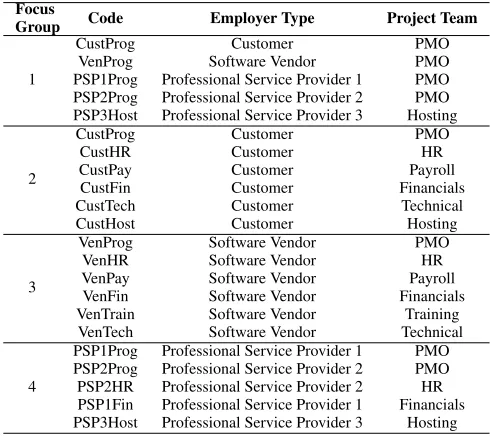
[image:6.576.296.541.71.289.2]The second phase of data collection focused on the need to develop an in-depth understanding of the hierarchical and resourcing structure of the programme. Consequently, an ini-tial focus group was run with five project managers who were working on the programme, and represented: client, software vendor, and three professional service providers. The aim of the focus group was to: develop a list of members on the pro-gramme and their associated work-based demographic val-ues; develop an adjacency matrix and resultant network map of the formal workplace relationships between the resources [21]. The focus group technique was selected because it provided the ability to gain a concensus on programme-level hierarchy and resourcing structure from senior resources who were employed by the different organizations involved in the enterprise system implementation, and we adopted therealist
TABLE 1: Composition of the focus groups
Focus
Group Code Employer Type Project Team
1
CustProg Customer PMO
VenProg Software Vendor PMO
PSP1Prog Professional Service Provider 1 PMO PSP2Prog Professional Service Provider 2 PMO PSP3Host Professional Service Provider 3 Hosting
2
CustProg Customer PMO
CustHR Customer HR
CustPay Customer Payroll
CustFin Customer Financials
CustTech Customer Technical
CustHost Customer Hosting
3
VenProg Software Vendor PMO
VenHR Software Vendor HR
VenPay Software Vendor Payroll VenFin Software Vendor Financials VenTrain Software Vendor Training VenTech Software Vendor Technical
4
PSP1Prog Professional Service Provider 1 PMO PSP2Prog Professional Service Provider 2 PMO PSP2HR Professional Service Provider 2 HR PSP1Fin Professional Service Provider 1 Financials PSP3Host Professional Service Provider 3 Hosting
B. DATA ANALYSIS
The framework used for data analysis utilized three com-plementary strands that enabled explanatory case study data analysis. First, Social Network Analysis (SNA) was con-ducted on the programme structure and team member in-teraction data collected from focus group 1, to establish the network topology (network map) of the formal social interac-tions between resources on the enterprise system implemen-tation, and to provide descriptive statistics of the network’s characteristics. The purpose of SNA is to understand patterns of relationships among people within a system, to analyze the structure of these patterns, and to discover what their effects are on other people and organizations within the system [69]. However, SNA by itself does not allow us to develop a full understanding of the development and propagation of conflict, so needs complementing with other methods. Like Martínez et al [70], we consider that the principles of qualitative case study research [60] presents an opportunity to integrate SNA methods in the evaluation of conflict devel-opment and propagation within large multi-partner enterprise system implementations. Case studies performed under these situations are based on the analysis of the interactions of the programme members in the contexts where conflict is developed between an initial subset of the members and
potentiallyspreads to other regions of the network.
The second strand of data analysis involved analysis of the qualitative data collected from focus groups 2-4, which al-lowed us to understand the causes of conflict development in the case, to provide in-depth explanations of thelocaleffects of conflict (i.e. immediate intragroup or intergroup conflict), and to understand how conflict can propagate throughout the social network of the programme. In a similar way to the recent study of Ambituuni et al. [71], we used an inductive approach that was based on the strategy described in Braun and Clarke [72], through use of thematic analysis [73] to extract the major themes of relevance through coding of the data. This thematic coding assisted in establishing the causes of conflict development; the causes of conflict propagation; and the effects on social interactions following conflict development and propagation. Data familiarization was gained through repeated reading of the entire qualitative data set from the focus groups. On average, each transcript was read at least three times, with new themes emerging with each reading, or existing themes becoming more refined. The themes were considered in light of the overall topic of conflict and assigned initial codes that represent features of the data that appear interesting to the case, and were brought together to illustrate the analysis [74]. Subsequently, connections between themes and codes were established, and between themes and the various resources/roles within the programme. A degree of rationalization of themes was performed to ensure that data was reduced into meaningful categories.
For the last strand of data analysis, we took inspira-tion from Software Engineering and Management Science through the use of diagrammatic modelling to visually depict
the causes of conflict development within the programme. A number of approaches have been developed since the 1990s, which have borrowed standardized diagrammatic languages from software engineering. One such standard is the Uni-fied Modelling Language (UML), which although originally developed to document requirements for the analysis and design of computer systems [75], has recently been used to model complex systems more generally (e.g. [76]). The diagrammatical modelling in this study was performed in an iterative manner following completion of the thematic coding of the qualitative data. We used UML (v2.4) [77] as the basis to semi-formally define the interactions between programme resources that are involved in conflict development. Along with UML notations, a less formal cartoon diagram was also used to ensure the complexity inherent to the devel-opment and propagation of conflict through the interactions between individual resources could be conveyed efficiently. This diagrammatic notation is called aRich Picture, and is a diagrammatic notation used in the field of Management Sci-ence (specifically, the Soft Systems Methodology approach, after [78]). The result of the SNA, thematic coding and dia-grammatic modelling was triangulated with documentation analysis to verify the data, to account for the longitudinal aspects of conflict [63] and to provide additional information.
IV. CASE STUDY: THE RESOURCE MANAGEMENT PROGRAMME
The case relates to a large United Kingdom (UK) based orga-nization (the Client) that was engaged in a major strategic modernization programme. The wholesale replacement of legacy systems was impracticable, so they chose a pragmatic approach based upon a strategy of co-existence and inter-operability between old and new IT and IS infrastructure. Resource Management was identified as the set of busi-ness processes that incurred the greatest costs, and therefore deemed the most likely route for significant cost savings. The client had scoped and defined a major business-driven IS/IT programme of work, which was underpinned by the ability to integrate new systems and existing legacy systems in order to successfully deliver significant cost savings and facilitate more efficient business processes.
Through a competitive tendering process, the client em-ployed (on a fixed-price basis) a global software organization that specialized in enterprise systems to act as the sole soft-ware vendor to install, configure and test the COTS softsoft-ware, and to play a leadership role in developing the technical architecture required to support the RM Programme. The client employed two different Professional Service Providers to act as Subject Matter Experts and trusted advisors regard-ing the configuration and extension of business processes that were provided by the COTS software. Finally, the client also employed a third Professional Service Provider who focused on the IT architecture for hosting the enterprise system and associated IS technology (e.g. security, network communica-tions, connectivity to external organizacommunica-tions, backup, disaster recovery, etc), and for data extraction from the small number of legacy systems that would be decommissioned, along with transformation and loading of this data into the enter-prise system. The software vendor structured the programme around the different functional modules within the enterprise system application (e.g. Financials, HR, Payroll, Technical Development, etc) and utilized their own proprietary project lifecycle and software development methodology, however the overall programme was managed using the client’s in-house methodology.
The case therefore represents a large multi-partner enter-prise system implementation that engages resources from multiple third-party organizations. In the RM Programme, these third-party resources were grouped together with client resources, and assigned to distinct project teams that map onto the functional structure of the enterprise system. As such, the resources from the multiple parties (client, software vendor and professional sevrice providers) work together within the programme through an interfirm network [79]. Each of the individual project teams on the RM Programme comprised of members from different employing organiza-tions. As theoretically established in Section 2, this intro-duces the potential for conflict development right from the start of the programme, due to their different educational and cultural backgrounds, different professional identities and normalized behaviours, along with their different ob-jectives and motivations for being on the project. Conflict within enterprise system implementations, can be categorized into three distinct types: task conflict, process conflict and relationship conflict; with the potential for each conflict type affecting the implementation in their own particular way. The aim of this case, is therefore to further our under-standing of how the various types of conflict develop (and propagate) within large technology and software engineering programmes, in general, and multi-partner enterprise system implementations, in particular. Through conceptualization of this phenomena, we also aim to identify practical interven-tions that can be incorporated into technology and software engineering project management practice.
V. RESULTS AND DISCUSSION
A. THE ENTERPRISE SYSTEM IMPLEMENTATION SOCIAL NETWORK
HR
Offshore
Payroll
Training
Financials
[image:9.576.38.539.51.387.2]Technical Hosting Programme Directorate & PMO
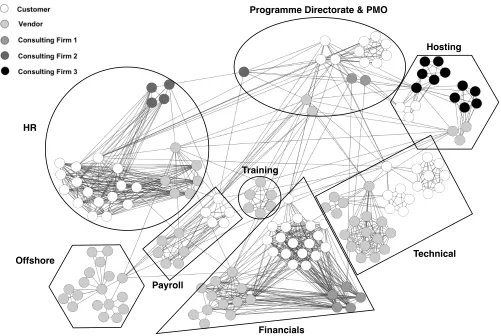
FIGURE 1: The Programme-Level Environment: Social network for the RM Programme. This social network corresponds to the work-based relationships of resources within the overall programme. Building upon the programme structure defined in Section 4, it can be seen that the programme-level social network is composed of sub-networks at the project team level, which implement specific modules from within the enterprise system software, and that there are specified resources who haveformal
working relationships with counterparts in other project teams.
within the network, and in effect act as thebridgersbetween the knots, along with acting as bridgers between the social circles, which within the programme-wide social network are synonymous with the individual project teams. In addition, 25 cliques were found within the social network, which related to the grouping of resources by project team and employer (e.g. client resources within the HR project team).
Furthermore, it was found that the majority of functional resources who were from the same employer within a project team, exhibit structural equivalence due to them being re-quired to fulfill similar tasks and activities, and due to their completion of standardized training courses when initially recruited into the respective organization (e.g. core HR processes and procedures). There are of course exceptions, which result from resources who have niche functional skills, such as those involved with complex reporting requirements (e.g. activity-based costing for Financials) or those that re-quire an interdisciplinary/interprofessional perspective (e.g. employment law for HR), but on the whole, it was found that a functional resource from a particular employer within an individual project team had structural equivalence with
B. TASK CONFLICT WITHIN ENTERPRISE SYSTEM IMPLEMENTATIONS
As discussed above, the RM Programme consisted of a large number of personnel (n=159), who were employed by differ-ent organizations. As defined in Fig. 1, the RM Programme was structured around different project teams that aligned to the functional areas of the enterprise system application (e.g. HR, Payroll, Finance). Documentary analysis indicated that the majority, in particular the core functional consul-tants (from the software vendor and professional service providers) and the client functional resources, were assigned to the programme for its entirety (circa 3.5 years).
Analysis of transcripts from focus groups 2-4 indicate that the RM Programme exhibited considerable task con-flict throughout. Not all task concon-flict was deemed negative however, because the animated discussions and personal excitement (a form of task conflict) from team members at the project initiation and design phases of the programme, were found to be beneficial to particular activities, such as problem solving, requirements gathering and analysis, and design of the enterprise systems configuration and extensions (where out-of-the-box functionality was not provided). This is confirmed by VenProg, who stated that“If you’re all aim-ing for the same thaim-ing, with a shared vision on programme aims and objectives, then task conflict between yours and other supplier resources can be a joy to watch [...]. There is a tendency for lively debate and the raising of voices, [...] but, positive task conflict, such as this, can help ensure the enterprise system is fit-for-purpose.”. Conversely, we also found that too much task conflict can interfere with consensus formation, and can also distract project team members from their individual tasks/objectives, which can lead to delays.
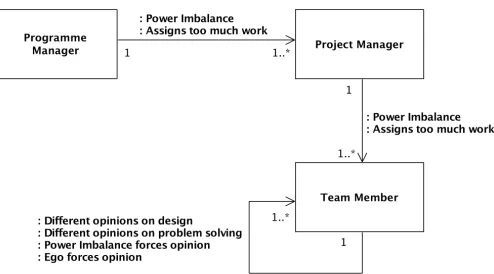
[image:10.576.301.548.58.195.2]We also found that power imbalances between resources and the assignment of too much work to be significant rea-sons that task conflict may initially develop within a project team, with additional reasons relating to: differences of opin-ions during requirements gathering, requirements analysis, and design; difference of opinions with respect to problem solving, risk mitigation, and contingency planning; and the forcing of opinions onto others due to power imbalances or inflated ego (see Fig. 2). Additonally, we discovered that differences in corporate objectives were consistent themes within the focus groups, and also the triggers for a number of risks on the RM Programme centralized risk register. VenPay and VenProg discussed in-depth the development of task conflict through power imbalances and issues of ego between rival third-party organizations. To summarize, VenPay believed that the custumer appointed a consultancy firm to act on their behalf as the prime contractor in order to defer risks, and potentially to transfer accountability for any failure(s). He was very firm when stating that “in my mind this is abdication of responsibility and accountability, but worse still, it leads to an overly dominant set of resources from the prime contractor who ensure that they win at all costs - the classic zero sum game, where to the victor comes the spoils, no matter the consequences to the other partners,
FIGURE 2: Development of task conflict in the RM Pro-gramme. UML Class Diagram depicting the development of task conflict in the enterprise system implementation. It can be seen that task conflict is directed, in that a Programme Manager can facilitate one or more Project Managers to experience task conflict; a Project Manager can facilitate one or more Team Members to experience task conflict; and an individual Team Member can facilitate one or more Team Members to experience task conflict.
or indeed the client.”[VenPay]. VenProg then built upon this analysis of the situation by advising that once the consultancy firm(s) start to“play dirty and blame my team for mistakes”
that commitment issues from his resources rapidly ensues, and impacts his ability to manage the programme from a software vendor perspective. It also became evident that from his experience, there is always a phase within large enterprise system implementations where a convergence of activities (i.e. multiple work streams being performed in parallel), con-nects together deliverables from multiple suppliers, and that due to the contractual environment oftentimes being based around back-to-back fixed-price contracts, the suppliers have a tendency to blame each other for delays. Our analysis identified that such behaviours within the RM Programme created tensions between supplier teams, and if repeated, led to a change in individual supplier level behaviours, where they began to focus on activities that provided maximum benefit to them, and a lack of commitment to those that other suppliers were dependent upon.
C. PROCESS CONFLICT WITHIN ENTERPRISE SYSTEM IMPLEMENTATIONS
As discussed previously, when conflict within projects is focused on how tasks are successfully achieved, it is often labelled as process conflict. Analysis of transcripts from focus groups 2-4, along with documentary analysis, indicate that this was indeed the case throughout the RM Programme. We found that the RM Programme was routinely affected by disagreements that led to uncertainty, which is symptomatic of process conflict. PSP3Host provided a clear example of this through his animated discussion of the chaos that ensued to the RM Programme, and the generation of tension and conflict between third-party providers, when the client was either unwilling or incapable of making important decisions on design options that underpinned the enterprise system as a whole and therefore affected multiple functional modules, and thus multiple project teams. His comments reinforce those of VenPay above, but were made within a different fo-cus group, so provide additional evidence of the client having deficiencies around accountability for the overall programme implementation, and that they are actively trying to delegate this to one of the third-party providers. Through documetary analysis, we conclude that this may have been a symptom of the contractual environment, where back-to-back fixed-price contracts between the client and the individual third-party providers, meant that none of them were contractually accountable for the end-to-end implementation.
[image:11.576.301.548.59.200.2]CustHR similarly discussed in-depth how the uncertainty generated from the contractual environment led the third-party providers to prioritize fulfilling their own contractual obligations at the expense of the greater good for the RM Programme, which caused process conflict through disagree-ment between the various organizations on who is responsi-ble for resolving emerging technical issues that affect the en-terprise system as a whole and not just a particular functional module. In one particular instance, CustHR discussed how her team had only just averted a major disaster on the wider programme, due to the PSP1 team within the Financials project designing the Chart of Accounts in isolation (to other project teams), because that is where it technically sits within the software application, and as such was contractually their responsibility. She advised that it was only when a member of PSP2 who was independently overseeing the design of the HR and Payroll modules, brought it to her attention, that the programme management structures realized that the Chart of Accounts design that was being advocated, would impact on their ability to pay expenses or salary. It took 3 months of rework to Financials, HR, and Payroll module designs to develop a Chart of Accounts suitable for the entire organization. We consider this example to be consistent with the findings of Gil et al.[82] regarding external factors in engineering project designs having disproportionate conse-quences to dependent projects, which in this instance was the Chart of Accounts design in the Financials project team (the external design) impacting the design and implementation
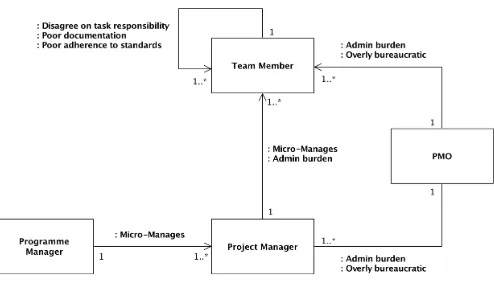
FIGURE 3: Development of process conflict in the RM Programme. UML Class Diagram depicting the develop-ment of process conflict in the enterprise system imple-mentation. It can be seen that process conflict is directed, in that a Programme Manager can facilitate one or more Project Managers to experience process conflict through micro-management; a Project Manager can facilitate one or more Team Members to experience process conflict through micro-management or enforcing an excessive administrative burden; an individual Team Member can facilitate one or more Team Members to experience process conflict through disagreement on responsibilities, poor documentation of their functional/technical deliverables, or poor adherence to de-sign/development/testing standards; and the PMO can facil-itate one or more Project Managers or Team Members to experience process conflict through enforcing an excessive administrative burden or overly bureaucratic processes, poli-cies and procedures.
being performed by the HR project team.
to mean that with the focus being disproportionately placed on document generation, the RM Programme inadvertently lost focus on actual programme delivery.
We also identified that the multi-partner environment within the RM Programme introduced significant risk of process conflict developing within the programme-wide so-cial network due to disagreements around responsibilities for specific tasks, and the lack of trust when one supplier is dependent on the successful delivery of intermediate prod-ucts/deliverables from one of the other suppliers (Fig. 3). These findings indicate that the propensity for process con-flict is exacerbated when multiple organizations are needed to implement a large engineering or technology programme, and that the multi-partner alliances within the RM Pro-gramme introduced the risk of significant process conflict into the programme-wide social network.
D. RELATIONSHIP CONFLICT WITHIN ENTERPRISE SYSTEM IMPLEMENTATIONS
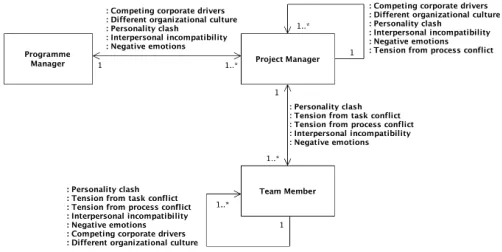
As discussed previously, when conflict within projects is fo-cused on personal issues between individual team members, such as feelings of annoyance, mistrust, or differences in per-sonal characteristics (e.g. education, family or professional backgrounds), or due to differences in corporate drivers, values, and cultures, it is usually labelled as relationship conflict. Analysis of transcripts from focus groups 2-4, along with documentary analysis of various project management artefacts produced during the implementation programme, indicated that this was indeed the case throughout the RM Programme (Fig. 4). At a high-level, this is succinctly put by VenTrain who states that“[...] where you have a multi-partner model, with the prime consultancy firm acting on behalf of the client, there’s all the opportunity in the world there for contention and attrition and ill feeling between the different third-parties.”
The RM Programme provided considerable instances of relationship conflict, however our analysis found the majority to be due to either a misalignment of organizational objec-tives (i.e. competing corporate dynamics, and not just differ-ences between individual team members), or due to power imbalances or power grabs. VenTech discussed this in-depth with numerous examples around how relationship conflict developed from the behaviours of PSP1, who acted as the
prime contractor, and whose Programme Director became
seconded to the client part-way through the RM Progamme and therefore became part of the client Directorate, which in our view equates to the metaphoricalpoacher, turned game
keeper scenario. VenTech’s discussions explained how bad
[image:12.576.298.549.62.188.2]behaviour on the part of the prime contractor resulted in similarly bad behaviour developing within his team, in par-ticular how mistrust developed when his team felt that they were being unduly blamed for technical issues and delivery delays. Our analysis suggests that the cause of this behaviour from the prime contractor and the resulting mistrust and re-lationship conflict, was ultimately due to the client’s unwill-ingness to manage the programme for themselves, and the
FIGURE 4: Development of relationship conflict in the RM Programme. UML Class Diagram depicting the development of relationship conflict in the enterprise system implementa-tion. It can be seen that relationship conflict is bi-directional, in that conflict can develop between: a Programme Manager and one or more Project Managers through competing cor-porate drivers, different organizational cultures, personality clashes, interpersonal incompatibilities, or negative emo-tions; different Project Managers due to the same reasons, along with tension that arises from process conflict (transfor-mation of process conflict to relationship conflict); a Project Manager and one or more Team Members due to personality clashes, tensions from task or process conflict, interpersonal compatibilities, or negative emotions; different Team Mem-bers due to the same reasons, along with competing corporate drivers and different organizational cultures.
appointment of the prime contractor to allow them to transfer accountability and responsibility, which links us back to our analysis on task and process conflict above, and the client’s abdication of accountability and responsibility.
programmes that lead to business efficiencies, inherently containing the potential for conflict due to the disconnect between an individual resource’s personal objectives and that of the organization. Indeed, we believe it is understandable that resources may be unwilling to commit in a project team because they may think that the better the project does, the less chance they have of retaining their employment, or continuing to work with their friends/colleagues. This was evidenced when VenPay advised that following this realization by the client PM for HR, she became significantly aggressive towards the software vendor, so much so, that she went through five PMs from his organization in the first 18 months of the programme.
Alongside the examples discussed here, our results suggest that within enterprise system implementations, relationship conflict can develop between two or more members within the programme (either within an individual project team, or between project teams), and that this can be due to person-ality clashes, differences in demographics (e.g. nationperson-ality, race, ethnicity, religion, age, and gender), or differences in educational or family backgrounds (e.g. University attended, subject studied, class/wealth/caste of family). Although the examples of relationship conflict were initially confined to the subset of resources were it originated, we found there was the potential for it to negatively affect the performance of the project team(s) as a whole.
E. PROPAGATION OF CONFLICT WITHIN ENTERPRISE SYSTEM IMPLEMENTATIONS
Following on from the discussion of conflict generation above, and through further analysis of transcripts from focus groups 2-4 we have discovered that once conflict had devel-oped within the RM Programme, it then had a propensity to propagate through the social network of either an individual project team, or indeed between project teams and thusinfect
the wider RM Programme. This is characterized by conflict propagating between team members of an individual project team, and also between team members that are situated within different project teams.
Analysis indicates that after conflict developed it had on a number of occasions propagated throughout the social network of the RM Programme. Instances had occurred either at a local level through affecting resources within an individ-ual team, or more widely through conflict being spread via
bridgers (predominantly PMs) outside of the initial project team where the conflict initially developed and over to other project teams that were connected to thebridger. We found that propagation could occur for all three conflict types (task, process and relationship), with the actual spread of the conflict being closely aligned to the physical structure of the underlying topology of the social network. For the RM Programme, this specifically meant that individual project team members might adopt conflict-related attitudes, beliefs, behaviour or even emotional states, from other members with whom they communicate.
In addition, we found that task and process conflict can
FIGURE 5: Rich picture: Observable phenomena that emerge from the interactions between individual team members. It is hypothesized that conflict can develop through a number of mechanisms, and that once formed, it may propagate throughout the social network of the wider programme. If any of these occur, they may be observed as deviations away from the agreed scope, time, budget and quality of the enterprise system implementation.
resulted in the relationship conflict propagating through the wider RM Programme social network. In this instance, the conflict was irrecoverable between the two PMs and the vendor PM was removed from the HR project, and indeed off the RM Programme. Focus group discussions allow us to infer that this was a sufficient gesture by the vendor to pacify the client team as a whole, but that the process conflict expe-rienced by CustHR remained and proved to be a significant issue throughout the remainder of the RM Programme; it was eventually successfully implemented however.
Our findings from the RM Programme allow us to concep-tualize the propagation of conflict within large multi-partner enterprise system implementations. This is characterized by conflict propagating between team members of an individ-ual project team, and also between team members that are situated within different project teams. We take inspiration from Gamero et al. [34], who discovered that the type of conflict being experienced can transition over time due its dynamic nature, with task or process conflict being able to transition to relationship conflict, and relationship conflict being directly related to shared affect, and thus the most com-mon form of conflict to propagate through a social network.
in-dividual teams and may also impact the overall programme implementation if the conflict propagates.
In summary, our findings from the RM Programme in-dicate that once conflict has developed within, or between, project teams on large multi-partner technology or engi-neering programmes, it can propagate throughout the social network of team members, which may negatively affect the performance of the wider programme as a whole. This is con-sistent with the notion of in-group and out-group dynamics, where through their normal day-to-day communication with other team/organizational members, allegiances and solidar-ity can form with those like themselves (e.g. project team or organization). This facilitates the propagation of conflict, so that members within each individual project team or from a particular organization, act in solidarity, but are in conflict with members from other project teams or organizations. As such, the conflict, which initially developed between a subset of team members from two different project teams, has the potential to propagate throughout the social network of the wider enterprise system structure, and may negatively affect implementation of the enterprise system as a whole.
VI. IMPLICATIONS FOR RESEARCH
Our conceptual framework has provided insight into how conflict can develop and propagate within large multi-partner enterprise system implementations. It is clear that every individual within the social network of these large technol-ogy and software engineering programmes can be perceived as a representative of a particular group, which we have categorized as the project teams that implement a specific functional module of the enterprise system or develop new technological workarounds to problems.
Our findings indicate that the small average distances in enterprise system programme team networks facilitate dif-fusion of ideas and emotions, with the former often being associated with the positive side of conflict such as task conflict when designing the system or identifying solutions to problems/issues, and the latter being associated with the negative side of conflict through the propagation of negative emotions and behaviours, which are often associated with process or relationship conflict. We believe that the network structure can be both the cause of conflict, through the generation of conflict at the interpersonal relationship level, and the effect of conflict once established, as the initial conflict is propagated throughout the wider social network. Our findings indicate that this may be due to the interper-sonal relationships between individuals, acting to configure and adjust the informal social structure of the temporary organization (e.g. the RM Programme), and that the overall social structure of the organization will effect the capacity of individuals to develop interpersonal relationships, and thus the potential for initial conflict development and subsequent propagation.
The nature and frequency of these interpersonal interac-tions may affect the percepinterac-tions of project team dynamics, and whether there is the development of intra- or inter- team
conflict. Similarly, if intra- or inter- team conflict is perceived to be developing, then this may act as a feedback loop to affect the nature and frequency of interpersonal interactions. We believe that this can also feed-forward by affecting the perceptions of other interpersonal interactions within the social network, that were not involved in the initial conflict generating circumstances. To this end, we believe that de-structive conflict, such as the relationship conflict that can arise through interpersonal interactions, can spread through the immediate networks of the initial protagonists, and then reach a tipping point, where the conflict becomes indepen-dent of the initial cause, and escalates throughout the wider network without reference to the original circumstances of conflict development. We propose this to be similar to the spread of contagion or disease that is often the focus within the scientific disciplines of epidemiology or immunology.
Our focus in developing this conceptual framework was to initiate a dialogue about the development and propagation of conflict within the social networks of large technology or software engineering programmes that use a multi-partner environment, and in particular enterprise system implemen-tations, due to their influence over the organization-wide business processes/operations used by the client. This com-plements the recent work of Adami and Verschoore [83] who focused on project governance within a network of interacting organizations, along with that of Rivard and La-pointe [84] who used a cybernetic approach for investigating user resistance to IT implementation. Through leveraging our rich picture (see Fig. 5) and UML diagrams of conflict development (Figs. 2-4), we believe that parsimonious mod-els of causal relationships between specific predictors and outcomes could be developed, which would subsequently facilitate the generation of hypotheses to be tested through future research.
Furthermore, we believe that the existing, and indeed extensive, body of knowledge surrounding organizational conflict, is ready to be augmented through the use of new computational approaches. For instance, we strongly believe that there is opportunity for future theoretical and empirical research into this area, and particularly advocate the use of social network analysis using computational visualizations, along with computational modelling and simulation, to better understand the causes and dynamics (e.g. feedback loops) of conflict propagation within this example of a technology or software engineering programme. Our conceptual framework is designed as a starting point for this conversation and we hope it will initiate a number of lines for future research.
con-tagionand potentiallyinfectingthe wider network as a whole. The objective of computational modelling and simulation in this case, would be to use the computational model (such as an agent-based model) as a scientific instrument, which would allow experimentation to be performed within the computer to test various hypotheses around the development and propagation of conflict [85]. We advocate three main strands of computational experimentation. The first would be to take inspiration from immunology and public health, to better understand the propagation of conflict as a contagion within the social networks of large multi-partner enterprise system implementations. The second would be to develop computational models of the complex social system, to allow us to gain a better understanding of the underlying social relationships and dynamics that could be used to resolve conflict; in essence developing hypotheses on how to gen-erate a robust and appropriate dampening response, which could act as a negative feedback loop to system dynamics around conflict. The third would be to gain insight into the robustness and fragility of the social networks within and between project teams, which would allow us to develop new hypotheses on how PMs may mitigate the risk of conflict propagating outside of their immediate team members, and in effect quarantine their team, to protect the wider social system.
VII. IMPLICATIONS FOR PRACTICE
Conflict within a technology and software engineering pro-gramme, such as the RM Propro-gramme, is practically intrinsic to the life and dynamics of the constituent project teams. As such, it can be considered as a universal social process through which differences of opinion between individual team members (interpersonal conflict), between members of a team (intragroup conflict), or between different teams (in-tergroup conflict), are confronted and occasionally resolved.
The Standish Chaos Report [86] argues anecdotally, that the majority of software engineering and IT projects are implemented over both time and budget. We believe the ‘human’ element is a major reason for this, and hypothesize that conflict within the social network of the implementation team(s) is to blame. In particular, we believe that this conflict within large multi-partner technology or software engineer-ing programmes, such as the RM Programme in this study, may develop through three main causes: communication issues, lack of trust between vendor and client resources, and lack of commitment (by individual team members) to the project. Furthermore, De Dreu and Weingart [87] advise that both task and relationship conflict are consistently linked with poor performance of project teams, in particular when they are engaged in highly complex tasks, such as those involved in technology or software engineering programmes. Our findings indicate that the RM Programme, which was an example of a temporary organization that was formed through the integration of multiple third-party providers along with client resources, contained competing networks through multiple organizational groups (i.e. project teams
composed of members from a vendor or professional service provider) making ties to the same third-party (i.e. the client). Indeed, the findings suggested a tendency for competition to arise between two or more teams from the different pro-fessional service providers, which we conjecture may have been due to the economic or political environment of their respective employer organizations, who may have requested them to extract additional revenues from the client. In addi-tion, and more sinisterly, the team(s) may also be requested from senior management within their employer organization to actively damage the reputation of a competitor, and thus poach the contract(s) that they have with the client - in effect, the client is coerced into removing one of the third-parties from the multi-partner programme.
We believe that our conceptual framework along with future research that results from it, will benefit professional practice in four main ways. First, it will help Project and Pro-gramme Managers to recognize and understand that conflict, once developed, can propagate throughout the wider social network of large multi-partner technology or software engi-neering programmes, and not only cause significant impact to their project, but may also act as a contagion to impact other projects within the wider programme, with potentially catastrophic effects. Second, it will help Programme Man-agers and members of organizational senior leadership teams (such as CIO, CTO, and Project Sponsor) to recognize and understand the impact that multi-partner relationships can have on the causes of conflict development, and the need to mitigate this through developing collaborative relationships between all parties, potentially through pre-project partner-ing activities. Third, we hope it will facilitate a renewed interest into PM methodologies and project lifecycles for managing technology or software engineering projects that exhibit complexity, and could also be integrated into Project Management Maturity Models, which have recently received a renewed interest [88]. Fourth, due to many Western coun-tries rapidly becoming knowledge-based service economies, we believe the efficient management and implementation of technology or software engineering projects, in particular within the Public Sector, is of paramount importance to facilitating a healthy economy.
to degenerate to a situation where organizations become defensive. Furthermore, the relationships should never be allowed to deteriorate so that the client tries to punish the third-party providers commercially, or that the individual third-party providers try and extract unwarranted revenues from the client or act as predators against each other.
Traditionally, large technology or software engineering programmes that use multiple third-parties, such as the RM Programme, have consisted of contractual arrangements from the client to each individual third-party organization - akin to a hub and spoke on a bicycle, which has resulted in no incentive for individual third-party organizations to work with each other. Moving forward, this needs to be changed to foster a more collegial environment. Although there will still be a need for individual agreements between the client and the various third-party organizations, this would present an opportunity to introduce aplay it nice clauseand aproblem
solving budget, which means that they get incentivized if
they run towards problems and proactively work together to fix them, rather than run away from problems and blame each other. We hypothesise that this would change behaviours and facilitate a collaborative environment because the orga-nizations that help resolve problems will get a share of the
reward. In addition, a crucial aspect of even being awarded the contract could be for them to declare that they will work with any other third-party organization, even those that they may have a competitive commercial relationship with at other clients.
Finally, we believe that there is a need to develop trust and foster good interorganizational relationships within large multi-partner technology or software engineering pro-grammes, in order to set the direction, develop a shared vision, be clear about what each organization wants, and be clear on what success looks like, for each organization. It is paramount that each organization has permission to be an equal in the delivery, and to ensure that the various organizations work together and work closely. We believe that it is also important for the senior members of each organization (e.g. Programme Manager, Project Manager, or Team Leads) to have the ability to pick the phone up or have a face-to-face discussion to initially discuss and resolve problems, and not resort to email straight away to berate the other organization and to act as an audit trail of their displeasure. With that in mind, we believe that the only way for trust to be earned in such complex social and technical environments, is by developing a shared vision and set of objectives, and to ensure that the joint mission is for a successful implementation for all organizations.
VIII. CONCLUSION
Theory about the propagation of behaviours within social networks of interpersonal relationships within a workplace setting has a substantial history, which we believe dates back to Simmel’s analysis of triads [89] that was fundamental to early research into group dynamics and social network analysis. With respect to technology or software engineering
programmes, such as the RM Programme in this study, the conflict that may result between individuals due to their differing roles and employers, and the diverse nature of professional and social relationships that form in these large programmes, seems to underlie many of the multi-partner alliance difficulties. Although there has been considerable emphasis on investigating collaboration and group structures within multi-party business arrangements, we believe that little attention has been paid to the way in which conflict can propagate throughout the large-scale social network that develops from such multi-partner environments, in particular with respect to large multi-partner technology or software engineering programmes.
Our findings indicate that the RM Programme had mul-tiple occurences of conflict development, and that some of these were significant enough to propagate outside of the initial setting (i.e. initial resources at the centre of conflict development) and infect other resources within the wider programme. We would like to draw a parallel of this sit-uation to the discussion by Kilduff and Tsai [81] around goal-directed networks, which they suggest are likely to be highly connected, and thus lead to a tightly-coupled central structure, which for the RM Programme corresponds to the social circles that are represented by the individual project teams. As such, any conflict generated through the actions of one team member may affect the whole of the central core. In goal-directed networks, the potential for task conflict is likely to arise around agreement with and accomplishment of goals, which if not managed can lead to the development and then propagation of relationship conflict. This was indeed found to be the case within the RM Programme.
It is our hope that the conceptual framework developed in this study, can assist in developing intervention strate-gies for use by Project and Programme Managers working in large multi-partner technology or software engineering programmes. Of particular importance is the fact that Team Members who are consistently involved in conflict, either have a problem with the programme/personnel, or are the problem [90]. Unfortunately, we know from our prior experi-ence in project management within IT consulting, that it takes time and effort to distinguish the have a problemfrom the
is a problem resource. As such, if a relationship is broken, or if individual resources can’t interact constructively with team members, disrupt meetings, or can’t collaborate, then the pragmatic solution is to remove them. We envisage that the conceptual framework will initiate a renewed interest into conflict within teams, and that it, along with the results from future research, will provide insight into the robustness and fragility of project management of technology or software engineering programmes in general, and large enterprise system implementations in particular.