http://www.scirp.org/journal/jbise J. Biomedical Science and Engineering, 2018, Vol. 11, (No. 6), pp: 126-143
https://doi.org/10.4236/jbise.2018.116012 126 J. Biomedical Science and Engineering
Improving Protein Sequence Classification Performance
Using Adjacent and Overlapped Segments on Existing
Protein Descriptors
Mohammad Reza Faisal1, Bahriddin Abapihi1, Ngoc Giang Nguyen1, Bedy Purnama1,
Mera Kartika Delimayanti1, Dau Phan1, Favorisen Rosyking Lumbanraja1, Mamoru Kubo2,
Kenji Satou2
1Graduate School of Natural Science and Technology, Kanazawa University, Kanazawa, Japan; 2Institute of Science
and Engineering, Kanazawa University, Kanazawa, Japan Correspondence to: Mohammad Reza Faisal,
Keywords: Protein Sequence Classification, Protein Descriptor, Sequence Segmentation, Feature Selection Received: May 28, 2018 Accepted: June 26, 2018 Published: June 29, 2018
Copyright © 2018 by authors and Scientific Research Publishing Inc.
This work is licensed under the Creative Commons Attribution International License (CC BY 4.0).
http://creativecommons.org/licenses/by/4.0/
ABSTRACT
In protein sequence classification research, it is popular to convert a variable length se-quence of protein into a fixed length numerical vector by using various descriptors, for in-stance, composition of k-mer composition. Such position-independent descriptors are use-ful since they are applicable to any length of sequence; however, positional information of subsequence is discarded even though it might have high contribution to classification per-formance. To solve this problem, we divided the original sequence into some segments, and then calculated the numerical features for them. It enables us to partially introduce posi-tional information (for instance, compositions of serine in anterior and posterior segments of a sequence). Through comprehensive experiments on the number of segments and length of overlapping region, we found our classification approach with sequence segmentation and feature selection is effective to improve the performance. We evaluated our approach on three protein classification problems and achieved significant improvement in all cases which have a dataset with sufficient amino acid in each sequence. This result has shown the great potential of using additional segments in protein sequence classification to solve other sequence problems in bioinformatics.
1. INTRODUCTION
Protein sequence is an essential asset in protein classification research. To apply different machine learning approaches on protein sequence data, it is a standard process to convert protein sequence into a
https://doi.org/10.4236/jbise.2018.116012 127 J. Biomedical Science and Engineering
numerical representation. This process is called feature extraction and it is a critical step because the selec-tion of the effective and appropriate type of feature extracselec-tion will profoundly affect classificaselec-tion perfor-mance. It drives the scientists to develop algorithm or program that performs feature extraction process, which is commonly known as protein descriptors [1].
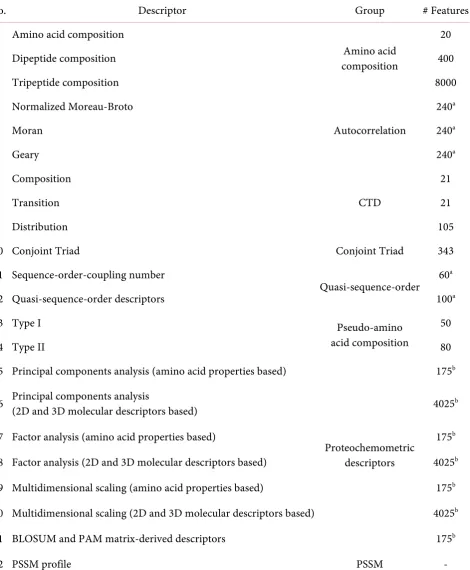
Within two decades, scientists have developed various protein descriptors. Moreover, they have used these descriptors for various cases of protein analysis. Xiao et al. [1] grouped the types of commonly used descriptors into eight groups such as Amino Acid Composition, Autocorrelation, CTD, Conjoint Triad, Quasi-Sequence-Order, Pseudo-Amino Acid Composition, Proteochemometric descriptors, and PSSM. These groups have 22 type descriptors that have been actively used in researches.
The following are the commonly used protein descriptors and their application in protein analysis researches. Bhasin and Gajendra [2] used Amino Acid Composition (AAC) and Dipeptide Composition (DC) in their study to predict nuclear receptor. They used Support Vector Machine (SVM) as a classifier and achieved overall accuracy 82.6% when using numerical features from AAC and 97.5% with DC. The study about the prediction of membrane protein types was carried out by Feng and Zhang [3]. They adopted a formulation of the autocorrelation functions based on the hydrophobicity index of the 20 amino acids as protein descriptor. Using Bayes discriminant algorithm as a classifier, they achieved overall pre-dictive accuracy as high as 94% and 82% for the re-substitution and jackknife tests. This result is higher about 13% in the resubstitution test and 8% in the jackknife test if compared with those of algorithms based only on the amino acid composition. Dubchak et al. [4] conducted a study on protein folding pre-diction using the global description of amino acid sequences or also known as CTD (Composi-tion/Translation/Distribution) as protein descriptor. Using a neural network as a classifier, they obtained 71.7% accuracy for positive class prediction and 90% - 95% for negative class. In 2007, Shen et al. [5] pre-sented a computational approach for predicting protein-protein interaction (PPI).The Support Vector Machine (SVM) algorithm was used to develop the methodology. They constructed numerical features for representing the PPI information by using conjoint triad descriptor. On average, their method may pro-duce a PPI prediction model with an accuracy of 83.90% ± 1.29%. Another commonly used protein de-scriptor is quasi-sequence order dede-scriptor. This dede-scriptor was used by Chou [6] to solve prediction of protein subcellular locations. The author used this descriptor and augmented covariant discriminant algo-rithm as a classifier, and achieved accuracy between 79.6% - 86.4%.
Amino Acid Composition (AAC) is one of the protein descriptors often used to solve many cases of protein analysis. AAC has information from 20 amino acid components but does not have positional (i.e.
sequence order) information. To increase the descriptor’s ability, Chou [7] developed Pseudo Amino Acid Composition (PseAAC) by adding a set of sequence correlation factors. Ussing the PseAAC, a significant improvement in protein subcellular location prediction quality has been inspected for both the ProtLock algorithm and the covariant discriminant algorithm. In another study, the author combined 20 features from amino acid composition and 2λ numbers of a set of correlation factors that reflected different hy-drophobicity and hydrophilicity distribution patterns along a protein chain [8]. Moreover, it also achieved better performance on the prediction of 16 subfamily classes of oxidoreductases if compared with AAC.
Protein descriptors described above can be grouped as an alignment-free descriptor. Also, there are descriptors grouped as alignment-based descriptor [9] or profile-based descriptor [10]. Profile-based de-scriptor generates feature vector based on Position-Specific Scoring Matrix (PSSM) by running PSI-BLAST. It produces some feature vectors that vary according to the amount of amino acid in the se-quence. Rangwala and Karypis [11] used this descriptor to solve detection of remote homology and fold recognition. It can improve the overall ability to recognize remote homologs and distinguish proteins that share the same structural fold.
fam-https://doi.org/10.4236/jbise.2018.116012 128 J. Biomedical Science and Engineering
ilies using SVM as a classifier. They obtained a weighted average accuracy of 93% ± 0.06%.
A combination of several existing descriptors can also generate a new numerical representation of protein sequence. This numerical representation has more information than the features generated only from a descriptor, and it can improve prediction accuracy. This study was carried out by Ong et al. [13] in 2007 for predicting protein functional families. They used various descriptors of an alignment-free group such as Amino Acid Composition, Dipeptide Composition, Normalized Moreau-Broto Autocorrelation, Moran Autocorrelation, Geary Autocorrelation, Quasi Sequence Order, Pseudo Amino Acid Composition, and Descriptors of Composition, Transition, and Distribution. They gained a slightly better prediction performance than the use of individual descriptor. In other research, Liu et al. [14] conducted a study of alignment-free and alignment-based descriptor combinations using Pseudo Amino Acid Composition (PseAAC) and Profile-based descriptor. They proposed two methods to solve the remote protein homolo-gy detection. The first method, named PseAAC Index, is a combination of features from PseAAC and 531 indices extracted from the AA Index database. This method can get the average ROC score 0.88. The second method is a combination of PseAAC Index with a profile-based protein representation. They are named PseAAC Index-Profile, which obtained the average ROC score 0.922. From these researches, the combination of features from various protein descriptors can improve prediction performance in general. However, according to a study by Ong et al. [13], those features may not always improve prediction per-formance because they contain noises. The authors suggested the use of feature selection method to reduce noises and choose important features.
One common thing in these researches is that only a full length of the sequence is used as an input to the protein descriptor. It means that the output of the protein descriptor only describes the state of a whole protein alone. If the descriptor has a segment of the sequence as an input, it will give information of that segment. We can expect amixture of numeric representation from a full length of the sequence and its segments provide information of the whole protein state (global information) as well as the state of each segment (local information). In this study, we propose an effective approach for improving existing align-ment-free protein descriptor capabilities by using adjacent and overlapped segments as inputs. We also tried to use a combination of various descriptors with this input. With this approach, we have improved prediction performance in several validation datasets. However, this approach may have features with noises generated through the use of overlapping and redundant descriptors. Accordingly, by exploiting feature selection along feature ranking, we achieved slight improvements in prediction accuracy, and at the same time, we could also find which type of features was more useful to increase it.
The remainder of this paper is organized as follows. In Section 2, we present in detail about how the model works. In Section 3, we show experiments and results of evaluating the model with some validation datasets. Finally, some discussions and conclusions are given in Section 4.
2. METHODS
2.1. Existing Alignment-Free Protein Descriptors
In this research, we used the protein descriptor from R package protr. This package has various structures and physicochemical descriptors and PCMs modeling descriptors for amino acid sequence [1]. A list of protein descriptors covered by protr is presented in Table 1.
Protr has eight group descriptors. The first seven groups are the alignment-free descriptors and the last group, PSSM, is an alignment-based descriptor. The PSSM group has PSSM profile descriptor that produces outputs with a varying number of features depends on the number of amino acid.
In active research on protein classification, feature extraction is one of the important processes. This process converts a protein sequence into numerical features by using protein descriptor. If s is a protein sequence with n amino acids, where si∈
{
A,R,N,D,C,E,Q,M,F,P,S,T,W,Y,V}
.1 2 3 n
s s s s
https://doi.org/10.4236/jbise.2018.116012 129 J. Biomedical Science and Engineering
Table 1. Description of existing protein descriptors.
No. Descriptor Group # Features
1 Amino acid composition
Amino acid composition
20
2 Dipeptide composition 400
3 Tripeptide composition 8000
4 Normalized Moreau-Broto
Autocorrelation
240a
5 Moran 240a
6 Geary 240a
7 Composition
CTD
21
8 Transition 21
9 Distribution 105
10 Conjoint Triad Conjoint Triad 343 11 Sequence-order-coupling number
Quasi-sequence-order 60
a
12 Quasi-sequence-order descriptors 100a
13 Type I Pseudo-amino
acid composition
50
14 Type II 80
15 Principal components analysis (amino acid properties based)
Proteochemometric descriptors
175b
16 Principal components analysis (2D and 3D molecular descriptors based) 4025b
17 Factor analysis (amino acid properties based) 175b
18 Factor analysis (2D and 3D molecular descriptors based) 4025b
19 Multidimensional scaling (amino acid properties based) 175b
20 Multidimensional scaling (2D and 3D molecular descriptors based) 4025b
21 BLOSUM and PAM matrix-derived descriptors 175b
22 PSSM profile PSSM -
aThe number of descriptor’s features output depends on the selection of the number of properties of amino
acid and the selection of the parameter. bThe number of descriptor’s features output depends on the
https://doi.org/10.4236/jbise.2018.116012 130 J. Biomedical Science and Engineering
( )
descriptor s = f (1)
The output of descriptor s
( )
is numerical features f where fj∈ decimal numbers and m is thenum-ber of features.
1, , , ,2 3 m
f f f f
The use of a single protein descriptor based classifier has solved protein analysis cases. It predicts nuclear receptor [2], membrane protein types [3], protein folding [4], protein-protein interaction (PPI) [5], and protein subcellular locations [6, 8]. It also detects the remote homology and folds recognition [11].
To obtain more sequence’s information and to improve prediction accuracy, acombination of various descriptors is also used to generate anumerical representation of protein sequence in general active re-search. This formula can represent a combination of various descriptors implementation:
( )
type type
typedescriptor s type f =
∪
∪
(2) where type is descriptor type, type ∈ {amino acid composition, dipeptide composition, tripeptidecompo-sition, and other descriptors that listed in Table 1}.
ftype is numerical features, ftype,1, ftype,2, ∙∙∙, ftype,m where ftype,j∈ integer, j = 1, 2, ∙∙∙, m and m is the number
of features which are generated by descriptortype. For instance, if we use two type of descriptors such as
Amino Acid Composition (aac) and Dipeptide Composition (dt) then we have numerical features as shown below.
( )
( )
,1, , ,20, ,1, , ,400aac dc aac dc aac aac dc dc
descriptor s ∪descriptor s = f ∪f = f f f f
One of the successful reports of this approach is the study of predicting protein functional families by using a combination of eight descriptors from alignment-free groups [13]. Moreover, the other study used a combination of alignment-free descriptors and alignment-based descriptors for remote protein homolo-gy detection [14]. Both of that studies had same conclusion that the combination of various descriptors can give a better result than using a single descriptor only.
2.2. Protein’s Features Construction
Equations (1) and (2) can represent the feature extraction process that has been used in active re-search. One common thing in both equations is that they use a full-length of sequence s as the input. Moreover, f is the output which provides global information of s.
Our goal is to construct protein’s features that have complete information, not only global informa-tion but also local informainforma-tion. If the sequence sis divided into several segments, and each segment be-comes input to a descriptor. Then each output has local information on its location. We obtained new features by concatenation all those outputs. The division of those segments is done in two steps.
In the first step, we generated segments that have relatively same length. The first segment is calcu-lated from the beginning of the sequence, then followed by the second segment and so on. We named this segment as adjacent segment. For example, given a protein sequence s as shown below:
MCMDVRCPSICTAPGSRGLASACMERVCIC
If we divide sequence s into k segments where k = 3, then the generated segments are as follows:
segment1 = MCMDVRCPSI
segment2 = CTAPGSRGLA
segment3 = SACMERVCIC
With the following formula where nsegment is a initial number of amino acids in each segment:
[
]
segment s
n = n k (3)
https://doi.org/10.4236/jbise.2018.116012 131 J. Biomedical Science and Engineering
j start start m end
segment =s s + s (4)
(
1)
segment 1start= j− ∗n + (5)
segment
end j n= ∗ (6)
and for the last segment when k = j:
sequence
end n= (7)
where 1≤ ≤m end start
(
−)
and 1≤ ≤j k.In the second step, we generate additional segments to get local information between two adjacent segments. We named this segment as overlapped segment. An overlapped segment is the union of half from the end of the first segment and a half from the beginning of the second segment. For example, an overlapped segment for segment1 and segment2 is obtained as follows:
1 12 1 12 2
overlapped = segment ∪ segment =MCMDVRCPSI CTAPGSRGLA RCPSICTAPG∪ =
2 12 2 12 3
overlapped = segment ∪ segment =CTAPGSRGLA SACMERVCIC SRGLASACME∪ =
Each overlapped segment can be generated using the following formula:
1
1 1
2 2
l l l
overlapped = segment ∪ segment+ (8)
where 1≤ ≤l
(
k−1)
.We generate amino acids of 12segmentl with following formula:
1
2segmentl =sstart start ms + send (9)
(
)
(
1 1)
12
segment segment
start= j− ∗n + + ∗n (10)
segment
end j n= ∗ (11)
where 1≤ ≤m end start
(
−)
and 1≤ ≤j k. And 1 12segmentl+ is generated by using formula below:
1
1
2segmentl+ =sstart start m ends + s (12)
(
1)
segment 1start= j− ∗n + (13) 1
2 segment
end j= ∗ ∗n (14)
After all segments are created, we calculate features of sequence𝑠𝑠 by using the formulabelow:
( )
(
)
1(
)
1 1
k k
i l
i l
descriptor s descriptor segment −descriptor overlapped
= =
∪ ∪
∪
∪
(15)The result of the above formula is numerical features as defined below:
1
1 i 1 l
k k
s segment overlapped
i l
f f − f
= =
∪
∪
∪∪
(16)https://doi.org/10.4236/jbise.2018.116012 132 J. Biomedical Science and Engineering
Composition. Accordingly, the generated features are:
1, , 20
s
f = f f
1,1 1,20 121 2,20 3,1 3,20
1 i , , , , , ,
k
segment segment segment segment segment segment segment i
f f f f f f f
=
= ∪ ∪
∪
1,1 1,20 2,1 2,20
1
1
, , , ,
l
k
overlapped overlapped overlapped overlapped overlapped l
f f f f f
−
=
= ∪
∪
By using k = 3, the numerical representation of sequences has 120 numerical features.
In our study, we expect that the use of various values of k will provide complete information of se-quence s than the use of single k value. For example k = 2, 3, ∙∙∙, z, where z is a positive integer. Moreover, we can generate numerical features for sequence s as defined below:
( )
(
)
1(
)
2 1 1
z k k
i l
k i l
descriptor s descriptor segment − descriptor overlapped
= = =
∪ ∪
∪ ∪
∪
(17)We also implement this approach with a combination of various descriptors. So the sequence s will have numerical features as follows:
( )
(
)
1(
)
2 1 1
z k k
type type i type l
type descriptor s k i descriptor segment l descriptor overlapped −
= = =
∪ ∪
∪
∪ ∪
∪
(18)2.3. Algorithm
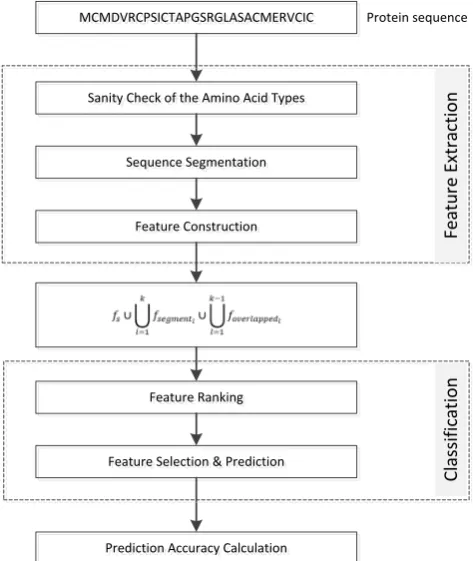
[image:7.595.177.414.418.699.2]Our proposed approach consists of main three steps. The flowchart of our approach is shown in Fig-ure 1.
Figure 1. The flowchart of the proposed approach.
MCMDVRCPSICTAPGSRGLASACMERVCIC MCMDVRCPSICTAPGSRGLASACMERVCIC
Sanity Check of the Amino Acid Types Sanity Check of the Amino Acid Types
Feature Ranking Feature Ranking
Feature Selection & Prediction Feature Selection & Prediction
Prediction Accuracy Calculation Prediction Accuracy Calculation
https://doi.org/10.4236/jbise.2018.116012 133 J. Biomedical Science and Engineering
The first step is feature extraction that has three processes:
1) Sanity check of the amino acid types is responsible for erasing amino acids if they are not in the 20 default of amino acid types.
2) Sequence segmentation is conducted for dividing a sequence into adjacent segments and over-lapped segments.
3) Feature construction is in charge of converting a original sequence, adjacent segments, and over-lapped segments into numerical features by using existing descriptor from protr package. Then a concate-nation of all those numerical features is created.
The second step is classification. This step has two processes that are commonly used in active classi-fication research. We conduct k-fold cross-validation or jackknife test, each process in this step are re-peated k times or n time, with n is a number of samples.
1) Feature ranking is responsible for sorting features by importance. The random Forest function for R [15] conducts this process.
2) Feature selection and prediction are responsible for creating feature subsets, and performing learning and predicting with ksvm function in a kernlab package for R [16].
The last step is prediction accuracy calculation. It is in charge of calculating accuracy for each feature subset.
3. EXPERIMENTS AND RESULTS
In order to show the validity of our proposed approach to improving existing alignment-free protein de-scriptor to deal with a protein sequence classification problem, we did experiments with datasets from Uni-Prot, Swiss-Uni-Prot, and Nuclea RDB. Our experiments are grouped by three protein analysis cases which are a classification of nuclear receptors, protein family classification, and cell-penetrating peptides prediction.
3.1. Classification of Nuclear Receptors
In this section, we evaluate the strength of our proposed approach on a single protein descriptor in the classification of nuclear receptors. Nuclear receptors are key transcription factors that regulate impor-tant gene networks responsible for cell growth, differentiation, and homeostasis [2]. Classification of nuc-lear receptors was done in researches [2, 17].
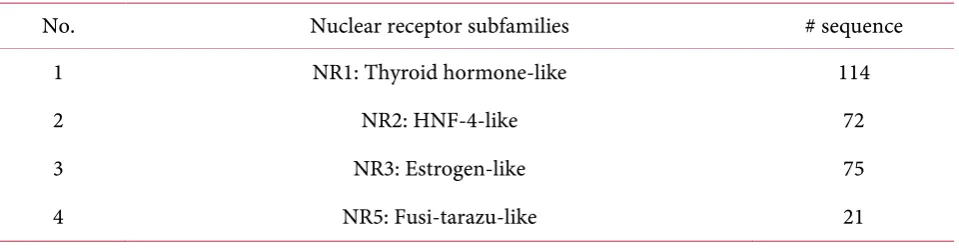
As done by Bhasin and Gajendra [2], the classification was achievedon the basis of amino acid com-position and dipeptide comcom-position from a sequence of nuclear receptors using support vector machine (SVM).They did training and testing on a non-redundant dataset of 282 proteins obtained from the Nuc-leaRDB database. The dataset had four subfamilies of nuclear receptors as shown in Table 2.
The performance of both classifiers was evaluated using 5-foldcross-validation.The accuracy of the amino acid composition-based classifier was 82%, and dipeptide composition-based classifier was 97.5%.
[image:8.595.61.541.600.726.2]In the research done by Wang et al. [17], the classification was achieved on the basis of various pro-tein descriptors from a sequence of nuclear receptors using Fuzzy K nearest neighbor (FK-NN).They
Table 2. Description of the datasetin Bhasin and Gajendra research.
No. Nuclear receptor subfamilies # sequence 1 NR1: Thyroid hormone-like 114
2 NR2: HNF-4-like 72
3 NR3: Estrogen-like 75
https://doi.org/10.4236/jbise.2018.116012 134 J. Biomedical Science and Engineering
converted a sequence into numerical features by using a combination of amino acid composition, dipep-tide composition, complexity factor and low-frequency Fourier spectrum components. The training and testing were done on 159 sequences of nuclear receptors obtained from NucleaRDB database and 500 se-quences of non-nuclear receptors obtained from UniProt database. No sequence had ≥60% sequence iden-tity with any other sequence in this dataset. Nuclear receptors data had seven subfamilies as shown in Ta-ble 3.
They create two layers predictor. The first layer was used to identify a query protein as NR or not. If it was a NR, the second layer would be continued to identify the NR among the seven subfamilies. The per-formance of all classifier was evaluated using jackknife test and independent dataset test. The overall accu-racy of first layer predictor is 92.56% by using jackknife test and 98.03% by using independent dataset test. Moreover, the overall accuracy of second layer predictor is 88.68% by using jackknife test and 99.65% by using independent dataset test.
Research [2] is a single descriptor based classifier and research [17] can be grouped as various de-scriptors based classifier. Both researches have similarities. They use the same type of descriptor which are amino acid composition and dipeptide composition.
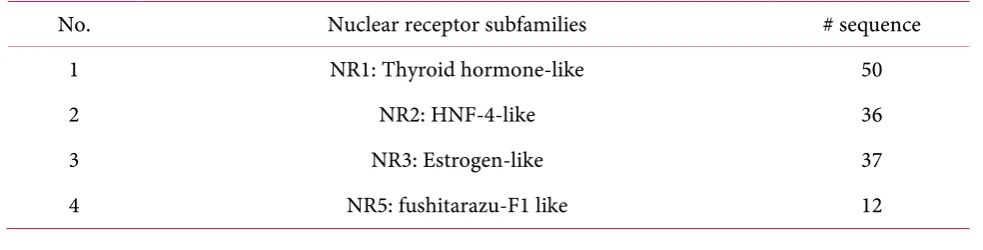
To compare the results of our proposed approach to the result of research [2], we used their method on the data those were provided by the research [17]. However, we use four subfamilies; they are the same subfamilies that were used in research [2] as shown in Table 4.
[image:9.595.57.543.368.576.2]We also used same classifier and evaluation method which are Support Vector Machine with a 5-fold cross-validation test.
Table 3. Description of the datasetin Wang et al. research.
No. Set Subfamily # sequence
1 Nuclear receptors (NR) NR1: thyroid hormone like 50
2 NR2: HNF4-like 36
3 NR3: estrogen like 37
4 NR4: nerve growth factor IB-like 7
5 NR5: fushitarazu-F1 like 12
6 NR6: germ cell nuclear factor like 5
7 NR0: knirps and DAX like 12
8 Non-nuclear receptors (Non-NR) N/A 500
Table 4. Description of the modifieddataset in our research.
No. Nuclear receptor subfamilies # sequence 1 NR1: Thyroid hormone-like 50
2 NR2: HNF-4-like 36
3 NR3: Estrogen-like 37
[image:9.595.53.545.611.736.2]https://doi.org/10.4236/jbise.2018.116012 135 J. Biomedical Science and Engineering
In this experiment, we converted a sequence into numerical features by using Equation (17). In ami-no acid composition based classifier experiment, we obtained the best prediction accuracy at z = 7. More-over, in dipeptide composition based classifier experiment, the best prediction accuracy was achieved at z = 4. The comparison of our experimental results and result from methods from research [2] is shown in
Table 5.
We also investigated important features that have contributed to the prediction accuracy. Table 6 and
Table 7 show detail of 790 important features that were obtained in AAC_7 FS experiment and 355 im-portant features that were generated in DC_4 FS experiment.
For further, we compared research [17] results with our result. In the experiment of identifying NR and non-NR, we used amino acid composition based classifier with z = 3 and dipeptide composition based classifier with z = 2. The result is shown in Table 8.
Detail important features of AAC_3 FS and DC_2 FS are shown in Table 9 and Table 10.
In the second level experiment, we identified NR subfamilies by using amino acid composition based classifier with z = 5 and dipeptide composition based classifier with z = 2. The comparison result is shown in Table 11. Moreover, the detail of important features on AAC_5 FS and DC_2 FS experiments are shown in Table 12 and Table 13.
Table 5. Prediction accuracy comparison of our approach and method in research [2].
No. Method Accuracy (%) # Features Description
1 AAC 67.99 20 AAC based classifier of Research [2]. 2 DC 93.60 400 DC based classifier of Research [2]. 3 AAC_7 86.97 980 AAC based classifier with z = 7. 4 DC_4 94.19 6400 DC based classifier with z = 4.
5 AAC_7 FS 88.06 790 AAC based classifier with z = 7 and feature selection. 6 DC_4 FS 96.19 355 DC based classifier with z = 4 and feature selection.
Table 6. Detail of important features in AAC_7 FS experiment.
Source # Important Feature # Total Features
Original sequence 14 20
k = 2 52 60
k = 3 79 100
k = 4 116 140
k = 5 141 180
k = 6 180 220
k = 7 208 260
https://doi.org/10.4236/jbise.2018.116012 136 J. Biomedical Science and Engineering
Table 7. Detail of important features inDC_4 FS experiment.
Source # Important Feature # Total Features
Original sequence 34 400
k = 2 90 1200
k = 3 124 2000
k = 4 107 2800
[image:11.595.58.539.293.436.2]Total 355 6400
Table 8. Prediction accuracy comparisonof our approach and method in research [17] for identifying NR and non-NR.
No. Method Accuracy (%) # Features Description 1 NR-2L 92.56 881 Result by Wang et al.
2 AAC_3 97.56 180 AAC based classifier with z = 3 3 DC_2 97.87 1600 DC based classifier with z = 2
4 AAC_3 FS 97.87 100 AAC based classifier with z = 3 and feature selection 5 DC_2 FS 98.48 120 DC based classifier with z = 2 and feature selection
Table 9. Detail of important features inAAC_3 FS experiment.
Source # Important Feature # Total Features
Original sequence 11 20
k = 2 36 60
k = 3 53 100
[image:11.595.54.543.473.588.2]Total 100 180
Table 10. Detail of important features inDC_2 FS experiment.
Source # Important Feature # Total Features
Original sequence 37 400
k = 2 83 1200
https://doi.org/10.4236/jbise.2018.116012 137 J. Biomedical Science and Engineering
Table 11. Prediction accuracy comparison of our approach and method in research [17] for identi-
fying NR subfamilies.
No. Method Accuracy (%) # Features Description 1 NR-2L 88.68 881 Result by Wang et al.
2 AAC_5 81.76 500 AAC based classifier with z = 5 3 DC_2 91.81 1600 DC based classifier with z = 2
[image:12.595.65.542.282.442.2]4 AAC_5 FS 83.01 355 AAC based classifier with z = 5 and feature selection 5 DC_2 FS 94.33 145 DC based classifier with z = 2 and feature selection
Table 12. Detail of important features inAAC_5 FS experiment.
Source # Important Feature # Total Features
Original sequence 13 20
k = 2 42 60
k = 3 74 100
k = 4 96 140
k = 5 130 160
Total 355 480
Table 13. Detail of important features of DC_2 FS experiment.
Source # Important Feature # Total Features
Original sequence 43 400
k = 2 102 1200
Total 145 1600
3.2. Protein Family Classification
[image:12.595.56.545.479.563.2]https://doi.org/10.4236/jbise.2018.116012 138 J. Biomedical Science and Engineering
93% ± 0.06%.
In this experiment, we used the dataset that were provided by Asgari and Mofrad [12] and performed 1000 classification cases using the first 1000 families. The classification performed in this experiment is a balanced binary classification. Samples of positive class are samples of selected family protein. Samples of negative class are randomly selected samples. In the feature extraction process, we used a combination of various protein descriptors which are Amino Acid Composition (AAC), Composition (CTDC), translation (CTDT), and distribution (CTDD) with z = 5. Moreover, we used SVM with 10-fold cross-validation test as classifier and evaluation method. We used feature selection to check whether there was a significant in-crease in accuracy of prediction. There were improvements, but it was not significant as shown in Table 14.
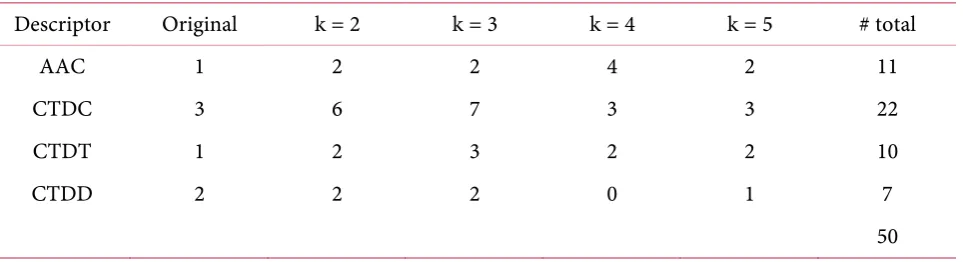
[image:13.595.59.541.295.384.2]We have investigated subset features that can obtain the best accuracy prediction from each family classification case. The result of our investigation of three families are shown in Tables 15-17. We saw a subset features were formed of the four descriptors that we used with all various k values.
Table 14. Prediction accuracy comparison of our approach and method in research [12] for classi-
fying first 1000 families.
No. Method Description Weighted Accuracy (%) 1 ProVec 1000 Asgari and Mofrad’s method for the first 1000 families 93.95
[image:13.595.54.539.419.549.2]2 Our Approach Our method 96.19 3 Our Approach FS Our method with feature selection 96.79
Table 15. Detail of important features in 50S ribosome-binding GTPase family classification. Descriptor Original k = 2 k = 3 k = 4 k = 5 # total
AAC 13 36 53 64 84 250
CTDC 13 47 87 110 129 386
CTDT 11 35 55 79 98 278
CTDD 76 165 237 295 263 1036 1950
Table 16. Detail of important features in Transmembrane receptor (rhodopsin family) family
classification.
Descriptor Original k = 2 k = 3 k = 4 k = 5 # total
AAC 3 6 7 8 8 34
CTDC 8 24 33 35 34 134
CTDT 8 12 15 9 11 55
CTDD 7 8 3 4 5 27
[image:13.595.54.542.600.743.2]https://doi.org/10.4236/jbise.2018.116012 139 J. Biomedical Science and Engineering
Table 17. Detail of important features in Ribosomal protein S14p/S29e family classification. Descriptor Original k = 2 k = 3 k = 4 k = 5 # total
AAC 1 2 2 4 2 11
CTDC 3 6 7 3 3 22
CTDT 1 2 3 2 2 10
CTDD 2 2 2 0 1 7
50
3.3. Cell-Penetrating Peptides Prediction
Cell-penetrating peptides (CPPs) are small peptides that are about 10 - 30 amino acids long. CPPs can carry various bioactive cargoes, ranging from small molecules to proteins and supramolecular particles, to directly enter cells without significantly damaging the cell membrane. It makes them potential drug deli-very agents for the translocation of cargo into cells. CPP prediction research has increased in the past few years.CPPsite2.0 is CPP-specific database that has approximately 1850 experimentally validated CPPs [19].
CPPred-RF is one method that has succeeded to solve the CPPs prediction case [19]. In this study Wei et al. used two dataset that are CPP924 and CPPsite 3. The detail information of those dataset are shown in Table 18. In feature extraction process, they used a combination of several descriptors, i.e. pa-rallel correlation pseudo-amino-acid composition (PC-PseAAC), series correlation pseudo-amino acid composition (SC-PseAAC), adaptive skip dipeptide composition (ASDC) and physicochemical properties (PPs).The result is numerical representation with 636 features. Then features selection is applied by using Max-Relevance-Max-Distance (MRMD) as feature ranking method and Sequential Feature Selection (SFS) as optimal features selector. Moreover, they used random forest as the classifier with jackknife test at the prediction and evaluation stage. The result is 91.6% Accuracy for CPP924 dataset and 71.1% accuracy for CPPsite3.
In this experiment, we implemented our approach on single descriptor and combination of various descriptors based classifier. We used amino acid composition, dipeptide composition and composi-tion/distribution/translation (CTD) descriptor on feature extraction process. In the classification and evaluation process, we used SVM as a classifier with 10-fold cross-validation test. The results are shown in the tables (Table 19 and Table 20).
The best performance was obtained by using ACC based classifier with original input sequence. Im-plementation of our approach with z = 2 and z = 3 cannot produce better performance instead of decreas-ing accuracy. In the experiment a combination of various descriptors based classifier with those descrip-tors and feature selection, we obtained 76.08% accuracy and 20 important features.
4. DISCUSSIONS AND CONCLUSIONS
We have proven that our proposed approach is simple in implementation and powerful on solving protein sequence classification problems. Our approach was tested on three cases which are classification of nuclear receptors, protein family classification, and cell-penetrating peptides prediction. We compared the performance of our approach with the performance from other methods that have been used in those cases.
https://doi.org/10.4236/jbise.2018.116012 140 J. Biomedical Science and Engineering
Table 18. Dataset Description of the dataset inresearch [19].
No. Dataset # positive # negative # amino acid
1 CPP924 462 462 10 - 61
2 CPPsite 3 187 187 5 - 61
Table 19. The predictive result of the proposed approach on CPP924 dataset.
No. Descriptor Source Accuracy
1 Amino Acid Composition
Original 90.69 z = 2 89.82 z = 3 90.04
2 CTD-Composition
Original 89.39 z = 2 88.31 z = 3 88.74
3 CTD-Translation
Original 85.06
z = 2 83.87
z = 3 83.87
4 CTD-Distribution
Original 77.48
z = 2 76.73
z = 3 78.89
5 Dipeptide Composition
Original 87.66
z = 2 87.55
z = 3 84.30
various descriptors based classifier.
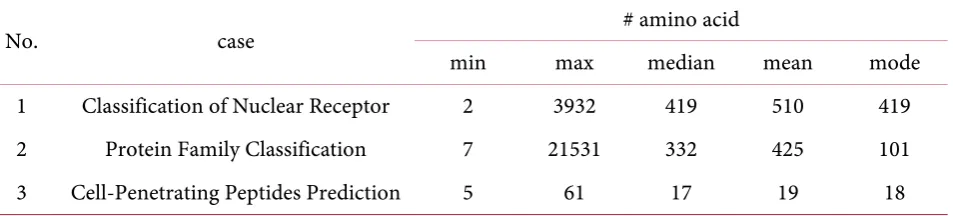
In contrast, our approach did not work well in Cell-Penetrating Peptides Prediction. Performance of our approach was not significantly improved, or it was lower than the result of the classifier with original sequence only. It occurred because sequences have a small number of amino acids. Table 21 shows the comparison of amino acids numbers from each case.
[image:15.595.68.538.203.605.2]https://doi.org/10.4236/jbise.2018.116012 141 J. Biomedical Science and Engineering
Table 20. The predictive result of the proposed approach on CPPsite 3dataset.
No. Descriptor Source Accuracy
1 Amino Acid Composition
Original 64.97 z = 2 59.62 z = 3 58.28
2 CTD-Composition
Original 63.36 z = 2 58.02 z = 3 58.82
3 CTD-Translation
Original 61.76 z = 2 54.54 z = 3 59.43
4 CTD-Distribution
Original 57.48 z = 2 64.17 z = 3 63.63
5 Dipeptide Composition
Original 62.03 z = 2 60.96 z = 3 64.20
Table 21. Statistic comparison of amino acid numbers in sequences.
No. case # amino acid
min max median mean mode 1 Classification of Nuclear Receptor 2 3932 419 510 419 2 Protein Family Classification 7 21531 332 425 101 3 Cell-Penetrating Peptides Prediction 5 61 17 19 18
minimum number of amino acid in sequence to make our approach can work properly.
ACKNOWLEDGEMENTS
In this research, the super-computing resource was provided by Human Genome Center, the Institute of Medical Science, the University of Tokyo. Additional computation time was provided by the super computer system in Research Organization of Information and Systems (ROIS), National Institute of Ge-netics (NIG). This work was supported by JSPS KAKENHI Grant Number 26330328.
REFERENCES
[image:16.595.64.541.462.570.2]Generat-https://doi.org/10.4236/jbise.2018.116012 142 J. Biomedical Science and Engineering
ing Various Numerical Representation Schemes of Protein Sequences. Bioinformatics, 31, 1857-1859. https://doi.org/10.1093/bioinformatics/btv042
2. Bhasin, M. and Raghava, G.P.S. (2004) Classification of Nuclear Receptors Based on Amino Acid Composition and Dipeptide Composition. The Journal of Biological Chemistry, 279, 23262-23266.
https://doi.org/10.1074/jbc.M401932200
3. Feng, Z.-P. and Zhang, C.-T. (2000) Prediction of Membrane Protein Types Based on the Hydrophobic Index of Amino Acids. Journal of Protein Chemistry, 19, 269-275.https://doi.org/10.1023/A:1007091128394
4. Dubchak, I., Muchnik, I., Holbrook, S.R. and Kim, S.H. (1995) Prediction of Protein Folding Class Using Global Description of Amino Acid Sequence. Proceedings of the National Academy of Sciences of the USA, 92, 8700-8704.https://doi.org/10.1073/pnas.92.19.8700
5. Shen, J., Zhang, J., Luo, X., Zhu, W., Yu, K., Chen, K., Li, Y. and Jiang, H. (2007) Predicting Protein-Protein Interactions Based Only on Sequences Information. Proceedings of the National Academy of Sciences of the USA, 104, 4337-4341.https://doi.org/10.1073/pnas.0607879104
6. Chou, K.-C. (2000) Prediction of Protein Subcellular Locations by Incorporating Quasi-Sequence-Order Effect.
Biochemical and Biophysical Research Communications, 278, 477-483.https://doi.org/10.1006/bbrc.2000.3815
7. Chou, K.-C. (2001) Prediction of Protein Cellular Attributes Using Pseudo-Amino Acid Composition. Proteins:
Structure, Function, and Bioinformatics, 44, 60.https://doi.org/10.1002/prot.1072
8. Chou, K.-C. (2005) Using Amphiphilic Pseudo Amino Acid Composition to Predict Enzyme Subfamily Classes.
Bioinformatics, 21, 10-19.https://doi.org/10.1093/bioinformatics/bth466
9. Phan, D., Nguyen, N.G., Lumbanraja, F.R., Faisal, M.R., Abapihi, B., Purnama, B., Delimayanti, M.K., Kubo, M., and Satou, K. (2017) Combined Use of k-Mer Numerical Features and Position-Specific Categorical Features in Fixed-Length DNA Sequence Classification. Journal of Biomedical Science and Engineering, 10, 390-401. https://doi.org/10.4236/jbise.2017.108030
10. Xiao, N., Cao, D.-S., Zhu, M.-F. and Xu, Q.-S. (2017) protr: R Package for Generating Various Numerical Re-presentation Schemes of Protein Sequences. https://cran.r-project.org/web/packages/protr/vignettes/protr.html 11. Rangwala, H. and Karypis, G. (2005) Profile-Based Direct Kernels for Remote Homology Detection and Fold
Recognition. Bioinformatics, 21, 4239-4247.https://doi.org/10.1093/bioinformatics/bti687
12. Asgari, E. and Mofrad, M.R.K. (2015) Continuous Distributed Representation of Biological Sequences for Deep Proteomics and Genomics. PLoS One, 10, 1-11.https://doi.org/10.1371/journal.pone.0141287
13. Ong, S.A.K., Lin, H.H., Chen, Y.Z., Li, Z.R. and Cao, Z. (2007) Efficacy of Different Protein Descriptors in Pre-dicting Protein Functional Families. BMC Bioinformatics, 8, 300.https://doi.org/10.1186/1471-2105-8-300
14. Liu, B., Wang, X., Zou, Q., Dong, Q. and Chen, Q. (2013) Protein Remote Homology Detection by Combining Chou’s Pseudo Amino Acid Composition and Profile-Based Protein Representation. Molecular Informatics, 32, 775-782.https://doi.org/10.1002/minf.201300084
15. Liaw, A. and Wiener, M. (2002) Classification and Regression by randomForest. R News, 2, 18-22.
16. Karatzoglou, A., Smola, A., Hornik, K. and Zeileis, A. (2004) kernlab-An {S4} Package for Kernel Methods in {R}. Journal of Statistical Software, 11, 1-20.https://doi.org/10.18637/jss.v011.i09
17. Wang, P., Xiao, X. and Chou, K.-C. (2011) NR-2L: A Two-Level Predictor for Identifying Nuclear Receptor Subfamilies Based on Sequence-Derived Features. PLoS One, 6, e23505.
https://doi.org/10.1371/journal.pone.0023505
https://doi.org/10.4236/jbise.2018.116012 143 J. Biomedical Science and Engineering
3692-3697.https://doi.org/10.1093/nar/gkg600
![Table 8. Prediction accuracy comparisonof our approach and method in research [17] for identifying NR and non-NR](https://thumb-us.123doks.com/thumbv2/123dok_us/9283121.422124/11.595.58.539.293.436/table-prediction-accuracy-comparisonof-approach-method-research-identifying.webp)
![Table 11. Prediction accuracy comparison of our approach and method in research [17] for identi- fying NR subfamilies](https://thumb-us.123doks.com/thumbv2/123dok_us/9283121.422124/12.595.56.545.479.563/table-prediction-accuracy-comparison-approach-method-research-subfamilies.webp)