PB | 01
Annual Review 2013–2014
Trinity College Dublin
2013–
2014
DR PATRICK PRENDERGAST
PROVOST & PRESIDENT
Contents
01 01.0 Introduction from the Provost 02
02 02.0 Trinity at a Glance 06
03 03.0 Sculptures and Gardens: Enhancing the Campus 14
04 04.0 Research Case Studies 16
04.1 Evangelia Rigaki 18
04.2 Shane O’Mara 20
04.3 Seán Duffy 22
04.4 Sarah Doyle 24
04.5 Jane Stout 26
04.6 Michael Rowan 28
04.7 David Dickson 30
04.8 John Boland 32
04.9 Biswajit Basu 34
04.10 Mary McCarron 36
04.11 Thorri Gunnlaugsson 38
04.12 Laure Marignol 40
05 05.0 Innovation 42
06 06.0 Public Engagement 46
07 07.0 The Student Experience 50
08 08.0 A Trinity Education 54
09 09.0 Interviews with new Professors and
the new Librarian and College Archivist 58
09.1 Christopher Morash 60
09.2 Siobhán Garrigan 62
09.3 Trevor Spratt 64
09.4 Yvonne Buckley 66
09.5 Helen Shenton 68
10 10.0 Trinity Growing Globally 70
11 11.0 Benefactions – Making a Difference 74
12 12.0 Trinity’s Visitors and Visitor Experience 78
13 13.0 Trinity Global Graduate Forum 82
14 14.0 Sport at Trinity – Raising our Game 86
Trinity College Dublin – The University of Dublin Annual Review 2013–2014
Introduction
from the Provost
01
The academic year got off to an excellent start with two initiatives in November 2013: the Trinity Global Graduate Forum and the launch of the Innovation and Entrepreneurship Strategy.
The Trinity Global Graduate Forum, or TGGF, was about reconnecting with some of our high-achieving alumni and availing of their expert advice and support. In this Review, we talk to Kingsley Aikins, the graduate who helped make TGGF happen. TGGF was a huge success, which we hope to repeat. We are constantly moved and impressed by the willingness of alumni to support the university in different ways. This year again saw generous benefaction – alumnus, Eric Kinsella, of Jones Engineering Group, funded a 24-hr study space in the library, as well as endowing six engineering scholarships. The Innovation and Entrepreneurship Strategy, the first ‘leg’ of our Strategic Plan, announced the expansion of the Trinity School of Business, to be housed in a new purpose-built €70 million building. As part of the initial implementation phase of the Strategy, we opened in March our new Office of Corporate Partnership and Knowledge Exchange to serve as a direct pipeline for our industry partners, allowing us to support even more start-ups than previously.
The Innovation and Entrepreneurship Strategy builds on existing strengths; this year again saw impressive examples of staff and student innovation. We give some of the highlights in this Review. I’m particularly taken with ‘Robbie the Robot’, designed by a team in the School of Engineering to assist Cork schoolgirl, Joanne O’Riordan, who was born without limbs due to the rare condition, Total Amelia. Robbie can move around, bend over to pick things up, blink, smile, and frown.
I’m also excited about a completely new material, MRG, discovered by researchers in our material science cen-tre, AMBER. MRG is an alloy of manganese, ruthenium and gallium and it works like a strange new magnet with potential to revolutionise IT, computer processes, and data storage.
Two of our campus companies had great success in fundraising this year: Adama Innovations Ltd, an early stage nanotechnology company, secured €750,000 in seed-funding, and Swrve, a data analytics company for mobile app consumers, raised US$10 million in second-round funding from Silicon valley investors.
≥
I’m amazed by all that’s
Among the contributors and representatives of areas included in this Provost’s Review, are, standing (L–R) Prof Vinny Cahill, Dean of Research; Orlagh Ennis, Provost’s Office; Adrian Neilan, Commercial Director; Catherine Giltrap, Curator of the College Art Collections; Prof Kevin O’Kelly, Dean of Students; Dr Gillian Martin, Senior Lecturer/Dean of Undergraduate Studies; Prof Timothy Savage, Associate Dean for Online Education; Prof John Parnell, Department of Botany; Jonathan Fitzpatrick, Operations Manager, Sports Centre; Ian Mathews, Chief Financial Officer; Sally-Anne Fisher, Communications Officer; Seated (L-R) Prof Juliette Hussey, Vice-President for Global Relations; Prof Linda Hogan, Vice-Provost/Chief Academic Officer; Dr Patrick Prendergast, Provost; and Prof Shane Allwright, Registrar.
LEFT – Recipients of the Provost’s Teaching Awards 2014, Dr Louise Gallagher, School of Nursing and Midwifery, Dr Niamh Connolly, School of Law, and Dr David Prendergast, School of Law, who received the Early Career Award. Our students have been as active as ever and our
programme, LaunchBox, in its second year now, is helping unleash their entrepreneurship. Funded by a group of ‘Trinity Angels’ – more of our wonderful, committed alumni – LaunchBox provides students with space, facilities, mentoring, and seed funding to explore their business ideas. One of last year’s projects, the social enterprise FoodCloud, has had a hugely successful year culminating in the founder, Iseult Ward, being named a ‘next generation leader’ by Time magazine. She has really raised the bar for what undergraduate innovators are capable of, and some of this year’s LaunchBox projects show equal promise.
Our staff continue to drive our education and research programmes and to be recognised globally for their achievements. Here, as in last year’s Review, we bring you interviews with our new professors, and we highlight great examples of Trinity’s multidisciplinary research, from beating prostate cancer to writing operas inspired by the economic crisis, from reassessing Brian Boru to designing energy-efficient buildings – and much more. Trinity remains committed to engaging the public through lectures, events, and exhibitions in the Long Room and the Science Gallery. Highlights this year included a World War I Roadshow and Discover Research Dublin, with over fifty interactive events and demonstrations showcasing what researchers really do and why research matters – the demos included 3D visualisations of the brain and experimental per-formances reacting to Allen Ginsberg’s Howl.
Public engagement also extended beyond the campus with ‘DARTofPhysics’ in autumn 2013. Designed by Trinity’s Schools of Education and Physics together with our nanotechnology centre, CRANN, this campaign treated commuters on the DART to thought-provoking images and statements about physics. The 2013/2014 academic year finished with four headline-grabbing initiatives in autumn: the feasibility study in admissions, Trinity’s first MOOC, the Irish Universities Association’s symposium on the sustainability of Irish higher education, and the launch of Trinity’s new Strategic Plan 2014–2019. All four caused a stir and delivered on Trinity’s commitment to be a leader, nationally and internationally, in education and research. The feasibility study saw 22 students admitted to three courses in September 2014, using an alternate admissions system which takes into account motivation and comparative performance. Numbers are small but we’ll be monitoring this study with great interest to see if it’s feasible to move away from sole reliance on the Leaving Cert ‘points race’. The study drew significant media coverage, with some criticisms but great support overall.
With ‘Irish Lives in War and Revolution: Exploring Ireland’s History 1912–1923’, Trinity offered its first MOOC. Within a few days of this course opening for registration in August 2014, ten thousand people had signed up, over half from outside Ireland. This indicates the huge appetite globally for Trinity’s research and teaching.
Like the alternate admissions system, the MOOC is about opening out the Trinity Education to those who would not previously have been able to access it. “Encompassing an evermore diverse student community” is one of three central missions, unveiled in our Strategic Plan which we launched in October 2014.
The new Plan lays out our priorities for the next five years, to 2019. The nine goals and thirty-six actions cross all our commitments – in public and community engagement, innovation and entrepreneurship, creative arts and education, interdisciplinary research, and national and international partnerships. It’s a plan designed to capitalise on global oppor-tunities in education and research, and to strengthen Trinity for future generations.
The Plan is ambitious, and will require at least €600 million in investment. We unveiled it at a time of uncertainty, even crisis, over funding for higher education in Ireland. The publication of the annual global higher education rankings in September brought the unwelcome though not unexpected news that most Irish universities have slipped down in the rankings for the fifth consecutive year. This is because we cannot compete on funding with high-ranking and emerging universities.
I’m chairman this year of the Irish Universities Association so I took the opportunity to convene a symposium to look at issues of performance and financing in Irish higher education. The symposium, and the reaction to it, showed that while there may be disagreements, nationally, about how to best fund our universities, there is consensus that we need to bring sustainability into the system. We know that growth, competitiveness and societal progress depend on our main-taining an excellent higher education system.
Let me conclude by thanking all staff and students most sincerely for making the year such a success. As ever, I’m amazed by all that’s been achieved in 12 short months and delighted at the momentum that propels us into the new academic year and an exciting future.
Dr Patrick Prendergast
Provost & President
01
Introduction from the Provost
06 | 07
Trinity College Dublin – The University of Dublin Annual Review 2013–2014
Trinity at
a Glance
02
Trinity is Ireland’s
No. 1 University
ARTS, HUMANITIES AND SOCIAL SCIENCES ENGINEERING, MATHEMATICS AND SCIENCE
HEALTH SCIENCES
12,420
|
12,174
01. UNDERGRADUATES
777
|
785
06. ACADEMIC
4,309
|
4,472
01. POSTGRADUATES
180
|
189
01. TECHNICAL
1,715
|
1,775
02. PART-TIME
134
|
143
05. LIBRARY
42%
|
42%
03. MALE
321
|
346
03. SUPPORT
15,014
|
14,871
02. FULL-TIME
850
|
819
02. ADMINISTRATIVE
58%
|
58%
03. FEMALE
606
|
655
04. RESEARCH
16,729
16,646
STUDENTS REGISTERED IN 2013/14
2,868
2,937
STAFF MEMBERS IN 2013/14
ALUMNI
103,518
|
100,277
CLUBS AND SOCIETIES ACADEMIC STAFF FACULTIES
REPUBLIC OF IRELAND 76,720 | 74,170
GREAT BRITAIN 9,754 | 9,616
NORTHERN IRELAND 4,662 | 4,621
USA 3,670 | 3,557
CANADA 1,195 | 1,162
REST OF WORLD 7,517 | 7,151
49
|
49
SPORTS CLUBS
118
|
112
STUDENT SOCIETIES
61%
|
60%
IRISH
39%
|
40%
INTERNATIONAL 01
02
03
04 06
05 02
02
03 03
01 01
— The college historical society (the hist) is the oldest student society in the world, founded in 1770
Trinity at a Glance
02.01 Student / Staff Statistics
02
Student Statistics
2014
| 2013
Staff Statistics
2014
| 2013
THE LARGEST SOCIETIES ARE:
THE VINCENT DE PAUL SOCIETY
THE PHILOSOPHICAL SOCIETY (THE PHIL)
DU PLAYERS
10 | 11
Trinity College Dublin – The University of Dublin Annual Review 2013–2014
Trinity at a Glance
02.02 International Students
PORTUGAL13 SPAIN69 CANADA164 USA648 MEXICO10 CUBA01 PALESTINE01 ISRAEL02 EGYPT04 ALGERIA01 NIGER01
SOUTHAFRICA15 LESOTHO01 FRANCE238 LUXEMBOURG14 MALAYSIA108 VIETNAM01 CHILE01 COLOMBIA02 ECUADOR01 PERU01 IRELAND13,434
BOSNIAANDHERZEGOVINA02 CROATIA02 REPUBLICOFKOSOVO01 SANMARINO01
SERBIA02 CZECHREPUBLIC08 ICELAND02
GREATBRITAIN572 BELGIUM71 THENETHERLANDS40
NORWAY09 DENMARK10
UKRAINE02 SWEDEN35 ESTONIA01
RUSSIANFEDERATION41 KAZAKHSTAN12 SYRIANARABREPUBLIC01
AZERBAIJAN01 ARMENIA01 IRAN, ISLAMICREPUBLICOF14
BAHRAIN03 OMAN05 UNITED ARABEMIRATES05
SAUDIARABIA28 KUWAIT08 JORDAN03 GERMANY211 AUSTRALIA31 INDONESIA02 PHILIPPINES10 TAIWANREPUBLICOFCHINA01 BRUNEIDARUSSALAM01 INDIA91
PAKISTAN16
BANGLADESH05
NEPAL03 CHINA122
HONGKONG04 SRILANKA04
TRINIDADANDTOBAGO07 BARBADOS01 PUERTORICO01 BAHAMAS01
BRAZIL70 PARAGUAY01 CAYMANISLANDS01
BERMUDA02 ARGENTINA02 AUSTRIA24 POLAND41 FINLAND15 HUNGARY05 SLOVAKIA02 BULGARIA04 ROMANIA10 CYPRUS08 SWITZERLAND22 ITALY91 GIBRALTER01 GREECE19 SLOVENIA03 MALTA05
LIBYANARABJAMAHIRIYA05 NIGERIA23 MALAWI05 SINGAPORE131 IRAQ07 BOTSWANA01 CAMEROON01 GHANA03 LEBANON02
NEWZEALAND06 JAPAN22
REPOFKOREA13
MOZAMBIQUE01 KENYA05 ETHIOPIA02 MAURITIUS09 ZAMBIA03 ZIMBABWE03 UGANDA05 TANZANIA01 BURUNDI01 SUDAN06 LITHUANIA09 MOLDOVA04 BELARUS02 LATVIA03 TURKEY08 ALBANIA01 RWANDA01 PORTUGAL13 SPAIN69 CANADA164 USA648 MEXICO10 CUBA01 PALESTINE01 ISRAEL02 EGYPT04 ALGERIA01 NIGER01
SOUTHAFRICA15 LESOTHO01 FRANCE238 LUXEMBOURG14 MALAYSIA108 VIETNAM01 CHILE01 COLOMBIA02 ECUADOR01 PERU01 IRELAND13,434
BOSNIAANDHERZEGOVINA02 CROATIA02 REPUBLICOFKOSOVO01 SANMARINO01
SERBIA02 CZECHREPUBLIC08 ICELAND02
GREATBRITAIN572 BELGIUM71 THENETHERLANDS40
NORWAY09 DENMARK10
UKRAINE02 SWEDEN35 ESTONIA01
RUSSIANFEDERATION41 KAZAKHSTAN12 SYRIANARABREPUBLIC01
AZERBAIJAN01 ARMENIA01 IRAN, ISLAMICREPUBLICOF14
BAHRAIN03 OMAN05 UNITED ARABEMIRATES05
SAUDIARABIA28 KUWAIT08 JORDAN03 GERMANY211 AUSTRALIA31 INDONESIA02 PHILIPPINES10 TAIWANREPUBLICOFCHINA01 BRUNEIDARUSSALAM01 INDIA91
PAKISTAN16
BANGLADESH05
NEPAL03 CHINA122
HONGKONG04 SRILANKA04
TRINIDADANDTOBAGO07 BARBADOS01 PUERTORICO01 BAHAMAS01
BRAZIL70 PARAGUAY01 CAYMANISLANDS01
BERMUDA02 ARGENTINA02 AUSTRIA24 POLAND41 FINLAND15 HUNGARY05 SLOVAKIA02 BULGARIA04 ROMANIA10 CYPRUS08 SWITZERLAND22 ITALY91 GIBRALTER01 GREECE19 SLOVENIA03 MALTA05
LIBYANARABJAMAHIRIYA05 NIGERIA23 MALAWI05 SINGAPORE131 IRAQ07 BOTSWANA01 CAMEROON01 GHANA03 LEBANON02
NEWZEALAND06 JAPAN22
REPOFKOREA13
MOZAMBIQUE01 KENYA05 ETHIOPIA02 MAURITIUS09 ZAMBIA03 ZIMBABWE03 UGANDA05 TANZANIA01 BURUNDI01 SUDAN06 LITHUANIA09 MOLDOVA04 BELARUS02 LATVIA03 TURKEY08 ALBANIA01 RWANDA01
International Students
2014
|
2013
97
|
109
AFRICA
14,954
|
15,062
EUROPE
615
|
567
ASIA
112
|
106
EUROPE NON EU
37
|
33
AUSTRALASIA
836
|
718
NORTH/CENTRAL AMERICA
ALGERIA 1| 1 BOTSWANA 1| 5
BURUNDI 1
CAMEROON 1| 1 EGYPT 4| 3 ETHIOPIA 2| 3
GHANA 3
KENYA 5| 4 LESOTHO 1| 1 LIBYAN ARAB JAMAHIRIYA 5| 6 MALAWI 5| 4 MAURITIUS 9| 7
MOROCCO 2
MOZAMBIQUE 1| 1 NIGER 1| 1 NIGERIA 23| 33 RWANDA 1| 1 SOUTH AFRICA 15| 18 SUDAN 6| 6 TANZANIA 1| 1 UGANDA 5| 3 ZAMBIA 3| 3 ZIMBABWE 3| 5
TOTAL 97| 109
ARMENIA 1| 1 AZERBAIJAN 1| 2 BAHRAIN 3| 2 BANGLADESH 5| 7 BRUNEI DARUSSALAM 1| 1 CHINA 122| 99 HONG KONG 4| 1 INDIA 91| 90 INDONESIA 2| 1 IRAN ISLAMIC REPUBLIC OF 14| 12
IRAQ 7| 7
ISRAEL 2| 1 JAPAN 22| 16 JORDAN 3| 6 KUWAIT 8| 8 LEBANON 2| 1
MACAO 2
MALAYSIA 108| 107
NEPAL 3
OMAN 5| 3
PAKISTAN 16| 17
PALESTINE 1
PHILIPPINES 10| 10
QATAR 1
REP OF KOREA 13| 14 SAUDI ARABIA 28| 24 SINGAPORE 131| 120 SRI LANKA 4| 2 SYRIAN ARAB REPUBLIC 1| 1 TAIWAN REPUBLIC OF CHINA 1 | 1
THAILAND 1
UNITED ARAB EMIRATES 5| 6 VIETNAM 1| 3
TOTAL 615| 567
AUSTRALIA 31| 26 NEW ZEALAND 6| 7
TOTAL 37| 33
78
|
19
SOUTH AMERICA
AUSTRIA 24| 20 BELGIUM 71| 61 BULGARIA 4| 3 CYPRUS 8| 8 CZECH REPUBLIC 8| 7 DENMARK 10| 11
ESTONIA 1
FINLAND 15| 18 FRANCE 238| 205 GERMANY 211| 190 GREAT BRITAIN 572| 637 GREECE 19| 22 HUNGARY 5| 5 IRELAND 13,434| 13,600
ITALY 91| 74 LATVIA 3| 3 LITHUANIA 9| 11 LUXEMBOURG 14| 12 MALTA 5| 4 POLAND 41| 40 PORTUGAL 13| 10 ROMANIA 10| 11 SLOVAKIA 2| 6 SLOVENIA 3| 1 SPAIN 69| 70 SWEDEN 35| 28 THE NETHERLANDS 40| 35
TOTAL 14,954| 15,062
ALBANIA 1| 2 BELARUS 2| 1 BOSNIA & HERZEGOVINA 2| 1 CANARY ISLANDS 2
CROATIA 2
GIBRALTAR 1| 1 ICELAND 2| 1 KAZAKHSTAN 12| 16 MOLDOVA 4| 3 NORWAY 9| 14 REPUBLIC OF KOSOVO 1
RUSSIAN FEDERATION 41| 36 SAN MARINO 1
SERBIA 2| 1 SWITZERLAND 22| 19 TURKEY 8| 8 UKRAINE 2| 1
TOTAL 112| 106
BAHAMAS 1| 1 BARBADOS 1| 1 BERMUDA 2| 1 CANADA 164| 158 CAYMAN ISLANDS 1| 1
CUBA 1
HAITI 1
MEXICO 10| 10 PUERTO RICO 1
TRINIDAD & TOBAGO 7| 5 USA 648| 540
TOTAL 836| 718
ARGENTINA 2
BRAZIL 70| 12 CHILE 1| 4 COLOMBIA 2| 2
ECUADOR 1
PARAGUAY 1
PERU 1| 1
TOTAL 78| 19
�
A look at the diverse
group of international
students here at Trinity,
and where they come from.
Commercialisation of Research
2014
|
2013
—AGEING
—CANCER
—CREATIVE ARTS PRACTICE
—CREATIVE TECHNOLOGIES
—GENES AND SOCIETY
—DIGITAL HUMANITIES
—IDENTITIES IN TRANSFORMATION
—IMMUNOLOGY, INFLAMMATION & INFECTION
—INCLUSIVE SOCIETY
—INTELLIGENT CONTENT & COMMUNICATIONS
—INTERNATIONAL DEVELOPMENT
—INTERNATIONAL INTEGRATION
—MAKING IRELAND
—MATHEMATICS OF COMPLEXITY
—MANUSCRIPTS, BOOK & PRINT CULTURES
—NANOSCIENCE
—NEUROSCIENCE
—NEXT GENERATION MEDICAL DEVICES
—SMART & SUSTAINABLE CITIES
—SUSTAINABLE ENVIRONMENT
—TELECOMMUNICATIONS
—TRINITY BIOMEDICAL SCIENCES INSTITUTE
—CENTRE FOR RESEARCH ON ADAPTIVE NANOSTRUCTURES AND NANODEVICES (CRANN)
—INSTITUTE FOR INTERNATIONAL INTEGRATION STUDIES (IIIS)
—TRINITY COLLEGE INSTITUTE OF NEUROSCIENCE (TCIN)
—TRINITY LONG ROOM HUB, ARTS AND HUMANITIES RESEARCH INSTITUTE TRINITY’S RESEARCH THEMES
LEADING FLAGSHIP RESEARCH INSTITUTES
6,000,000
PRINTED ITEMS
500,000
MAPS
LIBRARY COLLECTION HAS
Library
350,000
ELECTRONIC BOOKS
80,000
ELECTRONIC JOURNALS
01
BOOK
OF KELLS
05
308
DISCLOSURES OF NOVEL INVENTIONS RECEIVED81
LICENCES TO INDUSTRY GRANTED37
TRINITY CAMPUS COMPANIES APPROVED250
+
JOBS CREATED FROM SPINOUTS
400
+
INDUSTRY PARTNERS
58
|
46
DISCLOSURES OF NOVEL INTELLECTUAL PROPERTY RECEIVED
28
|
09
COMMERCIALISATION LICENCES WERE ISSUED
04
|
05
TRINITY CAMPUS COMPANIES
23
NEW PATENT APPLICATIONS FILED|
15
51
COLLABORATIVE RESEARCH AGREEMENTS WERE CONCLUDED
€25k
CONTRIBUTED BY INDUSTRY PARTNERS TO EACH COLLABORATIVE RESEARCH AGREEMENT
01
02 03
04 05
06
01. STATE GRANT €55.2m| €64.7m 02. STUDENT FEES €116.2m| €107.6m 03. RESEARCH INCOME €65m| €65.2m 04. FUNDED POSTS AND DONATIONS €3.7m| €3.1m 05. RESEARCH GRANTS &
PROJECTS CONTRIBUTION €14.1m| €15m 06. OTHER INCOME €13.7m | €10.3m
TOTAL NET ASSETS
OF THE COLLEGE €677.9m | €696.5m
INCOME
€267.9m
TOTAL INCOME FOR YEAR ENDED 2013€265.9m
TOTAL INCOME FOR YEAR ENDED 2012
IN THE YEAR ENDED SEPTEMBER 2014
€267.9m
Trinity at a Glance02.03 Library / Commercialisation of Research
02
IN THE PERIOD 2009–2014 TRINITY HAS
14 | 15
Trinity College Dublin – The University of Dublin Annual Review 2013–2014
At the edge of the rugby pitch, by the path leading towards the Science Gallery and Westland Row, visitors to the College may admire a new stainless steel sculpture: four spheres of ascending size reach to the sky. This is ‘Apples and Atoms’ by Eilís O’Connell RHA and it commemorates Trinity’s Nobel Laureate, Ernest Walton.
In 1932, at the Cavendish laboratory in Cambridge, Trinity graduate Ernest Walton and fellow physicist John Cockroft split the nucleus of a Li (lithium) atom, often called ‘splitting the atom’. Nineteen years later they were recognised with the Nobel Prize in Physics. Cockroft went on to found the Atomic Energy Research Establishment at Harwell in Oxfordshire; Walton returned to Trinity where he helped build up the Department of Physics into the world-class School it is today.
In 2012, eighty years after the ‘splitting of the atom’, Trinity determined to recognise Walton’s remarkable achieve-ment by commissioning the first ever site-specific sculpture
commemorating a Trinity scientist. A public competition was launched, and Eilís O’Connell’s winning entry was formally opened by the Provost on 15th November 2013.
Eilís O’Connell explained the thinking behind her design: “Spheres as a formal sculptural element appealed to me because they were used to create spark gaps for the particle accelerator with which Walton and Cockcroft ‘split the atom’. Reflected in the stack of spheres are specially planted native Irish apple trees that refer to the private man and his keen interest for growing fruit trees.”
Around the corner from ‘Apples and Atoms’ is this year’s other main campus enhancement project: the new garden by the Botany Department. This was formally opened on 6th September 2014 by Her Royal Highness Princess Maha Chakri Sirindhorn of Thailand.
The Princess was visiting Dublin specifically to view the ‘Flora of Thailand’ collection in Trinity’s Botany Department.
‘Flora of Thailand’ is an international project, launched in 1963 to celebrate that country’s extraordinary biodiversity. Thailand, which is only slightly larger than France, enjoys between 10 and 12 thousand native plant species – almost as many as the whole continent of Europe. ‘Flora of Thailand’ aims to produce a complete account of all the native vascular plants. In 1985, Trinity joined the project and has since made major contributions with the discovery and publication of many species new to science.
One of the new shrubs, discovered by Trinity, has been named Buxus sirindhorniana, in honour of the Princess, who has a life-long interest in biodiversity, and is a long-term advocate of sustainable development.
On opening the garden in the newly developed square, the Princess planted a Thai Rhododendron as a reminder of the botanic link between Trinity College Dublin and the glorious biodiversity of Thailand.
03
Sculptures
and Gardens —
Enhancing
the Campus
ABOVE – The new Botany Garden TOP – Eilís O’Connell RHA with her sculpture ‘Apples and
Research
Case Studies
04
01
Evangelia Rigaki
02
Shane O’Mara
03
Seán Duffy
04 Sarah Doyle
05 Jane Stout
06 Michael Rowan
07
David Dickson
08 John Boland
09 Biswajit Basu
10 Mary McCarron
11 Thorri Gunnlaugsson
12 Laure Marignol
BACK (L–R) – Prof Shane O’Mara, Prof Seán Duffy, Prof Thorri Gunnlaugsson, Dr Sarah Doyle, Prof John Boland, Prof David Dickson.
18 | 19
Trinity College Dublin – The University of Dublin Annual Review 2013–2014
AntiMidas
, or,
Bankers in Hades
Evangelia Rigaki
Opera and music theatre are flexible and dynamic art forms. They enable the use of voice, music, text, space and collaboration with artists from different disciplines. Increasingly the international contemporary opera scene is focusing on social issues of relevance to people’s lives and finding innovative ways of exploring such issues through sound and music.
Playing with audience expectations
As a composer, researcher, and teacher of composition and contemporary opera, my work references the latest international developments and productions. I experi-ment with instruexperi-mental techniques and compositional approaches by, for instance, adding to traditional ways of playing an instrument and writing for the voice. I like to take an unconventional theatrical approach to the performance in order to play with the audience’s expectations.
Theatricality informs the core of my compositional vocabulary. My vocal writing is predominantly concerned with the rhetoric of composition, and surprise, humour and innovating the musicians’ roles are fundamental to my approach. For every new piece I write I consciously avoid repeating approaches from my past pieces and instead try to create something new and to approach composition from a different angle.
Playing the economic crisis My latest opera AntiMidas, or, Bankers in Hades, is a satire, inspired by the international economic crisis. It is a collaborative piece, developed with the poet and professor of creative writing in Newcastle University, W.N. Herbert, and with acclaimed opera director John Lloyd Davies. As producer and writer, I consulted with students while writing and invited their feedback at rehearsals and the preview.
Economic crisis is a natural operatic theme because it has affected all of us and because the debate around what caused it generates such emotion and polarity of opinion. We wanted to create an opera that was relevant to what has been happening in our society.
Traditionally operas have drawn on classical and literary themes and tropes in order to frame topical issues in timeless settings. Ours is no different – to frame our ideas we turned to the Greek myths and the story of Midas – but we subverted it. Famously, everything King Midas touched, turned to gold, but everything our banker, AntiMidas, loves turns into quite another substance – which understandably makes for trouble at home…
AntiMidas, or, Bankers in Hades
was premiered at the Beckett Theatre in December 2013, with support from the Arts Council and Trinity, as part of the Music Composition Centre’s series. It was widely and favourably reviewed, with the Irish Left Review (24 Jan 2014)
terming it “effective satire”, the Irish Theatre Magazine (12 Dec 2013) calling it “a kind of modern Wagnerian gesamtkunstwerk”, the Irish Times (18 Dec 2013) noting that “the timing could hardly have been better” and the music magazine GoldenPlec (17 Dec 2013) writing: “Witty, entertaining and current, it’s an unusual but apt take on the banking crisis in Ireland”. We are currently in discussions to take the per-formance abroad.
In 2013 only four contemporary operas were staged in Dublin – the other three were by senior composers (Gerald Barry, Raymond Deane and Roger Doyle). My writing, producing and staging this opera has been inspirational for those of my students with operatic ambitions of their own.
Evangelia Rigaki joined Trinity’s School of Drama, Film and Music as an Ussher lecturer in Composition in 2010, and has since been involved in the genesis of the Music Composition Centre and the MPhil in Music Composition. Evangelia has a BA (Hons) from the University of Leeds and an MMUS and PhD from Royal Holloway, University of London. Her composition portfolio is diverse, ranging from instrumental works to experimental music theatre, opera and dance. She had pieces performed at the London Tête à Tête opera festival in 2008, 2009 and 2010; other recent pieces include Professional Suicide, Vox-Linbury Studio 2011; Ode to Debt, Beckett Theatre, 2012, and The Pregnant Box, installation – miniature operas, Front Square, Trinity College Dublin, 2014.
04
04.01 Research Case Studies
≥
Traditionally operas have drawn on
classical and literary themes and tropes
in order to frame topical issues in timeless
settings. Ours is no different – to frame our
ideas we turned to the Greek myths and the
story of Midas – but we subverted it.
AntiMidas, or, Bankers in Hades — Evangelia Rigaki
18 | 19
Making Memories
Shane O’Mara
Our memory is remarkable: to take a simple example, we can and do learn our own names before we learn to speak, and we retain this information perhaps a hundred years later (unless we have suffered some form of serious brain insult). This is an astonishing feat of memory given the range of experience and change – development, education, maturation, senescence – that a brain undergoes over such an extended time period. How can your brain, my brain, indeed any brain, perform such an aston-ishing feat? This is a difficult question, which speaks to the heart of what it is to be human.
I ask you to imagine what your life would be like without your enduring personal record of hopes, experiences, desires, wishes, needs, loves and hatreds? Without memory, we would live in a contin-ual present, for the experience of memory gives meaning and continuity to our lives. My research is focused on understanding the brain systems that support memory in the brain. I also want to understand what goes wrong in these brain systems during ageing and depression – and how we can protect our brains from the consequences of these conditions.
How do brain systems support memory?
We now know the identity of these inter-connected brain systems (the prefrontal cortex-hippocampal formation-thalamus system). We know that damage to these brain areas causes severe and mostly irreversible amnesia. We also know that, via their widespread connectivity, nuclei within the thalamus support these memory net-works. We know remarkably little, however, about the nature of thalamic information and how it impacts upon memory.
I recently became the first Irish-based scientist to be granted a Senior Investigator Award under the Science Foundation Ireland (SFI), Health Research Board (HRB) and Wellcome Trust Biomedical Partnership. The research that I and my colleagues are carrying out will determine if information in the thalamus comes ‘top-down’ from the prefrontal cortex-hippocampal formation, or whether it represents a second, parallel memory system in the brain. The overall goal is to understand how the interactions between these brain areas support normal memory and how, when compromised, they might contribute to disorders of learning and memory.
I also work with the biopharmaceutical industry to develop drug therapies to ameliorate brain ageing and depression. It would be a great breakthrough if we were able to couple drug treatments with treatments focused on behavioural change that would maximise the resilience of the brain in the face of ageing or traumatic events, such as stress or stroke.
Public Policy Focus
I also have a public policy focus. I work on understanding the consequences of torture on brain function, and I have attempted to understand why it is that many people, including public policy-makers and others, think that torture is a reasonable tactic for eliciting memories from prisoners in captivity. I have also started work recently on the applications of the brain sciences to business and business practice.
[image:12.1224.724.1183.122.640.2]The quest to understand how the brain works is one of the most exciting endeavours in contemporary science, reaching as it does across every domain of human activity, from development to education to cognitive decline in the elderly. I feel deeply privileged to be involved in some small way in this research endeavour.
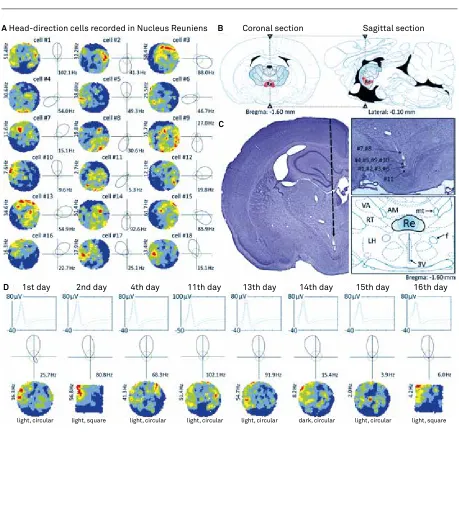
Fig 1. Head direction cells recorded in the nucleus reuniens.
(A) 18 representative head direction (HD) cells in nucleus reuniens (NRe); (B) NRe location on a coronal (left) and corresponding sagittal (right) rat brain section (adapted from Paxinos and Watson, 2005); (C) representative histological specimen showing electrode track (left); recording positions corresponding to cell locations presented in panel a (upper right inset) showing location of NRe and detailed atlas (lower right inset); (D) representative recordings showing multi-day stability of HD cells: a representative cell recorded on each day of 16 days (multiple transitions from light-dark-light, and environmental transformations from circle to square to circle). The solid line is the mean spike waveform and dashed lines are M ± SD of the spike waveform. The green outline shows predicted firing rates given the proportion of time the animal spent looking in each direction, calculated according to the distributive hypothesis.
Shane O’Mara is Professor of Experimental Brain Research in Trinity College Dublin, and is director of the Trinity College Institute of Neuroscience. He is a graduate of NUI Galway (BA, MA) and of the University of Oxford (DPhil). He joined Trinity as a lecturer in 1995 and is now a Fellow of the university (FTCD), as well as a Fellow of the Association for Psychological Science (FAPS) and an elected member of the Royal Irish Academy (MRIA). His research focuses on the brain systems supporting learning and memory. He is also interested in public policy and applied business applications of neuroscience.
04
04.02 Research Case Studies Making Memories — Shane O’Mara
A Head-direction cells recorded in Nucleus Reuniens B Coronal section
C
light, circular light, square light, circular light, circular light, circular dark, circular light, circular light, square
22 | 23
Trinity College Dublin – The University of Dublin Annual Review 2013–2014
Brian Boru – Rewriting the History of Ireland’s Greatest High-King
Seán Duffy
Brian Boru is the most famous Irishman before the modern era, and his death at the Battle of Clontarf in 1014 is one of the few events in Ireland’s medieval history to maintain a hold on the popular imagination. The legend of Brian was always that the great Christian king gave his life in a battle on Good Friday against pagan Viking enemies whose defeat banished them from Ireland forever. More recent interpretations have portrayed the conflict as merely a rebellion against Brian, king of Munster, by his enemies in Leinster and Dublin.
2014 was the millennium year of Clontarf, and proved the occasion for a major re-evaluation and presentation of all available research on Brian Boru, as well as an important raising of public awareness of Ireland’s medieval heritage generally.
Understanding Clontarf and getting public buy-in
I’ve been researching the life and times of Brian Boru for over twenty years. Some of the questions that have preoccupied me and other scholars include: What was the role of the high kingship in medieval Ireland? What role did the Vikings play in Irish political affairs? When was the myth of Brian Boru created, and how, and by whom? What really happened at Clontarf? What might have been the consequences had Brian lost the battle?
To debate these and other questions, I organised a major conference, in partnership with Dublin City Council, which was held in Trinity on 11th and 12th April before a capacity attendance of four hundred. Admission was free and open to the public. This was a focal point in the national millennium commemoration of Clontarf, and featured leading experts in Irish and Scandinavian history and archaeology from universities through-out Ireland, Britain and further afield. The conference proceedings will appear in 2016 as Volume XVI in my Medieval Dublin series.
Trinity was the perfect location for the national Clontarf conference since it is home to Brian Boru’s harp (which, although later in date, is the national sym-bol of Ireland) and to the largest collection of relevant manuscript sources, including the famous Cogadh Gaedhel re Gallaibh
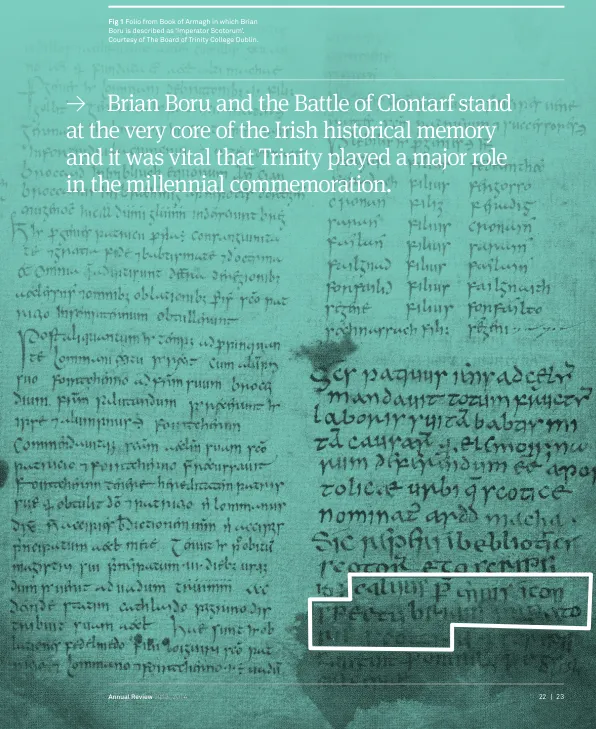
which, more than anything else, created the myth of Brian Boru. Trinity also cares for the only surviving artefact likely to have been touched by the high-king himself: the world-famous Book of Armagh with its inscription from AD 1005 in which Brian is described as Imperator Scotorum
(‘Emperor of the Gaels’). These and other priceless objects formed the centrepieces of an exhibition in the Long Room, opened to coincide with the conference.
To also coincide with the con-ference I published my own book, funded by Dublin City Council, Brian Boru and the Battle of Clontarf, which contains the fruits of my ongoing research. I offer a new analysis, uncovering the origins of Brian’s greatness, reinterpreting the role of the Vikings in Irish affairs and showing how Brian exploited their presence to secure the high-kingship for himself. I conclude that the Battle of Clontarf was deemed a triumph, despite Brian’s death, because of what he averted – a major new Viking offensive in Ireland – on that fateful day.
Our role in the millennium commemorations
Brian Boru and the Battle of Clontarf stand at the very core of the Irish historical memory and it was vital that Trinity played a major role in the millennial commemo-ration. Our national conference, the Long Room exhibition, my own book and a vig-orous schedule of public engagement, have meant that Trinity made a great contribution and reinforced its presence at the forefront of Irish medieval studies.
Seán Duffyhas a BA (Mod), MLitt and PhD from Trinity and spent three years as a Research Scholar in the School of Celtic Studies, Dublin Institute for Advanced Studies before returning to take up a lectureship in the History Department. He is now Professor in Medieval History. The author and editor of about 30 books and numerous articles on Irish history and on Irish relations with Scotland and Wales in the Middle Ages, he also organises an annual symposium on medieval Dublin and has recently launched a new biennial symposium on medieval Ireland. The proceedings of both are published by Four Courts Press.
04
04.03
≥
Brian Boru and the Battle of Clontarf stand
at the very core of the Irish historical memory
and it was vital that Trinity played a major role
in the millennial commemoration.
Research Case Studies Brian Boru — Rewriting the History of Ireland’s Greatest High-King — Seán Duffy
23 | 23
Annual Review 2013–2014 22 | 23
Annual Review 2013–2014
[image:13.1224.617.1213.51.780.2]Preventing Blindness Caused by Age Related Macular Degeneration
Sarah Doyle
Age related macular degen-eration (AMD) is the most common form of central blindness in the over-50’s age group worldwide. More than 70,000 people in Ireland suffer with this debilitating condition, which can leave people unable to recognize faces, to drive, read or watch television.
AMD has both early (“dry”) and advanced (“wet”) disease stages. “Wet” AMD is the minority form of the disease but it’s very aggressive and accounts for 90% of cases of blindness caused by AMD. It’s been named by the World Health Organization (WHO) as the leading cause of sight loss in the developed world.
An excessive immune reaction
[image:14.1224.632.1189.122.737.2]I became interested in AMD through my research into the causes of inflammatory disease. In our bodies, an initial inflam-matory response is required to clear infections and heal wounds – however in chronic diseases, the balance is tipped and an excess of uncontrolled inflamma-tion then causes local tissue damage. In certain chronic conditions, you will see a form of “sterile” inflammation whereby immune responses occur in areas of the body where they are not needed (where there is no infection) – this often happens in response to a build-up of self-made deposits, which for some reason our bodies cannot dispose of.
Why does our immune sys-tem over-react like this? My research focuses on identifying the actions of molecules contained within the cells of our immune system which allow for a relay of signals that inform the genes about the cells’ immediate environment so that the immune system can react appropriately. Identifying the compo-nents involved in these inflammatory signaling pathways and understanding the underlying mechanisms of how these intermediates interact, in both health and disease, is vital. Manipulation of these molecules holds enormous potential for drug development.
Inhibiting new blood vessel growth in ‘wet’ AMD
A number of years ago, I began collaborating with my colleagues Matthew Campbell and Peter Humphries in Trinity’s Ocular Genetics Unit. Our research was supported by Enterprise Ireland, SFI, GlaxoSmithKline and a U.S. charity, Bright Focus Foundation. Our collaboration led to the discovery that ‘sterile’ inflammation is central to AMD – in fact, the presence of yellowish-white deposits in the central area of the back of the eye is usually the first indication of disease. In ‘wet’ AMD, new unwanted blood vessels grow from the back of the eye, disrupting the retina.
We identified Interleukin-18 (IL-18), a natural component of our immune sys-tem, as a factor that can reduce unwanted new blood vessel growth, and we started looking into whether administration of IL-18 might prove useful as a therapy to prevent progression to “wet” AMD.
With GlaxoSmithKline, we began investigating strategies for IL-18 use in the clinical setting. We found, through a series of rigorous tests, that IL-18 had a good safety profile and furthermore that it could inhibit new blood vessel growth in a model of “wet” AMD. We published the findings of our research in Science Translational Medicine, 2nd April 2014.
Due to the immediate transla-tional potential of IL-18 as a therapy for “wet” AMD, our studies have attracted both national and international media attention and were the subject of numerous commentaries in high impact translational and applied scientific journals including
Nature Rev Drug Discovery (May 2014) and Nature-SciBx 1st May 2014, where it made the cover story.
We also have funding from the Health Research Board to work with TILDA (the Longitudinal Study on Ageing) with whom we hope to identify inflammatory biomarkers for those at greater risk of developing “wet” AMD.
Sarah Doyle received her BA Mod Biochemistry in 2002 and her PhD in 2006 from the School of Biochemistry and
Immunology, Trinity College Dublin, and joined the School of Medicine as a lecturer in Immunology in 2012. She is now an Assistant Professor heading the Molecular Inflammation Research Group. Her research focuses on understanding the ways cellular components communicate with each other, passing information about the extra-cellular environment into the cell so we can respond appropriately to injury.
04
04.04 Research Case Studies Preventing Blindness Caused by Age Related Macular Degeneration — Sarah Doyle
Fig 1 Immune cells respond to extracellular drusen deposits, a hallmark feature of AMD, through the action of NLRP3, a mediator of “sterile” inflammation and react by secreting IL-18. IL-18 then inhibits unwanted blood vessel growth at the back of the eye by sending signals into Retinal Pigment Epithelial (RPE) cells and endothelial cells. IL-18 therefore represents a potential therapy for treating wet AMD.
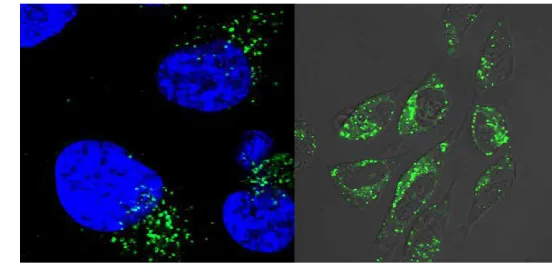
Fig 2 Retinal Pigment Epithelial cells remain healthy and viable after treatment with IL-18.
IL-18
MyD88
decreased VEGF expression VEGF IL-18 receptor IL-18 receptor photoreceptors RPE Drusen inflammasome activation active
pro-IL-1β pro-IL-18
NLRP3 IL-18 IL-18 IL-18 IL-1β IL-18 IL-18 MyD88 caspase-1 MONOCYTE/ MACROPHAGE
decreased VEGF expression VEGF Inhibition of CNV endothelial cells introduction of recombinant IL-18
Untreated
50ng/ml IL-18
≥
We identified
Interleukin-18 (IL-18),
a natural component
of our immune system,
as a factor that can
reduce unwanted new
blood vessel growth
Fig 126 | 27
Trinity College Dublin – The University of Dublin Annual Review 2013–2014
Valuing our Natural Ecosystems
Jane Stout
Biodiversity is the variety of life on earth. By ‘biodiversity’ we mean our massive number of species, our huge range of ecosystems, and the genetic variation which makes individuals of us all. Biodiversity is fundamental to human life because healthy functioning ecosystems provide us with resources and services necessary for our existence. For example, without green plants fixing the sun’s energy into carbohydrates via photosynthesis, we would have neither oxygen to breathe nor food to eat. Without microorganisms breaking down dead organisms we would have no soil in which to grow our crops. And without pollinators there would be less food available for burgeoning human populations, diets would be vitamin-depleted, and consumers would have much less choice.
Evaluating Natural Capital – what price a tree?
Natural ecosystems are being damaged and destroyed by modern life, and the resources and services which comprise our natural capital are being lost. This loss has gone mostly unrecognised because natural ecosystems and their stocks and flows of natural capital are not properly valued. However momentum is now gaining for proper natural capital evaluation and its incorporation into public and private accounting systems.
In April of this year, I chaired the first Natural Capital Ireland conference. This highlighted some of the benefits and
challenges ahead. For example, certain resources and services are relatively straightforward to value – a tree can be cut down and sold as timber, thus having a marketable value. But it’s not so simple to determine all the other values that a tree provides in terms of carbon seques-tration, water cycling, shelter and food for other organisms, and contribution to woodlands which provide recreational opportunities for us.
The Birds and the Bees My research focuses particularly on polli-nation ecology. Pollipolli-nation – the transfer of pollen between flowers by animals – is a vital service for crop production and also for maintaining wild plants, which produce the fruits and seeds, which pro-vide food for a wide range of birds and other wildlife, which in turn provide other benefits to humans.
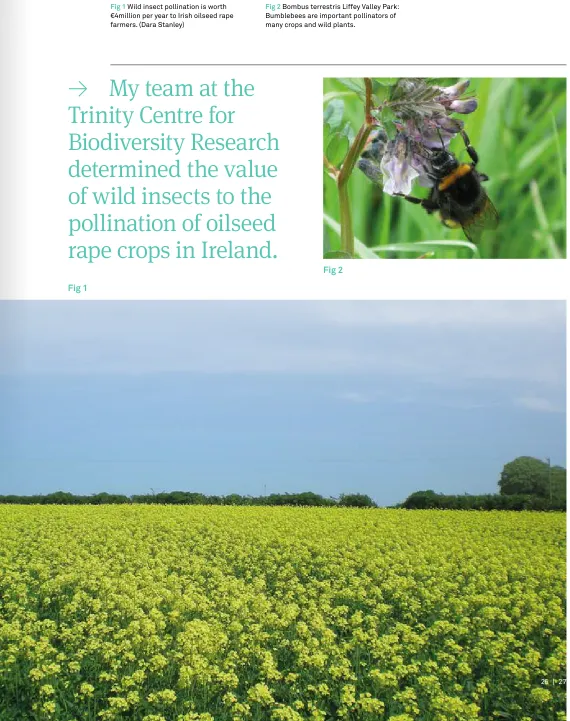
The pollination needed for crop production can be given an economic value. My team at the Trinity Centre for Biodiversity Research determined the value of wild insects to the pollination of oilseed rape crops in Ireland. We found that seed production was reduced by a third when pollinators were excluded – this corresponds to approximately €4 million in lost yield annually.
Oilseed rape cultivation has increased >300% in Ireland since 2008, meaning that our wild pollinators (includ-ing 101 species of bees, 180 species of hoverflies, and 28 species of butterflies)
are more important than ever. (Although managed honeybees can be brought in to supplement wild pollinators, I was involved with a pan-European project which determined that this is not necessarily a straightforward solution: there are not enough managed honeybee colonies to meet the demand for pollination driven by increases in insect-pollinated crop cultivation across Europe).
It’s harder to put an exact value on the pollination of wild plants. But work by my team is investigating how agricul-tural management and the surrounding landscape influence pollinators and their interactions with plants. We have estab-lished that wild plants in field margins, even in intensively managed agriculture, are important sources of forage for wild insects, and should be maintained.
Pollinators’ vital contribution to crop yield
Loss of habitat, disease, invasive species and pollution are driving bees and other pollinators into global decline. Ironically, it is often the very agricultural systems which benefit from pollination services which contribute to pollinator decline.
Our team’s natural capital eval-uation for pollination puts focus on the vital contribution of pollinators for crop yield. Since our agricultural systems are dependent on pollinators, it’s incumbent on policy-makers to find a way to halt the decline.
Jane Stoutreceived her BSc and PhD from the University of Southampton, UK. She joined Trinity’s School of Natural Sciences in 2001, and is now Associate Professor and Director of the Trinity Centre for Biodiversity Research. She has published >60 articles in peer-reviewed journals, led major research projects funded by SFI, EPA, IRC and others, and is a Trustee of the Bumblebee Conservation Trust. Her research is interdisciplinary, focusing on pollination ecology, particularly on drivers and consequences of bee decline.
04
04.05 Research Case Studies Valuing our Natural Ecosystems — Jane Stout
Fig 1Wild insect pollination is worth €4million per year to Irish oilseed rape farmers. (Dara Stanley)
Fig 2 Bombus terrestris Liffey Valley Park: Bumblebees are important pollinators of many crops and wild plants.
≥
My team at the
Trinity Centre for
Biodiversity Research
determined the value
of wild insects to the
pollination of oilseed
rape crops in Ireland.
26 | 27
Fig 1
[image:15.1224.615.1185.66.787.2]Targeting Early Alzheimer’s Disease
Michael Rowan
04
04.06 Research Case Studies
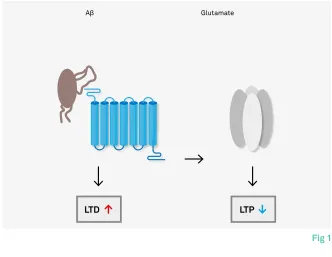
Fig 1 Amyloid (Aß) disrupts brain plasticity (LTP, LTD) by targeting a novel prion protein co-receptor for glutamate
≥
We focus on research questions like how
do different forms of long-lasting plasticity in
the brain networks contribute to the processes
that underlie memory and learning, and how
does sleep affect these processes?
Alzheimer’s disease kills millions worldwide due to an irreversible decline in the function and viability of nerve cells. It is the most common neurodegenerative disorder and presents clinically with devastating symptoms of dementia. These symptoms are caused especially by disruption of the connections between neurons. Neurons have very limited capacity for repair or replacement and there is no known dis-ease-modifying therapy, so the earlier an intervention is initiated the more likely the affected person will benefit. In order to intervene early we need better understanding of the disease and biomarkers.
Brain Plasticity and Disease I lead a research group in the Trinity Institute of Neuroscience which uses physiological and pharmacological techniques to study persistent increases and decreases of the communication between nerve cells in the living brain. We focus on research questions like how do different forms of long-lasting plasticity in the brain networks contribute to the processes that underlie memory and learning, and how does sleep affect these processes?
[image:16.1224.619.1215.72.756.2]A major focus of our research is how badly-folded proteins disturb brain plasticity, leading to disease. For Alzheimer’s disease, we have implicated certain rogue aggregated forms of the protein amyloid in the disruption of plasticity of brain memory mechanisms. Measures of these amyloid aggregates reliably detect the onset of pathology so are important biomarkers of Alzheimer’s. Our research is now focusing on developing better means of detecting and targeting these aggregates.
Targeting disruption by amyloid aggregates
We have discovered that drugs that target certain pathways in the brain can alter memory mechanisms that are affected early in the disease process. These drugs work by restoring forms of physio-logical plasticity that are disrupted by toxic amyloid. For example, the role of the main excitatory transmitter in the brain and its sites of action have been probed with selec-tive activators and inhibitors at different sites to prevent or reverse disruption of plasticity. Similarly, the key involvement of modulatory chemical mediators, such as acetylcholine, has been elucidated and hence targeted with novel approaches in the disease models.
Another recent development was the finding that some of the same mechanisms that are involved in mediating prion diseases (like ‘mad cow disease’) play a critical role in causing the damaging effects of the aggregated amyloid. We are also pursuing the idea of using new anti-bodies as drugs to target these processes and to selectively and directly neutralize the disruptive aggregates in the brain.
We collaborate with academic and industrial partners who are inter-ested in novel ways of developing poten-tial disease-modifying therapies for early Alzheimer’s disease.
Michael Rowan received his BSc from UCD and PhD from Trinity and joined the School of Medicine as a lecturer in 1989. He is now Professor of Neuropharmacology and a principal investigator with the Trinity College Institute of Neuroscience (TCIN). He was awarded the Conway Medal by the Royal Academy of Medicine in Ireland and has published over 150 articles in peer-reviewed journals. His research focuses on neuronal plasticity in health and disease, especially models of Alzheimer’s disease.
Glutamate Aβ
LTD
LTP
Targeting early Alzheimer’s disease — Michael Rowan
[image:16.1224.210.542.377.634.2]30 | 31
Trinity College Dublin – The University of Dublin Annual Review 2013–2014
Dublin: the Making of a Capital City
David Dickson
Dublin has been a city of European consequence for over three hundred years and pivotal in Irish history for over a thousand. At many moments between the 900s to the 1900s it was a bitterly contested place – perhaps no other European capital city apart from Prague has experienced such sharp dis-continuities and reversals in its history. In modern times, historians have researched the many components of our city’s past, including material culture and municipal governance, religion, high and popular culture, architecture, busi-ness and recreation. But the process of reconstructing Dublin’s evolution through the ages has been often difficult, subject to bias, and sometimes impossible.
Surviving History
The survival of evidence is uneven. To give some examples: thanks to the Wood Quay excavations, we know far more about everyday life in the Viking town than we do about social conditions several hun-dred years later in the wake of the Black Death, since the relevant archaeological horizons for that period were erased by later building activity. And after 1600, we have a wealth of sources dealing with the physical and mental worlds of Dublin’s elite citizens and the striking growth of prestigious neighbourhoods, but we have much less about life on the back street or in the workshop.
Intellectual fashion has also contributed to a skewed picture. Historians of the recent eras (i.e. since 1800) have been much more interested in looking at politics, literature and urban poverty than at the less dramatic but equally important processes of working life, business and family, the outsurge to the suburbs (thanks to successive revolutions in transport), and the shift from tenement-dominated city to owner-occupancy conurbation.
Reviewing the evidence: a meta-analysis
In Dublin: The making of a capital city, published in 2014, I provide the first meta-analysis of this vast but fragmented literature relating to Ireland’s primate city. The book surveys the whole history of urbanization at the Liffey mouth but concentrates on the four centuries since 1600, during which time Dublin became a large, and in some respects innovative, cosmopolitan city.
Taking the millennium-long view enabled me to identify some recurring themes: the strong correlation between the size of Dublin and the scale of cen-tral government activity in Ireland; the importance of the city in the shaping of Irish political culture, both hegemonic and subversive; and the cultural ambiguity and hybridity of its citizenry through most of its history. These themes are enduring and continue to shape the city today.
I end the book with some reflec-tions on the discovery and recognition by Dublin Corporation of the city’s complex past, a past that, when examined closely, challenged the prevailing narratives as to the origins of modern Ireland. That conversion by official Dublin only occurred in the 1990s, but it proved a major turning point both in civic and national patronage of the more visible aspects of Dublin’s heritage. But even with this, large swathes of Dublin’s history remain remarkably unexplored compared to the compre-hensive historiography available for other European capitals. My book has, I hope, helped to make those gaps in research more evident – so that we can now start to address them.
David Dickson received his BA and PhD from Trinity and has spent his working career in the Department of History. He is now Professor in Modern History, a member of the Royal Irish Academy, and a coordinator of the inter-disciplinary Dublin History Research Network [www.dublinhistoryresearch.ie]. Amongst his many publications is the award-winning monograph Old world colony: Cork and South Munster 1630–1830 (2005). He is currently engaged in a comparative study of Irish urbanization in the long eighteenth century.
04
04.07 Research Case Studies Dublin: the Making of a Capital City — David Dickson
10
-20 1
0.1
0.01
1E-3
1E-4
-10 0 10 20
16V 14V 12V 10V 08V 06V
03
0.0 0.5 1.0 02
01 00
377Ω/ 98kΩ/
Materials with the Right Connections
John Boland
When we think of materials we think of objects with well-defined and distinguishing properties. Diamond for instance is a hard material that conducts heat but not electricity, silver is soft and conducts both. Around the world scientists and engineers are working to exploit the properties of these and other materials. Whether it’s mobile communications, medical devices or next generation com-putation, technological advances are made possible by discovering materials with new and enabling properties.
But there’s a problem: off-the-shelf materials like diamond or silver no longer have the capacity to deliver real innovation. So the search is on to identify new candidate materials. Whether by a combination of brute force synthesis and measurement or through the use of computer simulations to guide discovery, scientists around the world are leaving no stone unturned in their quest for new materials.
Researching nanoscale materials
I lead a team of researchers at the School of Chemistry developing a new approach to materials discovery. Rather than try-ing to find the optimum material for a
particular application, I’ve shown that nanoscale materials have a natural tendency to modify their properties in the presence of an external stimulus, for example an applied electric field or during light illumination. These new materials exhibit evolving behaviours rather than the fixed properties typical of conventional materials. However, my objective is not just to identify materials with tuneable and adaptive properties, but to create material systems that are actually capable of learning.
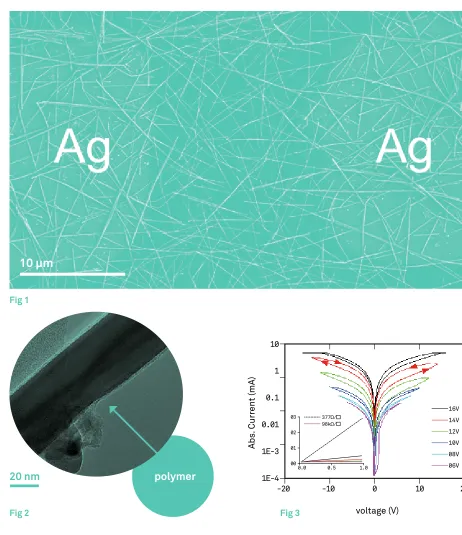
[image:18.1224.716.1178.132.667.2]Our approach exploits random networks of nanoscale wires each between 10 and 20 microns in length but only a few hundred atoms wide (see Fig 1). The behaviour of any network is determined by the properties of the junction connections, in our case these are the crossing points between individual wires in the network. Crucially we have discovered that it is possible to engineer the composition of these junctions, so that they can be turned ON and OFF in response to the applied stimulus.
The first realisation of this phe-nomenon involved networks comprised of silver nanowires coated with a 3 nm-thick electrically insulating polymer coating (see Fig 2). Initially the entire network is
non-conducting but as voltage applied across the network is increased individual junctions switch ON and in this way the network conductivity can be continuously tuned over a wide range (see Fig 3). More recently we have shown that individual junctions can be switched to different ON levels so that even a single junction can demonstrate up to six-levels of memory. Controlled conductivity and multiple memory levels are a big advance but our goal is to demonstrate true learning. Present day computers are powerful but lack the capacity to learn. Learning requires the ability to recognise the significance of correlated stimuli. Even a young child, who initially pays little attention to a bee, becomes alarmed at the sight or sound of a bee after having been stung. This learned response results from the simultaneous inputs of sight/sound and pain. We have developed network junctions that mimic this type of brain synapse operation that turn ON only in response to two or more simultaneously applied stimuli.
If successful, this research will not only lead to the fabrication of sentient materials, but possibly the development of a paradigm for computation that parallels with the operation of the human brain.
John Bolandreceived a BSc degree in chemistry from UCD and a PhD from the California Institute of Technology. Previously he was on the research staff at IBM NY the J.J. Hermans Professor of Chemistry at the University of North Carolina at Chapel Hill. He joined the School of Chemistry in 2002 and served as the Director of the CRANN Nanoscience Institute (2005– 2013). He is fellow of Trinity College (2008), the American Vacuum Society (2009) and the American Association for the Advancement of Science (2010). He was the recipient of the 11th ACSIN Nanoscience Prize (2011) and was recently awarded a prestigious ERC Advanced Grant (2013).
04
04.08 Research Case Studies Materials with the Right Connections — John Boland
10 µm
20 nm
polymer
voltage (V)
Abs
. Cur
rent (mA)
Fig 1
34 | 35
Trinity College Dublin – The University of Dublin Annual Review 2013–2014
Under another EU-FP7 project, EINSTEIN, I’m engaged on creating a new innovative thermo-fluid dynamic simula-tion-based active building control system that includes algorithms to optimize the in-use energy performance. This has led to the idea of a ‘smart building’ that exploits real-time information to provide optimum energy efficiency solutions. I adopt an approach based on Model Predictive Control to take into account energy demand and use, thus minimizing the costs. The MPC control can be performed in real-time and can incorporate variable pricing and real-time electricity demand, thus shifting the demand towards `grid-friendly’ behaviour.
From Buildings to Cities Once you’ve bought into the concept of a ‘smart building’, you can move towards considering blocks of smart buildings, and from there to the idea of energy-efficient ‘smart cities’. This is what we’re investigat-ing under the EU FP7 project INDICATE (Fig. 2). With this project, we’re working towards the integration of Dynamic Simulation Modelling, Geographic Information Systems (GIS), 3D Urban CAD Modelling Tools, Sustainable Urban Indicators and algorithms for Demand Side Management and local balancing of energy use into a single software package.
End-users of the software will range from city managers, architects and master planners to utility companies and facilities managers of residential and
commercial complexes. The city and master planners will be able to assess the ‘green’ labelling of cities or new developments using the ‘INDICATOR’ tool. They will also be able to perform sensitivity analysis to investigate the impact of installing renew-ables/non-renewable energy generation systems or energy storage systems for which currently no comprehensive software tool exists. The utility companies can use the tariffing toolbox for aiding decisions on the variable tariffing of energy. Additionally, simulations confirm that facilities managers of commercial and industrial complex can reduce their energy cost by up to 30% by planning and scheduling activities, with very little additional investment or capital cost.
[image:19.1224.56.543.361.643.2] [image:19.1224.856.1179.365.656.2]Energy Management Systems and Control – from Buildings to Cities
Biswajit Basu
04
04.09 Research Case Studies
Energy supply and energy sus-tainability are critical to socio-economic growth. Energy sustainability involves not only the supply of low-carbon power but also strategies for smart energy usage and conservation.
People often think of industry and transportation as the main culprits in energy guzzling, but these represent only about 25% and 1% of total electricity consumption respectively, whereas com-mercial and residential buildings consume an estimated 74% of electricity. According to recent EU Commission investigations, the building sector represents 40% of the European Union’s total energy consumption.
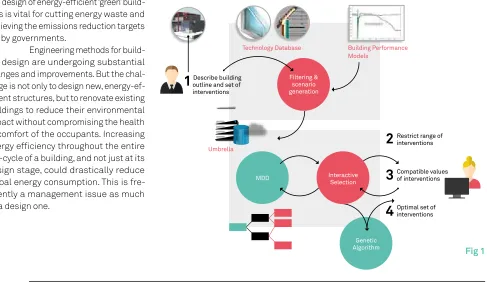
‘Greening’ our buildings The design of energy-efficient ‘green’ build-ings is vital for cutting energy waste and achieving the emissions reduction targets set by governments.
Engineering methods for build-ing design are undergobuild-ing substantial changes and improvements. But the chal-lenge is not only to design new, energy-ef-ficient structures, but to renovate existing buildings to reduce their environmental impact without compromising the health or comfort of the occupants. Increasing energy efficiency throughout the entire life-cycle of a building, and not just at its design stage, could drastically reduce global energy consumption. This is fre-quently a management issue as much as a design one.
Optimising energy-efficiency solutions
What’s required? We need to develop decision support tools which will pro-vide information on a building’s energy consumption and thus help us implement the right solutions. My research, and my team’s, funded by the EU FP7 project UMBRELLA, aims to develop an innovative, web-based decision-support application to optimize the decision-making process for sustainable building retro-fitting. This involves the introduction of building inte-grated renewables (BIR) on the generation side, and measures to manage demand by reducing operational energy. Some examples of BIR are photovoltaics, micro
wind turbines, solar and solar thermal. Reduction in operational energy, for exam-ple, is achieved by use of climate adaptive heating-ventilation-air condition (HVAC), smart lighting and ventilation systems or actively controlled window blinds. The optimizing tool provides solutions leading to minimum capital expenditure and/or minimum operation and maintenance costs. The optimization process is guided by the user’s constraints and preferences and it’s performed on a multi-decision diagram (MDD) data structure. The out-come of the optimization process is a set of recommendations and interventions which meet the desired criteria for the specified building (Fig.1).
Biswajit Basu received his Masters and PhD from Indian Institute of Technology Kanpur and joined Trinity’s School of Engineering as a lecturer in 2002. He is now Professor in Civil, Structural and Environmental Engineering. He is the recipient of four best paper awards, has been awarded five EU-FP7 research grants on energy, and has published over a hundred articles in peer-reviewed journals. His research focuses on renewable energy generation (wind and wave), usage, management and control, with a special focus on dynamics of renewable energy systems.
SM
ALL S
CALE RENEW
ABLE S integration reduction planning optimisation LARG
E SCALE RENEWAB
LES EL
ECTRICITY GRID
EV GRID
Sustainable Indicators For the Urban Context
Energy Use Waste Network Transport Network
Climate Change Urban Heat Island Effect
etc. BUILDINGS Filtering & scenario generation Genetic Algorithm MDD
1 Describe building outline and set of interventions
1
Technology Database Umbrella Building Performance Models2 Restrict range of interventions
3 Compatible values of interventions
4 Optimal set of interventions Interactive Selection
2
3
4
“Once you’ve bought into
the concept of a ‘smart
building’, you can move
towards considering
blocks of smart buildings,
and from there to the idea
of energy-efficient ‘smart
cities’. This is what we’re
investigating under the EU
FP7 project INDICATE”
Fig 1
Fig 2 Energy Management Systems and Control – from Buildings to Cities — Biswajit Basu
Fig 1Toolset for Energy Optimisation and Retrofit in Buildings
Ageing of People with Intellectual Disability
Mary McCarron
People with intellectual disa-bility are living longer than ever before, in the developed world at least. This is a cause for celebration but it presents a challenge: we know little about the effect of ageing on this population group, in Ireland or in any country.
Do people with intellectual disability suffer particular consequences to their health when ageing? Are they at greater risk of suffering dementia? How does ageing affect their ability to mana