warwick.ac.uk/lib-publications
A Thesis Submitted for the Degree of PhD at the University of Warwick
Permanent WRAP URL:
http://wrap.warwick.ac.uk/91956
Copyright and reuse:
This thesis is made available online and is protected by original copyright. Please scroll down to view the document itself.
Please refer to the repository record for this item for information to help you to cite it. Our policy information is available from the repository home page.
THE DYNAMICS OF DISTRIBUTED
DIGITAL INNOVATION
AN ANALYSIS OF THE RADICAL TRANSFORMATION OF
FRONTLINE CUSTOMER SERVICE IN A UK RETAIL BANK
Jonas Valbjørn Andersen
A thesis submitted to the Information Systems and Management Group at Warwick Business School, University of Warwick for the degree of Doctor of
2 Contents
Contents ... 2
Illustrations and Tables ... 5
Declaration ... 6
Acknowledgements ... 7
Abstract ... 8
Preface ... 9
1. INTRODUCTION ... 13
1.1 Motivation and Scope of Research ... 13
1.2 Problem Statement and Research Questions ... 19
1.3 Research Objective and Approach ... 22
1.4 Targets for Contribution ... 25
1.5 Structure of the Thesis ... 27
2. LITERATURE REVIEW ... 28
2.1 What is Distributed Digital Innovation? ... 30
2.1.1 Distribution of Digital Technology ... 36
2.1.2 Distribution of Knowledge Resources ... 39
2.1.3 Distribution of Organisational Control ... 40
2.2 Organisational Transformation ... 41
2.2.1 Technological Trajectories ... 43
2.2.2 Trajectory Shifts ... 48
2.2.3 Transformation as Controversy ... 50
2.3 Micro-level Agency Dynamics ... 53
2.3.1 Distributed Agency ... 54
2.3.2 Micro-Level Actions ... 58
2.4 Digital Innovation Networks ... 60
2.4.1 Networks of Actions ... 61
2.4.2 Conceptualising Innovation Networks ... 63
2.5 Summary of Literature Review ... 66
3. METHODOLOGICAL APPROACH ... 69
3.1. Philosophical Assumptions ... 70
3.1.1 Critical Realism and Computational Social Science ... 75
3.2 Grounded Computational Analysis ... 77
3.2.1 The Process of Grounded Analysis ... 78
3.2.2 Building Grounded Theory with Computational Analysis ... 83
3.2.3 Applying Grounded Computational Analysis: An Empirical Example ... 91
3.3 Limitations and Implications of Grounded Computational Analysis ... 98
4. RESEARCH SETTING AND DESIGN ... 102
4.1 Case Selection ... 102
4.2 Data Collection and Analysis ... 103
4.2.1 Iteration 1: Describing Organisational Transformations ... 108
4.2.2 Iteration 2: Conceptualising Innovation Networks ... 109
4.2.3 Iteration 3: Explaining Distributed Agency Dynamics ... 111
4.3 Summary of Methodology ... 113
5. ANALYSIS OF DISTRIBUTED DIGITAL INNOVATION ... 115
5.1 Analysis of Organisational Transformation ... 115
3
5.1.2 Radical Transformation of Retail Banking at Barclays ... 117
5.1.3 Sequence of Organisational Transformations at Barclays ... 119
5.2 Analysis of Innovation Networks ... 139
5.2.1 Analysing Innovation Networks ... 139
5.2.2 Innovation Networks at Barclays ... 142
5.2.3 Distribution of Organisational Transformations ... 147
5.3 Analysis of Micro-Level Agency Dynamics ... 150
5.3.1 Measuring Micro-level Agency Dynamics ... 150
5.3.2 Micro-level Agency Dynamics at Barclays ... 156
5.4 Summary of Findings ... 162
6. DISCUSSION AND THEORY BUILDING ... 164
6.1 Conceptualising Organisational Transformation ... 165
6.1.1 The Manifestation of Digital Transformations ... 165
6.2 Conceptualising Innovation Networks ... 170
6.2.1 Actors, Algorithms and Actants ... 170
6.2.2 Innovation Network Structure and Organisational Transformation ... 177
6.2.3 Diffusion of Organisational Transformations ... 179
6.3 Conceptualising Distributed Agency Dynamics ... 182
6.3.1 Accumulation of Micro-Level Actions ... 182
6.3.2 The Transformative Power of Agency Dynamics ... 183
6.3 Explaining the Agency Dynamics of Distributed Digital Innovation ... 186
6.3.1 Distributed Digital Innovation as Cumulative Synthesis ... 186
6.3.2 The Agency Dynamics of Double-Cumulative Synthesis ... 192
6.4. Double Cumulative Synthesis as Morphogenesis ... 197
6.5 Extending the Theory to Other Contexts ... 201
6.6 Summary of Discussion ... 204
7. METHODOLOGICAL IMPLICATIONS ... 205
7.1 The Traces of Distributed Digital Innovation ... 205
7.2 Research Consequences of Digital Trace Data ... 208
7.3 Building Computational Methods for Distributed Digital Innovation ... 211
7.4 Chapter Summary ... 216
8. CONCLUSIONS ... 217
8.1 Overview of Thesis and Summary of Findings ... 217
8.1.1 Background and Research Questions ... 217
8.1.2 Approach to Research ... 220
8.1.3 Empirical Findings ... 222
8.1.4 Theoretical Findings ... 225
8.2 Research Contributions ... 227
8.2.1 Contribution to Theory ... 228
8.2.2 Contribution to Method ... 231
8.2.3 Contribution to Practice ... 233
8.3 Validity and Research Limitations ... 236
8.4 Future Research ... 240
8.5 Final Summary ... 242
BIBLIOGRAPHY ... 245
APPENDIX 1: PAPER ABSTRACTS ... 264
Appendix 1.1. MIS Quarterly ... 264
Appendix 1.2. Information Systems Research ... 265
4
Appendix 1.4. HICSS ... 267
Appendix 1.5. EGOS ... 267
APPENDIX 2: ANALYTICAL SCRIPTS ... 269
Appendix 2.1. Data Slicing ... 269
Appendix 2.2. Latent Semantic Analysis ... 271
Appendix 2.3. Identifying Micro-Level Actions ... 272
5 Illustrations and Tables
Table 1. Key Concepts Used in the Thesis ... 29
Table 2. Dimensions of Distributed Digital Innovation ... 35
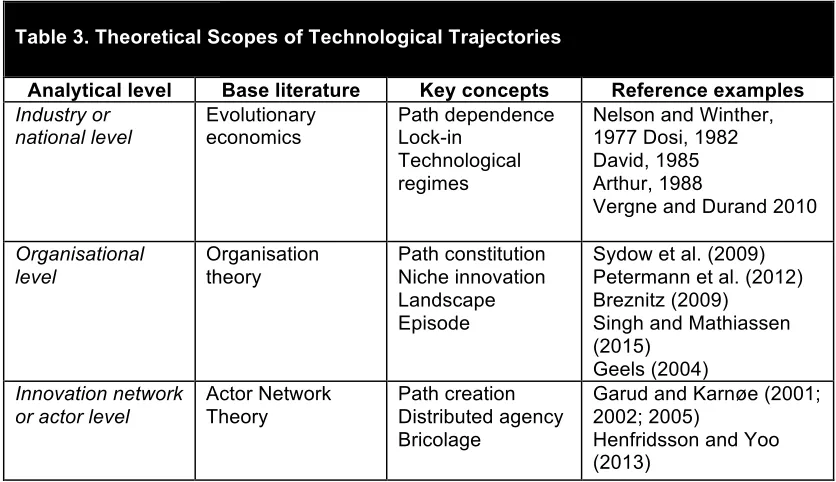
Table 3. Theoretical Scopes of Technological Trajectories ... 45
Table 4. Conceptualisations of Controversy ... 50
Table 6. Constituent Parts of Innovation Networks ... 64
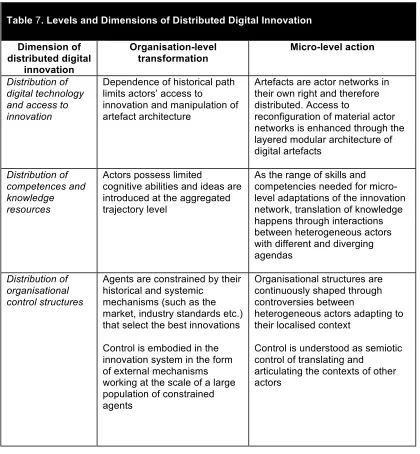
Table 7. Levels and Dimensions of Distributed Digital Innovation ... 67
Table 8. Data Collection and Analysis ... 107
Table 9. Events and Organisational Transformations at Barclays ... 138
Table 10. Innovation Network Evolution ... 148
Table 11. Typology of Agency Dynamics ... 160
Table 13. Sequence of Organisational Transformations ... 169
Table 14. Innovation Network Metrics ... Error! Bookmark not defined. Table 15. Impact of Digital Agency Dynamics ... 184
Table 16. Venues for Future Research ... 241
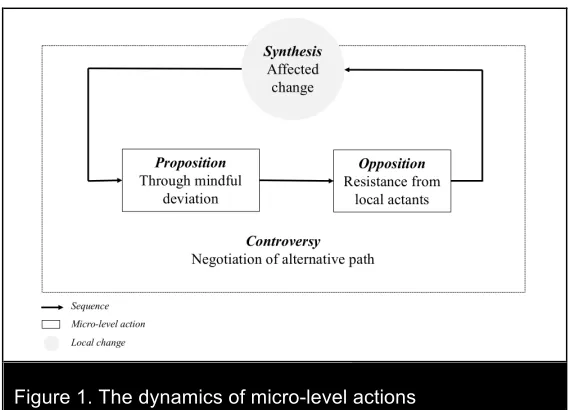
Figure 1. The dynamics of micro-level actions ... 59
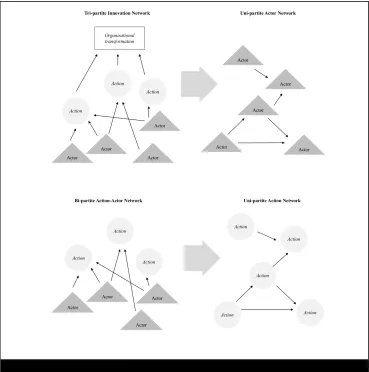
Figure 2. Representations of innovation networks ... 65
Figure 3. Overview of critical realist ontology ... 74
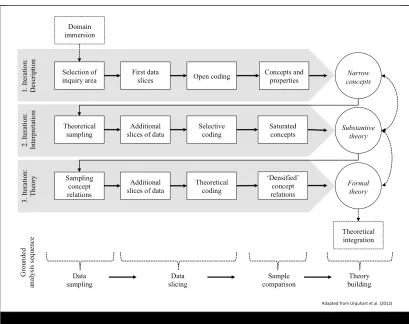
Figure 4. Iterations of grounded analysis ... 82
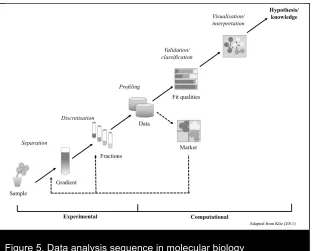
Figure 5. Data analysis sequence in molecular biology ... 84
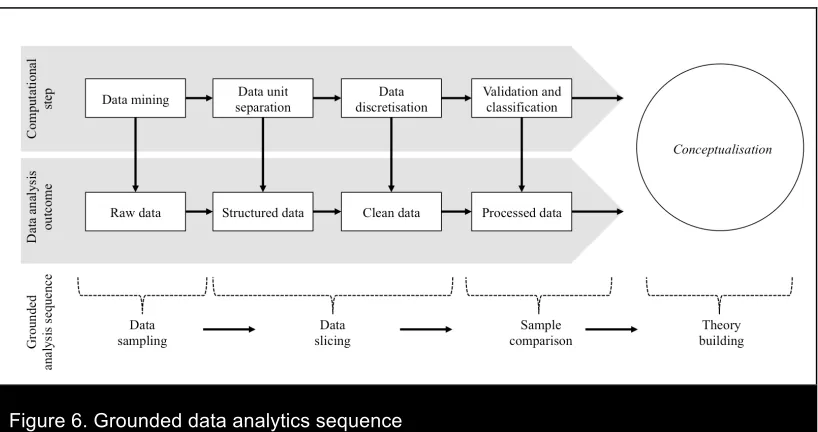
Figure 6. Grounded data analytics sequence ... 87
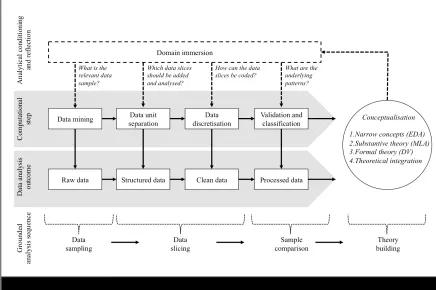
Figure 7. Building grounded theory with computational analysis ... 89
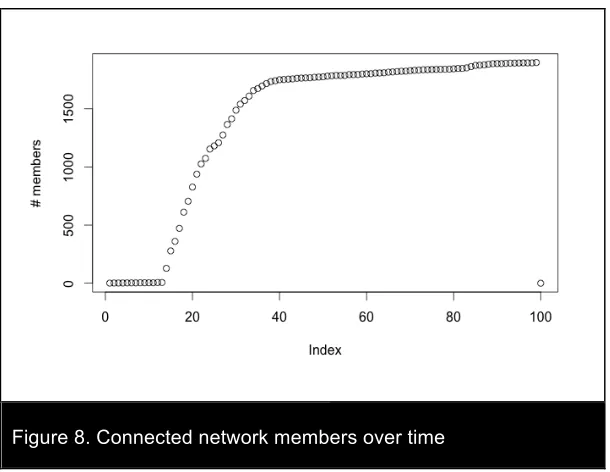
Figure 8. Connected network members over time ... 93
Figure 9. Average node degree over time ... 94
Figure 10. Diagram of PRnet validating degree classification ... 95
Figure 11. Emergence of PRnet in three phases ... 96
Figure 12. Mixed-methods research framework ... 105
Figure 13. Transformed branch layout ... 118
Figure 14. Chronology of organisational transformations ... 120
Figure 15. Layered modular server infrastructure ... 125
Figure 16. BankApp innovation network ... 144
Figure 17. Micro-level innovation networks ... 146
Figure 18. Section of a term frequency matrix ... 152
Figure 19. Singular value decomposition ... 154
Figure 20. Transformed term-document matrix ... 154
Figure 21. Number of clusters by within group sum of squares ... 156
Figure 22. Micro-level agency level over time ... 158
Figure 23. Manifestations of micro-level actions ... 159
Figure 24. Micro-level agency configurations ... 161
Figure 25. Manifestation of agency configurations ... 166
Figure 26. Micro-level diffusion of organisational transformation ... 180
Figure 27. Agency dynamics of double-cumulative synthesis ... 195
6 Declaration
This thesis is submitted to the University of Warwick in support of my
application for the degree of Doctor of Philosophy. It has been composed by myself
and has not been submitted in any previous application for any degree. The named
author carried out the work presented, including data collection and analysis. The
author has in reworked versions submitted parts of this thesis to the following
journals and conferences (see appendix 2 for abstracts):
Andersen, J.V., Henfridsson, O. & Baptista, J., Under Review, Micro-shifts in Distributed Digital Innovation: The Radical Transformation of Retail Banking at GlobalBank, MIS Quarterly.
Andersen, J.V., Ingram, C., Under Review, Modes of Digital-first Organising: Digital Infrastructure Evolution in the Absence of Organisational Embeddedness. Information Systems Research.
Andersen, J.V., Lindberg, A. & Lindgren, R., Selander, L., 2016. Algorithmic Agency in Information Systems: Research Opportunities for Data Analytics of Digital Traces. In Proceedings of the 49th Annual Hawaii International Conference on System Sciences.
7 Acknowledgements
I wish to express my profound gratitude to my two supervisors without whom
I would have never made it. João Baptista for his great support from our first
exciting conversation to guiding and helping me maintain direction, focus and
belief in pursuing my academic aspirations. Ola Henfridsson for his intellectual
generosity and openness to engage with my sometimes less than obvious ideas and
for pushing me to enrich and develop my thinking and methods. I am most grateful
to have benefitted from his precise thinking and tough yet encouraging mentoring.
Also, I wish to extent my gratitude to Barclays retail bank for taking part in
and supporting this research, and specifically to my contacts for engaging in the
project with great skill and enthusiasm and for their generosity with their time,
insights and knowledge.
Further afield, I am particularly grateful to the Swedish Centre for Digital
Innovation and the people at the Department of applied IT, University of
Gothenburg, and specifically to Rikard Lindgren, Lisen Selander and Fredrik
Svahn. Thank you for saving the day at the darkest hour and for the chance to be a
part of developing exciting and important ideas as well as a new research centre.
Finally, I would like to thank my family for enduring cohabitation, relocation
and occasional neglect during the course of this degree. Without your support,
understanding and endless patience I would have surely lost my anchor and drifted
8 Abstract
This thesis shows how small-scale actions can accumulate into radical
organisational transformations catalysed and enhanced through digital technology. Current literature on digital innovation and path creation offer powerful views on such transformations emphasising the vistas of opportunity opened by generative and flexible digital technology, and how new technology can be leveraged for organisational transformation.
Digital transformations have predominantly been portrayed from the centralised perspective of a manager, entrepreneur or group of designers. However, emerging research on distributed digital innovation increasingly emphasises how radical transformations emerge from widely distributed networks as a result of
contributions from multiple heterogeneous actors. The aim of this thesis is to inform emerging theory on distributed digital innovation by explaining the ways in which multiple digitally distributed actions can combine into radical organisational transformations.
To this end, a two-year, multi-method case study of the distributed and radical digital transformation of frontline customer service at Barclays’ retail bank was conducted. The research design combines traditional qualitative research techniques with new computational methods in a ‘grounded computational analysis’
framework. This allows for a new empirical and conceptual perspective on the agency dynamics of distributed digital innovation.
The findings suggest that organisational transformations can occur as a
consequence of accumulation of multiple small-scale actions, contingent upon at least the following four factors: a) the sequence of previous transformations; b) the composition and structure of the innovation network; c) the co-occurrence of proposition, opposition and synthesis as micro-level interactions; d) the specific configurations of enacted agency dynamics.
9 Preface
This thesis explores how the emergence of a new breed of digital technology
requires radical rethinking of how we conceptualise and study the significant
organisational transformations related to digitalisation. Through almost a decade in
the IT and communication technology industry previous to pursuing and academic
career, I witnessed radical transformations of the design, characteristics and impact
of digital technology and experienced first-hand how the concepts and methods of
the past proved inadequate for even simple business tasks in a digitalised world.
My journey into academia, and initial motivation for pursuing a PhD, started
with a simple question: Why do our users upgrade? At the time, I was working for a
cloud collaboration start-up that had recently been acquired by a large multinational
IT company for what seemed like a vast sum of money. As a part of scaling and
expanding the newly acquired business, our new employers were naturally
interested in knowing the reasons why our freemium business model was successful
in converting free users to paying customers. We had extensive data about user
behaviours from the moment they logged onto the website and into the nitty-gritty
details of their everyday collaboration patterns and we felt well equipped to provide
a plausible answer. However, after running extensive regression analyses
controlling for a myriad of factors, we came up with no significantly strong
explanation. Discouraged by our failure we made the journey from our newly
established San Francisco office to engage with an expert group of MBA students
to give it a try. Surely their far more advanced regression analyses would yield
answers that were superior to what we had come up with. They did, but only by a
10 quite reasonable, question and no good answer to give. After some reflection, I
concluded that what we were experiencing was something fundamentally new and
that trying to understand it using the established concepts and methods was
therefore a moot undertaking. We had made two fundamental mistakes.
First, our assumption of technology as a static object that can be used
interchangeably as an independent variable was far off from the reality we were
building. Our collaboration platform was fluid and evolving, continuously adapting
to the specific and localised needs of particular groups of users in highly specific
situations ranging from financial consulting to pool maintenance at various points
in the histories of heterogeneous businesses at cultural and geographical locations
distributed across the globe.
Secondly, the methods we applied were ill suited for an emergent, connected
world where normally distributed data sets of autonomous samples are rare and far
between. Our users were connected and collaborating across organisational and
geographical boundaries by design. The very fundamental point of building a social
collaboration tool is to connect users and engage them in shared activities where the
actions of one user were meant, intentionally and by design, to affect the behaviour
of other users. This meant there was little help to be found in traditional business
statistics books for answering the most fundamental questions about our business.
A new range of methods and indeed a new way of thinking about digital technology
and digital innovation was needed to understand the connected and collaborative
digital reality in which we found ourselves.
Indeed, research published by UK telecoms regulator Ofcom shows that
11 and usage with 58% owning a smart phone and 19% tablet ownership in December
2012 (Ofcom 2012). This suggests that distributed collaboration and innovation
practices in the UK are changing with severe implications for the interaction
between employee groups within the company as well as for customer relations.
One particular industry, the financial services industry has recently seen an
increase in new digital innovations with the purpose of enabling customers to
self-service but though much previous research has focused on customer adoption of
new banking technologies, especially internet banking (Akinci et al. 2004;
Al-Ashban and Burney 2001; Chang 2003; Joseph et al. 2005), the nature and effects
of digital innovation on frontline customer service remain under-researched.
While the digital transition of personal banking seemingly changes the entire
industry, the importance of retail banking is not diminishing for the individual
bank. Rather banks find themselves in a phase of transition that will determine the
future of retail banking. Statistics suggest that the importance of branches is not
diminishing as a result of self-service technologies. A recent for a 62% increase has
been recorded in the number of branches per financial institution within the UK
between 2001 and 2011 due to consolidation in the retail banking market despite
wide spread proliferation of self-service technologies (Radhakrishnan et al. 2011).
This illustrates that a transformation of retail banking has been underway for some
time and raises the question of what is the nature of this transformation.
The research presented in this thesis addresses this question by studying the
radical transformation of customer service and retail banking at in a major retail
bank in the UK, Barclays bank. In doing so it also attempts a first step towards
12 with radical digital transformation. My hope is that this study will contribute to an
understanding of the distributed processes of digitalisation and the ways in which
13
1. INTRODUCTION
The proliferation of digital technology combining internet connectivity and
mobile computing with enterprise systems has fostered a new breed of disruptive
digital innovation resulting in radical organisational transformations in a range of
different firms as it shifts entire industries from their plotted course (Lyytinen and
Rose 2003). Empirical research in as diverse contexts as payment infrastructures
(Scott and Zachariadis 2012), healthcare commissioning groups (Miani and
Zachariadis 2011), and car manufacturing companies (Lee and Berente 2012;
Svahn et al. 2009) has established that digital innovation affects radical
organisational transformations. This thesis aims to provide insights that might lead
to answering how such radical digital transformations happen by investigating the
distributed micro-dynamics that lead to radical organisational transformations
catalysed by emerging digital technology.
This chapter first establishes the motivation and scope of the research
presented in this thesis before formulating a problem statement and research
questions. Next, it introduces the research objectives and approach taken to answer
the research questions before defining specific contribution targets.
1.1 Motivation and Scope of Research
The capability for managers to anticipate, plan and implement changes to
technological trajectories has always been pivotal to the success and performance
of a wide variety of companies (Abernathy and Clark 1993; Garud et al. 2010;
Tushman and Anderson 1986). Digital technology forces researchers and
practitioners alike to rethink innovation processes not only in terms of the values
14 the agentic dynamics that shape how new technologies, ideas and services are
generated (Yoo et al. 2010).
Making decisions about radical changes to the organisation of core business
processes is traditionally seen as the privilege of a select group of board members
or top executives. However, recently emerging digital technologies have
increasingly distributed coordination and control of innovation processes (Yoo et
al. 2008) enabling small-scale innovations to combine into radical transformations
of technological, cognitive and organisational structures (Garud and Karnøe 2003;
Garud and Rappa 1994). This distribution of decision-making pertaining to
distributed digital innovation represents a significant challenge for managers as the
drivers of ever increasing change move from existing organisational structures to
emerging innovation networks. This challenge of managing distributed digital
innovation is manifested in two ways.
First, a lack of knowledge about the nature and characteristics of dynamics of
distributed digital innovation renders it difficult to make informed strategic
decisions about the direction and outcomes of digital transformation. Following
from this, the effects of management decisions on the direction of organisational
trajectories become uncertain. These uncertainties stem from a lack of knowledge
about the dynamics by which radical transformations emerge through distributed
innovation networks.
Digital innovation has been defined as the new waves of related innovation
practices that follow the digitisation of physical artefacts (Andersson et al. 2008;
Boland et al. 2007; Henfridsson, Mathiassen, et al. 2009; Svahn et al. 2009;
15 distributed social interaction, innovation practices are increasingly taking place in
the context of distributed innovation networks (Yoo et al. 2008; Yoo et al. 2010).
Existing streams of research on technological trajectories based on evolutionary
economics (Arthur 1989; Nelson and Winter 1977), sociomateriality (Leonardi
2013a; Pickering 1993) and actor network theory (ANT) (Garud and Karnøe 2001,
2003) in various ways conceptualise trajectory shaping activities as distributed
processes. While all three streams of research present powerful views on agency in
distributed innovation, actor network theory is based on a fundamental
conceptualisation of sociotechnical networks as the arena in which distributed
technological change is enacted (Callon 1981; Latour 1991a, 1992a).
Recent developments in ANT leverage the increasing availability of digital
trace data and computational tools to analyse them. This has inspired an emerging
stream of empirical research tracing distributed innovation activities (Madsen 2012;
Meyer 2009; Ricci 2010; Venturini 2009, 2012; Whatmore 2009). While this
research points to an important and relevant problem, and goes a long way in
unravelling the complex webs of distributed innovation, deeper understanding of
the agency dynamics by which localised and distributed actions combine to form
radical organisational transformations in still needed (Venturini and Latour 2010).
An increasing volume of information systems (IS) research focuses on the
distributed agency of such digital transformations (Eaton et al. 2015; Hanseth and
Lyytinen 2010; Yoo et al. 2010). Despite this emerging research, new methods and
theoretical frameworks of distributed agency are yet to be adopted in the IS field
(Hedman et al. 2013). The reasons for this gap in the body of IS research can
16 exogenous to IS theorising (Grover and Lyytinen 2015). So far, agency dynamics
involving digital artefacts have been conceptualised in at least three distinct ways,
that each in its own way perpetuates the conceptualisation of digital artefacts in
existing IS literature as extant and secondary to human agency. The three highly
general yet distinctive conceptualisations include: 1) technology as a static and
inanimate object of human agency; 2) technology as context for human
interactions; and 3) technology as enacted through practice.
The first category includes research that conceptualises digital technology as
an inanimate object of human agency that functions in one of two ways; as the
static product of a design process or as an independent variable predicting IT
adoption or use. One example of the former can be found in research on IT design
that views technology as a raw material that can be moulded, forged and combined
to ‘fit’ or enhance a specific set of human activities (Ba et al. 2001; Baldwin and
Clark 2000; Lucas Jr 1991). In much the same way, IS adoption research applying
variations of the technology acceptance model (TAM) excludes IT from the model
to focus research attention exclusively on human intentions and user behaviours. As
a general observation, IS adoption research sees technology as an object of human
agency by, for example, constructing ‘intention to use’ as an independent variable.
By treating digital artefacts as an object of either design or use activities, this
stream of research denies technology any claim to agency (Davis 1989; Szajna
1996). Consequently, it adopts the perspective of specific human actors while
ignoring the agency of the information system in part or as a whole.
The second conceptualisation of agency in distributed digital innovation
17 2007; Robert et al. 2008; Sarker et al. 2011), affordances (Gibson 1977; Leonardi
2011, 2013b; Majchrzak and Markus 2012), and connectivity (Kolb 2008; Kolb et
al. 2009). This strand of research views technology as a context for human agency,
which enables certain kinds of human action and inhibits others. That is, technology
is considered as a milieu within which human agency can unfold under the
influence of certain affordances and constraints provided by digital technology.
Recently, a new perspective on technological agency has emerged in IT
innovation research, building on theoretical foundations from sociomateriality and
practice theory (Leonardi 2013c; W. J. Orlikowski 2007; Orlikowski and Scott
2008; Pickering 1993). It substantiates a view of distributed agency in digital
innovation building on the premise that technological artefacts are continuously
enacted through evolving socio-technical practices. As such, it takes into account
the fluid and socio-technical nature of digital technologies, as practices are enacted
in reciprocal imbrications. However, in practice digital technologies are still studied
and conceptualised from the perspective of human actors and therefore remain
exogenous to theorising, so that their assessments and accountabilities cannot be
clearly located and are considered to be ‘inscrutable’ (Orlikowski and Scott 2013).
However, each of the three conceptualisations of digital agency rests on an
assumption of technology essentially as tools. This assumption results in a failure to
adequately explain the emergent characteristics of today’s complex and distributed
processes of digital innovation. These distributed digital innovation processes have
critical characteristics that makes them radically different from previous forms of
18 of the distributed dynamics of digital innovation as well as new ways of analysing
and theorising such processes are required (Hedman et al. 2013; Venturini 2009).
The study presented in this thesis reviews the distributed digital innovation of
customer service and reorganisation of the branch network at Barclays, a global
bank headquartered in the UK with a history dating back to 1736. It has some
24,000 employees in the UK, about 18,000 of which are working in the branch
network consisting of more than 1,600 branch locations. In the wake of the recent
financial crisis, Barclays set out to reengage with local communities.
In particular, the use of digital technology for speed, transparency, and
accessibility of service delivery was deemed necessary for such an engagement and
for re-establishing trust in the industry at large. As a result, Barclays introduced a
number of innovative digital services such as ‘talking ATM machines’ to aid
visually impaired customers, and advanced online banking services to enable
customer transactions. This study follows the emergence of a new mobile
information system for frontline staff (i.e. branch personnel) as it went from being a
replacement for email and legacy desktop systems to affecting radical digitalisation
of frontline services involving reorganisation of the branch network, changing the
layout of individual branches, and ultimately reconfiguring the fundamentals of
how and where the bank would service their customers.
This thesis explores the agency dynamics by which retail banking at Barclays
was radically transformed through distributed small-scale encounters between
heterogeneous actors. In doing so, it advances and substantiates a new perspective
on agency in distributed digital innovation. It conceptualises how organisational
19 networks, and applies this lens to an in-depth, two-year, multi-method case study
using qualitative analysis, social network analysis and computational content
analysis techniques.
The scope of the thesis is to apply new computational methods to explore
distributed digital innovation capturing the multiple localised events through which
distributed human and material actors engage in innovation activities. This
approach has the dual purpose of introducing a new methodological approach to
studying distributed innovation processes and substantiating a theoretical
conceptualisation of agency dynamics in distributed digital innovation.
In summary, the motivation for this thesis is the inadequacy of extant
theoretical perspectives in explaining the agency dynamics that unfold in
distributed digital innovation by combining existing research techniques with new
computational methods. This allows for a new empirical and conceptual perspective
on distributed processes in the context of digitisation and digital innovation. In the
following, I will provide a brief overview and definition of key concepts used in the
thesis to formulate the problem statement and research questions that guided the
study.
1.2 Problem Statement and Research Questions
The previous discussion summarises an understanding of distributed digital
innovation as a process in which radical firm level transformations are generated
through localised actions involving multiple heterogeneous actors, and relates it to
existing streams of research in which the specific agency dynamics involved does
20 this section formulates the research questions guiding this research. In order to do
so, it must address the following problem resulting from the research motivation:
The digital innovation literature provides powerful accounts of the
generative and fluid nature of digital innovation, and the literatures on
organisational path dependence and path creation include deep descriptions of the
dynamics of digital transformation. Common for both streams of research is that
they generally conceptualise digital innovation from the point of view of human
designers, managers and users. A single human actor or central group of actors are
predominantly cast in the role of the protagonist.
However, applying new computational research methods allows researchers
to take the perspective of the digital artefact, the information system, thus revealing
evidence to suggest that a new breed of digital technologies, under certain
circumstances, invokes a novel and distinct cast of distributed actors, that affect
radical organisational transformations. In order to analyse such emergent and
distributed digitalisation, the human bias must be mitigated and new perspectives
developed. Deep conceptualisation of the agency dynamics by which digitally
distributed actions accumulate into radical organisational transformations has so far
been deemphasised to the detriment of theoretical, methodological and practice
related insights with the potential to guide more reflective digitalisation in business
and in society at large. Following from this problem statement, the overarching
research question guiding this thesis can be formulated as such:
How do digitally distributed actions lead to radical organisational
21 In order to answer the research question, it is necessary to address three sub
questions pertaining to 1) the process of organisational transformation through
digital innovation, 2) the structure and characteristics of interconnections between
distributed agents involved in transformational activities, and 3) the nature of the
micro-level actions that combine to affect organisational transformation.
Organisational transformation through digital innovation rarely occurs as a
single isolated event, but rather aggregates from multiple instances of distributed
agency. This raises the issue of how do transformations involving processes of
distributed digital innovation differ from the processes of technological change that
are described and theorised in the existing literature on technological trajectories.
These issues are addressed in the first sub-question:
Q1: What are the characteristics of digitally enabled organisational
transformation?
Following from this first research question the issue of establishing the
context and boundaries for the process of distributed digital innovation arises. The
second sub question addresses the issue of whom and what are the actors involved
in such distributed innovation activities, and how does the structure of their
interconnections affect organisational transformation. To this end, it is important to
establish how actors are connected through distributed actions and how the
structure of such innovation networks affect the process of digital transformation
over time. These issues are addressed in the second sub-question:
Q2: How does the distributed structure of digital innovation networks lead to
22 The next question to arise concerns the small-scale actions involved in
shaping organisational trajectories. Specifically, it is concerned with what is the
nature of distributed actions, and what are the dynamics by which such small-scale
actions fail or succeed in affecting change to the overall trajectory. Hence the third
sub-question is articulated as follows:
Q3: What are the characteristics and dynamics of distributed actions that
affect radical organisational transformation?
In combination, the three sub-questions aim at addressing key elements of the
overarching research question in such a way as to provide the basis for theorising
the agency dynamics of distributed digital innovation. As digitally distributed
innovation processes represents a relatively new sociotechnical phenomenon that is
by nature embedded in digital technology, it is necessary to also revisit existing
research methods. By combining existing analytical and theory building methods
with computational data analysis, it is the aim of this thesis to generate a
sufficiently granular empirical investigation to generate theory that addresses the
stated research questions. I now move on to elaborate and discuss the research
objectives and approach taken to address the research questions in more detail.
1.3 Research Objective and Approach
The main objective of this thesis is to undertake an empirical inquiry that
describes, explains and deepens existing theorizing and understanding of the
agency dynamics that play out in distributed digital innovation. Grover & Lyytinen
(2015) identifies the current state of play in IS research as generating mid-level
theory by applying existing theoretical concepts from other fields to study
23 leaves IS research on a middle ground where researchers neither build grand theory
or provide empirical insights at a significantly detailed resolution. They call for
research that pushes to the ‘edges’ either by producing either high level theory, or
by undertaking extensive as well as intensive inductive empirical analyses. This
thesis aims to generate the latter type of inductive ‘edge’ theory through “inductive,
rich inquiries using innovative and extensive data sets” (Grover and Lyytinen 2015,
p. 1).
The theory that is built in this thesis is a grounded process theory. It is
grounded as its concepts and their relations are constructed inductively following
the general guidelines for conducting grounded theory research (Glaser and Strauss
1967; Urquhart et al. 2009) and it is a process theory because it explains the
temporal progression of a discrete set of events (Langley 1999).
Data was collected over an 18-month period from December 2012 to May
2014 describing several examples of successful as well as unsuccessful events
involving innovation activities at multiple distributed locations. Data collection
followed the evolution of a radical transformation of retail banking that started with
the development of a mobile information system and eventually redefined frontline
customer service. This means that data collection, -analysis and theory building
took place in several iterations each guided by previous conceptual development. In
order to successfully obtain the objective of producing theory, I went through three
such iterations of inductively identifying key events and concepts in the digital
innovation process, establishing the relations between said concepts, and building
theoretical abstractions of the dynamics that drove the process of distributed
24 The first iteration pertains to theorising the nature and formation of
organisational trajectories of transformational events related to the project in
question. This was achieved by describing the multiplicity of transformational
events that form a sequence of organisational transformations throughout the case
history. Specifically, qualitative interview and document analysis techniques were
used to describe the paradigmatic and syntactic dimensions of the innovation
process (Latour et al. 1992), i.e. its sequence of progression and the actors and
resources mobilised at each step. Special emphasis was given to describing the
multiple distributed events that combined into a sequence of episodes involving
organisational transformation. The outcome of the first research iteration is to
produce a thick description of the case history and the involvement of key actors.
The second iteration establishes the relation between distributed actors and
episodes of organisational transformation by analysing the innovation network
context in which the multiple distributed events took place. This includes analyses
of the role of specific actor types and network structures in affecting organisational
transformation over time. This link was established by applying social network
analysis of digital trace data related to the case history. The outcome of the second
iteration is to produce a substantive theorisation of the relation between the
characteristics of actors, the distribution of these actors, and the organisational
transformations they affected. The aspiration is to conceptualise the nature of
distribution in order to add granularity to existing theories of innovation networks
(Dhanarag and Parkhe 2006; Yoo et al. 2008). Specifically, by conceptualising the
nature of actors involved in distributed digital innovation as well as the structure of
25 innovation networks connect distributed events to produce organisational
transformation.
The final research iteration is intended to build a deep understanding of the
agency dynamics by which distributed small-scale actions affect digital
transformations. Computational content analysis (Landauer et al. 1998; Simmons
and Zachary 2006) is applied to textual representations of multiple interactions
between actors within the innovation network. Literature relating to narrative
networks (Pentland and Feldman 2007) and action nets (Czarniawska 2004) is used
to identify accounts of agency patterns that shape trajectories of distributed digital
innovation.
The theory is confined to describing, explaining and understanding the
process by which radical transformations emerged through distributed digital
innovation within the specific context at Barclays. Though the theory is constructed
in such a way that might be transferrable to other similar contexts, it does not make
claim to be exhaustive in terms of the possible explanations of the radical
transformation of retail banking at Barclays, as the bank has multiple structural
couplings with global financial markets, as well as industry specific, regulatory etc.
systems outside the scope of this analysis. However, within the scope laid out
above, it does provide significant contributions as discussed in the following
section.
1.4 Targets for Contribution
The potential contribution that follows from reaching the research objectives
is to generate new theoretical conceptualisation of the dynamics of agency in
26 emerging literature on distributed digital innovation (Puranam et al. 2006; Yoo et
al. 2012; Yoo et al. 2010) by providing a deep conceptualisation of how new
organisational trajectories are formed through multiple digitally distributed actions
enabled by digital technology. Specifically, by taking the analytical perspective of
the digital artefact, the goal is to contribute to build a new theoretical perspective
on digitally distributed innovation processes.
Through rich and inductive inquiry using traditional as well as new methods
and techniques I hope, in some small measure, to contribute to new ways of
conducting IS research by taking into account the perspective of the IT artefact
itself. Combined with the impracticality of relying solely on existing methods to
study distributed innovation processes, the complexity of designing and conducting
such rich inquiries at multiple locations across organisational and geographical
boundaries means it is necessary to employ several methodological approaches
involving both traditional qualitative and computational analysis techniques to
capture the depth of each localised context as well as the scope of the entire
innovation process (Venturini 2012).
The intention is that this will lead to results that can contribute to existing
theorising on distributed digital innovation and emerging literature on organising
for innovation in the digital age (Puranam et al. 2006; Yoo et al. 2012). By doing so
the hope is to be able to inform business decisions regarding design,
implementation and management of distributed digital innovation in practice. The
expected contribution includes both a deep and operational understanding and
27 and specific methods and techniques to generate actionably metrics and analytics to
directly inform day-to-day business decisions.
1.5 Structure of the Thesis
Directly following this introductory chapter, chapter 2 reviews the literature
on distributed digital innovation, organisational transformation, distributed agency
and innovation networks to establish the conceptual and theoretical reference to
which the research aims to contribute.
Based on the literature review, chapter 3 presents the philosophical
foundations for the research and introduces the grounded computational analysis
approach guiding the empirical study. Chapter 4 describes the reflections
underlying the choice of empirical setting and presents the research design that was
implemented in the case study. It also details the mixed-methods data collection
and analysis techniques applied in the empirical study.
Chapter 5 presents the empirical analyses of the case relating to each research
of the three research sub-questions, and outlines the important theoretical findings
of each analysis before they are discussed in chapter 6 as a basis for developing
theoretical development and contributions of the thesis.
Methodological implications of the thesis and reflections on their linkage to
the theory building is presented in chapter 7. Finally, conclusions are drawn in
chapter 8 before the thesis ends with reflections on possible venues of further
28
2. LITERATURE REVIEW
This chapter reviews existing literature on distributed digital innovation,
organisational transformations, distributed agency and innovation networks to
establish a fundamental understanding of key concepts related to the research
question. First, it reviews the digital innovation literature and identifies a gap in
received theory on the relation between the general properties of digital innovations
and the agency dynamics through which they are shaped.
In reviewing this literature, three dimensions of distributed digital innovation,
each relating to distribution of a specific organisational entity, are identified. Next,
it reviews the technological trajectories literature to provide a general
understanding of how different theoretical streams conceptualise technological
transformation processes. Finally, it reviews literature on innovation networks to
provide an understanding of how digital transformations emerge through the
micro-level actions of interconnected actors.
Following on from this, table 1 summarises key concepts that are introduced
in this chapter, and that play an essential part in this thesis. While each of these
concepts are defined in greater detail in the relevant literature review sections, they
are presented here to provide an overview of the conceptual framework of the
thesis. As a result, some of the definitions given here are simplified, and they will
29 Table 1. Key Concepts Used in the Thesis
Concept Definition Example References
Digital technology A technology whose core architecture is based on the processing of digital data in a modular layered infrastructure
Henderson and Clark (1990) Baldwin and Clark (1997) Henfridsson et al. (2007) Yoo et al. (2012)
Kallinikos et al. (2013)
Digital innovation The waves of related innovation practices that follow the
digitisation of physical artefacts
Boland et al. (2007) Zammuto et al. (2007) Henfridsson et al. (2009) Svahn et al. (2009) Yoo et al. 2010 Technological
trajectory
The course of organisational and technological evolution to which lock-in occurs over time
Arthur 1989
Garud and Karnøe, 2001 Schreuogg and Sydow 2009 Vergne and Durand (2011) Digital trajectory A technological trajectory whose
core architecture is based primarily on digital technology
Lyytinnen and Rose (2003) Henfridsson and Yoo, (2013)
Organisational transformation
A shift in dominance from an incumbent to an emerging technological trajectory resulting in changes in at least one of three dimensions of digital innovation: artefact, cognitive, and control
Garud and Rappa (1994) Geels (2004; 2005) Svahn et al. (2009)
Henfridsson and Yoo (2014)
Innovation network A network of distributed actors connected through participation in innovation activities
Yoo et al. (2008) Yoo et al. (2010)
Distributed agency The enactment by a network of material and/or human actants of a change in the course of action of at least one other actant
Garud and Karnøe (2003) Garud et al. (2007) Yoo (2010)
Latour (2014)
Micro-level action The pairing of a digitally
mediated action and at least one actant
Czarniawska (2004)
Pentland and Feldman (2007)
Next, I move on to review and connect each of the key concepts to provide a
30 2.1 What is Distributed Digital Innovation?
Recently emerging literature on distributed digital innovation views radical
digital transformation as a process by which dispersed actions distributed across an
innovation context (e.g., an organisation) collectively have the potential to create
new radical transformations (Puranam et al. 2006; Yoo et al. 2010). This section
first reviews the literature on digital innovation to establish key characteristics of
digital transformation and on that foundation, reviews the various
conceptualisations of distributed digital innovation found in existing literature. The
aim is to provide a conceptual understanding of digital innovation processes in
general, and specifically of the ways in which these processes are distributed.
Digital technology based on a layered modular architecture facilitates
innovation of services and products with radical organisational consequences
(Kallinikos et al. 2013; Lusch and Nambisan 2015; Nambisan 2013). The novel
design principle of layered modular architecture means that, in the context of digital
technology, new service, content and organisational innovations are agnostic of the
physical infrastructure and devices used to transmit and process digital data (Yoo et
al. 2010).
This freedom of recombination across layers means that a plethora of new
innovations can emerge through the numerous possible reconfigurations of social
and technological structures (Henderson and Clark 1990; Henfridsson et al. 2009;
Suchman 2007). Extant research identifies three topics of specific concern to digital
innovation, which have not yet been fully understood; the modularity and fluidity
of digital artefacts, the transition to digital platforms, and the distribution of
31 First, with the adoption of digital technology based on the layered modular
architecture in organisations, new types of innovation emerge involving
transformations of product and service architectures and organisational
transformations (Baldwin and Clark 2000, 1997). Commonly shared notions of
modularity include that it facilitates fluidity in complex information systems
thereby introducing an increasing level of uncertainty (Baldwin and Clark 2000).
Pivotal to the idea of modular systems design is the principle of loose coupling
between components in the system leading simultaneously to interdependence
within, and independence across various components (Baldwin and Clark 1997;
Henfridsson et al. 2009). Such loose couplings allow for the distribution of
innovation in several dimensions, which will be further explored in subsequent
sections (Yoo et al. 2008).
This notion of loosely coupled components is foundational to digital
innovation. Components have in various streams of research been conceptualised as
parts, patterns, or platforms (Alexander 2006; Baldwin and Clark 2000; Pohl et al.
2005). For example, the product innovation literature predominantly views
components as physical parts and focuses research attention to how components are
decomposed and aggregated (Baldwin and Clark 2000; Ulrich 1995). The
underlying assumption of this focus on decomposition and aggregation is a
“part-whole relationship where parts are associated with the “part-whole through many-to-one
relationships in hierarchical architectures” (Henfridsson et al. 2009, p. 3).
However, the layered modular architecture of digital innovations means that
components are loosely coupled in multiple design hierarchies at multiple layers
32 2010). Digital architectures comprise of device, network, service, and content
layers, each agnostic to the materiality of components belonging to other layers
(Henfridsson et al. 2009). This freedom of component configuration leads to a
fluidity of technological boundaries and meanings with severe managerial and
strategic consequences for the organisation of corporate IT platforms.
The result is emergent and even ‘accidental’ innovations (Austin et al. 2011)
that fall in two categories identified by Henderson and Clark (1990): modular and
architectural innovations. Modular innovation can happen when a core design
concept changes without affecting the components of the end product. Examples
include the replacement of an analogue TV signal a digital one or the replacement
of analogue phones with digital devices. In architectural innovation, the linkages
between core components and concepts are changed while maintaining concepts
and components. Architectural recombination of design components can be
triggered by a change in a component or the introduction of a new component to the
platform e.g. when mobile devices are used in the workplace. Considering the
multi-layered architecture of digital innovations, corporate IT processes are
increasingly complex with managerial and strategic implications on the
organisational level (Baldwin and Clark 2000, 1997; Garud et al. 2008; Henderson
and Clark 1990).
Secondly, the move from technical artefacts to digital platforms opens the
firm to external innovations (Boudreau 2012; Gawer 2009). While the concept of
digital platforms is not new to organisation science (Ciborra 1996; Kim and Kogut
1996), resent research points out that the proliferation and penetration of digital
33 2012). Consequently, two key attributes of digital platforms are defined as
convergence of previously separate technologies, and generativity in enabling
innovation of new services and technologies. Technological convergence means
organisations increasingly innovate by creating platforms comprising of an
ecosystem of layered modules, e.g. like those of the Google apps platform, rather
than discrete and singular products, like ERP systems or traditional intranets.
Generativity of new products and services refers to the ways in which corporate
digital platforms can serve as a infrastructures on which other services and products
can be built by a wide variety of actors within the organisation (Yoo et al. 2012).
Finally, control and access to innovation is distributed from a centralised
group of entrepreneurs, typically managers or designers, to involve a wider circle of
actors at the periphery of the organisation. Recent literature on distributed
innovation networks has shown how heterogeneity of knowledge resources and
distribution of control and coordination has facilitated new forms of digital
innovation (Dhanarag and Parkhe 2006; Yoo et al. 2008).
Some research has taken a purely structural perspective of innovation
networks, largely ignoring the agency of individual actors (Gloor et al. 2008; Peng
and Mu 2011), while other research efforts have focused on individual actors and
not emphasised the structural properties of their interconnections (Swan et al.
1999). Despite the differences in perspective, both streams of research investigate
how new populations of actors engage in distributed digital innovation.
Combining both structural and subjective perspectives on innovation
networks, Yoo et al. (2008) identifies four types of innovation networks delimited
34 heterogeneity knowledge resources. This research suggest that distribution of
coordination and control occurs when previously unconnected actors are brought
together through new technology. Through the double distribution of both access to
heterogeneous knowledge resources and control and coordination of the innovation
process, digital innovation networks emerge as ‘doubly distributed’ (Yoo et al.
2008, p. 5). The emergence of doubly distributed innovation networks has strategic
consequences for the management of innovation processes, where orchestration of
relations and distributed activities in innovation networks replaces traditional
command and control structures (Dhanarag and Parkhe 2006; Zachariadis et al.
2013).
However, this definition of doubly distributed networks does not include the
distribution of digital artefacts themselves through modular layered architecture
though it is taken as a precondition. This effectively adds a third dimension of
distribution involving the distribution of digital infrastructures and technology
(Kallinikos et al. 2013; Lindgren et al. 2008).
Following from this, the literature on distributed digital innovation reveals at
least three conceptual dimensions describing specific elements of the distributed
nature of digital innovation; distribution of access to artefact innovation,
distribution of competencies and knowledge resources, and distribution of
organisational control structures (see table 2 for summary).
Each of these three dimensions of distributed digital innovation builds on
varying streams of research to arrive at different yet complimentary definitions of
35 dimension emphasises how the materiality of digital artefacts enable greater access
to modification (Baldwin and Clark 2000; Yoo et al. 2012).
Views represented in the knowledge dimension explore how the range of
skills and competencies needed to innovate lead to a more diverse, and therefore
also dispersed, knowledge resources leveraged by a distributed cast of actors
(Boland et al. 2007; Boudreau 2012; Lakhani and Panetta 2007). Finally, the
perspective of research in the organisational control dimension focuses on how the
introduction of digital technology shifts the locus of control of innovation processes
from a centralised hierarchy to a distributed network of heterogeneous stakeholders
(Eaton et al. 2015; Hanseth and Lyytinen 2010; Tilson et al. 2010).
Table 2. Dimensions of Distributed Digital Innovation
Dimension Foundational
Literature Distributed Digital Definition of Innovation
Example References
Distribution of digital technology and access to innovation
• Design science
• IT architecture
The process by which multiple actors use the lowered entry barriers to digital technology to develop new designs
Henderson and Clark (1990) Baldwin and Clark (2000) Henfridsson et al. (2007) Yoo et al. (2010) Yoo et al. (2012) Kallinikos et al. (2013)
Distribution of competences and knowledge resources
• Knowledge management
• Entrepreneurship
The process by which multiple human actors with heterogeneous competences collaborate to create new digital innovations
Boland et al. (2007) Van de Ven (2005) Boudreau (2012)
Garud and Karnøe (2003) Lakhani and Panetta (2007)
Distribution of organisational control structures • Innovation strategy • Complexity theory
• Digital platform innovation
A complex undertaking where multiple actors' attempts to master their innovation environment will be situated at the intersection between far-reaching global technology and local needs of adaptation to contextual conditions
Braa et al. (2007)
Hanseth and Lyytinen (2010) Henfridsson and Bygstad (2013)
36 Based on the preliminary definitions of the three dimensions of distributed
digital innovation outlined in table 2, the following sections review and unfolded
each dimension in greater detail.
2.1.1 Distribution of Digital Technology
The technology dimension of distributed digital innovation involves research
that conceptualises the distribution of access to participation in innovation practices
to a larger group of actors, due to the malleable and generative nature of digital
technology (Kallinikos et al. 2013; Yoo et al. 2010; Yoo et al. 2012). This research
shows how distributed digital technology embodying a shift from singular artefacts
to modular digital platforms, leads to fluid organisational boundaries that open the
organisation to peripheral and even external innovations (Baldwin and Clark 2000,
1997; Gawer 2009).
Technology views are typically grounded in research on systems design
emphasising the layered modular nature of digital technology, and how this affects
the organising logic of innovation (Benkler 2006; Yoo et al. 2010). From this
perspective digital technologies are distributed by design in that they are based on a
layered modular architecture comprising of device, network, service, and content
layers where new innovations are agnostic of physical infrastructure and devices
(Yoo et al. 2010).
The layered modular architecture of digital artefacts means that their
constituent parts are loosely coupled across the different layers and multiple design
hierarchies. Therefore digital technologies as an integral characteristic of their
architecture span geographical and organisational boundaries (see e.g. Barrett et al.
37 Such distributed digital technology means that products and services are
increasingly implemented as digital platforms. While the concept of digital
platforms is not new (Ciborra 1996, Kim and Kogut 1996), the proliferation and
penetration of digital technology in organisations has increased dramatically in
recent years (Yoo et al. 2012). A digital platform is defined as a foundation upon
which distributed actors “…can develop complementary products, technologies or
services” (Gawer 2009, p. 2).
Two main attributes of digital platforms are convergence of previously
separate services, and generativity in enabling innovation of new services by a
larger network of distributed actors (Yoo et al. 2012). The result is that digital
platforms serve as a foundation on which other services and products can be built or
integrated by a variety of heterogeneous actors across the organisation.
This means that innovation now takes place at both architectural (Henderson
and Clark 1990) and modular (Baldwin and Clark 2000) levels. Changes at the
architectural level enables innovation of and interconnections between various
types of modules to achieve organisational-level objectives related to e.g.
governance (Tiwana et al. 2010) or knowledge sharing within and beyond the
organisation (Andersson et al. 2008).
Changes in a product component or the introduction of a new module to a
digital platform involves innovation of specific entities within the loosely coupled
system, that are logically distinct (Henfridsson et al. 2009). Such changes to
specific modules can trigger wakes of architectural reconfiguration as they in turn
affect the connections between elements within the entire system of components
38 the process of modular innovation becomes increasingly complex as fixed design
hierarchies increasingly give way to loosely coupled component networks with vast
numbers of possible interconnections between modules (Baldwin and Clark 2000,
1997; Garud et al. 2008; Henderson and Clark 1990). This increase in complexity
can sometimes result in emergent innovations (Austin et al. 2011), resulting from
distributed innovations across a distributed artefact .
An important result of this change from rigid design hierarchies in physical
products to loosely coupled layered modular networks involving digital artefacts
has significantly lowered entry barriers for participation in digital innovation in
terms of cheaper and more ubiquitous innovation tools (e.g. you can create digital
services from an ordinary laptop), and faster learning cycles as producing,
reproducing and testing new innovations can be done at a much faster rate than is
the case with analogue or mechanical technologies. For instance, Yoo et al. (2010)
associate the layered modular architecture of digital technology with significant
distribution of innovation activities by emphasising how the separation of services
and devices in multiple layers facilitates the development of a multitude of services
at the local level on top of standardised platforms.
In addition, the relative independence of content and network (Yoo et al.
2010) enables the use of multiple types of contents on the same network and the
distribution of specific content across multiple technological networks.
Consequently, distributed digital innovation involves multiple actors that leverage
the lowered entry barriers and layered modular architecture of digital technology to
develop new locally bound services distributed across organisational and
39 of access to innovation of digital technology entails a potential for wide variety of
distributed innovation outcomes with the potential to collectively combine to create
momentum for specific organisational transformations.
2.1.2 Distribution of Knowledge Resources
Views represented in the knowledge dimension emphasise the distribution of
the multiple skills and competencies that are invoked as a result of lowered barriers
of access to digital innovation due to the distribution of digital technology.
Knowledge views focus on the way in which new digitally enabled knowledge
leads to the emergence of innovation across organisational and disciplinary
boundaries (Boland et al. 2007). This increased access to architectural knowledge
and need for contextual knowledge in digital technology means that digital
innovation often entails a multitude of competences (Latour 1987; Van de Ven
2005; Yoo et al. 2005), where the constant meeting and surfacing of heterogeneous
and localised ideas may, or may not, emerge as lasting and significant
transformations at the organisational level.
The vast architectural as well as contextual knowledge needed to produce
such innovations means that the extent of competences necessary for successful
digital innovation far exceeds what a single actor may possess. Collaboration is
therefore a prerequisite for distributed digital innovation, as it must involve
different forms of competencies and skills (Boudreau 2012; Garud and Karnøe
2003; Lakhani and Panetta 2007). In one empirical study Boland et al. (2007)
explored the cascading nature of multiple innovation practices among
40 collide with other innovations, resulting in unpredictable wakes of innovation
spreading throughout complex actor networks.
Recent literature on distributed innovation networks develops
conceptualisations of distributed innovation showing how heterogeneity of
knowledge recourses works in combination with distribution of coordination
control, thus leading to new forms of generative digital innovation (Dhanarag and
Parkhe 2006; Yoo et al. 2008).
2.1.3 Distribution of Organisational Control
The control dimension focuses on the distribution of organisational control
structures pertaining to the process of digital innovation. By involving a multitude
of actors connected through a digital infrastructure, digital innovation creates
obvious managerial issues as command and control that was traditionally the
domain of top management, is now distributed to a heterogeneous network of
multiple actors engaging in innovation practices that potentially involve deviating
from existing technological and institutional rules and adapting new visions to local
contexts (Hardy and Maguire 2008; Leca and Naccache 2006). This means that
digital innovation, to a varying extent, supplements command and control structures
with coordination dynamics of actor-structure duality in innovation networks
(Dhanarag and Parkhe 2006).
The control view implies that actors taking part in digital innovation are
necessarily distributed, because the possibility of controlling the path of the general
trajectory is highly limited. Traditionally, this view of distributed digital innovation
is grounded in complexity theory (Holland 1995; Mol and Law 2002), and sees