Proceedings of the 55th Annual Meeting of the Association for Computational Linguistics-System Demonstrations, pages 55–60
Proceedings of the 55th Annual Meeting of the Association for Computational Linguistics-System Demonstrations, pages 55–60
Life-iNet: A Structured Network-Based Knowledge Exploration and
Analytics System for Life Sciences
Xiang Ren1, Jiaming Shen1, Meng Qu1, Xuan Wang1, Zeqiu Wu1, Qi Zhu1, Meng Jiang1
Fangbo Tao1, Saurabh Sinha1,2, David Liem3, Peipei Ping3, Richard Weinshilboum4, Jiawei Han1 1Department of Computer Science, University of Illinois Urbana-Champaign, IL, USA
2Institute of Genomic Biology, University of Illinois at Urbana-Champaign, IL, USA
3School of Medicine, University of California, Los Angeles, CA, USA
4Department of Pharmacology, Mayo Clinic, MN, USA
1,2
{xren7, js2, xwang174, mengqu2, zeqiuwu1, qiz3, mjiang89, ftao2, sinhas, hanj}@illinois.edu
3
{dliem, pping}@mednet.ucla.edu 4[email protected]
Abstract
Search engines running on scientific liter-ature have been widely used by life sci-entists to find publications related to their research. However, existing search en-gines in the life-science domain, such as PubMed, have limitations when applied to exploring and analyzing factual knowl-edge (e.g., disease-gene associations) in massive text corpora. These limitations are mainly due to the problems that fac-tual information exists as an unstructured form in text, and also keyword and MeSH term-based queries cannot effectively im-ply semantic relations between entities.
This demo paper presents the Life-iNet
system to address the limitations in exist-ing search engines on facilitatexist-ing life
sci-ences research. Life-iNet automatically
constructs structured networks of factual knowledge from large amounts of back-ground documents, to support efficient ex-ploration of structured factual knowledge in the unstructured literature. It also pro-vides functionalities for finding distinctive entities for given entity types, and gener-ating hypothetical facts to assist literature-based knowledge discovery (e.g., drug tar-get prediction).
1 Introduction
Scientific literature is an important resource in facilitating life science research, and a primary medium for communicating novel research results. However, even though vast amounts of biomedi-cal textual information are available online (e.g., publications in PubMed, encyclopedic articles in Wikipedia, ontologies on genes, drugs, etc.), there exists only limited support of exploring and ana-lyzing relevant factual knowledge in the massive
BRCA1 MDC1
Physical Interaction
Associated with
May treat May prevent
CCR4
Genetic Interaction
May treat
May treat
BRAF
Target
RAP2A
Co-expression
Pathway
Kawasaki Disease
Breast Cancer
Aspirin
Tafinlar CBDCA CDDP
Gene Drug Disease Disease
Neoplasms
Type Path NSAID
Drug
Type Path
May treat
[image:1.595.301.527.222.354.2]Breast Neoplasms
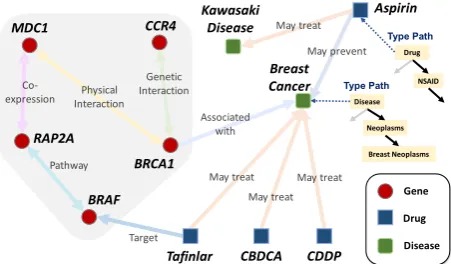
Figure 1:A snapshot of the structured network inLife-iNet.
literature (Tao et al., 2014), or of gaining new in-sights from the existing factual information (Mc-Donald et al., 2005; Riedel and McCallum, 2011). Users typically search PubMed using keywords and Medical Subject Headings (MeSH) terms, and then rely on Google and external biomedical on-tologies for everything else. Such an approach, however, might not work well on capturing differ-ent differ-entity relationships (i.e., facts), or iddiffer-entifying publications related to facts of interest.
For example, a biologist who is
inter-ested in cancer might need to check what
specific diseases belong to the category of
breast neoplasms (e.g., breast cancer) and
what genes (e.g., BRCA1) and drugs (e.g.,
As-pirin, Tafinlar) are related to breast cancer, and might need a list of related papers which study and discuss about these disease-gene rela-tions. For cancer experts, they might want to learn about what genes are distinctively
associ-ated with breast neoplasms (as compared
to other kinds of cancers), whether there exists other genes that are potentially associated with
breast neoplasmsentities, and whether there
exist other drugs that can also treatbreast cancer.
• Previous Efforts and Limitations. In life
sci-ences domain, recent studies (Ernst et al., 2016; Szklarczyk et al., 2014; Thomas et al., 2012;
Kim et al., 2008) rely on biomedical entity in-formation associated with the documents to sup-port entity-centric literature search. Most exist-ing information retrieval systems exploit either the MeSH terms manually annotated for each PubMed article (Kim et al., 2008) or textual men-tions of biomedical entities automatically recog-nized within the documents (Thomas et al., 2012), to capture the entity-document relatedness. Com-pared with traditional keyword-based systems, current entity-centric retrieval systems can iden-tify and index entity information for documents in a more accurate way (to enable effective literature exploration), but encounter several challenges, as shown below, in supporting exploration and anal-ysis of factual knowledge (i.e., entities and their relationships) in a given corpus.
• Lack of Factual Structures: Most ex-isting entity-centric systems compute the
document/corpus-level co-occurrence
statis-tics between two biomedical entities to capture the relations between them, but cannot identify the semantic relation types between two enti-ties based on the textual evidence in a specific
sentence. For example, in Fig. 1, relations
between gene entities should be categorized as
CoExpression, GeneticInteraction,
PhysicalInteraction, Pathway, etc.
Extracting typed entity relationships from un-structured text corpus enables: (1) un-structured search over the factual information in the given corpus; (2) fine-grained exploration of the docu-ments at the sentence level; and (3) more accurate identification of entity relationships.
• Limited Diversity and Coverage: There exist several biomedical knowledge bases (KBs) (e.g., Gene Ontology, UniProt, STRING (Szklarczyk et al., 2014), Literome (Poon et al., 2014)) that support search and data exploration functionality. However, each of these KBs is highly specialized and covers only a relatively narrow topic within life sciences (Ernst et al., 2016). Also, there is limited inter-linkage between entities in these KBs
(e.g., between drug, diseaseand gene
enti-ties). An integrative view on all aspects of life sciences knowledge is still missing. Moreover, many newly emerged entities are not covered in current KBs, as the manual curation process is time-consuming and costly.
• Restricted Analytic Functionality: Due to the lack of notion for factual structures, current retrieval and exploration systems have restricted functionality at analyzing entity relationships—
they mainly focus on entity-centric literature search (Ernst et al., 2016; Thomas et al., 2012) and exploring entity co-occurrences (Kim et al., 2008). In practice, analytic functionality over factual in-formation (e.g., drug-disease targeting prediction and distinctive disease-gene association identifica-tion) is highly desirable.
Proposed Approach.This paper presents a novel
system, calledLife-iNet, which transforms an
un-structuredcorpus into astructurednetwork of fac-tual knowledge, and supports multiple exploratory and analytic functions over the constructed net-work for knowledge discovery. Life-iNet automat-ically detects token spans of entities mentioned from text, labels entity mentions with semantic categories, and identifies relationships of various relation types between the detected entities. These inter-related pieces of information are integrated to form a unified, structured network, where nodes represent different types of entities and edges de-note relationships of different relation types be-tween the entities (see Fig. 1 for example). To address the issue of limited diversity and coverage, Life-iNet relies on the external knowledge bases to
provide seed examples (i.e.,distant supervision),
and identifies additional entities and relationships from the given corpus (e.g., using multiple text re-sources such as scientific literature and encyclope-dia articles) to construct a structured network. By doing so, we integrate the factual information in the existing knowledge bases with those extracted from the corpus. To support analytic functional-ity, Life-iNet implements link prediction functions over the constructed network and integrates a dis-tinctive summarization function to provide insight
analysis (e.g., answering questions such as “which
genes are distinctively related to the given disease
type underGeneDiseaseAssociation
rela-tion?”).
To systematically incorporate these ideas, Life-iNet leverages the novel distantly-supervised in-formation extraction techniques (Ren et al., 2017,
2016a, 2015) to implement aneffort-light network
construction framework(see Fig. 2). Specially, it relies on distant supervision in conjunction with external knowledge bases to (1) detect quality en-tity mentions (Ren et al., 2015), (2) label enen-tity mentions with fine-grained entity types in a given type hierarchy (Ren et al., 2016a), and (3) iden-tify relationships of different types between enti-ties (Ren et al., 2017). In particular, we design
specialized loss functions to faithfully model “
la-PubMed Corpus
Structured Network Construction
SegPhrase
ClusType
CoType AFET
Construction Algorithm pool
Knowledge Bases
Temp
Result Network Database
Full-text Index
Storage Data Visualization
Network Analysis Engine Query Interpreter
User Query
User
LINE CaseOLAP
Network Analysis Algorithm pool
1. Entity
Recognition Supervision2. Distant
3. Entity Typing 4. Relation Extraction
TransE CDA
[image:3.595.308.522.42.129.2]Network Exploration Engine
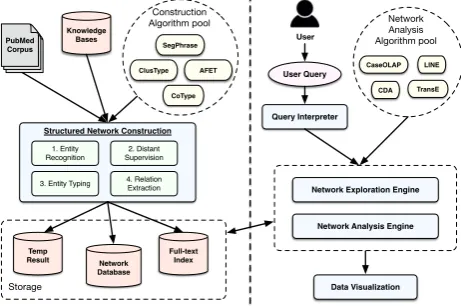
Figure 2:System Architecture ofLife-iNet.
bels for the training instances (heuristically gen-erated by distant supervision), regarding the spe-cific context where an instance is mentioned (Ren et al., 2017, 2016a). By doing so, we can construct
corpus-specific information extraction models by using distant supervision in a noise-robust way. The proposed network construction framework is domain-independent—it can be quickly ported to other disciplines and sciences without additional human labeling effort. With the constructed net-work, Life-iNet further applies link prediction al-gorithms (Tang et al., 2015; Bordes et al., 2013) to infer new entity relationships, and distinctive summarization algorithm (Tao et al., 2016) to find other entities that are distinctively related to the query entity (or the given entity types).
Contributions. The contributions and features of
theLife-iNetsystem are summarized as follows.
1. A novel knowledge exploration and analysis system for life sciences that integrates existing knowledge bases and factual information ex-tracted from massive literature.
2. Aneffort-lightframework that leverages distant
supervision in a robust way to automatically
construct a structured network of factual knowl-edge from the given unstructured text corpus. 3. Capabilities for exploration and analysis over
the constructed structured network to facilitate life sciences research.
TheLife-iNetdemo system will be made
avail-able online for interactive use after its demonstra-tion in the conference.
2 The Life-iNet System
At a high level, Life-iNet consists of two
ma-jor components: a structured network construc-tion pipeline and a network exploraconstruc-tion and anal-ysis engine. The former (i.e., the network
con-Background corpora Cancer Heart Disease
#PubMed publications 2,936,615 2,105,257
#PMC full-text papers 95,008 38,205
#Wikipedia articles 37,128 25,577
#Sentences in total 38M 23M
#Entity types 1,116 1,086
#Relation types 414 384
#KB-mapped (seed) entity mentions 59M 33M
#KB-mapped (seed) relation mentions 47M 23M
#Nodes in Life-iNet (i.e., entities) 64M 39M
[image:3.595.60.291.43.196.2]#Edges in Life-iNet (i.e., facts) 186M 82M
Table 1:Data statistics of corpora and networks in Life-iNet.
struction pipeline) includes four functional mod-ules: (1) entity mention detection, (2) distant su-pervision generation, (3) entity typing, and (4) re-lation extraction; whereas the latter (i.e., the net-work exploration and analysis engine) implements network exploratory functions, relationship pre-diction algorithms (e.g., LINE (Tang et al., 2015)) and network-based distinctive summarization al-gorithms (e.g., CaseOLAP (Tao et al., 2016)), and operates on the constructed network to support an-swering different user queries. Fig. 2 shows its system architecture. The functional modules are presented in detail as follows.
2.1 Structured Network Construction
The network construction pipeline automatically extracts factual structures (i.e., entities, relations) from given corpora with (potentially noisy) dis-tant supervision, and integrates them with existing knowledge bases to build a unified structured net-work. In particular, to extract high-quality, typed
entities and relations, we design noise-robust
ob-jective functionsto select the “most appropriate” training labels when constructing models from la-beled data (heuristically obtained by distant super-vision) (Ren et al., 2016b,a, 2017).
Data Collection. To obtain background text cor-pora for network construction, we consider two
kinds of textual resources,i.e., scientific
publica-tions and encyclopedia articles. For scientific pub-lications, we collect titles and abstracts of 26M
pa-pers from the entire PubMed1dump, and full-text
paper content of 2.2M papers from PubMed
Cen-tral (PMC)2. For encyclopedia articles, we collect
62,705 related articles through Wikipedia Health
Portal3. For demonstration purpose, we select
documents related to two kinds of important
dis-eases, i.e., cancer and heart diseases to form the
background corpora for Life-iNet. Table 1 sum-marizes the statistics of the background corpora.
Entity Mention Detection. The entity mention detection module in Life-iNet runs a data-driven
1https://www.ncbi.nlm.nih.gov/pubmed/
2https://www.ncbi.nlm.nih.gov/pmc/
3https://en.wikipedia.org/wiki/Portal:Health_and_
text segmentation algorithm, SegPhrase (Liu et al., 2015), to extract high-quality words/phrases as en-tity candidates. SegPhrase uses enen-tity names from KBs as positive examples to train a quality clas-sifier, and then efficiently segments the corpus by maximizing the joint probability based on the trained classifier. Table 1 shows the statistics of detected entity mentions for the corpora.
Distant Supervision Generation.. Distant su-pervisions (Mintz et al., 2009; Ren et al., 2017, 2016a) leverages the information overlap between external KBs and given corpora to automatically generate large amounts of training data. A typical workflow is as follows: (1) map detected entity mentions to entities in KB, (2) assign, to the entity type set of each entity mention, KB types of its KB-mapped entity, and (3) assign, to the relation type set of each entity mention pair, KB relations between their KB-mapped entities. Such a label generation process may introduce noisy type la-bels (Ren et al., 2017). Our network construction pipeline faithfully incorporates the noisy labels in training to learn effective extraction models. In Life-iNet, we use a publicly-available KB, UMLS
(Unified Medical Language System)4, and further
enrich its entity type ontology with MeSH tree
structures5. This yields a KB with 6.7M unique
entities, 10M entity relationships, 56k entity types, and 581 relation types. Table 1 shows the data statistics of distant supervision.
Entity Typing. The entity typing module is concerned with predicting a single type-path in the given entity type hierarchy for each
unlinkable entity mention (i.e., mentions that cannot be mapped to entities in KB) based on its local context (e.g., sentence). Life-iNet adopts a two-step entity typing process, which first identifies the coarse type label for each
mention (e.g., disease, gene, protein,
drug, symptom), then refines the coarse
label into a more fine-grained type-path (e.g., disease::heart disease::arrhythmias). Specifically, we first run ClusType (Ren et al., 2015) to predict coarse type label for each unlink-able mention. Then, using coarse type label as constraints, we apply AFET (Ren et al., 2016a) to estimate a single type path for each mention. AFET models the noisy candidate type set gener-ated by distant supervision to learn a predictive typing model for unseen entity mentions.
Relation Extraction. The task of relation
extrac-4https://www.nlm.nih.gov/research/umls/
[image:4.595.305.530.51.238.2]5https://www.nlm.nih.gov/mesh/intro_trees.html
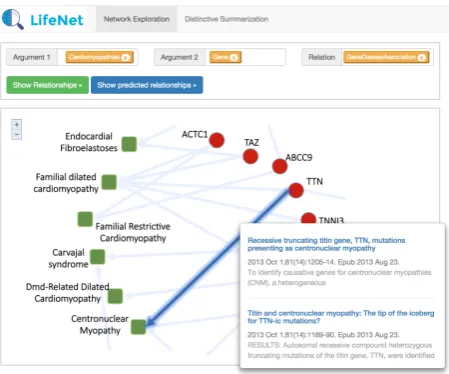
Figure 3:Screen shot of the user interface for relation-based exploration and relationship prediction inLife-iNet.
tion focuses on determining whether a relationship of interest (i.e., in given relation type set) is ex-pressed between a pair of entity mentions in a spe-cific sentence, and label them with the appropri-ate relation type if a specific relation is expressed. Life-iNet relies on a distantly-supervised relation extraction framework, CoType (Ren et al., 2017), to extract typed relation mentions from text. Co-Type leverages a variety of text features extracted from the local context of a pair of entity mentions, and jointly embeds relation mentions, text features and relation type labels into a low-dimensional space, where, in that space, objects with similar type semantics are also close to each other. It then performs nearest neighbor search to estimate the relation type for a relation mention.
Performance of Network Construction. Per-formance comparisons with state-of-the-art
(distantly-supervised) information extraction
systems demonstrate the effectiveness of the proposed pipeline (Ren et al., 2017)—CoType achieves a 25% F1 score improvement on relation extraction and a 6% enhancement in F1 score for entity recognition and typing, on the public BioInfer corpus (manually labeled biomedical papers). Table 1 summarizes the statistics of the constructed structures networks—Life-iNet discovers over 250% more facts compared to those generated by distant supervision.
2.2 Network Exploration and Analysis
Network Exploration. For each entityei, we
in-dex its entity typesTi, and sentencesSi(and
docu-mentsDi) where it is mentioned. For each relation
mentionzi= (e1, e2;s), we index its sentencesand
relation type ri. With this data model, Life-iNet
can support several structured search queries: (1) find entities of a given entity type, (2) find entities that have a specific relation to a given entity (entity type), and (3) find papers related to given entities, entity types, relationships, or relation types. We use raw frequency discounted by object popularity to rank the results.
Relationship Prediction. We adopt state-of-the-art heterogeneous network-based link predic-tion algorithms, LINE (Tang et al., 2015) and TransE (Bordes et al., 2013), to discover new relationships in the network. The intuition be-hind these algorithms is straightforward: if two nodes share similar neighbors in the network, they should be related. Following this idea, the algo-rithms embed the network into a low-dimensional space based on distributional assumption. A new edge will be formed if the similarity between the embedding vectors of the corresponding entity
ar-guments are larger than a pre-defined thresholdδ,
i.e., sim(vec(e1),vec(e2)) > δ. The prediction can
be further interpreted using existing network struc-tures, by retrieving indirect paths between the two entities (if there exists).
Distinctive Summarization. In biomedical do-main, some high-popularity entities may form re-lationships with many other entities simultane-ously. For example, some genes may be associ-ated with multiple heart disease types. It is de-sirable to find genes that are distinctively
asso-ciated with each heart disease type. This
moti-vates us to apply CaseOLAP (Tao et al., 2016), a context-aware, multi-dimensional summarization algorithm to generate distinctive entities. The
ba-sic idea is that: an entity is distinctively related
to the target entity type if it is relevant to entities
of thetargetentity type but relatively irrelevant to
entities of theotherentity types. We pre-compute
the distinctive summarization results between dif-ferent entity types and materialize the temporary results for efficient user query answering.
3 Demo Scenarios
3.1 Relation-Based Exploration
Life-iNet indexes the extracted factual struc-tures along with their support documents. Our demo provides an exploration interface (see Fig. 3), where users can enter an argument
triple to specify the entity and relation types they want to explore (user will be prompted
with type candidates). Suppose a biologist
is interested in finding genes associated with cardiomyopathies, he/she can enter type
gene as argument 1, cardiomyopathies as
argument 2, andGeneDiseaseAssociation
as the relation. Life-iNet will then retrieve
and visualize a sub-network to show
differ-ent cardiomyopathies entities (e.g.,
Endo-cardial Fibroelastoses, Centronuclear Myopathy,
Carvajal syndrome), and their associated gene
entities (e.g., TAZ, BIN1, DSC2). When a user
moves his/her mouse cursor to an edge (or node) in the sub-network, Life-iNet will return a ranked list of supporting papers (also linked to PubMed) re-lated to the target relationship (or entity), based on the pre-computed relevance measures. Note that Life-iNet also supports specific entities as input for arguments 1 and 2 in the interface.
3.2 Hypothetical Relationship Generation
In life sciences, some entity
relation-ships (e.g., of type DrugTargetGene,
GeneDiseaseAssociation) may not be explicitly expressed in the existing literature. However, indirect connections between two isolated entities in the constructed network may provide good hints on predicting whether a specific relation exists between them. Life-iNet generates high-confidence predictions of new edges for the constructed network and forms hypothetical entity relationships to facilitate scientific research (e.g., discovering a new drug that can target a specific gene). We integrate this analysis function into our relation-exploration interface. For example, when exploring the sub-network for gene-heart disease associations, users
can click on the “Show Predicted Relationships”
to see hypothetical relationships that Life-iNet generates (highlighted as dash-line edges in the network). In particular, Life-iNet provides explanation of the prediction, using the existing network structures—the indirect paths between two isolated entities will be highlighted when a user clicks on the predicted edge. Thus, a user can further retrieve papers related to the edges on the indirect paths to gain better understanding about the hypothetical relationships.
3.3 Distinctive Entity Summarization
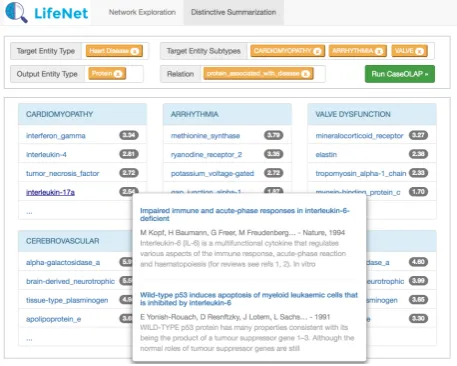
Figure 4:Screen shot for distinctive summarization function.
compare sets of entities (e.g., proteins) related to several entity types (e.g., different types of heart diseases), to discover the distinctive
entities related to each entity type. For
ex-ample, she may want to know what genes are
often associated with arrhythmia but are
unlikely associated with other kinds of heart
diseases such as cardiomyopathy and
heart valve disease. Life-iNet allows
a user to enter: (1) an entity type to specify
the target domain (e.g., heart disease),
(2) several sub-types of the target entity type
for comparison (e.g., cardiomyopathy,
arrhythmia, heart valve disease), (3)
an entity type to specify the list of related entities
(e.g., protein), and (4) a relation type (e.g.,
protein associated with disease). With user input queries, Life-iNet produces a structured table to summarize the distinctive entities for each entity sub-type. It also shows
the distinctiveness score for each entity. A
user can click on each distinctive entity to find documents related to the relationship (similar to the use case in relation-based exploration). An example output of the distinctive summarization
forheart diseaseis shown in Fig. 4.
Acknowledgement
Research was sponsored in part by the U.S. Army
Research Lab. under Cooperative Agreement
No. W911NF-09-2-0053 (NSCTA), National Sci-ence Foundation IIS-1320617 and IIS 16-18481, and grant 1U54GM114838 awarded by NIGMS through funds provided by the trans-NIH Big Data to Knowledge (BD2K) initiative. The views and conclusions contained in this paper are those of the authors and should not be interpreted as repre-senting any funding agencies.
References
Antoine Bordes, Nicolas Usunier, Alberto Garcia-Duran, Ja-son Weston, and Oksana Yakhnenko. 2013. Translating embeddings for modeling multi-relational data. InNIPS. Patrick Ernst, Amy Siu, Dragan Milchevski, Johannes
Hof-fart, and Gerhard Weikum. 2016. Deeplife: An entity-aware search, analytics and exploration platform for health and life sciences. InACL.
Jung-jae Kim, Piotr Pezik, and Dietrich Rebholz-Schuhmann. 2008. Medevi: retrieving textual evidence of relations between biomedical concepts from medline.
Bioinformatics.
Jialu Liu, Jingbo Shang, Chi Wang, Xiang Ren, and Jiawei Han. 2015. Mining quality phrases from massive text cor-pora. InSIGMOD.
Ryan McDonald, Fernando Pereira, Seth Kulick, Scott Win-ters, Yang Jin, and Pete White. 2005. Simple algo-rithms for complex relation extraction with applications to biomedical ie. InACL.
Mike Mintz, Steven Bills, Rion Snow, and Dan Jurafsky. 2009. Distant supervision for relation extraction without labeled data. InACL.
Hoifung Poon, Chris Quirk, Charlie DeZiel, and David Heck-erman. 2014. Literome: Pubmed-scale genomic knowl-edge base in the cloud.Bioinformatics.
Xiang Ren, Ahmed El-Kishky, Chi Wang, Fangbo Tao, Clare R Voss, and Jiawei Han. 2015. ClusType: effec-tive entity recognition and typing by relation phrase-based clustering. InKDD.
Xiang Ren, Wenqi He, Meng Qu, Lifu Huang, Heng Ji, and Jiawei Han. 2016a. AFET: Automatic fine-grained en-tity typing by hierarchical partial-label embedding. In
EMNLP.
Xiang Ren, Wenqi He, Meng Qu, Clare R Voss, Heng Ji, and Jiawei Han. 2016b. Label noise reduction in entity typing by heterogeneous partial-label embedding. InKDD. Xiang Ren, Zeqiu Wu, Meng Qu, Clare R. Voss, Heng Ji,
Tarek F. Abdelzaher, and Jiawei Han. 2017. CoType: Joint extraction of typed entities and relations with knowledge bases. InWWW.
Sebastian Riedel and Andrew McCallum. 2011. Fast and robust joint models for biomedical event extraction. In
EMNLP.
Damian Szklarczyk, Andrea Franceschini, Stefan Wyder, Kristoffer Forslund, Davide Heller, Milan Simonovic, Alexander Roth, Alberto Santos, Kalliopi P Tsafou, et al. 2014. String v10: protein–protein interaction networks, integrated over the tree of life.Nucleic acids research. Jian Tang, Meng Qu, Mingzhe Wang, Ming Zhang, Jun Yan,
and Qiaozhu Mei. 2015. Line: Large-scale information network embedding. InWWW.
Fangbo Tao, George Brova, Jiawei Han, Heng Ji, Chi Wang, Brandon Norick, Ahmed El-Kishky, Jialu Liu, Xiang Ren, and Yizhou Sun. 2014. Newsnetexplorer: automatic con-struction and exploration of news information networks. InSIGMOD.
Fangbo Tao, Honglei Zhuang, Chi Wang Yu, Qi Wang, Tay-lor Cassidy, Lance Kaplan, Clare Voss, and Jiawei Han. 2016. Multi-dimensional, phrase-based summarization in text cubes. Data Engineeringpage 74.