BACKGROUND
People of sub-Saharan African origin are the second largest group affected by HIV in Western Europe after Men who have Sex with Men (MSM). Two thirds of all heterosexually acquired HIV infections diagnosed between 1997 and 2002 in Western Europe were among people from countries with generalised epidemics, 90% of them in sub-Saharan Africa. Similarly, in the UK, black Africans constitute approximately 0.5% of the UK population, but represent almost 28% of people diagnosed with HIV.
There is therefore a critical need to develop HIV prevention interventions with black African communities affected by HIV in Europe.
RESULTS
The review included 129 studies, of which 29 were published in peer-reviewed journals. Twenty-four of these were descriptive quantitative studies, and five were qualitative studies. A total of 100 ‘grey literature’ publications (mainly reports and online publications) encompassing quantitative and qualitative data were also included.
There were no studies in peer-reviewed journals describing HIV interventions with people of sub-Saharan African origin.
However, information on existing interventions was available through grey literature, and details of 31 interventions were thus obtained, 22 in the UK and nine in other European countries.
RECOMMENDATIONS
We identified six major areas of need for HIV prevention interventions with black African communities:
1. Promoting Voluntary Counselling and Testing (VCT)
2. Improving HIV awareness and sexual health services knowledge
3. Meeting the psychosocial needs of black African families, adolescents and children affected by HIV
4. Promoting safer sex and condom use among black African MSM
5. Improving HIV awareness among black African adolescents and youth
6. Facilitating access to employment for black Africans affected by HIV
EXECUTIVE SUMMARY
REVIEW AIMS AND METHODS
This review aims to describe and summarise the literature on prevention interventions with African migrant communities affected by HIV in the UK and other European countries, and to make recommendations for future interventions.
We conducted a keyword search using Embase, Medline and PsychInfo, searched existing reviews, ‘grey literature’, and expert working group reports.
We then explored six key themes that emerged from descriptive studies:
1. HIV testing
2. Sexual lifestyles and attitudes 3. Gender
CONTENTS
Executive Summary
1. Introduction: Aims of the Review
2. Methods and Results
3. Descriptive Studies
3.1 HIV testing
3.2 Sexual lifestyles and attitudes
3.3 Use of HIV services
3.4 Gender
3.5 Stigma and disclosure
3.6 Deprivation and legal status
4. Intervention Studies
5. Summary & Recommendations
References
Tables:
Table 1 Descriptive quantitative and qualitative
studies on black African communities affected by
HIV in the UK and other European countries
Table 2 Surveys on the sexual health attitudes and
needs of black Africans in the UK
Table 3 HIV Prevention Interventions with African
Communities in the UK (n=22, grey literature)
Table 4 HIV Prevention Interventions with African
Communities in other European Countries (n=9,
grey literature)
02
03
08
08
09
10
11
12
14
17
23
24
A C K N O W L E D G E M E N T S
We gratefully acknowledge the help of the following researchers in defining the search strategy for this review and commenting on drafts of the report: Prof. Graham Hart and Dr. Mark Petticrew (MRC Social & Public Health Sciences Unit), Prof. Jonathan Elford and Prof. Helen Roberts (City University), Dr. John Imrie (UCL Centre for Sexual Health and HIV Research) and Dr. Jane Anderson (Homerton University Hospital Foundation Trust, Hackney).People of sub-Saharan African origin are the second largest group affected by HIV in Western Europe after Men who have Sex with Men (MSM). In 2003, approximately 58% of new HIV infections in Western Europe were acquired through heterosexual contact, and 26% of these were among people of sub-Saharan African origin [71]. Moreover, two thirds of all
heterosexually acquired HIV infections diagnosed between 1997 and 2002 were among people from countries with generalised epidemics, 90% of them in sub-Saharan Africa. In 2004, new diagnoses among sub-Saharan African migrants constituted 30.9% of all new HIV diagnoses in the UK, 34.1% in Belgium, 27.4% in France, 14.3% in Germany, and 13.4% in Portugal [71]. In the UK, HIV prevalence among black Africans has been increasing constantly since 1997, and almost doubled between 2000 and 2002 [88]. Although black African migrants and their descendents only constitute about 0.5% of the UK population, they represent nearly 28% of those diagnosed with HIV [93]. According to recent research, approximately 37% of all people diagnosed with HIV between 1995 and 2005 in the UK were black African [89].
While generalising about the experience of ‘African communities’ in Western Europe inevitably imposes a reductionist frame on a vastly complex issue [84, 85], the literature highlights a number of traits that roughly characterise the experiences
INTRODUCTION
of sub-Saharan African migrants living with HIV across Western Europe: 1. Late testing and diagnosis, often at the onset of AIDS-related illnesses or, for women, in the context of antenatal screening [2, 7, 4, 10-13, 19, 22, 24, 49, 60, 63, 83, 101, 113].
2. Barriers to accessing healthcare and social services increased by uncertain immigration status, social isolation, discrimination, and HIV-related stigma [25, 28, 29, 61, 64, 72, 91].
3. High levels of unemployment and poverty, especially among recent migrants [32-34, 37, 54, 65, 83, 86, 95, 115].
There is therefore a clear need for specific interventions to encourage testing and improve access to care among black African communities in Western Europe. However, little is known about the effectiveness of existing HIV prevention interventions. This scoping review therefore aims to: (a) Survey the descriptive quantitative studies, qualitative studies, and interventions studies undertaken among black African communities in the UK and other European countries. (b) Record the characteristics of the interventions and research projects identified.
(c) Clarify some of the factors which contribute to increasing the
M E T H O D S & R E S U L T S
We searched the databases Embase, Medline, and PsychInfo, using combinations of the following text words: ‘HIV’, ‘migrant’, ‘migration’, ‘sub-Saharan’, ‘Black African’, ‘Africa’, ‘UK’ and ‘Europe’. We did not use the key word ‘Black’, however, as this would have yielded a larger number of publications related to black African Americans. A search for studies in progress was conducted using the National Research Register and the Cochrane Library. We also hand-searched retrieved articles,
bibliographies of selected papers, ‘grey literature’, and expert working group reports from the UK and other European countries. Individual researchers were contacted to obtain further unpublished studies [132, 135, 137].
Studies included:
1. Studies that described an intervention or the planning phase of an intervention with HIV positive people of sub-Saharan African origin living in the UK and other European countries.
2. Quantitative, descriptive studies relating to people of sub-Saharan origin living with HIV in the UK and other European countries.
3. Qualitative studies relating to social and economic issues affecting people of sub-Saharan origin living with HIV in the UK and other European countries.
Only studies published between 1996 (i.e. post-HAART) and October 2005 were included, with no restriction on language, study design, or outcome assessed. However, the high number of English language ‘grey literature’ publications available on the internet probably did introduce a language and country bias. We included literature from European countries other than the UK since sub-Saharan African migrants living with HIV in major European cities are likely to be affected by similar issues, such as unequal access to social services and care, immigration concerns and stigma. A total of 129 studies met our inclusion criteria. The majority of these (100) were ‘grey’ publications: reports from governmental and non-governmental organisations both in the UK and other European countries, online materials, and conference abstracts. Some of the reports included in this category contained quantitative and/or qualitative data. Two descriptive studies were excluded from the ‘descriptive studies’ category on the basis of quality assessment criteria but included in the ‘grey literature’ section.
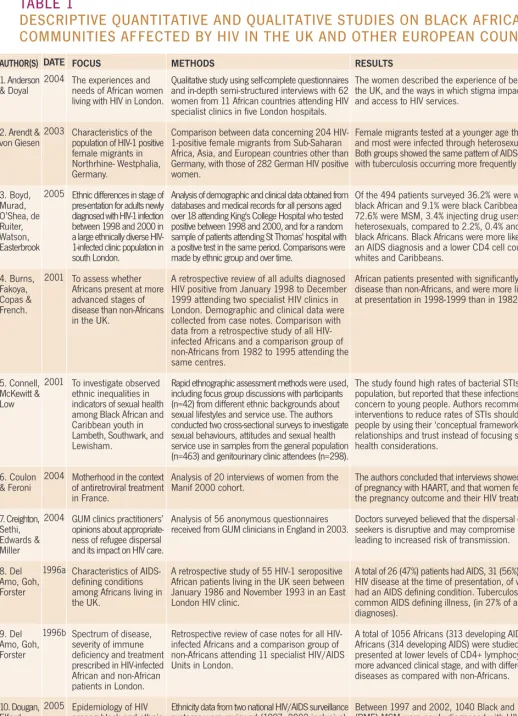
We found 29 descriptive studies published in peer-reviewed journals concerned with migrants’ access to, and experience of, HIV testing and health care, 24 of which were quantitative, and five qualitative (see Table 1). No studies published in peer-reviewed publications described interventions with migrants from sub-Saharan African countries. However, outlines of 31 interventions were available through ‘grey literature’ (reports and online publications, see Tables 3 and 4). Eight of these did not focus specifically on the needs of sub-Saharan Africans, but rather on the needs of people living with HIV at large.
The majority of studies on African communities conducted in the UK are primary observational studies, and very few are intervention studies. As Fenton noted in a recent presentation on the state of play in research on African communities in the UK, ‘there are still gaps in behavioural interventions, evaluations of interventions and the collation of evidence’ [109].
RESULTS:
Publications reviewed (n= 129): Peer-reviewed studies (n= 29):
- Quantitative descriptive studies (n= 24) - Qualitative descriptive studies (n= 5) ‘Grey literature’ publications (n= 100)
Interventions identified through ‘grey literature’ (n=31): - UK-based interventions (n= 22)
- Interventions in other European countries (n=9)
TABLE 1
DESCRIPTIVE QUANTITATIVE AND QUALITATIVE STUDIES ON BLACK AFRICAN
COMMUNITIES AFFECTED BY HIV IN THE UK AND OTHER EUROPEAN COUNTRIES
DATE 2004 2003 2005 2001 2001 2004 2004 1996a 1996b 2005 AUTHOR(S) 1. Anderson & Doyal
2. Arendt & von Giesen 3. Boyd, Murad, O’Shea, de Ruiter, Watson, Easterbrook 4. Burns, Fakoya, Copas & French. 5. Connell, McKewitt & Low 6. Coulon & Feroni 7. Creighton, Sethi, Edwards & Miller 8. Del Amo, Goh, Forster 9. Del Amo, Goh, Forster 10. Dougan, Elford, Rice, Brown, Sinka, Evans, Gill, Fenton FOCUS
The experiences and needs of African women living with HIV in London.
Characteristics of the population of HIV-1 positive female migrants in Northrhine- Westphalia, Germany.
Ethnic differences in stage of pres-entation for adults newly diagnosed with HIV-1 infection between 1998 and 2000 in a large ethnically diverse HIV-1-infected clinic population in south London.
To assess whether Africans present at more advanced stages of disease than non-Africans in the UK.
To investigate observed ethnic inequalities in indicators of sexual health among Black African and Caribbean youth in Lambeth, Southwark, and Lewisham.
Motherhood in the context of antiretroviral treatment in France.
GUM clinics practitioners’ opinions about appropriate-ness of refugee dispersal and its impact on HIV care. Characteristics of AIDS-defining conditions among Africans living in the UK.
Spectrum of disease, severity of immune deficiency and treatment prescribed in HIV-infected African and non-African patients in London.
Epidemiology of HIV among black and ethnic minority MSM in England & Wales
METHODS
Qualitative study using self-complete questionnaires and in-depth semi-structured interviews with 62 women from 11 African countries attending HIV specialist clinics in five London hospitals.
Comparison between data concerning 204 HIV-1-positive female migrants from Sub-Saharan Africa, Asia, and European countries other than Germany, with those of 282 German HIV positive women.
Analysis of demographic and clinical data obtained from databases and medical records for all persons aged over 18 attending King's College Hospital who tested positive between 1998 and 2000, and for a random sample of patients attending St Thomas' hospital with a positive test in the same period. Comparisons were made by ethnic group and over time.
A retrospective review of all adults diagnosed HIV positive from January 1998 to December 1999 attending two specialist HIV clinics in London. Demographic and clinical data were collected from case notes. Comparison with data from a retrospective study of all HIV-infected Africans and a comparison group of non-Africans from 1982 to 1995 attending the same centres.
Rapid ethnographic assessment methods were used, including focus group discussions with participants (n=42) from different ethnic backgrounds about sexual lifestyles and service use. The authors conducted two cross-sectional surveys to investigate sexual behaviours, attitudes and sexual health service use in samples from the general population (n=463) and genitourinary clinic attendees (n=298). Analysis of 20 interviews of women from the Manif 2000 cohort.
Analysis of 56 anonymous questionnaires received from GUM clinicians in England in 2003.
A retrospective study of 55 HIV-1 seropositive African patients living in the UK seen between January 1986 and November 1993 in an East London HIV clinic.
Retrospective review of case notes for all HIV-infected Africans and a comparison group of non-Africans attending 11 specialist HIV/AIDS Units in London.
Ethnicity data from two national HIV/AIDS surveillance systems were reviewed (1997–2002 inclusive). Undiagnosed HIV prevalence among MSM attending 14 genitourinary medicine (GUM) clinics participating in the Unlinked Anonymous Prevalence Monitoring Programme was examined by world region of birth.
RESULTS
The women described the experience of being a migrant in the UK, and the ways in which stigma impacted on their lives and access to HIV services.
Female migrants tested at a younger age than non-migrants, and most were infected through heterosexual intercourse. Both groups showed the same pattern of AIDS-defining diseases, with tuberculosis occurring more frequently among migrants.
Of the 494 patients surveyed 36.2% were white, 54.7% were black African and 9.1% were black Caribbean. Among whites, 72.6% were MSM, 3.4% injecting drug users and 21.2% heterosexuals, compared to 2.2%, 0.4% and 93.3% among black Africans. Black Africans were more likely to present with an AIDS diagnosis and a lower CD4 cell count compared to whites and Caribbeans.
African patients presented with significantly more advanced disease than non-Africans, and were more likely to have AIDS at presentation in 1998-1999 than in 1982-1995.
The study found high rates of bacterial STIs in the study population, but reported that these infections were not of great concern to young people. Authors recommended that interventions to reduce rates of STIs should engage young people by using their ‘conceptual frameworks’, i.e. emphasise relationships and trust instead of focusing solely on personal health considerations.
The authors concluded that interviews showed a 'normalisation' of pregnancy with HAART, and that women felt confident about the pregnancy outcome and their HIV treatment.
Doctors surveyed believed that the dispersal of positive asylum seekers is disruptive and may compromise HIV care, thereby leading to increased risk of transmission.
A total of 26 (47%) patients had AIDS, 31 (56%) had symptomatic HIV disease at the time of presentation, of whom 19 (34.5%) had an AIDS defining condition. Tuberculosis was the most common AIDS defining illness, (in 27% of all initial AIDS diagnoses).
A total of 1056 Africans (313 developing AIDS) and 992 non-Africans (314 developing AIDS) were studied. African patients presented at lower levels of CD4+ lymphocyte count, at a more advanced clinical stage, and with different AIDS-indicator diseases as compared with non-Africans.
AUTHOR(S) 11. Dougan, Patel, Tosswill, Sinka
12. Doyal & Anderson
13. Erwin & Peters
14. Erwin et al. 15. Evans, Bond & MacRae 16. Fenton, Chinouya, Davidson & Copas 17. Fenton, Chinouya, Davidson & Copas 18. Forsyth, Burns & French 19. Hickson, Reid, Weatherburn, Stephens, Nutland & Boakye 20. Low, Paine, Clark, Mahalingam & Pozniak FOCUS
HIV diagnoses made in England, Wales, and Northern Ireland among those probably infected in west Africa, and evidence for ongoing heterosexual transmission within the UK.
Experiences of HIV positive African women in London.
Treatment issues among Africans living with HIV in the UK.
Pathways to HIV testing and care among black Africans and white patients in London.
Issues around sexual behaviour and STIs among African and Caribbean men in London.
Risk of HIV transmission among sub-Saharan Africans in London travelling to their country of origin.
Demographic and behavioural factors associated with HIV testing among migrant Africans in London.
To explore the link between conflicts in African countries, migration, and HIV presentation in the UK.
Epidemiology of HIV among black and minority ethnic (BME) men who have sex with men (MSM) in England and Wales (E&W).
Differences in progression to AIDS between 1-positive Africans and HIV-1-positive non-Africans in London.
METHODS
Reports of new HIV diagnoses received at the Communicable Disease Surveillance Centre were analysed. The study included individuals probably infected in west Africa and those infected through heterosexual intercourse within the United Kingdom by a heterosexual partner infected in west Africa were included.
Semi-structured interviews conducted between 2001 and 2002 with 62 women from different parts of Africa receiving treatment through the NHS in London.
Six focus groups were held with 44 participants from Uganda, Zambia, Ethiopia, Nigeria, Kenya, Zimbabwe and Tanzania. Nineteen men and 25 women took part in the focus group discussions (aged from 22 to 46 years old).
Questionnaire survey of 392 HIV positive patients attending a clinic in south London between July 1999 and March 2000.
Cross-sectional survey of 180 heterosexual African and Caribbean men.
Analysis based on data from 748 respondents collected for the Mayisha study (see Table 4.)
Mayisha Questionnaire Survey (see Table 4.)
Data was collected retrospectively for HIV-positive Africans attending an HIV unit in London between 1985 and 2003. Dates of armed conflicts in Africa were correlated with year of HIV diagnosis among the clinic population.
Ethnicity data from two national HIV/AIDS surveillance systems were reviewed (1997–2002 inclusive). Undiagnosed HIV prevalence among MSM attending 14 genitourinary medicine (GUM) clinics participating in the Unlinked Anonymous Prevalence Monitoring Programme and having routine syphilis serology was examined by world region of birth. Retrospective cohort study of 2048 HIV-1-positive individuals.
RESULTS
Between 1985 and 2003 inclusive, 1324 individuals diagnosed and reported with HIV had probably been infected in west Africa, with 222 diagnoses made in 2003. A further 130 individuals were probably infected through heterosexual intercourse within the United Kingdom by a heterosexual partner infected in west Africa. This suggests that the number of people infected with HIV in west Africa and diagnosed in E, W & NI has increased in recent years. There is also evidence of heterosexual transmission within the United Kingdom from people infected in west Africa. The study highlighted the complex ways in which gender, experiences of migration and positive status impact on women's lives.
Salient issues discussed were: fear of discrimination, fear of being ‘experimented’ upon during treatment and distrust of the medical profession.
Sixty four percent of respondents were white, 26% black African, and 10% from other ethnic groups. Twenty eight per cent of black Africans suspected they were HIV positive before diagnosis, compared to 45% of white patients. Before testing, 11% of black Africans had attended a genitourinary medicine clinic and 80% had consulted a GP. Twenty per cent of black Africans expressed concern over entitlement to care.
The study showed relatively high levels of STIs among Caribbean men: 18% of the 133 Caribbeans had gonorrhoea compared with one (2%) of the 47 Africans. 69% of Caribbeans reported intercourse before the age of 17 compared with 48% of Africans (P=0.004), but there was no difference in the numbers of sexual partners, either in the previous year or in total.
Forty-three per cent of men and 46% of women had travelled to their home countries in the past five years. Current employment status and highest level of achieved education were significantly associated with the likelihood of travelling to one's country of origin. Men were more likely than women to have acquired a new sexual partner while travelling abroad. Thirty four percent of men and 30% of women reported ever having had an HIV test. HIV testing was significantly associated with age and previous STI diagnosis among women, as well as with nationality, education, employment, and self-perceived risk of acquiring HIV among men. The study suggests that HIV testing remains largely associated with an individual's STI history or self-perceived risk. A total of 656 African individuals from 34 countries presented during the study period; 40% were men and 60% were women. The study shows that the annual presentation patterns of African patients by country of origin correlates with periods of social and political unrest.
Of the 1040 BME MSM diagnosed with HIV between 1997 and 2002, 27% were black Caribbean, 12% black African, 10% black other, 8% Indian/Pakistani/Bangladeshi, and 44% other/mixed. Where reported (n = 395), 58% of BME MSM were probably infected in the United Kingdom. An estimated 7.4% of BME MSM aged 16–44 in E&W were living with diagnosed HIV in 2002 compared with 3.2% of white MSM.
Differences in progression to AIDS and death and CD4+ lymphocyte decline between HIV-1-infected Africans and non-Africans in London could not be attributed to ethnicity or different viral subtypes. Age and the clinical and immunological stage at presentation, or AIDS, were the major outcome determinants.
AUTHOR(S)
21. Lyall et al.
22. Malanda et al. 23. Manfredi, Calzo & Chiodo 24. Mayaux, Teglas & Blanche 25. McMunn et al. 26. MRC collaborative study of HIV infection in women 27. Sinka, Mortimer, Evans & Morgan 28. Staehelin et al. FOCUS
Uptake of interventions to reduce Mother to Child Transmission of HIV by women aware of their status in the UK. The provision of psychological care for HIV-positive black Africans in London.
Epidemiological features of HIV infection among non-EU migrants to Italy.
Characteristics of HIV-infected women who do not receive ARV treatment in the French perinatal cohort.
Health service use in relation to HIV/AIDS prevention among Ugandan migrants living in southeast London.
Ethnic differences in the
socio-epidemiological and clinical characteristics of a cohort of women with HIV infection in Britain and Ireland.
Impact of the HIV epidemic in sub-Saharan Africa on the pattern of HIV in the UK.
Access to ARV therapy, disease progression and survival among migrants from sub-Saharan Africa in the Swiss cohort study.
METHODS
Review of mother-infant pairs who presented for infant diagnosis of HIV infection.
The proportion of Black African individuals looked after in a large centre for the care of HIV infection in London was compared with the proportion of such patients referred for specialist mental health help.
Comparison of epidemiological, clinical and therapeutic data for 41 non-EU migrants with those of 123 Italian and EU patients in a cross-sectional age and gender-matched case-control study.
Observational study conducted as part of the French Perinatal Cohort of 2167 HIV-infected women and their children between 1996 and 1999.
Cross-sectional survey with face-to-face interviews using a semi-structured questionnaire about knowledge and use of health services, receipt of health promotion information and satisfaction with services, among 118 Ugandan migrants in South London in 1996.
Analysis of baseline data (ethnic group, sexual history, likely route of HIV infection, reasons for HIV testing and first AIDS-defining disease) from 400 women with HIV infection recruited into a cohort study from 15 genitourinary medicine/HIV clinics in Britain and Ireland.
Analysis of national surveillance data, routine voluntary confidential HIV reporting and unlinked anonymous seroprevalence surveys in the UK to December 2001.
Prospective national cohort study of HIV-1-infected adults from seven HIV centres in Switzerland. Survival analysis methods were used to compare uptake of antiretroviral therapy, survival and progression to AIDS in the 2684 participants from Sub-Saharan Africa and Northwest Europe enrolled from 1997-2001.
RESULTS
Women with a diagnosis of HIV infection acted to reduce the risk of transmission to their infants. Uptake of antiretroviral therapy increased significantly over time, and the caesarean section rate was high.
Black Africans were almost three times less likely to be referred for specialist mental health care. They were more likely to be suffering from AIDS at the time of referral, be referred for assessment of possible organic brain disease and to suffer from major depression or organic brain disease.
Approximately 4% of patients surveyed came from outside the EU (51.2% from sub-Saharan Africa), with a proportional predominance of females, and heterosexual and perinatal transmission of HIV disease. Compared with Italian and EU subjects, patients coming from abroad had a shorter duration of known HIV infection, but only some were aware of their HIV disease prior to immigration, or acquired HIV infection only after coming to Italy (14.6% and 12.2%, respectively). Approximately 4% of women in the cohort did not receive prepartum treatment; reasons for which were refusal (34%), premature delivery (8%) and unmonitored pregnancy (54%). Treated and untreated women did not differ in terms of geographic origin (Europe vs. sub-Saharan Africa).
Ninety seven percent of migrants interviewed were registered with a local GP and 94% of people reported having been to the GP, 98% of them in the past year. Ninety nine percent had had contact with at least one African organization. The vast majority of health promotion information was received from GP surgeries. Sixty one percent of respondents desired further information on HIV/AIDS, while 56% indicated that the GP surgery was the most convenient place to receive this information.
Sixty-five per cent of women were white and 29% black African. Their median number of lifetime sexual partners was seven and three, respectively. Ninety-three per cent of black African and 43% of white women were probably infected through sexual intercourse. Perceived risk (33%) or investigation of symptoms (26%) were the most common reasons for HIV testing. Seven per cent of white women and 16% of black African women (p < 0.001) had AIDS when HIV infection was diagnosed.
Twenty percent of all reported HIV infections diagnosed in the UK by the end of 2001 were probably acquired in Africa, and 90% of these were heterosexually acquired. Among those living with diagnosed HIV infection in 2000, 23% (4883 of 21,291) were described as black African, 81% of whom lived in London.
Among the patients surveyed (n=1331), the number of patients from sub-Saharan Africa increased from 3 (1.6%) to 47 (14%). A majority of HIV-positive migrants were most likely infected prior to arrival in Switzerland. Sub-Saharan Africans often presented at a more advanced stage of disease.
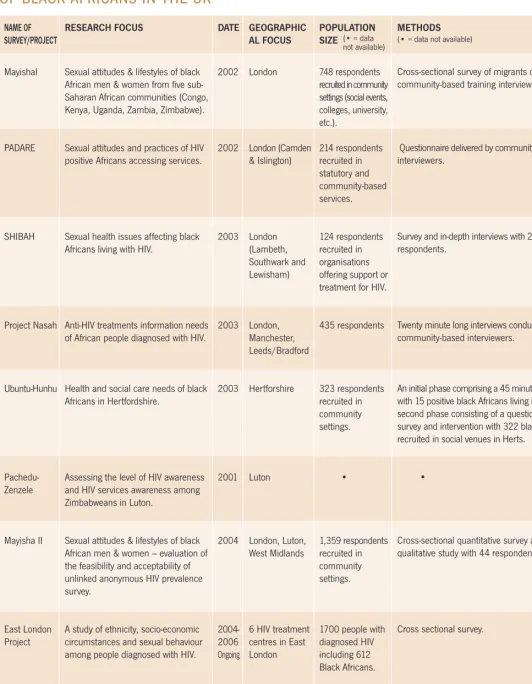
TABLE 2
SURVEYS ON THE SEXUAL HEALTH ATTITUDES AND NEEDS
OF BLACK AFRICANS IN THE UK
DATE
2002
2002
2003
2003
2003
2001
2004
2004-2006 Ongoing
Ongoing NAME OF
SURVEY/PROJECT
MayishaI
PADARE
SHIBAH
Project Nasah
Ubuntu-Hunhu
Pachedu-Zenzele
Mayisha II
East London Project
SONHIA
RESEARCH FOCUS
Sexual attitudes & lifestyles of black African men & women from five sub-Saharan African communities (Congo, Kenya, Uganda, Zambia, Zimbabwe).
Sexual attitudes and practices of HIV positive Africans accessing services.
Sexual health issues affecting black Africans living with HIV.
Anti-HIV treatments information needs of African people diagnosed with HIV.
Health and social care needs of black Africans in Hertfordshire.
Assessing the level of HIV awareness and HIV services awareness among Zimbabweans in Luton.
Sexual attitudes & lifestyles of black African men & women – evaluation of the feasibility and acceptability of unlinked anonymous HIV prevalence survey.
A study of ethnicity, socio-economic circumstances and sexual behaviour among people diagnosed with HIV.
Factors impacting on testing and treatment among newly diagnosed black Africans living with HIV
GEOGRAPHIC AL FOCUS
London
London (Camden & Islington)
London (Lambeth, Southwark and Lewisham)
London, Manchester, Leeds/Bradford
Hertforshire
Luton
London, Luton, West Midlands
6 HIV treatment centres in East London
London
METHODS (• = data not available)
Cross-sectional survey of migrants conducted by community-based training interviewers.
Questionnaire delivered by community-based trained interviewers.
Survey and in-depth interviews with 20 of the survey respondents.
Twenty minute long interviews conducted by trained community-based interviewers.
An initial phase comprising a 45 minute-long interview with 15 positive black Africans living in Herts, and a second phase consisting of a questionnaire-based survey and intervention with 322 black Africans recruited in social venues in Herts.
•
Cross-sectional quantitative survey and nested qualitative study with 44 respondents.
Cross sectional survey.
Cross-sectional survey and nested qualitative study. POPULATION
SIZE
748 respondents recruited in community settings (social events, colleges, university, etc.).
214 respondents recruited in statutory and community-based services.
124 respondents recruited in organisations offering support or treatment for HIV.
435 respondents
323 respondents recruited in community settings.
•
1,359 respondents recruited in community settings.
1700 people with diagnosed HIV including 612 Black Africans.
3. DESCRIPTIVE STUDIES
This section explores six prominent themes emerging from the descriptive studies included in the review. The discussion is primarily focused on studies pertaining to African communities in the UK. Many of the findings considered here stem from nine surveys focusing on the sexual health attitudes and needs of black Africans in the UK: Mayisha I & II, Project Nasah, PADARE, Ubuntu-Hunhu, Pachedu-Zenzele, SHIBAH, the East London Project, and SONIAH (see Table 2).
3. 1 HIV TESTING
At the end of 2002, approximately 15,400 African men and women were living with HIV in the UK, 31% of whom were undiagnosed [84]. An unlinked and anonymous seroprevalence survey undertaken among heterosexual attendees at seven GUM clinics in London in 1999 and 2000 found that one in 16 women and one in 33 men born in sub-Saharan Africa were infected with HIV [87]. Thirty nine percent of those that were HIV positive remained undiagnosed after the visit. Simalarly, Mayisha II found that two-thirds of black Africans living with HIV in England were undiagnosed [99]. High levels of undiagnosed HIV infection and, frequently, late diagnosis following longstanding HIV infection [4], make a powerful case for interventions emphasising the benefits of early testing.
A number of possible factors may explain the low levels of HIV testing found among black Africans in the UK:
•Low self-perceived risk: a study by Erwin et al. on ‘pathways to HIV testing’ found that only 28% per cent of black Africans surveyed thought they might be HIV positive before diagnosis (versus 41% of white patients) [10]. This would indicate that black Africans often do not suspect their status.
•Lack of information regarding available services: studies show a persistent need for HIV-related information among black Africans in the UK [10, 11, 13, 21, 26, 29, 54]. •Socio-economic and legal barriers to accessing services:uncertain immigration status is one of the main concerns of black African migrants living with HIV, and can be a powerful deterrent to testing and accessing services [72, 25, 28]. Encouraging innovative approaches to VCT promotion is a priority for primary and secondary HIV prevention interventions with black African communities. African adults residing in the UK often present with a different clinical spectrum to non-Africans [7]: co-infection with Tuberculosis and late presentation to HIV services, often at the onset of symptoms from AIDS-related illnesses, are frequent. Moreover, African adults often discover their status at a more advanced stage of disease progression and with lower CD4 counts at diagnosis. These factors put considerable incentive on developing interventions encouraging early testing.
Research shows that poor access to services and strained relationships with healthcare providers are factors which lead many Africans in the UK to present late for HIV care [10, 54, 75, 114, 125]. While many positive Africans are diagnosed in Genitourinary Medicine (GUM) clinics, a sizeable proportion also learn their status as hospital in-patients following an AIDS-related illness: Project Nasah [128], a survey of 435 HIV positive Africans showed that, while the majority of respondents had been diagnosed in GUM clinics, 38% were diagnosed as hospital in-patients, and 5% through general practice. A study by McMunn, Mwanje, Paine & Pozniak [21] suggests that black African patients see general practitioners as an important source
of information on HIV/AIDS, highlighting the potential for making information about VCT or VCT services themselves more readily available through primary care [102]. Some researchers and clinicians have grown impatient with the VCT approach and advocate routinised HIV testing during hospital visits as a remedy to the problem of late diagnosis. Manavi & Welsby [134], for example, argue that HIV testing ‘should be widely accepted, without conventional voluntary counselling and testing’. Conversely, other researchers feel that the routinisation of testing would lower quality standards for VCT by side-stepping appropriate counselling. Migrants’ groups and HIV specialists, in particular, have argued that mandatory testing would entrench the existing stigmatisation of HIV positive people and act as a further deterrent to accessing services. These views against mandatory testing were collated in a report from the All Party Parliamentary Group on AIDS (UK) [35]. The report concluded that the government should foster policies that encourage VCT.
Interventions should therefore focus on: 1. Devising innovative methods to promote VCT. 2. Developing training and information resources for practitioners in primary care settings (e.g. VCT training packs).
KEY POINTS
• Poor access to health services
and poor relationships with
healthcare providers lead many
Africans in the UK to present
late for HIV care.
• Studies suggest that mandatory
HIV testing would hinder
prevention.
cultural appropriateness of HIV counselling practices for black Africans using services in the UK [74], as the uptake of counselling and psychological support services by African patients is low [18, 110]. This could be because talking to a stranger about family issues may not be culturally appropriate, but also because of practitioners’ lack of cultural competency. In some studies black Africans talked about not ‘being able to listen’ to what was being said about HIV care during post-diagnosis counselling because of the impact of grief [74, 86]. Thus, the timing and content of pre- and post-test counselling are factors which should be carefully considered in future interventions encouraging VCT.
3.2 SEXUAL LIFESTYLES AND ATTITUDES
Condom use
Elam et al.’s [70] study on sexual behaviour among ethnic minority groups in the UK found that many black Africans had low self-perceived risk, and, consequently, low condom use. Similarly, in the SHIBAH survey [86], 56% of black Africans living with HIV (n=124) ‘always’ used condoms, 33% ‘sometimes’, and 10% ‘never’. PADARE, SHIBAH, and Mayisha I found relatively low levels of sexual health knowledge among black Africans surveyed in London. The PADARE study, in particular, revealed important knowledge gaps: 16% of the participants (n= 214) felt they could be cured of HIV in the UK, while 8% thought an undetectable viral load meant they could not pass on the infection to anyone else [52].
In Mayisha I, over 90% of the men and women surveyed (n=748) strongly agreed with the statement ‘I think I could convince a new sexual partner to use a condom, even if they did not want to use one’. In both Mayisha I [13] and PADARE, a majority
of participants reported the intention to use condoms with new partners, but few actually did: while the majority of 214 positive black African respondents in PADARE had had sex in the last four weeks, 40% reported using a condom only on some or on no occasions, and 29% had had unprotected sex. In Mayisha II, only 49.2% of men and 38.7% of women who answered the question about condom use (n= 1123) reported using a condom the last time they had sex. These findings concur in indicating relatively low condom use.
This problem is related to the acceptability of condoms and their conflicting associations with both protection and promiscuity. Chinouya & Reynolds [54], drawing on findings from Mayisha I, have argued that the condom is seen as a symbol of protection among black Africans in the UK. Yet there is evidence that the use of condoms is still perceived by many as indicating a lack of trust between partners. In Mayisha II for example, the majority of respondents felt that condom use was not appropriate or necessary in long-term relationships, and implied partner distrust.
Levels of condom use and confidence in communicating with partners about sexual health must be understood within the broader context of relationships, and as linked to issues of trust, fidelity, and the A review of the literature therefore indicates
that regular voluntary counselling and testing remains the most effective method for controlling HIV. Promoting innovative paths to VCT is consequently considered one of the most important goals of prevention interventions for African communities in Europe.
CHALLENGES TO EFFECTIVE VCT PLANNING
The favoured approach to VCT encourages same-day rapid testing and counselling with an appropriate carer, conducted in an environment which protects anonymity and confidentiality. However, interventions focusing on the promotion of VCT, either through primary care or in specialist settings, must take into account the findings of recent qualitative studies examining experiences of testing and treatment. In these studies, the moment of diagnosis is depicted as one where concerns about health, stigma, and socio-economic needs coalesce, generating tremendous mental and physical strain. A recent study by Flowers et al. for example, describes black Africans’ impressions of pre and post-VCT counselling [74]:
‘Much as I think I may have come across to the GUM clinic as an articulate, informed young woman, I still feel the pros and cons of testing should have been offered to me. I still feel I should have received pre-test counselling and given the time to go home and think about it. (…) If you take an HIV test within ten minutes of you being asked to have the test, I don’t think it’s on.’
Future interventions with black Africans affected by HIV must therefore focus on the needs of the newly diagnosed and on improving VCT provision. Some authors have also raised questions about the
KEY POINTS
Studies report:
• low levels of self-perceived risk
among black Africans in the UK
• low condom use
• condom use associated with
partner distrust
• the persistence of HIV-related
stigma
desire for children. Elam et al. [70] highlighted that serial monogamy is ‘the expected pattern among Africans and Caribbean women’, who view multiple partnering as ‘physically and emotionally risky’. The majority of black African and black Caribbean respondents in the study thought that sexual relationships should be based on fidelity, trust, and stable partnerships. Trust and faithfulness are also seen as key values by the respondents of Mayisha II, views which are often underpinned by strong religious beliefs. Relationships and safer sex
The PADARE study showed that casual relationships are frequent among young black Africans in the UK, with 22% of both men and women reporting that their most recent partner was a casual one. PADARE also found that black Africans had partners among people of Caribbean origin, whites, and other black British people. This has led Bhatt et al. [39] to conclude that while most HIV infections in African communities in England are likely to have been contracted abroad, new adult infections are occurring as a result of exposure in the UK. However, as Chinouya & Reynolds [52] point out, both McMunn’s and Bhatt’s studies were conducted prior to the arrival of more recent African refugees in the late 1990s. Recent evidence shows that heterosexual HIV transmission is occurring within the UK among people infected in West Africa [9]. However, more research needs to be carried out in order to better understand patterns of sexual mixing and the potential risk of HIV transmission, both within black African groups and between different ethnic groups.
Several interventions in the UK have sought to empower black African men and women to negotiate safer sex with their partners. However, HIV-related stigma remains a
major barrier to open discussions about sexual health. As noted in PADARE and Mayisha II, emotions and the desire to seem ‘trustworthy’ play an important role in sexual decision-making, and sometimes override concerns about health. In some contexts, the ‘imperatives’ of relationships take precedence over awareness of the benefits of HIV testing, as explained by one of the female respondents in Mayisha II: ‘I never even, you know, said, [before we married] oh, you should go and take an HIV test, and yet we used to be told things like that. I think it’s, you know when you’re, sometimes when you’re in love with somebody you forget all the proper logistics I suppose’ [98].
There were also fears that questioning a partner’s HIV status in the context of a new relationship might be interpreted as distrust. Respondents often assumed that a partner’s potential risk was easily identified, and that risk could be avoided by carefully choosing one’s partners. This was linked to notions of ‘safe’ and ‘unsafe’ identities: for respondents in Elam et al. [70] and Mayisha II, a partner’s potential risk could be ‘weighed up’ by considering their previous sexual history, marital status, and cultural or educational background. However sex in relationships often preceded discussions about previous sexual history, and partners tended to reduce their use of condoms as the duration and intimacy of relationships increased.
A joint report from the National AIDS Trust, NAHIP, and the Department of Health [58] highlights the ‘predominance of traditional attitudes towards sexual relationships and behaviours’ among African communities in the UK. Culturally patterned attitudes towards sexual behaviour may create gender role prescriptions that limit women’s agency in negotiating safer sex, foster expectations of monogamy and fidelity,
and raise issues of secrecy around sex or particular sexual practices. The ways in which people learn about sex are culturally mediated: Chinouya and O’Brien [50] argue that, in many African families, sexual matters are seldom discussed between parents and children, and that, instead, other relatives or peers may be more active in giving information about sex and sexual health. Interventions with people of sub-Saharan African origin living with HIV therefore need to take into account culturally defined attitudes towards sexual behaviour and sex education.
3.3 USE OF HIV SERVICES
Information needs
There remains a persistent need for HIV information among black Africans in the UK. Project Nasah (2003) found that Africans were eight times more likely to report a need for information about anti-HIV treatments than other people living with HIV. The most widely used treatment information interventions were talking with HIV doctors and nurses (96%) as well as reading treatment information materials from the GUM clinic (83%) or from support groups and HIV organisations (80%). Other studies focusing on access to health services have argued that, among African communities, recourse to health services is often delayed through a system of ‘lay referrals’ where friends and kin are consulted and one turns to a medical expert as a ‘last resort’, when the illness becomes unbearable [54]. Interventions might therefore focus on harnessing the power of ‘lay referral’ networks for prevention interventions, for example in increasing knowledge of local services through peer interventions.
sub-respondents in SHIBAH were registered with a GP, and about three quarters had disclosed their serostatus to their GP. This indicates, again, that important HIV information interventions should be developed for use in the context of primary care.
Few studies to date have taken examined African patients’ experience of HAART. This remains an important area of investigation to inform future secondary prevention interventions. Flowers et al. [75] highlight that the side-effects associated with HAART regimes are an important part of people’s experience of HIV treatments. Taking HAART disrupts daily life and can potentially reveal one’s HIV status to others: ‘people don’t understand the full implications of what it is to live on drugs. I mean, it’s a relationship, it’s a marriage you know’ [75]. A number of studies on the impact of HAART on black Africans’ lives show that treatment may often prevent men and women from finding or returning to work [29, 54, 75]. Side-effects linked to treatment, in particular lipodystrophy, often cause loss of self-confidence and anxieties related to disclosure. Though more research is needed to understand patients’ experiences of HAART, future interventions might focus on empowering patients to ‘appropriate’ treatments and integrate them into their daily lives, for example through peer-facilitated discussions on managing treatment in relation to disclosure, work, and family.
3.4 GENDER Positive parenting
Women born in sub-Saharan Africa have the highest HIV prevalence among pregnant women in the UK [87]. In recent years, however, there has been a swift uptake of voluntary confidential antenatal HIV testing among black African women in the UK, Saharan Africa who seek asylum in the
UK, as in the rest of Europe. Recent migrants suffer as a result of a lack of clarity regarding entitlements to healthcare, and difficulty in making use of services due to language problems. Poverty, isolation, and sickness act as further barriers to accessing services.
Related to this, studies have identified potential problems with the cultural appropriateness of HIV services accessed by black African communities in London. Respondents in Flowers et al.’s study [75], in particular, talked about language barriers and communication difficulties with health providers. Future interventions might therefore encourage ‘cultural competence’ among medical practitioners caring for African patients with HIV and enlist community-based organisations in providing information about local health services.
Treatment Issues
Erwin & Peters [29] examined issues relating to treatment among black Africans living with HIV in London. Many reported feeling disempowered and distrustful of the medical profession, and the majority said that their main source of treatment information was word of mouth. Some made use of alternative treatments such as ‘traditional’ African remedies to supplement HAART. McMunn et al. [21] investigated health service utilisation among Ugandan migrants in southeast London, with a view to finding the most appropriate method of delivering information about HIV/AIDS. Their study showed that Ugandan migrants felt GP surgeries were the most appropriate place to receive information. Similarly, 80% of black Africans surveyed (n= 392) in Erwin et al.’s study [10] had consulted a GP before testing. Eighty one percent of the
resulting in a significant reduction in the number of children infected with HIV through Mother to Child Transmission [79, 80]. Nevertheless, there remains a critical lack of interventions focusing on the needs of children and youths whose lives are affected by HIV, either by being positive themselves, or through having positive parents [52, 30].
The desire to have children is a strong factor in sexual decision-making for African women living with HIV [27, 72]. According to an in-depth qualitative study by Doyal & Anderson [28], HIV positive African women in London are highly concerned about their capacity to become pregnant, and consider motherhood to be an important ‘source of identity and legitimacy’. According to MacLeish [97] however, poverty, poor housing, and racism characterise the day-to-day lives of migrant mothers. Furthermore, the parenting needs of positive Africans remain relatively unexplored. For example, we know little about the support needs of positive African parents who choose to disclose to their children, and about the psychosocial impact of positive parenting.
KEY POINTS
• There remains a persistent
need for information about HIV
services among black Africans
living in Western Europe.
• In the UK, GPs play a key role
in delivering HIV-related
information.
• Future interventions must take
into account the cultural
appropriateness of HIV
counselling practices for black
Africans.
Lack of childcare is also a considerable burden for women living with HIV, and can constitute an important barrier for parents to access healthcare, social services, and employment. One the respondents in Flowers et al. [74] explains: ‘here you don’t have anybody to help you with the children, with me I have two children, you don’t have someone to help you out with the kids, and when you talk to the social services it’s like you are insisting, you know’. HIV prevention strategies must include childcare facilities so as to create an enabling environment for women to access services.
Putting men back in the picture
African men are less likely than women to access HIV prevention services. Chinouya & Reynolds [54] assert that, while men are more often present in venues such as bars and clubs, they are ‘less visible in settings where HIV prevention was likely to be discussed’. They also remark that some men perceive HIV prevention gatherings as being primarily focused on women’s needs, children, relationships and contraception.
Researchers have suggested that gender roles tend to change upon migration: while men may be the ‘traditional’ decision-makers regarding children and the family, the socio-economic difficulties they face as a result of migration often leads to a renegotiation of their roles as husbands, fathers and brothers [54]. This affects sexual decision-making among couples, but also responsibility-sharing within families, as well as individual men’s sexual risk behaviour. HIV prevention interventions must take into account the changing roles and needs of African men, particularly younger men, and involve them in the design of interventions [36, 47].
Furthermore, while there is a considerable amount of research on the sexual health needs of MSM throughout Europe, relatively little is known about the sexual health and HIV prevention needs of black MSM [73]. Twenty percent of African men interviewed for the PADARE Project said they had had sex with other men in the year prior to interview, which would indicate that black MSM constitute a small but significant portion of the African community in the UK. Moreover, recent evidence suggests that black and ethnic minority MSM are highly affected by HIV/AIDS: a recent study using UK National HIV prevalence data estimates that 7% of black and ethnic minority MSM living in the UK were diagnosed with HIV, compared with 3% of white MSM in 2002 [8]. Furthermore, a study by Hickson et al. using self-reported data showed that 18% of black MSM were living with diagnosed HIV in the UK in 2004, compared with 10% of white MSM [15].
HIV prevention is hampered by the fact that black MSM shoulder stigma both from the black African community and the gay community at large [73]. Some
interventions have sought to involve black MSM as peer educators in raising HIV awareness [123, 124, 126], and dedicated support groups do exist in the UK and in other European countries. However more research is critically required to understand the sexual needs of black MSM and the best ways to reach them with prevention interventions.
HIV prevention interventions therefore need to take into account the needs of African men and encourage them to manage interventions.
3.5 STIGMA AND DISCLOSURE
In the UK as in other European countries, there remains overwhelming evidence of discrimination against HIV-positive people. Stigma and discrimination impede disclosure and deter people from accessing healthcare, social care, or applying for work, thereby contributing to the social exclusion of people living with HIV [100, 121, 122]. The impact of HIV-related stigma on the lives of African people living with HIV is multi-faceted: African respondents interviewed by Sigma research [114] reported numerous experiences of racism and discrimination while living in the UK; they also talked about stigmatising attitudes from doctors and healthcare staff, and about HIV-related stigma within black African communities.
According to Erwin et al. [10], black Africans are significantly less likely than white patients to disclose their HIV status to family and friends. Africans in Chinouya et al. [52] speak of the ‘social cost’ of knowing one’s status: ‘I don’t know if I can psychologically cope with the information, I don’t know if I can cope with the burden of understanding how I came to be positive and I am really terrified of the impact this is going to have on my social status’. Flowers et al. assert that ‘the cost of disclosure, whether intentional or not, can be larger because of the potential loss of inclusion from both the majority population and from the smaller ethnic communities’ [74]. Some studies in the UK have noted that positive Africans are more likely to disclose their status to close friends and to their GPs than to family [21, 54]. Interventions with peers may therefore be unintentional disclosure. Indeed, black
Africans testing for HIV at a London hospital were found to be twice more likely than white people to be worried about future discrimination if they tested positive, and four times more likely to be worried about meeting someone they knew at the clinic [10]. Concern with stigma and discrimination explains why many positive African respondents in McMunn et al.’s study [21] resolved to keep their serostatus secret.
Stigma within the community can also precipitate the worsening of economic problems. French social workers report that many newly arrived African migrants find themselves having to move out of relatives’ homes, either because the latter are in a precarious financial situation, or because they have found ARVs and suspect their guest is HIV positive [37].
the best way to harness the resource of informal support networks in African communities. Furthermore, as we will argue in the following section, interventions focusing on the wider problems of social exclusion and underemployment will also have an important impact on reducing stigma. One woman living with HIV cited in Elam explains [66]:
3.6 DEPRIVATION AND LEGAL STATUS Immigration concerns
Black Africans living with HIV across Europe are afflicted by unequal access to care, poverty, unemployment, and stigma. While poverty and underemployment are the two main factors which contribute to social isolation and poor health outcomes among migrants, ways of addressing this vary considerably between countries. In the UK, applying for asylum and appealing a rejection can be a lengthy process. During this time, migrants usually have no access to resources other than the benefits administered by the National Asylum Support Service (NASS). Asylum seekers are assessed for access to support by NASS, which involves the reporting of ‘declared’ HIV status. However, no data are currently collected about the legal status of people living with HIV in the UK. An increasing number of applicants are denied refugee status or exceptional leave to remain. Some have to stay in the UK illegally, making it highly difficult for service providers to involve them in HIV prevention. This situation heightens the risk of driving the epidemic underground. Sanvi-Noel Ahebla from the French NGO ‘African Positive Association’ puts it starkly: ‘this refusal to regularise the situation of people with HIV is a form of discrimination and stigmatisation. It brings serious and indeed tragic consequences, cutting these people off from access to treatment, services and support. It also hinders access to
prevention, and makes it more difficult to set up systems of prevention’ [34].
Uncertainty linked to pending decisions about immigration status, in particular, has a strong impact on migrants’ lives and on the way they prioritise needs. One of the respondents in Flowers et al.’s study explains: ‘firstly if your social problems are dealt with then you become …aware and start thinking of your health’ [74]. Indeed, African migrants may be more concerned about immigration and socio-economic issues than about their HIV status: ‘I’m not worried about the virus – my worry is whether I will be allowed to remain here in this country’ [74].
In the UK, the debate around mandatory HIV testing has fuelled fears of increased discrimination among community-based African organisations. In March 2004, Trevor Philips, chair for the commission for Racial Equality (CRE), stressed that the government should commit to ‘treating HIV as a public health problem, not an immigration one’ [109].
In a recent report to the All Parliamentary Group on AIDS [35] Fortier concluded that ‘the current immigration system does not adequately provide for individuals with HIV and in many cases exacerbates poor health’. Adding credence to her argument, a recent study by Gazzard et al. states that ‘providing treatment and preventing onward transmission of HIV from the estimated 899 asylum seekers living with HIV who entered the UK between October 2003 to September 2004, would save between £500 million and £1 billion over an average lifetime’ [78].
Treatment tourism?
There is little evidence that migrants come to the UK specifically to seek treatment for HIV/AIDS, what some have called
‘treatment tourism’. The Terrence Higgins Trust examined the records of 60 recent service users from three agencies in South London, Manchester and the West Midlands, and noted that only 13 of 60 migrants had sought asylum, while 12 had come to study. The most common time-span between entry and diagnosis was ten to twelve months, and 75% of migrants waited more than 9 months after entry to test. The most common reason given for testing was the onset of symptomatic HIV, with many falling severely ill before diagnosis.
As many migrants do not suspect their status, it appears extremely unlikely that they arrive in Europe with a view to seek medical treatment for HIV/AIDS. Lot et al.’s French study reaches similar conclusions: the majority of African migrants in Parisian hospitals are diagnosed at a late stage of disease [96]. Furthermore, only 6% of them applied to remain in France on medical grounds in 2001; the majority had come to join family or to study. Forsyth et al. [14] have recently demonstrated a correlation between HIV presentation in the UK, migration, and political upheaval in African countries: an increase in the number of persons presenting with HIV during or following periods of political conflict was
demonstrable for Ugandans, Congolese, Rwandans, Somalians, and Ethiopians. On the other hand, few people from countries with high HIV prevalence and low levels of conflict, such as Botswana, presented in the UK. This confirms the link between political conflict, migration and HIV. It also goes some way to show that ‘health tourism’, i.e. relocation for the purpose of gaining access to HIV services, is not the driving force behind recent African migration to the UK.
KEY POINTS
• Black Africans living with HIV
in the UK are 10 times more
likely to experience problems
getting enough money to live
on than white British people
with HIV.
In the light of these findings, increasing access to employment must be a high priority area for interventions with Africans living with HIV. However, according to Chinouya & Reynolds, several barriers to employment need to be taken into consideration [54]:
•fear of losing health and disability benefits if employment is lost
•concern about medical needs (e.g. timing of medication) in the workplace
•concern about disclosure
•fear of discrimination when re-entering the labour market after a long absence
•lack of assistance or incentives to return to work
The majority of surveys conducted among African communities in the UK concur that the African population is relatively well qualified: according to the 2001 census, 27% of Africans had ‘higher level qualifications’ compared to just 14% in the whole population [131]. However, it is also often noted that, despite this,
‘unemployment among Africans is more than double the rate in the whole population’ [58, 111]. Many HIV-positive migrants may be of working age and well educated but unable to find work because of their immigration status [81]. In London, the NASAH and PADARE studies have demonstrated that less than 20% of black Africans living with HIV are employed, despite being well qualified. Similarly, only one fifth of the 124 respondents in the SHIBAH study were in paid employment.
Since July 2002, asylum seekers are not allowed to work until they are granted either refugee or humanitarian status. When destitute, they are entirely dependent on NASS for financial support. However, non-governmental organizations argue that African migrants would prefer to support themselves and use their skills rather than Current UK policies such as the use of
removal centres and relatively low benefits entitlements are deemed to have negative consequences on asylum seekers’ health and to ‘increase the risk to public health of HIV transmission’ [5, 34]. The high HIV prevalence (8% or 79/388) found among sub-Saharan African migrants living outside London may suggest that dispersed migrants are more socially vulnerable because they have recently migrated, and may also have had greater exposure to HIV infection outside the UK [53, 87]. More careful attention must therefore be given to the impact of dispersal policies on the treatment and psychosocial health of African migrants. Deprivation
Green & Smith [82] assert that poverty and social exclusion have a more profound impact on migrants’ lives than HIV. Socio-economic deprivation is rife among positive urban migrants: SHIBAH, a study on the sexual health of residents in Lambeth, Southwark and Lewisham found a staggering 230% increase in HIV/AIDS cases between 1996 and 2000, the majority of which were among African asylum seekers living on a statutory stipend of £38.96 a week [86]. Black Africans living with HIV in the UK are 10 times more likely to experience problems getting enough money to live on than white British people with HIV [101]. Both the Nasah and PADARE projects clearly conveyed that the main problem for Africans living with HIV was ‘getting enough money to live on’. Similarly, Project Nasah’s second briefing sheet on the needs of African people living with HIV reports that ‘poverty dominates the lives of Africans living with HIV in England’: having enough money to live on was cited as a major concern by 77% of respondents [112].
MIGRANTS AND HIV
• There is no evidence of ‘health
tourism: the majority of African
people diagnosed with HIV in
Europe are unaware of their
status when they emigrate.
One intervention focusing on facilitating access to employment for HIV positive people in London has met with encouraging, though somewhat mixed results. ‘Routes into Work’, from Positive Futures, enabled 29% of its clients to find employment [81, 111]. However, despite constituting half of the client population, ethnic minorities benefited less from the intervention than non-minority groups. For example, only 6% of African men found employment as a result of the intervention. Interviews with 48 intervention participants revealed that African respondents valued services that would boost their chances of getting a new career, such as learning ‘new skills’ (computing, etc.) and advice on ‘further education’. These were more popular that more focused services on CV writing and interview skills; staff from being supported. Bhatt et al.’s study [40]
suggests that there is a large pool of under-employed people of African origin, which Chinouya & Rheynolds [54] argue could be a valuable resource in the development of community-led HIV prevention initiatives. One third of the 435 respondents in the NASAH survey said were unhappy about their labour market opportunities: nearly 40% expressed an interest in training and acquiring new skills. Indeed, the benefits of finding or returning to work have been highlighted in a number of studies. Workers from Ikambere (France), for example, recalled the reaction of a positive African woman after being granted a residence permit and starting work: ‘Look at that (…), I’m already starting to put on weight again’ [90].
Positive Futures surmised that African clients did not see themselves immediately benefiting from such services because of immigration problems and institutionalised racism in the job market. Despite these shortcomings, the intervention highlights the existing demand for such schemes. Encouraging access to employment by means of skills training and volunteering schemes should therefore be a priority area for future interventions with black Africans living with HIV.
The short scoping survey of prevention interventions with African communities found below is by no means systematic, and reflects the search strategy used (see section 2), with the possible implications of language and publication bias. The majority of these interventions were described in reports, and in online or ‘grey’ literature.
We found details of 31 interventions addressing the needs of African communities affected by HIV in the grey literature: 22 were UK-based, 9 were developed in other European countries. In the UK, eight interventions out of 20 were funded by local health authorities. Some of these were local, community-based initiatives (e.g. Club Afreaka). The majority of interventions in the UK were information interventions aimed at raising awareness of HIV/AIDS. Only four initiatives were secondary prevention interventions focusing on the needs of people living with HIV, all of them using support groups. Two interventions specifically targeted black MSM and a further two encouraged black Africans to develop skills and gain employment.
In other European countries, interventions ranged from broad pan-European efforts raise awareness of HIV (e.g. TAMPEP) to programmes generated through national prevention strategies (e.g. AIDES and SidaInfo Service in France) and local community-based initiatives (e.g. Afrikaherz in Germany). We found a similar emphasis on information interventions (6) aimed at raising awareness of HIV/AIDS and increasing knowledge of available services.
Three interventions were secondary prevention interventions, again through the means of support groups.
In 1997, the Department of Health commissioned the first national prevention projects for Africans in England through Enfield and Haringey Health Authority. The programme encompassed media awareness raising campaigns, resource development, and community-based prevention work. A significant landmark was reached in 2002, when the African HIV Policy Network (AHPN) was entrusted with the national prevention programme for African communities, a testimony to the network’s achievements in terms of research and advocacy. The national HIV prevention initiative for African
communities in the UK is now known as the National African HIV Prevention Programme (NAHIP) [31]. It is supported by the African HIV Research Forum, a community-based body promoting research in the area of HIV. In 2005 NAHIP published ‘Doing It Well: a Good Practice Handbook for Community-Based Interventions with African Communities’, which audited community-based interventions conducted with African communities in the UK, and offered feasibility and evaluation guidelines for future work [108].
A wide range of specialist HIV services, agencies and community-based organisations offer support to black Africans affected by HIV in London. In addition, the African Foundation for Development estimates that there are 217 African informal organisations currently working in the area of HIV/AIDS in the UK [130]. Many of these are ‘identity-based’: membership is on the basis of origin, either a country or a specific regional/ethnic affiliation (e.g. ‘Mende’ for the Mende group from southern Sierra Leone).
The present review has identified several areas of need for prevention interventions with African communities: (a) promoting VCT among black African communities; (b) improving HIV awareness and sexual health services knowledge; (c) devising ‘family-oriented’ interventions to meet the psychosocial needs of black African families, adolescents and children affected by HIV; (d) improving HIV awareness among black African adolescents and youth; (e) promoting safer sex and condom use among black African MSM; (f) facilitating access or return to employment among black Africans affected by HIV.
Although current interventions do meet some of these needs, more serious commitment to HIV prevention with black African communities is required. For example, while a number of interventions in the UK focus on raising HIV awareness among black African youth (e.g. ‘Young troopers and motivators’, and ‘Targeting African youth’), these remain small-scale and one-off projects. Similarly, while there is a commitment to generate research capacity within the African community itself (as in Mayisha I & II, Ubuntu-Hunhu and Pachedu-Zenzele), no interventions to date have directly sought to facilitate access to employment for positive black Africans. Interventions must be specifically designed with black African communities to be effective; the intervention ‘Routes into Work’, which aimed to encourage positive people to find employment, enabled 29% of its clients to obtain work, but only of these 6% were African men [111].
assessed for their impact, and none have been subject to rigorous evaluation such as randomised controlled trials. Furthermore, many of these interventions have been ‘one-offs’, and few were sustainable through more than one funding cycle.
NAME
1. Enfield & Haringey Health Authority (1997-1999) 1st African National HIV Prevention Programme
2. Camden & Islington Health Authority African Prevention Programme
3. Wazazi na Watoto (African Culture Promotions, 1998) 4. Targeting African Youth (African Culture Promotions, 2001) 5. Men empowering men in HIV prevention
6. Club Afreaka (2002 - ongoing)
7. Peer support for black African women living with HIV
8. Peer education for HIV-positive young people from African communities
9. AIDS is real AIMS To increase awareness of HIV/AIDS and available healthcare resources.
To increase HIV/AIDS awareness and condom use.
To increase HIV/AIDS awareness and condom use.
To increase HIV/AIDS awareness and condom use.
To increase social support for African men; increase knowledge of specific sexual health needs and HIV treatments.
To increase condom use among African MSM, contribute to community empowerment and combat stigma.
To increase social support for black African women living with HIV.
To offer advice on sexual health and teenage pregnancies. To increase awareness of HIV/AIDS among students. SOURCE OF INFORMATION Bhatt et al. (2000) Camden & Islington (1997, 2000) Camden & Islington (2000) The King’s Fund Enfield and Haringey Health Authority Takura & Power, 2002 The King’s Fund The King’s Fund The King’s Fund OUTCOME MEASURE
( • = none found)
Number of print resources distributed; hours of broadcast; callers to the telephone information line. • Number of homes visited Number of workshop attendees Number of workshop attendees Number of attendees Number of women attending support groups. • Video LOCATION London, Enfield & Haringey Camden & Islington Area, London London, Croydon Health Authority. London London London Birmingham London, Camden London boroughs of Hackney, Islington and Newham METHODS
1. Design and distribution of pamphlets and posters on primary and secondary prevention areas in healthcare and community sites;
2. Print and media prevention campaign designed by Focus Consultancy in partnership with African organisa