EXEMPLIFICATION OF CATALYST DESIGN FOR MICROWAVE SELECTIVE HEATING and its APPLICATION TO EFFICIENTIN SITU
CATALYST SYNTHESIS
Kaiyang Wang, Georgios Dimitrakis* and Derek J. Irvine*
Department of Chemical and Environmental Engineering, Faculty of Engineering, University of Nottingham, Nottingham, NG7 2RD, UK;
*Corresponding authors email:[email protected]and
Keywords:microwave, selective heating, organometallic catalysts
Abstract
The use of dielectric spectroscopy to develop an underpinning understanding of the
molecular transformations involved in achieving the successful, rapid in situ synthesis
of a catalytic chain transfer polymerisation (CCTP) catalyst using microwave heating is
reported. The hypothesis behind the molecular design of this catalyst, such that it was
tailored towards the application of microwave heating (MWH), is discussed, reviewed
relative to the empirically results and compared to the performance of a benchmark
pre-formed catalyst. The overall number/type of function group present in the catalyst, the
degree of flexibility exhibited by its organic ligand system and level of solvation
achieved are shown to be key factors affecting the interaction between the catalyst and
the applied microwave energy. Use of microwave heating leads to fast,in situformation
of the catalyst (less than 30 second) within the polymerisation mixture, rendering
pre-preparation steps unnecessary and ensuring it is generated prior to the polymerisation
reaction commencing. The data also suggests catalysts’ synthesis is achieved at levels of
microwave power as low as 5 Watts, further adding to the efficiency and sustainability
of the method and presents a potentially enormous opportunity to intensify current
1. Introduction
The last few decades have witnessed a significant increase in the number of methods
and known mechanisms that can be used to control polymerisation reactions of all
types. In the particular case of free radical chemistry, the control methods have been
reported include: Nitroxide Mediated Polymerisation (NMP) [1], Atom Transfer Radical
Polymerisation (ATRP) [2], Reversible Addition Fragmentation Polymerization
(RAFT) [3], and Catalytic Chain Transfer Polymerisation (CCTP) [4]. The advent of
these new control methodologies has allowed the polymer using community to gain
access to many new polymer molecular structural types that were previously
unobtainable.
Amongst these new materials, the ability to obtain oligomers, i.e. polymers with
relative low molecular weight (i.e. < 10,000g mol-1), has generated significant interest.
The aim of developing these species is to provide novel materials that deliver specific
improved application performance in fields such as: coatings, surfactants, dispersants,
emulsifiers, etc. [5-7]. In the specific cases of free radically produced oligomers, the
control method that is often most appropriate to use to synthesise such moieties is
CCTP [4, 8]. In a typical CCTP reaction, low spin cobalt (II) organometallic catalysts
are utilised to control the molecular weight and the polydispersity (Ð) of the polymer by
acting as chain transfer agents (CTA). A CTA prematurely terminates the growth of one
polymer chain (thus controlling its molecular weight), but keeps the radical "alive" such
that it can initiate the growth of new chain (hence ensuring a high yield). It is the
catalytic nature of these CCTP control agents that enables the facile synthesis of very
low molecular weight oligomers when using very low levels of CTA, typically parts per
Currently, the most frequently cited of these cobalt CTA’s is bis-[(difluoroboryl)
diphenylglyoximato] cobalt (II) (PhCoBF), because it exhibits the best balance between
activity and stability. However, it is synthesised in a two-step process that is not highly
atom efficient. The first step involves the reaction of two mole equivalents of the
diphenylglyoxime (DPG) ligand with cobalt (II) acetylacetonate to form cobaloxime
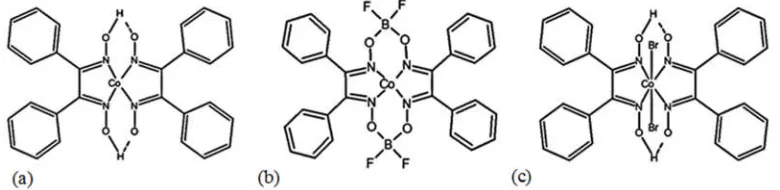
[image:3.595.109.499.241.336.2]which contains 2 bidentate DPG ligands (See Figure 1, structure (a)).
Figure 1. Molecule structure of: (a) Cobaloxime, (b) PhCoBF and (c) CoBr2DPG2
This procedure has also been reported with the dimethylglyoxime version of the
ligand (DMG) and both of these products have been shown to be active CCTP catalysts
in their own right. However, they are sensitive to being deactivated by oxidation and/or
hydrolysis. The second step involves reacting this step 1 product with boron trifluoride
diethyl etherate (BF.OEt2) to generate a single tetradentate ligand as shown in Figure
1Figure 1, (structure (b)) [9, 10]. This enhances the complexes’ stability towards
oxidation and hydrolysis and allows it to be handled readily in air in solid form.
However, the yield from this second stage is typically only in the region of 40% and so
requires purification stages to be added to the manufacturing process, increasing both
the cost and the environmental footprint of the process [8].
Consequently, the authors have investigated the synthesis of alternative catalysts that
are more economically and atom efficient. In previous journal publications, the authors
generates the cobalt halide/glyoxime catalyst of the type shown in Figure 1(structure (c))
[11]. The bromide member of this family has been shown to demonstrate levels of
activity and stability similar to those of PhCoBF, but it is synthesised using a single step
and without the need to be ring closed to achieve the greater level of stability. Thus, this
catalysts is significantly more atom efficient, sustainable and potential industrial
applicable than PhCoBF. Furthermore, adopting a single stage process potentially
enables the use ofin situcatalyst manufacture and continuous flow processing. To do so
would further increase the sustainability and intensification of the process, because it
reduces waste by; (a) removing the catalyst pre-preparation process form the overall
manufacturing cycle, (b) eliminating catalyst deactivation during storage and (c)
minimising inter-batch cleaning of the polymerisation etc.
However, to successfully achieve a free radical polymerisation process that utilisesin
situ catalyst synthesis, it must be ensured that the catalyst synthesis has been achieved
within the polymerisation medium prior to the onset of initiation to produce the radicals.
This is of particular importance when low concentrations of reagents are being used,
such as in the case of catalytic CTA usage, because it must be ensured that diffusion
issues do not retard generation of the control agent. The application of microwave (or
dielectric) heating (MWH) methods is known to accelerate reaction processes by
achieving either/both rapid/uniform and selective heating [12]. This is because with
MWH methods, energy is transferred by directly coupling the dipoles within the target
material with an applied alternating electromagnetic (EM) field. Therefore, the
dielectric properties (’: dielectric constant and ’’: dielectric loss) of a material
determine the ability of a specific material to both; interact with/store energy from such
an alternating field in the case of ’, and then convert an amount of the stored energy
within an EM field, the material with the higher dielectric properties typically has a
greater potential to couple with the alternating field, and thus undergo selective heating
[13]. The existence of selective heating has already been reported on metal catalysts
such as Fe [14, 15], Sn [16], and Co [10].
Prior work by the authors has empirically demonstrated that applying MWH to thein
situ CCTP process can accelerate the rate of the combined in situ catalyst generation
and polymerisation process by utilising selective MWH [11, 16].This paper investigates
the interactions between the metal complexes and ligands discussed above with an EM
field. The aims are to assess how the selective heating changes as the ligands
coordinated to the cobalt centre are modified, develop a fundamental understanding of
the mechanisms that MWH influences these transformations and enable the design of
improved catalysts structures which maximise the benefits of MWH. This work would
also prove that the catalysts have been synthesised prior to the polymerisation
commencing and demonstrate that dielectric spectroscopy can be a facile tool to aid in
defining mechanistic behaviour in complex mixtures.
2. Materials and methods 2.1. Materials
Cobalt (II) bromide (98%, Aldrich), PhCoBF (Dupont), dimethylglyoxime (98%,
Aldrich), diphenylglyoxime (98%, Aldrich), and cyclohexanone (98%, Aldrich) were all
used as supplied without further purification.
2.2.Dielectric property measurements
The dielectric properties of all samples were measured using the cavity perturbation
technique. The equipment and methods used are detailed in prior publications [17, 18].
of 2470MHz. The cavity perturbation technique is ideally suited in measuring
accurately small quantities of materials because it centres on measuring small
perturbations in the resonant characteristics of standing modes inside a hollow metal
cavity of predetermined geometry and does require the elaborate calibration procedures
to be conducted prior to measurement. Dielectric property measurements were
conducted on cyclohexanone solutions of all organometallic complexes used in this
study. Since the molecular concentrations of the organometallics in the solvent can
potentially have an effect in the overall dielectric response of the solvent/organometallic
solution, care was taken to ensure that the molar concentration of each organometallic in
the solvent was maintained constant.
2.3. Microwave heating trials
All heating experiments were conducted in a single mode Sairem Miniflow
microwave reactor (maximum power 200W). In order to ensure maximum transfer of
microwave (MW) power into the sample, the impedance of the sample was matched to
that of the MW source by the use of a stub tuner and a moving short circuit plate. An
optical fibre temperature sensor was introduced directly into the solution bulk via a
septum to accurately gauge the bulk temperature of the bulk of the sample. A cylindrical
choke was fitted to the reactor (at the point of sample insertion) to arrest any microwave
leakage. All heating experiments were carried out at a frequency of 2450MHz which is
a standard frequency allocated for laboratory experiments in the Industrial Scientific
and Medical (ISM) band.
2.4.In situSynthesis of organic liganded catalysts Co2Br2DPG2and Co2Br2DMG2 In a typical synthesis following the methods described in previous publications [10,
19], cobalt (II) bromide (0.036 g (0.11mmol) and 0.053 g (0.22mmol) DPG or 0.025 g
386mmol) with stirring at room temperature. A dark green (Co2Br2DPG2) and light
green (Co2Br2DMG2) solution was obtained as thein situcatalyst being formed.
3. Results and discussion
3.1. Dielectric property measurements of precursors and catalyst mixed with solvent
An assessment of dielectric properties of cyclohexanone and mixtures of this solvent
containing the precursors and final catalysts was conducted to aid in
understanding/predicting the interactions between EM field and the materials within
these multi component solutions. Comparison of the loss tangent (tan δ) values, which
is defined as the ratio of the dielectric loss factor (’’) and the dielectric constant (’),
was used to predict the relative capability of the materials contribute to the heating of
the medium and/or enhancement of a chemical transformation when introduced to an
EM field. It was proposed that adding new dipoles and an increased level of
solubilisation of the metal complex by adding organic ligands, should lead to an
increase in the dielectric properties of the reaction media that contain the organometallic
components. Moreover, when comparing the organically liganded catalysts, it was also
postulated that introducing both increased flexibility and additional functional groups
into the complex by “replacing” the tertadentate ligand in PhCoBF with the bidentate
equivalents in CoBr2DPG2 would lead to the latter exhibiting greater dielectric
properties. Consequently, this would improve the latter complexes’ ability to translate
the energy absorbed from the EM field into molecular motion and hence lead to the
promotion of subsequent heating/chemical transformations [20, 21]. Figure 2 details the
trend in the tanδ values for the cyclohexanone solvent and mixtures of solvent and
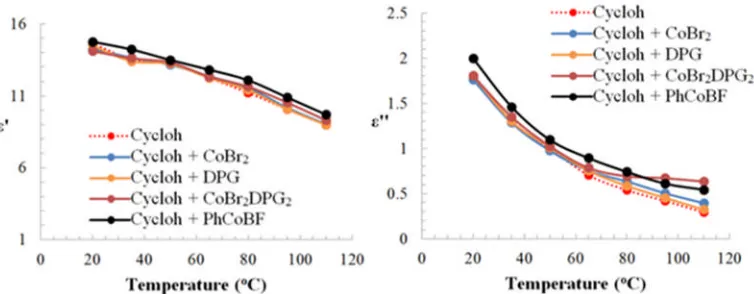
Figure 2.Plot of the temperature dependence of tanδ of cyclohexanone (cycloh) and cyclohexanone solutions of different catalysts/precursors at a concentration of 240 ppm.
From Figure 2, it was observed that the tanδ value for all samples follows similar trend
below 65oC. Closer inspection of the data showed that, mixing the ligand into the
solvent alone did not change the dielectric properties of the solution at the 240 ppm
level. However, in all cases, the addition of the organometallic complexes to
cyclohexanone produced measureable increases in tanδ even at this very low
concentration. Furthermore, above 65oC the values of tanδ of the solution containing the
organometallic additives were noted to exhibit increased deviation from both: (a) the
behaviour of the solvent and solvent ligand mixture and (b) from one another. This
demonstrated that all the organometallic precursors should undergo selective MWH at
these low concentrations and potentially contribute to the heating of these mixtures
and/or the promotion of a chemical transformation within that medium. Furthermore,
the influence that specific cobalt complexes would potentially be more differentiated
above 65oC, where the magnitude of the tanδ value between the various metal
containing additives were noted to be greater. This is also of potential importance in
catalyst choice/design because the target polymerisation has a typical reaction
a greater extent (113% for CoBr2DPG2, 92% for PhCoBF, where these figures are the
increases relative to the value exhibited by the solvent alone) than did the cobalt halide
precursors (34% for CoBr2). This data supported the initial hypothesis that adding these
organically liganded metal catalysts into a solvent should enhance the solutions’ overall
ability to interact with EM energy and so undergo stronger MWH. This was attributed
to the combination of increased solvation of the metal centre and the introduction of
additional dipoles into the structure upon the addition of the organic soluble ligands.
The data also supported the proposal that different ligand structures affected the
dielectric properties to different levels, because the tanδ of bidentate CoBr2DPG2 was
indeed shown to be greater than that of the more rigid tetradentate molecular structure
of PhCoBF. This effect was linked to the fact that the coordinated CoBr2DPG2
/cyclohexanone structure is more flexible and so the dipoles in the structure are freer to
align with the E-field orientation of the EM energy. This also suggested that the
CoBr2DPG2may prove to be a more efficient CTA at 80oC in a MWH polymerisation
due to its greater dielectric properties.
Inspection of the results in’ in Figure 3, suggested from the trend in ’ suggested
that all samples/mixtures exhibited very similar interaction with the EM field in terms
of the energy that can be stored in their structure across the full temperature range. The
trend in ’ with temperature reveals that the total polarisation of all the
samples/mixtures is dominated by the presence of cyclohexanone with the catalyst and
precursors having only a minor effect, which was attributed to the very small amounts
Figure 3. Plot of the temperature dependence of dielectric constant (ɛ’) and loss
factor (ɛ’’) of cyclohexanone (cycloh) and mixture of different catalysts/precursors.
By contrast, the’’ value exhibited similar trends to that of tan, i.e. increased values
when the organometallic species were present, especially so when above 65oC where
significant differences were noted. The behaviour of ’’ indicates that the presence of
the organometallic species (even in small amounts) contributes to the total amount of
the stored energy that can be converted into heat in the samples/mixtures. The increased
differentiation above 65 oC was attributed to the additional compatibility with the
medium (solvation) and the greater flexibility enabling more facile molecular motion.
Thus, again would predict that the designed CoBr2DPG2 would be the better choice of
catalyst at the typical polymerisation temperature of 80oC.
Furthermore, review of the trends in the dielectric data suggested that the most
effective temperature range for these solutions to be influenced by the EM energy is
below 40oC. This is because the values of all the dielectric properties are higher in this
region, so predicting their maximum interaction with EM energy. Thus, this study of the
dielectric data would predict that in a MWH reaction: (a) the catalyst should be
polymerisation commencing and that our designed CoBr2DPG2should be the preferred
catalyst in a free radical polymerisation at 80oC.
Table 1 shows a comparison of the dielectric properties measured at 20oC, 80oC and
100oC of the premade PhCoBF, in situ CoBr
2DPG2, MMA monomer and the low
molecular weight oligomers that would be the potential products from a target
continuous polymerisation process to generate functional oligomeric products. 80oC is
typical of an industrial batch polymerisation with AIBN as the initiator, whilst 100oC is
the upper temperature because is the boiling point for the MMA monomer. Furthermore,
assessment of the dielectric properties allowed the penetration depth (PD) to be
calculated. The PD defines the depth that which the microwave power falls to 1/е of its
power at sample surface (i.e. reduce to 0.368 of its original value). This gives an
indication of the heat distribution within the sample, to ensure even heating through the
reaction mixture and the vessel size should not exceed 2 PD lengths In this study the
reaction vessel was 3 cm in diameter so there were no issues with the depth is in these
experiments penetration depth (see Table S1 in ESI document for the calculated
penetration depths at these temperatures).
From the review of the data in Table 1 is clear that the loss tangent of the
organically liganded catalysts is higher than that of the monomer. Therefore, they would
be predicted to be selectively heated relative to the rest materials as the reaction
[image:11.595.141.457.664.752.2]commences because this point, the reaction system will be largely monomer.
Table 1. tanfor the organically liganded catalysts and MMA and cyclohexanone at 80oC and 110oC.
Entry Material tanδ
20oC
tanδ 80oC
tanδ 110oC
1 methyl methacrylate 0.079 0.030 N/A
2 cyclohexanone 0.122 0.048 0.032
3 MMA Dimer 0.34 0.144 0.100
5 MMA Tetramer 0.016 0.108 0.175
6 MMA Pentamer 0.007 0.036 0.070
7 Initiated Dimer radical N/A 0.190 0.210
8 CoBr2DPG2 0.128 0.065 0.068
9 PhCoBF 0.135 0.065 0.055
However, the tan of the oligomers suggest that this may not be the case when a
significant amount of product oligomer has been produced, depending on the molecular
weight of the oligomer that has been targeted. Rather, the greater tanvalues exhibited
by the very low Mwt oligomers would suggest that a system that contains these would
likely to be bulk heated.
These observations were cross-referenced with the data in the authors prior
publication, which compared in situ MWH and CH based synthesis of poly(methyl
methacrylate) (PMMA) via CCTP [19]. In this paper, two different catalyst loadings
(600 ppm and 270 ppm) were used to produce low molecular weight (Mwt) polymers.
The results showed that when high catalyst load (600 ppm) were used, the final product
were primarily dimer/trimer (Mn = 200 to 300g mol-1) and the MWH and CH product
polymer exhibited very similar Mwts. Meanwhile, when the catalyst level was reduced
(270 ppm CTA added), a polymer of ~700g mol-1(i.e. a chain length of approximately 7
monomer units) was isolated from the MWH reaction and Mwt differences in the
product polymer were obtained between the MWH and CH methods.
By use of the new catalyst data reported in Table 1, these observations has been
attributed to the fact that, in the experiments with the high catalyst loading where
dimer/trimer were the product, the highest dielectric properties in the system are
exhibited by the product dimmer/trimer and the initiated dimer/trimer (i.e. where the
chain end of the polymer contains a radical) (shown in Table 1 Entry 3, 4 and 7).
increasingly being put into the polymers rather than the catalyst as the degree of
conversion to product increases, hence there is no difference between the MWH and CH
experiments. However, once the catalyst level was dropped (270 ppm CTA added) it
was observed that different Mwts were produced from the MWH and CH
polymerisations (Mn= 670 g mol-1for the MWH, and 200 to 300 g mol-1for CH). Table
1 shows that the dielectric properties of the oligomers drop as the Mwt increases, due to
the greater restrictions on dipolar rotation imposed as the molecular structure becomes
more complex. Thus, it was proposed that the molecular component that will exhibit the
highest tan values will be the initiated polymer in this system. This is because the
radical, due to the chain growth nature of the free radical polymerisation mechanism,
will be located at the chain end and so will undergo the least restriction to its movement
and this exacerbated by the fact that it is a strong dipole. Thus, whilst the tanδ value of
the initiated heptamer is predicted to drop from the value exhibited by the initiated
dimer, this reduction is expected to be less than of the non-initiated equivalent.
Unfortunately, a pure sample of the heptamer could not be isolated to ascertain the
actual value due to its solid physical form. Thus, in the MWH reaction, the radical
containing species will now be dielectrically dominant and so will be preferentially
heated. As a result, the propagation (i.e. chain growth) process will be the one that is
promoted (shown in Table 1 Entry 5, 6, 8 and 9) and the resulting products are mainly
polymers with higher Mwts (i.e. heptamer). Meanwhile, the 270 ppm CH experiment is
still bulk heating and so the same relative reactivates are in place and so the product
Mwt remains unchanged. This conclusion was supported by the relative wields of the
comparative MWH and CH reaction where the MWH promotion of the propagation
not possess dielectric characteristics of sufficient magnitude to ensure that chain transfer
dominates the mechanismviabeing selectively heated.
3.2.Microwave Heating Experiments
A key aim of the present study was to define the affect that the presence of the
catalyst/precursors have upon the heating and dielectric properties of the mixture at the
outset of a MWH bulk polymerisation, i.e. one in which the monomer also acts as the
solvent. In this region no polymerisation has occurred, thus the bulk will exhibit the
viscosity of the monomer. Thus, cyclohexanone was chosen as a non-polymerising
solvent for these test studies due to its; (a) ability to solubilise sufficient
catalyst/precursors and enable the study to be conducted and (b) dielectric properties are
similar to methyl methacrylate (MMA), which was the monomer/solvent that had been
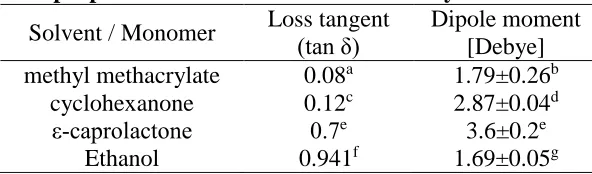
used in the prior reported bulk polymerisation studies. The physical properties of MMA
and cyclohexanone are compared in Table 2, which shows that the tan δ values are very
similar compared to other common monomers/solvents, whilst confirming its greater
[image:14.595.148.444.524.611.2]polarity and hence solvating abilityviaits larger Debye value.
Table 2.Physical properties of solvents used in this study at 20oC. Solvent / Monomer Loss tangent
(tan δ)
Dipole moment [Debye] methyl methacrylate 0.08a 1.79±0.26b
cyclohexanone 0.12c 2.87±0.04d
ε-caprolactone 0.7e 3.6±0.2e
Ethanol 0.941f 1.69±0.05g
aSee reference [19],bSee reference [22],cSee reference [23],dSee reference[24],eSee reference [25], fSee reference [26],gsee reference [27].
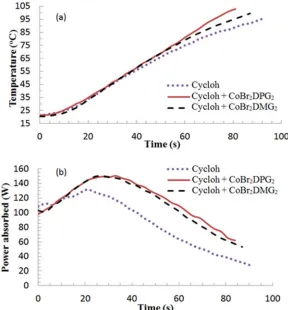
Following this assessment, a series of MWH experiments involving this solvent, both
alone and when containing the precursors/catalysts (i.e. concentration of the catalyst
and 150 W constant input power. The aim was to define the factors that affected the
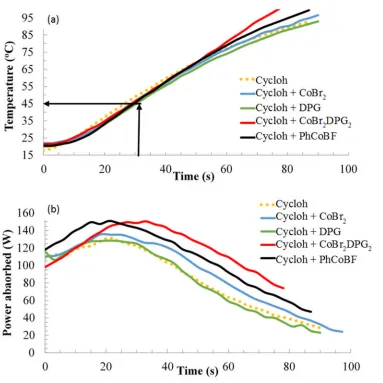
MWH of catalyst/precursor containing solutions. The temperature and power profiles
for these MWH trials are shown in Figure 4, where the reproducibility in the
experimental measurement of input power was ±6 Watts and for all temperature
[image:15.595.114.497.236.619.2]measurements were less than ±2oC.
Figure 4.Profiles plots of the variation in (a) temperature and (b) power with time for cyclohexanone (cycloh) and cyclohexanone plus catalysts and/or precursors.
Figure 4(a) demonstrated that the heating profiles of the cyclohexanone and
system heating resulted from the presence of the ligand precursor alone. By comparison,
the solutions containing the halide precursor, premade PhCoBF or in situ synthesised
organometallic catalysts were noted to produce measureable increases in the heating
rate and achieved higher bulk temperatures than neat cyclohexanone. However, the
profile of the organically liganded catalysts were significantly larger in both of these
characteristics than that of the halide pre-cursor. Cross-referencing this data with the
power profiles in Figure 4(b) showed that the ligand containing solution exhibited the
same power absorption profile as the solvent. Meanwhile, those solutions containing
organometallic species were found to absorb greater levels of power than the solvent
[image:16.595.76.527.356.488.2]alone. Table 3 contains a summary of more detailed data from Figure 4.
Table 3.Detailed data for heating experiments using cyclohexanone.
Entry Catalyst
Temperature Overshoot at 240ppm
[oC]
Additional Absorbed Power at 240ppm [W] Temperature Overshoot at 1100ppm
[oC]
Additional Absorbed
Power at 1100ppm
[W]
1 DPG 1±2 1±6 3±2 8±6
2 CoBr2 4±2 5±6 13±3 15±6
3 PhCoBF 11±2 20±6 16±5 20±6
4 CoBr2DPG2 17±2 19±6 25±5 20±6
The halide precursor was noted to absorb approximately 5 Watts more than the neat
solvent and those of both the premade and in situ catalysts absorb significantly more
(~20 Watts) than the solvent at the 240 ppm level. Relating these data to the levels of
energy input the cyclohexanone absorbs about 87% of the applied MW power at its
maximum, but with the addition of the catalysts this rose to 99% of the MW power.
Thus it is clear that the addition of the premade or in situ formed organic liganded
catalysts significantly improves the MW absorption of the mixture. Again the more
dipole mobility which resulted in enhancements in both the heating performance and
final temperature being observed, for the same level of power absorbed.
Furthermore, whilst both premade PhCoBF andin situ CoBr2DPG2were observed to
absorb the same amount of energy, the time for maximum absorption for both catalysts
was noted to be different. The premade catalyst (PhCoBF) was noted to achieve the
maximum absorption approximately 18 seconds before thein situequivalent. This delay
was attributed to the need to synthesise the catalyst in thein situcase. This data would
indicate that it takes only approximately 32 seconds to generate all thein situ catalyst.
Additionally, this indicates that the additional 5 W absorbed by halide precursor sample,
whilst insufficient to raise the bulk mixture temperature, is enough to promote the
reaction between the precursor and the ligand to achieve the rapid creation of the
catalyst. Furthermore, by cross referencing this to the temperature profile, it can be
defined that the bulk temperature is only in the region of 45oC by the time that the
catalyst has been synthesised (see black correlation arrows on Figure 4 (a)). This is well
below the 1 hour half-life temperature of the initiator that has been used in the
previously reported in situ polymerisation papers (2,2’-Azobis(2-methylpropionitrile)
(AIBN) - 1 hour half-life temp = 82oC) [19]. This confirms that the catalyst will be
synthesised and fully available to control the polymerisation prior to the polymerisation
commencing.
Considering that catalyst concentrations were in parts per million (ppm) level, this
level of additional system heating via the catalyst indicates that the intermolecular
friction between organometallic complex and solvent would be significant in order to
raise the temperature of the bulk solvent by this much. To confirm that this heating rate
differential was due to the present of the organometallic species, a second series of
1100 ppm. These experiments exhibited an increased rate of heating, achieved a higher
final temperature and the differential between the level of the trend in the CoBr2DPG2
was increased (see Table 3 and Figure S1 in the ESI document). This data confirmed
that the differences in the heating data were linked to the organometallic species present
and that the designed, more flexiblein situcatalyst showed greater differentiation from
the more rigid PhCoBF as concentration increased in MWH.
To investigate the effect of ligand structure further, a second in situ catalyst was
prepared containing the dimethylglyoxime ligand (DMG). In this case the ligand’s
phenyl functional groups are replaced by methyl groups. The MWH data comparison
[image:18.595.152.440.352.662.2]with the DPG complex is shown in Figure 5.
The DMG ligand was expected to be more flexible than the phenyl version because
of the reduced steric hindrance associated with the bulky aromatic groups. However,
Figure 5 showed that the DMG complex was observed to exhibit lower heating
characteristics than the DPG equivalent empirically. Thus, it was proposed that the
phenyl functionality must produce greater solvation and/or a greater level of dipole/EM
field interactions within the DPC ligand, which leads to the phenyl complexes
outperforming the methyl version. Thus the design of MWH responsive complexes will
clearly require a balancing of a number of key molecular factors.
Across all samples, it was noticed that the power absorption depleted as the
experiment proceed. This is because the temperature of the solution is increasing as the
heating is on-going (see Figure 4 (a)). As the temperature increases so the tanhas been
observed to decrease (see Figure 2) and hence the level power absorbed per unit time is
reduce as the energy already with the sample is not bring dissipated so rapidly. This
reduction was also attributed to the reduction in viscosity/density of the medium as
temperature increase, which in turn reduces the level of intermolecular interaction that
each molecule experiences.
4. Conclusion
This study demonstrates that it is possible to molecularly design a catalyst to be more
susceptible to selective MWH and that; (a) to accomplish this, there are a number
molecular characteristics that potentially have to be balanced to achieve this increased
dielectric performance and (b) EM dielectric properties of the catalyst have to be
amongst, if not the most, dominant values of all the species within the mixture if it is to
The investigation into the effect of selective MWH on the synthesis and use of two
designed in situ catalysts has shown that: (a) adding the organometallic
compounds/catalysts to a solvent at the ppm level produces measureable increases in
the rate of heating exhibited by a solution containing them, (b) clearly demonstrated that
changing the ligand system could influence the solutions ability to contribute to the
heating of the bulk mixture/promote a chemical transformation and (c) supported the
conclusion that thein situcatalyst is synthesised in approximately 30 seconds. The data
also showed that, whilst there is enough EM power absorbed by the
CoBr2/cyclohexanone solution to drive the in situ complexation reaction, this level of
energy is not enough to contribute significantly to the heating of the overall mixture.
Thus, these observations suggest that it is possible to drive chemical reactions with low
levels of EM energy without significantly heating the bulk mixture.
In this case, the difference in heating behaviour between the neat solvent/solvent
plus ligand mixture and those solutions containing the metal complexes was attributed
to the greater dielectric loss factor values exhibited by the organometallic containing
solutions. Of these solutions, these possessing the organically liganded catalyst were
observed to heat most significantly and it was proposed that the greater solubility and
dipole content/type (e.g. adding organic ligands, converting a single tetradentate ligand
to two bidentate species, or introducing different functional groups onto the ligand)
influences their ability to translate absorbed energy into molecular motion, by affecting
its relaxation process and so produce heat/drive chemical transformations. Furthermore,
cross referencing the timescale for this catalyst synthesis with the temperature profiles
of a typical CCTP polymerisation would also suggest that the catalyst is synthesised
it does provide a significant opportunity to intensify current industrial process with the
application of MWH.
The data also shows that the level of selective heating in a polymerisation to
produce oligomers is dependent on the molecular weight of the product oligomer.
Furthermore, the response of the catalyst designed in this study is likely to be less than
that of the growing polymer chain. Thus for the manufacture of oligomers with this
currently designed catalyst is not sufficiently EM active to dominate the process, Rather
it is the propagation step that is the reaction that is promoted by selective heating, so
explaining and so explains why longer chain length result from the MWH reactions.
5. Acknowledgements
The authors wish to thank Dr Kevin Adlington for his help with the experimental
activities and the Microwave Process Engineering (MPE) group at the University of
Nottingham for the financial support of the present work.
6. References
1.
Julien Nicolas, Yohann Guillaneuf, Catherine Lefay, Denis Bertin, Didier Gigmes,and Bernadette Charleux.Progress in Polymer Science2013, 38, p. 63-235, DOI: 10.1016/j.progpolymsci.2012.06.002.
2. Krzysztof Matyjaszewski, Jianhui Xia.Chemical Review2001, 101, p. 2921-2990, DOI: 10.1021/cr940534g.
3. Sebastien Perrier, Pittaya Takolpuckdee.Journal of Polymer Science Part A:
Polymer Chemistry2005, 43, p. 5347-5393, DOI: 10.1002/pola.20986. 4. Alexei Gridnev, Steven Ittel.Chem. Rev.2001, 101, p. 3611-3659, DOI:
5. Papia Haque, Ian A. Barker, Andrew Parsons, Kristofer J. Thurecht, Ifty Ahmed,
Gavin S. Walker, Christopher D. Rudd, Derek J. Irvine.J. Polym. Sci., Part A:
Polym. Chem.2010, 48, p. 3082–3094, DOI: 10.1002/pola.24086.
6. Gordon D. Airey, Jasmin Wilmot, James R.A. Grenfell, Derek J. Irvine, Ian A.
Barker, Jaouad El Harfi.Eur. Polym. J.2011, 47, p. 1300-1314, DOI: 10.1016/j.eurpolymj.2011.03.002.
7. Jianing Li, Jaouad El harfi, Steven M. Howdle, Kim Carmichael, Derek J. Irvine.
Polymer Chemistry2012, 3, p. 1495-1501, DOI: 10.1039/C2PY20066J.
8. Alexei Gridnev.Journal of Polymer Science Part A: Polymer Chemistry2000, 38, p. 1753-1766, DOI:
10.1002/(SICI)1099-0518(20000515)38:10<1753::AID-POLA600>3.0.CO;2-O.
9. K. G. Suddaby, D. M. Haddleton , J. J. Hastings, S. N. Richards, J. P. O'Donnell.
Macromolecules1996, 29, p. 8083-8091, DOI: 10.1021/ma960528h.
10. Kevin Adlington, Robert McSweeney, Georgios Dimitrakis, Samuel W.
Kingman, John P. Robinson, Derek J. Irvine.RSC Adv.2014, 4, p. 16172-16180, DOI: 10.1039/C4RA00907J.
11. Kevin Adlington, Anthony Green, Wenxin Wang, Steven M. Howdle, Derek J.
Irvine.Dalton Trans.2013, 42, p. 127-136, DOI: 10.1039/C2DT31822A.
12. David E Clark, Diane C Folz, Jon K West.Mat. Sci. Eng. A2000, 287, p. 153-180, DOI: 10.1016/S0921-5093(00)00768-1.
13. D. A. Jones, T. P. Lelyveld, S. D. Mavrofidis, S. W. Kingman, N. J. Miles.
Resources, Conservation and Recycling2002, 34, p. 75-90, DOI: 10.1016/S0921-3449(01)00088-X.
15. Erdan Hu, Hefa Cheng.Water Research2014, 57, p. 8-19, DOI: 10.1016/j.watres.2014.03.015.
16. Nam T. Nguyen, Edward Greenhalgh, , Kim Carmichael, Georgios Dimitrakis,
Samuel W. Kingman, John P. Robinson, Derek J. Irvine.Tetrahedron2014, 70, p. 996-1003, DOI: 10.1016/j.tet.2013.11.031.
17. Alstair D. Smith, Edward Lester, Kristofer J. Thurecht, Jaouad El Harfi,
Georgios Dimitrakis, Sam W. Kingman, John P. Robinson, and Derek J. Irvine.
Industrial & Enginerering Chemistry Research2010, 49, p. 1703-1710, DOI: 10.1021/ie901201h.
18. Alstair D. Smith, Edward Lester, Kristofer J. Thurecht, Sam W. Kingman,
Jaouad El Harfi, Georgios Dimitrakis, Jaouad El Harfi, Derek J. Irvine.Industrial &
Enginerering Chemistry Research2010, 49, p. 3011-3014, DOI: 10.1021/ie901389a. 19. Kevin Adlington, G. Joe Jones, Jaouad El Harfi, Georgios Dimitrakis, Alastair
Smith, Sam W. Kingman, John P. Robinson, Derek J. Irvine.Macromolecules2013, 46, p. 3922-3930, DOI: 10.1021/ma400022y.
20. Camelia Gabriel, Sami Gabriel, Edward H. Grant, Ben S. J. Halstead, D.
Michael P. Mingos.Chem. Soc. Rev.1998, 27, p. 213-223.
21. Sebastian Losse, Johannes G. Vos, Sven Rau.Coordination Chemistry Reviews
2010, 254, p. 2492–2504, DOI: 10.1016/j.ccr.2010.06.004.
22. J. E. Salz, P. Hummel, P. J. Flory.Journal of Physical Chemistry1981, 85, p. 3211, DOI: 10.1021/j150622a002.
23. R. J. Meakin.Transactions of the Faraday Society1962, 58, p. 1905 - 1971, DOI: 10.1039/TF9625801962.
24. Yoshitake Ohnishi, Kunio Kozima.Bulletin of the Chemical Society of Japan
25. Ronald Hutcheon, Jozef Mouris, Xiaomei Fang, Daniel A Scola, Microwave
Properties North (MPN).CERAMIC TRANSACTIONS2001, 111, p. 109-118. 26. C. Oliver Kappe, Alexander Stadler.2006, Wiley-VCH Verlag GmbH & Co.
KGaA. p. 9-28, DOI: 10.1002/3527606556.ch2.
27. Seong-Jeen Kim, Sang-Hoon Lee, Cheol-Jin Lee.Journal of physics d: Applied