Original citation:
White, T. W. , Martsinovich, Natalia, Troisi, Alessandro and Costantini, Giovanni (2018) Quantifying the ‘subtle interplay’ between intermolecular and molecule-substrate interactions in molecular assembly on surfaces. The Journal of Physical Chemistry Part C: Nanomaterials, Interfaces and Hard Matter . doi:10.1021/acs.jpcc.8b06797
Permanent WRAP URL:
http://wrap.warwick.ac.uk/106051
Copyright and reuse:
The Warwick Research Archive Portal (WRAP) makes this work by researchers of the University of Warwick available open access under the following conditions. Copyright © and all moral rights to the version of the paper presented here belong to the individual author(s) and/or other copyright owners. To the extent reasonable and practicable the material made available in WRAP has been checked for eligibility before being made available.
Copies of full items can be used for personal research or study, educational, or not-for-profit purposes without prior permission or charge. Provided that the authors, title and full
bibliographic details are credited, a hyperlink and/or URL is given for the original metadata page and the content is not changed in any way.
Publisher’s statement
This document is the Accepted Manuscript version of a Published Work that appeared in final form in The Journal of Physical Chemistry Part C, copyright © American Chemical Society after peer review and technical editing by the publisher. To access the final edited and published work, see http://dx.doi.org/10.1021/acs.jpcc.8b06797
A note on versions:
The version presented here may differ from the published version or, version of record, if you wish to cite this item you are advised to consult the publisher’s version. Please see the ‘permanent WRAP URL’ above for details on accessing the published version and note that access may require a subscription.
Quantifying the ‘Subtle Interplay’ between
Intermolecular and Molecule-Substrate Interactions
in Molecular Assembly on Surfaces
Thomas W. White†, Natalia Martsinovich‡, Alessandro Troisi§, Giovanni Costantini*,†
†Department of Chemistry, University of Warwick, Coventry, CV4 7AL, UK
‡Department of Chemistry, University of Sheffield, Sheffield, S3 7HF, UK
§Department of Chemistry, University of Liverpool, Liverpool, L69 7ZD, UK
ABSTRACT
The effect of the concurrent action of intermolecular and molecule-substrate interactions on the
two-dimensional (2-D) self-assembly of organic molecules on solid surfaces is investigated in a
combined experimental and theoretical effort. Scanning tunnelling microscopy measurements of
terephthalic acid on the Cu(111) surface, a model system where the interplay between the two
interactions is particularly evident, are used to develop a general, simple and computationally
inexpensive model that quantitatively accounts for the experimental observations. The model,
related to the well-known Frenkel-Kontorova model, offers a comprehensive description of the
‘subtle interplay’ between intermolecular and molecule-substrate interactions and provides a
qualitative and quantitative predictive capability in the design and fabrication of 2-D molecular
INTRODUCTION
Self-assembly of organic molecules has emerged as a highly effective and versatile strategy for
the controlled fabrication of nanoscale structures. Much of its success is owed to recent advances
in supramolecular chemistry and organic chemical synthesis. Together, these two complementary
disciplines make it possible to design and fabricate molecular building blocks that selectively
self-assemble into pre-determined functional architectures. The application of this approach to
two-dimensional (2-D) molecular assembly on solid surfaces,1-5 however, is not necessarily
straightforward as, in this case, the molecular organisation is not determined exclusively by the
interactions between the adsorbed molecules. Instead, the substrate often plays an active role and
molecular assembly is driven by a ‘subtle interplay of intermolecular and molecule-substrate
interactions’.6-14
Despite its importance in supramolecular chemistry on surfaces, the oft-cited ‘subtle interplay’
is not well understood. References to the ‘subtle interplay’ can be found in the majority of papers
on molecular assembly at surfaces but, most frequently, this concept is used only as a sort of
general-purpose scapegoat to mask the incapacity to explain specific 2-D molecular assembly
patterns. In particular, the ability to quantitatively predict the effects of the simultaneous action
of intermolecular and molecule-substrate interactions in a general case is yet to be achieved.
Therefore, whilst the successes reported in solution-phase supramolecular chemistry suggest that
similar accomplishments should be possible also for molecular self-assembly on solid surfaces,
much work is still needed to move from a situation where most of the experimental results are
rationalized only a posteriori to the capability of pre-determining the final 2-D molecular
In this work we have used experimental data acquired on a specific model system – scanning
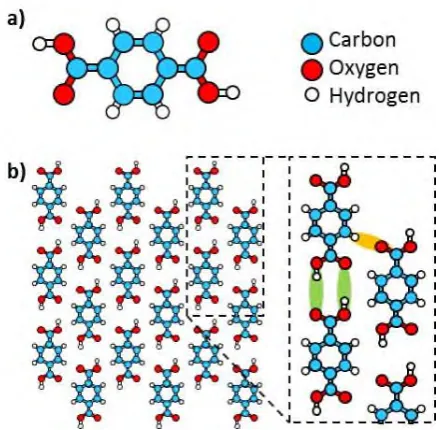
tunnelling microscopy (STM) measurements of the assembly of terephthalic acid (TPA, Figure
1a) on the Cu(111) surface – as the starting point to develop a general model of the interplay
between intermolecular and molecule-substrate interactions. The model we present here is
limited to a one-dimension (1-D) approximation but the full 2-D case will be based on the same
fundamental assumptions. Our results show that both a qualitative and quantitative prediction of
the experimental molecular assembly is indeed possible, based on a multi-scale approach where
molecular-level classical and quantum calculations are used to determine input parameters of a
computationally inexpensive analytical algorithm operating on large simulation cells.
TPA is an ideal model system for this study, as its assembly has been analysed on a wide range
of different substrates. When deposited onto weakly-interacting surfaces such as Au(111),
Ag(111) or graphite, either from solution or in vacuum, it remains intact, adsorbs parallel to the
surface and almost always assembles into the so-called brickwork structure,15-24 shown
schematically in Figure 1b. Here, the carboxyl moieties form dimeric hydrogen bonds with
adjacent molecules, resulting in the development of 1-D molecular chains that stack in an offset
manner to form a brickwork motif. This supramolecular arrangement is also observed in the
condensed phase,25 indicating that, irrespectively of the substrate, it is in fact the most
energetically favourable structure. The interaction between the TPA chains is believed to be
weak, arising from van der Waals interactions and, possibly, secondary electrostatic bonds with
the aromatic protons (shown in Figure 1b).16-17, 26 Thus, the assembly in the brickwork phase is
essentially 1-D in nature. In contrast, when TPA is deposited onto strongly-interacting materials
like Cu or Pd, or when it is co-deposited with reactive metal adatoms, the carboxyl moiety can
instead, they assemble into structures characterized by ionic hydrogen bonds27-31or coordination
bonds to metal adatoms.31-35 Alternatively, an upright orientation can also be formed, where the
TPA binds to the surface through only one carboxylate group.30, 36-37 In such cases, the ultimate
arrangement of the molecules does strongly depend on particular aspects of the specific
experimental system (i.e. molecule coverage,38substrate symmetry, deposition rate,39annealing
temperature28).
The (001) and (110) orientations of Cu single crystals are reactive enough for TPA to
deprotonate upon adsorption at room temperature. In particular, on Cu(001) the terephthalate
goes on to form a number of different supramolecular architectures, depending on the coverage,
which are characterized by ionic hydrogen bonds.28-30 Similar coverage-dependent phases were
also observed on Cu(110), together with the development of metal-organic structures.31, 40 On
both surfaces, the supramolecular motifs exhibit symmetries reminiscent of the substrates atomic
structure, indicating a strong molecule-substrate interaction. As Cu(111) is the least reactive Cu
termination, it is expected not to deprotonate the adsorbed TPA, although its 2-D atomic-scale
modulation of the adsorption potential is still expected to influence the molecular assembly.41
METHODS
Experimental Methods
All experimental measurements were performed using a commercial ultra-high vacuum
low-temperature STM instrument. The samples were prepared by multiple cycles of Ar+ sputtering
(1keV, drain current 14 mA cm-2, 15 minutes) followed by annealing (870 K, 5 minutes), which
yielded atomically clean and flat terraces. TPA, initially outgassed for several hours at 440 K,
temperature of 450 K, resulting in sub-monolayer coverages after 5-15 minutes of deposition.
The sample was cooled to 77 K prior to insertion into the STM.
The STM measurements were performed using etched W tips that are treated with electron
bombardment in the vacuum system. The bias is applied to the sample; thus positive voltages
correspond to tunnelling from the tip to the sample, and vice versa. The STM head and sample
are held at 77 K throughout measurement. All STM images were processed by using the WSxM
software.42
Computational Methods
Molecular mechanics calculations of TPA
Interaction energies of TPA in the gas phase (i.e. without substrate) were calculated using the
MM3 force field43-44 within the Tinker software;45 hydrogen bond energy and distance
parameters in the MM3 force fields were adjusted to reproduce the acid dimerization energy and
the hydrogen bond length obtained using DFT-B3LYP calculations, as described in Ref. 26: the
energy parameter for the O···H interaction was 7.98 kcal mol-1, and the distance parameter was
2.05 Å. Energy minimisations were performed for a 1-D chain and then for a 2-D network of
TPA molecules, while keeping thezcoordinates of all atoms constant to maintain planarity.
Density-functional theory calculations of adsorption
DFT and dispersion-corrected DFT (DFT-D) calculations were performed by using the SIESTA
code,46within the generalized gradient approximation (GGA) using the Perdew-Burke-Ernzerhof
(PBE) functional,47with double-ζpolarized (DZP) basis sets and pseudopotentials for C, O, Cu
and Au available on the SIESTA web page.48 Convergence of the Au and Cu bulk and their
Calculations of TPA on Cu(111) and Au(111) were done using DFT-D as proposed by
Grimme.49The dispersion correction was applied only to metal-molecule interactions. Dispersion
parameters for the Cu-C, Cu-O and Cu-H interactions from Grimme’s paper were used:49 C
6 =
45.06, 28.50, 12.74 eV Å-6,R
0= 3.014, 2.904, 2.563 Å for Cu-C, Cu-O, Cu-H pairs, respectively.
Dispersion parameters for the Au-C, Au-O, Au-H interactions were obtained from Ref. 50:C
6 =
70.89, 44.83, 20.05 eV Å-6, R
0 = 3.112, 3.002, 2.661 Å for Au-C, Au-O, Au-H pairs,
respectively. S6 coefficient = 0.75, recommended for PBE,49 was used. Similarly as for bulk
metals, the k-grid cutoff of 15 Å was used, resulting in a 2×2×1k-point grid.
Adsorption of TPA (and, for comparison, related molecules: benzoic acid and benzene) on
Cu(111) and Au(111) was calculated, first at high-symmetry positions above these surfaces, then
on a 2-D grid of positions to obtain the potential energy surface (PES) for adsorption of TPA on
these surfaces (see the SI for details). Only the metal atoms in the lowest layer of the slab were
fixed; the molecule was allowed to optimise both its geometry and position, but there was almost
no change in its lateral position during optimisation because of the very flat PES. Adsorption
energies were calculated as the difference between the energy of the “surface+adsorbate” system
and the energies of the clean surface and isolated molecule, and corrected for the basis set
superposition error (BSSE) using the counterpoise scheme.51
RESULTS AND DISCUSSION
Figure 2 shows typical STM images obtained after depositing sub-monolayer quantities of TPA
onto Cu(111). The substrate is held at room temperature during deposition and then cooled to 77
oriented close to the[112],[121]and [211]substrate orientations (i.e. close to perpendicular to
the main substrate orientations41).
Detailed inspection of the internal structure of the molecular islands reveals elliptical protrusions
that are assigned as individual, flat-lying TPA molecules, in line with previously reported
measurements.15-20, 52-53The overlaid model in Figure 2b reveals two important features of the
assembly; the TPA molecules are adsorbed with their long axis aligned parallel to the long edges
of the molecular islands and are arranged in a ‘brickwork-like’ structure. Here, we use the term
‘brickwork-like’, rather than simply ‘brickwork’, due to a number of structural differences that
will be discussed later. The supramolecular arrangement of TPA might be taken as an indication
of an intact chemical state – i.e. that the molecules have not deprotonated upon adsorption.
However, this is not a conclusive proof, as a similar assembly has been reported for deprotonated
TPA on Pd(111)27and on Cu(001).54Verification of the intact carboxyl moiety can be obtained
through annealing treatments, which result in a radical transformation of the TPA film. STM
measurements acquired after annealing to 350 K, shown in Figs. 2c and 2d, reveal that the
adsorbates are now dispersed over the surface in small aggregates. These aggregates are
observed in a range of different motifs, many of which appear to be pinned around a central
point. A comparison with previous results in the literature32, 39, 55 suggests that the structures in
Figs. 2c and 2d are in fact metal-organic complexes, where the central position is most likely
occupied by a single Cu adatom (see overlaid model in Figure 2d). Thus, substrate annealing
generates metal-organic complexes because it deprotonates the adsorbed TPA molecules and
allows the ensuing terephthalate species to bind with Cu adatoms already present as thermally
generated defects on the surface. An alternative explanation might be that TPA is already
enough density of Cu adatoms for complex formation. However, it has been previously
demonstrated that the density of thermal adatoms at room temperature on Cu(111) is already
sufficiently high to produce metal-organic complexes.39, 56-57 This alternative explanation can
thus be excluded and it can be safely assumed that the brickwork-like structure shown in Figure
2a and 2b is composed of protonated TPA molecules interacting mainly through hydrogen
bonding.
The high resolution STM image in Figure 2b shows that the TPA hydrogen bonded monolayer
structure developed on Cu(111) exhibits marked differences to those reported previously on
other weakly interacting surfaces.15-20 Dark spots can be observed in the TPA/Cu(111) lattice,
highlighted by the blue circle in Figure 2b, which are only located between the carboxyl
moieties. These darker regions are the result of molecules presenting a larger separation from
one another along the dimeric hydrogen bonding direction; the molecular separation across these
spots is 10.4±0.4 Å (measured as the distance between the centres of two consecutive phenyl
rings within the TPA chain), compared to the ~9.7 Å typically found in hydrogen bonded TPA
chains on other surfaces (a summary of previously reported intermolecular separations in
hydrogen bonded TPA structures on different surfaces can be found in reference24, 26). On
Cu(111), approximately 15% of the intermolecular separations within the hydrogen bonded
chains are elongated in this manner. A statistical analysis of the remaining 85% non-elongated
intermolecular distances reveals that they are relatively short, with an average TPA-TPA
separation of 9.3±0.02 Å. For example, when compared with the molecular separation in bulk
TPA crystals, which is 9.54 Å,25 the value measured on Cu(111) is 2.5% shorter. This indicates
that the hydrogen bonds are being compressed when TPA is adsorbed on Cu(111).41On the other
perpendicular to the dimeric hydrogen bonding direction) is 5.5±0.3 Å, approximately in line
with values previously measured for TPA adsorbed onto weakly interacting surfaces.15-20
Thus, at variance with what has been reported to date in the extensive literature regarding TPA
adsorbed on solid surfaces, the TPA brickwork-like structure on Cu(111) is defective and is
characterized by hydrogen bonds that, in their majority (85%), appear to be compressed and, less
frequently (15%), elongated. Such an unusual structure seems to indicate an enhanced
molecule-substrate interaction that however still preserves the chemistry and intermolecular bonding motif
of pristine TPA. As such, the TPA/Cu(111) systems appears to be ideally suited for
quantitatively analysing the interplay of intermolecular and molecule-substrate interactions in
supramolecular self-assembly at surfaces. With this aim, we undertook a thorough analysis of the
two competing forces using a combination of molecular mechanics (MM) and
dispersion-corrected density functional theory (DFT) calculations. The former were employed to investigate
the intermolecular interactions, the latter to address the 2-D spatial dependence of the
molecule-substrate interaction. Finally, the MM and DFT results were combined into a general analytical
model, which we use to quantitatively evaluate the effect of the ‘subtle interplay’ on the
molecular assembly.
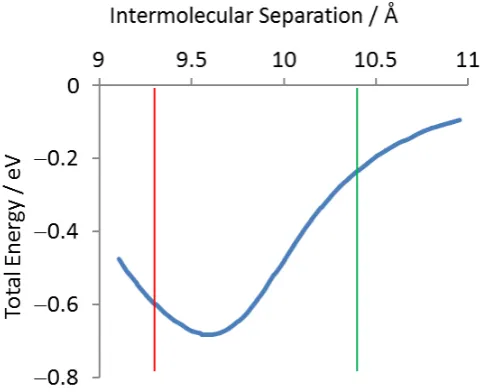
Figure 3 shows the potential energy calculated by MM as a function of the dimeric hydrogen
bond length for an infinite 1-D chain of TPA molecules in the gas phase. The distances
corresponding to the compressed and elongated intermolecular separations observed on Cu(111)
are marked by the red and green lines, respectively. The profile exhibits a Morse-like shape and
strongly resembles that previously calculated by using DFT, with an agreement within 0.1 Å and
0.1 eV.16It has a single energetic minimum at 9.65 Å, very similar to the value reported for bulk
elongated intermolecular separations observed in the TPA/Cu(111) system, respectively. Thus,
the MM calculations indicate that the formation of compressed and elongated separations in the
TPA chains results in energetic penalties of ~0.1 eV and ~0.4 eV, respectively, per dimeric
hydrogen bond.
Previous publications suggested that secondary attractive interactions between the aromatic
protons and the carboxyl moieties are responsible for inter-chain binding.16To ascertain whether
these secondary bonds might possibly induce also the unique assembly of TPA on Cu(111),
further MM calculations were performed to identify the lowest energy configuration of the 1-D
chains in an infinite 2-D network of TPA. The calculations reveal only a single energy minimum
with respect to the inter-chain configuration (see SI), demonstrating that the interactions between
chains cannot cause the compressed and elongated intermolecular separations observed on
Cu(111).
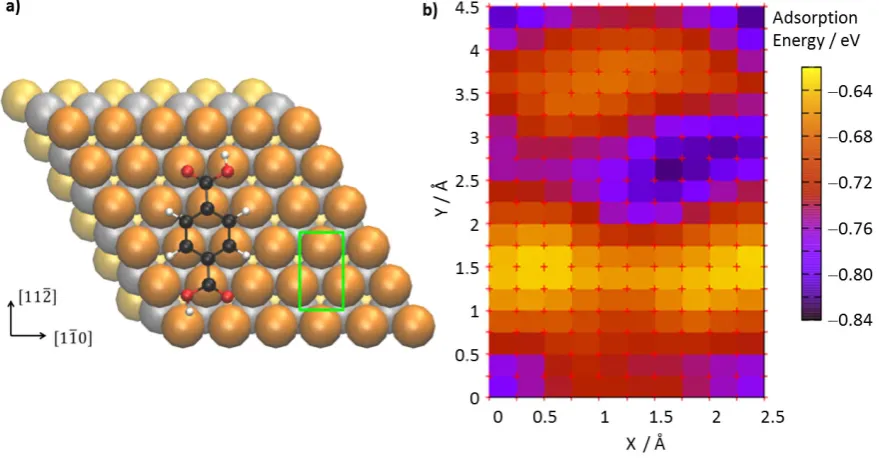
To investigate the adsorption energy of a single TPA molecule on Cu(111) as a function of its
lateral position on the surface we utilized dispersion-corrected DFT calculations. We computed
the potential energy surface (PES) for the displacement of the molecule oriented along the[112]
direction on the substrate (see Figure 4). Equivalent energy minima correspond to the molecule
adsorbed with the centre of its aromatic ring above the hexagonal close-packed (hcp) hollow site.
The hcp position being the lowest energy site is in agreement with computational studies of
benzene on (111) metal surfaces.58-59 Adsorption energies range from −0.77 eV (for the lowest
energy adsorption sites) to −0.57 eV (for the highest maximum of the PES). Further
computational details and results concerning TPA adsorption energies in several orientations on
Cu(111) can be found in the SI. The position of the PES minima of TPA on Cu(111) is similar to
metal and the molecule. However, the corrugation of the adsorption potential is remarkably high
on Cu(111), ~0.2 eV, e.g. considerably larger than the 0.05 eV calculated for TPA on Au(111)
(see SI). Perhaps surprisingly, most of the adsorption energy arises from the strong interaction
between the aromatic ring and the substrate. This is demonstrated by similar DFT calculations
that we performed for benzene adsorbed on Cu(111), resulting in an adsorption energy of−0.56
eV, i.e. about 70% of that of TPA (−0.77 eV).
It is practically very difficult to use DFT calculations to determine the lowest energy
configurations of large islands of molecules adsorbed on surfaces because the supramolecular
lattice units and the number of molecules therein are not known in advance. However, it is
possible to construct a simple and computationally inexpensive model that describes some
general features of the combined effect of intermolecular and molecule-substrate interaction, and
that quantitatively accounts for the experimental observations. Indeed, one well-known approach
is the Frenkel-Kontorova (FK) model,60-61 which combines nearest neighbour interactions and
the substrate potential; it has been applied to systems involving adsorbed atomic layers62 and
molecular layers,63 epitaxy64 and surface reconstruction.65 Since, in the particular case of TPA
on Cu(111), the intra-chain bonding is anharmonic, we present here a modified version of the FK
model and solve it numerically. Moreover, as the intra-chain bonding is significantly stronger
than the inter-chain interactions, our model accounts for the 1-D assembly, but it can be extended
to describe more general 2-D assemblies.
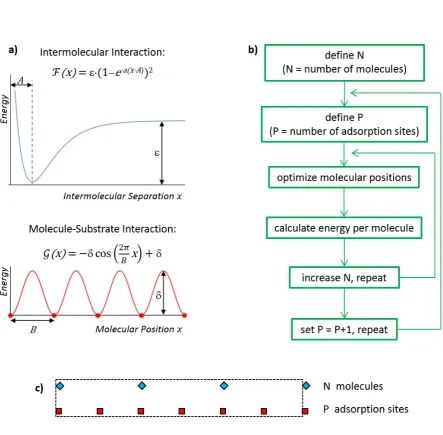
The model is illustrated in Figure 5. We proceed by defining simple but realistic potential
energy functions of the intermolecular and molecule-substrate interactions and by computing the
lowest energy molecular arrangement for a variety of system parameters, before considering the
function, ℱ( ), to account for anharmonicity (not included e.g. in the Frenkel-Kontorova
model), and the molecule-substrate interaction by a cosine function, ( ),as depicted in Figure
5a. These are valid approximations since the MM simulations reveal a Morse-like shape for the
intermolecular interactions (Figure 3) and the DFT-calculated PES is essentially sinusoidal along
the[112]direction (see SI).
We assume that the lowest energy arrangement is periodic in 1-D with the parameter P
defining the number of adsorption sites in the resulting unit cell and Nindicating the number of
molecules within each unit cell. The values ofNandPfor the lowest energy arrangement are not
known and we therefore explore a large range of N andP values, computing the lowest energy
molecular arrangement for each of them. The search algorithm is outlined in Figure 5b and
described in detail in the SI. Whilst this algorithm is far from efficient, it fully investigates a
large parameter space in a highly systematic manner, allowing the overall lowest energy
configuration to be obtained.
The lowest energy configuration depends only on the ratio between the characteristic energy
well depths of the two interaction potentials, = / , and the ratio of their characteristic
distances, ℒ = / , (see Figure 5a) and the outcomes of the model are therefore analysed in
terms of these quantities. Before considering the general result, we can inspect a few specific
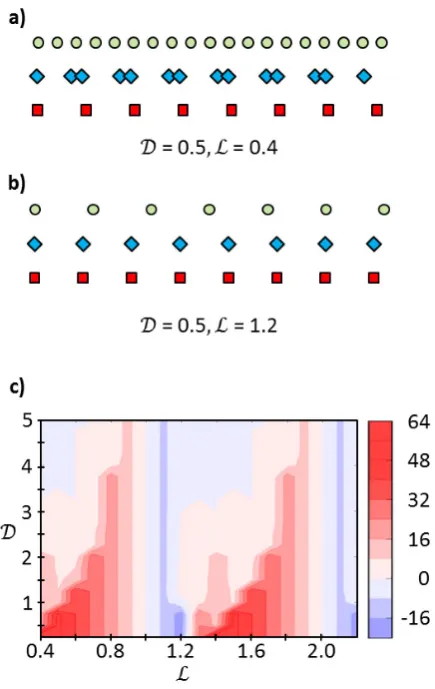
instances. Figure 6a shows the case of a strong molecule-substrate interaction ( = 0.5) and a
large mismatch between the spatial modulation B of the substrate adsorption potential and the
ideal intermolecular distanceA(ℒ = 0.4). The calculated molecular superstructure (shown by the
blue diamonds) is clearly strongly perturbed with respect to molecule-molecule separation
defined by the intermolecular interactions alone (the “ideal” gas-phase molecular positions are
tightly-packed pairs centered around the substrate adsorption sites (shown by the red squares). It is
important to note that this unusual assembly is a consequence of both the relatively large
difference in interaction strengths and the mismatch in the interactions’ characteristic lengths.
For example, for = 0.5, ℒ = 1.2 (Figure 6b) – which only differs from the case in Figure 6a
because of a better spatial commensurability between the molecule-substrate and the
intermolecular periodicities – the model predicts a molecular configuration where the adsorbates
are uniformly spaced. As one would expect, when is increased (i.e. the intermolecular
interaction becomes stronger than the molecule-substrate interaction), the lowest energy
arrangement becomes closer to the uniformly spaced configuration that the molecules would
assume in the gas phase.
A rapid way to evaluate the overall effect of the substrate on the molecular assembly is to
consider the difference between the average intermolecular separation in the gas phase and on
the surface. Figure 6c reports this difference as a function of and ℒ. Red coloured regions
indicate the range of and ℒ where, on average, the intermolecular distances in the 1-D
adsorbate chains are longer than the gas-phase intermolecular separations, while blue regions
correspond to an average compression. It is evident that the deviations – i.e. the effect of the
interplay between the intermolecular and the molecule-substrate interactions – are most
prominent either when the molecule-substrate interaction is very strong ( is small) or when
there is significant incommensurability between the substrate and molecular periodicities.
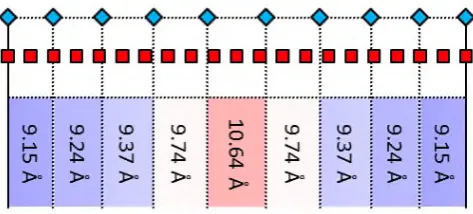
When the specific parameters determined for the adsorption of TPA on Cu(111) ( = 3.45 and
ℒ = 2.15) are input into the model, the resulting lowest energy supramolecular structure is that
shown in Figure 7. The calculated intermolecular separation is not uniform but varies
three are larger (red boxes). Critically, the calculated separations closely match those determined
experimentally, both qualitatively and quantitatively; while the shorter intermolecular distances
(9.15-9.37 Å) are consistent with the average measured periodicity (9.3±0.5 Å), one of the nine
separations is considerably longer than the others (10.64 Å) in excellent agreement with the
experimentally determined intermolecular distance corresponding to the darker spots in Figure
2a (10.4±0.4 Å).
One of the most important aspects of the model presented here is the fact that it can be applied
to any molecule-on-substrate system that exhibits a 1-D-like self-assembly. To demonstrate its
generality, we considered the case of TPA adsorbed on Au(111), which also forms a brickwork
structure that, in a first approximation, can be considered as composed of essentially independent
1-D TPA chains. For TPA/Au(111) the experimentally observed molecular periodicity is locally
uniform with values of 9.9, 10.1 or 10.3 Å, depending on the molecular position with respect to
the underlying herringbone reconstruction16 (i.e. variations occur only over distances of several
nanometres). In its present form, our model cannot account for a non-uniform substrate lattice
periodicity. However, by using the calculated lattice constant of bulk Au and the calculated PES
for TPA on Au(111) (presented in the SI), the input parameters for the TPA/Au(111) system
become = 13.8 and ℒ = 1.89 and the corresponding lowest energy configuration output
consists of uniformly spaced molecules separated by 10.22 Å. This is in good agreement with the
experimental data reported in Ref.16 and confirms that the intermolecular distance for
TPA/Au(111) is elongated with respect to both the gas-phase value (9.65 Å, see Figure 3) and
the molecular separations in bulk TPA crystals reported in the literature (9.54 Å, Ref.25).
One final critical note on the presented model is that the calculations of TPA on Cu(111)
observed experimentally; whilst some limited correlation of the dark spots across the molecular
lines is apparent in the STM data, the long intermolecular spacings are generally randomly
dispersed throughout the molecular lattice (see SI). This discrepancy is most probably a result of
the simplicity of our model. In fact, the optimal configuration shown in Figure 7 has an energy
that is very close to that of several other molecular configurations with a similar distribution of
intermolecular separations but with different (both slightly smaller and slightly larger) Nand P
values. As a consequence, since the molecular assembly occurs at room temperature, entropy
might play a role alongside enthalpy in determining the final molecular structure. Moreover, a
2-D model that includes second-order inter-chain interactions might reveal more complex
supramolecular configurations with only small energetic differences with respect to the most
favourable arrangement predicted by the simple 1-D version. While getting into these minor
details is beyond the scope of this paper, we anticipate that a more refined model that takes into
consideration entropic aspects and that includes a full 2-D generalization would be based on the
same fundamental assumptions and is therefore expected to be qualitatively very similar to the
one presented here.
CONCLUSIONS
Efforts to design and construct pre-determined 2-D supramolecular assemblies on surfaces have,
to date, been problematic due to the difficulty in predicting the effects of the interplay between
intermolecular and adsorbate-substrate interactions. In this work, based on the experimental
analysis of a simple model system where this interplay is particularly evident, we have
constructed a general analytical model that allows us to predict the effects of the ‘subtle
anticipated that the approach outlined in this work, with its flexibility in the choice of
intermolecular and substrate-adsorbate potentials, and its possible extension to include full 2-D
molecular assemblies and to consider the effect of entropy, will become an important tool for the
AUTHOR INFORMATION
Corresponding Author
*E-mail:[email protected]. Phone: (+44) 24765 24934.
Notes
The authors declare no competing financial interest.
ACKNOWLEDGMENTS
Jennifer McLeod is thanked for insightful comments on this work. G.C. acknowledges financial
support from the EU through the ERC Starting Grant “VISUAL-MS” (308115) and from EPSRC
through grant EP/G043647/1. A.T acknowledges financial support by ERC (Grant No. 615834)
and EPSRC (EP/N021754/1). Part of the equipment used in this research was obtained through
Birmingham Science City: “Innovative Uses for Advanced Materials in the Modern World” with
support from Advantage West Midlands and part funded by the European Regional Development
Fund.
SUPPORTING INFORMATION FOR PUBLICATION
Details of the numerical model of 1-D self-assembly; MM-calculated potential energy surface of
2-D arrangements of TPA; DFT-calculated potential energy surfaces for TPA adsorption on
Cu(111) and Au(111); Distribution of the long intermolecular spacings in the TPA
Figure 5. a) Functions used to approximate the intermolecular and molecule-substrate interactions (see text). b) Schematic flow diagram of the algorithm used for determining the lowest energy configuration of the molecular position with respect to the substrate. c) Example of lowest-energy molecular assembly obtained from the algorithm in b). The blue diamonds indicate the positions of molecules, the red squares of the substrate adsorption sites; the simulation unit cell is shown by the dashed line. In this particular exampleP= 6,N= 3, andℒ =
REFERENCES
1. Raval, R., Chiral Expression from Molecular Assemblies at Metal Surfaces: Insights from Surface Science Techniques.Chem. Soc. Rev. 2009,38, 707-721.
2. Barth, J. V., Fresh Perspectives for Surface Coordination Chemistry.Surf. Sci. 2009,603, 1533-1541.
3. Bartels, L., Tailoring Molecular Layers at Metal Surfaces.Nat. Chem. 2010,2, 87.
4. Otero, R.; Gallego, J. M.; de Parga, A. L. V.; Martín, N.; Miranda, R., Molecular Self‐ Assembly at Solid Surfaces.Adv. Mater. 2011,23, 5148-5176.
5. Gooding, J. J.; Ciampi, S., The Molecular Level Modification of Surfaces: From Self-Assembled Monolayers to Complex Molecular Assemblies. Chem. Soc. Rev. 2011, 40, 2704-2718.
6. Berner, S.; De Wild, M.; Ramoino, L.; Ivan, S.; Baratoff, A.; Güntherodt, H.-J.; Suzuki, H.; Schlettwein, D.; Jung, T., Adsorption and Two-Dimensional Phases of a Large Polar Molecule: Sub-Phthalocyanine on Ag (111).Phys. Rev. B 2003,68, 115410.
7. Stepanow, S.; Lin, N.; Barth, J. V.; Kern, K., Surface-Template Assembly of
Two-Dimensional Metal− Organic Coordination Networks. J. Phys. Chem. B 2006, 110,
23472-23477.
8. Palermo, V.; Samori, P., Molecular Self‐Assembly across Multiple Length Scales. Angew. Chem. Int. Ed. 2007,46, 4428-4432.
9. Kühnle, A., Self-Assembly of Organic Molecules at Metal Surfaces.Curr. Opin. Colloid Interface Sci. 2009,14, 157-168.
10. Elemans, J. A.; Lei, S.; De Feyter, S., Molecular and Supramolecular Networks on Surfaces: From Two‐Dimensional Crystal Engineering to Reactivity. Angew. Chem. Int. Ed. 2009,48, 7298-7332.
11. Schnadt, J.; Xu, W.; Vang, R. T.; Knudsen, J.; Li, Z.; Lægsgaard, E.; Besenbacher, F., Interplay of Adsorbate-Adsorbate and Adsorbate-Substrate Interactions in Self-Assembled Molecular Surface Nanostructures.Nano Res. 2010,3, 459-471.
12. Kittelmann, M.; Rahe, P.; Kühnle, A., Molecular Self-Assembly on an Insulating Surface: Interplay between Substrate Templating and Intermolecular Interactions. J. Phys.: Condens. Matter 2012,24, 354007.
13. Yang, K.; Xiao, W.; Jiang, Y.; Zhang, H.; Liu, L.; Mao, J.; Zhou, H.; Du, S.; Gao, H.-J., Molecule–Substrate Coupling between Metal Phthalocyanines and Epitaxial Graphene Grown on Ru (0001) and Pt (111).J. Phys. Chem. C 2012,116, 14052-14056.
14. Bathon, T.; Sessi, P.; Kokh, K.; Tereshchenko, O.; Bode, M., Systematics of Molecular Self-Assembled Networks at Topological Insulators Surfaces.Nano Lett. 2015,15, 2442-2447.
15. Kim, Y.-G.; Yau, S.-L.; Itaya, K., In Situ Scanning Tunneling Microscopy of Highly Ordered Adlayers of Aromatic Molecules on Well-Defined Pt (111) Electrodes in Solution: Benzoic Acid, Terephthalic Acid, and Pyrazine. Langmuir 1999, 15, 7810-7815.
17. Lackinger, M.; Griessl, S.; Markert, T.; Jamitzky, F.; Heckl, W. M., Self-Assembly of Benzene− Dicarboxylic Acid Isomers at the Liquid Solid Interface: Steric Aspects of Hydrogen Bonding.J. Phys. Chem. B 2004,108, 13652-13655.
18. Suzuki, T.; Lutz, T.; Payer, D.; Lin, N.; Tait, S. L.; Costantini, G.; Kern, K., Substrate Effect on Supramolecular Self-Assembly: From Semiconductors to Metals.Phys. Chem. Chem. Phys. 2009,11, 6498-6504.
19. Addou, R.; Batzill, M., Defects and Domain Boundaries in Self-Assembled Terephthalic Acid (Tpa) Monolayers on Cvd-Grown Graphene on Pt (111).Langmuir 2013,29, 6354-6360.
20. Carrera, A.; Cristina, L. J.; Bengió, S.; Cossaro, A.; Verdini, A.; Floreano, L.; Fuhr, J. D.; Gayone, J. E.; Ascolani, H., Controlling Carboxyl Deprotonation on Cu (001) by Surface Sn Alloying.J. Phys. Chem. C 2013,117, 17058-17065.
21. Song, W.; Martsinovich, N.; Heckl, W. M.; Lackinger, M., Born–Haber Cycle for Monolayer Self-Assembly at the Liquid–Solid Interface: Assessing the Enthalpic Driving Force.J. Am. Chem. Soc. 2013,135, 14854-14862.
22. Yasuda, S.; Furuya, A.; Murakoshi, K., Control of a Two-Dimensional Molecular Structure by Cooperative Halogen and Hydrogen Bonds. RSC Adv. 2014, 4, 58567-58572.
23. Laker, Z. P.; Marsden, A. J.; De Luca, O.; Della Pia, A.; Perdigão, L. M.; Costantini, G.; Wilson, N. R., Monolayer-to-Thin-Film Transition in Supramolecular Assemblies: The Role of Topological Protection.Nanoscale 2017,9, 11959-11968.
24. Della Pia, A.; Luo, D.; Blackwell, R.; Costantini, G.; Martsinovich, N., Molecular Self-Assembly of Substituted Terephthalic Acids at the Liquid/Solid Interface: Investigating the Effect of Solvent.Faraday Discuss. 2017,204, 191-213.
25. Bailey, M.; Brown, C., The Crystal Structure of Terephthalic Acid. Acta Crystallogr. 1967,22, 387-391.
26. Martsinovich, N.; Troisi, A., Modeling the Self-Assembly of Benzenedicarboxylic Acids Using Monte Carlo and Molecular Dynamics Simulations. J. Phys. Chem. C 2010, 114, 4376-4388.
27. Canas-Ventura, M.; Klappenberger, F.; Clair, S.; Pons, S.; Kern, K.; Brune, H.; Strunskus, T.; Wöll, C.; Fasel, R.; Barth, J., Coexistence of One-and Two-Dimensional Supramolecular Assemblies of Terephthalic Acid on Pd (111) Due to Self-Limiting Deprotonation.J. Chem. Phys. 2006,125, 184710.
28. Stepanow, S.; Strunskus, T.; Lingenfelder, M.; Dmitriev, A.; Spillmann, H.; Lin, N.; Barth, J.; Wöll, C.; Kern, K., Deprotonation-Driven Phase Transformations in Terephthalic Acid Self-Assembly on Cu (100). J. Phys. Chem. B 2004, 108, 19392-19397.
29. Fuhr, J. D.; Carrera, A.; Murillo-Quirós, N.; Cristina, L. J.; Cossaro, A.; Verdini, A.; Floreano, L.; Gayone, J. E.; Ascolani, H., Interplay between Hydrogen Bonding and Molecule–Substrate Interactions in the Case of Terephthalic Acid Molecules on Cu (001) Surfaces.J. Phys. Chem. C 2013,117, 1287-1296.
30. Tait, S. L.; Lim, H.; Theertham, A.; Seidel, P., First Layer Compression and Transition to Standing Second Layer of Terephthalic Acid on Cu (100). Phys. Chem. Chem. Phys. 2012,14, 8217-8223.
32. Wang, Y.; Fabris, S.; Costantini, G.; Kern, K., Tertiary Chiral Domains Assembled by Achiral Metal-Organic Complexes on Cu(110). J. Phys. Chem. C 2010, 114, 13020-13025.
33. Clair, S.; Pons, S.; Fabris, S.; Baroni, S.; Brune, H.; Kern, K.; Barth, J. V., Monitoring Two-Dimensional Coordination Reactions: Directed Assembly of Co− Terephthalate Nanosystems on Au (111).J. Phys. Chem. B 2006,110, 5627-5632.
34. Skomski, D.; Abb, S.; Tait, S. L., Robust Surface Nano-Architecture by Alkali– Carboxylate Ionic Bonding.J. Am. Chem. Soc. 2012,134, 14165-14171.
35. Lingenfelder, M. A.; Spillmann, H.; Dmitriev, A.; Stepanow, S.; Lin, N.; Barth, J. V.; Kern, K., Towards Surface‐Supported Supramolecular Architectures: Tailored Coordination Assembly of 1, 4‐Benzenedicarboxylate and Fe on Cu (100).Chem. Eur. J. 2004,10, 1913-1919.
36. Martin, D.; Cole, R.; Haq, S., Creating a Functionalized Surface: The Adsorption of Terephthalic Acid onto Cu (110).Phys. Rev. B 2002,66, 155427.
37. Tekiel, A.; Prauzner-Bechcicki, J. S.; Godlewski, S.; Budzioch, J.; Szymonski, M., Self-Assembly of Terephthalic Acid on Rutile Tio2 (110): Toward Chemically Functionalized Metal Oxide Surfaces.J. Phys. Chem. C 2008,112, 12606-12609.
38. Liu, J.; Lin, T.; Shi, Z.; Xia, F.; Dong, L.; Liu, P. N.; Lin, N., Structural Transformation of Two-Dimensional Metal–Organic Coordination Networks Driven by Intrinsic in-Plane Compression.J. Am. Chem. Soc. 2011,133, 18760-18766.
39. Sirtl, T.; Schlögl, S.; Rastgoo-Lahrood, A.; Jelic, J.; Neogi, S.; Schmittel, M.; Heckl, W. M.; Reuter, K.; Lackinger, M., Control of Intermolecular Bonds by Deposition Rates at Room Temperature: Hydrogen Bonds Versus Metal Coordination in Trinitrile Monolayers.J. Am. Chem. Soc. 2013,135, 691-695.
40. Wang, Y.; Lingenfelder, M.; Fabris, S.; Fratesi, G.; Ferrando, R.; Classen, T.; Kern, K.; Costantini, G., Programming Hierarchical Supramolecular Nanostructures by Molecular Design.J. Phys. Chem. C 2013,117, 3440-3445.
41. Clair, S. Investigation of Dimensional Supramolecular Architectures by Low-Temperature Scanning Tunneling Microscopy. Ecole Polytechnique Fédérale de Lausanne (EPFL), 2004.
42. Horcas, I.; Fernández, R.; Gomez-Rodriguez, J.; Colchero, J.; Gómez-Herrero, J.; Baro, A., Wsxm: A Software for Scanning Probe Microscopy and a Tool for Nanotechnology. Rev. Sci. Instrum. 2007,78, 013705.
43. Allinger, N. L.; Yuh, Y. H.; Lii, J. H., Molecular Mechanics. The Mm3 Force Field for Hydrocarbons. 1.J. Am. Chem. Soc. 1989,111, 8551-8566.
44. Lii, J. H.; Allinger, N. L., Directional Hydrogen Bonding in the Mm3 Force Field: Ii.J. Comput. Chem. 1998,19, 1001-1016.
45. Ponder, J. W.; Richards, F. M., An Efficient Newton‐Like Method for Molecular Mechanics Energy Minimization of Large Molecules. J. Comput. Chem. 1987, 8, 1016-1024.
46. Soler, J. M.; Artacho, E.; Gale, J. D.; García, A.; Junquera, J.; Ordejón, P.; Sánchez-Portal, D., The Siesta Method for Ab Initio Order-N Materials Simulation. J. Phys.: Condens. Matter 2002,14, 2745.
47. Perdew, J. P.; Burke, K.; Ernzerhof, M., Generalized Gradient Approximation Made Simple.Phys. Rev. Lett. 1996,77, 3865.
49. Grimme, S., Semiempirical Gga-Type Density Functional Constructed with a Long-Range Dispersion Correction.J. Comput. Chem. 2006,27, 1787-1799.
50. Jalkanen, J.-P.; Halonen, M.; Fernández-Torre, D.; Laasonen, K.; Halonen, L., A Computational Study of the Adsorption of Small Ag and Au Nanoclusters on Graphite.J. Phys. Chem. A 2007,111, 12317-12326.
51. Boys, S. F.; Bernardi, F., The Calculation of Small Molecular Interactions by the Differences of Separate Total Energies. Some Procedures with Reduced Errors. Mol. Phys. 1970,19, 553-566.
52. Suzuki, T.; Lutz, T.; Costantini, G.; Kern, K., Terephthalic Acid Adsorption on Si(111)-(Root 3x Root 3)-Bi Surfaces: Effect of Bi Coverage.Surf. Sci. 2011,605, 1994-1998. 53. Stepanow, S.; Lin, N.; Payer, D.; Schlickum, U.; Klappenberger, F.; Zoppellaro, G.;
Ruben, M.; Brune, H.; Barth, J. V.; Kern, K., Surface‐Assisted Assembly of 2d Metal– Organic Networks That Exhibit Unusual Threefold Coordination Symmetry. Angew. Chem. 2007,119, 724-727.
54. Argañaraz, B. Q.; Cristina, L.; Rodríguez, L. M.; Cossaro, A.; Verdini, A.; Floreano, L.; Fuhr, J.; Gayone, J. E.; Ascolani, H., Ubiquitous Deprotonation of Terephthalic Acid in the Self-Assembled Phases on Cu (100).Phys. Chem. Chem. Phys. 2018,20, 4329-4339. 55. Pawin, G.; Wong, K. L.; Kim, D.; Sun, D.; Bartels, L.; Hong, S.; Rahman, T. S.; Carp,
R.; Marsella, M., A Surface Coordination Network Based on Substrate‐Derived Metal Adatoms with Local Charge Excess.Angew. Chem. Int. Ed. 2008,47, 8442-8445.
56. Matena, M.; Stöhr, M.; Riehm, T.; Björk, J.; Martens, S.; Dyer, M. S.; Persson, M.; Lobo‐Checa, J.; Müller, K.; Enache, M., Aggregation and Contingent Metal/Surface Reactivity of 1, 3, 8, 10‐Tetraazaperopyrene (Tapp) on Cu (111).Chem. Eur. J. 2010,16, 2079-2091.
57. Berland, K.; Einstein, T.; Hyldgaard, P., Rings Sliding on a Honeycomb Network: Adsorption Contours, Interactions, and Assembly of Benzene on Cu (111). Phys. Rev. B 2009,80, 155431.
58. Chwee, T.; Sullivan, M., Adsorption Studies of C6h6 on Cu (111), Ag (111), and Au (111) within Dispersion Corrected Density Functional Theory.J. Chem. Phys. 2012,137, 134703.
59. Liu, W.; Ruiz, V. G.; Zhang, G.-X.; Santra, B.; Ren, X.; Scheffler, M.; Tkatchenko, A., Structure and Energetics of Benzene Adsorbed on Transition-Metal Surfaces: Density-Functional Theory with Van Der Waals Interactions Including Collective Substrate Response.New J. Phys. 2013,15, 053046.
60. Kontorova, T.; Frenkel, J., On the Theory of Plastic Deformation and Twinning. Ii. Zh. Eksp. Teor. Fiz. 1938,8, 1340-1348.
61. Braun, O. M.; Kivshar, Y. S., Nonlinear Dynamics of the Frenkel–Kontorova Model. Phys. Rep. 1998,306, 1-108.
62. Thayer, G.; Bartelt, N.; Ozolins, V.; Schmid, A.; Chiang, S.; Hwang, R., Linking Surface Stress to Surface Structure: Measurement of Atomic Strain in a Surface Alloy Using Scanning Tunneling Microscopy.Phys. Rev. Lett. 2002,89, 036101.
63. Bocquet, F.; Nony, L.; Mannsfeld, S.; Oison, V.; Pawlak, R.; Porte, L.; Loppacher, C., Inhomogeneous Relaxation of a Molecular Layer on an Insulator Due to Compressive Stress.Phys. Rev. Lett. 2012,108, 206103.