University of South Florida
Scholar Commons
Graduate Theses and Dissertations Graduate School
4-6-2004
A Content Analysis of Activist Group Use of
Dialogic Tools on the World Wide Web
Roberto Mazzini University of South Florida
Follow this and additional works at:https://scholarcommons.usf.edu/etd
Part of theAmerican Studies Commons
This Thesis is brought to you for free and open access by the Graduate School at Scholar Commons. It has been accepted for inclusion in Graduate Theses and Dissertations by an authorized administrator of Scholar Commons. For more information, please [email protected].
Scholar Commons Citation
Mazzini, Roberto, "A Content Analysis of Activist Group Use of Dialogic Tools on the World Wide Web" (2004).Graduate Theses and Dissertations.
A Content Analysis of Activist Group Use of Dialogic Tools on the World Wide Web
by
Roberto Mazzini
A thesis submitted in partial fulfillment of the requirements for the degree of
Master of Arts
School of Mass Communications College of Arts and Sciences
University of South Florida
Major Professor: Kelly Page Werder, Ph.D. Derina Holtzhausen, Ph.D. Kenneth C. Killebrew. Ph.D. Date of Approval: April 6, 2004
Keywords: public relations, activism, dialogic communication, internet © Copyright 2004, Roberto Mazzini
i
Table of Contents
List of Tables iii
Abstract iv
Chapter 1 Introduction 1
Chapter 2 Review of Literature 7
Activism 7
Goals, Publics, and Tactics 9
Relevant theoretical frameworks 12
The Internet and Public Relations Implications 20
Public relations implications 22
Activists and the Internet 28
Two-way Communications in Public Rela tions 34
Chapter 3 Method 48 Introduction 48 Methodology Selected 48 Design 49 Framework 50 Samples 52 Data Analysis 56 Chapter 4 Results 58 Introduction 58
Activist Dialogic Frequency 61
Ancillary Dialogic Tools 61
Dialogic Exchange Tools 65
Corporate Dialogic Frequency 68
Ancillary Dialogic Tools 68
Dialogic Exchange Tools 71
Hypotheses 74
ii
Chapter 5 Discussion 80
Findings and Summary 80
Theoretical Applications 82
Systems Theory 82
Population Ecology/Institutional Theory 83
Situational Theory of Publics 84
Dialogic Communication 85
Activist Groups Versus Corporations 86
Significance 88 Theory 88 Practice 89 Pedagogy 89 Limitations 89 Future Research 91 References 93 Bibliography 97 Appendices 98
A – Randomly Selected Activist Web Sites 99
B – Randomly Selected Corporate Web Sites 103
C – Intercoder Activist Web Sites 106
D – Intercoder Corporate Web sites 107
iii List of Tables
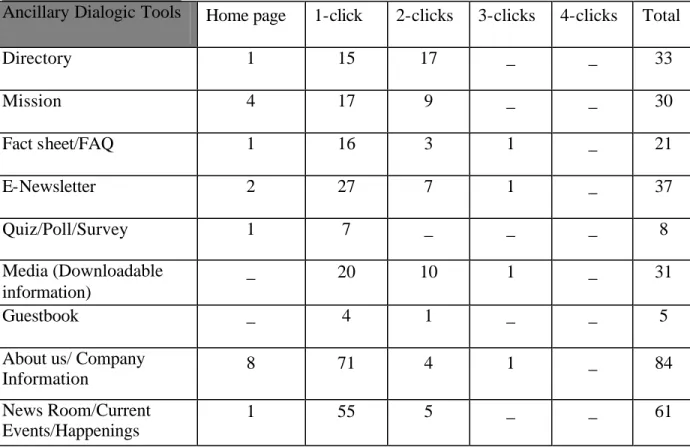
Table 1 Activist use of ancillary dialogic tools 62
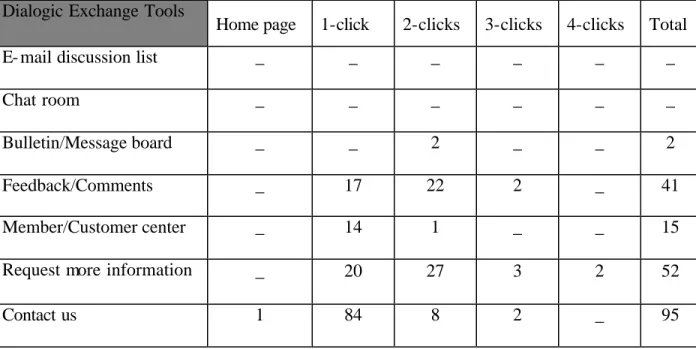
Table 2 Activist use of dialogic exchange tools 66
Table 3 Corporate use of ancillary dialogic tools 69
Table 4 Corporate use of dialogic exchange tools 72
iv
A Content Analysis of Activist Group Use of Dialogic Tools on the World Wide Web Roberto Mazzini
ABSTRACT
This study is a quantitative content analysis of activist groups’ use of dialogic tools on Web sites. The study was done in order to understand how activist groups use the Web to communicate with their publics in comparison to for-profit corporations. The Web is considered a powerful tool for activists and allows them to communicate better with their publics. Use of the Web should allow activist groups to level the field with corporations by enabling them to get their message out and interact better with their public. Dialogic communication is a necessity for activist groups. By measuring the use of dialogic communication by activists in comparison with corporations, this study uncovers how well activist groups are using the World Wide Web for purposes of dialogic communication with their publics.
1 Chapter One Introduction
Activism is a large part of American society today. One could easily name any number of groups, from the Sierra Club, a nature and wildlife group, to the American Civil Liberties Union, a civil rights group. There are thousands of groups, each with its own mission and publics. An activist group is defined as, “a group of two or more individuals who organize in order to influence another public or publics through action that may include education, compromise, persuasion, pressure tactics, or force” (L. Grunig, 1992, p. 504).
According to the Public Relations Society of America (PRSA), “Public relations is a distinctive management function which helps establish and maintain mutual lines of communication, understanding, acceptance, and cooperation between an organization and its publics…” (Wilcox, Ault, Agee, & Cameron, 2000, p. 3). Though the goal of activists, as stated by L.Grunig, J. Grunig, and Dozier (2002), is to organize in order to influence publics, the traditional perspective of activism is now extinct. The traditional perspective of public relations viewed the activist group as a problem for the organization, a public whose members had to be contended with and placated. Activists were seen as an external pressure that came about to “ameliorate social problems” and then disappeared (L. Grunig, 1992). This view holds that activists are external enemies, something for public relations practitioners to contend with and eliminate. But, activist groups, in fact, use public relatio ns strategies and tactics to further their cause. Activist groups do not
2
simply evaporate once an issue is resolved. They act as watchdogs for certain issues that they defend.
This is consistent with Holtzhausen’s (2000) view of the postmodern practitioner. According to Holtzhausen, practitioners must understand that they are the balance
between the environment and the corporation. In the more traditional perspective, the role of the public relations practitioner was always adjoined to that of a corporatio n or a government entity. But, there are practitioners who behave like activists whether through the role they play in bridging the gap between their organization and the environment or by actually working for an activist group. This is where the old perspective of the public relations practitioner’s role must be reevaluated and a new idea of the function of public relations must be understood. Activists are portrayed as the enemy, but they are often the voice of democracy. As such, activist groups should not be seen as an outside force but rather they should be viewed as another public that the organization must relate to. With groups entrenched firmly in place in society and a hierarchy established within activist groups, the groups themselves act as organizations.
Activist groups also use public relations strategies and tactics to achieve their goals. While they are organized to further a cause rather than to achieve a profit, they still must adhere to the same necessities that their corporate counterparts do in enacting public relations strategies and communicating with their publics and the media. Their message must be heard and be credible. Therefore, instead of activists continuing to be viewed as opposition for corporations, this study will consider activists as organizations that use public relations to achieve their goals.
3
Ferguson (2001) cite three things that activist groups must do in order to survive:
maintain their members, compete with similar activist groups for attention, and adjust to changes in their environment. Simple survival requires time and energy. This, coupled with the fact that activist groups, typically, have far less money than for-profit
corporations, adds an additional burden on them.
However, current technology is available to help to ease the burden for activist groups in competing against corporations. Specifically, the World Wide Web has become a great ally in the struggle of activist groups. Organizations of all sizes are using the Web for business and to maintain communication. The Web is an important tool that can help groups spread their message and fulfill their goal of communicating with their publics.
The Internet has changed the way that organizations conduct business. Few other fields have adopted the Web like public relations has, and the field is now beginning to understand the implications of the technology (Hallahan, 2001a). The Web allows activist groups to foster positive two-way communication with their publics, thus allowing them to tackle two of their biggest obstacles: organizing and maintaining membership.
Relationships can be created and adapted through the Web (Kent & Taylor, 1998). Online publics are not isolated from each other. Publics can interact, influence each other, and offer different perspectives from their regular life (Witmer, 2000).
According to Selvin (2000), organizations must treat the Internet as a major form of communication. The power of the technology cannot be disregarded, or viewed as a peripheral or alternative mode of communication. He argues that organizations must recognize the opportunities that this technology offers.
4
groups. J. Grunig presents two-way communication in two different styles. The first is two-way asymmetrical. This method sees the practitioner as using research to develop a message in order to persuade a public or publics to do what the organization wants them to. This method can be summed up as the practitioner listening to stakeholders and adjusting his or her message with the intent of persuading. The second style is two-way symmetrical. This method is also based on research, but communication is used to manage conflict and promote understanding. This means that the practitioner and the public communicate in order to find a common ground. This method, though, is considered a normative model and not applicable in all real-world scenarios.
Research suggests that excellent organizations do practice two-way symmetrical communication but they also use two-way asymmetrical communication (J. Grunig, 2001). This model is dubbed the mixed- motive model, a hybrid of the two former models. In the mixed- motive model communication is still used to promote
understanding but there are times when an organization must use some persuasion tactics. The mixed- motive model of public relations is used as the dialogic framework for this study.
By simply acting as storehouses of information and disseminating information without listening, groups practice one-way communication. A one-way communication model, also called press agentry, does not help to foster long-term relationships. Instead, that model can only be used with publics that actively seek out information and want to be persuaded, those who may be unsure or have questions may not participate in a one-way communication effort (L. Grunig, 1992).
5
While this study is focusing on activist groups and dialogic communication, it is important to note that the findings of this study, as well as the review of literature, can be used to analyze non-profit and non-governmental organizations (NGO). Both of these types of organizations follow the same basic rules as an activist group in their reliance on the environment and the support of members and the media to get their message out. Neither money nor manpower is readily available for these groups. Furthermore, some activist groups become non-profit groups and some NGOs are in fact activist groups.
The purpose of this study is to examine the way activist groups use the Web to create, foster, and maintain dialogue with their target publics. Although the Web is a tool that allows two-way communication, this study questions if activists use Web sites to foster two-way dialogue with their stakeholders or to simply disseminate information to their stakeholders.
Specifically, this study seeks to determine how well activists use the Web for dialogic communication. It asks, to what degree do activists use dialogic communication tools on the Web and do the activist groups use these dialogic tools better than corporate entities. To achieve this purpose, this study will utilize the framework posited by Taylor, Kent, and White (2001), which analyzes Kent and Taylor’s (1998) five principles of building public relationships. The framework will be used as the foundation to create a new set of principles to measure the use of dialogic tools by activist groups. While the Taylor et al. study focused on an overall look at how activist groups successfully use the Internet, a portion of their framework focused solely on dialogic communication. This study will replicate that portion of the study and expand upon it.
6
The remainder of this chapter will examine several topics introduced in a review of the literature. Specifically, the review of literature includes the following sections: activist groups and their applicable theories, the Internet and communication, the implication of the Internet for public relations, activists groups and Internet use, and dialogic communication. Chapter 2 explains the methods and procedures used in this study. Chapter 3 provides an analysis of the data gathered from applying the framework for dialogic communication developed in this study to activist and corporate Web sites. Finally, Chapter 4 reviews the results and discusses conclusions, areas for improvement, and proposes possibilities for future studies in this area of inquiry.
7 Chapter Two Review of Literature
Activism
An activist group is defined as “a group of two or more individuals who organize in order to influence another public or publics through action that may include education, compromise, persuasion, pressure tactics, or force” (L. Grunig, 1992, p. 504). This section further defines what makes up an activist group. In addition, it examines the types of publics that activist groups must deal with, the goals of activist groups, and the tactics they use. Furthermore, this section will discuss how activist groups must interact with their environment, and it will introduce several theories that will help to explain how activist groups function.
It is first important to understand that activist groups are composed of people. These people come from everyday walks of life and have chosen to take part in a group to fulfill a specific personal need. Leitch and Neilson (2001) refer to these people as a “public.” According to L. Grunig (1992), a public is defined as a group of people who recognize a problem and organize to do something about the problem. A public is a group of individuals who represent a collective interest. Members of this group may share a zone of meaning in relation to a certain issue or event. Being a part of one public, though, does not exclude members from being part of other publics or activist groups. Some groups may overlap, intersect, or conflict. Activist groups are always in a state of flux as many things can change, such as membership, leadership, and focus.
8
According to L. Grunig (1992), the general intent of an activist group is to
improve the functioning of an organization through outside pressure. Many groups – also called pressure groups, special interest groups, grassroots opposition, social movements, or issue groups – may be formed around a new issue or existing groups may change their focus. Mintzberg (1983) examines the different activities of these groups. Activists may be episodic, regular, general or focused. They may also be categorized as detached or personal. Process may vary also, as groups may be formal or informal. Activist groups may initiate action, or organizational initiatives may be obstructed. Whatever the case, the main purpose is to exert control (L. Grunig, 1992).
Historically, activist groups have been considered essentially powerless. Groups have always existed to try to influence organizations since organizations have existed. But, in the past, these powerless groups were easy to ignore. However, with the advent of technology and the Internet, groups have become stronger and more difficult to ignore (Coombs, 1998).
One mistake that has historically been made when classifying activist groups is the assumption that they are different from other organizations. Kent, Taylor, and White (2003) posit that activist groups, though they are different from for-profit groups in some ways, use similar activities to achieve their public relations goals. In fact, activist groups use public relations as much as corporations do in order to keep the organization relevant and to achieve the group’s mission.
There are different structures of activist groups, and different ways to understand them. Different factors can be used in classifying groups, such as size, mission, success, or use of public relations strategies (Kent et al., 2003). But, according to Olson (1982),
9
size shouldn’t be a factor since small groups, too, can make changes and sometimes even have a greater effect than larger groups. A reason for this is that smaller groups are often more involved and display more action-taking behavior than larger groups.
Goals, publics, and tactics.Activist groups may start out small but depending on the issue, membership can snowball and alliances can be formed, both of which can turn an activist group into quite a force. Once a group starts to climb in numbers and it endures battles against policies or other problems, certain needs of the group must be taken into account. Smith and Ferguson (2001) state two goals that activist groups must have. First, they seek to rectify the conditions identified as problematic. This means that the groups must be successful in what they do. A lack of success over time has the ability to erode any power a group may have. The second goal of an activist organization is to maintain the organization established to pursue the activists’ purpose. Change is a long-term process, and a group should not simply evaporate after one goal has been achieved.
The strength of an activist group actually becomes evident as it pursues the latter goal. Taylor, Kent, and White (2001) state that many activist organizations are operating on minimal budgets and are also in competition with other activist groups. There are many activist groups in the United States and many of them share similar causes. Groups must compete with one another for membership and press. The goal of maintaining membership can become the most challenging task for a group. Smith and Ferguson (2001) stated that being an activist requires time and energy. Without a membership base, an activist group can lo se power or even dissolve.
Which people identify with which problem is an enduring question for activist groups, as well as organizations. While there have been many ideas about how publics
10
form, J. Grunig’s situational theory of publics offers a well-researched framework for understanding variables related to the formation of publics (Grunig & Hunt, 1984). J. Grunig identifies four general types of publics: all- issues, apathetic, single- issue, and hot-issue. This categorization system is not based on the issue, rather it is based on the actions of the members of the group. All- issue publics will rise up when something is wrong regardless of the cause. Apathetic publics are generally disinterested in any issue. Single- issue publics concentrate on one issue only and then vanish after the problem related to the issue has been solved. Hot issue publics follow whatever the cause of the day is (Smith & Ferguson, 2001). Because of these types of publics, the general public is of no consequence to an organization. Organizations cannot speak to everyone, so they focus on a particular group with which to engage. Typically, activist groups become high priority publics for organizations (L. Grunig, 1992).
Broom and Dozier (1992) list nine characteristics that can be used to identify publics. These include geographics, demographics, psychographics, covert power, position, reputation, membership, role in decision making, and communication behavior. Geographics segment people by location. Demographics segment people by
characteristics such as age, sex, and income. Psychographics segment people according to their lifestyles. Individuals with covert power can influence decisions in a group or community. Individuals who hold positions of influence are also relevant. These can be people such as doctors, teachers, and elected officials. The reputations of individuals can also be used to tell what sort of influence they have, as is the case for individuals with membership in powerful groups. Studying the roles of individuals in decision- making positions also identifies relevant publics (L. Grunig, 1992).
11
According to L. Grunig (1992), activist groups, in pursuing their goals of solving problematic conditions, will attempt to either confront organizations directly or seek regulation from government or administrative agencies. Smith and Ferguson (2001) found four factors that may determine the strategy choice. These include: a) the organization’s resources; b) the perceived efficacy of various courses of action; c) the legitimacy of the problem, the proposed solution, and the organization advocating it; and d) the interaction with the target of the activists effort.
If a group decides to go straight at an organization, the most common way to do so is to use the media and force the issue to be introduced to the public agenda to create public awareness. This in turn places the issue in the court of public opinion. The more negative the coverage is, the more likely the organization is to change its stance on the issue. L. Grunig, J. Grunig, and Dozier (2002) state that the media helps activist groups to convey legitimacy. Generally, media coverage tends to be more favorable for the activist groups. The reason for this is that activist groups can get away with certain things
corporations cannot, such as making exaggerated claims or demonstrating to cast a negative light on the corporation. Corporations are expected to state their case and act professionally. Activists, on the other hand, have more flexibility. Negative coverage, or any coverage of an issue for a long period of time, casts the organization in a negative light with the public.
Besides the press, activist groups also work with government organizations in order to protest against corporations. If activist groups are successful in government involvement, this adds another group of opposition that an organization must contend with. This governmental intervention reduces organizational autonomy.
12
Jackson (1982) offers five categories of strategies: 1) informational activities, 2) symbolic activities (boycotts), 3) organizing activities and networking, 4) legalistic activities, and 5) civil disobedience. These five strategies are often used by activist groups, from PETA handing out leaflets or throwing paint on fur-wearers to pro-life protesters blocking entry to a clinic. These acts can be seen most everyday, though some are more outrageous than others.
The previous section has covered the fundamental definition of an activist group, as well as the needs and goals of these groups. The next section explores three theoretical frameworks that aid in the understanding of how activist groups function as
organizations.
Relevant theoretical frameworks. There are several theoretical frameworks that aid understanding of activist groups. These frameworks help explain the activities of activist groups in terms of organizational and relational criteria.
Hatch (1997) explains that organizations, which include activists, must fit into their environment. This is a necessity for all organization; however, activists are more closely linked with their environment, or at least should be, because they are both made up of and comprise the environment. The activists’ toughest challenge is creating and maintaining a large membership. Unlike larger organizations, an activist group cannot simply shut itself off from the public or even survive without the public’s support. Since the power of an activist group comes from its environment, it must be linked more closely to that environment, making the environment a primary focus. Furthermore, in facing the demanding challenges of membership and organization, that communication also is a primary objective of the activist organization.
13
Systems theory provides a framework for understanding the relationship between an activist group and its environment. Hatch (1997) states that according to systems theory, organizations are most effective when they acknowledge, interact with, affect, and become affected by their environment. Systems theory helps to show how an activist group must manage itself in order to become successful. As mentioned before, activist organizations cannot exist in a vacuum, they are very much a part of the world.
Therefore, they exist in an open system. They exchange information, material, and communications with their environment (Austin & Pinkleton, 2001; Hatch, 1997).
L. Grunig, J. Grunig, and Ehling (1992) posit that, according to systems theory, an organization does not have strict measurable goals but instead is evaluated on characteristics such as growth, equilibrium, and decline. In an open system, an organization is not simply focused on the success of its goal, but also, its publics,
government agencies, and other facets of the environment. Also, this theory holds that the organization is comprised of subparts that must fluidly work together or the entire system will be affected. The main linkage for these subparts is communication. Communication is a necessity; it allows the public relations function to interact with the management function, and so on. Management must count on the public relations function of the organization to maintain good relationships with publics.
Finally, Austin and Pinkleton (2001) state that there are three things necessary for an organization to succeed from a systems theory perspective: surveillance,
interpretation, and advising management. Surveillance means that an organization is gathering information about the environment and any possible changes or trends that may result in a change, challenge, or opportunity. Interpretation is used by an organization to
14
make sense out of gathered information. In interpreting information, an organization can flow with the environment and understand what might help or hurt the organization. Lastly, advising management means making credible suggestions that will result in measurable objectives that fall in line with organization goals.
There are some limitations in applying systems theory to an activist group. Because this study examines the activist group as an organization – comprised of all the necessary parts and, when large enough, having the structure of an organization - there are some facets of the activist group’s functions that are not explained by systems theory. Systems theory, as well as other organizational theories, focuses on how a traditional organization functions in a normal world. Activist groups, because they are so closely linked to the environment and comprised of it, are not sheltered, nor do they have the potential to become sheltered, from the environment. Corporations, though affected by the environment, can close off communications or at least minimize them and still survive. Because members of the environment make up the activist group, this cannot be done. The environment is the lifeblood of the activist organization; therefore, activist groups do not fully fit into the systems theory. But, in the sense of communication and the importance of the environment, systems theory is the best way to understand how the group must interact with its surroundings (Austin & Pinkleton, 2001).
Taylor, et al. (2001), in reviewing activist groups’ goals, stated that activist groups are not only competing for publics with corporations, but also other activist groups with the same causes. Focusing primarily on the goal of creating and maintaining membership, a simple search on the Internet reveals a large number of animal rights, civil rights, environmental groups, and so on. These groups must all compete with each other
15
for members; though, it is acknowledged that there is some overlap. In competing for publics, which are viewed as a primary resource, population ecology theory can show what will make an activist group successful (Hatch 1997).
According to Hatch (1997), population ecology stems from an assumption similar to that of systems theory, in which the organization is reliant upon the environment in order to function. Again, like systems theory, population ecology focuses on the
traditional for-profit corporation, but it can still be applied with success to explain activist groups’ dependency. The theory of population ecology posits that the environment makes the choice as to which organization succeeds and which organization fails. Organizations are competing for publics from the same resource pool. This is likened to Darwin’s survival of the fittest principal. Furthermore, the environment is not looked at as a whole but is broken up into specific groups, or niches. A niche focuses on the groups that are competing for the resources in that niche; in this case, people.
According to Hatch (1997), population ecology, there is an evolutionary process – variation, selection, and retention – that explains the way a public works. Variation occurs in the population of an organization when a new organization is formed. This organization then goes through the selection process in which the environment selects an organization based on its ability to best serve the population. Organizations that meet the criteria are then retained by the environment. Retention equates to the survival of the organization (Hatch, 1997). Retention for an organization means that the organization manages to keep its membership while maintaining its validity in pursuit of its goals. Therefore, retention for an activist group demonstrates that its positioning and its goals are still relevant and desired by the public.
16
Like population ecology theory, Hatch (1997) states that institutional theory also helps to choose an organization for an environment. Institutional theory, though a
separate theory, can work along with population ecology with regard to the environment. As previously stated, population ecology allows an environment to select which
organization thrives and which organization is eliminated. Without the support of the environment, an organization cannot survive. Institutional theory furthers the idea of choosing the most suitable organization for an environment. Institutional theory adds to population ecology the idea that an organization not only has to serve a purpose for the environment, but it must also adhere to and maintain the values of the external society (Hatch, 1997).
Essentially, by using both population ecology theory and institutional theory, a public still selects an organization using variation, selection, and retention. One more step is added with the use of institutional theory. The environment goes to the extra step of making sure that the values of the organization, not only the services, are in adherence with that of the environment. This is an especially important factor for the environment when dealing with activist groups. Though activist groups generally fight for a cause supported by people, their methods and values should be congruent with the environment that they survive in.
Austin and Pinkleton (2001) recite the old adage that you cannot please all of the people all of the time (p. 273). This leads to the question of what types of publics should an organization seek to please and when should these publics be considered a high priority. All- issues, apathetic, single- issue, and hot- issue publics have been identified by J. Grunig’s situational theory of publics as the four types of publics that activists face.
17
Situational theory provides an understanding of how publics are defined and it captures the linkages in changes between organizations and publics.
Dozier and Ehling (1992) posit that organizational publics come and go depending on their interaction with the organization. A public is created when
organizational actions create consequences for its members. This creates a link between the organizations and the publics.
Dozier and Ehling (1992) also provide a few additional types of publics. These publics are formed when people face a similar problem. This brings them together and allows them to organize and confront the problem. To start with, if there is no
commonality to a problem, leaving people unable to connect, they become a nonpublic. A nonpublic is of no concern to an organization. If a public does form but is unable to reach a consensus about what the common problem is, that public will become latent. When people recognize a common problem, they become an aware public. When those people organize to solve the problem, they become an active public.
According to Dozier and Ehling (1992), active publics are the only publics that have the ability to create an effect. Active publics, though, are generally ready for a fight. Therefore, communicating with an active public is extremely difficult, as they are more willing to cut off lines of communication due to the fact that they will discount
organizational communication. Aware publics are easier to communicate with because they are not yet in the fight stage. The other two types of publics – nonpublic and latent public – do not recognize a problem; therefore, there is no effective way to communicate with them. They are unlikely to process or seek information because they do not
18
is a passive communication behavior and information seeking is an active communication behavior. Information sought has a greater impact than information processed or ignored.
Austin and Pinkleton (2001) state that active publics can be divided into three types: the long haul, those interested in all aspects of the issue; special interest, those interested only in a certain aspect of the issue; and hot button, those who get emotionally involved only if an emotional debate ensues.
There are three variables that determine active publics. These three variables – problem recognition, constraint recognition, and level of involvement – define
characteristics of the individuals who take part in the active public. Problem recognition allows individuals to understand the consequences of what an organization does and makes them more likely to process and seek information. Constraint recognition decreases the probability of information processing and information seeking. In
constraint recognition, individuals feel they have little freedom and are therefore unlikely to seek information or communicate. Individuals who have constraint recognition are in the same state as active publics, so communication with this type of public is unlikely to be effective. Level of involvement is the degree to which people connect themselves with a situation or how much the organization’s activity matters to them. Level of involvement increases information-seeking behavior and reduces passive information processing. Highly involved individuals will typically have high problem recognition and low constraint recognition (Dozier & Ehling, 1992, Austin & Pinkleton, 2001).
Again, these categories were created with the traditional organization in mind, but they are helpful for activist groups to understand who their publics are. Instead of
19
categories in order to conclude which publics they should target for membership or support. Dozier and Ehling (1992) state that these categories serve as “early-warning indicators” of emerging publics. They allow an organization to decide which public it should respond to.
Systems theory, population ecology, institutional theory, and the situational theory of publics help to better explain activist groups. They show how activist groups must organize and react to their publics. These theories capture the different aspects of the needs of an activist group and what criteria must be met for these groups to be successful. They must first understand how to operate in and merge with their environment. Then, they must realize that they are in competition for environmental resources with other groups and must attempt to understand and offer value to individuals who have the potential to join the group. Finally, the publics of activist groups must be understood. The situational theory of publics is perhaps the most important theory for activist groups because without knowing what level of involvement, problem recognition, and constraint recognition members of a public are at, potential members will be lost. This explains the behavior of activist group. These publics are what create activists’ power, without recognizing where each public’s involvement lies; any attempt to move ahead with organizational goals can only result in failure.
Obviously, activist groups have certain needs they seek to fulfill and the groups must appeal to certain types of people. Many of the strategies stated can be implemented via the technology offered by the World Wide Web. The Web can help activist groups reach out in a way they have never been able to before. The following section will look at the Internet and the implications the new technology has on public relations.
20
The Internet and Public Relations Implications
In the previous section of the chapter, we learn from Taylor et al. (2001) that many activist groups operate on minimal budgets and must fight to gain and keep membership. Without a membership base, there is no power. This study posits that the Internet is the key to a successful activist group because it facilitates development of a membership base. Most corporations use Web sites and the Internet to communicate with stakeholders. To compete with the corporations in both fighting for their cause and in gaining public backing, activist groups must also utilize Web resources.
More and more the digital divide is decreasing as technology becomes more available and less expensive. Wright (2001) states that 33 percent of Americans who went online in 2000 have a high school education or less. This is up from 22 percent in 1999, an 11 percent leap in Internet use among this education level in one year. In addition, the average income level of those who go online is also shifting. Twenty- four percent of households that went online had incomes of less than $35,000. This is also up 11 percent from a year earlier. The Internet is becoming more understood and available. Cyber cafes are becoming more prevalent, libraries supply high-speed connection for patrons, and schools are fully equipped to supply students with Internet access when it may not be available at home.
McCaughey and Ayers (2003) claim that the reason the Internet is so powerful is because of its immediacy. It produces news and information much faster than a
newspaper can supply it. Also, it has the power to be more interactive than television. They state that, “Not since the U.S. Postal Service have we seen a communication
21
development in society that can give power to individuals like this” (p. 5).
Not only is the Internet immediate, but it is constantly available. Twenty-four hours a day, anyone with access can ‘surf the Web’ and gather information as needed. Newspapers’ Web sites are updated several times a day as news happens. E- mail is practically instantaneous and, for most people, free. Wright (2001) states that, because of the obvious advantage of the Internet, audiences continue to grow each year. Research shows that each year since 1998, going online is becoming a more important part of many people’s lives.
Because of this, the Internet cannot be igno red by activist groups. Selvin (2000) warns that as organizations move into this high- tech era, regarding the Internet as simply another mode of information diffusion can be a mistake. These organizations will only have a partial understanding of the opportunities that the technology offers. By
disregarding the technology, alternative ways to solve problems and handle risks may be ignored.
Selvin (2000) explains that the Internet opens up opportunities for “participatory opinion formation.” This makes the technology more important and the need for
exploration into how individuals and collectives might participate more urgent. Unlike the mass media, the Internet cannot be written off as non-participatory. In the Internet, there exists the possibility for a dialogic loop. According to Kent and Taylor (1998), the dialogic loop – which allows publics to query organizations, and more importantly, organizations to respond to questions and concerns – allows feedback from audiences and gives the organization an opportunity to respond to questions concerns and problems. Selvin (2000) states that the Internet clearly contributes to two-way communication with
22
many options such as e- mail, Internet phone calls, and chat options at individuals’ disposal. Also, besides one-on-one encounters, the Internet allows dialogic use for many different sized groups.
According to Selvin (2000), organizations would be wise to use the Internet to facilitate dialogic communication. This will empower organizations and practitioners to make changes from reactive to proactive communication. Both the organization and the public will be able to address issues before they arise or as an issue is building instead of simply reacting to an issue once the damage is done. He warns though, that the Internet’s benefits are not automatic. Opportunities must be seized.
As more is understood about how and when the Internet can be used to listen and respond to publics and concerns, organizations will be able to fully apply the benefits of the technology. Dialogic communication is a powerful tool that can involve individuals in an organization’s activities. Immediate flow of information and the increasing availability of the Internet also contribute to its power. If overlooked, an organization may miss out on a powerful instrument to reach target publics and increase competitive advantage or, at the very least, level the field since the competition might already be using the technology.
Public relations implications. For public relations, the Web is more than simply another venue for disseminatinginformation. “Technological innovations over the last 25 years have changed many aspects of the public relations practice” (Johnson, 1997, p. 213). White and Raman (2000) state that the Web is actually quite different than any communication channel that has been available in the past. It is the first medium of communication that links the organization directly with the public. Unlike other mediated channels, there are no gatekeepers. The Web is the first controlled medium where the
23
sender of the message actually has control over the message content. Before the advent of the Internet, advertising was the only means to send a controlled message to a mass audience.
The Internet is a desirable medium for public relatio ns. Without gate keeping, this medium allows a totally different style of communication and opens a new channel for public relations. Esrock and Leichty (1998) claim the Web actually has the potential to increase the pace of public relations. There are thr ee characteristics of the Web, all of them speed: speed of dissemination, speed of access, and speed of feedback. This speed empowers public relations practitioners to provide information and receive feedback in a timely fashion.
Each day, different groups tap into the power of the Internet and utilize the World Wide Web. Virtually every industry, product, activity, and public pursuit can be found somewhere on the Internet (Kent & Taylor, 1998). This power, speed, and availability forces a change in thinking. Organizations cannot choose to ignore this medium. If so, leverage will be given up. Imagine if some groups chose not to use television news or if an organization felt that newspapers were too old- fashioned; something would be missing. The goal of public relations is to get an organization’s message to its key publics. By choosing to ignore one medium, others with the same goals and publics will have an advantage.
However, the technology is still new. Some people don’t trust it and some don’t understand it. But it is something that a consummate public relations practitioner will utilize. This technology must be used to stay in touch with publics and the media. By ignoring the technology an organization can distance itself from them.
24
The Internet can add a personal touch and reach out to communities that might otherwise remain isolated if not for the technology (Kent & Taylor, 1998). Consequently, the use of the Internet may be one of the only ways to reach some isolated publics. Businesses no longer just use the Web to influence through advertising and marketing; they use it to obtain feedback and improve relations (White & Raman 2000).
Johnson (1997) reiterates the notion of using the Web to become closer with publics by explaining that an organization in crises (or a group fighting an organization) no longer needs to rely on the media to speak to its publics. The organization has the ability to communicate with publics directly and immediately by using Web pages or e-mail. In addition, the diversity of information available online allows for the early identification of emerging issues.
The Internet not only provides an organization with a way to disseminate information, it also creates dynamic and lasting relationships with publics. Most public relations campaigns involve dissemination of information, but they also require the formation of relationships (Kent & Taylor, 1998; Wright, 2001). These relationships are the basis for a successful activist group, which must focus on its competition and its goal of maintaining membership. Since organizations must go beyond disseminating
information and allow for the flow of two-way communication, the Internet is a valuable tool. Public relations practitioners use the Internet for two-way communication with key publics and move beyond what the traditional media offer.
In further separating the Internet from traditional media channels, Jo and Kim (2003) cite interactivity as one of the Internet’s most distinguishing features. Interactivity is a critical component in technological communication.
25
In fact, Esrock and Leichty (2000) state that the interactive nature of the Internet separates this medium from other forms of media. The Web can disseminate information, but it also collects data and monitors public opinion. A proactive organization can engage in dialogue with its publics on a number of issues, such as policy. This allows closer contact with publics than has previously been feasible.
Traditional thinking might lead a practitioner to disregard the notion that the Internet is actually an alternative and not a supplemental form of information
dissemination. One of the reasons public relations is favored over advertising in times of crisis is the credibility that newspaper coverage lends to an organization. Third-party endorsement is a cornerstone of public relations. Since a Web site can be owned or operated by an organization, the first aversion to using the Internet may be due to a lack of credibility (Esrock & Leichty, 2000). But, in contrast to that line of thinking, Wright (2001) mentions that studies show Web sites are either as credible as traditional media or, in some cases, even more credible.
Actually, the Internet creates a sort of link with other media. Wright (2001) argues that some groups use the Internet to effectively advance their positions. By doing this, they have gained ground with the media. Success is derived because effective use of the Internet has built relationships with various publics. This is another advantageous idea for activist groups. Some groups struggle, be it due to competition or the fact their story is not a hot topic, to get their message disseminated through the media. The Internet provides a channel to connect with the publics, as well as the news media.
Estimates suggest the Internet is now used for a variety of communication and information sharing tasks by more than 275 million people in at least 175 countries
26 (Wright, 2001).
It is important, though, at this point to note how the Internet is different. Esrock and Leichty (2000) relate suggestions from practitioners that state the Internet is just one more channel to communicate to stakeholders with, while others say the Internet has the potential to revolutionize organization-to-public communications. To further this, Kent and Taylor (1998) assert that the Web offers a multi-channel environment where communication and negotiation can occur.
Despite the advantages and implications the Internet holds for public relations, the question remains of how well the technology will be utilized. It is true that many older or technologically impeded practitioners may reject technology as something unnecessary or superfluous. Though acceptance grows, there still remains a divide between those
accepting of the technology and those who either don’t understand it or don’t care to. Kent and Taylor (1998) posit that scholars and practitioners have expressed great interest in the Web. Also, the Web serves public relations functions as outlets for disseminating information to media and the public. But, despite the Internet’s potential, it still seems to be underutilized by many organizations and under-examined by scholars as a
relationship-building tool.
This might all seem a bit odd for a society so focused on what tomorrow holds and what the next great technological advance will bring. It seems that the focus on the Internet is superficial in the sense that its basic tools, postings, and e- mails, are its most popular features, whereas its dialogic ability is ignored. This is not to discount the importance of e- mail. Wright (2001) states that 98 percent of professionals polled said that e- mail has an impact on how they do their jobs; however, Taylor et al. (2001) point
27
out that many organizations are missing the potential that is held in the Internet’s two-way communication ability. Furthermore, the Internet’s ability to provide public relations research, planning, and evaluation are ignored. While many organizations appear willing to use the Internet to collect information, they do not employ the technology effectively or fully.
Springston (2001) provides a short summary of the Internet’s implications for public relations. He states that there is growing evidence that this new technology is enhancing how public relations is practiced, while also changing the traditional roles of practitioners. The most important aspects of this change include the ability to efficiently search vast amounts of information, the detection of emerging issues more quickly than ever before, the changing nature of communications with key publics, and an effective Internet presence that aids practitioners in times of crises.
Overall, the literature indicates is that the Internet provides a powerful tool that is revolutionizing the way that public relations practitioners are able to disseminate their message and communicate with their publics. Although it is a powerful tool with a breadth of uses, it still has not realized its fullest potential. There is room in both
scholastic and professional realms for further study of how the Internet can be utilized to foster and maintain relationships. After reviewing the literature related to the Internet and what it means to public relations, it is now necessary to examine the Internet tools that are used by activist groups. The next section will analyze the relationship between activists and the Internet.
28
Activists and the Internet
There are many different reasons why the Internet is an important tool for activists. As the literature has established, the Internet helps level the field between corporations and activist groups. Communication, cost, and credibility all help give activist groups power. Also, the Internet provides a virtual organization. For example, if activists are small in numbers and have a low budget to fight against a big organization, they may not be able to arrange meetings outside of a certain geographic area. A Web page sets up a virtual operation that allows activists to become acquainted with other activists and gain members. Coombs (1998) states that the Internet can increase the power resources available to activists.
How the Internet is used for the activists’ purpose depends on who is using the Internet and creating the messages. The primary use of the Internet for activists revolves around mobilization and carrying out actions. Only the Internet allows activists to distribute messages to thousands of people all over the world and to publish information that is accessible anywhere and at any time.
There are three different categories of Web activism: awareness/advocacy,
organization/mobilization, and action/reaction. These categories show different initiatives and determine whether a group is proactive or reactive. Awareness/advocacy uses the Internet as an alternate news source that focuses largely on the issues not reported by other media. This type of Web activism uses distribution of information through methods such as e- mails and e-newsletters. Organization/mobilization can be used to call for action in the real world, such as a demonstration; it can back up an action that is already happening off- line, such as contacting an elected official through e-mail; and it can call
29
for action that can only be carried out online, such as spamming campaigns. The key to this step is to match the online tools to the task. Action/reaction simply refers to activist style Internet protests, or ‘hacktivism’. This method is used to crash organizations’ Web sites or create parody sites and confuse the issue (Vegh, 2003).
Though all three of the methods described can produce a desired affect, only action/reaction produces an immediate effect. The belief of this study is that long-term goals of activist groups, such as membership retention, and communication should be concentrated on. Though effective, hacktivism should be viewed only as a tool and not necessarily a type of activism. Though there are groups who take part in hacktivism, the attacks are not constant, nor are they the only methods used to keep the activist
organization together. Acts of hacktivism merely supplement other methods of fighting or are used to draw attention to the activist organization.
Regardless, though, of the method used, the main purpose of activists using the Internet is to garner attention for their issue and raise awareness within their publics. Activists must use mobilization to allow organizations, collectives, and individuals to establish for inclusive forms of organizational communities.
When used for mobilization, the Internet helps organizations to generate power. The Internet, as previously mentioned, helps push issues that were once unheard to the top of the agenda. Publics become more aware of issues that might have been ignored by traditional media. Mobilization must involve facilitating intelligent relationships and promoting dialogue. By ignoring active participation and neglecting to monitor the issues, interests could be damaged and activities, undermined. Web sites must be reflexive and encourage interaction in many different ways: top-down, bottom- up,
30
sideways, or any other direction possible (Selvin, 2000). All of the literature repeats the premise that communication must flow. Involvement is the key idea when both informing people and keeping their interest. Taylor et al. (2001) state that, “activist organizations have unique communication and economic restraints and may be able to use the Internet dialogically” (p. 268).
Rutherford (2000), while focusing on non-governmental organizations (NGOs) that attempted to ban landmines, argues that spreading a consistent message is important. The Internet helped gain the sort of mobilization mentioned by Selvin (2001). It allowed NGOs not only to spread messages, but also to organize a coherent campaign from hundreds of other NGOs. Using the Internet to devise a clear consistent message, even those with differing opinions on the underlying reasoning for protest had one consistent message to concentrate on. This consistent message helped the NGOs mobilize and, at the same time achieve one of the main goals of activism – to maintain membership.
The Internet also allows activist organizations to better serve their publics, extend their reach, and coordinate with other like- minded groups. The Internet is one of the best channels for activist organizations to communicate their message and garner support. One way this is done, is by fostering dialogic communication (Taylor et al., 2001). The main point of the Internet is to be seen and heard by the audience you choose. Others will also see your messages, but the stakeholders you target in particular will benefit more from the messages and attempts at dialogic communication. Heath (1998) states that the Web offers many of these opportunities for activist groups to get their messages out to key publics and their point of view evaluated by the media. A Web site creates both a
31 can debate issues.
While the use of the Internet in establishing a dialogic loop has been established and will be further discussed in the next section, there are other advantages for activist organizations that use the Internet as a tool. There are several more basic benefits beyond the attempts to communicate with stakeholders and the media that make the Internet a prime weapon for an activist. These benefits include low cost, control, transparency, and trust, as well as the link between the act and the stakeholder.
Low cost, though it is only an economic reality to regular for-profit organization, is one of the goals of activism. Generally in activist groups, money is tight and any tool that helps to cut costs while increasing outreach is indispensable. Jo and Kim (2003) mention several of the ways that the low costs of the Internet come into effect. Its worldwide reach, ability to reduce the use of paper, help in cutting costs by accelerating research, e- mail, and access to vast amounts of information all contribute to making the Internet a viable cost cutting tool.
Coombs (1998) explains that activists, for as little as $20 per month, can create an Internet presence. Actually, it can cost even less with free services in existence such as Netzero. In addition, little computer skill is needed since many sites, such as Yahoo, provide free Web pages and Web site tool builders that allow for simply clicking and dropping. Also, Web page builders such as Dreamweaver and Microsoft Front Page can be purchased for a low price and can create professional looking Web sites with little training. Heath (1998) states that any organization, no matter how financially limited, can sustain its message on the Internet. This allows the organization to reach people around the world and the electronic playing field helps to democratize public debate.
32
Rutherford (2000) gives a few examples of how NGOs were able to take adva ntage of the low cost of the Internet. The Internet allowed the groups to reach out across geographical space, which helped to broaden and build a membership base. Further, the ease of use and minimal cost allowed participation from many areas that might not have been able to join up with the groups. The availability of the Internet ensured that other NGOs were kept up-to-date, and including them lessened the risk that they would drop out. Perhaps the most important and cost efficient aspect of the Internet was e- mail. This communication tool permitted fast communication and data collection from other areas. Though e- mail may seem a small asset for organizations that must communicate, e- mail is a huge boon. Currently, stamps cost 37 cents each. Letters, on average, take two to three days to arrive. In using e- mail, mass mailings can go out instantaneously and can save an organization limitless funds on postage.
Though low cost is one of the prime reasons the Internet should be used by activists, control also adds to the technology’s appeal. Unlike the general reliance on the news media that organizations are subject to, the ability to control what information is disseminated on the Web greatly helps activist groups. Everything that appears on the Web site, aside from posts that come from users, is placed there by the activist
organization. Control also expands beyond simply being able to post a certain side of the argument or a view that is not exhibited in the mainstream media, a Web site can also contain vast amounts of multi- media information. Text, audio, video, downloads, etc. can be made available for interested parties, turning that Web site into a one-stop place for all information on a certain topic (Coombs, 1998).
33
site 24 hours a day. When news breaks, new views, opinion, opposition, or information can be posted. Part of the control the Internet lends to activists is the ability to monitor the development of issues that are of vital interest to them. Instead of being a reactionary entity, by following up after news has been reported, activist groups can change right along with news developments by constantly updating their information and shaping their views. In a proactive, as opposed to a reactive, position that might exist for groups
following newspapers and other slow-to-surface news sources, the Internet will help groups by already having answers for questioning stakeholders (Heath, 1998; Coombs, 1998).
In response to this idea of control, the notion of credibility again can be raised. According to Wright (2001), studies show Web sites are either as credible as traditional media or, in some cases, even more credible. Further, Rutherford (2000) explains that the Internet, through a full dissemination of information, can build transparency and trust. This is done by providing increased access and opportunities to communicate directly with leaders. This communication helps to encourage cooperation and understanding.
The Internet seems to provide utilities that will help activist groups gain leverage in attaining their goals. Although the Internet is not a singular means to success, it is a complimentary device that will assist activist groups in communicating with their audiences and attaining their goals of building membership and keeping costs down.
Along with membership, we have seen a few examples of how dialogic communication is a vital part of what the Internet provides. Without dialogic communication, the Internet is simply a tool for the one-way dissemination of information. When the dialogic loop is not utilized, much of the Internet’s benefits
34
disappear and activist’s goals are more difficult to achieve. The following section will cover the dialogic nature of communication via the Internet and how activists can use this powerful aspect of the technology.
Two-way Communication in Public Relations
Though this study examines how activist groups are using dialogic tools to
communicate with their publics using the Web, it is important to note some differences in the methods of two-way communication. This study will describe three different methods of two-way communication that may be used by activist groups in communicating with publics – dialogic communication, dyadic communication, and symmetrical
communication.
Dialogiccommunication is the basis of this study. Organizations that use dialogic communication are seeking to encourage participation from stakeholders. Participation is important and requires collaboration on the part of participants. Collaboration is rewarded and encouraged rather than stifled. Most importantly, it must be noted that dialogic communication seeks to move communication during times of conflict (Spicer, 1997). Because of the conflict, dialogic communication is not necessarily symmetrical. The parties involved aren’t concerned with the give and take of symmetry. They are more focused on unearthing problems.
The main difference of dialogic communication, as explained by Deetz (2001)is the fact that dialogic communication looks at dissensus. Dialogic communication is about facing differences. Dissensus is not disagreement but a presentation of differences and the disruption of any course. Whereas consensus seeks to discover organizational culture,
35
dissensus works to show the fragmentation and the work required to maintain coherence. Deetz (2001) continues in explaining that dissensus considers struggle and conflict to be natural states. This means that dialogic communication is a deconstructive process that unmasks elite conceptions, in turn allowing organizational activities to be given new, multiple, and conflicting descriptions. Holtzhausen (2000) states the reason that dialogic communication focuses on dissensus instead of consensus is because consensus sacrifices the recognition of differences. It avoids conflict and does not allow for more critical thinking, whereas, dissensus extends thinking. Therefore, a public relations practitioner must not strive for consensus. By doing so, the practitioner will not be able to identify the tensors between the organization and its publics.
Pearson (1989) posits that ideal speech occurs when participants have the freedom to exchange ideas. Pearson mentions that Habermas’ ideal speech situation states that individual speakers can speak about whatever they wish to with no constraints or manipulation. Holtzhausen (2000) shifts this idea to the public relations practitioner in stating:
Public relations has a role to play in challenging in challenging dominant world views and practices of the organization when these are perceived to be unjust. The role of public relations should be to continue to demystify the organization and its practices and transform it into a more democratic institution, for both its internal and external publics. (p. 105)
Deetz (2001) states that the basic goal of dialogic communication is to reclaim conflict. It addresses marginalization and conflict suppression. In recognizing conflict and not settling on a common ground, true dialogic communication allows groups to
36
identify conflicts and problems below the surface that might be ignored or suppressed using normal methods of communication. It must be noted that dialogic communication does not necessarily solve the problems uncovered, it is more a means to uncover and address the problems. While problems may work out, organizations and publics may agree to disagree.
The second method of two-way communications that may be used by activist groups is dyadic communication. Hallahan (2001b) describes dyadic communication as communication that takes place on an interpersonal level between someone from the organization and someone from the organization’s public. This type of communication tends to be one-on-one communication and is generally an unstructured, unplanned event. The communication, though generally face-to- face, can be conducted through telephones and correspondence.
This type of communication is highly interactive but sometimes volatile due to its unplanned nature. This kind of interactio n is generally used for negotiations. It can also be used to deal with a disgruntled member of the public or members of publics who seek to resolve problems due to high levels of uncertainty. Organizations usually participate in this type of communication because they are forced to participate through confrontation (Hallahan, 2001b).
This type of communication differs from dialogic communication through its spontaneity. Also, this type of communication is generally one-on-one and only addresses certain ind ividuals’ needs, not that of a group. Dyadic communication is never planned and does not necessarily have a goal set by both parties. Unlike dialogic communication, dyadic communication does not work to address all issues. Instead, this type of
37
communication is a simple use of two-way communication designed to get an answer or voice a grievance without a particular or clear goal in mind for both parties involved.
The third type of communication is two-way symmetrical communication. According to J. Grunig (2001), two-way symmetrical communication provides the normative ideal model of public relations. With the two-way symmetrical model,
practitioners look to have a back and forth communication with their publics. Where two-way symmetrical differs from dyadic communication is the use of research. Two-two-way symmetrical communication involves conducting scientific research and dialogue in order to bring about symbiotic changes for both the organization and the publics.
Though all three of these communication methods involve a two-way dialogue between an organization and its publics, there are differences to each of them that are important to point out. The three can be viewed as a different type of two-way
communication: process, flow, and research. Dialogic communication is a process that involves the organization and the practitioner sitting down and attacking uncertainty and understanding what effect the culture has on the relationship. Dialogic communication embraces conflict and is therefore not symmetrical because it is not necessarily searching for a solution. Dyadic communication is a flow that seeks consensus. It is an unplanned communication that is simply a back and forth dialogue between the organization and the public. Two-way symmetrical communication involves research. This method uses research to understand both the organization’s standpoint and the public’s standpoint in order to reach a consensus.
38
Kent and Taylor (1998) suggest that dialogic communication is considered to be especially ethical. Though this is the case, they point out that it is not necessarily better than other forms of communication.
For the purposes of clarity, differences between dialogic, dyadic, and two-way symmetrical communication are all important to note. All of these forms of
communication are used depending upon the circumstances facing an organization. For the purpose of this study, the Web tools are called dialogic tools because they have the ability to provide a dialogic loop. It must be stated that the method in which the Web tools are employed is up to each group, but they do allow for an ethical form of communication between the organizations and their publics.
Now that the three forms of two-way communication have been discussed, the rest of this section explains how both activist and corporate groups can use Web tools in a two-way capacity.
Wright (2001) explains that most public relations campaigns not only involve the sending of information to key publics, but they require the formation of a relationship. This relationship is the most important aspect of activism, whether the relationship be with the organization the activists are hoping to change, the key officials and/or publics needed to side with the activists, or the news media the activists can use to spread their message. A good relationship with all of the components above, while not necessary, can go a long way towards helping an activist group achieve its goal.
Two-way communication is required for activist groups. Their purpose is to promote understanding of the activist group’s issues (L. Grunig, 1992). Groups use the Web for the purpose of creating, fostering, and maintaining dialogue with their target