Deliberate Practice in Nursing
by
Melissa A. Bathish
A dissertation submitted in partial fulfillment of the requirements for the degree of
Doctor of Philosophy (Nursing)
in The University of Michigan 2014
Doctoral Committee:
Dean and Professor Kathleen Potempa, Chair Clinical Assistant Professor Michelle L. Aebersold Assistant Professor Robert B. Stansfield
Research Investigator AkkeNeel Talsma Associate Professor Colwick M. Wilson
ii
DEDICATION
I dedicate this dissertation to my mother, Caroline Marie Gorr, the strongest, bravest woman I have ever known. Although no longer with me on this Earth, still my pillar of unconditional love; providing a peaceful strength and encouragement while on this academic journey especially when my own doubts cloud my thoughts. Thank you for the endless source of inspiration. I miss you with all of my heart. This is for you… Sis.
iii
ACKNOWLEDGEMENTS
It is with much gratitude that I express my great appreciation for the expert guidance, support and time that all of my committee members have provided to foster my academic growth and the success of my dissertation.
Thanks to all of my friends who continued to listen to me ramble on about my
dissertation, yet wondering what on earth could possibly be taking me so long. I confused a lot of people along the way, including myself. Thanks for sticking in there with me!
My family was a constant source of strength. A special thanks to my parents, James and Caroline Gorr, for always telling me that I could accomplish anything I put my mind to. I know my mom is smiling from above; my dad is smiling with me here. Thanks to my parents’ in-law, Emil and Hiam Bathish, for all the great meals you cooked for us when I was busy studying, going to class and working. We were always well fed! I’m forever grateful to my four children, Madisen, Emil, Julia and Lindsey, who made sacrifices along the way that definitely helped us grow as a family! And finally, a boundless thank you to my husband, Amer, whose undying support, encouragement and patience made all of this possible. I couldn’t have made it without all of the ‘pep talks’ we had to boost my spirits when I teetered on the brink of exhaustion. They
worked. Thank you to the moon and back for pushing me to make a dream become a reality.
“There is within every soul a thirst for happiness and meaning.” -Thomas Aquinas
iv TABLE OF CONTENTS DEDICATION……….ii ACKNOWLEDGEMENTS………iii LIST OF FIGURES………...v LIST OF TABLES………..vi LIST OF APPENDICES………..viii ABSTRACT………..….ix CHAPTER I. Introduction……….1
II. Nursing Expertise: Use of Deliberate Practice………..23
III. Measurement of Deliberate Practice in Nursing: Development of the Deliberate Practice in Nursing Questionnaire……….………...64
IV. Understanding the Relationship between Individual Nurse Characteristics, Deliberate Practice and Nurse Competence……….………112
V. Summary, Recommendations and Conclusion………..………142
v
LIST OF FIGURES FIGURE
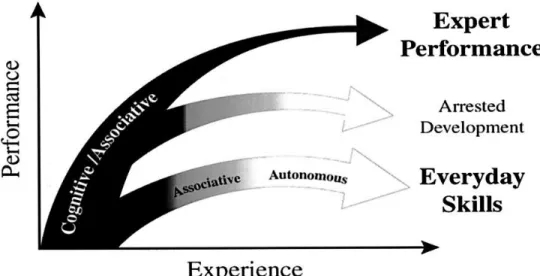
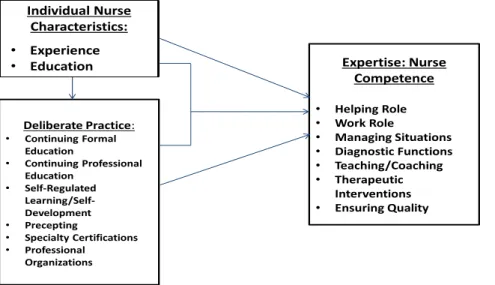
1. Differences of Expert Performance and Everyday Skills………25 2. Deliberate Practice in Nursing Expertise Model (DPNE)………55 3. Deliberate Practice in Nursing Expertise Model (DPNE)……….………..115
vi
LIST OF TABLES TABLE
1. Benner’s Stages of Expertise Development……….7
2, Theories in the Development of Expertise and their Relevance to Nursing………..…28
3. Deliberate Practice Activities Defined Across Nine Domains………..39
4. Types of Deliberate Practice Activities by Domain………..………46
5. Conceptual Definitions and Empirical Indicators of the DPNE Model Components………...55
6. Indices of Deliberate Practice Related to Performance by Domain………..……67
7. Inter-rater Agreement of Initial DPNQ……….……….73
8. Content Validity Indices for Initial Items of DPNQ………..……73
9. Questionnaire Items and Categories………..………75
10. Descriptives of Number of Conferences or Programs Attended Within and Outside Workplace………..84
11. Nurses’ Simulation Experiences since Becoming an RN and in Past Two Years…………...87
12. Descriptive Results of Nurses’ Precepting and Orientee Activities………88
13. Descriptive Results of Nurses’ Experience………..…89
14. Descriptives for Highest Nursing Degree and Degree in Other Field……….89
15. Item Response, Frequency, Range, Mean and Standard Deviation……….91
16. Item Response Scoring Scales……….………95
17. Items, Five Response Scale Scores, Category Score, Total Score……….101
vii
LIST OF TABLES CONTINUED TABLE
19. Comparison of Nurse Competence Scale Studies………..……119 20. Demographic Characteristics of Sample………122 21. T-tests for Education and Deliberate Practice………..………….126 22. Correlations between Deliberate Practice in Nursing Questionnaire Categories and Nurse Competence Scale Categories………..………127 23. Hierarchical Multiple Regression Analyses Predicting Expertise (Self-Report Nurse
Competence) from Gender, Education, Experience and Deliberate Practice………..…………130 24. Comparison of Study Result Correlations: Total NCS score and RN Experience…...……133 25. Score Distribution of Education and NCS Competence Categories of Helping Role,
viii
LIST OF APPENDICES APPENDIX
A. Initial Deliberate Practice Questionnaire………...……….150
B. Final Deliberate Practice Questionnaire………..154
C. Study Approval………..……….161
D. Email Sent to Registered Nurses……….164
E. Flyer to Participate in Study………165
F. Reminder Email Sent to Registered Nurses……….………166
ix
ABSTRACT
Purpose: The nursing profession faces many obstacles that may impact nursing practice and patient care; a nursing shortage, a shortfall of nursing faculty, and a wave of nurses retiring, precipitating a loss of expert level knowledge and skills. Taken together with healthcare policy changes that aim to provide healthcare coverage to 32 million more Americans and an aging population relying on extensive health care services, the demands being placed on nursing to maintain competence and strive for expertise attainment are great. Development of expertise has been linked to deliberate practice, or activities engaged in to improve performance, in many domains but little is known about how it impacts the skill acquisition of registered nurses (RN). The purpose of this dissertation project was to: (a) examine a conceptual framework for
evaluating the effects of individual nurse characteristics and deliberate practice on expertise, (b) develop and test an instrument to objectify the deliberate practice activities of nurses, (c)
evaluate the relationships between experience, education and deliberate practice, and expertise (d) identify which of the variables (experience, education, or deliberate practice) makes the highest contribution to expertise.
Methods: An instrument, the Deliberate Practice in Nursing Questionnaire (DPNQ) was
developed to measure the deliberate practice activities of RNs. Reliability and content validation was conducted via expert panel review and survey testing. The study utilized a cross-sectional, descriptive study design. Upon IRB approval, the DPNQ and Nurse Competence Scale were administered via Qualtrics © survey software to a convenience sample of 225 RNs from one
x
large, Midwestern tertiary care teaching hospital. Data was collected from three adult critical care units and 92 completed questionnaires were returned.
Results: Content validation via expert panel review for the DPNQ revealed an inter-rater agreement (100% reliability of raters) of .54-.75 and (80% reliability of raters) of .92-.96 and a content validity index of 0.94. Cronbach’s alpha coefficient for the DPNQ in this study was .660 (standardized, .703). Deliberate practice was found to have a positive, significant correlation with total NCS scores (rs = .366, p = .001). No significant correlation was found between experience and the total NCS score (rs = .131, p=.245). Education had a significant negative association with nurse competence (beta = -.241, p < .05) indicating that nurses without a BSN (compared to nurses a BSN or higher) reported higher scores on the NCS. Deliberate practice had a significant, positive association with nurse competence (beta = .326, p < .01) suggesting that nurses who reported higher nurse competence engaged in more deliberate practice. Most notably, in this study it was found that after taking into consideration demographic variables, education and experience, deliberate practice made the highest contribution to expertise.
Conclusions: This study provided empirical evidence for the relationship of deliberate practice in expertise development and showed that it is a promising concept for explaining and
contributing to the development of skill acquisition in nursing. This study found that higher competence levels (expertise) was most significantly impacted by those who engaged in more deliberate practice activities, not necessarily those with a longer length of experience or higher education levels. Future studies should look at the impact of deliberate practice on actual performance in addition to self-report expertise to better clarify the relationship. Further research with larger and varied samples in different hospital settings is warranted to further test instrument reliability and validity of the DPNQ.
1
Chapter I Introduction
As the largest group of healthcare providers in the nation, it is imperative to good health care that the nursing workforce is appropriate in size and skill level (Page, 2004). In the
perpetual goal to achieve quality care and patient safety; national priorities, the state of the nursing workforce and the healthcare landscape can provide a beacon for reducing errors that threaten the safety of those seeking healthcare in our country (IOM, 2000; Buerhaus, Auerbach, Staiger, & Muench, 2013). With patient safety initiatives at the forefront of national healthcare strategy, nurses performing in the theater of healthcare must endeavor to achieve excellence in nursing practice.
Healthcare is a rapidly advancing and evolving industry that faces high demands for its services (Forehand, 2000). The healthcare landscape is currently undergoing local, regional and national restructuring in order to attain long-term stability, growth and profitability. At this time of reorganization, the industry should focus on the hidden forces behind these cataclysmic undertakings— the human resources. Much like business success has been contingent upon an organization’s ability to successfully use its employees’ expertise (Torraco & Swanson, 1995),
the United States (U.S.) healthcare industry is at a pivotal point at which to recognize its most important competitive advantage—its healthcare providers’ expertise (Herling, 2000).
2
Background National Priorities
Over the last decade there has been an increased emphasis on holding health care
providers accountable for the quality of care they provide. The Institute of Medicine (IOM) has published landmark reports addressing issues of lapses in quality of healthcare and performance. The IOM report To Err is Human: Building a Safer Health System (IOM, 2000) states that healthcare in the U.S. is not as safe as it should be. They estimate that at least 44,000 and up to 98,000 people die annually from medical errors that are preventable. One strategy identified by the IOM (2000) to improve healthcare delivery is to raise performance standards and
expectations. It is also identified in the IOM report Performance Measurement: Accelerating Improvement (2006) that performance measurement is a prerequisite in improving health care in the U.S. Since the groundbreaking IOM report that initiated the modern patient safety
movement, many national and international safety initiatives have sprung. Those agencies include but are not limited to; the Joint Commission, the Agency for Healthcare Research and Quality, the World Health Organization, the National Quality Forum, and the Institute for Healthcare Improvement (Wachter, 2010). Despite the momentum of the patient safety initiatives and the spotlight that quality care has been given, performance remains suboptimal.
According to the U.S. Department of Health and Human Service’s 2008 National Sample
Survey of Registered Nurses (2010), there are an estimated 3,063,163 registered nurses (RN) in the United States, making it the largest professional group in the healthcare industry. Nursing, representing the largest segment of the health care workforce, is a “key lever in achieving the patient safety targets and healthcare outcomes” that have been established in the U.S. (Kurtzman,
3
safe: Transforming the Work Environment of Nurses (Page, 2004), nurses perform a critical role in the U.S. health care system at every level of their care delivery and performance. Nurses, on the front line of patient care activities, have the capacity to significantly affect patient outcomes.
Large scale studies have in fact found evidence for better patient outcomes with more extensively educated nurses at the hospital level (Aiken, Cimiotti, Sloane, Smith, Flynn, & Neff, 2011; Tourangeau, Doran, McGillis, O’Brien, Pringle, Tu, & Cranley, 2007; Estabrooks,
Midodzi, Cummings, Ricker, & Giovannetti, 2005; Aiken, Clarke, Cheung, Sloane, & Silber, 2003). Aiken and colleagues (2011) looked at patient outcomes in 665 hospitals across four states. They found that the odds of 30-day inpatient mortality and failure to rescue (deaths following complications) were decreased by roughly 4% with an increase of 10% in bachelor’s prepared nurses. This confirmed results found in an earlier study by Aiken and colleagues (2003) of 168 Pennsylvania hospitals where it was discovered that hospitals with a higher proportion of RN’s educated with a bachelor’s degree or higher were associated with a decreased risk for
30-day inpatient mortality and failure to rescue of surgical patients with serious complications. Estabrooks et al. (2005) also studied the impact of nurse education on 30-day mortality data of 49 Alberta, Canada hospitals. Outcomes data were specific to acute myocardial infarction, congestive heart failure, chronic obstructive pulmonary disease, and stroke. They found that hospitals with a higher proportion of bachelor’s prepared nurses were associated with lower rates
of mortality. Kendall-Gallagher, Aiken, Sloane and Cimiotti (2011) did a secondary analysis of 652 hospitals in four states, examining the effects of nurse education on patient outcomes. They found that the risk of inpatient 30-day mortality and failure to rescue were associated with nurses with a bachelor’s degree and higher, confirming previous study results (Aiken et al., 2003). With
4
decrease in the odds of patients dying. Interestingly, they also discovered a pronounced effect on patient outcomes with nurses with nonadvanced practice level nursing specialty certification. Although no significant effect was found with certification and patient outcomes alone, a 10% increase in nurses with a BSN and specialty certification combined were associated with a 2% decrease in the odds of patients dying. In an earlier study, however, conducted by Blegen, Vaughn, and Goode (2001), no association was found between education and quality of patient care. They conducted a secondary analysis of data from two studies (81 hospital units) and found no significant association between units with more baccalaureate-prepared nurses and patient fall rates and medication errors.
With the mixed yet convincing results of studies examining the educational level of the nurse and its correlation to patient outcomes, it comes as no surprise that the benchmark report by the IOM (2011), The Future of Nursing: Leading Change, Advancing Health, identifies as one of its eight confounding recommendations to increase nurses with a bachelor’s degree to 80
percent by the year 2020.
Nursing Workforce Issues
National patient safety efforts define and shape the healthcare culture of today. Simultaneously, the projected nursing workforce shortage is a topic of great concern. This shortage is predicted to reach as many as 800,000 RN’s by the year 2020 (U.S. Department of Health and Human Services, 2002) and up to one million by 2030 (Juraschek, Zhang,
Ranganathan, & Lin, 2012). It is forecasted that the future supply of nurses will not be able meet the needs of an aging population with the number of adults age 65 and older nearly doubling between the years 2005 and 2030 (IOM, 2008). With nearly 20% of the U.S. population growing to constitute ‘older adults’, extensive reliance on healthcare services will abound as more than
5
three quarters of adults over age 65 have at least one chronic medical condition (IOM, 2008). Additional demands are also placed on nursing workforce resources by national healthcare reform with over 32 million additional Americans obtaining health insurance coverage.
(Buerhaus, Staiger, & Auerbach, 2004; Buerhaus, Donelan, Ulrich, Norman, & Dittus, 2006). The projected nursing shortage is the result of many different elements. First, an outflow of retiring nurses from the workforce is expected between the years 2010 and 2020 (Buerhaus, Staiger, & Auerbach, 2000). According to Buerhaus and colleagues (2013) approximately 850,000 RN’s are between the ages of 50 and 64 (a third of the workforce) and considering retirement in the near future. Second, nurses who sought employment for their family’s financial security during recent times of national recession may also choose to leave the workforce in the next several years. As unemployment rates decrease with economic recovery, it is estimated that 118,000 full-time RNs will exit the workforce between 2010 and 2015 if unemployment rates continue to drop (Staiger, Auerbach, & Buerhaus, 2012). A third component influencing the projected shortage is the decrease of younger individuals entering the profession. Affecting decisions for nursing as a career choice appear to include difficult working conditions, low pay in comparison to the responsibility involved in many complex areas of nursing, and a lack of autonomy and recognition. Fourth, also perpetuating the nursing shortage is the decrease in nursing faculty (Orsolini-Hain & Malone, 2007). According to Berlin and Sechrist (2002), between the years 2003 and 2012, an estimated 200 to 300 doctorally prepared nursing faculty will have retired each year denying tens of thousands of qualified applicants’ entry into RN programs around the country (Kovner & Djukic, 2009). Compounding this faculty shortage is the shortfall of younger faculty with doctoral degrees. Given these statistics, it is clear that the
6
IOM’s Future of Nursing report also addresses this issue as its fifth recommendation, to double
the number of nurses with a doctorate by the year 2020 (IOM, 2011).
Nurses are faced with unprecedented workloads (Carayon & Gurses, 2008) and due to exceptional advances in medical technology; chronically ill patients that require more
“sophisticated” health care (Schatz, Marraffino, Allen, & Tanaka, 2013) also require nurses with
very sophisticated nursing skills. Thus, the nursing shortage goes beyond just numbers. In attempting to deal with the worldwide workforce issue, effective use of nursing skills is imperative (Buchan & Aiken, 2008). One key message from the Future of Nursing: Leading Change, Advancing Health report, (IOM, 2011) is that nurses should practice to the full extent of their education and training. This includes but is not limited to overcoming regulatory and policy barriers as well as workforce challenges and population obstacles. Influencing a nurse’s quality of care and clinical judgment is one’s level of expertise (Benner, 1984). This paper
defines expertise from McHugh and Lake (2010, p. 278); summarized from Benner (1984) as a “hybrid of practical and theoretical knowledge; developed when a nurse tests and refines both
theoretical and practical knowledge in actual clinical situations”.
Theory of Expertise in Nursing
Expertise in nursing is most prominently guided by Benner’s Novice to Expert Theory
(Benner, 1984). This theory was synthesized from the Dreyfus and Dreyfus (2004) model of skill acquisition which forms the basis for this framework and for understanding the development of expertise in nursing. Dreyfus and Dreyfus offered a model of five sequential stages: novice, advanced beginner, competent, proficient and expert. According to this model, an individual moves through these stages of skill development as they accumulate situated practical
7
parts to the situation as a whole. The Novice to Expert Theory likewise identifies nursing expertise as progressing through five stages (novice, advanced beginner, competent, proficient, and expert) that evolve from increased experience (see Table 1).Benner identified seven main domains of nursing in order to evaluate expertise: the helping role, the teaching-coaching function, diagnostic and patient monitoring function, effective management of rapidly changing situations, administration and monitoring therapeutic interventions and regimens, monitoring and ensuring the quality of healthcare practices, and organizational work-role competencies (Benner, 1984).
Table 1
Benner’s Stages of Expertise Development
Stage Name Years in Field Characteristics
1 Novice Undergraduate
Nursing School No or very little experience; experience and context free; usually rule bound; focus on skill development; task
oriented
2 Advanced
Beginner
New graduate Starts to intuitively recognize context months based on limited experience; much uncertainty in practice; beginning
pattern recognition; marginally acceptable performance
3 Competent 2 to 3 years Overwhelmed with information because
of difficulty in assigning degree of relevance; tries to develop heuristics to deal with information overload; lacks flexibility
4 Proficient 3 to 4 years Guided by maxims; plans intuitive care;
sees the whole and the long term; assesses nuances
5 Expert 5 years or more Thinking no longer linear; intuitive clinical
grasp; deep understanding of the whole picture; early identification and management of a negative trajectory (Benner, 1984; Orsolini-Hain & Malone, 2007)
Benner’s theory synthesis was conducted via observation and interview narratives which
8
much like the Dreyfus brothers studied the performance of chess players, air force pilots, and army tank drivers and commanders. Clinical judgment and skill acquisition in nursing was investigated by Benner using the Dreyfus model of skill acquisition in three studies conducted over a 21 year period (Benner, 2004). All three studies collected narrative accounts of clinical situations. The first study included interviews (small group and individual) with 21 paired new graduate nurses and their preceptors, and interviews and/or observations of 51 additional experienced nurses, 11 new graduate nurses, and 5 senior nursing students in six hospitals (two private community, two community teaching, one university, one inner-city). The second study sampled 130 nurses practicing in intensive care and general floor units conducting individual and small group interviews in eight different hospitals (seven far western U.S. and one eastern U.S.). The third study extended the second study to include other critical care areas such as emergency departments, flight nursing, home health, operating room, and post anesthesia care units, and to increase the number of advanced practice nurses in the sample. The sample in the third study included 75 nurses.
Collectively, these studies exhibited the usefulness of the Dreyfus model for
understanding the five levels of skill delineation. Findings from the second and third studies, building on the first, identified four key aspects of expert nursing practice: (1) clinical grasp and response-based practice; the ability to read the patient and respond quickly occurs when the nurse is fully engaged and knows the patient, (2) embodied know-how; the nurse must be able to perform technical skills and judge when to use them, (3) seeing the “big picture”; the nurse recognizes the anticipated trajectory and not just the immediate clinical situation, and (4) agency or moral agency; moral agency occurs as the nurse learns to work with and act through positive relationships with others (Morrison & Symes, 2011, p. 164). From this seminal work, there is a
9
rich body of descriptive research on the differences between Benner’s expert and novice nurses
(Benner, 2004; Bobay, Gentile, & Hagle, 2009; Burger, Parker, Cason, Hauck, Kaetzel, O’Nan & White, 2010).
Benner’s theory has sound theoretical underpinnings and possesses strengths that have
deemed it useful in the domain of nursing. This theory is based on situated performance and emphasizes clinical nursing. Most importantly, it focuses on learning in context in order to truly understand the circumstances surrounding each learning experience. But despite this theory’s
many strengths, there are inherent theoretical limitations. One limitation to the model is the difficulty in applying the five levels of skill acquisition or expertise. Day (2002, p. 65) proclaims that practitioners “rarely perform at the same level on all tasks in a domain”. Day
provides an example of a therapeutic radiographer who performs at an expert level when discussing side effects of a particular radiological treatment but at a proficient level in an unfamiliar, specialized radiotherapy technique. Much would be the same for an oncology nurse who performs at the expert level in the administration of chemotherapeutic agents but only as an advanced beginner in performing peritoneal dialysis.
Day (2002) introduces other theoretical limitations of this model that are pertinent to the field of nursing; the position of Dreyfus and Dreyfus that novices only think analytically and experts only think intuitively. Day argues that conversely, a novice who is unfamiliar with a task may be prompted to use intuition to organize their thinking because they have not yet acquired any analytic principles about the situation. Moreover, this model fails to explain how an individual becomes an expert (Day, 2002; Farrington-Darby & Wilson, 2006). Dreyfus and Dreyfus are very vague as to how the novice, who uses an analytical approach to task
10
achievement transitions to intuitive thinking in the expert stage. In this, they do not explicate how a practitioner through accumulated experience is enabled to work intuitively.
Limitations identified in the Dreyfus and Dreyfus model of skill acquisition extend to Benner’s model. Although a large body of nursing research supports the description by Benner of nurses’ stages of expert practice (Roche, Morci & Chandler, 2009), criticism of Benner’s
definition of the expert level of nursing, which centers on the role of intuition, peer nomination, and extended length of experience have been made by other researchers (Cash, 1995;Altmann, 2007). Benner contends that the expert nurse can intuitively respond to clinical issues and read the patient without conscious deliberation. This theory asserts that the expert’s actions are based on salient information gathering and that they rely less on organization, priority setting, and task completion (Benner, Tanner & Chesla, 1997). According to Benner (1984), a minimum of five years of full-time involvement in nursing practice is necessary for one to achieve expert status but even after many years of experience in a clinical setting, many nurses do not develop expert practice.
Familiar critiques of the model have been made by English (1993) and Cash (1995). English (1993) contended that Benner does not give an accurate description of expertise and does not clearly identify how a nurse transitions from one stage of skill acquisition to another. The use of intuition in describing expert nurses was also disputed by English (1993, p. 390) as “a
subjective and questionable entity” that is without empirical validation. Likewise, Cash (1995) disputed the concept of expertise as “arbitrary”. This criticism stemmed from how Benner
determined expert practice; by peer nomination, managers and/or the research team collecting data.
11
More contemporary critics of the model include Altmann (2007) who argued that nursing expertise as it currently exists in the discipline is unrecognizable objectively. She contended that no operational definitions exist for nursing expertise based on intuition. Gobet and Chassy (2008) examined Benner’s theory in detail and the role of intuition in nursing expertise. They established that the theory was “too simple to account for the complex pattern of phenomena that recent research on expert intuition has uncovered” (p. 129).
The Novice to Expert Theory has been the foundation for exploring how nurses progress through stages of skill acquisition for nearly three decades. It is not, however, without limitations that prompt the exploration of attainment of expertise in ways other than direct observations, personal interviews and self-reported critical incidents as concerns have been raised about whether experts identified through these means would actually exhibit superior performance (Ericsson, Whyte, & Ward, 2007). Traditionally expertise has been identified by length of experience, peer nomination or reputation, and perceived knowledge and skill (Ericsson 2008). Unfortunately, observed performance does not necessarily correlate with greater professional experience and only a weak relationship has been shown between the traditional indicators of expertise and observed performance.
Similar to results of studies on nursing education level and patient outcomes, the results of large-scale studies looking at nursing experience and patient outcomes are mixed. Aiken and colleagues (2003) found that mean years of experience was not a significant predictor of
mortality (patients dying within 30 days of admission) or failure to rescue at the hospital level. Conversely, it was found by Blegen et al. (2001) that there was an association with a higher proportion of experienced nurses (≥ 5 years’ experience) on the unit level and fewer medication
12
nurses with less than five years’ experience, there was an increased likelihood in needlesticks
and near-miss incidents.
In a review by Ericsson and colleagues (2007) of nursing expertise and expert performance, it was concluded that experienced nurses do not always perform better than novices. In reviewing studies of nurses with differing experience levels, no differences were found in performance of tasks such as preparing treatment plans, rating pain, and vascular assessment.
Statement of Problem
We must address the challenges presented by changing health care laws, an aging population and looming nurse workforce issues. Specifically, to confront the workforce
fluctuations of the nation’s largest group of healthcare providers. A decline in nursing expertise has implications for patient outcomes. In order to weather the storm, the nursing workforce’s
level of expertise needs to stay in stride with current demands and trends (Orsolini-Hain & Malone, 2007; Schatz et al., 2013). Little attention has however, been given to the forthcoming reduction in the levels of nursing clinical experience and expertise (Orsolini-Hain & Malone, 2007).
Large-scale studies have investigated nursing expertise on patient outcomes at the unit-wide or hospital-unit-wide level indicating that experience may not be a predictor of better patient outcomes. Yet, scholars researching expertise in nursing have historically identified our domain’s experts by peer nomination, knowledge, and extended experience. Development of
expertise beyond the traditional means is needed in order to withstand storm conditions. It is known that experience alone does not guarantee high levels of competence or performance (Dunn & Shriner, 1999; Ericsson et al., 2007). In fact, it has been shown that in
13
areas such as sports, music, and chess, experience without practice is not sufficient to develop expertise (Feltovich, Prietula, & Ericsson, 2006). According to Ericsson and colleagues (1993), the acquisition of expert performance is not one’s innate abilities or experience but the amount of time one spends in deliberate practice. Several studies in other domains have linked expert performance to deliberate practice (Ericsson et al., 1993; Ericsson, 2004; Seymour et al., 2002; Keith & Ericsson, 2007). This dissertation applies the deliberate practice framework (Ericsson et al., 1993) to both enhance theoretical knowledge in the area of skill improvement and to evaluate nursing expertise.
Theoretical Framework
The deliberate practice framework posits that in addition to experience, the necessary and distinguishing factor to achieve expert performance levels is extensive hours of deliberate
practice (Ericsson et al., 1993; Ericsson, 2002; Ericsson, 2008). Deliberate practice is defined as activities that are specifically designed to improve performance, includes feedback that compares actual performance to desired performance, and provides opportunity for repetition until the goal is achieved (Ericsson, 2002). The basic assumption of the framework asserts that an individual’s performance level is directly related to the amount of deliberate practice that one engages in over a period of time. Its foundation is premised on expert performance being achieved by an
individual’s sustained effort to improve, not as the result of innate abilities or talent.
The deliberate practice framework ceases to identify experts based on social criteria or extended experience (Ericsson et al., 1993). This focuses on the type, not length of experience one has that can facilitate improvements in particular aspects of performance (Ericsson,
Charness, Feltovich, & Hoffman, 2006). Experience itself makes performance less effortful and less demanding, but to improve, it is necessary to seek out practice activities that allow one to
14
work on improving performance (Feltovich, Prietula, & Ericsson, 2006). It is this model that served as the theoretical basis for this dissertation.
Purpose
The purpose of this dissertation project was to: (a) examine a conceptual framework for evaluating the effects of individual nurse characteristics and deliberate practice on expertise, (b) develop and test an instrument to objectify the deliberate practice activities of nurses, (c)
evaluate the relationships among experience, education, deliberate practice and expertise, and to (d) identify which of the variables (experience, education, or deliberate practice) makes the highest contribution to expertise.
Significance of Nursing Expertise
Nurses at the front lines of patient care must strive towards expert anticipation of potential problems and display timely actions to avoid negative consequences; patient safety depends on it. Expertise is an “attribute of an individual which will affect their reliability and quality of performance” (Farrington-Darby & Wilson, 2006, p. 17). Accordingly, patients and our health care system would benefit if more experienced nurses’ surpassed competency and
became experts (Roche, Morsi & Chandler, 2009).
Deepening our understanding of the attainment of expertise will help us meet the needs of a changing healthcare landscape and nursing demographic. This will be central to designing patient safety and training efforts in order to ensure that we are able to meet national healthcare priorities by providing top quality care. The Institute of Medicine (IOM) and the National Council of State Boards of Nursing (NCSBN) have identified simulation as a strategy to improve and validate the sophisticated clinical judgment and psychomotor skills required of health care professionals (Decker, Sportsman, Puetz, & Billings, 2008). The Future of Nursing (IOM, 2011)
15
emphasizes the importance of embracing technology, notably the use of clinical simulation for education and evaluation. Simulation is defined as “activities that mimic reality of the clinical environment and are designed to demonstrate procedures, decision making and critical thinking through techniques such as role playing and the use of devices such as interactive videos or mannequins” (Jeffries, 2005). Simulators are widely used in commercial aviation, military, anesthesiology, medicine, business, and education. Simulation continues at a rapid pace in medicine, maintenance, law enforcement, and emergency management settings (Salas & Cannon-Bowers, 2001) but has only been documented in nursing education since 1998 (Roche, 2010). The use of simulation is growing in the field of nursing and nursing education and includes other forms of simulated learning such as “virtual training worlds” (Aebersold,
Tschannen & Bathish, 2012). Use of simulation as a venue for deliberate practice is a way to both facilitate and identify expertise in a way beyond peer recognition and years of experience.
With the ability to objectively identify expertise, expert nurses could be rewarded by healthcare organizations through promotions, advancements and financial incentives. Bobay and colleagues (2009) discovered that financial considerations played a large part in nurses’
professional development. Financial considerations nurses identified included such things as paid conferences and continuing education time, the ability to quality for other positions, and
increases in salary with increased demonstrated clinical expertise (Bobay et al., 2009).
Developing a culture of deliberate practice would encourage and allow nurses to identify learning needs and areas of skill improvement. Combined, this would facilitate and encourage nurses to seek out deliberate practice experiences in order to achieve and sustain expert practice levels and provide top quality care. In fact, without deliberate practice, a professional nurse can become automated in his/her skills, impeding their ability to produce superior performance
16
(Ericsson, 2006; Clapper & Kardong-Edgren, 2012). Studying deliberate practice in nursing will enhance theoretical knowledge in the area of skill improvement. With the forecasted retirement wave there may be a general decline in this important resource, making this a necessary
contribution to the discipline in order to transfer this responsibility to the upcoming, inexperienced workforce.
17 References
Aebersold, M., Tschannen, D., & Bathish, M. A. (2012). Innovative simulation strategies in education. Nursing Research and Practice. doi:10.1155/2012/765212
Aiken, L. H., Cimiotti, J. P., Sloane, D. M., Smith, H. L., Flynn, L., & Neff, D. F. (2011). Effects of nurse staffing and nurse education on patient deaths in hospitals with different nurse work environments. Medical Care, 49, 1047-1053.
doi.org/10.1097/MLR.0b013e3182330b6e
Aiken, L. H., Clarke, S. P., Cheung, R. B., Sloane, D. M., & Silber, J. H. (2003). Educational levels of hospital nurses and surgical patient mortality. Journal of the American Medical Association, 290(12), 1617-1623. doi.org/10.1001/jama.290.12.1617
Altmann, T. K. (2007). An evaluation of the seminal work of Patricia Benner: Theory or philosophy? Contemporary Nurse, 25(1), 114-123.
Benner, P. (2004). Using the Dreyfus model of skill acquisition to describe and interpret skill acquisition and clinical judgment in nursing practice and education. Bulletin of Science, Technology & Society, 24, 188-199. doi:10.1177/0270467604265061
Benner, P., Tanner, C. A., & Chesla, C. A. (1997). Becoming an expert nurse. American Journal of Nursing, 97, 16BBB-16DDD.
Berlin, L. E., & Sechrist, K. R. (2002). The shortage of doctorally prepared nursing faculty: A dire situation. Nursing Outlook, 50(2), 50-56. doi:10.1067/mno.2002.124270
Blegen, M. A., Vaughn, T. E., & Goode, C. J. (2001). Nurse experience and education: Effect on quality care. Journal of Nursing Administration, 31(1), 33-39. Retrieved from
http://journals.lww.com/jonajournal/pages/default.aspx
Bobay, K., Gentile, D. L., & Hagle, M. E. (2009). The relationship of nurses’ professional characteristics to levels of clinical nursing expertise. Applied Nursing Research, 22, 48-53. doi: 10.1016/j.apnr.2007.03.005
Buchan, J., & Aiken, L. (2008). Solving nursing shortages: a common priority. Journal of Clinical Nursing, 17, 3262-3268. doi:10.1111/j.1365-2702.2008.02636.x
Buerhaus, P. I., Auerbach, D. I., Staiger, D. O., & Muench, U. (2013, January/February). Projections of the long-term growth of the registered nurse workforce: A regional analysis. Nursing Economics, 13-17. Retrieved from
http://www.nursingeconomics.net/necfiles/news/JF_13_Buerhaus.pdf
Buerhaus, P. I., Donelan, K., Ulrich, B. T., Norman, L., & Dittus, R. (2006). State of the registered nurse workforce in the United States. Nursing Economics, 24(1), 6-12.
18
Buerhaus, P. I., Staiger, D. O., & Auerbach, D. I. (2004). New signs of a strengthening U.S. nurse labor market? Health Affairs, 23. Retrieved from http://healthaffairs.org Buerhaus, P., Staiger, D., & Auerbach, D. (2000). Implications of a rapidly aging registered
nurse workforce. The Journal of the American Medical Association, 283(22), 2948-2954. doi.org/10.1001/jama.283.22.2948
Burger, J. L., Parker, K., Cason, L., Hauck, S., Kaetzel, D., O’Nan, C., & White, A. (2010). Responses to work complexity: the novice to expert effect. Western Journal of Nursing Research, 32(4), 497-510. doi: 10.1177/0193945909355149
Carayon, P., & Gurses, A. P. (2008). Nursing workload and patient safety--A human factors engineering perspective. In R. Hughes (Ed.), Safety and Quality: An Evidence-Based Handbook for Nurses (pp. 1-14). Rockville, MD: Agency for Healthcare Research and Quality.
Cash, K. (1995). Benner and expertise in nursing: a critique. International Journal of Nursing Studies, 32(16), 527-534. doi:10.1016/0020-7489(95)00011-3
Clapper, T. C., & Kardong-Edgren, S. (2012). Using deliberate practice and simulation to improve nursing skills. Clinical Simulation in Nursing, 8, e109-e113.
doi.org/10.1016/j.ecns.2010.12.001
Clarke, S. P., Rockett, J. L., Sloane, D. M., & Aiken, L. H. (2002). Organizational climate, staffing, and safety equipment as predictors of needlestick injuries and near-misses in hospital nurses. American Journal of Infection Control, 30, 207-216.
doi.org/10.1067/mic.2002.123392
Day, J. (2002). What is an expert? Radiography, 8, 63-70. doi: 10.1016/radi.2002.0369
Decker, S., Sportsman, S., Puetz, L., & Billings, L. (2008). The evolution of simulation and its contribution to competency. The Journal of Continuing Education in Nursing, 39, 74-80. Dreyfus, S. E. (2004). The five-stage model of adult skill acquisition. Bulletin of Science
Technology & Society, 24, 177-181. doi: 10.1177/0270467604264992
Dunn, T. G., & Shriner, C. (1999). Deliberate practice in teaching: what teachers do for self-improvement. Teaching and Teacher Education, 15, 631-651.
English, I. (1993, June). Intuition as a function of the expert nurse: a critique of Benner’s novice to expert model. Journal of Advanced Nursing, 18(3), 387-393. doi.org/10.1046/j.1365-2648.1993.18030387.x
Ericsson, K. A. (2002). Toward a procedure for eliciting verbal expression on non-verbal experience without reactivity: Interpreting the verbal overshadowing effect within the
19
theoretical framework for protocol analysis. Applied Cognitive Psychology, 16, 981-987. doi: 10.1002/acp.925
Ericsson, K. A. (2004). Deliberate practice and the acquisition and maintenance of expert performance in medicine and related domains. Academic Medicine, 79(10), S70-S81. Retrieved from http://journals.lww.com/academicmedicine/pages/default.aspx Ericsson, K. A. (2006). An introduction to Cambridge Handbook of Expertise and Expert
Performance: Its development, organization, and content. In K. A. Ericsson, N. Charness, P. J. Feltovich, & R. R. Hoffman (Eds.), The Cambridge Handbook of Expertise and Expert Performance (pp. 3-19). New York, NY: Cambridge University Press.
Ericsson, K. A. (2008). Deliberate practice and acquisition of expert performance: A general overview. Academic Emergency Medicine, 15, 988-994.
doi:10.1111/j.1553-2712.2008.00227.x
Ericsson, K. A., Krampe, R. T., & Tesch-R mer, C. (1993). The role of deliberate practice in the acquisition of expert performance. Psychology Review, 100, 363-406.
Ericsson, K. A., Whyte, J., & Ward, P. (2007). Expert performance in nursing: Reviewing research on expertise in nursing within the framework of the expert-performance approach. Advances in Nursing Science, 30, E58-E71.
Estabrooks, C. A., Midodzi, W. K., Cummings, G. G., Ricker, K. L., & Giovannetti, P. (2005, March/April). The impact of hospital nursing characteristics on 30-day mortality. Nursing Research, 54(2), 74-84. Retrieved from
http://journals.lww.com/nursingresearchonline/Pages/default.aspx
Feltovich, P. J., Prietula, M. J., & Ericsson, K. A. (2006). Studies of expertise from
psychological perspectives. In K. A. Ericsson, N. Charness, P. J. Feltovich, & R. R. Hoffman (Eds.), The Cambridge Handbook of Expertise and Expert Performance (pp. 21-38). New York, NY: Cambridge University Press.
Forehand, A. (2000, July). Mission and organizational performance in the healthcare industry. Journal of Healthcare Management, 45(4). Retrieved from
http://www.biomedsearch.com/article/Mission-Organizational-Performance-in-Healthcare/63714418.html
Gobet, F., & Chassy, P. (2008). Towards an alternative to Benner’s theory of expert intuition in nursing: A discussion paper. International Journal of Nursing Studies, 45, 129-139. doi:10.1016/j.ijnurstu.2007.01.005
Herling, R. W. (2000). Operational definitions of expertise and competence. Advances in Developing Human Resources, 2(8), 8-21. doi:10.1177/152342230000200103
20
Institute of Medicine. (2000). To err is human: Building a safer health system. Retrieved from Institute of Medicine website: http://iom.edu/Reports/1999/To-Err-is-Human-Building-A-Safer-Health-System.aspx
Institute of Medicine. (2006). Performance measurement: Accelerating improvement. Retrieved from The National Academies Press:
http://books.nap.edu/openbook.php?record_id=11517&page=83
Institute of Medicine. (2008). Retooling for an aging America: Building the Health Care Workforce [Fact sheet]. Retrieved from www.iom.edu
Institute of Medicine. (2011). The future of nursing: Leading change, advancing health: The National Academies Press.
Jeffries, P. R. (2005). A framework for designing, implementing, and evaluating simulations used as teaching strategies in nursing. Nursing Education Perspectives, 26(2), 28-35. Juraschek, S. P., Zhang, X., Ranganathan, V., & Lin, V. W. (2012). United States registered
nurse workforce report card and shortage forecast. American Journal of Medical Quality, 27(3), 241-249. doi.org/10.1177/1062860611416634
Keith, N., & Ericsson, K. A. (2007). A deliberate practice account of typing proficiency in everyday typists. Journal of Experimental Psychology: Applied, 13(3), 135-145. doi:10.1037/1076-898X.13.3.135
Kendall-Gallagher, D., Aiken, L. H., Sloane, D. M., & Cimiotti, J. P. (2011). Nurse specialty certification, inpatient mortality, failure to rescue. Journal of Nursing Scholarship, 43(2), 188-194. doi.org/10.1111/j.1547-5069.2011.01391.x
Kovner, C. T., & Djukic, M. (2009). The nursing career process from application through the first 2 years of employment. Journal of Professional Nursing, 25(4), 197-203.
doi.org/10.1177/2327857913021026
Kurtzman, E. T., Dawson, E. M., & Johnson, J. E. (2008, August). The current state of nursing performance measurement, public reporting, and value-based purchasing. Policy, Politics, & Nursing Practice, 9, 181-191.
McHugh, M. D., & Lake, E. T. (2010). Understanding clinical expertise: Nurse education, experience, and the hospital context. Research in Nursing and Health, 33, 276-287. doi.org/10.1002/nur.20388
Morrison, S. M., & Symes, L. (2011). An integrative review of expert nursing practice. Journal of Nursing Scholarship, 43(2), 163-170. doi:10.1111/j.1547-5069.2011.01398.x
21
Orsolini-Hain, L., & Malone, R. E. (2007). Examining the impending gap in clinical nursing expertise. Policy, Politics, & Nursing Practice, 8(3), 158-169. doi:
10.1177/1527154407309050
Page, A. E. (2004). Keeping patients safe: Transforming the work environment of nurses (1st ed.). Washington, DC: National Academies Press.
Roche, J., Morsi, D., & Chandler, G. (2009). Testing a work empowerment-work relationship model to explain expertise in experienced acute care nurses. Journal of Nursing Administration, 39, 115-122.
Salas, E., & Cannon-Bowers, J. A. (2001). The science of training: a decade. American Review of Psychology, 52, 471-499.
Schatz, S., Marraffino, A., Allen, C., & Tanaka, A. (2013, June). Human-systems integration, simulation, and the nursing shortage. Proceedings of the International Symposium of Human Factors and Ergonomics in Healthcare, 2, 135-142.
doi.org/10.1177/2327857913021026
Seymour, N. E., Gallagher, A. G., Roman, S. A., O’Brien, M. K., Bansal, V. K., Anderson, D. K., & Satava, R. M. (2002). Virtual reality training improves operating room
performance. Annals of Surgery, 236(4), 458-464. Retrieved from http://www.ncbi.nlm.nih.gov/pmc/articles/PMC1422600/
Staiger, D. O., Auerbach, D. I., & Buerhaus, P. I. (2012). Registered nurse labor supply and the recession-are we in a bubble? New England Journal of Medicine, 366, 1463-1465. doi.org/10.1056/NEJMp1200641
Torraco, R. J., & Swanson, R. A. (1995). The strategic roles of human resource development. Human Resource Planning, 18, 10-21.
Tourangeau, A. E., Doran, D. M., McGillis Hall, L., O’Brien Pallas, L., Pringle, D., Tu, J. V., & Cranley, L. A. (2007). Impact of hospital nursing care on 30-day mortality for acute medical patients. Journal of Advanced Nursing, 57(1), 32-44. doi.org/10.1111/j.1365-2648.2006.04084.x
U.S. Department of Health and Human Services. (2002, July). Projected supply, demand, and shortages of registered nurses 2000-2020 (Report). Retrieved from
http://www.ahcancal.org/research_data/staffing/Documents/Registered_Nurse_Supply_D emand.pdf
U.S. Department of Health and Human Services Health Resources and Services Administration. (2010). 2008 national sample survey of registered nurses. Retrieved from U.S.
Department of Health and Human Services website: http://bhpr.hrsa.gov/healthworkforce/rnsurvey/2008/
22
Wachter, R. M. (2010). Patient safety at 10: Unmistakable progress, troubling gaps. Health Affairs, 29(1), 165-173. doi.org/10.1377/hlthaff.2009.0785
23
Chapter II
Nursing Expertise: Use of Deliberate Practice
In this chapter two main areas of interest will be reviewed; expertise and deliberate practice. This review examines aspects of cognitive psychology, learning theory, and nursing science to inform the development of a nursing deliberate practice and expertise model.
Expertise Defined
In the abounding literature related to expertise, there is no universal agreement on its definition. Lack of a unified definition may be due to distinctive conceptions of expertise by different traditions that separately cite their own network of literature. It may also be due to the inherent complexity of the concept, making it nearly impossible to reduce it to one consolidated definition. Notwithstanding, expertise is a dynamic entity that includes experience, knowledge, skill, cognition, ability, and performance among other things. The definition outlined by the unifying publication of expertise and expert performance, The Cambridge Handbook of
Expertise and Expert Performance (Ericsson, et al., 2006, p. 3) states that expertise “refers to the characteristics, skills, and knowledge that distinguish experts from novices and less experienced people” and that expert performance is the ability of experts to exhibit “superior reproducible performances of representative tasks capturing the essence of the respective domains” (2006, p.3). According to Nunn (2008), “Expertise is one of those seemingly ordinary comfortable words that have been around so long it looks solid until you probe deeper”. Again, this dissertation defines expertise as a “hybrid of practical and theoretical knowledge; developed
24
when a nurse tests and refines both theoretical and practical knowledge in actual clinical situations” (McHugh and Lake, 2010).
Expertise Development
Scientists interested in studying excellence began as early as the 1800’s. The first
scientist to begin these investigations was Sir Francis Galton. He determined that brain capacity much like height and body size is genetically predetermined (Ericsson, 2004; Ericsson et al., 2006). In short, Galton believed that practice and training were indeed needed to reach high levels of performance but individual genetics put a ceiling on one’s physical and mental achievements and levels of performance, which Galton asserted could not be altered through training. His belief was that many individuals could not inherently become an expert in their domain (Ericsson, 2004).
Benner’s Novice to Expert Theory (Benner, 1984), based on the Dreyfus model of skill
acquisition, incorporated this premise that there is an innate biological capacity that limits the level of achievement that an individual can attain. In review, this framework identifies five levels of skill acquisition from novice to expert. Novices (no clinical experience) and advanced beginners (new graduates) concentrate on avoiding gross mistakes. Those in the competent phase (6 months to 3 years of experience) do not need to concentrate as hard to perform at acceptable levels. Mistakes decrease and performance appears smoother. In the proficient phase (3 to 5 years of experience) and expert phase (minimum 5 years of experience), individuals lose conscious control over execution of skills and skills are smooth and without apparent effort. At this point in skill acquisition, and consistent with Galton, performance reaches a stable plateau (Ericsson, 2004). This combination of Galton’s assumptions, Dreyfus’ model of skill
25
1. At this level of performance, an individual effortlessly executes their activities or work and additional experience will not improve their performance (behavior or mediating cognitive mechanisms). Therefore, additional accumulated experience will not render higher performance levels, consistent with Galton’s assumption of a performance limit due to innate abilities or
limitations. Galton does however recognize eminence beyond only innate ability and acknowledges the interaction between environmental and genetic factors in his definition of natural ability as innate capacity, zeal, and power to do very laborious work. This definition is very similar to contemporary definitions of expertise involving motivation and perseverance (Ericsson, et al., 1993).
Figure 1. Differences of Expert Performance and Everyday Skills
An illustration of the qualitative differences between the courses of improvement of expert performance and everyday skills is shown in Figure 1 (Ericsson, Charness, Feltovich, & Hoffman, 2006, p. 685; Ericsson, Whyte & Ward, 2006). This schematic illustration is an extension of Fitts and Posner’s phases of learning (as cited in Ericsson, et al., 2006, p. 684)
26
wherein they posit that there are three phases of learning that individuals go through. These phases are: a cognitive phase during which the performer develops a mental picture and fuller understanding of the required action; an associative phase during which the performer physically practices the required action learned in the cognitive phase; and an autonomous phase during which the performer learns to carry out the skill with little conscious effort (Ericsson et al., 2006). As represented by the third arm in Figure 1, expert performers do not necessarily progress to the autonomous stage, but remain in the cognitive/associative phases of learning and continue to seek excellence through deliberate practice. Once an expert gives up this commitment of seeking excellence, they are in a state defined as ‘arrested development’, representative of arm
two in Figure 1. Industrious and striving experts must avoid this state of arrested development through deliberate practice activities that will help them exceed their current level of
performance (Ericsson, 2008).
Contrary to traditional views of expertise in nursing, Ericsson’s theory of expertise states
that it is not talent or innate abilities, but deliberate practice that best explains achievement (Ericsson et al., 1993; Ericsson et al., 2007). In order to avoid this arrested development stage of automaticity, the expert acquires and refines cognitive mechanisms to support continued learning and performance improvement (Ericsson, 2004). Pioneering studies on memory and expert performance of chess players was conducted by De Groot wherein he identified and presented challenging situations in chess games that required decisions about the next move to the most proficient chess players (world class level) and their less successful colleagues (Gobet & Charness, 2006; Gobet & Simon, 1996). He found that the more skilled players had strikingly superior memory for chess positions after brief (2 to 15 second) exposure compared to the less skilled players, for knowledge which is held in memory mediates skill.
27
Chase and Simon (1973) expanded this research and found that more skilled players were only at an advantage when they were introduced to structured chess positions but had no advantage when the chess pieces were randomly arranged. This result helped to discount the belief that innate abilities accounted for skilled performance. Studying the pattern of eye fixations and recall, they discovered that the skill of different level players did not belong to differences in short- term memory (STM) but in what they termed “chunks” or groupings of information that help guide them in looking ahead for key features of a move. This is unlike novice players that have to use small groups of information, overtaxing their STM.
Gobet and Simon (2000) modified and expanded on the chunking theory introducing the template theory which identifies large schematic structures that evolve from chunks. These structures can be quickly accessed from STM and long-term memory (LTM) despite the expert having to memorize multiple chess boards or the individual being interrupted (Gobet &
Charness, 2006). Templates are larger than standard chunks and explain how experts construct a “rapid internal representation of the environment and use high-level representations” (Gobet &
Chassy, 2008, p. 134). Templates explain how experts can at times quickly anticipate the possible development of a situation, of which in the domain of nursing has been associated with expert intuition and termed “future think” (Benner, 1984). Many studies have verified the
chunking and template theories in expertise by investigating blindfold chess wherein subjects were without view of the board and pieces and the moves were communicated through standard chess notation. It was found that results from blindfold chess tests could be explained by template theory and it has been applied to other domains such as business and physics (Gobet & Chassy, 2008). This theory does not support the Dreyfus and Benner models’ definition of
28
intuition being ‘holistic’ or their premise that individuals move from analytic to intuitive,
abstract to concrete, knowledge as they move from novice to expert (Gobet & Chassy, 2008).
Theories of Expertise
Expertise is multi-faceted, context specific, and widely analyzed and discussed in the literature. Expertise can envelope skills, knowledge or abilities in tasks, activities, sports, games or jobs (Farrington-Darby & Wilson, 2006). Current research on expertise comes from
numerous traditions and domains and consists of multiple different classification systems. These classification systems include but are not limited to the Dreyfus and Dreyfus model of skill acquisition (Dreyfus, 2004) which describes expertise on a continuum from novice or beginner through five stages to expert; the “guild” terminology for knowledge development that is based
on the craft guilds of the middle ages that focuses on seven stages and includes the naivette stage (total ignorance) through master or teacher of experts (Hoffman, Shadbolt, Burton, & Klein, 1995); and the Schmidt and Boshuizen (1993) four-stage theory of expertise in medicine which progresses from the accumulation of causal knowledge about disease and its consequences (phase 1) to expertise where accumulated knowledge structures sedimentate into multiple layers that are accessed when solving clinical problems. Table 2 identifies the strengths, limitations, and relevance to nursing of multiple different theories in the development of expertise and related to performance or skill acquisition.
Table 2
Theories in the Development of Expertise and their Relevance to Nursing
Theory Strengths Limitations Relevance to Nursing
Theory of Skill Acquistion
(Dreyfus & Dreyfus, 1980)
Identifies sequential stages of skill development/acquisition
Vague about the transition to intuitive expert thinking; difficulty in application of the levels
Theoretical basis for expertise theory in nursing Reflective Practitioner (Schön, 1983) Practitioners display “reflection-in-action” wherein Experimenting with possible solutions until
Highlights direct interaction between the
29
they can solve problematic events as they occur as opposed to “reflective-on-action” which is retrospective analysis of an action
an appropriate combination is found
nurse and the action improves performance but does not foster improvement for all
Novice to Expert Theory
(Benner, 1984)
Involves practical experience; context specific
Methodology;
identification of level of expertise “arbitrary”; use of intuition as identifying experts only; peer nomination; length of experience a determining factor of expertise Most prominent expertise theory in nursing Self-Regulated Learning Theory
(Zimmerman & Schunk, 1989, Zimmerman, 1990;
2002)
Self-driven knowledge acquisition; motivated to learn
Mainly focuses on the process of learning as opposed to skill acquisition although knowledge would be a large component in this
Involves metacognition, motivation, feedback, and behavior in regulating one’s learning; all concepts shared with deliberate practice theory
Theory of Deliberate Practice
(Ericsson, Tesch, & Romer, 1993)
Does not consider innate abilities; identifies expertise by actual performance and not social criteria and length of experience
Does not consider innate abilities
Practical use for improving performance
Template Theory (TempT)
(Gobet & Simon, 1996)
Cognitive theory thought by many to disregard the use of intuition altogether as not scientific but actually uses this theory to explain it as a cognitive process
May not be accepted in the field of nursing due to its reputation as rejecting the concept of “intuition”
Explains the concept of “future think” and intuition in nursing
Swanson’s Taxonomy of Performance
(Swanson,1994; Swanson, 1995)
Performance is a major part of human resource development; Includes motivation as a performance variable
Looks at 3 levels of performance:
organizational, process, and individual. Identifies expertise as a performance variable as opposed to performance as a variable of expertise. Maintaining and improving a system (healthcare system)
30
Common Components of Expertise
Herling (2000) simplified the commonly shared elements of the various theories of expertise into three foundational components, summarizing them as follows: (1) expertise is a dynamic state, (2) expertise is domain specific, and (3) the basic components of expertise can be identified as knowledge, experience, and problem solving. He also highlighted that expertise is a dynamic process, making the road to expertise a journey. He operationally defined expert as simply; one who continually demonstrates actions that are both efficient in their execution and effective in their results.
Knowledge is reflected in all theories of expertise. Although the type of knowledge needed for expertise is not universally agreed upon, two emerging themes of knowledge are consistent. First, knowledge is, and has to be, domain specific. Second, knowledge is a
requirement of expertise but is not expertise itself. Many other components exist in the concept of expertise and the difference of knowledge in experts is portrayed in how much one has, how well one integrates it, and how effectively one gears it towards performance (Bereiter &
Scardamalia, 1993, as cited in Herling, 2000). According to the deliberate practice framework, the deliberate practice task should take into account the pre-existing knowledge of the learner so that it can be correctly understood after a brief period of instruction (Ericsson, et al., 1993, p. 367).
Just like all experts are knowledgeable, all experts are experienced. According to seminal studies of master’s level chess players, Simon and Chase (1973) at master level chess
players spent between 10,000 and 20,000 hours of chess in order to obtain expertise. It was thus later generalized that in order to become an expert in any domain, a minimum of 10,000 hours or
31
ten years of combined study and experience to become an expert (Ericsson, et al., 1993). Experience is however, dependent on the type, quality, and quantity (Herling, 2000).
A third component of expertise involves problem-solving. Researchers in the field of cognitive psychology have endorsed and heavily investigated the way individuals exhibit self-awareness and self-regulation in their performance, reflect on their thought processes and performance and adapt brain activity and physical processes [mind and body] (Chi, 2006; Zimmerman, 2006; Feltovich et al., 2006; Hill & Schneider, 2006). Problem-solving within the deliberate practice framework occurs with feedback. This feedback encourages problem-solving, efficient learning, and performance improvement (Ericsson et al., 1993).
Generalizable Characteristics and Theoretical Origins of Expertise across Domains
Over the last several decades, the study of expertise has grown exponentially. An assemblage of papers, chapters, and books has analyzed the question, “What is expertise?” Researchers have looked at expertise in areas of sports, music, dance, games (chess), physics typewriting, and professions such as insurance sales, teaching, medicine, and many more. It has been identified through extensive research that there do exist commonalities in attaining
expertise that generalize across many different domains. The following is a consensus of general characteristics of expertise gleaned from Feltovich, Prietula, and Ericsson’s (2006) extensive review: expertise is domain specific and does not generalize to other domains (Ericsson & Lehmann, 1996; Ericsson, 2006; Chi, 2006); experts organize and store their knowledge in a large number of specific patterns, or chunks of information (Simon & Chase, 1973; Feltovich et al., 2006); experts exhibit effortless performance and their performance is associated with automation based on their ability to recognize patterns and easily access their actions (Benner, 1984: Ericsson, 2006; Feltovich et al., 2006); experts mental representations of problems are
32
more detailed than the superficial mental representations of novices (Feltovich et al., 2006; Chi, 2006); experts exhibit self-awareness and self-regulation in their performance (Chi, 2006; Zimmerman, 2006); experts reflect on their thought processes and performance (Feltovich et al., 2006; Zimmerman, 2006); and last, expertise involves adaptation of both brain activity and physical processes [mind and body] (Feltovich et al., 2006; Hill & Schneider, 2006).
Expertise in Nursing
There is an abundance of literature exploring expertise across a variety of clinical settings and practice specialties in nursing (Morrison & Symes, 2011). Similar to other domains, no ubiquitous definition of expertise in nursing exists and its defining qualities also remain elusive. Most studies and research papers written on this subject do, however, agree that the expert nurse presents advanced knowledge and skill (Jasper, 1994). Morrison and Symes (2011) conducted an integrated review of literature summarizing research across a variety of clinical areas delineating characteristics of expert nursing practice. Specialty areas included intensive care, emergency department, home care, labor and birth, nephrology, oncology, postoperative and psychiatry. Sixteen studies were synthesized and five themes were found to be characteristic of expert nursing practice: (1) knowing the patient, (2) reflective practice, (3) risk taking (4) intuitive knowledge and pattern recognition, and (5) skilled know-how. They concluded from their synthesis that the criteria for expert practice remained inconsistent and unclearly defined. However, the criteria most often used to identify the expert nurse was peer identification. The second and third most common criterion were years of experience and identification by a manager (Morrison & Symes, 2011).
McHugh and Lake (2010) looked at the impact of nurse education, experience and
33
coworkers as well as the nursing practice environment on an individual nurse’s expertise. They found that aggregate and individual education and individual experience were related to
expertise. However, in their particular study, no association was found between professional practice environment or aggregate experience and expertise. Expertise in this study was
categorized via nurse self-report as advanced beginner, competent, proficient, or expert; based on Benner’s (1984) work. It was reported to be strongly correlated with assessments by colleagues
and supervisors in a previous study by one of the authors (Lake, 2002 in McHugh & Lake, 2010).
Bobay and colleagues (2009) looked at professional characteristics of nurses that may contribute to the development of nursing expertise. Their criteria for expertise were based on a hospital professional practice model designed after Benner’s (1984) four domains of practice: (1)
clinical knowledge and decision making, (2) collabo